Author

editor

Browsing

By Brit Morse

Founders open up about how personal connections helped them build lasting businesses.

When it comes to raising funds or getting new clients for your business, every person you meet could offer you a future opportunity. So, it’s crucial to never stop networking.

That’s exactly what LaToya Bass, owner and CEO of Alignment Business Solutions and Andy Rieger, founder and president of J. Rieger & Co, emphasized during a panel discussion in Kansas City in September. At a Meta Small Business Studio event, co-hosted by Inc., the two opened up about how unexpected connections helped grow their businesses.

“You never have any idea who the people are that you are talking to. And if you burn a bridge, you are only going to shoot yourself in the foot,” said Rieger, who runs a distillery in the West Bottoms Livestock Exchange district of Kansas City.

After building a retail location, and a production facility for his distillery, Rieger needed a way to expand his product and get it in more locations. He spent four days a week grabbing coffee and drinks with whoever he could find in the area; as recent Dallas transplant he was looking for local connections. During a New Year’s Eve party in 2019 when he met an investor, who seemed interested in his whiskey. Instead of playing host and enjoying his night off, he took 20 minutes to show him around the facility. When the pandemic hit and Rieger needed emergency capital to keep the business running, that one conversation led to a $2 million investment.

“When it comes to raising money, the number one thing that you can do whether you’re a coffee person or happy hour person, is get a drink with someone, no matter who they are,” says Rieger. “They might not be your financier right away but you never know how they could be there in the future.”

Bass agrees. She says her company, a professional services firm based in Kansas City, grew entirely through word of mouth and the relationships she’s built with clients. She started the business with no money; her first client actually paid her $5 an hour. The more clients she found the more she was able to up her fees. It was the positive interactions with clients that she says, propelled her business forward. Simply listening to people, she notes, goes a long way to building lasting relationships.

“When you’re talking to people, actually care about the conversation,” says Bass. “We only see people for a little bit of their day, and so make sure when you’re coming in contact with people, be positive and make sure you take care of them.”

Feature Image Credit: Getty Images

By Brit Morse

Sourced from Inc.

By David Lieberman

David Lieberman is a specialist in the field of human behaviour and interpersonal relationships. He is a renowned psychotherapist and author of eleven books. He has trained personnel in the U.S. military, the FBI, the CIA, and the NSA, and his instructional video is mandatory for psychological operations graduates. He teaches government negotiators, mental health professionals, and Fortune 100 executives.

Below, David shares 5 key insights from his new book, Mindreader: The New Science of Deciphering What People Really Think, What They Really Want, and Who They Really Are. Listen to the audio version—read by David himself—in the Next Big Idea App.

Mindreader: The New Science of Deciphering What People Really Think, What They Really Want, and Who They Really Are By David Lieberman

1. What they really think.

Paying close attention to both what people say and how they say it—language pattern and sentence structure—reveals what’s actually going on inside their heads. There are seven or eight different markers to consider.

One such marker is pronoun usage. From a psycholinguistic standpoint, pronouns can reveal whether someone is trying to separate themself from their words. In much the same way that an unsophisticated liar might look away because they are feeling guilt and eye contact increases intimacy, a person making an untrue statement often subconsciously distances from their own words. The personal pronouns (e.g., I, me, mine, and my) indicate that a person is committed to and confident about their statement. Omitting personal pronouns may signal someone’s reluctance to accept ownership of their words.

Let’s take the example of giving a compliment. A woman who believes what she’s saying is more likely to use a personal pronoun. For instance, “I really liked your presentation.” However, a person offering insincere flattery might say, “Nice presentation,” or “Looks like you did a lot of research.” In the second case, she has removed herself from the equation. Those in law enforcement are well acquainted with this principle and recognize when people are filing a false report about their car being stolen because they typically refer to it as “the car” or “that car” and not “my car” or “our car.” Of course, you can’t gauge honesty by a single sentence, and pronoun usage is only one of a dozen of different markers available to us.

2. Interpersonal insights.

Those in law enforcement know that victims of violent crimes, such as abduction or assault, rarely use the word we. Instead, they’ll relate the events in a way that separates them from the aggressor, referring to the attacker as “he” or “she” and themselves as “I.” Rather than saying, “We got into the car,” they are inclined to phrase it as, “He put me in the car.” Recounting a story that is peppered with we, us, and our may indicate psychological closeness and implies an association, a relationship, and perhaps even cooperation.
We can observe benign applications of this in everyday life. At the end of a date, Jack and Jill walk out of a restaurant, and Jill inquires, “Where did we park the car?” An innocent question, but using we, instead of you, indicates that she has begun to identify with Jack and sees them as a couple. Asking “Where is your car parked?” hardly implies disinterest, but turning your into our does expose a subtext of interest.

“The pronoun we is typically reserved for positive associations.”

Whenever I speak to couples, I’m always on the lookout when the word we is conspicuously absent from conversation. Research finds that married couples who use cooperative language (e.g., we, our, and us), more often than individualized language (e.g., I, me, and you) have lower divorce rates and report greater marital satisfaction. Studies also demonstrate a powerful correlation between such pronoun use and how couples respond to disagreements and crises, predicting whether they will team up and cooperate or become polarized and divided. The use of you-words (e.g., you, your, and yourself) may suggest unexpressed frustration or outright aggression. A person who says, “You need to figure this out,” conveys enmity and a me-versus-you mindset. However, “We need to figure this out,” indicates us-versus-the-problem, a presumption of shared responsibility and cooperation.
Again, a single, casual reference does not mean anything (and any of these statements might signal anger or frustration in the moment, not about the marriage itself), but a consistent pattern of syntax reveals everything.

The implications of syntax extend to the corporate arena. Research finds that firms where workers typically refer to their workplace as “the company” or “that company,” rather than “my company” or “our company,” and to co-workers mostly as “they” rather than “my co-workers,” are likely to have low morale and a high rate of turnover. Similarly, in sports a fair-weather fan can be spotted through language: When the fan’s team wins, they characteristically declare, “We won.” But when the team loses, it becomes, “They lost.” The pronoun we is typically reserved for positive associations.

3. The art of reading the bluff.

Sun Tzu, in The Art of War, neatly distils the bluff: “If able, appear unable; if active, appear inactive; if near, appear far; if far, appear near.”

When a person is bluffing, they are managing others’ impressions to convey the “right” effect and serve a personal agenda. Conversely, the authentic person is not interested in how they come across because they are unconcerned with their image. A deceptive counterpart focuses solely on others’ impressions and puts a great deal of effort into presenting a certain image. The latter person almost always goes too far.

A bluff occurs when someone is really against something but pretends to be for it—or vice versa. The person is trying to create a false impression to disguise their true intentions. Therein lies the key: People who bluff habitually overcompensate, so you can uncover a bluff instantly by noticing how someone tries to appear. Let’s take an example from the world of poker.

A card player bets heavily and raises the pot. Does he have the cards or simply guts? When a person is bluffing in a poker hand, he wants to show he is not timid. He might put his money in quickly. But if he does have a good hand, he may deliberate a bit, showing that he is not really sure about his hand. Poker professionals know that a bluffing person will give the impression of having a strong hand, while a person with a strong hand will imply that their hand is weak.

“People who bluff habitually overcompensate, so you can uncover a bluff instantly by noticing how someone tries to appear.”

When people feign confidence they manipulate how self-assured they appear because we equate confidence with calm. For instance, law enforcement professionals know that a suspect may yawn as if to show he is relaxed or even bored. If the person is sitting, they may slouch or stretch, covering more territory as if to demonstrate a feeling of ease. Or the suspect may busily pick lint off his slacks, trying to show he is preoccupied with something trivial and is clearly not worried about the charges. The only problem (for the guilty person) is that a wrongly accused person will be indignant and won’t try promoting the right image. Remember, people who bluff habitually overcompensate.

4. The personal narrative.

Imagine that a man woke up one morning insisting he was a zombie. His wife tried shaking him into reality, to no avail. She reached out to his mother, who also tried to snap him out of this delusion. Not knowing what else to do, they finally took him to a psychiatrist but the guy insisted to the doctor, as he had to both his wife and mother, that he does not have a problem. The psychiatrist said, “But I hear that you think that you’re a zombie.” The man said, “Doc I know I’m a zombie.” The psychiatrist asked if zombies bleed and the man said they don’t. So, the psychiatrist pricked the man’s finger and it bled. The man stared in amazement at his finger, blood trickling down, and looked up to say, “Well what do you know, zombies do bleed.”
The moral of the story is that people see themselves, others, and their world the way that they need to, in order to reconcile with their personal narrative—to make sense of themselves, their choices, and their lives.

The greater our ego, the more vulnerable we feel, and the greater our drive to predict and control our world. We then interpret the world to fit our narrative, rather than adjusting our worldview to fit reality. Essentially, we colour the world so that we are untainted.

Take notice of how people see themselves and their world—what attracts their attention and what they avoid; what they condemn and what they defend—to know their story of “I.” Or put differently, the what (they focus on and see) tells you the why (they focus on it), and the why tells you the who (they really are).

Building a psychological assessment begins with asking, Why do they need to see that which they are looking for in the first place?

5. Mirror, mirror on the wall.

Ralph Waldo Emerson wrote: “People do not seem to realize that their opinion of the world is also a confession of character.” This is a piercing insight into human nature. A person looks at the world as a reflection of themselves. If they see the world as corrupt, they feel on some level that they are corrupt. If they see honest working people, that is frequently how they see themselves. That’s why con artists are the first to accuse others of cheating.

“How someone treats you is a reflection of their own emotional health and says everything about them and nothing about you.”

The old saying, “What Susie says about Sally says more of Susie than of Sally,” has a strong psychological basis. Research finds that when you ask someone to rate the personality of another person—a close colleague, an acquaintance, or a friend—their response provides direct insight into their personality traits and emotional health. Indeed, findings show “a huge suite of negative personality traits are associated with viewing others negatively.” Specifically, the level of negativity the rater uses in describing the other person and “the simple tendency to see people negatively indicates a greater likelihood of depression and various personality disorders,” including narcissism and antisocial behaviour. Similarly, seeing others in a positive light correlates with how happy, kind-hearted, and emotionally stable a person is.

The less emotionally healthy a person is, the more they denigrate the world to accommodate their own insecurities. Hence, how someone treats you is a reflection of their own emotional health and says everything about them and nothing about you. We give love. We give respect. If someone doesn’t love themselves, what do you expect them to give back? The emotionally healthy person is true to themselves, non-judgmental, and accepting of others.

Knowledge is not power. Knowledge is a tool. How it is wielded makes all of the difference. Real power is the responsible application of knowledge. Knowing what people really think and feel saves time, money, energy, and heartache. But it also positions you to better understand, help, and heal those who are in pain. The techniques in my book are to be used responsibly, to enlighten, empower, and inspire. They are designed to educate so that you can become more effective in your life and interactions and more optimistic about your abilities and possibilities.

To listen to the audio version read by author David Lieberman, download the Next Big Idea App today:  

Listen to key insights in the next big idea app


By David Lieberman

Sourced from nextbigideaclub.com

Sourced from weandthecolour.com

Are you wondering what the top graphic design trends will be in 2023? We tell you!

The graphic design industry is ever-changing and keeping up with the latest trends can be tough. But, if you want to stay ahead of the curve, it’s important to know what’s popular in the design world.

That’s why we’ve put together a list of the top 20 graphic design trends that we think will be big in 2023. From neon colors to vintage graphics, there’s something for everyone on this list!

So, without further ado, here are the top 20 graphic design trends for 2023:

1. Neon Colors

1980s and cyberpunk inspired poster design templates available as fully editable vector graphics.
Retro-futuristic poster templates with neon colors by Adobe Stock contributor Diana Hlevnjak, aka Polar Vectors.

Neon colors are making a comeback in a big way and they’re perfect for graphic design. They’re bright and eye-catching, and add a touch of fun to any design. Neon colors are perfect for logos, flyers, posters, and other marketing materials. That’s right – those garish, eye-catching shades that were once reserved for birthday parties and bowling alleys are now being used in everything from corporate designs to magazine covers. So what sparked this neon revival? Some say it’s a reaction to the muted tones of the digital age, while others believe that designers are simply looking for new ways to stand out in a saturated market. Whatever the reason, there’s no denying that neon is one of the hottest trends in graphic design right now. So if you’re looking to add a little pizzazz to your next project, don’t be afraid to reach for the neon crayons. Just don’t be surprised if your clients ask you to tone it down a bit.

2. Minimalist Design

Colin Coffee - limited edition packaging design by Reesaw Studio
A minimalist packaging design by Reesaw Studio.

Minimalist design is all about simplicity and clean lines. This trend has been popular for a few years now and it shows no signs of slowing down. It’s simple, clean, and modern, making it a great choice for branding, marketing materials, packaging, and web designs. If you want to create a modern and stylish graphic, opt for a minimalist design.

3. Bold Typography

Brixton SVG typeface, a hand-printed font family by Ellen Luff.
Brixton SVG typeface, a hand-printed bold font family by Ellen Luff.

Bold typography is another great way to make your graphic design stand out. Use large, eye-catching fonts to grab attention and add impact to your design. Just be sure not to use too many different font styles in one graphic, as this can look cluttered and confusing. From street signs to movie posters, this style of lettering is everywhere you look.

4. Vintage Graphics

1950s retro style vintage ad templates for Adobe Illustrator and Photoshop created by DISTRICT 62 STUDIO.
1950s retro-style vintage ad templates for Adobe Illustrator and Photoshop created by DISTRICT 62 STUDIO.

Vintage graphics are making a big comeback in the design world. If you’re looking for a graphic that has a retro feel, consider using vintage graphics. By pairing vintage illustrations with modern fonts and layouts, designers are able to create stunning visual effects that are both nostalgic and contemporary. This trend is also evident in the resurgence of vintage-inspired logos and brand identity designs. As more businesses seek to create a unique and memorable brand identity, vintage graphics are becoming an increasingly popular design element. With their ability to evoke a sense of history and nostalgia, vintage graphics are sure to remain a popular trend in the world of graphic design. You can find some great vintage graphics online or hire a graphic designer to create something custom for you.

5. Geometric Shapes

Abstract Geometric Poster and Cover Templates with Flat Pattern Design Elements
Abstract geometric poster templates with flat pattern design elements by blackcatstudio.

Geometric shapes are simple, yet effective, and they can add interest to any graphic design. Use basic shapes like circles, squares, and triangles to create patterns, or use more complex shapes to add depth and dimension. In recent years, we have seen a resurgence of geometric shapes in both web and print design, and it shows no signs of slowing down. While some geometric shapes are more playful, others can be used to create a more serious or sophisticated look. No matter what your style, there is a geometric shape that will suit your needs. So go ahead and embrace the trend!

6. Hand-Drawn Elements

Figara Line Drawings & Illustration
Hand-drawn line illustrations by Delightful Design.

Hand-drawn elements add a personal touch to any graphic design. Whether you use simple sketches or more complex illustrations, hand-drawn elements can add a unique touch that sets your graphic apart from the rest. If you’re looking for a way to add hand-drawn elements to your graphic, there are many resources online that you can use. You can find free clip art and illustrations, or hire a graphic designer to create something custom for you. Just be sure to keep the overall look of your graphic consistent with the overall style of your design.

7. Duotone Colors

NNNEURON Cosmetic branding by Studio Pros.
Duotone brand design by StudioPros.

Unlike traditional color schemes, which use three or more colors, duotone schemes rely on just two tones. This minimal approach can create a sleek and sophisticated look, perfect for brands that want to convey a sense of sophistication and style. This trend adds a bit of interest to any design without using too many colors.

8. Metallic Colors

Meiji, a multi print effects mockup — Adobe Photoshop templates by Studio Yorktown.
Meiji, a multi-print effects Photoshop mockup by Studio Yorktown.

Metallic colors are shiny and eye-catching, making them perfect for graphic design. Use metallic colors to add a touch of luxury to your graphic or to make it pop against a plain background. From shimmering gold to rich bronze, these colors add a sophisticated style to any design.

9. Negative Space

Graphic Design Trend: Negative space animal logos by Daniel Bodea
Negative space animal logos by Daniel Bodea

Negative space is the empty space around and between the subjects in a graphic. This trend is all about using negative space creatively to add interest and impact to your design. It’s a minimalistic approach that has been gaining popularity in recent years, as more and more designers strive to create clean and sophisticated designs.

10. Animated Graphics

Nicola Gastaldi, Taking a picture of a picture.
Animated graphics by Gastaloops.

Animated graphics are a great way to add movement and interest to your graphic design. Everywhere you look, from advertisements to websites to social media posts, businesses are using animation to capture attention and stand out from the competition. And it’s not just small businesses; even major brands are using animated graphics to communicate their messages. While some may dismiss animated graphics as a passing fad, there’s no denying that they are an effective way to engage audiences and deliver information in a memorable way. You can hire a graphic designer to create a custom animation for you or use free resources online to create simple animations.

11. Infographics

Download Adobe Stock Business Vector Infographics
Editable business infographics by Petr.

Infographics are a great way to present information in a visually appealing way. As a society, we are constantly inundated with information. In the age of the internet, we have access to more data than ever before, and it can be overwhelming to sift through everything and find what we’re looking for. This is where infographics come in. An infographic is a visual representation of data or information, and they have become increasingly popular in recent years as a way to quickly and easily communicate complex ideas. For graphic designers, infographics offer a unique challenge, as they must distill a lot of information into a single, visually-appealing image. As infographics continue to grow in popularity, we can expect to see more designers experimenting with this trend.

12. Icons

Futuro Next Icons by bloomicon on Adobe Stock.
An icon set by Bloomicon.

Nothing new but icons are simple, yet effective, graphic elements that can be used to represent different concepts or ideas. You’re probably thinking, “Icons are so overdone. Everyone is using them.” But that’s exactly why they’re such a popular graphic design trend right now. Icons are eye-catching and easy to understand, making them perfect for grabbing attention in a crowded marketplace. And because they’re so versatile, they can be used in a variety of ways to communicate your brand’s unique identity. So if you’re looking for a way to make your mark, consider using icons in your next design project.

13. Photo Manipulation

Fractal Mirror Poster Photo Effect Mockup for Adobe Photoshop
Photo manipulation effects for Adobe Photoshop by Pixelbuddha.

Photo manipulation is the process of manipulating images to create a desired effect. This graphic design trend is perfect for those who want to add a bit of creativity to their work. There are many different techniques that can be used in photo manipulation, so it’s a great way to experiment with your graphic design.

14. Vector Graphics

Download fun, playful vector graphics and illustrations in striking colors
Colorful vector graphics by Dariia.

Vector graphics are computer graphics that are created using mathematical objects called vectors. They can be transformed to any size without loss of quality. Vector graphics are nothing new in the design world but the clean and modern style is currently very popular and can be found across any type of media ranging from print to the web.

15. 90s-Inspired Design

365 Days of Grunge Typography Posters by Janine Heinrichs
365 Days of grunge typography posters by Janine Heinrichs.

90s design was all about big bold statements. From chunky die-cut shapes to DayGlo colors, 90s designers had a knack for making an impact. And while some 90s trends have since fallen by the wayside, others are currently making a comeback. So what makes 90s design so special? Part of it has to do with the fact that 90s designers weren’t afraid to experiment. They pushed boundaries and challenged convention, creating a style that was both eye-catching and forward-thinking. But 90s design also has a certain sense of nostalgia about it. Whether you love it or hate it, there’s no denying that 90s design is here to stay.

16. Grain and Noise Textures

Grain and noise textures by Pixelbuddha
Grain and noise textures by Pixelbuddha.

One of the latest trends in graphic design is the use of grain and noise textures. These textures can add a sense of depth and realism to a design, and they can also be used to create a vintage or distressed look. Grain and noise textures are often used in conjunction with other effects, such as halftone dots or overlays. When used correctly, they can help to create a cohesive and visually arresting design. However, like all trends, grain and noise textures should be used sparingly, as too much of either can quickly become overwhelming. So if you’re looking to add a little grain or noise to your next project, be sure to use it judiciously.

17. Experimental Typography

Experimental layer typography by Txaber Mentxaka.

In the world of graphic design, experimental typography is having a moment. This trend involves pushing the boundaries of typefaces to create unique, eye-catching designs. While experimental typography has been around for decades, it has recently gained popularity thanks to the rise of digital design tools and social media. As a result, experimental typography is now being used by everyone from major brands to small businesses. And while not everyone is a fan of this trend, there’s no denying that experimental typography can be incredibly effective when used correctly. So if you’re looking to add a touch of personality to your next project, don’t be afraid to experiment with your typography.

18. Computer-Generated Graphics

Minimalist poster designs by Guangxi Cai and Qiaoqiao Tang

It’s no secret that computer-generated graphics are becoming increasingly popular. Once relegated to the world of science fiction movies and video games, computer-generated graphics are now being used in everything from advertisements to product packaging. And it’s easy to see why. With their ability to create realistic images and text effects, computer-generated graphics offer designers a lot of flexibility. Plus, thanks to advances in technology, computer-generated graphics are becoming more and more realistic all the time. As a result, we’re likely to see even more computer-generated designs in the coming years.

19. 3D Elements

Lumen, a personal 3D project by Anna Caban- Szypenbeil
Lumen: 3D art by Anna Caban- Szypenbeil.

3D elements are nothing new. In fact, they’ve been around for centuries in the form of sculptures and other art forms. However, 3D design is now starting to make its way into the world of graphic design, and it’s definitely making a splash. Thanks to advances in technology, rendered 3D elements can now be created with ease, and they offer a unique way to add depth and interest to any project. From logos to illustrations, 3D elements are becoming increasingly popular, and it’s easy to see why. If you’re looking to add a touch of dimension to your next project, don’t be afraid to experiment with 3D design.

20. Serif Fonts

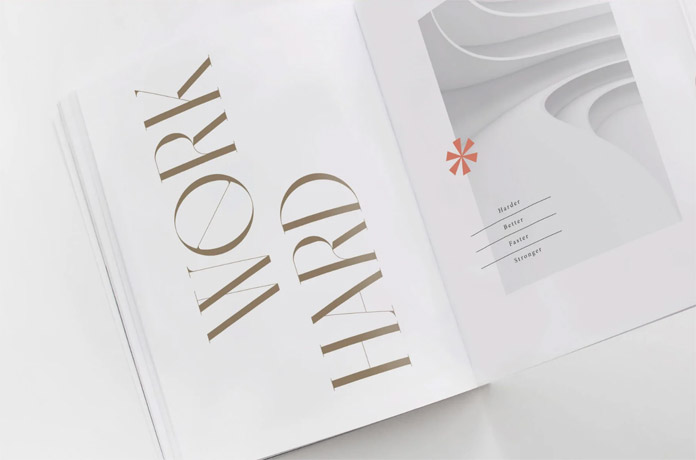
Perfectly Nineties font by Jen Wagner Co.
Perfectly Nineties font by Jen Wagner.

These days, serif fonts are all the rage in the world of graphic design. And it’s no wonder why! These traditional fonts convey a sense of sophistication and elegance, making them perfect for luxury brands or high-end businesses. But serif fonts can also be used to add a touch of stylishness to more down-to-earth designs. So whatever your project may be, don’t be afraid to add a little serif flair. After all, that’s what all the cool kids are doing these days.

Sourced from weandthecolour.com

Sourced from Evening Standard

Everything you need in one place to get your business off the ground

Whatever you’re thinking of selling, from candles and cakes to life coaching sessions or spare car parts, if you want your business to succeed, you need to be online.

Your business is all about you, to a degree, you’ve been there from the start and poured your heart and soul into its creation but it’s also about your customers. Where they are in the world, what they like to do, what makes them tick and (most importantly) how they want to shop.

Growing a successful business is a delicate balancing act. You’ve already got the product – creating that is often the easiest part – but if you want to make an income now you need the tools to connect it with your customers.

But before you start dreaming of where you’ll spend your first million, or how many countries you’ll visit when you retire early, you need to go back to basics and create an online marketplace for your company.

Squarespace connects the dots and provides an all-in-one platform to stand out from the crowd.

It’s a one-stop-shop making it easy, convenient, and quick to create and manage an online shop in four easy steps.

Visit Squarespace to create a free website today.

Create a website

(Squarespace)

You’ve probably already got a name, so now just choose from a new domain or link an existing one to your lovely new website. Then, choose from award-winning templates to give your business the presence it needs online. You’re free to pick professionally designed website templates that you can then customise to your heart’s content. Once it’s up and running you’ll then have the tools to analyse how people use your site to find out exactly what makes your customers tick. How long they spend on your website pages, what they’re looking for, how often they’re coming back and even what time of day they’re coming to you. These are the details that really give you an insight into your customers so you can learn the best way to connect with them.

Start selling anything

There really are no limits when it comes to selling on Squarespace. From poodles to purses and everything in between. The same goes for the size of your company too, whether you’re selling brownie boxes in your spare time, or you have an industrial-sized oven and you post out baked goods all over the world. Customers can select the products they want, pay, and checkout safely and securely all in one place. If you need a calendar, you can give your customers the ability to book appointments. You can even add an extra income source by charging for access or downloads if that’s what works for you.

Create a website with Squarespace today

Build your brand

(Squarespace)

Now you’ve got the foundations in place it’s time to shout about your company from the (virtual) rooftops. Reach people through a variety of networks with professionally designed social content and keep fans of your company up to date with email lists that match your brand. You’ll also have access to built-in SEO tools to maximise your visibility and give yourself the best chance possible of creating a thriving business.

Experiment with extra channels and services

Every business is different and that’s why you’ll have the flexibility to add the tools that will really help you. Choose from third-party services to manage your business and fully customised tools to suit your business’s needs. There’s also a marketplace when you’re in need of hiring some extra help, from designers to developers. Businesses aren’t all 9-5 so if you get stuck, need advice, or just someone else to chat to, there’s also a friendly community and help and support available at any time of the day or night.

Visit Squarespace.com to start your free trial. Visit the website for full Ts&Cs

Sourced from Evening Standard

By Stefanie Flaxman

Wondering how to respond to criticism about your writing? Let’s look at the situation you face in a different way …

For this example, you’re the person criticizing another writer.

That’s right. Have you ever stopped paying attention to content when a publisher stepped up their marketing game?

I know I have.

I’ll turn off a YouTube video faster than I can drink a matcha latte once I learn it’s sponsored by a product I will never buy. And if there are consistent videos for products I don’t want to hear about, I might even stop watching the channel.

Liking the free content on a platform is no guarantee that you’re going to like what the publisher sells.

That’s okay. No one is to blame here. The creator didn’t make a content marketing mistake and the audience member has every right to lose interest.

But there is an important lesson for anyone afraid of marketing or selling more aggressively.

Respond to criticism with this motto: “Fewer people. Tighter relationships.”

“We don’t write much about creating content to generate massive anonymous traffic. We write about creating content to support a business with an engaged audience. Fewer people, tighter relationships.” – Sonia Simone

I think unsubscribes are the best.

Someone who unsubscribes from your content is simply not interested in what you offer. People avoid information that is irrelevant to them — they don’t leave because you’re marketing to them.

It’s great to hear about something that fits your wants or needs. That’s marketing. Whether it’s through content or word of mouth.

If a sponsored YouTube video is about a product that might help me, I’ll definitely keep watching.

But a product that fits my needs might make someone else stop watching or unsubscribe.

That’s why I wrote above that no one’s to blame. However, content creators can always work on building more focused audiences of interested prospects.

Of course every subscriber isn’t going to buy from you, but if a large portion of your “prospects” enjoy content you create that has nothing to do with what you sell … when it comes time to sell, you’ll be disappointed with your results.

Please interested prospects

If you build a list of interested prospects, you can ditch your fear of selling for good.

When you study SEO for content writers, you aim to hook people who are good matches for your products or services.

Even if someone isn’t ready to buy yet, you have the opportunity to educate them about what they need to know to do business with you.

Serve those people, rather than creating content for “everyone,” and forget about those who don’t stick around.

People who don’t like your content don’t stop you from succeeding; they were never a part of your success in the first place.

2 steps when conscientious writers need to respond to criticism

“Everyone” won’t like your writing, but that’s actually a good thing. If everyone who reads your work has the exact same perspective, you probably aren’t reaching new people regularly.

Because when your readership is growing, you’re going to inevitably encounter someone who’s not impressed.

Getting “everyone” to like your content isn’t just ego-driven, short-sighted, and unrealistic … it’s bad marketing. It shows you haven’t yet figured out your Who.

Different types of people need to hear different messages.

Think of:

  • Horseback riders and scuba divers
  • Vegans and carnivores
  • Farmers and astronomers

It’s natural for horseback riders to have no interest in scuba-diving topics, and vice versa.

If you wouldn’t expect those distinct groups to have the same preferences and tastes, why would you want or expect “everyone” to like your writing style and/or the subjects you write about?

When some people do, and some people don’t, you’re on the right track, but you still might freeze up a bit when you encounter negative feedback.

How do you eliminate any confusion about how to respond to criticism?

Here are two simple steps.

Step #1: Ask yourself, “Is this person the right fit for my audience?”

If you think they are, their criticism may be constructive (even if it stings a little).

This could be an opportunity to:

  • Respond to their comment or question with additional resources
  • Hold a live Q&A or record a detailed video about the topic
  • Expand on your original thoughts in your next post and subsequent content

If you’re committed to publishing your writing on a regular schedule and building relationships, this is the stuff content marketing’s made of: You turn feedback into new content.

Remember, it’s your platform. You’re in charge of the next move, so don’t let the need to respond to criticism shake your confidence and disrupt your writing voice. Stick with your creative vision.

Someone who is indeed part of your audience may also miss your point and write a comment about it. That’s on them. It’s nothing to get too tripped up about either. Onward …

If you’re fairly certain that the person criticizing your content is not the right fit for your audience, go to Step #2.

Step #2: Ask yourself, “Why isn’t this person the right fit for my audience?”

Put bluntly, people who aren’t in the market for what you offer — and who don’t get you — aren’t worth your time.

They’re in the wrong place.

You could explain yourself to them all day long and likely not change their beliefs. So, spot those people and ignore them accordingly.

But before you filter out that type of feedback, there’s also an opportunity here to get more clear about the people who are the right match for your content.

If you think a certain piece of criticism is from someone who’s in the wrong place, why? Why isn’t your offer for them?

Could it be for them, without abandoning your values? How can your answers to those questions help you discover more about the people who will benefit from what you have to say?

Hold the water

Go deeper with your ideal prospect rather than water down your content in attempt to please someone who’s not part of your intended audience.

And what about when you get positive feedback and smart comments?

Don’t get too elated by praise either. Instead, use it as fuel to focus on how you can keep serving those people over time.

By Stefanie Flaxman

Sourced from copyblogger

By

Let’s explore the many benefits of buying a business vs. starting one from scratch.

The process of starting a business from scratch can be very daunting and time-consuming. There are many things to consider, such as , , R&D/product development (if you’re creating something), raising capital, , legal matters, etc. One of the first things you need to look at when starting a business is simply the amount of money it’ll take to get the business off the ground. For many people, it can be difficult to come up with or raise the initial investment needed to start a business from scratch.

Let me be clear here, I’m not advocating against anyone starting a business or anyone building a new company at all. I’ve conceptualized at least 15 or so different business ideas and was able to bring a handful of them to life, although many didn’t get off the ground or even go to market for that matter.

I think all entrepreneurs, at some point in time, should get their hands dirty in creating something from scratch. I think most will probably conceptualize an idea or two that they want to take to market because it may be the next greatest “thing,” in their specific target marketplace, and they’ll have an awesome learning experience doing so — and some will inevitably achieve the success that they imagined they would.

The many benefits of buying a business

With that being said, though, I think that the notion of buying an existing business may be a much better option both from a fiscal responsibility standpoint (and pragmatically, for that matter). When you buy a business, you’re acquiring a customer base, established systems and processes, potential assets (physical and digital) and much, much more!

Another reason buying a business makes sense is that you can usually get it at a discount. This is because businesses often sell for less than their actual value, since the owner(s) may be motivated to sell quickly due to personal or financial reasons. And lastly, an existing business comes with an established reputation and goodwill, which can save you a lot of time and money in marketing and advertising costs.

These factors alone can give you a significant advantage over businesses that are starting from scratch. But the key to success in purchasing a business is finding “the right business” to purchase. It’s subjective, I know, but there are some general frameworks that you can use to guide you and aid in your journey to evaluating and eventually closing on your first business acquisition.

There are more businesses for sale today than there are buyers

As you may or may not know, businesses for sale have grown exponentially in the last decade. There are many reasons for this, including the current state of the , retirement and quite a few others.

Business owners are facing financial difficulties in some instances and are unable to continue operating their businesses. While it may not seem like a good thing, in a down economy, there is an opportunity for those looking to purchase a business. I’m not suggesting that it’s a time to take advantage of someone, but I am saying that you can acquire businesses for fair prices, in some cases, well under market value.

There’s a significant cohort of business owners who are about to enter or seeking to enter retirement. They may not have family members or children to pass their business on to, so in some cases, businesses simply go out of business or cease to exist. Herein lies an opportunity, for you, as someone seeking to become a business owner.

It’s easier for existing businesses to generate cash flow

Simply put, cash flow is the lifeblood of any business, big or small. It’s the money coming in and going out, and it needs to be managed carefully to ensure the business is healthy and profitable.

It is generally easier for an existing business to generate cash flow than for a startup business or brand-new company. This is because an existing business typically has revenue streams from customers and other sources, while a startup or new company may not yet have any of those things. An existing business should be generating income through existing channels or specific sources that it currently employs.

Increasing cash flow is just as important as reducing expenses when it comes to boosting profitability. A business can only grow if it has enough cash on hand to invest in new opportunities. Remember: Increasing cash flow is essential for long-term success in any business.

You’re purchasing a proven model

When you’re starting a business, one of the inevitable questions that you’ll be asking yourself is “How am I (or how are we) going to make money?” Fortunately, this isn’t necessarily one that you’re going to have to answer if you’re buying an existing business. Existing companies typically have proven revenue models. This means that they’ve successfully sold and continue to sell its products or services. The repeatability of this model is what you’re looking for when you’re purchasing a company.

A startup business, on the other hand, may not have a proven revenue model because it has not yet sold its products or services. This can be due to a variety of reasons, such as the company being new and therefore having no track record, or because the products or services are not yet ready for market. Either way, a lack of a proven revenue model can be a major obstacle for a startup business.

There are many reasons to buy an existing business instead of starting one from scratch. Perhaps (as I’ve mentioned), the most compelling reason is that you’re buying a proven business model. The riskiest part of starting a new business is figuring out whether your business model will actually work and be profitable. With an existing business, you know that the business model works and that the business can be profitable.

Hopefully, I’ve inspired you to jump-start your journey toward acquiring your first existing business! Remember, you need to completely educate yourself in business before you start trying to acquire them. There are inherent, built-in risks associated with business ownership that so many fail to recognize or understand. This isn’t meant to discourage you, it’s simply to let you know that the details really do matter in business, so don’t overlook them!

By

Sourced from Entrepreneur

By Adelia Cellini Linecker

Some company founders talk about the brilliance of their business idea. But not Zendesk CEO and co-founder Mikkel Svane.

“Our concept was … very mundane,” Svane told Investor’s Business Daily. “We took something that we thought was over engineered and too complex … and made it simple and fast.”

Seemingly simple inventions that make life easier spark revolutionary business change, says Svane, 48. And finding such inventions is Zendesk’s (ZEN) guiding principle through its 12-year history. “We tried to hide the complexity of (products) from our users. Empowering people to do things better and more easily can be transformational,” he said.

What is Zendesk’s seemingly simple invention? The San Francisco-based company sells software that companies use to manage customer-service call centers and websites. It offers service and support in over 30 languages to businesses worldwide across a multitude of industries, with more than 145,000 paid customer accounts.

Zendesk’s financials prove Svane’s strategy is working. Zendesk is on pace to earn $37 million this year, excluding one-time items, up 62% from 2018. And revenue is set to hit $814 million, 36% higher than in 2018. The company has matched or beat consensus earnings estimates the past 19 quarters. And the stock? It’s up more than 450% since its first-day of trading in May 2014, topping the 68% gain by the S&P 500 during that time.

So how did Svane take Zendesk from its humble beginnings in Copenhagen, Denmark, to Silicon Valley success?

Zendesk CEO: Take The Long View

At the startup stage, Svane and two other Zendesk founders burned the midnight oil in cramped quarters for years. Each had needs — related to money, family and career — that pulled them in different directions at various times. Navigating those early rocky years without sinking under pressure is essential for startups.

“Founder dynamics is one of the most complicated things when you build a company,” Svane said. “I think you can look at every single company with multiple founders, and they all struggle with it. Everybody has their quirks and everybody has to find their role. Everybody has different things that motivate them and different needs to be able to function.”

Svane says he often hears about these challenges when he talks to young founders.

“They feel that one person is not working hard enough or that person is just here on vacation,” he said. “You can’t dwell on that. It’s really important in the early phase that you give each other room. Everybody understands that it’s not a competition and everybody at some point will have their opportunity to shine.”

Hire Wisely

In his book, “Startup Land,” Svane explains Zendesk’s unconventional hiring strategy. First, he says, the company looks for “athletes.”

“I think of athletes as generalists vs. specialists,” he said. “We like people who really show interest and are curious … They are constantly asking: How can I also do this? Can I also be good at this? They have this curiosity and they want to try everything. People who have many skill sets and can master many disciplines. We also need people who realize that just because they know one thing they don’t know everything.”

He looks for frequent travelers as potential employees. They’ve explored, moved around and are typically good at figuring things out. Women, mothers, in particular, are also great workers because they are used to multitasking. People who are OK with swearing also get his nod. Why? “People who get ruffled by bad language will probably have trouble rolling with all of the other less than perfectly pristine moments,” Svane wrote in his book.

Diversity, too, is important to Svane. Tech companies can become a “posse of young white men in jeans and hoodies,” he wrote. “A diverse workforce enables the company to make sure no predominant group sets the tone. Instead, the company finds its own common tone.”

Believe In Your Team

Analysts who follow the company say Svane’s leadership style is crucial to its success. Patrick Walravens with JMP Securities, says Svane hires the best people he can find and let’s them do their job.

“He does not like to manage … he likes to lead,” Walravens said. “He doesn’t like running meetings … he doesn’t like telling people how to do their jobs. (And) he wants to hire people who are better than he is, he wants to give them a little bit of direction, and then let them go.”

Steve Koenig of Wedbush Securities agrees Svane’s focus is on providing guidance and avoiding micromanaging.

“His leadership style involves planting really great people around him,” Koenig said. “He orchestrates the vision; the team around him carries out the execution. His style is loose and free form; (the management team) provides the button-down execution.”

Zendesk CEO: Create A Culture Of Empathy

As intense as working at Zendesk can be, Svane is acutely aware of the flip side of his success. He doesn’t need to look far to keep him grounded, he says. Outside the doors of Zendesk’s offices in San Francisco’s Tenderloin district lies a world vastly different from the often charmed existence of its employees.

“In Silicon Valley we can get very much into ourselves,” Svane said. “What we do can get very important. And we often forget about things that are right outside our doors. I think being here has changed the tone of the company.”

Looking outside, “We realize that there is a different world. It’s not just about smart software and fancy water and massages and joggers. There are people with real problems with real issues that have nowhere to go in this neighborhood. And I think it brings a sense of humility in the conversation and openness and patience and trying to understand things.”

Lead By Example

Svane leads by doing. “Paying lip service to diversity and inclusion initiatives perpetuates a cycle of discrimination,” Svane wrote in an article for Entrepreneur Magazine in May 2018. “To develop a truly inclusive and compassionate company culture, change has to happen from the top down, with the C-suite leading the charge.”

Svane was writing about the time several years ago when he took his daughters on a tour of the South with the San Francisco Gay Men’s Chorus. They performed in cities where typically marginalized people would have had a hard time expressing their stories. Svane says the experience taught him a few things about the power of empathy and how Zendesk can have a positive impact in communities.

“In every city we land, my employees and I commit to being good neighbors and embracing the community with empathy and compassion,” he wrote. “We commit to connection. We commit to becoming a part of the fabric of the places we are a part of.”

Svane says creating a culture of empathy is not only good for individual growth but also good business. It motivates him to stay focused on maintaining the trust he’s worked hard to build among customers.

“I think (empathy is) good for the longevity of the business; that we understand that this is a journey and … realize everything we have is something that can easily be taken away too,” he said. “That humility gives us what it takes to get up every morning, get to work and work retain the trust and business of our customers.”

Zendesk CEO: Take Failure Seriously

Intense awareness can come across as fear of failure. And Svane is almost counterculture in Silicon Valley when it comes to his views on failure. He makes a clear distinction between making mistakes and failing. Sure, mistakes can be learning experiences, and you should not be afraid to make mistakes. But failure is a different story, he says.

Truly failing is really hard,” Svane said. “You have to disappoint your employees … you have to disappoint all your customers. (And) you have to disappoint your investors. You have to disappoint your family, your friends, everyone around you. Starting all over is incredibly hard.”

True failure is not something Svane commends or celebrates. “It’s not something we should take lightly,” he said.

Svane’s Keys

  • Co-founder and CEO of Zendesk, which sells software that companies use to manage customer-service call centers and websites.
  • Overcame: Humble beginnings and conflicting demands while launching the company challenged Svane and his fellow co-founders.
  • Lesson: The best business ideas and products are simple. Don’t over complicate your business or career.
  • “I think (empathy is) good for the longevity of the business; that we understand that this is a journey and … realize everything we have is something that can easily be taken away too.”

Feature Image Credit: Mikkel Svane, CEO and co-founder of Zendesk. (Zendesk)

By Adelia Cellini Linecker

Sourced from Investor’s Business Daily


John Douglas Steuart is a venture capitalist and successful entrepreneur, but he didn’t become one overnight. He attributes much of his success to his education and experience through decades of hard work.

Countless hours building teams and perfecting his business strategies led him to become an expert on entrepreneurship. He recently discussed seven habits he believes helped him succeed and can help others too.

1. Research, Research, Research

When interviewers asked Steuart how he brings ideas to life, he commented that research is an absolute must. He explained that all entrepreneurs already have passion and knowledge, but they must research extensively to support their ideas also. Research leads to well-thought-out decisions.

2. Create a Passionate and Collaborative Team 

Steuart explained that his team is one of his greatest assets. He emphasized the importance of ensuring everyone has space to contribute and nobody is afraid to share ideas. Partnering with fellow great minds can quickly turn ideas into reality.

“There’s nothing more exciting than when my team comes up with a new solution to improve healthcare services and technologies,” he said. “They create real answers to problems and make people’s lives easier when they are most vulnerable.”

He stated that a great leader should know and collaborate with everyone on the team. All team members have different skill sets, and a combination of everyone’s best assets creates an unstoppable force. Entrepreneurs can never do everything independently, and acknowledging that is a significant step toward success.

3. Always Stay Up-to-Date

Steuart keeps himself updated on the latest technologies, business trends, and what’s happening in other parts of the world. He encourages entrepreneurs to commit themselves to lifelong learning and constantly bettering themselves. He added that it doesn’t always have to be through schooling, but improving oneself can be as simple as reading a book about leadership or productivity.

4. Believe in Oneself

There is a solution to every problem, and Steuart believes solutions are in every individual. He expressed the importance of not giving up on oneself even when the hurdles of entrepreneurship seem too large.

“Never be afraid to go for a goal that you think is worth the risk,” he said. “You never know the difference a single leap of faith can make on your future.”

5. Persevere With Passion

John Douglas Steuart helps entrepreneurs reach their business and personal goals. He believes he couldn’t have achieved his current level of success without steadfast perseverance and continuous passion.

He explained that being smart, a great leader and an excellent communicator are traits that help individuals create successful businesses, but passion and perseverance are even more important than book smarts.

6. Be Okay With Failure

All entrepreneurs will face some failure, but all setbacks can be less catastrophic with an excellent support system. Steuart emphasized the importance of an entrepreneur ensuring they have enough knowledge, resources, and support to deal with setbacks like failed products or even bankruptcy.

One of his most significant failures was in 1993 when he filed for bankruptcy for a healthcare product that never took off. He explained that he learned an important lesson about researching the potential market and creating products or services that appeal to a large class of consumers. His support system, knowledge, and extensive research allowed him to pull through the setback and onto bigger and better business options.

7. Always Prioritize Health

John Steuart explained that a person could not successfully run a business if they’re not in good health. He wakes up early each day to exercise and eat a healthy breakfast before sitting down to work. He firmly believes that health is wealth, and a healthy lifestyle with sufficient rest is a critical factor in success.

John Steuart and Entrepreneurial Success 

Steuart co-founded his first company, Savvy Properties, after graduating college in 1988. What started as a small company providing affordable housing options to students grew into a major real estate company serving Berkeley, Albany, North Oakland, Pinole, East Bay, and Emeryville.

He then moved on to invest in the Alafi Capital Company, leading the company into profitable investments as the Chief Finance Officer. Following Alafi, he helped co-found Cybergold, then Claremont Creek Ventures.

Steuart remains a part of Savvy Properties and is now enjoying life as a semi-retired businessman, overseeing the work of his well-established teams. He prides himself on providing hundreds of job opportunities for the community of Berkeley, California, and far beyond.

Sourced from INFLUENCIVE


By Jesse James

When it comes to the entrepreneurial journey, learning is the pathway to success. That learning usually comes from failure. No entrepreneur likes to fail, but the fact is most do.

Some very successful entrepreneurs of yesterday and today experienced failure and learned from it on their way to success:

  • American inventor Thomas Edison tried thousands and thousands of times to invent the electric light bulb before eventually succeeding.
  • Walt Disney’s first animation company, Laugh-O-Gram Studio, went bankrupt, but Disney went on from there to create an entertainment empire.
  • Steve Jobs, cofounder of Apple, was fired from the company in the mid-1980s but was hired back in 1997 and led the company to meteoric growth.
  • Author J.K. Rowling submitted Harry Potter and the Philosopher’s Stone to 12 publishing houses, which all declined to publish it—now more than 120 million copies of this book have been sold.

These are just a few examples of famous entrepreneurs who experienced failure on their way to success.

Statistics bear out that failure and setbacks are common on the road to business success. Consider that data collected by the SBA from 1994 to 2019 shows that approximately 68% of new enterprises survived at least two years, and after five years the new business survival rate dropped to less than 50%.

While failures may be a given in the entrepreneurial journey, failure is not fatal. Successful entrepreneurs learn from their mistakes and apply these learnings to the pursuit of their dreams. Some of the most important things these and other entrepreneurs learned from failure in business include how to be resilient, fearless, and adaptable.

What we can learn from failing in business

Resiliency

Failure teaches entrepreneurs the capacity to recover quickly from difficulties, which is the definition of resiliency. With every failure, entrepreneurs can learn tenacity and perseverance (think Thomas Edison), two key characteristics of resiliency that are critical for pushing through missteps and fighting the urge to quit.

Research shows how important resiliency is to business success. A study conducted by researchers at Smith School of Business at Queen’s University followed first-time entrepreneurs over a period of two years as they developed, launched, and operated new enterprises. The study found that resilient entrepreneurs viewed business setbacks as puzzles they were fully able to solve and tackle. The researchers noted that entrepreneurs who had this “challenge appraisal” mindset “were more motivated and able to be proactive in identifying ways to improve business processes and outcomes, and to adjust them on the fly.”

The study also found that resilience was a crucial skill that helped entrepreneurs respond to unexpected challenges and that businesses owned by resilient entrepreneurs were more likely to survive than other businesses.

Fearlessness

Embarking on a journey of entrepreneurship is a risky proposition and is full of uncertainties that often elevate fear of failure and rejection. These fears can stop aspiring entrepreneurs from facing risk and pursuing their dreams.

A Zapier-commissioned Harris Poll survey found that approximately three in five Americans (61%) have had an idea for starting a business, and about a third (34%) have had more than one. The survey revealed that an overwhelming majority of those people—92%—did not turn their ideas into a business. For 33% of survey respondents, fear of failure is what stopped them from pursuing their dream of entrepreneurship.

Entrepreneurs who have failed learn first-hand what Winston Churchill meant when he said, “Success is not final, failure is not fatal: it is the courage to continue that counts.” With this perspective, entrepreneurs no longer allow fear to stop them in their tracks. Instead, they view failure as an opportunity to learn from mistakes and use what they learned from failure in business to move forward despite their fears.

Learning from adversity is what helps take the fear out of failure. Devoting time to analysing what happened, why it happened, what worked, and what didn’t provides the clarity and insight required to determine what changes need to be made to achieve success. The knowledge and practical experience that comes from failure inspires a fearlessness and confidence in entrepreneurs that drives them to try again and again.

Additionally, the fear of rejection often prevents entrepreneurs from even trying. Jia Jang’s 100 Days of Rejection Therapy challenge truly puts this into perspective. Without even trying, many will simply write something off as impossible because they’re scared of being told “no.” However, Jang’s experiment showed that the worst thing that an entrepreneur can do isn’t asking for something they might not get—it’s not trying at all.

Adaptability

Failure is also a lesson in adaptability. When one idea or approach fails, entrepreneurs must be able to adjust to new conditions and be willing to experiment and test new ideas. Embracing change, staying nimble, and pivoting are part of the adaptability that helps entrepreneurs overcome obstacles, learn, and innovate. When industries, markets, and customer preferences change, this adaptability also helps entrepreneurs navigate these new situations and problem-solve to make an idea work or come up with a new one.

Netflix is a good example of a company that adapted its way to success. Founded by Reed Hastings and Marc Randolph in 1997, the company’s first business model centred on allowing consumers to rent and buy physical DVD movies. In 1999, the company added a subscription offering that allowed people to rent as many DVDs as they wanted, receiving rentals in the mail. The company adapted its business model again in 2007, moving away from physical media to take advantage of new technology that made it possible to stream content instantaneously via the internet.

Sometimes you need to fail in order to succeed

Of the more than 31 million entrepreneurs in the United States, many have experienced failure on their road to success. They have tried and failed, and likely failed a few more times during their journey. These failures are far from fatal. Entrepreneurs who learn the lessons of resiliency, fearlessness, and adaptability from failure in business are able to conquer obstacles and setbacks to achieve success.

Michael Jordan captured this idea well when he said: “I’ve missed more than 9,000 shots in my career. I’ve lost almost 300 games. Twenty-six times, I’ve been trusted to take the game-winning shot and missed. I’ve failed over and over and over again in my life. And that is why I succeed.”

Feature Image Credit: getty

By Jesse James

Jesse James is Director of Strategic Partnerships and Solutions at VizyPay. He is 15-year veteran of sales, sales leadership, and entrepreneurship. He was previously Director, Recruitment Services at DHI Group, Inc and Chief Revenue Officer at FiQore Technologies, Inc. Connect with him on LinkedIn.

Sourced from Forbes

By Steve Allen

Can you imagine starting a blog and having no one read your articles?

Maybe you’ve already written some, but you’re unsure how people will find them.

In this post, I’ll show you all the places people can find your blog and what you can do to improve your blog’s exposure.

You’ll learn:

  • How to get seen on social media including YouTube and LinkedIn
  • Increase your visibility on search engines like Google
  • Get more traffic from other blogs
  • Get visitors from forums and Q&A sites like Reddit and Quora

The best part?

You’ll know exactly how people can find your blog AND how to keep them coming back, convince them to join your email list, and transform them into loyal followers.

Let’s dive right in.

How Do People Find Your Blog on Google?

People will find your blog on Google in two ways:

  1. Organic results
  2. Paid results

Paid results are shown at the top of the page, like this:

And organic results show below:

To get your blog to show up under a paid search result, you’ll need to join the Google Ads platform.

It works by listing keywords you want your blog to show up for and paying Google each time someone clicks on your ad.

The cost of clicks will depend on your niche and the competition of the keywords you choose.

On average, ads get clicked 19% of the time compared to the rest of the page.

Organic Results

If you want Google to display your blog posts in the organic search results, then you need to optimise your blog for Search Engine Optimization (SEO).

Organic results are free, but will take longer to show up.

To get the most organic blog traffic, you’ll want to show up in position one.

Here’s a breakdown of how many people click through the organic search results:

And here’s how you do it.

  • Then make sure you include your keyword in article titles and throughout the post.
  • For best results, publish as much content as you can around the same topic.

This will build up topical relevance for your entire blog and help you rank more of your articles higher in Google.

Another way to optimize your blog to increase your rankings is to get backlinks from other bloggers (more on this later).

How Do People Find Your Blog on Facebook?

There are four places people will see links to your blog on Facebook. They are:

  • Pages
  • Groups
  • Ads
  • Search

Facebook Ads

Like Google, Facebook ads are a great way to get your blog seen and result in more traffic.

You’ll need a page and an Ads Manager account to post ads:

An ad with the goal of sending people to your blog will cost money each time someone clicks on the URL.

Again, the costs will vary depending on a multitude of factors, but you are in complete control by setting a daily budget.

Facebook Search

Another way people can find your blog on Facebook is through the search feature.

If someone is searching for a topic relevant to a blog post you have shared on your Facebook page, they can be shown in the results.

Like this one here about growing tomatoes:

The more Facebook posts you share on your page and the more you optimize the post with the relevant keywords, eye-catching images, and engaging copy, the more traffic you’ll get from Facebook search.

Facebook Pages

Facebook pages are another excellent way to help people find your blog, build a social media following on Facebook, and drive more traffic.

Once you have a Facebook page, follow these tips to grow your engagement and drive tons of traffic to your site.

  • Post high-quality posts that grab your followers’ attention. The more engagement, the better.
  • Video has been on the rise in recent years, so why not turn your blog posts into videos and share those on your feed?
  • Recycle your best-performing posts.
  • You can also boost posts with an ad to kick-start your engagement.

Facebook Groups

Facebook groups are great for building a loyal community on Facebook and getting your blog seen by more people.

The best way to grow your reach in a Facebook group is to share a ton of value without always posting links to your blog. This will get the conversation going with other members and they will soon start promoting your stuff for you.

Then every so often, let them know about new articles to get more eyes on your blog.

Learn more about how to start a thriving Facebook group here.

How Do People Find Your Blog on YouTube?

There are quite a few ways people can discover your blog on YouTube.Here are the most effective places to link to your blog content:

  • In the video description:
  • Links in video cards:
  • In a pinned comment:
  • The end screen (you can place YouTube videos and other links here):
  • Your channel profile banner:
  • Your channel about page:

It’s a good idea to add a link to your blog and specific articles in these areas whenever you have the opportunity.

Then, you can focus on posting videos on your channel and using the YouTube algorithm in your favor to grow your engagement and reach.

Here are some ways to get the algorithm on your side to grow your channel:

Check Other Content to See What’s Already Performing Well

This helps your videos show up in the suggested sidebar when people watch videos similar to yours.

To find out what’s already performed well, go to a similar channel to yours and look at their videos with the most views.

Then open up a few of them and see which videos show up in the suggested section.

Creating videos like the ones suggested will help your own videos show up there.

Optimize Every Video

To increase the chance of your videos showing in search results, optimize your videos.

You can do that by talking about topics that people are searching for, including the keyword in the title, and saying the keyword and related terms in the video itself.

Also, make sure you add relevant keywords to the tags box under the advanced option of every video.

Keep People Engaged Throughout the Video

This is possibly the most effective way to grow your channel quickly because YouTube wants people to stay on the platform for as long as possible.

You can do this by starting your video with a pattern interrupt, a Neuro Linguistic Programming (NLP) technique that shifts a person out of their current state and helps them focus on what you’re saying.

Tell the viewer exactly what they’ll learn in the video early on and give them an incentive to stick around to the end.

That could be a gift you want to offer them or something insightful they will find interesting.

How Do People Find Your Blog on TikTok?

Did you know people can find your blog through your TikTok account?

It’s true.

Unfortunately, the only place you can put a link to your blog is in your bio. Not only that, but you need a business account and 1,000 followers.

There is another way to create a clickable link though, which is covered in another article called How to Add a Website To Your TikTok.

To get your first 1,000 followers so you can add a link in your bio and help people find your blog, you’ll need to post high-quality posts frequently.

Check out How to Make a Viral Video on TikTok to learn how to grow your following.

How Do People Find Your Blog on Pinterest?

There are just two places to link to your blog on Pinterest.

Standard Pins:

And your profile page:

But how do people find your blog when using Pinterest?

Like all social networks, the Pinterest algorithm determines the best content to show its users.

If you want to increase blog traffic with Pinterest, then you can improve your reach by optimizing your Pins and posting regularly.

To add your blog URL to your profile, edit your profile and enter it under the website option.

Then, linking to a blog post happens automatically when you or someone else shares your content on Pinterest.

Alternatively, you can include your blog post link when creating Pinterest Pins manually.

How Do People Find Your Blog on Twitter?

On Twitter, people can find your blog through the Tweets you post and from the link on your profile page.

Your profile:

In a Tweet:

It’s important to remember that people who use Twitter or any social network will need to grow their following to help people find their blog more frequently.

To grow your following on Twitter, follow other bloggers or influencers who are in your niche and comment on their posts with valuable insights.

The people who follow these accounts will soon start following you and find your blog that way.

People can also find your blog posts when searching for topics on Twitter.

The more you post relevant content that is well optimized, the more you’ll show up in the results.

How Do People Find Your Blog on LinkedIn?

LinkedIn is the social media site for B2B professionals and business owners.

You can send traffic to your blog by placing a link on your profile page and in posts you share.

Also, make sure you create a company page for your blog because you can add a link here as well.

Then, you’ll need to grow your reach and engagement by posting content on the platform.

You can do this from your personal and company profiles. Provide original content that your connections will find useful and you’ll generate a steady flow of blog traffic.

How Do People Find Your Blog on Forums and Q&A Sites?

Want to get more traffic with Reddit or Quora?

These are also great sites where people can find your blog.

Reddit is like a modern day forum where people can discuss almost every topic under the sun.

You can create an account, add your blog URL in your bio, and join subreddits in your niche. Then share things that the users will appreciate. Some people can get thousands of visitors using Reddit.

Quora is a question-and-answer site that has become extremely popular in recent years. Instead of people having discussions on Quora, users ask questions, and bloggers, experts, and thought leaders answer them.

You can be one of those people who answer questions, sharing your perspective on topics related to your blog.

Then add a link to blog posts you’ve published that expand on the topics.

How Do People Find Your Blog Through Other Blogs?

So far, we’ve looked at all the ways people can find your blog through social media and Google search results.

But how do you get a steady flow of traffic from other blogs?

There are several ways to increase your visibility and traffic through blog marketing.

Blog marketing involves getting other bloggers to link to your content. When their readers see a link to your article, they will click through to your blog.

Here’s how you can do it.

Other Bloggers Linking to Your Content Organically

This is the most organic way to get consistent traffic from other bloggers.

The best way to accomplish this is to focus on creating quality content on your own blog.

Then, link to other bloggers’ blog posts and reach out to them, letting them know you linked to them. Some will soon return the favor and link back to your blog.

Guest Post

Another way to get links from other blogs to your blog is through guest posting.

This is where you create an article for another blogger in your niche for a link back to your blog.

Podcasts and Interviews

A little known strategy for getting links back to your blog is by being a guest on another blogger’s podcast.

They will usually link to your website, which can help grow your blog readership.

How to Get People to Read Your Blog Posts?

You can ask people to read your blog in direct ways without being pushy. The key is to write influential words that develop trust and motivate people to take action.

Here are three tips for getting people to notice your blog and read your content.

1. Focus on Great Content with Tons of Value

Learn how to create blog content and develop a consistent publishing strategy.

Make your articles as valuable as possible so your audience will read for longer and want to join your email list.

2. Hook Them with Your Titles

No matter where people see a link to your blog, you’ll need to grab their attention. To do that, use catchy headlines on social media and in email subject lines. Also, optimize your SEO titles to get more traffic from Google search results.

3. Ask Them with a Call to Action

Most people are busy and easily distracted, that’s why it’s important to prompt them to take action at every opportunity including in your social media posts, in your bios, in your blog post introductions, and in your emails.

People have doubts and need motivation to take action, so tell them what you want them to do. They will appreciate the confidence in you and see you as a leader they can trust.

Conclusion

How do people find your blog? Well, this post provided you with tons of ways – through social media, Google search results, and even places like Reddit.

Ideally, because you want people to find your blog, the most effective way to get seen in the long run is by publishing quality articles and increasing organic traffic.

Then you can focus on other means of traffic when search traffic is steady.


By Steve Allen

Sourced from Niche Pursuits