Selling on Facebook can boost your revenue whether you run a Facebook Shop or sell on the Marketplace. Here’s how to use Facebook tools and features to make sales.
More than 90 million small businesses connect with customers through Facebook because it’s a prime spot for increasing brand awareness and building relationships. But you can also make sales directly through the platform. Have you explored your options for selling on Facebook?
There are dedicated spaces for selling, like Facebook Shop and Marketplace. Additionally, there are earning opportunities with organic and paid posts, Facebook Messenger, and groups. Learn how to sell on Facebook and why it’s essential to start now.
Why businesses should sell on Facebook
Social commerce is poised to go mainstream, as Insider Intelligence expects more than half of U.S. adults to make “a purchase on social media” in 2022. Likewise, Accenture predicted that social commerce (purchases made on social media) will “grow three times as fast as traditional e-commerce.” It also said that clothing, consumer electronics, and home décor are the categories that will see the most significant growth.
Building your presence and establishing your brand early can give you a head start as social commerce goes mainstream. By starting now, you can address some things that keep consumers from making a purchase.
Accenture found that “trust is the biggest barrier to adoption,” reflecting buyer protection and refund concerns. It also noted that the path to adoption is how “it was for e-commerce at its beginning.” Other worries include “distrusting platforms with payment information” and “being unsure if the products shown were legitimate,” according to Insider Intelligence.
Develop a small business Facebook strategy that outlines opportunities in different Facebook spaces. For instance, you may open a Facebook Shop, run ads, and sell during your live streams. Small teams or physical shops may prefer Facebook Marketplace and monetizing their posts.
Build a Facebook Shop
It’s free to open a Facebook Shop. During account creation, you’ll add goods to your product catalog. These can be just a few items that you upload manually, or you can sync to your online store or upload products from a spreadsheet. Like your e-commerce site, optimized descriptions, user-generated content (UGC), and high-quality photos are essential.
Once you open a Facebook Shop, you can tag products from the catalog during a Facebook or Instagram live stream and sell through Facebook Messenger, WhatsApp, and Instagram. In each situation, customers land on your product ordering page.
Although you can sell as an individual on Facebook Marketplace, it’s also a selling channel for your Facebook Shop. If you have a Shop, you can sell as a business in the Marketplace.
Run Facebook Ads
According to Meta (formerly Facebook), “Over 10 million businesses have used Facebook advertising, the majority of which are small to medium-sized businesses.” Use the Ad Manager, and choose from more than 25 call-to-action (CTA) buttons, including “Shop Now,” “See Menu,” and “Book Now.” You can also connect your ads to your Facebook Messenger account. Facebook reported that small businesses like Lalo realized “a 3x higher conversion rate when they switched to ads that click to Messenger.”
Join Facebook Marketplace
Although you can sell as an individual on Facebook Marketplace, it’s also a selling channel for your Facebook Shop. If you have a Shop, you can sell as a business in the Marketplace. In a 2021 first quarter earnings call, CEO Mark Zuckerberg reported that “more than one billion people visit Marketplace each month.” Buyers use your shop’s checkout feature for a seamless experience.
Sell during Facebook livestreams
Facebook Live connects your small business to customers in real time, allowing you to answer questions and discuss your products. With a Facebook Shop, you can feature products during your livestream and display product boxes with a CTA. If you use Facebook’s Commerce Manager, livestream viewers can go to your Facebook Shop checkout page.
Earn sales from organic posts
If your sales journey requires a hands-on approach and you’re not ready to embrace Facebook checkout or want to drive in-store sales, use your posts to generate sales. According to HubSpot, “Social media has a 100% higher lead-to-close rate than outbound marketing.” Special promotions, limited-time offers, and giveaway entries for purchases can direct buyers to your product or landing page.
CO— aims to bring you inspiration from leading respected experts. However, before making any business decision, you should consult a professional who can advise you based on your individual situation.
SEO affiliate marketing is one of the most effective ways to make money online. By ranking high for keywords that people are searching for, you can earn commissions from the products and services that you promote
In this guide, we’re going to show you everything you need to know about SEO affiliate marketing, including:
What is SEO affiliate marketing?
How does it work?
What are the benefits?
How do you get started?
What are the best SEO affiliate programs to join?
By the end of this guide, you’ll have a solid understanding of how SEO affiliate marketing works and how you can start earning money from it. Let’s get started!
What Is SEO Affiliate Marketing?
Affiliate marketing is a type of online marketing where you promote products or services and earn a commission for each sale that you generate
There are many different types of affiliate marketing, but SEO affiliate marketing is one of the most effective. As the name suggests, SEO affiliate marketing involves ranking high in search engines for keywords related to the products or services that you’re promoting
For example, let’s say that you’re promoting a course on how to lose weight. You might rank high in Google for the keyword “how to lose weight fast.” If someone clicks on your link and purchases the course, you would earn a commission. It’s important to note that Google ranking factors are always changing and you should stay up to date with the best practices.
How Does It Work?
SEO affiliate marketing works by getting your affiliate links in front of as many people as possible. The more people that see your links, the more likely you are to make a sale
By using these strategies, you can get your affiliate links in front of as many people as possible. The more people that see your links, the higher your chances of making a sale.
What Are the Benefits?
There are many benefits to SEO affiliate marketing, including:
1. It’s an effective way to make money online
2. It doesn’t require a lot of upfront investment
3. You can scale your earnings by increasing your traffic
4. It’s relatively easy to get started
These are just a few of the reasons why SEO affiliate marketing is so popular. If you’re looking for a way to make money online, it’s worth considering.
Let’s dive into some Affiliate Marketing strategies
There are hundreds of strategies to leverage to be successful in affiliate marketing. But to keep this article short and sweet, we’ll dive into the most common strategies.
1. Write articles and blog posts
This is one of the most common ways to get your affiliate links in front of people. By writing articles and blog posts about the products or services that you’re promoting, you can rank high in search engines and get organic traffic
Here’s an example:
Let’s say that you wanted to promote some cat ear headphones. You could write an article like “best cat ear headphones” and include your affiliate links in the article. If someone reads your article and clicks on one of your links, they would be taken to the headphones where they could purchase it.
2. Create videos
Another great way to get your affiliate links in front of people is to create videos. You can create videos about the products or services that you’re promoting and include your affiliate links in the description
Here’s an example:
Let’s say that you created a video about the weight loss program that you’re promoting. You could include your affiliate link in the video description so that people could click on it and be taken to the program’s website.
3. Run ads
Another option is to run ads. You can create ads for the products or services that you’re promoting and target them to people who are interested in those topics
Here’s an example:
Let’s say that you wanted to promote a weight loss program. You could create an ad that targets people who are interested in losing weight. When someone sees your ad and clicks on it, they would be taken to the program’s website.
4. Optimize your website for search engines
Another great way to get your affiliate links in front of people is to optimize your website for search engines. This will help you rank higher in search results and get more organic traffic
Here’s an example:
Let’s say that you have a blog about weight loss. You could optimize your blog posts for the keywords “how to lose weight fast” and “weight loss programs.” This would help you rank higher in search results and get more people to visit your blog.
5. Guest post on other blogs
Guest posting is another great way to get your affiliate links in front of people. By guest posting on other blogs in your niche, you can reach a whole new audience.
Here’s an example:
Let’s say that you wanted to promote a weight loss program. You could write a guest post for a blog in your niche and include your affiliate link in the post, this is an example of a website that does this very efficiently. This will help you reach a new audience and get your affiliate links in front of more people that otherwise had no chance of ever finding your links.
6. Participate in forums and discussion boards
Another great way to get your affiliate links in front of people is to participate in forums and discussion boards. By participating in these online communities, you can reach a whole new audience
Here’s an example:
Let’s say that you’re a member of a weight loss forum. You could include your affiliate link in your signature so that people would see it every time you made a post. This would help you reach a new audience and get your link in front of more people.
7. Create an e-book or report
Another great way to promote your affiliate links is to create an e-book or report. You can include your affiliate links in the e-book or report and give it away for free
Here’s an example:
Let’s say that you wanted to promote a weight loss program. You could create an e-book about weight loss and include your affiliate link in it. If someone reads your e-book and clicks on your link, they would be taken to the program’s website where they could purchase it.
8. Give away freebies
Giving away freebies is another great way to get your affiliate links in front of people. You can include your affiliate links on your freebies and give them away at events or online
Here’s an example:
Let’s say that you’re attending a weight loss conference. You could include your affiliate link on some of the freebies that you’re giving away. If someone receives one of your freebies and clicks on your link, they would be taken to the program’s website where they could purchase it.
9. Write reviews
Writing reviews is another great way to promote your affiliate links. You can write reviews about the products or services that you’re promoting and include your affiliate links in them. This will help you reach a new audience and get your link in front of more people. You should also consider reading this article to learn how to mitigate the risks of affiliate linking.
Here’s an example:
Let’s say that you wanted to promote a weight loss program. You could write a review about the program and include your affiliate link in it. If someone reads your review and clicks on your link, they would be taken to the program’s website where they could purchase it.
10. Host a webinar
Hosting a webinar is another great way to promote your affiliate links. You can host a webinar about the products or services that you’re promoting and include your affiliate links in the presentation. This will help you reach a new audience and get your link in front of more people.
Here’s an example:
Let’s say that you wanted to promote a weight loss program. You could host a webinar about the program and include your affiliate link in it. If someone attends your webinar and clicks on your link, they would be taken to the program’s website where they could purchase it.
These are just a few of the many ways that you can promote your affiliate links. By using these methods, you can reach a new audience and get your link in front of more people. Choose one or two of these methods and start implementing them today!
How do you get started with SEO affiliate marketing?
Before you can start using SEO to promote your affiliate links, you need to find a niche that you’re interested in. Once you’ve found a niche, you can start creating content that is optimized for search engines. This content will help you rank higher in search results and get more traffic to your website.
To get started with SEO affiliate marketing, follow these steps:
1. Find a niche that you’re interested in.
2. Do keyword research to find popular keywords that people are searching for.
3. Create content that is optimized for search engines.
4. Promote your content through social media and other channels.
5. Monitor your traffic and conversions to see what’s working and what isn’t.
6. Make changes to your strategy as needed.
SEO affiliate marketing can be a great way to get more traffic to your website and make more sales.
What are the best SEO affiliate programs to join?
There are a number of SEO affiliate programs that you can join. These programs will pay you a commission for every sale that you generate. To find the best SEO affiliate programs, consider these factors:
1. The program’s commission structure.
2. The program’s payout schedule.
3. The program’s terms and conditions.
4. The program’s selection of products and services.
5. The program’s support and training materials.
By considering these factors, you can narrow down your options and find the best SEO affiliate programs to join. Now that you know what to consider, once you’ve joined a few programs, you can start promoting their products and services and start earning commissions.
Our top choices
Some of the best SEO affiliate programs in our opinion are:
1. SEMrush
2. Moz
3. Ahrefs
4. KWFinder
5. SERPstat
These are just a few of the many SEO affiliate programs that you can join. Choose one or two of these programs and start promoting their products today.
Lucas is the Co-Founder & CEO at SEO Assistance. With a decade of experience in SEO, he has used his skillset to help grow thousands of businesses around the world.
Using search engine optimisation (SEO) can help your firm’s website standout in a competitive environment. In this sponsored article, Ewelina Radziewicz, chief operating officer at Intellistart, explains how your firm can start utilising this tool.
Building and growing a law firm requires a lot of work and is never easy.
It involves overseeing and managing the general operations, taking care of the financials, and the promotion of the firm and services. All while fee earning.
Aside from using traditional marketing techniques, you are now presented with new opportunities in digital marketing that you can take advantage of.
If your law firm has a website, that’s a great start. But your website alone might not be enough to generate new clients online. You need to make your website visible.
This is where search engine optimisation (SEO) comes into play.
But how do you warrant SEO’s effectiveness? More importantly, how do you use it to grow your business?
What does SEO have to do with law firm growth?
Due to the high accessibility of fast internet, users expect to find answers to their questions immediately, typically searched for on Google.
To meet their customers’ needs, Google attempts to serve them with the most relevant and credible websites with good user experience (UX) to ensure they continue to use the search engine.
So, as there are thousands of relevant law firm websites competing on Google, how does your firm’s website secure a top spot on the SERPs? This is where SEO comes in to help.
Combining SEO with other website improvements can give your firm a chance of not only appearing on the SERPs, but also climbing the top rankings.
This in turn can lead to more visitors to your website, which in turn creates more enquires, more clients and ultimately growing your business.
What every law firm’s SEO strategy must include?
Writing content plays a big part in legal SEO.
Producing helpful content will not only present you as the leader of your niche area to prospective clients, it will also allow you to place a wider range of keywords on your site, which will subsequently improve your SEO.
Writing web content will also give you good PR, as sharing educational and helpful content can create a good impression.
But it’s not the only thing. SEO also involves using a variety of qualitative content principles and technical improvements to increase your online traffic and rankings on the SERPs.
Without getting into too much technical detail, we outline some of the SEO strategy components below that you need to cover to ensure your content ranks on Google and helps your business grow:
Target relevant keywords and write original legal content
Keywords are individual words and phrases searched for on Google, for example, ‘personal injury compensation claim’ or ‘divorce solicitor in London’.
To be able to rank for keywords, you need to ensure you include the right amount of them in the right places. This means that, at the very least, they need to be present in your page titles, headings and the body of the text.
Do make sure you write original texts. If you take content from another site, Google might simply rank the original page instead of yours. Find out more about this.
Do your keyword research and keep an eye on the changes Google is implementing. If you keep up, you will be rewarded with increased visibility and resulting traffic.
Craft your metadata
Metadata is almost like your office front.
The meta title is the first thing a Google user will see. Then, most likely, they will see your meta description.
Whether a prospective client will click on the link to your website or not, depends on how well they respond to your metadata.
Google’s program constantly scans through websites to make sense of the pages and then match them with people’s search queries. By including keywords in your metadata, you will highlight the relevance of your law firm’s page.
Obtain good backlinks
Backlinks (other websites linking back to your website) are important for SEO. They essentially signal to Google that others vouch for the content on your law firm’s website.
For law firms, the Law Society Directory and the SRA’s Solicitors Register make great backlinks because they are trustworthy, popular and high-authority websites.
On the opposite end you don’t want links from spam / unreliable websites that Google doesn’t like and doesn’t want to serve to its users.
Earning good backlinks can have a positive effect on your website’s ranking position and thus search visibility.
You can gain backlinks to your law firm’s website by writing engaging content.
And the more closely you match your prospects’ search intent, the more likely others will also reference your website.
If you are presented with opportunities to guest blog, take them. If you can, create shareable content (such as videos and infographics) and use industry contacts and social media to share it.
It is also worth checking and removing any untrustworthy backlinks from your own website to improve your online authority score.
If, for instance, your website’s information architecture (IA) and navigation are complicated, and your UX isn’t accessible, visitors may struggle to navigate and read your website. So you need to make sure these are in tip-top shape.
Moreover, as more than a half of the world’s online traffic is now generated by mobile devices, mobile-friendliness matters more than ever. For good SEO results, it’s important to have a mobile-ready site.
To secure high rankings on the SERPs, you also need to make sure that your website loads quickly. Ideally in 2.5 seconds or less. Anything longer than that could result in lower rankings.
Also, don’t forget the most basic foundations of your site. Ensure all of your page links (URLs) are easy to read and that your website is safe and secure.
This, combined with good SEO practices. will help you gain higher website rankings and subsequently grow your law firm.
Use the free Google tools to monitor your website
There are different tools available out there to help you track your SEO and website performance.
The following are some of the most valuable free tools you can use to help ensure you get the most out of your SEO and support your law firm’s growth.
Page Speed Insights
Page Speed Insights is a great tool for testing your law firm’s website’s overall performance.
It is simple enough, giving you a score out of 100 based on several optimisation best practices and highlighting any problem spots.
The tool will help you ensure compliance with Google’s guidelines which can result in higher rankings.
Google Analytics and Search Console
Google Analytics and Search Console can collect and present enormous amounts of helpful data about your law firm’s website.
Some of the most helpful information they can provide you with include insights into how many people visit your site every day, which pages get the most views, and which search queries your website appears for.
Analysing this data can give you a better idea as to whether your website/SEO is generating any return on investment (ROI).
Keyword Planner
In respect of keyword tools, there are various free and paid keyword tools available on the internet. Without a shadow of a doubt, however, Google’s free Keyword Planner remains a leader among them.
There are a few reasons to use this tool; the main one being the free keyword research feature which can be used to inspire new pages and inform you whether the keywords you want to target ever get searched on Google.
Mobile-Friendly Test
This is one of the simplest tools created by Google.
The Mobile-Friendly Test is a test site you can use right now to see if your website is mobile friendly.
Look at any Target or Walmart store on a Saturday and watch as customers perfectly dominate the essence of physical-to-physical commerce. In fact, just the experience of being in a physical location leads most customers to make purchases far beyond their shopping lists. That’s the reason why brands spend millions of dollars on physical retail locations because they feel confident they can elevate and capitalize on the on-site shopping experience and the “serendipity” that happens in the store. Whether it’s waiting in a queue to enter the Louis Vuitton Maison Vendôme store in Paris or going down an in-store slide during a Showfields shopping adventure in New York, the world of physical retail has become more experiential and glitzy. It is one of the drivers of BIG retail.
But when we start to think about a brand’s physical footprint in virtual economies, we seem to falter. Does this footprint have a “toe hold” in the virtual world? I say a resounding yes!
As I continue to advise and work with brands in this new space, it is evident from my perspective that new commerce models are evolving, but they have not been done at scale. Even while the Metaverse is in a nascent state, these models will have a significant impact on customers’ choices and purchasing decisions. My advice to you is to buckle up, because we’re about to head into the future of commerce!
As a IMPORTANT note, we can all acknowledge that the Metaverse has serious implications for society. For example, one of my previous articles from August 2020 explored ethics and privacy in the metaverse. The article you are reading right now is specifically written to explore and present new commerce models, and should not be interpreted as the only thing of importance as we build the Metaverse. The intention of this article is to shed light on these new commerce models to create awareness and explore the possibilities of how commerce will transcend eCommerce and physical retail and also give professionals the nomenclature they might need as they explore these new spaces. These new commerce models should be approached delicately and with community and value creation in mind, for many of us, the hope is that potentially a web3 ethos of openness will also be adopted.
Virtual and Physical commerce collide as we enable the creation of the Metaverse. These new commerce … [+]
For centuries, the only viable marketplace (except for a “Sears” catalogue back in my parents’ time) was physical-to-physical (P2P). Customers went to a physical location, selected a product and exchanged physical “fiat” money in person for the material goods they wanted.
The dawn of the internet introduced new marketplaces for exchanges starting with social media apps and eCommerce. In the dawn of the metaverse and the coming era of web3, commerce will evolve and with this evolution, new models will emerge.
The marketing strategies, and even the products that brands will sell, will be different as we head into the successor state to today’s mobile internet, the metaverse. Whether the products are physical or virtual, professionals will have to consider demographic and psychographic data, skill-building and gamification, user interaction, events/experiences, digital twin technologies, and creating a unified commerce front…all with the intent of encouraging engagement with a product or service. Then add a layer of complexity to the mix when you factor in the importance of community, fandom, and authenticity and their impact on a fan and/or customer’s choices in the physical and virtual realms.
Many professionals use the term in-person shopping to differentiate it from virtual. I would suggest that all shopping is in-person, even if it’s done on a virtual platform or for the benefit of an avatar or a virtual home. There is still a human behind the decision making and the final purchase! (at least for now)
Is the Market Ready? Are You?
Direct to avatar was just the start. getty
According to a recent BigBusiness blog, “brands that do want to spend some of their marketing dollars on Metaverse tech should look for things that already work and then figure out how to make them even better with immersive tech.” Moreover, brands should start this process as soon as possible since the “new” costumer is already there.
A recent survey conducted by Zipline (one of the world’s largest delivery drone companies) suggests that 85% of Gen-Z respondents, 75% of millennials and 69% of Gen-Xers responded that they would be interested in hybrid shopping experiences, which include using mixed reality in retail stores and for online shopping. “The key is to engage consumers with entertaining and accessible digital content that lowers the barriers to entry and meets Metaverse users where they already exist,” said Zipline cofounder and CEO Melissa Wong. This might be in a popular game or in a physical store where people mingle in the flesh. Just don’t expect to get much out of spending millions on the next deserted island. Too many times we see brands build experiences that are brand driven instead of creating them with the player in mind, and then they wonder why no one came.
Of course, gamers are at the core of all this new activity. They are already in tune with this new reality and are this brave new market. A study from Newzoo found that gamers had higher-than-average positive attitudes toward brand names than non-gamers. They surveyed 75,000 respondents online from 36 markets worldwide and found that gamers hold a significantly more favourable attitude toward brands in sports, cars, drinks and fashion.
Making It A Reality
Augmented Reality Shopping With Garment Visualization Simulation Technologies getty
Current shopping models are Physical-to-Physical, Digital-to-Physical, and Virtual-to-Virtual. But what about going the next step and making the sale from Virtual-to-Physical and Physical-to-Virtual? When your customers are in the Metaverse, it’s virtual first. However, what happens when they want to purchase something physical in-game or in-world? Or when they are at a physical location, whether a store or a music festival and something they acquire at the location can unlock something else for them in the virtual world? We will dive deeper into these models later in this essay and in future ones.
In the Metaverse, there is an emerging business model focused on providing new products to digital twins of the customer, which would be the person’s unique avatar. This is called Direct-to-Avatar (D2A), a term that Ryan Gill, CEO of Crucible, and I first explored back in July 2020 in a highly cited article. D2A bypasses traditional marketing by focusing on in-game personas to sell virtual goods, physical items, or real-world experiences. D2A may sound counterintuitive, but it is becoming a fast-growing market segment with an increased sense of connection to purchase digital goods that may or may not come with real-world counterparts. D2A can be leveraged by brands to sell V2V, P2V, and V2P.
With D2A becoming a new model for D2C, this in itself signals a new frontier for B2B and B2C paradigms which will be impacted not only by gaming but also by AR and voice.
Discerning The Metaverse Through “Metaverse Moments”
Culture is being created in virtual spaces. getty
While the Metaverse may not be fully understood by many business professionals marketers, and communicators, many believe and agree that it is part of the future. Some companies are advancing into Metaverse markets, while others are stumbling into them. Separating impactful, meaningful activations from publicity stunts and teasing the real value of the Metaverse out of the hype can allow businesses to make rational decisions at this crucial state of the opportunities that are emerging. At the end of the day, what is the value you are creating for your community or your fans?
Right now, there is no universally agreed-upon definition of the Metaverse. While there are a few common criteria, most people have their own ideas about what the Metaverse is, or will be. And that’s okay. But, for the sake of common understanding, the Metaverse in this article does refer to a further convergence of our physical and digital lives.
As our current societies and economies are populated and shaped by individuals; the Metaverse is populated and shaped by our digital lifestyles. It’s about digital identity and ownership feeding, and being fed, by a new extension of human creativity. Additionally, culture is being created in virtual spaces, and that culture, in turn, impacts fashion, entertainment, and more.
The digital lifestyle isn’t new-we’ve been living it on phones, tablets, computers, increasingly in VR headsets and soon in AR glasses and other emerging display systems that bring our digital lives up to our physical lives. So, to what extent do we live party in the early glimpses of the Metaverse already?
The Metaverse that many imagine is still a long way off. But, the Metaverse isn’t (just) a virtual place at which we will someday arrive and will include our physical world. It’s an evolution. The Metaverse reveals itself more and more everyday in glimpses – “metaverse moments.”
While it’s important not to confuse these metaverse moments for the actual arrival of the Metaverse, we can learn from them about what the Metaverse will look like, and how we can build it, and build in it, successfully.
Pure Virtual Markets
Gaming economies have been thriving for decades. getty
Commerce is evolving into more virtual spaces and experiences, including experiences shared virtually through augmented reality. The world of the previous century was driven by physical-to-physical commerce – economic activity in the physical world buying experiences and items in the physical world. The Metaverse is driven by virtual-to-physical, physical-to-virtual and virtual-to-virtual commerce.
Virtual-to-virtual commerce has been happening in games for decades. This kind of commerce involves online economic activity buying online experiences and items. We can also call this the “direct-to-avatar” model – similar to today’s “direct-to-consumer” model but emphasizing that the “consumption” is taking place virtually.
According to Statista, in-game purchases alone accounted for over $61 million in 2021, with the total virtual goods market expected to reach nearly $200 billion or more by 2025. That’s possible, especially considering other kinds of virtual-enabled commerce, which is also growing in scale through app and hardware adoption. This is presenting huge opportunities for companies exploring these concepts – particularly at this early stage of the market.
V2P And P2V
There are activations and economies in the Metaverse beyond the virtual-to-virtual model. These are virtual-to-physical and physical-to-virtual.
Virtual-to-Physical activations involve purchasing a virtual good or making a purchase within a virtual-first marketplace or a gaming experience that may have some virtual benefit but that also allows some kind of physical product or experience. Physical-to-Virtual markets involve purchasing a physical item or experience that also “unlocks” some virtual component.
Some Virtual-to-Physical commerce activations are relatively simple, like making purchases through an AR or fully-virtual storefront. There are dedicated companies making bespoke virtual marketplaces that integrate directly with a retailer’s existing 2D eCommerce solution.
Many online retailers have also seen success creating immersive shopping experiences through applications like Snapchat. Parent company, Snap Inc., has been making eCommerce through the platform easier and more enjoyable for users as well as more efficient for retailers for a while now. And that’s just in time since a recent study found that over 90% of Gen-Z want to use AR for shopping.
NFTs Could Play A Role
While both of these examples are exciting, it is true that they are versions of how some eCommerce already happens. Nevertheless, there are more technologically advanced options with even more potential to reinvent business models and present new ones. Consider those that involve the purchase of non-fungible tokens.
NFTs represent and allow ownership of digital goods. But, through the magic of blockchain, they also allow the minter of the NFT to grant exclusive boons to the holder. Consider a restaurant that hasn’t opened yet but sells NFTs allowing exclusive access to owners when the restaurant does open. If done properly it becomes a new way for start-ups to generate capital, for example Fly Fish Restaurant which opens in 2023 in New York.
Some might think that the use of an NFT in this way is gambling. (In the example above, will buyers get enough use out of the restaurant to make up for their initial purchase? Will the restaurant ever actually open at all?) However, it’s more appropriate to think of this kind of use of NFTs as “crowdsourced corporations” earning start-up money in much the same way that a new corporation would make money by selling stocks.
Just like a corporation selling stocks, a startup selling NFTs can grant holders exclusive benefits including helping to make decisions about how the project is run. This can go as far as “decentralized autonomous organizations” that are run completely by the people that run the digital infrastructure supporting a project. But, that’s a conversation for another day.
First, we need to look at some forward-thinking companies that are making major strides in using the NFT option as the marketing hook. London-based, Auroboros, which was recently featured in a Netflix documentary, for example, is a Metaverse native luxury fashion house that is creating for both the physical and digital markets.
Highly successful, the founders seek to embrace the art and fashion worlds merging them into the Metaverse. They are being aided in this task by using Boson Protocol which is a decentralized Web3 marketplace that allows a marketer to sell physical products in the Metaverse as NFTs. Future commerce will run seamlessly with the company promoting its products while having direct access to its data to determine future sales.
Some consider Boson Protocol a new form of “banking” platform by eliminating intermediaries expediting sales, a belief recently supported with its partnership with MasterCard. Its appeal is far-reaching with Tommy Hilfiger, Hogan, Cider, IKKS, Anrealage, Deadfellaz, SSIAN and others partnering with Boson.
It isn’t stopping here. Last year, Balenciaga partnered with Fortnite, the world’s most popular video game, to promote the fashion company’s high-end fashion. Albeit an interesting match for a high-priced fashion company to team up with a game that teens and young adults prefer, it is certainly the beginning of partnerships that may eventually increase brand recognition and eventual sales for brands. Time will tell but companies are eagerly exploring these possibilities.
Enter Physical-To-Virtual
There is also a lot of work being done in activating physical items or experience purchases to enable virtual benefits. These transactions are simpler for people that aren’t (yet) into crypto and NFTs, and it gives them the comfort of having a physical item or experience regardless of whether the virtual benefit materializes – or even in the event that they choose not to interact with the virtual component at all.
One example from last year’s holiday season came from toy company MGA Entertainment teaming up with Ioconic to create NFTs and virtual experiences that were launched from QR codes in the packaging of the L.O.L Surprise! toy line. This was in keeping with the spirit and business model of the line, which already involved collectability. It also added fun new components without replacing the existing model.
This example was relatively limited in terms of scale – only select retailers were involved and not all purchases from within those retailers included the QR code to the experience. Some of this is because blockchain and NFT activations can still be relatively expensive – particularly at scale. It’s also because companies are still learning how these emerging technologies fit into the customer journey.
Regardless of these concerns, the companies that are using brand activations are creating sensations wherever they play out. The result is greater brand awareness, more positive impressions and more customers which equals more sales. According to product>lead,a brand activation strategy marketer, companies are finding great results with their brand activation efforts, such as Revolve using an annual festival to combine experiential and influencer marketing tactics driving 70 percent of its annual sales, or Top Line makeup developing a Shop Your Mood interactive feature to increase conversion rates without damaging their reputation, or even Samsung encouraging users to use Samsung Galaxy s9 smartphone to take photos in any condition using the #reimaginemuseum hashtag.
The Wave Of The Future Is Coming To Shore
Metaverse online shopping experience in virtual reality environment. Young woman shopping in … [+]getty
The time has come for business professionals to recognize that they have two options: they can stay entrenched in the traditional paradigms and strategies of consumer purchasing, shopper marketing, and customer experience or they can fully embrace new user journeys in the virtual spaces and in turn the Metaverse. Change and evolution in customer behaviours are not going away and will be further impacted by Gen-Alpha’s reality which further blurs the physical and virtual divide.
While there is still no perfect roadmap for marketing in the Metaverse, there are now sufficient examples of initiatives from which we can learn to help us move forward. Through a holistic strategy that has clear goals and that is flexible change you can eventually build the confidence to put your toe in the water so to speak. No one is suggesting that you go full-blown into the abyss. Taking measured steps is the realistic way to start. With each of your own successes, you will be able to close the gap between the physical world and the virtual world. When you do, you will be amazed at the results.
In the next article in this series, we will dive deep into the Virtual-to-Physical commerce model. This will include its current state, what a current customer journey looks at all the stages of the commerce model from pre-purchase to post-purchase, as well explore the impact of player actions, touchpoints, pain points, solutions, and challenges.
Cathy Hackl is a globally recognized Metaverse / Web 3 authority, strategist and tech futurist. She’s a business executive, keynote speaker and one of the most influential women in tech and is considered a leading management thinker by Thinkers50. She founded the Futures Intelligence Group, which was acquired by Journey, a new design and innovation consultancy. At Journey she leads the Metaverse Studio. Hackl has worked for some of the biggest names in tech including Amazon Web Services, Magic Leap & HTC VIVE.
With digital video shorts and reels, there is tremendous opportunity to inspire new audiences that may not have resonated with certain brands.
Platforms like TikTok, Instagram Reels, and YouTube Shorts have ushered a new era for social entertainment over recent years, and the trend of bite-sized, digestible video isn’t going away anytime soon. Approximately 54% of people demand more video content on top of what they already consume, while viewers claim they retain 95% of a message when obtained via video. Video content continues to empower influencers and brands alike to gain connections with audiences, so when we think about supply we also have to think about the representational ramifications.
As audiences become more willing to become engaged in communities and act as brand advocates, there is tremendous opportunity to inspire new audiences that may not have resonated with certain brands, products, or services in the past. When it comes to diversity and representation within content, a recent survey found that 94% of Gen Z consumers expect companies to take a stand on important social issues.
Meaningful connections and brand loyalty can be positively impacted as a direct result of authentic and diverse storytelling that truly represents our modern world. With this new era of content creation comes the responsibility to create diverse stories in short form—which is a task that many seem to find easier said than done.
Putting principle into practice
From a business perspective, it comes down to dollars and cents. Approximately 69% percent of brands with representation initiatives saw an average stock gain, which means prioritizing diverse voices impacts a brand’s bottom line. At the same time, these brands appeal to a wider range of intersectional audiences, which can deliver measurable and profitable benefits.
From a human interest perspective, consumers are constantly seeking purchasing opportunities (both intentionally and unintentionally) that align with their core beliefs and values. Diverse and inclusive video content allows purposeful brands to build reliable retention mechanisms and position themselves for long-lasting relationships with consumers that align with those key messages and values.
Implementing inclusive content is complex and nuanced. However, making a difference through diverse content, as well as implementing the right stepping stones, affects many organizational facets, both internal and external. Here are three best practices.
Diverse teams equal diverse content
Ensuring a diverse cast is in front of the camera as well as behind the camera is imperative to producing meaningful, diverse storytelling content. In addition to diverse casts when producing content, building internal reviews and concept development teams that consist of as many different perspectives and historically excluded voices as possible can help brands produce more inclusive work.
When it comes to the ideation and validation of creative directions, hiring outside consultants from non-profit organizations or public interest groups can also help drive more inclusive messaging in an authentic way. When producing content, teams can often feel ill-equipped to approach launches that consist of different communities and lived experiences in which they may not have a foundational background. It’s important to bring on creators and partners who can give guidance on projects. By tapping into broader networks to connect to true experts that help tell a better story, you can avoid the pitfalls of producing work that does not quite hit the mark.
Empower diverse decision-makers
Due diligence is key when formulating plans to get to know the audiences your organization strives to represent and connect with—but the degrees of representation have to go deeper. In today’s world, it’s far too common to see a demand for content that represents a particular group that isn’t present on a leadership team. Promoting leaders that drive the conversation in the ideation and creative direction of initiatives, as well as all facets of campaigns including promotions, publicity, and digital media assets, can make a massive difference toward achieving diverse content creation goals.
Through this action, companies can move effectively beyond serving as allies and into accomplice terminology to effectively propel action. Decision-makers should continue to make recommendations and have influence that allows the right people to flourish and make additional decisions to implement diverse storytelling.
Take nuance into account
Thinking beyond the binary of your lived experience, as well as beyond the moment, can aid in making video content more diverse. This nuance can come in many forms. It demonstrates that the development and production team either spoke to or has members of historically excluded communities that have been ingrained in the development of a piece of video content.
Looking at, for examples, the LGBTQIA+ community, many brands only consider their representation doing Pride Month in June, when this group should be represented and considered throughout the year. Actions such as implementing pride initiatives year-round show that brands actually walk the walk by embodying values consistently as opposed to taking notice of a trending hashtag or a single moment in time. Organizations should not be speaking on behalf of underrepresented communities if they do not have the structural and policy infrastructure in place to support these communities.
Bottom line: It’s crucial to look at internal processes and external failures to effectively create an ecosystem of truly diverse video storytelling. Rather than approaching diversity from a clout-chasing perspective, an intersectional approach to your business’s work creates a positive emotional connection with target audiences, drives a proof-positive financial advantage in differentiation strategies, and is an accurate reflection of the realities and truths of the world we live in today. Implementing more diverse storytelling in video content shouldn’t be a rush job. Brands must take the time to craft an effective and meaningfully intersectional approach to the ever-evolving journey in front of and behind the camera lens. Learning, doing, making mistakes, and recovering is all a part of that ever-evolving journey.
Use these three ways to help your business leverage audio-based communication events for better buyer engagement.
Technology enables brands to connect with consumers like never before, and changing strategies to best utilize tech is a necessity. Bynder’s 2021 State of Branding Report found more than one-quarter of those surveyed were most concerned with how to successfully reach their audiences in increasingly crowded digital channels.
This worry drives innovation, but just because a marketing strategy is new doesn’t mean it’s effective. Think of Google+ accounts. Keyword-stuffed blog posts. The marketing department junk drawer is filled to the brim with marketing trends that never stuck. Now, it’s time to add static, one-way content to the mix.
What’s the problem with this content? For one, it’s more of the same. How can marketers expect to rise above the noise if they’re only adding more of the same airwaves? There’s no pizzazz. Everything’s controlled. Consumers want magic and excitement, not a carefully planned brand marketing strategy parading as something more off-the-cuff — 80% of viewers prefer to engage with live content rather than pre-recorded pieces, after all.
Certainly, forums such as Instagram and Facebook Live are more interactive. Socialinsider analysed almost 4 million Facebook videos and found that audiences engaged much more readily with live videos: One successful broadcast can crush the engagement metrics of a social media video post. Yet the method is underutilized, as 88% of videos on the platform are pre-recorded. Marketers are already behind the curve on audience engagement, and consumers are moving on to a different kind of interaction: audio events.
Audio-based mediums such as Clubhouse have been having a heyday over the past few years. According to Influencer Marketing Hub research, about 700,000 Clubhouse rooms pop up every day and become part of the organically developing community. And this is Clubhouse on a bad day — at its height, the platform had almost 10 million monthly downloads.
While Clubhouse’s popularity has waned, other tech giants have risen up with their own iterations of audio spaces, such as Twitter‘s Spaces. Launched in late 2020, Spaces claims to enhance the concept of tweeting via the inclusion of live voices. By mid-2021, Spotify had followed suit when its Greenroom hit center stage. Even LinkedIn is testing the waters of the audio scene.
This method is successful because audio streams still carry the weight of “presence” found at a live, in-person event. Users can jump into conversations or just take a backseat and listen in for the scoop. Usually structured freeform rather than with a set agenda, theseaudio events take on a serendipitous tone.
This isn’t just a trend. With the global health crisis, people have increasingly turned to audio to pass the time. A survey by Sortlist found more than three-quarters of people have increased their consumption of audio content over the past couple of years.
Audio is a new brand marketing strategy that can build thriving communities with everyone from hesitant prospects to raving fans, and companies would be amiss to let this opportunity pass them by.
Below are three ways for businesses to leverage audio-based communication events and get on the bandwagon before it gets anywhere near its zenith.
1. Host exclusive audio rooms
Everyone likes to be the first to know. Depending on what platform you use, audio rooms can limit admittance to select participants. Therefore, they can serve as invite-only experiences to nourish brand loyalty. Even without a video component, participants can get a sense that they’ve been given special access to information not yet available to others.
Community-driven exclusivity has seen huge success with some big brands. Nike brings engagement up by rewarding members using its SNKRS app with drops outside of scheduled releases. Even when using the app, exclusive access isn’t guaranteed, which adds to the thrill of getting a pop-up notification that there is a pair of Jordans with your name on it.
Translate this magic to the audio space with live launch announcements and chatroom giveaways, and you’ve got a formula for marketing success.
2. Promote user-generated audio events
Customers treat reviews from other customers as more valid than company-constructed content. Knowing this, you may want to encourage existing happy customers to moderate or co-organize audio discussions. Don’t assume that this will happen without your input. Tint’s 2022 State of User-Generated Content report found that 6 in 10 people willing to pull together user-generated content want brands to be specific in terms of type and related parameters.
User-generated events have multiple benefits for branding. For one, bringing others into the content creation process allows for greater output and scalability. Furthermore, it can make audiences feel a part of the process. Allowing more people to engage in the brand, especially in creative ways, gives them a sense of belonging. This practice of social brand engagement will increase your number of brand ambassadors — from influencers and hired content partners down through their fanbase (who will eventually become a fan of your brand as well).
3. Conduct Q&A research in audio chatrooms
A final way to get on this marketing trend is by using audio apps as a gathering ground for first-party information and research. Pop-up audio events can be effective environments for conducting focus groups. Customers don’t just want personalization; they expect it. Talking directly to your audience can be quicker and more effective than guessing why a certain tactic hasn’t met the expected ROI. Bringing target audience members into audio events can be a source of innovation.
HubSpot recommends targeting existing audiences for focus groups, as those are often the people already invested in the brand. They may be the first to test new products and initiatives, so why not capitalize on that? Including them in the conversation grows their emotional bond with a brand and allows marketers easy access to a valuable trove of feedback. Going the route of audio rooms can help speakers feel more comfortable. After all, no one knows you’re lounging in your favorite pair of sweatpants in an audio-only call.
But there’s a bigger benefit to audio-only focus groups than not worrying about fixing your hair: Recent research found that groups with only-audio cues communicate and problem-solve more effectively than those streaming video as well. Eliminating the distraction will lead to fewer interruptions and better insights for your brand.
No doubt about it: Audio-based events are having a moment. Just make sure you don’t come late to this party that’s showing so much promise.
Social media is an essential tool for any budding entrepreneur to connect with their audience. Platforms like Twitter, Instagram, TikTok, and YouTube offer unique methods of marketing to engage your audience and show off your brand’s identity. But if you’re a social media newbie or have only used social media for personal reasons, you might want to conduct research before delving into the world of social media marketing. In some ways, social media marketing for business and pleasure do share some similarities.
When we curate an online identity for ourselves, we create our own personal brand. We choose images and videos that present our best selves to our friends and family. When marketing their business on social media, many entrepreneurs make the mistake of over-promoting themselves or creating ads with too much text. Social media is an image and video-driven advertising tool and each platform requires a different promotional format. Furthermore, while our personal social media accounts represent our best or ideal selves, business accounts may benefit from emphasizing their authenticity. As author and social media expert Paul Gillin says, “Transparency may be the most disruptive and far-reaching innovation to come out of social media.”
Depending on their age, social media users may react to online advertisements differently, but most social media users have become accustomed to a constant stream of fake news and overexaggerated advertising. That’s why presenting a unique and authentic brand identity while also capitalizing on social media trends and tags will help your business stand out in a flood of identical ads. Sounds kind of like learning a whole new language? It can seem that way. Luckily, these business professionals have worked with social media and had firsthand experience with some of the most common social media mistakes. Read on to find out which social media marketing mistakes you should avoid when you’re just starting out.
Know Your Platforms
There are plenty of social media platforms to choose from. Facebook, Instagram, Twitter, TikTok, YouTube, Snapchat, Pinterest, and LinkedIn are probably the biggest players right now. Each platform is made up of a different audience—Facebook users, for instance, tend to be older than 40 while TikTok is steadily growing in popularity with Gen Z. Eric Elggren, Co-Founder of Andar recommends knowing your target audience and the type of media most prevalent on each platform before starting an account.
“There is a learning curve with social media and it’s okay to start slow. I would choose one or two platforms to focus on until you get the hang of things. If your target audience is older, I would steer clear of TikTok and master platforms like Facebook and Instagram. Also, think about what you’re selling and what format it is best presented in, and think outside of the box. If you have a very aesthetically pleasing product like clothing or makeup, I would say that Instagram is going to be best for those high-quality photos.
YouTube is also great for high-quality videos presenting the scope of a product or service, but the average consumer’s attention span is only a couple of seconds. If you want to introduce your team or present testimonials in an authentic way, a shorter video on TikTok or Instagram Reels can grab your audience’s attention for those few seconds. Whichever platforms you choose, I would spend some time on those platforms looking at the formatting of the ads there.”
Track Analytics and Trends
Guna Kakulapati, CEO of CureSkin recommends using a social media analytics tracker to ensure your ads are receiving views and engagement. He also encourages the use of tags and trends to boost your posts when you’re first starting out.
“Even if your team works for weeks on a beautiful ad campaign, it won’t do you any good if nobody sees it. You have a higher likelihood of your brand getting noticed with paid ads, but if you’re shooting for a viral moment, scoring those organic impressions can be one of the hardest humps to get over. If you want to make sure your product is seen, you have to track how many likes and saves you’re getting on each post. I would recommend using analytics tracking tools like Facebook Insights and Twitter Analytics. If your impressions and reach are really low, a paid ad might be best. But I think any post can go viral if it follows the trends. As silly as it sounds, that means those viral songs, dances, and memes could be the key to your next sale.”
Interact with Your Audience
If there’s one aspect of social media as a marketing method that sets it apart from TV or billboard advertising, it’s the fact that it’s interactive. You can actively engage your audience’s organic reactions to your advertisements or products in real-time. Most social media platforms allow users to repost and share products that they find interesting, leading to even more eyes on your product. On the flip side, social media users can also share bad reviews and their opinions on poor customer service. Jeff Bezos says, “If you make customers unhappy in the physical world, they might each tell six friends. If you make customers unhappy on the Internet, they can each tell 6,000 friends.” That’s why it’s even more important to ensure customer satisfaction online. Mark Sider, CEO and Co-Founder of Greater Than, suggests that entrepreneurs interact directly with social media users by responding to comments or direct messages.
“If someone posts a funny comment or asks a question in the Instagram or Facebook comments of your post, that likely means they’re interested in further interacting with your business. It’s so important to take advantage of those moments of authentic business-to-client interaction. If it’s a silly comment, leave a response in return. If it’s a question, answer it in a timely manner. Not only will your asker be impressed by that one-on-one attention, but anyone else who looks through the comments will see those interactions as proof that your company cares about its clients.”
Set Social Media Goals and a Schedule
Theresia Le Battistini, CEO and Founder of Fashion League recommends setting business-minded goals on social media involving specific numbers and metrics.
“Like every other form of advertising, social media marketing needs specific goals to work. I would recommend setting SMART business goals—goals that are specific, measurable, attainable, relevant, and time-based. So you wouldn’t just say that you want to increase sales or improve engagement through social media. You would choose a specific number of followers or sales as your goal. From there, you can schedule your social media posts on each platform with that goal in mind. If you’re aiming for more followers, you may need to post and create new content more regularly. If you’re aiming for more sales, then maybe you need to prioritize a few crucial interactions. In any case, the more clearly defined your goals are, the better off you’ll be. And that’s true for any business interaction—not just social media.”
A deep history of mass manipulation, from the 1920s through the mid-1970s.
n a house in Cambridge, Massachusetts, in 1990, a 40-something Marxian critical scholar of consumerism interviewed a wizened man of nearly 100 years, a man who had helped build the very consumer society the scholar was criticizing. The younger man was Stuart Ewen, a professor of film and media studies at Hunter College. The older was Edward Bernays, one of the most important public relations pioneers of the 20th century.
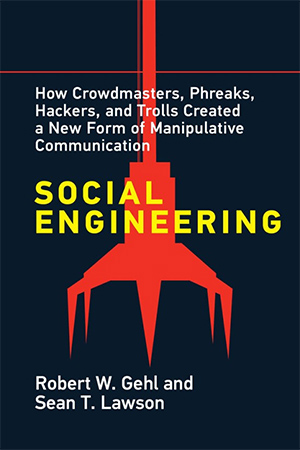
This article is adapted from Robert Gehl and Sean Lawson’s book “Social Engineering.” An Open Access edition of the book can be freely accessed here.
Although their backgrounds were different, Bernays warmed up to Ewen, seeing him as a member of an “intelligent few” who was “charged with the responsibility of contemplating and influencing the tide of history.” Ewen was, after all, a published author and a professor. Bernays saw himself as an intellectual, a theorist of public relations — the field he had helped create in the 1920s.
In his interview with Ewen, Bernays explained his theory of the role of public relations in society. Since Ewen was a member of the “intelligent few,” Bernays felt that he could be frank about the field’s elitism. In his book “PR!: A Social History of Spin,” Ewen writes:
As a member of that intellectual elite who guides the destiny of society, the [public relations] “professional,” Bernays explained, aims his craft at a general public that is essentially, and unreflectively, reactive. Working behind the scenes, out of public view, the public relations expert is an “applied social scientist,” educated to employ an understanding of “sociology, psychology, social psychology, and economics” to influence and direct public attitudes. Throughout our conversation, Bernays conveyed his hallucination of democracy: A highly educated class of opinion-moulding tacticians is continuously at work, analysing the social terrain and adjusting the mental scenery from which the public mind, with its limited intellect, derives its opinions.
Ewen, who had studied the writing of Bernays for years and had authored books on “captains of consciousness” and consent engineering, was probably not surprised to hear this hierarchical vision of society, where “people in power . . . shape the attitudes of the general population.”
Right up to the end of his life, Bernays held fast to his belief that leadership would come from an elite, technocratic few who would shape the masses’ reality and thus produce a better society.
Today, Bernays’s elitism sounds out of date, even dangerously anti-democratic. This is especially so when we are told that our opinions matter, that social movements can use contemporary media to spread their messages, and that we can finally speak truth to power. Even in the 1990s, when Ewen interviewed Bernays, the old man’s ideas seemed offensive.
Indeed, Bernays was a product of another time, the early 20th century, a time when elite experts — especially engineers — were seen as humanity’s saviours. Right up to the end of his life (Bernays died in 1995, a few years after Ewen’s visit), he held fast to his belief that the masses needed leadership, and that leadership would come from an elite, technocratic few who would shape the masses’ reality and thus produce a better society.
These elites used a variety of names for themselves: “public relations professional,” “news engineers,” “engineers of consent,” “crowd-men.” We will call them mass social engineers. Their roots lie in the turn of the 20th century, a period when engineering was held in high esteem, so much so that people believed society itself could be engineered just as easily as a bridge or canal could be.
Engineering Society
Writing in 1976, civil engineer and author Samuel C. Florman pined for the “Golden Age of Engineering” — a period he defined as 1850 to 1950. During this Golden Age, especially in the early 1900s, engineers aspired to be “benefactors to mankind.” Flush with pride over massive successes — canals, bridges, dams, and public infrastructures — engineers came to believe that their profession would lead to democratically distributed prosperity for all of mankind. “Since the lot of the common man had traditionally been one of unrelenting hardship,” Florman writes, “engineers during the golden age looked upon their works as man’s ‘redeemer from despairing drudgery and labour.’” Once the common man was released from drudgery, the engineers reasoned, he would inevitably become educated, cultured and ennobled, and this improvement in the race would also be to the credit of the engineering profession. Improved human beings, of course, would be happier human beings.
Hence, turn-of-the-century engineers aspired to take their skills in practical application of scientific knowledge and improve the lot of humanity. Arguably, they did — for example, new sanitation systems contributed greatly to the health of urban environments.
Given the seemingly boundless power of engineering and the flexibility of its central approach of applying scientific knowledge to practical problems, perhaps it is no surprise that the label “engineer” began to be used beyond the civil domain. At the beginning of the 20th century, we see specializations of the field: electrical engineering, municipal engineering, sanitary engineering, and industrial engineering, to name a few.
All engineering is social, of course, affecting how societies function. Some subfields of engineering are more directly targeted at human action than others. Sanitary engineering, for example, affected habits of waste and consumption in urban centres. Through a seemingly politically neutral process of building infrastructures such as sewage systems, engineers started to see how their work could directly shape society.
Through a seemingly politically neutral process of building infrastructures such as sewage systems, engineers started to see how their work could directly shape society.
The most direct expression of this engineering-of-society mindset that appeared in the early 1900s could not be clearer: the title of “social engineer.” In the late 19th and early 20th centuries, a new wave of experts emerged. They sought facts, spread middle-class white American values, and worked to make everything more efficient. They placed expertise and elite knowledge above mass democratic decision-making. Their use of the title “social engineer” helped them gain legitimacy by appropriating the successes of civil and mechanical engineering. They argued that scientific thinking could be applied to society.
Social engineers of this period came in three varieties. There were social reformers — Social Gospel Christian activists and early sociologists — who sought to reform society. There were management theorists, who were studying ways to manage workers in industrial capitalism. And later, there were public relations specialists, who mixed the language of social reform with the elitism of management and took to new mass media to shape society as a whole. This is the group we call mass social engineers.
Social Reformers
As multiple historians have noted, late 19th- and early 20th-century America was marked by anxieties: New immigrants from Eastern Europe were thought to be diluting American values. Striking workers and socialists clashed with laissez-faire capitalists, causing social unrest with competing visions of political economy. And growth in production was leading to inefficiencies in the market because of a lack of consumers. Perhaps the best expression of these anxieties came in the symbol of the crowd — the irrational masses of humanity who could not govern themselves due to their overwhelming passions, hysteria, and lack of conformity. Turn-of-the-century thinkers such as Gustave Le Bon, Walter Lippmann, and Gerald Stanley Lee warned of the dangers of these crowds. As Le Bon famously argued, “the divine right of the masses is about to replace the divine right of kings.” The crowd was supplanting traditional leaders, bringing about fears of mob rule.
As an antidote to the unruly crowd, social theorists began to explore ways to engineer a better society. This positivist vision was fuelled in part by the advent of new social sciences at the turn of the 20th century, particularly sociology, economics, and psychology, which promised to illuminate the previously messy world of human action. The basic idea was to implement the expert knowledge gleaned from sociological surveys, economic analysis, or psychological theorizing into specific social programs meant to guide the newly ascendant masses. As the president of the American Statistical Association put it in 1937, the application of social science to social ills would be social engineering, just as the application of physics to bridge-building was called engineering.
As social reformers scaled up their efforts, they found that their social expertise alone wasn’t enough; they needed to partner with powerful interests to implement their visions of benevolent social control.
An early example of this line of thinking is found in the work of Edwin Earp, a professor of Christian sociology at the Drew Theological Seminary. Blending together Methodist theology and social science, Earp’s 1911 book “The Social Engineer” promoted “greater emphasis in education upon applied science, upon those studies in mechanics and engineering that will equip men for doing things as well as knowing things.” Such practical application of social scientific knowledge — mixed with the moral guidance of Christian theology — would alleviate a range of social problems, including class conflict, racial strife, “woman and child labour,” divorce, “gamblers versus the people,” and above all, unemployment. For Earp,
Social engineering means not merely charities and philanthropies that care for the victims of vice and poverty, but also intelligent organized effort to eliminate the causes that make these philanthropies necessary, and it means also an attempt at a readjustment of our economic and industrial system by wise statesmanship through social control, so that the profits of social production may be more equitably distributed to all the legitimate factors in society.“
“Social control” was indeed a watchword of the social reformers, a watchword that would remain central to the mass social engineers we will discuss below.
Social control through social engineering found advocates among middle-class Americans concerned about integrating the waves of predominantly Eastern European immigrants into U.S. society. The Settlement House Movement is a key example. Found in cities such as Chicago, New York, and Boston, settlement houses were located in tenement neighbourhoods populated by new immigrants who came to work in factories. In them, affluent young men and women would settle “among the urban poor, share their lot, and help them improve their lives,” writes historian John F. McClymer in his book “War and Welfare: Social Engineering in America.” These social reformers ran English classes, kindergartens, arts, crafts, and music classes, and discussion salons, all with the intention of “Americanizing” the immigrants.
Initially, the settlement house movement was driven by followers of Social Gospel evangelism, but over time, it became secularized and professionalized. The administrators and participants of settlement houses started college programs and began collecting data on the inhabitants of the neighbourhoods they were located in, seeking out social causes for poverty and failures to assimilate into mainstream U.S. society, and offering solutions to this problem. This data collection was eventually scaled up from neighbourhoods to the metropolitan level in the form of the famous Pittsburgh Survey or the 1919 report Social Engineering in Cincinnati. As McClymer argues, “social engineers gloried in ‘facts.’ Their first recommendation, no matter what the issue, was invariably the collection of information.” Such sociological data gathering, analysis, and intervention became a “gateway to careers in social engineering.” Data gathering provided a wealth of professional opportunities for social reformers and a platform for social engineering intervention in municipal politics.
During World War I, these social reformers began to target society as a whole for social engineering via government bureaucracies, arguing that their expertise would be invaluable to the war effort. However, as social reformers scaled up their efforts to metropolitan or even national scale, they found that their social expertise alone wasn’t enough; they needed to partner with powerful interests to implement their visions of benevolent social control. They found such a partner among another set of engineer-minded people: scientific managers, who also adopted the term social engineering.
Managerialist Social Engineers
The social reformers were not the only ones using the term social engineering. So, too, were the Scientific Managers, adherents of the philosophy of Frederick Winslow Taylor, a trained engineer famous for his studies of how industrial workers did their jobs. Scientific management targeted the world of industrial work, seeking to make production more efficient.
Turn-of-the-century scientific managers believed, writes historian John Jordan, that “the same laws governing the physical world governed society, so discovery of these laws would lead to the possibility of rational social control, full employment, and economic stability.” This is precisely the same engineering mindset found among the social reformers. Indeed, the fact that many of these managers were actually university-trained engineers only increased their credibility. And the object of social control was eerily similar: The social reformers sought to address the anxiety of assimilating new immigrants, and the managerialists addressed the anxiety brought by labour unrest — that is, unruly crowds of workers brought together in the factories.
Scientific management was, of course, the brainchild of Frederick Taylor, who sought to manage industrial workers by forcing them to operate machinery and move through space in predetermined, efficient ways — the so-called “one best way” to get work done. But Taylor was not alone. His colleague Morris Cooke, explains Jordan, “expanded the domain of engineering from the study and control of materials and physical forces to the study and control of human beings. ‘Social engineering’ is a literal translation of [Cooke’s] definition of scientific management.” Scientific managers like Cooke see the application of an engineering approach as “simply another indication of the passing of what may be called the ‘craft spirit’ in human affairs,” where workers had control over the conception and execution of their jobs, in favor of “the rise of the scientific spirit,” where the manager-engineers would take control over work and the worker is akin to a cog in a machine. Taylor, Cooke, and their colleagues argued that such management would lead to happier and more prosperous workers, eliminating labor unrest.
Managerialism even found its way into the home. Frank Gilbreth’s partner Lillian (another engineer — indeed, one of the first women to get an engineering PhD) made scientific management a way of life in the home. As historian and journalist Jill Lepore writes in an article on the subject, in the 1920s, Lillian Gilbreth
engineered model kitchens — one was called the Kitchen Efficient — and purported to eliminate, for instance, five out of every six steps in the making of coffee cake. To make a lemon-meringue pie, a housewife working in an ordinary kitchen walked two hundred and twenty-four feet; in the Kitchen Efficient, Gilbreth claimed, it could be done in ninety-two.
Scientific Management’s entry into the home was accompanied by its entry into the communities around factories, meeting up with the social reformers who sought to Americanize the immigrant communities flocking to factory towns.
Thus, the social reformer and managerialist strains of social engineering intersected in several ways. They both valued efficiency — social welfare types wanted it for governance, the managers in industry. Both were deeply affected by World War I, subsuming their specific ambitions to the war effort, seeing the war effort as a means to establish the importance of expertise in managing society. For the social welfare school, the war was a chance to help, as historian Nancy Bristow puts it, “make men moral.” For the managerialists, it was an opportunity to further implement their schemes during wartime industrial production and thus keep unruly crowds of laborers under control. And both sought to manage the seemingly unruly crowds of new immigrants who were coming to America around the turn of the 20th century.
However, despite their societal-scale ambitions, both the social reformers and managerialists’ scope were limited to their specific domains. The social reformers operated through bureaucracies, often butting heads against politicians and old-money aristocrats. The managerialists were more successful — after all, they were working with powerful industrialists — but their scope was limited to the workplace, and they too butted heads with government regulators who were leery of big industry. The fullest expression of societal-scale, mass social engineering as a program of social control would take its final shape among a new profession that emerged in the 1920s, drew on the ideas of the social reformers, served the same industrial capitalists the managerialists served, and took as its vehicle the new communication technologies of the day. That profession was public relations, a field dedicated to the “engineering of consent.” These were the mass social engineers.
Public Relations and the Mass Social Engineers
Mass social engineers owe their livelihoods to the electrical engineers who brought about new, electronic mass media in the late 1800s and early 1900s. Telegraphy, radio, cinema, and later television, along with the older technology of newspapers, all created conditions of possibility for coordinated, nation-wide media campaigns.
Very quickly, the ambitions of previous social reformers and managerialists to shape society as a whole seemed possible: Mass media could reach more people than just those in settlement houses or on machine shop floors. Social control on a national level appeared within reach.
The first inklings of this newfound power came from the press agents and publicists of the turn of the 20th century. Social reform-minded journalists, dubbed “muckrakers,” “utilized the power of [the] new mass media to cause a political revolt against the continued abuse of the public interest by ruthless businessmen,” writes Scott Cutlip, a historian and a pioneer in the field of public relations. The businesses under attack, especially railroad corporations, fought back by hiring publicists who would provide industry-friendly news stories to newspapers and magazines and shift the tide of opinion in their favour. However, these efforts were often clumsy, leading to further backlash against railroad corporations.
The clumsiness of the early publicists quickly gave way to a more disciplined — indeed, engineering-like — approach in the form of a new field of public relations, led by Ivy Lee, Doris Fleischman, and Edward Bernays. Their new field of public relations borrowed the language of the social reformers and managerialists.
One of the borrowed terms was “social engineering.” For example, in a chapter in “The Engineering of Consent,” Bernays describes public relations as “a broad social-engineering process.” Like the social reformers and managerialists, the mass social engineers recognized the rhetorical power of claiming to do “engineering.”
They also shared the anxieties the social reformers and managerialists had about social upheaval and crowds. As public relations pioneer Ivy Lee argued in 1915, “this is a period of great unrest. Many strange economic and political theories are being preached.” Such times call for elite experts. “The crowd craves leadership,” Lee argued. The experts must lead, he argued, because demagogues would do so if they did not: if the crowd “does not get intelligent leadership, it is going to take fallacious leadership.” If that is so, Lee reasoned, then public relations professionals, working on behalf of the nation’s social, industrial, and political elites, ought to become the masters of crowds.
Lee’s thinking was heavily influenced by crowd theorists like Gustave Le Bon. And he wasn’t the only Lee concerned about crowds. His second cousin, clergyman Gerald Stanley Lee, argued in his 1913 book “Crowds: A Moving-Picture of Democracy” that the job of the public relations professional is “news engineering.” For Gerald Lee, the news engineer could control unruly crowds and rise to power: “The Secretaries of What People Think, and the President of What People Think—the engineers of the news in this nation—will be the men [sic] who govern it.” The news engineer would be a “crowd-man” capable of leading the masses. Gerald Lee’s arguments appear as a more forceful version of the Christian sociologist Edwin Earp and mix in the elitism of Taylor and the Scientific Managers. His innovation was to turn to the newspaper — the mass medium capable of shaping society if only a conscious news engineer would lead the way.
Gerald Lee’s theory of the news engineer was put into practice by his cousin Ivy Lee. Like the social reformers and managerialists, Ivy Lee and his fellow public relations pioneers took on the task of elite leadership, teaching crowds American values through social control. In addition, public relations adopted the social reformers and managerialists’ love of facts. As Lee argued,
We should see to it that in all matters the public learns the truth but we should take special pains to emphasize those facts which show that we are doing our job as best we can, and which will create the idea that we should be believed in. We should get so many good facts, so many illuminating facts, before the public that they will not magnify the bad. There will always be some bad facts in every business, as long as human nature is frail.
This love of facts translated to an engineering approach to public relations, what Fleischman and Bernays called the “engineering of consent.” A husband and wife team who began a successful public relations firm together in the 1920s, Bernays and Fleischman argued that consent engineering could take place via communication technologies, particularly newspapers and radio. Their use would be guided by the facts gathered from the emerging social and psychological sciences to understand and target “the group mind.” With “the aid of technicians . . . of communication” deploying the cutting edge, social scientific data collection and analysis techniques of the day — e.g., polls, surveys, interviews, and statistics — they believed that political leaders would be able to achieve the engineering of consent for their programs and to do so “scientifically.” Knowledge of the group mind would allow consent engineers to move beyond the techniques of “the old-fashioned propagandist,” who was not versed in science, to control crowds through systematic engineering.
Like Lee, Bernays cautioned that we must recognize that the emerging tools and techniques of mass communication could be used for good or evil, to promote or to subvert democracy, and that, as a result, “mastering the techniques of communication” for promoting socially constructive ends would be necessary for the maintenance of democratic societies. If done right, the consent engineers can become an “invisible government . . . the true ruling power of our country.”
Lee’s news engineering and Bernays and Fleischman’s engineering of consent are the fullest expressions of what we call mass social engineering: the implementation of social science knowledge for the purposes of controlling the crowd. Such a mass social engineering approach echoed the Christian social reformer Earp’s earlier call for “doing things as well as knowing things,” defining the practice of mass social engineering as “action based only on thorough knowledge of the situation and on the application of scientific principles and tried practices to the task of getting people to support ideas and programs.”
Mass social engineering is every bit as practical as bridge building: “Just as the civil engineer must analyze every element of the situation before he builds a bridge,” Bernays wrote, “so the engineer of consent, in order to achieve a worth-while social objective, must operate from a foundation of soundly planned action.” And like any engineer, the mass social engineer has to apply science. Fleischman clarified the engineering approach, arguing for a methodology that public relations professionals continue to use to this day: research, plan, communicate, evaluate. In a 1935 speech, Fleischman called for the women’s fashion industry to adopt this method for a more efficient propaganda program that could communicate the latest fashions with “engineering exactness.” “With this as a basis,” she informs her audience,
you will set the keynote for the public, you will eliminate waste . . . and enable yourself really to avail yourself of the tools and techniques of propaganda without loss, with fullest efficiency and ultimately with the wholehearted approval of the public and the individual industries.
Thus, much like the social reformers who gathered data on their target neighborhoods, or the managerialists with their efficiency-minded work motion studies, Lee, Bernays, and Fleischman prescribed a method for mass social engineers: get the facts, study the public, discern psychological ways to influence them, and communicate with them, ideally by creating newsworthy events.
But more so than social reformers or managerialists, their approach was expansive. Mass social engineering had wide applications across every domain of American life, from consumption (e.g., Fleischman’s recommendations to the fashion industry) to support for industry (e.g., Lee’s work for the railroads) to support for war efforts (e.g., Bernays’s work as part of the World War I Creel Committee). This was crowd mastery on a large scale. Overall, if the mass social engineer is successful, Bernays famously argued “the ideas conveyed by the words will become part and parcel of the people themselves.”
An Open Access edition of “Social Engineering” can be freely accessed here.
Robert W. Gehl is F. Jay Taylor Endowed Research Chair of Communication at Louisiana Tech University, author of “Weaving the Dark Web,” and co-author (with Sean Lawson) of “Social Engineering,” from which this article is adapted.
Sean T. Lawson is Associate Professor of Communication at the University of Utah, Non-Resident Fellow at the Brute Krulak Center for Innovation & Future Warfare at the Marine Corps University, and author of “Cybersecurity Discourse in the United States.“
Previously if you only had GA4 set up for your site, Search Console Insights would not work but now it does.
Google has added support for sites using Google Analytics 4 to show data in Google Search Console Insights. Previously, if you only set up GA4 for your site, Search Console Insights would show you almost no information but now that has changed.
The announcement. Google announced this on Twitter saying “Have a GA4 property but couldn’t use it with Search Console Insights? Now you can! We are rolling out GA4 support, check it out!”
What is Search Console Insights. Search Console Insights is designed specifically for content creators and publishers and “can help them understand how audiences discover their site’s content and what resonates with their audiences,” according to Google. The Search Console Insights reporting is powered by data from both Google Search Console and Google Analytics.
When did it first launch. Google launched a beta of this last year and then opened limited access to some content creators to debug it and give Google feedback on the reports. Back then, Google said, “it’s a way to provide content creators with the data they need to make informed decisions and improve their content.”
What it looks like. Here is a screenshot of some of the reports:
Why we care. If you have set up a new site and only used Google Analytics 4, now you can see a lot more data in your Search Console Insights report. Also, with Google doing away with Universal Analytics 3 in about a year from now, this is an important integration Google had to make.
Barry Schwartz a Contributing Editor to Search Engine Land and a member of the programming team for SMX events. He owns RustyBrick, a NY based web consulting firm. He also runs Search Engine Roundtable, a popular search blog on very advanced SEM topics. Barry can be followed on Twitter here.
During my time in search, there are certain ranking factors that I’ve changed my perspective on. For instance, after coming to Go Fish Digital and working on internal linking initiatives, I started to realize the power of internal links over time. By implementing internal links at scale, we were able to see consistent success.
Freshness is another one of these factors. After working with a news organization and testing the learnings gained from that work on other sites, I started to see the immense power that content refreshes could produce. As a result, I think the entire SEO community has underrated this concept for quite some time. Let’s dig into why.
Reviewing news sites
This all started when we began to work with a large news publisher who was having trouble getting in Google’s Top Stories for highly competitive keywords. They were consistently finding that their content wasn’t able to get inclusion in this feature, and wanted to know why.
Inclusion in “Top stories”
We began to perform a lot of research around news outlets that seemed quite adept at getting included in Top Stories. This immediately turned our attention to CNN, the site that is by far the most skilled in acquiring coveted Top Stories positions.
By diving into their strategies, one consistent trend we noticed was that they would always create a brand new URL the day they wanted to be included in the Top Stories carousel:
As an example, here you can see that they create a unique URL for their rolling coverage of the Russia-Ukraine war. Since they know that Google will show Top Stories results daily for queries around this, they create brand new URLs every single day:
This flies in the face of traditional SEO advice that indicates web owners need to keep consistent URLs in order to ensure equity isn’t diluted and keywords aren’t cannibalized. But to be eligible for Top Stories, Google needs a “fresh” URL to be indexed in order for the content to qualify.
After we started implementing the strategy of creating unique URLs every day, we saw much more consistent inclusion for this news outlet in Top Stories for their primary keywords.
However, the next question we wanted to address was not just how to get included in this feature, but also how to maintain strong ranking positions once there.
Ranking in “Top stories”
The next element that we looked at was how frequently competitors were updating their stories once in the Top Stories carousel, and were surprised at how frequently top news outlets refresh their content.
We found that competitors were aggressively updating their timestamps. For one query, when reviewing three articles over a four-hour period, we found the average time between updates for major outlets:
USA Today: Every 8 Minutes
New York Times: Every 27 minutes
CNN: Every 28 minutes
For this particular query, USA Today was literally updating their page every 8 minutes and maintaining the #1 ranking position for Top Stories. Clearly, they were putting a lot of effort into the freshness of their content.
But what about the rest of us?
Of course, it’s obvious how this would apply to news sites. There is certainly no other vertical where the concept of “freshness” is going to carry more weight to the algorithm. However, this got us thinking about how valuable this concept would be to the broader web. Are other sites doing this, and would it be possible to see SEO success by updating content more frequently?
Evergreen content
Fortunately, we were able to perform even more research in this area. Our news client also had many non-news specific sections of their site. These sections contain more “evergreen” articles where more traditional SEO norms and rules should apply. One section of their site contains more “reviews” type of content, where they find the best products for a given category.
When reviewing articles for these topics, we also noticed patterns around freshness. In general, high ranking articles in competitive product areas (electronics, bedding, appliances) would aggressively update their timestamps on a monthly (sometimes weekly) cadence.
For example, as of the date of this writing (May 25th, 2022), I can see that all of the top three articles for “best mattress” have been updated within the last 7 days.
Looking at the term “best robot vacuum”, it looks like all of the articles have been updated in the last month (as of May 2022):
Even though these articles are more “evergreen” and not tied to the news cycle, it’s obvious that these sites are placing a high emphasis on freshness with frequent article updates. This indicated to us that there might be more benefits to freshness than just news story results.
Performing a test
We decided to start testing the concept of freshness on our own blog to see what the impact of these updates could be. We had an article on automotive SEO that used to perform quite well for “automotive seo” queries. However, in recent years, this page lost a lot of organic traffic:
The article still contained evergreen information, but it hadn’t been updated since 2016:
It was the perfect candidate for our test. To perform this test, we made only three changes to the article:
Updated the content to ensure it was all current. This changed less than 5% of the text.
Added “2022” to the title tag.
Updated the timestamp.
Immediately, we saw rankings improve for the keyword “automotive seo”. We moved from ranking on the third page to the first page the day after we updated the content:
To verify these results, we tested this concept on another page. For this next article, we only updated the timestamp and title tag with no changes to the on-page content. While we normally wouldn’t recommend doing this, this was the only way we could isolate whether “freshness” was the driving change, and not the content adjustments.
However, after making these two updates, we could clearly see an immediate improvement to the traffic of the second page:
These two experiments combined with other tests we’ve performed are showing us that Google places value on the recency of content. This value extends beyond just articles tied to the news cycle.
Why does Google care?
E-A-T considerations
Thinking about this more holistically, Google utilizing the concept of freshness makes sense from their E-A-T initiatives. The whole concept of E-A-T is that Google wants to rank content that it can trust (written by experts, citing facts) above other search results. Google has a borderline public responsibility to ensure that the content it serves is accurate, so it’s in the search giant’s best interest to surface content that it thinks it can trust.
So how does freshness play into this? Well, if Google thinks content is outdated, how is it supposed to trust that the information is accurate? If the search engine sees that your article hasn’t been updated in five years while competitors have more recent content, that might be a signal that their content is more trustworthy than yours.
For example, for the term “best camera phones”, would you want to read an article last updated two years ago? For that matter, would you even want an article last updated six months ago?
As we can see, Google is only ranking pages that have been updated within the last one or two months. That’s because the technology changes so rapidly in this space that, unless you’re updating your articles every couple of months or so, you’re dramatically behind the curve.
Marketplace threats
The concept of freshness also makes sense from a competitive perspective. One of the biggest weaknesses of an indexation engine is that it’s inherently hard to serve real-time results. To find when content changes, a search engine needs time to recrawl and reindex content. When combined with the demands of crawling the web at scale, this becomes extremely difficult.
On the other hand, social media sites like Twitter don’t have this issue and are made to serve real-time content. The platform isn’t tasked with indexing results, and engagement metrics can help quickly surface content that’s gaining traction. As a result, Twitter does a much better job of surfacing trending content.
Thinking about the web from a platform based perspective, it makes sense that most users would choose Twitter over Google when looking for real-time information. This causes a big threat to Google, as it’s a reason for users to migrate off the ecosystem, thus presenting fewer opportunities to serve ads.
Recently in Top Stories, you now see a lot more “Live Blog Posts”. These articles utilize LiveBlogPosting structured data, which signals to Google that the content is getting updated in real-time. While looking for real-time URLs across the entire web is daunting, using this structured data type can help them better narrow in on content they need to be crawling and indexing more frequently.
Google seems to be aggressively pushing these live blogs in Top Stories as they often see strong visibility in Top Stories results:
This might be a strategic move to encourage publishers to create real-time content. The goal here could be increased adoption of content that’s updated in real-time with the end result of showcasing to users that they can get this type of content on Google, not just Twitter.
Utilizing these concepts moving forward
I think as an industry, sometimes there’s room for us to be more creative when thinking about our on-page optimizations. When looking at how to improve pages that have lost traffic and positions over time, we could take freshness into consideration. When looking at pages that have lost prominence over time, we might want to consider checking if that content is also outdated. Through testing and experimentation, you could see if updating the freshness of your content has noticeable positive impacts on ranking improvements.