Author

editor

Browsing

By Lauren Fox

At Brafton, we’ve found our newsletter subscribers to be our best, most engaged audience. These are our people. They live and breathe content marketing, just as we do. Some even partner with us to create and execute awesome content marketing campaigns for their brands.

Over the last two and a half years, we’ve placed a significant emphasis on growing this subscriber base, and we’ve achieved a 170% increase (and counting!) across 84 countries.

Newsletter subscriptions coming from organic search traffic.

If you’re reading this article, you’re probably looking for ways to grow your newsletter list, too.

SEO blog content has been the foundation for our growth. How does it work? Simple: We create blog content that ranks highly in search, and we make it super easy (and tempting) for readers to subscribe to our newsletter once they visit our blog.

While the concept seems straightforward, the effort is anything but.

Read on to learn how to get users from your website onto your newsletter list, and why email marketing and SEO work so well together.

Part 1: Attracting potential subscribers to your site

The first part of this newsletter growth process is actually getting your potential newsletter subscribers to your website. Here are 5 solid strategies for doing just that:

1. Keyword research

Our blog has been around since April 2010. We’ve published over 7,500 articles in those 12 years.

That’s a lot of content.

But it wasn’t until we rolled out a data-led keyword research and content creation strategy in 2018 that we started seeing significant traction with organic traffic growth:

I won’t go into detail about the strategy we used to get there (you can read about it here), but I will wax poetic about the importance of keyword research and topic selection if you’re looking to grow your blog — and your newsletter subscriber list as a result.

Keyword selection is crucial.

If you don’t choose the right topics to write about, you won’t rank highly in search results. And if you’re not showing up in search, no one is going to come to your website to read your content — or to subscribe to read more from your brand.

2. Great content writing

Great content is your foot in the door with your next potential newsletter subscriber. In an ideal scenario, they come to your site, they read your content, they’re incredibly impressed, and they happily enter their email address to get more of the same from your brand directly into their inbox.

Writing great content not only gets you to appear more often in search and improves your organic visibility, but it’s also the best way to convince a reader to sign up for your newsletter.

What do I mean when I say “write great content?” Well, there’s a creative and scientific element to this part of the process, and we do it because it works:

Using the briefing process we developed, and an extremely talented pool of in-house writers, we’re able to create content that comprehensively covers all potential subtopics and answers all potential questions a searcher might have about the target keyword. In effect, we attempt to use data to create the most comprehensive content on the web for each topic we choose to cover.

This keeps us competitive and ranking well in SERPs, which means more chances for a searcher to land on our blog and subscribe to our newsletter.

3. Content reoptimization

Sometimes the content we create gets old. It becomes outdated and stale, or new competitors create better content than ours and start outranking us.

Reoptimizing a piece of content helps us attract more potential newsletter subscribers to our blog in two main ways:

  1. By reoptimizing the blog content, we improve our ranking for our target keyword and, as a result, we start getting more clicks to the page for the targeted audience searching that term.
  2. By improving the comprehensiveness of the piece by covering more topics, we rank for a larger number of variant keywords and then drive more clicks to the page.

Here’s the data from a blog post that was underperforming before we did a reoptimization on March 30, 2021, and what newsletter subscription goal completions looked like after the reoptimization, year-over-year:

An increase in newsletter subscription goal completions YoY from a content reoptimization.

Even though the increase in total subscriptions here is relatively small, this was just for a single blog post. Imagine doing this for 50 blog posts a year. At scale, it can make an impact.

4. Audio/visuals in blog content

Some people are just more visual learners than others. They prefer eye-catching infographics and video tutorials over hundreds of words of straight-up written content. And I’m not just saying this without any actual data to back up my claim.

We’ve consistently found that blogs with infographics drive more clicks to our site (compared to blogs that do not feature infographics).

Even though our blogs with infographics make up just ~3% of all of our blog pages, they generate 25% of all the clicks to our blog pages and 21% of all the impressions generated by blogs in search:

They also have a higher CTR (2.0% vs 1.6%) and a better average keyword position (22.4 vs 30.2):

Finally, they tend to generate more backlinks organically:

Blog post: The Anatomy of a Marketing Ideation Workshop (Infographic)

How does this impact our newsletter list growth?

These pages drive more clicks, rank better in search and get linked back to more often. All of these results drive a bigger audience of potential newsletter subscribers to our website to read our content and click “Subscribe.”

5. Pillar pages

When it comes to attracting an organic search audience that is highly likely to subscribe to our newsletter, one of the top strategies we’ve rolled out in the last year is our pillar page strategy.

Over the course of 2021, we published five of these long-form guides. They’re a cross between a blog post and a landing page — and they are search-targeted.

Example of a pillar page targeting the keyword “what is content creation.”

Compared to our blog content, users coming to the site to view these pages tend to bounce less, view more pages per session and subscribe to our newsletter at a higher rate (1.11% vs 0.38%):

I’m not recommending you completely ditch your blog strategy for pillar pages, but they are a great supplemental way to generate more newsletter subscribers per page.

Part 2: Improving on-site newsletter conversion (CRO)

We’ve discussed plenty of ways to improve the content on the page to attract more visitors from organic search. But what happens once they get there? How do we actually get visitors to convert from first-time readers to weekly email subscribers?

Enter: Conversion rate optimization!

CRO is all about finding ways to get site visitors from reading your blog in their browser to receiving your content directly in their inbox. (Which is the ultimate goal, of course). Read on for four on-page elements that’ll likely improve your newsletter subscription conversion rates:

6. Pop-up form

There’s a reason why nearly every site you visit on the web has an annoying pop-up form asking you to subscribe to their newsletter. It’s because it works.

There was a time when our blog didn’t have a pop-up form (back around 2017). We decided to run a test and added the first iteration of our pop-up form, which looked like this:

Here are the results we saw:

  • Daily subscriptions without pop-up: 1.59
  • Daily subscriptions with pop-up: 8.32
  • Change: +532%

We happily kept that pop-up form in its place and never looked back.

In the years since we originally implemented the pop-up, we’ve modified how it behaves so that it’s more likely to capture a form fill. We:

  • Redesigned the pop-up to be slightly more clear in terms of what the user is signing up for.
  • Adjusted the timing on the pop-up. It used to come up too soon for the reader to make any real judgment on whether they might want to subscribe. We decided to go with 30 seconds, as this time is enough for the user to get the flavour of the post, but still retains most of the users (as we found they start to drop off after 45 seconds).

These may seem like small modifications, but cumulatively they improve the chances that we’re serving the pop-up form at the exact right time for a reader.

We’ve also learned over the years that the more ways website visitors have to subscribe to our newsletter, the better. Here are 3 more elements that we’ve included on-page to drive up our subscription rate:

7. Sticky sidebar

This is one of my favourite CTA elements and I think it really personalizes the experience for the reader on a blog. The sticky sidebar follows you down the page as you read, and the “Subscribe” CTA is always present on the screen. It’s not overly distracting, but it does make it super easy for the reader to subscribe at any time (even if they’ve closed the pop-up form).

There was a period when we removed this sidebar from our blog pages and our newsletter conversion rate plummeted. It ticked back up once we added the sidebar back to the page. Lesson learned!

8. Inline subscribe CTA

We started embedding a CTA directly into each blog post. Its design is meant to not be too interruptive, but it’s present as yet another way for users to subscribe.

This inline CTA is included once per blog post, around 50% down the page. We intentionally do not place it too close to the end of the article. This improves our chances of catching someone once they’ve read a significant portion of the content but won’t be missed if they don’t finish reading the entire piece.

9. Dedicated newsletter sign-up page + nav link

As a final on-site CRO element, we launched a dedicated landing page to promote our newsletter:

Like any good conversion landing page, it succinctly (and persuasively, we hope) explains what subscribers get by entering their contact information.

And if they’re not yet convinced, we’ve included a sampling of some of our best blog content for them to peruse before they make the final decision to subscribe:

Every single element on this page is geared toward prompting users to fill out the form.

We use this landing page as a standalone promotional tool both on site and through external channels (paid and organic alike).

  • We advertise the page on Google and social platforms.
  • We share a link to this page in our email marketing — so friends of subscribers can easily subscribe.
  • We even give it a prominent spot in our main navigation:

You may think it’s not worth it to add a “Subscribe” button to your main navigation — it’s pretty important real estate, after all — but it will get you more newsletter subscribers organically as users land on and navigate through your site.

And people do actually navigate to this page and subscribe this way. Since launching the page in January 2021, it accounted for 17.64% of our total on-site newsletter goal completions (in 2021) with a whopping 24.12% conversion rate.

All the on-site elements I’ve covered may seem like tiny, insignificant changes but they 1) took significant research, analysis and effort to implement, and 2) they worked.

Since adding these elements in 2021, we have doubled our newsletter subscription conversion rate:

Small changes can yield big results — and every new newsletter subscriber makes a difference.

Part 3: Enhancing subscriber engagement

Now that we’ve looked at ways to grow your subscriber list and improve your subscription conversion rate, I want to switch gears and talk about what happens once someone does subscribe — and how content is invaluable to and inseparable from newsletter marketing.

Content is what fuels newsletter marketing. You cannot have one without the other. Sure, you can technically run a newsletter that solely shares external sources, but without some sort of original content to include in the email, you’re not going to retain subscribers for very long.

As I mentioned earlier, our newsletter audience is our best, most engaged audience. We hear time and time again about how much they like the content we produce. We like to reward them with even more great content.

Here are the primary ways we’ve kept our newsletter audience engaged with content:

10. Downloadable content & webinars

By offering different types of content, like downloadable assets (eBooks and white papers) and live-streamed webinars and workshops, we’re giving our audience more ways to connect with our brand.

They can dive deeper into a specific topic in their own time with a white paper, or get their real-time questions answered with a webinar or workshop.

From a marketing results perspective, we can see which contacts are most engaged with the content we’re offering by tracking email click-through rate, downloads and webinar sign-ups. It also gives us important insights into which topics and formats work best to improve user experience, and we can double down on those content types in the future.

11. Surveys

One of my favourite ways we’ve connected with our newsletter audience over the years is through surveys.

We ask them questions like:

  • What types of content marketing resources do you want more of?
  • What’s your favourite area of content marketing to learn about?
  • How do you rate your skill level with content marketing (and other areas of marketing)?
  • What are your favourite hobbies outside of content marketing?

The feedback they provide is invaluable to our marketing efforts. It’s one of the best ways to know exactly what our newsletter audience wants from us.

If you’re ever unsure about what your audience thinks of your newsletter, or where you might be lacking, a survey is arguably your best resource for those answers. And it doesn’t need to be a complex multi-question survey either — it can be a simple “How are we doing?” button you include in each send.

12. New layout for better user experience

We’ve also changed the look and feel of our weekly newsletter over the years. And we continually work to improve the user experience with these design updates.

Our newest iteration from 2021 contains a variety of sections based on what we’ve found to be most useful for our audience:

  • A roundup of recently published blog posts.
  • A rotating featured content section where we can promote our latest infographic, job opening or employee spotlight.
  • A visual CTA to promote an eBook download or a webinar registration.

My favourite sections of our newsletter are:

Recommended reading

Here, we share industry-related content from other brands in the space. Even if we didn’t create the content ourselves, we want to provide these additional resources to help our audience stay ahead of the content marketing curve. The hope is that they get everything they need (content marketing-wise) from our newsletter, and keep opening up our emails week after week.

Subscribe CTA: “Did you get this email from a friend?”

This section links out to our newsletter subscribe landing page. It’s here to help folks subscribe to our newsletter if it’s been forwarded to them from a friend. People forward emails all the time, and this way, we’ve built in an easy way to encourage new readers to subscribe to our content. It’s a CTA that doesn’t change week to week, so it doesn’t take any effort to maintain, but it’s there to organically generate more newsletter subscribers.

And it does: We’ve found that 10% of people who subscribe via email do so on this page coming from the newsletter.

When determining the best newsletter content and layout for your brand, it’s always most important to do what works best for your audience. You may not achieve the perfect newsletter format right out of the gate, but over time, and by gathering feedback (via surveys or organically through email replies), you’ll get closer to giving them exactly what they want.

When I talk about enhancing newsletter engagement, our goal has always been the same: Be the best possible content marketing resource for our audience. As a result, we’ll get their attention and their loyalty, and possibly even their referral to a friend or colleague — and that helps us continue to grow our subscriber base.

Conclusion

Newsletter marketing has been at the core of Brafton’s marketing strategy for many years now, and we’ve found time and time again that there is plenty of reason to reinvest our efforts into this growth.

I hope the methods I’ve shared have inspired you with plenty of ways to grow your own newsletter list.

Because once you’ve got those readers subscribed, you’ll be unstoppable.
By Lauren Fox

Lauren Fox is the Director of Marketing at Brafton. She has grown the Brafton blog from 30K to 230K monthly visitors and tripled its newsletter subscriber base over the course of three years. Her expertise ranges from content research and planning to performance analysis, with a focus on content strategy.

Sourced from MOZ

By Johann Hari

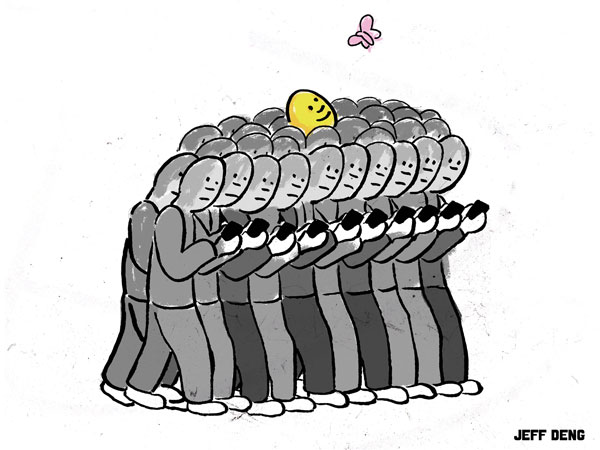
Johann Hari: We just have to say that a business model that’s premised upon discovering the weaknesses in your attention in order to hack it and sell it to the highest bidder is fundamentally immoral and we will not allow it.

Interviewer: What would replace it?

Hari: One possibility is subscription – and everyone knows how platforms like Netflix and HBO work. Another model is something like the sewer system. Before we had sewers, we had shit in the streets, we had cholera. So we all paid to build the sewers and we all own the sewers together. And just as we all own the sewage pipes together, we might want to own the information pipes together, because we are getting the attentional equivalent of cholera and the political equivalent of cholera.

Whatever alternative model we adopt, the crucial thing is to understand in this different model, your attention is no longer the product they sell to the real customer, the advertiser. Suddenly, you are the customer.

We need an attention movement to reclaim our attention and focus. And it requires a shift in perspective. When I couldn’t focus and pay attention, I would blame myself. I’d say, “Oh, you’re weak. You’re lacking in willpower.” This is being done to all of us. It’s like we’re having itching powder dumped on us all day and then we’re being told, “You know what, buddy, you might want to learn how to meditate, then you wouldn’t scratch so much.” We need to get out of this psychology and remind ourselves that we’re not medieval peasants begging at the court of King Zuckerberg for a few little crumbs from his table.

Feature Image Credit: Jeff Deng

By Johann Hari

Sourced from ADBUSTERS


By Hillel Fuld

How to bring your LinkedIn to the next level.

As remote work continues to enter the mainstream thanks to the pandemic, professional online platforms are becoming increasingly important.

There is a definite uptick in LinkedIn usage as far as I can tell and for me, that results in a massive spike in engagement.

However, people continue to miss out on amazing opportunities on LinkedIn due to poor etiquette, and that has to stop.

Here are five things you should do after connecting with someone on LinkedIn:

It might seem trivial, but say hello.

Every time someone adds me on LinkedIn, or for that matter, when I add someone and they accept, I simply say hello. Way too many people send a pitch as their first message and that just leaves a really bad first impression. It makes you feel like they only added you in order to sell you their product.

So as soon as you connect with someone, simply say hello. No pitch, no agenda, just a “Nice to connect” message. Remember this is social media. Don’t forget the social element.

Take a look at their profile and familiarize yourself with their work.

If this connection is to lead to a possible collaboration of some sort, you need to know what this person does, what they’ve done, and what interests them. If I had a dime for every irrelevant pitch I got on LinkedIn, I’d probably be able to buy the whole platform.

This is such an important stage that sadly many people skip. I’m not talking about spending hours studying this person or conducting a background check, just skim their profile and understand who this person is professionally.

Ask them about their work.

This is somewhat of a networking hack. Often times, I’ll sit down at a meeting and the entrepreneur I’m sitting with jumps right into demoing their product. Other founders begin the meeting with their pitch.

Here’s an important tip. People like to talk about themselves, especially if they do work they’re proud of.

So instead of immediately pitching or selling that person on something, simply write “It’s great to connect. What are you working on nowadays?”

It’s so simple yet so effective.

Think about what you can do for them.

Once again, so many people get this wrong. One of my favourite strategies in the world is Ryan Holiday’s Canvas Strategy. Allow me to quote you a few of my favourite sentences.

“There is an old saying, “say little, do much”. What we really ought to do is update and apply a version of that to our early approach. Be lesser, do more.

Imagine it for every person you met, you thought of some way to help them, something you could do for them? And you looked at it in a way that entirely benefited them and not you?

The cumulative effect this would have over time would be profound: you’d learn a great deal by solving diverse problems. You’d develop a reputation for being indispensable. You’d have countless new relationships. You’d have an enormous bank of favours to call upon down the road.

That’s what the canvas strategy is about – helping yourself by helping others. Making a concerted effort to trade your short-term gratification for a long-term payoff. Whereas everyone else wants to get credit and be “respected”, you can forget credit. You can forget it so hard that you’re glad when others get it instead of you – that was your aim, after all. Let te other take their credit on credit, while you defer and earn interest on the principal.”

Instead of thinking “What can this person do for me?”, think “What can I do for this person?”

If there is synergy, set up a call to explore.

First of all, contrary to the way many people use the word, ‘Collaboration’ doesn’t mean a person helping you or advancing your professional goals. It means both sides helping each other.

If, after completing all the above steps, you think there is potential for a collaboration, ask them if they’d be up to explore synergies over a call or a Zoom.

Online messaging is a good way to get the conversation started, but if you’re going to get granular, a phone call will always be more effective.

Of course, if you need this person more than they need you, or even in general, offer to be flexible on time and once you agree on a time slot, offer to send the calendar invite with all the details so it’s locked in.

LinkedIn has tremendous potential and I can tell you that I’ve had endless wins on the platform, but like anything else, it can be abused or misused, which will lead you nowhere in the best case scenario, or even get you blocked in the worst case scenario.

Like any other social platform, your golden rule should be two simple words: “Be human”.

Feature Image Credit: Getty Images

By Hillel Fuld

Tech marketer and startup adviser@hilzfuld

Sourced from Inc.

By Christianna Silva

In 2021, a Facebook user filed a lawsuit because they didn’t think they were getting a fair shot at viewing advertisements. Wanting to see ads might seem absurd — if you’re anything like me, you want ads off your social media experience at all costs. Still, to a 55-year-old prospective tenant in the Washington, D.C. area, it was about more than a simple publicity blurb on Facebook. It, the plaintiff argued, had grave real-life consequences.

So Neuhtah Opiotennione filed a class-action lawsuit against nine companies that manage various apartment buildings in the D.C. area, alleging that they engaged in “digital housing discrimination” by excluding older people — like her — from viewing advertisements on Facebook. She alleges that because the defendants deliberately excluded people over the age of 50 from viewing their ads — something you could once do on Facebook — she was denied the opportunity to receive certain housing advertisements targeted to younger potential tenants.

“In creating a targeted Facebook advertisement, advertisers can determine who sees their advertisements based on such characteristics as age, gender, location, and preferences,” the lawsuit reads. The plaintiff alleged that rental companies used Facebook’s targeting function to exclude people like her because of her age, instead directing the ads to younger prospective tenants.

David Brody, counsel and senior fellow for privacy and technology at the Lawyers’ Committee for Civil Rights Under Law, which filed a brief in favor of the plaintiff, said in a press release that “Facebook is not giving the user what the user wants – Facebook is giving the user what it thinks a demographic stereotype wants. Redlining is discriminatory and unjust whether it takes place online or offline, and we must not allow corporations to blame technology for harmful decisions made by CEOs.”

The case was ultimately dismissed because the judge felt that online targeting of advertisements causes no injury to consumers. However, Ballard Spahr LLP, a law firm that focuses on litigation, securities and regulatory enforcement, business and finance, intellectual property, public finance, and real estate matters, said that the ruling could have a significant impact on how we view discrimination online.

“It seems likely to make it more difficult for private parties to attempt to bring lawsuits related to online ad targeting on social media networks or through methods like paid search,” the firm said. “But, secondarily, we wonder whether it will serve as a barrier to regulatory actions as well.”

Opiotennione v. Bozzuto Mgmt. is just one of many lawsuits against Facebook alleging discrimination. We already know how nefarious these ads can be, from spying on us to collecting our data and creating a world with further devastating partisan divides. But there’s something else harmful going on with ads online, particularly on one of the largest ad platforms ever, Facebook. According to Facebook‘s parent company, Meta, the platform has a total advertising audience of more than two billion people. Any one of them could be missing out on ads — for housing, credit opportunities, and other important issues that impact the wealth gap — due to digital redlining. Here’s why that’s important.

Wait, what is digital redlining?

Traditional redlining is when people and companies purposefully withhold loans and other resources from people who live in specific neighbourhoods. This tends to land along racial and financial divides, and it works to deepen those divides. It can happen online, too.

Digital redlining refers to any use of technology to perpetuate discrimination. It’s how The Greenlining Institute, a California-based organization that works to fix digital redlining, describes the practice of internet companies failing to provide infrastructures for service — such as broadband internet — to lower-income communities, as it’s seen as less profitable to do so.

That kind of digital redlining results in lower-income people having to turn to prepaid plans and other more expensive options for internet while also having to deal with slower speeds than those in wealthier — and often whiter — communities, which have a digital infrastructure. The Greenlining Institute isn’t the only organization working to fix this kind of digital redlining. The Federal Communications Commission (FCC) is also forming an agency task force focused on combating digital discrimination and promoting equal broadband access nationwide.

But digital redlining also refers to unfair ad-targeting practices. According to the ACLU, online ad-targeting can replicate existing disparities in society, which can exclude people who belong to historically marginalized groups from opportunities for housing, jobs, and credit.

“In today’s digital world, digital redlining has become the new frontier of discrimination, as social media platforms like Facebook and online advertisers have increasingly used personal data to target ads based on race, gender, and other protected traits,” the ACLU said in a press release from January. “This type of online discrimination is harmful and disproportionately impacts people of colour, women, and other marginalized groups, yet courts have held that platforms like Facebook and online advertisers can’t be held accountable for withholding ads for jobs, housing, and credit from certain users. Despite agreements to make sweeping changes to its ad platform, digital redlining still persists on Facebook.”

It’s not that digital redlining is more harmful on Facebook than it is on other online platforms, but, as Galen Sherwin, a senior staff attorney with the ACLU Women’s Rights Project, told Mashable, it’s “more prevalent in that Facebook is an industry leader and has such a huge market share here in this space.” Facebook says its algorithm treats everyone equally and the fault lies with its advertisers — advertisers that pay Facebook, and where the majority of its money is made.

“The fact that Facebook has offered these tools that not just permit, but invite advertisers to exclude users based on certain characteristics, including their membership and protected classes is tremendously harmful,” Sherwin said. “And even though there have been some steps to mitigate those harms and to remove the worst or most blatant of the ways in which the platform can operate that way in the housing, employment and credit space, there’s still a really long way to go before that’s eradicated truly from the space.”

Many activists agree that while Facebook has made moves to resolve its ad discrimination problems since a 2016 report from ProPublica, not enough has been done.

How does digital redlining work?

Let’s say a realtor group wants to only share ads for their homes with wealthy, upper-class people who live in upper-class neighbourhoods and exist within upper-class communities, or a restaurant wants to only share ads for an upcoming job opening to specific candidates. When that company chooses a platform like Google or Facebook to push out those ads, it will look for ways to siphon its ad coverage to those specifically targeted groups. Targeting tools on those platforms allow companies to choose who can and cannot see their ads. On Facebook, users can take two general approaches to creating a target audience: specific and broad. Specific targeting can lead to a potential audience that’s smaller, like parents living in Tucson, Arizona, while broad targeting includes categories like gender and age.

After many court-based struggles (we’ll get to that shortly), housing, employment, and credit have been deemed special ad categories. That means they have restricted targeting options in their ads manager. A company looking to place ads for housing, employment, or credit can still target an advertisement to a specific audience instead of just sending it out widely. Still, they can’t do it based on protected characteristics, such as age, gender, and where the potential consumers live. At least, that’s the goal.

Facebook wrote in 2019 that “these ads will not allow targeting by age, gender, zip code, multicultural affinity, or any detailed options describing or appearing to relate to protected characteristics,” like race, sex, religion, national origin, physical disability, or sexual orientation and gender identity. Advertisers for these protected classes can also not use lookalike audiences, a way to reach new people likely to be interested in a business because they are similar to that businesses’ existing customers.

But is that enough?

Morgan Williams, the general counsel of the National Fair Housing Alliance, told Mashable that there are other aspects of Facebook’s platform that cause scrutiny and concern, despite the work Facebook has done. Research from October 2021 pulled from public voting records in North Carolina analysed the impacts of Facebook’s advertisements and found that it has discriminatory outcomes.

“This was true for both the Lookalike Audience tool and the Special Ad Audience tool that Facebook designed to explicitly not use sensitive demographic attributes when finding similar users,” the report read.

“If you were to provide Facebook with a set of names of contacts, [like] your client list, it would then target ads to Facebook users that were of a similar profile as your client list. And in engaging in that targeting, there were certain interest metrics that were specifically concerning, and that, from our perspective, would have segregated targeting of those ads,” Williams said. “In our settlement, we agreed to remove a number of those interest factors and simply allow Facebook to proceed with targeting on the basis of [things like] internet usage, but we still have concerns about this.”

Advertisers on Facebook trying to reach audiences in the U.S. with housing, employment, or credit ads can’t use the lookalike feature, but they can create a special ad audience. That’s an audience based on online behaviour similarities that doesn’t consider things like age, gender, or zip code. But activists argue there might be some shady ways untrustworthy users can target protected traits within a special ad audience, too. For example, you can create a custom audience target by using sources like customer lists, website or app traffic, or engagement on Facebook.

Special ad audiences allow advertisers to give Facebook a seed audience, and then Facebook selects other Facebook users who look like that seed audience. So, advertisers aren’t saying “show this ad to 27 year old queer people who live in Brooklyn,” they’re saying “show this to people like Christianna Silva” — and Christianna Silva happens to be a 27-year-old queer person living in Brooklyn.

Obviously, if your seed audience reflect a certain demographic, the matching audience will also reflect that demographic.

“Obviously, if your seed audience reflect a certain demographic, the matching audience will also reflect that demographic,” Sherwin said. “And while Facebook made some changes to that tool, it did not make significant enough changes and there have been studies since then that demonstrate that, essentially, the patterns of discriminatory output are unchanged.”

Facebook’s ad-delivery algorithm then chooses which users matching those criteria will actually see the ads based on predictions relying on a bunch of user data about who they are, where they live, what they like or post, and what groups they join. While this may seem harmless, it can lead to discrimination because data about who we are, where we live, what we live and post, and what groups we join are indicative of our protected traits.

Is this legal?

To be clear, targeting ads based on protected traits is illegal. Despite this, a 2021 study of discrimination in job ad delivery on Facebook and LinkedIn conducted by independent researchers at the University of Southern California found that Facebook’s ad-delivery system showed different employment ads to women and men, even though the jobs require the same qualifications and the targeting parameters chosen by the advertiser included all genders. This is illegal, but there’s confusion about how Section 230 of the Communications Decency Act, which is designed to shield platforms from liability for content that users post, and other civil rights laws apply to online ad targeting.

Sherwin, the senior staff attorney with the ACLU Women’s Rights Project, told Mashable that Facebook has been hiding behind Section 230 in its litigation. And while the ACLU mostly supports Section 230 and the protections it allows platforms, their position here is that “it doesn’t protect Facebook from this conduct because Facebook itself was the architect of the targeting tools.”

Changes have been made

To its credit, Facebook has made sweeping changes to its ad-delivery system.

A spokesperson for Meta told Mashable that Facebook has made “significant investments” to help prevent discrimination on their ad platforms. The spokesperson’s example was that its terms and advertising policies have “long emphasized” that advertisers cannot use their platform to engage in wrongful discrimination. That feels like a pretty weak point, considering that many may not read the terms and conditions. And, of course, it’s not so much a question of if the user reads the terms as it is whether or not Facebook is policing the rules in it own terms. Facebook says it is, but the platform is famously terrible at policing its own rules — just consider the way misinformation continues to spread on the platform.

Advertisers also can’t use interests, demographics, or behaviours for exclusion targeting. Since advertisers self-report on whether they’re posting ads about jobs and housing and the like, (obviously not a fool proof system), Facebook also uses human reviewers and machine-learning algorithms to identify the ads in case they are incorrectly identified. Meta hasn’t disclosed how well this actually works.

In the U.S., Canada, and the EU, people running housing, employment, or credit ads have to use special advertisement categories with restricted targeting options, including that they aren’t allowed to target by gender, age, or zip code, and must instead target a minimum 15-mile radius from a specific location, the Meta spokesperson said. But Facebook still gives housing providers the ability to target potential renters or homeowners by a radius of a certain place — which, according to the ACLU, is “a clear proxy for race in our still-segregated country.”

Are those changes enough?

The courts have forced Facebook to make plenty of changes. But many activists argue that the steps they’ve taken so far have been far too incremental.

In March 2019, Facebook disabled a feature for housing, credit, and job ads after settling several lawsuits, but algorithms still showed ads to statistically distinct demographic groups even following the move. For instance, one 2021 study showed that a Domino’s pizza ad was shown to more men than women, while an ad for the grocery delivery and pick-up service Instacart was shown to more women than men. The same audit also found that employment advertisements for sales associates for cars on Facebook were shown to more men than women, while more women than men were shown ads for sales associates for jewelry on Facebook.

In one lawsuit, which was dismissed, prospective tenants alleged that Facebook’s advertising platform excluded them from receiving housing advertisements because of their protected characteristics.

“While ad classification will never be perfect, we’re always improving our systems to improve our detection and enforcement over time,” the Meta spokesperson said.

In January 2022, Facebook began removing more targeting options related to topics people may perceive as sensitive, such as options referencing causes, organizations, or public figures that relate to health, race or ethnicity, political affiliation, religion, or sexual orientation. That’s because you can make some assumptions about protected classes based upon which political affiliation, religion, or sexual orientation topics they “like” on Facebook. This is for all types of ads, according to the Meta spokesperson. Facebook also built a section of its Ad Library that allows users in the U.S. and Canada to search for all active housing, employment, and credit opportunity ads by advertisers and the location they’re targeted to, regardless of whether they’re in the advertiser’s intended audience.

Until Facebook’s appetite changes, much of the work lands upon the shoulders of activists and lawmakers.

“I think making the housing and employment opportunities searchable through the marketplace was one step forward,” Sherwin said. “That takes it out of the advertiser’s hands and puts some control in the hands of the user to affirmatively seek out opportunities rather than relying passively on the Facebook feed.”

Sherwin said it’s an “important step,” but acknowledged that Facebook hasn’t shown “any real appetite to crack the ad delivery algorithm.” After all, advertising income is the bulk of Facebook’s revenue. In 2021, the company made $29 billion through ad sales in the three months ending in June.

Until Facebook’s appetite changes, much of the work lands upon the shoulders of activists and lawmakers. But, hey, we can always delete our profiles.

Feature Image Credit: Mashable / Bob Al-Greene

By Christianna Silva

Sourced from Mashable

Sourced from Association of Advertisers in Ireland

On May 31st, Ciarán Cunningham joined us to host ‘What Makes for Effective Audio.’

Ciarán Cunningham was appointed as CEO of Radiocentre Ireland in January this year. Radiocentre Ireland is a new organisation, funded by RTE and the Independent Broadcasters of Ireland with a remit to promote audio as a marketing medium. Ciarán will take us through research that contains insights on what makes effective audio from a creative and media planning perspective.

Ciarán became the CEO of Radiocentre Ireland in January this year after spending 25 years in the media agency sector working in Dentsu, Carat, dentsu X and Initiative Media. Ciarán has worked with many clients including Unilever, Diageo, Vodafone, ESB, Heineken and Bank of Ireland. Ciarán started his career in RTE back in 1989 so it is great that he is back again working on the media owner side.

Sourced from Association of Advertisers in Ireland

By Kayleigh Barber

TikTok can be a scary place for publishers.

Its algorithm segments audiences into interest-based groups, making best practices for the social video platform antithetical to best practices publishers have successfully honed for the other platforms and channels.

“Traditional video publishers have an editorial team, they have a content calendar, they’re producing and editorializing video content based on different stories or trends that are happening, and it’s typically a little bit more polished and far more regimented,” said Nick Cicero, vp of strategy at streaming and social intelligence company Conviva, which works closely with publishers, brands and independent creators on tracking post-performance on social media. “TikTok does not follow the same methodology as traditional video platforms that publishers [use].”

With that in mind, some publishers have turned to creators native to the fast-paced and rough-cut platform to help guide their strategies. Publishers including BDG, Team Whistle and Gallery Media Group, have grown their followings by doing so — and have incorporated TikTok into their daily output and distribution strategies.

“A lot of our foundation was built on working with creators who we thought aligned with our brands and were people that we would post naturally, learning from each other,” said Wesley Bonner, BDG’s svp of marketing and audience development. “And a lot of them were very eager to get into an opportunity to make money from their work.”

Since first posting on its TikTok channels in May 2020, BDG’s lifestyle brands have accrued between 440,000 to 2.7 million followers each, largely by forming deep relationships with creators, including through its TikTok Creator Network, which pays TikTokers to produce content for the company’s handles. The model is structured the same way it pays freelance writers to produce content for its websites, Bonner said, but would not disclose the range at which the TikTok creators are paid per post.

Right now there are 100 creators in the BDG Creator Network, all of whom are in the early stages of building their online presence since their rates tend to be lower than creators with millions of followers, and they are eager to grow online, Bonner said.

And other publishers agree that giving creators the driver’s seat is the correct strategy.

“The companies that are winning right now are allowing talent to do that super nimble work” of identifying their audience, figuring out what they want to see and how much of that content they want, said Owen Leimbach, evp of strategy and innovation at Team Whistle.

Here are some of the strategies that publishers have learned by collaborating closely with TikTok creators:

Give the ending away

By working closely with creators, Bonner said he has learned to share the end result with the audience immediately. Whether the video is about a beauty hack, a coffee recipe, a dress-up fashion video or an interior design reveal, a key way to get viewers to stop on your post is by making the attractive end result the first thing that catches their eye.

“I find [it] just a fascinating human tick where we’re scrolling so quickly, if you start a 15-second video that’s [about] the perfect eyeliner, but we don’t show you the eyeliner [in the beginning] you’re not likely to make it to the 15-second mark,” said Bronner. “That’s a unique strategy that we apply a lot to our videos of incorporating whatever the finale is first in the title, and then show them how you got there. It works quite well.”

Stop romanticizing brand image

TikTokers “are not romantic about their brand or voice the way that a lot of Fortune 500 brands and publishers are,” said Ryan Harwood, CEO of Gallery Media Group, which publishes PureWow and ONE37pm. They “have taught us that it’s OK to have multiple personalities depending on where you are.”

Because of how rapidly the platform develops — and with how solo creators operate — creators can hop on trends as they emerge and post several times a day because it’s their full-time job and their living depends on it, he added. But TikTok’s audience also appreciates the authenticity that comes from creators not taking the time to overproduce a video.

“Brands need to act more human because humans are winning on the platforms,” said Harwood. “We have teams set up that are spending a large portion of their time on the platform, which allows for us to be well versed on what’s culturally relevant and understand what our audience wants to see. TikTok is one of the greatest avenues to find out what consumers are thinking, saying, consuming, buying — which is something we haven’t seen since the early days of Facebook.”

Post fast and post often

Because TikTokers are less romantic with their image online, they’re able to post faster and more frequently than many publishers had previously been comfortable posting on their owned and operated channels, as well as on social media.

But this is also partially because TikTok’s algorithm itself doesn’t penalize the creators for using the platform at a higher volume. Unlike Instagram, which penalizes accounts with low engagement on some posts, getting 1,000 views on one TikTok won’t prevent you from getting 5 million views on the next, according to Harwood.

“The key trait[s] among all of the top-performing industries on TikTok right now [are] strong personalities that do bring a voice to the platform and posting fairly consistently, which means that for a publisher, you actually have to react to trends, produce something meaningful and get it out onto the planet a lot faster than your typical editorial cycle might entail,” said Cicero.

Publishers might have to hire dedicated TikTok managers or create a separate editorial calendar that is updated on a regular basis. And content guidelines might need to be updated as well to allow for more flexibility in language and voice.

Harwood’s team has been applying these practices to their organic channels as well. “For us, it encourages volume. Back in the day, [high volume] used to have this connotation with [low] quality. It doesn’t have to be one or the other at this point. Creators have taught that to brands and publishers quite a bit. Plus, it’s very clear that the more volume you do, the more at-bats you’re getting to find virality and organic reach, which means the more chances you have at growing your following massively,” he said.

Keep it familiar to the platform and natural for the creator

Team Whistle was first established as a YouTube channel in 2014 and considers its editorial team to still operate with a creator mindset, according to Alex Korn, vp of strategic partnerships at the company. Now, however, the third-party partnership team works with creators outside of its in-house talent in a number of ways, from creating co-branded content to managing the distribution and syndication of creators’ content on channels that aren’t their primary platforms.

“[We’re] taking a co-creation role with [creators], where we will help [by providing] larger resources that might be just out of the reach of their nimble style,” said Leimbach. This includes providing commercialization and distribution services, as well as including them in networks to secure premium media sales that creators can’t hire the staff to do on their own. That is the monetization strategy that is the most organic and works the best for Team Whistle, he said.

This business has taught Korn’s team to be very cognizant of which platforms creators shine on and where they have the most audience, especially when creating new content that features their likeness.

“Doing a YouTube series with a very well-known TikToker may not necessarily relate to the audience as well as doing an original series with a well-known YouTuber,” said Korn. “Taking that and programming our original content has been really beneficial.”

Translating editorial expertise into brand deals

Ultimately, the close collaboration with creators all ladders back up to publishers’ confidence and knowledge in the platforms as well, which ultimately enables more experimentation and innovation in the social offerings they can provide brand partners.

All three publishers have branded content businesses that connect clients with content creators, and Gallery Media has even launched and operated white-labeled TikTok accounts on behalf of clients — which is approaching the 8-figure benchmark for revenue, Harwood said — as well as created a business where they compose original sounds for brands to use in TikTok campaigns.

The company has run influencer marketing deals for over seven years now — amassing hundreds of campaigns per year and working with thousands of influencers during that time — but in just a few years’ time, TikTok has risen to account for the lion’s share of those campaigns, he added.

That said, brands are in a different business than media companies. “The thing that [brands are] selling is a physical product. As a publisher, you’re really selling information and entertainment. Your product is the TikTok,” said Cicero. There is a “natural fit for more branded content and ways to really well integrate that that, [but] also co-sponsorship [posts] have seen a ton of success.”

This article is part of a cross-brand Digiday Media series that examines how the creator economy has evolved amid the Covid-19 pandemic. Explore the full series here.

Feature Image Credit: Ivy Liu 

By Kayleigh Barber

Sourced from DIGIDAY

By

Your job as a new company is to get your brand everywhere in the least amount of time.

Building a brand from scratch is never easy. But, there are missteps that can definitely make your path more difficult. It’s hard enough standing out as a startup. But if you make these mistakes — from my perspective -— you are sabotaging your brand on day one.

Let me start with a conversation I often hear with startups: Are we making a mistake by giving an interview to this smaller media outlet? Shouldn’t we wait for a bigger media outlet to give this exclusive interview to?

On the surface, it sounds rational. If something is scarce, it’s historically more in-demand. But that doesn’t apply to branding, especially in the early startup stages. And unless you’re or Marc Lore, you shouldn’t be offering up exclusives as a startup. Your job as a new company is to get your brand everywhere in the least amount of time.

In February, we launched a media campaign for a digital health startup. Their CEO is fairly experienced and successfully sold his previous company for over $1 billion. That’s great from a PR perspective. He has credibility as an entrepreneur, making our job easier.

And we got interest in his story out of the gate. Writers and editors with Benefits Pro, HR.com, Forbes, StrictlyVC, Biz Journals, Stat , Pharmacy Times, Pharma Shots, Popular Science, Fierce Healthcare and ZDNet all expressed interest or asked to speak with the founder. Yet this CEO turned down the majority of these interviews because he thought the publications were too small. I won’t share our internal conversations, but this approach created self-imposed obstacles.

If you’re a startup, you should be accepting all media opportunities — big and small. You haven’t earned the right to be picky. Your story hasn’t been told as a startup and every media opportunity is a chance to scale your brand. These news stories also help your website with SEO.

How smaller publications help build your brand

Let me use StrictlyVC as an example. If you’re a startup trying to raise money from investors, or get on the radar of VCs, your targeted audience will be reading outlets like StrictlyVC. Sure, StrictlyVC has a smaller reach — less than 50 thousand readers/month, compared to VentureBeat, which reaches roughly two million visitors/month. But I guarantee you, writers and editors are reading stories published by their competitors. It’s a part of their job to know what the competition is writing. And by speaking with smaller publications, like StrictlyVC, you are effectively pitching the larger outlets, like Venturebeat, at the same time.

A common excuse I hear for rejecting interviews is the CEO is too busy. If the CEO is busy, find a new person within the company to speak with the reporter. That’s called delegating.

Again, sticking with a real-life example to demonstrate the why. In the case of this digital health startup, the editor of Pharmacy Times was intrigued with the storyline we pushed and asked to speak with the CEO. We coordinated the interview, but unfortunately, the CEO missed the interview. A few days later, he said he didn’t want to do the interview because he thought the publication was too small after looking at their website.

Don’t judge a media outlet solely on its website design

MSN, Yahoo and others frequently pick up stories from smaller news outlets and publish them on their home page. And I’m not talking about stories in Google News or Yahoo News. I’m describing stories where Yahoo News places its logo on the story and syndicates it to consumers who have a specific interest in this topic. Think Yahoo Lifestyle or MSN Money. If you look there today, you will see many stories from smaller publications featured prominently.

This syndication approach also applies to TV. If your publicist secures a segment booked on a TV station in St. Louis, don’t assume that is a waste of time. Local features are placed on the affiliate feeds all the time and shared with the rest of the country. As a line producer in Phoenix, I turned to ABC NewsOne to find promotable ideas. Sometimes the syndicated story was cut down to a 45-second voice over. But it doesn’t matter. This is additional exposure your brand needs at the start.

I might get some heat for saying this but you’re not as big as you think. I don’t want to sound disrespectful or condescending. I’ve just seen it. Brands aren’t built in a month. Media coverage, along with a brand, are built over time. And if that’s not enough reason, use these smaller outlets as an opportunity to perfect your messaging. The experience of speaking with more inexperienced writers at smaller publications will refine your storyline. These conversations will make you even more prepared for the day the larger publications want to interview you.

By

Sourced from Entrepreneur

By Joaquin Victor Tacla

Twitter pursues a sceptical audience in the Digital Content NewFeronts when it pitches its upcoming premium video content slate to anxious advertisers who are concerned about the future of the social network’s “brand-safe” platform under Elon Musk’s era.

Anxious Advertisers

The company had already pitched some of its projects in NewFront in the previous years, however, this time was a more challenging one after the emergence of reports that Twitter advertisers were already planning to stop their spending on Twitter once Musk took over.

In fact, several activist organizations have released a letter containing “non-negotiable” standards  that Twitter advertisers must commit to since they are worried that  Musk’s acquisition might turn the platform into a “megaphone of extremists.”

Musk has openly declared that he is a free speech absolutist, and it may not sit well with some of the advertisers, given the current political climate. If Musk’s takeover deters the existing content moderation controls of Twitter to address misinformation and abusive speech, it may not align with the interests of these advertisers.

For example, in 2020, big-name brands like Verizon, Unilever, Boeing, Microsoft, Levi Strauss, Adidas, HP, Pfizer, and many more joined in an advertising boycott to Facebook due to their content moderation policies and called the platform to increase its combat against hate speech.

However, Twitter has assured advertisers that the social network would remain a safe place for them in the future and making sure that their ads will not be aligned with any harmful content but the social network has also noted in an SEC filing that the loss of ad revenue is one of the risk factors brought by the takeover.

Pitching Time

Twitter did more than just pitching their content but they also had to face the challenge of convincing advertisers that they have a promising project to guarantee their partnerships.

The company had to emphasize in their presentation that their content would operate in a brand-safe zone on Twitter because of its upcoming premium video partnerships.

“I hope that you see that we are going to continue to invest in the parts of our business that bring scroll-stopping content to the timeline,” Twitter’s Chief Customer Officer Sarah Personette said during the presentation, reported by TechCrunch.

“We’re committed to growing our audience. We are committed to investing in our product innovation, and we are committing to increasing the velocity with which we ship products. We’re committed to deepening the relationships with the top rights holders and premium content publishers in the world and also across this country.,” Personette added.

She also highlighted how this project is “extremely important” to the social network because she claimed that it matters to the advertisers in connecting their brands to people “that matter” to them.

Feature Image Credit: (Photo : LIONEL BONAVENTURE/AFP via Getty Images) This photograph taken on October 26, 2020 shows the logo of US social network Twitter displayed on the screen of a smartphone and a tablet in Toulouse, southern France.

By Joaquin Victor Tacla

Sourced from Tech Times


AI that discriminates against people is a big problem, but Beena Ammanath, executive director of the Global Deloitte AI Institute and head of Trustworthy AI and Ethical Tech, says AI ethics is about a lot more than bias.

You won’t see many people with my background talking about ethics,” said Beena Ammanath, executive director of the Global Deloitte AI Institute and head of Trustworthy AI and Ethical Tech at the global consulting company.

A computer scientist who worked as a database and SQL developer and held data science and AI-related technology roles at Bank of America, GE and Hewlett Packard before joining Deloitte in 2019, Ammanath wasn’t always gung-ho to talk AI ethics. Then she decided to write a book about it.

“There has arguably never been a more exciting time in AI,” she wrote in her book, “Trustworthy AI.” “Alongside the arrival of so much promise and potential, however, the attention placed on AI ethics has been relatively slight. What passes for public scrutiny is too often just seductive, click bait headlines that fret over AI bias and point to a discrete use case. There’s a lot of noise on AI ethics and trust, and it does not move us closer to clarity or consensus on how we keep trust in AI commensurate with its power.”

Ammanath calls the book, which attempts to move beyond hand wringing over AI’s problems toward practical ways to develop AI with ethical considerations in mind, “a synthesis of especially the last 10 years of my professional experience.”

Protocol spoke with Ammanath about why ethical AI practices should be part of every employee’s training, the limitations of providing internal guidance inside a sprawling consultancy and why she finally gave in and joined the AI ethics conversation.

This interview has been edited for clarity.

There’s no shortage of guidance, advice and lists of principles for ensuring AI is ethical or responsible. Why did you want to join the fray?

I really didn’t want to.

You really didn’t want to?

I didn’t want to, but it reached a point — just like I didn’t want to join the ethics and bias conversation four years ago, but I got pulled into all these discussions.

By training, I’m a computer scientist. In my prior lives, I built AI products, then [took them to] market. A lot of work at GE and HP. So, I have very much been focused on all the cool things and the value AI can bring to humans.

I realized that a lot of what was getting out was just one side of the story. When you think about AI ethics, the first thing that comes to mind is fairness and bias. And, yes, those are important, but that’s not the only thing. Fairness and bias doesn’t even apply in every possible scenario. Some of the work that I’ve done in the past was very much around predicting jet engine failure, or predicting how much power will a wind turbine generate, optimizing your IT servers and doing document management. And those are scenarios where it’s not so much about fairness and bias, but it is more about, say, reliability — the robustness, the safety and security aspect of it.

Do you think that some of this ethics conversation is steering people to think AI is just inherently bad and they should just avoid it altogether and be scared of it?

That’s the message that’s going across: that it’s a terrible thing for humanity. And I don’t think it’s all bad; either is it all good. There are risks with it, and we need to address it. I want to bring more of that balanced perspective, a pragmatic, optimistic perspective.

I’ve talked to companies that do deep learning for detecting defects in manufacturing, for example. Those are some really practical things.

We hear about bias in the context of health care a lot, right? Just think of two scenarios where AI is used. One is in patient diagnosis — AI being used to predict health and diagnose a disease earlier. In that scenario, bias is a terrible, terrible thing. But if you’re using AI to predict when an MRI machine might fail, or X-ray machine might fail, so that you can proactively send an engineer to go fix it, then, bias? Not so much. So anywhere where there is no human data being used, usually, bias doesn’t come into play.

The other one you hear a lot about is facial recognition. If it’s biased in a law enforcement scenario, where you’re flagging people as criminals, bias is a terrible thing. We want it to be absolutely fair. But if you’re using facial recognition [in] traffic lights to identify potential human trafficking victims, in that scenario, do we still want to use it because it’s 60% better than just humans trying to do it by themselves, even though it is biased? It’s more weighted, and it’s more nuanced. It is not a one-size-fits-all.

Some companies that create AI technologies, especially if they are controversial, promote “AI for good” — pro bono donations of data or tech for COVID, cancer or climate research, for example. It can be seen as a red herring, like, “Look, we’re doing good work, don’t pay attention to the fact that we are working on controversial AI or have military contracts.” What are your thoughts about that kind of approach?

I think of AI at companies or organizations at the high level [as] two categories. There are the ones who are building the AI tools, Big Tech. They are building AI tools, they’re pushing the levels on it, building those core capabilities. And then there are a lot more companies that are just using those tools in their specific context — the facial recognition example. The company that uses it in law enforcement is probably different than the company that uses it for human trafficking with identification.

We tend to think it is just a Big Tech problem. It’s just a problem of the company that’s building the tool. But the companies that are using it are equally responsible, and there are things they can do and consider and weigh, because at the end of the day, the tool and its ethical implications, the risks, are going to depend on how it’s used.

How are you applying some of the concepts that you discuss in your book in a concrete way at Deloitte?

The first step you can do, which we’re doing at Deloitte, [is] training — making sure every employee in the organization understands the ethical principles that the company believes. Every company has integrity training, day one. So just add an extension to it on what are AI ethics principles. That does assume that the key stakeholders, the C-suite, board members, have agreed upon the principles.

The next step is making sure every employee — not just your IT team, not just the data scientists, [but] every employee … should know what questions to ask and whom to call if he or she is not getting the right answers. It is that intern in your marketing department who’s evaluating an AI tool for recruiting. So every employee should be empowered, because in some form or the other, they’re using AI in their daily work.

Every project I’ve worked on, there’s always a column or section which talks about the ROI. What’s the value this project is going to bring, whether it’s cost savings or new revenue. Add just one additional step which says, what are the ways this could go wrong? Who is it going to leave behind? What are the vulnerabilities?

In today’s world, there is no thinking of the bad things that can happen. I’m an engineer by trade. Trust me, I like to focus on all the cool things technology can do. It’s not in my DNA to think of, what are the ways this could go wrong? That’s the bare minimum you can do.

Deloitte got a $106 million contract with the U.S. Defense Information Systems Agency in 2020 to build the Pentagon’s AI development platform. Are there Pentagon projects that you’re working on in any capacity? Is “what could go wrong?” a question that is asked in those kinds of environments?

I don’t do client work. What I’m doing is internal transformation, so that team serving a client would reach out to me. In fact, I think I have one in my mailbox about another government client [asking] what are the ways that the team should be thinking about [these issues] and what should we be asking our client. The other one is making sure we are including an element of thinking about the ethical implications, the risks, the ways it could go wrong as part of the project.

I have to wonder if that actually gets translated. Sure, they’re asking you, but do they actually bring that to the customer — especially when the customer is the U.S. government or the Pentagon? What’s the real impact?

I know the conversation is happening. The team is offering scenarios that could go wrong. They can inform the client that we are going to be putting in the guardrails. It’s not a single playbook. It really depends on the exact scenario, the solution that you’re building. So even for me, it becomes very hard to be just very prescriptive. It’s more initiating that conversation, putting that in the back of your mind and proposing that and weaving in as much as you can.

Feature Image Credit: Beena Ammanath wasn’t always gung-ho to talk AI ethics. Then she decided to write a book about it. | Photo: Deloitte

By

Kate Kaye is an award-winning multimedia reporter digging deep and telling print, digital and audio stories. She covers AI and data for Protocol. Her reporting on AI and tech ethics issues has been published in OneZero, Fast Company, MIT Technology Review, CityLab, Ad Age and Digiday and heard on NPR. Kate is the creator of RedTailMedia.org and is the author of “Campaign ’08: A Turning Point for Digital Media,” a book about how the 2008 presidential campaigns used digital media and data.

Sourced from protocol