Author

editor

Browsing

By Serenity Gibbons

In today’s world, it’s not enough to just have great products. To stand out, businesses need to find ways to impress customers so they won’t just be willing to buy their products again, but will also be eager to bring their friends along with them next time.

Keeping things simple and effective is essential with any strategy to remain optimally productive. Whether you are just starting or trying to inject new life into your business, it’s always a good idea to have some principles and techniques you can rely on at any given moment.

After all, what we do today determines where we’ll be tomorrow.

1. Change up your ad game.

Advertising is an essential component of almost all business growth strategies. But even though the industry has been around for a long time, the practices companies use rarely keep up with the latest cultural and psychosocial developments. What worked in advertising five years ago may work half as well today. And yet, many companies still aren’t adapting their methods …

As former Google policy director and book author, Tim Hwang, told TechCrunch in 2020, marketers are being fooled by programmatic advertising and misleading measurement systems, high costs and blatant advertising fraud created by fake clicks. He even goes as far as stating that the online ad industry is in need of a “controlled demolition.”

Matt Wasserlauf is the CEO of MyBlockboard, an ad distribution and management platform that eliminates fraudulent views. During a recent conversation, Wasserlauf spoke about two effective strategies to boost the reach of ads that still work in 2022.

“First, original video production is king these days. In a world of social media and thousands of new channels to drive content, good video is lacking. Quality, original production – coupled with effective distribution – is a great way to increase reach and effectiveness,” he said.

“Most importantly, you should find an effective distribution platform. While Google Ads and many other big ad distributors are getting swamped with billions of fake views (at least 25%), there are also providers that only enable real human viewers and thus can save you a lot of money. Choosing the right partner and platform is essential.”

2. Welcome (and respond to) criticism.

As a business scales, it will inevitably have customers who find faults with its products and service. Such criticism might sting, but it’s actually a great sign and opportunity for your business to grow and gain confidence in itself. Politely respond about why the choice was made and you’ll be one step further along to finding your core customer base.

Whether it’s on your website’s review section or social media posts, don’t ignore critical reviews. Instead, use them as a chance to clarify your choices. Be especially mindful of tone while doing this, but when done successfully, you not only diffuse negatively but give deeper insights into your brand’s values.

You can’t please everyone. In fact, attempting to do so might send an overgeneralized and muddled message. Accept that you don’t need everyone on your side — just the right ones.

3. Be transparent.

Transparency about sourcing, design features and deliverability timelines aren’t just nice add-ons in the business world — they have become standard expectations. Business leaders like Elon Musk have made everything from patents to long-term plans open and transparent to the public.

“We believe that applying the open-source philosophy to our patents will strengthen rather than diminish Tesla’s position in this regard,” Musk said in a 2014 Tesla blog post. “My money isn’t on the ideas, it’s on the execution.”

This kind of confidence attracts attention and new customers, as it gives the public an unfiltered vision of the brand’s present standing and future path. With the world supply chain still struggling to get fully back on its feet, delays have become incredibly common for virtually all industries. Don’t promise things you know you can’t realistically 100% know to meet.

Be upfront and transparent about where your business is at, and let your customers see behind the curtains a bit. Customers appreciate this kind of candour now more than ever.

4. Be proud of your price point.

If your product and services are quality, then their price will reflect this.

Rather than shy away from the discussion, attempt to downplay the pricing or promise discounts, defend your decision regarding price point proudly. No matter what your industry is, in a digital-first economy people note and appreciate confidence like this. It automatically associates your brand with quality.

If you keep adjusting the price, it’s obvious that it isn’t set in stone and customers will notice. This isn’t a good look, so find a price that prioritizes keeping your business afloat.

5. Don’t be afraid to shake things up.

It’s human nature to fall into a steady rhythm, whether in social media strategy or event schedules. This is all fine and well sometimes, but once a month or so, fly in the face of your normal conventions.

Do something that snaps both your team and customers out of any lull they might have fallen under. Shake up the content type, do an impromptu event or seminar — anything out of the ordinary.

Be silly, be bold and be not only whatever your business is but what it can be. Let the customers who support your brand know that real, breathing humans are behind the wheel. They’ll appreciate this and you’ll learn from their reactions.

Brand authority isn’t built in a day, but it is the culmination of successful strategies applied each day. If you want a future with new and excited customers, then turn your attention to impressing those whose attention you have today.

Feature Image Credit: Keeping things simple and effective is essential with any strategy to remain optimally productive. Getty

By Serenity Gibbons

Check out my website.

Serenity Gibbons is a former assistant editor at The Wall Street Journal. The local unit lead for the NAACP in Northern California and a consultant helping to build diverse workforces, Serenity enjoys gathering insights from people who are creating better workplaces and making a difference in the business world.

Sourced from Forbes

By Janet Balis

As we begin 2022, we face the third year in which the pandemic is transforming our business reality. The acceleration of digital behaviours isn’t abating, nor are your customers’ expectations.

s the crisis persists, this is a year for marketing leaders to redouble their commitment to accelerating transformation at scale. With the widespread recognition of their impact on sales, outcomes, and growth, marketers have a new mandate to take centre stage in their organizations, connecting the dots across customer needs and data, business priorities, and the digital agenda to aggressively drive growth and create value.

The question is: How can CMOs drive change and create value fastest? Based on what I’m seeing as I work with CMOs on data-driven transformation of marketing, e-commerce, and every aspect of the customer journey, I recommend marketing leaders consider five actions to drive more impact:

1. Your company now recognizes that marketing drives revenue. Seize the shift.

It wasn’t fun when marketing was a cost centre, particularly when the CFO needed to cut an area of discretionary spend. But now, marketing is understood as a revenue driver, integrally tied to sales.

Today’s media types, like social, search, and programmatic, are all highly measurable and have positively habituated leaders across the executive team to expect results from marketing spend. Certainly, over-indexing on performance-only spend (like last-click online sales) can sacrifice brand health and equity. The best strategies balance short and long-term results. But the productive impact of the performance dollar swing is that leaders outside of the marketing function now see the tangible impact of marketing at work.

This offers an opportunity for marketers to be on more equal footing with the traditional revenue leaders of the organization — sales — and marketers should seize this shift. In 2022, the key will be to make results understandable to broader audiences across the company. Attribution, or the math that allows us to know which marketing efforts drove results, continues to challenge us all, as mobile platforms, browsers, and walled gardens in e-commerce and social media continue to change the rules and fragment the landscape. But marketers shouldn’t be afraid to create “good enough” math to understand dollars throughout the full funnel — from top-of-funnel brand awareness to bottom-of-funnel click-to-purchase moments. The more holistically companies see spend as driving some form of performance, the better. The key is to focus less on each individual line of spend and more on the predictive and collective value of them in combination.

2. Grab the end-to-end growth agenda as the rightful domain of marketing.

Today’s growth agenda doesn’t respect prior organizational boundaries confined to conventional notions of marketing or other adjacent functions. Marketers must stake an explicit claim to drive the growth agenda and provide cohesive business leadership.

This is not about building a fiefdom to grab the data, analytics or technology agenda, teams, or budget. It’s about building the right internal connectivity through the lens of the customer journey. Customers don’t care about internal organizational boundaries — they expect their experiences to be intuitive, anticipatory, and relevant. Handoffs across organizational functions often stand in the way of that goal.

Take the fast-paced growth of social commerce, which is a great example of the seamless new growth agenda. Media put forward to consumers is targeted with tremendous precision and should connect directly to an effective, personalized e-commerce experience. The connected social commerce journey should also recognize users are most likely on a mobile device and therefore require a fast, frictionless, mobile-first payment experience.  Any barrier to check-out prevents marketing from turning into a sale. Marketers must work with their colleagues who create online product pages and payment mechanics to create an experience with minimal friction. Simply put, it all must flow naturally and that will take more real-time coordination than most current organizational boundaries allow.

A recent EY/Financial Times survey of approximately 200 senior marketing executives showed that 77% of the respondents believe the marketing function needs a stronger voice in setting corporate strategy as owners of the customer journey. Areas like data-driven marketing, e-commerce, and CRM cannot afford to be led in silos given how quickly friction must come out of the customer journey to accelerate topline growth.

3. Stop ignoring the foundational data work that enables digital transformation, even if it’s not sexy. 

The pandemic united C-suite leadership teams like never before, so digital transformation got an unquestionable acceleration at many companies. However, the success of a digital transformation relies on the success of the data transformation. Companies may implement technology like CRM or consolidate sources into a single data lake, but key questions often still need to be addressed, such as the true level of data quality and how to manage the ongoing health of data throughout the organization. Marketers should be keenly focused on the right sources of quality data fuelling the engine. Value is created by more holistic analytics models driving last-mile decisions as opposed to siloed, one-off solutions hard-coded for a moment in time or a specific business use case.

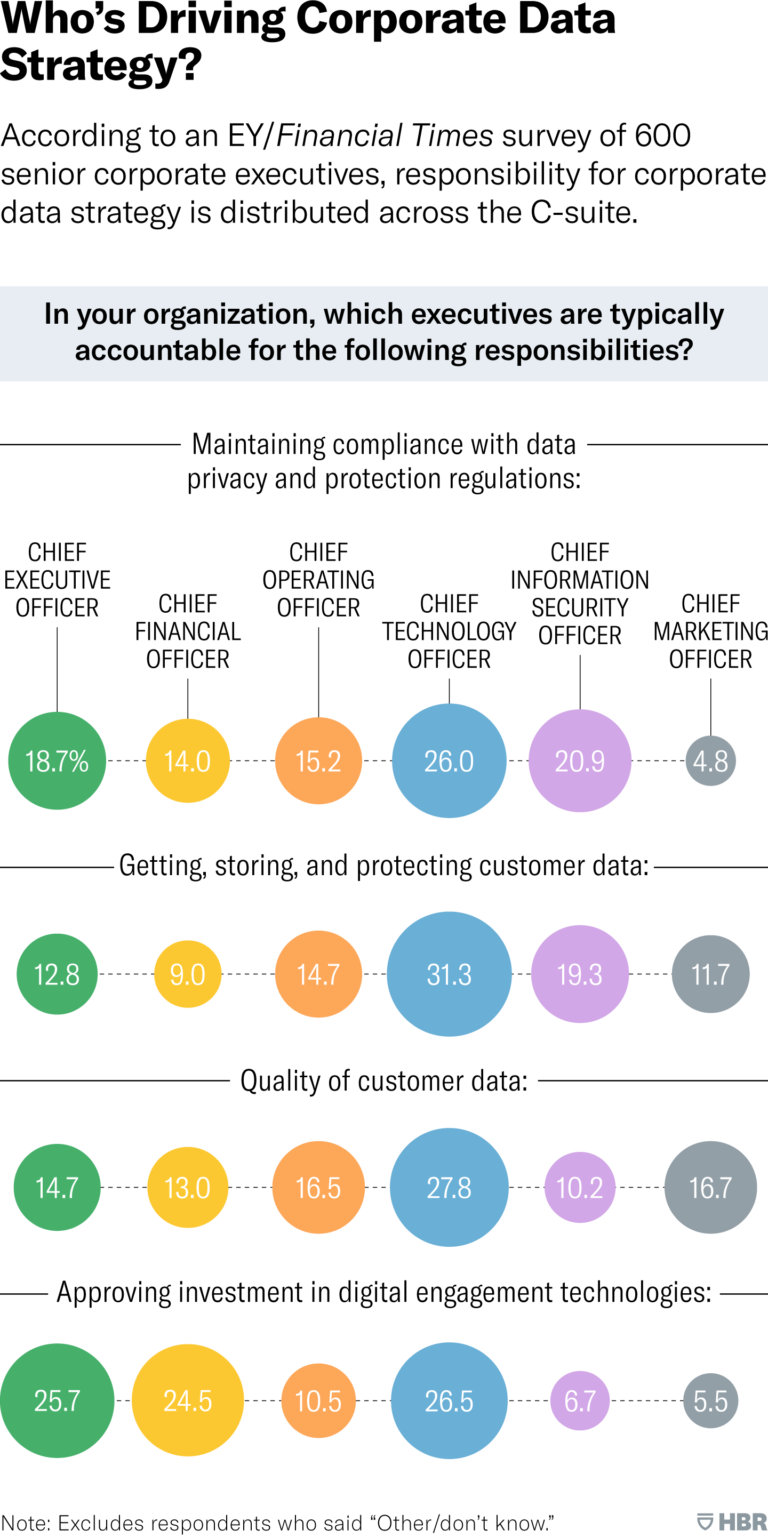
It’s only through the true partnership of functional business leaders in sales and marketing, technology, data/analytics, and finance that more sustainable and meaningful change can happen. In fact, the EY/Financial Times survey heard from 600 cross-functional senior executive respondents in marketing, technology, and finance who highlighted that the data strategy is more distributed than ever across executive roles including the CEO, CFO, COO, CTO, CISO, and CMO.

Scaling results requires that the data, technology, and business transformations are fully in sync — and the answer is not simply a better “dashboard” or data visualization. The work to integrate data into digital technology and process can be daunting, particularly at global scale, but if done right, the value creation will build momentum and belief.

4. Prioritize talent issues ASAP, and don’t be afraid to try something new or radical.

For all the talk about data and technology, the talent issue is likely to be the most vexing challenge in 2022. Based on extensive conversations over the last year with CMOs across sectors, from consumer goods to technology to manufacturing, there is wide agreement on the talent challenges, including data-driven skill scarcity, overall retention challenges, and incentive alignment.

To succeed, today’s marketers need both diverse and detailed expertise, breadth, and depth. This is forcing leaders to look at how they structure and train their teams, manage and collaborate with external partners, like agencies, and embrace new labour models, while driving the right balance of consistency and independence. Many leaders are taking matters into their own hands, creating new curricula to transform their current talent to become modern, full-stack marketers. These actions create more consistency, and even mobility, within the company.

5. As you get more data driven, don’t lose that creative spark.

The data revolution means that there’s far more future-forward thinking. Today’s marketers should spend less time looking in the rearview mirror to analyze prior results, and instead use predictive analytics to forecast the future. These new superpowers allow marketers to drive both growth and operational efficiency in profound ways as they, for example, can not only target advertising, but also make sure that they’re only running it when the company’s supply chain is positioned to deliver the products.

However, if marketers become unilaterally data driven and lean too far into automation, they will lose their most differentiating skills around human intuition and creativity. The art of the storytelling craft will be more important than ever to ensure that, even when targeted well and at speed, creative messaging still connects with humans. New marketing options and formats will continue to emerge, from retail media networks in the physical and digital world to virtual branding and transactional experiences in the metaverse. There must be space to take risks and be distinctive, regardless of whether the math is fully understood from the start.

In 2022, marketing leaders have the opportunity to connect the customer journey to the full-growth agenda, retaining their creativity while scaling data and technology in more meaningful ways than ever before. The speed with which decisions need to be made will only become faster, while also becoming more multivariable, connected, and complex. Those who can build the internal connective tissue will transform their companies to be dramatically more competitive and unlock new levels of value creation, taking centre stage in the growth strategy and C-suite.

Feature Image Credit: Artur Debat/Getty Images

By Janet Balis

Sourced from Harvard Business Review

By

Ecommerce is still gaining. Yet there’s evidence that people are tiring of it, too, with foot traffic rising at brick-and-mortar stores.

That means people in retail design are constantly asking themselves this question: In an age when you can buy anything online, what are people looking for when they go to a physical store?

President of TracyLocke agency Tina Manikas, with a long track record in retail, has some answers.

Marketing Daily: Let’s start with why experiential retail is so important right now.

Tina Manikas: It’s driven by this overall shift toward ecommerce, especially in the last 18 months. There’s been a big improvement in how useful technology is. The tech is better, and people are more open to embracing it. And that’s driving expectations. We now expect all the convenience of online shopping in our offline shopping trips.

Marketing Daily:  Ecommerce will always win on speed, as well as selection. So what can stores do to compete?

Manikas: There’s plenty. Stores can be more exciting and entertaining. They can be more inspiring and educational. Experiential retail has now risen to a higher level because stores are being redefined. And it’s especially important now because, after so many months of shopping less, there is a pent-up demand for new experiences.

Marketing Daily: Also, at its best, ecommerce comes down to a few clicks — and that’s boring. That’s especially true when I can buy the same sneaker from a dozen websites, including Nike. How can retailers use physical stores to sharpen the science of their own branding?

Manikas: For some retailers, the store and the brand are the same things, like Apple or Ralph Lauren. But many retailers sell many different brands, often even store brands. So it comes down to not just the sale of a product, but a product and a service.

The question is how that product and service combine to strengthen what’s unique about both brands. Besides just selling me the sneaker, how can that retailer teach me something about that particular shoe in a different way from other stores? How are you helping me make my decision?

Another experience element is personalization: What can you offer me to customize my purchase? Play into my areas of affinity?

That’s what makes in-store experiences potentially more interesting, getting people away from that simple “Click here, click here, check out” aspect of online shopping.

Marketing Daily: We’ve seen a lot of underperforming stores close. But we’ve also see many open. Levi’s is opening 100 new stores this year, and Warby Parker is expanding. Many previously all-digital brands are also opening more stores, like Allbirds.

Manikas: Yes, everyone put store plans on hold at the start of the pandemic. There was so much uncertainty. Now they’re going ahead with openings — although cautiously — for several reasons. One is for experimentation. Another is paying attention to the community. There is a resurgence of people caring about where they live, about staying local.

[Retailers are] also using these stores to explore ecommerce connectivity within store formats. It also makes sense to help fend off the impact of aggregators. If I buy a product online through a retailer, but Instacart delivers it, which brand will have the biggest impact on me?

And those D2C retailers are opening live locations to differentiate themselves from digital competitors and raise awareness in different target audiences or geography.

Everybody’s fighting for attention. You can win the battle for attention, and drive that back to the brand with compelling commerce.

Marketing Daily: What are some other ways to make shopping feel different?

Manikas: Social commerce. It’s starting to serve as a bridge that provides both inspiration experience and immediate ways to buy.

Marketing Daily: What stores do you think are doing this well? Where do you like to shop?

Manikas: I love Nordstrom. It’s had the jump on everyone by combining and turbocharging service with products. So not only does it curate something new, but it’s got that service mentality, both on and offline.

I also like the rise of Restoration Hardware. You can design things online quickly, and it also sells high-end furniture. And I think what’s happening in the resale market is interesting, especially in the physical locations of The RealReal, which resells designer clothing.

Marketing Daily: What’s your best advice to companies considering going into physical retail?

Manikas: Know what you’re trying to sell and what your purpose is. Experiment online first, and test interest. Then move into pop-up stores before investing in a physical location. That way, you can fine-tune your brand before investing in physical spaces.

By

@mahoney_sarah

Sourced from MediaPost

By Kimeko McCoy

The days of the one-size-fits all social media approach are seemingly over. Advertisers say the way people use social media is changing, pressuring brands to abandon broad campaigns and instead create content for each individual platform.

“There’s this idea that because it’s social, [and] it’s called social, they’re all the same. And they’re not all the same,” said ​​Karen Piper, director of strategy at GROW digital agency. “It’s like this false notion that we’ve had for like the past 10 or 15 years, like digital lets us reach everyone.”

As the social media landscape becomes more competitive, it also becomes more nuanced, according to advertisers. Competition for user attention and media dollars has led platforms to roll out more individualized product features for users and advertisers. And in the digital age, people are increasingly weary of being advertised to, meaning advertisers have to fit their creative into each platform more seamlessly to reach their desired audience.

“It’s making them focus on the platforms where [customers are] experiencing the advertising instead of just the brands and what the brand has to say,” Piper said.

As Brandon Biancalani, head of paid media at social agency Modifly, put it, the ad experience has to become endemic to the platform. Meaning, users are looking for ads to be an unintrusive part of their social media experience, and advertisers will need to be more mindful of how they appear on each platform.

“That’s kind of been an ode since the beginning of internet marketing; people don’t want things shoved down their throat,” Biancalani said. “Instead, we have seen success with user-generated content snippets, entertaining product value videos, and use of relevant trends.”

For a large swath of advertisers, social media is the go-to platform to authentically get in front of a generation of shoppers who increasingly do not want to be advertised to. Historically, brands have had a set-it-and-forget-it approach, setting up social media business managers and running ads across platforms, per Biancalani. But as people’s social media habits change, advertisers will need to take a more granular approach. It’s part of the reason influencer marketing is booming right now, he added.

“There’s a lot of business integrations now on these platforms that I feel like a lot of brands aren’t fully taking advantage of,” he said. “Specifically, they just want to set up their business manager and start running ads — and there’s a lot of integrations now for businesses to be literally seen even organically in these platforms.”

It’s something that Biancalani said Pinterest and TikTok have done well. TikTok users are more likely to resonate with ad creative that is real and native to the platform. Meanwhile a hard sale, product conversion video may better resonate with Facebook audiences, he added.

“It’s not a peanut butter spread approach,” said Sennai Atsbeha, vp of brand marketing at Gymshark apparel company. “We can’t approach every community with the same strategy.”

As the nine-year-old brand looks to scale and reach new audiences, Atsbeha said the social-first company ensures an authentic partnership with each influencer it works with based on that influencer’s platform of choice.

“That content is very different from some of these other platforms,” he said. “So it’s important that we understand what makes the content different, what makes that athlete or that individual special within that space.”

It’s a similar story at State Bags company, where CMO Meghan Holzhauer said the brand works with a lot of content creators and influencers to keep the ad creative feeling native to the platform.

“This UGC style creator content has consistently been some of our best performing creative so we’re doubling down on the strategy,” Holzhauer said in an email.

With each passing generation, shoppers are getting smarter and more particular about how and where they interact with brands, according to Courtney Berry, managing director at Barbarian, a creative digital agency. Going forward, the changes are going to push advertisers to think about social media advertising in the context of a full-funnel marketing strategy — one with multiple parts, she said.

“Thinking through all of that complexity and that nuance at the beginning of the campaign is very crucial,” she added.

Feature Image Credit: Ivy Liu 

By Kimeko McCoy

Sourced from DIGIDAY


By

Referral marketing is often an overlooked strategy. However, Mark Choueke, marketing director at Mention Me, explains why it can be an effective route for marketers and how it works to earn customer trust.

For marketers yet to turn their attention to the extraordinary customer acquisition mechanic of earned growth, referral might be the last marketing channel to come to mind.

For those already giving their customers a participating role in their brand’s success, it’s the last marketing channel they’d switch off.

This was literally true for Lindsay Newell, head of UK marketing at Bloom & Wild, one of Europe’s largest online florists. She knew the customer lifetime value the business derived from referral marketing exceeded that of both paid search and paid social.

So much confidence did the business have in its referral marketing program as a growth driver that when it was forced to ‘turn off’ marketing in May 2020 after the Covid-19 pandemic prompted the first lockdown, referral marketing was the only channel it left running.

The florist grew its UK referrals by 800%, despite promoting it at fewer points in the customer journey than previously.

Newell, meanwhile, says her team tests constantly to learn how various markets and customer cohorts respond differently to messaging and incentives through referral campaigns.

Such success stories were once rare for a marketing channel that is now fast growing into its own skin and becoming comfortable with a more pivotal, strategic status in the marketing stack.

Traditional household brands and established retailers are now joining pure play online businesses in approaching customer acquisition and experience with an ‘advocacy-first’ mindset.

This shift toward earned growth isn’t a replacement for anything. Comprehensive Referral Engineering® programs act as a valuable addition to, and amplifier of, existing marketing strategies.

Menswear brand Spoke put its first-party referral data to work across its paid social channels to target consumers that looked like the retailer’s most valuable referrers. The experiment saw a 65% increase in conversion rates, a 30% jump in ‘return on ad spend’ and a 12% reduction in the cost of acquiring new customers.

Crucially, though, none of the above speaks to the single most important opportunity addressed by a move toward earned growth.

That is that advocacy – and importantly the level of participation it encourages in those we sell to – is slowly shifting the emphasis of marketing from the brand to the customer.

Referral done properly is data-driven – but it’s customer-led.

Amplified in the past two years by the forced loss of so many day-to-day freedoms we once took for granted, consumers are hungry for autonomy and self-determination. They want a more direct role in the way they shop for (and engage with) the products and services with which they choose to identify.

Consumers want to participate; to interact, share and recommend. Your buyers’ e-commerce journeys don’t begin on screens. Increasingly they start with offline conversations; not about your brand or product, but about their interests, their passions and their needs.

What does that mean for your brand? Well, it means your best marketing in 2022 will likely happen in the most ‘un-marketing’ moments.

It means your effective media channels will include everyday occasions in your customers’ lives: chats between parents at the school gates; picnics and pub nights; weekend walks and barbecues with friends; Sunday roasts with the family.

Customer participation will become as crucial in delivering experiences that match your buyers’ expectations as personalization has been in recent years.

For while automation driven by big data has transformed customer experience capability, the spreadsheets and numbers that dominate our customer experience conversations risk becoming somewhat divorced from the end users they represent.

Abstract scores only tell us so much about our customers’ values, beliefs and versions of what a relationship with our brands should look like.

New perspectives and a shared commitment to twinning comfortably volunteered first- and zero-party data with more innovative partnerships will get brand marketers closer to the customer stories that end users would recognize, buy into and participate in.

Referral is a rare marketing discipline, carried out in the cultural mode and language of consumers – normal people who don’t share the marketer’s vocabulary of ‘funnels,’ ‘touchpoints’ and ‘conversions.’

Our businesses are drowning in third-party data (though perhaps not for much longer). Yet how much does this data really tell us about our customers? There’s an unfilled gap between the reported customer insight that much of our data promises, and the legitimacy – the purity – of customer participation. It’s a gap similar to that between reading sheet music and being in a live audience while witnessing a spine-tingling performance.

After thousands of years of retail, your customers still sell your stuff better than you do, without even trying. Now we have the expertise to understand the psychology of referral and the science to drive, track and measure it, you can give your best customers the power to grow your companies.

Click here to see how leading brands use Referral Engineering® to acquire high-value customers while energizing existing ones.

By

Sourced from The Drum

By

The tech giant has many ways of gathering information about its users’ activity – from Prime to Alexa. But how much can it collect and what can you do to keep your life private?

rom selling books out of Jeff Bezos’s garage to a global conglomerate with a yearly revenue topping $400bn (£290bn), much of the monstrous growth of Amazon has been fuelled by its customers’ data. Continuous analysis of customer data determines, among other things, prices, suggested purchases and what profitable own-label products Amazon chooses to produce. The 200 million users who are Amazon Prime members are not only the corporation’s most valuable customers but also their richest source of user data. The more Amazon and services you use – whether it’s the shopping app, the Kindle e-reader, the Ring doorbell, Echo smart speaker or the Prime streaming service – the more their algorithms can infer what kind of person you are and what you are most likely to buy next. The firm’s software is so accomplished at prediction that third parties can hire its algorithms as a service called Amazon Forecast.

Not everyone is happy about this level of surveillance. Those who have requested their data from Amazon are astonished by the vast amounts of information they are sent, including audio files from each time they speak to the company’s voice assistant, Alexa.

Like its data-grabbing counterparts Google and Facebook, Amazon’s practices have come under the scrutiny of regulators. Last year, Amazon was hit with a $886.6m (£636m) fine for processing personal data in violation of EU data protection rules, which it is appealing against. And a recent Wired investigation showed concerning privacy and security failings at the tech giant.

So, what data does Amazon collect and share and what can you do to stop it?

The data Amazon collects, according to its privacy policy

Strict EU regulation in the General Data Protection Regulation (GDPR) and UK equivalent the Data Protection Act limit the ways personal data can be used in Europe compared with the US. But, according to Amazon’s privacy policy, the tech giant still collects a large amount of information. This covers three areas: information you give Amazon, data it collects automatically and information from other sources such as delivery data from carriers.

Amazon can collect your name, address, searches and recordings when you speak to the Alexa voice assistant. It knows your orders, content you watch on Prime, your contacts if you upload them and communications with it via email. Meanwhile, when you use its website, cookie trackers are used to “enhance your shopping experience” and improve its services, Amazon says.

Some of the data is used for “personalisation” – big tech speak for using your data to improve your online experience – but it can reveal a lot about you. For example, if you just use its online retail site via the app or website, Amazon will collect data such as purchase dates and payment and delivery information.

“From this information, Amazon can work out where you work, where you live, how you spend your leisure time and who your family and friends are,” says Rowenna Fielding, director of data protection consultancy Miss IG Geek.

At the same time, Prime Video and Fire TV information about what you watch and listen to can reveal your politics, religion, culture and economic status, says Fielding. If you use Amazon to store your photos, a facial recognition feature is enabled by default, she says. “Amazon promises not to share facial recognition data with third parties. But it makes no such commitment about other types of photo data, such as geolocation tags, device information or attributes of people and objects featured in images.”

Amazon Photos does not sell customer information and data to third parties or use content for ad targeting, an Amazon spokesperson says, insisting the feature is for ease of use. You also have the option to turn the feature off in the Amazon Photos app or on the website.

Meanwhile, Amazon’s Kindle e-reader will collect data such as what you read, when, how fast you read, what you’ve highlighted and book genres. “This could reveal a lot about your thoughts, feelings, preferences and beliefs,” says Fielding, pointing out that how often you look up words might indicate how literate you are in a certain language.

Smart speakers have been criticised by privacy advocates and devices such as Amazon’s Echo have been known to be activated accidentally. But Amazon says its Echo devices are designed to record “as little audio as possible”.

No audio is stored or sent to the cloud unless the device detects the wake word and the audio stream is closed immediately after a request has ended, an Amazon spokesperson says.

More broadly, Amazon says much of the information it collects is needed to keep its products working properly. An Amazon spokesperson says the company is “thoughtful about the information we collect”.

But it can add up to a lot of data. In 2020, a BBC investigation showed how every motion detected by its Ring doorbells and each interaction with the app is stored, including the model of phone or tablet and mobile network used. Ring can share your stored data with law enforcement, if you give your consent or if a warrant is issued.

How Amazon shares data across its own services

The more services you use, the bigger Amazon’s opportunity to collect your data. “If you have bought fully into the Amazon experience, you will share details, habits and information that the company will collect and potentially use to ‘enhance your experience’,” says Richard Hale, a senior lecturer in digital forensics at Birmingham City University.

But what exactly is shared within its own companies isn’t clear. The privacy policy section on data sharing within the Amazon group of companies is “pretty limited”, says Will Richmond-Coggan, an information and privacy law specialist at Freeths LLP. Taking this into account, he says, people should “assume that any information shared with one Amazon entity will be known to any other”.

How Amazon shares your data with third parties

Like Google and Facebook, Amazon operates an advertising network allowing advertisers to use its customer data for targeting.

“Although Amazon doesn’t share information that can directly identify someone, such as a name or email address, it does allow advertisers to target by demographic, location, interests and previous purchases,” says Paul Bischoff, privacy advocate at Comparitech.

Amazon lets other companies track users visiting its website, says Wolfie Christl, a researcher who investigates the data industry. “It lets companies such as Google and Facebook ‘tag’ people and synchronise identifiers that refer to them. These companies can then potentially better track people on the web and exchange data on them.”

Amazon says it doesn’t sell your data to third parties or use personally identifiable information such as your name or email for advertising purposes. Advertising audiences are only available within its ads systems and cannot be exported and you can opt out of ad targeting via its advertising preferences page.

What you can do to stop Amazon collecting data

Amazon’s data collection is so vast that the only way to stop it completely is not to use the service at all. That requires a lot of dedication but there are some ways to reduce the amount of data collected and shared.

If you are concerned about what Amazon knows about you, you can ask the company for a copy of your data by applying under a “data subject access request”. The Alexa assistant and Ring doorbell have their own privacy hubs that allow you to delete recordings and adjust privacy settings. Ring’s Control Centre allows you to tweak settings including who’s able to see and access your videos and personal information from a central dashboard. Speaking to Alexa, you can say: “Alexa, delete what I just said” or: “Alexa, delete everything I said today.”

Amazon says it allows customers to view their browsing and purchase history from “Your Account” and manage which items can be used for product recommendations. More broadly, you can also use privacy-focused browsers such as DuckDuckGo or Brave to stop Amazon from tracking you.

But it’s not always easy to change the settings on Amazon itself, says Chris Boyd, lead analyst at security company Malwarebytes. He recommends turning off browsing history on Amazon and opting out of interest-based ads to reduce the level of tracking by the company. Yet he warns: “You’ll likely still see ads from Amazon or encounter third-party advertisers in one form or another – they just won’t be as targeted.”

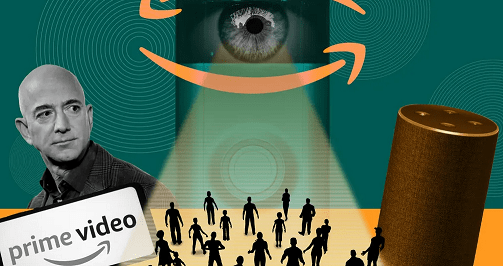
Feature Image Credit: Under scrutiny: Jeff Bezos and his empire of platforms and devices. Illustration: Philip Lay/The Observer

By

Sourced from The Guardian

By

People are wondering whether pay-per-click advertising is dying out.

In the marketing spend budgets of most franchisors, PPC – “pay-per-click” – advertising is a vital part of their overall digital strategy to enhance lead-generation efforts. To the untrained eye, and even a few of the trained ones, PPC can be a study in contradictions. Is it expensive? It can be. Is it effective? Some studies seem to indicate so. Is it a labour-intensive resource? Yes, unless you’re using a digital platform that manages the PPC on your behalf. Is that expensive? Well… you get the picture.

Two decades ago, the advent of Google AdWords began, introducing online ad campaigns where you only paid for consumer clicks. One of PPC’s early benefits was the ability to closely track and monitor the metrics that defined the campaign’s success rate in converting leads. It’s still much the same today, but the digital landscape has evolved quite considerably since the year 2000.

So where are franchisors headed with PPC in a post-pandemic world?

A competitive bid process means higher prices

The steady increase of brands participating in the PPC craze eventually led to a bid-based system for high-performing keywords. Competition to secure the best placement for your PPC ads has noticeably driven up the cost, but it hasn’t necessarily translated to increased conversion rates. Getting top-paid search placements (and results) has become a hotly contested process.

A short-sighted view

It’s been said that PPC ads give brands a great shot at a one-time customer — not exactly a great long-term acquisition strategy. B2B customers — such as franchisors looking to attract franchisees — often struggle to display the right content to reel in an interested candidate. Unlike consumer brands, the format and limitations of PPC ads offer limited opportunities to close an immediate sale.

Should franchisors ditch pay-per-click advertising altogether? Most digital advertising experts caution patience. For franchisors still engaged in the once tried-and-true PPC space, here are some post-pandemic trends to consider.

Automation to the rescue?

With as many intricate details and moving parts as a PPC, it should come as no surprise that digital ad campaigns might be better suited for automation. In an environment rife with data-driven decisions, AI, machine learning and algorithms seem to match up well with successful PPC campaign requirements. For the most part, most brands have left human marketers in charge of these automated smart programs, mainly to oversee the emotional factors of insight and strategy.

Integration means optimization

If marketing mixes were comparable to a basic cable lineup, PPC is still but one channel on the dial. And integrating paid ads to work in concert with other channels such as PR, SEO, social media and organic content development may prove to be a winning strategy. PPC isn’t supposed to be siloed and once these campaigns are integrated across the full spectrum of marketing options, a clearer ROI picture should emerge as to their effectiveness in the future.

In summary, PPC can still be a viable component of any brand’s digital marketing spend. Some studies reveal that people who click on PPC ads are twice as likely to make a purchase as an organic visitor to the site. When compared to the myriad of other marketing channels and their varying rates of effectiveness, any belief that PPC is dying out may still be up for a healthy debate.

By

Jeff Cheatham is a regular contributor for Entrepreneur and the founder and CEO of Creative Content, a full-service copywriting and public relations firm. He’s based in Dallas and works with multiple B2B clients and over a dozen franchise brands to develop proprietary content campaigns for lead-generation and sales development programs.  https://creativecontent-llc.com/

Sourced from Franchise 500

By Mark Stephens

With technology getting smart, we as small business owners cannot afford to be otherwise. Here are a few website mistakes to look out for: speed, responsiveness, and design.

Let me preface this by saying that most of us judge a book by its cover. The unpopular opinion is that it is true to quite some extent. While it may or may not apply to people, it certainly applies to products, services, and websites. It’s only fair, right? With the number of tasks we conduct in today’s world, and the number of options we have, a small business owner must do their best to ensure their website design stands out.

It is not all theoretical. As per Stanford’s web credibility research, 75% of users admit that they make judgments concerning a company’s credibility based on their website design. With 87% of shoppers searching for products on the internet, you as a small business owner cannot possibly afford to portray a poorly designed website, which translates into mediocre credibility.

That being said, at this point, most of us might make the mistake of simply seeking newer and better website creation approaches. Nonetheless, before you look into that, I suggest you need to unlearn ways of creating a website that you already know, and that shall effectively and accurately direct you towards creating an extraordinary website.

“Before people can begin something new, they have to end what they used to be and unlearn the old way.”

William Bridges

Mistake 1: Slow Website Speed

When was the last time you waited in a queue? Exactly, that is not a pretty memory, and you mostly won’t suggest that to anyone. Now imagine having to stand in a queue when there are other options available with no waiting time. It goes without saying, you will want to go with the latter option.

If your website is taking anywhere more than 2-4 seconds to load, you might want to look into the bounce rate of your website, and it will not be pleasing. As some of you may know, the speed of your website pages serves as a ranking factor to assess its index. As a small business owner, any mistake to slow down your website is simply unaffordable.

In order to ensure your website speed does not make the user leave, it is important to understand the factors that affect your website speed: document completeness, visual completeness, and a number of file requests, to name a few.

Fix 1: Prompt as a Wink Website

You cannot improve something without knowing its current state. Therefore, before applying any of the below-mentioned approaches to increase your website speed, I highly recommend checking the speed of your website as it is at the current moment using tools such as Google PageSpeed Insights and GT Metrix. Post that, here are some of the actionable tips to increase your website speed:

  1. Try compressing the images on your website.
  2. Explore another web hosting service (one which is known for its speed).
  3. Consider reducing redirects.

Mistake 2: Poor Search Options

Many times, when a user comes across something on your website that they (almost) like, they search for similar products or blogs or details that exactly match their requirements. It goes without saying, this becomes a lot more difficult if there is no search bar on your website.

While it is quite a subtle and overlooked aspect of the website, it does most of the work, especially for eCommerce websites. In the more physical-store sense, without an option to search, it’s like you are asking your viewers to explore packages in your warehouse. Inconvenient, right? The same applies to your website.

Fix 2: Searchable Unlike Waldo

Be it for a small business or an established brand, an online presence is crucial. However, a clumsy and cluttered online presence is worse than no online presence at all. On the same front, your website shall have an option to help users navigate through complex and massive websites: a search option.

If you are using WordPress as your content management system (CMS), you can simply place the widget at any position on the website (preferably on the top right corner of every page that includes multiple products, blogs, or services).

Also, make sure your website has an on-site search engine that is relevant to your business and prioritizes the best result. Some of the aspects your on-site search engine shall be able to manage are:

  1. Typing errors
  2. Errors in the name of a product or service
  3. Abbreviations
  4. Keyword variation
  5. Punctuation-centric errors

Mistake 3: Overwhelming Text and Typography

Let me preface this section by saying: no, I do not mean that text and typography are the same in any manner.

By text, I mean the length of text (is it too short and incomplete or too long and confusing) and quality of the text (are the resources cited, is the content well-researched, and is it all updated). On the other hand, typography is how this text is represented on the website.

For instance, cursive fonts look pretty on some websites but you shall make sure if it is readable – easily readable? How many fonts should you use on a website?

While there are several other typography options, you must ensure that the font you choose conveys your brand message to the target audience.

Fix 3: Readable and Comprehensive as Children’s Books

No, a website shall not look like a children’s book. However, most children’s books have visuals and huge font sizes which makes it easier for them to read and understand the book. Similarly, know your target audience: do they prefer minimalistic views or do they like beautiful typography even if it is unconventional.

While doing so, understand that mostly the key component concerning the text and typography of a website is clarity. Therefore, ensure the following elements:

  1.  Kerning: space between the characters (letters, numbers, and symbols).
  2. Tracking: space between words and/or phrases.
  3. Leading: space (vertical) between the lines.

Mistake 4: Unresponsive Website Design

As one of the most important features of a website, an unresponsive design can do harm in ways you might not realize yet. Of course, it seems like a thing people say but is not true. Wrong.

If you give it a thought, you will realize that the primary aspect of having an online presence of a business, a.k.a. a website, is to reach out to a wider audience. Be that as it may, without a responsive website design, your website will not be accessible to certain viewers on certain devices.

Mobile accounts for almost half of the traffic around the world, which was 54.4 in 2021 – and this is excluding tablets. Clearly, devices besides smartphones, such as tablets and PS4s, are widely used worldwide to surf the internet. Thus, having an unresponsive website can cost you in several ways.

Fix 4: Responsive on a Click

I strongly recommend beginning by avoiding pieces of content that are accessible or functional only on a number of devices. Also, change your website design as per smaller screen requirements. For perspective, it is not always effortless to navigate through a menu bar of a website using a mobile device. Thus, having a mobile-friendly header can be a starting point for making your website more responsive.

Besides it, here are some of the approaches you can explore to make your website responsive:

  1. Use images and videos which are responsive.
  2. Consider touch screens while designing.
  3. Differentiate and decide elements that will be included separately for each device type.

Mistake 5: No Leverage of Analytics

You can do everything right – from images and responsiveness to speed of a website and various other elements – but it will all be of no worth if there is no direction towards which the performance of a website is indicated.

By analysing your website analytics, not only will you have an idea of the current state of your website, but will also be able to know the areas of improvement. Additionally, the website will be more optimized, user-friendly, and higher concerning lead generation than ever before.

Fix 5: Track Like a Rolling Stone

Slow loading time, viewers having problems with readability and search bar on the website, and lack of responsiveness – it can all be known only when you get down to the metrics of your website’s performance.

However, I do not suggest spending hours tracking and noting down all the data of your website. Rather, target the ones which are related to your business. For perspective, bounce rate, page views, and so on.

Through this, you can make informed decisions concerning your website.

To Conclude,

At any point in a business, you will find yourself surrounded by mistakes or errors or simply things not falling into place. However, the only constant is to make changes with time, not only in our business but also the website associated with the same.

While the above-mentioned aspects are nowhere ‘ultimate guide to better website design,’ they are certainly acting as your wake-up call to analyse the overall performance of your website.

By Mark Stephens

Business Development Manager with a demonstrated history of working in the Media and Digital marketing sector, Passionate about innovation and bringing the future into new business solutions.

Sourced from DB DesignBro

By Matt Burgess

Cookies are on the way out—but not enough is being done about browser fingerprinting. So what is it?

Creepy cookies that track all your online activity are (slowly) being eradicated. In recent years major web browsers, including Safari and Firefox, have restricted the practice. Even Chrome has realized that cookies present a privacy nightmare. But stopping them ends only one kind of online tracking—others are arguably worse.

Fingerprinting, which involves gathering detailed information about your browser’s or your phone’s settings, falls into this category. The tracking method is largely hidden, there’s not much you can do to stop it, and regulators have done little to limit how companies use it to follow you around the internet.

What Is Fingerprinting?

The exact configuration of lines and swirls that make up your fingerprints are thought to be unique to you. Similarly, your browser fingerprint is a set of information that’s collected from your phone or laptop each time you use it that advertisers can eventually link back to you.

“It takes information about your browser, your network, your device and combines it together to create a set of characteristics that is mostly unique to you,” says Tanvi Vyas, a principal engineer at Firefox. The data that makes up your fingerprint can include the language you use, keyboard layout, your timezone, whether you have cookies turned on, the version of the operating system your device runs, and much more.

By combining all this information into a fingerprint, it’s possible for advertisers to recognize you as you move from one website to the next. Multiple studies looking at fingerprinting have found that around 80 to 90 percent of browser fingerprints are unique. Fingerprinting is often done by advertising technology companies that insert their code onto websites. Fingerprinting code—which comes in the form of a variety of scripts, such as the FingerprintJS library—is deployed by dozens of ad tech firms to collect data about your online activity. Sometimes websites that have fingerprinting scripts on them don’t even know about it. And the companies are often opaque and unclear in the ways they track you.

Once established, someone’s fingerprint can potentially be combined with other personal information—such as linking it with existing profiles or information murky data brokers hold about you. “There are so many data sets available today, and there are so many other means to connect your fingerprint with other identifying information,” says Nataliia Bielova, a research scientist at France’s National Institute for Research in Digital Science and Technology, who is currently working at the French data regulator, CNIL.

Fingerprinting evolved alongside the development of web browsers and is intertwined with the web’s history. As browsers have matured they have communicated more with servers—through APIs and HTTP headers—about people’s device settings, says Bielova, who has studied the development of fingerprinting. The Electronic Frontier Foundation (EFF) first identified fingerprinting back in 2010. Since then fingerprinting has become increasingly common as advertisers have tried to get around cookie blocks and limits put on ad tracking by Google and Apple.

So How Bad Is It?

While there’s little transparency around the companies that run fingerprinting scripts, the practice is verifiably widespread across the web. Many of the websites you visit will fingerprint your device; research from 2020 found a quarter of the world’s top 10,000 websites running fingerprinting scripts.

New ways of fingerprinting are being created too. “The existing fingerprinting algorithms are not the upper boundary in terms of trackability,” says Gaston Pugliese, a research fellow at Friedrich-Alexander-Universität in Germany, who has studied the long-term impact of fingerprinting. For instance, earlier this year researchers proved they could create fingerprints of GPUs to identify people. Tracking people across different browsers is also possible.

But not all fingerprinting is bad. David Emm, a principal security researcher at Kaspersky, says the technique can often be used as a way to spot potential fraud, such as banks using it to identify suspicious behaviour.

However, the widespread use of fingerprinting for targeted advertising and tracking people’s online movement raises legal problems. Across Europe regulators have been calling for a clampdown on cookie banners, which appear on websites asking people if they give their permission to be tracked. The banners are so ubiquitous (and frustrating) that people largely click Accept and don’t understand how they are agreeing to be tracked—that’s leaving aside the fact that many cookie banners may not even do what they claim.

In Europe fingerprinting falls under the same General Data Protection Regulation and marketing rules as cookies, says Elle Todd, a partner specializing in data and tech at law firm Reed Smith. European regulators have warned since 2014 that fingerprinting “presents serious data protection concerns,” and Todd says many websites don’t tell consumers that they may track people with fingerprinting. “I think that a lot of companies don’t realize, and they think that this is a nice way to get around the cookie rules,” she says.

How Can You Stop It?

Unlike cookies, it’s hard to stop fingerprinting. Cookies are stored in your browser, and it’s possible to delete your cookie history, block them, or turn them off entirely. “With the fingerprinting, it’s all invisible,” Emm says. “People don’t know about it; they don’t see it.” When the EFF first detailed fingerprinting in 2010, it said it was “akin to a cookie that cannot be deleted.”

Various browser plugins claim to help reduce or stop fingerprinting, but there’s a mix in quality. A 2019 study by a researcher from Snap and two US academics found many anti-fingerprinting tools aren’t that useful. The biggest thing you can do to stop fingerprinting is pick a browser that limits tracking and increases privacy.

“The most promising approach that is also built into browsers nowadays is the approach of the Tor browser,” Pugliese says. To prevent fingerprinting, Tor tries to standardize all the parts of its browser so everyone appears to have the same fingerprint. Tor isn’t always practical, though; some websites will break, and many companies don’t allow it on corporate networks. Other browsers, including Firefox and Brave, have their own anti-fingerprinting methods. Firefox blocks third-party requests to companies that fingerprint, while Brave adds noise by randomizing fingerprints.

“In the fingerprinting space, browsers are going to have to evolve,” says Firefox’s Vyas, adding that anti-fingerprinting technology needs to change in a way that doesn’t break parts of the web. More action from regulators would also help to stamp out the tracking. “If we had legislative support that said ‘these fingerprinting technologies and scripts are unlawful,’ then that would help us.”

Feature Image Credit: Hiroshi Watanabe/Getty Images

By Matt Burgess

Matt Burgess is a senior writer at WIRED focused on information security, privacy, and data regulation in Europe. He graduated from the University of Sheffield with a degree in journalism and now lives in London. Send tips to [email protected].

Sourced from WIRED


By

Graphic designers are a vital part of digital advertising, and the best companies for graphic designers use their valuable skills to increase their digital presence and create brand awareness. Creating visually appealing designs has proven to be an effective strategy in both online and traditional marketing in this advertising age.

If you are a professional graphic designer looking for a career change, you should consider applying to the highest-paying graphic designer companies. In this guide, we will discuss these companies in detail, disclose their salaries, and explore whether or not each company is worthwhile based on employee reviews.

What Is a Graphic Designer?

Graphic designers, or graphic artists, create and design digital materials. These could be images, digital marketing materials, print materials, book design, or web page layouts. They use design software and apply graphic design techniques to create decorative effects and design elements.

Graphic designers are highly independent and often work as freelancers. If a graphic designer works within a graphic design company, they are often part of a design team that works on projects for the biggest clients. Designers with advanced skills and work experience can earn supervisory positions or become art directors.

How to Get a Graphic Design Job

To be a graphic designer, you need to have the appropriate skills, qualifications, and creativity. There are five standard steps to becoming a professional graphic designer. Below is an explanation of each of these steps.

  1. Get a bachelor’s degree. A degree in graphic design or fine arts will provide the knowledge you need to become a professional graphic designer. Find a school accredited by the National Association of Schools of Art and Design to study digital design.
  2. Enrol in a boot camp. Even if you have a bachelor’s degree, you can improve your resume and credentials by enrolling in a boot camp and earning a certificate. You can enrol in advanced web design courses or learn specific design software.
  3. Enrol in short design courses. Basic art and design certificate courses are ideal for those with a high school degree who wish to become graphic designers. Some bachelor’s degree programs require students to take short courses before enrolment in their degree programs.
  4. Apply for an internship. Apply for an internship in graphic design agencies or other companies that give you a creative workload. Companies prefer to hire employees with internship experience because it means they have hands-on experience with design processes from concept to completion.
  5. Secure licenses and certifications. You can earn certifications from product software vendors. Having a license or specific software certification shows competence, giving you an advantage over other job applicants.

Top 10 Highest-Paying Graphic Design Companies

Company Salary for {Professions}
Microsoft $84,000
Airbnb $79,288
Adobe Systems, Inc. $70,262
IKEA $68,000
Cisco Systems, Inc. $64,428
Intel Corporation $63,052
Amazon $62,500
The Home Depot $59,981
Saatchi & Saatchi $58,715
Apple, Inc. $55,000


Microsoft

Founded in 1975, Microsoft is a technology company that produces consumer electronics and computer software. Microsoft is well-known for products such as Windows and Xbox, ranked as one of the top three global brands in terms of valuation

What Does Microsoft Pay Its Graphic Designers?

The average annual salary of graphic designers at Microsoft is $84,000. Art directors, creative directors, or other mid-career professionals earn closer to $107,000, with the addition of benefits and bonuses.

Microsoft Reviews

Based on reviews on Indeed, Microsoft has an overall review score of four out of five stars. The company’s highest-scoring categories include its compensation and benefits, as well as its culture. Job security and advancement, however, scored lower.

Airbnb

Founded in 2008, AirBnb, Inc. is headquartered in San Francisco, California It is an online platform that serves as a marketplace for travel information and booking services. Airbnb offers lodging, home-stay, and tourism services via websites and mobile applications with a global clientele.

What Does Airbnb Pay Its Graphic Designers?

The average annual salary of graphic designers in Airbnb is $79,288. The estimated annual salary range is between $60,000 and $102,000. Their benefits include group health care coverage and group life insurance. They also offer generous pension and welfare benefits.

Airbnb Reviews

Airbnb scores fairly well among employees with a four out of five-star overall rating. The company received its best reviews on its work-life balance and company culture.  However, Airbnb does not appear to be very highly regarded in terms of job advancement opportunities.

Adobe Systems, Inc.

Adobe Systems, Inc. is an American multinational company specializing in computer software and digital products for the creation and publication of content. They have a global team of graphic designers, program managers, researchers, and prototypers.

What Does Adobe Systems, Inc. Pay Its Graphic Designers?

Adobe hires graphic design specialists who receive an average annual salary of $70,262. The estimated pay range is between $52,000 to $97,000 annually, depending on the level of experience and work arrangements.

Adobe Systems, Inc. Reviews

Employee reviews describe Adobe Systems, Inc. as a great workplace with friendly colleagues and an inclusive environment. Although they sometimes have long work hours, they provide decent pay with benefits and opportunities for career advancement.

IKEA

IKEA is a multinational conglomerate that focuses on designing and selling home furnishings and kitchen appliances. There are 422 stores in 50 countries and have 225,000 IKEA employees worldwide.

What Does IKEA Pay Its Graphic Designers?

IKEA hires graphic designers who receive an average annual salary of $70,262. The estimated pay range is between $52,000 to $97,000 annually, depending on the level of experience and work arrangements.

IKEA Reviews

According to employee reviews, the IKEA work environment does not discriminate. The company culture promotes togetherness where employees work as a team. Although work can be stressful because it is mainly customer-cantered, it is a great place to learn new things every day.

Cisco Systems, Inc.

Cisco is a multinational corporation that develops and sells software, networking hardware, telecom equipment, and other high-tech products. The company hires designers to actively participate in the design process and help shape products and user experiences.

What Does Cisco Systems, Inc. Pay Its Graphic Designers?

Cisco Systems pays its graphic designers $64,428 as a median annual wage. The pay range is from $46,000 to $89,000, depending on the employee’s skills, job title, and range of experience. Employees at Cisco are given comprehensive health insurance, profit-sharing, and a defined contribution pension plan.

Cisco Systems, Inc. Reviews

Cisco employee reviews state that the company has a very healthy work culture. They provide numerous opportunities to develop technical skills. Employees typically work long hours in a fast-paced environment.

Intel Corporation

Intel is an American multinational corporation located in Silicon Valley, and is the world’s largest manufacturer of semiconductor chips. They have 121,100 employees serving customers worldwide. Intel is the leading supplier of microprocessors for computer system giants such as Acer, HP, Dell, and Lenovo.

What Does Intel Corporation Pay Its Graphic Designers?

The average annual salary of graphic designers at Intel is $63,052. The pay range is from $45,000 to $90,000, depending on the job type and range of experience. Senior positions are open, including senior level and layout designers, with an average salary of $138,149.

Intel Corporation Reviews

Employee reviews commend Intel for its generous employee benefits and excellent work culture. They foster personal growth and promote continuous learning by providing multiple training options. Some employees complain of politics within the organization and long work hours, but the company continues to regulate and improve critical internal issues.

Amazon

Amazon is an American multinational ecommerce company that also offers digital streaming, artificial intelligence, and cloud computing. In 2020, the company employed 1,289,000 full-time and part-time employees and had $386 billion in net revenues.

What Does Amazon Pay Its Graphic Designers?

Amazon pays its graphic designers $62,500 as a median annual wage. Employee benefits include health insurance, life insurance, and temporary and long-term disability insurance.

Amazon Reviews

Employees say that life at Amazon is fast-paced and competitive, but in a fun and challenging way that is not stressful. The workload is well-distributed among employees, creating a good work-life balance.

The Home Depot

The Home Depot Inc. is a home improvement retailer with headquarters in Cobb County, Georgia. It’s the biggest and most popular home improvement and building-material retailer in the US. Its vast operations require several design jobs including graphic, instructional, kitchen, and UX designers.

What Does The Home Depot Pay Its Graphic Designers?

The average annual salary of graphic designers at The Home Depot is $59,981. Its employee benefits include paid holidays, a 401k, profit-sharing, and a defined contribution pension plan.

The Home Depot Reviews

Employee reviews say that the work is challenging but rewarding. Despite the physical demands and long work hours, the company’s appreciation for hard work and monetary compensation is well worth it.

Saatchi & Saatchi

Founded by brothers Charles and Maurice Saatchi in 1970, Saatchi & Saatchi is a marketing agency and communications services company. Conducting its operations internationally, the company is one of the world’s most renowned advertising agencies. It offers electronic media, print design, search engine optimization, and corporate branding for advertising customers such as Toyota and Procter & Gamble.

What Does Saatchi & Saatchi Pay Its Graphic Designers?

The average annual salary of graphic designers at Saatchi & Saatchi is $58,715. The estimated annual salary range is between $45,000 and $76,000. They also hire junior graphic designers for $41,413 annually, while the art director position earns $62,324.

Saatchi & Saatchi Reviews

Based on employee reviews on Indeed, Saatchi and Saatchi has an overall review score of four out of five stars. Its highest scoring categories include company culture and compensation, while its lowest-scoring categories include job security and advancement.

Apple, Inc.

Founded in 1976, Apple Computer Company developed into Apple Inc., a globally celebrated company that is involved in product design, manufacturing, and marketing of personal computers, tablets, smartphones, and accessories. It also offers a range of services related to its physical products, such as app design.

What Does Apple, Inc. Pay Its Graphic Designers?

The average annual salary of graphic designers at Apple is $55,000. If a graphic designer improves their art direction skills and is promoted to an art director role, their annual salary can increase to $97,307, while the senior art director can receive as much as $137,304. It also hires layout artists, UX designers, and digital producers.

Apple, Inc. Reviews

Based on Apple employee reviews on Indeed, Apple has an overall review score of four out of five stars. The company scores the highest in culture, compensation, and benefits. However, it scores a bit lower in terms of work-life balance, job security, and advancement.

Why You Should Become a Graphic Designer in 2022

There are a lot of opportunities for graphic artists in 2022, and the job outlook for graphic designers is generally stable at three percent between 2020 and 2030. Whether you have a bachelor’s degree or not, you can improve your chances of getting hired by enrolling in a graphic design bootcamp.

Due to the tough competition in this profession, the median pay for graphic designers is only $53,380. This salary may not be as high as other IT-related jobs, but the income opportunities for graphic designers are promising.

Best Companies for Graphic Designers FAQ

What is the highest salary for graphic designers?

The highest salary of a graphic designer is $84,000. Those earning more than this are usually graphic designers promoted to higher positions, such as an art director role.

What industries hire graphic designers?

The top employer of graphic designers is the specialized design services industry, employing nearly 18 percent of graphic designers. The other top hiring industries include advertising, printing, publishing, and design consultancy.

How do graphic designers get rich?

Graphic designers get rich by holding a job in a high-paying creative agency with growth opportunities. Some choose to go the freelance route to offer visual design, packaging design, and product design services. On the other hand, some establish their own graphic design firm or graphic design studio.

Is it hard to get a job in graphic design?

Yes, it is hard to get a job in a graphic design studio or a graphic design company, mainly because of the competition. It is especially hard if you’re a beginner-level designer. Taking short courses and doing practice projects will help hone your skills to increase your chances of getting a job as a graphic designer.

By

Sourced from Career Karma

Career Karma is a platform designed to help job seekers find, research, and connect with job training programs to advance their careers. Learn about the CK publication.