Author

editor

Browsing

By

Wondering how to increase your keyword rankings through content? These SEO copywriting tips can get you started.

Writing is already hard enough, but writing with the goal of ranking in Google requires even more strategic planning.

Successful SEO copywriters consider what users want, and how search engines actually work, throughout their writing process.

For those site owners who want to grow their visibility through content, understanding SEO copywriting is the right place to start.

What Is SEO Copywriting?

SEO copywriting is the process of creating content with the goal of ranking in search engines for relevant keywords.

The process can be applied to your homepage, product pages, blog posts, or even your profiles on review sites.

When done well, SEO copywriting can increase the total number of keywords that your content ranks for.

Why Does SEO Copywriting Matter To Ranking?

Google relies on natural language processing to understand what users are searching for and what our content is about.

Over the years, NLP models have gotten far more advanced.

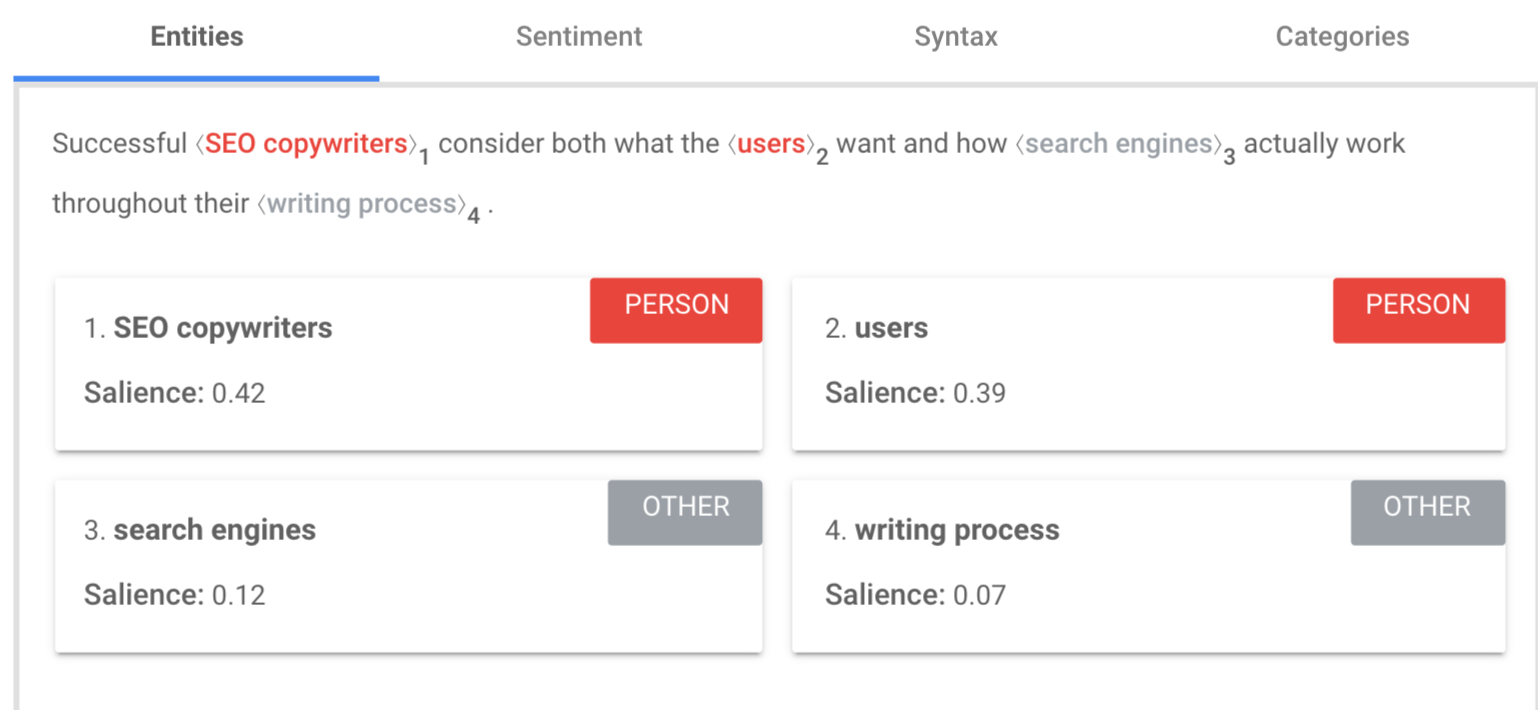
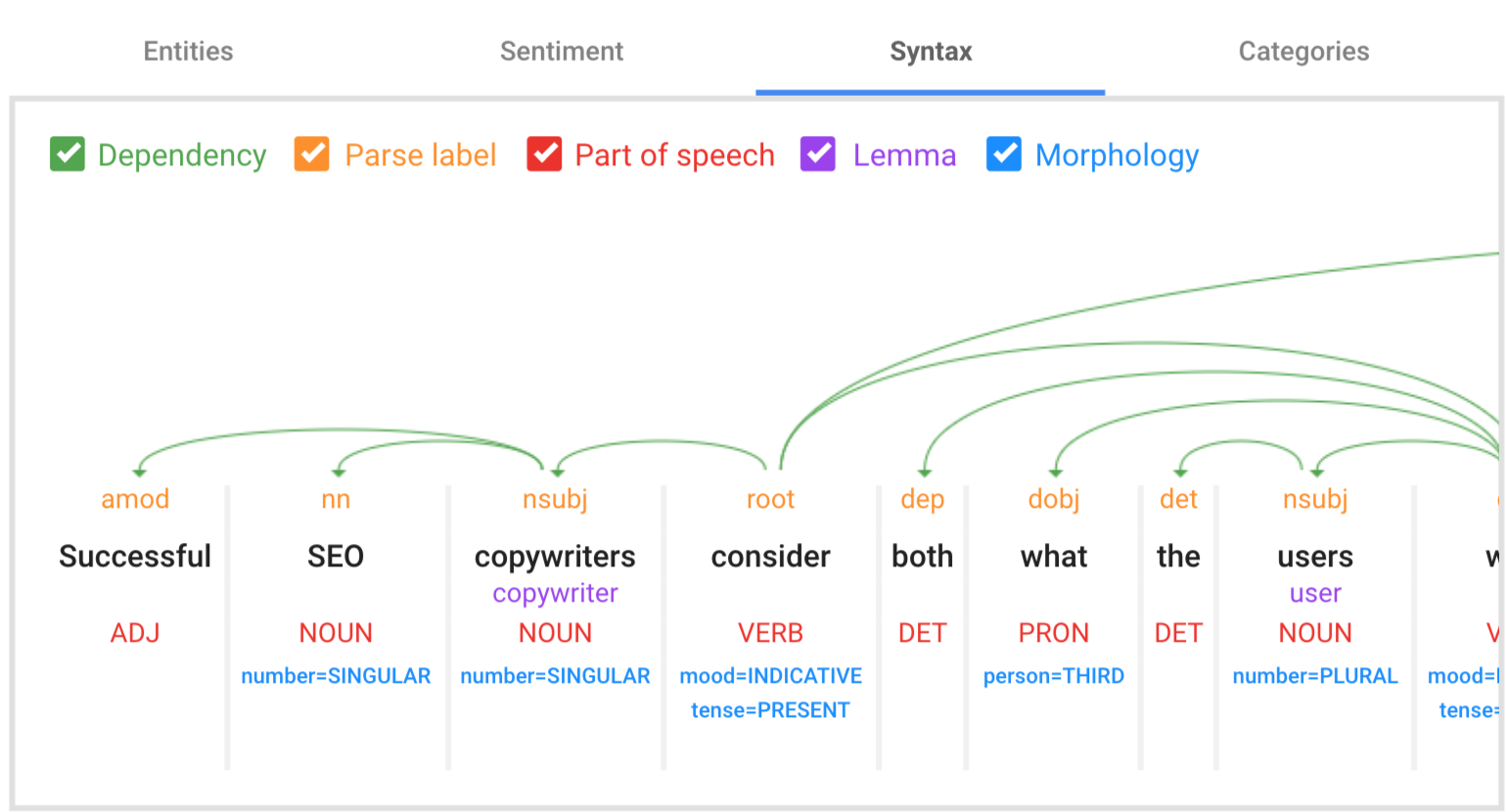
If you want to learn more about NLP technology, put some of your own website content into Google’s Natural Language API Demo.


Entities analysis in Google's Natural Language Processing API Demo ToolScreenshot from Google’s Natural Language Processing API Demo Tool, December 2021
 

Syntax Analysis in Google's Natural Language Processing API Demo ToolScreenshot from Google’s Natural Language Processing API Demo Tool, December 2021

Because of Google’s advancements in NLP, SEO copywriting has evolved to be far less about quick tricks and far more about creating informative and valuable content for users.

But as seen above, Google is still a robot.

SEO copywriters should consider how search engine technology actually works and leverage that knowledge when writing their content.

SEO Copywriting Tips For Better Rankings

The best content will always be created with users in mind.

But, there are strategic choices copywriters can make to help crawlers better understand their content and promote it accordingly.

Here are some SEO copywriting tips for creating content that is loved by both users and search engines alike.

Research And Prewriting

1. Choose A Realistic Keyword Goal

Before you start writing, you should have a clear keyword target in mind. But make sure you set your content up for success by setting realistic and achievable keyword goals.

Keyword research is the foundation of the SEO copywriting process.

You might be tempted to choose industry keywords that have higher search volume, but those keywords are often extremely competitive.

If you are a website with less authority, you’re unlikely to rank on page one for those terms, no matter how high-quality your content is.

So how do you know if your content stands a chance of ranking?

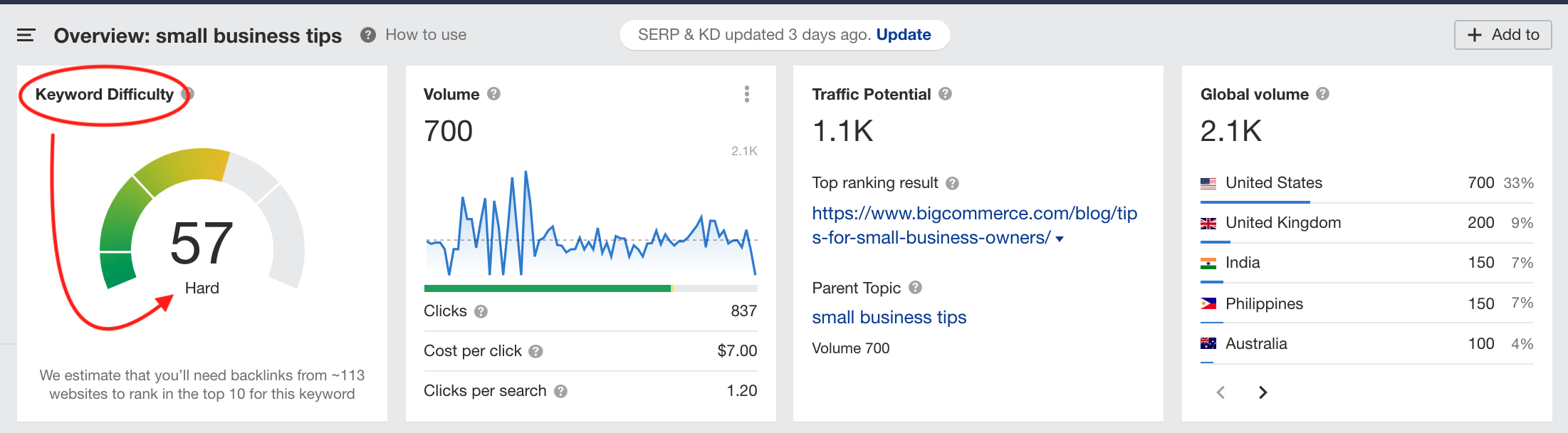
Keyword difficulty scores can serve as a benchmark for your keyword goals.
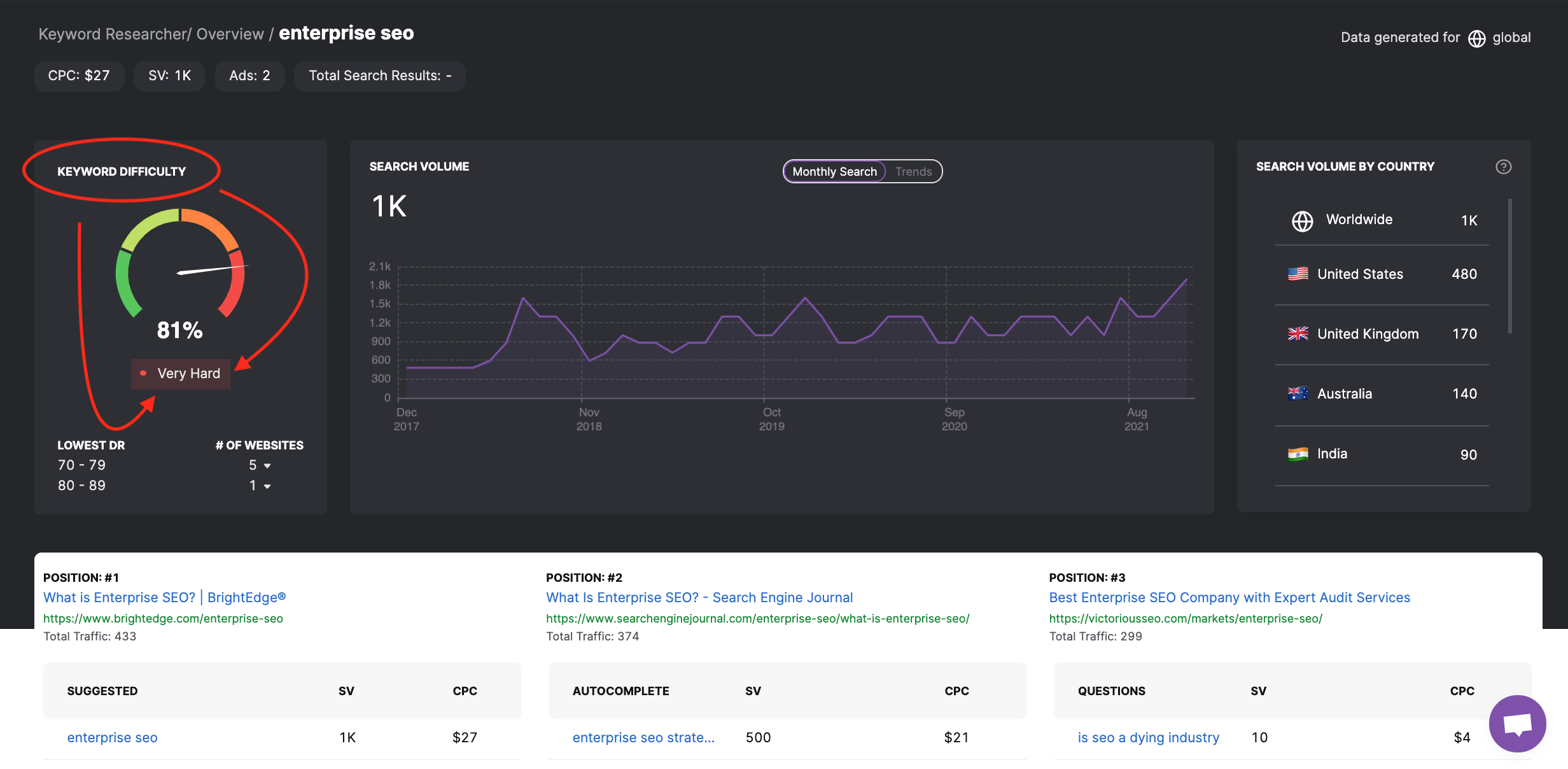
Keyword difficulty score in the SearchAtlas keyword researcher toolScreenshot from SearchAtlas, December 2021
 

Keyword Difficulty score in Ahref's Keyword ExplorerScreenshot from Ahrefs, December 2021

I suggest finding relevant keywords with difficulty scores that are less than or equal to your site’s DA.

These keywords might be long-tail or have more informational search intent, but they can present real opportunities for your content to rank quickly and start driving clicks.


2. Analyze The Top-Ranking Content 

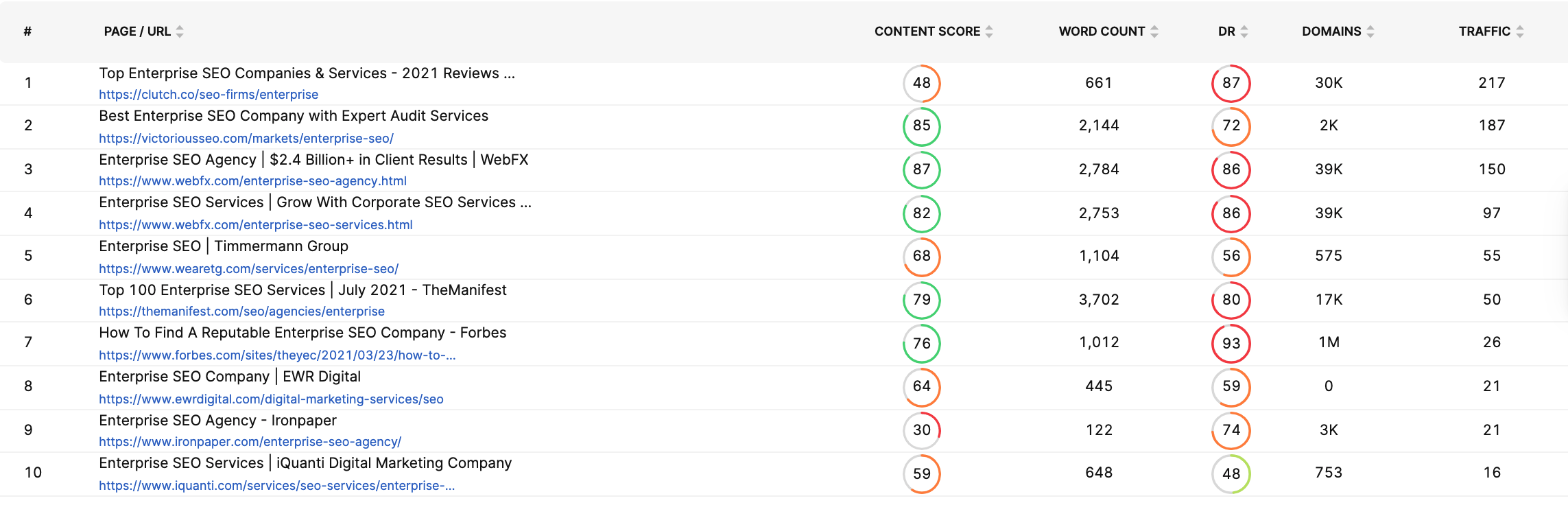
Want to know what it will take to rank? Look at the content that is already on page one.

Review the top-ranking pieces of content and use them as models for your own content creation.

How long is the content? What are the page titles and meta descriptions that are enticing the users to click?

Top-Ranking Content for the Keyword "Enterprise SEO"Screenshot from SearchAtlas, December 2021

The goal here is not to create a carbon copy of your competitors, but to better understand what content, authority, and page experience signals that Google crawlers are responding to.

3. Understand And Write For Search Intent

Search intent is often narrowed down into four categories: Navigational, Informational, Transactional, and Commercial.

The search intent of your target keyword determines what type of content you should create.

For transactional keywords, Google is more likely to promote product or service pages knowing that the user wants to make a purchase.

For informational queries, Google more often ranks blogs, top-ten lists, how-to articles, and resource-driven content types.

Most likely, your keyword can be categorized in the above four categories, so strive to meet that intent with your content.

4. Outline Your Structure

Not all content outlines will look exactly alike, but the idea is to determine the overall topic, subtopics, headings, and main points the content will include.

If you’re optimizing properly, your keyword targets will have a prominent place in these structural components.

Not all copywriters like to work from outlines, but they can be very useful in ensuring proper on-page SEO practices.

5. Prioritize Quality Over Everything Else

Google wants to rank quality content for its users.

But what is quality in the eyes of crawlers? Relevance, load times, backlinks, and referring domains, to name just a few.

In terms of the quality signals that are communicated through the writing, Google is looking for:

  • Comprehensive, in-depth content.
  • Original reporting and analysis.
  • Expert authorship and sourcing.
  • Proper grammar and spelling.

Do your best to meet these signals, and Google is more likely to see your website as high-quality.

The SEO Copywriting Process

6. Explore Your Topic In-depth

Although content length is not a ranking factor, there is a strong correlation between longer content and top rankings.

That’s because long content is more likely to display the quality signals listed in tip #5. Additional studies have shown that longer content also earns more backlinks and social engagements.

So do your best to be comprehensive and explore your content in-depth.

7. Write For Passage Ranking

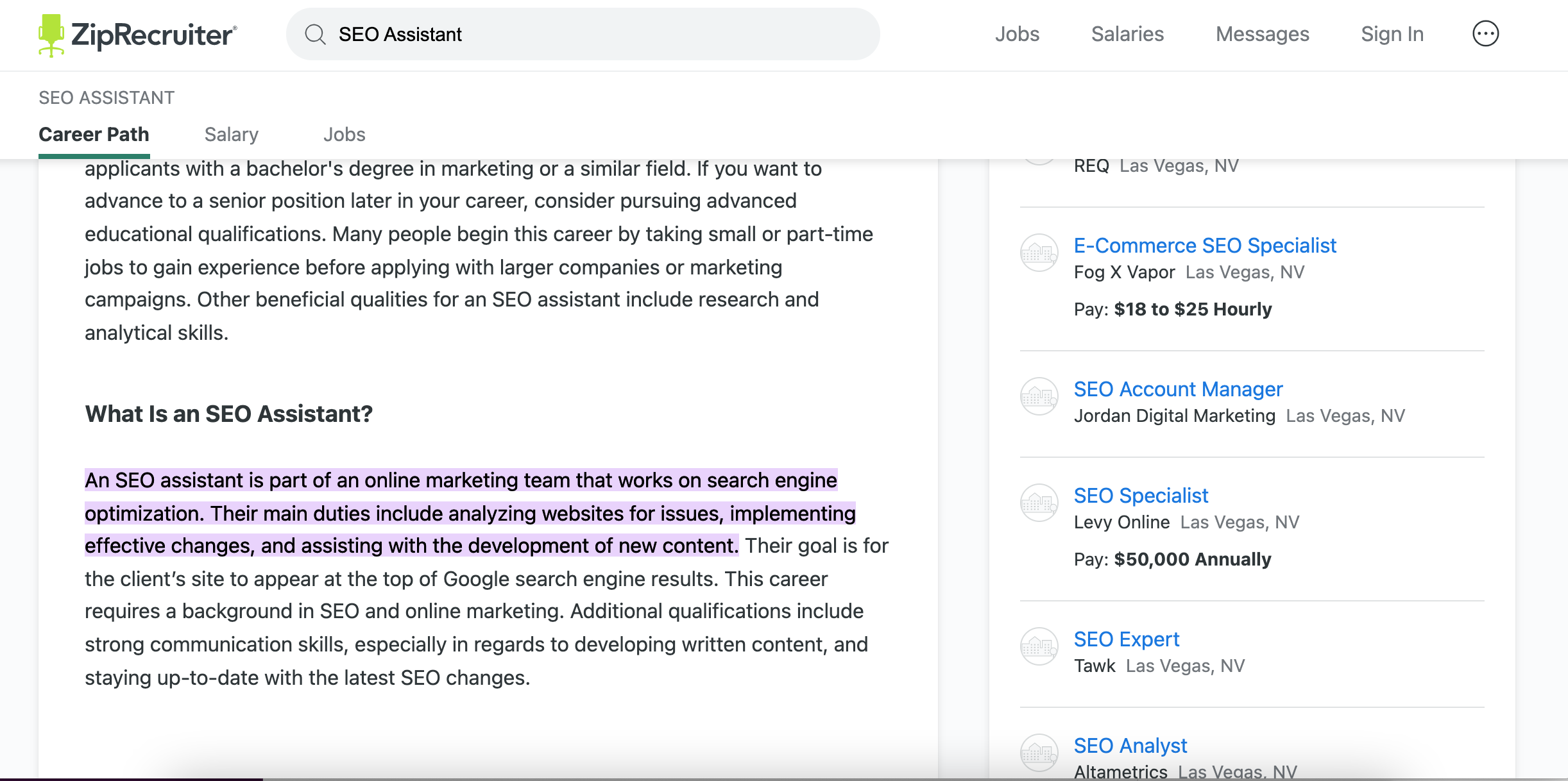
Google’s Passage Ranking update went live in early 2021. As a result, Google no longer just indexes and ranks web pages, but specific passages of content.

For example, the below content provides a thorough answer to the search query, [What is an SEO assistant?].

When the user clicks on the SERP result, Google has indexed the exact part of the web page that answers that question and highlights it for users.

Example of Passage Ranking from ZipRecruiterScreenshot from ZipRecruiter, December 2021

Passage Ranking means that your content has so many opportunities to rank for multiple queries.

Strategic use of structure, headlines, and questions is key to helping passages of your content rank well in search.

8. Use A Content Optimization Tool

Leveraging AI and NLP tools can result in major boosts in keyword rankings.

Clearscope, SearchAtlas, SEMrush, and others all have content optimization software that eliminates some of the guesswork of the SEO copywriting process.

These tools identify common words and topics used in top-ranking content and suggest similar terms for you to include in yours. As long as you incorporate them naturally, the results can be significant.


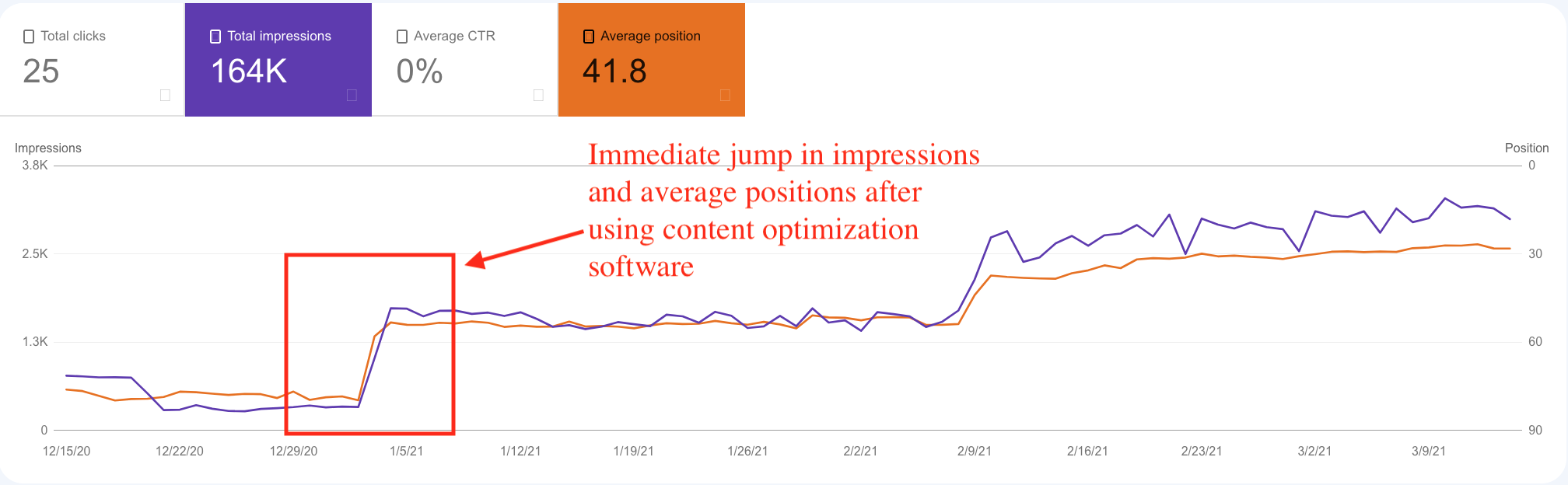
Screenshot from Google Search Console showing increased impressions and average positionsScreenshot of Google Search Console, December 2021

I’ve seen content tools have an almost immediate impact on the total number of keywords, impressions, and average positions that web pages earn.

More SEO copywriters should be using them.

9. Offer Answers To Related Questions

Another way to improve keyword rankings is to answer common questions that users are asking in relation to your target keyword.

There are a couple of ways you can find out what these questions are: Google Search and a keyword tool.

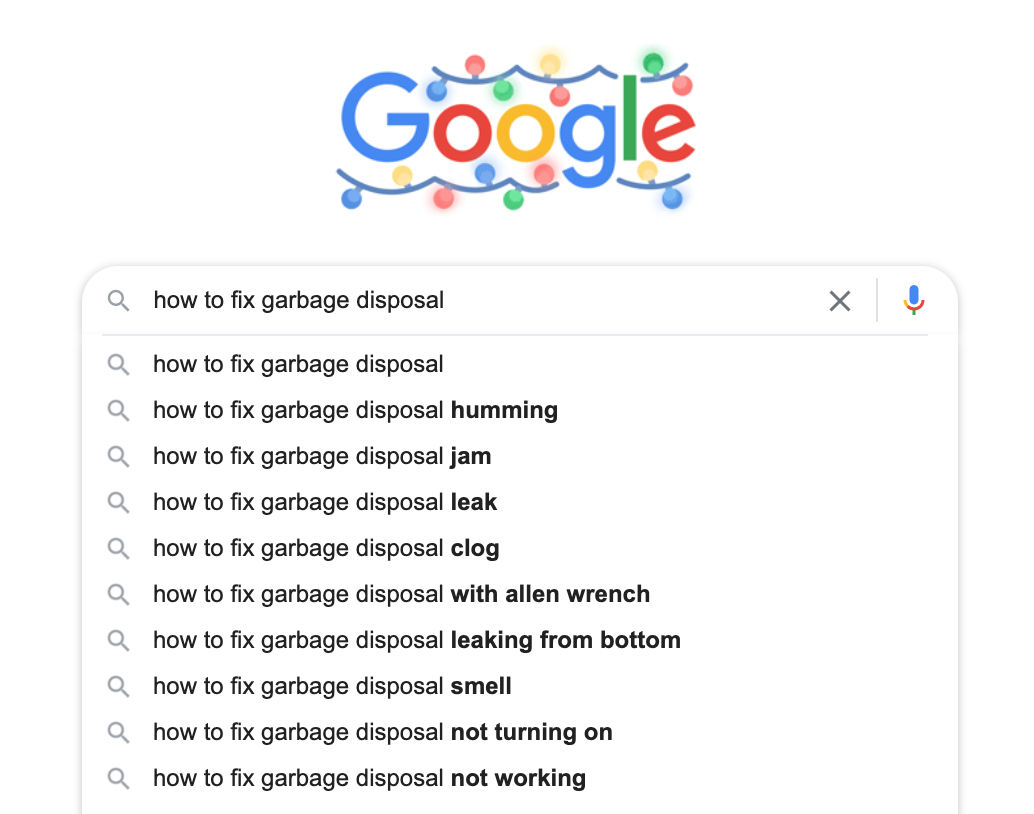
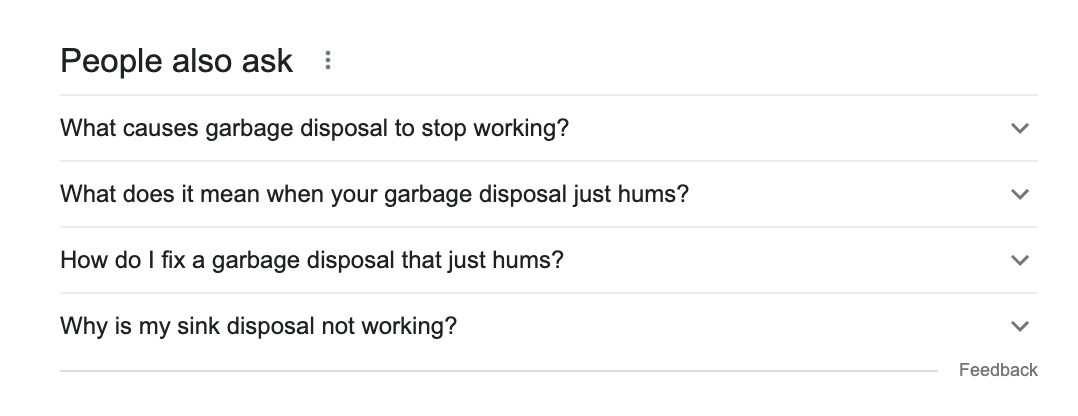
Look to People Also Ask and autocomplete to see what common questions people are asking about the topic. Then, make sure you include those questions and their answers in your content.

Screenshot from Google displaying autcompletesScreenshot from search for [how to fix garbage disposal], Google, December 2021

Similarly, some keyword tools can tell you the common questions that searchers are asking.

Screenshot of google.com showing people also askScreenshot from search for [how to fix garbage disposal], Google, December 2021

10. Include Synonyms And Keywords In Your Headings

It’s important to include your keywords in your h1s and h2s, but Google is now smart enough to understand synonyms and other related terms.

Choose words that have a semantic relationship with your primary keyword target.

Google’s NLP algorithms use them to understand your content more deeply.

Adding these terms into your headings can help you signal strong relevance but without keyword stuffing.

11. Avoid Long Sentences, Long Paragraphs, And Misspellings

In terms of readability, you want your content to be easily understood by a variety of people. If your content is too academic or technical, some may choose to bounce back to the SERPs.

Similarly, content that is poorly written or full of typos will deter readers.

Aim for shorter sentences and paragraphs to improve the reading experience.

Some SEO tools suggest a grade level, but the idea is to keep the language simple and accessible to as many people as possible.

Copywriting Extras

12. Break Up Your Content With Rich Media

Although long-form text is important to ranking, your content should have other non-textual elements that help readers stay engaged.

Make sure you include images, videos, or infographics in your content, particularly to break up long passages of text.

Google likes to see content that incorporates rich media, so leverage it to your advantage.

If that rich media slows down the performance of your pages though, it can work against you. So make sure any rich media is optimized for speed and performance.

13. Include Relevant Links With Contextual Anchor Text

Your internal and external links, as well as the anchor text of those links, are also important quality signals to Google.

Make sure you link to relevant, authoritative sources. Also, make sure you utilize anchor text best practices:

  • Anchor text should be relevant to the destination page.
  • Don’t use too much exact match anchor text.
  • Avoid generic anchor text (e.g. “click here”).
  • Use contextual anchor text as often as possible.

14. Make Your Content Easy To Navigate 

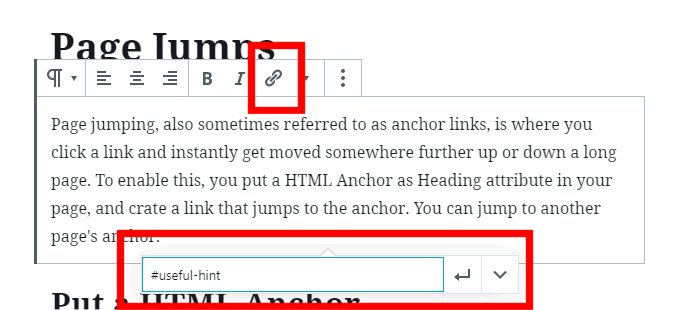
Features like a table of contents and jumplinks make your content more user-friendly.

This is particularly true for longer articles or resource pages.


adding jumplinks in wordpressScreenshot from WordPress, December 2021

Google crawlers like to see these navigational elements on the page that improve UX. Make sure you incorporate them whenever you can.

After The Writing

15. Make Sure That Google Understands Your Content

A week or so after you publish your content, login into your Google Search Console account to confirm that Google is understanding it correctly.

See what keywords you are earning impressions for.

If they are close to or relevant to your original keyword goal, great. If not, you may need to revise the content.

Higher positions and clicks will come with time and authority building, but impressions are a good early sign that Google understands your content and knows when to promote it.

16. Optimize And Test Your Meta Tags

Google now rewrites page titles and meta descriptions when it sees fit, but this only happens about 20% of the time.

It is still important to write optimized meta tags so Google understands your content and users are enticed to click.

However, you don’t have to take a one-and-done approach to meta tag optimization.

If after several months, your content gets to page one but still has a low click-through rate, test out page titles and meta descriptions to see which produce the best results.

17. Revise And Update Accordingly

Over time, your content will eventually become outdated.

New information may become available, keywords may grow more competitive, links may break, and more.

So make sure to revisit old or underperforming content to see if more attention is needed.

Your most important content assets should be updated at least once a year, particularly if they are discussing industry trends or analysis.

Final Thoughts On SEO Copywriting

The reality is, SEO copywriting doesn’t end after the content is published on your website.

The internet changes, algorithms evolve, and your content needs to be updated accordingly.

If you deploy this final tip, you can increase the shelf-life of your content so it maintains top keyword rankings for years to come.

By

Manick Bhan is the Founder and CTO of LinkGraph, an award-winning SEO and digital marketing agency. Through his agency work, thought leadership, and speaking engagements, he helps brands of all sizes grow their digital presence.


Sourced from Search Engine Journal

Last week, publisher Reach hosted its first brand launch event post-pandemic to celebrate newly acquired Buzz.ie.

Over 110 people from 14 ad agencies along with several loyal readers packed into The Sugar Club in Dublin for an exclusive evening of entertainment including music, comedy and special guests interviews.

The event doubled up as a celebratory brand showcase to mark the publisher’s recent rebrand who have given the popular news and lifestyle site a makeover with a brand refresh and new editorial team.

The night itself was hosted and presented by the site’s new Editor, Mike Sheridan.

Reach officially acquired Buzz.ie in November 2020 during the pandemic and it’s only now that it has been safe to have a large-scale event to celebrate.

Mike Sheridan, formerly the editor of Joe and Entertainment.ie, has been leading the site as Editor as he aims to make the site more of an explanatory outlet, doing short explainers instead of reactionary news.

Presenter of the event and Editor of Buzz.ie, Mike Sheridan said: “We’re very proud of the work we’ve been doing over the last few months with Buzz, so to be able to celebrate that work in person with fans and friends of the site was special. Thanks to Sarah Mclnerney and Philly McMahon for being such amazing interviews on the night and to our comedy and musical acts for the entertainment.”

Buzz falls under Hugh Crowther’s business unit at Reach Solutions and has already attracted some exciting campaigns from Irish brands suggesting a bright future for the new arrival in the local media landscape.

Commenting on the success of the event, Group Sales Director, Padraig Sugrue added: “We were excited to add Buzz to our portfolio six months ago and Mike and the team have really succeeded in delivering an elite home for everything Irish men need to know about.

We’ve been delighted to partner with big brands such as Coors and Nivea recently and we have a lot of other exciting projects in the pipeline for 2022. We’d like to thank all our clients and agency partners who came out to support us tonight after not being able to meet them for such a long time.”

View a gallery of pictures from the night here: https://reachsolutionsireland.com/blog/buzz-launch-night

Mike Sheridan, Editor of Buzz.ie & Sarah McInerney, RTE Prime Time and Radio 1 presenter discussing all things current affairs

Öykü Özgür & Ian from Facebook attending the Buzz launch event at The Sugar Club

Feature Image Credit: Mike Sheridan, Editor of Buzz.ie addressing the crowd at Buzz launch event

By

Interacting online is easier, cheaper and accelerates your growth exponentially.

Online networking has grown in popularity due to its ease, convenience and practicality.

The following are key reasons why back-and-forths via bandwidth can benefit your bottom line, specifically, and build your business, overall.

Saving while selling

When conversing via a laptop versus a lounge, you’re saving money, gas and time while still reaping the benefits of building relationships without the hassle of meeting people at a predetermined destination.

It can take months for you to develop trust with business owners and requires effort to show up at every event, engage in conversations and demonstrate your worth. This is applicable online as well.

Frequency formulates faster friendships

The relationship-building process can be accelerated online, because if you choose to attend numerous events, you see the same contacts more consistently. Prospective clients have already established a rapport and would be more willing to do business sooner than if you were brand-building face-to-face.

One of the most convenient benefits of internet introductions is that you’re not limited to your backyard. You can reach across your state, nation and even the world. The possibilities are limitless! With the expanding growth of online networking, your business can grow rapidly.

But let’s not forget that both the old, and new meet-and-greet methods compliment each other. Nothing can ever substitute face-to-face interactions, but when it isn’t conducive to your business growth? Online networking is the way to go.

By

Entrepreneur Leadership Network Writer

Judy Skilling is a certified high-performance coach and a U.S. Navy veteran. She loves working with veterans to re-claim and excel in their work, health and relationships by tapping into their trained military behaviours and learning how to apply it in a civilian lifestyle.

Sourced from Entrepreneur Europe

By Brandon Batchelor

A customer is shopping online for her husband’s birthday. She can’t choose what to get him, so she adds multiple items to her cart, sees the price, gets overwhelmed and closes out of the site to avoid being tempted to make the purchase.

What just happened?

The customer still plans to make a purchase for her husband’s birthday, but the price made the purchase a tad bit overwhelming. Her hesitation would trigger an abandoned cart email to be sent that may entice her to follow through with her purchase and help you recover the business you may have lost otherwise.

In this article, I’ll go over what should be included in cart abandonment emails and why using them will greatly benefit your e-commerce business.

Cart Abandonment Email Content

The contents for cart abandonment emails are fairly simple and straightforward:

• Catchy subject line

• Introduction text

• Items left in the cart

• Offer discount

• Checkout button or call to action (CTA)

• Reviews or social proof

• Closing text

Drip Campaigns

Utilizing a drip campaign may also be beneficial. A drip campaign is a series of cart abandonment emails. While it’s impossible to pull data from every e-commerce site utilizing drip campaigns, it is promising that one 2018 study showed customers analyzed were 63% more likely to follow through with a purchase when a series of emails are employed compared to just one.

A drip campaign could follow a timeline such as this:

• Reminder a few hours after cart abandonment

• Follow-up sent a few days later

• Promotional email with possible discount sent a few days after the second email

Cart Abandonment Best Practices

Now let’s go over a few best practices when employing cart abandonment emails:

Timing: Send emails a few hours after cart abandonment. If utilizing a drip campaign, send several emails spaced out over a period of about a week.

Personalization: Emails sent regarding abandoned carts should be personalized with items left behind and address customers by name.

Call to action: The email should encourage the customer to act with prompts, such as “Buy Now” or “Resume Order.”

Copywriting: Copywriting of the email needs to be concise, to-the-point and intriguing enough to give the customer a reason to complete the purchase.

Subject line: The email’s subject line should be interesting. Using humor, asking a question or offering a discount could entice a customer to open the email.

Social proof: Customer reviews create the fear of missing out and strengthen your brand’s reputation and credibility.

There are many potential templates that could be used for cart abandonment emails. There are a number of tools to help build your campaigns, including e-commerce shipping software. Whichever you choose, the right tools can help you start recovering lost sales today. Cart abandonment emails are still a widely untapped resource that, when used correctly, can help your company grow and create new brand enthusiasts.

Feature Image Credit: getty

By Brandon Batchelor

Follow me on LinkedIn. Check out my website.

Director of Sales and Strategic Partnerships at ReadyCloud, the Shipping, Returns, Growth Marketing and CRM Suite built for eCommerce. Read Brandon Batchelor’s full executive profile here.

Sourced from Forbes

By Gargi Ghosal

If you’d like to work from home but aren’t sure which careers let you operate remotely, here are some of the best ones you should know about.

Even a couple of years back, work from home seemed like a perk for freelancers—not the rest of us. However, with the steady evolution of technology, more and more jobs can now be executed remotely.

Though you can’t extinguish fires over Slack or repair cars on Zoom, there are a number of remote jobs that you can do. If you’re hoping to work remotely, here’s a look at some work from home careers that are in-demand because they pay salaries comparable to on-site jobs.

1. Blogger or Writer

You no longer need to choose between a profitable career and your love for writing. With most companies striving to develop an online presence in the digital world, writing jobs are in high demand.

If you want to get your foot through the door, starting off with blogs might be a good idea. If you’re persuasive, you can try copywriting, and if you’re well-versed in technology, technical writing might be a good fit. With digital products on the rise, UX (User Experience) writing is a booming field. Your problem-solving skills and technical proficiency can come in handy.

Interestingly, there’s one skill that binds together all successful writers: they must be proficient in the use of technology and in a position to leverage it through and through.

2. Digital Marketing Consultant

A digital marketing consultant develops, implements, and monitors a business’ online marketing strategies. They focus on building marketing initiatives and play a crucial role in understanding a company’s target audience and their behaviour.

Their job is to create a high-converting sales strategy that helps grow your business through strategy, planning, and the efficient use of digital tools and techniques.

3. Virtual Assistant

A virtual assistant does everything from conducting research, scheduling appointments, to creating presentations. While some positions can focus solely on administrative tasks like invoicing clients and managing calendars, others can require copywriting and social media management skills.

Most virtual assistants work with a number of clients at a time, from a location that fits them the best. In that regard, the career offers flexibility and versatility to job-seekers.

4. Web Search Evaluator

A number of companies hire web search evaluators to give feedback on internet search results. To elaborate, a web search evaluator helps companies assess whether internet search results are accurate, timely, and comprehensive. Mostly popular as a work from home position, web search evaluator roles don’t require a lot of experience.

a person browsing the web

It can be quite a rewarding option for people interested in computer science, research, analytics, and market trends. They rate websites, videos, web pages, maps, and images based on a key performance indicator (KPI) to demonstrate how effectively the rated website or image ranks in internet search results.

5. Captioner

As captioners, your job is to transcribe pre-recorded audio, video, and live television programs. You must be able to type accurately as well as quickly to become a captioner.

While some of your work involves transcribing parts, captioning involves specialized transcription and is perfect for individuals who’d like a work from home career that’s not entirely mainstream. Also called steno captioners, captioners use stenotype machines and phonetic keyboards for accuracy.

6. Web Developer

Web developer roles used to be on-site roles, not long ago. However, with the popularity of digital nomads and remote roles, web developer positions are now suited best for a work from home career. As a web developer or a programmer, your job is to create software and applications by writing code, debugging it, and deploying it.

You employ one or more programming languages to build a product or service, or specific parts of it. While web developers operate in agile teams, everyone has specific tasks they are assigned to.

7. Social Media Manager

With almost all companies now having dedicated social media accounts, social media managers are in demand. Companies hire them to maintain their accounts or develop a complete social media strategy involving everything from social media campaigns to brand voice development.

If you’re creative, have fresh ideas, and are great with new tools and digital mediums, social media management could be a good fit. You’ll be responsible for increasing engagement, social media traffic, and building brand recognition. Many social media managers work for a number of companies, as the position is flexible and remote.

8. Online Educator

The role of an online educator is identical to traditional teachers in developing curriculums, monitoring student performance, and providing instruction on specific subjects and specializations. The key difference lies in the medium in which the educators operate.

Perfect for anyone with a teaching degree or specialization in core competency, online educators teach students via online platforms like Zoom, Google Meet, or Microsoft Teams.

9. Graphic Designer

As most companies are trying to increase their digital presence, the demand for good graphic designers in computer systems designs and related services is on the rise.

RELATED: The Top Free Graphic Design Tools You Can’t Live Without

Almost all graphic design jobs are going remote, thus giving designers the flexibility to work from a place of their choice. You can also create and sell templates, be a design consultant for a number of companies, or design fonts, pre-made logo packages, and printable items.

10. Product Reviewer

a woman reviewing products

You can make a decent living, and that too from home—reviewing products that you use. So, you must begin by picking a niche and registering yourself in a site that provides product review gigs. You have to come up with ideas for new products, review products, provide opinions on advertising campaigns, and more.

Companies also hire product reviewers to review products that are in the testing phase. They ship you the products and pay you an amount that’s mutually agreed upon in return for real user feedback.

Work From Home Careers Are Fast Becoming the Norm

Work from home careers are only expected to rise as they are being preferred by employees and employers alike. They increase productivity, decrease stress, and allow a better work-life balance for employees, while they increase revenues and decrease costs for employers.

The jobs listed above are only some popular work from home careers that are gaining traction. You must choose the one that best fits your skill sets, relevant experience, and interest areas.

By Gargi Ghosal

Gargi is a writer, storyteller and researcher. She specializes in writing compelling content pieces on all things Internet for clients across countries and industries. She’s a Literature Post-Graduate with a Diploma in Editing & Publishing. Outside work, she hosts TEDx shows and Literature festivals. In an ideal world, she’s always a minute away from heading off to the mountains.

More From Gargi Ghosal

Sourced from MUO

By Andy Wolber

Try these refinements to your keyword search to improve the relevance of Google search results.

A keyword search on Google.com can be a great way to learn more about many topics. Enter a few terms and receive results in under a second or so. Typically, the displayed results will either give you the answer you seek or provide a link to a relevant page.

But when you want to explore a topic in depth, you can improve the usefulness of your results with a few simple search techniques. For example, I was helping a non-profit organization identify potential case management software solutions. The basic search of the three keywords returned more than 2 billion results. A few search refinements narrowed the results to just over 76,000.

The following five-step approach will help you refine your search with the use of quotes to group terms, combined with methodical exclusion and inclusion of keywords.

1. Adjust Google search settings

For serious searching, I suggest you modify your default Google search preferences (Figure A). While on Google.com in a desktop-class browser, select Settings (lower right corner) then Search Settings. In most organizational environments, I recommend the following adjustments:

  • Enable SafeSearch to exclude explicit content from the results,
  • Adjust the number of results per page to 50 to display a significant number of results,
  • Select “Do not show popular searches” to reduce the impact of trending topics, and
  • Select the “Open each selected result in a new browser window” so you may explore links without having to repeatedly re-enter your search.

Scroll to the bottom of the page and select Save after you make these changes.

Figure A

Screenshot of Google Search Settings page, with SafeSearch on, 50 results per page selected, Do not show popular searches set, and option to Open each selected result in a new browser window checked.

In most organizational settings, I suggest you make a few changes to the default Google Search Settings, such as turning on SafeSearch and setting the number of results per page to 50.

2. Put search keyword phrase(s) in quotes

When you enter your initial search, put quotes around keywords to indicate a specific phrase (Figure B). In my example, results for three keywords with no quotes (i.e., case management software) return more than 6 billion results. Why? Because a page only needs to have any one of those three terms on it to merit inclusion. Results for the three keywords placed in quotes (i.e., “case management software”) requires a page to contain these three specific words in sequence. In this example, the use of quotes narrows the number of results to a little less than 2.3 million.

You may use multiple sets of quotes to return links to pages that contain both phrases (e.g., “quantum computing” “quantum supremacy”).

Review the returned results — all the way to the bottom of the page. If you detect several results that are not what you want, make a note of common keywords in these unwanted results.

Figure B

Screenshot of Google search for "case management software" shown to return about 2,280,000 results.

Put quotes around keywords to search for a specific phrase.

3. Exclude certain results with –

Next, modify your search a bit. After your initial keyword phrase (or phrases) in quotes, add a – followed by a word you noted in the undesirable results. In my example, “case management software” returned many results related to systems used by law firms. So, I extended my search to exclude results with two keywords (e.g., -legal -law). This reduced the number of results to about 240,000 (Figure C) — roughly 10% of the number of pages returned when I used only the three-keyword phrase in quotes.

Again, review the full page of returned results. If you still find many non-desirable pages, repeat the exclusion process again with an additional – followed by a common unwanted keyword.

Figure C

Screenshot of Google search for "case management software" -legal -law shown to return about 240,000 results.

Review the initial set of results, then modify your search to exclude pages with keywords not relevant to the pages you want. Use a – symbol in front of a term to exclude pages with a keyword, as shown (e.g., -legal -law).

4. Require results with +

To refine the results further, add a keyword whose presence increases the likelihood that a page will be relevant. In my example, since I sought software for the non-profit community, I added +non-profit as an additional term in my search (Figure D). Now, every page returned needed to have the keyword “non-profit” on it in some fashion. This changed the number of results from 240,000 in the prior step to slightly more than 76,000.

Again, review the entire initial results page. If needed, add any additional required terms (e.g., place a + in front of the term). Note that you also may place a + in front of keywords contained within a quote (e.g., +”cloud computing”) to require the presence of a phrase.

Figure D

Screenshot of Google search for "case management software" -legal -law +non-profit shown to return about 76,300 results.

Use + before a keyword to specify that results pages must include that term. In this example, pages must include the term non-profit due to the last keyword (i.e., +non-profit).

5. Explore results

After you complete the above sequence, you should have a page of 50 highly relevant results to explore. I typically will open around 10 links, review those pages, then proceed to peruse another set. Often these pages provide additional links to explore and also help me identify keywords for additional searches. I save pages for later review to the Chrome reading list, as a Chrome bookmark or as a link with a note in Google Keep.

What search techniques do you use?

When I want to explore a subject deeply, I also tend to search other sources. Wikipedia serves as a solid starting point for many topics, especially when pages have detailed “see also,” “references” and “further reading” sections with links. Twitter searches help me find people who tweet about topics via “top” and “most recent” searches. For additional resources, I search with DuckDuckGo, Mojeek or Qwant to access different sets of results.

What search techniques do you use when you want to learn more about a topic? What search tips do you advise people in your organization use? Let me know how you find relevant information — either with a comment below or on Twitter (@awolber).

Feature Image Credit: Image: Andy Wolber/TechRepublic (Screenshot: Google.com) 

By Andy Wolber

Sourced from TechRepublic

By

Everyone’s turning into a ‘youpreneur’ in the pandemic. Brand ‘you’, got even bigger! In the world of social media, virtual hybrid work-life, everyone is their own personal brand entrepreneur

Welcome to the world of youpreneurs! The pandemic is witnessing a rise of youpreneurs like never before. They are social magnets of success. Youpreneurs are capitalising how they show up in other people’s mind and timelines. In 2014, podcaster Chris Ducker coined the word ‘youpreneur’, to describe the rise of personal brand entrepreneurs.

Unsplash

We are all youpreneurs in the pandemic, where lives are lived online. Posting is emerging as the surest and quickest way to strengthen your personal brand. Youpreneurs are the public face of the business, they have dynamic personalities and drive their success. From Richard Branson to Jeff Bezoz, powerful Youpreneurs are changing the game.  There was a time when personal branding was seen as something exclusive to celebrities and super successful. In 2022, it is accessible to everyone. If you are an entrepreneur, consultant, coach, author or ‘solopreneur’, you can train yourself to become a youpreneur.

In a pandemic world, we are witnessing writers, bloggers, travellers, corporate honchos, PR gurus, CEOs leverage their timeless personalities and unique experience by posting on LinkedIn and Instagram to grow with their audience despite shaky economies, changing technologies and uncertain world dynamics.

Says Vineet Bajpai, entrepreneur and author, “In an era when influencer marketing has become the buzzword and creators are fast becoming brands, youpreneurs need to ride the personal branding wave in order to stay relevant. From seasoned authors like Robert Kiyosaki (Rich Dad, Poor Dad), global motivational gurus like Gary V, to modern restaurateurs like Salt Bae, thousands of businesses world over are thriving on the back of the entrepreneurs’ personal brand. Some strategies that can galvanise your personal branding journey on social media are as a youpreneur are as follows: Post. Post. Post. Remember, nothing beats regularity of content posting. It doesn’t matter if you have hundred followers or one million, you can’t hope to build a brand around sparse and sporadic content. Secondly, video is king. Nothing beats a human face talking on the screen, or a smartly made video reel for that matter. No amount of creative designs or product posts can outperform well-made short videos. So, if you don’t have a home studio in place just yet, now is the time to invest in one. Explore multi-channel, 360 degree social media. You’re good on Instagram. Great! But what about LinkedIn? And Twitter? And your blog? A podcast? Yes, you got that right. A holistic, cross-channel presence will more often than not outdo single platform promotions.”

Youpreneurs play by their own rules. Whatever the market fluctuations, they empower themselves. The ‘business of you’ remains powerful, even as the outside world changes. It’s all about impression management, communication and leadership. Every youpreneur cushions their personal financial and business model and makes it future-proof. It’s a great idea to invest in relationships and networking. You might not control the market forces but you can control: ‘brand you’. Says Farzana Suri, entrepreneur and business coach, “Your personal brand is your persona. Every piece of communication defines and strengthens it. Youpreneurs use their tone, presentation, content to resonate their brand essence. I market myself as a success and victory coàch, everything I put out online has the ‘winner or victor’ story narrative. There are few things that help establish your personal brand. My mantras are simple: Stay you, be you and do you; you don’t have to emulate others. Identify your expertise–who you are and what you offer clearly–what do you want to stand for? Keep your content positive and engaging. Consistency matters. Stay consistent also in tone, voice and look. Don’t sell. Learn from others, follow people of influence, take a social media course. Lastly keep adding value by staying up-to-date.”

Every entrepreneur needs to be a youpreneur in 2022. With a solid personal brand in the ‘youpreneur ecosystem’ you can sustain yourself in uncertain times. Chris Ducker writes in his book, The Rise of Youpreneurs, build, market, monetise yourself, “The mantras of being a youpreneur are simple: Know yourself; attract the best, repel the rest. Know who to trust. Learn to flatter yourself.” However, don’t get hooked on the personal development treadmill: be yourself.

More people are beginning to see the value in having an influential personal brand. Since 2020, networking, connecting, and building relationships has moved online. In 2022, we will witness how youpreneurs take their personal branding to the next level. Personal branding on social media will reflect in the way you broadcast your voice with authenticity.

In their book, – Branding Yourself: How to Use Social Media to Invent or Reinvent Yourself, authors Erik Deckers and Kyle Lacy talk about how every individual needs to optimise their social media to supercharge their business, “Regardless of who you are, or what you do, social media can be invaluable. It is imperative to create a personal brand that will help you stand out. There’s nothing wrong with letting some of your ‘public personal’ life bleed over into your professional life. ”

In the Youpreneur landscape of 2022, you are creating and master-minding your own success story!

By

Nona Walia is a successful journalist and writer. She’s the author of The Art of Mental Toughness: Survival Lessons from the Pandemic. A motivational expert, she is passionate about helping people live their lives in the best possible way. A wellness warrior and a wellness blogger, Walia has done certified online course on Science of Well-Being from the Yale University. She runs a Wellness Channel on YouTube. She has worked with The Times of India for 24 years as a Senior Assistant Editor and is also the acclaimed writer of many articles for Thrive Global.

Sourced from Entrepreneur Europe

By

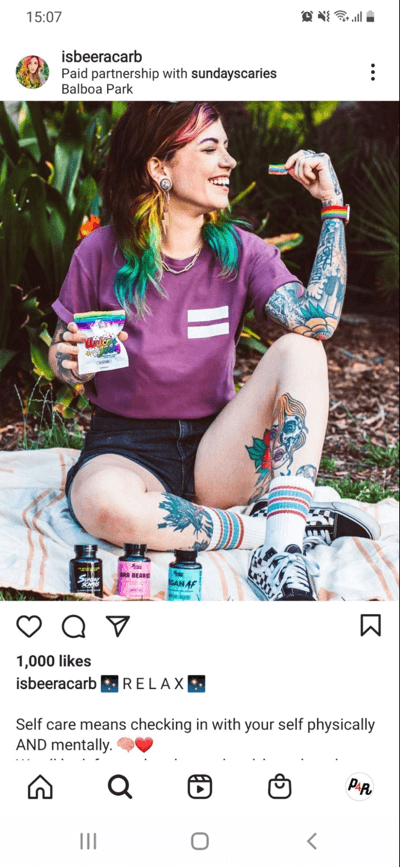
When Nathan Apodaca posted a TikTok video that showed him longboarding while drinking Ocean Spray Cran-Raspberry juice and singing along to Fleetwood Mac’s “Dreams,” it was simply a spur-of-the-moment frolic.

Ordinarily, those kinds of videos blend in with the millions of others that crop up on social media. But this one caught fire, eventually pulling more than 80 million views and nearly 13 million likes.

“It struck a chord,” Chris Ferzli, Ocean Spray’s director of global corporate affairs, said in a 2020 interview with CNBC. That “chord” fueled a massive sales increase for the  Massachusetts-based company.

Apodaca is one of many social influencers who earn money or perks by influencing the buying habits of consumers. In Apadaca’s case, Ocean Spray gifted him a new truck and sent him and his fiance on a paid honeyoon.

But it didn’t end there. Money also poured in from online viewers who learned he’d been living in an RV. He used the money to buy a $320,000, five-bedroom, three-bathroom home in Idaho for his family.

That was clearly a win-win for both sides.

The flipside

But the impact of social influencers can cut both ways, according to Doug Bania, an intellectual property valuation and defamation-damages expert with Nevium.

“They need to be aware that when social influencers engage in bad behavior that makes the front pages, the company can quickly lose face with customers and lose money,” he said. “A brand that took years to build can be ruined.”

Such was the case with Jared Fogel, the once famous pitchman for the Subway sandwich chain.

After attributing significant weight loss to eating Subway sandwiches, Fogle appeared in the company’s advertising campaigns from 2000 to 2015, doing numerous TV ads and in-store appearances to promote the company’s prodcuts.

The partnership abruptly collapsed when he was convicted for traveling to pay for sex with minors and for possessing child pornography. He was ultimately sentenced to more than 15 years in prison.

Needless to say, Subway’s reputation took a hit.

Willing to take the gamble

Still, a growing number of companies are willing to take the gamble. In fact, the influencer marketing industry is predicted to grow by as much as $10 billion over the next five years.

“It’s become very common,” Bania said. “Companies are realizing that social influencers have very large followings on Instagram, TikTok, Facebook, YouTube and other other platforms. It’s a big audience.”

When businesses weigh the cost of shifting some of their advertising dollars away from traditional marketing channels into less costly social media advertising, the strategy often makes sense, Bania said.

“The other thing about social media is that you can be very audience-specific,” he said. “It can go right to your target market.”

Bania expects the Federal Trade Commission will impose more guidelines in the coming years regarding social media advertising, as well as punishments if those guidelines aren’t followed.

“It can be very risky when you connect your brand with somebody’s personality because we’re all humans,” Bania cautioned. “Some people do good things and some people do bad things, so it’s a risk. The hard thing to determine is if the risk is worth the potential reward.”

It’s all part of what has become known as the “Attention Economy.” Consumers are giving more time and attention to social media platforms, and brands want to be where the attention is.

Bania put it simply:

“You may be older brand,” he said, “but how do you tap into a younger, hip crowd?”

Feature Image Credit: Nathan Apodaca’s TikTok video that showed him longboarding and drinking Ocean Spray Cran-Raspberry juice, fueled a heavy sales boost for Ocean Spray. (AP photo) 

By

Sourced from The Mercury News

By

Want to reach new audiences on Instagram without running ads? Have you considered branded content but weren’t sure where to start?

In this article, you’ll learn five simple steps to create, launch, and promote Instagram branded content campaigns to reach new people.

What Is Branded Content on Instagram?

Here’s what you need to know before you dive into the world of branded content creation, influencer marketing, and Instagram settings.

Branded content is one of the most powerful tools for Instagram marketing. It bridges the gap between organic content and paid ads, commercial partnerships and authentic recommendations. But as you might imagine, building that bridge takes some skill.

You need to find the right partnerships, set guidelines for your content, and finally, have a plan for boosting and resharing branded content.

Let’s start with some definitions. You might think that any content you produce as a social media manager is branded content: It’s content by a brand.

But Instagram thinks differently. Within this social network, “branded content” has a specific meaning. It’s content that markets your brand but it’s not created or posted by you.

Influencers or creators create this content on your behalf. They receive “an exchange of value” in return, whether that’s payment, product samples, or gifts. And that exchange of value has to be disclosed by using the branded content tools on Instagram.

Click HERE to read the remainder of the article

By

Sourced from Social Media Examiner

Sourced from FINCYTE

Every venture, whether an eCommerce store, a specialized blog, a portfolio website, or a company’s official website, needs analytics.

Finding the appropriate eCommerce reports and learning about your customers might mean the difference between steady growth and exploding earnings. However, having an inexhaustible supply of good data to mine can be a challenge.

ECommerce reports provide vital data that allows you to make informed business decisions about how to increase sales and revenue while enhancing the customer experience.

Importance of Regular Monitoring in e-Commerce Business

eCommerce Reports

Depending on the type of your subscription, Shopify, Magento, or Woo Commerce all feature a wide selection of reports, ranging from conventional overview dashboards to more granular reports. You can’t keep track of every other eCommerce report on the marketplace. This just dilutes important information, which can easily escape your sight.

So, to help you avoid this problem, we’ve compiled a list of the most crucial eCommerce reports that you should be monitoring. To demonstrate how you can unlock and exploit the full potential of your eCommerce store data, let’s start with the reports provided in the standard Shopify subscription.

1. Overview Dashboard

The report allows users to compare data and identify patterns all in one place. By clicking the “Compare to previous dates” option and selecting the dimensions for comparison, the data can be compared to a specific period or the same date range from the previous year.

You may also see the number of sales made in each of your point-of-sale locations, also the number of sales looked after by each member of the staff, if any.

The overview dashboard makes it simple to see which traffic sources are most effective, how your marketing efforts are going, and what your current repeat customer rate is, so you can act on this information and consider retention methods.

2. Finance Reports

This report summarizes your sales, payments, liabilities, and gross profit. It organizes your sales and returns, as well as the taxes you must pay, to make book keeping easier for you. You can select the period that you need and download the data in a spreadsheet for that month or quarter.

You can also customize the reports by adding or removing metrics, dimensions, and filters to meet your individual needs. If an order has multiple commodities, each commodity appears in the report as a distinct sale or return. The same can be said about shipping expenses. The specifics of an order become available when you click on the order number.

3. Product Analytics

Product analytics reports show you how different products in your portfolio have performed over the last 90 days. This way, you can learn who is buying what, which sources drive the most sales for a specific product, and more about the company’s past performance.

  • Net sales: This value is derived by multiplying the price of each commodity unit by the total number of unit sold, minus the discounts and returns; it can then be compared to the preceding 90-day period’s net sales value.
  • Breakdown of sales: This is the breakdown of all the values that result in net sales when added together.
  • Net sales by channel: The channels that account for the majority of a given product’s net sales.
  • Customers: The percent of customers who made their first purchase from your store versus those who had previously made at least one purchase.

4. Marketing Reports

Only the Sessions Attributed to Marketing report is available on the Shopify Basic package. This report shows number of people that visited your store as a result of marketing initiatives like UTM campaigns, Google ads, social network ads. Google Analytics must still be used to track marketing campaigns, and Shopify gives instructions on how to do so.

5. Behaviour Reports

Knowing your customers’ behaviour opens up a plethora of opportunities for optimization, retention strategies, and marketing tactic improvement.

  • Online store conversion over time: It displays the percentage of visitors who made a purchase on your website during a specific timeframe; You can choose a timeframe and then see the sessions that occurred during that timeframe, out of these sessions, how many of them led a product to the cart, you can see how many of them led to the checkout page; finally, out of the sessions where the checkout was completed.
  • Online store speed: This is crucial for the customer experience, but it is also a criterion that Google considers when deciding how to index and rank web pages.
  • Online store searches: This shows you which terms your customers used to search for a product on your online store the most frequently. Use these to update the name and description of the products if necessary, so that your customers can find what they’re looking for more easily. This report assists you in understanding the specific terms that customers enter in the search bar. Furthermore, they may reflect trends in search query trends on search engines, making this report an excellent resource for search engine optimization. If you notice repeating patterns, you can use these terms in your ads as well.
  • Sessions by landing pages: In this report, your see on which page your website’s sessions begin.
  • Sessions by device: This report displays the devices that were used to access your website. The Overview Dashboard also includes the Sessions by landing page and Sessions by device reports.

6. Acquisition Reports

The acquisition reports track sessions over time, sessions by referrer (how users arrived at your store: directly, through search, or through a referral; this metric is also included in the overview dashboard, but the Session by referrer report provides more detailed information and insights), and sessions by location.

It’s crucial to know where the visitors are coming from so you can better target potential new customers. If we see the number of session over time, this is a critical metric to consider when analysing the overall performance of your eCommerce store: are you getting enough visitors? Are you keeping up with industry standards?

7. Inventory Reports

The inventory reports may come in handy at the end of the month because this can be the reference of the inventory and track the quantity and percentage of stock units sold each day.

  • Month-end inventory: shows how many of each product variant you had on hand at the end of each month
  • Average inventory sold per day: shows the average number of product variants sold per day over the selected time period
  • Percentage of inventory sold: the percentage of the product variant sold during the chosen period as a percentage of the total starting quantity
  • ABC analysis by product: A-grade, B-Grade, C-grade where A represents the source of 80% of your revenue, B represents the next 15% and C represents the last 5% of your revenue.

8. Live View

Who wouldn’t want to know what’s going on with their eCommerce store’s website in real time? Shopify users can get real-time insights from all over the world with live view. There are two kinds of dots on the map: white ones and orange ones.

The white dots represent a recent session, while the orange dots represent recent sales. The dots pulsate constantly and then fade away after a certain amount of time. Every 10 minutes, Live View will display a visual representation of your customers’ behavior during the checkout process. This type of visualization is especially important during peak times like the holiday season or Black Friday.

  • Visitors right now: shows how many visitors have viewed a page, clicked a button, added something to their cart, etc. in the last 5 minutes on your online store; to be active, the visitor must engage in some way with your website- view a page, click a button, add something to their cart, etc. Note that this number may differ from what you see in Google Analytics because Google does not disclose the mechanism by which they estimate the real-time visitor count.
  • Today’s total: shows all of the current day’s sessions, orders, and sales. The count begins again at midnight in the time zone of your store. The total value of sales is calculated by adding gross sales, discounts, refunds, shipping, and taxes to purchases placed on your web store and through other sales channels since midnight.
  • Real time page views: indicates how many pages of your website have been viewed by visitors in the last 10 minutes; each bar represents the number of page views for a 1-minute time unit; the last bar represents page views in the current minute.

9. Sales by billing country

This report will show you which countries contribute the most to revenue. The data can assist you in deciding where to invest in new markets.

You can even dive down into a country to observe which provinces or states perform better in terms of future ad targeting.

10. Sales tax reports

You’ll very certainly have to pay sales taxes on anything you sell, regardless of what you sell or where you sell it. The methods of taxation vary depending on where your consumers are located.

However, they are also determined by the volume of sales in each destination. When it comes to setting up your store, make sure to seek advice from a certified financial specialist.

You may focus on improving all of the crucial components of building an online store by tracking these Ecommerce reports. Make it a habit to review the data on your eCommerce dashboard on a weekly or monthly basis and make informed decisions based on it.

By Ekta Patel

Ekta Patel is a technical writer and digital marketer at Selected Firms – detailed analysis of top IT, mobile, web, digital marketing and E-commerce development companies. Skilled digital Marketer with 7 Years of experience in eCommerce SEO marketing, Google AdWords, and social media content building. Successfully increased organic traffic by 70% for small and medium sized businesses in the eCommerce sector. Has also built content for the company websites/apps, blog and case studies. Has profound experience in working for IT organizations and is responsible for introducing the latest eCommerce trends to the team.

Sourced from FINCYTE