Author

editor

Browsing

Sourced from The Network Journal

You probably hear the word “branding” thrown around a lot. Branding has become a common topic of discussion in entrepreneurship – and for a good reason. Branding isn’t just a memorable logo. It’s vital to your online presence and the success of your business.

What exactly is a brand?

Put simply, a brand is a promise of a specific experience that you create through the sum of different elements, including your logo and tagline, messaging, promise, a specific personality, and visual elements.

Building a brand helps you cultivate trust in your target market, build a community, and showcase yourself as an authority in your field.

Here are additional reasons why you should build your brand as an entrepreneur:

Instant recognition. As an entrepreneur, much of your business growth depends on your getting out there and marketing. With the number of entrepreneurs on the rise, it can be hard to distinguish yourself. Wouldn’t it feel nice for people to know your company without your ever having to introduce it?

A logo is one of the key components of your brand. As the “face” of your business, it’s what people will instantly recognize. A professional logo design should be simple enough to be memorable but powerful enough to give your business the desired impression.

Increased client attraction. Do you find yourself chasing clients? Perhaps they vanish into thin air after your initial meeting. Don’t let this happen to you.

A strong brand is like a magnet for your business. When you focus on building your brand as an entrepreneur, you become exposed to a larger audience. People can find you online and interact with you easily, attracting more business than you know what to do with.

More than regular clients, your brand attracts higher-quality ones. Successful people want to do business with other successful people.

Enhanced credibility. Many smart entrepreneurs struggle to get their big break simply because they have no idea how to position and present their know-how, skills and experience. They lack credibility among those outside their traditional circle of influence.

Credibility is extremely important for entrepreneurs. The more credibility your business has, the more likely people will buy your products or services. A brand is a strategic representation of everything you embody. It expands your circle of influence and boosts your credibility.

Ability to charge more. With increased credibility, you’ll be in a better position to charge more for your product or service.

As an established brand, you may have a limited amount of time in a day to do all the work your business demands. As demand for your skills, expertise, and time increases, you can start to charge more for your time.

Charging more allows you to decide how much you want to work, meaning more freedom.

A better network. You may have heard it said, ‘who you know is crucial if you want to make it in business.’ This couldn’t be further from the truth.

As you grow your brand, you will develop an ever-growing network of heavy hitters in your industry. This network can come in handy when it comes to growing your business. It’s a beautiful cycle.

Whether you want to release a new product in the market or try another route in your business, having a network of people at your disposal can prove to be very valuable.

Inspires employees. Your employees need something to work towards – something more than work and salary. When your employees understand your business’ mission, they’re more likely to feel that they’re part of something bigger and more likely to work to attain the goals you set.

Building a strong brand is like turning the company logo into a flag your employees can rally around.

What are the best branding practices?

Become familiar with the best strategies to avoid common pitfalls when you begin to build your brand.  A single misstep can hurt your reputation and set your brand back.

Here’s how to avoid that:

  1. Harness your personality. Your personality is the most unique thing about you, setting you apart from your competitors.
  2. Believe in yourself as a brand. You become a brand the moment you start your own business.
  3. Know and embrace your strengths and weaknesses. If you want your brand to come off as authentic, you have to own your strengths and weaknesses.
  4. Build a website for your brand. Unlike social media profiles, your website is something you own. Use this personal platform to share blog posts, digital products, webinars, and any other content you deem appropriate for your audience.
  5. Provide value at every chance. The people who follow your brand are interested in learning what you already know. For this reason, try to share content that provides value for the reader.
  6. Foster relationships with other popular brands. Interacting with other well-known brands in your industry is another way to build your brand. Your competition is not always the enemy. You can find success when you partner with your competition on specific marketing campaigns.
  7. Keep reinventing yourself. If you commit mistakes while building your brand, reinventing yourself will help to present a new persona to your online audience.

Branding is not something that occurs overnight, and it’s definitely not something that you should leave to chance. If you really want to stand out from the crowd, concentrate on building your brand.

To build a successful brand, start by understanding the branding best practices. Brands do not exist in a vacuum. Build relationships with movers and shakers in your niche to stay ahead of your competitors.


Sourced from The Network Journal

By Jessica Wong

As e-commerce businesses globally are getting ready for the holiday season, one trend is shaking up the online shopping scene. Social commerce looks set to make an impact on e-commerce sales this season.

What Is Social Commerce?

Social commerce is the convergence of e-commerce and social media. Brands engaging in social commerce use social media platforms as vehicles to sell products and services. If your business relies on e-commerce sales, you are likely already involved in social commerce. However, are you maximizing the potential of this trend for your business?

Growth Opportunities

For years, China has led the world when it came to social commerce. However, during the Covid-19 pandemic, the trend has gained huge momentum in the United States, when countless shoppers moved online.

According to Statista, there were 80 million social buyers in the U.S. in 2020, which equals a 30% increase over 2019. Experts believe that the social commerce trend would have continued to grow without the pandemic but that the pandemic accelerated its growth.

Those 80 million buyers spent approximately $27 billion throughout 2020. This year, retail experts are forecasting social commerce sales to increase by more than 35%, meaning consumers will spend more than $36 billion. Compared to China, that is only 10% of what consumers will spend in that market.

Looking further ahead to 2025, social commerce in the United States is set to grow to nearly $80 billion. At that point, it would account for just over 5% of the country’s retail e-commerce sales.

How Your Business Can Take Advantage

Considering the growth forecast for social commerce and the growing use of social media, any business involved in e-commerce has the potential to benefit.

While it is important to ensure that your social commerce strategy is tailored to your brand, a number of tactics are suitable for most online retailers. Those include user-generated content, working with influencers and adding consumer calls to action to your posts.

Choosing The Most Suitable Platform

Another major consideration is your choice of platform. Facebook is currently the largest social media platform in the U.S., which is why your organization should consider it as a contender for your social commerce activity. The network has been forecast to attract more than 56 million buyers in 2021.

If you are a small or medium business, Facebook has even created a bespoke platform for companies like yours. Facebook Shops was launched in 2020 to help smaller businesses through the pandemic. Through this tool, you can bring your shopfront online for free. If e-commerce and social commerce are part of your strategy, this is an opportunity not to be passed by.

Instagram has been associated with influencer culture for years. Despite attracting fewer users overall compared to Facebook, if influencer marketing raises awareness for your brand, Instagram needs to be on your list of chosen platforms for social commerce.

The platform offers several tools to facilitate your sales. For years, brands have been encouraging potential customers to visit their biography for a link to their store. This has been an effective strategy to enable sales, but more recently, Instagram took things further by launching Instagram Checkout to make purchases easier. Since 2020, the social network has had a shop tab. This allows users to see and purchase in one single click products advertised by people, influencers or brands they follow.

TikTok is a relatively recent addition to the choice of social media networks consumers have. In the three years since the platform was founded, it has not only grown exponentially, but brands have also benefitted from user-generated content leading to “consumer manias.” Some TikTok users have built a huge following based on their ability to sell a wide variety of products.

As a consequence, e-commerce giant Amazon added a column to its website listing items that recently went viral. TikTok has recognized the huge potential of its platform as an e-commerce facilitator and launched TikTok Shopping to offer sellers a wider array of solutions.

The Next Step

Social media marketing and social commerce are important pillars of your e-commerce strategy this season. With holiday shopping about to enter its busiest period of the year, it is worth investing in this trend.

As you are preparing posts and shopping messages, remember that the success of social media is built upon creating connections between people. Conversion into sales is an important measure of success, but considering engagement through sharing, commenting and generally interacting with posts is equally valuable criteria.

Pay close attention to your tone of voice when you are engaging with customers. Experts have credited TikTok’s unprofessional feel as a major contributor to its sales success. Sales messages feel like they are spontaneous, trustworthy recommendations from friends rather than corporate, sponsored messages.

Online retail and e-commerce are permanently evolving. While online shopping statistics have grown across the board, partially accelerated by the pandemic, there are a few products that are firm favourites with online shoppers. If your company operates in one of the following fields, social commerce needs to be a priority for you: Accessories and apparel, consumer electronics, home décor and cosmetics are leading the growth of social commerce.

Investing in social commerce activity for these products allows your business to increase sales and connect directly to customers. It is an excellent way to boost revenue and build long-term consumer relationships.

Feature Image Credit: getty

By Jessica Wong

Jessica is the Founder & CEO of Valux Digital, a nationally recognized full-service marketing and PR firm. Read Jessica Wong’s full executive profile here.

Sourced from Forbes

By Chloe Schneider

Perfection is death. Reserved for gods, not mortals.

David Foster Wallace, a perfectionist, wrote a book that features a film called ‘Infinite Jest’. As a piece of perfect media, it is so soothing and answers every desire, that it is impossible to switch off. It fully absorbs the viewer’s attention so they just sit there, sunk in their seat. They watch until they die. The lesson here appears to be that even if perfection were attainable, it might lull us into inaction.

Perfection is the enemy of action.

Action is vital

There are plenty of clever abstractions in branding – and hot air. Acting and applying ideas in the real world is so often where things fall apart. Branding needs a closer resemblance and connection to life.

Applied brand strategy is essential; strategy that can be made reality, designed to take shape in the world. What’s important is not perfect brands and notions, but distinctive brands that make meaningful contributions to culture. A future where all brands act, and specifically act with a social and cultural conscience.

The climate crisis has taught us that, if the status quo isn’t working, if we don’t like what the future holds, we can’t sit around and wait for perfect, ideal solutions. Where we can start to act thoughtfully and with purpose, for environmental and social good, don’t delay. Think hard before you act, but don’t overthink it. Don’t be anxious about having to be a brand with all the perfect answers. Every active step counts.

Often, the issue is about creating cultures, rather than being passive recipients of a future or system that someone else decided or designed. Pursue a radical or reformist agenda in why, how, and what you create.

The process, how brands make things and live on in the world, is as important as the final result.

‘Perfect’ comes from the Latin for ‘completed’. It is unrealistic and dull to think of brands as complete, not as living and responsive parts of culture. It is too narrow to think only of a brand’s end product or service, its final form in isolation.

What was unusual about a Rodin exhibition at the Tate Modern this year was how few of Rodin’s perfect marble sculptures of the human body were on display. Instead, room after room was filled with plaster casts, pencil marks, and the artist’s experimental works. The exhibition firmly insisted that Rodin’s brilliance lies also in the process of creation, in the ruptures, messy complexities, and uncertainties.

“It is unrealistic and dull to think of brands as complete, not as living and responsive parts of culture. It is too narrow to think only of a brand’s end product or service, its final form in isolation.”

Brands shouldn’t be divorced from their making. They should be connected, responsible, and transparent about how something is made, materials sourced, produced, and distributed. Brands should take an empowering and caring role in the communities they draw on and are made in. Norlha is a slow, sustainable, and ethical luxury fashion and homewares brand selling items that are handwoven from Yak wool by nomads turned artisans in Tibet. Rooted in Ritoma’s community, the brand has organically led to the continuity and flourishing of craft and culture, giving people livelihoods, new futures, and a voice in a time of change.

The arts and crafts movement spoke of the joy to be found in labour for a craftsman. In The Stones of Venice, John Ruskin looked at the rough and vivid carvings of Venetian buildings and envisaged ordinary workmen being left to their own imaginations. Whether his observation was right or not, I do think that the more everyone involved in making a brand can take pleasure, pride, and creative satisfaction in their work so much the better.

The power of making something real and its impact can’t be underestimated. But it shouldn’t be limited to the brand managers, marketers, and creative agencies. Make better, empower everyone involved. How a brand gets there – the people that make it, the community it feeds back into, the creative and productive conversations had – matter as much as the final result.

There is also the question as to what ‘perfect’ branding is trying to achieve.

Infinite growth should be dethroned as an aim

This focus on good actions and on the process and getting it right help us to reprioritize.

However, the “perfect” brand and strategy are almost invariably directed towards growth. The electrifying Silicon Valley mindset of shooting into space. Does growth always have to be the goal, the pinnacle of success? Branding certainly seems to be addicted to the idea.

I can’t help but think it misses the point. Growth at the cost of what? Never-ending growth is no longer viable. It’s unsustainable. We need to be willing to sacrifice profit for the cost of building better. It is crucial that more brands act on their philosophies, and stop making empty environmental and social promises.

I’m relieved that brands like Karma Cola exist that are focused on people and the planet, on ethical behaviour, versus world domination. The brands mentioned in this article are relatively small, this enables them to maintain the integrity of their actions and be agile.

In short, be more human, not god-like in the pursuit of perfection.

Take actions that do good in the real world, and don’t be seduced by the dangers of omnipotence, omnipresence, and the divine glory of being absolutely perfect.


As Brandingmag reached its 10th anniversary this year, we’re putting together an original series that envisions a perfect future for branding. Ten articles will explore ten different sides of branding, each one through the eyes of an expert on the subject. Join our celebration and stay tuned for the next installment in the “Branding’s Perfect 10” series.

Feature Image Credit: Rostislav Uzunov

By Chloe Schneider

Chloe Schneider is a strategist and semiotician at Here Design. Her expertise is in analysing culture and its artefacts — objects, brands, art, films, media, spaces, iconography, and words — to inform and develop brand and design strategy.

She has unlocked new ways of thinking for Allpress, one of New Zealand’s best-loved coffee shops, Glenfiddich, one of the most globally iconic alcoholic spirits, and The Fife Arms, a hotel from the co-founders of acclaimed gallery Hauser & Wirth. A background in consumer insight and cultural strategy ensures her provocations are grounded and relevant.

Sourced from Brandingmag

By

Jack Dorsey will no longer steer the company he founded, but is this due to stagnating profits or a more fundamental change of direction?

So Jack Dorsey has stepped down as the CEO of Twitter. This means that the company has had four CEOs in its 15 years of existence, with Dorsey occupying the role twice, but in all that time it’s had only one business model, which may largely explain his departure.

There are interesting parallels between Dorsey’s relationship with the company he co-founded and Steve Jobs’s with Apple, for both were ousted at one stage by their board colleagues and were then brought back to rescue said colleagues from their incompetence.

And the parallels don’t stop there. During their sojourns in the wilderness, both men founded successful new companies, in Dorsey’s case the payments firm Square, in Jobs’s case the computer firm NeXT Inc, after which he went on to transform the Lucasfilm graphics company into Pixar. For both men, these were profitable periods of exile: Square is now valued at $100bn; Jobs sold Pixar to Disney for $7.4bn and got a seat on the Disney board. Which only goes to show that sometimes being fired is the best thing that can happen to a visionary.

The idea that became Twitter came from Dorsey’s brainwave in 2006 that if one could broadcast one’s SMS messages then that would be quite a thing. It was an instant hit, not least because most people already knew about text messaging and so the new service hit the ground running. In short order it morphed into a global wire service for ordinary people and, in the 2016 US presidential election, into a megaphone for a particularly adept and unscrupulous user of the medium.

So why is the guy who created this astonishing service stepping down? The proximate reason is that he’s being hassled by a couple of wealthy “activist” investors who can’t understand a) how Dorsey could be both CEO of Twitter and of Square (good question, IMHO); and b) why a service that has become such a central part of the networked public sphere isn’t attracting more users or making more money. The number of monthly active users (MAU) on Twitter has been pretty stagnant for a while, and although its annual revenues ($3.72bn in 2020) might seem substantial to those who live in the real world, in the reality distortion field of Silicon Valley they are viewed as small change. As one way of placating these impatient activists, Dorsey gave each of them a seat on the company’s board in return for substantial injections of capital.

But it’s clear that what they are pushing for is a change in Twitter’s business model. Like the other social network companies, Twitter makes its money from advertising, but because it doesn’t have any direct user-to-advertiser link, most of the advertising is brand, rather than product, related. Which means that much of the advertising that crops up in one’s Twitter feed is basically virtue-signalling by corporate brands.

It’s not clear how this can be changed without radically changing the nature of Twitter, thereby losing its uniqueness. The veteran tech analyst Ben Thompson had an interesting way of putting this in his newsletter the other day by comparing Twitter with Instagram. Both follow a broadcast model but their respective default media are different: for Twitter it’s text, for Instagram it’s photographs.

The implications of this are vast, argues Thompson. “Sure, you may follow your friends on both, but on Twitter you will also follow news-breakers, analysts, insightful anons, joke tellers and shit posters. The goal is to mainline information and Twitter’s speed and information density are unparalleled by anything in the world. On Instagram, though, you might follow brands and influencers and your chief interaction with your friends are stories about their Turkey Day exploits. It’s about aspiration, not information, and the former makes a lot more sense for effective advertising.”

Putting it another way, the mental states of users are different on the two platforms. Instagram is a way of combating boredom, endlessly scrolling in the hope of finding something interesting. A user in that frame of mind is more likely to be tempted by the prospect of an impulsive purchase.

Twitter users, however, are not bored. Instead, they’re combative, annoyed, outraged or looking for a fight or a joke. Often, my Twitter feed brings to mind a story I once heard from a Scottish comedian about Sauchiehall Street on Friday nights in the old days: he described a scene in which one drunk has grabbed another by the lapels, banging his head against the wall and shouting: “For the 20th time, Jimmy, there are 31 islands in the Greek archipelago.”

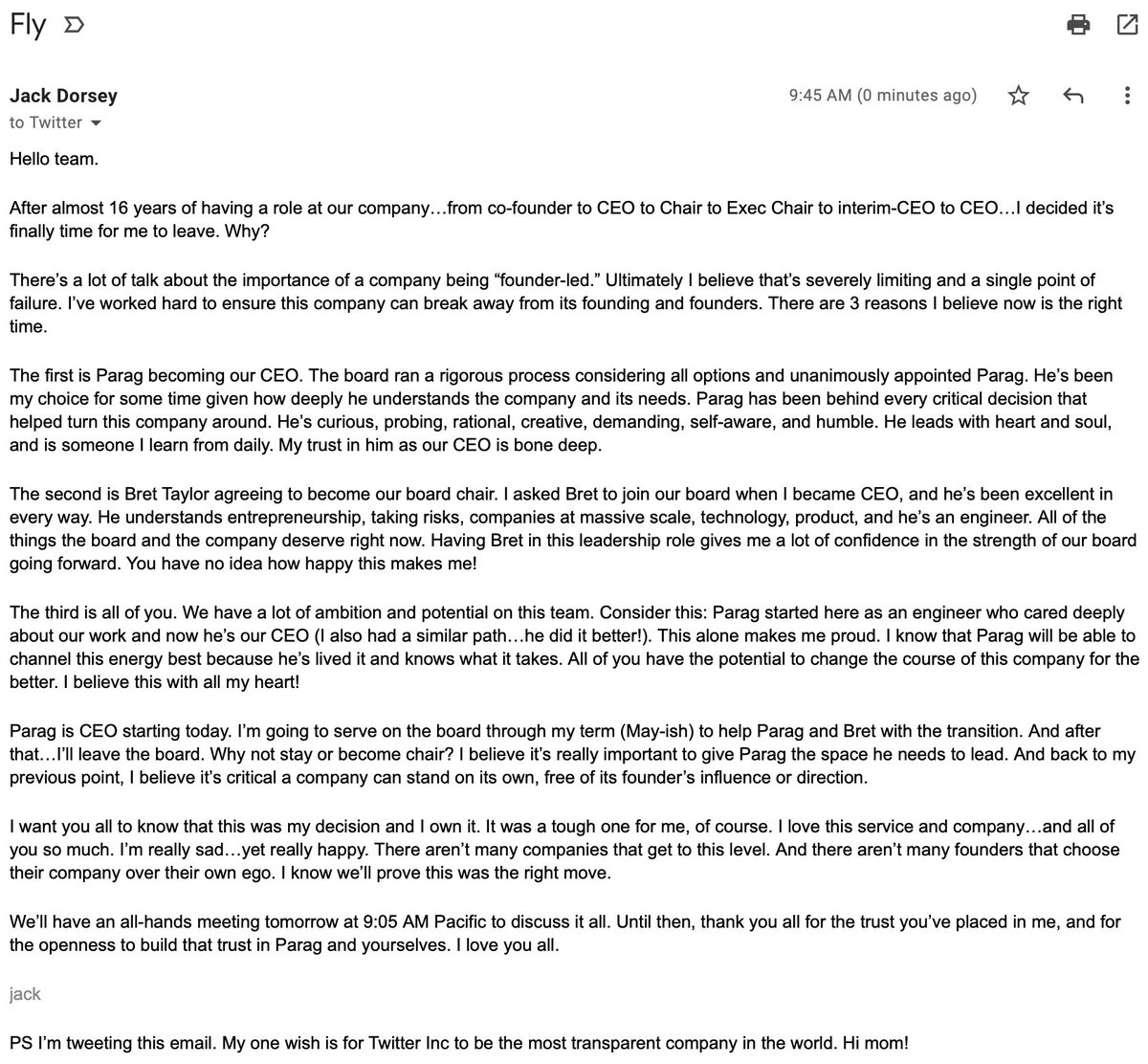
As Dorsey headed for the exit the other day, he dropped a delightfully wicked thought. “There’s a lot of talk about the importance of a company being ‘founder-led’. Ultimately, I believe that’s severely limiting and a single point of failure.” The funny thing is that while that may or may not apply to Twitter, that idea of “a single point of failure” very definitely does apply to another social network. And Mark Zuckerberg isn’t going anywhere, not even if the wretches on his board of directors thought it was time for him to spend more time with his money.

Feature Image Credit: Twitter CEO, Jack Dorsey, will pass the Twitter reins to Parag Agrawal. Photograph: Xinhua/Alamy

By

Sourced from The Guardian

By Annie Button

There are tens of thousands of businesses currently operating in every industry you can think of and the online market has never been more saturated. But, while this has its benefits, standing out among your competitors has become increasingly challenging. In order to attract more leads and increase conversions, you need to set yourself apart and one of the most effective ways to achieve this is through identifying your niche.

What does ‘niching down’ mean?

Niching down means identifying a smaller segment of your audience to target, so you can deliver a more specific and tailored offering that speaks to them directly, as opposed to a general offer that reaches a larger audience.

Consider a web designer that exclusively works with charity organizations. While they can design websites for any business, trying to get noticed in a vast expanse of different industries and specialisms is incredibly tough. By focusing on a smaller niche, not only can they tailor their services to those organizations more effectively, because they’ll understand the demands of that sector, but charities in need of web design services will know exactly who to contact.

A blanket approach may seem like it will result in more sales, but the reality is that what you’re selling may not appeal to a large percentage of that audience’s needs – you’re not going to stand out among thousands of other people all offering the same thing. Ultimately, in niching down, you’ll stand out more to a specific group of people who are looking precisely for what you’re offering. And, it provides many more benefits besides.

Connect and attract true customers

When approaching the topic of niching down, many business owners worry that by alienating a large group of customers, they’ll lose money. But actually, the opposite is true – instead of just using a blanket approach to a large group of potential customers, when you determine your niche, you increase the number of ideal clients.

These are people who are far more likely to convert, meaning your marketing efforts are stronger. In a podcast interview, brand strategist Pia Silva explains the value in connecting with targeted customers, stating, “It’s so powerful to clarify who you’re for. It turns on the light bulbs in people’s brains, they think of people to send to you that they wouldn’t think of if you’re not specific”. Your business becomes the go-to brand for your specific service or product, enhancing your reputation in your industry and attracting true clients.

Develop a stronger offer

When you narrow down your focus, you have a greater opportunity to understand the strengths and weaknesses in your sector. You’ll be able to gain clarity on the market and your competitors, and build an offer that’s consistent for your customers. Your message will be clearer and you and your customers will have confidence in what you’re offering because you’ll be the specialist in that area.

That’s not to say that every client gets the same solution. But, the framework and the structure of your offering will be the same because your clients will inevitably be in need of similar things. This, in turn, makes it easier to deliver high-quality products or services that are in keeping with what your customers are looking for.

Build trust and loyalty in your brand

When you’re speaking to a smaller audience, it’s much easier to speak their language specifically and talk to customers in a more personalized way. You’ll be communicating with like-minded individuals rather than trying to make yourself heard to everyone. This helps to build trust with your audience, as you’re creating something that’s exclusively for them. The result is that your audience feels understood and, in niching down, you’re showing that not only do you know your audience but you value their needs and requirements enough to tailor your business to them which goes a long way towards building loyalty.

Limit your competition

Two overriding benefits of finding your niche are that you instantly reduce your competition and rebuild your competitive edge in a saturated market. You’ll no longer be fighting against thousands of other businesses for the top spot. The pool of competitors will be much smaller, making it easier to achieve success. In fact, in cornering a niche market, you may even find that other businesses are less likely to take the risk which can be of benefit to you and your company because it leaves those opportunities available for conquering.

In summary

Instead of trying to solve everything for everyone, niching down enables businesses to focus on the services and products that their customers really need and are willing to pay for. It also offers the opportunity to really hone your expertise in a specific area and become a market leader for your niche, which can benefit your business in the long term.

By niching down, you become the go-to specialist which builds positive brand recognition and customer loyalty, as well as increasing conversions and staying one step ahead of competitors.

Feature Image Credit: George Pagan III

By Annie Button

Sourced from Brandingmag

By Nicholas Sonnenberg

This simple technique catapulted the second-largest boutique hotel company in the world, and it can work for your business, too.

In his book, Conley explains how he and his team used one simple exercise to align on an identity for every hotel they developed. They would define the hotel by one magazine and five adjectives.

The Phoenix Hotel? Rolling Stone Magazine. Funky, irreverent, adventurous, cool, and young at heart.

The Hotel Vitale, a health-conscious hotel offering spa treatments and daily yoga sessions, was a cross between Real Simple and Dwell. Modern, urbane, fresh, natural, and nurturing.

A psychographic of your ideal customer

Rolling Stone Magazine defined the creation of The Phoenix Hotel, from the restaurant to the staff to the uniforms and décor. And if you’ve ever stayed there, you know it’s a spot-on description for the rock-and-roll-centric 50’s motel that includes a poolside bucket of beer and chips with every stay.

But what Joie de Vivre found was that their five adjectives went beyond just branding–they became a mirror for the aspirations of their customers. The people who stayed at The Phoenix Hotel thought of themselves as funky, irreverent, adventurous, cool, and young at heart. This simple exercise not only helped them to define their hotels’ brands from the beginning, it became a psychographic of each hotel’s ideal customer.

What I’ve found is that this methodology can be applied to nearly any business to help clarify your brand perception and begin to define your ideal customer profile.

Finding your magazine

If you’re like me, you probably already have your company’s magazine in mind as you’re reading this. I know when I first heard about this my mind immediately started thinking through the magazines I subscribed to, and that my customers likely subscribed to as well.

My company, Leverage, is a dual-sided growth agency that shapes businesses into efficient organizations by optimizing top and bottom line revenue. We pride ourselves on finding new, efficient, and innovative ways of working–not only for ourselves, but for our clients.

Our magazine? Inc. Smart, efficient, effective, curious, and data-driven.

Now, is this a complete branding strategy for my entire company? No. Not even close.

Nowadays, branding is complex. It’s about culture and where your organization sits in the ecosystem of people’s lives (at least that’s what my internal experts tell me). Basing your entire brand off of a magazine and five adjectives will get you moving in the right direction, but it’s going to take a more dynamic and integrated approach to create a modern brand.

But here’s the value of this exercise: It takes about five minutes, anyone can do it regardless of experience, and it sets up a foundation for your brand that your team can align with.

Magazines have already put in years of work to refine their brand identity, and you’re almost guaranteed to find one that has a nearly identical identity to what you’re going after. Why start from scratch when you can piggyback off of work that’s already been done?

Here’s my recommendation. Have everyone on your executive team do this exercise on their own, then meet to go over the results. Pool the answers together and work with your team to develop your magazine and five adjectives. From then on, everyone will be aligned on your company’s core identity and how you want to be perceived–which can then drive decisions at every level of the organization.

Feature Image Credit: Getty Images

By Nicholas Sonnenberg

Sourced from Inc.

By

  • Instagram has launched more than 10 money-making tools for creators since 2020.
  • From subscriptions to NFTs, the Meta-owned platform is testing many ways for creators to make money.
  • Insider made a timeline to show all of Instagram’s monetization features — and which ones are gone.

Instagram has launched more than 10 money-making features aimed at creators in the last two years.

Executives across Meta’s family of apps — as high up as Mark Zuckerberg — have made it clear that they want Instagram to be seen as a place where creators can “make a living.”

But as Instagram rolls out new monetization products for creators, not everything sticks around.

“I’m always a little cautious because Instagram changes all the time,” Yesenia Hudson, a content creator with 40,000 Instagram followers, told Insider. “I don’t know how long something is going to last.”

One of Instagram’s earliest monetization features was IGTV ads, a move to compete with YouTube’s Partner Program (also known as AdSense) that pays creators a percentage of ad revenue on videos. IGTV ads launched in 2020 and was shut down in early 2022.

In 2021, the Meta-owned platform unveiled several more features, from a native-to-Instagram affiliate marketing program (now shuttered) to a series of “Bonuses” similar to other creator funds on competing apps like TikTok. Meanwhile, this past year has been focused on ways creators can earn money from their followers with tools like Subscriptions or Digital Collectibles (Meta’s NFT feature).

Timeline of Instagram’s many moneymaking tools

Feature Image Credit: Instagram; Samantha Lee/Insider

By

Sourced from INSIDER

By John Hall

Chris Ducker once famously said, “Your personal brand is what people say about you when you are not in the room.” During life, you’ll undoubtedly come across different types of leaders.

The cliché of the angry boot camp drill sergeant certainly represents one form of leadership, but on the opposite end of the spectrum, we have business leaders who get results from their employees by displaying empathy and understanding.

Such interactions go a long way in establishing your personal brand with those you interact with on a daily basis. But for those looking to establish themselves as an authority in their niche, personal branding goes for even greater reach.

Why Building A Strong Personal Brand Matters

Your personal brand is what you project to the world. It’s how others see you, and how they will ultimately talk about you. For highly visible leaders, your personal brand will likely have a major influence on whether someone decides to do business with you.

Many like to think that they do business with people, rather than a faceless company. A leader with a strong personal brand can essentially become the face of the company to customers and prospects. Unlike a company, a person is someone we can become attached to and more easily identify with.

These results are readily apparent through social media. On average, brand messages shared by employees have a 561 percent greater reach than if those same messages are shared through branded channels. This content also receives eight times as much engagement.

If regular employees can have that type of impact just by sharing brand content, it’s well worth considering how much reach a leader can have when they share their original insights. That reach and engagement is what will allow you to grow your business and establish yourself as a genuine authority in your niche.

Be Consistent In Your Efforts To Build A Personal Brand

Northeastern University recommends, “Before you start crafting your personal brand, you also need to determine who you’re trying to reach. Is it other industry thought leaders? An individual at a particular company? Recruiters? The sooner you define the audience, the easier it will be to craft your story, because you’ll better understand the type of story you need to tell (and where you need to tell it).”

While it’s true that many business leaders have built their personal brand through blog content, this isn’t the be-all end-all of brand building. Public speaking, or simply sharing your insights on social media, can also help you establish credibility in your niche.

What matters more than your preferred platform is establishing consistency in how you present your knowledge and insights. For example, using a tool like Boosted lets you easily customize video templates with your own font, logo, music and more to help you create a consistent look each time you post content to social media.

A distinct visual style will clue viewers in that they are looking at your content, and not anyone else’s. When someone is scrolling through their feed, they’ll immediately recognize your content.

Consistency also means that you will regularly devote time to your personal branding efforts. A flurry of posts at the beginning of your branding initiative won’t do you much good if you quit writing and posting after three months. A strong personal brand requires ongoing effort and maintenance.

Share Content That Truly Builds Your Brand

The type of content you share as you build your personal brand goes a long way in defining how others perceive you. It’s one thing to have a quick wit — but if you’re all witticisms without any actual meaningful insight for your industry, it will be easy for others in your niche to ignore you.

On the other hand, sharing case studies, insights from your business and personal experiences, client success stories and other value-driven content will help you establish a brand that people actively want to engage with.

To find the right focus for strengthening your personal brand, executive coach and speaker May Busch recommends asking trusted people to tell you the words that they associate with you to identify the gap between your current reputation and what you want your personal brand to be.

She explains, “Once you’ve identified the gap between perception and reality, choose the aspect that will make the biggest difference in changing perceptions. What will give the biggest boost to your personal brand? What’s the one thing that will make the other parts of the gap easier to close? That’s what you want to work on first.”

Whether interacting with someone on social media or writing a new blog post, always consider how it will help you cultivate your desired persona and provide actual value to your intended audience. This will help you become more than just another personality — you’ll be an authority.

Building A Personal Brand That Delivers

The personal brand you cultivate will greatly influence how others perceive you (and your company) long before they do business with you. You must take ownership of your personal brand so that you can direct the conversation.

By staying true to yourself and being proactive in sharing your unique message, business prospects, industry leaders and others will come to know who you are and what you stand for. They’ll view you as a reliable, trustworthy source, as someone who provides meaningful insights.

With a strong personal brand, the results you’re looking for in your career are sure to follow.

Feature Image Credit: getty

By John Hall

Follow me on Twitter or LinkedIn. Check out my website.

John Hall is the co-founder and president of Calendar, a scheduling and time management app. He’s also the strategic adviser for Relevance, a company that helps brands differentiate themselves and lead their industry online. You can book him as a keynote speaker here and you can check out his best-selling book “Top of Mind.” Sign up for Calendar here.

Sourced from Forbes

By

Your corporate blog could one day lose its momentum.

Corporate blog content creation is a top priority of more than 50% of marketers. And with so many benefits — including the ability to reach, engage and convert prospects — you can expect this number to increase in the years to come.

The good news is that any company — regardless of size or industry — can benefit from a corporate blog. However, there’s no guarantee of success. Your blog could one day hit a wall.

Here are five reasons why your corporate blog has hit a wall and what you can do to get back on track.

1. No content calendar

A content calendar shouldn’t be optional. It’s best to make it a mandatory requirement within your organization. Without this, you’re inviting trouble such as an on-again-off-again posting schedule or publishing duplicate content.

A content calendar doesn’t have to be complex. It can be as simple as a Google Sheet with columns for title, keyword, author and proposed publication date.

2. Out of ideas

Through my years of consulting companies on how to drive revenue and traffic through corporate blogging, I’ve found this to be the biggest reason for failure. When you run out of ideas, one of two things happens: You stop blogging altogether or you stop sharing quality content.

Before this happens, make a list of places you can turn to generate ideas:

  • Brainstorm with other members of your team
  • Review competing blogs for inspiration
  • Use a keyword research tool

One of these ideas may be all it takes to clear your mind, break out of your funk and create a topic list you can rely on for months to come.

3. Not enough contributors

If you’re the only person contributing content to your company’s blog, it won’t be long before you hit a wall. This happens for many reasons, such as running out of ideas (see above) or simply burning out.

Here are some places you can turn to find contributors:

  • Colleagues (even if they aren’t in the marketing department)
  • Clients, partners, affiliates or suppliers
  • Outside writers who are willing to submit guest posts

As your list of contributors grows, the amount of content you personally create will (or can) decrease.

4. Too heavy of a focus on one type of content

Creating the same type of content — day after day — can result in burnout and/or writers’ block. Not to mention the fact that it can become tiresome for your audience to read.

Creating various types of content will maintain your interest in writing while keeping your audience coming back for more. These 10 ideas are a good place to start:

  • Listicles
  • How-to guides
  • Interviews
  • Infographics
  • Personal or brand stories
  • Industry news or current events
  • Checklists
  • Resources
  • Quizzes, surveys, or polls
  • Frequently asked questions (FAQs)

There are sure to be specific types of content that you prefer to create. And that’s okay. Just remember to mix things up now and again. It’s beneficial to you and your audience.

5. Lack of time

Even if it’s your full-time job to create content for your company’s blog, it doesn’t mean that time is always on your side. According to Orbit Media, it takes slightly more than four hours to write a typical blog post of roughly 1,400 words. And that doesn’t take into consideration other tasks, such as research and editing.

When time is tight, writers tend to cut corners. Maybe you lower your word count. Maybe you skip over proofreading. Perhaps you turn a blind eye to optimizing your content for search engines.

Fortunately, there are many ways to fight back against a lack of time, such as creating an ironclad content calendar and accepting guest posts.

Let these pointers direct you down the path toward corporate blogging success. If your blog has hit a wall, stop what you’re doing and recalibrate your strategy.

By

Chris Bibey is a writer, content marketer and business owner. He’s been featured in Forbes, Fast Company and hundreds of industry-specific blogs. He currently manages Chris Bibey Digital, a content-creation agency based in Pittsburgh, Pennsylvania.

Sourced from Entrepreneur Europe

By Tamal Das

Mind maps are a powerful productivity tool which you can use across a variety of areas. Let’s see how mind maps can help you create a visual blog

A blog post containing plain text blocks can hardly attract the present-day audience and retain their attention till the end. Instead, visual blogs or visual content is capable of offering improved reader engagement and better responses.

While creating a visual blog requires more effort than a plain blog post, a mind map can significantly reduce your labour.

Let’s learn about the stages of creating a visual blog where you can incorporate a mind map.

1. Use Mind Maps to Catalog Resources

An image showing resource cataloging using mind map

To write a resourceful blog, you need to collect your material from diverse sources. In most cases, you also need to include citations at the end of your blog post. This process might be easy while you’re writing a 500-word blog post, but what about a blog post with 2000+ words?

You need to collect data for that blog from various primary and secondary resources. Keeping track of this information and its sources can be challenging. Fortunately, a mind map is a handy solution.

This method will help you sort ideas according to their sources, using either the complete URL or just the name of the website. With this, you can easily include references or in-text citations.

2. Assemble Suitable Quotations With Mind Maps

Quotations are a visual blog component that makes it look catchy. Depending on the style, some blogs might require you to add multiple quotations on the same or different topics.

Whatever be the case, using a mind map will help you visualize your primary quotes in one place and save you from switching between different sites. Thus, it becomes easier to choose the final ones for your blog.

Moreover, a mind map is also useful while writing quotation-based blogs where you need to add listicles of quotations.

3. Mind Maps Can Help You Design Infographics

A mind map showing blog infographic planning

An infographic is probably the most common component of a visual blog. You may describe your ideas elaborately in a blog, but a reader might not have the patience to read till the end.

In this case, including an infographic will help you convey the crucial data and information of your blog clearly, without spending as many words. Readers can quickly understand it due to the visual representation of the data and stats.

Since an infographic should only contain crucial data, a mind map will help you filter the necessary points. Create a mind map and include all the important info of a blog. Then, select only the most beneficial ones.

Moreover, you can use a mind map to create different sections of an infographic and to sort the data for each segment.

4. Create Flowchart-Type Mind Maps for Process Explanation

A flowchart refers to a diagram that helps you visualize the individual steps of a process. If you’re planning to write a blog that involves chronology or a sequence, a flowchart is a compulsory part of it.

Mind maps should not always have a shape like a spider. It’s possible to make a right-facing mind map—a perfect substitute to the traditional flowchart. For blogs about historical events or scientific processes, you should use a mind map to note down yearly events or steps sequentially.

The good thing is, you can also include these flowchart-type mind maps in your blog. Thus, readers will have a better idea about the process.

5. Organize Ideas With Mind Maps

A mind map for ideation

When you decide to write a blog on a topic and start brainstorming, numerous ideas come to your mind. At this stage, you may not be sure about which ones to include and which ideas to discard.

Nevertheless, you must note down every idea to make sure you don’t miss anything. Use a mind map for this purpose when you create an outline for a blog.

Sophisticated mind mapping tools allow you to write down an idea immediately after it comes to your mind. Later, you can move the points to anywhere on that map. This feature will help you organize your thoughts as topics, sub-topics, and related ideas about the prime concept.

Use Mind Maps for Attractive Blogs

Only a visual blog can get you the desired readership and response. With a mind map, you can make all the different stages of blog creation seamless.

By Tamal Das

Sourced from MUO