Author

editor

Browsing

By Jhinuk Sen

We’ve seen retail undergo a series of changes and upgrades over the past two years. Before COVID-19 got us to stay in and shut down malls and markets, 85 per cent of all shopping used to happen offline. Forced into quarantine, retailers and brands did the best they could to adapt to a new world order where they had to transition to online for sales or perish.

Digitalisation became the new mantra. Consumers too, quite naturally, weren’t immune to this renewed digital push.

Many took to online shopping naturally. The younger generation had been buying things online for a while now, the elders followed suit gradually, but definitely. But many things were missing when it came to online shopping.

First and foremost, the experience. Pre-pandemic, going out to buy an outfit meant an evening out with friends or family – it was a social outing in most cases. It was all about consulting each other, speaking to the salespeople, trying to find the best deal, and visiting multiple shops until you found just what you were looking for.

Online shopping took all of it away by bombarding customers with a million discounts and offers, and consulting another person for the best suggestion got replaced with sending each other links. And while that’s exactly how things still stand, social commerce and live commerce has brought some action into a space that is cluttered and on the verge of becoming very boring.

Ask Paloumi Das. The 25-year-old, who works as head of content at the fabric retail outlet Cottons and Satins, is no stranger to online shopping and social commerce. Das has been shopping online for years now and the brand she works for has been juggling between ramping up their portfolio on Instagram – where they have about 65k followers – and directing interested users to their website or their brick-and-mortar stores in Delhi and Mumbai if and when feasible.

“I’ve been shopping online long enough to not be hassled when malls were shut down due to the pandemic. One barely needs to go out to buy anything nowadays and while that is very convenient, it is also quite boring,” Das said. She argues that social media has made it easy for consumers to buy something with a click of a button.

While it certainly is easy, but it has killed off the excitement of shopping. And at this point, consumers like Das feel frustrated being confined to this linear mode of shopping, where all it entails is sharing product links to friends so that they can decide what one can buy, and if not that, then after a bout of endless scrolling, chance upon something to buy it using a click of a button.

And this increasing frustration is slowly percolating into the brands as well. They too seem to be asking the same ubiquitous question: how do we liven things up?

The solution lies in the question itself. When social commerce has become mainstream, the next best bet is to go live.

What does ‘going live’ in shopping mean?

Live commerce, simply explained, is a real-time event where customers get a chance to bag some great deals and they also get to engage with other customers, and influencers, ask questions, etc., before they buy the product.

Live commerce is already a huge trend in China and globally people are starting to pay attention, as are the brands. Cartier hosted its first jewellery show on Taobao Live where they unveiled more than 400 timepieces and jewellery items. Kim Kardashian sold more than 15,000 bottles of her perfume in minutes, live.

Closer home, Myntra has taken its first step into the world of live commerce with M-Live. The company said during its announcement that this move is “likely to engage 50 per cent of its monthly active users” over the next few years, while currently, it engages about 20 per cent of them. The company aims to push out about 1,000 hours of video content per month.

M-Live is a real-time, interactive experience that can be found on the shopping app and is currently live. “M-Live is also the nearest to an expert-assisted offline shopping experience that is fully experienced online.

The core benefit is the users’ ability to get interactive descriptions of products independently curated by experts they can trust and identify with while getting instant advice on various aspects like styling, fitment, product quality, and material,” the company explained.

“With several concurrent users joining the live sessions, it also gives users the opportunity to shop as a community and benefit from the community’s knowledge, observations, questions, and comments, enabling a more confident shopping decision that is backed by social validation,” it added.

This community feeling is one of the core benefits of live commerce and the only one that effectively can recreate the social experience of being able to shop with friends and family.

Live commerce has other perks too. For example, it is the best way to publicise and optimise product launches, thematic sales (like Diwali or Black Friday sales) with the aid of celebrity interactions, product demos, and influencer videos. And another very significant feature that live commerce can optimise is impulse purchases.

To make the best of impulse purchases, all that apps, websites, and brands need to do is to embed a clickable layer that presents users with a shortcut to making the purchase fast and smoothly. The good news here – for brands looking to get on board with this – is that there are apps that can help you.

“Indians spend on average over five hours a day online with a large part of that time is dedicated to two activities: consuming content and shopping,” said Firework’s President of Global Business Jason Holland to Business Today. Holland’s company, Firework helps bring these two concepts together to help brands create live commerce experiences on their platforms.

“Global e-commerce growth accelerated dramatically as a result of the Coronavirus pandemic, and it shows no signs of slowing down anytime soon. This, combined with recent forecasts that 82 per cent of global Internet traffic will be video by 2022, make the growth of live commerce in India seem practically inevitable. As a blend of two of Indian consumers’ favourite online activities – content consumption and e-commerce – livestream shopping is arguably the most important factor in the evolution of shopping, both in India and around the world,” Holland said.

Conceptually, all this sounds fair, but would it work in India as well as it did in China? Holland thinks it will.

“India has all the right ingredients to become one of the top three global leaders in livestream shopping, and it’s only a matter of time before it does,” he said. And Holland has data to back his belief.

He points out that according to Comscore’s data, online retail sales increased by 43 per cent over the first several months of the pandemic, from January to October of 2020. “And even now, long after the lockdowns ended, online retail sales still clock significantly higher. This suggests that COVID-19 has not only driven digital adoption in developing nations but has also accelerated digital maturity and established habits,” Holland pointed out.

“The responsibility now rests on brands to embrace live commerce and seize the massive opportunity to be among the first movers in these emerging markets,” he added. And Holland isn’t the only one to think this way.

Achint Setia – VP & Business Head – Social Commerce at Myntra – argues that livestream shopping is that perfect confluence of aspiration, on one hand, and innovation, on the other.

“We are always on the quest to build innovative fashion-tech shopping experiences for our customers that can strengthen our relationships with them by garnering higher trust, creating inspirational and immersive experiences while deeply engaging them.

Livestream shopping is the perfect fit for fashion and beauty shoppers as it blends both aspirational and informative content with commerce, it democratizes fashion, and is a convergence of many current trends, such as influencer-led shopping and social commerce,” he said.

So, what’s the best way forward for brands looking to step into the live commerce space?

“I think it is important for brands to embrace the change first. Brands need to understand that establishing a social media presence isn’t the best path to digital transformation. Additionally, with a significant share of shopping happening online, brands need to remember that competition is only a click away – which is a significant departure from brick-and-mortar retail. That heightened competition makes it incredibly important to offer a differentiated shopping experience – one that embodies the brand identity faithfully, while also delivering on the promise of entertainment,” Holland explained.

The most important factor for brands to succeed in this space is data.

With social media platforms that have incorporated more sophisticated e-commerce elements, businesses end up forfeiting all access to their first-party data, which is an invaluable resource for any brand.

If data is unavailable, that combined with very low engagement and conversion rates can lead to hugely inefficient marketing spends. Brands need to thus pick the right apps that give them access to all the numbers like Firework does so that they can understand their audience.

Live streaming and the influencer

The job of getting all this right lies with the brand – obviously. But there’s a massive lot that content creators and influencers can make off this as well, and short video apps are paying attention.

This year two short video apps, Moj and Bolo Live, ventured into live streaming, while Glance’s Roposo too took a step ahead and moved from live streaming and into live commerce.

“The next decade belongs to creator economy globally and live streaming influencers from India shall dominate the same. Just India is expected to see over a $300 million market for creator economy by 2023 end,” said Tanmai Paul, Chief Product Officer and Co-founder, Bolo Live.

Paul said that pivoting into live streaming from short videos has helped democratise monetisation opportunities for content creators by giving them opportunities beyond brand partnerships.

“Fan-to-creator microtransactions on Bolo Live has led to over 4x increase in creator earnings in just last six months. Already more than 18 live streamers are earning over Rs 1 lakh per month from our platform,” Paul added.

Influencers and content creators will play a significant role in live commerce and its proliferation in the retail space, at least for starters. Live commerce is an ecosystem that can benefit the brand, the content creator/influencer, and the customer, it is only a matter of time till everyone cashes in.

By Jhinuk Sen

Sourced from BusinessToday.In

By

Sound tips on how to market your podcast and increase your audience.

Starting any new business or creative venture is one thing, but learning how to promote and grow it effectively is a completely different beast. The realm of podcasting is no different. The tactics you use to grow your podcast are undoubtedly going to vary from the methods you used when you were first starting out and only needed to make sure your podcast’s messaging and sound quality were just right. When looking to grow your podcast, you’ll have to consider factors such as your target audience’s primary demographics, how to market on a number of different social media channels, and how to implement SEO strategies.

Thankfully, there are tons of ways you can choose to promote and grow your podcast today. I have tried a number of these different strategies myself, to varying degrees of success, in growing my own podcast and brand. Though some strategies may require more time and effort than others, I’ve discovered that finding the right one is as simple as recognizing which growth tactics do or don’t work specifically for you and your podcast.

In order to help you get started, here are a few of the simplest and easiest ways any entrepreneur can use to begin growing their podcast.

Your podcast is a brand: treat and promote it accordingly

What do social media posts from other brands and your podcast episodes have in common? Simple: both are considered forms of digital content. This means that when creating audio content for your podcast, there are a number of factors to consider when looking to promote and grow it, including focusing on the quality over quantity of your podcast content, ensuring that your podcast’s content addresses (and, preferably, helps to solve) a unique problem for your audience of listeners and working as hard to promote your podcast as you do to create its content.

By focusing on creating quality content for a niche audience of listeners, your podcast is already ahead of the curve. Many entrepreneurs start a podcast for their brand or venture as a means to cast a wider marketing net, but it is often more helpful to utilize your podcast as a tool to pinpoint specific user demographics and build greater engagement and loyalty.

The greater the niche your podcast’s content can target, the greater your chances of landing guest speakers who fall within that niche of your podcast. Similarly, the success of your niche-focused podcast increases your odds of landing as a guest speaker on other podcasts in your niche area — Both of these are valuable opportunities to promote your podcast and gain additional listeners, growing your podcast’s following.

Never overlook the value of social media marketing

Today’s podcasting industry and social media go hand-in-hand, with so many different platforms like Facebook, Twitter, Instagram, YouTube, and others at your fingertips, each of these providing a unique opportunity to promote and grow your podcast in ways as creative as they are numerous.

For example, if you’re ready to release your latest podcast episode, try teasing it to your followers and listeners on Twitter and Facebook with a unique image to capture their immediate attention, and include a brief 15-30 second sound clip to grant a glimpse of what the episode is about. That same post can be repurposed for your podcast’s Instagram story, and even reposted for several days across your other social media accounts before the episode itself goes live.

If you also record your podcast episodes with video, this poses another opportunity for promotion and growth. Because Google’s search engine tends to value video content more than 50 times that of text or audio, recording video of your episodes, especially guest interviews, and uploading them to YouTube can provide a great boost to your podcast’s SEO and overall marketing success.

If your next episode primarily consists of you interviewing a key figure in your niche market or industry, you can simply label the video “Interview with X” in order to get more hits on YouTube and draw a greater number of listeners to your podcast on iTunes or Spotify. Annotating YouTube videos of your podcast with accurate transcripts is another way to improve your podcast’s SEO and grow your show’s inbound listener traffic.

Whenever possible, give your listeners extra benefits for free

The allure of receiving something for free, even if it’s not something a consumer necessarily needs, is a huge motivator for consumers to come to your brand. For entrepreneurs looking to grow their podcast through a larger number of five-star reviews, a free offering is a unique strategy. If you have the budget for merchandise, you can announce a merch giveaway on your podcast for listeners who leave a 5-star review within a certain timeframe. Even if you don’t have the budget to offer your listeners free merchandise, offering them discounts on future offers or even a shout-out at the end of your next episode can be all the motivation they need to help you promote and grow your podcast.

This is another area of your podcast’s growth strategy where social media can come heavily into play. Announcing your upcoming giveaway on an Instagram post can be a fantastic way for your followers to tag friends — thus adding more potential listeners to your podcast — while generating essentially free PR for your podcast and its brand. Likewise, if your podcast is looking to partner with other brands for sponsorships, these kinds of giveaways and promotions can provide an opportunity to mention the specific brands you wish to partner with for future promotions, further unlocking potential ways for your podcast to continue growing.

Whatever strategy you ultimately decide to choose in growing your podcast, remember that growth is not linear; it is cyclical. The more evergreen value, or recurring value, you can bring to your audience, the greater your chances are of maintaining consistent growth.

By

Sourced from Entrepreneur Europe

By Lane Ellis

2021 December 10 MediaPost Chart

B2B Buyers Reward Brands That Focus On Six Ingredients, Study Finds
67 percent of B2B buyers have said that it is increasingly important to work with brands offering both positive social and business value, according to newly-released survey data. The report also showed that in 2021 the number of B2B buyers who find that it takes too long to purchase has increased by 28 percent over 2020 figures, to 44 percent. MediaPost

LinkedIn Shares 2022 Predictions on B-to-B Marketing, Sales Intent
Signals of buyer intent will form a new form of currency even — or perhaps especially — in uncertain times, and the importance of zero-party data has increased — two of several insights contained in recently-released B2B marketing prediction data from LinkedIn (client) of interest to digital marketers. Adweek

Budgeting for 2022: Marketers’ Email Spend Plans
Some 37 percent of marketing professionals expect to spend more in 2022 for email marketing efforts, with seven percent planning to boost spending by more than 15 percent next year — two of several statistics of interest to online marketers contained in recently-released survey data. MarketingProfs

How to remove bias from AI models [Forrester Report]
Knowing where and when to rely on artificial intelligence and recognizing when the technology isn’t appropriate are more important and nuanced judgements than ever, according to newly-released Forrester report data examining bias in AI. Tech Republic

“When we look at the kinds of problems we try to solve with AI, the closer a problem is to a problem human intelligence excels at, the more challenging the problem will be for AI.” — Christopher Penn @cspenn Click To TweetReddit adds real-time conversation features, live upvote counts, and more
Social news aggregator and discussion platform Reddit has rolled out an array of new changes, including real-time post metrics that will show how many users are actively reading a message on the platform — features aimed at updating live engagement statistics, Reddit recently announced. Ars Technica

Advertising spending looks to rebound in 2021, driven by digital media
Influencer marketing and social media advertising have been among the primary drivers of ad growth in 2021, contributing to a 7.2 percent rise in global marketing spending in 2021, expected to reach $1.3 trillion by the end of the year, according to recently-released report data of interest to digital marketers. eMarketer

2021 December 10 Statistics Image

LinkedIn Announces New, Privacy-Friendly Approaches to Data Collection and Ad Targeting
Microsoft-owned LinkedIn has launched new advertising targeting options with the release of its Group Identity for B2B features, which include a wider array of first-party data, among other new data collection features, LinkedIn (client) recently announced. Social Media Today

Email Production Times Seem to Be Getting Longer
58 percent of marketers have said that they are taking two weeks or longer for email campaign creation in 2021, an increase of five percent from 2020 figures, while over 80 percent said that the global health crisis had changed their email strategy, according to newly-released survey data. MarketingCharts

Ad market’s growth exceeds broader economic recovery, fuelled by digital
For the first time digital advertising channels will account for more than 60 percent of global ad spending, according to recently-released 2022 forecast data, also showing that overall spending will rise 22 percent next year, reaching a record $710 billion. Marketing Dive

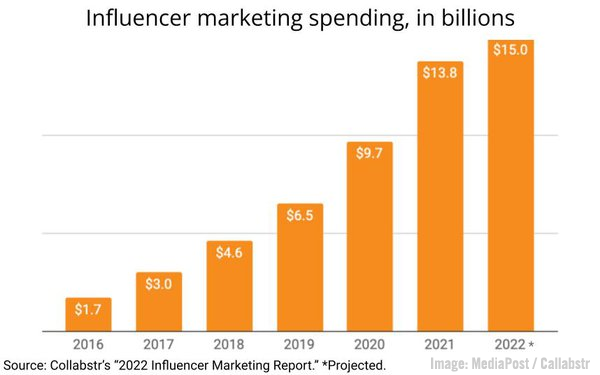
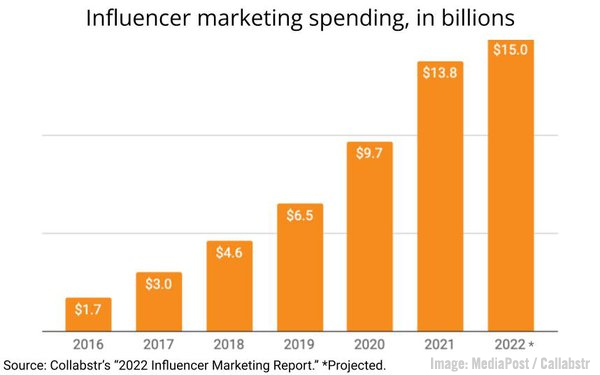
Influencer Marketing Surges 42% To $13.8B In 2021
2021 saw influencer marketing spending grow by 42 percent from 2020 levels, topping the $13.8 billion mark, with the greatest concentration of brand spending found in North America — two of several statistics of interest to digital marketing contained in newly-released report data. MediaPost

ON THE LIGHTER SIDE:

2021 December 10 Marketoonist Comic Image

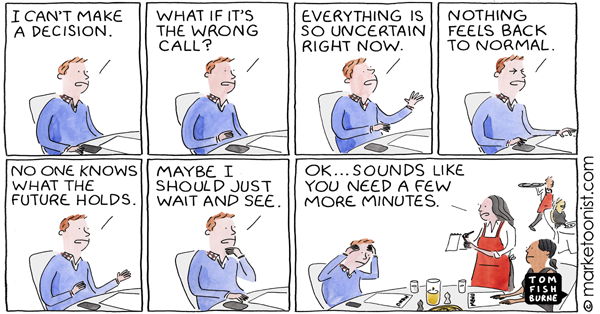
A lighthearted look at the “decision paralysis” by Marketoonist Tom Fishburne — Marketoonist

#BestOfTweets: Twitter unveils the most popular brand tweet of 2021 — PRWeek

TOPRANK MARKETING & CLIENTS IN THE NEWS:

  • Lee Odden — 100+ Content Marketing Trends and Predictions for Success in 2022 — Content Marketing Institute
  • Lane R. Ellis — Close More Deals with These 10 Email Marketing and Sales Tips — Small Business Trends
  • Dell Technologies — Space Is Bigger Than He Thought: 20 Years Later, Dell’s Dude Is Back — MediaPost

Have you found your own top B2B marketing news for the week? Please drop us a line in the comments below.

Thanks for joining us for the TopRank Marketing B2B marketing news, and we hope that you’ll return next Friday for more of the most relevant B2B and digital marketing industry news. In the meantime, you can follow us on our LinkedIn page, or at @toprank on Twitter for even more timely daily news.

By Lane Ellis

Lane R. Ellis (@lanerellis), TopRank Marketing Social Media and Content Marketing Manager, has over 37 years’ experience working with and writing about the Internet. Lane spent more than a decade as Lead Editor for prestigious conference firm Pubcon. When he’s not writing, Lane enjoys distance running (11 marathons including two ultras so far), genealogical research, cross-country skate skiing, vegetarian cooking, and spending time with his wonderful wife Julie Ahasay and their three cats in beautiful Duluth, Minnesota.

Sourced from TopRank Marketing

Sourced from TED

Sourced from TED

By Evan Fisher

Which CAC you show investors– and why– says more about you as a founder than you think

One of the most important metrics that venture capital (VC) funds look for when considering an investment is your cost to acquire a customer (CAC). Calculating your CAC seems straightforward, right? Well, it’s not as simple as you might think.

Showing the wrong CAC to a potential VC investor could completely derail your conversation. Approach the CAC discussion incorrectly, and VCs may either perceive that you’re paying way too much to acquire customers or think you’re being disingenuous or omitting key information.

There are actually two CACs, and they’re different.

If you ask an accountant to calculate your company’s CAC, most of the time they’re going to give you the fully-loaded version. This is your CAC with everything included– your advertising spend, marketing employees and contractors, public relations team, search engine optimization software, etc. It’s “the works,” everything and the kitchen sink. It’s theoretically correct, and it’s the number that will show the most information about your business.

But this isn’t the CAC you want to show VCs.

Most VCs are being presented with direct ad spend CAC. This is a more simplistic view of your spending to acquire customers. You get there by adding direct advertising spend (think Google and Facebook ad spend) together with your direct marketing spend (for example, affiliate commissions), then divided by the total number of customers you brought on in that period (for example, in your most recent year).

Using the wrong one may get you turned down by an investor– even if your business is great.

For example, let’s say you and another company in your space are presenting to the same VC. You calculated your lifetime value to CAC (LTV:CAC) ratio using your fully-loaded CAC, and you get LTV:CAC of 2.5x. But your competitor calculated their LTV:CAC using direct ad spend CAC, and they show 4.8x. On its face, your competitor wins.

But what if on a fully-loaded CAC, your competitor’s LTV:CAC ratio is 2x? That’s the problem with apples and oranges. In the short space of a pitch, you likely won’t make it far enough to talk through both CACs. That VC will likely go deeper with your competitor, whereas your team might have to keep knocking on more doors for capital.

Know both, but showcase only one.

On your VC pitch deck, showcase your direct ad spend CAC with an asterisk note indicating that you’re using direct ad spend but have fully-loaded figures available. This way, you ensure you’re being fully transparent but are not shooting yourself in the foot by showing an overweight figure versus what they’re used to. You’re also giving that VC a reason to want to dive deeper into due diligence with you– and that’s where you’ll have more time to discuss what costs you’ve included, versus which you haven’t.

If they ask about it, what do I say?

If a VC asks why you’ve only shown your direct ad spend CAC, here’s your line:

We’ve calculated it both ways, but a couple of potential leads that we’re speaking with indicated that they preferred to see direct ad spend as a starter, and in due diligence we would get deeper into fully-loaded CAC with a view on how we’re expecting LTV:CAC to scale as we achieve more efficiencies across our sales stack.

This shows that not only do you know your metrics and understand their importance to investors, but you also know the road– and you’re already talking with other potential lead investors.

Ultimately, you’re showing that VC that you’re a founder that gets it.

Feature Image Credit: Getty Images

By Evan Fisher

Sourced from Inc.

By John Hall

Only quality content is king. The rest is a court jester, distracting the audience but failing miserably to entertain or inform it.  The internet features a proliferation of content, but not all of it is relevant to those who find it. Savvy readers have become wise to both irrelevant content and how to deal with it.

We live in a world where people seek instant gratification. Readers are told how many minutes it will likely take them to consume an online article, and when that amount might be too daunting, they’re given a TL;DR. And that’s just for content they’ve already decided they’re interested in! When it’s not, readers, including me, have found ways to filter out irrelevant material. Here are four of them.

1. They Have Become Contradictory Searchers

These days, most internet searchers are loath to scroll through pages of search results to find the most relevant links. That’s why the first page of a Google search captures 71%-92% of clicks of clicks and page two, just 6%.

Yet irrelevant content creates a bit of a Catch-22. Readers who have adapted to not finding what they’re seeking on page one may begin going higher in the page count. As they do, companies sense they have opportunities to create even more content—relevant or not—hoping they’ll be found if readers begin taking a deeper dive.

Businesses can do better. Search engines change algorithms hundreds of times a year to help quality content rise to the top. Businesses need to keep up with algorithm adjustments and focus on creating high-quality content that will land on page one.

Lowered expectations yields a rise in contradictory search behavior. When readers approach a search anticipating irrelevant content, businesses shouldn’t be surprised at this response. If they will make a concerted effort to raise the bar for their content, though, they just might raise their readers’ expectations as well.

2. They Have Learned to Navigate It

If irrelevant content creates a Catch-22, keywords create a chicken-or-egg quandary. Do you use keywords relevant to your product in your content? Or do you create your content based on keywords found using Google’s keyword tool? It’s your target audience that should be driving this decision.

Readers have figured out how keywords affect their search results. One recent analysis of keywords used on Google found that nearly 92% of search terms are long-tail keywords. However, those searches accounted for only slightly more than 3% of search volume.

When that long-tail search yields a multitude of irrelevant results, readers will shorten it trying to get more concentrated ones. Some will use that autocomplete prediction list that pops up under the Google search box. The tool uses information specific to the reader, such as past search history and the language and location of the query.

Businesses should use simpler, more focused keywords and avoid a broad match keyword strategy. Sure, the volume of searches using broad terms is greater, but that just means a higher number of readers are frustrated by the irrelevant content they find. Companies should create higher-quality content that steers readers to finding them on the first page of their query results.

3. They Take Shortcuts

The vast majority of the time, humans will take a shortcut if it’s available. We want what we want, and we want it now. Readers searching for relevant content and not finding it are even more likely to use hacks that shorten the process.

When search results come up, readers may hit “Command (or Control) + F” to highlight their keyword without having to read every result as they scroll down. If they take a site-specific shortcut, such as “site: website name + search term,” only results for that site will appear first. Readers can also use quotation marks around specific words, which means the search finds those specific words in that order first.

It’s obvious that your content will likely be buried in search results when readers take these shortcuts. You can’t blame them for taking them, but you can do something about it.

An intuitive digital marketing strategy should keep a company’s content prioritized. In turn, readers will find the company’s relevant content high in a search, increasing readership and the number of potential customers. That could help them eschew the shortcuts and enjoy a fruitful journey instead.

4. They Are Going Incognito

To avoid the distraction of getting search results based on predictive elements, readers are going incognito on Google. This offers an easy way to prevent the algorithm from offering results based on previous search history. It’s kind of like getting a new identity with every query.

A simple “Ctrl + Shift + N” in Windows is all it takes to stop the browser from storing a reader’s browsing history, cookies and information entered on forms, such as an email address or phone number. So why do people searching for relevant content feel like they have to go dark to do it?

The more often readers find relevant content on page one of their search results, the more likely they are to search overtly. It’s up to businesses to create the relevant content that keeps them out in the open by repeatedly giving them what they want.

To make their content relevant, businesses need to develop content that addresses readers’ concerns, answers their questions, solves their problems and engages them authentically. They also need content strategies that pivot as those concerns, questions and problems change. If your content says, “I see you,” your readers may come out of the shadows.

Search results connected to nothing readers are searching for has motivated them to adapt in a desperate effort to find what they are seeking. Those of us who create content have only ourselves to blame. As a result, only we can fix it by giving readers what they want when they want it. And they want it now.

Feature Image Credit: getty

By John Hall

John Hall is the co-founder and president of Calendar, a scheduling and time management app. He’s also the strategic adviser for Relevance, a company that helps brands differentiate themselves and lead their industry online. You can book him as a keynote speaker here and you can check out his best-selling book “Top of Mind.” Sign up for Calendar here.

Sourced from Forbes

Sourced from Influencive

Ecommerce conversion rate refers to the percentage of visitors to your ecommerce website/store or landing page who fulfil the action you want them to (e.g., purchasing a product, subscribing to your newsletter or a service, etc.) depending on the nature of your business.

Are you opening a new online store, but don’t know how to improve conversion rates? Perhaps you already own an ecommerce business, but are unable to turn leads into customers?

You’ve come to the right place.

Ecommerce conversion rate refers to the percentage of visitors to your ecommerce website/store or landing page who fulfil the action you want them to (e.g., purchasing a product, subscribing to your newsletter or a service, etc.) depending on the nature of your business.

The higher the conversion rate of your website – the more productive and impactful your marketing efforts are. In this guide, we’ll discuss the best approaches you can undertake to boost your conversion rates.

How to Calculate Conversion Rate

Calculating your conversion rate is essential for keeping track of your business growth. The mathematical formula is very simple – divide the total number of converted clients by the number of your website visitors, then multiply the result by 100 to get the percentage.

For example, if your store made 60 sales from 3,000 visitors in a month, you divide 60 by 3,000 then multiply the result by 100. Therefore your conversion rate is 2%.

So, how do you know if that is a good conversion rate?

Based on the latest data, the average conversion date for ecommerce should be between 1.5% and 2%, so you’re right where you want to be.

10 Tips to Increase Conversion Rates

There are lots of strategies to increase online conversion rates. We’ve compiled the best and most effective tactics you can implement to boost the sales from your website.

Let’s get started.

A/B Testing

A/B testing, also called split testing, is a technique used to assess the responsiveness of your website and monitor how different changes may attract more visitors and stimulate conversion rates.

This technique relies on creating two instances of your site to test the different versions simultaneously and compare which one has a better effect on visitors. Using A/B testing is an essential and fast way to learn more about the status of your conversion rates. It can be used to analyse website designs, headlines, landing pages, and content.

A/B testing also helps you easily differentiate between your business strategies that are actually working and those that need improvements. However, in order for this to work accurately, your website must already have stable amounts of traffic.

Still, if your sample size is too small, the results won’t accurately reflect the effects of the changes made when the number of your site visits rises.

Unique Selling Proposition (USP)

Unique selling proposition (USP) is what makes your business or product unique and standing out among your competitors. This needs to be displayed clearly on your homepage. It can be anything, from certain quality certifications to the way your products are created (handmade, 100% local craftsmanship, etc.).

You can display your USP in the tagline under your brand logo which will appear on every page of your website. You can also show it off on your homepage in full size, to let visitors know what they’re getting as soon as they access your online store.

Website Design and Product Visuals

It takes 50 milliseconds for a visitor to get a first impression from your website. Accordingly, you must make every millisecond count for a successful conversion. Designing your website based on studying your target audience will help you choose the right colour scheme, font styles, and create an aesthetic balance to capture their attention.

Shoppers prefer clear, organized, and easy-to-navigate pages. Having a cluttered website that’s full of flashy banners, pop-ups, and random content will put off your visitors. Instead, be subtle about guiding your shopper through your website to the desired call to action (CTA).

It’s also smart to place your navigation bar away from intersections so the visitor focuses on the CTAs rather than navigate away. In addition, an F-shape design of a website is more favored by users.

The F-shape pattern is based on occupying the top and left side of your page with important elements or content as people prefer to read horizontally starting from the upper part then move down a little further to read in another horizontal manner. Finally, they scan the rest of the page vertically from the left side. Therefore, make sure to arrange the essential elements and CTA along the F-shape lines.

How you display your products plays an important role in improving conversion rates. Displaying clear photos of products from different angles with zoomed-in details and detailed descriptions will help customers make a purchase decision faster.

Boost Your Website Speed

A slow website is often a traffic killer and doesn’t rank well. Did you know that 75% of shoppers tend to abandon slow websites just out of impatience?

There a few actions you can take to avoid this disaster and make your website load faster:

Use Google PageSpeed Insights (PSI) to keep track of your site performance on different devices. This tool gives you reports of any performance issues on pages and how you can improve their loading speeds.
Use a Content Delivery Network (CDN) to access a global network of servers and help your customers reach your website quickly from different locations.
Make sure to compress and optimize the size of imagesand other media files on your website. This can boost your page speeds significantly.
Optimize your code by removing unnecessary formatting, code comments, and characters such as commas and spaces.
Reduce page redirects to minimize the wait time for the completion of the HTML response cycle. This happens when visitors are redirected to another page.

Create Offers and Discounts

Shopping cart abandonment is a serious issue for online stores and people tend to empty their carts when they feel they can get a better bargain elsewhere.

Offering discounts may increase purchases and conversions, but you should award incentives strategically to avoid profit loss. It’s best to find a balance between promotions for new customers and existing ones. You can also provide referral and seasonal discounts to keep the ball rolling.

Offer coupons or vouchers to existing customers occasionally to maintain their loyalty through push notifications, SMS, or email for example. Another good use of discounts is promoting other sales platforms like a mobile app. Rewards like a free item or a voucher when a customer makes a purchase through your phone application.

Provide Multiple Shipping Options

Put yourself in your customer’s shoes. You finally find exactly what you’re looking for, but might end up facing one or more of these scenarios at the check out:

Shipping rates are too high
Item takes too long to be delivered
Limited shipping options
Not enough information about the delivery process
No option to track your order
No clear refund policy

What are you going to do in this case? Most probably, you won’t proceed with the purchasing process and look elsewhere.

Shipping is an integral element of an ecommerce store and an important conversion rate optimizer. That’s why it’s critical to ensure you provide a smooth and transparent delivery experience for your customers, especially one-time shoppers. This is one of the best ways to turn normal users into loyal fans.

Fast shipping is a high priority when it comes to driving more sales. Collaborate with a third-party logistics service (3PL) that has a proven successful shipping history and maintains a network of locations that aligns well with your business.

Give your customers various shipping options like home delivery and include extra services such as pick-up from your retail store (if available), or from the nearest 3PL station.

Free shipping is another excellent perk to increase conversion rates and will also give you an edge over your competitors. For instance, you can offer this service for customers who make purchases over a certain amount or for bundle deals.

Make sure to include a clear and detailed shipping policy on your website. Let your customers know when they should expect their goods to be delivered and provide them with a tool to track their orders.

Build Customer Trust

Your competitors may offer similar services or products, but customers will always go for the most trustworthy business. Clients need to be in the know and feel their opinions matter in order to trust your brand and continue doing business with you.

So, how can you achieve that?

Customer support is the bridge between customers and your brand. Providing excellent client assistance ensures your visitors will feel appreciated. As a result, they will return to your store and spread the good word about it, leading to more traffic and higher conversion rates.

Train your staff to handle queries and complaints with care and efficiency. Implement multiple support channels such as live chat, ticket system, phone, and email. Add FAQ and comprehensive knowledge base sections to your website for self-assistance.

Getting customer feedback through reviews and ratings on the products/services you sell, and surveys about the level of service they receive is crucial. This level of transparency makes it easier for other potential clients to learn more about your products and build a long-lasting bond with your brand.

Take Advantage of Social Platforms

Being available on social media is not only a marketing strategy to widen your target audience but also a way to win the trust of potential visitors.

Social media platforms, such as Facebook, Twitter, and Instagram allow people to get to know your business. For those who already used your service or bought your products – it’s a platform to express their honest opinion about their experience. In return, this gives other potential shoppers a sense of trust that your business is legit and has been used by plenty of customers.

Another advantage of being on social media is that you can create paid ads (i.e. Facebook’s marketplace or Instagram’s Instafeed) and use the platform’s popularity to have a wider outreach to your target audience and potential customers.

Create a Sense of Urgency

Creating a sense of urgency or scarcity is to indirectly give the impression to your visitors that if they don’t take a specific action (e.g., purchase an item), they’ll miss a great opportunity. This can be done using several different strategies. The most common one is displaying a notification under each product whenever a few items are remaining in stock (usually less than 10).

Another common marketing strategy is to have limited time offers. For instance, having a certain attractive discount that’s only available for a specific period of time (a day, the weekend, until the end of the week, until the end of the month, etc.). Shop owners often display a countdown until the offer ends to make it even more exciting.

Creating this sense of urgency plays a big part in visitors’ subconscious attempts to avoid missing a good chance.

Make Your Website Mobile-friendly

It doesn’t come as a surprise that mobile shopping, or m-commerce, is gaining popularity as more customers find it easier to purchase goods using their phones.

For that reason, having a mobile-friendly website can greatly increase your conversion rates. Adding a mobile app for your smartphone users is even better. The most important thing is for your site to be easy to navigate, load fast, and don’t contain bugs when viewed on any screen or device.

You can easily advertise your user-friendly mobile app on your website and include a link to the store where users can download it from. Having this means that visitors will be able to access your site or app no matter where they are, boosting your traffic numbers in return.

Final Thoughts

Getting your customers to convert is more paramount than just attracting them to your website. By implementing the discussed tips, you’ll be able to optimize your conversion rate and gain even more clients in a shorter time. You’ll also notice improvements in your marketing campaigns, brand popularity, and rise in traffic.

Sourced from Influencive

Sourced from Entrepreneur Europe

Build a Shopify Store on a budget.

E-commerce boomed during the pandemic and as people have become more comfortable with shopping online, there’s good reason to believe the upward trend will only continue. For savvy entrepreneurs, this presents an outstanding opportunity, especially since platforms like Shopify are so easy to leverage.

That said, you may need a little help getting started in your passive income venture. Get your feet off the ground with The 2021 Shopify Drop Shipping & Private Label Bundle. It’s just $19.99 (reg. $796) for a limited time.

This four-course bundle gives you 14 hours of training to help you set up a Shopify store and start scaling it. You’ll learn the rules for choosing what to sell with a dropshipping model and understand how to discover suppliers for quick dropshipping. Additionally, you’ll understand how to save money with suppliers and even set up your site to automatically accept credit card payments to fully automate your selling.

You’ll also learn a step-by-step process to opening up new sales channels for your private label products and discover how to use targeted paid ad campaigns and promotions to market your store and products. Further your store’s reach by performing keyword research effectively and discovering SEO secrets both on- and off-page to amplify your store’s place in the marketplace.

Finally, there’s a crash course designed to help you build a T-shirt selling business as a practice round. You’ll get started with Printful, create graphics with low-cost tools, create products, and add them to Shopify to start selling fast.

Start earning some passive income or launch a side venture for your business. With the e-commerce boom here to stay, it’s an opportunity for all entrepreneurs to earn a little extra. Right now, you can get The 2021 Shopify Drop Shipping & Private Label Bundle for just $19.99 for a limited time.

Feature Image Credit: Roberto Cortese/Unsplash

Sourced from Entrepreneur Europe

By Andrea Forstadt

Actionable advice on capturing subscribers, attention and loyalty through more meaningful messaging.

Email is ubiquitous. It’s the one marketing tool that spans the globe, is relatively low in cost, is powered by automation, offers customization and is measurable in terms of success. It also has the highest ROI of any other type of marketing. Ranking as the preferred method of brand communications across all demographic groups, email marketing is a no-brainer for businesses of all sizes. Crafting the right message requires skill, however. As these five business owners will attest, it requires a thoughtful, nuanced approach that is informative and engaging. Here, they share their advice for making emails matter to those that matter most: your customers.

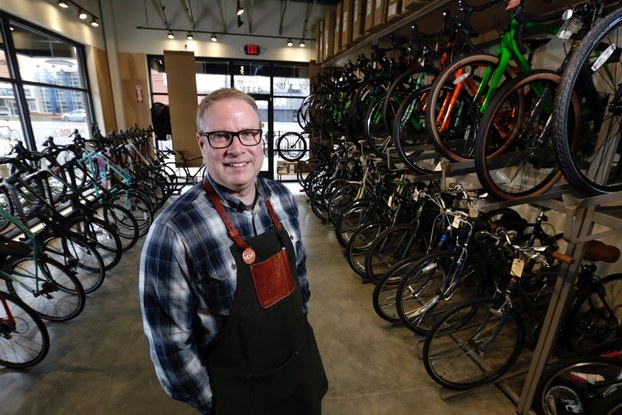
 A smiling man wearing glasses, a plaid shirt and an apron stands in a bike shop with rows of bikes behind him.
John Robinson, owner of Johnny Velo Bikes in Columbus OH, suggests creating engaging and entertaining email content and collaborating with other businesses in your area. — Johnny Velo Bikes

John Robinson, biking advocate & owner, Johnny Velo Bikes

Who we are: We are a local, family-owned bike shop in Columbus, OH, that serves all forms of cyclists in sales, service, and disco dance-offs.

We use our email strategy to build a customer-based following. We strive not to make it about listing products for sale, and instead to provide quirky and funny information that keeps people intrigued and engaged. I think about the emails that I click on and ask myself, “Why did I click on this? Was it the subject line, company, or the pretext that intrigued me?”

We utilize software that interfaces with our POS system and has certain scripts attached to it, based on what people buy. For instance, if you purchase a bike from us, you will receive an email the next day thanking them for your purchase with information about helmets and accessories as well as a link to our favorite biking routes, based on your skill level. Thirty days later, you will receive an email reminding you about bringing your bike in for its 30-day tune-up.

To build an email subscribership, we feature links on our website where people can sign up for our newsletter. We also add every email address into our POS email database when a customer shares it upon making a purchase. This database integrates with our email marketing software. We used Mailchimp for our first three years, and it was extremely easy to set up, design and send emails. We switched about a year ago to Klaviyo, which allows POS integration and email flows that can automatically keep our best customers engaged.

It’s all about engagement. Make your emails fun. Be real, write in conversational form and make each email something they want to open. Tell a story and work on ways you can engage other small businesses in your area. Follow Johnny Velo Bikes on Instagram & Facebook.

 Children create art in an art studio with plentiful windows and natural sunlight.
Sunflower Art Studio’s owner, Lika Gitis, believe that when emails are simple and approachable, the can maintain a personal touch and a real connection with her customers. — Sunflower Art Studieo

Lika Gitis, owner, Sunflower Art Studio

Who we are: A community children’s art school, teaching Boulder, CO-area kids since 2000.

I think that emails are very important, as they provide a simple and approachable way of communication. As most of my clients are parents of my students, it’s important to maintain a personal touch and a real connection. I feel that social media doesn’t provide such an individual approach.

To grow our mailing list, we have a subscription button on the website that provides a discount. We also use Sawyer Tools, which collects new emails at registration — with clients’ consent, of course.

We have been using Mailchimp for years because of its all-in-one emailing platform. It builds beautiful emails, edits pictures and text, has merge tags and lets you see how your emails were opened and seen.

I think that emails are great in small amounts. I don’t like to be spammed, so I don’t spam my clients. I think that if used for announcements or newsletters, once every couple of weeks or monthly, those emails will be enough to keep your audience involved and informed. I also feel that short emails with pretty pictures and action buttons work best. Follow Sunflower Art Studio on Instagram & Facebook.

 An image of a yellow smiley face is surrounded by the phrase The Hell Yeah Group loves you.
L.A.-based The Hell Yeah Group creates share-worthy weekly newsletters to engage readers and grow their list of email subscribers. — Hell Yeah Group

Paco de Leon, founder, The Hell Yeah Group

Who we are: We are based in Los Angeles, CA, and help creative professionals with their relationship with money.

Every week my business publishes an email newsletter. We use the newsletter as a way to add value for our readers and help them get to know our company. The main tactic for growing our list is to focus on making a newsletter so good that people feel compelled to share it. I measure success by the amount of replies I get from readers (a handful each week) and inquiries about my bookkeeping service (a few each week). Emails that provoke people to think differently, offer another perspective, or disturb or agitate a long-held belief tend to do the best.

Finding the right email platform depends on what you’re trying to achieve. If you plan to run drip campaigns to segmented lists, ConvertKit is a great option. If you just want to send out simple broadcasts, Mailchimp or Email Octopus, which is what we use, work well.

My advice on email best practices is simple: Spend time looking at your email from the reader’s perspective. Make it worth their time and attention. Each subscriber is a person with feelings and fears, who have others who love and care about them. Treat your readers like humans. Care about them. Make your emails worth their time, energy and attention. Follow The Hell Yeah Group on Instagram.

 Image of strawberries plants in a row of crops.
Tanaka Farms’ email strategy centers around building awareness of specials, services and activities to community members and visitors. — Tanaka Farms

Joni Newman, marketing & social media, Tanaka Farms LLC

Who we are: Family owned and operated 30-acre farm located in Irvine, CA, featuring a fresh produce market stand, CSA program, u-pick activities and more.

We use email newsletters to reach out to our customers with events, sales, specials and other activities here at Tanaka Farms. We also send out special promo codes and discounts to our email subscribers. We have a fairly large subscriber list, and have found that we see a marked increase in sales whenever we promote something through our newsletter. We have email newsletter sign-up sheets at all of our cash registers, and we also have a pop-up window on our website to sign up for our newsletter. In addition, we have links on our social media accounts to sign up. We use Constant Contact for our contact management. It is a robust platform with many features, including tracking, analytics and reporting. It is also fairly intuitive to use.

We try not to spam our customers and only send out newsletters when we have something of value to offer. We generally stick to a bi-weekly schedule, with the occasional “quickie” thrown in between. We have found that by not sending them out too often, and always offering our subscribers something of value, we have a high open and click rate compared to the national average.

We also make sure our newsletters have a very consistent look and feel. We include vibrant photos and links back to our website to provide more information or to purchase tickets to one of our many activities. Follow Tanaka Farms on LinkedIn, Instagram, YouTube, Twitter & Facebook.

 Product image of three varieties of essential oils.
Guru Nanda’s email marketing strategy and messaging centers around the brand’s commitment to authenticity, quality and good karma. — Guru Nada

Puneet Nanda, chief essential oil, Guru Nanda

Who We Are: Buena Park, CA, makers of top-quality, ethically sourced healing products that incorporate Ayurvedic values at every level.

We love to use emails to form a connection with our customers. Guru Nanda products follow the practices of authentic Ayurveda, ancient Indian healing. Each product is rooted in my passion for the ancestral wisdom of my Indian culture, and I love using email to share more about this.

We send and manage our promotional emails using the email marketing software platform Klaviyo. We find it to be very user-friendly, as it offers helpful reports for tracking our success. In terms of database growth, our website has an automatic pop-up window that offers customers a discount on their first purchase when they subscribe to our list. We also offer monthly discounts to our subscribers. Both efforts have seen strong results each month.

My best advice for email marketing success? Keep it short and sweet! Have a marketing calendar and build your emails and social media around that to maintain cohesive messaging. Follow Guru Nanda on Instagram & TikTok.

CO— aims to bring you inspiration from leading respected experts. However, before making any business decision, you should consult a professional who can advise you based on your individual situation.

Follow us on Instagram for more expert tips & business owners’ stories.

CO—is committed to helping you start, run and grow your small business. Learn more about the benefits of small business membership in the U.S. Chamber of Commerce, here.

By Andrea Forstadt

Sourced from CO

By Luke Dormehl

You know that a technology’s changed the world when it becomes a verb. It speaks to a level of popularity and ubiquity that goes beyond the wildest dreams of marketeers. “I’ll WhatsApp you.” “I spent the evening YouTubing.” Disrupting any of these aforementioned brand-name products is beyond difficult — it requires a change in the default way that we relate to some standard action.

“To Google” is a verb — and a powerful one. In Google’s own words, its reason for being is no less than to “organize the world’s information and make it universally accessible and useful.”

And Richard Socher wants to disrupt it.

Richard Socher standing in front of a whiteboard
Salesforce

Socher (pronounced soh-chur) is the former chief scientist of Salesforce, one of the world’s premier customer relationship management platforms and makers of enormously successful enterprise apps. During his career, he has started and sold the A.I. company MetaMind, and been published broadly in fields ranging from computer vision to machine translation to summarization within natural language processing. His new search engine — You.com — seeks to challenge the single gatekeeper of search that is Google. He’s not about to let a pesky thing like a near-$2 trillion giant stop him, either. Even if it is a gosh-darned verb.

“My first thought was, you know, it was a verb ‘to Skype,’” Socher told Digital Trends at the start of a video call to showcase You in action. “And you know what we’re [speaking] on right now? Not Skype.”

A different approach to search

The idea driving You is to be the “not Skype” to Google’s Skype. The contention of Socher and co-founder Bryan McCann is that the world is at an inflection point when it comes to search. The company’s publicity materials drive this claim home: “Today, a single gatekeeper controls nearly 90% of the search market, dictating everything you see. The advertising and SEO biases of current search engines result in a lack of control over what people read, watch, research, eat, and buy. All of this makes people an object of artificial intelligence algorithms designed to monetize them rather than utilizing technology to harness the world’s information in relevant ways that build trust and confidence with every search.”

laptop with google search open

The most noticeable difference between Google and You comes down to aesthetics and operation. Socher points out that, for years, search engines have all looked kind of the same. They assume that information can be — and, more importantly, should be — arranged in a text-based list, neatly sorted from the number one slot (most useful) downwards. But is this really the best way to arrange information? And, even if it once was, is it still? You, by contrast, leans more heavily into widgets, with a design that owes a bit to the tile layout of kanban boards or social media platforms.

The tiled search results on You include the likes of Amazon pages, news stories, Yelp discoveries, Wikipedia pages, Reddit posts, Medium articles, coding snippets, LinkedIn listings, eBay sales, tweets (which can be retweeted and liked inside the search window), and more. Rather than Google’s sequential list of search results, You offers something more akin to a topographical view of the internet that lets people view the different content islands at once before zooming in to explore the ones that seem relevant.

“Can You displace Google? Can anything displace Google? This remains to be seen.”

“It actually took us a lot of iterations and thinking about design constraints and thinking about mobile,” Socher said. “When you think about Instagram and TikTok, people are very used to swiping left, right, and up and down. If you’re on Instagram, you swipe left to see more pictures of that story. Then, if you swipe down, you see the next story. We don’t want to have this massive engagement track of social networks. We want to help you search less and do more. Get things done, save your time, and summarize the web for you. But these are still very convenient ways to interact with content and are very intuitive — especially to younger generations.”

screenshot of you.com
A screenshot of the You.com search results with “the metaverse” used as an example query

These individual tiles can be upvoted and downvoted in something akin to Reddit. Searches consist firstly of preferred sources, followed by neutral sources, and then downvoted sources. Personalized search is nothing new: Google has been doing it since 2004. But You’s degree of transparent manipulation, the same way you can juggle around the apps that appear on your mobile home screen page, is fresh. In an effort to escape the filter bubble effect — whereby users may be shown slanted search results without realizing the slant — You makes it easier to separate the personalized searches from the objective ones. “That is something that no one else does, really,” Socher said. “To give that kind of agency and control to their users on a search engine.”

You also emphasizes privacy in a big way. Again, this isn’t a wholly unique claim to fame. DuckDuckGo has been leaning into private search for years. But You’s combining of this (the company won’t sell private data and promises an impressive incognito mode) with its new reinvented approach to search could be enough to lure in some users.

Taking on the mighty Google

All of this, of course, brings about the trillion-dollar question: Can You displace Google? Can anything displace Google? This remains to be seen. Search engines have certainly fallen before, replaced by faster, sleeker, better offerings. Remember W3Catalog, World Wide Web Wanderer, WebCrawler, Lycos, Jump Station, Magellan, Excite, Infoseek, Inktomi, Northern Light, Dogpile, Ask Jeeves, and AltaVista? All of these launched, rose to semi-prominence and were then crushed underfoot to varying degrees in the decade before Google established itself. Others like Yahoo and, more recently, Bing, have been successful in their own way — but there’s no doubt which search engine trumps rules the roost.

Logic dictates that, at some point, Google will falter. Empires have a habit of doing that, in the corporate world as much as anywhere else. Just 10 percent of the Fortune 500 companies for the year 1955 have remained on the list in the years since — and more than 89 percent have gone bankrupt, merged with or been acquired by others, or fallen off the Fortune 500 companies list at one time or another. When it comes to search, however, Google is a tricky customer to dislodge.

you.com logo with search bar

The search engine business today is bigger and more profitable than it’s ever been. Google generates piles of cash that would have been unfathomable for the companies that preceded it. Furthermore, through deals with the likes of Apple (Google pays Apple billions of dollars per year to remain the default search engine for iOS), many of us use Google even when we don’t explicitly think we’re using Google. This money means that Google can continue to innovate in search, hoovering up the best minds and, when needed, startups to fortify its castle walls.

You has raised a not-impressive $20 million to date. But that’s small potatoes next to the $183 billion that Google parent company Alphabet raked in in revenue in 2020, the overwhelming bulk of which came from advertising.

Socher is under no illusions about the challenge of taking on a Google. However, he also notes that Google’s focus on selling advertising could ultimately hurt its ability to nimbly experiment with new approaches and search layouts. (After all, if someone’s paying to be top of a list, they’re unlikely to be happy if they are suddenly one entry in a much larger grid.) At some point, the need to do pure search conflicts with the moneymaking model of selling ads. “It’s becoming harder and harder to find just naturally relevant content [on Google],” he said.

The start of a journey

It’s still the start of a long journey for You. The search engine has just entered a public beta, opening it up for critique and usage by the general public. There are also obvious ways that You could improve its offering — most notably in making it a touch-friendly interface for mobile.

“The interface is made to go on mobile, and we will very soon make more progress [in that area],” Socher said. “But the experience right now is much, much better on the desktop. We haven’t really put enough … we’re just a small startup. We just haven’t had the time and resources to make it work on different kinds of platforms. [But over] the next couple of weeks and months, we’ll continue to improve the mobile experience.”

One thing’s for certain, though: As tough a challenge as You has ahead of it, it’s got a whole lot of promise. Search is only going to become more important, and its requirements will continue to shift as the internet evolves. You has a smart team behind it, and some big-name investors, including Salesforce CEO Marc Benioff. Now it just remains to be seen if it can deliver.

Taking on the mighty Google is an incredibly tall order. But then so was challenging Yahoo when Google co-founders Larry Page and Sergey Brin set out to build a page-ranking search algorithm for their Ph.D. thesis. And that turned out pretty darn well for them.


By Luke Dormehl

Sourced from digitaltrends