Want to reach new audiences on Instagram without running ads? Have you considered branded content but weren’t sure where to start?
In this article, you’ll learn five simple steps to create, launch, and promote Instagram branded content campaigns to reach new people.
What Is Branded Content on Instagram?
Here’s what you need to know before you dive into the world of branded content creation, influencer marketing, and Instagram settings.
Branded content is one of the most powerful tools for Instagram marketing. It bridges the gap between organic content and paid ads, commercial partnerships and authentic recommendations. But as you might imagine, building that bridge takes some skill.
You need to find the right partnerships, set guidelines for your content, and finally, have a plan for boosting and resharing branded content.
Let’s start with some definitions. You might think that any content you produce as a social media manager is branded content: It’s content by a brand.
But Instagram thinks differently. Within this social network, “branded content” has a specific meaning. It’s content that markets your brand but it’s not created or posted by you.
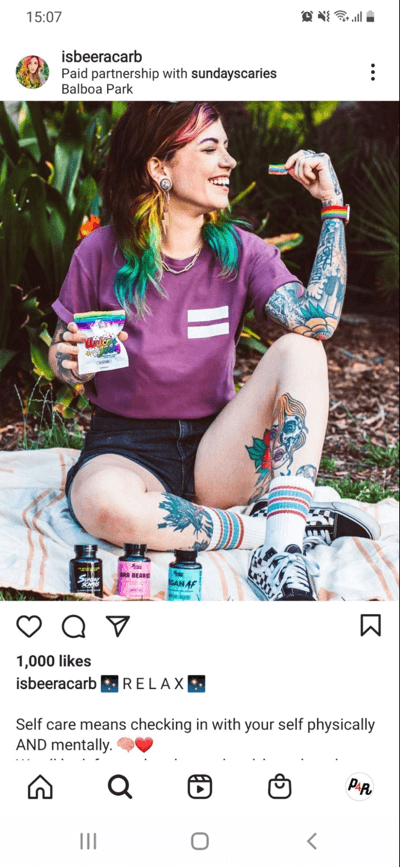
Influencers or creators create this content on your behalf. They receive “an exchange of value” in return, whether that’s payment, product samples, or gifts. And that exchange of value has to be disclosed by using the branded content tools on Instagram.
Every venture, whether an eCommerce store, a specialized blog, a portfolio website, or a company’s official website, needs analytics.
Finding the appropriate eCommerce reports and learning about your customers might mean the difference between steady growth and exploding earnings. However, having an inexhaustible supply of good data to mine can be a challenge.
ECommerce reports provide vital data that allows you to make informed business decisions about how to increase sales and revenue while enhancing the customer experience.
Importance of Regular Monitoring in e-Commerce Business
Depending on the type of your subscription, Shopify, Magento, or Woo Commerce all feature a wide selection of reports, ranging from conventional overview dashboards to more granular reports. You can’t keep track of every other eCommerce report on the marketplace. This just dilutes important information, which can easily escape your sight.
So, to help you avoid this problem, we’ve compiled a list of the most crucial eCommerce reports that you should be monitoring. To demonstrate how you can unlock and exploit the full potential of your eCommerce store data, let’s start with the reports provided in the standard Shopify subscription.
1. Overview Dashboard
The report allows users to compare data and identify patterns all in one place. By clicking the “Compare to previous dates” option and selecting the dimensions for comparison, the data can be compared to a specific period or the same date range from the previous year.
You may also see the number of sales made in each of your point-of-sale locations, also the number of sales looked after by each member of the staff, if any.
The overview dashboard makes it simple to see which traffic sources are most effective, how your marketing efforts are going, and what your current repeat customer rate is, so you can act on this information and consider retention methods.
2. Finance Reports
This report summarizes your sales, payments, liabilities, and gross profit. It organizes your sales and returns, as well as the taxes you must pay, to make book keeping easier for you. You can select the period that you need and download the data in a spreadsheet for that month or quarter.
You can also customize the reports by adding or removing metrics, dimensions, and filters to meet your individual needs. If an order has multiple commodities, each commodity appears in the report as a distinct sale or return. The same can be said about shipping expenses. The specifics of an order become available when you click on the order number.
3. Product Analytics
Product analytics reports show you how different products in your portfolio have performed over the last 90 days. This way, you can learn who is buying what, which sources drive the most sales for a specific product, and more about the company’s past performance.
Net sales: This value is derived by multiplying the price of each commodity unit by the total number of unit sold, minus the discounts and returns; it can then be compared to the preceding 90-day period’s net sales value.
Breakdown of sales: This is the breakdown of all the values that result in net sales when added together.
Net sales by channel: The channels that account for the majority of a given product’s net sales.
Customers: The percent of customers who made their first purchase from your store versus those who had previously made at least one purchase.
4. Marketing Reports
Only the Sessions Attributed to Marketing report is available on the Shopify Basic package. This report shows number of people that visited your store as a result of marketing initiatives like UTM campaigns, Google ads, social network ads. Google Analytics must still be used to track marketing campaigns, and Shopify gives instructions on how to do so.
5. Behaviour Reports
Knowing your customers’ behaviour opens up a plethora of opportunities for optimization, retention strategies, and marketing tactic improvement.
Online store conversion over time: It displays the percentage of visitors who made a purchase on your website during a specific timeframe; You can choose a timeframe and then see the sessions that occurred during that timeframe, out of these sessions, how many of them led a product to the cart, you can see how many of them led to the checkout page; finally, out of the sessions where the checkout was completed.
Online store speed: This is crucial for the customer experience, but it is also a criterion that Google considers when deciding how to index and rank web pages.
Online store searches: This shows you which terms your customers used to search for a product on your online store the most frequently. Use these to update the name and description of the products if necessary, so that your customers can find what they’re looking for more easily. This report assists you in understanding the specific terms that customers enter in the search bar. Furthermore, they may reflect trends in search query trends on search engines, making this report an excellent resource for search engine optimization. If you notice repeating patterns, you can use these terms in your ads as well.
Sessions by landing pages: In this report, your see on which page your website’s sessions begin.
Sessions by device: This report displays the devices that were used to access your website. The Overview Dashboard also includes the Sessions by landing page and Sessions by device reports.
6. Acquisition Reports
The acquisition reports track sessions over time, sessions by referrer (how users arrived at your store: directly, through search, or through a referral; this metric is also included in the overview dashboard, but the Session by referrer report provides more detailed information and insights), and sessions by location.
It’s crucial to know where the visitors are coming from so you can better target potential new customers. If we see the number of session over time, this is a critical metric to consider when analysing the overall performance of your eCommerce store: are you getting enough visitors? Are you keeping up with industry standards?
7. Inventory Reports
The inventory reports may come in handy at the end of the month because this can be the reference of the inventory and track the quantity and percentage of stock units sold each day.
Month-end inventory: shows how many of each product variant you had on hand at the end of each month
Average inventory sold per day: shows the average number of product variants sold per day over the selected time period
Percentage of inventory sold: the percentage of the product variant sold during the chosen period as a percentage of the total starting quantity
ABC analysis by product: A-grade, B-Grade, C-grade where A represents the source of 80% of your revenue, B represents the next 15% and C represents the last 5% of your revenue.
8. Live View
Who wouldn’t want to know what’s going on with their eCommerce store’s website in real time? Shopify users can get real-time insights from all over the world with live view. There are two kinds of dots on the map: white ones and orange ones.
The white dots represent a recent session, while the orange dots represent recent sales. The dots pulsate constantly and then fade away after a certain amount of time. Every 10 minutes, Live View will display a visual representation of your customers’ behavior during the checkout process. This type of visualization is especially important during peak times like the holiday season or Black Friday.
Visitors right now: shows how many visitors have viewed a page, clicked a button, added something to their cart, etc. in the last 5 minutes on your online store; to be active, the visitor must engage in some way with your website- view a page, click a button, add something to their cart, etc. Note that this number may differ from what you see in Google Analytics because Google does not disclose the mechanism by which they estimate the real-time visitor count.
Today’s total: shows all of the current day’s sessions, orders, and sales. The count begins again at midnight in the time zone of your store. The total value of sales is calculated by adding gross sales, discounts, refunds, shipping, and taxes to purchases placed on your web store and through other sales channels since midnight.
Real time page views: indicates how many pages of your website have been viewed by visitors in the last 10 minutes; each bar represents the number of page views for a 1-minute time unit; the last bar represents page views in the current minute.
9. Sales by billing country
This report will show you which countries contribute the most to revenue. The data can assist you in deciding where to invest in new markets.
You can even dive down into a country to observe which provinces or states perform better in terms of future ad targeting.
10. Sales tax reports
You’ll very certainly have to pay sales taxes on anything you sell, regardless of what you sell or where you sell it. The methods of taxation vary depending on where your consumers are located.
However, they are also determined by the volume of sales in each destination. When it comes to setting up your store, make sure to seek advice from a certified financial specialist.
You may focus on improving all of the crucial components of building an online store by tracking these Ecommerce reports. Make it a habit to review the data on your eCommerce dashboard on a weekly or monthly basis and make informed decisions based on it.
By Ekta Patel
Ekta Patel is a technical writer and digital marketer at Selected Firms – detailed analysis of top IT, mobile, web, digital marketing and E-commerce development companies. Skilled digital Marketer with 7 Years of experience in eCommerce SEO marketing, Google AdWords, and social media content building. Successfully increased organic traffic by 70% for small and medium sized businesses in the eCommerce sector. Has also built content for the company websites/apps, blog and case studies. Has profound experience in working for IT organizations and is responsible for introducing the latest eCommerce trends to the team.
Whether you’ve been using DuckDuckGo for a while or are completely new to it, you might wonder what bangs are. Here’s everything you need to know.
DuckDuckGo offers you more privacy when it comes to searching the internet. Along with keeping its hands off of your personal information, and promising not to target you with geared ads, the search engine also offers you a unique tool called !bangs or simply bangs.
In this article, we’ll briefly explain what they are and how to use them so that you can save time searching the internet and still find relevant results.
What Are Bangs in DuckDuckGo?
DuckDuckGo’s bangs are shortcuts that allow you to skip the use of the search engine altogether. Each bang represents a website, and when you use one, you’re searching that website directly.
For example, if you want to try Google instead of DuckDuckGo, you would type !g followed by your query. Adding the bang takes you directly to the results Google would give, which saves you the step of visiting Google and typing it into the search bar directly.
There are thousands of bangs that you can learn to get the results you’re looking for quickly. You can view a full list of the available bangs on DuckDuckGo. The site even lets you add suggestions in case there’s a site not supported.
However, keep in mind, if privacy is a concern, once you use a bang you’re leaving DuckDuckGo and the site you’re going to may use tracking. Same as if you’re using the private search engine in a browser like Chrome.
How to Use Bangs in DuckDuckGo
Each bang begins with an exclamation mark and ends with a letter or keyword. If you’re using DuckDuckGo as your default search engine, you can enter the bang followed by your query directly into the address bar.
When visiting the search engine’s homepage, you follow the same directions in the search bar. Some examples of common bangs include !a for Amazon, !steam for Steam, !pss PlayStation Store, and !yt for YouTube.
Give Bangs a Try in DuckDuckGo
While DuckDuckGo’s results may not be as extensive as Google’s, bangs are yet another feature that makes it worth the switch if you’re looking for a more private search engine.
Now that you know how to use them, it’s only a matter of time before you memorize your favourites and cut down the time it takes for you to find what you’re looking for.
Google search result pages are becoming more diverse and even interactive, which makes any clickthrough study out there much less reliable, because no two sets of search results are the same.
But how much control do writers and content creators have over how their content is represented in search? As it turns out, they do have quite a few options when it comes to optimizing their search snippets!
The anatomy of a standard search snippet
The standard Google search snippet has changed over the years, but in essence all the key elements are still there:
The clickable title or headline of the snippet (in blue)
The description of that page (about two lines long — it was lengthened for no particular reason a few years ago, but now seems to be back to two lines)
The URL path (used to be in green, now it is black)
On a mobile device, there’s also a tiny logo next to the URL:
Here’s how much control you have over these standard elements of your search snippet (in the order they currently appear):
Logo
Google will use your site favicon when deciding which image to show next to your URL. This means that you have full control over this part of the search snippet.
URL path
These days, Google will do its best to show the meaningful URL path (almost like a breadcrumb) instead of simply the URL of the page. This consists of:
The domain: I don’t have any research to support this, but I personally always scan domain names when choosing what to click. That being said, your choice of a domain name may somewhat impact your clickthrough (if you do a particularly good job picking a snappy domain name that intrigues) and you do have full control over this part of the snippet. Tools like Namify specialize in finding exactly that type of domains that are short, memorable, and witty.
The breadcrumb or the truncated URL: You can use breadcrumb schema to force Google to use breadcrumb instead of the URL, and watch your Search Console to see if that helped clickthrough:
That being said, it is still recommended to optimize your title to include keywords and entice more clicks — and hope Google will keep it intact.
Description
Google has been generating the search snippet description for years without using the associated meta description: recent studies show that Google ignores meta descriptions in about 70% of cases.
You may still want to create meta descriptions in case Google needs some clues, but expect them to figure this part out on their own.
Another way to try and trick Google into using your chosen snippet description is to create concise summaries of the content and add it at the beginning of the article. Using semantic analysis tools like Text Optimizer, you can also ensure these summaries are semantically relevant to the topic:
Now, let’s see how we can enhance that standard search snippet to let it stand out and attract more clicks.
Rich snippets for content-based pages
Rich snippets are search snippets enhanced with some additional details. Web publishers can control rich snippets by adding schema markup, so they are thus under website owners’ control.
Here are the types of rich snippets that will work for content-based pages:
FAQ page
Your page doesn’t have to be FAQ to qualify for this rich snippet. All you need to do is answer two or more subsequent questions somewhere on that page to use the code. There are several WordPress plugins — including this one — that help you code that section.
HowTo schema
The HowTo schema was introduced for the DIY niche as a way to feature snippets that include step-by-step instructions.
These days, I see HowTo rich snippets implemented for just about any tutorial:
Video schema
More often than not, these rich snippets show up only on mobile devices, but they seem to be very common. A video rich snippet includes a video thumbnail:
Video schema will help you ensure the rich snippet is indeed generated, although I’ve seen dozens of cases when Google creates a rich snippet once you simply embed a video on the page, no schema required.
That being said, using the rich code won’t hurt, especially given there’s an easy video schema generator for you to create a code easily.
Structured snippets
Structured snippets are less popular than rich snippets, even though they are very common on search.
Structured snippets import tabular data to formulate a more informative search snippet:
All it takes to qualify for this type of a snippet is to create an HTML table. It is a good idea to use tables for summaries, feature comparisons, lists, etc.
Image thumbnails
Image thumbnails are very rare on desktop. Yet on mobile devices, images show up inside most search snippets:
There’s no particular optimization tactic here, but there are best practices that may or may not help:
Obviously, make sure there’s at least one image on your landing page (make it featured on WordPress).
Google shows dates within a search snippet when they think this may be useful to a searcher. Obviously, dates may have a big impact on clicking patterns: Based on the research by Ignite Visibility, about half of searchers claim that dates in search snippets are either “important” or “very important” clickthrough factors.
People may feel willing to click on a search snippet with a more recent date.
They can scroll past an older date even when the page ranks on top.
Google has clear guidelines as to how web publishers can keep those dates fresh:
Don’t try to hide dates, because they are useful.
When updating a piece, re-publish it on a new date only when you’ve basically rewritten it.(I.e., don’t redirect, better to update the old piece and change the publish date).
Include an “Updated on” note on top of the article if you updated it (Google will pick up on that date).
Using schema “datePublished” and “dateModified” is not required but will be helpful.
Google will understand all of the following date formats:
Published December 4, 2019
Posted Dec 4, 2020
Last updated: Dec 14, 2018
Updated Dec 14, 2021 8pm ET
Mini sitelinks
Mini sitelinks are probably the most unpredictable element of a search snippet. Google may randomly pick links from navigation, tag, or category links, etc. There’s also no way to tell Google they made a poor choice.
Unlike sitelinks, which usually show up for the top-ranking result and mostly for branded searches, mini sitelinks can be generated for just about any result out there.
Mini sitelinks represent a very useful feature, though, because they increase your odds that your search snippet will get a click (by adding more clickable links to your snippet).
One way to increase your chances that Google will show mini sitelinks within your search snippet is to use an on-page table of contents (which is powered by HTML anchor links).
Here’s an example of the table of contents:
And here are the mini sitelinks they generate:
Featured snippets
As of January 2020, featured snippets were officially considered the #1 organic result (previously they were “position zero” — appearing before the top organic result).
It still remains a big question whether they get clicked more than “normal looking” search results, or whether they are comprehensive enough to get fewer clicks. However, recent research suggests they’re still important for SEO.
With that being said, featured snippets are not easy to predict, but if you choose to optimize for them, be sure to check my older Moz column that is still very valid: How to Optimize for Featured Snippets. Just don’t forget to monitor your clickthrough to ensure getting featured didn’t hurt.
Complementing your product page with how-to content on the same topic may be a good idea (Google may decide to rank both as indented results). At least this is something to experiment with.
Monitoring and measuring
While rank monitoring is pretty straightforward, this kind of optimization is harder to monitor because your rankings remain the same. Here are two tools you can use:
1. Google Search Console
Google Search Console provides clear clickthrough data that can help you signal of positive or negative impact of your optimization efforts:
In the Performance tab, click in the date range filter (it usually defaults to three months), go to “Compare” tab and select “Compare last 3 months year over year”:
From there, you can click to “Pages” or “Queries” tab to identify pages or search queries that have lost organic traffic from the past year (especially if there was no substantial position change):
2. WebCEO
WebCEO provides a more convenient way to keep an eye on your keywords that are losing clicks. The tool has a separate tag and a notification system alerting you of any queries that see a decline in clicks:
3. Visualping
Another useful tool here is Visualping that you can set to monitor your exact search snippet to be alerted when it changes:
This is a great way to correlate your optimization with the actual change that happened (and then clickthrough change).
Whether it is good or bad news, organic traffic is no longer about rankings. In fact, you may well be ranking #1 (i.e. get featured) and notice a decrease in clickthrough once your page is promoted. But, you can experiment with all kinds of ways to improve your organic clickthrough without investing more into your rankings, even though organic CTR is much harder to predict these days.
Having an email security policy can protect you and your company from malicious threats.
When was the last time you sent an email? It was probably today. Just like you, many people around the world send emails daily.Emails have been a part of our lives for the longest time. Since it’s almost impossible to do without them, you must secure yourself with an effective email security policy.
You don’t want your emails to get into the wrong hands, do you? Implementing an email security policy helps to keep them safer.
What Is Email Security Policy?
An email security policy is a series of procedures governing the use of emails within a network or an establishment. It details how a category of users interacts with messages that are sent and received via email.
Keeping your emails organized and secure boosts your productivity. The goal of an email security policy is to secure messages from unauthorized access.
Who may be trying to access the emails without permission, one might ask? Cybercriminals—they are very much interested in the confidential messages that you send within and outside your organization. And that’s because they know that such information is valuable. If they get hold of it, they can use it for a series of malicious activities to enrich themselves.
How Does Email Security Policy Work?
The default security strength of email isn’t so strong. Messages sent via email are in the public space. Hence, they can be easily accessed by anyone with average hacking skills. Creating an email security policy is one of the basic things that you can do to ward off attackers.
Believing that you or your organization can’t fall victim to an email breach is a false premise. As long as you make use of emails, you can be targeted.
Your reluctance to implement an email security policy can only hold water if the emails you send are meaningless. But that’s hardly the case if you run a decent business.
For an email security policy to be effective, it must include the following items:
The scope and purpose of the policy.
Information about the ownership of content contained in the emails.
Privacy concerns and expectations of parties using the email.
The responsibilities of the email users.
Guidelines for using the organization’s email accounts.
Tips to detect and avoid email security threats.
Specific actions to take in the event of a suspected email security breach.
Accessibility is key in the successful implementation of the policy. Team members can only be abreast with the information in the policy if they can access the document.
Instead of storing the document on a physical device, it’s advisable to use a workflow tool with cloud storage and remote access. That way, authorized team members can access the policy from anywhere and at any time.
Training is another essential element to successfully implement an email security policy. Some users may be reluctant to abide by the policy, especially if they haven’t used something similar in the past. It’s up to you to make provision for proper training to make them understand how using the policy is in everyone’s best interest.
How to Build an Effective Email Security Policy
An email security policy isn’t one-size-fits-all because no two organizations are the same. But the cyber threats that endanger the use of emails have similar effects on organizations regardless of their offerings and sizes. They are common attributes that should be considered in building a standard policy.
Here are some practical tips for building an email security policy that works.
1. Adopt a Template
Creating an email security policy from scratch isn’t a bad idea, but you could save yourself some time by adopting an existing template. This is necessary, especially if you aren’t familiar with the content of the policy.
Instead of creating irrelevant information, you have vital information for creating a policy that works.
2. Modify the Template
Adopting an existing template doesn’t mean you should use it the way it is. The template is to give you an idea of what the policy looks like.
Instead of taking everything contained in the template hook line and sinker, adjust it to suit the unique needs of your business.
In the end, you’ll have an original document that’s tailormade for your organization.
3. Identify User Engagement Terms
Users of your email may engage in indiscriminate activities if they aren’t aware that such activities are prohibited. It’s your responsibility to expressly state how they should use your email.
Identify unhealthy email practices that may expose your network to cyberattacks and warn against involving in such activities.
4. Implement a Tool
Your email security policy is incomplete without implementing a tool that enhances the security of your emails.
Manually protecting your email against cyber threats is insufficient, especially as cybercriminals use advanced technologies for their attacks. Match their energy with tools such as sandboxes, spam filters, and malware prevention software. An effective spam filter prevents you from viewing malicious emails.
5. Enforce User Policy Acknowledgement
The successful implementation of your policy begins with your users’ willingness to abide by it. Change comes with some resistance. Team members who aren’t familiar with an email security policy may decide to overlook it.
Get users to commit to using the policy by appending their signatures as a form of acknowledgment. That way, you have proof of their agreement to use it in case they fail to.
6. Train Users
Users of your email may not understand some information in the policy. Leaving them in a state of confusion is risky as they may take inappropriate actions that will endanger your network.
Ensure that everyone understands the policy by conducting training. Create room for them to ask questions on grey areas so that everyone is up to speed on what to do and what not to do.
7. Develop an Incident Response Plan
Even with all the training on how to implement an email security policy effectively, things might still go wrong.
Develop an incident response plan in the event of a security breach. Your policy should contain what users should do once they suspect malicious activity or attack. Taking the right actions can mitigate the effects of a cyberattack.
Cultivate Healthy Cyberculture With Email Security Policy
Instant messaging may be trendy in communicating with friends and family. But when it comes to work and business, good old email is still relevant. It helps organizations to maintain a sense of order and formality.
You may not be able to stop attackers from targeting your emails, but you can nullify their attacks with an effective email security policy.
When everyone using your email understands how to keep the information safe, cybercriminals will have no opportunity to strike. It’s only a matter of time before they give up trying to penetrate your network and move on to the next one.
Launching and scaling a new enterprise can be tricky. Not only do you need to reach your target audience but also convince them to invest in your product or service rather than one of the other countless options on the market. So how do you develop a marketing campaign that drives long-term business success? According to Money & Marketing Strategist for Visionaries at Carrico Ventures Erica Carrico, it’s by taking a step back from social media.
While trying to get a new venture off the ground without the help of online promotion can sound counterintuitive, this is exactly what Erica has done. And over the past four years, her seven-figure enterprise Carrico Ventures has helped thousands of women find their purpose and monetize their gifts by moving away from email marketing, funnels, and online advertising.
Erica Carrico: Money & Marketing Strategist for Visionaries at Carrico Ventures
Photo Courtesy of Erica Carrico
“My clients have successful business launches because I move them away from the influencer mentality of the volume first. We look at things from the perspective of building relationships and intimacy, and offering a boutique experience for a select group of people,” Erica says.
Move Away From Internal Marketing
Erica says there are two forms of marketing — internal marketing and external marketing. Internal marketing involves social media, email lists, and blogs, and is designed to keep in touch with the people who are already in your online community. External marketing is everything else — workshops, podcasts, speaking engagements, and outreach via media publications.
“Most people who start their business by focusing on internal marketing end up selling to the same people over and over again, which is usually quite a small audience, especially at the beginning,” Erica says. “And typically, it’s only around 1% of your audience that will buy from you. So if you don’t have a consistent amount of outside leads, you’re going to tap out your audience within the first few months.”
Use the Power of Proof of Concept And Work On Word-of-Mouth Referrals
According to Erica, not overextending yourself is crucial when first starting a business. This involves small, well-thought-out launches rather than lavish, poorly-planned events that are more likely to fail and negatively affect your reputation from the get-go.
“It’s about getting those first five to eight clients so that you have what I refer to as the proof of concept,” she says. “A lot of that is done through networking, personal reach-outs, and asking for referrals. Personally, I keep my launches small and almost invisible to ensure that they are highly successful.”
Run Virtual Workshops
Once you work out your niche, organize intimate settings where you can promote your services to a limited audience. “The strategy that I teach is called signature workshop. And that is one two-hour workshop, which can be virtual or in-person, that you hold in two to three different places each month, consistently, every single month,” Erica says.
For example, if you have 10 people in a workshop all of them are already your ideal clients since they are already investing time and a small amount of money to have you help them solve a problem. she says. “So let’s say, I might charge $20 for people to come to a workshop and share with them how I can help them further in one of my programs. I have an 80% conversion rate at my workshops.”
Partner Up With Other Organizations
Building relationships with other organizations in your business niche can be an excellent springboard for promoting your service or product. “I built my business to six figures by holding two small, intimate workshops each month where I partnered with external organizations,” Erica explained.
By collaborating with different centres, you’ll end up filling your workshops, and there are also other ways such as reaching out to schools, conferences, and organizations that are in line with your target audience. Many are often looking for speakers on a variety of topics.
Reach Your Target Audience
While reaching out to your potential clients through external marketing is important, you shouldn’t forget to do the background work such as appearing on podcasts, getting published in the media, and running social media accounts. “I typically see most people start to hit those $10,000 months after running their external marketing for 12 months,” she says. “But then once you’re trying to scale to $20,000 – $30,000 a month, we start scaling social media, we bring in offers, and we start helping people hire team members.”
Erica runs programs and courses to help coaches, healers, holistic health practitioners, alternative therapists, creatives, and visionaries to grow their businesses to six figures and beyond, so they can have the impact and the income they want. “The aim for 2022 is to impact one million people to live their purpose, to start their business, and to grow it to where it’s having an impact.”
My name is Mike Swigunski, and I am a bestselling author, remote work leader, and founder of GlobalCareerBook.com. As an online business expert that has helped broker millions of dollars of internet businesses, I have cultivated a strong passion and knowledge for everything within the remote work realm. Now, I am focused on transforming the way location-independent work and business synergize. After more than a decade of working remotely and internationally in more than 85+ countries, I have built a unique 360-degree view of the remote workforce and love sharing my knowledge and experience to help others succeed.
Microsoft began testing deeper integration with YouTube in its latest version of its Edge browser, Canary. The feature lets users follow their favourite content creators on YouTube. The test is only available to a limited number of people testing Edge Canary.
One media outlet called the feature a “modern RSS feed.” The Microsoft Edge followable web feature looks similar to Google’s experimental feature in Chrome announced in May 2021, per the report, which lets people follow blogs and enables creators to get the latest content when it’s published. It’s an extension of RSS inside Chrome, and it includes a follow button.
At the time, Google said some Android users in the U.S. will see it in Chrome Canary.
Google designed the experimental Follow feature to help people get the latest content from sites they follow. It will become available to follow sites from large publishers to small neighbourhood blogs, by tapping a Follow button in Chrome.
When websites publish content, users can see updates from sites they have followed in a new Following section on the New Tab page.
Reddit user u/Leopeva64-2 identified in March the Follow feature in Edge, but said Microsoft quickly removed it. Now the feature is back and enabled by default.
In Edge, users can check the list of creators they follow or their most recent posts by clicking the corresponding button in the ellipsis menu. The feature is part of the Controlled rollouts from Microsoft.
Companies that get marketing personalization right perform much better than those that don’t, according to a McKinsey & Company report.
Companies that grow faster drive 40% more of their revenue from personalization than their slower-growing counterparts. “Across U.S. industries, shifting to top-quartile performance in personalization would generate over $1 trillion in value, McKinsey added.
The Top 7 Marketing Personalization Mistakes
According to marketing managers, there are 7 common marketing personalization mistakes that brands are making today that keep them from maximizing the benefits of their personalization efforts.
1. Using Incomplete Data
Personalization should incorporate a variety of data sources, spanning from zero to third party data, said Jonathan Moran SAS product marketing manager.
“Zero-party data (data collected voluntarily and directly from customers) should be combined with first-party (customer demographic data) along with the less valuable second-party (customer data that is collected and then sold) and third-party data (data collected by an entity that doesn’t have a direct relationship with the customer) sources.”
Zero and first-party data are the most valuable for personalization, and companies should use this to form the basis of their personalization strategies, Moran added. Organizations that are using primarily second and third-party data to perform personalization will often see poor content personalization practices, low response rates on personalization efforts, and little overall value from personalization programs.
2. Failing to Ensure Data Quality
“To effectively accomplish personalized communications, there are increased demands on data quality, said Christian Wettre, SugarCRM senior vice president and general manager, Sugar Platform. “Personalization efforts are often not as effective as intended when marketers are not confident in the accuracy of details in their databases. Lacking this confidence, the personalization is often diluted by a generalization of the message.”
To overcome this issue, Wettre recommended that the marketing and CRM databases should be treated as valuable assets and carefully vetted, appended, culled, and curated. “Successful marketers will systematically validate and augment their data, and look to incorporate third-party intent data,” Wettre said. “When a marketing team trusts their data, they are freed to unleash greater creativity and author more interesting and relevant messaging.”
3. Failing to Profile Customers
To increase your effectiveness in correctly receiving feedback, you must profile your customers, said Jim Pendergast, senior vice president of SVP of altLINE, a division of The Southern Bank Company. “Find out who they are, what they like, and how changes in your store affect the way they shop. You can usually track these types of changes using analytics software, which can be a huge help in increasing your effectiveness. Though you can’t help everyone the same way, you can provide several options that will suit people all over your region.”
4. Using a Partial View
Personalization can’t be performed on a channel-by-channel basis, Moran said. “Nothing frustrates an end customer more than getting a message on one channel (e-mail) for an offer that was just accepted (or declined) on another channel (call centre, in store, ecommerce, etc.).
To remedy this, Moran recommended techniques like deterministic identity management and resolution to join customer data (all types) from all channels to get a holistic view of the customer.
5. Defining Personalization Too Narrowly
Similarly, too many organizations fail to consider everything personalization should include, said Sarah Cascone, Bluecore vice president of marketing. “Companies need to understand that personalization is more than just a name in a subject line; it’s the product recommendations, offers, and channel timing that creates true curation. It begins with valuable identification. Businesses commonly use identification to gather emails and phone numbers, instead of capturing the data on shopper preferences that will allow them to reach consumers on a deeper level. Once that understanding is established, businesses can move to measuring the success of their personalization strategy.”
Despite the proliferation of real-time messaging, email continues to be critical to business comms. Make sure yours has the biggest possible impact by using the SVAN formula.
Even as we sail into more real-time communication methods (e.g., all-in-one messaging and meeting platforms like Microsoft Teams), email continues to serve as a business backstop. It’s often a way to disseminate critical internal information, an indispensable tool for courting external stakeholders, and a still-powerful medium for marketing.
The problem? We get so many emails, the vast majority aren’t opened or read. Statista reports that in 2021, 320 billion emails were sent and received worldwide. We only opened around 18 percent of those — in part because we were inundated, but also because the emails that mattered didn’t capture our attention.
Here’s how to fix that:
Create a subject line that follows the “SVAN” formula: specific, value and action-oriented, and numbers-based. Here’s why: Generic subject lines tend to feel like mass sends, which quickly end up in the trash. Specific subject lines tailored to the reader/recipient are highly relevant, while action-oriented language pushes the reader to, well, act. Value is also key — you want to demonstrate why someone should act. Lastly, throw in some digits (if they’re appropriate) as these catch people’s eyes.
Bad example: “The article we talked about”
Good example: “Read this 2-min crypto article from Elon Musk & get exclusive tips on investing”
Use lists in the body of the email to make it easily scannable. You only need a couple-sentence intro to get started — if you have to throw in a bunch of background information, you’ll lose your reader. You can link out to more details, but get right into the bulleted breakdown of the email’s main points. Also, consider bolding key words or phrases for easy skimming.
Use parallelism. This is a trick that gets messaging to stick in the reader’s mind. In essence, use the same syntax or formula for each bullet in your email so it flows easily. If you start one bullet with an action verb, start every bullet with an action verb. If you bold the first sentence in one bullet, bold the first sentence in every bullet. You get the idea.
Example:
Wash the laundry. Put away the shirts, pants, towels, and socks in the hall closet.
Do the dishes. Clean the knives, glasses, and fine china by hand.
Close with either a summary or clearly marked action items. Consider this your TL;DR. Keep it short and list the action items as needed, no more than a sentence each.
In summary: Push for action and provide value in the subject line, use lists for easy scanning, keep syntax parallel, and offer a summary or key takeaways. (See what I did there?)
We are delighted to welcome Orlaith Carmody to take part in our next Toolkit session on February 22nd at 10am.
Date: 22nd February Time: 10am Location: Online Registration: Here
There are approximately 1m people living in Ireland today over the age of 60. That number will have doubled by 2051.
Age Friendly Ireland believes that this group controls up to 50% of all consumer spending, but attracts only 10% of marketing spend. What do advertisers propose to do about this gap and obvious opportunity?
The workshop will help advertisers to understand the scale of the worldwide ageing demographic, the impact on society, and why they should be targeting more of their spend at an increasingly active and affluent consumer base.
Orlaith Carmody is a Communications Consultant and Business Advisor to Age Friendly Ireland. She has delivered coaching, training and workshops for many years, nationally and internationally.
She is the author of Perform As A Leader, which shares her coaching and teaching over 20 years, and offers a complete toolkit to anyone looking to develop their front line communication skills – pitching, presenting, chairing, negotiating, performing on the media or coaching and leading teams.
Following an early career as a broadcast journalist with RTÉ, Orlaith became a director of a number of SMEs in media and recruitment, and served on the board of RTÉ from 2010 to 2015. She currently serves on the Compliance Committee of the Broadcasting Authority of Ireland, and is voluntary Chair of the Shona Project.









 Run Virtual Workshops