Author

editor

Browsing

By Sierra Powell

With the traditional way of passing news from one client to another, you get clients, yes? But not as many as it should be.

It is a challenge to achieve the number of clients you need for growth through word of mouth. For that reason, stronger, better, and more contemporary strategies are needed to attract new customers. Below we talk about 7 marketing tricks every business should be using in growing its market.

1. Having Incentives for Referral Clients

For a business to grow it needs clients, and for you as a business person to think of marketing it, it means you have an existing target audience. You can use your current clients to help in spreading the word and trust me with an added incentive in your sentences the word will spread even faster.

When we talk of incentives, I mean rewarding the existing customers with gifts or discounts to any referral that turns to a client.

2. Business Cards

Having business cards that can be handed over to any potential customer is essential. it is one of the pillars in marketing for any business. Through networking and the internet you can work better and faster, it does not discard business cards but it strengthens the need for the card. It is easier to get a bigger audience through the network. As much as it is in giving cards.

3. Networking

With the rise and growth of the internet, networking is becoming one of the most used and effective means of marketing. With social media accounts for your business, it becomes easier to communicate with your clients. You can take advantage of social media handles to advertise and promote your business. This can be done by posting regularly to remind your clients or even give updates on existing products, and services.

4. Marketing Through Emails

With being active on the internet; that is, promoting your website if you have one, and integrating social media accounts, it’s easy to get responses through emails. Email marketing campaigns give you the opportunity to stay in touch with your potential customers, leads, and customers.

It also helps in nurturing, as well as strengthening the relationship between you and your audience. The emails can be set to go out automatically probably once or twice a month. These emails may include;

  • An appreciation mail that thanks to new users who sign up
  • Emails that are auto-responders for unfinished or abandoned carts or follow-up emails based on viewed pages
  • This is very important, confirmation mails. This may include receipts, invoices, or purchase orders.

5. Advertising Campaigns using Banners, Flyers, or the Internet

For quick traffic to your business, this is by far the best trick to use. It is best for targeting new clients and should be done regularly to keep generating the traffic of new clients. Banners such as feather flags can be strategically placed in a location where the target audience can see. Just remember to make them attractive.

6. Offering Discounts, Give-away, and Even Trials

These can be listed on the homepage of your website or sent with the information emails sent out. The banners and flyers can be strategically placed where there is people traffic and can be seen easily be seen with the offers available.

However, in order not to run the risk of running your business down it is always wise to state that these are one-time offers for new clients.

7. Doing Follow-Ups

Marketing is a necessary measure for every business that is in operation, be it new or old, however, it is not enough to just do marketing and sit and wait for the results. The best strategy after any marketing campaign is to do a follow-up. For people who turned out as clients, or even the ones who responded to you in any way positive or negative follow-up is very vital.

With a follow-up, you get the chance to know what your clients want and probably make changes where necessary. This is of course on the negative responses.

Bottom-line is, marketing is essential to any business old or new. However, the methods and strategies used will determine the traffic generated to your business after the campaign. With the best being a repeat process occasionally to attract new clients.

By Sierra Powell

Sourced from Digital Doughnut

By Milosz Krasinski

Local SEO is a strategy to rank higher in local Google Search Results. It has different requirements than traditional Search Engine Optimization (SEO) because it needs you to understand what they are looking for when searching locally. Since as many as 46% of the total queries are local, such SEO is incredibly beneficial for a business. This guide will help you get started on Local SEO best practices and how to implement them.

What is Local SEO? How does it work?

Local SEO is a search engine optimization strategy that helps businesses appear more prominent on local search queries. All businesses that have physical locations or serve geographical areas can benefit from Local SEO. However, it’s is especially important for businesses that are considering geographic expansion because it will help them attract new customers by enabling their businesses to rank higher on local SERPs.

Existing businesses can also use local SEO in the same way—to share their business with new potential customers. This strategy helps businesses grow in the midst of tough competition and online advertising saturation.

29% of SERPs include a local pack in the result. It, therefore, seems that locally based searches represent a massive chunk of the SEO world, and if you are looking for your company to succeed, it’s important to get your product to the top of the local search results.

What matters for local SEO?

Regional and geographical data packs are inserted into the Standard Google organic search SMS listing page. A different algorithm runs the main Google results for the search result maps. Website content and local link popularity are factors similar to Google’s primary search algorithm.

A location is another consideration that can have an effect on local SEO rankings, like businesses found in Google My Business. There are SEO tools focused on Google local search that can be helpful to develop region-focused SEO audits, such as developing a keyword analysis about your local audience.

10 tips for local SEO

Now that you know a bit about what we’re dealing with — let’s dive right into the tips.

Create a GMB (Google My Business) listing

The Local packs show the map and all businesses in that particular area. Creating a GMB listing is important for your business to rank well on Local SEO because they will be ranked higher with Google’s algorithm as long as you provide appropriate, accurate information about your company.

Optimize for Voice Search

Voice searches are getting more and more popular—76% of people who own a smart speaker conduct local voice searches at least weekly. In addition, 46% of the users perform voice searches on their devices daily to search for information about small businesses in their area.

You need to adjust your SEO strategy for how people might ask verbally, just like you optimize it for keywords on the page. For example, your customers would rather perform voice searches with long-tail key phrases than traditional queries. What this means is you’ll have to adjust SERPs and accommodate conversational tone.

When thinking about SEO, remember that there are different forms of search queries. For example, traditional searches often focus on what, when, and where the resource is used. Meanwhile, user intent has a greater effect on voice searches, most commonly done when people want specific information.

Local SEO Keyword Research

Local Search Engine Optimization Keyword Research is a one-off process. Unlike blogs, you shouldn’t keep trying to find new keywords constantly. In most cases, all you need is some keywords that people search for their local businesses. This section will show how to get qualified local search terms into your SEO campaigns and cover this approach in more detail than I previously had time to do so.

Optimize your website for mobile

A study by Perficient shows that the shift to mobile devices compared to desktops has been more drastic since 2020. Phone-based website visitors grew from 63% in 2019 to 68% in 2020. Local content can be particularly lucrative, with 18% of any mobile search that exhibits local intent producing purchases within 24 hours. A. It confirms that you must optimize your website for mobile to be a player for local SEO.

Apart from just getting your site optimized, it should also be intuitive in terms of UX. There are some golden rules of UX that you need to follow to be successful with your website.

If your local business is expanding into new cities and neighbourhoods, you’ll need to consider website localization. Again, it’s all about adapting your pages to fit with the local culture. For example, New York has the highest Hispanic population anywhere in the US, so if you’d be a branch there, it would be worth translating your site to Spanish and redesigning it with Hispanics in mind.

NAPs are imperative

Google uses the citations on your website to confirm that it has all the correct information for your business. These citations confirm that you have an accurate address and phone number, but also about other aspects of your company, such as the services you provide, operating hours, and more. This is how a neighborhood business can rank when looked up on Google.

Some services, such as USPS, are notoriously hard to call. There are even websites with instructions on how to get through. Don’t be one of those services and land on such a site. Your NAP should be as accessible as possible, not only for Google but also for the customer.

Online reviews

A study found that negative reviews can hurt you in terms of SEO, and the more positive your reviews are, the better. Google considers reputable review sites when ranking businesses locally too. Responding to reviews for positive actions on your page is also a good idea if done respectfully because it not only gives potential customers confidence in trusting you, but this level of trust will also show up in Google’s search rankings.

“Regular” SEO is still necessary.

Google has traditionally treated local searches a bit differently, with a distinct ranking system than other search terms. Still, companies that come in higher in organic search rankings will also have high placement locally. Therefore, it’s important to make sure your website content and link-building practices are optimized for local SEO, given its unique ranking system that accounts for a position on the map. For competitive keywords, I recommend a Local SEO strategy combined with the other aspects of Local SEO.

Inevitably, businesses will want to rank for keywords that are more general (e.g., ‘coffee shops’) in addition to their specific location (Maple Valley). But these two approaches must be used together through regular SEO tactics and traditional Local Optimization techniques so that Local SEO can be more effective.

Create local content

Google doesn’t focus on search engine optimization anymore. Its main focus is to provide the best article content possible for its users, not just SEO articles for engines. The user’s experience comes first. Therefore, you want to write blog posts that go beyond sales tactics and target creative topics where you can be entertaining or informative as well as a local authority about your niche.

Local content is beneficial for your SEO because it helps establish you as a credible and authoritative resource in the industry, which then increases traffic to your site and improves rankings on Google’s search engine result pages (SERPs).

Get inbound links with relevance and authority.

Google considers inbound links from other websites to be a sign of relevance for your company’s website. Inbound links can also affect your website’s domain authority. Consider starting with people who are already involved with your company — perhaps Chamber members or suppliers — and then extending the circle from there.

Hosting a community event is one good opportunity. Another thing you can do is listing on local business directories. Here’s a list of some of the most popular ones:

  • Google
  • Moz
  • Angie’s List
  • Yelp
  • MapQuest
  • City-Data
  • Foursquare
  • Craigslist
  • Local Guides
  • Facebook
  • Bing
  • Thumbtack
  • Blogarama
  • Yellowbook
  • Spoke

Google Autocomplete

Google’s Autocomplete feature can be a goldmine for Local SEO. It’s easy to see what people are searching for in your industry and how they’re spelling those words, so you can plan new content around them before they even know it exists.

Combined with free tools like Keyword Surfer, it can give you a good idea of what your customers are looking for, which you can then create new content about.

Wrap-up

Local SEO is a constant battle for business owners, but Local Optimization can give you an edge in the hyper-local search engine results pages. It means creating content that’s relevant to your company and its location- — whether it be specific keywords or new topics altogether.

It also includes getting links from sites with relevance and authority so that Google knows how well known you are locally (and nationally). Still, online reviews and local directories are the most powerful signals for local SEO. So make sure you keep them in check.

Feature Image Credit: Milosz Krasinski

By Milosz Krasinski

Managing Director at Chilli Fruit Web Consulting boutique London based digital PR agency. Co-Founder at Sigma Digital Oxford. International SEO consultant, speaker. Sometimes blogging at miloszkrasinski.com

Sourced from readwrite


By

We are all influencers is a motto in which I firmly believe because the size of our audience does not matter but how we speak to them.

Some brands seem to have understood it very well and applied it to their strategies with influencers on TikTok , the social network of the moment.

Amazon, for example, has been able to take advantage of the videos that users create organically to reuse them in their favour and promote certain products.

Thus, the e-commerce giant is taking advantage of organically driven video trends such as Things TikTok Made Me Buy ” (“Things TikTok Made Me Buy”) or “Things You Didn’t Know You Needed From Amazon” (” Things You Didn ‘ t Know You Need Of Amazon ”) to share unsponsored content that users create on their TikTok accounts.

In addition to amplifying organic user-generated content, Amazon is investing heavily in influencer marketing for TikTok through collaborations to promote offers and increase brand recognition during the year’s busiest commercial campaigns such as Mother’s Day. , back to school, the holiday season and, of course, Prime Day.

Reply to @itsdai_ebb ## greenscreen ♬ 20min by Iil Uzi Vert –


The key to Amazon’s success with TikTok influencers is that they give them the creative freedom to innovate and create out-of-the-box content that is perfectly suited to the unconventional language of this Chinese-born social network.

Another brand that has known how to find influencers among users is the fast food chain Chipotle, which today has positioned itself as a benchmark for challenges on TikTok.

Chipotle leverages hashtags and influencer marketing to engage customers and create trends on TikTok. It is not intended to create scripted blockbusters, but genuine and creative user-generated content. The key to his videos and challenges: spontaneity.

For example, the #LidFlipChallenge drove a digital sales record for the company and generated more than 110K videos related to this challenge. The #GuacDance Challenge, launched in collaboration with TikTok creators including Brent Rivera and Loren Gray, generated 500 million impressions from 250K fan videos submitted.

Got it to land w / o catching it in mid-air ## ChipotleLidFlip ## lidflipchallenge ## lidflip ## lookmanohands ♬ Flip – Future


Endorsement from TikTok influencers and content creators, whether sponsored or organic, increases brand awareness and builds trust and connection with the audience.

What should we do?

Audience The first thing every brand should ask itself before considering TikTok as part of its digital strategy is if its audience is on that platform.

If the answer is positive, there is no better time than now to start building a presence on TikTok and not wait, as happens with many brands with other social networks, for the social network to be saturated with marketing campaigns to launch and try to draw attention.

Content . Creating content for TikTok is challenging because you only have a few seconds to grab attention before users decide to move on to the next video. TikTok users expect to be entertained or informed, or both, with each video, so you have to be absolutely clear about what the end goal is. In terms of content creation, brands need to understand that authenticity, entertainment, and originality are highly rewarded on TikTok.

The aforementioned examples from Amazon and Chipotle are a sign that these brands understand that TikTok requires its own approach because it is a different audience that expects to see different content that grabs people’s attention from the first second and is useful and educational, but not boring.

Hashtags and Challenges . Know the culture of TikTok well and find ways in which the brand can communicate and integrate naturally. Knowing which hashtags are trending and joining or creating viral challenges will help increase brand awareness, gain followers, and show your community that the brand is part of the TikTok movement.

Influencers . A recent study conducted among advertisers and influencers in the United States, Europe, and Latin America showed that TikTok is driving social commerce, but the impact comes from user-generated content, demonstrating the power and importance of integrating influencers into marketing strategies. TikTok marketing of brands.

According to the survey, 68 percent of content creators reported making a purchase based on a post from someone they follow on the platform.

Finally, remember that the best allies for a brand can be found on the same social network … because we are all influencers .

Feature Image credit: Amanda Vick vía Unsplash 

By

Sourced from Entrepreneur Europe

By

Positioning yourself as an expert is an effective way to level up your marketing strategy.

If you were to ask any seasoned thought leader who has an established track record, he or she will more than likely tell you that marketing is not easy. For the most part, it’s a gamble, as you never know exactly how your content will be received. It’s not a simple matter of filming a piece of content, plastering it with flashy jingles and edits and posting it on social media in hopes it will land with the majority and convert into sales. If it were that easy, everyone would be doing it.

Marketing can be challenging because there are no clear-cut rules about what works best anymore. Thought-leadership marketing, however, remains one of the most effective methods personal brands can utilize to establish their authority and position themselves as experts in their fields  when done correctly. The marketing challenge is then to devise a scalable thought-leadership strategy to productize this knowledge, then monetize it with customers and prospects.

What is thought-leadership marketing?

Thought leadership is a complex, multifaceted position that requires a precise mix of both relating skills and marketing skills. A thought leader is well versed in expressing ideas and opinions that demonstrate expertise and authority, ultimately positioning himself or herself as a leader in his or her industry. Thought leaders have the ability to influence other people, especially in business, and have immense power in changing a single narrative  because their audience trusts them.

There have been many notable thought leaders throughout history such as Elon Musk, Martin Luther King Jr., Dalai Lama and Steve Jobs. Tony Robbins is a public figure who modernized thought leadership and made it popular among today’s entrepreneurs, many of whom run coaching programs, offer educational courses and teach others how to create a life of purpose, fulfilment and freedom.

Why is thought-leadership marketing essential?

In this digital age where competition is fierce, especially among those who are the face of their brands, if you want to improve sales effectiveness and differentiate your brand, a thought-leadership strategy is critical. People want to know, like and trust you before they want to buy from you.

Thought leadership also inspires authenticity, which buyers crave in the modern world where everything seems like a sales gimmick or ad. Thought-leadership marketing is essential because your audience will be paying more attention, take you more seriously, see more value in your offers, and ultimately, it will allow you to become a catalyst for growth.

How to effectively utilize thought-leadership marketing

Establishing your brand as a subject-matter expert gives you exposure and authority, and it shows where you are knowledgeable. My own media platform, Ohwabisabi, features the stories and messages of conscious thought leaders in long-form content format, most of which is written by those who wish to establish credibility as thought leaders through writing and sharing their own unique perspectives. With ever-changing narratives in any field, this is why I also choose to use a range of platforms to share and express my views and messages in areas I am passionate in  and it’s why I started Ohwabisabi this time a year ago.

Having your message or story shared on any kind of media platform establishes expertise because it is written by a third party, endorsing you and what you stand for. When you’ve been featured, you’ll gain your audience’s trust.

Create engaging content

As content continues to reign as king, clever leaders develop thought-leadership strategies to position themselves as valuable to their target audiences. This content can come from research papers, blog posts, books and ebooks, videos and webinars.

Some thought leaders write blog posts regularly that provide value to their readers. Some create visual content on social media around trending topics relevant to their industries. Video and webinars that answer the questions most important to your audience with credible information are also an essential part of thought-leadership marketing.

In basic marketing, we learn that “everyone” is not a target audience. If your messaging to your audience is too broad, your message won’t land effectively. So, rather than defining your audience as “everyone” and spending substantial time and money getting your content in front of “everyone,” focus on those who love what you do, who you are and what you have to say. They’re the ones who will become strong, loyal advocates for your brand.

Related: Connecting With Your Target Audience Through Video

Establishing your organization as an industry thought leader is about building trust, credibility and authority, boosting the public perception of your brand in a positive way. These days, consumers use digital and social media for a large majority of the purchasing process, so how you position yourself in the digital space remains crucial.

By

Founder at Ohwabisabi Media

Sourced from Entrepreneur Europe


By

Imagine you’ve just walked into an expensive car dealership to buy a new sports car. It’s the car you’ve always dreamed of — expensive, sleek and fast. But walking up to greet you is an unkempt, mumbling salesman, wearing a tattered suit with a tomato-soup stain on his tie.

Whoa.

It’s obviously still going to be the same great car if you buy it, but do you really want to spend your hard-earned money with this guy? Is he going to make you feel good about doing business together? Are you going to trust him and take his advice? Or, does he actually give you second thoughts about buying your dream car from him?

We’ve all heard the adage, “You only get one chance to make a first impression.” In business, however, the first, second, third — and every impression after that — counts in a big way. And while the way you dress, and whether you can sip tomato soup without spilling it on your tie, can be important ways to measure every impression, I want to talk about the kind of impression you make when you’re sloppy in written communications — things like emails, texts, reports, presentations, social media, and even marketing materials. Carelessness like this is, in its own way, a tomato-soup stain on your brand and does real damage to the credibility of you and your business.

Quality counts

If you don’t care about the quality of your work why should anyone believe you do quality work?

There are lots of excuses for this kind of sloppiness and I’ve heard many of them. “I’m so busy, I don’t have time to double-check my work.” Or, “I’ve got big fingers and am a bad typist.” Or, “I hate doing that work so I just want to get it over with.” And even, “Come on, you know what I meant to say. It doesn’t really matter.”

But the underlying excuse is plain and simple, “I don’t care.”

This “who cares” approach to written communication is a lot more common than you think. And you need to know, people judge you by it.

Recently, as a favour to a friend, I had a phone call with an entrepreneur who was starting a business and wanted to know more about branding. About 15 minutes into the call, we got disconnected. He didn’t call me back so I tried calling him, but it went directly to voicemail. I texted him with no reply, leaving me no choice but to give up and wait for him to reconnect with me.

For about four hours, I heard nothing. Then, finally, I got a text from him. It was riddled with spelling errors, bad syntax, and I needed to read it three times just to decipher what he was actually trying to say.

And if that wasn’t bad enough, his excuse for being disconnected was that his phone died because he’d forgotten to charge the battery. Imagine that, he had an important call with someone who was doing him a favour, someone who could help him with something he needed help with, but he didn’t bother to charge his phone. That, too, is sloppy business practice, but for another article.

We went on to exchange several emails, each of his was poorly written and peppered with punctuation errors and simple misspellings. My entire opinion of him and, frankly, his business, was that of a tomato-soup-stained tie. I felt he was being disrespectful to me — not caring about my time and the effort I needed to make to get through his mess. All of it, to me, was a reflection on him and his ability to attend to details and care about quality. From that, I determined that I would never do business with someone who cared that little about his own business. Because if he can’t care enough to simply re-read an email to ensure it makes sense, how could I ever trust him to care about anything else?

Don’t make excuses

There is no reason, no excuse, for any mistake in written communication. It doesn’t matter if it’s a printed letter to an investor or an internal text to a subordinate, sloppiness is a bad habit. I’m not saying that you need to be a slave to the New Oxford Style Manual, or write like Ernest Hemingway. Instead, just ensure that your writing is clear and doesn’t contain any unforced errors.

The internet makes it easy to find correct answers with little effort. Spelling searches, grammar and syntax searches, simple questions about almost anything can be typed into a search bar and get you an answer in seconds. If you need more help than that, there are downloadable apps that act like an angel on your shoulder — an angel that knows how to write. Apps like Grammarly, Ginger, and others are easy to use and can pull you out of a simple mistake, or actually help improve your writing and make you look good.

Whatever you do, however, don’t simply rely on your computer’s spell check to do your work for you. It can be helpful, but it’s not always right and all it promises is correctly spelled nonsense. And sometimes not even that.

Don’t let sloppiness define you

Another way to look at this kind of sloppiness is that, these days, poorly written communication has become a hallmark of scammers. I don’t know about you, but when I receive a text from my bank, and the name of the bank is misspelled or there are other errors, I delete that text as quickly as possible. More and more, people are rightly becoming wary of errors like this and lumping them together with all kinds of nefarious schemes to avoid.

Just the other day, I was on the website of a major padlock manufacturer. As I was reading I came across some misspellings that suddenly gave me pause — could a major company trying to sell me security actually be a scam? Did I get taken to a different site without knowing it? I mean, if they can’t spell, and don’t use proper grammar, maybe they aren’t who they say they are and can’t be trusted. So I left the site without buying anything.

To be credible, you must never compromise excellence. Everything makes a statement about you and the brand you represent. You can give your reputation and your brand a ratty suit, or you can give it a beautiful, hand-sewn Italian suit that actually belongs behind the wheel of that incredible sports car.

Your message is not only what you say, but how you say it

The truth is that the content of your message is not enough — it’s also how you deliver it. So if you want to be heard, deliver your message the way you want it to be received.

Details matter. Do things to the highest quality, regardless of what those things may be. Take it beyond your writing and into the way you set up a room for a meeting, or the way you conduct a sales call. Everything. And yes, we’re all human and we make mistakes, accidently letting something slip past us. It happens. But don’t settle for that and let carelessness become a label you wear.

You may be thinking this doesn’t apply to you. You may be thinking, “I’m not perfect but I’m not about to make myself a candidate for Sigmund Freud’s couch, either.” Wrong. This isn’t about being anal-retentive, it’s about being professional. So invest a little bit of extra time to care about being perceived as a polished and credible businessperson or brand.

In the end, going to a little extra effort to ensure that everything you do is professional won’t actually add credibility to you and your business because it’s expected. It’s table stakes. But not caring is a bullet that will absolutely wound your credibility. And consistent carelessness will have you bleed out. So wear Kevlar — and for goodness’ sake, avoid tomato soup.

Feature Image credit: RyanJLane | Getty Images 

By

Sourced from Entrepreneur Europe

By Justin Bariso,

Refuse to set boundaries, and others will set them for you.

How much is too much?

That’s the question a web designer was recently faced with when a client started pushing back on her communication style.

Larionne Mariah, who goes by the handle @thebrandhero on Twitter, recently shared part of her conversation in a tweet:

The excerpt begins with an apparent complaint from a client, who says that because of the cost of the project ($5,200), they expect Mariah to answer their messages “ASAP.”

“Hello, you paid me to execute and complete a project for you, not to be available for you 24/7,” Mariah responds. “I’ve kept in constant communication with you throughout, wouldn’t you agree?”

The client agrees, but says that for the fee they paid, they expect “full attention.”

Soon after, the client sends another message:

“What’s going on? Why did I get a refund??”

“I’m sorry, but I think you should find another team that will match the type of availability you’re expecting,” Mariah responds. “I won’t be able to make those type of concessions. Best of luck to you!”

The tweet was posted less than 24 hours ago, but it’s already received hundreds of thousands of likes, close to 20,000 retweets, and over a thousand comments–many of them taking one side or another (client or vendor).

“This client was actually really easy in the beginning,” Mariah told me. “But then they started messaging me on Instagram because they sent me several emails and I wasn’t responding fast enough for them.”

“This is the first time I had to actually terminate the project and give the money back. It wasn’t easy but I’ve had my personal boundaries violated in the past and I am admittedly sensitive when people speak to me or interact with me in a disrespectful manner because they’ve paid money. I’ve personally worked too hard to be spoken to or treated like that.”

To be clear, I’m definitely on team Mariah for this one. But the viral tweet and ensuing debate prove there’s a vital need to discuss this topic.

First things first: If you’re running a business (or leading a team), you need to be responsive to your messages–whether it be clients, partners, or employees.

But, as Mariah’s message thread indicated, she was responsive. Even the client was forced to admit it. The problem then comes when there’s an obvious disconnect between the expectations of both parties. (This is a problem you’ll find not only between client and vendor, but also between employers and employees.)

So, how can you address this problem up front, and help make your partnership a happier one?

Here are three steps that can help:

Know the (unwritten) rules.

Believe it or not, there’s a set of unwritten rules many observe when it comes to written communication:

In most cases, people expect an email to be answered within 24 hours (and in some cases much quicker).

If you’ve agreed to using text messaging, Slack, or another IM service, they’re probably looking for a much quicker response, somewhere in the window of a few hours, and definitely the same day.

Of course, not everyone adheres to these rules, and neither should you feel forced to.

And that’s why it’s especially important to make sure you …

Set boundaries.

As an entrepreneur or business owner, it can be difficult to find balance between work and, well, everything else. And the current pandemic has further blurred those boundaries for employer, employee, and client alike.

Here’s where Mariah definitely got it right–by recognizing her own limits and prioritizing these. She defined how much was too much, and decided that the best way forward was to give the client a refund and move on.

If you don’t set boundaries, it’s easy to get roped into doing more than you really want–or are capable of sustaining. This can lead to overwork, interference with personal life, or even burnout.

In contrast, setting your boundaries can help save your business–and your mental health, as Mariah herself made clear.

“As a single mother, it was very tough to give back that money,” Mariah says.

“But I just wasn’t going to take it anymore. I’ve worked too hard to repair my mental health. And now I have several messages from people telling me they appreciated what I did and I gave them the courage to stop allowing their boss or whoever run over them and their feelings.”

“I just want to tell anyone who is feeling violated or disrespected personally or professionally, they don’t have to.”

Of course, no one wants to invest the time required to acquire a client and start a project, only to be forced to let them go before the project is complete.

And that’s why it can be extremely helpful to …

Communicate expectations.

Everyone, whether you’re a large organization or a solopreneur, has their own set of norms and expectations when it comes to written comms.

But, as this experience shows, it pays to both codify these norms and communicate them clearly.

  • What forms of communication will we use? (email, IM, text message, etc.)
  • How long should it take to respond to an email? (one day, two days, or more)
  • How long should it take to respond to a Slack message? (one to three hours, same day, or more)
  • How will we handle weekends and time off?

Whatever you do, don’t assume you know what the other party wants, or that they’ll happily accept your norms. Instead, spell it out from the get-go.

So, remember, when deciding how and when to communicate with clients, partners, employees, and even employers, be sure to:

1. Know the rules.

2. Set boundaries.

3. Communicate expectations.

Doing so will help you find the right partner fit, avoid misunderstandings, and make for smoother relationships.

Feature Image Credit: Getty Images

By Justin Bariso,

Sourced from Inc.

Sourced from Pocket-lint

(Pocket-lint) – As convenient as cell phones are, it’s inevitable that you’ll get calls from unknown numbers. How many times have you looked at your phone and had no idea who was calling you? This is a daily occurrence for many, but the good news is there are tools to help you identify who called you.

A reverse phone lookup service is the best way to discover the identity of whoever called you. This will help you identify the caller without them ever knowing. You can use these services to identify an unknown number and protect yourself against spam, fraud, or more severe problems.

A reverse phone lookup is also handy for people who prefer online shopping. You can run a number to ensure that the website is legitimate or learn more about who runs an online store.

These services are rarely free. Some of them are, but they offer only a limited amount of information. Others charge one-off fees per search or a monthly subscription fee for as many searches as you want. Paid services typically have more information for you.

Top 3 best reverse phone lookup services

1. TruthFinder – Most Reliable

2. Instant Checkmate – The $1 Trial

3. Intelius – Five-Day Free Trial

In this article, we’ll be looking at the most reliable and best free reverse phone lookup services and paid reverse phone lookup with free trial options.

1. TruthFinder – Most reliable

TruthFinder

TruthFinder comes first and foremost in our list of the best reverse phone lookup sites. There are several reasons why we – and everyone else – rates this as number one. The service is US-based for finding information about a person using their phone number.

Hundreds of thousands of people have relied on TruthFinder in the past. The service has several offerings, including phone search, people search, and full background check services. The company has an A+ rating from the Better Business Bureau (BBB) and handles over 9 million requests per month. The service has been fully vetted, tested, and featured by news services such as Uproxx, The Daily Mail, and The Huffington Post.

Reverse phone lookups have become more common since the turn of the century as more people have mobile devices these days. You might be wondering why you should use a paid dedicated service for a reverse phone lookup when you have access to things like Google for reverse phone lookup services. The answer is that Google doesn’t give you the most reliable information related to a cell phone number. The same applies to standard lookup services. These platforms don’t have access to the information you need. If anything, searching a number on Google will only redirect you to a service like TruthFinder.

If you want the most information about the person behind a phone number, then you need to take advantage of a reputable service such as TruthFinder. One problem people have with paid services is that the fees vary wildly. It’s easy to be put off by a high price. The good news is that TruthFinder is affordable and has a free phone number lookup trial to take advantage of.

The process to use TruthFinder is relatively simple. Open the official website, enter your chosen phone number into the search bar, and you’ll get a detailed report on everything associated with that number. Given how much data TruthFinder pulls, it could take a minute to get the full report. You can also order a full background check for a person. You’ll get a report including criminal records, traffic records, lien information, and more. Keep in mind that these full services typically cost more, and you’ll be unlikely to find anyone offering them for free.

These websites use simple but effective interfaces so anyone can use them without any prior technical knowledge.

What to expect from TruthFinder?

You can expect to get a fully detailed report about the person behind a cell phone number. Here’s everything included in the report:

Personal information

Reports contain basic information such as the full name of the phone number holder.

Education and employment history

See the educational background and obtain a complete job history of the person in your report.

Background record

Background checks are an advanced feature. These checks include personal details of the criminal history of a person, including criminal, court, official, and licensing issues they have faced in the past.

TruthFinder offers a free trial to new members. If you like what you get from the service, you can create a full account to keep using it. Membership costs just $4.99 per month, which is affordable for a service like this. A complete membership, including full access to criminal records and other advanced information, costs $30 a month. Stick with the basic option unless you need more information about a phone number.

What we like about TruthFinder

TruthFinder has plenty of great things going for it, including a loyal customer base, incredible ratings and reviews, and perfect feedback for its wealth of features and services.

Mobile apps

As well as making their website mobile-friendly, TruthFinder has a dedicated mobile app for on-the-go searching. The app is fully compatible with Android and iOS.

Recent and valid contact information

One problem with using reverse phone lookup services is that they regularly pull old information and contact details on a person. The numbers are likely not even used by the person anymore. It means that your whole phone number search was a waste of time – and possibly money. You can rely on TruthFinder to find the most accurate and up-to-date records.

Simple to navigate

TruthFinder has a user-friendly interface. All the information you need is clearly displayed and readable on the website, which is made so that anyone can read and understand it.

Authentic and accurate background checks

It’s difficult to get an accurate background check from a search engine because it takes a lot of authenticity and research to do. TruthFinder can meet those challenges and offer you nothing but the most accurate and authentic background report on someone. The company has garnered many positive reviews for the accuracy of these services.

What we don’t like about TruthFinder

Not every service is perfect. There are some drawbacks of TruthFinder that must be addressed:

Membership fees

While the service does offer a free trial, most people will end up with a paid membership. You can get a membership for either $4.99 for a basic membership or a complete membership with background checks for $30. There is no option to receive a single report for free at a reduced cost.

2. Instant Checkmate – The $1 trial

Instand Checkmate

Instant Checkmate proves there’s no shame in being second best. The website is easy to use and easy on the eyes to boot. The reverse phone lookup service runs a subscription model where users can find out most things they want about another person with basic information such as a phone number.

All you must do is enter the phone number into the search bar and start your search. Instant Checkmate takes care of all the rest and generates a report on what it finds. The report includes basic contact information, criminal history, employment details, and more.

It operates an extensive database that puts other search engines to shame. You’ll be hard-pressed to find another service that has such accurate results and an attractive layout. TruthFinder may be the only service you could consider better, hence why Instant Checkmate is in second place.

Its database includes plenty of publicly available records, such as government databases, and federal sources of information. With so much information to hand, it’s easy to see why there’s so much demand for its phone number lookup services. This demand does mean that the price goes up a little too. You should know that the company has a relatively higher fee than other options on the market.

One thing we love is that Instant Checkmate offers a $1 trial for users. It also has apps on Android and iOS. There’s some vagueness about the features and user policies on Instant Checkmate, but the millions of satisfied customers show this is a service to be trusted. Instant Checkmate boasts an A+ rating with the Better Business Bureau.

What we like about Instant Checkmate

Attractive user interface

User interfaces should be built around users. They should be easy for people to use. We like that Instant Checkmate offers a truly effortless user experience that makes it super convenient. The service also boasts an attractive Apple and Android app.

Detailed search results

You’ll get a wealth of information about someone from a single search.

Accurate results

Not only do you get plenty of information about your target, but that information is always reliable and accurate.

Excellent customer service

Users get access to an impressive customer support team. The team is ready whenever you need help through an online contact form, phone number, email, or social media. The website also boasts an impressive FAQ section with plenty of useful information for the most common problems.

Personal record removal

We recommend searching for yourself on Instant Checkmate. The website cares about user privacy. If you aren’t happy with how much information the service can find on you, you can request to have your personal records removed. All you must do is go through a simple step-by-step procedure to have all that data wiped.

What we don’t like about Instant Checkmate

Vague pricing information

We don’t like that there isn’t enough clear information about the charges and fees for using Instant Checkmate. A service like this should be clear and upfront about costs.

High subscription fees

Instant Checkmate operates as a paid subscription service. The fees are higher than you’d get from the conventional features. You also must pay more to access some special features.

Speed

It takes some time to get the results for your search, especially if you search multiple records at once.

3. Intelius – Five-day free trial

Intelius

Intelius is an established and respected public information provider. Users can search the database to learn more about who is phoning you. You’ll have no problems navigating through the service and getting the information you need. Intelius has garnered plenty of positive feedback for its array of features and accurate results, guaranteeing users accurate and reliable information.

Intelius stood the test of time, becoming one of the longest-running reverse phone lookup service providers. The service has been around since 2003 and offers affordable subscriptions compared to other services. Intelius garnered plenty of attention over time and has a high rating with the Better Business Bureau to show you how credible it is.

One small problem we had with Intelius is that the service lacks clear pricing on the website. We don’t like that level of vagueness. However, we do appreciate the wealth of search options. Enter the phone number in the search bar, hit search, and wait for the results.

You can expect to get a full detailed report of a person. There’s the option for more in-depth searches for more information including background checks and more. These detailed reverse phone number searches come at a premium. Only basic information is offered for free.

What we like about Intelius

Ease of use

It couldn’t be easier to search for someone with Intelius. Use a landline phone number, mobile number, or business number to get your report.

Excellent customer service

We appreciate that the website has interactive and supportive customer service options. You can reach customer support through phone or email and get a response in no time.

Dedicated apps

Intelius has dedicated apps for Android and iOS.

What we don’t like about Intelius

Unclear Pricing

We don’t like the ambiguous pricing model. You won’t get the complete bill until after the search.

Potential inaccuracy

Some users have complained the reports aren’t as accurate as advertised.

4. Spokeo

Spokeo is another established name. The business opened in 2006 but really burst into the public eye in 2008. The intelligence company has gone from strength-to-strength and earned plenty of positive attention and reviews from users. Spokeo processes over 20 million searches per month.

The Spokeo website makes it easy to find people based on their phone number. You can find out who called you or reconnect with long-lost friends and family members with Spokeo.

The data in your report comes from online and offline databases. The service collects and searches over 12 million data records to get your results. The information in your report includes basic contact information, criminal history, and more.

Spokeo is a little limited because of how the pricing works. You can subscribe for unlimited searches per month or get a single report for $49.99. It’s almost worth getting a subscription to save money even if you plan on doing just one or two searches.

5. TruePeopleSearch

TruePeopleSearch is a relatively new name in the industry. The company was established in 2017 but the founders have decades of experience in the industry. That the company has garnered such a strong user base in such a short amount of time tells you everything you need to know.

One thing we love about TruePeopleSearch is that you don’t have to get a subscription plan to run a search. You can search any US phone number you want for free. Just enter the phone number, name, or email address of a person in the search bar and await your results. The system checks the databases and gives you the appropriate information.

Your report includes information such as the name, email address, and more. You can expect a straightforward service here.

TruePeopleSearch processes millions of searches per month and has plenty of online visibility, including a strong social media presence. TruePeopleSearch claims to be the most liked phone lookup service on Facebook.

TruePeopleSearch garnered some negative attention after launching due to privacy concerns. People were alarmed that their information was so easily broadcast to strangers over the internet, even though all the information in TruePeopleSearch results comes from publicly available databases anyone can access.

TruePeopleSearch made it clear in the “About Us” section that its main goal is to connect friends and family members. The website is committed to privacy and offers record removal. If you are worried about how much information TruePeopleSearch has on you, you can request your records be removed from the database. The process takes a few days to complete.

One limitation of the service is that there is no iOS app. There’s an Android one, but no iPhone support.

6. ZabaSearch

ZabaSearch is becoming one of the leading players in the phone lookup market. We love to see a website that has an eye-catching but easy-to-use layout, so we were impressed by the ZabaSearch website. We also love that it has full SSL encryption to ensure user privacy and security. A search through ZabaSearch offers basic publicly available information.

ZabaSearch makes it easy to reconnect with friends and family or find out about potential scam callers. All you must do is put the phone number in the search box and the system does the rest. ZabaSearch matches the number against its records and compiles a report for you.

The report includes basic information such as contact information, employment history, criminal history, and tax lien history.

ZabaSearch has a user-friendly interface, offers quick and effective reports, and has the trust of millions of users. The service has garnered positive ratings and reviews from users. If you aren’t sure about using ZabaSearch, you can check the testimonials for yourself and see what people who used the service have to say.

With such an extensive database, ZabaSearch offers information from up to 80 years ago in some cases. The website puts plenty of effort into getting nothing but the most accurate and detailed results for users. The process is also fully secure, so don’t worry about people knowing you searched for them.

Unfortunately, you will have to pay for a full report. You can look someone up for free but might have to pay to get all the details.

7. ZoSearch

ZoSearch is another way to find public information about people. The website is entirely free and lets you search any US-based phone number, mobile or landline, without having to worry about your privacy.

The information in the report includes the complete name of the phone number owner, their email address, and other information. All the details are included in a comprehensive report.

The website runs a simple but effective user interface. Anyone can use the website, even if they have little-to-no technical experience. All you have to do is open the website, put a name in the search bar, and search to get near-instant results.

You can search for people using a name, address, or email. Don’t worry about getting a virus or malware as this is a reputable site. ZoSearch services millions of visitors per month, which should serve as a sign of the credibility it offers.

While the company does have a significant user base, it is yet to publish a dedicated mobile app. This is a significant drawback because it limits users so much. Another downside is that you can search for free but may have to pay for detailed reports.

8. White Pages

White Pages is one of the oldest and most recognised names in phone number lookup. White Pages dates back to 1997 and serves over 35 million people per month. The service has been featured by many news outlets including NBC, Forbes, USA Today, and the New York Times. The service hosts a huge database of contact information about Americans, offering one of the most valuable record directories on the market.

If you’re tired of dealing with spam calls, then White Pages will help you discover their true identity. Just open the website, search for the number, and see the results you get. You’ll get some basic contact information for free for a landline number. This includes the name, business details, and more. You’ll need to use the premium package to get full details.

White Pages also operates a background check service to find criminal records about a person. This service is handy for fraud prevention.

One downside of White Pages is the cost of the premium services. It costs $29 per month for informative reports and $18.95 for additional inspections.

How do reverse phone number lookup services work?

Now you know more about individual phone lookup services, let’s look at how they work. These services scour public records to connect phone numbers to names. This includes mobile phone numbers from AT&T, Verizon, and other carriers.

Advanced services maintain individual data sources and scour the deep web to find more information about someone. However, you may not get all the information you want even with the most detailed report.

Why use a reverse phone lookup service?

There are lots of reasons to run phone lookups. Here are the most common ones:

To avoid scams

Most of these services tell you outright if the number you enter belongs to a known scammer and spam caller. If you have some missed calls and don’t want the person to keep calling you, look up the number and see if it belongs to a scammer.

To find friends and family

If you are looking for people to reconnect with, then a reverse phone lookup is a great tool to have. Even if the number isn’t in use anymore, a dedicated lookup service can find up-to-date contact details based on an old number.

To verify a company

Perhaps you’ve been recommended to a company by a friend or family member. You can’t find anything about the business online. All you have is a number. You can search that phone number on a lookup service to see more about the business.

Is a reverse phone lookup legal?

Some people are afraid to use phone lookup services because they are worried they might not be legal. The legality of these services depends on where you live.

They are completely legal in the United States because the information is often publicly available. It’s harder to find and use a phone lookup service in the UK. We recommend using a trusted name like TruthFinder or Spokeo if you are concerned about legal issues.

Conclusion: which one is the best phone number lookup service?

Every phone lookup service has different motivations behind them. Some people find these services intrusive, but they are a valuable tool for others.

If you have genuine reasons to use one of these services, then you can’t go wrong with any of the companies on our list. TruthFinder is the best option for a phone lookup service, but it isn’t the only one. Try a couple of services until you get the information you need.

Sourced from Pocket-lint

By

The COVID-19 pandemic led to a drop in global advertising expenditures. To survive, many agency owners and department leaders had to trim their payrolls and restructure their teams.

These changes forced them to rely on “rented” talent. Essentially, agencies owners and advertising leaders outsourced work to freelancers who could support their existing team members. They delegated noncentral responsibilities to third parties that were available on demand.

This isn’t the first time agency owners and advertising leaders have “rented” talent. The 2008 recession forced many businesses to outsource advertising work. At this point, I’d say that 99% of agencies and departments have a hybrid work model that includes W-2 employees and freelance workers. Not all work requires a full-time staff member, and that’s what the industry is figuring out.

While outsourcing seems to be here to stay, some agency owners and leaders are held back by lingering fears. For instance, what if the partner’s work isn’t up to par? It’s essential to set realistic goals for external vendors. I’ve seen people expect outsourced partners to nail projects on the first try but give far more grace to full-time employees. Instead, I recommend setting consistent expectations internally and externally.

Additionally, some agency owners worry their clients will want to hire their outsourced partners instead of their agencies. But the solution is simple: Include a provision in partners’ contracts stating they can’t work directly for clients. Clear contractual language can prevent this issue and any potential future problems.

I’d also recommend taking your time with any outsourced partner relationships. Clients come and go, but working relationships can last a long time. To ensure they’ve chosen the right partners, agency owners and advertising leaders should schedule regular candid conversations. How are things going? What’s saving time and money? Jumping from partner to partner won’t drive growth, so agency owners and advertising leaders should put in the time to cultivate their relationships.

The past year posed significant challenges to those in the advertising industry, but agency owners and department leaders can adapt accordingly by embracing the flexibility of freelance hires. These on-demand partnerships are perfect for businesses that might not have enough work or budget for a full-time team member.

While this hybrid work model is relatively new to many advertising professionals, there are ways to make it work. Outsourced tasks have been around for many years in the business world, so there are plenty of examples to learn what to do — and what to avoid. By leveraging the abilities of outsourced partners, agencies can cover skill gaps while making better use of full-time employees.

By

Sourced from MediaPost

By Chris Savage

If you know anything about trying to tell your story as a business, then you know getting started is the hardest part. But, I hope that doesn’t stop you. Over the last 15 years at Wistia, I’ve seen first-hand how good storytelling can build brand affinity for SMBs. If you can just push past that initial fear, the right video or podcast series can turn a simple story into more engaging, meaningful long-term brand connections.

But, will your customers actually spend that much time with your brand? They will — if you can tap into your niche.

It’s no secret that people are watching more videos than ever before, especially entertaining, long-form content. What does that mean for marketing teams? One report from Wistia found that the number of videos in the 30- to 60-minute category in 2020 grew 140% year-over-year and 446% since 2016. That’s huge and truly highlights just how much companies are investing in long-form series.

So, if you want to pull off a series that — to put it bluntly — doesn’t suck, you’ve got to think outside your product. Everyone has a product and can talk about it. That’s why we’re all in business, right? But, creating these connections is about more than that. If you want to make a video or podcast show that hits the right notes with your customers, you have to tap into a niche audience.

From pre-production to production to creating hype leading up to the launch, every step of the content creation process needs to be intentional and exciting. So, how can SMBs create interesting and engaging long-form content? Here are a few tips to get started:

1. Find your niche.

Here’s that mention of “niche” again. If you want to create a compelling narrative, you can’t aim for millions of impressions. SMBs often fall into the trap of casting their net too wide, trying to reach the biggest audience. If you’re getting little to no engagement, you simply haven’t targeted the right audience with the right message. Your story won’t resonate with everyone — and that’s okay.

It’s all about telling stories that your niche audience actually wants to hear. You have to think narrowly and really focus on the experience you’re providing. After all, 87% of brands expect to compete on customer experience in 2021. This could be a huge differentiator for your brand if you play your cards right.

How do you find your niche? Understanding what makes your audience tick is key. Don’t skip your research on this one. Personas will tell you a lot about audiences’ personalities, passions and behaviours. Make sure you define whom you’re speaking to, what you’re saying and why they should care. This is especially important before you even think of recording your show. Ultimately, creating content that speaks to people on a personal level and resonates with company values is what you’re going for here. It’s a win-win if you can achieve that.

2. Produce your show, but make sure it’s the right type of content.

Once you’ve identified your audience, you’ll need to decide what style — and format — of content will resonate the most to get engagement. The good news is that you’ve got options: Long-form video web-series? A podcast? A webinar series? Here’s how you can pick a path forward.

To get started, ask yourself: How competitive is this topic? What kind of content already exists out in the world, if any? What are your goals with this piece? How can this topic be broken into smaller supporting assets? When you answer these questions, you’ll start to get a sense of what format will be best for your story.

Then, it’s time to put together a show positioning statement. This describes who you’re creating content for, what message you’re communicating and why your audience should care. Creating a show positioning statement will guarantee that the show content reflects your company’s values and goals and whom you’re speaking to. It will also help solidify the type of show you’re creating.

Now let’s get to the fun part of making the right content: production. Whether you hire an agency or use your internal resources, the creative execution will include everything from casting to naming and branding the show. Don’t be afraid to go all-in. Get your team involved and make sure you have stakeholder sign-off. Share some snippets with the internet to get some early feedback. You’ll know you’re headed in the right direction if those snippets are striking a chord with a specific online community.

3. Create hype: Determine your launch and distribution plan.

If I could give one piece of advice (besides finding your niche), it’s to plan your launch and distribution as early as possible. One benefit of early planning is that you can snag all the promotional clips and assets you need while recording the show.

The launch and distribution is arguably the most exciting and most important part of creating branded shows. To make the most of this moment, make sure you:

Establish a hype page on your website, which will later redirect visitors to the main landing page when your show officially launches.

Create an email strategy that is targeted at your specific audience. You don’t want to blast emails to your entire list of email subscribers. Be strategic!

Utilize your social pages. Hosting daily takeovers and sharing teaser content across channels will help generate more hype and excitement.

Doing all this work ahead of the launch date will not only bolster your efforts but also help keep you engaged with your target audience. The main goal is to ensure your audience keeps coming back.

Driving lasting brand engagement isn’t so hard when you have content that’s created for a niche audience with a clearly defined value proposition. There are a ton of resources you can find online to help you create the best long-form content. All that stands in your way is getting started.

Feature Image Credit: Getty

By Chris Savage

CEO and Co-Founder of WistiaRead Chris Savage’s full executive profile here

Sourced from Forbes

By  


By now, it is little surprise that the programmatic advertising marketplace underwrites lots of nefarious activities, including various forms of ad fraud, organized crime and a variety of publishers of misinformation. But who knew it was all being funded by legitimate advertisers? Apparently, NewsGuard did.

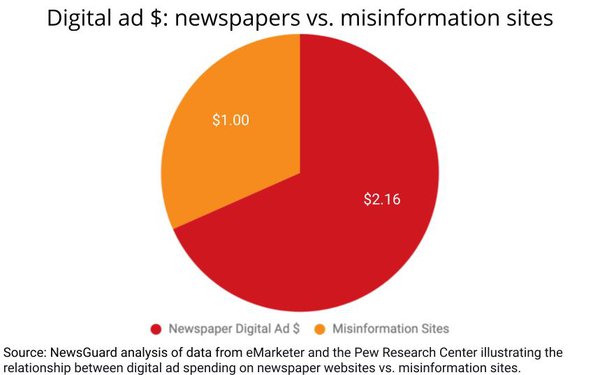
To put some dimension around the role legitimate advertisers play in supporting illegitimate information publishers, NewsGuard teamed with Comcscore to conduct a unique analysis correlating NewsGuard’s database of bad actors with Comscore’s estimates for digital advertising value. The result: advertisers are sending $2.6 billion annually to misinformation sites.

While the report does not make a case that many — if any — advertisers are doing that wilfully, it sheds light on the unintended consequences Madison Avenue plays in disrupting the world’s knowledge by placing programmatic media buys to reach the right audience, but in the wrong places.

“The data underscore the scale at which online misinformation and disinformation is unintentionally bought and paid for by major advertisers, who place their ads on thousands of websites using programmatic advertising, a byzantine, computerized process — leaving brands with little idea where their ads are appearing and what messages they are financing,” NewsGuard states in the report, adding an even more ironic implication: that much of that spending is coming at the expense of authentic publishers of information: newspaper websites.

According to NewsGuard’s analysis of data from eMarketer and the Pew Research Centre, “for every $2.16 in digital advertising sent to legitimate newspapers, U.S. advertisers are sending $1 to misinformation sites.”

Now, after covering media planning and buying for more than 40 years, I know as well as anyone that when it comes to such things, Madison Avenue doesn’t have a collective consciousness — or a conscience — and that the results of this unintended underwriting of bad actors is at worst, simple negligence driven by ignorance, marketplace pragmatism, or most ironic of all, misinformation.

But maybe it’s time for advertisers and agencies to develop more of a collective approach to solving this problem. We are already seeing some signs of that in both individual agency (some of the biggest have already signed up to NewsGuard’s data to create whitelists and blacklists for filtering misinformation sites from their media buys) and industry initiatives like the World Federation of Advertisers GARM (Global Alliance for Responsible Media).

Those efforts aren’t just good corporate citizenry, but also good business practice. For a variety of reasons, including economics and especially in regard to one of the ad industry’s favourite Holy Grail acronyms: ROAS (return on advertising spending).

How do I know this, because I was also sent an analysis conducted by audience research lab MediaScience, which found that ad spending on legitimate news outlets outperforms ad spending places on illegitimate ones.

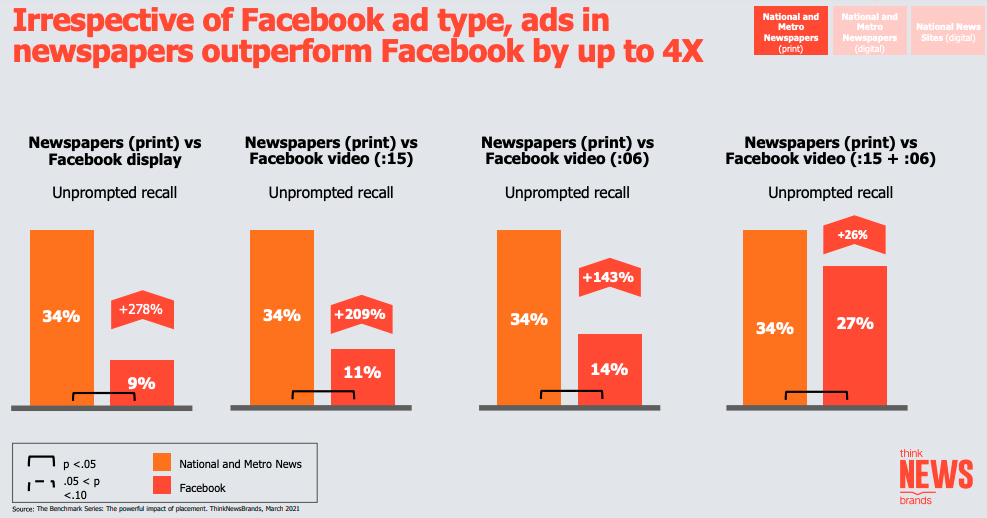
The analysis measured 5,350 participants and ran across 42 newspaper print runs and 252 websites for a total of 6,037 unique brand exposures, comparing a variety of brand exposure and lift metrics for ads placed on news publishers vs. ads placed on Facebook and YouTube.

The results:

  • Newspaper ads outperform Facebook ads of all types by up to four times.
  • Combined news formats are twice as effective as combined Facebook formats.
  • Ads in news are as good as (or better than) ads on YouTube.
  • News offers a stronger ROI than social media.

Sourced from MediaPost