Author

editor

Browsing

Sourced from Boss Magazine

As we move into the digital era, YouTube marketing is becoming the prime factor of success for any business or brand promotion. YouTube offers a platform to publish valuable video…

As we move into the digital era, YouTube marketing is becoming the prime factor of success for any business or brand promotion. YouTube offers a platform to publish valuable video content that has the power to bring in millions of subscribers across the world. However, it requires consistency and a unique marketing strategy.

Most brands focus on finding the best sites to buy YouTube views. This will help to boost your channel on YouTube. However, to increase the engagement rate and build a loyal subscriber list, it is essential to focus on developing an excellent strategy. Look at the five best ways to boost your business through YouTube and start increasing engagement and subscribers on your channel.

Customize your YouTube Channel

Visual brand identity plays a crucial role in growing your business on YouTube. Therefore, customize your YouTube channel to attract more subscribers. Pay attention to the following tips for creating an optimized YouTube channel –

  • Profile and cover photo – always use your brand logo as the profile photo. Headshots work well for independent video bloggers. Similarly, create an appealing cover photo for your channel. The cover photo or YouTube Art should provide the audience a clear idea about what the channel is all about.
  • Channel description – it is also known as the ‘YouTube About Page’. This is where your viewers can learn more about you and your business. Create an informative bio. Tell your audience what your brand is all about and the type of content you publish on your channel.
  • Video titles and descriptions – create compelling video titles and use industry-specific keywords to help your video rank higher in search results. You can also add information about your website, business catalogue, and much more in the description box.

Create Trending Videos

Trending videos are the best ways to increase engagement rate on YouTube. Your audience can view the trending videos on the YouTube homepage under the ‘Trending Tab’. These videos reflect popular culture and provide an opportunity to make your videos go viral on YouTube.

While buying YouTube subscribers will help you boost your content on YouTube, viral videos will help to create significant exposure for your brand. Besides following the trend, your content should also be valuable or informative.

Include Interactive Call-To-Actions

Call-to-actions are an excellent way to increase engagement on YouTube. Set clear and concise key actions to encourage people to like, share and subscribe to your YouTube channel. For example, create an entertaining video that will hook your audience. Use end screens, annotations, YouTube cards and ask your viewers to subscribe to your channel for more updates.

Another powerful way to get more subscribers is to run giveaway campaigns to increase audience participation. Add your website link in the description and ask your subscribers to check your brand collection. This will bring more traffic to your website. Thus, helping you boost your business through YouTube.

Collaborate with Other YouTubers

Collaborative videos are most popular among content creators. It is an excellent way to find your target audience and increase your YouTube subscribers. Moreover, it also provides social proof for your YouTube channel.

Partner with well-known content creators on YouTube who are relevant to your niche and brand. It is not necessary to limit yourself to one YouTuber. You can create promotional videos, talk shows, tutorials, and challenge videos with other YouTubers. This will generate excitement among your audience. Thus increasing video views and engagement rate.

Go Live on YouTube

YouTube Live broadcast is the perfect way to interact with your audience in real-time. Most brands and businesses get tremendous traffic and result from YouTube live streams. Here you can answer questions, tell your story, and share updates about upcoming events or sales.

You can also share valuable information about your brand or host a talk show with your industry experts or influencers to keep your audience engaged. It is an effective way to build trust and credibility with your audience that will boost your business.

Conclusion

YouTube marketing is a continuous learning process. As you use the features and create more videos, you will get better at optimizing your channel to gain more subscribers. Most businesses and brands buy YouTube subscribers to boost their content. But you must also focus on the quality and execution of your videos.

Be consistent, collaborate with others and interact with your audience. Follow the above steps to increase engagement on your YouTube channel. The more engagement you create, the more subscribers you’ll get. And over time, you’ll be able to boost your business through YouTube.

Sourced from Boss Magazine

By Tracey Wallace

Know what to look for before you hire your next content marketer.

Are you looking to hire an expert content marketer, but struggling to sort through the masses of marketers who say they have the writing chops? You’re not alone.

“Everyone — and I mean EVERYONE — thinks they’re a writer,” says Rebecca Reynoso, senior editor at G2.

A lot of marketers are writers, but there is a big difference between a great copywriter and a great content marketer –– and it’s one that isn’t discussed as often as it should be.

Copywriting is what you see earning people massive following on LinkedIn and Twitter –– and it’s even what is most often featured in marketing educational series. For instance, in the popular newsletter Harry’s Marketing Examples, you’ll see several rewritten website headlines claiming to help increase conversion. And they probably do just that. But that is not content marketing. That is copywriting.

So, what is content marketing and what skills should you be looking for in the person you hire? Let’s get that clear.

The difference between content marketing and copywriting

A lot of content marketers are also fantastic copywriters, and the reverse is true too. A lot of expert copywriters are admirable content marketers. But, just because there is a crossover doesn’t mean the two are one in the same.

Content marketers build a content strategy for a brand, and then put together the plan and oversee the execution of that plan to realize the overall strategy. The plan includes content research, content briefs, content writing, content editing, SEO optimization, graphic design, and finally, content distribution.

Copywriters are often helpful in the writing portion of the plan (though copywriters historically have written shorter form content than is typically needed for search-optimized blog posts these days) and in the content-distribution section of the plan. After all, copywriters know how to tell a story and engage an audience. And there’s no better place to do that right now for a audience than social media platforms like LinkedIn and Twitter.

The top skills expert content marketers have mastered

If you’re looking for a true expert in content marketing, you’ll want someone who is also a great copywriter. But that’s not where his or her skills end. Here are the eight main skills great content marketers have mastered, and how they help your business grow.

1. Content strategy

The ability to formulate and present a clear and coherent content strategy is a must-have for expert content marketers. Many content marketers can execute on a strategy, but not all of them can do the research necessary to put together a long-term strategy, detail the waterfall method in which that strategy will be executed (thus creating a plan) and have the ability to present that plan to founders or executives for sign off.

This is a skill senior content marketers hone over time, and if you’re looking for an expert, you’ll want to ask questions in the interview that help you understand if they’ve been able to do this successfully.

2. Project management

The second most crucial skill for an expert content marketer is project-management ability. Many organizations are content-first, but they don’t necessarily realize it. That is to say, successful organizations often repurpose content from the blog, case studies and more for their ads, email marketing, sales-enablement material, etc.

This allows content to not only be measured on SEO success, which is a really good thing because SEO can take six months or more to begin to work.

Content-first organizations need a strong content strategy that takes the full funnel into account, and they need a strong project manager who can report clearly on when content will be ready and help the team autonomously create expert content for every single stage of the funnel.

Related: 5 Ways to Improve Your Startup’s Project Management

3. SEO basics

Having a clear content strategy and great project-management skills doesn’t rid you of the requirement to understand the fundamentals of SEO. A great content-marketing strategy will build organic search traffic over time, helping to reduce CAC and build brand awareness and brand trust.

Now, your expert content marketer doesn’t need to know the technical bits of SEO (or how to implement them), but he or she should have a clear enough understanding of Google’s algorithm to build a content strategy that has you ranking for relevant terms, and that allows him or her to optimize content before it goes live.

Ask him or her about the content marketing tools he or she uses specifically for SEO. The answer shouldn’t be “None.”

4. Creative production management

Every single piece of content that is produced, whether it’s for your blog or for your sales team, will require graphic design. After all, you want to put your best foot forward with your content, and great design helps create brand cohesion across all of your assets.

Similar to the project-management experience mentioned above, expert content marketers have experience managing a creative production pipeline to ensure blog hero images are delivered on time and that PDFs are being designed as needed for further down the funnel.

5. Copywriting

Here we are back at copywriting –– it is a crucial content-marketing skill. Great copywriting will accomplish the following:

  • Increase the click through from organic search results to website.
  • Grow your branded audience on social media platforms.
  • Make presentations far more appealing and likely to get approval.

Great content marketers have honed this skill over time, but don’t think that all expert content marketers have massive social followings. That’s simply not true.

Many content marketers have spent more time focused on headline A/B testing on highly trafficked pages, for instance, to increase conversions. Or, they have been focused further down the funnel helping email marketers with great copywriting to increase retention. Social media is the top of the funnel –– and that’s not always the best place to focus for growing revenue.

6. Editing

Expert content marketers are also great editors. This doesn’t necessarily mean they prescribe to a certain stylebook, though. Instead, it means that they know how to edit a story for clarity, for readability and for the brand’s style.

Don’t worry –– there are plenty of content-marketing tools on the market that can help with spelling and grammar. While that is a nice-to-have for expert content marketers, that skill is quickly being outsourced to the bots.

7. Blog writing

Great content marketers likely rose to their position through fantastic writing and editing on blogs of their own. It is true that it takes far more than a blog and a dream to become an expert content marketer, but all content-marketing experts should be able to pump out great blog content –– even if they manage a team of folks who typically do that for them these days.

Check their clips. Make sure they can write, source and credit properly. Otherwise, you’re risking your brand reputation.

8. Analytics and tracking

Finally, expert content marketers don’t just publish and pray. They distribute, and they measure. And they aren’t only measuring traffic to the website. Expert content marketers are skilled at understanding website behaviour, running content-specific CRO tests and measuring the impact of organic search traffic all the way through the funnel to conversion.

Experts won’t just hand you a blog post to publish. They will build an entire strategy, execution plan and analytics dashboard to keep you up to date on what is working, where and why.

By Tracey Wallace

Sourced from Entrepreneur Europe

Sourced from Business Insider

Accurate data, better understanding of customer behaviour and compelling creatives all combine to improve outcomes

  • Sunny Kataria, Head Of Commercial Verticals, OLX Advertising India writes a few benefits of using location-based advertising in digital world.
  • He shares how geo-located ads convey hyper contextual data that’s meaningful to its target audience. Smartphones are now ubiquitous; therefore, increasing ad spend is now directed at the digital media.


With the growing popularity of smartphones and digital devices, location-based advertising is coming into its own as a way to reach target customers. The pandemic resulted in an exponential growth of internet users, as the world got digitised at a speed not seen before. The total active internet population is likely to touch 900 million by 2025, from 622 million last year, as per a report by the Internet and Mobile Association of India. People are buying online, booking appointments online, and doing a host of commercial activities online. The buyer’s journey is also becoming more digitised, and so digitisation of physical location presents a big zone of opportunity. Retailers and sellers can target huge segments of population that are nearby at a given time, leading to significant store visits.

More and more customers have learnt to swipe-search their shopping due to the pandemic. The purchase journey for a huge number of netizens now starts digitally. This has caused retailers to rethink how they can drive traffic to their stores, exciting the customer with interesting offers, in safe, healthy and convenient ways. Location is one of the biggest conveniences that can be offered. Location-based advertising targets consumers who may reach the store immediately to check out the advertised product so that they may buy their products conveniently, or as part of their routine outing for work or home tasks. This route of engagement is now part of an omni-channel strategy, to create more sales conversions.

Geo-located ads convey hyper contextual data that’s meaningful to its target audience. Smartphones are now ubiquitous; therefore, increasing ad spend is now directed at the digital media. The Asia Pacific Advertising Trends 2021 report, by market advisory Media Partners Asia (MPA), says that ad spend on digital media will overtake that on television by 2024. The same report says that the internet, which was a major beneficiary of the lockdown, will continue to grow steadily and expand its share of advertising from 36.6 per cent in 2021 to 40.1 per cent in 2025.

Many retailers have already taken the path of geotagging their marketing pitches, and are able to trigger sales when customers are nearby. Google, Facebook and Instagram have been leveraging location-based services, syncing it brilliantly towards brand and consumer advantage. For instance, Facebook provides users with the advantage of searching nearby locations and places that friends have visited, along with letting others know when they check-in to a place; Instagram has a useful geotagging feature that collates content and elevates brand experiences. The Foursquare app provides personalised recommendations of places to go near a user’s current location based on the user’s browsing and check-in history.

AI is trained to use location data to reach out to geotagged customers. Accurate data, better understanding of customer behaviour and compelling creatives all combine to improve outcomes. Many people will likely visit a store, just a block away, that has an attractive offer. It’s so convenient and the information is useful.

Since location-based advertising involves knowledge of location data and customer behaviour, advertisers are able to tap into customer habits and shopping patterns more effectively. Such data helps to attract more repeat customers and to reach out to new customers. It has proved effective through the retail journey, from discovery to the purchase. Customer experience can be improved by offering deals that increase value. Location based services offer huge convenience to the customer too. For instance, if I am looking for an overcoat in the sweltering heat of summer, I can just geosearch a retail outlet selling winter clothes in summer instead of expending energy hopping around from one retail outlet to the other.

Brands can avail the advantages of geofencing target consumers based on their real-time location, to reach consumers who may be attending a particular event, with geolocation advertising. Such geofencing may be leveraged by retailers, restaurants or automobile dealers to drive footfalls into their stores. Similarly, geo-conquesting targets customers who are physically in or around the competitor’s place. This is used to pull away the competitor’s traffic by offering more attractive deals. Such information helps to build agile capabilities.

Given that it’s the era of hyper-personalisation, brands, across hospitality, clothing, financial services and auto industries, will use more and more of such data ecosystems to improve customer journeys, positioning businesses to play the winning game.

Feature Image Credit: Unsplash

Sourced from Business Insider

By Michael J. Collins

Marketing is deeply in flux as rapid acceleration of digitalization and technological advancement continues to unfurl. To better predict the future of marketing requires learning from the past and accepting that the only thing that’s constant is change. The past year, in particular, has been remarkable, albeit disruptive, which has contributed significantly to the transformation to come.

For example, while Facebook advertising didn’t exist ten years ago Facebook generated $26.17 billion in revenue in Q1 of 2021 alone, mainly from advertising – which equals over $100 billion in ad dollars a year. This gets me thinking about where we invested ad dollars a decade ago.  While this is just one example of a major shift, it’s imperative to be prepared for the new technologies and marketing practices that will certainly emerge and shape our business model as we know it.

I anticipate a variety of changes as we look to the future of marketing, but here are some of the ways I expect marketing to evolve over the next few years.

Original and interactive content will rule.

People crave originality, creativity and authenticity in content a lot more now than they used to, but there is stiff competition for share of voice. According to Microsoft data the average human attention span is now only eight seconds, which is shorter than that of a goldfish.

Digital fatigue is real, and consumers are becoming much more selective about the type of content they digest. Businesses and brands will need to invest more in original and unique content and tap into a higher level of creativity to retain and keep their audiences happy and engaged.

Additionally, original content helps gain mentions from media and influencers, which in turn, can drive additional brand visibility and increased website traffic. There’s no question that producing high-quality original content can be challenging.  It requires tons of research, time, and effort; however, if you think about the exceptional benefits that you will get from your content and the impact on your brand you already know that it’s worth the investment.

The role of influencers in marketing will continue to evolve.

Influencer marketing has garnered a lot of interest over the last few years.  In fact, over the last three years, Google searches for “influencer marketing” has increased by 1500%.  This goes to prove that the future of influencer marketing is bursting with opportunities.

We know that influencer marketing is here to stay.  But what does the future of influencer marketing hold?  Just like all other marketing strategies, it’s bound to change with new technologies and trends. As modern consumers become more and more averse to traditional advertising, influencer marketing emerges as a promising advertising channel.

In particular, I predict that micro-influencers will play an increasingly important role. While micro-influencers may have fewer followers, they offer a more personal connection with their audience and an opportunity for much higher engagement.

Events will remain a mix of hybrid for some time.

I predicted earlier this year in a LinkedIn article outlining marketing predictions for a post-covid 2021 that many companies would make a move towards more in-person meetings by 2022. A global survey of event planners found that 30% said they would execute virtual-only events in 2021, versus 42% who said a hybrid approach would be their strategy.

At CFA Institute during the pandemic we found that our digital events were able to achieve high levels of engagement while broadening our reach beyond those who traditionally attended our in-person conferences.

I predict that moving forward, the combination of in-person and virtual elements, especially those that prioritize interactivity, will help businesses continue to deepen connections with their audiences. Brands that figure out how to include hybrid into their event marketing strategies through additional content development will stand out and have higher retention rates.

Audio platforms will continue to emerge as a solution to ease digital and video fatigue.   Digital fatigue also encompasses Zoom fatigue, which today’s marketers are no stranger to. Luckily, the rise of audio has offered marketers and event planners globally a new way of hosting online events.

This past year Clubhouse, an exclusive invitation-only social networking platform, has emerged as a voice leader. Just like a conference call, Clubhouse provides a conversation room and once the conversation is over, the room is closed. The platform offers a sense of authenticity and real-time conversation, a breath of fresh air among those who embrace this emerging channel.

In addition, live podcast events are a great way to deepen relationships with customers, expand audiences and strengthen brand loyalty.  The audio nature of podcasts offer a unique and more intimate user experience, far removed from the visual cues that we’re accustomed to.

The rise of audio options will continue to emerge in the future since listening stimulates a different part of the brain that makes us visualize concepts, creating an entirely different experience from watching on a desktop or smartphone.

It’s hard to know what other technology will emerge, but I’m eager and excited to see what the future of marketing holds.

Feature Image Credit: Shutterstock

By Michael J. Collins

Sourced from Linkedin

By Joe Wituschek

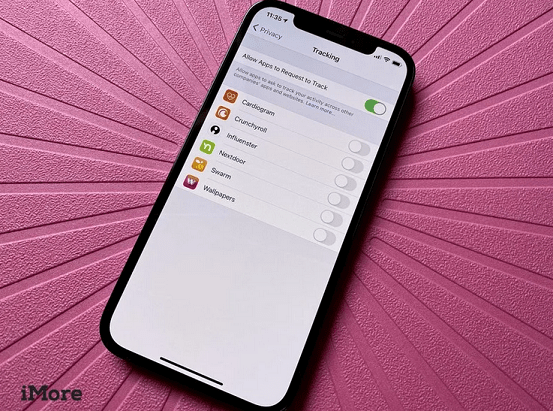
Apple’s App Tracking Transparency is doing what it’s supposed to do and people are mad about it.

Brian Bowman really hates Apple’s App Tracking Transparency.

The CEO of Consumer Acquisition, a social ad agency, sat down recently for an interview with Gamesbeat (part of Venture Beat) that touched on the effects that Apple’s new App Tracking Transparency feature was having on the advertising industry. When Gamesbeat asked Bowman what life after Apple’s IDFA changes is like so far, the CEO said that some clients are seeing revenue being impacted as much as 40%.

“Well, we’re not post-IDFA yet. We’re still in transition. It’s what I expected. There’s a loss of a portion of revenue, depending on how people are evolving. I don’t expect the full impact to be felt until the end of July. The rollout of 14.6 has been slow. It’s obviously picking up. Apple intentionally delayed app tracking transparency until 14.6. Certain clients are down 30% to 40% percent in revenue. Others are feeling less of an impact. It’s a mess.”

Bowman had even stronger words when asked about Apple’s stance that its new anti-tracking measures were a step forward for user privacy, calling it “absurd.”

“If people actually cared about privacy, then anything tied to Edward Snowden would have been a big deal. The government reading my emails and listening to my phone calls. People look at it like this. I’m not doing anything inappropriate. I’m a normal person. I don’t care. The whole question is upside down. It’s not a question of privacy. It’s a question of personalization. Apple has done a phenomenal job of PR. They don’t offer privacy. What they’re doing is centralizing and curating data. You have to use their app store. You have to use their payment gateway. They understand your voice, your fingerprint, and your health data. They understand the way you purchase. That’s not privacy. Apple is defining privacy by saying they get all the data and therefore it’s private. It’s absurd.”

While it’s not surprising to hear an advertising executive lambast Apple for hurting an advertising method, the simple fact is that advertising companies enjoyed the luxury of collection plenty of user data without people’s knowledge for years.

However “absurd” it may be, App Tracking Transparency is a great step forward for user privacy and a win for Apple’s continued efforts in the area. It gives each and every user a choice on what they want to do with their data.

Feature Image Credit: Christine Romero-Chan / iMore

By Joe Wituschek

Sourced from iMore

By Chris Kuenne

Brands must focus more on the ‘why’ than the ‘what’

Over the next five years, the global marketing industry is forecasted to grow by 19%. By 2026 brands are expected to spend $66 billion annually on data, technology and new analytical approaches to convert shoppers into buyers, up from $27 billion in 2021.

This conversion funnel obsession has inadvertently confounded brand marketer’s single most important goal: creating enduring relationships with their best consumers. Think about the barrage of re-marketing campaigns that hit you when you considered buying cowboy boots: weeks of banner ads and emails trying to convince you to buy Justin, Lucchese and Corral cowboy boots in black, brown or tan.

For loyal consumers, this modern junk mail and digital harassment likely turned them off, as these brands demonstrated how little they really understood their best customer.

The key to building loyal relationships with a brand’s most valuable customers is to understand how their motivations and preferences drive brand choice, usage and lifetime value. Put simply, companies have been investing in data that reveals what people are doing or might do next, but not why they are doing it.

As digital marketing shifts from conversion craziness to relationship building, how can companies access and operationalize the data upon which true relationships are built?

Look at TikTok’s business model

To start, they can look at online dating and TikTok.

A swipe right on a dating profile is simply much more reflective of who these consumers are.

In the online dating ecosystem, individuals reveal deep insights through their clickstreams. Depending on the particular app or dating site, those looking for a match reveal everything from their sexual orientation to their political views. With this high-resolution data, a dating app could ascertain, for example, that when a 28-year-old woman increased her age preference for the men she was interested in by five years and included those who had previously been married after a series of flops with men her own age, that she was not only motivated to date older men but also likely looking for a more serious relationship.

TikTok is similar. Its business model is to keep users engaged for as many hours as possible by serving increasingly relevant content based on preferences discerned from the videos they watch. TikTok builds out user profiles rooted in viewer preferences directly revealed from high-resolution behaviours, often delivering content users wouldn’t have found just by following their friends.

Acknowledge the power behind the swipe

It isn’t that online dating apps and websites and TikTok aren’t making decisions based on clicks, like other brands are. But their personalized recommendation models are trained on clickstream data that explicitly underpins the preferences and motivations they are seeking to understand, in a way that a click on an ad for cowboy boots on Instagram does not.

A swipe right on a dating profile is simply much more reflective of who these consumers are. This allows these companies to effectively predict what their audience wants next, building deeper customer relationships and a more loyal, more profitable customer base.

So how can credit card marketers or home goods retailers, whose businesses are not based on high-resolution behavioral data like Tinder and TikTok, make the leap to discern preferences and motivations?

Just as an online dating website uses every swipe and match to extrapolate composite profiles, digital marketers in industries from financial services to consumer technology can build deeper customer relationships through emerging methodologies that quantitatively define personas. These techniques combine survey, behavioral and transactional data with advanced analytics to discover clusters based on how consumers’ underlying motivations and preferences drive their economic behavior (brand choice, frequency, price sensitivity, etc.).

Systematically understanding consumers’ motivations and preferences at scale will allow all digital marketers to make the next big leap toward greater personal relevance, more enduring customer loyalty and enhanced customer lifetime value.

Feature Image Credit: Bloomberg/Getty Images

By Chris Kuenne

Chris Kuenne is chairman and CEO of Rosemark.

Sourced from ADWEEK

By Shama Hyder,

The way people are interacting with social media is changing. Don’t get left in the dust.

Feature Image Credit: Getty Images

By Shama Hyder

Founder and CEO, Zen Media@Shama

Sourced from Inc.

By David Finkel

It is much easier to clear up a miscommunication 20 minutes after a meeting than six months down the road

In a previous article, I shared with you four situations in which you should never use email, and we got a lot of great comments. So today I want to share with you five times that you should use email instead of an alternative. Because in today’s fast-paced remote workplace, there is still a time and a place for email. Here are some examples.

1. A Quick Written Message

Let’s say you have back-to-back meetings all day and you don’t have time to pick up the phone to ask your assistant for a certain piece of information or to ask your marketing director a quick question about your latest pay-per-click campaign. It is super simple to shoot off an email in between Zoom meetings to get the message to its intended recipient. Email is great if you just need a quick answer and you don’t have the time to set up a meeting or pick up the phone.

2. To Share Information or Data or a Quick Report

I like to use email to aid in the delivery of structured reports to prompt somebody to look at it or act upon the data within. So, for example, let’s say you have a dashboard that has your marketing stats and you just don’t get on there regularly to look at it. Well, you can set it up to automatically send an email to you or other key employees each week or every two weeks or every month that shows you your KPI’s. It’s a great way to stay on top of the data that matters to you. Beware of doing this too often, however; if you receive an email every time someone visits your website or fills out a lead capture form, you may start to ignore the data within and miss valuable opportunities to act on key pieces of information.

3. To Document Something

You just had a great meeting with a vendor, and there were a lot of things that were shared during your meeting. Perhaps there were specific deliverables that the vendor promised. Perhaps there were deadlines set that need to be followed up on? Maybe there was a guarantee of results. You want to put that in writing immediately after the meeting and send it off to all parties involved to get their written approval and make sure that you are all on the same page. It is much easier to clear up a miscommunication 20 minutes after a meeting than six months down the road.

4. When the Conversation Is Asynchronous

When it comes to asynchronous conversations, email is really quite good. You can share an email with someone at 3 p.m., but, let’s say, they’re working on a project and they take a look at it the very next morning. They get back with you the next morning, and you get back to them when you have a chance. When it isn’t time sensitive and you don’t want to interrupt someone’s flow, email is a good option.

5. When You Need to Share Something With a Group

Email is great for communicating with a group of people. Maybe it’s about an upcoming sale that will be companywide. Maybe you want to highlight a companywide victory or share a report of particular interest to an entire department. Email can be great for that.

Feature Image Credit: Getty Images

By David Finkel

Sourced from Inc.

All small business owners want to make more sales. Luckily, there are tons of online marketing channels to help you accomplish that goal. From email to social media ads, these tips from the online small business community can help you gather and convert more leads online.

Update Your Cold Email Strategy

Cold emailing involves making contact with a prospect via email for the first time. If they’re not already familiar with your business, this tactic may be challenging. But updating your strategy may help. Brooklin Nash shares thoughts in this GrowMap post.

Generate More Leads with Social Media Automation

Social media isn’t just about communicating with current customers. It can also help you find potential leads. And automation can help you save time while finding relevant users. Learn more in this Startup Bonsai post by Yash Chawlani.

Make Sure Your Marketing Is Effective

Businesses sometimes lose sight of the point of their marketing efforts. Ultimately, they should help you close sales and make more money. Gee Ranasinha offers commentary in this Kexino post. And BizSugar members discussed further here.

Optimize Your Content for B2B Consumers

Content marketing can be an effective way to communicate with potential customers. But your content must be optimized for the type of prospect you want to attract. B2B content marketers can learn from this TopRank Marketing post by Lee Odden.

Optimize Facebook Lead Ads

Facebook is an ideal place to gather small business leads. And ads can make the process more efficient. To optimize your Facebook ads for gathering ideal leads, check out this GetResponse post by George Glover.

Simplify Your YouTube Ad Creation

YouTube ads are becoming an increasingly popular way to gain the attention of potential new customers. But creating ads has been complicated in the past. Luckily, Google recently unveiled new features to make it easier. Read about them in this Search Engine Land post by George Nguyen.

Sell on LinkedIn Without Ads

LinkedIn ads can be helpful for making sales on the platform. But not all businesses have the budget for these paid promotions. Luckily, there are ways to sell without investing extra money. Learn how in this Social Media Examiner post by Michael Stelzner.

Utilize Chatbots in Tandem With PPC Ads

PPC ads are effective for attracting leads. And chatbots can help you convert them. But you need to be intentional about your use of these tactics. Neil Patel discusses the combination in this post.

Leverage These Podcast Marketing Tips

Podcasts provide many interesting marketing opportunities for small businesses. You can create your own, be a guest on other shows, or advertise your products and services. The tips in this Inspire to Thrive post by Lisa Sicard can help your efforts take off. Members of the BizSugar community also shared thoughts here.

Grow Your Business with a Competitor Sales Analysis

To optimize sales in your industry, it helps to fully understand your competition. A formal analysis may provide all the necessary data to help you grow. Maura Kautsky elaborates in this SMB CEO post.

If you’d like to suggest your favorite small business content to be considered for an upcoming community roundup, please send your news tips to: [email protected].

Feature Image Credit: Depositphotos

Sourced from Small Business Trends

By Jeff Beer

From Colin Kaepernick to the U.S. women’s national soccer team, racism to equal pay, it’s all become a part of Nike’s brand message.

On September 3, 2018, a single tweet drew a line in the sand. A close-up shot of Colin Kaepernick’s face, with the words, “Believe in something. Even if it means sacrificing everything.”

Timed to mark the start of the 2018/2019 NFL season and celebrating the 30th anniversary of the tagline “Just Do It,” the post and its accompanying video commercial lit up the cultural discourse like no ad in recent memory. Here was arguably the most popular sports apparel company on the planet siding with one of the most divisive athletes in the world. The message was clear: the swoosh would be on the side of anti-racism.

In the wake of George Floyd’s murder last year, the company flipped its tagline to read, “For once, don’t do it,” addressing ongoing protests and systemic racism in America. Those white letters over a dark or black background embodied a message consistent with past Nike efforts around social issues, like 2017’s “Equality” spot or 2019’s “Never Stop Winning” in support of the U.S. women’s national soccer team and gender equality.

“It doesn’t matter how many people hate your brand as long as enough people love it,” Knight told Fast Company in 2018. “And as long as you have that attitude, you can’t be afraid of offending people. You can’t try and go down the middle of the road. You have to take a stand on something, which is ultimately I think why the Kaepernick ad worked.”

Knight’s outlook on the Kaepernick ad has become the brand’s playbook as it continues to look at a young, diverse audience as its core customer, and then act accordingly. Just as the 2020 European Championship soccer tournament was kicking off in June 2021, Nike released a spot call “The Land of New Football,” that featured a laundry list of inclusive characters – gay, straight, black, white, and everyone in between. It illustrated that the joy of sport should be for absolutely everyone, no exceptions.

In this interview for The Work in Progress video series, Fast Company spoke with Nike’s vice-president of diversity and inclusion Jarvis Sam, and the company’s vice-president of marketing Melanie Auguste, about how taking a stand on social issues has become crucial to the company’s award-winning marketing.

WATCH: How Nike stays ahead of the curve with its socially conscious marketing

Feature Image Credit: Scott Cunningham/Getty Images

By Jeff Beer

Jeff Beer is a staff editor at Fast Company, covering advertising, marketing, and brand creativity. More

Sourced from Fast Company