Not sure where to get started with vlogging? Check out these platforms.
Have you been looking to make it big in vlogging? There are many platforms where you can showcase your talent and build your identity. But with so many online platforms available today, it can be overwhelming to choose the right ones.
Here, we’ve rounded up the best vlogging platforms for you to become a successful vlogger. Let’s jump right in.
When it comes to vlogging, YouTube has to be the number one platform to consider. In fact, vlogging has only really taken off since YouTube came into existence. This long-established platform has gained over 1 billion users and over 500 hours of videos are uploaded every minute.
You can create your own channel on YouTube and uploading your content is straightforward. Also, YouTube allows you to monetize your channel by putting ads in your videos. You can leverage your channel by promoting it too.
Keep in mind, with YouTube being the most popular vlogging platform, it’s highly competitive. But with some creativity and consistent posting, you have a shot at garnering an audience on the platform.
With a large userbase of around a billion users and counting, Instagram has rapidly soared into popularity as a photo-sharing social media platform. However, with the introduction of Instagram Reels and Instagram Video, videos have made a home on the platform too.
With Instagram Video you get to share longer vlogs that can include your daily routine, travel vlogs, and more. As short videos are trending nowadays, you can use Instagram Reels to upload shorter clips of your vlog to grab your audience’s attention. Adding to that, Instagram Live and Stories will allow you to create a stronger bond with your followers.
You can make the most out of Instagram with the platform’s strong advertising options and use hashtags to get your vlogs discovered by the right audience.
Facebook is not often considered when it comes to vlogging. However, the platform’s popularity and extensive user-base can prove highly useful for getting more exposure.
With Facebook, you can create pages, gain followers, and run paid ad campaigns to increase your visibility. Similar to YouTube and Instagram, this social media platform allows you to live-stream your videos with Facebook Live.
When you create a vlog and upload it to Facebook, it assures a guaranteed reach within your friends’ or followers’ list. And if they share it with their own friends, the reach of your vlog multiplies instantly.
Along with that, Facebook offers you the freedom to design your page layout as you like, save live videos to the video library, and interact with your audience in real-time.
As short videos have become increasingly trendy, there are many benefits to uploading your shorter vlogs to TikTok. It’s a great platform for gaining popularity in a short amount of time. Since its inception in 2016, TikTok has proven to be the fastest-growing social media app with over 1 billion users.
With short videos ranging from 15 seconds to 3 minutes long, you can create quick and engaging vlogs on TikTok. You can play around with filters, add soundtracks, and use cool effects on your videos.
You can also create content on trending topics and do challenges to increase your reach. If you’re new to this platform, have a look at our tips for TikTok beginners.
If you’re a professional vlogger or aspiring to become one, Vimeo can be a fantastic place to showcase your creativity. On Vimeo, you won’t see any low-quality content as it’s known for its high-quality artistic videos. The platform even has tutorials that can help you make better videos.
As a vlogger or a content creator, you can track how your content performs using the analytics dashboard. You can get this feature and as well as more storage and advanced privacy control by upgrading to one of the premium subscription plans.
On top of that, there are no ads. And if your content is really good, your vlogs can get featured in a Staff Pick.
Dailymotion is another platform that focuses on professional, high-quality video content. Similar to Vimeo, this might be a good platform if you already have some vlogging experience or use high-end vlogging equipment.
Dailymotion is YouTube’s oldest competitor. It has a similar intuitive user interface, therefore, uploading your vlogs to the site is straightforward.
Additionally, Dailymotion allows you to monetize your content. Just remember to take note of the restricted time duration and storage capacity of the videos you upload.
With more than 15 million daily visits, Twitch is one of the most popular streaming platforms and a favourite among beginners. As a vlogger, there’s a lot to benefit from the platform’s dedication to live-streaming.
Twitch has always been a go-to platform for gamers to live-stream their lets-plays. With the introduction of the IRL category, we can see the platform opening the doors to other niches. IRL is short for “in real life” and, on Twitch, includes content beyond gaming streams such as art creation, reaction videos, and GRWM (get ready with me) streams.
You also get to interact with your audience in the live chat where you can do Q-and-A’s, thank them for donations, and welcome new subscribers.
DTube is the first video-sharing platform leveraging the power of blockchain technology. If you’re looking for a Youtube alternative, consider switching to DTube. This decentralized platform is secure, ad-free, has no hidden algorithms, and allows you to monetize your vlogs in cryptocurrency.
Another unique DTube feature is instead of displaying view counts, each video shows the amount it has earned. Note that you can only earn for seven days per video upload, and once you upload your vlog it cannot be edited or deleted.
As DTube has an active community, you can take advantage of it to collaborate with other creators and attract more audiences.
This platform might be the right choice if you like the idea of creating content around cryptocurrency.
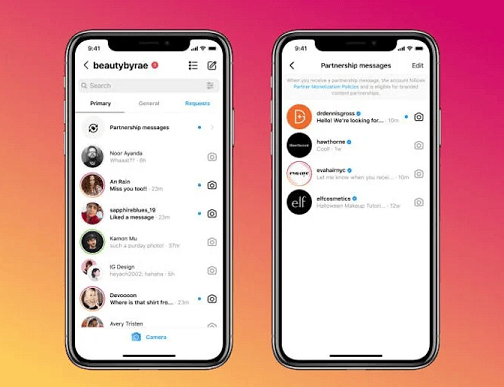
One of the ways Instagram content creators make money through the app is by looking for sponsors who might pay them for their posts. But how do these creators find sponsors to begin with? There may be an easier way.
It turns out that’s what Instagram thinks too. The company has announced that they are working on tools that will make it easier for creators to be matched with brands who might be willing to sponsor them. These tools will let creators express an interest in the brands that they might be interested in working with, while brands can also use the tool to find creators who they think will match their needs.
Instagram is also working on a separate inbox for sponsors, which means that it will be easier for creators to identify messages sent to them from a potential sponsor instead of getting lost in their messages. These tools are still in the early stages of development and only a handful of brands and creators are taking part in a test, but we can likely expect that these tools will eventually expand to cover more brands and creators in the very near future. This will make things easier for creators.
The metaverse is a world of endless, interconnected virtual communities where people can meet, work and play, using virtual reality headsets, augmented reality glasses, smartphone apps or other devices.
The term “metaverse” seems to be everywhere. Facebook is hiring thousands of engineers in Europe to work on it, while video-game companies are outlining their long-term visions for what some consider the next big thing online.
The metaverse, which could spring up again when Facebook releases earnings Monday, is the latest buzzword to capture the tech industry’s imagination.
It could be the future, or it could be the latest grandiose vision by Facebook CEO Mark Zuckerberg that doesn’t turn out as expected or isn’t widely adopted for years — if at all.
Plus, many have concerns about a new online world tied to a social media giant that could get access to even more personal data and is accused of failing to stop harmful content.
Here’s what this online world is all about:
What is the metaverse?
Think of it as the internet brought to life, or at least rendered in 3D. Zuckerberg has described it as a “virtual environment” you can go inside of — instead of just looking at on a screen. Essentially, it’s a world of endless, interconnected virtual communities where people can meet, work and play, using virtual reality headsets, augmented reality glasses, smartphone apps or other devices.
It also will incorporate other aspects of online life such as shopping and social media, according to Victoria Petrock, an analyst who follows emerging technologies.
“It’s the next evolution of connectivity where all of those things start to come together in a seamless, doppelganger universe, so you’re living your virtual life the same way you’re living your physical life,” she said.
But keep in mind that “it’s hard to define a label to something that hasn’t been created,” said Tuong Nguyen, an analyst who tracks immersive technologies for research firm Gartner.
Facebook warned it would take 10 to 15 years to develop responsible products for the metaverse, a term coined by writer Neal Stephenson for his 1992 science fiction novel “Snow Crash.”
What will I be able to do in the metaverse?
Things like go to a virtual concert, take a trip online, and buy and try on digital clothing.
The metaverse also could be a game-changer for the work-from-home shift amid the coronavirus pandemic. Instead of seeing co-workers on a video call grid, employees could see them virtually.
Facebook has launched meeting software for companies, called Horizon Workrooms, to use with its Oculus VR headsets, though early reviews have not been great. The headsets cost $300 or more, putting the metaverse’s most cutting-edge experiences out of reach for many.
For those who can afford it, users would be able, through their avatars, to flit between virtual worlds created by different companies.
“A lot of the metaverse experience is going to be around being able to teleport from one experience to another,” Zuckerberg says.
Tech companies still have to figure out how to connect their online platforms to each other. Making it work will require competing technology platforms to agree on a set of standards, so there aren’t “people in the Facebook metaverse and other people in the Microsoft metaverse,” Petrock said.
Is Facebook going all in on the metaverse?
Indeed, Zuckerberg is going big on what he sees as the next generation of the internet because he thinks it’s going to be a big part of the digital economy. He expects people to start seeing Facebook as a metaverse company in coming years rather than a social media company.
A report by tech news site The Verge said Zuckerberg is looking at using Facebook’s annual virtual reality conference this coming week to announce a corporate name change, putting legacy apps like Facebook and Instagram under a metaverse-focused parent company. Facebook hasn’t commented on the report.
Critics wonder if the potential pivot could be an effort to distract from the company’s crises, including antitrust crackdowns, testimony by whistleblowing former employees and concerns about its handling of misinformation.
Former employee Frances Haugen, who accused Facebook’s platforms of harming children and inciting political violence, plans to testify Monday before a United Kingdom parliamentary committee looking to pass online safety legislation.
Is the metaverse just a Facebook project?
No. Zuckerberg has acknowledged that “no one company” will build the metaverse by itself.
Just because Facebook is making a big deal about the metaverse doesn’t mean that it or another tech giant will dominate the space, Nguyen said.
“There are also a lot of start-ups that could be potential competitors,” he said. “There are new technologies and trends and applications that we’ve yet to discover.”
Video game companies also are taking a leading role. Epic Games, the company behind the popular Fortnite video game, has raised $1 billion from investors to help with its long-term plans for building the metaverse. Game platform Roblox is another big player, outlining its vision of the metaverse as a place where “people can come together within millions of 3D experiences to learn, work, play, create and socialize.”
Consumer brands are getting in on it, too. Italian fashion house Gucci collaborated in June with Roblox to sell a collection of digital-only accessories. Coca-Cola and Clinique have sold digital tokens pitched as a stepping stone to the metaverse.
Zuckerberg’s embrace of the metaverse in some ways contradicts a central tenet of its biggest enthusiasts. They envision the metaverse as online culture’s liberation from tech platforms like Facebook that assumed ownership of people’s accounts, photos, posts and playlists and traded off what they gleaned from that data.
“We want to be able to move around the internet with ease, but we also want to be able to move around the internet in a way we’re not tracked and monitored,” said venture capitalist Steve Jang, a managing partner at Kindred Ventures who focuses on cryptocurrency technology.
Will this be another way to get more of my data?
It seems clear that Facebook wants to carry its business model, which is based on using personal data to sell targeted advertising, into the metaverse.
“Ads are going to continue being an important part of the strategy across the social media parts of what we do, and it will probably be a meaningful part of the metaverse, too,” Zuckerberg said in the company’s most recent earnings call.
That raises fresh privacy concerns, Nguyen said, involving “all the issues that we have today, and then some we’ve yet to discover because we’re still figuring out what the metaverse will do.”
Petrock she said she’s concerned about Facebook trying to lead the way into a virtual world that could require even more personal data and offer greater potential for abuse and misinformation when it hasn’t fixed those problems in its current platforms.
“I don’t think they fully thought through all the pitfalls,” she said. “I worry they’re not necessarily thinking through all the privacy implications of the metaverse.”
Feature Image: Mark Zuckerberg has described the metaverse as a “virtual environment” you can go inside of — instead of just looking at on a screen.
Check out the list of must-have skills every project manager should develop to become successful.
A project manager is responsible for successful project delivery and needs to actively participate in all stages of a project. You need to diligently perform the vested duties in time to become an accomplished project manager.
And to do so, you need to develop some hard and soft skills. Ever wondered what those skills are? Read on to know about the skill you should have as a project manager.
Hard Skills of a Project Manager
Hard skills refer to the skills you can measure using metrics. Some essential hard skills for a project manager are:
1. Task Organization and Delegation
Every project involves numerous tasks and subtasks. As the project manager, you have to organize and distribute the tasks among the team members. You also need to delegate the pending works to the right person to avoid any project delay.
Of course, you can take help from project management tools for task assignment and delegation. Even for that, you should have a clear idea about how these processes work.
2. Required Technical Skills
There is no hard and fast rule about which tech skill you should develop to become a project manager. It’ll depend on your organization and the types of projects you usually handle.
Project managers have to be tech-savvy, especially if they are working for a tech company. For example, if you are a project manager in a learning management software company, you should know the basics of software development, if not the learning curriculum.
Also, organizations that work on various science and engineering streams will need to have project managers who can operate specialized software or equipment.
3. Budget Management
Budget plays a critical role in project completion. It’s not uncommon to find out about budget shortages in the middle of a project. It may cause project delay or resource unavailability.
Only a project manager capable of perfect budget management can help an organization skip such issues. It’s their responsibility to allocate the budget accurately where needed so that the project gets completed well under the estimated budget.
These days, a basic understanding of budget and manual allocation are not enough. A project manager should have solid expertise in spreadsheets, finances, and mathematics.
4. Project Planning
Project planning is the initial part of a project. The success of a project largely depends on well-thought planning. Therefore, a project manager should have expertise in planning any project.
The planning will involve large-scale tasks, like milestone selection, timeline creation, resource management, meeting schedule, task assignment, etc. It’ll also involve micro-level tasks like planning each day and delegating tasks if someone is sick.
While doing so, you need to keep in mind the constraints. Yet, you have to design the project in a way that can meet the objectives.
5. Analytical Skill
As a project manager, you should have the analytical skill to excel in your work. Every industry has become data-dependent, especially the finance and technology sectors. If you’re good at data analytics, you can utilize your talent to guide the project in the right direction.
Some common data analysis tasks you can do for your team are data presentation, database management, resource management, issue diagnostics, reporting, and so on. Project managers with analytical skills can use data to make a decision or explore possibilities.
Soft Skills of a Project Manager
Many of your qualities are interpersonal and not measurable through tangible metrics. These skills are soft skills.
1. Adaptability
Every project you deal with will be different. Hence, teams need to adapt according to the project requirement and client to achieve what they want. Adaptability is the skill an organization needs from a project manager more than anyone else.
Moreover, things don’t always go as planned in a project. Whether it’s about budget, resources, or deadline, you need to be agile and flexible to save projects from going off track. If you can make necessary changes according to the situation, your teammates will get inspiration from you.
2. Motivation
If you are a project manager, you should have motivating qualities to inspire your teammates. Especially when people are working on a long and complicated project, it’s normal to feel demotivated at times.
The project manager can motivate a team better than anyone else to put in their best efforts. Timely doing your own work is the first step to motivating a team. Also, you can host regular group or one-on-one meetings to inspire them.
3. Conflict Management
Conflict among teammates is inevitable. The situation can get worse if people are contributing from remote locations. As a project manager, you should know how to manage and contain such conflicts.
No matter how difficult the moment is, implement the right conflict management strategies. Knowing about your teammates’ temper will help you address the issues.
Never try to avoid any conflict as it can put the organization in an embarrassing situation. Address them immediately to find a resolution. Thus, the team can focus on the project.
4. Communication and Negotiation
Poor communication can force a project to go astray. Hence, project managers should ensure that all communication regarding the project is clear and transparent.
Often, they are the link between all the project stakeholders. That’s why they should communicate openly about a project with their teammates, management, and clients.
The communication should be honest and straightforward. It should not leave any scope for confusion or misunderstanding. As a project manager, you should also know how to negotiate with clients or a colleague.
5. Team Building
Building a team is the responsibility of a project manager that involves numerous managerial processes. Hence, this is another soft skill you should have to become a project manager.
During team building for a project, managers should keep in mind that colleagues should trust each other and feel happy to work together to achieve a common goal. Also, they should ensure a perfect environment for teamwork.
Top Skills to Achieve Success
A project manager has a long list of responsibilities that they have to fulfil. If you are a project manager and want to handle both the project and its team, developing the above skills will help you go a long way.
You can also choose the right project management tool for your team.
Tamal is a freelance writer at MakeUseOf. After gaining substantial experience in technology, finance, and business processes in his previous job in an IT consulting company, he adopted writing as a full-time profession 3 years ago. While not writing about productivity and the latest tech news, he loves to play Splinter Cell and binge-watch Netflix/ Prime Video.
The AAI are delighted to welcome Paul Dervan to take part in their next Toolkit session on Tuesday November 30th at 10:00AM.
Date: 30th November Time: 10am Location: Online Registration: Here
In many ways, advertising is about trying to predict how our communications will influence future consumer behaviour. Predicting this successfully is very difficult. Paul will share insights on how to make better decisions in advertising – based on the mistakes he has made, the lessons learned and insights from the global experts he has tracked down and quizzed on effectiveness in marketing.
Paul is the author of ‘Run with Foxes – Make Better Marketing Decisions’ and also the CMO for Ireland’s National Lottery.
Over the past 20 years, Paul has held numerous leadership marketing positions in various companies. Previously he was the Global Brand Director at Indeed, the world’s largest and fastest growing job site, with over 250 million visitors every month.
He also started a Marketing Campaign Lab, where he created and tested hundreds of marketing experiments in America, Europe, Australia and Asia. Before that, Paul was with PokerStars, the world’s largest online poker brand, as Creative Director for their Full Tilt brand. Prior to that Paul was Head of Brand for O2 in Ireland and Brand Director for Telefonica Digital.
Facebook and Google worked together to circumvent Apple’s privacy measures, 12 state attorneys general argued in an updated legal complaint from 2020.
Apple’s privacy tools have made it harder for other tech companies to pinpoint users for their ad auction model.
Regulators and other tech companies have targeted each other in a larger antitrust battle over user privacy, ad technology, and market dominance.
Google worked with Facebook to undermine Apple’s attempts to offer its users great privacy protections, 12 state attorneys general alleged in an update to an antitrust lawsuit against the search engine.
“The companies have been working together to improve Facebook’s ability to recognize users using browsers with blocked cookies, on Apple devices, and on Apple’s Safari Browser,” the amended complaint states. “Thereby circumventing one Big Tech company’s efforts to compete by offering users better privacy.”
The lawsuit was first filed by the attorneys general in December 2020, accusing Google of engaging in market collusion, and focused on claims that Facebook and Google had agreed to cooperate if their pact ever came under regulatory scrutiny.
The attorneys general also accused Facebook and Google of engaging in an illegal advertising deal, with the latter leveraging monopoly power over its adtech business by helping Facebook make better bids in ad auctions, which would make it easier for Facebook content to appear in more Google Ads.
“Facebook has long supported fair and transparent advertising auctions in which all bidders compete simultaneously, and the highest bidder wins,” a Facebook spokesperson said in an emailed statement. “Facebook’s non-exclusive bidding agreement with Google and the similar agreements we have with other bidding platforms, have helped to increase competition for ad placements.”
According to a discussion between Facebook employees in 2019, the complaint says, the company was having trouble matching users on Apple’s Safari browser. Google said Facebook’s user match rates were the same as other ad auction parties, but Facebook employees noted that the search company was willing to use Javascript to help Facebook better recognize those users.
The attorneys general claimed Facebook essentially baited Google into the deal, but Google denies the lawsuit’s claims.
A Google spokesperson told Insider: “Just because Attorney General Paxton asserts something doesn’t make it true. This lawsuit is riddled with inaccuracies. In reality, our advertising technologies help websites and apps fund their content, and enable small businesses to reach customers around the world. There is vigorous competition in online advertising, which has reduced ad tech fees, and expanded options for publishers and advertisers. We will strongly defend ourselves from his baseless claims in court.”
Apple in recent years has ramped up its user privacy efforts. In 2018, Apple installed privacy protection measures into its products, like Safari, which required websites to request tracking privileges from users and discard cookies if a site had not been visited in 30 days.
This summer, Apple rolled out its App Tracking Transparency tool, which prompts users to opt in or out of tracking on different applications — which largely impacted companies like Facebook. A Safari privacy report also detailed how websites track users.
The three companies have been at the center of several antitrust discussions, facing action from government regulators and each other. The Federal Trade Commission filed a lawsuit against Facebook claiming the company had monopolized power in the social networking market, but the suit was dismissed by a federal judge in June. Facebook was also reportedly preparing an antitrust lawsuit against Apple in regards to its App Store rules, saying Apple was stifling third-party app developers.
Congress also introduced five tech regulation bills in June, specifically directed at the “Big Four” — Facebook, Google, Apple, and Amazon. The bills would equip regulators with more methods to check tech firms from holding too much market power.
(This story has been updated to reflect in the third paragraph that it was Facebook and Google who reportedly agreed to cooperate, not Apple).
Feature Image Credit: Facebook CEO Mark Zuckerberg, Google CEO Sundar Pichai, and Apple CEO Tim Cook. Daniel Leal Olivas/WPA/AP, Justin Sullivan/Getty Images, & Karl Mondon/Digital First Media/The Mercury News/Getty Images
The world may be changing, but for the entrepreneurs one thing just remains the same. Email marketing is still king. There are 4 billion daily email users, and that number is expected to surpass 5.6 billion by 2025. Sixty-four percent of small businesses use email to reach customers because it’s cost-effective, efficient, and it works like a charm.
Stephen Phillips – Hostreviews.co.uk/Unsplash
There are many reasons why email marketing is better for your business than social media, but if you’re not sure what you’re doing, that could spell an expensive disaster for your business. Make sure your strategy is up to snuff with help from The 2022 Premium Mailchimp & Email Marketing Mastery Super Bundle. It’s on sale for just $34 (reg. $2,800).
This 14-course bundle includes courses from top instructors like Entrepreneur Academy (4.6/5 instructor rating), Ryan Ford (4.3/5 rating), and Phil Ebiner (4.6/5 rating).
Across this massive bundle, you’ll learn absolutely everything you need to know to build a successful email marketing strategy. Through these courses, you’ll learn how to build your email list by mastering landing pages, how to write better headlines and how to write copy for any part of a business or marketing campaign, and how to improve the response rate to your direct marketing campaigns.
Through a comprehensive set of courses, you’ll learn how to fully automate your email marketing campaigns using tools like Mailchimp and Microsoft Outlook. Of course, you’ll also learn email etiquette and copywriting tricks that will help you get the most engagement possible with as many people as possible. By the end of these courses, you’ll be able to scale an email marketing strategy that your business can be proud of and will keep bringing customers back for more.
As Marketer of the Year, Camelot CMO Keith Moor believes being an effective marketing leader comes down to building credibility by delivering on promises and having a curious mind.
Camelot CMO Keith Moor makes being an effective marketing leader sound deceptively simple.
For Moor it comes down to being able to deliver, which is something he has done in spades at The National Lottery operator. Two years into the role and he has completely revitalised the brand, repositioning it as a force for good by clearly linking participation to wider societal benefits rather than it just being a way to gamble.
Under his watch marketing investment has increased and advertising has shifted from being solely focused on shorter term, product-based activity to building a narrative about how the money raised through ticket sales directly supports local community causes.
This change of tack is clearly resonating with players and the revitalisation of The National Lottery has been widely heralded as one of the most successful turnaround stories of the past couple of years.
Despite the pandemic making it a challenging year for all, Camelot reported a sales increase of 6% for the year to March 2021, with the amount raised for good causes hitting £1.9bn, £1.2bn of which went directly to Covid-19 support.
The repositioning also boosted perceptions of The National Lottery brand. At 8.1 it achieved its highest ever score on YouGov’s BrandIndex in 2020, rising from 1.9 the year before and making it the second most improved brand of the year in terms of perception.
As a longstanding ISBA council member Moor is also an active voice within the marketing community, known for driving positive change and championing marketing within the wider business sector. All of which made him the top choice for the Marketing Week Masters award for Marketer of the Year 2021.
In typical style, Moor makes his achievements sound disarmingly simple.
“When you go into a job make sure you’ve got the tools and the licence to deliver, make sure you’ve got the buy-in of the CEO and then effectively just do it,” he says.
“The only way to get credibility is to prove yourself. I have to prove myself, as everybody else will in their jobs, by delivering for the business, helping it grow, turning it around, rebuilding it and building on the existing successes it has – whatever they might be. So ensure you can deliver proper tangible value that people can see and understand really quickly. Not just some kind of marketing waffle.”
The failures you get can be really self-defining, because they can make you understand and be confident about why things go wrong.
Keith Moor, Camelot
Key to his success at Camelot was getting buy-in from the C-suite before he joined the business to ensure his views and ideas lined up with theirs, because he says: “I didn’t want to come in and then have to battle”.
Having spent more than two decades at Santander, most recently as CMO, Moor wanted to make sure the move was going to be right. And while it may sound simple, ensuring this alignment is there from the start is crucial for any marketing leader to succeed, he says.
“Some big, well known marketers have been known to go into new jobs and have the arrogance to think ‘It’s my way or the highway’. I’ve seen marketers go into businesses and change everything because they feel they’ve got to put their own stamp on it. But sometimes it’s not about that. Sometimes it’s just about coordinating and bringing resources together,” Moor suggests.
Keeping things simple also allows marketers to “get the right focus”, he says. “Things like raising awareness, talking to the right people, ensuring [customers] want to buy, ensuring you know who your customers are, for example, that sounds much more straightforward than it is for a lot of people,” he adds.
“[Spend time] asking those difficult questions up front, thinking about what can give you the biggest value return, because then you can show jumps in sales, increase in purchase intent. Then that gives you the licence to go and show exec committees and talk to the CEO in his or her language, and show you can deliver tangible value.”
Increasing investment
Camelot is set up differently to other businesses in that its budget for marketing is part-funded by the Gambling Commission, so it’s not just the CEO Moor has to prove the value of marketing to, making it all the more important to be able to show results.
“We get investment two ways for marketing. One is a percentage of our ticket sales, which can go on marketing to generate more income and that’s a small percentage [around 1%]. It’s written in the licence conditions, so we can’t spend any more than that unless we choose to spend our own money,” he explains.
“Or the Gambling Commission decide to utilise money for good causes and give it to us, so we can generate higher returns for good causes. And then we use econometric modelling to prove that for every £X we generate from EuroMillions, for example, we generate £Y for good causes. That is a multiple much higher than a one to one, which is why the Gambling Commission invests all this money because we generate a lot more money as a result of it.”
Securing marketing investment became all the more important during the pandemic, because The National Lottery needed to show people the money being raised through ticket sales was going to support charities in dire need during the crisis.
“Going quiet because people can’t do things the way did before is not a good long-term strategy,” he says. “Continuing to support your brand – what it stands for, what it means – so that it’s maybe not right at the front of people’s minds, but it’s there, I don’t think there’s anything wrong with that.
“That’s a role brands need to play, to show they’re supporting society, they’re underpinning the economy. If all the brands just disappeared for a year, a lot of income disappears. A lot of money flowing through the market disappears and I think brands have a responsibility to, where appropriate, stay present and stay relevant with consumers.”
Moor had the same approach during his time at Santander following the financial crisis in 2008. He continued to invest in the brand and used changes in the market as a launchpad to turn Abbey National into Santander, to show it was relevant and offer an alternative.
“That was the right thing to do. I had the same theory and vindication about the National Lottery and the [Covid] crisis. Stay relevant because when we start to come out of it people will remember – you’ll be front of mind,” he explains.
Team support
As well as keeping The National Lottery brand buoyant during the crisis, Moor was also keen to ensure his team continued to thrive.
Camelot introduced a change programme during lockdown, which helped people keep connected to the business while working remotely and ensured employees were able to continue learning and upskilling. While it wasn’t introduced as a result of the pandemic, Moor notes the timing was fortuitous as it gave the team “a bit of focus”.
“It also gave everyone an appreciation of still being invested in as people,” he explains. “We have a very clear vision as a marketing function and people know they can ask about areas where they might want to grow skills, maybe try a job in a new area to help them grow.”
Moor says programmes such as this are particularly important for Camelot, not only to show there are still opportunities for marketers to grow and progress despite the limitations brought about by the pandemic, but also given the company operates The National Lottery under licence. The third licence will be coming to conclusion in 2024 and there is currently a competition underway for licence four, which will cover the next 10-year period.
I’m 52-years-old, I’m a marketing director in a big business but that doesn’t mean I don’t ask questions every week, most days of the week.
Keith Moor, Camelot
Given the bid process and the uncertainty that stems from this, Moor says it’s important to make sure people feel valued and supported – another key attribute of a marketing leader.
“People are starting to feel a little bit twitchy about what’s going to happen with their jobs, what’s going to happen to them in the future,” he explains. “We can’t answer that yet because we are currently very focused on operating the third licence, but people still have questions. They love their jobs, we have a very high satisfaction rating, but it doesn’t stop people wondering.”
He says this uncertainty around the next licence, coupled with the disruption triggered by Covid, means staying connected to people, having regular conversations and understanding their concerns is incredibly important.
Moor manages a team of around 70 marketers, which means he can “get to know everybody and they can get to know me”. He makes sure he’s available “at least once a week to take any calls they might have”, work related or otherwise.
The relatively small team Moor manages at Camelot is very different from his time at Santander, a global business with tens of thousands of employees. Yet, while there are differences he says the skills needed to run marketing at both are not dissimilar.
“We still have to know our customers and understand what’s going on with them. We still have to build plans going forward, have a clear strategy and a series of plans to be implemented related to that strategy. We have to deliver results,” he says.
He reiterates that one of the wonderful things about marketing is that the skills are transferable.
“I don’t think marketing functions change radically because people still need to have insight, data, understanding, an exploratory mindset and a willingness to try things in a proper structured way,” adds Moor.
“Whichever business you go into in a marketing role you’ve got to do all those things. So actually, that’s why marketers can change jobs – I wouldn’t say easily, because getting a new stakeholder set, getting a new team up to speed with how you work, all that takes time and effort – but marketers have some good transferable skills if they have the right mindset.”
Encouraging young marketers
As well as being an advocate for marketing within Camelot, Moor has been involved in championing marketing on a wider level to elevate the impact and influence marketing and marketers can have.
As part of this drive he believes more must be done to communicate how rewarding a career in marketing can be to encourage the next generation of marketers.
“There’s a real need to continue promoting how fulfilling a marketing career can be and that it’s not just about making ads,” he says.
“That’s the shortcut and we need to do a better job at explaining it as a much richer purpose. That it helps people understand the customers of a business, or helps them have a better experience. That it helps businesses to grow in line with what customers are hoping and wanting, and also fulfils the learning and career development that people might want. And that it’s flexible. It’s different things for different people.”
It’s also a career that never gets stale. One of his core philosophies as a marketer and something he believes is crucial to development is the need to keep asking questions. It was advice he was given as a junior marketer and it’s something he instils in his team now.
“I’ve got an exploratory mindset. It’s something I talk about a lot to younger marketers. Don’t lose that curiosity or the sense of exploration, because that ultimately will make you a better marketer. No matter how senior or junior you are – it doesn’t matter – everybody can benefit from doing that,” he says.
“I’m 52-years-old, I’m a marketing director in a big business but that doesn’t mean I don’t ask questions every week, most days of the week. It’s a great example I can set to my children. There’s not real downside to curiosity.”
While being curious might not always lead to the next big thing, learning from failure can be just as valuable, he says.
“Nobody’s career goes on an upwards trajectory the whole way. But actually, the failures you get can be really self-defining, because they can make you understand and be confident about why things go wrong,” he explains.
“I’ve tried to launch brands in the past that have failed. I’ve had brands pulled from under me the day before launch and there was nothing I could do about it. I just had to do my best work and bounce back from that. Learn from the mistakes, learn from all the good things I did during that time and then grow from it, so when I do launch brands they’re a success.”
Moor is not afraid to admit you need a thick skin to be a leader though, which becomes all the more necessary the more senior you get. So he encourages marketers to always keep perspective and not take things too seriously.
“Always allow yourself to see the reality of life and get the balance of things correct,” he advises. “I like to treat things in a very straightforward way, because I’ve learnt over the years that it’s really important I stay on top of keeping things simple. Because if I don’t do it no one else is going to. I’ve got to lead the way.”
Abandoning an online shopping cart may not be a big deal for a customer – but, for an eCommerce company, it could be a lucrative opportunity lost.
An effective abandoned cart email strategy is the perfect solution.
Start with this list of four abandoned cart email examples that will bring folks back to complete their checkout on your website.
Why are abandoned cart emails important for eCommerce?
According to an industry benchmark report, the standard abandoned cart email makes $5.81 in revenue per recipient. That same study showed that companies with an average order value of $100–500 also recovered 4–5% of their abandoned carts through this email marketing strategy.
In short, abandoned cart emails are a major customer retention lifeline for eCommerce businesses.
Every eCommerce brand should have a customized abandoned cart email framework as part of its email automation workflow and retargeting strategy.
A thorough framework will help you identify:
The exact point in the buyer’s journey where the customer clicked out
The kind of copy that brings them back to the site (or helps make a sale)
How to then upsell and/or increase brand affinity
In addition to that, it also helps you grow your email list for further remarketing.
When coupled with a high-level understanding of customer needs and email marketing data quality, an abandoned cart email marketing strategy works as a great remarketing tool.
How does an abandoned cart email work?
An abandoned cart email is an automated response that’s triggered by the customer leaving an eCommerce site or product page. Depending on the site and the brand’s strategy, the email can have various trigger points.
For example, a customer could trigger an abandoned cart email if they exit the site during the payment confirmation phase of checkout. In other cases, they could opt into the email just by viewing some products and then clicking out.
In both cases, the business needs a customer to provide their email address. This can be done in exchange for a discount code via a popup right before the home page, or while collecting delivery information.
Getting Customers’ Emails
Some business owners ask: Can you retarget an abandoned cart without a customer’s email?
No. Email acquisition is the key to abandoned cart emails. And, while collecting email addresses as soon as possible in the buying journey is beneficial to businesses, it’s not always plausible, considering how few customers actually share this information upfront.
Luckily, there are many ways to collect email addresses from your customers, including through:
Pop-ups: The tried-and-true method of email acquisition, you can use browser-close actions that ask for an email when a customer moves toward the exit button. You can also launch pop-ups at a certain step in the checkout process, or as a customer moves through different product pages on your site. Include discounts and other incentives to provide value for customers.
Chatbots: Not every customer who visits your site will engage with a chatbot. However, those that do engage will do so with a purpose. Build on their shopping intent and ask for their email for personalized responses from your customer service team.
Retargeted ads: If customers are leaving your site for a better buying opportunity elsewhere, you can market your business to them on other sites with a discount or personalized incentives. When they return to your site, make asking for their email the first pop-up that appears.
Creating Your Strategy
Like with all email marketing, testing is key with abandoned cart workflows. Before you implement your strategy, you’ll need to do some experimentation to identify the optimal timing, frequency, and trigger delay that motivates your customers to purchase.
Consider testing manual and automatic workflows, and don’t forget to include seasonal changes in buyer behavior and other parameters in your research.
While actually sending the abandoned cart is easy, the work required to design your strategy correctly is where you’ll spend most of your time. Fortunately, you’ll likely generate some degree of return on your investment while you’re still working out the kinks.
Using Your eCommerce Platform
Many eCommerce platforms make it easy to implement these triggers and workflows. Take Shopify, for example.
To set up this workflow on your site, you can go to the “Orders” page on the Shopify Admin dashboard and click on “Abandoned Checkouts.” From there, you can either send a recovery email manually by clicking on “Send a Cart Recovery Email” or automate the entire process by clicking on “Automatically Send Abandoned Checkout Emails.”
Contact your platform’s help team to see how the process works for your website.
4 Abandoned cart email examples and strategies to test
Every eCommerce business is different. Your customers have their unique needs and buying journeys, and it’s your job to identify how to best reach them after they leave your site.
That said, it never hurts to try a few successful strategies from other businesses first to see if any of them stick for your shoppers.
As you test these strategies, pinpoint the elements that seem beneficial to your brand, mix in your own insights and audience research, experiment, and accumulate the effective tactics into an abandoned shopping cart email framework that works for you.
1. Offer incentives to customers
Peel is a minimalist product retailer that offers incentives for uncertain customers at multiple stages of the buying process, including in the first abandoned cart email.
Sending a reminder email isn’t enough to convince browsers to purchase. Make it worth their while with a clear incentive. The top-level positioning of “Free Shipping on Orders Over $49” draws potential buyers’ eyes immediately upon opening the message.
In addition, Peel uses the copy “Still Thinking it Over?” to reignite customer interest. Don’t ever assume your customer has abandoned their purchase; your cart abandonment email should nudge them to re-engage with their buying journey.
2. Don’t wait for items to be placed in a cart
“Add to cart” is a great indication of customer interest, but you don’t have to wait for that action to send abandoned cart emails.
When you shop at JCPenney, you don’t have to click out at the checkout stage to trigger abandoned cart emails. Instead, you could simply browse some product pages for the system to register your interest and send a discount coupon.
Customers do need to link their browsing experience to a JCPenney account to receive this email, so always prompt shoppers to save their preferences by signing up or signing into their accounts.
Using this method as part of your triggered email workflow offers an opportunity to build or improve brand affinity — by offering value at a point in the buyer’s journey where customers often forget to complete their purchase or begin looking for alternatives.
3. Promote a sense of urgency
ELO (Export Leftovers) is an online retailer that offers exclusively production surplus clothing and accessories, with a focus on fast-moving items.
At first look, their abandoned cart email seems basic, with no consideration or incentive for customer needs. However, because their business is based on high-demand clothing at affordable prices (which causes unpredictable fluctuation in availability), urgency is emphasized in the “while they’re still available” copy.
Doubling down on availability-related messaging reminds customers that their viewed items may not be in store for long. It also works extremely well; urgency-related copy subject lines increase open rates by 22 percent.
4. Use creative copy
Shoppers are bombarded with eCommerce emails, so make yours stand out with copy that speaks to your unique audience experience and personas.
Dote, which used to offer trendy clothing and accessories for younger buyers, had this strategy down pat. Its message to almost-customers is one of the best-abandoned cart email strategies for its particular audience.
Dote’s email had it all, from clever copywriting to a very clear call-to-action (CTA). They played with language familiar to its Gen Z customers and incorporated feelings of endearment with a tongue-in-cheek approach.
As you draft your abandoned cart emails, use email copy that resonates with customers on a high level. Funny one-liners, prevalent social trends, or meme/punny language can turn a boring email into one that improves brand enthusiasm and perception.
Start testing these strategies today
When it comes to a solid abandoned cart email marketing strategy, a catchy and effective template is as important as any distribution strategy. However, like any other digital marketing toolkit, you’ll need to test components first to identify what works best for your brand and your customers.
Don’t have the time? Consider reaching out to an eCommerce email marketing agency for an expert’s help. They can create your abandoned cart email strategy from scratch and improve your chances of retaining a greater range of would-be customers.
Guest author: Entrepreneur and digital marketer Mike Belasco has been the founder and CEO of eCommerce digital marketing agency Inflow since 2007. His background as a web developer and SEO expert built an agency that has worked with major brands like Amazon, Overstock.com, Dish Network, and many more. Today, Belasco leads a team of more than 25 PPC, SEO, and conversion optimization specialists as a boutique, fully remote eCommerce marketing agency.
Your company’s future might depend on your ability to periodically refresh your brand identity.
“What’s in a name?” Shakespeare’s Juliet once asked. Perhaps a rose would smell just as sweet if it were called something else, but when it comes to your start-up, a name can be integral to your brand.
Take the hard seltzer company Berczy — originally called NATRL, the founders decided to change their product’s name as part of a comprehensive rebrand in order to better tell their origin story (the idea for the company was hatched during a trip to Toronto, during which the founders enjoyed evening drinks in the lively Berczy Park).
Each company has its own story to tell, and it’s essential to check in with your brand identity periodically and decide whether it’s still true to your company as it stands today. “A clear, unified corporate identity can be critical to competitive strategy,” write Stephen A. Greyser and Mats Urde for Harvard Business Review. “It serves as a north star, providing direction and purpose. It can also enhance the image of individual products, help firms recruit and retain employees, and provide protection against reputational damage in times of trouble.”
At my company, Jotform, we recently rebranded for the first time in over a decade. It required a considerable effort from the entire team but in the end, it was well worth it. Whether you’re considering a light refresh or a total brand overhaul, here are some tips to keep in mind.
1. Make sure the timing is right
Rebranding might seem like an exciting endeavour, but it’s also a big investment and as such, carries significant risks. To avoid wasting precious time and money, start by considering whether the timing is right for your rebrand. Although it’s impossible to state a hard-and-fast rule for every company, I usually tell founders to hold off until the market or their customers demand it.
What does that look like in practice?
When the old branding doesn’t feel relevant anymore, which can be caused by various factors, including moving into a new geographical market; an evolved company philosophy; or offering additional services. With Jotform, we expanded our business over the years and the former brand, including the tagline, “easy-to-use online form builder for every business,” no longer encapsulated how we serve users. Our new brand identity, which features an updated logo and tagline — ”powerful forms get it done” — reinforces the essence of Jotform.
A seemingly obvious case for rebranding is post-merger or acquisition — but even then, perhaps not right away. When the airlines Avianca and TACA merged, Fabio Villegas, CEO of Avianca Holdings, explained that each company had its own rich heritage, culture and business. Because of all of the coordination involved, writes Villegas, “We decided to unify the vision, culture and operations of the two organizations prior to launching a single brand.”
For them, it was the right decision to wait to ensure that the new branding aligned with the customer experience. It’s up to each entrepreneur to determine when is the right time for them.
2. Do some soul-searching
If you’ve decided that now is the time to rebrand, the next step requires some soul-searching: who are you and where do you want to go.
Greyser and Urde, who came up with The Corporate Brand Identity Matrix to help companies articulate their corporate identities, recommend breaking these essential inquiries into two categories: the internal elements, comprised of a company’s vision and mission, and the external elements: how the company wants to be perceived by customers and other external stakeholders.
With Jotform, internally, we want to help users create robust forms and collect important data. Externally, however, we want to be perceived as an innovative tech company alongside trailblazers like Google, Airtable, and monday.com. This informed our entire rebranding process.
Or take Burger King — its most recent logo captured the company’s then-values: A food company that focused on speed. But Burger King’s values have evolved over the years and today, it wants to be known as a casual restaurant that focuses on taste and quality, which prompted it to revitalize its retro-looking pre-1999 logo.
“As a rule of thumb, brand strategy always follows the business strategy. Not the other way around. The business sets the objectives. The brand gets them done,” writes The Go Branding.
Asking the essential internal and external questions will inform your decisions as you envision your company’s future identity.
3. Don’t rush the process
I’ll be the first to admit: There’s a special kind of rush that comes with posting updates about your company. When you’re in the rebranding process, it’s tempting to jump the gun in order to share your flashy new brand with the world.
But if you’ve committed your company’s resources to rebranding, make sure you take the time to do it right: to gather the information you need from stakeholders; to analyze that information; to let the creative process happen organically. As cognitive scientist Art Markman has written, “Creativity needs time and space to grow.”
Hack weeks are a great way to foster bursts of creativity, but give those ideas time to simmer, and I guarantee they’ll get even better. Think of it like winemaking: You can’t rush the process. Avianca Holdings took three years to finalize its rebranding, but the final product was worth it. “I have no doubt that we made the right decision,” writes Villegas.
To nail the landing, take as much time as your company, with its unique needs and customer-base, requires.
4. Include customers in the journey
When rebranding, don’t ignore the most important stakeholder of all: the customer. Consider the case of Uber: when it redesigned its logo, the new image featured an image called the “atom and bit.” The company thought it would make the brand easy to recognize, but as it turned out, 44% of people were couldn’t tell what the new logo represented.
Alexander Chernev, professor at Kellogg School of Management at Northwestern University, commented that the logo was “just too abstract for customers who know Uber for its primary function: efficient and reliable transportation.”
Had Uber included customers earlier in the rebranding journey, its trajectory might have been different.
So, how do you meaningfully include customers?
The founders of Berczy said that they kept customers in the loop by sending emails and soliciting feedback along the way. You can share updates via social media. Send questionnaires or feedback forms so that your customers feel like part of the process.
Being transparent about the process will safeguard against disappointment when you finally have the chance to reveal your new branding.
Final thoughts
Rebranding can be a powerful tool for giving your company a competitive edge — wait until the timing is right, do some organizational soul-searching, don’t rush the process and bring your customers along with you. Whether you’re considering a name-change or a total overhaul, just be sure the branding is true to your company’s internal and external ambitions.
Entrepreneur Leadership Network VIP. Aytekin Tank is the founder and CEO of JotForm, the easiest online form builder. JotForm was ranked in the 2016 Entrepreneur 360™ List, an annual ranking of the most entrepreneurial private companies in the U.S.