Author

editor

Browsing

By

The global pandemic has boosted consumer appetite for shoppable video and accelerated the move towards an on-demand economy.

At The Drum’s Digital Transformation Festival, during a fireside chat, Stuart Heffernan, head of e-commerce at Pernod Ricard, and Nicola Spooner, vice-president of strategy for Unruly, asserted that post-pandemic consumption habits were here to stay and would fuel a shoppable content boom.

On-demand e-commerce

“This past year has been revolutionary for e-commerce,” said Heffernan. “In the space of a year, on-demand retail and players have boomed globally.”

Uber’s acquisition of the drinks delivery platform Drizly, Pernod Ricard’s recent stake in on-demand grocery platform Glovo and the rise of delivery apps in mature e-commerce markets such as the UK all suggest this trend will continue.

Heffernan also remarked: “On-demand will stick around because people get hooked on convenience and are prepared to pay a premium for it. Uber Eats’ alcohol sales have increased significantly – that’s a premium price point for standard products because it is pure speed and convenience.”

Connected TV growth

The two also spoke about the rise of ‘hometainment’ and how it dovetailed with the rise in super-fast, on-demand e-commerce.

Spooner said: “Consumers are accessing more content in an on-demand capacity than ever before. We don’t predict that slowing because now that people have trialled that kind of method of indulging in content, they’re not going to want to let it go.”

She added that while she could foresee a consolidation in subscription services, there would always be a thirst for on-demand quality content. “For brands, that brings an exciting opportunity because we’re delivering a lot of creative shoppable solutions.”

According to a recent study from Unruly, 72% of UK advertisers say connected TV (CTV) is a key part of their video advertising strategy. There is also a huge amount of optimism about the medium’s future, with all media agencies and 77% of brands saying they plan to invest more in CTV during the next 12 months.

The pandemic-induced boom of branded ‘hometainment’ experiences, such as showing how to make cocktails or advice on pairing food and wine, has readied consumers for shoppable content from brands.

Heffernan argued that this would continue to be the case even after lockdowns ends.

“Even if the pandemic has completely gone away by January next year, it will still be cold and wet and I will still be sitting at home. So, if a Jameson brand ambassador reaches me through the right media targeting, then yes, I will engage because it’s something to do on a Wednesday night.”

Unruly’s Spooner said that making branded content shoppable and serviceable by the on-demand apps consumers have grown to depend on during lockdown will induce impulse purchasing.

According to Unruly and research consultancy MTM, 90% of digital advertisers plan to increase their CTV spend in 2021.

“Shoppable content really opens the doors to impulse purchasing,” said Spooner. “If you are watching content around cooking and there is the contextual placement for Jameson’s cocktails or Viejo wines, I – as a consumer – could be inspired and take action immediately.”

From awareness to conversion

Both panellists agreed that TV is no longer about brand-building but about conversion, adding that advertisers should now augment campaigns with shoppable elements.

“There are plenty of ways to add shoppable elements to campaigns,” said Spooner. “It could be a light touch brand bar over the top of an amazing TV creative or an on-screen QR code so that consumers can scan it with their phone, which is location-enabled, and have that experience in their front room in moments.”

Ultimately, shoppable video will allow marketers to build video into every stage of their marketing plan rather than simply viewing it as an awareness boosting tool.

By

Sourced from The Drum

Native ads are ads that are less obvious than traditional banner or display ads

Native ads are ads that are less obvious than traditional banner or display ads. The content of native ads is embedded into the messaging of the media that it accompanies.

These ads are paid just like traditional ones but are more effective in getting excellent ROI.

This is because people have grown to prefer traditional ones less. After all, they are pushy and interrupts users.

Native advertising is a great way to expose audiences to

There are Three Major Kinds of Native Ads.

  • In-Feed Ads
  • Content Recommendation
  • Native Content

In-Feed Ads

These ads are found on Social Media platforms. Publishers customize the ads to match the look and feel of user-generated content so that when people scroll, they will seem like something naturally occurring on the feed,

Content Recommendation

Content recommendation ads work like this. You pay for your content to be recommended first at the bottom or end of related content.

It is helpful for users in that it suggests content that might be of interest to them.

Native Content

Branded or native content is ad content that has no format and can take various shapes and styles. One example is Power Rangers – it is a show that uses branded characters to subtly but effectively advertise merch, including primary toys.

Here are 7 Excellent Examples of Native Ads.

Anyone can do native ads in different ways that work. Here are seven excellent examples of branded platforms and efficient spaces for running native ads.

Example No. 1: Spotify

Spotify is not only an excellent music app but is a promising opportunity for musicians to find their audience via recommended content. An artist can easily fall onto random playlists that contain songs that are similar to theirs.

Example No. 2: Facebook Ads

When a company “boosts” one of their Facebook posts, it shows up as a native ad on feeds of people who the algorithm decides are interested in such and related topics. For these ads to be effective, they have to be of value and resembling user-generated posts.

Hence, content is one of the most vital parts of creating native ads. Without good content writing, your efforts will be lost.

Example No. 3: Grammarly

Grammarly’s ads look more like writing tips and tutorials than paid ads. They show you how to write in different manners and educate a bit of CRO and SEO copy which interests copywriters.

While most writers today use Grammarly and will need minimal advertising and more convincing, the value they get from the native ads only fortifies brand retention and loyalty.

Example No. 4: Disney and Other Similar Franchises

All Disney movies and shows are branded content designed for you to be loyal to the brand and continue buying their merch and watching more. For example, the Avengers franchise not only sells out tickets and events, but toys are a significant part of their revenue.

On Disney Junior alone, you get hundreds of characters featured to buy as toys on shelves internationally.

The general idea is that people naturally buy into the brand.

Example No. 5: Amazon

Amazon is another excellent space for recommended content. When you search for a keyword or open a product page, you are given recommendations at the bottom.

This seems, but does, help you assess your options and weigh your decisions before buying. At the same time, a paying brand will have the opportunity to expose its product to you in a seamless manner.

Example No. 6: Netflix

Some shows and movies have producers paying Netflix to put them at the top of the recommendation list where appropriate. These paid advertisements play after a move or at the end of a series of a similar genre.

In today’s Netflix culture, where people usually couldn’t decide for themselves, it is widely accepted that most people will just let the recommendation play next.

Example No. 7: This Article

Of course, we want you to know excellent examples of seamless product placement with native ads. However, we want you to know that we are aware that you are aware of what this article may lead to.

Managing ads on multiple platforms is not simple to do. When you have multiple accounts and campaigns, you are susceptible to losing track of others, sometimes vital ones.

We are Brax.io, a native ad tool that allows you to manage your campaigns on multiple platforms. You use us to track your ads in numerous networks properly, show you the metrics, and give you insights without any hassle.

Brax.io is a native advertising platform for bulk management, unified reporting and rule-based goal optimisation across sources. Brax streamlines content syndication across Yahoo Gemini, Outbrain, Taboola, Revcontent and others.

Brax.io A centralised platform to scale content marketing allowing advertisers to focus on the creative process with instant insight into data.

Sourced from INFLUENCIVE

By Jessica Bursztynsky

Twitter’s been on a creator-focused tear.

The company announced its first subscription service earlier this month, called Twitter Blue. It now lets people tip select users through the app, and the company acquired newsletter platform Revue to allow creators to publish and monetize newsletters. It’s also rumoured to be close to launching its Super Follows feature, which would allow some users to charge others for select content.

All of this comes after the company set an ambitious goal to double its revenue by the end of 2023 and grow its user base to 315 million daily active users. But it appears creator cuts won’t make a material impact on the company’s revenue anytime soon.

All of Twitter’s current bets in the creator space can be thought of as a type of insurance or a hedge, in case there is a smart way to make money through creator cuts (aside from advertising), Laundry Service head Jordan Fox told CNBC.

“Every platform CEO thinks: what if direct, platform-facilitated creator monetization explodes as a market? What if it goes from a niche offering to a massive revenue driver comparable to or larger than advertising is today? What if we miss it?” Fox later added in an email. “Putting fee structures around this stuff now is the hedge against that scenario.”

Look to Instagram. The social media company said it would temporarily waive fees on its creator monetization products. However, Fox said there’s a reason it wasn’t framed as a free product.

“What if the market becomes huge, and Instagram wants or needs to participate economically? They need to be ready for that, unlikely as it may seem today,” Fox said. Currently, more than 50 million people globally consider themselves creators, according to a report from venture firm SignalFire, and it’s the fastest-growing small business segment.

It’s a creator’s world

Every social media giant has started making bets on creators.

Instagram chief Adam Mosseri recently told CNBC that its parent company, Facebook, wants to have millions of creators making a living through its family of apps. Snapchat will allow users to tip some of its most popular creators, and the company regularly pays people for posting popular content on its short-form video service. Pinterest also introduced a creator fund for a small group of users.

Despite the subscription business model serving as one way to diversify Twitter’s revenue streams, the company still makes most of its money from ads. According to its first-quarter earnings report, advertising makes up more than 86% of Twitter’s revenue.

“Twitter’s core revenue stream will remain its ads business for the foreseeable future. Any money made from creator cuts will be supplementary income for the company,” Jasmine Enberg, eMarketer senior analyst at Insider Intelligence, told CNBC in an email.

EMarketer said it expects Twitter’s worldwide ad revenue to grow 28.7% to $4.03 billion in 2021, after traffic acquisition costs. A social media company’s ad inventory only has value when people voluntarily spend hours a day on the platform. And people do that, mainly, to view content posted by creators.

“Twitter’s value proposition to advertisers is its highly engaged user base. Creators are major drivers of user engagement on social media, and Twitter’s new creator-focused features can help the company attract and retain creators. The end goal is to boost user engagement in order to incentivize advertisers to invest more in the platform, thus increasing Twitter’s ad revenues,” Enberg added.

Social media companies still need creators. And they need them more than the artists need the social media companies.

“You see a lot of experimentation right now where the platforms are flirting with trying to directly monetize creators, but they also don’t want to overstep and alienate them,” Fox said.

That means that while these social media companies want to bring in supplemental revenue through creator cuts, they have to tread carefully. If a company, for example, takes too much of a cut, a creator could decide to focus their time on other apps. The social media company could then, in turn, lose that person’s stream of content and not make a cut of revenue and miss out on advertising dollars.

“For creators whose stock in trade are words and ideas, Twitter has always been the centre of the universe, and they’re making smart strategic decisions to keep it that way,” Fox added.

Feature Image Credit: Amal KS | Hindustan Times | Getty Images

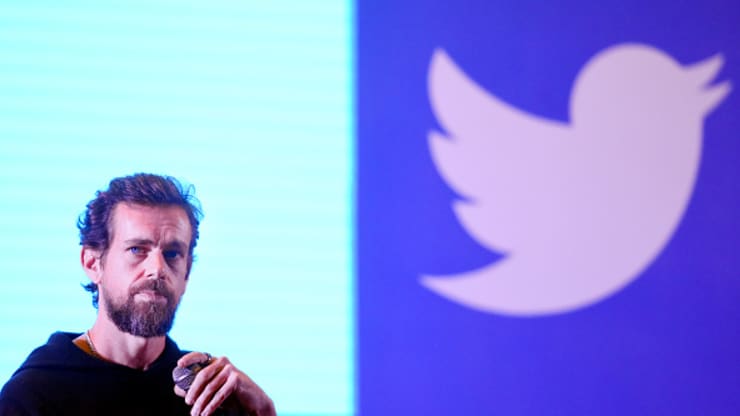
Twitter CEO and Co Founder, Jack Dorsey addresses students at the Indian Institute of Technology (IIT), on November 12, 2018 in New Delhi, India.

By Jessica Bursztynsky

Sourced from CNBC

By Stephanie Burns.

Your brand likely has room for improvement on the social media front. Contrary to popular belief, your social media pages are not for boasting testimonials, showing off new products with their descriptions, or selling on every post. It’s okay if that’s what you’ve been doing, because we haven’t really had examples of too many businesses who are playing the social media game in the right way. Your new motto needs to be: ‘value first, sell second.’ Think of your social media pages as that one of your salespeople that makes friends with everyone first, then casually mentions what they’re selling when it feels appropriate.

Yes when, and only when, it feels appropriate. No, this doesn’t mean that you’re leaving money on the table or confusing followers. This means that you’re building a loyal brand. That means you are always giving value first, which gives potential customers an incentive to follow your page.  Once you can get their attention and prove how you can help them, they will trust you, and then buy from you. It’s really that simple. Here’s how to do a thorough reboot to make sure you’re doing everything you can to build trust first.

1. Offer Sneak Peeks Of Value 

Just like items at a grocery store get sold when there are free samples, the best products and programs aren’t entirely coveted. Think of it this way: imagine that you have an online course that’s about building a viral TikTok strategy. You don’t get customers to buy by solely talking about what they’ll get from the course. You do, however, get customers to buy by sharing a few of the entry-level tips on your social media, letting them apply them, and letting them get the results. Their thought process will be: “If their free content helped me this much, I can only imagine how much their paid content will.”

This is an approach that Gee Bryant, the founder and CEO of X28 Fitness, lives by.  He’s self-educated on the social media front, and found that offering value through tutorials of key workouts on his company’s instagram page, have really paid off.

“Not only does this content strategy show potential participants what they get from working with us, but it fosters community. It creates something that current participants can follow along with and show up for. Our goal is to excite anyone who sees the content so much that they’re not satisfied with just a quick 20 second clip of these groundbreaking exercises.”

2. Give The Vision–Then Let The Consumer Shop It 

When it comes to physical products, there may be some confusion around how to offer value. In this case, your job on social media is to craft a vision on social media for the potential customer. For example, if you’re a home décor and furniture brand, piece together some of your products to create a vision of how they all tie together. A brand that does this beautifully is Anthropologie’s living section. High quality photos of fully set tables or complete living room sets paint a picture for followers – who may follow just to get inspired, rather than because they’re currently looking to move or redecorate.

The trick here is not to come across salesy in the caption and disrupt the allure. Instead, utilize Instagram’s ‘shop’ feature, where you can tag the products within the frame, and users can shop directly in the app. This presents a massive opportunity, as statistics find that 130 million Instagram users tap on ‘shop’ tags every single month. Appeal to their curiosity and make them tap.

This can also be done by showing how the product works. For example, if you have a gua sha and facial massage company, create video content about what a proper gua sha technique can look like. Create images that exacerbate key traits of the brand experience: in this case, a ‘spa night,’ or even just a mini spa day within a morning routine. All of this creates an experience and a vision for the viewer that will be enticing.

3. Find Value In Your Wheelhouse To Give 

In true ‘value first, sell second’ form, consider that not all of your posts need to centre around your product or your service. Get creative within your wheelhouse. For example, if your service is catering, create some videos teaching viewers how to put together the perfect veggie tray or charcuterie board for guests. Many entrepreneurs shy away from this, worrying they’ll teach users too much, and they won’t need them anymore. The opposite is true. If someone sees your video, makes a stellar charcuterie board and it’s a smash hit, you bet she will become a loyal follower and likely hire you eventually.

Most solely think about business social media strategy as a form of marketing or sales across Instagram squares. It’s not like that anymore. The brands that are taking off are those that are creating value-first content. In a “me first” world, remember that every consumer is primarily wondering, “How does this value ME?” So, when you adhere to the ‘value first, sell second’ motto, you will always win.

By Stephanie Burns

Stephanie Burns is the founder of The Wyld Agency, an amplification and visibility agency focused on building the legacy and personal brands of company founders. With a background in brand building, media buying, strategy and entrepreneurship, Stephanie has wide experience with an eclectic portfolio of industries. After being a contestant on the Wheel of Fortune, Burns used her winnings to launch her previous company, Chic CEO, an online resource for over 100k female entrepreneurs. With an MBA in Marketing, she’s also a contributor to Forbes Women and Entrepreneur, as well as featured in notable press outlets like Inc., Fast Company, Wall Street Journal, Fox Business, Amex Open, Cosmo, New York Times, among others.

Sourced from Forbes

Sourced from BBC

Facebook has begun displaying ads in its Oculus virtual reality headsets, despite the founder of the platform saying it would never do so.

In what the social network described as an experiment, ads will begin to appear in a game called Balston with other developers rolling out similar ads.

It said it would listen to feedback before launching virtual reality ads more widely.

It also revealed it is testing new ad formats “that are unique to VR”.

In 2017, shortly after Facebook bought Oculus, creator Palmer Luckey told the Next Web: “We are not going to track you, flash ads at you, or do anything invasive.”

But in a blog on Oculus’s website, the firm said: “We’re exploring new ways for developers to generate revenue – this is a key part of ensuring we’re creating a self-sustaining platform that can support a variety of business models that unlock new types of content and audiences.”

Users will be able to hide specific ads or those from a certain advertiser and Facebook promised that its privacy policy would remain the same.

“Facebook will get new information, like whether you interacted with an ad, and if so, how… for example, if you clicked on the ad for more information or if you hid the ad.”

It encourages customers to share their feedback via the Oculus support page.

Barrier to adoption?

Last month the firm began testing ads in the Oculus mobile app.

Leo Gebbie, an analyst with CCS Insight, said the move was unsurprising.

“Ultimately Facebook is built on advertising revenue and if there was any expectation that it wouldn’t build it out into virtual reality, then that is a little naive.”

Oculus Quest 2 headsets start at £299, and in the US are also offered for $299, and that price means it is being sold at “incredibly low or even loss-leading margins,” said Mr Gebbie.

This could mean Facebook becomes the dominant player, as others are unable to compete.

“The long-term goal is for Oculus to be a platform for virtual reality and augmented reality, with Facebook keen to get as many people as possible using it,” he said.

But, he noted, there would probably be a backlash against ads on the headset.

“Facebook doesn’t have the best track record on privacy and there is a concern that it will continue to push the boundaries and creep towards something that is invasive.”

Piers Harding-Rolls, research director of games at Ampere Analysis, said VR offered big opportunities for the tech firms.

“If people are spending more time using this technology, those that dominate the online advertising opportunity – including Facebook and Google – want to be well-placed to take advantage of any shift in consumer habits, so that they can follow the audience with their advertising networks.”

But they needed to be careful about balancing advertising with a good user experience, he warned.

“While there is nothing exceptional about having advertising in games, the intimate and immersive nature of VR means that the consumer experience is likely to feel a lot different and that might represent a barrier to adoption.”

Sourced from BBC

President Trump joining the video platform Rumble marked the beginning of his digital return after bans against his accounts have restricted his access on Facebook, Twitter and Google-owned YouTube.

In joining Rumble, a YouTube rival, Mr. Trump is attempting to redefine his social media persona, from that of an outcast muzzled into silence by the tech giants to that of a defiant outsider challenging the status quo.

Followers should not expect to see pithy blog posts on Rumble like they would on Twitter. Instead, the user experience is more akin to YouTube, with short video clips and broadcasts. The first video from Mr. Trump‘s account featured a live broadcast of his Saturday rally in Ohio.

Rumble, buoyed by an influx of users and cash, particularly from conservatives, has mounted its own insurgent campaign against its much larger rival, Google.

Rumble has roughly 30 million monthly users and has grown its user base by 10% month over month, said Rumble founder Chris Pavlovski last month. That’s up from 800,000 monthly visits in August, per the Wall Street Journal.

Rumble has sued Google for antitrust violations in federal court and recently scored a large undisclosed investment from a group including billionaire Peter Thiel and conservative author J.D. Vance. Mr. Thiel, founder of PayPal and Facebook’s first outside investor, supported Mr. Trump‘s first presidential bid and Mr. Vance is considering running for the Republican nomination for a U.S. Senate seat from Ohio.

Rumble’s detractors say it does not share the ideological commitment to free speech that was the hallmark of social networks Parler and Gab that similarly sought to compete with established tech companies. Parler and Gab featured microblogging posts similar to Twitter that have attracted right-leaning audiences as fears grow of censorship by more prominent platforms.

Gab founder Andrew Torba criticized Rumble for allegedly changing its terms of service on the day Mr. Trump joined to include new policies about hate speech. John Matze, Parler’s fired former co-founder, piled on and questioned Rumble’s motivation for securing Mr. Trump‘s digital presence.

“I wonder how much equity or money Rumble had to give … The same Rumble that runs entirely on Google ads, Google analytics, etc … [that is] big tech,” said Mr. Matze in a post on Gab. “Not that I think Trump‘s brand is worth anything anymore.”

Before his exit at Parler, Mr. Matze spoke favorably about what Mr. Trump‘s joining Parler would mean for the upstart platform. Last June, he told The Washington Times his platform would likely have trouble scaling if Mr. Trump suddenly joined Parler.

Mr. Pavlovski did not respond to questions about Mr. Trump‘s addition and the criticism from Gab and Parler’s founders. Last month, Mr. Pavlovski said he was more interested in competing with large incumbent platforms than mixing things up in American politics.

Rumble‘s competitor YouTube also has not written off restoring Mr. Trump‘s access. Twitter has permanently banned Mr. Trump and Facebook has extended its ban until at least 2023, but YouTube CEO Susan Wojcicki said in March her platform would end the former president’s suspension after determining the risk of violence had ceased.

YouTube and Google did not answer requests for comment

Feature Image Credit: AP Photo/Tony Dejak

Sourced from The Washington Times

By

It’s too early for VR ads. Facebook found out the hard way.

Facebook’s quest to experiment with advertising in virtual reality took on the familiar three-act structure of tech backlash.

The test was announced on June 16 and caused reasonable concern among critics and players over the ensuing three days. By Monday of last week, the only game developer signed up to test ads — Blaston maker Resolution Games — pulled out. It leads us all to wonder why none of the smart people in charge at Oculus didn’t see this coming.

The test crashed before it even started. It’s now unclear how Facebook intends to proceed, but players have made their voices heard loud and clear.

  • Resolution was the first to break the silence. “After listening to player feedback, we realize that Blaston isn’t the best fit for this type of advertising test,” the developer wrote on Twitter. “Therefore, we no longer plan to implement the test.”
  • The developer was fast becoming a focal point of the criticism, suffering a barrage of one-star reviews for Blaston (a $9.99 game) on the Oculus Store. “Blaston is getting uninstalled forever and I’m not gonna buy a single game from this company from now on,” wrote one enraged fan.
  • Facebook gave a feeble defence of the test, saying in a statement, “Ultimately, opening up new revenue streams for devs will help us to unlock new types of content on the Oculus platform and offer products at consumer-friendly prices.” Resolution may now shift the ads to its free-to-play game, Bait!

VR and advertising have had a rocky relationship. This was Facebook’s most high-profile attempt to test the advertising waters with its VR platform, and it’s been a resounding failure. A cursory look at the history of Oculus should have told Facebook executives this was bound to happen.

  • Oculus co-founder Palmer Luckey said in 2014, following the Facebook acquisition announcement, “We are not going to track you, flash ads at you, or do anything invasive.” Luckey is no longer at the company, and Facebook is now controversially forcing users to link a Facebook account with their Oculus profile by 2023.
  • While video games have included more and more in-game ads over the years, players associate those ads with free-to-play mobile games more than any other category. Premium, non-VR games have instead resorted to brand tie-ins and other forms of more subtle marketing. Ads in VR, however, have long carried a dystopian flavor.
  • It seems inevitable that the coveted combination of VR and the metaverse will contain ads, yet Facebook’s reputation makes the format extremely unpalatable, especially on a pricey headset and within paid games.

VR’s business model is an open question right now. That’s increasingly true as Facebook, an advertising company, is becoming the biggest force in the fledgling market, scooping up the most popular developers for its Oculus platform in a way that resembles its push to control digital communications technologies a decade ago.

  • Earlier this month, Facebook bought its fifth major Oculus developer, Population: One studio BigBox VR. Facebook now owns the makers of many of the most popular games on its platform, raising concerns it’s establishing close to a monopoly on the software side of VR long before it goes mainstream.
  • Facebook could, if it chooses, begin experimenting with business models on its first-party VR titles, making some free to play and filling them with ads. There are plenty of other options, too, from subscriptions to more bite-sized indie experiences priced like paid mobile apps.
  • But without the financial safety net of Facebook or Sony, few VR developers can find success right now due to how nascent the market is. That gives Oculus more control to set the terms for how VR software monetizes going forward.

Facebook’s primary issue is presiding over a dominant VR ecosystem that costs a lot to operate, doesn’t make a lot of money and is mostly made up of enthusiasts who aren’t sympathetic to pragmatic arguments about how to grow and fund the market. This audience right now is mostly distrustful PC gamers for whom getting in bed with Facebook is akin to a deal with the devil.

All of this is in conflict with Facebook’s strategy of giving away stuff for free and funding it with targeted ads while hoping users respond to its business model with apathy. It’s not clear how the Oculus platform evolves from here if Facebook isn’t willing to continue floating it for years or doesn’t find a more consumer-friendly mechanism for extracting money. It is still early days for VR, but perhaps a bit too early to rely on advertising to pay the bills. Let’s hope there’s a better way.

Overheard

  • “In this light, the solution seems simple: Organize the video games industry. If there were a video game developer’s union as powerful as the Writers Guild, with agreements with all the major publishers, game development would be a vastly different career, and many of those problems seemingly endemic to game production might suddenly seem less intractable.” —The New Republic’s Alex Pareene laid out a smart, impassioned defense for unionizing the dysfunctional game industry in his review of Jason Schreier’s new book, “Press Reset.”
  • “Respect and tolerance are keystones of our company’s culture and we were distressed to discover that an event meant to be fun and engaging for participants had instead caused offense for some attendees.” —Sniper: Ghost Warrior developer CI Games apologized for a San Diego press event in which journalists were invited to participate in mock firefights again enemies based largely on Arab and Muslim stereotypes. The company, based in Poland, said it was unable to oversee the event directly due to COVID-19 travel restrictions.


Feature Image Credit: Resolution Games 

By

Sourced from Protocol Gaming

By Dan Haverty
When it’s allergy season you ask for a “Kleenex” instead of tissue paper; you might enjoy a “Popsicle” on a hot summer day instead of an ice pop; and you “Google” something when you need to search the internet for information.

This is expert branding in action. Some companies have so successfully pushed their brands that the brand name itself has overtaken the generic term, as in the above cases.

Good branding is indispensable to the success of your business, and there are numerous benefits that come with it. Having an easily recognizable brand drives new business through word-of-mouth referrals while making it easier to roll out new products. It also helps build coherence within your company and attract the best talent to your open roles.

Keep reading to learn more about branding and the five biggest benefits for small and large businesses alike.

What Is the Purpose of Branding in Marketing?

It’s easy to conflate branding with other forms of marketing, but they aren’t exactly the same thing. Marketing is what you do to drive your products and services to potential customers, whereas branding is basically the way your company presents itself to the world.

Branding includes the obvious components of name, logo, colors and fonts, but it also includes your mission, values and motivations, creating an all-encompassing brand identity that, if done right, customers will readily associate with your company. This is key: You want your customers to feel something when they think of your company.

The main purpose of your brand strategy should be to differentiate you from your competitors and create brand equity, or commercial value derived strictly from the perception of the brand. Doing so builds trust and loyalty among your target market and puts you at the forefront of your potential customers’ minds when it’s time to buy.

Developing an easily identifiable tone and logo, aligning your values with those of your customers and evoking a strong emotional response at the sight and thought of your brand are all signs of a great branding strategy.

5 Benefits of Branding for Companies

1. Brand awareness: One of the strongest and most impactful benefits of high-quality branding is brand awareness. Customers who already trust your company and recognize your distinct color, logo or font style are far more likely to buy your product or service. In this way, brand awareness does much of the heavy lifting for you when it comes to selling your products or services.

2. Drives new business: Word-of-mouth referrals are still the tried-and-true way of driving new business. This is especially true for small businesses, 85% of whom report that word-of-mouth referrals were the best way to drive local business. When customers can quickly and easily recall a brand they use and trust, they’re much likelier to refer your company to their friends and family members.

3. Shared values build company coherence: Strong brand equity doesn’t just help strengthen your relationships with your customers and clients — it also helps build a clearer sense of mission and direction within your company that boosts coherence and ensures your employees are all working toward the same set of goals.

4. Easier to rollout new products: If you have a strong brand in place, much of the work of marketing and selling your products and services is already done. Once you’ve built up a level of trust among your customers, it’s far easier to convince them that your latest product is worth buying. Think about it: Apple doesn’t need to do a whole lot of convincing to generate interest in and sell the latest iPhone, right? That’s good branding at work.

5. Better job applicants: Customers want to buy from brands they know and trust, but the same is true for job seekers. Good branding can actually help you attract a larger and more talented pool of applicants to your open positions, ensuring that you’re hiring the best of the best.

The Main Types of Branding, With Examples

Visual Branding

The visual components of your brand are some of the most important — and ultimately attention-grabbing — features of your brand. A good visual brand strategy conveys your company’s personality and style to your audience through visual cues (i.e., are you easy going and laid back or serious and resourceful?). This helps them learn about you without having to dig too deeply.

Think Apple: Apple’s visual branding style is silvery, sleek, sharp and new, and this is evident in their stores, logos and, of course, their devices. You don’t need to know much about Apple to understand that it develops and sells some sort of cutting edge technology, based on its branding alone. And that’s exactly what good visual branding should do.

Social Media Branding

A huge proportion of social engagement and consumer activity today happens on social media, so it’s important that your company has a clean, consistent online presence across all social networks. Social media is one of the few places where attention is measured in mere seconds, so it’s important that users can identify your company in this short space of time.

Amazon’s Twitter presence should serve as a model for other companies. It operates dozens of different accounts for many of its products and services. While each account has its own distinct edge to it, there is a clear sense of continuity involving similar colors, tones, fonts and messaging threaded between each of them, all of which marks them as Amazon’s. The bottom line is users shouldn’t have to work hard to recognize that your social media account belongs to your company.

Corporate Branding

Corporate branding covers all elements of your company’s branding strategy, from marketing its products/services to ensuring that all digital touchpoints are in sync. At the end of the day, a customer should feel like they’re getting the same message from the same company no matter which part of your business they’re interacting with.

Nike stands at the top of the corporate branding world. Its mission to enhance physical performance through top-tier athletic attire permeates every section of its branding and marketing, from its motto “Just Do It” to its marketing materials, featuring athletes in the zone.

Don’t overlook the importance of branding. The right branding strategy can make or break a company, and it’s important to ensure you have a clearly defined brand that permeates across all of your products, services and touchpoints to ensure you’re front of mind when your customers are ready to buy. Doing this drives your company forward.

By Dan Haverty

Dan Haverty is a content writer at Brafton. Currently based in Boston, he also spent time living in Ireland and Washington, DC. When he isn’t writing, Dan enjoys reading, cooking and hiking, and he recently became an avid yoga practitioner.

Sourced from Brafton

By ,

Is there a way for IT leaders to be proactive about AI and machine learning without ruffling and rattling an organization of people who want the miracles of AI and ML delivered tomorrow morning? The answer is yes.

How should IT leaders and professionals go about selecting and delivering the technology required to deliver the storied marvels of artificial intelligence and machine learning? AI and ML require having many moving parts in their right places, moving in the right direction, to deliver on the promise these technologies bring — ecosystems, data, platforms, and last, but not least, people.


Is there a way for IT leaders to be proactive about AI and ML without ruffling and rattling an organization of people who want the miracles of AI and ML delivered tomorrow morning? The answer is yes.

The authors of a recent report from MIT Sloan Management Review  and SAS advocates a relatively new methodology to successfully accomplish the delivery AI and ML to enterprises called “ModelOps.” While there a lot of “xOps” now entering our lexicon, such as MLOps or AIOps, ModelOps is more “mindset than a specific set of tools or processes, focusing on effective operationalization of all types of AI and decision models.”

That’s because in AI and ML, models are the heart of the matter, the mechanisms that dictate the assembly of the algorithms, and assure continued business value. ModelOps, which is short for :model operationalization, “focuses on model life cycle and governance; intended to expedite the journey from development to deployment — in this case, moving AI models from the data science lab to the IT organization as quickly and effectively as possible.”

In terms of operationalizing AI and ML, “a lot falls back on IT,” according to Iain Brown, head of data science for SAS, U.K. and Ireland, who is quoted in the report. “You have data scientists who are building great innovative things. But unless they can be deployed in the ecosystem or the infrastructure that exists — and typically that involves IT – – there’s no point in doing it. The data science community and AI teams should be working very closely with IT and the business, being the conduit to join the two so there’s a clear idea and definition of the problem that’s being faced, a clear route to production. Without that, you’re going to have disjointed processes and issues with value generation.”

ModelOps is a way to help IT leaders bridge that gap between analytics and production teams, making AI and ML-driven lifecycle “repeatable and sustainable,” the MIT-SAS report states. It’s a step above MLOps or AIOps, which “have a more narrow focus on machine learning and AI operationalization, respectively,” ModelOps focuses on delivery and sustainability of predictive analytics models, which are the core of AI and ML’s value to the business. ModelOps can make a difference, the report’s authors continue, “because without it, your AI projects are much more likely to fail completely or take longer than you’d like to launch. Only about half of all models ever make it to production, and of those that do, about 90% take three months or longer to deploy.”

Getting to ModelOps to manage AI and ML involves IT leaders and professionals pulling together four key elements of the business value equation, as outlined by the report’s authors.

Ecosystems: These days, every successful technology endeavour requires connectivity and network power. “An AI-ready ecosystem should be as open as possible, the report states. “Such ecosystems don’t just evolve naturally. Any company hoping to use an ecosystem successfully must develop next-generation integration architecture to support it and enforce open standards that can be easily adopted by external parties.”

Data: Get to know what data is important to the effort. “Validate its availability for training and production. Tag and label data for future usage, even if you’re not sure yet what that usage might be. Over time, you’ll create an enterprise inventory that will help future projects run faster.”

Platforms: Flexibility and modularity — the ability to swap out pieces as circumstance change — is key.  The report’s authors advocate buying over building, as many providers have already worked out the details in building and deploying AI and ML models. “Determine your cloud strategy. Will you go all in with one cloud service provider? Or will you use different CSPs for different initiatives? Or will you take a hybrid approach, with some workloads running on-premises and some with a CSP? : Some major CSPs typically offer more than just scalability and storage space, such as providing tools and libraries to help build algorithms and assisting with deploying models into production.”

People: Collaboration is the key to successful AI and ML delivery, but it’s also important that people have a sense of ownership over their parts of the projects. “Who owns the AI software and hardware – the AI team or the IT team, or both? This is where you get organizational boundaries that need to be clearly defined, clearly understood, and coordinated.”  Along with data scientists, a group that is just as important to ModelOps is data engineers, who bring “significant expertise in using analytics and business intelligence tools, database software, and the SQL data language, as well as the ability to consistently produce clean, high-quality, ethical data.”

Feature Image Credit: IBM Media Relations

By

Sourced from ZDNet

By Blake Nubar,

As the world reopens, consumers are changing their mindset and adjusting back to everyday life. They are spending more on products, services, and various offers from entrepreneurs. While the growth opportunities are tremendous, a lack of clarity often derails that growth. You may have started your business around something you’re passionate about, but you need clarity on where you’re going.

One important step to scaling a business to six, seven or even eight figures is a vision and plan for what the business will evolve into. Will you always have a solopreneur type of operation? Do you want to build a business with virtual assistants? Would you consider bringing employees on?

If it’s your goal to build a seven-figure brand and business that you could sell someday, here are four ways to build in a way that leads to clarity and growth.

1. Create a larger entity while using personal brand-building strategies.

To build a sellable business, you need a structure that allows the business to be sold. If your business is wholly tied to you, it will be hard to sell.

While creating an entity (LLC, corporation, agency, etc.) helps build a sellable business, personal brand growth strategies are still essential. A great example of this is how Gary Vaynerchuk has built VaynerMedia using the reach of the personal brand he’s created.

To build a legacy brand, first, come up with the structure and name or convert an existing business. You can then use the internet and social media to leverage exposure, content and marketing on your personal brand alongside the entity brand. You end up building two assets.

The idea of is freedom and financial independence. The goal should be to build a business that can function without your constant direct involvement. Building a larger entity helps you accomplish those goals.

2. Use a value-first approach to marketing.

It won’t take you long to scroll through the internet and experience a full-on hard rush of ads and messages. Too much content being published indicates you’re goes right for the sale without adding value to the consumer first.

To build a seven-figure business that scales, don’t follow the typical approach. One way to convert more cold consumers is through value-first content. People are tired of the ads; they want real value through the content they consume every day. When you are the entrepreneur or business adding value first, you easily stand above the screams for sales.

Consumers want to know how and why your business was started and the path you’re using to grow. They want high-performance strategies, tactics, wellness optimization tips and other how-to-based content they can use without having to first spend money with you.

Take a longer-term approach to marketing and converting consumers. It turns casual visitors into followers and eventually customers when you take a value-first first approach to digital marketing through solid content.

3. Make offers that have practical consumer value.

Your business offers should be clear and based on practical value if you’re building a sellable business. That value could be through software, services, physical and digital products.

Have product offerings for every segment of your , ranging from low-tier to premium. Focus on tangible results and clear takeaways for consumers. They’ll see the value with less marketing required on your part.

4. Consistently show up and keep adding building blocks.

A lot of the reason why industry leaders build large audiences is that they’re consistent about showing up and adding value. Look at any prominent YouTuber, influencer or big-name entrepreneur, and you’ll see a history of consistency.

Growth starts with you being clear on your overall goals. If you’re content keeping a smaller business model, that’s okay. If it’s your goal to build a scalable and sellable business, consider how you’re doing with these four points.

You can build a business that grows beyond you having to invest all of your time and energy always working. Strategically create freedom.

By Blake Nubar,

Digital Marketing Strategist

Sourced from Entrepreneur Europe