Author

editor

Browsing

By J.T. O’Donnell

The job interview questions that seem the simplest on the surface are often the ones that make us stumble the most.

One of them is “Why should we hire you?” — and candidates should always come prepared with an answer.

As a career coach with 20-plus years of hiring and recruiting experience, I’ve seen so many people give the same boring responses to this question — ones that are either overly confident yet vague (e.g., “I’m the best at what I do and my bosses love me…”) or are too humble yet timid (e.g., “While this job may require more experience than I have, I think I’m a pretty fast learner…”).

How to answer ‘Why should we hire you?’

The most impressive candidates leave a lasting impression by doing these three things when crafting their answer:

1. Be specific about key strengths and qualifications.

Just because you shine in a dozen different areas doesn’t mean you should talk about all of them.

You don’t want to give a 10-minute sales pitch, so be picky with what you choose to highlight. Closely study the job description and point out just two or three of the most important skills required for the position.

2. Give an example for each skill.

You can’t just stop after saying, “I’m really good at [X], [Y] and [Z].”

Make your relevant skills shine by providing a quick story or example for each. Because sure, you may be good at managing people, but how did you successfully demonstrate that in a previous job?

3. Find the balance between confidence and humility.

Whatever you do, avoid coming off as too cocky. Balance your words with self-confidence and genuine humility. Your hiring manager wants to know that you’re grounded and will work well with other people.

The best — and most likeable employees — are not egotistical or self-serving. They have a true desire to make a powerful, constructive difference at their company.

Example of the most impressive answers

1.) “You mentioned that you’re looking for someone who can manage up to five people, and who has a solid understanding of social media marketing. I’ve had more than six years of experience as a marketing manager, leading teams of up to seven or more. My goal is to always listen to people about what they need to do their jobs. In my previous roles, I’ve been able to motivate my teams to meet and surpass quarterly expectations. I also have a strong background in social media marketing. Last year, I led the launch of a huge campaign that grew our social media following by 2,000%.”

Why it works: This candidate did a great job providing details about their experience, accomplishments and key qualifications for the role. They also gave quick examples of the strengths that the employer is looking for.

2.) “Based on the job description, it sounds like you need someone with strong communication skills and experience working with big-name clients. In my previous roles, I brought on multiple Fortune 500 companies who all remained loyal customers for years. I really believe that the key to doing that is being a good communicator, and always being available and transparent. And, if hired, I have a rolodex of great contacts who we could pitch to.”

Why it works: This response not only details the candidate’s key strengths, but it gives insight into their philosophy on how to successfully win clients. They also touch on how their connections can bring even more value and business to the company.

3. “I know you probably have tons of highly qualified candidates to choose from. And while I’m far from perfect, I believe I’ll exceed expectations in this role not just because I have a track record in boosting sales and coming up with creative marketing strategies, but I have strong people skills. My previous manager even asked me to give presentations to our entire company about how to be more personable and emotionally connect with clients in a way that makes our services more appealing.”

Why it works: This candidate started out with a very humble statement by acknowledging that there are several people who can do the job. However, they go on to explain what makes them unique from the rest: their emotional intelligence, which happens to be one of the most important skills employers look for today.

The big takeaway

In an effort to stand out while pitching why they should be hired, job seekers often convince themselves that they have to make these bold statements.

But impressing a hiring manager isn’t about being boisterous. It’s really about showing them you’ve given serious thought about what your best qualities are, why they make you unique, and how you plan to use them to add value and fit into the company culture.

Feature Image Credit: monkeybusinessimages | Getty

By J.T. O’Donnell

J.T. O’Donnell is the founder and CEO of Work It Daily, an online platform dedicated to helping people solve their biggest career problems. She has more than 15 years of experience in hiring, recruiting and career coaching. For career tips, follow her on TikTok @jtodonnell.

Sourced from CNBC Make It

By Liviu Tanase

Legitimate emails land in the spam folder every day.

People have been reading more marketing in the past year. No less than 78 percent of marketers say they’ve seen an increase in engagement over the last 12 months. Now is the time for you to make the most of email and its marketing potential.

However, not all your subscribers will see your messages. With 17 percent of all emails going to spam, some of your campaigns may never reach your target prospects and customers. and email service providers use advanced filters to separate legitimate emails from spam. Sometimes, one or more things can trigger these filters to relegate your emails away from people’s inboxes.

Let’s see why this happens and what you can do to avoid the desolation of the junk folder.

To avoid being labelled as spam, don’t act like a spammer

That may seem self-explanatory, but if you don’t know what behaviour is spammy, you may not know how to avoid it. Here are the top things to be aware of when you want to land in the inbox and avoid the spam folder.

Stay on top of your email list hygiene

What some email marketers forget is that the most well-crafted email means nothing if the list you send it to is full of bad contacts. Not only will those emails reach no one but also, those bounces affect your sender reputation and cause ISPs to see you as a spammer.

Spammers don’t care about their list hygiene. They scrape email addresses from the Internet and use them without any regard for ethics. Getting bounces and spam complaints or hitting a spam trap doesn’t stop them from sending more spam. Until, of course, they’re blocked and can’t even reach the junk folder anymore. It’s common for spammers to get blacklisted – but it also happens to respected businesses when they’re not careful.

As a legitimate email marketer, you can’t afford to engage in such behaviours and be mistaken for a spammer. So starting with a healthy list is vital. Buying one is never a good idea, as everyone on your list should be there because they want to get your emails. Permission is key in email marketing.

Whether you’re just starting your list or already have a number of contacts, consider implementing double opt-in. This subscription method requires every new subscriber to confirm that they do indeed want to receive your emails. It’s easy to set up and prevents your database from acquiring poor-quality contacts.

Apart from that, validating your list at least quarterly shows you’re following email marketing best practices. For inbox providers, it’s a sign that you are a trustworthy sender, so they’re confident about directing your emails to people’s inboxes.

Learning about and implementing good email list hygiene matters as much as what you write and how you present it. What good would your hard work do if nobody ends up seeing it?

Be careful with your subject lines

There must be hundreds of articles online about email subject lines – and for good reason. After your “From” name, your subject line is the first thing your subscribers see. It has a significant impact on your open rate: 47 percent of people say they open an email based on the subject line alone.

So it’s worth taking the time to polish each subject line and ensure it’s:

  • informative: people should get a clear idea of what your email is about
  • enticing: it should spark curiosity without resorting to cheap tricks.

A helpful exercise is to write down several versions of your subject line until you find one that stands out. If it helps, consult with your team or friends, their feedback can be eye-opening.

When choosing the final version, make sure it doesn’t include any spammy words that could trigger ISPs to think your email is spam. If you get an email with the word “free” in the subject, it can cause suspicion. Also, words you should avoid include “lowest price,” “fast cash,” “save $” and other similar constructions.

Spammy subject lines look like scams and ISPs could categorize your legitimate email as junk because of gimmicky, spam-like words. If you’re in doubt, change it.

Avoid including too many images and too little text

You may have noticed that a lot of spam consists of just a couple of lines and other times, no text at all. Sometimes it’s just an image and occasionally, it’s an email with a few words and many pictures.

Legitimate marketing emails have an average of 434.48 words. If you’re only including a sentence, you’re not offering much interesting content.

Why is it so important to have a healthy image-to-text ratio? Again, it boils down to not looking like a spammer. The purpose of an email is to provide relevant information. Few emails can do that in just a few words.

Of course, you can use images to illustrate your points or show the products you sell, but try to keep a balance. Images may also take longer to load if your recipient has a slower internet connection.

Another aspect to keep in mind is the links you include in your email. Try to avoid the temptation of using link shorteners – they can trigger spam filters. Instead, be fully transparent and link directly to your landing page. You want to stay away from any practice that may endanger your deliverability.

Related: From Link Builder to Email Marketer

Plan a sending schedule and follow it

A common email mistake that businesses make is pulling a disappearing act.

Let’s say someone sells beach and pool merchandise. In the winter, operating hours naturally decrease. The company will just stop emailing its lists. There’s nothing to promote anyway, why bother? This marketing approach is detrimental to any business.

It’s a smart idea for email marketers to get on a schedule. Send your emails on the same day of the week or, if you send less frequently, do it no less than once a month. It’s a mistake to only send when you want something or have a new product or service to sell.

First of all, people forget about you. When you resume, they may not recognize your email and mark you as spam. Being predictable and sending your emails regularly is the opposite of how spammers behave. Not only does it build brand awareness and trust, but it also keeps ISPs aware of you.

If your services or products are rather seasonal, it’s natural to increase your email volume during your sales peak. However, to stay top of mind, continue to email your list regularly throughout the rest of the year. Create useful, entertaining content that can nurture your subscribers and keep them engaged. You’ll see much better results when it’s time to target them with a campaign.

Conclusion

One of the secrets to getting more eyes on your marketing emails seems obvious, but it’s worth emphasizing. You have to be where people can see you and the only way to do that is to land in the inbox.

The behaviour and impetus for spammers are all about taking. With your email marketing, you must give to get. Strive for the principles of generosity and service in everything you do. Keep security, ethics and respect in mind at all times. Be of service to your readers and they will remember you and open your emails consistently.

By Liviu Tanase

Founder & CEO of ZeroBounce

Sourced from Entrepreneur Europe

By Stephen Silver

Google, for much of the last year, has been detailing how it plans to roll out changes to its search algorithm in 2021, through something called a “page experience update.” The company made some announcements Monday about how the changes will work, and when to expect them.

“We’ll begin using page experience as part of our ranking systems beginning in mid-June 2021,” Google announced Monday on its developer blog. “However, page experience won’t play its full role as part of those systems until the end of August. You can think of it as if you’re adding a flavouring to a food you’re preparing. Rather than add the flavour all at once into the mix, we’ll be slowly adding it all over this time period.”

Google went on to say that publishers should not expect “drastic changes.”

As Google has been stating since last year, the changes will consider “page experience signals,” based on the three Core Web Vitals metrics. Earlier indications had stated that the change would begin taking place in May.

Also, the new Top Stories carousel for Google Search will no longer require use of the AMP format.

“We will no longer show the AMP badge icon to indicate AMP content. You can expect this change to come to our products as the page experience update begins to roll out in mid-June. We’ll continue to test other ways to help identify content with a great page experience, and we’ll keep you updated when there is more to share,” the company said in its blog post.

Another change will be the arrival of a new Page Experience report in the search console.

“This report combines the existing Core Web Vitals report with other components of the page experience signals, such as HTTPS security, absence of intrusive interstitials, safe browsing status, and mobile friendliness,” the blog post said.

“The Page Experience report offers valuable metrics, such as the percentage of URLs with good page experience and search impressions over time, enabling you to quickly evaluate performance. You can also dig into the components of page experience signal to gain additional insights on opportunities for improvement.”

Google will also be offering Signed Exchanges (SXG) on Google Search for all web pages, not just those built with AMP.

AMP has long been controversial, with some arguing that it has entailed Google taking too much control over the web.

“Our vision for page experience is to build a web ecosystem that users love—together. We’re hard at work to make sure that you have the right tools and resources available before the ranking rollout starting in mid-June 2021,” Google said.

By Stephen Silver

 Stephen Silver, a technology writer for The National Interest, is a journalist, essayist and film critic, who is also a contributor to The Philadelphia Inquirer, Philly Voice, Philadelphia Weekly, the Jewish Telegraphic Agency, Living Life Fearless, Backstage magazine, Broad Street Review and Splice Today. The co-founder of the Philadelphia Film Critics Circle, Stephen lives in suburban Philadelphia with his wife and two sons. Follow him on Twitter at @StephenSilver.

Sourced from The National Interest

By

Public relations and journalism exist in an uneasy balancing act, a relationship where they both rely on each other as part of a communication ecosystem.

It used to be that journalism was the stronger player in the relationship, but now as a result of cuts to newsrooms, PR is becoming more dominant. And this relationship could undermine already limited trust in news.

Public relations and journalism

Public relations is defined as the practice of using communication strategies to build relationships between organizations (such as corporations, institutions and government) and the public.

Traditionally, one of the most important connections for PR practitioners has been those with journalism. PR professionals rely on their journalistic connections to help get their messages out, and journalists draw from PR to help find interesting stories, fill quotas and meet deadlines. In fact, according to the Canadian Public Relations Society, PR professionals tend to interact more with journalists than with any other professional group.

This relationship worked for many years because journalists had the upper hand. Journalists had a culture that made them wary of PR professionals, which helped to keep the PR industry in check. When interacting with PR practitioners, journalists would choose whether to pursue a story, and how much of the story suggested by the PR professional is actually worthy of column space or broadcast time. Journalists were likely to seek out different sides of an issue suggested by a PR professional, rather than just publishing a news release verbatim.

In return, the PR professionals could be reasonably confident the coverage would be trusted by the public. By choosing what to cover and how to cover it, journalism keeps PR accountable. If PR practitioners do anything to threaten their relationship with news outlets, they will not be able to work effectively.

However, in recent years, as a result of media consolidation and the rise of social media, the relationship between PR and journalism has shifted. While this shift seems to favour PR, in reality it has resulted in declining trust in news, and that’s bad for everyone. When the delicate balance between journalism and PR is upset, we end up with an information ecosystem that is less trustworthy because it is driven by organizational goals rather than the public interest.

A shifting balance

Now journalism is increasingly relying on PR to survive. As my previous work has shown, local news is facing unprecedented pressure from media consolidation and the social media business. As journalism jobs have dried up across North America, many talented and trained journalism graduates and successful journalists are accepting jobs in PR in order to make ends meet.

At the same time, many cash-strapped newsrooms are turning to advertorials or sponsored content to make up for shrinking revenues. As a result, more of the news media is implicated in spreading PR content that is often one-sided, incomplete information that favours corporate PR clients.

For example, when important information like COVID-19 vaccine efficacy is presented to the public directly from news releases, important scientific facts can be minimized or left out of the portrayal of the issue. That can contribute to eroding public trust in both the news story and the organization covered by it. While PR plays a role in ensuring the trust between organizations and the publics, some PR practices can lead to the decline in trust in news.

A group of journalists holding microphones during a media scrum.

Cash-strapped newsrooms are increasingly turning to PR to make up for falling revenues. (Shutterstock)

Other grey area PR tactics, like astroturfing, direct media attention to stories that journalists might not otherwise consider very newsworthy. Astroturfing entails using social media to create fake online grassroots support for an organization or issue. News outlets often cover a story that seems to be getting a lot of attention on social media. Unethical PR firms will often exploit this fact by buying likes, shares and engagements, creating fake hype for a specific product, person or organization that would otherwise not be covered at all.

Rethinking the relationship

Journalism isn’t perfect, but striking the balance between PR and journalism is beneficial for both parties. As this balance shifts in favour of public relations, it becomes harder for the public to trust news. That leads to more aggressive PR tactics, further eroding the public trust. Everyone loses.

Steps can be taken to rebalance the relationship between journalism and PR. Journalism must be strengthened, including local news, so that journalists have the resources to refuse sponsored content and push back against PR pitches. This means we all have a role to play in paying for the journalism we value, and new funding models should be developed to help provide resources to smaller and independent journalism in Canada and elsewhere.

To that end, entrepreneurship networks like indiegraf and other opportunities for independent journalism need to be supported by offering business training to journalism students, providing government resources to support journalism entrepreneurs and through our own habits.

Journalists who are brave enough to also become entrepreneurs by starting their own publications need us to pay for their content through Substack, Patreon or other subscription services. This will have a cascading impact as these journalist entrepreneurs create small businesses that can provide new job opportunities for other journalists and journalism students.

Finally, professional associations for PR practitioners like the Canadian Public Relations Society or the Public Relations Society of America need to do more to punish disreputable firms that use tactics like astroturfing to create fake influence. By strengthening journalism and putting limits on PR, we can reset the balance and create a healthier media ecosystem for everyone.

By

Associate Professor of Interdisciplinary Studies, Royal Roads University

Sourced from The Conversation

Sourced from Association of Advertisers in Ireland (AAI)

We are delighted to welcome Luke Reaper from Behaviour & Attitudes to address our forthcoming event on Tuesday May 25th 2021. Luke will cover the “Sign of the Times” survey which was recently published in the Irish Times Weekend Review, with some updates recently undertaken in May.

This edition is a wide-ranging survey of life in Ireland today. It deals with the impact of Covid, but more importantly the current Zeitgeist as we emerge back into the ‘wild’, and our thoughts on future behaviours.

Places are limited for this event so register early to avoid disappointment.

Day: Tuesday 25th May
Time: 10am
Register here

Luke Reaper
Luke is the managing director and a shareholder of Behaviour & Attitudes, one of Irelands leading research and insight agencies.  He has more than 25 years’ experience in the Irish market. Prior to joining B&A he was Board Director of TNS MRBI in Ireland, and also previously worked for Lansdowne Market Research. In keeping with his love of human psychology, being a Psychology graduate of UCD with a Masters in Social and Organisational Psychology, he is a member of the Psychological Society of Ireland (PSI). Luke is also a member of The Marketing Society of Ireland and is an nine-time winner in the Annual Excellence in Research Awards.  He is also a member of the MRS in the UK, the MII and is the current Chair of AIMRO (Association of Irish Market Research Organisations).

Sourced from Association of Advertisers in Ireland (AAI)

By Don Norman.

The world is designed against the elderly, writes Don Norman, 83-year-old author of the industry bible Design of Everyday Things and a former Apple VP.

More people than ever are living long, healthy lives. According to the U.S. Department of Health and Human Services, the average life expectancy is 78.6 years for men and 81.1 for women. More relevant, however, is that as people grow older, their total life expectancy increases. So for those who are now 65, the average life expectancy is 83 for men and over 85 for women. And because I’m 83, I’m expected to live past 90 (but I’m aiming a lot higher than that). And these are averages, which means that perhaps half of us will live even longer.

Those of us who are still active and healthy at advanced ages–I qualify–discover that we aren’t quite as capable as our younger selves. That doesn’t mean that we aren’t healthy and workable–I still have a very active job and travel on business around the world, but I have to admit that I’m getting slower and weaker, with diminished eyesight, hearing, taste, touch, and, well, almost everything physical. The number of active, healthy oldsters is large–and increasing. We are not a niche market. And businesses should take note: We are good customers often with more free time and discretionary income than younger people.

Despite our increasing numbers the world seems to be designed against the elderly. Everyday household goods require knives and pliers to open. Containers with screw tops require more strength than my wife or I can muster. (We solve this by using a plumber’s wrench to turn the caps.) Companies insist on printing critical instructions in tiny fonts with very low contrast. Labels cannot be read without flashlights and magnifying lenses. And when companies do design things specifically for the elderly, they tend to be ugly devices that shout out to the world “I’m old and can’t function!” We can do better.

What Older Consumers Want and Need

As we age, we have more experience with life, which can make us better decision-makers and managers. Crystalized intelligence, it is called, and it gets better with experience. A caveat is that we often face physical changes that designers fail to account for into their work.

Vision deteriorates. The lens of our eyes harden, making focusing more difficult. I used to be able to read tiny text by holding it close to my eyes, but my inability to focus at close distances defeats that activity. Floaters and debris start accumulating inside the eye, which scatters the light on its way to the retina, reducing contrast and making it more difficult to see small, low-contrast objects. For the increasing number of people who have cataract surgery, the eye’s lenses have ben replaced with plastic, which usually have a fixed focus. (Artificial lenses that can be focused are under development.) A flashlight has become an essential item, whether the one built into many phones or carried separately, because illumination makes tiny type easier to read although even then, a magnifying glass might be useful.

Hearing decreases. High frequencies are first to go, which also tends to impair directional sensitivity, which in turn makes it more difficult to attend to someone in a crowded, noisy environment. Loud restaurants are torture. So, more and more, my wife and I select restaurants by their noise level rather than by their food quality. At home while watching TV, whether shows, streaming events, or movies, we always turn on the captions, which often block critical parts of the image. Even worse, when a film shows someone speaking in a foreign language, the film often translates the words, but so too does the closed captioning, and the two are placed on top of one another, making both attempts to help the viewer completely unhelpful.

Bad Design Abounds

The problems I face are much milder than those faced by millions of aging people. With so many of us needing better devices, why are so many things still designed in ways that defeat our ability to function?

Take the screen design for Apple’s phones. The designers at Apple apparently believe that text is ugly, so it should either be eliminated entirely or made as invisible as possible. Bruce Tognazzini and I, both former employees of Apple, wrote a long article on Apple’s usability sins ,which has been read by hundreds of thousands of people. Once Apple products could be used without ever reading a manual. Today, Apple’s products violate all the fundamental rules of design for understanding and usability, many of which Tognazzini and I had helped develop. As a result, even a manual is not enough: all the arbitrary gestures that control tablets, phones, and computers have to be memorized. Everything has to be memorized.

These thoughtless, inappropriate designs are not limited to Apple. New technologies tend to rely on display screens, often with tiny lettering, with touch-sensitive areas that are exceedingly difficult to hit as eye-hand coordination declines. Physical controls are by far the easiest to control–safer too, especially in safety-critical tasks such as driving a car, but they are disappearing. Why? To save a few cents in manufacturing and in a misplaced desire to be trendy. Speech can be a useful substitute for physical controls, though not as helpful as proponents claim.

Then there’s the aesthetic problem. When products are developed for the elderly, they tend to be ugly and an unwanted signal of fragility. As a result, people who need walkers or canes often resist. Once upon a time, a cane was stylish: Today it is seen as a medical device. Why can’t we have walkers and canes for everyday use, to help us in everyday life, to carry our packages, provide a way to sit when we are tired, or viewing some event, and yes, to maintain our balance? Make them items of pride, stylish enough that everyone will want one.

Everyone Needs Better Design

Do not think that thoughtful design is just for the elderly, or the sick, or the disabled. In the field of design, this is called “inclusive design” for a reason: It helps everyone. Curb cuts were meant to help people who had trouble walking, but it helps anyone wheeling things: carts, baby carriages, suitcases. Closed captions are used in noisy bars. As Kat Holmes points out in her book Mismatch, all of us are disabled now and then. Some of us have permanent disabilities, but all of us have suffered from situational and temporary problems. When outside in the sun, the text message that just arrived is unreadable: wouldn’t it be nice if the display, whether cell phone, watch, or tablet, could switch to large, higher contrast lettering? Are elderly people handicapped? Maybe, but so is a young, athletic parent while carrying a baby on one arm and a bag of groceries in the other (and perhaps trying to open their car door). Ride-share bicycles and scooters cannot be used by people who need to carry bulky packages. Everyone has difficulty hearing people in noisy environments. Noise-cancelling headphones are for everyone, not just the elderly. Almost anything that will help the elderly population will end up helping everyone.

The Promise of Good Design

Jeremy Myerson, a designer at London’s Royal College of Art (and a good friend) curated an enticing exhibit at London’s Design Museum entitled “New Old,” that explored the potential for design and designers to enhance the experience of our later lives (described in this Fast Company article “Why you should be designing for your 73-year-old self). Walkers, scooters, and shopping carts for the elderly tend to lack any semblance of grace or elegance. Not so the “scooter for life,” designed by the British firm PriestmanGoode, which has three wheels for stability and a sleek pouch for storing groceries.

Powerful lightweight motors and batteries promise to motorize many new things, including walkers, wheelchairs, bicycles, tricycles, baby carriages, and shopping carts. I’ve even seen electric surfboards. If these devices are stylish and useful, they will empower everyone, from the very young to the very old. Moreover, once the stigma attached to devices that look medical is eliminated, we will see more elderly adding to their activities, and more 90-year-olds surfing. One of my 90-year-old friends just started scuba diving. Age is not a barrier.

Are there any other examples of promising designs for older people? Yes, but they are surprisingly difficult to find. They are so rare that when they are found, museums put on them on exhibit and newspapers write articles.

Looking Ahead

Designers and companies of the world, you are badly serving an ever-growing segment of your customer base, a segment that you too will one day inhabit. Isn’t it time to reform: to make things that are functional and stylish, useable and accessible? Every ailment that I described that impacts the elderly is also present in people of all ages. Designs that make it easier for elderly people often are of equal value for younger people. In fact, for everyone. Help the elderly, and the results will help many more, including yourself, someday.

Feature Image Credit: Photo by Alex Macro/Getty Images

By Don Norman

Don Norman is a leading authority on the design of emotional pleasing and useable technology. He is the author of Design of Everyday Things and Emotional Design, a former vice president at Apple, and professor and director of the Design Lab at the University of California, San Diego.

Sourced from Pocket

By Gaurav Sharma

Spam isn’t cool, but video emails are

Having survived the rise of Facebook, YouTube, Instagram, TikTok and other social media platforms, email marketing still has huge marketing potential. More than 4.4 billion people worldwide are expected to be using email by 2024. Such a massive user base makes it a powerful platform for businesses to directly reach out to their target audiences.

But a cookie-cutter approach isn’t enough. Gone are the days when you could randomly send out mass emails to promote your latest offers. As the way people interact online changes with new devices and technologies, it’s important that your email marketing strategy keeps up with the evolving times.

Look back upon some email marketing trends that caught our attention in 2020. Some of them are still effective, so you can leverage them again.

Videos in emails are a hit

Video email marketing can be a great way to convey a lot of information without making your emails text-heavy. For tutorials and how-to videos, it’s a great platform. What’s more, 91% of consumers revealed that they watch an explainer video to learn more about a service or product.

It’s also important to prioritize concise content over wordiness. Long paragraphs can look cluttered and make your email harder to read.

Responsive design is important

Forty-six percent of all email opens come from mobile devices. With such a large number of mobile users, responsiveness proved to be a crucial factor to create successful email campaigns. Mobile-friendly templates enabled users to read and view emails seamlessly, even on smaller screens.

Spamming is not cool

For the past couple years, the General Data Protection Regulation (GDPR) has tightened restrictions on spam emails. Now the majority of users only receive emails that they have actually opted for. As privacy becomes more important for users, email marketers are beginning to open up to the idea of adding an unsubscribe button to give them the option to opt out as well.

If recipients are unable to find an option to unsubscribe, they can mark your email as spam. Being identified as a spammer can affect your spam score and overall sender reputation. This, in turn, can further affect your email deliverability. To avoid this, you should always add an unsubscribe button that is easily visible.

Spamming can also be detrimental to your brand’s reputation. According to Adam Robinson, CEO of GetEmails, an email marketing platform, you should “pull unengaged people (off your email list) after three days to protect your reputation.”

Data is everything

With dwindling attention spans, users quickly want to know what’s in it for them with every brand interaction. If you want them to engage with your emails, you need to provide relevant experiences to them based on their preferences.

In fact, 72% of consumers engage only with those marketing messages that are tailored to their interests. With advances in machine learning, personalization isn’t just restricted to adding a subscriber’s name in the subject line. You can store user data and send them celebratory emails on birthdays, anniversaries and other special occasions. Chipotle uses this strategy to engage their subscribers and even offer them a special gift.

Through predictive analysis, you can also find the most optimal times to send your emails. All in all, you can control every little detail to ensure that your email marketing campaigns are engaging for your target users.

It’s all about integration

In 2021, the biggest mistake an email marketer can make is to believe that it’s OK to operate in a silo. Even when consumers aren’t checking their inboxes, they are likely to be active on social media channels and visiting other websites. They can reach you through multiple touch points, so you need to take a unified approach to their customer journeys.

To take a more integrated approach, you can add social sharing buttons to your emails. When someone opens your email, it allows them to share your email content on social media platforms.

Interactivity is most engaging

Interactive elements can instantly make even the most mundane ad copy engaging. When you give people something to play with, they are more likely to be interested. By adding an interactive element, you can get the reader engaged. Interactive maps, polls, quizzes, GIFs, games and other such elements can add some fun to your emails.

You can also tease your product with a cool rollover effect. When a user hovers over a particular element, it can reveal some part of the product. Nike used this effect creatively to showcase product tips and descriptions in their email campaigns.

Looking ahead

As data and interactivity take centre stage, email marketing is slated to become more personalized and engaging. Marketers who want to create successful campaigns also need to be cognizant of the fact that unsolicited emails aren’t welcome. If you haven’t started working on your email marketing strategy for the next year, it isn’t too late. Get started now.

Feature Image Credit: studiostockart

By Gaurav Sharma

Gaurav Sharma is the founder of Attrock.

Sourced from ADWEEK

By

Facebook is looking to find its voice with the roll-out of a series of audio features over the coming months.

A new category of audio products and features serves as a battle cry to Clubhouse, the invitation-only audio platform that has generated significant word of mouth, as Facebook joins increasingly aggressive moves to bend the ear of listeners.

What is Facebook launching?

  • Over the coming months, Facebook will unleash a succession of audio-centric features, such as Live Audio Rooms for people to participate in live conversations – a direct ’homage’ to the popular Clubhouse app.
  • Reportedly ready for an April launch, the literal chat room also bears more than a passing resemblance to Twitter’s Spaces feature.
  • The full-throated embrace of sound waves also includes the launch of Soundbites, a utility for people to generate and share brief audio clips of their own making.
  • Both facilities are expected to be made available to a small number of creators in a matter of weeks with users also able to make money from either format, although Facebook hasn’t clarified if this will be open to anyone or solely established creators.
  • Last but not least, Facebook will also permit members to listen to podcasts without leaving the confines of the walled garden.

Why should marketers care?

  • Facebook’s enthusiastic embrace of a new medium of communication closely mirrors that of competitors such as the invitation-only Clubhouse app to enable natural-sounding, real-world engagements.
  • The resulting opportunities span the full spectrum of human speech, providing Facebook with a megaphone to amplify its utility as a home for speeches, lectures, conversations and conferences.
  • Calls to embrace sound have only grown louder since the imposition of lockdowns, while the rapid growth of Clubhouse has provided ample proof that public demand is rapacious.
  • Laying claim to his share of this growing market, Mark Zuckerberg told The Verge editor Casey Newton at the launch: ”Audio as a medium just allows for longer-form discussions and exploring ideas. You can get into topics that frankly are a lot harder to with other mediums. And audio, I think, is just a lot more accessible because you can multitask while listening.”
  • Zuckerberg’s ears doubtless pricked up upon hearing that Clubhouse has been downloaded 4.7m times since its April 2020 (according to Apptopia), with 3.7m of those installs occurring in the opening months of 2021.
  • This rush of sign-ups was further fueled by an appearance by Elon Musk and Mark Zuckerberg on a Clubhouse talk show, further elevating its profile.
  • Clubhouse operates using an ad-free model but offers marketers the chance to host events and discussions of their choosing, enabling them to target very specific audiences.
  • This has already been embraced by Pernod Ricard, which hosted a series of themed conversations to coincide with Black History Month, joining other brands such as Milk Bar, Kool-Aid and Politico which have built a presence on the platform.
  • The Drum’s own Sam Scott recently delved into the opportunities presented by this soundscape for brands by exploring the opportunities and the pitfalls of opening your mouth.

By

Sourced from The Drum

B

Social media analytics tools are essential to measuring social media ROI — that is, your company’s return on investment from using social media. If you are a social media manager or own a small business, you are going to need the best tools you can find. The same goes for those involved in influencer marketing or digital agencies that run social media campaigns.

Great tools make your job easier, save precious time and give you insights into each of the social networking sites that your company or clients are active on. They also help you shine in front of clients or others in your company. Luckily there are plenty of tools available. Some are free or offer a free version with limited features suitable for small start-ups. But if your needs are more robust, and you require a paid tool, many of them offer a free trial so you can check out the features in detail before you buy. We’ve included the best tools for small businesses of all sizes in our list.

What are social media analytics?

The definition of social media analytics is the systematic collection and evaluation of data that helps you measure how well or how poorly you are doing on social media. After all, resources are limited in most businesses. You can’t afford to spend time and money on activities if they don’t pay off. The analytics tools in our list help you decide where to spend time, how to maximize your efforts, and how to gain insights into your audience (see data analytics tips).

Analytics tools are different from social media management tools. There are plenty of tools that help you post updates on social media channels and even schedule content in advance. Those are not the kind of tools we mean. Below we are mainly focused on tools to understand and measure your social media performance.

Best Free and Paid Social Media Analytics Tools

We’ve assembled a list of the best social media analytics tools appropriate for small businesses. Click on one of the tools in the list below or scroll down to learn about what makes each the best in class.

  1. Zoho Social
  2. Hootsuite
  3. Buffer Analyze
  4. Sprout Social
  5. Studiorific
  6. Sendible
  7. Keyhole
  8. Rival IQ
  9. Social Report
  10. Planable
  11. Loomly
  12. Sociamonials
  13. Agile CRM
  14. Cyfe

Analytics Tools Provided by the Social Networks

  1. Facebook Insights
  2. Instagram Insights
  3. LinkedIn Analytics
  4. Pinterest Analytics
  5. Twitter Analytics
  6. YouTube Analytics

1. Zoho Social

zoho-.png

image: zoho

Touted as among the best Customer Relationship Management (CRM) software Zoho through its social media analytics tools Zoho Social offers some great tools to manage your social media outreach from a single platform. You can schedule publishing posts through an intuitive publishing calendar, monitor campaigns and create custom reports. The monitoring dashboard gives you the ability to easily to measure the pulse of your campaign and respond in real-time to engage with your audience. Zoho Social starts with a standard monthly billing of $10 that allows you to manage one brand across seven channels. The robust agency plus costs $300 a month and enables the management of 30 brands across a whopping 140 channels.

What it does:

  • Zoho Social is the part that enables you to understand your social media audience and how they engage with you.
  • You can listen to multiple channels from a single dashboard and respond in real-time.
  • You can also dig deeper into each post to measure their reach and engagement.
  • The integration with Zoho Desk makes Zoho Social ideal for a comprehensive social media outreach where you can create tickets from social media for your support team to see and resolve them from Zoho Desk.

What’s it great at:

  • It offers the complete package from managing your social media accounts,
  • publishing, monitoring and offering cutting-edge analytics.
  • It supports Facebook, Instagram, LinkedIn, and Twitter.
  • It is compatible with mobile apps for Android and iOS.
  • It also seamlessly integrates with Zoho CRM for greater collaboration.

2. Hootsuite

hootsuite-.png

Hootsuite is another social media management tool. As social media analytics tools go, it helps manage posts, collaboration, scheduling and analytics. With it, you can automate posts, schedule them and take key performance metrics to gauge the performance of your marketing content. The starter package is set at $19 a month with support for 10 social media channels and unlimited scheduling capabilities for one administrator. The enterprise package offers a customized solution.

What it does:

  • It comes with all the bells and whistles you might need for your startup or growth stage as a small business when it comes to social media analytics tools.
  • It integrates with all social platforms including Facebook and Instagram so your social media analytics and management are done from one platform.
  • Hootsuite Impact also integrates with tools like Google Analytics, Adobe Analytics, and your ad accounts on the various social platforms.
  • It comes with a complete toolbox for all your social media needs which includes contact management, conversion tracking, keyword filtering, customer targeting, multi-account management, and much more.

What’s it great at:

  • You have the ability to monitor multiple social media streams that include Twitter, Facebook, LinkedIn, and WordPress blogs.
  • It comes with capabilities that include scheduling posts in advance.
  • User-friendly analytics data.
  • Team collaboration.

3. Buffer Analyze

buffer-pngimage: buffer

Buffer Analyze offers simple and easy social media analytics that includes comprehensive features for managing your social media streams. It helps you easily manage multiple social media accounts, allowing you to customize post-times and schedule posts. It offers a built-in social media analytics tool and gets recommendations to expand reach, engagement, and sales. The starter package for this social media analytics tool is $15 per month. And it allows you to analyse eight social channels and up to 100 scheduled content posts. The business tiered package comes at $99 per month you can analyse 25 social channels and a whopping 2,000 scheduled posts for six administrators.

What it does:

  • You can measure your social media performance by comparing paid and organic results.
  • Track engagement from social accounts.
  • Measure stories, individual posts and hashtags and see if you are reaching targeted audiences.
  • Reports can be generated in PDF or images that include charts.

What’s it great at:

  • Scheduling posts.
  • Analytics.
  • Cross-posting, so all your social media posting are consolidated in one place.

4. Sprout Social

sproutsocial-.png

image: sproutsocial

Sprout Social is a social media management tool that offers a good mix of management and analytics to meet the needs of most small to midsize businesses. This platform focuses on social management, data, and employee advocacy. Pricing for Sprout Social starts at $99 monthly and you can analyze up to five social profiles, an intuitive all-in-one social inbox, social media CRM tools, compatibility with both android and iOS mobile apps, and more.

What it des:

  • Sprout Social has a dashboard that helps you manage social media channels as well as your brands in one go.
  • The Instagram stories analytics tool comes with a series of pop-up questionnaires to help you better determine your company’s needs allowing you fashion your social media experiences.
  • It is backed up with a strong social CRM platform and a help desk.

What’s it great at:

  • Well organized dashboard.
  • Seamlessly works with Twitter and Facebook.
  • Scheduling posts.
  • Discovery capability in terms of your followers, interactions, mentions, and likes.
  • Analytics.

5. Studiorific

studiorific.png

Studiorific offers an all-in-one social media analysis platform that hosts all social management tools for scheduling engaging posts and reporting. You are able to put all your social media accounts under one roof for seamless integration of your digital content. Studiorific offers a real bargain with lifetime access to its starter package at only $29 for a one time purchase. This allows you to manage 12 social accounts, unlimited scheduling capabilities; image and video storage; a built-in image editor, analytics and much more.

What it does:

  • Track your social media accounts for posts performance and engagement.
  • Attract users in actual time.
  • Its analytic tool helps you optimize your marketing plan and opt to send and receive direct messages from Instagram users right from your Studiorific dashboard.
  • Has a photo editing tool to customize image size for all of your social media networks.

What’s it great at:

  • Competition analysis.
  • Works across several social media channels.
  • Post scheduling.
  • Built-in image editor.
  • Analytics.

6. Sendible 

sendible.png

image: sendible

Sendible is a social media content management platform designed with agencies in mind. The platform brings all your social networks together into a centralized hub that helps you execute your strategy for multiple brands at scale. Pricing for this social media analytics tool starts at $29.00 per month. This allows you to analyze 12 profiles and generate eight quick reports. Sendible offers a 14-day free trial as well.

What it does:

  • Customize and preview posts on each social media platform and also keeps image pixel quality. Thanks to its built-in editor you can also design your own graphics using Canva.
  • See when your audiences are most engaged on Instagram so you know the best times to post. Collaboration is made easy with Sendible as you can set up approval workflows and keep your posts on-brand.
  • Use its one-click reports to pinpoint your most engaging content or choose to build and automatically send custom reports.

What’s it great at:

  • Competition analysis.
  • Works across several social media channels.
  • Post scheduling and auto-response.
  • Tracking visitors.
  • Analytics.

7. Keyhole

keyhole.png

image: keyhole

Keyhole comes with a real-time dashboard that shows you how many people posted with your hashtag, along with the number of retweets, likes and impressions your campaign is generating. The dashboard captures a detailed overview of your entire campaign and mentions all details and Key Performance Indicators (KPI) you need. Keyhole’s Suite comes at $59 per month and has a free trial available as well.

What it does:

  • With the metrics it provides you can set your specific KPIs and measure results accordingly.
  • You can monitor all your campaigns in one go.
  • Discover and track influencers.
  • See the performance of the content.
  • Monitor brand health.
  • Get real-time actionable data and reports.
  • Gain insights on trends and conversion rates.

What’s it great at:

  • Real-time tracking of campaigns, hashtags, and keywords.
  • Influencer and new client identification.
  • Event and engagement tracking.
  • Customized alerts.
  • Analytics.

8. Rival IQ

rivaliq.pngimage: rivaliq

Rival IQ helps deliver analytics and competitive intelligence to help your digital marketing. The solutions offered include the ability to show the data and easily make informed decisions, improve results, and better understand your competition. BRival IQ pricing starts at $199.00 per month, a free trial is also available.

What it does:

  • By using competitive benchmarks and comparative analysis Rival IQ sends you alerts whenever your competition posts high-performing content, such as boosting a post on social media.
  • Helps you move quickly to respond to and counter-messaging in actual time.
  • It integrates with Google Analytics to get a complete understanding of your customers’ journey.
  • Get a free head-to-head report against your main competitor on Facebook, Instagram, or Twitter and see how you stack up.
  • Helps you to uncover new opportunities, identify trends, and track results across all major channels and the web.

What’s it great at:

  • Actual time dashboard showing  how many visitors posted with your hashtag.
  • Tracking retweets, likes and Impressions on campaigns.
  • Dedicated Influencers metrics.
  • Analytics.

 9. Social Report

socialreport.pngimage: socialreport

Social Report management platform offers solutions that include advanced scheduling, social networks monitoring, analytics, one-click reporting, smart automation, and more. When it comes to tracking performance Social Report offers everything from your Facebook pages and Twitter profiles, to business reviews, website site performance and blogs. Users can quickly and easily organize their data by customers or business. The pricing starts at $49.00 per month, you can start it all with a 30-day free trial.


What it does:

  • Gives you the option to not only track your own social profiles but your competition as well.
  • With its Smart Inbox, you have the capability to get all of your social messages across all of your social media profiles gathered and organized in one stream.
  • Apart from publishing content in several accounts at once, you can also send the content you schedule to your teammates for administrator approval and tracking the content.
  • Once you dive into the stream, you will be able to engage, join conversations, and respond directly to customers.

What’s it great at:

  • Advanced scheduling.
  • Social network monitoring.
  • Analytics.
  • One-click reporting.
  • Smart automation.

10. Planable


image: planable
This social management tool comes with a dashboard that helps you manage multiple social media platforms in one place. Planable’s dashboard has a great visually focused user interface that helps even the novice amongst us to easily navigate through content management, automated publishing, customer engagement across multiple accounts. Planable unfortunately does not provide analytic and reports solutions for your business. Pricing for Planable starts at $39.00 per month in addition to a free trial.


What it does:

  • Planable’s strong suit is creating, planning, and approving posts and it is considered among the best social media tools.

What’s it great at:

  • Centralized social media content management.
  • Planning and scheduling.
  • Analytics.
  • Social media post preview.

11. Loomly

Loomly.png


image: loomly

Loomly offers a calendar-based social management platform for businesses. Pricing begins at $25, allowing you to manage up to ten accounts. You can start with a 15-day free trial to learn more. Solutions offered by Loomly include automated publishing and ads management.


What it does:

  • Helps users to engage and respond to audiences and measure outreach in terms of organic vs ads post overviews.
  • Offer notifications from emails, push, Slack, and Microsoft Teams.
  • Ideas for content in posts, trending topics, and RSS feeds
  • Monitor date-related events and social media best practices.

What’s it great at:

  • Centralized social media content management.
  • Planning and scheduling.
  • Analytics.
  • Collaboration.
  • Post ideas.

12. Sociamonials

image: sociamonials

Sociamonials has social media analytics tools that help you manage multiple social media accounts that include Instagram, Facebook, Twitter, Google my Business, LinkedIn and YouTube. The Social Pro package comes with a monthly $19 subscription for managing up to ten social profiles including Facebook, Twitter and unlimited scheduling capabilities. A free 14-day trial is available for those interested in trying this tool out.

What it does:

  • Run contests, tweak content,
  • Find influencers and capture leads.
  • Analytics for traffic, brand awareness, Return on Investment (RoI) and more.
  • Post scheduling.

What’s it great at:

  • Brand tracking.
  • Automated publishing.
  • Conversion tracking.
  • Customer targeting.
  • Contact database.
  • Email marketing.
  • Multi-campaign.
  • Analytics.
  • Keyword filtering.

13. Agile CRM

agilecrm.png


image: agilecrm
Agile CRM has an all in one CRM that includes automation of all your sales, marketing and service efforts in one single platform. This cloud-based SaaS service comes with a mobile-ready feature allowing you to make tweaks while off location. It has a free version for users and the starter kit comes at $8.99 per month.

What it does:

  • It comes with a contact management tool for all your accounts.
  • Analytics to track stages and milestones.
  • Voicemail automation.
  • Appointment scheduling.
  • Lead scoring.
  • Email tracking.

What’s it great at:

  • Social suite.
  • Landing page builder.
  • Ticketing analytics.
  • Marketing automation.

14. Cyfe

cyfe.pngimage: cyfe

Cyfe offers an all-in-one social management app that helps you easily monitor and analyze all of your business data in one, organized place. Cyfe has a free version where you get two fully functional dashboards and a 30-day history. The starter package comes at $29 per month and it includes unlimited widgets; custom logo; custom themes; and unlimited data exports.

What it does:

  • Users can connect and pull data from their advertising, email, monitoring, sales, finance, SEO, social media, support, and web analytics accounts- all in one go.
  • Cyfe’s unique selling point is that it helps you make business decisions by automating all of your business data into a single and highly-organized view thus saving you time from gleaning over spreadsheets.
  • See performances on your social media, analytics, marketing, sales, and support together.
  • The choice of reports in various formats including PNG, JPEG, PDF, and CSV formats

What’s it great at:

  • All in one monitoring.
  • Collaboration.
  • Monitor multiple campaigns.
  • Scheduling.
  • Analytics.

6 Analytics Tools Provided by the Social Networks

The third-party social media tools above have many advantages, not the least of which is a centralized dashboard to see stats from multiple networks in one place. However, don’t overlook the networks’ own analytics. While you can only get statistics and insights from that particular network, they can be very useful especially for those who spend most of their time on just one or two platforms. Here is a review of what six social media Networks provide for free:

Facebook Insights

Facebook Insights helps you track likes, page views, and more. This gives you valuable insights to help you track and measure your outreach efforts. With Facebook Page Insights you get access to detailed analytics for your Facebook Page where you can see which campaigns are working well and those that need more tweaking. You also learn how your audience interacts with your content and improve your results over time.

This tool helps you understand your Facebook audience so that you can create better-targeted ads and create more compelling content. You can see actions on your page; the number of views; likes generated by your content; fan source responsiveness followers; negative feedback; and orders. Facebook even has a dedicated resource center including free tools for small businesses that help you boost your online engagements both for Facebook and Instagram.

Instagram Insights

Instagram offers insights to help you learn more about your followers and page performance. You can learn about the demographics of your Instagram audience and track the performance of your Instagram posts and Stories. Instagram Insights lets you can view your audience’s engagement with specific posts, stories and IGTV videos. It is a free tool that gives you a great overview of your page’s performance in terms of the number of accounts reached, content interactions, followers, and approximate earnings. Each of these Instagram metrics comes with a detailed breakdown.

LinkedIn Analytics

With LinkedIn Analytics you gain valuable data regarding the performance of your LinkedIn page. It includes the receptions towards your updates including videos posted. The tool also provides a breakdown of visitors and followers including the number of likes, shares, comments, and mentions. Additional analytic tools include LinkedIn Career Pages, as well as access to Talent Brand analytics that help you measure your talent pipeline, talent flows, talent attraction, and application behaviour. With the Pipeline Builder analytics, you can see metrics based on timelines ranging from the past seven days to 12 months. You can also customize the timeline to suit your particular needs.

Pinterest Analytics

With Pinterest’s Metrics tab, you will be able to track the number of pins created from your website to help you glean the average amount of daily content pinned from your website. You can also look at the number of repins users have used from your website on to their own boards, which helps you increase the exposure of your content to people who are not currently following your account. At the same time, you can also see the daily average number of people who saw your pins for both pins and repins. All in all Pinterest’s analytics come with a total of six metrics: pins; repins; most clicks; most repinned; visitors and visits; and reach.

Twitter Analytics

Twitter analytics uses graphs and reports to show the performance of important metrics. These include your top tweet, top mention and top follower(s). Additional insights include the number of tweets sent; number of visits your Twitter profile received; the number of mentions your account received; followers gained and tweet impressions received over a period of time. These also come with the number of impressions on videos, tweets, video completion rates, audience insights, and conversion tracking.

YouTube Analytics

YouTube analytics provides you with data about your videos’ performance including watch time, viewer demographics, traffic sources, impressions, subscribers and revenue. This comes in handy if you want to understand whether audiences like the content you produce, and what can be done to improve your videos’ performance. You can also segregate the data based on the playlist, time period, devices where your video was viewed, comments, and shares to decipher the nuances of your visitors.

What should small businesses look for in social analytics tools?

Depending on which social media analytics you decide to use here are some of the essentials you should be looking for:

  • Comprehensive analytics: Besides looking for a social media analytic process that crank out numbers, look for one that gives you further insights. This includes engagement, likes, demographics; conversations, hashtags, and even competitor’s performance. So there’s no need to flip through different systems just to get the results you need – these come in handy for tweaking your outreach. If your social media analytics tool integrates with Google Analytics it would help in building robust reporting.
  • Integration across social media platforms: Look for a solution that offers analytics for social media across the board that measures Instagram, Facebook and other data. This will help you get a good perspective on the performances on your various social media handles.
  • Offers customized team tracking and collaboration: Besides how you measure your social media analytics it should help you customize how you share, plan and collaborate across teams.
  • Multiple reporting options: A key component in analytics is in the manner in which reports are generated. Look for the best social media analytics tools offering data and reports in multiple formats this could be in PDF, JPEG, PNG or even .xls.
  • Additional tools: In addition to analytics look for tools that help you edit pictures as well as integrate with other Customer Relations Management System (CRM) solutions. Particularly integration with a CRM system will help you convert your engagement into leads thus helping you go up the ladder of engagement.

Finally, if you run a marketing agency or are starting a social media business, look specifically for agency features. These include the ability to track performance results by client, deliver white-label reports with your brand, or offer multiple client logins. Whatever your needs, make a list of your top requirements so that you don’t miss any as you evaluate the options.

Image: planable

B

Sourced from Small Business Trends

By

– Apps need your permission to track activity across different apps in iOS 14.5, iPadOS 14.5, and tvOS 14.5

(Pocket-lint) – Apps that track you across other apps and websites on iOS, iPadOS and tvOS will now have to ask your express permission to do so. The move marks a shift in how apps can operate on Apple’s mobile operating systems and how apps can target you

All apps now have to detail what they track on the App Store (in a section called App Privacy). If they haven’t submitted details for this yet, they will be mandated to do so when they next submit an app update to Apple.

This is coming as part of the new iOS/iPadOS/tvOS 14.5 update. Apps have been able to ask for this permission in earlier versions of iOS 14, but now it will be mandatory.

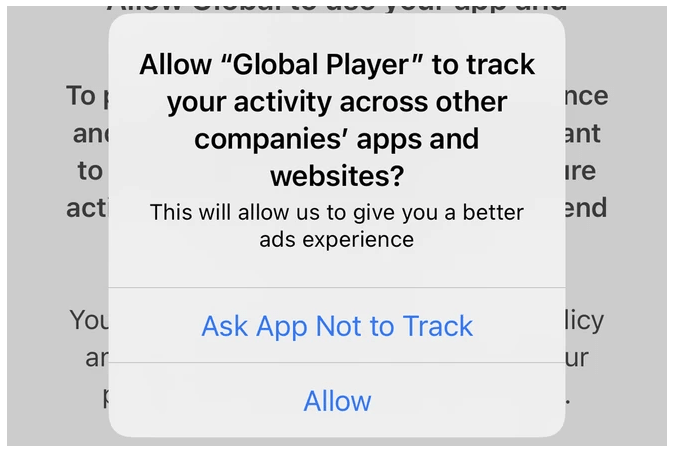
Apple calls this App Tracking Transparency and it means users will now have to opt into their devices giving over information on their use. You’ll see a pop-up message like this when loading apps after they’ve been updated.

Apple

The new requirement has stoked the ire of some, especially Facebook, who rely on tracking to target ads. Your Apple device tracks what you do in apps using an anonymised Identifier for Advertisers (IDFA) – this means that Facebook can serve you ads for the item you’ve just searched for on eBay.

Google has a similar thing called Google Advertising ID or GAID. These essentially tie your activity together in a way that means you can’t be personally identified. They make ads more effective for advertisers but should – in theory – also make them more relevant to you. Facebook argues tracking gives you a “better ads experience” but it has already warned investors that Apple’s move could hurt its advertising business.

App Tracking Transparency means apps now have to ask for permission to use that shared information. Of course, you could still be targeted by the information you provide such as searches or previous purchases within a particular app – so you’ll likely still see ads personalised for you.

Apple

Apps can’t circumvent having to ask for this permission according to App Store rules, nor restrict app functionality depending on whether you’ve given permission to track. Equally, they’re not able to pass on other information, such as an email address or username to others.

Apple’s own apps will also comply with these rules, but as per Apple’s privacy policies, it doesn’t share information it collects about you with other companies.

Users have previously been able to access per-app Privacy settings, but have not been asked permission. You can also globally disable tracking for a period should you wish to.

How to disable ad tracking on your iOS/iPadOS device, either per app or globally.

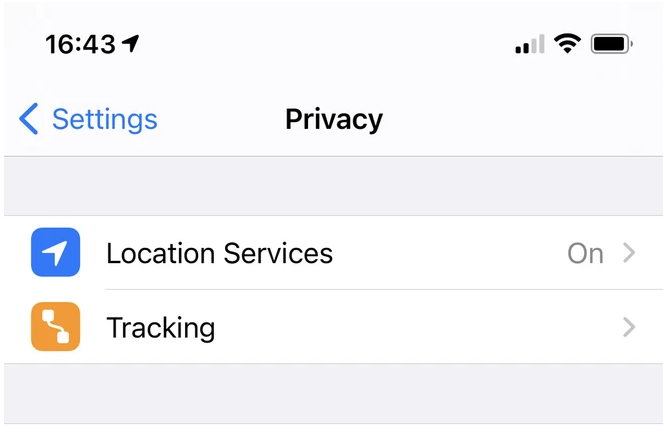
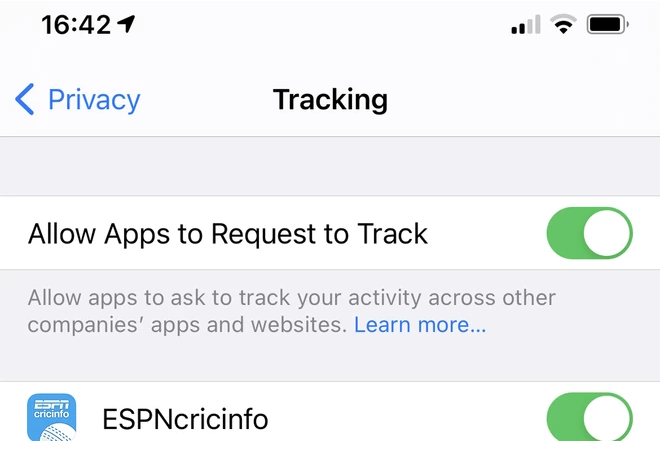
Go to Settings > Privacy > Tracking. You can then see a list of apps you have enabled for tracking and toggle any one of them off.

Apple

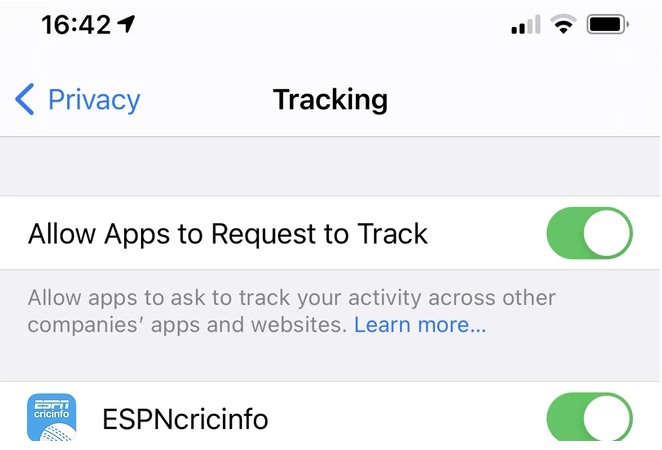
At the top is a global setting – you can turn off Allow Apps to Request to Track. This means you won’t see any pop-ups from apps and will stop any new apps from asking for permission to track.

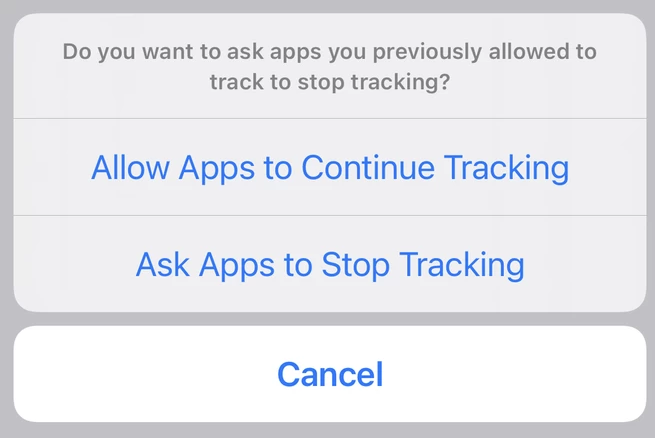
If you have already given permission to some apps to track you, you’ll then be asked whether you want to continue to allow them to track or stop them from that point onwards.

Apple

By

Sourced from Pocket-lint