Author

editor

Browsing

By Richard Breitengraser

What was once a trend is now a way of life. Mobile is No. 1 when it comes to media consumption as 72% of people across the globe will use just their smartphones to access the internet by 2025. Now is the time to ask yourself: How mobile-focused is your marketing strategy, your campaigns and your content? Are they still made for desktop?

It’s Not About Hype — It’s About Agility

Whether chatbots, Clubhouse, App Clips or AI, new technologies are necessary for your marketing strategy and you have to master them. But ultimately, it doesn’t matter if TikTok becomes more popular than Snapchat or if Twitch is the latest and greatest social platform. In the long run, the brand that reaches people on the right channels with the right messages and understands their wants, needs and demands will prevail. New technologies are just hardware, a new tool to deal with. What counts in mobile marketing is flexibility, agility and creativity. Fixed annual plans, rigid budgeting cycles, exhaustive decision-making processes and approval dynamics do not fit into this mobile world. Agility is the keyword, but this does not mean acting rashly.

Video Is King

We learned that brand loyalty suffered during the pandemic. One lasting mistake many marketers will regret is cutting back their content budget during the pandemic. To get people excited about your brand again, mobile video content is the best tool. We can’t resist video. It’s one of the most powerful and evocative mediums. We can still remember slogans and jingles years later. Video can increase credibility, serve as a source of information and can be an inspiration. In short, videos have a magical attraction.

According to a 2018 study, American adults spend an average of three hours a day consuming media on either a smartphone or tablet. Additionally, “64% of adult smartphone users who watch video on social networking sites and apps, do so at least once per day,” with that figure up to 72% for younger adults (ages 18 to 34). If you want to appeal to both your loyal and new customers with your messages, mobile video should be your first priority.

Video And Values

When my team and I talk about videos, we also talk about brand health. Brands should use video to communicate their values rather than their products. Here are three steps to success for value-driven videos:

1. Be selfless instead of selfish. It’s about the customer, not about you.

2. What’s the value? Tell a story. Award the people’s time. Give, don’t just take.

3. Empathy wins. Create an emotional connection between people and your brand.

But for mobile video to convert prospects and bring in ROI, there are also craft aspects to consider. Here are a few craft tips to keep in mind:

• Create content regularly. Use the full range of content — think fun, hero content, but also storytelling, campaign or how-to videos.

• Pay attention to different ratios during conception and production and consider where the video should run. As an Instagram story or post, Facebook or YouTube? At a ratio of 1:1 or 4:3? One-size-fits-all does not work.

• Run a “stop scrolling test.” The first five seconds must work without sound!

• Include a call-to-action. Videos should trigger an action from the viewer — visiting your landing page, subscribing to your channel or learning more from a blog post.

• Avoid too much generic content. This includes generic or stock footage. No message means no effect.

• Refrain from using an iconic voice as a voiceover. Let real people speak.

• Establish fixed content formats and faces. Use the same hosts/role models again and again.

• Use a mix of quality storytelling and user-generated content.

• Don’t script the words. This can come across as fake to a viewer.

• Use real people/customers to tell real stories that authentically convey the brand’s core values.

Mobile Marketing In 2021 And Beyond

Looking forward, the most important aspects of mobile marketing will be personalization and localization. The main task for brands will be to create as many mobile touchpoints as possible. Content partnerships, blogs, QR codes and audio are all ways to make your brand communication mobile-friendly.

While mobile video is still the best way to communicate with your customers, there are already several new mobile megatrends on the horizon that are worth your attention. The first is mobile audio. Branded podcasts are the perfect way to reach your target audience. Some successful examples include “The Message” by GE and pasta playlists — Spotify playlists by pasta brand Barilla that play music for the exact length of time it takes to cook different kinds of pasta. Another upcoming mobile trend is to use SMS. While posts and stories disappear or get lost in a never-ending feed, SMS is firmly entrenched in our phones and captures subscribers’ undivided attention.

Feature Image Credit: Getty

By Richard Breitengraser

Richard Breitengraser (CEO, VOID International Media Group) is a global brand, content, video, marketing & strategy executive. Read Richard Breitengraser’s full executive profile here.
Sourced from Forbes

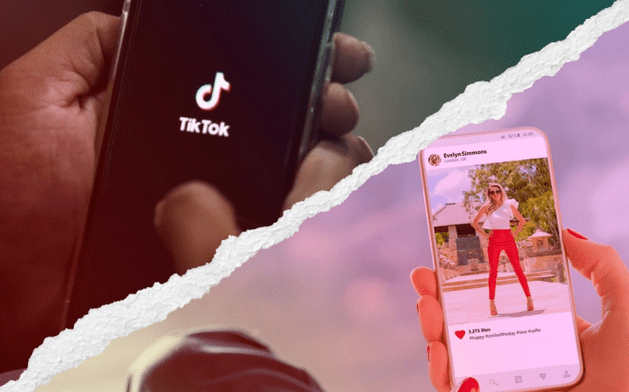
“Should we be on TikTok?” It’s the question brands and companies in all industries are asking themselves as the platform continues to grow. TikTok is available in more than 150 countries, has over 1 billion users and has been downloaded at least 200 million times in the United States alone, according to Wallaroo Media.

For many marketing experts, it’s a no-brainer to give it a go.

“It’s almost imperative for brands to be on it because now is the time to capture that organic growth,” said Aliza Licht, founder and president of consultancy firm Leave Your Mark. “TikTok is ripe for the taking.”

What sets TikTok apart from other social media platforms is its overall virality, according to marketers. TikTok has a knack for connecting people around shared interests through discovery because it is not based on who you know or follow, but rather on the content. With that, users with small followings can often receive views in the hundreds of thousands to millions. User Anna DeCarlo, for instance, has a modest 9,000-person TikTok following and she received nearly 115,000 views on a video that showed off her shoe closet.

It’s not just about singing and dancing either, which is a common misconception. Content is created within a variety of different categories — including fashion, which is a breakout tier that brands can capitalize on.

In 2020, the app could be credited for many of the biggest style trends during stay-at-home orders — whether it was the explosion of Nike Air Force 1s or tie-dye sweat suits — and the fashion category is only continuing to grow on the platform, earning a whopping 17.5 billion views as of June 2020, according to a report by Statista.

“Fashion is unique in the sense that it is so dynamic and so tied to culture that everyone’s got a way to play into it,” Matt Cleary, director of Retail & Dining, Global Business Solutions at TikTok, told FN. “Fashion is such an opportunity for TikTok to be a force in itself, but also a huge channel for brands to either reinvent themselves or create new relationships.”

An estimated 60% of TikTok users are Gen Zers, which has been a key demographic for brands who are looking to tap a younger audience. What’s more, TikTok users are ageing up — with more millennials using the platform.

But beyond brand building, the question for many companies is: Is there a revenue opportunity? And the numbers show there is an appetite among users to shop: The popular #TikTokMadeMeBuyIt currently has 1.9 billion views, for instance, and features a variety of trending purchased product, including everything from Walmart sneakers to Aerie leggings.

The Case for Instagram

While TikTok is a fast-growing platform with a fresh take on content, Instagram remains the No. 1 tool for social media marketing. At the end of 2020, 96% of brand campaigns included Instagram influencers, for instance, compared to 6.8% TikTok influencers, as reported by Influencer Marketing Hub.

Kyle Hjelmeseth, founder of G&B Digital Management, explained that influencers have been sticking with Instagram because it is so well-established.

“Influencer talent is so ingrained in Instagram and brands are spending money there. So there’s not a lot of incentive for Instagrammers to move to TikTok,” he said. “They’re already making a lot of money. And Instagram now has Reels [videos], so we can arguably do the same thing, while keeping to your core audience.”

On the brand side, Instagram remains a safe investment: Companies already have established relationships and an understanding of how it works.

“The credibility is still there,” explained Gil Eyal, founder of influencer marketing database HYPR. “If you’re looking to build a brand reputation and you want to surround it with people who are fashion thought leaders, you’re probably going to do better on a place like Instagram. Every photo is carefully looked at before it’s posted, and your brand is going to be seen the way that you want it to be seen. If you’re looking for visibility and people talking about your brand and giving away control, TikTok is a much better place because of the nature of the platform.”

Indeed, TikTok has many advantages. Recent data from influencer marketing platform Upfluence showed much higher engagement rates on TikTok, where micro-influencers garnered engagement rates of 17.96%, compared with 3.86% on Instagram.

Eyal said, “It depends on your target audience, but if all things are equal, there’s no question that TikTok is way better than Instagram right now [when it comes to engagement]. In very straightforward terms, Facebook and Instagram have implemented algorithms that limit your viewership in an effort to get people to pay for additional exposure.”

However, Licht added that Instagram is still hugely important from a performance marketing standpoint. “When we say it’s the No. 1 platform, it is because that is what’s driving revenue,” she said. “Organic posts are tough, but paid works. So if you are an e-commerce brand, then you’re not giving up Facebook and Instagram.”

Finding a Balance

Even if Instagram is a successful platform for brands, experts say the goal is to diversify your audience, so TikTok should be part of the plan.

They suggest that brands create their own account on the platform and use organic posts as a testing ground to find what resonates. Then tap TikTok creators to make a splash for specific goals, such as a product launch.

One way TikTok is enticing brands and influencers is through it’s Creator Marketplace, which helps to establish direct collaborations and partnerships between brands and creators.

“Creators are the lifeblood of our platform” said Cleary. “When we think about how brands can participate, we generally point to creators either as a muse or as a tool for brands to leverage. They’re platform natives; they know exactly what works. They know that when they lean in to what makes them different and authentic, their content becomes very viral, and we want to make sure brands are leveraging them for that.”

Licht also advised brands new to TikTok to start small, research hashtags and not be so cautious with content. “It’s OK to make mistakes,” she said. “It’s OK not to know how to use it. It’s initiation by fire and you have to test stuff.”

But experts said one thing companies must realize is that Instagram or YouTube content doesn’t translate well on TikTok. For instance, repurposing content and cutting a fashion campaign video or runway clip into 30 seconds will not connect with TikTokers.

“We want our brands to create TikToks, not ads,” said Cleary. “They have to be comfortable taking down their traditional guardrails and testing and sourcing, listening. All the best brands, they’re listening to see how their fans are already talking about them on the platform and then leaning into those trends.”

For marketers, the success of TikTok doesn’t mean the end for Instagram. But they warn that Instagram fatigue is out there, and expectations from consumers are changing.

“It’s creating a competitive environment for other platforms to attract and maintain creators. Previously, this was less of a concern,” said Eric Dahan, CEO of Open Influence. “There’s a bigger sense of comfort with Instagram, [but] TikTok is forcing platforms to think how they cater to their influencers [and] audience.”

Feature Image Credit: TikTok/AP; Instagram/Adobe Stock

TikTok and Instagram both have approximately 1 billion active users.

Sourced from FN

Discover what it takes to rank higher in Google during 2021, versus that of previous years.

SEO is a key component of advertising that aids in increasing the site’s awareness for related queries. If your website does not appear on the Search Engine Result Page’s top page, you cannot do anything correctly. And this post will help you solve your issues.

Search engine optimization (SEO) is a collection of approaches and tactics used to maximize the volume of visits to a site by achieving a high ranking in the search results. Having the website understandable to both consumers and search engine algorithms is an essential part of SEO.

SEO helps search engines assess what a given website is about and if it might help consumers. In today’s high world, it’s important to place as massive as necessary in search results, which requires an aggressive SEO technique Most users, though, are unaware of how to rank a fresh website on Google.

Let’s have a look at how you can rank your website on google in 2021.

Long-tail keywords should be targeted with low competition

Long-tail keywords are more descriptive (and typically longer) searches than more common “head” keywords. Long-tail keywords are less challenging and more focused than shorter-term keywords. When you’re just beginning your SEO strategy for a website, We would highly encourage you to concentrate on long-tail terms.

SEO is not about increasing the number of visits to a website. You would like to target people who need what you’re offering, which will turn into leads and, ultimately, clients.

That is only true if its rankings with the keywords that certain users will use while looking. Anything else, there’s no way they’d approach you. Because if your website was at the peak of the search results, there is also a threat.

As a consequence, SEO research continues by deciding what keywords prospective customers put into search engines.

Knowing words and issues important to your company is usually the first step in the method. Then, they are converted into original keywords. After that, do a detailed analysis to identify similar words that your target demographic would use.

Make your site speed super fast.

A slower website is inconvenient for the average consumer and is also damaging to search engine optimization.

As a response, a poor website can lead your website to perform slower in search engine rankings. This means fewer page visits and, as a result, fewer ad sales or user retention for you. There are many methods for optimizing a website for speed.

A load time, the time required for a consumer to be willing to access the website — is used by search engines to measure accuracy.

Most website components may affect it. Consider the size of a picture. For advice on how to boost the blogs, use Google’s Web Speed Insights Tool.

Create unique content.

How much do you make changes to your website? You actually don’t have a fantastic SEO ranking if you’ve not reached it since the day you created it. To boost visits to your website and its visibility, you must allow users to come. And if you are already using WordPress, then there is no excuse for not creating new and exciting content — it’s just way too simple!

Your content must be of high quality, fresh, and appropriate. The so-called moisture content is another aspect that influences your SEO score. This is the number of times users invest on your website every session.

While your site contains new, entertaining, or relevant content, users can stay on your website longer, increasing your dwell time. Websites with a lot of knowledge normally get a lot of users who stay for a longer time.

Use a straightforward URL structure.

Search engines do not appreciate large sequences of terms with complicated structures. As a result, leave the URLs as short as possible. Set them up to contain as few as necessary besides the target keywords for which you want to optimize the website.

Final thoughts on improving your site rankings

One important strategy is to maintain a strong monitor on your rivals. Find out where the rivals have their connections from and which marketers they are partnering with.

All of this data will be used to establish your own SEO roadmap for 2021. Hopefully, you will find this guide more suitable for a better ranking of your website on google.

If you enjoyed the content within this article, we’re sure you will love the latest resource guides we’ve written on how to use SERP checker tools, and also taking advantage of what Instagram growth services have to offer.

Sourced from Influencive

By

For many people, one of the few good things about this pandemic has been the ability to work from home. The past year has shown both employees and employers that many jobs can be done effectively from home.

In fact, the desire to keep work from home has been so strong that it appears a significant majority of people would rather turn down a $30,000 salary increase than lose the ability to work from home.

A poll posted on Blind, an anonymous forum for employees, asks:

Would you rather make $30k more switching to a new job that requires you to work in office or would you rather keep your current salary but work anywhere after covid?

It’s far from a scientific survey, but with over 3,000 votes so far, 64.3% say they would rather keep working from home, while 35.7% would opt for the extra cash.

A representative for Blind further elaborated with some specifics, such as that 71% of Airbnb, 81% of Lyft, 89% of Twitter, and 100% of Zillow employees would rather keep working from home.

A simple poll like this obviously misses some nuances, such as how much money the employees are making in the first place, or how often employees would have to go back to work. Because the question asks about switching jobs rather than, say, getting a raise at your current job, the results may be further skewed.

Still, this is not the only poll to suggest employees largely want more ability to work from home.

A survey run by the Harvard Business School Online and research firm City Square Associates polled nearly 1,500 professionals between March 2020 and March 2021 and found that “81% either don’t want to go back to the office or would prefer a hybrid schedule going forward.”

More specifically, 61 percent would like to be able to work 2-3 days from home, while 27% hoped to work remotely full time.

Only 18% of respondents wanted to go back to the office full-time. Curiously, parents with kids at home and married people were more likely to want to go back to work full time than singles.

As someone who’s been working from home for years before the pandemic, it’s hard to imagine going back to the office. Time is money, and the time wasted commuting is something that’s hard to put a price tag on.

on Blind

By

Sourced from TNW

By John Boitnott

From customer engagement and brand awareness to commerce opportunities for products and services, there are many reasons to use WhatsApp Business in 2021.

Many started off focusing on personal relationships and connections centering around lifestyles. However, companies like , ,  and realized the value of inviting businesses and brands to participate in their social networks to connect them with consumers.

WhatsApp has joined in by offering , a free app for and startup founders that can be used on Android and iOS mobile devices. The app offers a way to interact and engage with customers in a direct, personal and targeted way.

Account options

WhatsApp Business provides two types of accounts for companies that suit different needs. The regular business account helps separate personal and work messages while providing a convenient way to be responsive to customers. Options also include automated greeting and away messages. The app does require a separate SIM or phone number if you want to have both a personal and WhatsApp Business account.

Growing companies might want to consider the WhatsApp Business API account designed for larger enterprises. This pay-to-use platform allows for multiple users, providing opportunities for both sales and customer service teams to interact with customers.

Here are some reasons why your business might benefit from adding WhatsApp Business to your social media strategy.

Messaging tools for engagement

One of the most important aspects of WhatsApp Business is its messaging capability, which connects a brand to its audience and customer base. With open messaging options, a company can send unlimited free messages in multiple formats. Automation features also provide a way to deliver timely responses.

The messaging system encourages proactive contact with your audience. If you have a customer or lead’s phone number, you can use WhatsApp Business to send an initial welcome message to each contact. While you won’t want to overdo it by sending too many messages, this channel becomes an alternative or additional channel to connect with your target audience or existing customers.

There is also a broadcast tool, which allows you to send any type of content to up to 256 people on each broadcast list you have created. Although contacts will only receive the broadcast if they have saved your number, this is an efficient way to send out a campaign quickly. You can also segment your contacts and then create broadcast campaigns related to appointments, shipping information and booking requests that match those groups or personas.

Group messaging is another engagement and collaboration tool. Similar to broadcasting, this tool offers group chat capability so that everyone can interact and see contact details. Available for up to 256 contacts in one group, the tool is effective for networking, beta testing, focus groups and service meetings.

Business presence and awareness

Multiple statistics point to the benefits of using WhatsApp Business. According to WhatsApp, there are 2 billion WhatsApp users around the world as of 2020. The number of users has been increasing at the extraordinary rate of half a billion every two years. Of this audience, Statista noted that 1.6 billion users access the messaging app each month (Statista, 2019), which is 23 percent more than its closest competitor, Facebook Messenger.

As part of the Facebook family of companies, you can use WhatsApp Business to further grow your online presence and reach an even wider audience. One appealing option is to link the app to a Facebook Page. Doing so can help you funnel traffic through various tools like a WhatsApp Send Message Button, Facebook Ads, or a WhatsApp number listed on your Facebook page.

A showcase for your products and services

WhatsApp Business provides ways to market and sell your products or services through features like the WhatsApp Business Catalog and WhatsApp Cart. The catalog feature provides a way to share product and service listings with customers. You can spotlight what you offer with photos, descriptions and pricing information. Links from your catalog or even each item within it can be shared across all your other channels.

Customers can also add items to their cart after viewing them in the catalog as well as use the messaging tools to confirm a transaction with your business. The app also works well for those companies that have physical storefronts. For example, you can physically display your WhatsApp Business QR code so customers can scan it in the store, easily adding you so they may interact with your business online.

Analytics to help understand your customers

There are some options that provide a way to track key metrics about customers. The WhatsApp Business API product delivers analytics on the number of messages sent and delivered from certain phone numbers. Other metrics include the number of messages that selected phone numbers received from recipients. You will also be able to stay on top of the total estimated amount spent on messages. The metrics are stored in the Insights tab, but the data can also be exported and segmented by phone number, message type and country.

Expanding channel connections

WhatsApp Business provides another channel to make connections with your target audience and engage with customers. Start by researching and understanding how to use it, and then assess if it makes sense for your business. If you are looking for new ways to interact with customers, work across offline and online channels, and access additional metrics about your customers, then WhatsApp Business might be a good addition to your marketing tactics.

By John Boitnott

Entrepreneur Leadership Network VIP. Journalist, Digital Media Consultant and Investor

Sourced from Entrepreneur Europe

By Jason Aten

It isn’t about tracking, but about giving you a choice.

Feature Image Credit: Tim Cook. Getty Images

By Jason Aten

Sourced from Inc.

By

Last year, while reporting a story about how the digital advertising industry burrowed its tracking technology into scores of websites serving vulnerable and marginalized communities, I did something counterintuitive, especially for a reporter who writes about tech for a living: I surrendered to the surveillance economy.

This decision to inject pure, uncut internet directly into my veins came as I was using and helping to create The Markup’s Blacklight tool, which opened my eyes even further to the plethora of companies that sought to grab my data from the websites I used on a daily basis. Until then, I had mostly used Google’s Chrome browser with the Privacy Badger extension, which blocks many forms of tracking, or Mozilla’s Firefox, which has strict privacy controls set by default.

Doing the opposite—ensuring that as many ad tech companies as possible got my data and then making sure that I saw all the personalized ads targeted at me as a result—seemed like a way to get a visceral feel for the modern internet that most people are subjected to. So I started using mostly Chrome, the least privacy-protective of all the major web browsers, and turned off third-party browser extensions that blocked tracking requests and digital ads (which also frequently insert their own user tracking on browsers).

I cannot in good conscience recommend this tactic to any normal person, not only because it’s good to be thoughtful rather than chaotic in your digital hygiene but also because having tons of ads load on every site you visit makes mindlessly clicking around the internet even slower and more of a chore than it was in my previous, privacy-protected life.

Now, six or so months later, seemed like a perfect time to run another experiment: Could I get the ad tech companies to stop using all this beautiful data they’ve been collecting on me?

Enter: AdChoices.

Most of the time when you see a banner ad on the internet, there’s a little triangle in the corner that you’ve probably never actively thought about until this very moment. AdChoices is a program by the Digital Advertising Alliance (DAA), a consortium of digital advertising groups. Among other things, it provides what it calls a one-stop portal where people can ask more than 100 ad tech companies to opt them out of being targeted with personalized ads based on their personal data.

You may never have known this option exists, even though it’s been around for a decade.

DAA executive director Lou Mastria said in an email that the company collaborates with BBB National Programs and the Association of National Advertisers to ensure that the ad tech companies that agree to the opt-outs actually follow through. “Their work has resulted in more than 120 enforcement cases to date, including referrals to the appropriate regulatory agencies, as needed,” he explained.

AdChoices’ offer was tempting. Just a few clicks on a single website and, like magic, I would stop all the ads I encountered from knowing everything about me? If only it had turned out to be so easy.

When I opened up a Firefox browser and went to the YourAdChoices.com opt-out page, I was greeted by a buzz of activity. The site started by automatically running some tests on my browser to check compatibility and then presented a list of participating ad tech companies. I hit the button to opt out of all of them, and we were off to the races. At the end, I got a report: 38 companies had processed my opt-out. The other 91? It said there may be a “temporary technical issue” with those.

What?

By

Sourced from TNW

By Bob Buckley

If you aren’t getting enough customers in the door for your business, it might be time to try a new marketing strategy. Tapping into the growing trend of video is a great place to start. YouTube is the second largest website on the internet by monthly web traffic, according to data from Ahrefs. This makes it an awesome place to get into video and potentially drive a ton of business your way.

How to Use YouTube to Market Your Business

Start a YouTube Channel

In case you don’t have money to invest in paying for advertisements, you can still do something with the potential to be just as effective. The great thing about starting a YouTube channel is that there are no barriers to entry.

Contributing content to any website typically involves an application process. You can’t always get feedback if they don’t think your content is a fit, either.

To start a channel, all you really need is an email address. We will get to the other things required to grow it, but, the most important step besides signing up is deciding what your channel will be about.

Pick a Topic

You will need to pick a topic for your channel to focus on. It usually makes sense to go with one related to your business, so you can promote it in each video and include links to a website in the description.

Staying focused on your topic is important – it wouldn’t work very well for building an audience if you had a finance YouTube channel where every third video upload was cooking-related. Maintaining consistency will also make creating each video a little easier and faster.

Set Up a Filming Space

Depending on the types of videos you plan on making, you might want to set up a consistent filming space. This can be as simple as using your office and filming at your desk. It should be somewhere that’s blocked off from a lot of noise and interruptions.

That may just mean coordinating with your assistant (if you have one) to hold calls and avoid coming into your office while you are filming. The same goes for the family if you work from home.

Get Filming Equipment

The nice thing about today is that you probably already have a nice camera. A lot of phones have been able to film in HD and even 4K for a couple of years already. In addition to a camera, you will want a tripod, lights, and probably a decent microphone.

The tripod is crucial and you can pick one of those up for around $20 or $30 on Amazon. If your filming space has reliable natural light through a window, you could stick with that in the beginning.

The phone’s microphone should also work, at least at first. If you decide to stick with this marketing strategy, you can get all of the other equipment for under $200 later on.

Get Video Editing Software

Depending on your computer, you may already have some video editing software installed. If you use an Apple, iMovie is free and a powerful program for editing. PC users also have a variety of free options that can make high-quality videos.

I use Lightworks for our YouTube channel and it works pretty well on my older laptop. OpenShot is another free, open-source program that works well and can create videos up to 4K in resolution.

Get Comfortable on Camera

It’s pretty normal if you feel a little uncomfortable getting on camera. Pretending to talk to someone when you’re really talking at a tripod will always feel a little weird. One strategy that I’ve found works pretty well for dealing with that is to have an audience.

As long as they don’t make a ton of background noise, having someone sit behind the camera can help you focus more on making the video sound conversational. If you really can’t see yourself on-screen, consider working with someone who already has an established channel.

Work with YouTube Influencers

Working with an influential YouTube personality could be big for your business. When some of them command audiences in the hundreds of thousands, one shoutout on a popular video could (maybe) pay for itself many times over.

Every social platform has influencers, but ones on YouTube are especially powerful. Instead of written posts or pictures, they routinely speak directly to the people you want as customers.

Make A List of Relevant Influencers

There are going to be at least a few influencers you could approach that cater to your market. They will have a pretty wide range of subscribers and a number of views on their videos.

You can make a list in an Excel spreadsheet or Google sheet and organize them in order of highest to lowest subscriber count (or vice versa). It also can’t hurt for you to watch a few of their videos. That will help you make sure there isn’t any content you would want to avoid associating your brand name with.

Costs of Paying for Mentions

The cost for influencer marketing will vary depending on the number of followers someone has. Everything will still be negotiable, but data from eMarketer shows a few standard rates.

If you approach someone with 500 to 5,000 subscribers, expect to pay around $315 per video. The costs can go all the way up to $3,857 for channels with 500K + subscribers.

Measure ROI Before Spending a Ton

If you’re not careful, you could end up putting a lot of money into influencer marketing without seeing much in the way of results. Just look at the story of the Instagram star with 2 million followers who couldn’t sell 36 t-shirts.

Depending on your budget, you should take caution in paying for videos ahead of time or anything like that. Additionally, consider starting with a smaller YouTube personality.

Data from this study shows that micro-influencers are actually more effective along with being less expensive. In case influencers seem too risky, you can always look at the old-fashioned (but still effective) way of getting your business’s name out there: advertising.

Getting into Advertising on YouTube

There are a handful of different types of advertisements you can run on YouTube. If you get everything ready for starting a channel and decide you don’t want to do that, you will still be in a great position for making video ads. In addition to video ads, you have the option of display ads, overlay ads (ads that show at the bottom of a video), and sponsored cards.

The Video Ads

Most of the other social platforms offer video ads now. However, on YouTube, people are expecting to be watching a video so it’s a lot more likely that someone will already be engaged when your ad pops up.

There are a lot of marketers out there that you can look at for low-budget video ad ideas. Take the Dollar Shave Club’s video from a few years ago, for example. They just filmed their founder walking around the warehouse saying funny things and it was wildly successful.

This and other low-budget videos helped propel the 2011 start-up to unprecedented (couldn’t help using the word!) growth and being acquired for $1 billion in 2016.

Different Types of Video Ads

There are a few different types of video ads to consider using. You will need to decide which one makes the most sense and structure your video around the way it functions for optimal results.

The ones you might be most familiar with are skippable video ads, which allow users to skip to their video after the first five seconds. These can be inserted at the beginning, middle, and end of videos. Then there are non-skippable ads, which can go up to 15 or 20 seconds in length, according to Google.

The third ones to consider are called “Bumper ads” and are non-skippable, running for up to 6 seconds. All of these are compatible with desktop and mobile devices, maximizing your reach.

Tying it all Together

YouTube is not showing any signs of slowing down, especially with the current stay-at-home state of the world. You can leverage a few different strategies to get your business known on the platform.

It’s worth dabbling in all of them a bit to see if one really stands out as effective. Consider starting your own channel, working with influencers, and making video ads to reach the masses.

By Bob Buckley

Bob is a 2021 CPA candidate and the founder of thiscollegelife.com.

Sourced from readwrite

Sourced from The Association of Advertisers in Ireland (AAI).

Saving our planet is now a creative communications challenge – are you up for it?

On Tuesday 27th April THINKHOUSE will host “DELAY IS THE NEW DENIAL: COMMUNICATING FOR PLANET EARTH” an event for anyone working in marketing and communications for brands and businesses. This presentation follows Thinkhouse’s Earth Day event which takes place 4 days before our AAI toolkit webinar.

Hosted by THINKHOUSE’s cross-functional PLANET team and powered by insights from The Youth Lab, the event is designed to strengthen our industry’s role in restoring our earth.

Pre Covid-19, we saw an understanding of the power of purpose-led approach to business strengthening – for example, in 2019 Unilever announced that its purpose-led, Sustainable Living Brands were growing 69% faster than the rest of the business and delivering 75% of the company’s growth. Sharing learnings from inspiring ‘PLANET’ marketing examples, we’ll also outline the opportunities that brands have to grow in different ways into the future, with more purposeful strategies, as we emerge from the Covid-19 pandemic.

The event aims to accelerate the change we want to see in our industry exploring the potential for brands and communication within the broader climate and sustainability context. Some “need to knows’ around sustainability communications and language will be included as well as a view on the current brand landscape. Finally, the event aims to inspire and empower real action through the behaviours and actions of our industry.

When: Tuesday April 27th at 10.00am.

Register here

Speakers for this event include…

Claire Hyland, Head of The Youth Lab at THINKHOUSE said: “David Attenborough said ‘Saving our planet is now a communications challenge.’ We know this – and we have witnessed how, since the launch of our PLANET services over 2 years ago, brands and businesses are increasingly aligned on the need to achieve a net zero world as soon as possible. To do this, our industry must step up to tackle the problems of communications that are misaligned with a net zero world and/or not working within the Sustainable Development goals.  This means thinking differently about the work we create and how we measure success.”

Laura Costello, Senior Strategist, Purpose & Planet at THINKHOUSE said: “This event will serve as a temperature gauge of where we are now and where we’re heading. The picture is clear – there is a big gap between what businesses and brands are currently perceived to be doing in terms of acting on climate and what young people expect from them. With major initiatives such as The Great Reset by Purpose Disruptors and Thinkhouse’s own sell-out industry event in 2019 ‘World War Z, a Generation’s Battle to Fix the Climate Crisis,’ this event is part of our continued commitment to share the views of the next generation and accelerate an inspired and informed response.”

Dave Byrne, Head of Creative at THINKHOUSE said; “More and more of our customers are part of the global race to net zero. As creatives and marketers we must arm our clients with the right insights, ideas and creativity to win the race – this is a race towards a better world, better marketing. We want to create a world where only good marketing exists and this is another event that furthers that mission.”

By

How to become a data-driven organization and why is this key for future business success.

A global pandemic has played a big part in elevating the data literacy of the ‘everyday man’, essentially demystifying data science for many of us. There now seems to be a much clearer connection between ‘what the data says’ and ‘what action we’ll take’. It’s a good example of data-led decision-making to drive the best possible outcomes.

In the same way, businesses can also drive better outcomes if they understand this connection and use it to transform their business model to one that is driven by data. Building a data-driven future is what will give businesses their competitive edge at a time when ’survival of the fittest’ counts the most.

With this in mind, many organizations are currently investing in data projects of one kind or another. Whether it’s data analytics, big data, AI, machine learning, data science or any other area of focus, the interest and investment in efforts to become ‘data-driven’ has been given significant extra impetus by the experiences of the last 12 months.

Whether the objective is to drive efficiencies, create competitive advantage or improve decision-making processes, it’s important to remember that isolated or independent data projects do not make you data-driven. Instead, the race to create a data-driven business infrastructure should be seen as a strategic journey, where organizations position data so that it empowers and delivers on business objectives. Success depends on transforming business models so that the whole is greater than the sum of its parts.

So, what does it take to become a data-driven organization? Here are a series of core principles that together, can help build a solid foundation, focus and measurable progress for using data as a strategic asset:

Leadership

The entire process rests on effective leadership, where a top-down perspective aligns the business with data strategy. Without this approach, it can prove impossible to instigate the culture shift required to truly become data-driven and ensure that initiatives are given the right emphasis, support and representation, as well as driving the education required at a leadership level.

Skills

Next, it’s important to evaluate the relevant skills – and the gaps – within existing teams. For instance, it’s not unusual for analytics skills to be spread across departments, but in creating the right focus, business leaders need to transition to a core, centralized practice to ensure consistency. This does not necessarily mean that teams have to be changed, but organizations must create best practice processes to focus their efforts. Ultimately, building a community of data professionals who share knowledge and work together can be hugely beneficial, even if they don’t work in the same teams on a daily basis.

Best practice

Looking more closely at best practice, the objective should be to move from sporadic and isolated data driven initiatives siloed in each department to an approach which ensures consistency of approach across the organization. This should always be based on a common understanding of how to deliver value from data effectively.

Governance

As skills and best practice processes become integrated into a data driven culture, it becomes more important to ensure governance increases. Indeed, establishing best-in-class governance and frameworks is essential to ongoing data-driven transformation, because it enables leadership to track progress against goals. In practical terms, leaders need to work with data practitioners to ensure that initiatives meet business objectives, that there is consistency in delivery and prioritization, as well as in the platforms and technologies used. At the same time, every organization must meet their data compliance obligations, especially relating to sensitive or personal information.

Education

Increasing the impact of a data-driven strategy is not just a matter of bringing the specialists together. Educating the business at large about the possibilities of analytics is an important part of the process so the whole business can share a common language around analytics and dispel preconceptions of what analytics can and can’t achieve.

Prioritization

As the impact of education efforts take effect, and business interest and knowledge of the potential of data driven decisions grows, many organizations find they are presented with a wide range of potential initiatives. Clearly, prioritization then becomes important, and key questions about each idea and option should include: will an initiative add significant, measurable value? Is the organization ready to implement data driven initiatives that may deliver meaningful results? Is the right data and platform available to make it work, and is the organization in a position to adopt the new practices each initiative will require?

Measurement

With priorities determined and actively being implemented, the process requires a structure to measure success in a consistent way so that all stakeholders can see the data driven program at work, rather than isolated instances of innovation. This is often pivotal for organizations in their efforts to move away from a series of data science projects to being a truly data-driven company.

There’s no doubt that investing time and resources in developing a data-driven culture can radically improve insight and decision making. In today’s rapidly changing business environment, spotting new opportunities and challenges, improving processes and working with greater insight into the variables that affect business success is vital. By adopting a rounded process that addresses these critical areas, businesses have the best chance of succeeding in their mission not just to become data-driven, but in their wider digital transformation strategy.

Feature Image Credit: (Image credit: Shutterstock / carlos castilla)

By

Sourced from ITProPortal