Author

editor

Browsing

By ,

The iOS innovations more or less stopped impressing us a long time ago. There’s almost nothing that they’re changing except for a dark theme, a volume control indicator, and a keyboard with swipes. There is nothing more to highlight.

However, when it comes to the iPad, more innovations were taking place. Moreover, due to a large number of differences, the operating system for tablets was even given its own name – iPadOS.

Here is the list of the top perks of iPadOS:

1. Widgets have moved to the home screen

A great idea that could be implemented on the iPhone as well.

You still don’t have enough freedom to place widgets wherever you want (for instance, between the apps icons), but a small column with some useful information was added.

Even though you’re a bit limited in this aspect of making your life better, you can improve another, a really huge area of your life. We’re talking about the financial sphere, about making your money. What is more, we know exactly how you can make your money make more money (sounds like a tongue twister, but you will be getting better-off while you sleep). The Jing Stock – bitcoin otc broker is the site we recommend to buy and sell bitcoin online. Bitcoin makes the future – you make money off bitcoin.

2. There are convenient control gestures now

In order to make your working with the text easier, they added four gestures with three fingers. Swipe to the left with three fingers – undo the input or the last action. Swipe to the right – return/repeat the action.

3. More icons on the desktop

The developers have finally redesigned the iPad interface instead of the banal stretching of the picture for it to match the huge screen.

4. The screenshot editor has become better than most photo editors

The already good screenshot editor just got better. Now you don’t even have to save your screenshot to the gallery if you wanna work on it.

5. The Safari browser has been significantly upgraded

Now the standard web page viewer displays a full-fledged version of the site with adaptation to the display’s width instead of a stripped-down mobile version for iPhone.

6. In Split View, you can run two windows of the same applications now

As a result, you can have two windows with email, notes, reminders, or a browser open for comfortable work on your device.

7. Slide Over is better in iPadOS

Quickly accessing the apps you need without leaving the one you’re in is a game-changer for all the Apple enthusiasts.

8. Apple introduces “Show All Windows” in a multitasking mode

With such a range of application launching capabilities, it can be easy to get confused by all these windows. The developers have provided the ability to view the copies of any of the applications open quickly.

9. iPad learned to work with a mouse

What many Apple tablet users have been waiting for was finally brought to life.

The left button performs the function of tapping the screen, the right one brings up the AssistiveTouch menu, and the middle one brings you back to the home screen. Most applications support a scroll wheel.

10. The Files app is actually useful there

The default file manager has long been a weird and useless program. With the release of iPadOS, everything changed. Alongside a full-fledged download manager for Safari, working with data on the tablet is taken to the desktop-like level.

11. iPad made friends with flash drives

Now plug-in storage media are fully supported by the Files application with the ability to transfer any data to the tablet memory and vice versa.

12. Download Manager – finally!

The Download Manager is another perk there. You can download any files from any sites. Before downloading, a pop-up window will appear, asking: “Do you want to download the file?” You’ll be able to find the downloaded file in your Files application.

13. Using Apple Pencil for screenshots

Swiping up the iPad screen with the Apple Pencil allows you to take a screenshot instantly – and it is opened in the editor immediately.

14. iPad as a second display for Macbook or iMac

This is great news for the designers and even video editors out there. The iPadOS tablets will be able to broadcast an image from an Apple computer without any problems, thereby replacing a second monitor. What’s more, the Apple Pencil will let you control your computer directly from your iPad.

We love iPadOS – iPad is really becoming a serious tool for work.

By ,

Sourced from coolsmartphone

By

Entrepreneurs are building tools that create emails or marketing copy using GPT-3, text-generation technology released earlier this year.

Michael Shuffett didn’t waste any keystrokes when responding to a message about the automated email writer he’s building. He tapped out “Yes 45m” and clicked a button marked “Generate email.” His app, Compose.ai, drafted a courteous three-sentence reply with a link to schedule a 45-minute call. Shuffett checked it over and clicked Send.

Compose is one of several automated writing tools built on striking new text-generation technology known as GPT-3, revealed in June by OpenAI, an artificial intelligence research institute. GPT-3 went viral this summer after people marveled at how it could fluently crank out memes, code, self-help blog posts, and Hemingway-style Harry Potter fanfic. WIRED and others showed that GPT-3 can also spout nonsense and hate, because its algorithms learned to generate text by digesting wide swaths of the internet.

Now, some entrepreneurs are harnessing GPT-3 to perform real work, like drafting emails or marketing copy. “Billions of people write email,” says Shuffett, a cocreator of Compose. “It’s a space that has not had much innovation for years.” Google’s Gmail will suggest ways to complete sentences and supply short, peppy replies to some emails—”Thanks so much!” But it doesn’t draft fuller messages.

Snazzy.ai, which launched to early testers last week, generates verbiage for web pages and Google ads, based on basic information about a campaign or brand. When supplied with keywords about WIRED and a phrase from its founding manifesto, Snazzy suggested marketing gloss with bits of robotic inspiration. One proffered Google ad included the coinage “geekspace,” a word that is rare online and has appeared on WIRED.com only twice, most recently eight years ago.

Image may contain Text Business Card Paper and Word
Courtesy of Snazzy AI

Chris Frantz, a Snazzy cofounder and marketer by trade, says the service reduces the drudgery of creating an initial splurge of ideas to be honed into a fresh campaign. “The goal is to offload the somewhat monotonous job of writing the copy, and move to the editing part,” he says.

VWO, which helps companies measure the performance of marketing content, has tested GPT-3 against human-written material for clients including travel site Booking.com. Of six tests with statistically significant results, AI-generated copy gained more clicks or interactions twice, and human-authored copy performed better once. The remaining three matchups were tied. More tests are ongoing, but VWO founder Paras Chopra believes marketers will gravitate to auto-generated material because it speeds experimentation. “The more you can test, the higher the likelihood you end up impacting your business metrics,” he says.

For email, Compose and others trying to inject GPT-3 have converged on a similar design: Write terse bullet points, click a button, and the AI will transform your laconic input into flowing paragraphs.

In a demo, Matt Shumer, a cofounder of OthersideAI, typed six short lines in response to a mock email asking what features coders should build next. When he clicked a button marked “Generate,” 21 words of snippets like “ofc,” “voice integration is easiest,” and “free every monday at 1pm” became 43 flowing words in reply.

An email composed by OthersideAI.

Courtesy of Otherside AI

Behind the scenes, apps built on GPT-3 send snippets of text dubbed “prompts” to OpenAI’s cloud servers. GPT-3 sends back new text it calculates will follow seamlessly from the input, based on statistical patterns it saw in online text.

That unusual way of interacting with a computer makes GPT-3 fun to play with but tricky to work with. Its broad experience of the web and lack of grounding in physical reality means it often veers into non sequiturs and nonsense.

Shumer says OthersideAI has been focusing on making GPT-3’s output “reliable and safe.” An early version of the app was too creative. It correctly interpreted prompts like “1pm meeting” but added fabrications like nonexistent doctor’s appointments. Shumer says that’s been fixed, and he’s now testing ways to make his service mimic a person’s writing style. He hasn’t yet decided if that should stretch to including curse words.

WIRED’s own experiments with the GPT-3-powered service Magic Email showed both the promise and perils of automated writing.

Drafting formulaic emails such as scheduling calls generally went well. Given three blunt bullet points—thanks; can call u Weds around 6pm yr time; yr new project snds interesting—Magic Email drafted the six-line email below, conveying the same information more warmly.

Image may contain Text
Courtesy of Magic Email

That could be useful for conversations where telegraphic, ungrammatical messages would come off as impolite. Magic Email provides buttons to give suggestions a thumbs up or down, and to ask the algorithms to try again.

The writing algorithms were less reliable on more complex messages. When drafting an email including a link about Covid-19 research, the app incorrectly wrote that it was related to skin cancer, perhaps because another part of the prompt mentioned dermatology.

Fixing such glitches was easy but raised the question of whether correcting auto drafts is more efficient than writing the email from scratch. Samanyou Garg, the UK developer behind Magic Email, says his service is improving and can be useful if as much as 30 percent of generated text needs tweaking. “I’ve had good feedback from people who say they’re saving a lot of time,” he says.

Magic Email refused to write at all when prompted with bullet points about online hate speech that included the phrase “Misogynist content big problem on Facebook.” A message appeared warning, “Your provided input seems to contain unsafe content so we have blocked your request.”

The safety filter may have been overcautious on that occasion, but it’s there with good reason. GPT-3 has learned the patterns of unsavory text online. Researchers at the Middlebury Institute of International Studies reported last month that it can fluently mimic anti-Semitic and terrorist content. More than four years since Microsoft’s chatbot Tay went rogue and tweeted favorably about Hitler, researchers still don’t know how to prevent algorithms from repeating or amplifying bias or bad judgment in text or other data.

OpenAI says that it vets customers before giving them access to GPT-3 and reviews every application of the service before it goes live. It has implemented a toxicity filter and suggests customers apply constraints such as always having a human review auto-generated text and implementing filters of their own.

The economics of AI-generated text are still unknown. With no competition from rival text-generation services, GPT-3 is relatively expensive—reflecting how OpenAI has pushed the boundaries of machine learning with help from immense computing power. Frantz of Snazzy gave up on offering a free tier when OpenAI revealed its pricing last month. Yet it shouldn’t be difficult for other AI players such as Google and Amazon to create similar text generators, and the technology could get cheaper and more accessible quickly.

Feature Image Credit: Illustration: Elena Lacey; Getty Images

By

Sourced from WIRED

By

Fostering hype takes time and money. And not everyone working on the good stuff has the time and money to buy hype

Hype tends to be denounced as the fuel of the substandard, the fraudulent and the disappointing. It’s what we blame when companies, technologies or ideas dominate the public consciousness, only to let us down; the invisible force that tricks us into believing the con; the eye-roll-inducing words that tell us to over-invest our time, money and faith into unique “solutions” that within a few months will turn out to be useless.

In short, hype is seen as the domain of hucksters and snake oil salesmen peddling the ordinary as exceptional. And hype has another, pernicious role – that of current-day distraction. In science and technology, it often amounts to a distraction of the public gaze, away from underrated innovation, and towards that which more easily captures attention. Away from the good stuff, towards the shiny stuff.

The Cambridge English Dictionary defines “hype” as a deception of sorts, a trick deployed “to make something seem more exciting or important than it is”; the Oxford Dictionary of English is more forgiving in its description: “extravagant or intensive publicity or promotion”. Hype has different definitions and connotations, then, depending on whom you ask or what dictionary you consult. And per se, hype is neither good nor evil: it’s a tool. It can be the catalyst for genuine innovation to get funding, attention, and regulatory consideration, and it can do the same for something not so legitimate.

The problem is: fostering hype takes time and money. And not everyone who is working on the good stuff – innovation that is impactful, useful, entertaining, or just original – has the time and money to buy hype. Hype, therefore, isn’t necessarily a fair measure of science and technology worth paying attention to.

Take fusion energy: a technology that has the potential to change energy production worldwide, and reduce society’s reliance on fossil fuels. A technology that has brought together 35 nations to work on a $25 billion science experiment in southern France. A technology which requires solving a problem so easy to explain: recreating the Sun’s power on Earth. Yet, despite growing awareness of the climate crisis, and the “tech will save us” narratives, fusion energy is often confused with current nuclear power stations (nuclear fission), is branded pseudoscience (due to the conflation with cold fusion) and is something most people will happily admit to knowing nothing about. There’s just no social pressure surrounding it as a trendy idea – unlike AI, blockchain, or Elon Musk’s scheme du jour.

It might seem unimportant to have more people talking about fusion energy when there is still much to be done to bring it to market. But as the world scrambles for new green policies and environmentally-friendly corporate practice, one would think fusion energy might at least be hailed as a promising technology. Right now, instead, any mention of it is met with blank faces. The same cannot be said for the hype surrounding electric cars, or solar panels, or household recycling schemes.

Andrés Lozano

Hype is not simply a distraction. It can have another, subtler, more devastating effect: it dilutes awe. Exhibit A for this problem can be found in the field of astrobiology. That might sound surprising, as astrobiology is the discipline studying, in NASA’s words, the “origins, evolution, distribution and future of life in the universe”. Pretty wow, right? Yet one single word has proven able to make anything coming out of the field seem far-away or far-fetched. That word is “aliens”.

Public coverage of life-finding missions to Mars focus on the searching for alien life over more consequential questions such as whether previous missions to the planet have corrupted future experiments by inadvertently transporting biological material from Earth, or what kind of terrestrial life could travel on the outside of a spaceship all the way to Mars, or what constitutes “life” in the first place.

Most of the stories surrounding SETI (Search For Extraterrestrial Intelligence) and METI (Messaging Extraterrestrial Intelligence) focus on the quirky individuals who have these “crazy ideas” about listening for and speaking to aliens to see if we’re not alone. They don’t let the public in on the fascinating process of trying to work out exactly what counts as an intelligent alien message in the radio signals received, or let the public ponder what kind of messages we should be sending out to other lifeforms, or give them permission to delve into the question that is actually at the root of what these scientists are working on every day: who are we?

Acting this way has a cost. It’s not just about allowing people to feel awe: it’s about empowering those who are not professional scientists or technologists to be able to participate, instead of being spoon-fed a whizz-bang watered-down version of science as cheap entertainment. Hype doesn’t just obscure the reality of what’s going on in science and technology – it makes it less interesting. It’s time we start to look past it and delight in what lies beyond.

Feature Image Credit: Andrés Lozano

By

Gemma Milne is a science and technology journalist, and the author of Smoke & Mirrors: How Hype Obscures the Future and How to See Past It

Sourced from WIRED


-Can you give a brief bio to start with. For example, where you come from, your family background and your work history?

My parents both came from a council house background and I think because of their upbringing, I developed a very strong work ethic. We lived in the countryside and I remember coming home from picking onions late one evening at around age eight or nine, feeling so proud because I had a palm full of silver coins that the farmer had given me for my efforts. I also remember getting a clipped ear for being late home! From that point on, I always had jobs and wanted to earn some money. My work ethic, which is vital if you want to achieve anything in life, came from that background because if you wanted anything, you had to go and earn it.

That work ethic has stayed with me throughout my career, along with the drive I have to do a great job and be the best I can. Hard work, and the determination to behave with the right level of empathy, morals and ethics, and to treat people in the right way, is crucial.

I started working in radio when I was at University in Bristol. I heard an ad on the radio for a part-time job as a person on the street team. I was basically employed as a promotional person handing out cans of V8. From there I made some contacts and eventually managed to get a job as a salesperson. This was back in the day when radio in the UK was a two percent medium, so nobody really cared about it, and it was a tough way to start. But it gave me a great foundation in dealing with different people, in showing people respect, and understanding the value of what I was selling; after all, people are only going to buy something if it works for them.

I worked hard, and I was very eager to learn and improve, and at the age of 27, I was made Sales Director at a regional station in the UK. Then, in my early 30s, I worked as MD for a National station. That was where I really started to see the impact radio stations had on their audiences, I could really see it and feel it.

From there, I went to London to run the National sales team for Bauer and following that I had the opportunity to buy into a business – Orion media – where I eventually became Chief Executive. We owned a number of radio stations and were private equity backed. I ran that business for six years and successfully sold it in 2016.

Then I had a look around and thought about what I wanted to do next. The opportunity came up to talk to Communicorp and I loved the appeal of it because it felt like it had a real entrepreneurial spirit. It felt like it had a private equity ambition around its growth and its willingness to take advantage of opportunities that presented themselves. Over the last four years we’ve done a huge amount of work to make that business laser-focused on delivering audience and revenue growth, back to the core of what the business should be focused on.

-What can happen in your typical day at Communicorp?

Well, I’ll give you my typical pre-Covid day. When I wake up, I flick around the radio stations – I like to listen to all the breakfast shows. Generally, I would get into the office early. I’d normally have an executive meeting with my senior team, or I might meet with my commercial guys on revenue.

I try to keep myself and the team focused on what our strategic aims are, and then try to align my efforts with that. And, you know, the key levers to drive our business are pretty straightforward; they are audience, revenue and people. The people development – and the development of our culture – is really important because it drives the behaviours we want to affect audience and revenue growth. So, we’ve done a lot of work around supporting, coaching, developing, recruiting and retaining our people to make sure that we’ve got the best people in every part of the business to drive it forward.

-How does the Irish radio market differ to other markets across the world?

I think radio in Ireland is probably in a more vibrant, more exciting place than anywhere else in Europe. The way audiences listen to and engage with radio is like nothing else. Audiences here are far more engaged; they don’t just have the radio on, they actively listen to it. That is really powerful, and in the light of the whole digital phenomenon, it’s not stopping.

-Why do you think that is? Is it an Irish thing, because we like to talk a lot?

That’s definitely a part of it. There’s definitely an appetite for speech radio in this market because of the culture – Irish people like to talk and air their views. That’s really powerful and a strong reason for it.

But I also think radio remains a very strong source of content, information, and news – and it’s a trusted source. Our digital audience spike during the Covid pandemic reflected that. We saw a 40% increase in our digital audience numbers because people were turning on Newstalk or Today FM to hear what was actually happening. I think the pandemic reminded people about the value of radio and the position it has for consumers within the media repertoire.

-In terms of the radio industry, where do you see that going into the future? What is the most exciting thing on the horizon for the radio industry, in your opinion?

I think radio has a really bright future. It’s also expanding by the day, and its evolving into a wider audio market.

At Communicorp, we’re creating more and more digital audio content which we’re distributing via GoLoud – our aggregator platform where you can access all of the radio stations and all of our brand extensions, music streams and podcasts under one roof.

It’s very much a hub for all of our content because our strategy is to make sure Irish people spend more time with us, and in order to do that we need to embrace the changes in technology and the changes in consumers’ lives.

Over the last few years, we’ve seen far greater convergence of the consumption of audio content to mobile and digital devices. The moves we have made reflect that trend, and our creation of the GoLoud brand, sums up our ambition is to provide 100% of our consumers’ audio portfolio, so that they can listen to sport, music, news and current affairs within one single environment.

-Is Digital Media impacting on Radio? How can it work in tandem with Radio

I don’t see a replacement for radio in the digital environment because radio is live, it’s up-to-date and because of the heritage and connection that listeners have with “their” station and “their” presenters. It’s also down to the way radio is consumed. That relationship, that trust, that friendship – it doesn’t just happen overnight, it’s built up over a number of years. We do so much work to protect that relationship, to ensure that people keep tuning in, keep coming back tomorrow, the day after and the day after that.

Consumers define themselves as a Newstalk listener, or a Today FM listener. I think this trait is fairly unique to radio, and will not be easily replicated by digital competitors.

-Do you see any problem with the youth market in terms of streaming, Spotify etc…..

I think that threat has existed for years but when we were kids, we wouldn’t have said it was spotify; we would have said it was LPs, CDs, cassettes, or the Walkman. Streaming has replaced our “owned music”, so we don’t go and buy CDs anymore, we have a Spotify account instead. But I think that radio’s place, and the role it plays in our lives is very different from what your “playlist” gives you.

There’s no doubt that the pressure on young people’s time is far greater, because they’ll also consume dozens of other social and digital platforms and brands. But I think that’s where broadening our own portfolio is really important. Launching Spin Xtra, for instance, or recording a podcast that appeals to a youth audience, are great ways for us to expand our repertoire and invite young people into our portfolio, to eventually expose them to radio and to help them to access it in a slightly different way. So, if they’re coming in via a podcast, they might think, “well actually Spin Xtra is a great station, perhaps I’ll listen to that.”

-How well does the BAI serve the Irish Industry? What could they do to better assist the Irish radio business?

The BAI are restricted as to what they can do because of the legislation. In fact, I would go so far as to say it’s the legislation that needs to be reviewed to reflect the ways we now live and work and communicate in a digital age.

I think a lot of the regulation was set a long time before the digital era really took off. We need to see a modernised approach to regulation that gives us more flexibility to deliver content that our audiences want. We have to be bound by that and held accountable to that within the regulatory framework, but there needs to be change if the industry is to survive and it needs to happen quickly.

-What is your view on how media is sold in Ireland? Is that changing?

It’s sold in a similar way that it is across Europe. I think there us a role for media agencies although that is changing. The challenge for media agencies and advertisers going forward is to figure out the remuneration model between the agency and the client.

There has been a shift towards some in-housing over the last year or two, but I think lots of brands still rely on their media agency. Obviously, we work very closely with all of the agencies across Ireland and have great relationships with them, but I suspect that model will evolve over the coming years.

-How do you see podcasting as a platform evolving? Are you happy with Communicorp’s experience to date?

Yes, as I said earlier, we host content on our GoLoud app. Podcasting is great, but it’s relatively early days. I think many consumers find podcasts through recommendations, and they don’t always know where to find that content. But every day, more and more people reference the fact that they have been listening to a podcast.

It’s going to become a bigger part of our platform and content strategy. That’s an exciting opportunity for us because it means we’re not just playing in the radio space, we’re expanding into the audio space. It gives us an opportunity to leverage a lot of our talent, to be more creative, and to be more niche in some areas because we can create content for very specific audiences. It also gives us another opportunity to make more Irish people listen to us, so it’s a new platform and we should take full advantage of it.

-Most radio stations will need advertising to survive. What do you think is a way to ensure continued advertising support on Irish radio stations?

We need to demonstrate effectiveness. I think whether you’re a local car dealer or a Top 100 company, every business wants to know that their advertising is delivering a return on their investment. It’s as simple as that.

I believe that radio does that. I believe we have creative ways to deliver great solutions for advertisers that help them penetrate the relationships we have with our audiences in meaningful and engaging ways. Part of our success over the past few years is based around our ability to work with brands to enable them to get closer to that listener relationship.

-Do you see any obvious threats to the commercial success of radio, or any opportunities on the horizon that we’re not grasping yet?

I think the exciting opportunity we’re taking advantage of is the digital audio boom and the way that audiences are now listening. The platforms that people are listening on and the technology are changing – smart speakers or mobile listening, for instance. That’s a really exciting opportunity for us.

-What became of DAB radio?

DAB has not taken off in this country and my feeling is that other technology has now superseded it. If a consumer is spending €100 at your local electrical shop, why would you buy a digital radio when you can buy a smart speaker that gives you far more?

-Do you see room for co-operation between different platforms? For example, Newstalk and Virgin TV have a good relationship. Do you see similar opportunities arising?

I would always be open to informal partnerships if there’s a benefit from an audience or commercial point of view. We should all be very open to that. We know that our audiences watch TV, look at billboards and read newspapers, so if there’s any benefit to be gained, we should be open to maximising it.

-You pointed out earlier that radio appears to have performed well during the pandemic. Do you think it can retain the listenership gained?

Yes, as I said earlier, we’ve seen a spike in listenership, and we have retained that over recent months. I expect that to change a bit as people go back to their normal daily habits because if people are going back to work, they might have their listening time reduced. But I also expect it will have re-ignited a lot of lapsed listeners interest in radio again. I think radio will come out of the pandemic much stronger.

-Do you get much work/life balance? Like, is there time for a doughnut during the day…?

I have a great work/life balance but I’m not going to tell you what the percentage it is! I have a wife and three kids, aged 22, 20 and 16, and a small dog, so I tend to spend all of my spare time with them.

By

  • With over 2.5 Bn monthly active users, Facebook still is a giant on the social media scene
  • Facebook enjoys over 2.26 Bn active mobile users, accounts for 45% of monthly social media visits
  • Instagram has over 500 thousand active influencers ranging from technology, food, humour, fashion, lifestyle and many more industries

Facebook and Instagram have become inevitable tools for the modern marketer. These platforms have especially gained immense importance for start-ups and small businesses. As most companies can’t be everywhere at once, especially the cash-strapped start-ups, that’s why it’s crucial for businesses to be strategic in gauging which social media platforms will be beneficial for them to build a presence on.

With over 2.5 Bn monthly active users, Facebook still is a giant on the social media scene. It has redefined the way social networks are perceived and has effectively widened the possibilities that social media has for businesses. Facebook enjoys over 2.26 Bn active mobile users, accounts for 45% of monthly social media visits, and is available in over 100 languages. On average, a user spends 38 minutes on Facebook.

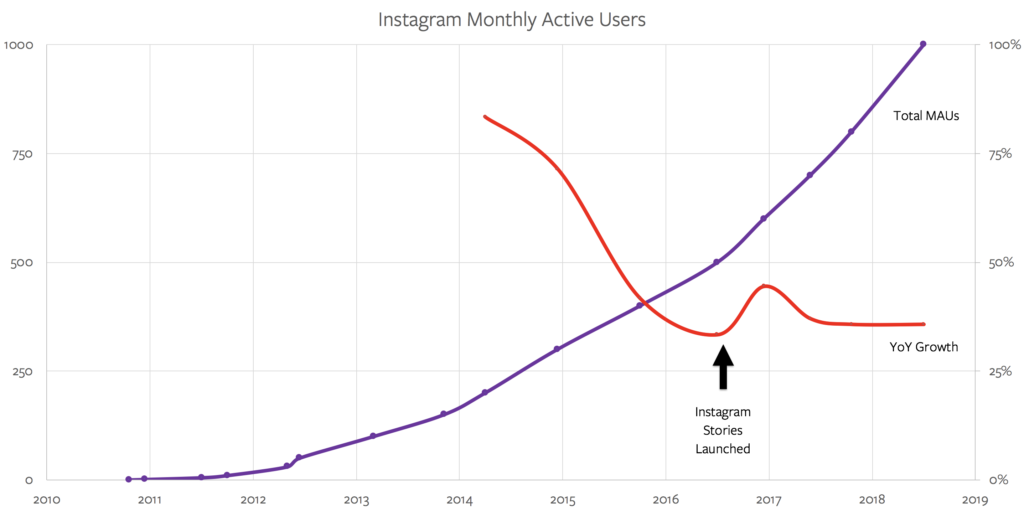
Instagram is a relatively new arrival on the block. In a short span of time, Instagram has achieved impressive statistics. It has scaled a base of whopping 1 billion monthly active users and 500 million daily active users, positioning itself as one of the fastest growing social media channels globally. It has over 100 million photos uploaded daily with an average user spending 28 minutes per day.

But that’s not all. Instagram has emerged as the 6th most popular social network in the world and is home to over 500 thousand active influencers ranging from technology, food, humour, fashion, lifestyle and many more industries.

The Covid-19 pandemic has brought major changes in consumer behaviour with online shopping and purchases gaining ground. In the grand scheme of things, these two social networking sites will particularly prove to be powerful as they will present more opportunities for brands to engage with their consumers. However, its not just big brands who stand to gain from this development. Even start-ups can leverage the power of these social media sites to increase their visibility and connect with their target audience.

Here’s a roundup of the reasons why Facebook and Instagram have become popular advertising platforms for new and upcoming start-ups.

Facebook 

On Facebook, content appears in the users’ feed based on algorithms. Hence, multiple strategies such as paid ads can be used to effectively get more views on a brand’s posts. Facebook has the most diverse audience and thus, it is counted as one of the best social media platforms for small businesses to reach their target market – whoever that audience might be.

Along with providing the ability to connect with a large number of people from diverse walks of life, there are some unique features that Facebook offers to a start-up. Its targeted digital advertising platform is amongst the best tools for marketing. Facebook ads are apt for niche targeting as well as broad targeting. These ads help identify those people who are most likely willing and ready to buy the company’s products or services. This feature ensures that a start-up can get their ad content in front of the right audience at the right moment of time.

Another reason that makes Facebook an attractive option for start-ups is its e-commerce integrations. Users can purchase through the social media platform itself. Making a purchase is just about clicking one button. Now Facebook has even allowed brands to communicate with their customers through Facebook messenger. Through this feature, start-ups can easily provide shipping updates and other order related details via the Facebook channel as well.

Instagram 

Instagram’s one-of-a-kind interface has some powerful benefits for a start-up business. One of the most striking features is that it enables companies to tell their brand’s story with unique, versatile and engaging visual content. Unlike other social media networking sites, Instagram works through visuals and is focused on both images and videos. No matter which industry, Instagram caters to every niche area and can be utilised to showcase all kinds of products. Even its targeted sponsored ads are immensely helpful in increasing a brand’s visibility.

The Instagram stories make marketing even more catchy and take the advertising game a notch higher. With Instagram stories, start-ups can live-stream videos and share them with their followers. These stories are the best way to provide behind-the-scenes footage and share important news and updates with the followers. Even Instagram allows companies to message their users directly, which can be a great tool for customer service.

A commonality among both the social media platforms is their analytics, which provides insights into how the campaigns and ads are performing so that if required, improvements can be made in the future for better results. The ads, ranging from video ads and single image ads to carousel ads and lead forms (only on Facebook), help brands generate loyal following among different audiences.

Summing It Up

Facebook and Instagram have both equally garnered immense popularity since the time of their inception. And both are equally beneficial for business. It’s up to the companies to decide which platform will prove to be the best for them looking at their target audience and the kind of content that they are looking to publish to build their social media presence.

By

Sourced from Inc42

By Karen Gilchrist.

Before building Salesforce into the multibillion-dollar cloud computing behemoth it is today, founder and CEO Marc Benioff experienced his share of ups and downs.

One of the most challenging among them came early on, when the company was just a couple of years old, he said during a recent interview for LinkedIn’s “Hello Monday” podcast.

But it also turned out to be one of his most formative, and can provide lessons for business leaders today, he said.

Weathering a crisis

At the time, it was the early 2000s. The economy was in recession and Salesforce, not yet then profitable, was “not stable,” the 56-year-old recalled.

Short of a chief financial officer and with little money available, Benioff and his co-founder, Parker Harris, were faced with a difficult decision: Let go of 20% of their workforce or risk losing the company.

Then with a team of 100, that meant saying goodbye to 20 people.

That’s business. You have to make tough decisions, you have to evolve, you have to change.
Marc Benioff
CEO and chairman, Salesforce

That was a “hard moment,” Benioff recalled. But with his long-term vision for the company in mind, Benioff said he was left with little choice.

“We had to take this aggressive action, Parker was in tears, it was like, really upsetting, but we had to do it,” he said. “That’s business. You have to make tough decisions, you have to evolve, you have to change.”

Ultimately, that move saved the business, he said. Three months later, Salesforce was profitable, according to Benioff. And by 2002-2003, things were looking “pretty good.”

In 2004, with around $100 million in revenue, the company went public, five years after its founding.

A lesson in leadership

Earlier this year, Salesforce’s revenue hit more than $17 billion, while Benioff’s net worth grew to an estimated $7.8 billion.

But the entrepreneur said that early experience has stayed with him and continues to guide his decisions today.

“There are moments for every company where you’re going to have to look at where you are, what’s working, what’s not working, you’re going to have to make adjustments, you’re going to have to change.”

That means adopting one of two mindsets, he said: A fixed mindset or a growth mindset.

You can have an expert’s mind, where you have few possibilities, or you can have a beginner’s mind, where you always have every possibility.
Marc Benioff
CEO and chairman, Salesforce

“Another way to say it is you can have an expert’s mind, where you have few possibilities, or you can have a beginner’s mind, where you always have every possibility,” he said.

“It’s critical for every entrepreneur, for every CEO, every business leader — really everyone — [to] maintain your beginner’s mind.”

To help with that, Benioff said he takes time to focus on mindfulness, which he does via meditation.

“I’m trying to let go of whatever it is so I can be in my present moment reality. That’s where I want to be, I want to be in the present moment and having a beginner’s mind,” he said.

Feature Image Credit: Marc Benioff, founder, chairman and CEO of enterprise cloud computing company Salesforce. Kim Kulish | Corbis News | Getty Images

By Karen Gilchrist

Sourced from CNBC make it

Sourced from breadnbeyond.

The rise of digital marketing is predicted to get fiercer in the year of 2020. As we are researching, we found that there are more people who tuned in surfing the internet through their mobile, desktop and even tablet to find information that they need but don’t necessarily have the energy to read articles.

Using video-based marketing can be the solution that they need.

Our dedicated team have researched tons of contributing statistics concerning the growing market of video marketing and how video marketing, if done correctly can help your company to prosper.

So, Where’s the Report?

This infographic contains digestible bits of what our team have researched on, including startling facts on how businesses are currently shifting, realizing the potential of video marketing for direct, yet efficient campaigns.

Turns out video marketing is a growing commodity that now becomes the most sought after tool. It works effectively attracting public’s interests in more interactive and fun way.

Embed code for this infographic can be found at the bottom of this page.

Video Marketing Strategies and Statistics for 2020
<div style="clear:both"><a
href="https://breadnbeyond.com/video-marketing/video-marketing-strategies-statistics/"
target="_blank" rel="noopener"><img
src="https://breadnbeyond.com/wp-content/uploads/2019/10/video-marketing-strategy-800px.jpg"
class="img-embed" title="Video Marketing Statistics that’s Going to
Rock 2020 [INFOGRAPHIC]" alt="Video Marketing Statistics that’s Going to
Rock 2020 [INFOGRAPHIC]"
border="0"/></a></div><div>Courtesy of: <a
href="https://breadnbeyond.com" target="_blank"
rel="noopener">Breadnbeyond</a></div>

Based on the statistics shown above many platforms such as Facebook, Twitter, Webinar, Linkedin, Instagram and many others have been leveraging video-based marketing strategy to gain recognition.

Youtube for an instance, is one of the major performing video channel for marketers to publish their video. It’s dominating the market with their 87% market share.

How to Own Those Traffic You Need

Ideally, digital marketers should start thinking of making their own explainer videos for marketing purposes. The incoming year of 2020 will be challenging for businesses across fields to compete, if they are unable to catch up to their users demand.

And the demand calls for a more highly interactive way of communicating their products to their segmented market.

As more and more people are now flocking in through various online platforms looking for pieces of information. The statistic shows, people won’t commit reading long articles and instead they prefer animated version of it, be it GIF or videos.

We have made a list of video marketing tools that can help you get the traffic that you needed.

The Upcoming Trends in 2020

The trend suggests that businesses start interacting with existing users and potential ones by adding videos in their website to maintain their current users attention, and most importantly spiking their likelihood on being discovered by perspective users by 53%.

Why Making Your Own Video Marketing?

In the last three years, video-marketing efforts have been proved fruitful. With an increased traffic of more than 100%, people now consumed more content in video format. The good thing is, 82% of businesses have now realized this fact.

Where to Start?

Start early. Grab some quick wins with your video marketing strategy in 2020.

Refine your video marketing campaigns with explainer videos! At Breadnbeyond, we offer a wide range of animated explainer video packages that are tailored to boost your company’s sales in the next campaign. Click on the banner below!

Get a Free Consultation Today

Sourced from breadnbeyond.

By Rooney Reeves.

In the highly-digitized world, we are living in, we often hear about content marketing. But what exactly is content marketing? Content marketing is a strategic marketing approach, focused on building and distributing relevant, consistent, and valuable content to draw and retain a clearly defined audience, and the ultimate goal is to drive profitable customer action.

Content is king, and website development today entails building websites and web apps with high-quality content. The most experienced successful brands and marketers already are vouching for that by developing powerful and unique content marketing campaigns. Unlike traditional marketing, content marketing costs 62 percent less and provides as many results when it comes to leads and traffic.

Business organizations seeking services of web developers, such for instance a PHP web development company that builds web solutions using PHP are doing so to boost their marketing strategies and to stay on the competitive edge. Unquestionably, content promotion strategies are popular and insanely effective in today’s marketplace. Whatever business vertical you are in, you could leverage content to develop a robust brand reputation, boost brand awareness, and boost ROI.

There are content marketing strategies that help drive more traffic to your website. What are these? Let’s find out.

Proven Content Marketing Strategies to Drive More Traffic

Build Astounding Content for a Very Distinct Audience

A content marketing campaign to be successful demands a lot of things. The most critical, however, is you have to take into account the concerns of your target audience. Put simply, you should recognize and understand the characteristics, behavior, needs, mindset, desires, issues, and habits of your audience.

If you’re to deliver value, then you must certainly know that your content would bring something new, something that your audience could hardly find somewhere else. The most essential element of SEO is keyword research. Look for the keyword and phrases that your audience uses in search engine queries.

Build content around these phrases and words to boost your rankings. When researching a keyword, look for long-tail phrases and keywords to bring in more relevant traffic. It would also be helpful to include keywords that are semantically related.

These are words and phrases that conceptually relate to one another. Some free keywords to help you include:

  • Keyword Tool Dominator
  • Google Search Console
  • Keywords Everywhere
  • Rank Tracker
  • Google Ads Keyword Planner

There are also other on-page and off-page factors, which impact your SEO aside from your content, such as:

  • backlinks
  • inbound links
  • site architecture

Networking and Guest Posting

Aside from engaging in a web development company, one of the most reliable ways of boosting awareness of your brand and blog traffic is guest posting. Guest posting first off enables connecting with niche authorities who possess an established database of customers and followers already. Effective guest posting secondly generates direct traffic.

You nonetheless have to target the right blogs, which target a similar audience, you should share content that amazes your audience, and you also have to link back to your website properly so that readers would feel enticed to click on your CTAs or call-to-action buttons. Guest posting provides an opportunity for you to connect with other same-minded people. All kinds of fruitful relationships could arise since you could share links, knowledge, and opportunities with your network group.

Segment the Audience and Build Various Landing Pages

Intelligent content marketing isn’t done randomly. Effective marketers segment their audiences following their various needs, including product needs, solution needs, and more. Segmentation is necessary simply because some of the visitors to your site are not customers, but some of them are.

Your content thus couldn’t be relevant to all your visitors since they have various needs and are at different stages of the sales process. Thus, as an example, the content you develop to boost brand awareness is wasted basically on people who have purchased one of your products already. The easiest way of segmenting the audience is through developing particular buyer personas.

Q&A Marketing and Forum Marketing

Q&A platforms and industry forums, such as Quora are goldmine content marketing channels. These sources, if properly leveraged, could drive plenty of traffic back to your website. Depending on your industry and the target audience, you have to identify the most relevant boards, which people use in discussing different topics.

There are different discussion forums, depending on the products and services you are selling. Study these forums and make certain that your ideal customers spend time there. The next thing to do is to build a branded profile that features the name and logo of your brand.

Forum marketing is all about interacting and providing effective solutions to people’s problems. Provide relevant advice, engage in relevant discussions, and use your signature in sharing important links back to your landing pages. The more helpful you are, the more leads and traffic you will generate over time.

Master One Social Network yet be Present on all the Others

Billions of people on earth today are active social media users. If you think about it, nearly half the population is using social media for different reasons. This tells you that social media isn’t a should anymore, but has become a must for every kind of business, enterprise, or blog.

Social media and content marketing are interconnected. One completes the other and vice versa. The perfect place for you to develop brand exposure, build meaningful relationships, and gather relevant leads is social media.

Whether you’re promoting content on social channels, you need to identify the most preferred social network by your target audience. Determine what communications channels they use, where they hang out, and how do they spend their time on social media. Quality over quantity is always the best, thus decide on the social channel you should focus more on.

Repurpose, Update, and Link to Old Content

Do not forget old content, especially if it’s evergreen and qualitative. Rather, you should update it, repurpose it and remind it throughout your newest blog posts. Simply, updating your content means adding new visual content, information, and new twists to make it more extensive.

Content update often could boost your search engine rankings, since crawlers revisit the pages and detect changes, which have been modified. Linking back to your past blogs is another effective way of boosting traffic and reputation to your brand. By adding internal links, which resolve various problems and needs, your target audience gets to spend more time on your blog, become familiar with your value proposition, style, and products.

Content repurposing involves modification to its media type. You could turn text into slides, audio, videos, infographics, and the other way around. As soon as you have numerous versions of the same value and information, share it via the various content channels.

For Better Results, Leverage Professionals

Content marketing is demanding. If you want to stay ahead of the competition and overshadow your competition, then the quality of your content should be great all the time. Keep in mind that a great entrepreneur, webmaster, or marketer is not a good writer or editor all the time.

In these instances, considering partnering with professionals. Aside from saving time and money, the quality of your article would be consistently written and preserved. There are several platforms where you can find talented freelancers.

Before contacting them, however, make certain that you build the profile of an ideal writer. Mention knowledge, experience, and skills requirements, and allow these services to find the perfect match.

Conclusion

Although technology and the internet continue to evolve, the main principle remains the same. Develop a content marketing strategy based on reliable data for a satisfactory and seamless customer journey.

By Rooney Reeves.

By Toby Shapshak.

Accessory-gate: Loyal Apple fans’ long-standing gripe with new adaptors being required following a new launch.

First published in Daily Maverick 168

The biggest news from Apple’s usual hypefest announcement about this year’s latest iPhone 12 models was the removal of the charger and headphones from the box. The internet erupted, not just with rage, but with hilarious memes about it, pointing out the stark similarity to the iPhone 5 with its square, steel edges.

Apple says the lack of charger and headphones is a move to minimise its carbon footprint – a seemingly “woke” response to climate concerns but one that falls apart when scrutinised, quicker than an ANC integrity commission hearing.

Sure, it will reduce the footprint of the box for iPhone 512, as I’m calling it, but it won’t for the two new added accessories most users will now have to buy separately. Similarly, Apple announced that last year’s prices would remain unchanged, which appears correct, except that last year it included two items you now have to fork out for.

There goes any attempt to challenge the long-held belief by Macheads that there is always a cable or connector tax for Apple products.

This year the lack of charger is particularly problematic because Apple has abandoned (as it should) the old USB format for the new USB-C – which both charges and transfers data faster. Such chargers were distributed (in the box) with iPhone 11s and I have upgraded all our household chargers because of the quicker charging.

How much does a charger actually cost? Like just about every other iPhone user, I can’t tell you off the top of my head. Now, after a quick trip to the official Myistore.co.za website, I can tell you an 18W USB-C power adaptor costs R649 and another R499 for a 1m USB-C to Lightning cable. An extra R1,148.

People will grumble, but they will buy them anyway. “It’s always the way,” as an Irish friend liked to say in her lilting accent about perennial behaviour.

Apple critics like to point to this accessory tax as another reason the company profits off its customers. But … isn’t that what a company is supposed to do? Isn’t profit the whole bloody point? Can a case be made that many people buy additional headphones, anyway, given that they’re buying a more expensive iPhone in the first place? Is Apple trying to trim costs after a global pandemic?

Apple and Microsoft are the two exceptions to the Big Tech habit of mining our personal data for profit. Both sell you something, often on a monthly basis. I pay an annual licence for Microsoft 365, and I pay monthly for Apple’s iCloud offerings. It’s called business. I am happy to pay for these services because that’s what I am doing: paying for a service. Remember that immortal adage of the social media age: if the product is free, you are the product. Also, I know they won’t let anyone steal my credit card details. That’s their job.

What are the alternatives? Android as an operating system? Remember who owns it. And don’t think for one minute that Google doesn’t make all its services point back to the one thing that makes it the vast majority of its income and profit: search advertising.

Android is a free operating system, we’re still told. Free for whom?

Google effectively sells it to the handset manufacturers on condition they include all Google’s default apps, including search, Chrome, Gmail, Maps and the Google Play Store. Google locks you into its own form of the walled garden, a seemingly huge garden but walled nevertheless.

Apart from Facebook, WhatsApp, Instagram, Messenger (all from another global giant that gives its services away free as part of its surveillance capitalism), banking and streaming services, most people don’t instal other apps on their phones. Even if they do, the funnel always leads to Google advertising, either programmatic advertising in a browser or inside the apps themselves, which make money from … showing Google ads.

At least with Apple and Microsoft, I know the transaction is transparent.

I am paying for a service with my credit card, instead of paying for it with my personal data. An extra R1,148. Worth every cent. DM/DM168

Feature Image Credit: The Apple logo is illuminated at the company’s store in Hong Kong, China.

By Toby Shapshak

Toby Shapshak is publisher of Stuff (Stuff.co.za) and Scrolla.Africa.

Sourced from Business Maverick