In a TEDx Talk, consultant David Mitroff explains when and why you can call yourself an expert.
Do you think of yourself as an expert in your industry? You may be more of one than you realize. In an engaging TEDx Talk, marketing consultant, Google mentor, and psychology PhD David Mitroff picks apart the question of what it takes to be an expert at something and when you should start saying that you are — because if you don’t, no one else will.
Mitroff began thinking about this after he gave a talk and two old men came up to him and said, “You’re really funny. You should be a standup comic.”
He wasn’t so sure, but he looked up the definition of a standup comic, and read that it was someone who interacts with the audience and is dynamic and fun. “I do that,” he thought. So he decided to put “standup comic” in his LinkedIn profile. After all, he figured, people who eat ice cream and post about it call themselves food bloggers, so why not?
The town where he’d met the old men asked him to return and give a second talk. On the basis of his previous talk and his LinkedIn profile, they promoted this new event calling him a consultant and standup comic. The presentation went well and the audience laughed. But an old friend of Mitroff’s called him up insisting that he couldn’t call himself a standup comic because he hadn’t performed at places like The Improv. Mitroff pointed out that if you Googled the name of the (small) town where he’d spoken and the term “standup comic,” results one through 10 were about him, on account of the promotion for his talk.
“So when are you an expert?” Mitroff asks. “Is it when others say you are? Is it when two old guys say you are or your friend says you’re not? Is it when you say you are?”
We all know the reasons for not calling ourselves an expert. There’s imposter syndrome, the feeling that your accomplishments are the result of luck and that you’re in constant danger of being exposed as a fraud. If you believe this, then claiming to be an expert only increases your danger of being called out as a fake.
More rationally, you may also be concerned about the Dunning-Kruger effect, a well-known and widespread phenomenon in which people believe themselves to be more expert than they are. “As you start learning something more and more, you realize you know less and less and less,” Mitroff says. “You’ve got to learn more and more skills about it.”
Mitroff is not suggesting that you should declare yourself an expert on fly-fishing, for instance, after one successful fishing trip. Instead, he says, if you want to become an expert at something, do these three things:
1. Spend three years learning your topic.
“After a lot of research, and a lot of time and pain, I believe it takes three years to become an expert,” he says. (He’s leaving aside fields where there’s a set certification path, for instance the four years of medical school followed by a residency required to become a physician.)
“Now does that mean you just wait three years and then say, ‘OK, I’m an expert now’? No, you actually have to do stuff,” he says. Begin by acquiring knowledge, and then keep on learning. “The research shows that experts continue to learn and educate themselves more and more and more, and they surround themselves with other people to become even more expert,” he says. “You don’t just become an expert and stop learning.”
Think about the smartest people you know. I’m willing to bet most of them do just this. Or think about some of the smartest and most iconic entrepreneurs, such as Bill Gates and Warren Buffett. They spend much of their time reading, studying, and talking to other experts to continue expanding their expertise. If, after decades of constant learning, these guys still don’t know everything they need to, chances are you won’t either.
2. Build your confidence.
Being an expert won’t do you much good if you never tell anyone about it. “You have to believe in yourself,” Mitroff says. “You have to believe in your product, or believe in your service. You have to believe in your community, and you have to believe in what you’re doing.”
If you’ve followed the first step and put in the time to learn your topic and practice your skills, then you’ve already gone at least some of the way to becoming an expert. Being an expert doesn’t mean that you’re never wrong, it doesn’t mean you know absolutely everything, and it doesn’t mean that other experts will always agree with you. It means you’ve put in the time and work to learn as much about your topic as you can, and that you’re continuing to learn more every day.
So if you’ve put in that time and you’ve learned a lot, own it! Declare yourself an expert. Don’t let naysayers like Mitroff’s friend get inside your head and shake that confidence.
3. Take action.
Your expertise will be of no use to anyone if all you do is sit around saying what an expert you are. So put your expertise to practical use.
As a marketing consultant, Mitroff made an astute observation: Most people who are nominated for awards don’t win them, but the mere fact of being nominated brings them visibility and prestige. Armed with that knowledge, he began nominating his clients and other people he knew for awards in their fields. “Why not?” he says. “They might accidentally win sometimes, but if they don’t win it doesn’t matter.”
Others began nominating Mitroff for awards in return, and he also began nominating himself. Along the way, he got nominated for an award as a changemaker in the city of Oakland, California, a nomination that made sense because, he says, he’s given free presentations to aspiring entrepreneurs and small-business owners at Oakland City Hall more than 60 times.
Did he win the award? No. But, he says, that nomination may have led directly to his being chosen for the very TEDx Talk he was now giving.
The somber, early pandemic ads with lilting pianos became something of a running joke. But they did raise the question of whether brands can successfully sell while focusing on negative topics. Mars’ consumer insights lead Sorin Patilinet says extensive neuroscience studies show that leaning into negativity often leads to bad results.
Many people have a negative enough reaction to seeing a video advertisement, period. So layering on a narrative that involves negative emotions is only making matters worse, right? Probably, according to Sorin Patilinet, global consumer marketing insights director, Mars, Inc.
The Mars team has been running one of the largest neuromarketing studies in the world these past five years. It has studied more than 700 ads in an effort to determine which evoke emotions that, in turn, build memory structures that are recalled at the point of purchase. Throughout this study, Patilinet has found that eliciting negative emotions is a tricky proposition. Here, he tells us why:
The negativity must be brief
“If there is a negative emotion, it has to be resolved very quickly or be a set up for something to laugh at,“ says Patilinet. “If not, you’re going to lose a lot of people along the way.”
He cites Cesar ’Love them back’ as an example of an ad that performed poorly because the negativity didn’t resolve fast enough.
The brand cannot be associated with down moment
“If negativity is used in a story arc, you want to show the brand at the moment of highest, positive emotion. You don’t want to showcase a brand during the downturn, but instead bring it in as a hero at the end.”
“The challenge is that consumers prefer shorter formats where is it is difficult, but not impossible, to build emotional content.
“You have six seconds on YouTube, so there’s basically no time to create a story. We tried continuing a story by retargeting the same person with the next episode. The idea was great, but the execution at scale didn’t live up to the promise.”
You risk damaging your brand
“The worst thing that could happen is you make a negative imprint. Then, the consumer ends up correlating the brand with something negative, which you don’t want.”
Attention for the sake of attention doesn’t work
“We are looking for ‘polite attention’. We aren’t turning your screen yellow and bumping up our logo against you just to grab that attention, because we know that doesn’t help for the long-term.”
Creating ads for the Covid-19 moment is short sighted
“It’s difficult to try and nail creative for the moment. We believe in running executions for a long time rather than jumping on the Covid-19 ad bandwagon. The general truths and the humour we have used for our brands still resonate today. It takes years for a good ad to decay.”
Overall, Patilinet says the reality is that ads are becoming more practical because of the restrictions of the ad duration. “In shorter ads, the level of emotion declines, which is a challenge because we know that emotions that create memories can lead to sales. Creating a three-second Facebook execution is just your logo and a headline. That doesn’t elicit too much emotion, unfortunately. Those are the ads that are actually seen by consumers, not the ones that are featured in the advertising trades.”
Feature Image Credit: M&M’s “Eating in bed” scored well because it resolved a negative situation quickly.
Covid-19 has not only drastically changed the way we communicate with each other, but the economic impact of the pandemic has forced many brand marketing teams into a corner — charged with increasing revenue contribution while facing budget cuts. In fact, according to a recent Gartner Inc. survey, 76% of marketing leaders expected budget cuts as a result of Covid-19. These teams are being asked to improve business outcomes with fewer resources.
Bringing Life To Personalization
Brands executing a digital-first or direct-to-consumer strategy must move beyond a one-size-fits-all approach to digital marketing and create messages that are relevant to a consumer’s moment and context. To move the needle in sales, it is important to message more granularly. For example, creating messaging for individual consumers’ interests in specific products (like models or colors) and locations (like open locations vs. curbside pickup).
It is equally important to design specific content relevant to individual consumers regardless of where they may be — like Facebook, Instagram, streaming media or email. This means brands are in need of creating many variations of the content to fit new advertising formats and deliver personalized experiences that appeal to consumers. According to a report by IAB, “50% of digital device consumers will make a purchase and become brand loyal if they receive personalized brand content.”
Right now, many brands are leaning on production teams or agencies to manually design and build creative variations, which can be costly due to the hours it takes to do so by hand. While this method of creative production used to be a brand’s only option, it also meant that the creative outputs were not built in a way that could be easily modified and customized with language and product changes for local brand teams. Automation, however, paves a way for brands to quickly and efficiently spin up new creative variations that add an extra layer of personalization to marketing campaigns.
It Isn’t Just About Spending Less; It’s About Doing More
Automation isn’t just about spending less on production costs. It’s about creating endless possibilities with ad and content variations. It’s a powerful tool that lets us achieve tasks that weren’t humanly possible 20, 10 or even five years ago.
For example, at my company, Jivox, advancements in automation have allowed us to scale personalization for our clients while dramatically reducing production costs. This is done by automating creative versioning across all digital marketing channels (paid and owned) and enabling real-time dynamic assembly, re-sizing and delivery of creative assets. We optimize the best performing creative and the highest performing audience segments to increase the return on investment.
When it comes to personalized digital marketing and advertising, automation through dynamic creative optimization (DCO) technology allows brands to create millions of creative options — versus the hundreds possible through manual creation — that better speak to their audiences on an individual level. This means individuals will receive hyperpersonalized recommendations on products based on context, such as time of the day, weather, location, interests, real-time behavior and many more factors that make them the unique person they are. This increases brands’ chances of converting, selling and creating brand loyalty with those individuals.
How To Get Started With Automation For Personalized Digital Marketing
For marketers stepping into the world of automation for the first time, to those who are comfortable using creative management platforms to automate versions, and possibly using one or two data triggers to personalize creative, there are a few things to consider before taking a leap of faith:
1. Do a self-assessment.
No matter where a brand starts its creative journey, the goal should be to consistently achieve omnichannel personalization using automation. To figure out your maturity level, start with an assessment like the following:
• Are you A/B testing creative without using much data? Are you optimizing a few variations of the ads in the rotation?
• Are you personalizing the creative based on genders, age groups, geographical regions? Do you also mostly use behavior data from your website for retargeting?
• Are you using the creative management platform (CMP) for creative versioning, and data management platform (DMP) for prospecting? Do you run your campaign using more than one channel?
2. Home in on three key ingredients: data, channel and optimization.
There are three key ingredients to effective DCO: in-depth data, a broad array of channels and artificial intelligence (AI)-enabled optimization. True personalization should rely on more than just basic demographic information like age and gender. Establishing in-depth data points, like first-party data and data from your customer relationship management (CRM) software, or contextual data, is key.
When it comes to distributing those personalized messages, it’s also important to create a consistent experience across a broad array of channels — like display, social, video, website, email and more — versus taking a siloed approach to reaching potential buyers. Once you have the right data and channels in place, the last key ingredient is AI-enabled optimization that allows you to evolve your campaigns based on in-the-moment performance, not just when the campaign is over.
3. Choose a partner that’s focused on the future.
The demise of third-party cookies has been a hot topic for what seems like years now. As this change evolves, it’s critical for marketers to choose an automation partner focused on what happens after third-party cookies are phased out. One way to determine if a potential partner has these future changes top of mind is to ask how they’re currently using first-party data to replace third-party cookies, such as data from first-party-based identity.
We can’t expect things to return to the way they used to be, but automation creates a beacon of hope for brands, allowing them to increase output while decreasing the budget needed to get them there to adapt to this new age of business. The way I see it, automation is the key to keeping personalized digital marketing alive.
How Madison Semarjian, who created her app Mada in college, is working to out-innovate a giant.
When Madison Semarjian was a college freshman, she had an idea for an app: It would be like Tinder, but for clothing. She imagined the app could use AI to learn her personal style and then pull together outfits from a wide range of retailers. If she liked what she saw, she could swipe right and even buy everything. If she hated it, she’d swipe left.
Semarjian couldn’t shake the idea, so she spent all of college creating it—developing the tech, raising money and signing partnerships with major brands like Nordstrom, Bloomingdale’s and Prada. She called the app Mada, and she launched it in January 2020. It was a quick hit with the media and style lovers because nothing like it existed.
But that quickly changed.
One day earlier this year, as Semarjian was having coffee with two of her advisers, she saw a new app appear in Apple’s App Store. It was called The Yes, and had a similar functionality to Mada. It also had major backing; it’s run by the former COO of Stitch Fix and had raised $30 million from investors.
“Here I am, fresh out of school. And here is this industry veteran that has more experience in the industry than I have life on this Earth,” says Semarjian, 23. She was understandably freaked out. “But my adviser turned to me in that moment and she goes, ‘Blinders on, Madison.’”
Image Credit: Courtesy of Mada
To stay ahead of her well-funded competition, the adviser was saying, Semarjian couldn’t panic. She needed to focus on her strengths while speeding up her plans for marketing and growth. Here are three major things she did in response:
1. Build strong bonds with customers
When Mada first launched, it did so with a bug. Its product feeds weren’t updating fast enough, so sometimes customers would order something and then discover it was out of stock. “In that moment, I would reach out to them myself and be like, ‘I’m so sorry, this is out of stock, but here are 10 more options that we think you’ll love,’” Semarjian says.
She was stunned by the results. These customers turned into some of Mada’s biggest fans. It made her realize the power of personally connecting with her audience. It also gave her an idea to launch a kind of “style concierge” — someone whom customers could reach out to with any style-related question. She figured she’d develop it sometime in the future.
Then her new competitor arrived, and Semarjian decided it was time to launch the style concierge now. She wanted another way to differentiate herself, and to lock in long-term relationships with her customers. So instead of offering a style concierge as a premium service, she made it available to everyone who uses the app. All someone has to do is send an email and they’ll get a personal response.
The program launched over the summer, and Semarjian says the reaction was immediate. Users became even more engaged with the app and used it longer. And they asked questions she never expected, which gave her even more insight into her users. “One emailed in and was like, ‘I wear the same thing over and over again, and I’m bored but I’m kind of nervous to try something new. Any tips?’” she says.
Her team had many tips.
2. Market smarter, not louder
Semarjian has a modest marketing budget, so she’d planned to use it slowly and strategically. Rather than blow the budget on tons of pricy influencers, she started small with a program that paid regular sorority girls to promote the brand. But once her competitor appeared on the scene, Semarjian decided to step up her game — but remain just as strategic.
Many startups spend heavily and quickly on marketing, hoping to grab as many eyeballs as possible, but Semarjian didn’t want to do that. Even though she was feeling the pressure, she wanted to figure out how to make the most of her marketing dollars. She interviewed a lot of influencers, looking for someone who seemed perfectly aligned with Mada, and eventually decided to run a campaign with one of them. Semarjian figured that Instagram would drive the most attention, but she was surprised at the results. Instagram did fine … but the influencer casually mentioned Mada on her YouTube channel as well, and that triggered a huge response.
“People loved that, versus seeing this very put-together picture on Instagram,” Semarjian says. It was exactly the kind of data she was hoping to get. “I’m glad we tried that, because it completely changed my approach to how we’re going to do influencer marketing.”
3. Listen to customers and rethink assumptions
Every founder has a vision for their company, and this was Semarjian’s: Mada was an outfitting platform. It was special because it created full outfits for people to review.
But then her customers began asking for things other than outfits. “People started emailing to say, ‘I love this new brand that I discovered in an outfit, but can I see all the products you carry by them?’” she says.
At first, Semarjian didn’t like this. Mada was an outfitting platform, after all! But then she realized her error. “I am a planner. I know what I want, and I’m also such a control freak,” she says. And in business, that can be dangerous. “That’s why I’ve made sure to build up a team that has some people who are exact opposites of me, because I love when people on my team challenge me.”
She listened to her team and started expanding beyond outfits. They created a new feature so people can search by individual brand. “So it’s a little bit more of a typical ecommerce experience than just the outfit,” she says.
But users were happy, and that’s what matters most.
n the last few years, podcasts have exploded – but you don’t need anyone to tell you that. Every man, his dog, and his competitor have launched a podcast recently, and it’s hard to know where to start.
Podcasting keeps making the headlines, too. Joe Rogan went viral when he signed an exclusive deal with Spotify, and the streaming platform doubled down when they also signed Michelle Obama. In fact, journalists actually listen to more and more podcasts now to source quotes from people for their stories, quotes that are out in the public domain. And to make the case for B2B, one statistic found that there are avid fans of business podcasts in a massive 13 million households.
Podcasts are ideal for brand awareness and managing your personal brand, in an on-the-go, busy lifestyle. How do you get yours noticed in a landscape where the top 0.1% most popular ones reign and the market becomes more saturated every day?
You don’t need to create your own show to thrive in podcast land
People, and brands, launch podcasts on social media almost daily.
While this should be rewarded, people only have so many hours a day to listen to podcasts and don’t always have time for new ones. Plus, you need a lot of spare cash for ads and need to be ready to make a big commitment, having people lined up ready to guest each week.
If you’re starting out, you should dip your toes into the water first. Podcasts are fantastic for small and medium-sized businesses and their executives to grow awareness. By taking part in podcasts and guesting on existing shows, you’ll get:
1. Free advertising/brand awareness
2. Likely a 15-30 second slot to plug yourself
3. To promote yourself as a thought leader
4. See how other people run podcasts, for future reference in case you set up your own later
5. An opportunity to network and connect with key influencers.
How do I become a guest on podcasts?
There’s so many of them out there, it can be easy to become a deer in headlights at the vast number of podcasts available, but it doesn’t need to be scary.
If you start your own podcast, you need to grow it from scratch, develop a long-term content strategy, and invest a lot of time and money. But if you start by guesting on others – they’ve already done the hard work for you!
Research relevant podcasts by searching key terms
As of January this year, there were more than 850,000 active podcasts. The easiest way to filter down to find podcasts that are right for you to be on, to get in front of your audience is by searching for the key terms on your podcast app of choice.
For instance, if you search ‘SaaS’ on Apple, Google, Acast, Spotify etc, it’ll show the shows which mention SaaS in previous episodes, or their titles. Search for your job title, or for your audience base. For example, if your core offering is smart pay solutions, you can search for:
Smart pay
Finance
Young people + money
Retail
There’s also nothing wrong with just searching for top podcasts in your industry on Google, too – but some of these lists may be outdated, and the devil moves quickly, but podcasts move quicker.
Look at their relevance, not popularity
With almost a million podcasts, it’s impossible for them all to have high listening figures – there’s only so many hours in a day. Many should look at the reviews and ratings on the podcast to see how popular it is.
But Megaphone collected data on the US iTunes store which found that 80% of podcasts have no rating listed. Think about podcasts in the same situation as a microwave – who actually leaves ratings? Usually it’s those who think it’s the best microwave they have ever bought and it’s life-changing, or those who actively hate it. The millions of people who bought the microwave and think it’s good won’t leave a review. The same can be applied to podcasts.
You don’t need to guest on a podcast with 100,000 weekly listeners. All you need to do is make sure that they’re relevant. Don’t feel like you can’t ask the host or organiser who their target audience is, just to be sure, as they’ll have more of that data than you will be able to see.
If you do want to see what Joe Public has to say about the podcast, you’ll have a better chance by searching the name of it on Twitter and LinkedIn, where people tend to post about things they enjoy that are relevant to them and to others in their industry. At Hallam, we noticed that The Goat Agency’s podcast, The 30,000ft View, was being spoken about a lot on Twitter, and so pitched Susan Hallam MBE in to speak on one of their next episodes – which they said yes to.
Identify your niche talking point
You want to be seen as the expert, and that won’t happen if you’re just repeating what everyone else is saying.
What can you tell their listeners that someone else can’t? Think of it like a speaking slot – what’s your podcast USP? To identify what your brand, and your people can talk about, answer the following questions which might help you to identify your key talking points:
Do you have any major thoughts or controversial opinions on recent news in your industry?
What are you doing about consumer behaviour changes? Can you offer your thoughts on this?
Everyone’s favourite phrase – digital transformation. What are you doing to cater to it in your industry?
Do you have any major company hacks that you can share which have helped you to become more productive/successful/happier?
Are there any new regulations you can comment on?
What do you see people doing all the time that is wrong or you don’t agree with?
Any cool customer data you can share?
Securing the spot
Search on Twitter. Set up an alert on ‘IfThisThenThat’ which will help you to get alerted every time someone includes the word ‘podcast’ with the hashtag #JournoRequest or #PRRequest. This will save you scanning thousands of tweets a day.
Once you know which podcasts you want to go on, reach out to them and ask. They’ll likely have a website with their contact information, or it will be on their social media. Explain why you like their podcast, and what you can offer to their audience.
Connect with podcast hosts on Twitter and LinkedIn, and follow them on Instagram and Twitter. If you start to interact with them and build up a relationship organically, you’ll likely be ahead of the pack when it comes to securing that coveted spot. Kieran S-Lawler, Head of Content and Social Media at Hallam, was being vocal on LinkedIn, and his connections at Pitch Consultants noticed him. As a result, they invited him onto their podcast.
Thought Leadership 2.0
We all want to be thought leaders, and get in front of our audience. Adding value to a podcast will have people searching for you and your brand after, and one guest appearance can easily turn into ten. Once people hear you on one relevant podcast, they might invite you on theirs.
Guesting on podcasts will allow you to broaden your brand and reach out and build your reputation on the topic in your industry, whether it’s digital marketing, SaaS, hair and beauty, or finance.
It will also help you to increase your exposure and develop personal relationships, There may be an opportunity, should you eventually launch your own podcast, to invite them onto yours – with their raised following, you’re more likely to get a higher number of listeners.
Feature Image: Hallam comment on the growth of business podcasts and suggest that now might be the time to get in front of new listeners.
More than 70 million Americans have a side hustle these days. That’s 45% of the workforce! Now, as said workforce is more remote than ever, it’s even easier for people to start side hustles while they’re working from home. The Internet is rife with money-making opportunities for people who have the drive and savvy to identify them.
Want to earn some extra cash? It’s time to check out Online Income 101.
This 13-course bundle covers some of today’s best side hustles, from freelancing and affiliate marketing to selling on Amazon and more. The courses are led by Alex Genadinik, a business coach with expertise in SEO, marketing, and Amazon. He’s a three-time bestselling Amazon author, the creator of top entrepreneur mobile apps with more than two million downloads, and the host of a popular business and marketing channel on YouTube with more than two million views. Genadinik has made a career out of the Internet, and he’ll show you how you can too.
Here, you’ll cover a wide variety of money-making opportunities on the web. You’ll get an introduction to Fiverr, the top freelancing network on the Internet, and learn how to make a splash in influencer marketing. You’ll ascertain how to negotiate to get the best rates for yourself, too. There are courses on building an ecommerce business on Amazon (and growing it using SEO) and even a course on becoming an online instructor. Finally, the bundle takes a deep dive into affiliate marketing, teaching you how to earn passive income by recruiting affiliates, growing a network, and much more.
Disclosure: Our goal is to feature products and services that we think you’ll find interesting and useful. If you purchase them, Entrepreneur may get a small share of the revenue from the sale from our commerce partners.
Traditionally, retailers have leaned by a small margin toward direct-response advertising, rather than branding. Thus, we expect retail will slightly exceed the US digital ad spending average in search, but not display, this year. The industry will, nonetheless, be extremely balanced in allocating its digital ad dollars, splitting them almost evenly between formats, and within formats as well.
Retailers will spend $13.53 billion on digital display advertising in 2020, a marginal uptick of 2.3% from 2019. Display will represent 47.9% of the vertical’s overall digital ad spending, compared with search’s 47.5%. This is right in line with the display-to-search ratio that retail has seen over the past few years.
Of the $13.53 billion in display spend, video will claim $6.55 billion, a balanced 48.4% of the format’s digital ad dollars. Video’s share of retail’s display spending has skyrocketed from 28.1% in 2016 to nearly 50% this year, a surge that can be attributed to the emergence of viable connected TV (CTV) ad opportunities and the recent popularity of video advertising in social media.
The retail industry will spend 4.8% more on search ads in 2020. At $13.42 billion, that’s a healthy 24.7% of total US search ad spending.
Though retailers will increase ad spend in these formats, these increases signify dramatic decelerations when compared with 2019 figures. The coronavirus and the ensuing recession have constrained ad spending growth for nearly every industry, and retail is no exception. Display and search spending in the retail category, however, should rebound nicely next year. We forecast that the industry will see 27.8% growth for display and 24.6% growth for search in 2021.
As a vertical, retail will probably always have a wide range of brands and products that will find value in both search and display advertising. Retail and ad industry insiders regularly offer a vast—and, at times, contradictory—array of opinions about how retailers prefer to allocate their digital ad budgets, which speaks to the great diversity within retail. In containing these multitudes, no other vertical we cover but retail will spread its digital ad dollars quite so evenly.
Whether you’re planning to start a new business or have already taken the leap, check out these digital tools that help you save time, encourage productivity and stay organised at all times.
With many young entrepreneurs coming forward with their start-up businesses, the need for time and cost-effective tools have also increased. We’ve come up with 7 digital tools to help kickstart your business growth, ensure productivity and have an effective management strategy.
Having a business website is more important than you think – even for small businesses. While establishing credibility, a website also allows you to market your products and services online for not only potential consumers, but potential businesses as well. With SquareSpace, it’s simple to turn your ideas into reality. All you have to do is choose your template to best fit your personal style and professional needs, explore the tools you want to add; such as booking services, and then reach your audience.
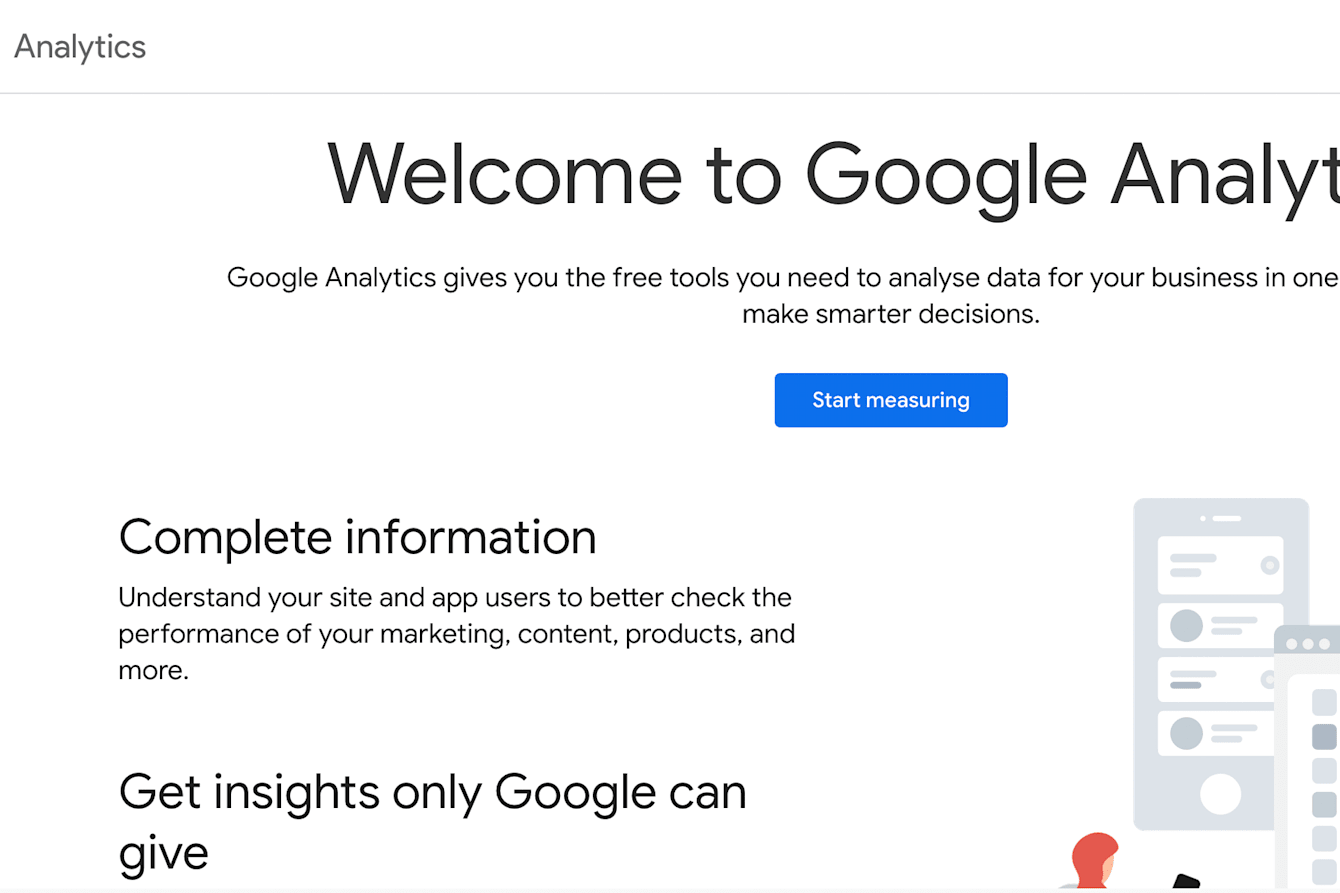
Google Analytics gives you the tools you need to analyse data for your business, all in one place, to help you make smarter decisions. Understand your site and/or app users to better check the performance of your marketing, content, products, and more. Access Google’s unique insights and machine learning capabilities to make the most of your data. Analytics works hand in hand with Google’s advertising and publisher products, to gather insights that aid in delivering results.
3. HubSpot: Inbound Marketing, Sales and Service Software
Create compelling content and present to the right people
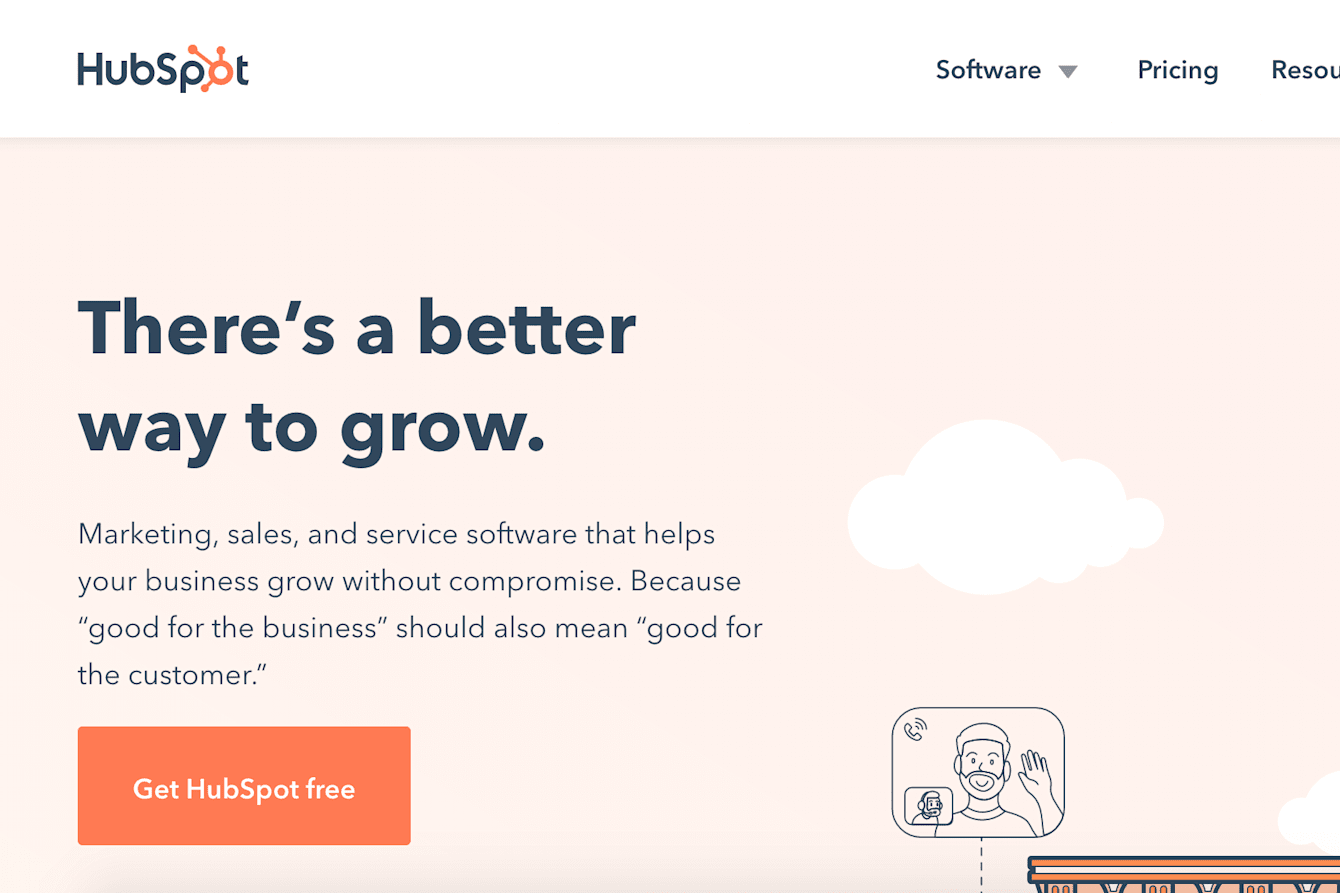
HubSpot offers a full stack of software for marketing, sales, and customer service, with Customer Relationship Management at its core. Its marketing software helps you grow traffic, convert more visitors to customers, and run complete inbound marketing campaigns at scale. The Sales hub helps you get deeper insights into prospects, automate the tasks you dislike and close more deals faster. The Service hub connects you with customers, helps you exceed their expectations, and turns them into promoters that grow your business.
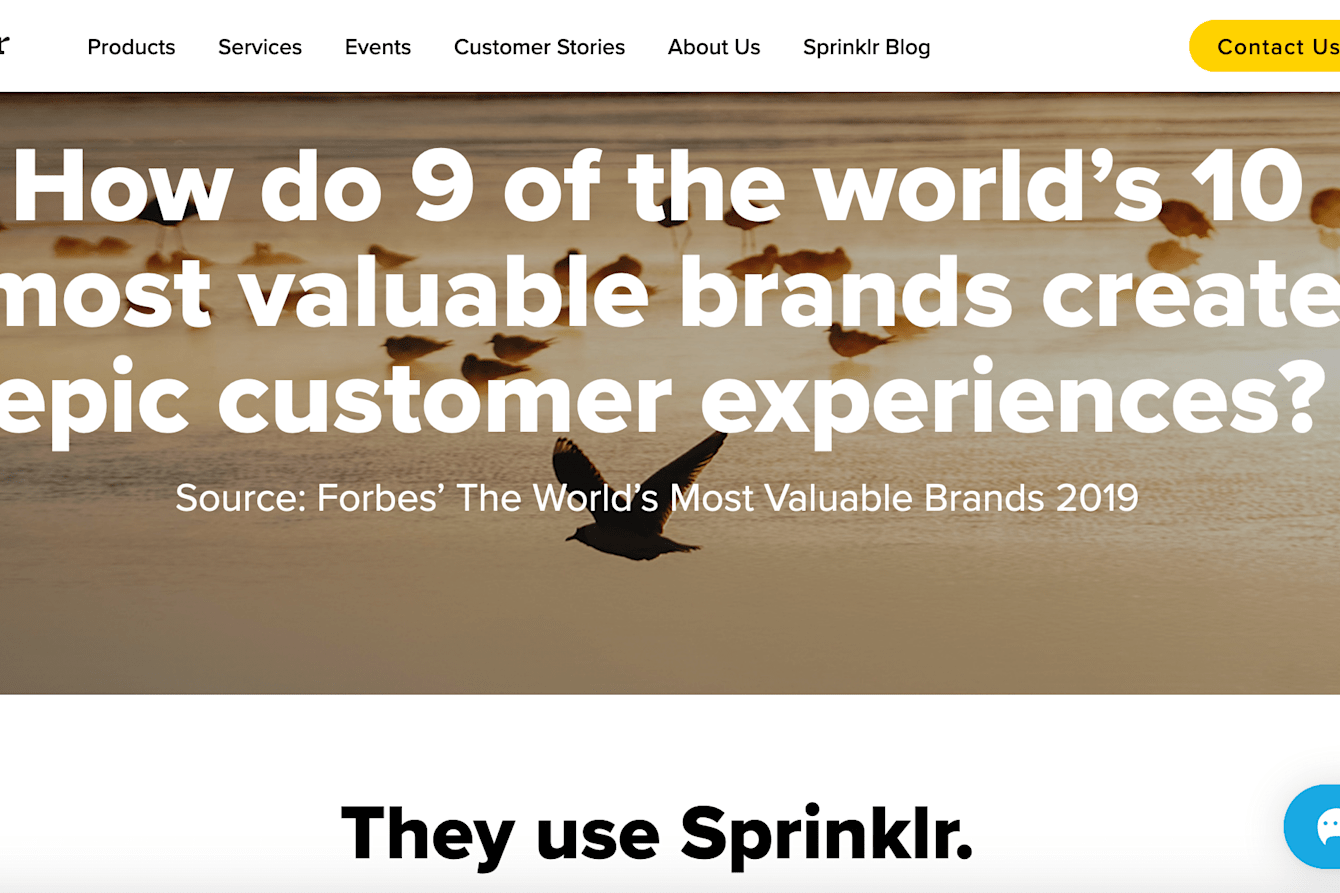
With Sprinklr, you can connect with customers on platforms such as Facebook, Instagram, etc and coordinate your interactions across marketing, advertising, research, care and engagement teams to deliver the best customer experience your brand has to offer. You’ll be able to generate more sales with better content by leveraging AI-powered insights, as well as reduce content production costs using automated workflows, agile boards and milestone tracking.
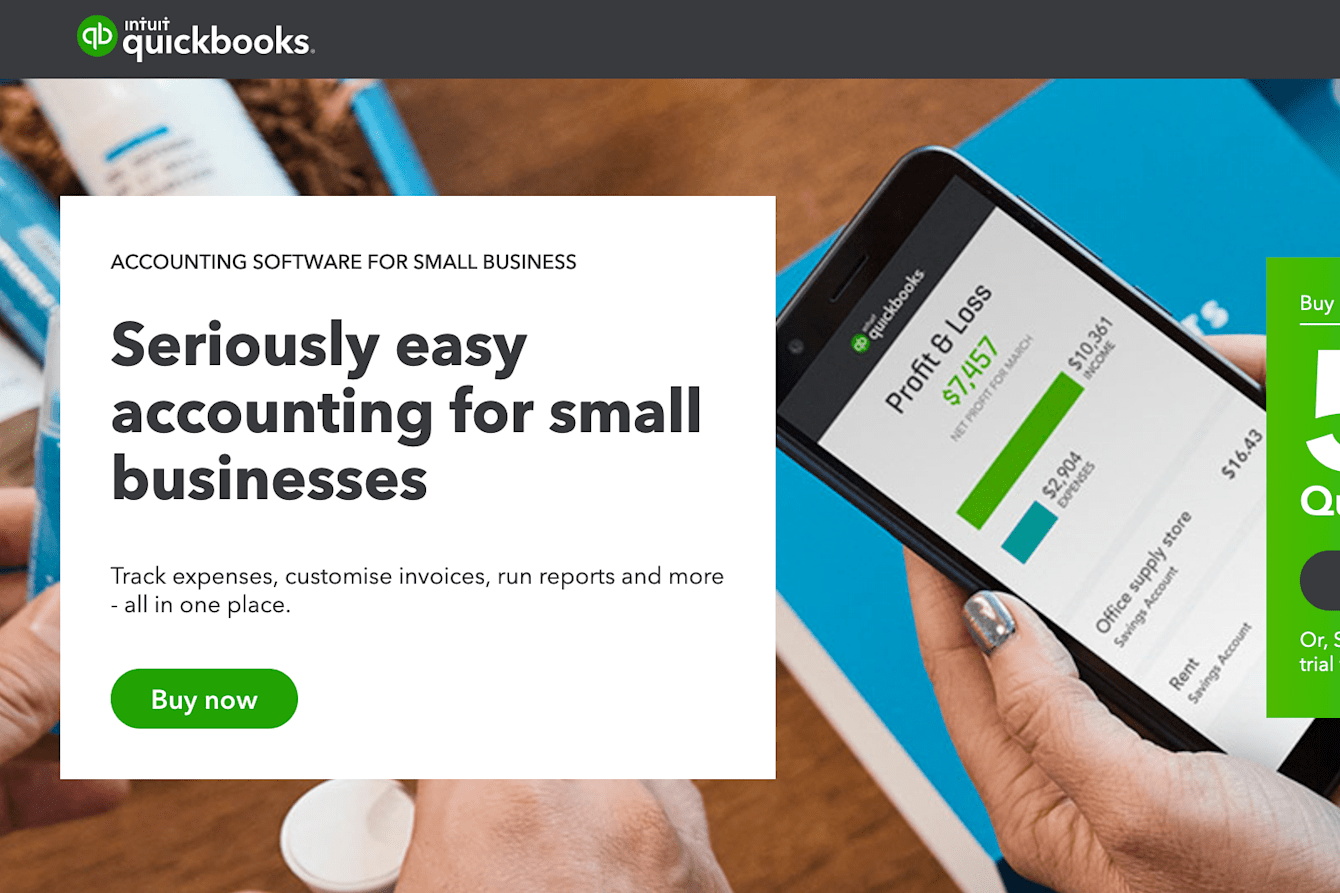
5. QuickBooks: Online Accounting Solution
Track expenses, customise invoices and run reports
QuickBooks is an accounting tool ideal for small businesses. How does this make online accounting easy? Your data is stored in the cloud, allowing you to run your business anywhere; from your Mac, PC, tablet or phone. You can send custom quotes and invoices, and even track your sales and expenses in one place. Create reports and collaborate with your advisor to see how your business is doing and get ready for tax time.
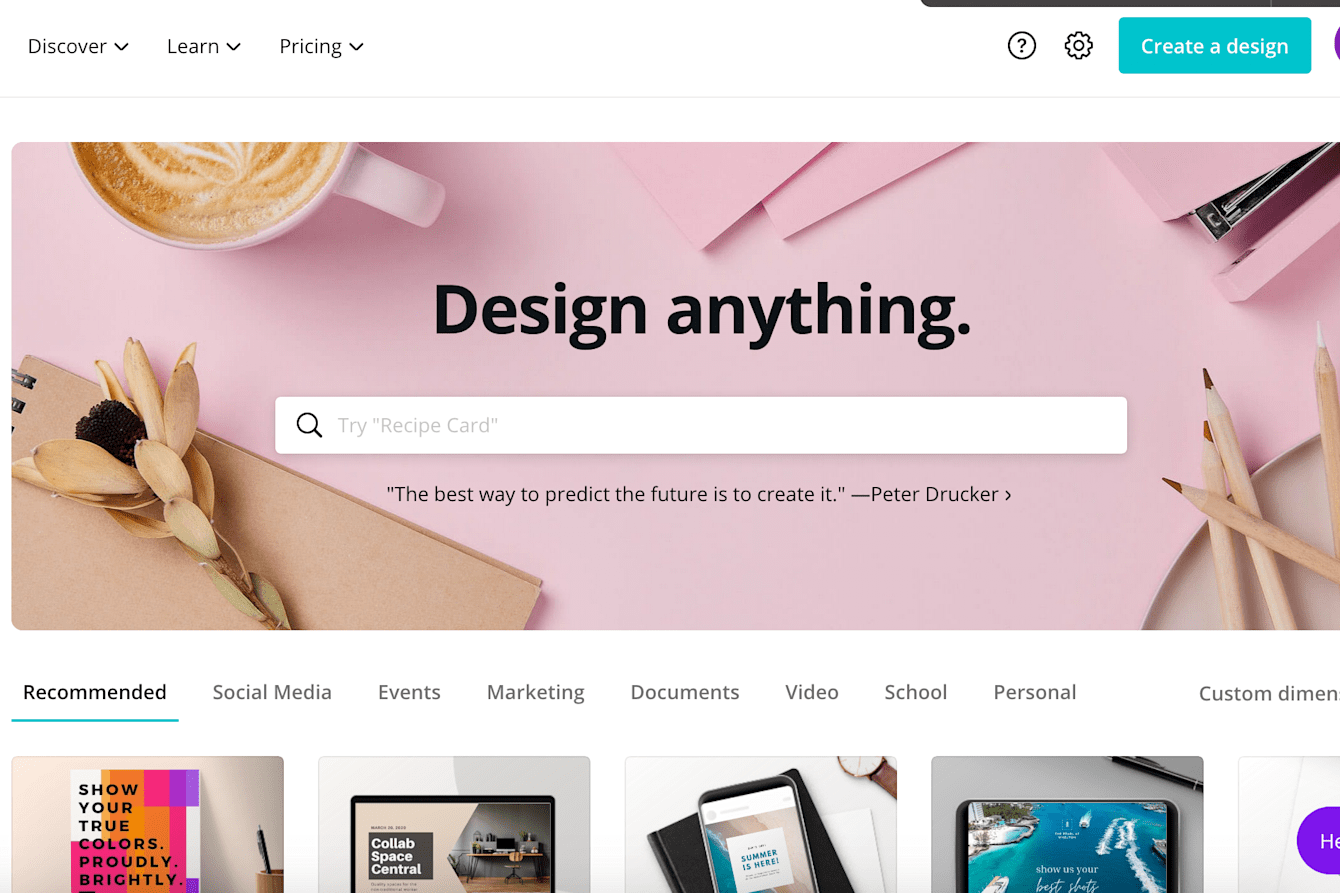
As a start-up business, you might not have the necessary budgets to hire extra help with design, but don’t let that stop you from producing some amazing creatives. With Canva, you can make stunning designs even if you’re not an expert – it’s that simple! It has everything you need to create a personalized design: millions of stock photographs, vectors and illustrations, photo filters, free icons and hundreds of fonts. And the best part? You can choose from 3 Canva Plans; Free, Pro and Enterprise – whichever plan is right for your business.
7. Toggl Plan: Task Scheduling and Planning
Plan and organise projects, tasks and team with ease
Keep your team on track and never miss a deadline with this project management software. Toggl Plan gives you a visual overview of who’s doing what and when. It also lets you keep important information all in one place, so you can easily access them without having to spend too much time on it. This is your all-in-one organizing tool to plan small event projects, track the progress of daily tasks, and keep your team working together.
Software-as-a-service stocks are considered extended by many analysts.
Financial media regularly cover the idea of a SaaS bubble, creating wide ranges of expectations and significant movements post earnings.
In this context, investing in high-flying SaaS stocks can be daunting and requires a leap of faith.
Looking for the right favorable features can help you find the winners in this category and invest confidently, even when they are highly volatile.
I break down five essential traits that you should always look for before you invest in a SaaS business.
I do much more than just articles at App Economy Portfolio: Members get access to model portfolios, regular updates, a chat room, and more. Get started today »
Since Marc Andreessen published his essayWhy Software Is Eating The World in 2011, software companies have been some of the very best-performing public equities. Companies like Salesforce (CRM), Atlassian (TEAM) or ServiceNow (NOW) are fantastic success stories of the past decade.
In recent years, Software-as-a-Service (or SaaS for the rest of this article) has really taken the spotlight. And for good reasons. IT purchasing has become decentralized, sales cycles are now shorter and product adoption is more nimble than ever.
Most SaaS companies offer the best aspects of a digital business:
Virality with freemium models targeting developers and teams.
Scalability with large TAM (total addressable market).
Optionality with rapid innovation in machine learning and AI.
Profitability with gross margins often north of 70%.
Predictability with an increasing level of recurring revenue.
Accelerated tailwinds created by the COVID-19 global pandemic.
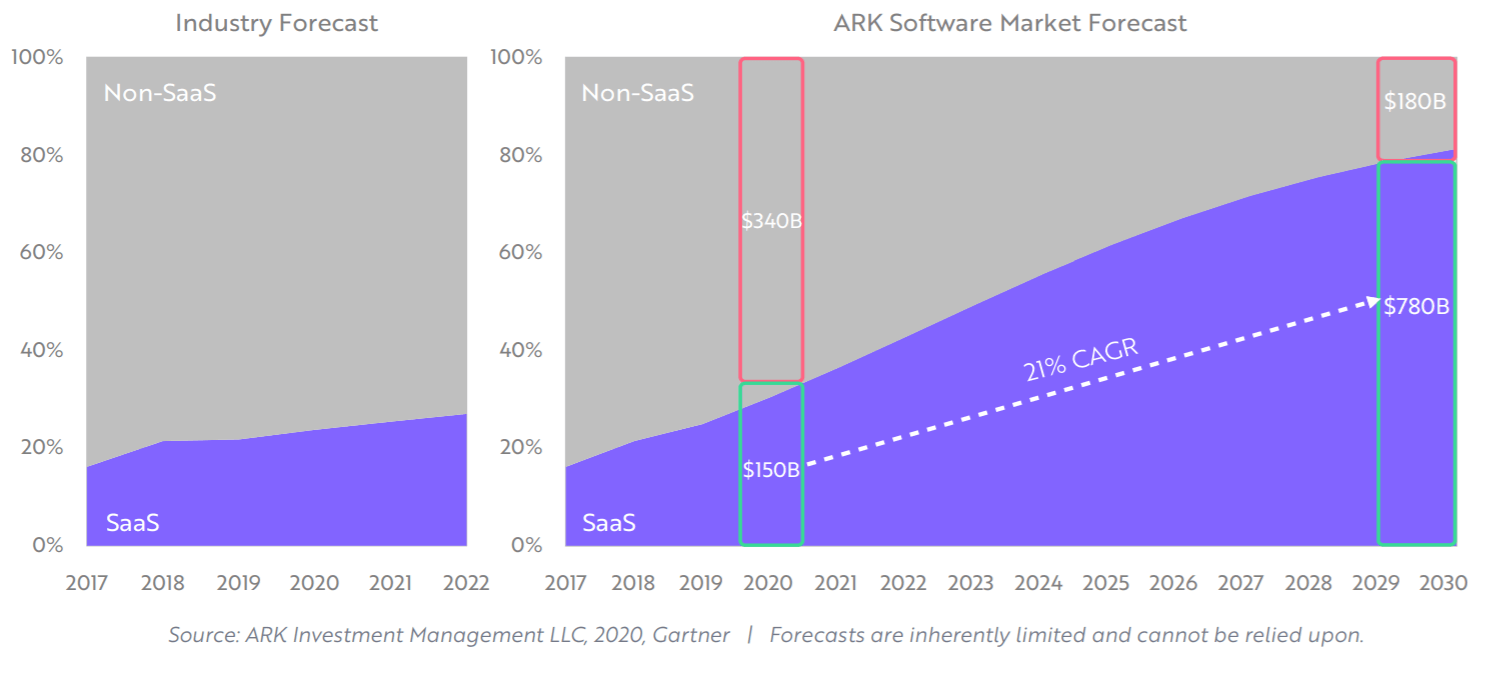
Recently, research firm ARK Invest provided an update on their software market forecast, showing an expected 21% compound annual growth rate for SaaS businesses in the coming decade. They explain:
Despite incumbents and startups embracing Software-as-a-Service, the SaaS market still makes up just 25% of the enterprise software market. According to industry forecasts, annual SaaS revenue growth will decelerate from 16.1% in 2019 to 13.6% by 2022, reflecting, in our view, “reversion to the mean” thinking. Instead, as shown above, we believe that at 25% share, SaaS probably hit an inflection point during the coronavirus crisis and, according to classic S-shaped adoption, is likely to capture an increasing share of the enterprise software market. If our forecast is correct, SaaS revenues will grow at a 21% compound annual rate for the next decade, topping $780 billion or 80% of the enterprise software market by 2030.
The notion that SaaS is likely to become the dominating category in software really resonates with me. With lower barriers to entry and a product adoption moving from top-down (management-driven) to bottom-up (team-driven), the ongoing disruption is likely to continue its path forward.
Now, a category entering the “scale” part of the S-curve can create tremendous investment opportunities. But they come with their fair share of risks. In a nascent industry, the ongoing disruption can turn today’s winners into tomorrow’s losers for reasons that can be virtually impossible to predict.
For many investors, the idea of investing in companies that are not generating a net profit or positive cash flow is unbearable. And that’s okay. If you are not fully on board with the bullish thesis behind an investment, chances are that you will bail as soon as the stock loses its momentum.
Given the potential growth ahead and the inherent risks of continued disruption from existing players and newcomers, investing in SaaS requires a mindset that can only work for some investors. You need:
A strong stomach, since most SaaS stocks are extremely volatile.
A leap of faith, since many of these businesses are still losing money.
A long time horizon, since gains will compound for the best performers.
A diversified approach, since the winners are likely to more than offset the losers over the long term, but there is no guarantee to own the biggest winners without having a basket approach with several prospects.
After the recent runs of the S&P 500 (SPY) and the Nasdaq (QQQ) to new highs in the midst of a recession, it has become increasingly important to know what you are doing before making your next investment decision. Companies like Alteryx (AYX), Fastly (FSLY), Datadog (DDOG) or BlackLine (BL) had pullbacks of more than 20% after their most recent earnings report.
With all this in mind, I wanted to cover today the essential traits you should be looking for before buying a SaaS stock. They are important quantitative and qualitative traits that should enable you to stack the deck and put the odds in your favor for the long term.
Let’s review.
1) Strong track record of revenue growth
Returns over time can come from two main sources:
Earnings growth.
Multiple expansion.
The latter seems to generally coincide with the former. Accelerating earnings growth will usually receive a higher valuation from Wall Street. The ebb and flow of valuation multiples is usually driven by the strength of the underlying business.
For earnings to grow, a company can do two things:
Grow its revenue
Improve its profitability
Since margins can only improve up to a certain point, the big winners that can generate outstanding alpha will tend to have a capacity to grow their revenue at a consistent and elevated pace for years. When you invest for the long term, consistency matters just as much as the velocity of the growth.
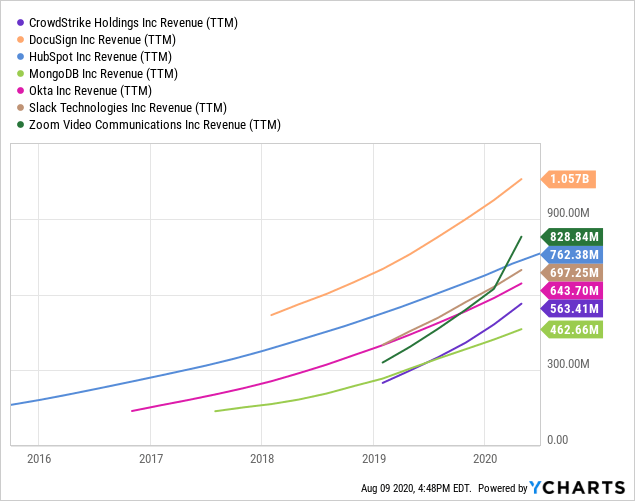
Let’s look at the revenue trend of a group of relatively young SaaS companies that are disrupting a wide range of industries such as communication, productivity, inbound marketing, database management or cybersecurity.
This is what the top line of a company you want to invest in should look like. Up and to the right.
In the chart: CrowdStrike (CRWD), DocuSign (DOCU), HubSpot (HUBS), MongoDB (MDB), Okta (OKTA), Slack Technologies (WORK), Zoom Video Communications (ZM)
That’s the revenue trend you should really be looking for when you invest with a multi-year time horizon. And over an extended time, the stock price chart is likely to follow the fundamentals as they improve.
Data by YCharts
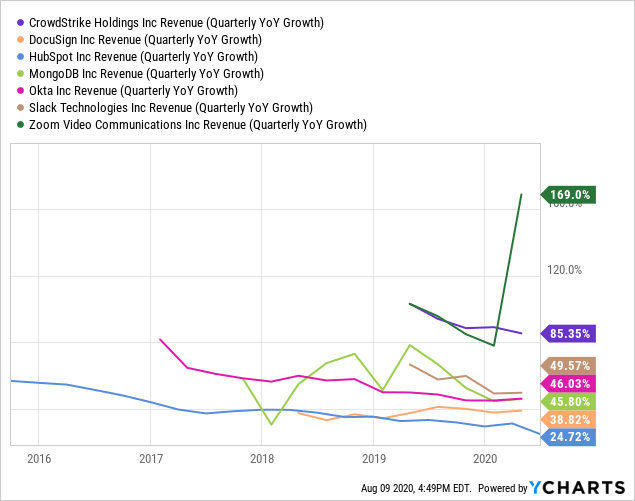
As these businesses grow over time, the pace of the revenue growth is naturally fading due to the sheer size of the revenue base. A slowing revenue growth is inevitable. It should be expected and put in context:
Is revenue growth fairly consistent to a point where it can be extrapolated?
Has growth re-accelerated in the past?
Does the current trend appear sustainable?
Is the recent slowdown a temporary hiccup or the beginning of the end?
These are questions you want to answer before moving forward.
2) Margin expansion
In an effort to screen SaaS businesses and separate the wheat from the chaff, most investors are familiar with the rule of 40, the principle that a software company’s combined growth rate and profit margin should exceed 40%.
As explained by Thierry Depeyrot and Simon Heap, partners at Bain & Company:
“The Rule of 40 […] has gained momentum as a high-level gauge of performance for software businesses in recent years, especially in the realms of venture capital and growth equity. Increasingly, software industry executives are embracing the Rule of 40 as an important metric to help measure the trade-offs of balancing growth and profitability.”
Now, it can be very misguiding to write off entirely a company simply because it fails the rule of 40. Many companies with an operating margin in deep negative territory can show tremendous improvement in a matter of a few quarters. And the stock of such a company will tend to rally long before the fundamentals put the business favorably on the rule of 40 map.
The SaaS companies that are able to grow very fast tend to re-invest in themselves aggressively. This re-investment can take many forms, such as a hiring surge in new research & development headcounts or some aggressive spending in marketing to acquire new customers.
When strong revenue growth is involved, you are likely looking at a company that is still in its hyper-growth phase. As explained previously in my article about 10 Semi-Controversial Traits Of Some Of The Best Stocks, it’s somewhat useless to try to evaluate a company that is still in its hyper-growth phase based on backward-looking profitability ratios.
Instead, what can be insightful is to look at how the profitability ratios are evolving over time and how the company has been able to show economies of scale and improve its margins as revenue grows.
For a company in its growth phase, margin expansion matters immensely more than where the margin is in the most recent quarter. To illustrate, let’s look at a few examples.
Data by YCharts
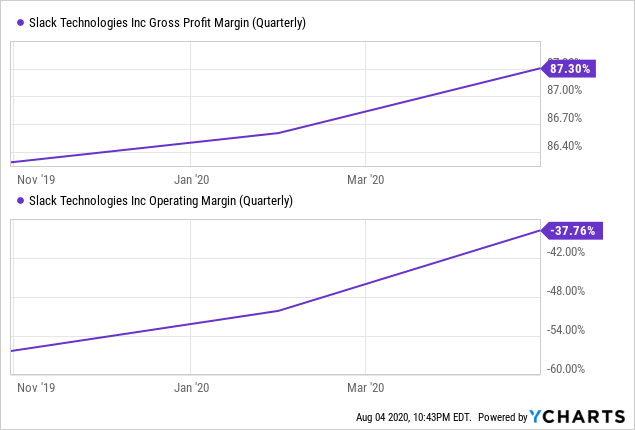
First is Slack Technologies, a software platform focused on productivity and communication. Slack has always looked bad when evaluated on the rule of 40 due to its massive operating losses. But things may not stay this way for very long:
Gross margin has steadily improved reaching an outstanding 87%.
Operating margin recently shot up from -56% to -38%, an improvement of 18 points in a matter of two quarters.
Data by YCharts
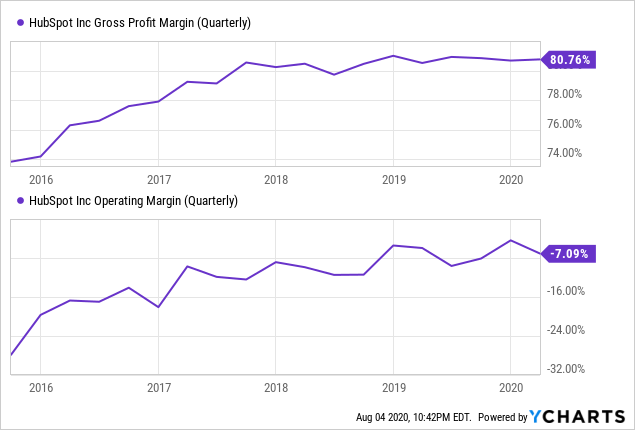
Second is HubSpot, a cloud-based marketing, sales, and customer service software platform that focuses on inbound marketing. The company has a track record of expanding its margins at a steady pace:
Gross margin improved by 7 points in the past five years, reaching a very impressive 81%.
Operating margin went from -28% to -7%, an improvement of 21 points since 2016.
Data by YCharts
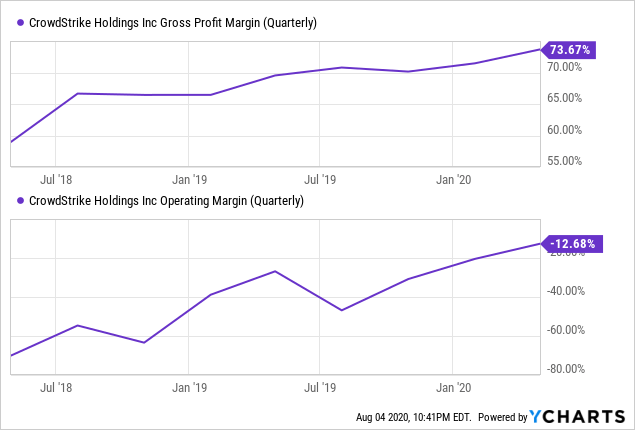
Finally, CrowdStrike (CRWD) is bursting through any expectations set by Wall Street quarter after quarter, showing economies of scale to die for:
Gross margin improved by 15 points in the past two years, reaching 74%.
Operating margin went from -70% to -12%, a staggering improvement of 58 points in a matter of a few quarters.
All in all, you have to look beyond what the income statement looks like today and focus on what it may look like at the end of a multi-year time horizon. When you look at the margin trend of companies like Slack, HubSpot or CrowdStrike, there is no doubt that their margin profile will significantly improve in the coming years.
3) High dollar-based net retention
Over time, some customers pay for more services, some decide to scale back their usage, and some decide to leave altogether. The dollar-based net retention rate (or net revenue retention rate) is the ultimate performance indicator that tells you how much money a company is still making from a cohort of customers after a full year.
Sammy Abdullah, co-founder of Blossom Street Ventures, explains:
Net dollar retention tells you what percent of revenue from current customers you retained from the prior year, after accounting for upgrades, downgrades, and churn.
If the dollar retention rate is above 100%, you are looking at a company that would be growing its top line even without adding new customers.
Some companies use their own definition of this metric or name it differently. It’s essential to read the fine print and understand the KPI you are looking at. For example, a company like Twilio (TWLO) shares its dollar-based net expansion rate as part of its earnings reports. At the end of the day, you want to make sure a company is including the impact of churn in its calculation.
Churn measures the rate at which you are losing customers. Most of the time, it is measured as the percentage of customers who discontinued their subscription in the past year. The churn rate is immensely important in an industry that relies on a subscription model. That’s why you should always focus on metrics that include the impact of churn to evaluate a SaaS business.
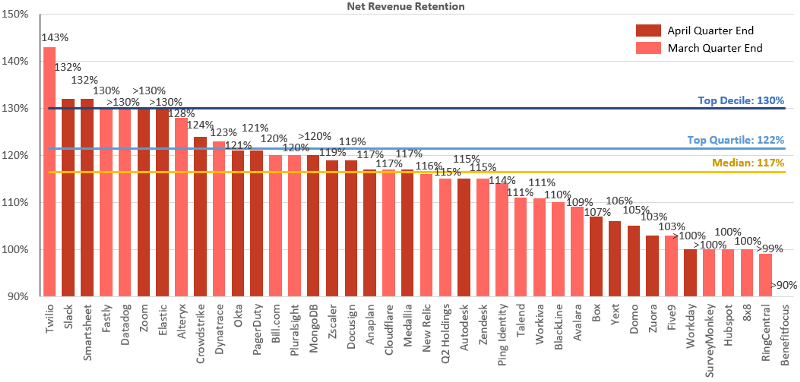
Jamin Ball, VP at Redpoint Ventures, does a fantastic job at synthesizing SaaS company earnings and comparing their KPIs. After the first earnings season of the year, he posted a summary chart of the net revenue retention.
A high (and ideally improving) net revenue retention rate should be the most critical KPI to look for before investing in a SaaS business. It’s a tangible way to assess the health of a service, its sustainability and relevance for customers.
Since this KPI is so important, you’ll find a strong correlation between the dollar-based net retention and the valuation multiple of a company. In other words, be careful before investing in SaaS companies that have a cheaper valuation. As most things in life, you often get what you pay for.
4) Sales Efficiency
You can create tremendous revenue growth if you sell one-dollar bills for 90 cents. But that won’t necessarily be the foundation of a sustainable business. That’s why you want to dig deeper into the unit economics.
If you are looking at a company that is 1) growing its revenue fast, 2) expanding its margins, and 3) growing its existing accounts over time, things are already looking pretty good.
But one more KPI needs to be evaluated. One that focuses on a company’s potential to sustain its revenue growth and margin expansion over time. And that factor is sales efficiency.
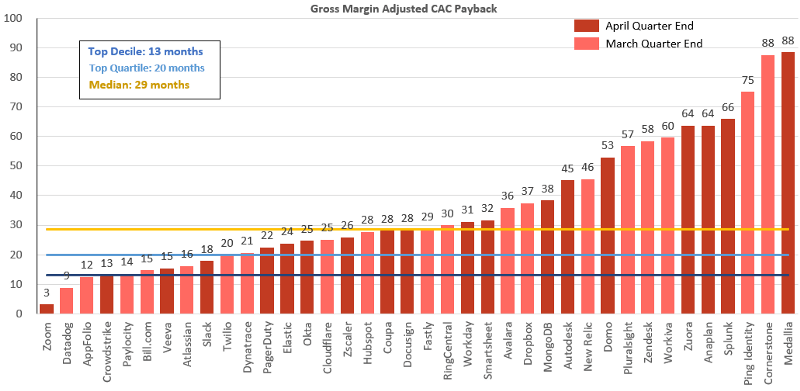
Is the company able to acquire customers in a way that is accretive to its bottom line fast? That’s what the CAC Payback Period can help you find out.
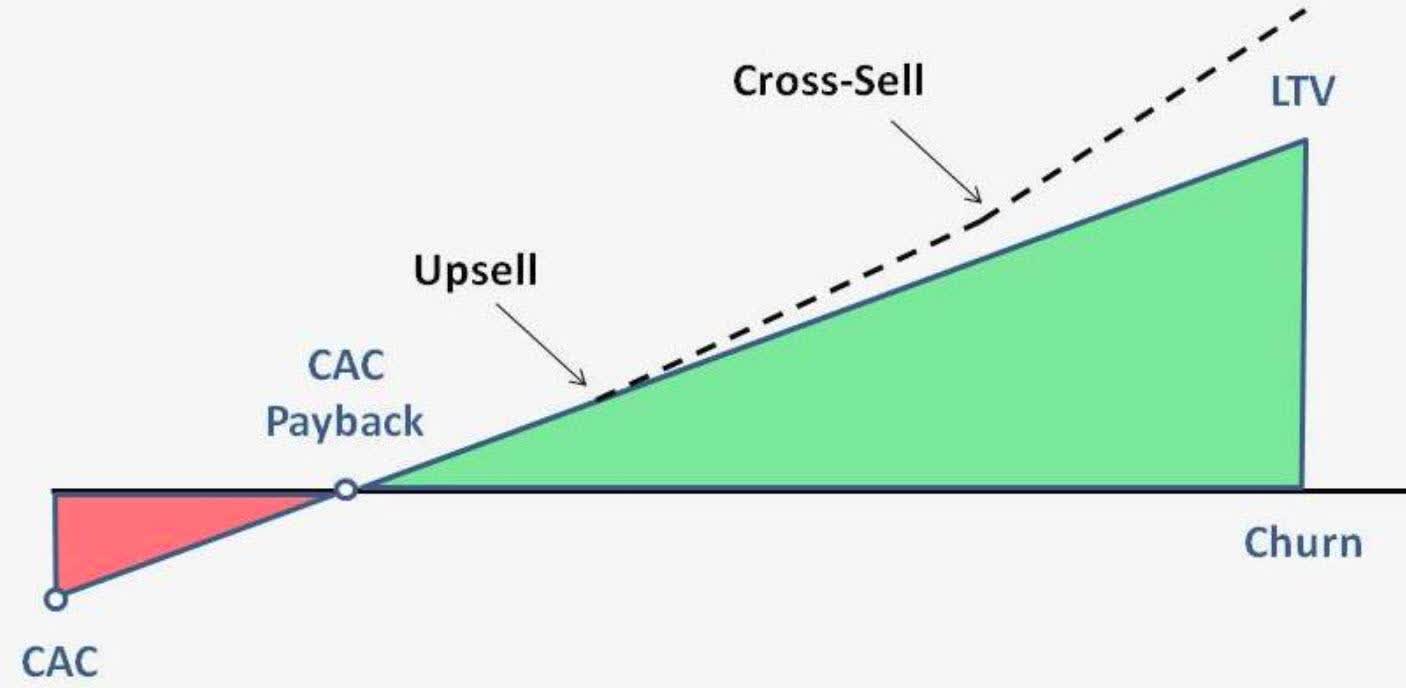
The CAC Payback Period is a concept I came across in the gaming industry, working on free-to-play games. Video game publishers spend money on ads to generate downloads. As long as the LTV (Customer Lifetime Value) is over the CAC (customer acquisition costs) over time, this is money well spent. The CAC Payback Period (expressed in months) illustrates how many months it would take to recoup your investment in sales & marketing based on your current revenue run-rate.
The velocity at which the CAC is recouped can confirm that you have a strong product – market fit with a growth that is sustainable.
You can find different ways to calculate the CAC Payback Period of public SaaS companies. For the most part, you need to know two things:
Sales & Marketing costs from previous quarter (which is the CAC)
Net new ARR (Annual Recurring Revenue) in the most recent quarter.
While sales & marketing costs come straight from the income statement, it can be a little bit trickier to estimate net new ARR added in the most recent quarter. Some SaaS companies report directly their ARR as part of their earnings report. For some others, you might have to calculate it yourself by using the subscription revenue added sequentially in the most recent quarter, and multiply it by four to get an annual number.
In order to factor the cost to maintain the service into the equation, you can then apply the gross margin to the Net New ARR to obtain the new recurring gross profit expected to be generated in the next 12 months:
[(Sales & Marketing costs from previous Q) / (Net new ARR x Gross Margin)]
This will tell you how many years it would take for the sales & marketing costs from the previous quarter to be recouped with newly created gross profit looking forward. Multiply this formula by twelve, and you’ll get the CAC Payback Period in months.
Using CrowdStrike’s most recent earnings reports as an example:
Net New ARR Q1 FY21 x Gross Margin = ($686.2 – $600.5M) x 77%= $66M
[75.8 / 66] x 12 = 13.7 months.
This means that it takes slightly more than a year for CrowdStrike to recoup its sales & marketing costs via new gross profit generated. This is particularly good, since most public SaaS businesses have a CAC Payback period of more than two years, as illustrated below with Q1 CY20 data when applicable.
Beyond these quantitative KPIs, one of the best ways to put an investment to the test is to evaluate the people in charge. To do so, you want to answer three questions about the leadership team:
Are they part of the founding team?
Are they still heavily invested in the company?
Are they a source of inspiration to their employees?
In an ideal world, if you are looking at a best-of-breed SaaS business, you should be able to answer “yes” confidently to these three questions.
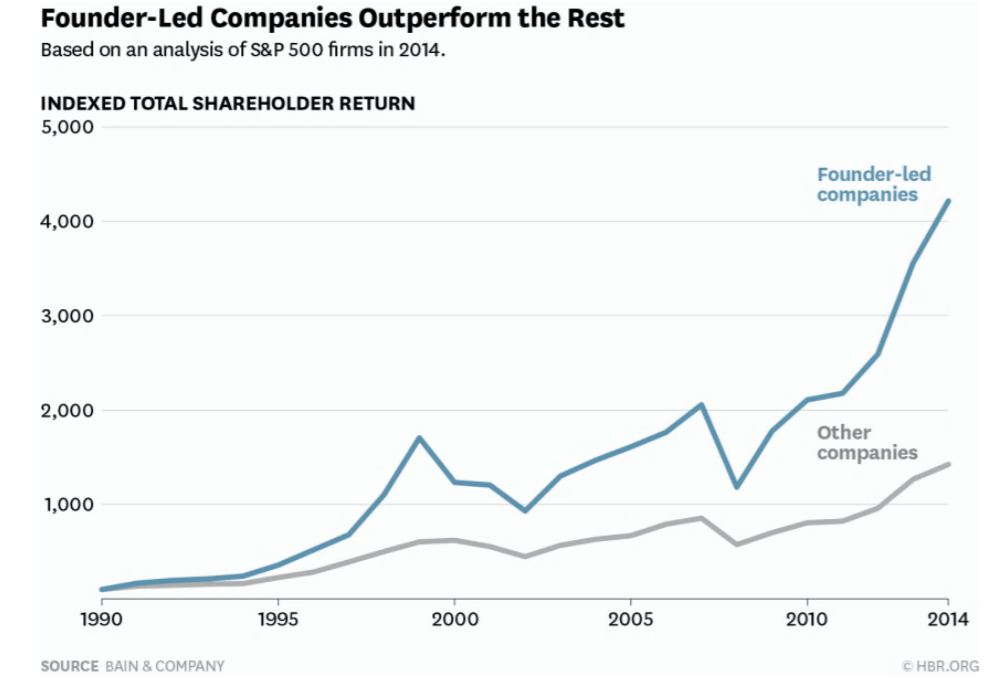
According to Bain & Company, companies where the founder is still involved performed 3.1 times better than other companies over a 25-year period (1990 to 2014). As explained by Advisory Partner Chris Zook:
We found that the companies most successful at maintaining profitable growth over the long term were disproportionately companies where the founder was still running the business.
It all makes sense. Founders are guided by an extreme sense of purpose, with the business representing the fruit of their labor. They are more likely to be fully engaged with their role and the impact of their business on the world at large. They will want to lead by example, be pragmatic and focus on getting the work done. Founders are willing to take risks to take their company to the next level.
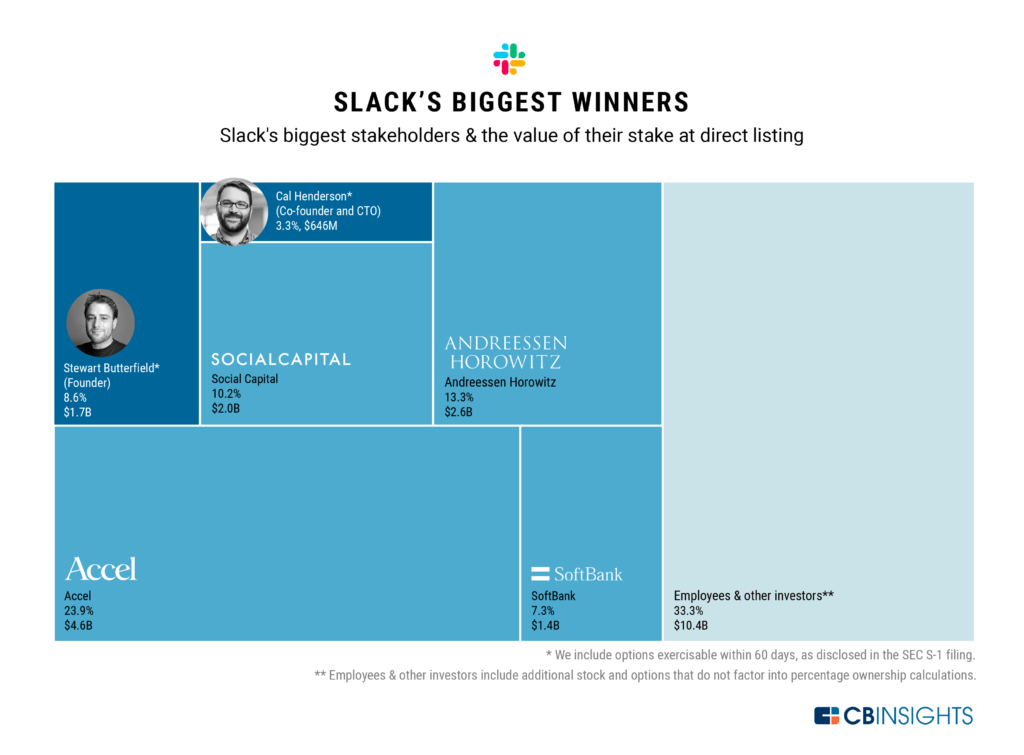
You’ll also find an owner’s mindset within a leadership team that has a lot at stake. It usually takes the form of a high insider ownership. Slack is again a perfect example, with founder-CEO Stewart Butterfield still owning 8.6% of the company at the time of the direct listing.
Finally, an obvious and easy way to evaluate the culture at the top is to look at the Glassdoor reviews. Glassdoor is a platform where employees can review their companies and CEOs. Lackluster reviews can lead to profound challenges to hire and retain talent, particularly in competitive markets such as the San Francisco Bay Area.
The platform enables outsiders to evaluate if a company is recommended by its own employees and celebrated for its culture.
History shows that the way employees praise their company might be a much more compelling investment factor than P/E ratios, free cash flow margins, or any other financial metrics. This is a conclusion I’ve reached after reviewing the performance of companies appearing on the Best Places To Work on an annual basis based on Glassdoor’s rankings.
If you are willing to expand your time horizon to years or decades (as opposed to days or months), what you buy matters much more than the price you bought it for.
The best SaaS companies eventually “grow into” their valuations. The ones that fail to deliver on their original premise will tend to under-perform the market, no matter how cheap you were able to pay for them.
Some conclusions should come to mind:
Focusing solely on valuations is a mistake that will likely keep you away from the best performers of this group, the very companies you should be invested in based on their fundamentals.
Given the extreme volatility of high-growth SaaS companies, the question shouldn’t be if you should buy stock XYZ, but howyou should buy it.
Significant draw-downs of 20% or more happen several times a year for most public SaaS companies, regardless of the market volatility. As a result, major pullbacks will generally be opportunities to accumulate shares.
Position sizing matters immensely when investing in high-flying SaaS businesses. The winners will tend to more than offset the losers, but only if you adopted a balanced and diversified approach by giving several positions the opportunity to bloom.
Always assume that you could be wrong. If you put more than 20% of your portfolio in a single company that is yet to be profitable and makes less than a billion in revenue per year, you only have yourself to blame if you end up losing money or trailing the market.
If you are looking for a portfolio of actionable ideas like this one, please consider joining the App Economy Portoflio. Start your free trial today!
The rise of the App Economy is disrupting many industries: retail, entertainment, financials, media, social platforms, healthcare, enterprise software and more.
Content syndication and other forms of third-party lead generation are having a big year. To be fair, spending on all B2B digital channels is way up. According to eMarketer, B2B digital spending will hit an estimated $8.14 billion this year, up 22.6% from 2019.
Yet, content syndication is having a particularly good year. I’ve seen this at Intentsify, where I work. Our intent-driven content syndication solution has generated five times more revenue this year than the preceding one. And as much as I’d like to think the jump is a consequence of our solution’s differentiated value (not to mention my fantastic marketing abilities), every lead generation vendor I’ve talked with recently has enjoyed significant increases in spending.
Several factors are responsible for this renaissance of content syndication.
Why Content Syndication Is on the Rise, Again
COVID-19
Let’s start with the obvious. A pandemic shuttered in-person events, where B2B organizations typically allocate around 20% of their marketing budgets to fuel their sales pipeline. Digital events, while helpful in the absence of the real thing, can’t fill the void. As a result, B2B marketing teams have been reallocating event budgets in part to content syndication programs to help make up for the loss.
Inbound Marketing Isn’t Enough
Traditional inbound marketing results can’t scale to meet businesses’ needs. I’ve written on this topic before, so I won’t belabor the point here. Suffice to say, however, the combination of account-based marketing’s rising importance and the increasing saturation of inbound marketing tactics have made scaling inbound results much more difficult and expensive.
Content Syndication Services Have Evolved
Content syndication programs are far more sophisticated today than they were just a few years ago. Between the ability to generate leads among specified target accounts and the near universal use of lead-data governance technology, marketers are seeing more value in such programs.
Intent Data Has Amplified Content Syndication’s Strengths
Intent data — used by both marketing teams and their content syndication partners — has added another level of targeting precision. Not only do intent signals identify which accounts are in an active buy-cycle, they also highlight the content most likely to resonate with those accounts and at which geographic locations. When used correctly, this results in better prospect experiences and increased conversion rates.
B2B Marketers Are Better Equipped to Leverage Syndication
Finally, B2B marketers have gotten much better at nurturing leads, a prerequisite for content syndication success (see below). Further, marketers’ ability to measure program performance and optimize accordingly has also improved.
The Foundations of a Successful Content Syndication Program
Though content syndication is enjoying a strong resurgence, B2B marketers should take a few steps to ensure success when delving into this marketing channel.
Put Significant Thought and Effort Into Developing Your Target-Account Lists
One of the best things about content syndication is it allows you to select the accounts from which you want leads. You shouldn’t take this selection lightly. A strong target-account list will comprise businesses that both:
Fit your ideal customer profile (ICP) (i.e., firmographic and technographic data); and
Are actively researching topics/keywords related to your products or services (i.e., showing intent to buy, preferably across multiple intent data feeds).
Target the Personas That Really Matter
A common misperception: the higher the title, the more valuable the lead. An executive may have a great deal of decision-making authority, but that doesn’t mean they’re the best personas to target for content syndication, for several reasons:
Executives typically don’t fully recognize the problems your solution solves, and therefore won’t prioritize it, decreasing the chances of lead conversion.
Execs often rely on their subordinates (i.e., directors and managers) to recommend new solutions, because they’re the ones who have the specific expertise needed to evaluate options.
Targeting higher job titles can increase the cost per lead (CPL) substantially, hurting your ability to increase target-account engagement.
If you’re marketing a solution geared directly to helping alleviate executives’ pain points, it may make sense to target them. Yet this often isn’t the case. And it’s far more effective to “get your foot in the door” by initially targeting personas who feel the pain, understand the problem and see the value in your solution. Convince these individuals of your value and they’ll become your internal advocate, which is more powerful than targeting the execs directly. To make this work, however, you must develop your persona profiles before launching a content syndication program.
Select the Right Content Assets According to a Buyers’ Journey
Marketers are often too lax when selecting content assets for their syndication programs. Instead, you should base your asset selection on a carefully developed buyers’ journey map, aligning content to targeted personas and funnel stage.
If you’re using intent data, you should also be segmenting your content syndication programs by target accounts, based on their shared research activities around specific topics. (You can read more using intent signals for content marketing efforts here.)
Content syndication isusually a top-of-funnel channel used to familiarize relevant personas at targeted accounts to specific problems, your brand and your brand’s solution (from a high level). In this context, the content assets you use should:
Educate target audiences on current challenges and trends that they’re facing;
Provide prescriptive advice on what they can do to improve their situation; and
Briefly introduce your brand’s approach to solving the problem or improving efforts.
That said, you can also use content syndication for middle-of-funnel efforts. This is typically more valuable for larger, established companies selling solutions in well-established product categories, and who are focused on differentiating their offering from competitors’.
In either case, having a content map is incredibly important here. Not only will it help you provide the right assets to audiences via the content syndication campaigns, it also supports the effectiveness of your nurturing and sales’ follow-up efforts.
Develop Strategic Nurturing and Follow-Up Processes
Content syndication leads are not the same as inbound leads generated via your website. With inbound leads, prospects are engaging with your brand and its specific solutions; they’ve likely already completed some preliminary research into the problem (which is what led them to your website). They’re further along the buyers’ journey, so sending them over to a business development rep (BDR) for immediate follow-up can make sense.
On the other hand, with content syndication leads, prospects are engaging with your content: the research, ideas and advice around a specific issue. They’re typically far earlier in their journey and should be treated as such. Nurturing these leads with relevant content before BDR follow-up is crucial. If you’re already using intent data to identify which accounts to target in your syndication programs, you should also use it here to designate which content and messaging to use in your nurturing efforts.
Once content syndication prospects have engaged with enough pieces of your content (or have a high enough intent score based on their overall content consumption behaviours), you can send them over to the BDR team — along with an assigned talk track, relevant to the prospect’s interests.
Content syndication is clearly on the rise again, a result of both new capabilities and unfortunate circumstances. Its ability to provide much needed fuel to B2B funnels is clear. But those marketers who put some time and effort into building a solid content marketing framework will see much greater return on their syndication investment than those who don’t.
David Crane is VP of Marketing at Intentsify, a leading provider of intent data solutions. With a decade of tech-industry B2B marketing experience, David leads Intentsify’s go-to-market and messaging strategy.












 Data by
  Data by YCharts
 Data by YCharts
 Data by YCharts
 Data by YCharts