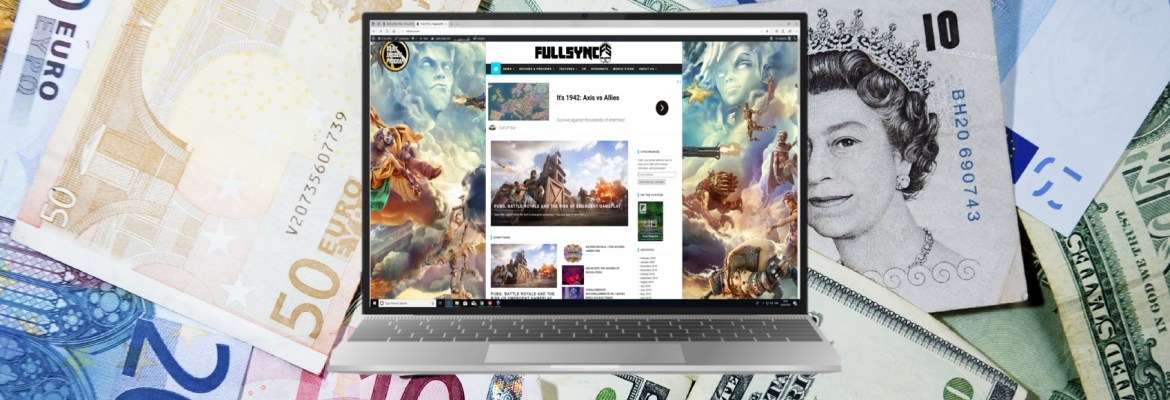
Our recent article about Digital Influencers in Gaming received a positive response. But for many of our readers, it also pushed them to ask more questions. In specific, about how websites and blogs like FULLSYNC find these opportunities, and how they could monetize their own websites.
I’ll be honest. Many of the opportunities we’ve had we didn’t even request. People came knocking on our door. And this left us with a warm fuzzy feeling inside because to get that recognition, it leaves you feeling that you’re doing things the right way, and your brand is becoming reputable.
That’s not to say though that you can’t go looking for these kind of opportunities yourself. And since we received a few emails asking about the subject, we’ll share some places you can visit and services you can use that may help you monetize your own sites.
Advertisements
You’ll no doubt see adverts everywhere you go. Both in real life and online. You’ll even find them on our website. Personally, we use possibly the biggest online advertising service, Google AdSense. They allow you to post adverts on your site, which use the visitors cookies, as long as they have permission, to show them targeted ads to products and services they may like.
Services like this use a combination of metrics such as the number of impressions they generate (how many people see them) and how many people click them. Others, such as Yesirads, may offer you payment just based on impressions. But they also offer different types of ads that can end up popping out of nowhere and taking over the users screens.
It’s important to get the balance right this way. You don’t want too few ads that you make nothing, but you also don’t want them to dominate your site. Let your content do the talking and be the main attraction. Adverts should sit idly by, minding their own business. There is one issue though. Some visitors may use AdBlock software so they don’t appear, meaning no money.
Affiliate Links
Another way of advertising is using affiliate links. Many brands offer affiliate accounts in which you advertise their product or service, and for everyone who buys or signs up to what they’re offering, you get a cut. A great way of generating additional revenue to help fund the hosting costs of your blog or website, plus less intrusive than full blown adverts.
But don’t just post random links over your website that make no sense, it looks a little desperate. Make sure the links are relatable. For example, you might receive some speakers or a game to review. The same items could be on Amazon, and anyone can sign up for their affiliate account. So, at the bottom of your review, leave an affiliate link to the same thing.
Not everyone is going to buy the item. But many affiliate services like the Amazon one, only need you to send people their way. Then they pay you commission for whatever they buy. So yes, you may link them to a speaker, but if they decide they’re more in the mood for instant mash potato, you still earn money.
Sites that help Monetize
Advertisements and affiliate links aren’t the only way to earn money. There are many sites out there which look to help bloggers monetize their sites, by pairing you with brands and businesses. One such site that offers paid blogging jobs is Get Blogged.
They’re essentially an agency for bloggers wanting to monetise their blogs, and for brands, businesses and agencies needing help with, or wanting to outsource their outreach in a cost effective way. The great thing here is, you get to apply for your own opportunities, and if you’re stuck for content, there are always suggestions about what to write if you’re successful.
It isn’t the only site either. There are plenty you’ll find if you just quickly search google. Some may have more opportunities than others, but different sites may have more relatable content for your blog as they all work with different brands. So it is really worthwhile exploring.
Not all middle men are bad, sites like Get Blogged help bloggers and brands find each other
Social Media
Google isn’t your only friend when it comes to finding sites like Get Blogged. Social Media is a great tool as well. You’ll find many groups for bloggers, some focus on blogger opportunities, others will just offer advice. One really supportive community we’re apart of for example is Official UK Bloggers on Facebook; full of helpful advice and friendly faces.
Hopefully that’s helped some of you who have sent questions in, and opened up some new avenues for you all to explore. By no means is what we’ve explored a definitive list, and there are loads of other ways to monetize your site as well. But these are some of the more common methods that we’ve personally found work well.
And who knows, as your site grows like our very own has. Then brands and businesses may start approaching you directly. Then it’s all about working those relationships in a positive way and networking with new people to keep expanding.
Launching a start-up in today’s retail climate might seem a daunting prospect.
When we think ‘retail’ we think of the high street, and with that, it’s easy to think of empty stores and closing down sales.
According to the latest figures from the Office for National Statistics, the quantity bought in retail sales during the three months to December 2019 fell by 1 per cent when compared with the three months prior, while December itself was described as the high street’s worst Christmas on record.
But being online can be a challenge too. The ease and reach of the internet – for both the seller and the customer – means competition is high and customers may get overwhelmed by choice, or even overlook a business with a quick swipe.
So how you do know whether your business will succeed best online or in a store?
Ben Law, managing director of 123 Reg, highlighted cost as one of the biggest determining factors in whether a business owner chooses to operate from a physical location or via the internet.
He says: ‘Of course this depends on the business proposition but being online is far cheaper than paying rent for a building and everything that goes inside it.
‘But then being in a store, especially when offering bespoke services such as personal shopping, or things to make the customer’s shopping experience hassle-free such as a children’s play area are the types of things that can gain loyal customers.’
Building trust
He adds that while having an online presence can also be great for driving loyalty and trust in a business – as three-quarters of customers will do their research online before visiting or making a purchase from a vendor – it also has the power to taint it before a customer has even considered it.
‘Online is where a business can really make sure they are starting and steering the conversations they want and to make sure they look trustworthy,’ he adds.
December 2019 was described as the high street’s worst Christmas on record
‘Having a website with up to date content and a social media feed that is active can accelerate the decision from a customer to trust you and give you legitimacy.
‘Not having that online persona is immediately eroding a presence of trust and alienating traffic. And having a stagnant website can be even more damaging.’
If an entrepreneur decides to start a Facebook page for its business for example, it’s important to keep it updated and looking fresh. A lack of activity can give the impression of not doing well, not caring or even not existing anymore.
Meanwhile, reviews are also critical for gaining and maintaining trust online.
Law says: ‘They are the online version of traditional word of mouth recommendations – you can even find people with verified transactions.
‘It’s hugely important for businesses to manage and curate their reviews and having them back by a trusted review partner. As a small business owner in particular, it is important to respond to reviews to show that you are active and engaged but also transparent.’
Why being online is key
Ultimately, he believes having an online presence, be that via a website or a social media channel or two, regardless of whether you operate from a physical location, can be extremely beneficial.
‘It is a contentious issue as it largely depends on the business proposition. A coffee shop for example, can’t be solely online.
‘So it makes sense for owners to spend most of their time, effort and cost into finding the right premises and working on the interior design – because that’s what’s important for a business like that.
‘But an online presence is still key in terms of building pre-awareness. Say a potential customer searches “coffee near me” on their phone; they’re most likely to go to the nearest place. A business will obviously increase their chances of gaining that custom if they have an online presence.’
In the fast-paced world of the internet, people are also more likely to try something new online.
‘Seeing an independent cafe nearby looks more enticing than going to yet another coffee chain,’ Law adds.
Whether you choose to operate your business purely online or from a physical location depends on your business proposition – though Law says being online either way is beneficial
How many channels?
There is an abundant supply of social media platforms, most of which offer services especially for businesses to boost their brand.
Facebook Marketplace for example, is used in more than 70 different countries by more than 800 million people each month, as of May 2018.
Meanwhile, a report by Hootsuite revealed 62 per cent of Instagram users say they have become more interested in a brand or product after seeing it in their ‘stories’ while 130 million users tap on shopping posts every month.
Law says there is no harm in having a presence on all the channels but it is worth focusing on the one channel to begin with, especially if that one is receiving the most engagement and interaction.
He adds: ‘Again, this depends on the business proposition but we know customers are online and when they are not searching online, they’re scrolling through their social channels.
‘Analytics can also help to understand what is working and which products or services are gaining the most interest rather than just what is selling as you’d only be able to monitor in a store.’
As Spanish legacy newspapers embrace digital subscriptions, Journalist Fellow Eduardo Suárez looks at how they can succeed.
Flower shops are a risky business proposition. Many get a big portion of their revenue on two single occasions: Mother’s Day and Valentine’s Day. The product they sell is not perceived as essential. They need to be as close as they can to their best customers and this requires paying expensive rents to be in high-end neighbourhoods. Then there’s the inventory problem: flowers start to die the moment you cut them. Within three weeks, they’re rotting in your fridge.
The founders of American start-up H. Bloom solved these problems by creating a subscription business. They targeted hotels, restaurants and other businesses and offered them weekly flower delivery, installation and maintenance for a recurring fee. Four years after its launch, H. Bloom had nearly 1,000 clients and more than $7 million in sales.
Flower shops are not that different from news organisations. Both have to deal with similar problems: perishable inventory, seasonality, a product that is not perceived as essential, a lumpy demand. Subscriptions can provide a solution to some of those problems. Setting them up, however, requires a particular mindset and expertise. As a Journalist Fellow at the Reuters Institute, I looked at how different newspapers are dealing with the different aspects of this transformation right now.
Subscriptions: why now
There are at least three reasons for the rise of the subscription economy.
The first one is the rise of broadband Internet around the world, which makes it easier to build digital services for a sizable market.
The second is the rise of the access generation, millennials and post-millennials who value access over assets and see any physical possessions as unnecessary baggage. As Tien Tzuo puts it in Subscribed, these younger customers want “the ride, not the car. The milk, not the cow. The new Kanye music, not the new Kanye record.” They like convenience and personalisation, and expect companies to provide them with a reliable service. These are the customers behind the rise of Zipcar, Netflix and Spotify.
The third factor is the ability to analyze customer behaviour in real-time. “Today businesses are closer to their customers than ever before,” says John Warrillow in The Automatic Customer. “All those customer interactions are being fed into mathematical models, which are run by computers that are now capable of storing and processing billions of data points in seconds.” These interactions can create a virtuous cycle. Subscription companies can watch how their customers use their service and tweak it accordingly. There’s no need for surveys or focus groups.
A few newspapers adopted digital subscriptions in the first years of this century. Most of these efforts failed. There are many reasons why subscriptions didn’t work at the time. Payment systems were clunky. Digital advertising was still attractive for general newspapers. People weren’t used to paying for services online. Smartphones and tablets didn’t exist yet.
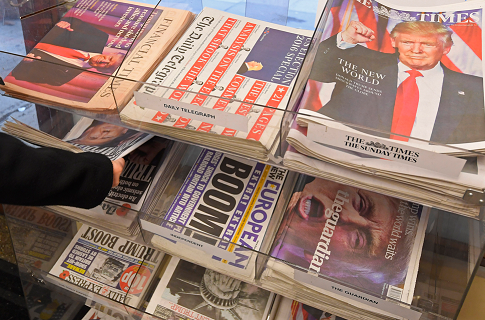
Things started to change after the Great Recession. The FT introduced a flexible pay model in 2007. The Times and The Sunday Times adopted a hard paywall in 2010. The New York Times launched a metered model in March 2011. In the last few years, many newspapers have followed this path in different flavours. Freemium and metered models have flourished in European countries as diverse as Finland, Germany, Italy, Poland and France.
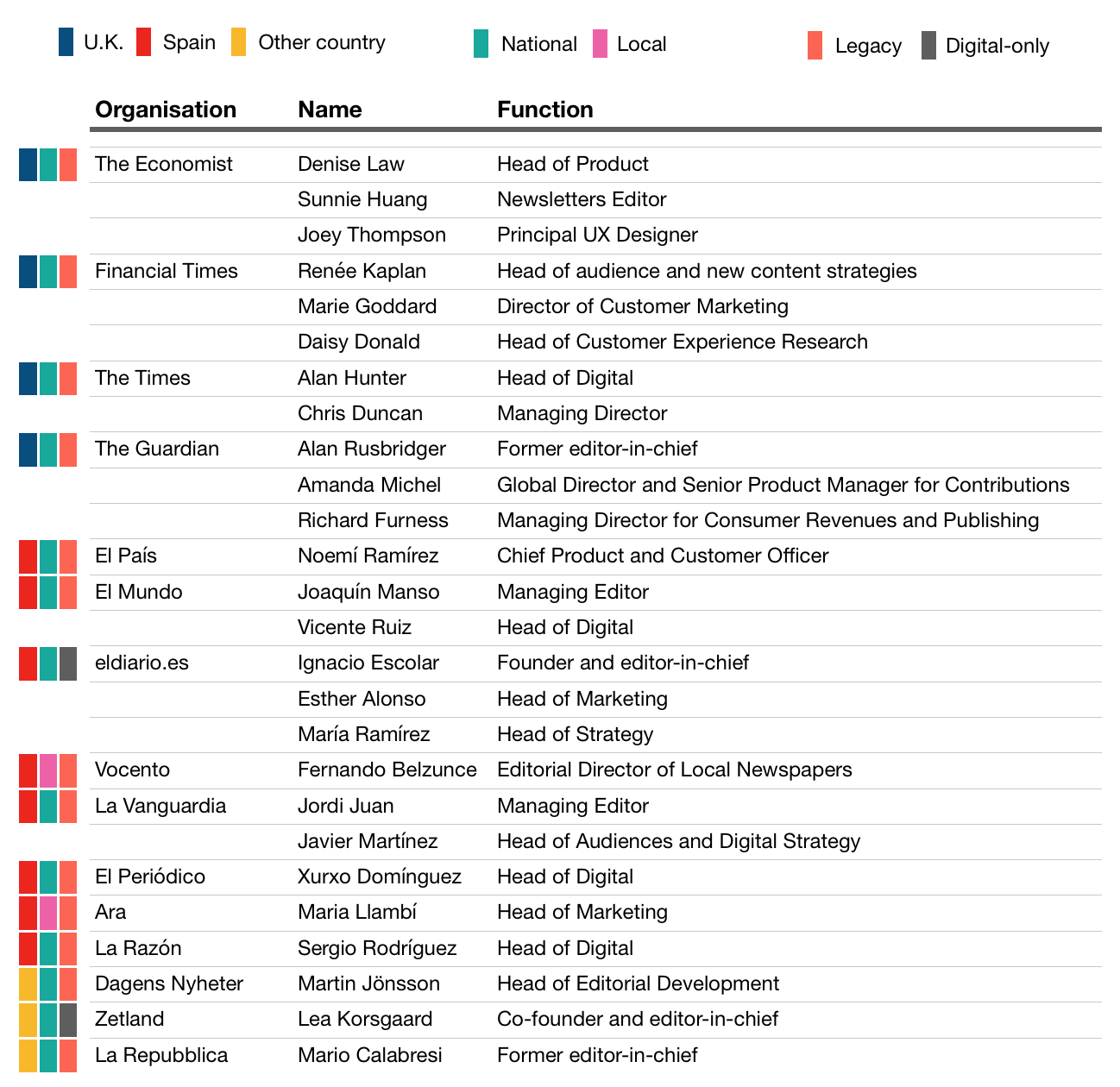
The paper I publish today explores what news companies with reader revenue models are doing through structured interviews with 26 media executives from 15 news organisations. Some of these outlets run digital subscriptions. Others have reader revenue models with a less transactional value proposition. Most of them are based in Spain and the United Kingdom. Some are based in other European countries such as Denmark, Sweden, Italy and France.
The paper doesn’t analyze either the virtues of different pay models or the price of the offerings of every particular newspaper. Its main goal is to explain the strategies news outlets are applying to deal with the profound changes required by a subscription business in the hope that some could be used by other news organisations elsewhere.
Why Spain and the UK
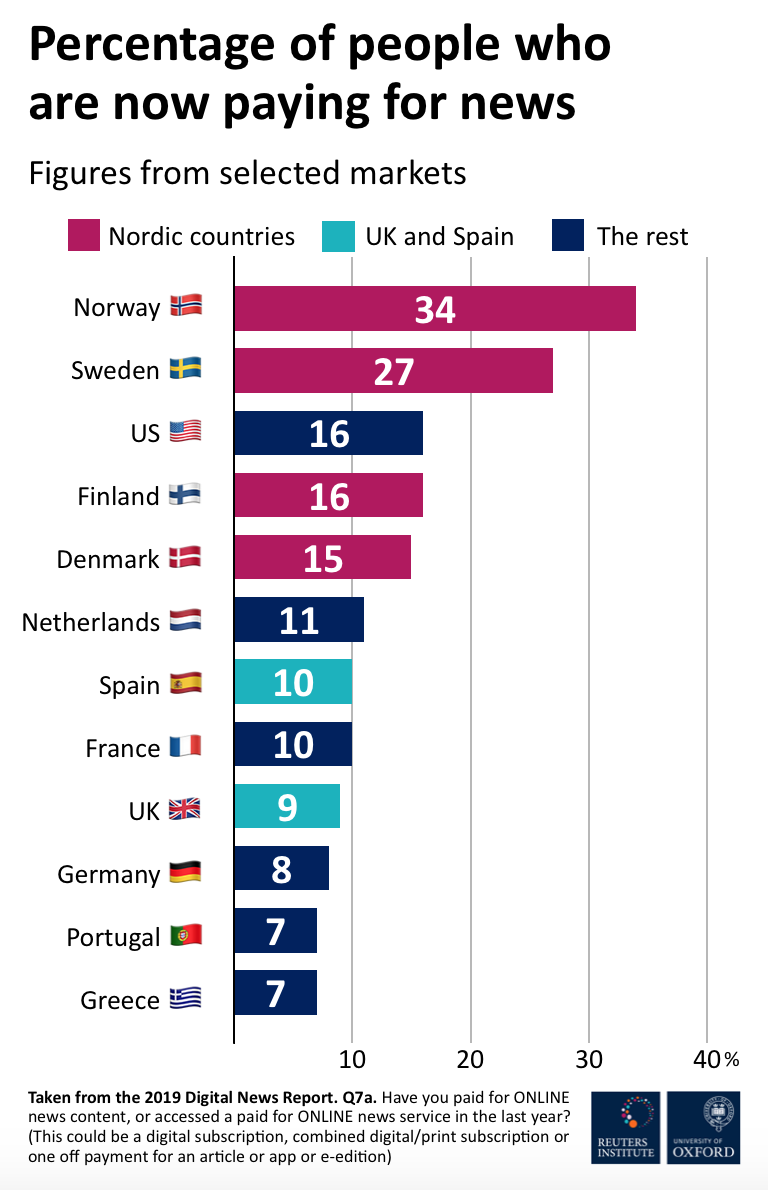
Most of the news organisations featured in this paper are based in Spain and the United Kingdom. These media markets have a few things in common. Both have similar percentages of people willing to pay for news according to the Digital News Report: 10% in Spain, 9% in the UK. Newspapers operating in both countries share the blessing (also the curse) to publish its content in a global language. Unlike the Nordic countries, they don’t have the competitive advantage of a language almost no one speaks outside their market. The Internet provides them with an open field where they compete with outlets based on the other side of the Atlantic. They can pursue traffic overseas.
Spain and Britain have very different media landscapes. Tabloids and digital-only news organisations are mostly free in the United Kingdom and operate under the shadow of the BBC. Most national broadsheets and magazines, however, have been running pay models for a few years. The Financial Times, The Times and The Sunday Times operate with hard paywalls. The Telegraph runs a freemium model. The Guardian combines memberships and contributions with several subscription options. News start-up Tortoise is exploring a promising model through newsletters, sponsorships and events.
Spain is on the other side of the spectrum. Digital-born newspaper eldiario.es had more than 35,000 paying members in January 2020 and several regional newspapers are running digital subscriptions. But not a single national legacy news organisation was running a substantial pay model in July 2019. This is changing. El Mundolaunched a freemium subscription model in October 2019. El País is launching a metered paywall in the first quarter of 2020. Other outlets are expected to follow suit in the next few months.
As this transformation unfolds, it’s worth looking at strategies news organisations are using on five aspects of the subscription process: things to do before launch, value proposition, pricing, acquisition and churn. Here are twelve themes that came out of my interviews.
1. Pay models require a different kind of organisation.
Successful subscription companies break silos and create cross-functional teams. Marketing, technology and editorial work closely and obsess about customers’ needs. The FT, for example, bridges the gap between marketing and editorial with a weekly meeting. “We want to know what they’re about to do so we can turn that into both existing customer engagement opportunities and acquisition opportunities rather than waiting for the news to hit,” says Marie Goddard, head of customer marketing.
The best media executives make sure everyone knows the metrics that matter. Facebook likes, page views, and unique users are now valued mostly as means towards an end —acquisition and retention of paying subscribers. Frequency, recency and time spent mean readers are getting value from your site. The goal of every news outlet should be to get more people to enjoy its content more often during more time. Loyalty is the first step towards a subscription. Occasional readers never subscribe.
2. Every newspaper must learn to tell its own story.
There will always be outlets offering free access to their news content. Any company with a pay model must explain why readers should support its work. This appeal should be crafted carefully. It must take into account the mission of the organisation as well as its ownership, its history and its constraints.
After launching its membership model, people at The Guardian noticed many readers saw the newspaper had 150 million readers and assumed they were making a lot of money. So they realised they had to explain how advertising revenue was dropping and why they needed their readers’ support. “As journalists, we have always been telling the stories of other people. Now we also have to tell our own,” says Amanda Michel.
Journalists should explain how they do what they do. Media executives should be as transparent as possible in their financial reports. Newspapers could benefit from presenting themselves within a broader social narrative. A conversation with their readers could help frame a narrative that is clear and attractive. Anything a news brand does should be aligned with its editorial mission. Paying readers are less forgiving than occasional users. Clickbait can destroy trust.
3. Subscription companies must obsess about their core audience.
Most of the reader revenue of every newspaper with a pay model comes from a small percentage of their readers. These are the ones most attached to the brand and most likely to subscribe. Media executives should look at the behaviour of these readers. Their goal should be to learn what their news habits are, how they structure their news diet, what they’re looking for when they come. News organisations should learn as much as possible about this group and should think of strategies to grow it. Their future depends on this.
4. The best newspapers focus on their digital products.
Most of the legacy outlets covered by this paper still get most of their revenue from print. Their top priority, however, is improving their digital properties. This is not an easy task. Loyal readers are not uniform. Their consumption patterns could be all over the map. Quality often means different things to different people. Every channel requires a different language and different skills.
The best companies invest their resources on the platforms that are popular among their core users and adapt their processes and priorities to their needs. This could mean producing audio versions of your best stories, as Danish digital magazine Zetland has done very successfully, or creating niche editorial products for audiences that are underserved. A great example is The Times’s Crime Club newsletter. It gives reviews, free ebooks and event tickets to crime fiction fans. It’s the most successful newsletter at The Times with a 70% open rate.
5. Good user experience is essential to succeed.
News organisations are realising that content is just one of the aspects of their value proposition. User experience is almost as important, especially on a mobile phone. A great editorial product can fail as a result of poor user experience. On the other hand, great user experience could be a great selling point for a news organisation.
The Guardian lets everyone read every article on its website, but makes readers pay to read some of those articles or a daily edition in its premium apps. The most successful news organisations think thoroughly about loading time, packaging and presentation. Younger audiences are used to the high standards set by digital platforms. They don’t accept pop-up windows or invasive ads.
6. Readers appreciate a product they can finish.
In a world dominated by endless news feeds, finite editions are having a comeback as a way to foster loyalty among subscribers and recreate the news habits of the past. Older readers still love to read the electronic versions of print editions. Younger audiences gravitate towards daily podcasts, niche newsletters or news digests bundled into cheaper subscriptions.
Readers love the sense of achievement that comes from finishing a daily edition. News organisations are betting on the renewed appeal of editions as a way to recreate the news habits of the past. This trend is behind daily podcasts such as The Economist’s The Intelligence and The Guardian’s Today in Focus. It’s also what’s fuelling the rise of newsletters as a way to engage with the audience without depending on algorithms.
Journalists should remember their job is not so much publishing everything as editing what is important. Their work shouldn’t be guided by outdated processes but by the routines of their current audience.
7. Print shouldn’t be the focus but it could help.
A print product could be overwhelming or pointless for a portion of your digital audience. But print can still be an asset today. Newspapers face a strategic dilemma: most of their growth comes from digital, but most of their revenue still comes from print.
The most successful companies adapt their content to the language of every channel where its loyal readers spend their time and print is a channel too. The Guardian uses price hikes to transform anonymous buyers into print subscribers and repackages some of its articles into a new glossy weekly magazine. The Economist creates most of its daily picks from articles already published in the print edition of the magazine.
8. The best subscription companies experiment with pricing.
Newspapers have produced a single product and sold it for a single price for the last couple of centuries. Digital subscriptions require a different mindset, much more open to experimenting with bundles and price points. Discounts and free trials may be in your toolbox. But you should make it very clear to your readers they enter into a paid relationship. Otherwise, you will attract people who won’t stay for long. Hard data, not gut feelings should guide your decisions.
Any changes on pricing should be made after reviewing the behaviour of the people most likely to subscribe. Newspapers are partnering with other news organisations. Swedish newspaper Dagens Nyheter offers bundles with The New York Times and with a few local newspapers. Spanish newspaper eldiario.es offers bundles with a couple of magazines too.
9. Open vs closed is not the right framework.
The difference between membership and subscription models is more blurred than ever before. Some news organisations with a membership model run very hard paywalls while newspapers with subscriptions allow sampling opportunities through free trials, social and search.
Open news organisations are more closed than you think, and vice versa. The Guardian runs a successful subscription business. The FT ran an open WhatsApp channel and still publishes audio and video content for free. The most successful news outlets are not attached to their models. They tweak them according to the behaviour of their audience and experiment with bundles and revenue streams. The shape of your paywall must be just one of the elements of your value proposition. Newsletters, podcasts, audiobooks, trips, discounts and events must be added to the mix.
10. Journalism is a great acquisition strategy.
Every news organisation covered by this report experiment with search and social channels. But everyone says that nothing beats journalism as an acquisition tool. Memberships and subscriptions are not impulse sales. People start paying after engaging with a news organisation regularly for a long time. Creating news habits is the best way to get subscribers and reduce churn.
Journalists working at the newsroom of eldiario.es.
Readers often convert after reading long-form pieces and investigations that force politicians to resign. Quality and consistency are important for every subscription company but also for newspapers with a less transactional value proposition. News sites should perfect the way they ask for the support of their audience. They should test different messages and try to answer with them any questions they could have.
11. Friction is your enemy.
Subscribing or donating to a news outlet should be as easy as possible. Newspapers should take a page from technology start-ups and adopt frictionless payment systems. Anyone should be able to subscribe in a few seconds. Anyone should be able to cancel its subscription without making a phone call.
Creating a seamless payment system is especially difficult for global news organisations, whose managers have to deal with different platforms and different regulations. You won’t reduce your churn rate unless you get your customers into reliable payment systems. Many cancellations are the result of credit cards’ expiration dates.
12. Churn is much more important than acquisition.
Getting thousands of subscribers who leave a few months after they join is not a sustainable path for any news organisation. This is why acquisition and churn strategies should be run by the same team. Dirty acquisition channels bring in the wrong kind of customers and produce high churn rates.
Good subscription companies design great onboarding experiences and encourage their readers to make the most of their subscription in the first few days. They also segment their users by demographics and by the time they joined. Creating habits matters much more than showing any particular piece of content. Retention often correlates with frequency and time spent.
Marie Goddard, head of customer marketing at the FT, says that embedding habits in new subscribers is much more useful than showing them articles. “It’s not about showing them content because content is short-lived,” she says. “It’s about showing them how to sign up to a newsletter, how to choose the right newsletters or how to download our mobile app. If you use the app, you are very likely to be engaged with the FT. So we flipped from content discovery to thinking about the nudges we need to get them to access our content in their way.”
Every business is in the business of trust: building it among customers, scaling it to capture markets, and maintaining it to fuel growth. That’s a tremendous challenge in a digital world full of bad news and fake news. How do brands break through the noise?
Transparency is the answer. Transparency shrinks the distance between a brand and consumers and builds trust. Consumers gain an authentic window into who you are, what your brand is about, and the value you provide. Transparency also helps scale trust at a faster rate.
It’s All About Access
If someone asks me how to become more transparent, I give a one-word answer: Access.
Today’s consumers crave access to the brand and the people behind it, as well as the products themselves. Why do people wait in line for the latest iPhone? Because they want early access to Apple’s innovation in particular — not just a smartphone. They want that connection to the brand.
You can provide access to your customers by being transparent about what’s going on in your company, say, from an employee’s perspective. Consider peppering your social feed, company blog, or email newsletters with employee profiles that reveal their insights into customer needs and how they meet them or offer tips on how to get the most out of your product.
To be successful at transparency, you need to know the difference between transparency and over-sharing, which requires calculating the risk versus reward for each sharing opportunity. One caveat here is that the calculation depends on the context. It changes and evolves.
For example, the idea of talking about the mental health struggles of one of your executives in 2015 would not have met the criteria for transparency. But today, when movie stars and Olympic athletes talk about their mental health challenges, it might. We should re-ask an old question and put it through today’s risk-versus-reward calculation.
How to Scale Trust
Everyone in the world craves empathy, the feeling that someone else understands you. To scale trust, you must first scale empathy, and technology is the vehicle to do so. By using technology to understand and leverage information about customers and prospects, you can gain insight and create empathy. Of course, data can be misused, and we’re right to be concerned about that. But a dashboard that provides insights using quality data and the latest best practices in analytics can help overcome that challenge.
On the marketing side, you can scale trust using influencers that have already established trust among their followers. Influencers could be celebrities with massive followings and reach; thought leaders who have built trust and rapport with a focused audience over time; or a subject-matter expert — someone who is “in the weeds,” doing the work, within the company as an employee or outside, as a customer.
Subject-matter experts can be tremendously influential because most of today’s consumers don’t trust a brand or a logo. They trust the people who work for the company and represent the brand. They offer a peek behind the curtain — in a word, transparency. This can even work with celebrity influencers.
Let’s face it: Nobody really believes that LeBron James drives a Kia. When today’s consumers see LeBron in a commercial for Kia, they immediately know he is getting paid to endorse that product. The ad isn’t effective because you think, “Hey, LeBron James drives a Kia.” Instead, it comes down to, “LeBron James associates with Kia as a brand because they have principles that he believes in as a dad, as a leader.” He is lending Kia his authenticity.
The Future of Marketing Is Relatability
John Legere, CEO of T-Mobile, has taken a very transparent approach to marketing. He shares his unfiltered thoughts across multiple channels. He replies to social media posts, he makes himself available at events, and he does ask-me-anythings (AMAs) online. He even takes transparency a step further by sharing his personal life and hobbies through a Facebook Live show where you can watch him cooking at home. That access into who he is at his core not only builds trust but also humanizes his brand. I couldn’t tell you if the CEO of my carrier is male or female, yet I can say with some certainty that the leader of T-Mobile cares about his customers. I understand his values, which allow me to connect with him at a deeper level.
Let’s face it: The Field of Dreams notion of marketing — if you build it, they will come — is broken, if it ever worked in the first place.
If you build a website, if you launch a new social channel, if you have a new email newsletter, no one is going to embrace it simply because it exists. Consumers are smarter than they’ve ever been.
Not only do they have more access to information, but they also have more channels to decide how they’ll consume content.
Transparency is a way to leverage this access — actually embrace it — to answer the question, “Why should I trust you?”
Transparency will play a huge role in the future of marketing and how you connect with consumers in the digital world. Targeting and segmentation will still be vastly important, though, and hyper-personalization is changing the game enormously.
Digital Futirst and Founder iSocialFanziSocialFanz
Brian Fanzo is a digital futurist keynote speaker who translates trends and technology empowering next generational businesses
Brian has been recognized as a Top 20 Digital Transformation Influencer; a Top 50 Most-Mentioned User by CMOs on Twitter, and a Top 25 Social Business Leader of the Future by The Economist. His followers on social media and podcast downloads for FOMO Fanz and other podcasts rank in the hundreds of thousands, resulting in Brian being an influencer for 19 of the Fortune 100 companies.
Do consumers have digital advertising and marketing fatigue? Recently there has been talk of a return to ‘analogue’ marketing, such as snail mail, brochures and face-to-face engagement, and away from digital marketing.
CMO asks marketing experts to discuss their views on the subject, and how they’re striving to strike a balance.
It’s challenging to find evidence consumers have digital fatigue. However, it has been proven many times over that the two single most impactful drivers of campaign effectiveness are reach and highly engaging creative.
Credit: Austereo
Nielsen data proves that getting the creative right and delivering this with maximum reach, can account for over 65 per cent of sales attribution. And reach is everything when it comes to the campaign resonating with as many new and existing audiences as possible.
It’s an incredibly important factor for brand growth and market share. This would point marketers towards high reaching, accredited channels such as TV, radio, video and audio streaming and out-of-home, with independently measured online used alongside these more traditional mass media.
A final consideration on reach and campaign effectiveness is targeting, which is becoming more accessible in all media. In stream addressable advertising in audio for example, delivers hyper targeted mass campaigns. These increasingly sophisticated main media targeting capabilities ensure wastage is minimised and frequency is capped.
Therefore, ‘cut through’ is delivered by impact from great work on a targeted, mass scale. It this approach that will set campaigns up to deliver business results.
Martin Wilkins
Marketing manager, The Tax Institute
One common mistake many marketers make in a digital-first environment is forgetting to listen to what their customers really want when it comes to authentic, personalised engagement.
Credit: The Tax Institute
We’ve listened to our members and stakeholders and understand digital marketing tactics, such as emails, ads and retargeting aren’t enough, in isolation, to build trust, create an emotional connection, and deliver the experience they expect from an institution such as ours.
For instance, events are a very big part of what we do to enhance engagement and offer our members more relevant and interactive experiences, where they can gain knowledge, insights and feel part of a broader community of like-minded people.
And while we do have a robust digital marketing engine that supports our marketing function, we’ll still invest in printed collateral such as brochures and booklets, and these have an educational look and feel which our audience base expects.
For example, at our upcoming Tax Summit in March, while we have invested heavily in digital marketing and inbound strategy, we also have prepared a traditional, printable brochure, as well as a comprehensive, printed prospectus.
In essence, we believe a strategic ‘hybrid model’ of traditional and digital marketing is appropriate for our particular audience segment. The challenge of course is finding a healthy balance between the two. This means our marketing team is constantly collaborating with internal and external stakeholders, to ensure our marketing mix remains agile, responsive, effective and relevant.
Zane Sabré
Co-founder and managing director, Maison de Sabré
When running a business, it’s important you’re reaching your customers via the channels they already use. Considering more than 73 per cent of households shopped online in 2018, it’s essential for businesses to be online as well.
As online shopping tools and platforms continue to grow more technically sophisticated, the way consumers make online purchases is continuously evolving, meaning the opportunities to reach specific audiences, at the right time, is also increasing.
Credit: Maison de sabre
Offline marketing, such as snail mail, brochures and street hawkers have become dated marketing strategies purely due to their limited reach in today’s digital age. They also limit the opportunity for accurate performance tracking, meaning it can be difficult to know if the time and money spent has paid off.
Credit: Red Havas
However, just as they had largely been deserted, it became apparent that it had left a significant amount of white space for many to capitalise on, representing a full cycle in generating cut-through. Analogue marketing transformed from the disrupted channel to the disruptor.
And it is all based on a simple truth: Physical marketing represents the ability to reflect a multi-sensory experience. Consumers crave the touch and even the smell of a fresh catalogue, with the buzz of rifling through to see the hottest new items to buy. Letters – which once had ‘bad PR’ around their speed of delivery – have had a resurgence. The emotional and nostalgic connection people receive from letters make this innately more personal than an e-mail.
So what was once seen as a one-way channel is now leveraging that very notion to maximise its effectiveness and create one-to-one, somewhat intimate, experiences with consumers to get messaging across. Analogue from its previous definition has now become a ‘progressive’ channel in some ways.
And in a world of personalisation and marketers’ constant quest for uniqueness, it is time to embrace the physical world once more. Except this time, with the helping hand of new technologies, they can explore how they maximise their available real estate in a different – and importantly, far more sustainable way than before to deliver an all-round win-win for marketer and consumer.
I founded my content marketing studio when I was 22. I’d already been a full-time social media freelancer for about three years, and I thought I’d been through it all – highs and lows with clients big and small, stints at advertising agencies, meetings and tedious admin.
In early 2018 projects just kept coming, and I decided it’s time to expand. I thought it wouldn’t be any different, really (big misconception), and I can handle it no matter what (debatable).
As I’m writing this, I’m 24 and my agency is nearing its second birthday. We’re now a team of five residing in a small office in East London – not the biggest enterprise the world has seen, but I wouldn’t have thought it possible two years ago.
I’d always preferred to stay quiet about my age. I believe we should be judged by the quality of our work, and I suspect many people would equate my age with a lack of experience. Or, worse, take it as a sign I could be taken advantage of, offered unpaid – or underpaid – gigs.
Beyond ageism
Ageism in the marketing industry is alive and well. It tends to hit those on the other side of the spectrum than me the most, though. It is an industry where fresh ideas are valued above all, and fresh ideas are often unfairly associated with youth. I don’t want to participate in spreading that mindset.
So, I kept my age to myself, considering it nothing but a liability. But we all grow up in different times and circumstances, and as a result, end up with different worldviews. They are all equally valuable.
One day, as I was talking to a friend, I noticed how surprised he was to find out I supplemented my income in the early days of my career by building websites, designing flyers and creating illustrations.
Indeed, I spent so much time on my laptop in my teens that by the time I was 19, I was a junior social media manager, junior copywriter, junior web developer, junior graphic designer and a junior illustrator rolled into one. That’s because I grew up in precarious times, in a bad economy, with pretty bleak prospects. I knew I had to diversify my skillset from a very young age.
Turns out, growing up in the 2000s and early 2010s brought a lot of valuable lessons.
Seeing the potential in others
I was still a teen when I landed my first freelance gig.
I wouldn’t be where I am now without the clients who took a chance on me (just like Abba). My first client, who had a 19-year-old Eastern European me running all his socials, and who recommended me to other clients. A PR consultant who taught me to stop using emojis in emails (yes, I needed to be told). An agency that kept giving me more responsibilities because they believed I could handle it. Another agency which had me sit in on all the big scary meetings, so I had an opportunity to learn. A client who thought I had potential and allowed me to spread my wings — the same client who believed in me even if I messed up.
I like to extend all of the kindness I received to marketing juniors. When I need help on a project, I’m not overlooking people with little to no relevant experience, no matter their age — I’m looking for someone I could believe in.
Flexible working
The marketing industry is no stranger to flexible working. I don’t believe the future of creative work relies on a rigid eight hour working day.
Therefore, if a 9 to 5 isn’t your thing, I trust you’re able to deliver what’s asked of you within a reasonable timeline. I work with adults, I’m not running a daycare — I don’t need to know where you are as long as the work is done.
Be prepared for everything
Would you like to know how to set Gen Z and millennials apart? Since no one agrees what the exact cut-off year between the two is, follow this handy guide instead:
Have they grown up in the era of economic prosperity, and entered the workforce just before, or during the financial collapse of the late 2000s? Have they been surprised to realise they will most likely be financially worse off than their parents? They’re a millennial.
Has the 2008 crisis marked their childhood or teenage years? Have they grown up in a precarious economy and entered the workforce fully aware that they may never buy a house or expect a traditional career path? They’re Gen Z.
I was 12/13 when the market collapsed. Even though it didn’t affect me directly back then, I was aware something has changed for good. I was a teen when the political upheaval in Europe started, and I was in my late teens when environmental issues became a mainstream issue. Any illusions of a safe world I had as a kid were quickly dispersed. It became apparent that if I follow my mum’s (literature teacher) or my dad’s (radio journalist turned writer) paths, I will never buy a house. Hell, I will probably never buy a house anyway. And I may not be able to retire for a very, very, very long time.
If I live long enough for retirement, that is – given that most climate emergency projections paint a catastrophic view of the 2050s. My earliest retirement year is 2063.
So, my constant need for self-improvement is pretty much fueled by existential anxiety. Can’t think of a better motivation!
Everyone’s time is valuable
I coded websites for a living, so when the time came to let someone else code mine, I wasn’t cutting costs. I know how much of your time and heart goes into building a website.
I used to create illustrations for clients, so I wouldn’t offer the illustrators I commission an unfair deal. I remember how soul-crushing it was to receive negative feedback on your art.
My early freelance experiences in various roles helped me empathise with how valuable everyone’s time is. I’ve met freelancers-turned-agency-owners who charged the clients double the day rate they paid the freelancer. I’ve met people who never freelanced and charged the client triple the day rate while cutting the costs as much as they could.
If I believe a freelancer’s work is worth £500 a day and the client agrees, I’m not going to pay them £250 and pocket the rest. They get the whole thing.
The power of belief
Which brings me to my next point – I have opinions I feel strongly about. I don’t just talk about ethics because I heard that’s what the kids like now: I am the kids in question. If I don’t run my business ethically, I won’t be able to look at myself in the mirror. I genuinely believe that we can all do our part in making the world a better place.
This translates itself to the work I do as well. I want it to be meaningful. I want it to be inclusive.
Blogging is crucial for every web business to progress in the digital realm. But what most people forget is the fact that blog posts require frequent updating. Competition fumes up every day in the blogging world, making it very difficult for websites to survive. A great deal of pressure is on marketers that require publication of blogs that are crisp, unique, and updated as well. More or less successful blogging requires only one thing, and that is “consistency.” Without consistency, your content is just like a piece of plastic floating on the surface of the ocean, just lying there without any purpose, like garbage. Blogging is more like an inbound strategy aimed at generating more qualified leads. Even studies support the fact that blogging acquires 126% more leads.
As we move into the year 2020, it’s crucial for marketers to level up their blogging game. Old generic tactics for blogging aren’t going to work in 2020. Every New Year starts with a banging resolution, and your resolution this year should be to publish content that not only speaks for itself but leaves a significant impact on your audience search queries as well. Content that is able to speak for itself but fails to rank in Google’s top 10 isn’t going to do any good to you in the long run. All the blogs that you put forth should be able to convert into the maximum amount of leads and sales.
I have curated this blog, specifically for marketers who either don’t know their way around towards successful blog creation or have lost their touch with it. Hence, follow this guide given below to ensure you create content that compellingly engages your audience, driving towards more leads and sales.
Work on the Anatomy of the Blog Post
Every successful blog requires one thing in its initial phase, and that is creating a killer outline. Every great blog should start with a catchy yet compelling headline because that’s probably the first thing that attracts the reader’s eye. Next, always add in interesting images and infographics relevant to your topic. Then write a creative introduction. Your introduction should have the power to engage your readers quickly. Introduction is a crucial element of a blog that can either make or break your blog. It’s the only thing that will keep your audience from visiting your competitor’s website.
After you have given an outstanding introduction, highlight your main points in either a paragraph or bullet points, and briefly explain them. Always give a conclusion in the end with an invitation or feedback or probably a call to action would do. Create a comment section as well, where viewers can leave comments about their experiences with your brand or ask queries.
Do SEO Like a Pro
On-site SEO always pays off. About 70-80% of users go for organic research and tend to ignore paid research. When you successfully optimize your page for on-page SEO, you are automatically driving more visitors to your website. On-page optimization takes two factors into consideration, and that is the content that you put in and the HTML. Three things that matter the most for on-page SEO and the is the value of content, use of keywords, and the overall user experience.
Your choice of keywords in your blog content shall be overlooked from your audience perspective. Make use of online tools such as a Google AdWords keywords planner and create long-tail keywords. Insert these keywords in the headlines, the content, and in the sub-heading. But always stay mindful of keyword stuffing. Refrain from using your keywords too much and avoid putting them in the wrong places. Such practice is considered demeaning and can even cost you your page since Google tends to take down such pages.
Pick Out a Rich Topic
Your customers must always be your top-most priority. Also, pick out a topic that caters to your audience in a useful way. Don’t create content on topics that the internet is already filled with. Try writing on topics that are unique, informative, and inspiring in every way. The audience online craves content that is authentic and follows a genuine idea, so, always incorporate rare ideas that drive originality, concept, and offer fruitful knowledge to your readers.
Other than choosing a mind-blowing topic, also make sure of what keeps on bugging your audience. Keep reviewing comments on blog posts to see if your audience is in need of any assistance. Cater to all their search queries properly. Send them a handful of surveys every now and then to gain relevant insights and keep a follow-up on their experience with your brand. Utilize online tools such as Buzzsumo, to educate yourself on popular posts in your niche. These tips will surely help you in taking your blogs to cloud nine.
Insert Stats
Adding statistical information in blogs will surely, add more value. Providing evidence-based content always creates a win-win situation for both the brand and the audience. Conduct an in-depth analysis and incorporate your findings in your introduction. This will make your blog more appealing to your audience, driving them to read more as well as allowing them to keep coming back for more. It’s proven that due to short attention spans, people only read 18% of your blog posts.
Other than your audience, it also benefits Google, as Google is pretty much eager to know what kind of audience is visiting your website. It wants to gain insights on how many users have moved from your page to another, how much time they spend reading your posts, and what they think about your website in general. Thus, when you write a data-driven blog, you are creating more ways for your audience to stay hooked on your website for a longer period of time and always prefer your website, your content, and your brand over anything.
Wrapping Up
Are you ready to level up your blog post-game in Google’s top 10? Are you prepared to see your website on Google’s first page? Then, you have landed just right! Please read this blog thoroughly as it enlists all-important vital points that you should follow to increase your rankings in no time.
By Oscar
Oscar is a passionate digital marketer who has discovered the importance of content in the online world. Currently he is working as the lead of his content team in Wikipedia LLC. Apart from being a wiki expert content producer, he is a book worm who loves to read day in night out.
No matter the industry, product, customer or size, a company’s brand is its single most important asset. Your brand isn’t just your logo. It’s how you interact with the world — from your customers to your employees — and it all stems from the brand. So, what do you do with your most important asset? You protect and grow it.
At times, those two things — protect and grow — can seem like two opposing forces. If you protect something, you have to keep it close. But to grow something, you have to give it space. This is why it’s critical that your agency understands the ecosystem that is your brand.
Your brand manifests itself through strategy and identity, experience and storytelling.
Strategy And Identity
Your brand strategy and identity are the essence and foundation of who you are and what you stand for. We use our own brand process to reveal our clients’ brands through five key components: Purpose, Promise, Character, Champions and Assets.
Though a lot goes into crafting each of these components of a brand strategy, at their most basic levels, this is what each one stands for:
Purpose: This is your why. The purpose is very, very high and emotional.
Promise: This is what you do. This is the one thing you promise your customers.
Character: This is who you are. The unique blend of personal human traits that allow your brand to interact with other humans.
Champions: The people who love and advocate for the brand. Anyone who loves you — customers, employees, partners, etc.
Assets: The things you own to deliver on your promise. What your brand owns or does that allows you to uniquely provide your what.
Many people use different terminology for these five components, which is perfectly fine, as long as the adequate level of effort is invested in uncovering and articulating the components of the brand.
This framework articulates the brand’s essence — what it stands for, what and how it delivers, and who it is. This framework provides the foundation for when the brand’s identity comes to life, both visually and verbally. It serves as an internal guide that informs all interactions and representations — from employees to partners to customers. When everything a brand does is couched in this strategic framework, it will be protected from distortion and misrepresentation, commonly referred to as “off strategy.” That’s why it’s so important that the agency working on the creative execution of a brand understands the brand’s strategy and how to translate it.
Brand Experience
Your brand experience is how your brand shows up in the world. This is how people experience the brand. No matter if your company is B2B or B2C, it still interacts with people. This is why it’s critical that when you deploy your brand (again, your most valuable asset), you do so in an intentional way that creates value. In crafting your brand experience, think about why it matters to someone — why should they care? What is their reason to believe? The best brand experiences are designed with the customer at the forefront.
Storytelling
Lastly is brand storytelling. When people experience your brand — through sight and sound — they often have a reaction. Sometimes it’s emotional, sometimes it’s intellectual. These reactions create a story — a story of how a brand makes a person feel or think. The way a brand grows is by telling these stories and putting them out into the world. When someone sees themself in that story, they want to experience it too. This is where the growth occurs, then it multiplies.
The delicate balance of these three entities is critical for a brand and any agency that works with a brand to understand and practice. Your brand is a living, breathing thing. It needs constant attention, evaluation and the freedom and means to interact with the world.
The best advice I can give is to invest in your brand. Campaigns come and go, but your brand should be enduring. And for something to be enduring, it has to be well-crafted and thought out. It must never be addressed with a “this will work for now” mentality. What you save in cutting corners on your brand, you will lose in dividends with off-strategy work. What you gain when you invest in your brand will repay you in multiples in the market.
In a few hours, the founders of award-winning agency Goodby Silverstein & Partners outline their prescription for successful brand creativity.
Jeff Goodby and Rich Silverstein have not only won every major advertising award ever invented, but more importantly (especially for their clients) they’ve made ads that have become a part of pop culture. Got milk? That’s them. The Sega scream? Yep. The E-Trade Super Bowl monkey? Uh-huh. Budweiser’s talking lizards? Indeed. This year’s big game Doritos dance-off between Lil Nas X and Sam Elliott? Also them.
Their MasterClass, the first from anyone in the business, is pitched as a behind-the-scenes look at their creative process, a breakdown of some of their best work, a deep dive into working at an agency, and a perspective on how to look at the world through a creative lens. The result is basically as advertised! If advertising has a reputation for the sleazier aspects of its trade, Goodby and Silverstein come off as the kooky, nice uncles of Adland. Silverstein, the designer, is a ball of barely contained energy, while Goodby, the copywriter, is all long-haired, Birkenstocked chill.
They don’t get into some of the broader shifting landscapes in their industry, avoiding holding companies versus independent agencies, consultancies, and in-house brand competition, in favor of setting a general tone and approach for the job at hand of making brand communication. It’s an optimistic antidote (or smokescreen) to the levels of panic, paranoia, and politics around job security and industry volatility regularly on display in the steady flow of trade news reporting layoffs and major account changes. This is more like a history lesson combined with a pep talk from two guys who’ve built a career and business on being creative thinkers open to new ideas. They know they’re not curing cancer or working the salt mines and have fun accordingly, and they seem genuinely interested in making ads that don’t suck.
Here are the four most interesting things I learned:
Denial might be a job requirement
If you hang around the advertising industry enough you’ll hear it. Ad agencies claiming they aren’t ad agencies but creative shops, culture communication firms, and any other name they can pass off without expressly referencing their prime reason for existence. Same can be said for the people in advertising: They’re creatives, filmmakers, artists, musicians . . . anything but advertising folk. This cliché doesn’t stop here. In the first lesson, Silverstein describes advertising as art serving capitalism.”We want to be artists in a business world,” he says. And Goodby follows that up with, “We try to make things that aren’t advertising.”
But of course, it’s all advertising.
In later lessons, Goodby acknowledges the identity crisis: “Advertising people have a built-in feeling of guilt about what they do on a daily basis.” While Silverstein says, “It’s not an advertising agency, it’s about how do we communicate to people?”
The entire MasterClass addresses that very question, and turns out the answer is . . . through advertising.
Ad Agency Work 101
For students, the Adland curious, or really anyone interested in how the bajillions of ads we see start out, between the videos and accompanied workbook Goodby and Silverstein actually delve beneath the surface and diagram out things like the taxonomy of an ad agency, breaking down the responsibilities, expectations, and roles across all the major departments: creative, strategy, production, accounts, and culture.
Specific instructions include How To Tell a Story in 30 Seconds. Step 1: Start with the ending, so you know where you’re going. Step 2: Plan everything down to the second. Step 3: Diagram it.
On that last one, Goodby adapts his diagramming technique for his current employees working in the digital age, making a hand-drawn iPhone movie version that ends with the message, “Please learn how to make iPhone movies like this one that will tell you whether your film makes any sense and is actually 30 fucking seconds long . . . . This film was exactly 60 seconds long.”
Even founders get their hands dirty
Given their stature within the ad industry, you wouldn’t expect that these guys need to hustle for new business. But advertising is a nomadic field, with both employees and accounts moving around like chess pieces on a branded board. The lessons go to lengths to show both founders deeply involved in the process of making the work, whether through small video clips of office conversations or breaking down specific campaigns new and old.
But one anecdote stuck out.
Back in 2018, the agency was awarded creative account duties for BMW. But that win began when Goodby flew down to an event at Pebble Beach, somehow wrangled himself a press pass, then just happened to bump into the carmaker’s head of marketing. That move is what got the agency in the room to pitch.
This is all a commercial
If the ad industry needed an ad for kids to consider it for a career, they need look no further than No. 2 of Goodby’s Rules for Creative Vandalism.
“Part of your job is to not do your job: If you, like Jeff, are a writer, you’re going to do a lot of writing. But if you don’t have a boots-on-the-ground mentality—meaning you don’t get out of your cubicle, experience the world, and take the time to refuel your cultural curiosity—you’re going to run out of things to write about. So it’s important to take the time to surf the internet, see movies, travel to foreign lands, and get beat up at punk shows. It may sound crazy, and good luck ever explaining it to your parents, but living your life is as much of your job as your craft.”
It’s also worth reiterating Goodby’s last words in the class workbook, as it can apply to both anyone making ads, but also the brands themselves in how they approach, hire, and approve ideas.
“You’re selling stuff, of course. But in the end, you want to be remembered for things that are human. You want to be remembered for things that are funny and beautiful. You don’t want to be remembered for numbers. . . . If you are appreciating the things around you and communicating that to people, people will listen to you. They’ll care about what you say.”
Influencers are charging fans for a more intimate social media experience, calling the future of brand partnerships into question.
Key takeaways:
Influencers with big followings on Instagram and other platforms are starting to put up “paywalls” by charging fans for exclusive content.
Some charge a monthly fee to become a “Close Friend” on Instagram, while others are trialling WeChat’s new paywalls. In effect, content quality is becoming a focus.
While these payments add another revenue stream for influencers, analysts say brand partnerships will remain as a source of credibility.
Caroline Calloway, a 28-year-old internet personality known for her lengthy Instagram captions, and, more recently, the controversy surrounding her workshops and her relationship with Natalie Beach, started offering her 717,000 Instagram followers the option to sign up for paid access to her “Close Friends” list in August 2019. She decided the content on her Instagram was personal enough to warrant paying for.
“What I do provides value and I should be compensated for that service, just like anyone else,” says Calloway. “A stranger is not entitled to consume what I make, just as I am not entitled to reap the benefits of whatever job they are employed at.”
Patreon, a membership platform that launched in May 2013, lets creators set up pages for subscription payments from patrons by offering certain perks or incentives, and donors can pledge certain sums of money based on those tiers and perks. Today, it counts over 150,000 creators and more than 4 million patrons.
Fans of Calloway can pay a monthly fee of $2 via Patreon to see her “Close Friends” Instagram Stories, or $100 for exclusive content plus a monthly 25-minute FaceTime session with the influencer herself. “Because my content is monthly, I want what I make to be really special and meaningful,” she explains. For Valentine’s Day, she planned to share with her 419 Close Friends the details of her secret boyfriend.
Gabi Abrão has used Instagram’s Close Friends feature in a similar vein. The 25-year-old Los Angeles-based artist behind the popular meme account @sighswoon, which counts over 104,000 followers, discovered Patreon last summer. “It was a lot of people wanting more from me. They wanted more things about my life and more content,” she says. “I thought about how I could make content that was more personal but have a guaranteed income.”
Abrão currently has 415 subscribers on Patreon: for $3.33 a month, she’ll add users to her Close Friends list on Instagram. For $9, she’ll share a vlog every week on a password-protected Vimeo site. For $55 a month, users can receive merch. Fans who pay the highest tier — $222 a month — receive personal emails from Abrão every week, answering questions, giving advice or just talking about their lives.
Calloway and Abrão aren’t fashion influencers, but the industry has a collection of Instagram personalities who have massive, monetisable audiences: Chiara Ferragni has over 18.5 million followers on Instagram; Aimee Song has 5.5 million. There’s also opportunity for magazine publishers like Vogue — 26.2 million people follow US Vogue on Instagram alone — to offer exclusive behind the scenes content for a fee. (Vogue Business and US Vogue share a parent company, Condé Nast.)
Influencer marketing is a growing industry. The global influencer market is expected to reach $15 billion by 2022, up from $8 billion in 2019, according to Media Kix data. But it’s nascent, and any shift can spell change for the entire category. Last year, Instagram experimented with hiding the number of likes on posts, with the intention of minimising the social pressures that come with social media. Some experts believe if this becomes a permanent feature, it could incentivise brands to spend more on ads and less on posts that feature influencers.
Influencers who develop a second revenue stream through the monetisation of close friends and private groups could be seen as a threat to brand partnerships, as they can drive their own income and might be less likely to want to introduce ads or sponsored content to an already-paying audience.
But it could also be a benefit for brands, as the influencers they work with could be more likely to develop stronger partnerships and produce higher quality content. “It will enable influencers to avoid having ‘one night stands’ with brands and rather focus on creating long-term ambassadorships with brands that are truly authentic to their lifestyle,” says Krishna Subramanian, CEO of influencer marketing and branded content firm Captiv8.
Private subscriptions for fans
“It’s the way of the future,” says Subramanian. “If you look at these fan clubs or VIP memberships that have launched, it’s tied to exclusive, specific types of content being provided by influencers and celebrities.” Erotic models have paved the way here by offering private subscriptions for their most loyal fans on platforms like Onlyfans.
Instagram introduced its Close Friends feature in November 2018 as a way to give users a space to post less curated content, similar to what has become increasingly popular with secondary “Finstagram” accounts. (The launch of Close Friends was a transparent move to recapture the interest of younger people, who were turning to platforms like Snapchat and TikTok for content they don’t want parents, teachers or any unapproved eyes to see.)
According to a spokesperson at Instagram, the Close Friends feature is used by millions of people worldwide today, with the average Close Friends list being around 20 people.
While influencers like Calloway use the Close Friends feature as a hack to charge money for more intimate access, others ask that their fans fund and support specific projects. Former venture capitalist Jenny Gyllander, who runs the product-review Instagram account @thingtesting with 42,700 followers, charges a one-time fee of $100 for a spot on her Close Friends list, which includes exclusive content such as a behind-the-scenes look at her product review journeys. (Three hundred people have been granted access so far, and Gyllander says there’s currently a waitlist.)
This gives creators a way to monetise their work without relying on brand-sponsored posts. It also incentivises them to make more quality content. Millennial astrologer Aliza Kelly charges users anywhere from $5 to $200 a month for varying access to The Constellation Club — which she describes as “a private virtual community built around astrology, magic, spirituality and esotericism”. Of her 28,500 Instagram followers, about 300 have signed up for a paid subscription, which at its most basic level offers access to the chat group on Discord and private Instagram account @constellationclub.
“I’m trying to provide a balance of free content for people to enjoy on my Instagram, while also being able to give paid-for, personalised attention,” she says, like providing birth charts or answers to questions about compatibility.
For Tribe Dynamics president Conor Begley, the opportunity for influencers to monetise their fans “should give more freedom to post content that their audience will find interesting rather than purely branded content. We’ve recently seen a decline in the volume of branded posts being created by influencers that this could be connected to”.
According to Kelly, her fans are global, with most being in the US, followed by Canada, Australia and the UK. She says that the paywall approach has been a significant way to “build a community, scale my business and offer my true dedicated fans the type of quality content they wouldn’t be able to receive on a free basis”.
New forms of social media transactions
While Patreon has helped build out this model, other platforms enable similar transactions. On Twitch, people can buy virtual goods as gifts for creators. TikTok allows users to “tip” live streamers (although some creators have been linking their Venmo handles in their captions so fans can send donations directly). YouTube quietly rolled out a subscription-inspired “join” button in 2018 where fans can pay creators a monthly $4.99 fee in return for rewards such as members-only content, early access to new videos and merch discounts.
In January 2020, WeChat — China’s most popular social messaging app, with over 900 million users — began rolling out optional paywalls on a trial basis. According to the platform, articles published by its 500 most popular accounts received 39,000 views on average in 2019.
Li Huanxin, a content creator with over 500,000 followers on WeChat, was among the first to introduce a paywall to his account, where he publishes commentaries on social issues. His article about WeChat’s new paywalls costs RMB 1 ($0.15) to read and has been purchased over 5,000 times since it was published on 15 January.
Meanwhile, Li Jianqu, who runs a history and politics-focused account, with 33,480 followers, normally has an article open-rate of 37 per cent, far above the industry average of 1.2 per cent. On 17 January, he posted an article discussing issues in Iran that was available to read for RMB 3 ($0.43). Nearly 700 readers paid for the post, accumulating him RMB 2,064 (about $295).
These paywalls don’t always pay dividends. According to data from Tom Boruta, a developer who tracks Patreon statistics under the name Graphtreon, only 2 per cent of Patreon’s creators — 1,393 people — made the equivalent of federal minimum wage of $7.25 an hour, or $1,160 a month, in October 2017, indicating that in this network initially designed to support creatives, most of the money is still concentrated at the top.
If influencers make money directly from their followers, it would be an added revenue stream, but it doesn’t mean they won’t still go after brand partnerships, says Harry Hugo, co-founder of influencer marketing agency Goat, because being associated with brands like Mac or Gucci still represents a level of clout.
“As influencers get larger, they can monetise in a variety of ways that don’t involve brand partnerships, whether it’s launching their own brand, getting a cut of advertising revenue through YouTube or paid subscription services to exclusive content,” adds Tribe Dynamics’ Begley. “But brand partnerships will continue to be a part of the equation because these brands can have a positive impact on an influencer’s credibility and audience.”
To receive the Vogue Business newsletter,sign up here.