A new future is coming, and many workers won’t like it.
Ever since the launch of ChatGPT in November 2022 kicked off the current artificial intelligence (AI) revolution, many people have considered one question: how afraid should we be of this technology?
For decades, the hypothetical dangers of AI have served as a trope for science fiction literature and film, which often depicted a robot uprising. But recent advances in the technology have led to speculation that this dystopian future may not actually be so far away.
When people discuss fears regarding AI, though, it is commonly within the context of chatbots replacing human workers, a trend that continues to spread throughout certain industries. When companies lay off workers, it is often with plans to streamline production by further implementing AI tools.
For some, though, these AI fears may be about to get extremely real. Microsoft (MSFT) has announced something that threatens to usher in a future many people have been dreading.
Microsoft has made a chilling announcement regarding its AI plans
As AI has evolved in recent years, many experts have speculated as to how it will shape the modern workplace. With the jobs previously done by humans being automated away and AI tools changing the way other tasks are conducted, most industries are changing rapidly.
However, Microsoft is eyeing a future in which AI does more than tasks such as data organization and customer service. The tech leader recently released a report in which it lays out a detailed vision for how it sees AI shaping the future of work, specifically within its own ranks.
In the three-part report based on surveys from 31,000 workers across more than 30 countries, Microsoft predicts what it describes as “the rise of the agent boss,” something that office workers have likely joked about for years. Essentially, this refers to a future in which many jobs have been replaced by AI and humans manage teams of these bots.
Microsoft makes it clear throughout the report that it believes AI agents — software systems designed to closely mimic human behaviour and assist humans with daily tasks — will usher in a fundamental shift in how the modern office is constructed and how companies deliver services.
“To maximize the impact of these human-agent teams, organizations need a new metric: the human-agent ratio,” the report states. “Leaders must ask two critical questions: How many agents are needed for which roles and tasks? And how many humans are needed to guide them?”
Citing a study from Harvard University, it notes that an individual worker using AI typically outperforms a colleague working without it by a significant margin. The study found something that may be even more alarming to the modern worker, though: a team with all AI workers tends to produce the highest-quality work.
These results likely aren’t surprising to experts who are following the evolution of agentic AI and watching its progress as a supplement to modern offices. But for workers in many industries, they may seem like the beginning of the end, as they are forced to either pivot to managing AI agents or be phased out of their field.
The future of work is shifting quickly, but some mysteries remain
The fact that Microsoft, a company that has opted for multiple rounds of layoffs in recent years, is publishing a report like this suggests that other tech companies have similar visions for their futures. If that happens, these changes could overtake entire industries in a relatively short period.
Microsoft indeed claims that embracing the human-agent ratio will create some new jobs while eliminating others. It is unclear if the number of new positions created will outweigh the number eliminated, likely a question on the minds of many who read the report.
“The vision reflects a larger bet by the company — and other tech giants — on the emerging world of AI agents,” reports GeekWire. “Unlike basic chatbots, AI agents can reason, plan, and act with a degree of autonomy, completing tasks with limited human input.”
The ultimate takeaway is that Microsoft is fully committed to helping usher in the rise of AI agents, creating a world in which they are no longer simply a tool. What remains unknown is how long it will take for companies to start fully trusting AI with important tasks that have previously only been done by human workers.
We take a closer look at how AppsFlyer is implemented
VPNs are a vital tool for protecting our privacy online. They encrypt our data, protect it from dangerous third-parties, and often come with a host of additional cybersecurity features.
But recently there has been some concern surrounding the best VPNs and the implementation of the marketing analytics software, AppsFlyer.
AppsFlyer is a mobile marketing analytics and attribution platform, describing itself as a “global leader in marketing measurement, analytics, and engagement.”
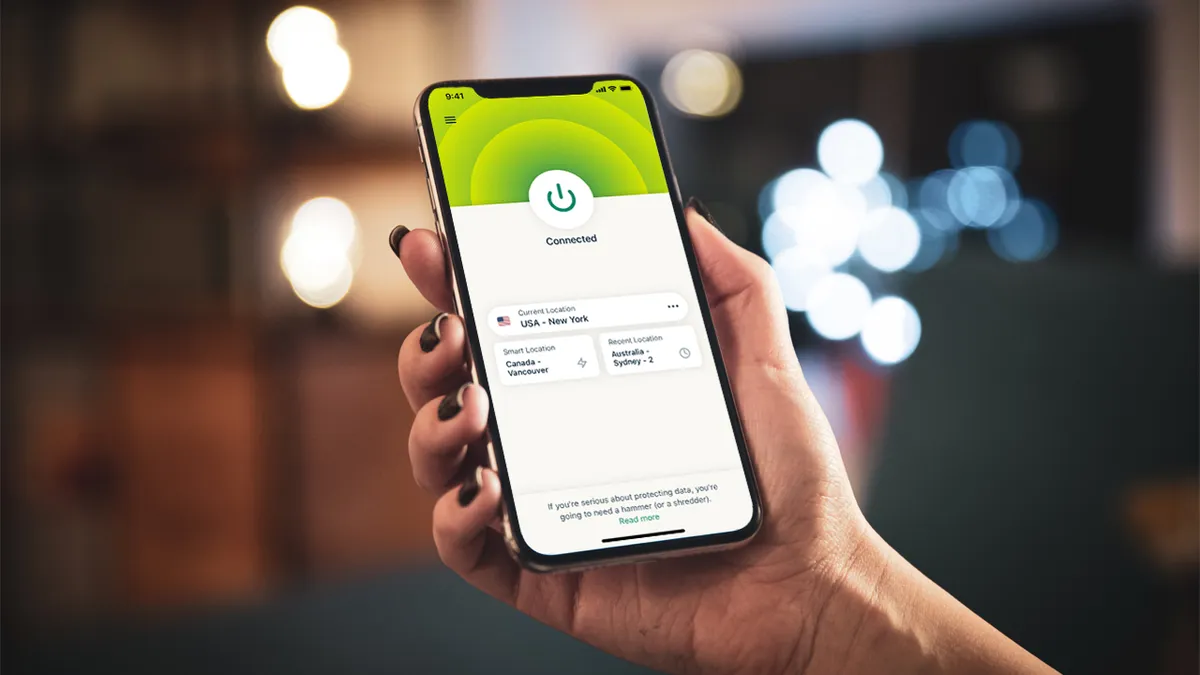
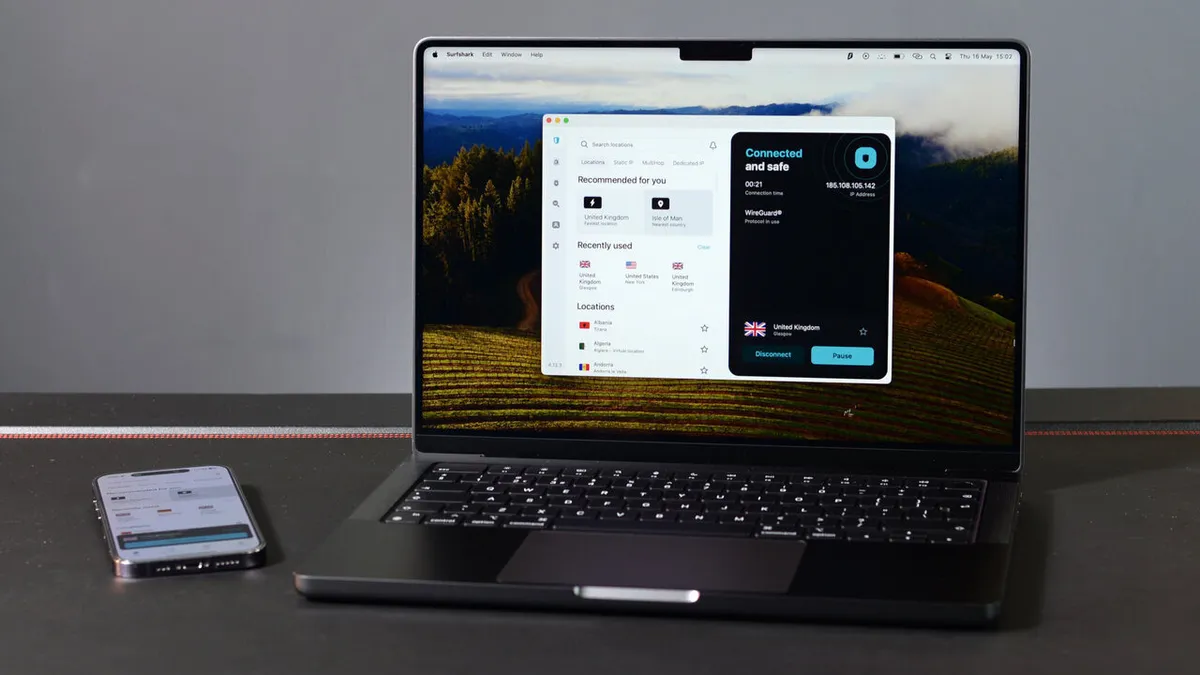
NordVPN and Surfshark both actively use AppsFlyer, and ExpressVPN has just trialled it – although it is now in the process of removing it.
These VPN providers are some of the very best on the market and all have proven no-logs policies – so potential third-party data sharing raises eyebrows.
Tom’s Guide wanted to investigate the use of AppsFlyer to determine how it is used, what this means for users, and whether there’s any risk to your data.
Tom’s Guide searched the privacy policies of 12 leading VPN providers for mentions of AppsFlyer and found it mentioned in four of them – NordVPN, Surfshark, ExpressVPN, and CyberGhost.
VPN providers with no mention of AppsFlyer in their privacy policies
Hide.me
IPVanish
Mullvad
PrivadoVPN
Private Internet Access
Proton VPN
PureVPN
Windscribe
The latter only appeared to use AppsFlyer on its website. However, the other three utilised AppsFlyer within their mobile apps.
CyberGhost claims it is “used to track and measure usage of the Site so that we can continue to provide engaging content.” But it added that only “non-personal data” was collected.
Within most VPN app settings, you can opt-out of sharing anonymous data. This includes marketing performance as well as crash reports or feature usage data.
ExpressVPN
ExpressVPN had the most information on AppsFlyer. It says in its privacy policy that “we use AppsFlyer in our mobile apps to optimize our marketing.”
ExpressVPN states AppsFlyer collects device information, including device model and OS, installation and in-app purchase data, and device identifiers.
The policy details that the data collected is not used to personally identify users, although AppsFlyer can see a user’s IP address. ExpressVPN’s policy follows this up by saying this information is “accessed only once” and “cannot be connected to any particular person” due to being irreversibly stored as an anonymized hash.
(Image credit: Future)
ExpressVPN’s privacy policy says that neither it nor AppsFlyer stores a user’s original IP address, and it cannot be released to anyone.
You have the opportunity to opt-out of data collection by AppsFlyer and can do so by adjusting your device settings or following AppsFlyer’s opt-out instructions.
NordVPN & Surfshark
NordVPN and Surfshark are owned by Nord Security and both make little mention of AppsFlyer in their privacy policies.
Under the “Sharing Your Personal Data” section of its privacy policy, NordVPN says: “In some cases, we may need to share personal data with certain third parties, such as trusted service providers, partners, and other Nord group companies.”
NordVPN’s privacy policy states it uses third-party service providers to help with “various operations” and “as a result, some providers may process personal data.”
NordVPN lists AppsFlyer as a “main long-term service provider” for “marketing, application analytics, and diagnostics.”
(Image credit: Future)
Surfshark’s mention of AppsFlyer in its privacy policy is also limited. It lists AppsFlyer as an “information recipient” for marketing services. Alongside other services, it states AppsFlyer is used to manage contacts and automate marketing.
Neither NordVPN or Surfshark explicitly state what type of data AppsFlyer is collecting and this formed a large part of our questioning when we contacted the providers.
(Image credit: Future)
The VPNs’ response
We contacted all three providers for comment on their use of AppsFlyer.
Questions included how AppsFlyer was implemented into VPN services, what information AppsFlyer collected, what data protections were put in place, and whether AppsFlyer was hosted server-side or in-app.
ExpressVPN
ExpressVPN shared that AppsFlyer was only introduced on a trial basis and there are no plans to reintroduce the software.
ExpressVPN said: “We used AppsFlyer in a limited way to assess purchase attribution – this helped us better understand conversion rates for free trial redemptions and in-app purchases. As you have observed, we’ve explicitly outlined this in our privacy policy to ensure transparency.”
“AppsFlyer operates in the same way as most other analytics platforms, and is a standard tool for attribution.”
“ExpressVPN used AppsFlyer with our iOS app on a trial basis. Specifically, only iOS makes any use of AppsFlyer in the app itself.”
“This trial has now ended, and we are in the process of removing this attribution tool from the iOS app. This will be finalized as part of our next scheduled release.”
(Image credit: Future)
“Our Privacy Policy states that ‘We do not collect logs of your online activity while you are connected to our Services, including no logging of browsing history, traffic destination, data content, or DNS queries. We also never store connection logs, meaning no logs of your IP address, your outgoing VPN IP address, connection timestamp, or session duration.'”
“Our use of AppsFlyer is fully compliant with our privacy policy. We are absolutely committed to the privacy of our users and have considered the core principles of our privacy commitment at every step.”
“We have no plans to re-add the AppsFlyer integration we referred to below, nor any other similar tool.”
“As to whether the trial was a success or not – our core aim was to more accurately validate purchase conversions; we did not see a meaningful difference.”
NordVPN
(Image credit: NordVPN)
NordVPN said that AppsFlyer’s data collection is limited to technical information and no identifiable data is collected. It confirmed that AppsFlyer’s Software Development Kit (SDK) was built in-app, users could turn off analytics, and it had Data Protection Agreements in place.
NordVPN said: “We use AppsFlyer strictly for analytical purposes related to the effectiveness of marketing campaigns and conversion attribution. The information collected through AppsFlyer is limited to technical data, such as device model, operating system, app installation information, anonymized performance metrics and similar.”
“AppsFlyer does not collect any information that directly identifies an individual, such as names, usernames, addresses, or any other type of sensitive personal information, including browsing activities, VPN usage data, passwords, or financial details.”
“Additionally, we have Data Protection Agreements in place to ensure that the data remains confidential, is safeguarded with appropriate technical and organisational security measures, is used solely for purposes related to the services provided, and is not disclosed to any third parties without our authorisation.”
“AppsFlyer SDK is in-built in Nord’s apps. Customers can also turn off analytics from the app settings menu or by rejecting a consent prompt upon install.”
Surfshark
(Image credit: Future)
Surfshark also confirmed the collection of limited technical information and the presence of Data Protection Agreements. It stated that AppsFlyer’s SDK was in-built into the Surfshark app but integration also took place server-side.
Surfshark said: “Surfshark uses the AppsFlyer tool for mobile channel sales monitoring; for example, it allows us to see sales split between organic traffic and Apple search ads.”
“AppsFlyer collects limited information (e.g. ad engagement information, technical and device information, app installation information) used for our mobile channel sales monitoring and attributing app installations and in-app purchases to advertising sources.”
“This data is only used for purposes related to the AppsFlyer services provided to Surfshark. To guarantee that the data stays confidential, we have Data Protection Agreements in place, and this data is protected with suitable technical and organizational security measures. Users also have a possibility to manage the use of analytic data in-app.”
“There is AppsFlyer SDK in-built in Surfshark’s app and integration is also implemented on server-side.”
Is your data at risk?
All three VPNs stated that AppsFlyer’s integration complies with their privacy policies and no personally identifiable information on users is collected or stored.
As mentioned earlier, all the providers have undergone independent security and no-logs audits. We have no reason to believe there is foul play occurring, and they’re still some of the best VPNs available.
When comparing the three privacy policies, ExpressVPN is the most transparent, and we would like to see NordVPN and Surfshark share more details about AppsFlyer’s use. Despite this, no provider hides its presence.
Despite no immediate risk, it is disappointing to see these providers allowing third-party access to data of any kind and we would challenge its necessity.
If you’re using one of these providers as a streaming VPN or simply value the extra cybersecurity features, then you may not be concerned.
However, if you’re more privacy conscious and want a VPN that collects as little information as possible, you may want to explore alternatives. Proton VPN and Mullvad are two of the most private VPNs out there.
Disclaimer
We test and review VPN services in the context of legal recreational uses. For example: 1. Accessing a service from another country (subject to the terms and conditions of that service). 2. Protecting your online security and strengthening your online privacy when abroad. We do not support or condone the illegal or malicious use of VPN services. Consuming pirated content that is paid-for is neither endorsed nor approved by Future Publishing.
George is a Staff Writer at Tom’s Guide, covering VPN, privacy, and cybersecurity news. He is especially interested in digital rights and censorship, and its interplay with politics. Outside of work, George is passionate about music, Star Wars, and Karate.
Predictions that prompt engineering would be the hot new career never panned out, in part because generative AI is easy to prompt.
Prompt engineering, once hailed as the next big career path in tech, is now “basically obsolete,” according to The Wall Street Journal. Rather than hiring prompt engineers, companies are looking for other types of AI specialists and training employees across all job titles to use AI tools effectively.
The rise and fall of prompt engineers as a job title
Two years ago, the job title of prompt engineer was expected to be the most coveted in tech; and, courses on how to become a prompt engineer promised quick routes to high-paying jobs. Prompt engineers were seen as the humans who most deeply understood generative AI and could make the AI perform revolutionary tasks.
NVIDIA CEO Jensen Huang, whose company has benefited immensely from the AI boom, said in March 2024 that all programmers could become prompt engineers. However, in 2025, vibe coding has shown its limits, and companies no longer need people whose entire job is to translate for AI.
Plenty of sceptics were speaking out in 2023, too. After all, tech is a field crowded with the next big things, from crypto to quantum. Real breakthroughs often appeal only to niche use cases. Investors ride the booms and busts, while potential users find their tech has only shifted their lives laterally, not vastly improved them.
SEE: Applications are open for Google’s AI academy for startups, which provides mentorship, workshops, and more for selected businesses.
Generative A, however, has maintained a foothold in the mainstream. Companies, educators, and laypeople now often use AI by default, as the equivalent of a search engine. And they haven’t needed prompt engineers to intercede.
According to The Wall Street Journal and Microsoft, prompt engineering has faded because generative AI can, essentially, prompt itself. It can ask follow-up questions or ask for feedback, said Jared Spataro, chief marketing officer of AI at Work at Microsoft. Plus, companies are playing it safe with hiring in 2025 amid economic uncertainty.
The hottest AI job titles now
AI trainer, AI data specialist, and AI security specialist are the AI job titles to look for now, according to The Wall Street Journal, quoting research from Microsoft into new roles companies are considering adding to their workforce.
Other top AI jobs picks include AI consultant, AI researcher, AI trainer, and AI product manager. These roles were selected based on a review of AI job openings and growth trends in 2024. AI engineering remains a hot job; according to CNBC’s data gathered from Indeed and ZipRecruiter, AI engineers can make a median salary of $106,386.
Megan Crouse has a decade of experience in business-to-business news and feature writing, including as first a writer and then the editor of Manufacturing.net. Her news and feature stories have appeared in Military & Aerospace Electronics, Fierce Wireless, TechRepublic, and eWeek. She copyedited cybersecurity news and features at Security Intelligence. She holds a degree in English Literature and minored in Creative Writing at Fairleigh Dickinson University.
Blender has done a lot to open up access to 3D modelling, animation and VFX. The free open-source software has enabled a generation of young talent to hone their skills in a way that might never have been possible otherwise (see our guide to the best 3D modelling software).
One result of this has been the rise of Blender VFX breakdowns on social media, where users recreate effects from big budget productions, sometimes making it look almost easy. But a meme doing the rounds on Reddit has sparked a big debate about these.
If Blender’s free, and a bedroom YouTuber can build the effect in a few hours, why did it cost so much to produce?
The Reddit post above has already picked up 1.6K likes and over 200 comments. There are opinions coming from all sides. Some people suggest the reason Hollywood VFX is so expensive is due to procrastination and perfectionism from the client, leading to hours of re-dos on details many people may not see.
“The real reason these shots cost so much is because the director is pixel fucking the motion blur of a distant shadow on version 875 four months after the due date,” one person suggests.
One pro suggests that people sometimes forget VFX artists work for someone else. “YouTubers and their audiences think that VFX artists ‘fucked all kinds of shit up and made it stupid and wrong’. The reality is that we made exactly what the client wanted, because that’s how we get paid. I’m making an M-4 fire rainbow unicorn fart muzzle flashes if that’s what the client asks for, because that’s how I get a pay cheque,” they say.
But there may be something more fundamental at play. Recreations can give the impression that something is quick to achieve, and perhaps it is when you’re reverse engineering it. But you need to have the idea in the first place.
In that sense, it’s like modern art, one person suggests: you could have done that… but you didn’t.
“Anytime I see ‘we recreated X in one day’, I always think. Yeah: IF you have an exact reference for exactly the end result requested AND there are no notes on the small differences between your result and the reference…then yes, you could pull some things off in a single day. It never works like that,” one artist writes.
“Recreation is always faster,” another comment agrees. “Think about that one time your software crashed and you had to rebuild the comp from scratch, and it took 10 minutes instead of 6 hours. The hard part was figuring out the process.”
Others are pointing out that creating something for social media isn’t the same as doing it for a cinema screen. “People seem to forget that shots made for large displays like IMAX need way more attention to detail,” one person notes. “Let alone working with film scans, set scans, multiple cameras, humans treated like chatGPT for revisions and etc.”
I’m hoping nobody really thinks VFX artists have an easy job or charge too much. That’s very much not the case. Breaking down others’ work and recreating effects can be a great way of learning and finding your way around software, but it can’t be compared to creating the magic from scratch with a director breathing down your neck.
Meanwhile, Blender’s increasingly being considered for professional productions – it was used to make the Oscar-winning animation Flow, for example. If you’re getting started in the software yourself, you might want to check out our roundup of Blender tutorials.
Joe is a regular freelance journalist and editor at Creative Bloq. He writes news, features and buying guides and keeps track of the best equipment and software for creatives, from video editing programs to monitors and accessories. A veteran news writer and photographer, he now works as a project manager at the London and Buenos Aires-based design, production and branding agency Hermana Creatives. There he manages a team of designers, photographers and video editors who specialise in producing visual content and design assets for the hospitality sector. He also dances Argentine tango.
We chatted with Alexandru Costin about the new innovations coming to Firefly
There was no getting away from Firefly at this year’s Adobe Max London. Already infused across the Creative Cloud suite, the AI image and video generator has been massively upgraded with new tools and features.
Ahead of the events, we sat down with Alexandru Costin, Vice President, Generative AI and Sensei at Adobe, to explore what’s new with Firefly, why stories matter when using the best AI tools, and how professionals can use it to enhance creativity across the board.
What can users expect from AI at Adobe Max?
At Max, we have the next generation of our image model, two versions of it. We have a vector model, we have the video model. So, a lot of progress on the model from Adobe, commercially safe, high quality, amazing human rendering. A lot of control and a great style engine, et cetera. We are also introducing third-party model integrations.
Our customers told us that they want to stay in our tools, in our workflows. They are still using other models for ideation purposes, or for different personalities. So, we’re announcing OpenAI’s GPT image integration and Google’s Imagen and Veo 2 in Firefly, and Flux integration in Firefly Boards.
The third big announcement is Firefly Boards, a new capability in the Firefly web application. We look at it as an all-in-one platform for next generation creatives to ideate, create and produce production content. Firefly Boards is an infinite canvas that enables team collaboration, real-time collaboration, commenting, but also deep Gen AI features stepping in, into all of these first-party and third-party models, new capabilities for remixing images.
How easy is it to deliver something like that?
It’s not easy. We’ve been working on the project concept for like, a year. Actually, that underlying technology, we’ve been working on for many years, like real-time collaboration with deep integration, with storage, and innovation in Gen AI user experiences, remixing, auto-describing images to create the prompts for you. There’s a lot of deep technology that went into it. It looks like magic, and is very easy [to use]. We hope it’s so easy. Our goal is to build a complex layer. So for customers, it’s like magic, and everything just works.
What’s your favourite new feature?
My favourite feature is integration between image, video, and the rest of the Adobe products. We’re trying to build workflows where customers that have an intent in mind, and they want to paint the picture that’s in their mind, can use these tools in a really connected way without having to jump through so many hoops to tell their story. Firefly Image 4 offers amazing photo realism, human rendering quality, prompt understanding. You iterate fast.
With Image 4 Ultra, which is our premium model, you can render your image with additional details, and we can take them into the Firefly video model as a keyframe, and create a video from that whole image. Then you can take that video into Adobe Express and make it like an animated banner, add text, add fonts. In Creative Cloud, we have a lot of capabilities that exist already. We’re bringing Gen AI inside those workflows, either in Firefly on the web, or directly as an API integration.
But for me, I think the magic is having all of this accessible in an easy way. The Photoshop team is also working on an agentic interface. They call it a new Actions panel. You type in what you want. We have 1000 high-quality actions we’ve curated for you. There are all these tools in Photoshop that are sometimes hard to discover if you’re not an expert, but we’re gonna just bring them and apply them for you. I mean, you will learn along the way, but you don’t need to know everything before you start. Not only we’re helping you achieve your goal, we’re also teaching you the ins and outs of Photoshop as we go through this.
That must be one of the biggest barriers to entry for a lot of users
It is. It’s too powerful to some extent. It has so many controls, it might be intimidating, but with the new Actions panel, we want to take a big chunk of that entry barrier away.
(Image credit: Adobe // Future)
How important is it for you when it comes to lowering those barriers to entry?
Everybody will benefit from this technology in different ways. For creative professionals, it will basically remove some of the tedium, so they can focus on creativity. But with things like Firefly Boards, they will be able to work with teams and clients much better. The client can upload in boards some stylistic ideas, and then you can take it and integrate it very fast in your professional workload.
For consumers, with people that want to spend seconds to create something, with Firefly, you just type in the prompt and we do it for you. It’s a great capability.
In the middle, there are the folks learning in their careers, aspiring creative professionals, next generation creatives. And for them, we want to give them both Gen AI capabilities, but also a bridge towards the existing pixel-perfect tools that we have at Adobe. Because we think a mix of those two worlds is the best mix that next generation creatives need to be armed with.
Where can further improvements be made in that area, making it more accessible?
For me, a big opportunity is better understanding of humans, like prompt understanding, agentic, having a creative partner to bounce ideas off of. Another thing we’re announcing is the [upcoming] Firefly mobile app. This is a companion app that can use many of the Firefly app capabilities, generate text, generate video, et cetera. But also, because it’s on mobile, you have access to the camera, you have a microphone, there are many new opportunities to make these interactions easier. So, we’re looking into that. We do think next generation creatives are a big target market for us because we want to give them the tools of the trade.
What’s the motivation behind these new additions in Firefly?
For us, customers are why we get up in the morning every day, they are telling us what they need, and they told us they want more quality, better humans, more control, better stylization. That’s what’s behind the image model updates. We just want to make them more usable in more workflows for actual production use-cases. Because our model is uniquely positioned to be safe for commercial use, we want customers to use it everywhere.
For video, video is also growing, and many of our customer-base doesn’t know how to use the video product. So, making video creation more accessible is another great accelerant for creativity. We want to offer a larger population of people the tools to tap into video and be able to start achieving their goals there. While, of course, inside products like Premiere Pro, we’re continuing to integrate deeper, more advanced features, like a couple of weeks ago at NAB, we launched Generative Extend. It won one of the awards. Gen Extend is a 4K extension, enabling professional videographers to basically extend clips so they don’t have to reshoot.
What motivates us is helping our customers tell stories, better stories, more diverse stories, and be successful in their careers.
When everyone is using AI, how do artists and businesses differentiate themselves from rivals?
I think through human creativity and engineering, how do they differentiate today? They’re all using Photoshop. They do find ways to differentiate because, in reality, Gen AI is a tool designed, at least from an Adobe perspective, to be of service to the creative community, and we want to give them a more powerful tool that should help them level-up their craft.
They’re describing it as going from the person editing to a creative director. All of our customers can become directors of these Gen AI tools to help them tell better stories, tell stories faster, et cetera. So, we think the differentiation will still be in the creativity of the human using the tool. And we’re seeing so much innovation. We’re seeing people using these technologies in ways we haven’t even thought about, which is very exciting, always. Mixing them in novel ways. Because that’s how you differentiate. And we do think there will always be many ways to express somebody’s creativity.
We think creativity comes in a variety of ways, and there are different tools creative people will use and mix together to tell better stories and change culture.
Integrated into almost every Adobe app, Firefly is tailor-made for creatives at every level – from professionals to consumers. Want to see how Adobe’s generative AI can help you iterate your designs faster? Try out Firefly’s tools by clicking here.
Steve is B2B Editor for Creative & Hardware at TechRadar Pro. He began in tech journalism reviewing photo editors and video editing software at Web User magazine, and covered technology news, features, and how-to guides. Today, he and his team of expert reviewers test out a range of creative software, hardware, and office furniture. Once upon a time, he wrote TV commercials and movie trailers. Relentless champion of the Oxford comma.
There are many fields where generative AI is proving to have truly transformative potential, and some of the most interesting use cases are around mental health and wellbeing.
While it can’t provide the human connection and intuition of a trained therapist, research has shown that many people are comfortable sharing their worries and concerns with relatively faceless and anonymous AI bots.
Whether this is always a good idea or not, given the black-box nature of many AI platforms, is up for debate. But it’s becoming clear that in specific use cases, AI has a role to play in guiding, advising and understanding us.
So here I will look at some of the most interesting and innovative generative AI tools that are reshaping the way we think about mental health and wellbeing today.
Headspace is a hugely popular app that provides calming mindfulness and guided meditation sessions. Recently, it’s expanded to become a full digital mental healthcare platform, including access to therapists and psychiatric services, as well as generative AI tools.
Their first tool is Ebb, designed to take users on reflective meditation experiences. Headspace focused heavily on the ethical implications of introducing AI to mental healthcare scenarios when creating the tool. This is all part of their mission to make digital mindfulness and wellness accessible to as many people as possible through dynamic content and interactive experiences.
This is another very popular tool that’s widely used by corporate customers to provide digital mental health services to employees, but of course, anyone can use it. Its AI chatbot provides anonymous support and is trained in cognitive behavioural therapy, mindfulness and dialectical behavioural therapy and mindfulness. Wysa’s AI is built from the ground up by psychologists and tailored to work as part of a structured package of support, which includes interventions from human wellbeing professionals. Another standout is the selection of features tailored to helping young people. Wysa is one of the few mental health and wellbeing AI platforms that holds the distinction of being validated clinically in peer-reviewed studies.
This platform is billed as an emotional health assistant and uses generative AI to deliver conversational, personalized support. It blends natural language chatbot functionality with clinically validated methods including CBT. According to its website, its effectiveness at treating six mental health conditions, including anxiety and depression, has been confirmed by Stanford University researchers, and users can expect benefits in as little as two weeks.
This is an AI-powered journaling app designed to help users manage their mental health by providing insights and emotional analytics based on their writing. It provides users with a number of journaling frameworks as well as guidance from AI personas in the guise of historical figures. It aims to help users get to the bottom of the emotional drivers behind their thought processes and explore these through the process of writing and structuring their thoughts. Chatbot functionality means that journaling becomes a two-way process, with the AI guiding the user towards different pathways for exploring their mental wellbeing, depending on how and what they write about. Mindsera can even create images and artwork based on users’ journaling, to give new perspectives on their mental health and wellbeing.
Woebot is a “mental health” ally chatbot that helps users deal with symptoms of depression and anxiety. It aims to build a long-term, ongoing relationship through regular chats, listening and asking questions in the same way as a human therapist. Woebot mixes natural-language-generated questions and advice with crafted content and therapy created by clinical psychologists. It is also trained to detect “concerning” language from users and immediately provides information about external sources where emergency help or interventions may be available. Woebot seems to be available only to Apple device users.
The Best Of The Rest
The choice of tools and platforms dedicated to mental health and wellbeing is growing all the time. Here are some of the other top choices out there:
Alongside Headspace (see above), Calm is one of the leading meditation and sleep apps. It now uses generative AI to provide personalized recommendations.
Although this is not a dedicated mental health app, therapists and psychologists are among the AI characters this platform offers, and both are available free of charge 24/7.
This is an all-in-one AI planning and scheduling tool that includes functions for tracking habits and behaviours in order to develop healthy and mindful routines.
AI-powered journaling tool developed by MIT, which is designed to work with users’ memories to suggest future paths and activities.
Talking therapies like CBT have long been understood to be effective methods of looking after our mental health, and AI chatbots offer a combination of accessibility and anonymity. As AI becomes more capable and deeply interwoven with our lives, I predict many more will explore its potential in this field. Of course, it won’t replace the need for trained human therapists any time soon. However, AI will become another tool in their box that they can use to help patients take control of their mental wellbeing.
Redditors debate the eternal question, but does the stereotype still stand up today?
Graphic designers use Macs. All of them. It’s basically the law, and any designer admitting to using a Windows PC is immediately ostracised by their peers.
OK, that might be an exaggeration, but for a long time, graphic designers, and many other types of creatives, have tended to favour Macs. It’s part of the reason we cover Apple products so much on Creative Bloq, from updates and rumours to hands-on reviews (see our new M4 MacBook Air review for the latest, which currently has $150 off at Amazon).
This question asked on Reddit has elicited a vast array of suggestions, from system reliability and performance to Apple’s ecosystem, clever product placement and a frustration at having to memorise ASCII codes for typesetting on Windows.
As several people point out, the connection between Apple computers and the creative fields goes back a long way. Originally, it was sometimes a question of necessity rather than choice.
In the 80s, Adobe‘s Postscript, which used vectors to encode fonts, was licensed for Macs, and some of Adobe’s programs were initially released for Macintosh only, including Illustrator in 1987. QuarkXPress, which was the go-to software for desktop publishing, was also only available for Mac until 1992.
Some long-time Mac users also point to better colour management and WSIWYG on macOS. But today these are less of an issue, and most industry standard software supports Windows. So do graphic designers still all use Macs today?
Do graphic designers still use Macs?
Designers using Macs (Image credit: Apple)
Several graphic designers have responded to say they now use self-built PCs over Macs for the same or better performance at a cheaper price. Others suggest there’s a myth about Mac performance that may be more to do with users’ experiences of budget Windows laptops while Apple decided not to make cheaper laptops to avoid diluting its reputation.
“When people save up and spend $2,000 on a MacBook Pro after buying the cheapest $400 Windows shitboxes for most of their life, they go ‘wow, Apple is great’ and never look back,” one person suggested.
Speaking from personal experience, one designer who made the switch to Windows agrees: “When I went PC, I went high-end mobile workstations like Dell Precision, at or above the price points of the Macs, and the durability, reliability, and trouble-free life has genuinely been comparable.”
“I swear half the answers I’m reading are people that haven’t touched a PC in like 20 years. I use both Mac and PC for work,” someone else adds.
The new M4 MacBook Air (Image credit: Apple)
Others suggest that while there may not be major performance differences any more (other than battery life), Macs have quality of life features that add up, from a more efficient file system search to easier shortcuts for special characters in typography.
“When you compare the same task on a Windows machine vs a Mac, it’s 13 clicks in UI hell vs 1-click of duh-shit intuitiveness,” one person writes.
Others think it may be more to do with habit, suggesting that Apple had a lot of success from giving college art programs good discounts to encourage them to use Macs in computer labs. “Once you start using Macs its hard to go back to PCs,” one person wrote.
But could it also be to with aesthetics – and status? Designers like things that look nice, and some still think Macs are simply cooler than Windows PCs. “If I’m being honest, there’s a cachet with Macs that I think appeals to designers. They always produce well-designed equipment and OS,” one person says. “Even their advertising is attractive.”
At the end of the day, designers should work with what they’re comfortable with and what meets their needs. What do you think? If you’re a graphic designer, do you use a Mac or a Windows PC, and why? How do you think they compare? Let us know in the comments below.
Joe is a regular freelance journalist and editor at Creative Bloq. He writes news, features and buying guides and keeps track of the best equipment and software for creatives, from video editing programs to monitors and accessories. A veteran news writer and photographer, he now works as a project manager at the London and Buenos Aires-based design, production and branding agency Hermana Creatives. There he manages a team of designers, photographers and video editors who specialise in producing visual content and design assets for the hospitality sector. He also dances Argentine tango.
TactStyle, a system developed by CSAIL researchers, uses image prompts to replicate both the visual appearance and tactile properties of 3D models.
Essential for many industries ranging from Hollywood computer-generated imagery to product design, 3D modeling tools often use text or image prompts to dictate different aspects of visual appearance, like color and form. As much as this makes sense as a first point of contact, these systems are still limited in their realism due to their neglect of something central to the human experience: touch.
Fundamental to the uniqueness of physical objects are their tactile properties, such as roughness, bumpiness, or the feel of materials like wood or stone. Existing modeling methods often require advanced computer-aided design expertise and rarely support tactile feedback that can be crucial for how we perceive and interact with the physical world.
With that in mind, researchers at MIT’s Computer Science and Artificial Intelligence Laboratory (CSAIL) have created a new system for stylizing 3D models using image prompts, effectively replicating both visual appearance and tactile properties.
The CSAIL team’s “TactStyle” tool allows creators to stylize 3D models based on images while also incorporating the expected tactile properties of the textures. TactStyle separates visual and geometric stylization, enabling the replication of both visual and tactile properties from a single image input.
“TactStyle” tool allows creators to stylize 3D models based on images while also incorporating the expected tactile properties of the textures.
PhD student Faraz Faruqi, lead author of a new paper on the project, says that TactStyle could have far-reaching applications, extending from home decor and personal accessories to tactile learning tools. TactStyle enables users to download a base design — such as a headphone stand from Thingiverse — and customize it with the styles and textures they desire. In education, learners can explore diverse textures from around the world without leaving the classroom, while in product design, rapid prototyping becomes easier as designers quickly print multiple iterations to refine tactile qualities.
“You could imagine using this sort of system for common objects, such as phone stands and earbud cases, to enable more complex textures and enhance tactile feedback in a variety of ways,” says Faruqi, who co-wrote the paper alongside MIT Associate Professor Stefanie Mueller, leader of the Human-Computer Interaction (HCI) Engineering Group at CSAIL. “You can create tactile educational tools to demonstrate a range of different concepts in fields such as biology, geometry, and topography.”
Traditional methods for replicating textures involve using specialized tactile sensors — such as GelSight, developed at MIT — that physically touch an object to capture its surface microgeometry as a “heightfield.” But this requires having a physical object or its recorded surface for replication. TactStyle allows users to replicate the surface microgeometry by leveraging generative AI to generate a heightfield directly from an image of the texture.
On top of that, for platforms like the 3D printing repository Thingiverse, it’s difficult to take individual designs and customize them. Indeed, if a user lacks sufficient technical background, changing a design manually runs the risk of actually “breaking” it so that it can’t be printed anymore. All of these factors spurred Faruqi to wonder about building a tool that enables customization of downloadable models on a high level, but that also preserves functionality.
In experiments, TactStyle showed significant improvements over traditional stylization methods by generating accurate correlations between a texture’s visual image and its heightfield. This enables the replication of tactile properties directly from an image. One psychophysical experiment showed that users perceive TactStyle’s generated textures as similar to both the expected tactile properties from visual input and the tactile features of the original texture, leading to a unified tactile and visual experience.
TactStyle leverages a preexisting method, called “Style2Fab,” to modify the model’s color channels to match the input image’s visual style. Users first provide an image of the desired texture, and then a fine-tuned variational autoencoder is used to translate the input image into a corresponding heightfield. This heightfield is then applied to modify the model’s geometry to create the tactile properties.
The color and geometry stylization modules work in tandem, stylizing both the visual and tactile properties of the 3D model from a single image input. Faruqi says that the core innovation lies in the geometry stylization module, which uses a fine-tuned diffusion model to generate heightfields from texture images — something previous stylization frameworks do not accurately replicate.
Looking ahead, Faruqi says the team aims to extend TactStyle to generate novel 3D models using generative AI with embedded textures. This requires exploring exactly the sort of pipeline needed to replicate both the form and function of the 3D models being fabricated. They also plan to investigate “visuo-haptic mismatches” to create novel experiences with materials that defy conventional expectations, like something that appears to be made of marble but feels like it’s made of wood.
Faruqi and Mueller co-authored the new paper alongside PhD students Maxine Perroni-Scharf and Yunyi Zhu, visiting undergraduate student Jaskaran Singh Walia, visiting masters student Shuyue Feng, and assistant professor Donald Degraen of the Human Interface Technology (HIT) Lab NZ in New Zealand.
Avoid These Branding Mistakes Even Pros Overlook: The Top 10 Pitfalls
Building a brand is exciting, right? It feels like creating something truly unique, something that reflects your vision. Many people pour their heart and soul into their business identity. Yet, it’s surprisingly easy to stumble. Even seasoned professionals can make significant branding mistakes that undermine their efforts. These aren’t just minor hiccups; they can confuse customers, dilute the message, and ultimately hinder growth. Think about your own brand for a moment. Are you confident it’s firing on all cylinders, truly connecting with the right people? Or could some subtle (or not-so-subtle) branding mistakes be holding you back?
Understanding branding goes beyond just a cool logo or a catchy slogan. It’s the entire perception someone has of your company, product, or service. Furthermore, it’s the gut feeling they get and the promise you make and consistently keep. Getting this right is crucial. Getting it wrong? Well, that’s why we’re here. This article will explore the ten most common branding mistakes that trip up businesses, even those with experience. Recognizing these pitfalls is the first step toward building a stronger, more resonant brand. Let’s explore these common issues together.
1. Ignoring Your Target Audience: A Classic Branding Mistake
Who are you actually trying to reach? It sounds basic, yet failing to define a target audience clearly is a foundational branding mistake. Many businesses cast their net too wide, hoping to appeal to everyone. The result? They often appeal strongly to no one. Effective branding speaks directly to a specific group’s needs, desires, values, and pain points. Without this focus, messaging becomes generic, visuals lack impact, and marketing efforts miss the mark entirely.
Think about it: how can you craft a compelling story if you don’t know who’s listening? How can you choose the right visual style or tone of voice? You need deep insight into your ideal customer. What are their demographics? More importantly, what are their psychographics – their attitudes, aspirations, and lifestyles? Doing thorough audience research isn’t just a marketing task; it’s a core branding activity. Skipping this step is like building a house without knowing who will live inside. Are you really sure you know who you’re talking to? This is one of the most critical branding mistakes to correct.
2. The Chaos of Inconsistency Across Channels
Imagine meeting someone who acts completely different every time you see them. You’d feel confused, maybe even distrustful. The same applies to brands. Inconsistency is one of the most damaging branding mistakes. This happens when your logo looks different on your website versus your social media, your tone of voice shifts dramatically between emails and blog posts, or your core message changes depending on the platform.
Consistency builds recognition and trust. It reassures your audience that they know who you are and what you stand out for. Every touchpoint – from your website design and packaging to customer service interactions and social media updates – should reinforce the same core brand identity. This requires clear brand guidelines covering visuals (logos, colours, fonts) and voice (tone, personality, language). When every element works together harmoniously, your brand becomes memorable and reliable. Is your brand speaking with one clear, consistent voice everywhere? Addressing inconsistent brand messaging is vital.
3. A Weak or Generic Visual Identity
Your visual identity – logo, colour palette, typography, imagery – is often the first encounter someone has with your brand. Making this weak, generic, or unprofessional is a significant visual branding mistake. A poorly designed logo might look cheap or fail to convey your brand’s essence. An inconsistent or inappropriate color scheme can evoke the wrong emotions. Using generic stock photos can make your brand feel impersonal and forgettable.
Your visuals should be distinctive, memorable, and aligned with your brand’s personality and values. They need to resonate with your target audience and differentiate you from competitors. Investing in professional design isn’t an expense; it’s an investment in how your brand is perceived. Does your visual identity truly capture who you are and appeal to your ideal customer? Don’t let poor logo design choices or weak visuals undermine your credibility. These branding mistakes are avoidable with careful planning.
4. Forgetting the ‘Why’: The Soul of the Brand
Why does your business exist beyond making money? What core purpose drives you? What values do you stand for? Many businesses focus heavily on the ‘what’ (products/services) and the ‘how’ (processes), but neglecting the ‘why’ is a profound branding mistake. Your ‘why’ is the heart of your brand. It’s the underlying belief or mission that inspires your work and connects with people on an emotional level.
Communicating your purpose helps build a deeper connection with your audience. People are increasingly drawn to brands that align with their own values. When your ‘why’ is clear, it informs everything: your messaging, your company culture, your product development, and your customer interactions. It provides a guiding star for your brand strategy. Take a moment: can you clearly articulate your brand’s core purpose? If not, you might be missing the soul of your brand.
5. Trying to Be Everything to Everyone
This ties back to the target audience issue, but deserves its own spotlight. The desire to capture the largest possible market often leads businesses to dilute their brand identity. They avoid taking a strong stance or developing a distinct personality for fear of alienating potential customers. This attempt to be universally appealing is a frequent branding mistake.
Strong brands often have a clear point of view. They stand for something specific, even if it means not appealing to everyone. This focus allows them to build a loyal following among those who resonate with their message. Trying to please everybody usually results in a bland, forgettable brand that lacks character and conviction. Don’t be afraid to define your niche and own it. Who are you not trying to reach? Answering this can be as important as identifying who you are trying to reach. Avoid these common branding mistakes by embracing focus.
6. Blending In: Failing to Differentiate
What makes your brand different from the competition? If you can’t answer this clearly and concisely, you might be making a critical branding mistake. In crowded markets, simply existing isn’t enough. Your brand needs a unique selling proposition (USP) – something that sets you apart and gives customers a compelling reason to choose you over others.
Differentiation isn’t just about features; it can be about your brand story, your customer service approach, your design aesthetic, your company values, or your niche focus. Without clear differentiation, your brand risks becoming invisible, lost in a sea of similar offerings. You end up competing solely on price, which is often a race to the bottom. Conduct competitor analysis not just to see what they do, but to find opportunities for your brand to stand out. What truly makes your brand unique in the eyes of your target customer? Effective brand positioning hinges on this.
7. Neglecting Brand Voice and Personality
Does your brand have a personality? How does it sound in its communications? Treating brand voice as an afterthought is another common branding mistake. Your brand voice is the specific personality and tone you use in all written and spoken communication. Is it knowledgeable and authoritative? Friendly and approachable? Witty and playful? Sophisticated and elegant?
A consistent and appropriate brand voice helps humanize your brand, making it more relatable and engaging. It builds rapport with your audience and reinforces your overall brand identity. Think about brands you admire – they often have a distinct way of speaking that feels authentic to them. Defining and documenting your brand voice ensures everyone communicating on behalf of the brand sounds consistent and ‘on-brand’. Does your communication style truly reflect your brand’s intended personality?
8. Underestimating Internal Branding Efforts
Branding isn’t just for customers; it’s for your employees, too. Forgetting about internal branding – ensuring your team understands, believes in, and embodies the brand – is a subtle yet impactful branding mistake. Your employees are your primary brand ambassadors. If they aren’t aligned with the brand’s values, purpose, and promise, that disconnect will inevitably filter through to the customer experience.
Internal branding involves communicating the brand identity clearly within the organization, fostering a culture that reflects brand values, and empowering employees to deliver on the brand promise. When your team is engaged and believes in the brand, they become powerful advocates, enhancing brand reputation from the inside out. How well does your team understand and live your brand values daily? Ignoring this aspect is one of the branding mistakes that can quietly sabotage external efforts.
9. Resisting Evolution: When Brands Get Stuck
The market changes. Customer preferences evolve. New technologies emerge. A brand that refuses to adapt or refresh itself over time risks becoming irrelevant. Stagnation is a dangerous branding mistake. While consistency is crucial (as mentioned earlier), it doesn’t mean being rigid and unchanging forever.
Effective brands know how to maintain their core essence while evolving their messaging, visuals, or offerings to stay relevant and resonant with their audience. This requires ongoing monitoring of market trends, customer feedback, and competitor activities. Periodic brand audits can help identify areas needing refreshment. The key is to evolve thoughtfully, staying true to your core ‘why’ while adapting the ‘how’ and ‘what’ as needed. Is your brand keeping pace with the world around it, or is it stuck in the past?
10. Thinking Branding is Just a Logo: A Costly Branding Mistake
Perhaps the most overarching branding mistake is viewing branding too narrowly – reducing it to just a logo, a colour scheme, or a marketing campaign. Branding is holistic. It encompasses every single interaction and perception associated with your business. It’s your product quality, your customer service experience, your company culture, your reputation, your online presence, and yes, your visual identity and messaging.
Treating branding as a superficial layer rather than a core business strategy leads to fragmented efforts and missed opportunities. True branding integrates into every aspect of the business, ensuring a cohesive and authentic experience for both customers and employees. It’s about building relationships, managing reputation, and delivering consistently on your promise. Do you see branding as a comprehensive strategy or just a checklist of visual elements? Understanding the bigger picture helps avoid many downstream branding mistakes.
Avoiding These Branding Mistakes is Your Path Forward
Recognizing these common branding mistakes is the essential first move towards building a more powerful and effective brand. Take an honest look at your own branding efforts. Are you clearly defining your audience? Maintaining consistency? Differentiating effectively? Communicating your ‘why’? Don’t feel discouraged if you spot areas for improvement – even the most successful brands continuously refine their approach.
Building a strong brand is an ongoing journey, not a one-time task. It requires strategic thinking, consistent effort, and a willingness to learn and adapt. By avoiding these ten pitfalls, you position your business for stronger connections, greater loyalty, and sustainable growth. Now, think about one step you can take today to address a potential branding mistake in your own strategy. Good luck!
Don’t hesitate to browse WE AND THE COLOR’s Graphic Design and Branding sections for more, or join our Reddit Design Community to swap ideas with other creative pros. In addition, feel free to ask our Graphic Design AI Bot on ChatGPT for help with your latest branding project.
We all want to achieve elusive unicorn status. But how do you attain such a lofty goal among stiff competition, all vying for the same thing?
f you’re a business owner like me, one of the things we all share is the desire to be the best in our line of work. Correction: the best of the best. You want to be a truly exceptional company in your industry, one that outperforms, out delivers and outshines your competition, winning the race not just because you’ve trained and prepared for it, but because you genuinely stand out from the crowd.
In other words, you want to be the unicorn (in the figurative, not the financial, sense) among all the other horses, ponies and zebras running in your field.
That’s a big ask. Becoming an exemplary example – the ideal prototype – of what a business like yours should be seems like a pretty tall order. But what if I told you that the question of how to achieve unicorn status actually has a short answer?
I’ve been working in the public relations space for close to two decades now, and in that time of representing countless clients and receiving feedback from them as to why they keep coming back to my PR firm, here’s what I’ve come up with: To become a unicorn in your industry, do one thing really, really well.
Applying Occam’s Razor
My theory seems simplistic, I know. But the principle of parsimony (aka Occam’s Razor) tells us that oftentimes, the simplest answer is the likeliest to be true, that the simplest route is the best way there. Picking one thing to excel at and then doing it spectacularly well might seem easy, but it requires a lot of effort.
First, you have to have the capacity, the skill, to excel in that area. Additionally, you have to learn how to leverage that standout aspect to make it work for you in the marketplace – incorporating it into your branding, spotlighting it in your messaging, maybe even including it in your name. Concise as the notion is, there’s actually a lot of breadth and flexibility in it, for when it comes to selecting what you want to do better than anyone else is doing it, your choices are boundless.
For example, you could strive for superiority in the area of cleanliness, turnaround time, precision or home delivery. Your unicorn horn could be defined by the diversity of your staff, your concentration on inclusivity or your commitment to the environment. Honestly, the one thing you do really, really well could be just about anything… so long as it’s the primary thing that makes your business your own, something you can embrace without qualification and stay loyal to down the line. Here are some of my personal favourites.
Unicorn pillar #1: Create a niche
There are lots of companies out there that, like yours, make candles. But not all of them source their materials from a specific African village or use hypoallergenic ingredients or are named after ancient goddesses. Your products? Incarcerated prisoners package them – they’re not just a source of light, they light a way forward for others. That’s called having a niche, and to create one of your own, you need to research what your competitors are doing — and then do something no one else is.
Even then, amid our vast and variegated business landscape, you’re likely to find overlap with others in your sector. Consider the recent addition of Poppi and Olipop to the soda market. Both have set themselves apart from the mainstream by being prebiotic options that offer a far greater health bang for your buck, but they’ve both successfully set themselves apart from each other as well along such lines as scientific research, specific ingredients, visual strategies and target audience.
Say what you will about the post-2025 Super Bowl controversy, these two companies not only illustrate the power of niche branding (particularly on social media) but also how similar brands can still clearly differentiate themselves from one another within the same market.
Unicorn pillar #2: Be kind
This might seem like another overly simplistic concept, but kindness has too often been supplanted by the perpetual quest for increased profits and presence, making it all the more valuable today. Consumers have gotten quite savvy at sniffing out false sincerity, so when they come across the real thing, they’re much more prone to give you their business. Basically, when your client base believes you prioritize your vision, your team and creating an incredible product or service over financial gain, they want to work with you.
Chewy.com is a business known for being kind. When it learns of a customer’s pet passing, it sends a sympathy card and flowers. And it almost goes without saying that KIND Snacks didn’t just build its brand on the basis of products that are kind to the body; it’s far more widely known as an entity committed to international peace, cooperation and understanding.
Unicorn pillar #3: Organizational efficiency
I call this outstanding quality “having your ducks in a row,” and when a business excels in this area, it will rise to the top of its trade. I’m talking about having an on-the-ball accounting team that pays your bills on time, a crack legal team that prepares fair and clear contracts, an accessible and attentive HR department and sound business practices and processes. It’s what goes on behind the scenes of your business that will determine what appears on the public side of your business, so you can’t go wrong adopting company-wide efficacy as your unicorn model. With it, you build a house of bricks, as opposed to a house of straw.
Think of the companies Americans trust to come through for them. When Amazon says your package will be on your doorstep by 5:00 pm tomorrow, it’s there, thanks to an amazingly well-oiled machine working nonstop to fulfil orders.
When PODS says it will deliver your belongings to your new driveway on Tuesday, it’ll go out of business if that container doesn’t arrive. And I’m not quite sure how Chick-fil-A manages to keep so many cars in so many take-out lines happy, but day in and day out, it does.
Being more efficient than any of your competitors may not be “sexy,” but it assures lasting success.
Unicorn pillar #4: Invest in your people
Building and maintaining a remarkable “company culture” can just be a buzzword to you, or you can bring it to life. I can’t think of any single factor that makes my company more valuable to my clients than the value I place on my people and the experience I endeavour to provide them by working for me. When my staff feels openly recognized, wholly supported and vitally important to achieving our shared outcomes, we’re truly unstoppable. So keep in mind that your unicorn focus can be internal, not necessarily client-facing.
How about you? Where do you want to shine? More to the point, where do you already shine? Sure, all of the above examples are nationally, if not internationally, known, with tremendous resources and budgets at their disposal, so you’re not expected to achieve outcomes of the same size and scale. But the good news here is that you are smaller and more self-contained, so you don’t have to appeal to as many people or make as big an impact. On the contrary, you can make a bigger splash in a smaller pool!
To ride heads and tails above the rest, then, pick one lane, steadfastly stick to that lane, travel it with as much drive and dedication as you can — and then watch as you pass all the others on the track, crossing the finish line in first place!
Entrepreneur Leadership Network® Contributor. Founder at R Public Relations Firm. Emily Reynolds Bergh — vintage-shoe hoarder, cycling junkie, & lover of pink drinks — is a marketing & PR pro with 15+ years of experience under her belt. Now the founder & owner of the award-winning R Public Relations based in New York, she’s been featured in numerous publications & podcasts.