Author

editor

Browsing

By 

As an SME, you need all the help you can get. The resources available to you are never enough, and time is limited, so you need to be able to make the most out of each of your resources.

In this post, I’m going to share four top small business dashboards that will help you succeed.

It’s a great era for small businesses – while it’s true that the competition is fiercer than ever, because there are more opportunities than ever, it’s also true that we now have access to an incredible array of business tools – from accounting to marketing and anything else in between.

These are now more accessible than ever, some are even completely free, and each is designed to help you save time, improve your results, be more productive, and perform all kinds of tasks that you can’t do yourself.

So as a small business owner, I believe it’s very important to future success to focus some time on finding the right tools for your business, on trying to identify what types of tools are needed and then trying to find the right solutions based on these needs.

Because otherwise, you’re most likely going to lose time and resources unnecessarily – but most importantly, you’re going to lose opportunities. Opportunities which your competitors might be on to.

Check out these tools.

9 Spokes

9 Spokes is not just a (free) business dashboard, it’s also a great way to discover new useful business tools.

The concept is very straightforward – the tool enables you to connect all of your business tools so that you can track them all in one dashboard.

You’ll be able to track pretty much any business data that you’re interested in, such as:

  • Your employees and their schedule
  • Your accounting: anything from how much cash you currently have on hand, what you owe and to whom, and how much you owe in taxes
  • Your website analytics
  • Your social media ROI, analytics, and engagement
  • An overview of your sales and profits
  • Your products and inventory information

And these are just a few – depending on what tools you use, and what data matters to you, you can customize your dashboard to your liking, with tools from nine different categories:

And this is where it gets even more exciting, because apart from using 9 Spokes as a business dashboard, it also gives you access to a huge library of business tools within these nine categories, all of which can be connected to your dashboard.

But what’s really great about 9 Spokes, in my opinion, is that you get to build your dashboard just as you want. You can use the tools you trust, and find new ones that can help, and completely make it your own, while still getting a complete overview of your entire business.

As for integrations, there are various different apps and tools that can be connected, in all nine categories (mentioned earlier). There’s a range of well-known options here, including Shopify, MailChimp, any major social network, Google Analytics, the Office 365 suite, and many, many others.

Cyfe

Cyfe is another business dashboard which enables you to monitor pretty much anything regarding your business, with a big focus on analytics.

Within Cyfe’s dashboard, you’re able to monitor almost anything that has to do with your business – for example, see, at a glance, how many new app downloads there have been, who has mentioned you on social media, how your clients are faring online, how much traffic your website is getting, and much, much more.

It’s a highly powerful tool, and one that delivers business intelligence and monitors data and activity in a variety of categories, like sales and finance, project management, social media and other marketing strategies, web analytics, and client information.

To get even more out of your business dashboard, you can set up goals for yourself so you can evaluate your success more effectively, and find out where you need to focus so you can improve and grow as a business.

Zoho One

Zoho One is a great tool for connecting all of your employees under one dashboard – but more importantly, it’s also a tool where you can connect all of your important business data: sales, marketing, accounting, CRM and customer support, HR, and more.

The platform has over 40 different integrated apps which you can leverage for your business, as well as 40+ apps that you can use on your mobile device for decisions on the go.

And not only is it a business dashboard for monitoring your data and analytics, but it can also be used to take action and run your business. For example, you can manage your email marketing campaigns, take surveys, build lead generation flows and customer engagement forms, and collaborate with your various teams on different projects, among others.

Geckoboard

Geckoboard is built for teams who use all kinds of different tools to manage their business. The platform helps connect these apps, enabling you to view all of your important data in one place, and you can even build dashboards depending on each persons’ needs, so everyone can focus on the data, tasks, and objectives that matter to them most.

For example, you can create a dashboard for the CEO with a focus on revenue and revenue growth, a dashboard for salespeople and their managers where you can track revenue, conversion rates, and an overview of the sales reps’ activity, and so on. There are numerous possibilities for almost anyone on your team.

In terms of integrations, Geckoboard can pull information and data from over 60 different apps and tools in all kinds of categories, including Instagram, Twitter, and other popular social networks for your social media marketing, Salesforce for sales and finance, Mailchimp for email marketing, and Google Analytics for, of course, web analytics.

Conclusion

Business dashboards can be extremely valuable tools because they enable you to see the entire status of your business at one glance, which then helps you grow your small business faster.

Hopefully these tools get you thinking about the potential for your business, and provide assistance in choosing which is right for you.

By 

Follow Lilach Bullock on Twitter

Sourced from Social Media Today

By

Get more from imagery in your design work with our essential advice, covering graphic design, web design, apps and more…

Images are an integral part of the design process, and when it comes to selecting them and using them in a project, it’s important to make the right choices: one of them speaks 1,000 words, after all.

So whether you’re art directing an on-location photoshoot for a glamorous ad campaign, or searching a stock image library for the perfect visual asset for an email newsletter, you should still apply a discerning eye and not settle.

While there’s no one-size-fits-all approach, there are a few key dos and don’ts for using images in your design projects – and some hard and fast rules for using them for different purposes, from catching attention to making the hard sell.

Read on for our essential guide to using images more effectively in your design work. We will continue to add to this collection with more tips and advice each month…

01. How to use images in graphic design

5 ways to create better brand imagery
Five brands that have mastered the art of creating powerful brand imagery, and what you can learn from them. Featuring First Direct, Aizone, London Symphony Orchestra, Apprenticeships and D&AD.

Use images more effectively in editorial design
Improve your editorial design work with these expert tips, which include: letting the content lead the design, using photography more creatively, telling stories with illustration, not being afraid to go big, and cropping images in a dynamic way.

5 reasons to use photography in your designs
Why you should choose photography for your next design project: you’re looking for realism, you’re showing something specific, you want wow factor, you need a visual metaphor, or you have the budget to do it properly.

5 reasons to use illustration in your designs
Why you should choose illustration for your next design project: you want to express something abstract, the subject is too ambitious to photograph, you want to tell a story, you have some data to visualise, or a particular style is required.

02. How to use images in digital design

Use imagery more effectively in app design
Select the perfect visual assets for more engaging, user-friendly apps. Advice includes optimising for HD screens, making savvy use of animation, paring back to basics, keeping all UI elements consistent and designing with touch in mind.

How to create a killer social media campaign
Five pro tips to use images more effectively in branded social posts, including: tailoring images to different platforms, having a clear goal in mind, considering why people will share it, picking images that tell a story, and designing for short attention spans.

Use images more effectively in digital ad campaigns
Pick the perfect assets to create engaging online ads. Advice includes knowing your ad formats, picking a single message, choosing one killer image, cropping images more dynamically, and emphasising the call to action.

Use images more effectively in web design
Pick the perfect visual assets for any frontend design task: source the perfect hero image, consider different crop sizes and ratios, curate assets for an online shop, choose images for UI elements and icons, and find editorial images for pages.

03. How to source the best images

4 tasks that stock imagery makes easier
Make your stock assets work harder, and your life easier, on common tasks such as sourcing supplementary photography for a brochure, adding depth and texture to your artwork, and developing UI elements for a digital design.

5 stock image uses you may not have thought of
Pro designers do use stock libraries – and in clever ways, too. These include social media campaigns; moodboards and presentations; mockups, wireframes and prototypes; email newsletters; and just for general inspiration.

Find unusual images for your design projects
Stuck for a visual idea? Here are some places that can help, including stock image libraries, The British Library, SpaceX, Jay Mantri, Realistic Shots, Life of Pix and PicJumbo.

By

Sourced from CREATIVE BLOQ

By Michael Ventura

“We’ve lost our way.”

I’ve heard this from clients countless times. And it’s no wonder people are saying this: today’s businesses have to evolve very quickly because employees rarely stay in one job for their whole careers and technology is growing so fast that it’s a constant battle to keep up with the next new thing. The stress can be overwhelming. I went through it myself at a time before Sub Rosa was what it is today.

Often the best way we inspire our clients for the future is when we connect them to the most indigenous part of themselves, to understanding why they were founded and why they are still here.

We help them reconnect by exploring their:

Origin story: How it all began.

Language: Your shared lexicon.

Traditions: How you engage your community and acknowledge milestones.

Purpose: Your reason for being.

Think about it: these are the building blocks of every thriving community. Whether in a tribe, a religion, or a corporation, these four building blocks are what provide meaning and create the connective tissue that forms a lasting foundation from which to grow.

A Tradition In Denim

At a meeting with a Levi’s executive, he told us that the company had missed a major opportunity by not participating in the “premium denim boom,” and it was now suffering both reputational and financial challenges. The “premium denim boom” had occurred when a number of high-fashion brands entered the market and began selling $200-plus pairs of jeans. During that time, Levi’s had maintained its traditional price point of around $39, and as a result, its jeans had acquired a low-end reputation and were considered less chic and no longer fashionable. The company was experiencing a significant sales slump.

We had been involved in a similar conversation not too long before with Absolut Vodka, whose management felt the company had missed out on the “premium vodka boom.” Apparently this premium boom was a phenomenon in a number of sectors. In the 1980s, Absolut was a top-shelf vodka. But in the 1990s, competitive vodka brands such as Grey Goose and Ketel One came onto the market with a more premium-priced product.

Absolut, like Levi’s, had stuck to its price point and dropped to a midtier status, losing market share to the new entrants. Ultimately Absolut found a way out of this by creating its own specialty, limited-edition lines, such as Absolut Brooklyn, created in partnership with Spike Lee, and premium-crafted versions such as Absolut Elyx, which was sourced and distilled in a manner designed to compete with other premium vodkas.

Levi’s needed a strategy to help it overcome a similar challenge. They had hired Wieden + Kennedy, a wellknown and successful advertising agency, to help rejuvenate the brand. Their campaign, which would later be known as “Go forth,” was being shot by a famous fashion photographer, and it would draw on inspirational imagery and language from well-known American authors such as Walt Whitman and Jack Kerouac. It would depict a new era of American nostalgia, and it was sure to capture attention. Levi’s wanted our help in turning that attention into action.

Our job was to make sure that once they had people’s attention, there would be have something to act upon and a real reason to care about the brand. This is the sort of integrated, complex challenge we love to solve, and we first began by focusing on the brand as we knew it. The company made denim and sold jeans (primarily) at a modest price point. They had once been the jeans of Marlon Brando and Steve McQueen and later the jeans of rock stars from the Rolling Stones to the Ramones. But somehow the company had lost its grip. We asked what had come before Brando and Jagger? Levi’s had begun making jeans in 1853. What had the company stood for then, and what was its origin story?

It’s fairly common knowledge that Levi Strauss & Company started out as a brand of pioneers. The men who had set out for the gold hiding in the uncharted lands of California during the famous Gold Rush of 1849 were known as the 49ers, and they had taken a big gamble, often risking life or death, to try to strike it rich. Those tough men needed tough jeans, and that’s what Levi Strauss produced. They had reinforced stitches and held up during hard work.

Over the coming decades, Levi’s rugged jeans continued to be a staple of the hardscrabble masses. Factory workers, laborers, farmers, and all manner of builders and fixers wore Levi’s as they headed out to work. They were the jeans that helped build America. We had to tell the story in a way that would ignite a newfound interest in the hearts and minds of new consumers and (hopefully) would bring back some customers the brand had lost along the way.

Panning for Gold

We asked ourselves, “Who are our modern-day pioneers?” After all, we’re not settling the West anymore, and many hard-labor jobs have since been shipped overseas. We wanted to find people who were embodying that spirit of progress and hard work and pull them into a new conversation, one that celebrated their sense of craft, of making things, of the integrity that comes from doing that kind of work well.

After a few weeks of development, we had created a program we called Levi’s Workshops and sent it off to Erik and his team. We admitted that what we were giving them was “only 75 percent of the plan.” The rest would have to be left open to serendipity. We knew we were going into the unknown, like the gold panners of the nineteenth century, and similarly we knew something about what we’d find but not everything. Like any good prospector, we knew to leave room for the unexpected. After all, you never know where you might strike it rich.

Together, our two teams became one unit. It didn’t take long for us to develop a working and speaking lingo, a kind of shorthand. When we said “pioneer,” we weren’t thinking of a grizzled old prospector chewing tobacco and swilling whiskey, we were imagining today’s artists, craftspeople, designers, teachers, and builders. When we said, “Go forth,” we knew we were looking for the spirit of adventure and discovery we wanted people to feel when they interacted with the brand. This shared language was built upon the origins of the brand, yet it was contemporized and translated for today. It drew our own teams closer together and became contagious throughout Levi’s organization.

Within months we were ready to open our first Levi’s Workshop in the heart of San Francisco’s Mission District, which was chosen because the neighborhood was thriving with diversity and craft. It felt like a pioneer town for new ideas.

The programming was built on collaborations with “pioneers” from the Bay Area. Right down the street from us, the writer Dave Eggers had opened his first whimsical tutoring location (themed as a pirate shop), where volunteers taught kids the value of creative writing. We partnered with them and paired the kids’ writing with artists who created original artwork for their stories. The kids got to watch the books being printed in the shop, and they were dazzled as they flipped through a book that had come to life from their story.

We brought in Alice Waters, a pioneer of California cuisine, and designed a beautiful letterpress harvest calendar that supported the work of her charity, the Edible Schoolyard Project. She hosted a small dinner in the space and signed copies for us to sell at auction, with the proceeds benefiting her cause as well as the Levi Strauss Foundation, the company’s charitable organization.

Not only did each project bring into the workshop a compelling pioneer to help create programming, but every piece of programming was designed to reach different subcultures and niche audiences in the Bay Area with authenticity.

These new traditions we were creating for the brand were building on Levi’s legacy of engaging with powerful subcultures. From gold-panning pioneers to punks on the Bowery, Levi’s has always been the uniform of the brave and status quo challenging. We built programming for the literary community, musicians, foodies, inner-city youths, and more. If you were willing to “Go forth” and try something different, we wanted you to know that Levi’s was with you.

Our work with Levi’s showed us the value of looking back to a brand’s indigenous roots and bringing thoughtful inspiration and wisdom into the present. Admittedly not every company has a brand that is more than a hundred years old, but every business does have an origin story.

Excerpted from Applied Empathy by Michael Ventura. Copyright © 2018 by Seed Communications, LLC d/b/a Sub Rosa. Excerpted with permission by Touchstone, an imprint of Simon & Schuster, Inc.

By [email protected] (Michael Ventura)

Sourced from FLIPBOARD

By 

Ok, we all know that social media marketing is, like, totally awesome. It can boost your business’ exposure, traffic, yada, yada, yada. Some even say web marketing can’t survive without it.

But in all of its awesomeness, there is one caveat about social media marketing: It takes time. A lot of it. Especially if you’re doing it right (i.e. actually engaging with your audience and not just posting links to your site). In fact, 63% of marketers spend 6 or more hours a week on social media marketing activities, and nearly 19% spend more than 20 hours a week.

Sorry, I can’t magically take away all of your social media marketing duties. But I do have some tips to speed the process along.

1. Limit It

We all know not to jump off a bridge just because everyone else does. So why do so many businesses basically do exactly that when it comes to social media?

Nobody has time to engage on all of the networks they “should” be on. The only real reason to be on a social network is because your audience is there, and you believe you can engage with them there.

The first step, then, is to figure out where they are. This takes a little detective work, but it will save you time by narrowing down the networks you need to engage on.

Start slow, building a presence on the network that is most popular with your audience first. Once you’ve established your presence, and have streamlined your participation there, then you can move on to the next most popular network for your audience.

If your audience isn’t there, don’t waste resources on it, no matter how popular it may be in general.

2. Automate It

This is a bit of a touchy subject, but the bottom line is you have to automate some of your social media participation – unless social media is your only job.

But just like any technology, social media automation can be abused. You should never, for example, automate responses. Case in point – no one wants an automated tweet that says “Thanks for sharing” every time someone shares one of your tweets.

You should always seek to engage in real-time. This is also another reason why you should take it one social network at a time, so that you can ensure you have the resources to respond in a timely manner when someone engages with your company on social media.

There are typically three types of social media tools you need to improve your efficiency:

  1. Scheduling: Scheduling tools enable you to plan your posts in advance so you don’t have to be on social media every time you want a post to go out. I mostly use Buffer to schedule posts from our blog and curated content. I’ve also put a number of evergreen posts into Social Jukebox because, unlike Buffer, it will put the posts back into a queue to be continually re-published.
  2. Curation: You need easy ways to find valuable information from other experts that you can share. I like using Tweetdeck to monitor the streams of industry influencers. I also use the RSS reader Feedly to keep up with the best digital marketing blogs, and I subscribe to some forum digests and industry newsletters that also provide great articles to share. I recently discovered another tool called Nuzzel which creates a newsletter based on what your friends are engaging with on social media.
  3. Monitoring: You also need to know if someone mentions your business or industry on social media, so that you can engage in those conversations and address any issues. Tweetdeck is good for monitoring Twitter streams, while Mention and SEMRush can help you keep tabs on your mentions across the internet.

3. Analyze It

Again, you’re not doing social media just to do it – you’re doing it to achieve certain goals for business.

You need to decide what those goals are (brand awareness, traffic, sales), then you need to track your social media metrics to see if your efforts are working toward those goals.

A good place to start is Google Analytics. Traffic isn’t the be-all end-all of metrics, but you do want to ensure that your social media efforts are bringing in traffic, and which platforms are doing that the best.

social media analytics

If a network isn’t bringing in much traffic, you may want to reconsider what you’re posting there, or question if the network is worth your time at all. But keep in mind, traffic is only part of the story. If you’re seeing a lot of engagement (shares, likes, comments, etc.), you’re raising brand awareness, and you may want to keep on keepin’ on.

We like True Social Metrics to track engagement and to see which posts performed the best. Each social network offers its own analytics as well, which can give you some of this information. Additionally. I often use Buffer’s analytics to determine which posts resonated with our audience, and then reschedule them so that they can be discovered by people who may not have seen them the first time around.

The point is, you want to figure out which social media efforts are helping you meet your goals and which aren’t, so you can focus your time on those that bring you ROI.

4. Time It

Social media has a well-earned reputation of being a time suck, so you should also decide, ahead of time, how long you’re going to allocate to it – even set a timer if you’re prone to zoning out. Just make sure that you’re setting aside a sufficient amount of time to get the job done right.

There’s no doubt about it, social media requires a time investment, but when done right, it’s one that can reap big rewards for your company. Using these tips, you’ll be able to better fit social media marketing into your busy schedule – without losing your mind.

By 

Follow Julie Graff on Twitter

Sourced from Social Media Today

By

Back in the land of B2C marketing, I could build a water-tight business case for TV using insight from Think Box, present a strong argument for redeveloping my e-commerce process by pointing to indisputable benchmarking data, and get under the skin of my target customers using a bucket-load of comms planning tools.

Best of all, I could prove the impact of my efforts to senior management.

“Just look at those numbers! No, seriously. Look. At. Those. Numbers.”

Before long I was up for a fresh challenge, so I jumped ship and embraced the B2B world.

Things were, shall we say, different.

My tried and tested methods didn’t land in the same way.

And it got worse.

The finance director said the B2B marketing budget was discretionary.

And if that wasn’t enough, the sales team got all the credit for the revenue generated.

10 years down the line and again things are different – only this time in a good way. I still use insight and benchmarking to inform my marketing planning where I can – but I’ve learned other ways to convince the board of the importance of investing in B2B.

Fingers crossed you never hear the dreaded words: “The B2B budget is discretionary.”

But if you do, these seven tips will help you present the case that a healthy B2B budget is a must-have, not a nice-to-have.

Get closer to your business

Marketing shouldn’t be a silo. Get to know the various levers in your business – the things that influence the outcomes your business is trying to achieve.

For example, the marketing budget is an important lever as it influences how many leads are generated. The pricing of your product and the effectiveness of your sales team will influence conversions. While your customer relationship management will impact how long customers stay with you and how much they spend.

Understanding these levers will help shape your marketing strategy – and improve its effectiveness.

Know the magic number to ask for

It’s hard knowing what a realistic B2B marketing budget looks like, so it’s useful having some credible research in your back pocket. The CMO Survey Highlights and Insights Report 2017 from Deloitte, Duke University and the American Marketing Association found organisations spend, on average, 7.9% of their revenue on marketing and 11% of their total company budget. While according to the Gartner CMO Spend Survey 2017-2018, the number’s higher – organisations dedicate 11.3% of their overall revenue to marketing.

Understand buyer-behaviour trends – and make sure your spend mirrors them

Then you can justify exactly how you plan to spend your budget. Online is making its presence felt across every phase of the B2B buying journey – according to a study by Earnest and Imperial College London, it accounts for 49% and 58% respectively of the ‘research’ and ‘purchase’ stages.

No surprise, then, that we’re seeing an increase in digital marketing spend.

Check what you’re doing matters to people other than you

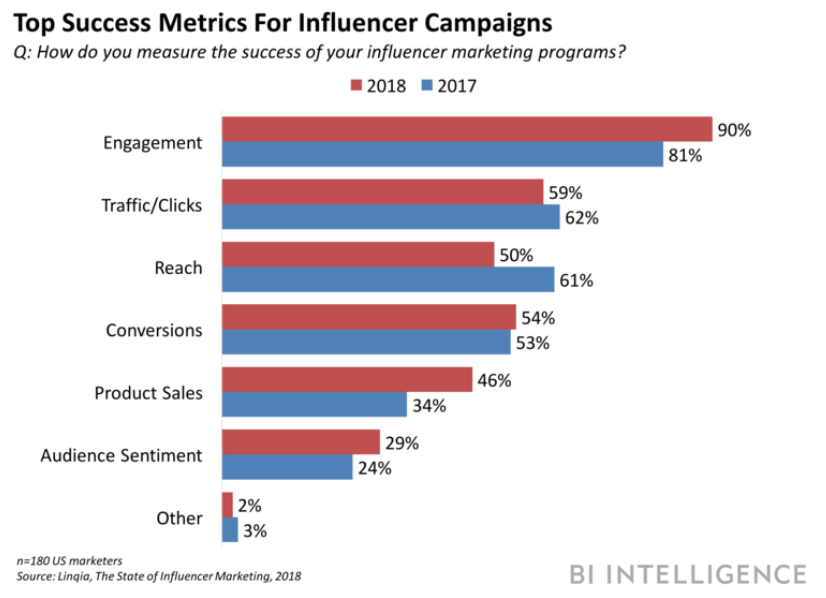
Do your metrics turn the heads of people outside of marketing? That stuff you’re tracking and reporting on – is it in sync with broader business goals and key performance indicators? Truth is, your board probably doesn’t care about the same things you do. So make sure your KPIs demonstrate your marketing is having an impact on the stuff they do care about.

Incorporate alternative measurement models

It may seem counter-intuitive, but it’s not all about directly attributing sales to your marketing activity. Assists matter too. If your content marketing strategy aligns with your customer journey, you can use your marketing automation platform to see how the buyer engaged with it in the lead-up to the deal.

Be proud of your results – you worked hard for them

Don’t hide your numbers away. Make a visually striking dashboard or scorecard that makes it really easy for your board to understand what you’ve achieved. And don’t forget to highlight where your marketing successes align with the wider business goals.

Use the lingo being used right now

More and more we’re seeing the marketing department being relabelled the ‘growth department’. Who knows, maybe next year we’ll be relabelled as a chief growth officer. Or head of growth.

But that’s OK, because marketers are good at growth. We grow brand engagement. We grow customer bases. We grow revenue.

So choose your words wisely because sometimes it pays to use the latest buzz word.

By

Ruth Connor is head of marketing at Earnest

Sourced from THEDRUM

By Kara Bloomgarden-Smoke

Live journalism with a decidedly literary bent.

Pop-Up Magazine, an innovative event that re-creates the experience of reading a smart, general interest magazine, is back with its spring “issue.”

At a time when seemingly every publication is trying to get into the live-events business, Pop-Up Magazine followed an opposite trajectory — it’s an event that grew to include a print publication. Pop-Up Magazine started in 2009 in the Bay Area as an experimental storytelling show, aimed at a public radio listening, literary crowd. As the show found its footing and began playing to bigger theaters in more cities, it led to the creation, in 2014, of the ASME-award winning California Sunday Magazine.

The surprisingly engaging Pop-Up Magazine blends reported stories, photography, fiction and front-of-the-book fodder — all told on stage by writers, editors, filmmakers, photographers and the occasional actor or radio host. Pop-up Magazine spends one night in each major city during its seasonal tour. It is not recorded, making each performance an ephemeral “you have to be there” event that plays to sold-out theaters in major cities.

 “We’ve got an incredible cast onstage with us this spring. They’ll be performing stories about crime, food, science, politics, music, a jaw-dropping family secret, and more, in all kinds of media mixed together,” editor in chief and cofounder Doug McGray said. “Film, photography, music, animation, sound — and we’re trying some things we’ve never done before. It’s going to be a really memorable night.”

Topics range from serious to humorous and include audience interaction. For example, the 2018 spring issue will feature a photographer’s look at the condolence gifts sent in the aftermath of mass shootings, a food writer’s analysis of President Trump’s favorite salad, the story of a filmmaker’s discovery of young children fighting their way out of poverty in Thailand, a true-crime story and an advice column for the audience. Performers include actors “Parenthood” and “Good Girls Revolt” actress Joy Bryant and Franchesca Ramsey from MTV’s “Decoded,” writer John Jeremiah Sullivan, The New Yorker’s Helen Rosner and illustrator and author Leanne Shapton, as well as photographers and filmmakers. 

And just like a print magazine, the performance includes advertisers. Advertisers for the spring installment include podcast staples such as Amazon Studios, Audible, Allbirds and MailChimp, as well as Skyy Vodka. Since most brands don’t have live-event divisions, they rely on Pop-Up Magazine’s brand studio to make content that fits into the context of the performance. During the winter production in February, the audience at the sold-out show at Brooklyn’s BAM clapped after each ad break — a rare feat of brand engagement that managed to feel more like a continuation of the show than an advertisement.

The spring issue kicks off on Thursday in Oakland, before heading to Los Angeles; Boston; Washington, D.C., and New York, where it will be performed at Lincoln Center.

Feature Image Credit: Pop Up Magazine’s Winter 2018 issue in San Francisco. Erin Brethauer courtesy of Pop-Up Magazine

By Kara Bloomgarden-Smoke

Sourced from WWD

By 

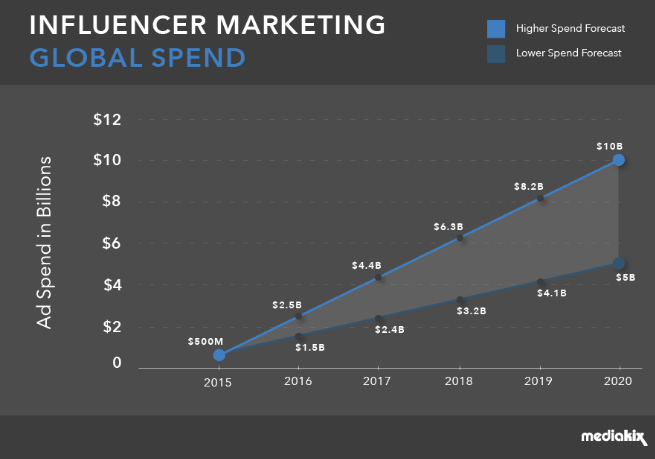
With thousands of followers loyally taking their recommendations and interacting with their content, it’s no wonder that brands are keen to add influencers to their marketing mix.

Influencer marketing can be a powerful way to place a product in the hearts and minds of potential customers – but while utilizing influencers themselves is effective, there are also plenty of tips and tricks brands can learn from influential users which can be applied to improving their own social media presences.

After all, these valuable followings are built on years of careful content creation and dedicated community management.

If you want to improve your social media game, be more influencer. Here’s how.

1. Nail your aesthetic

In such a saturated space, influencers know that a signature aesthetic helps set them apart, and makes their work instantly recognizable.

On Instagram, influencers will painstakingly edit their photos to ensure that they’re striking and compliment their individual look – whether that’s a color or content theme – while also blending cohesively within their wider feed. Some influencers have even been known to sell their presets, such is their value.

As @Stylebytrade explains:

“Having a streamlined approach, with one beautifully curated image after another, makes for a strong feed. Your top nine photos are the first impression you give a potential follower, who can either swipe away, or be intrigued to scroll down and hit the follow button.”

Think carefully about each photo you post. As well as being visually captivating and conveying the point you’re trying to make, it should be consistent with your feed and brand.

2. Stay curious

Years of reading and replying to comments, and tracking spikes in engagement, will inform influencers about the types of people that follow them – and the lives they live. This intel leads to more strategically planned scheduling to ensure content is posted at times when it’s most likely to be seen.

There’s also a growing number of influencers making use of the poll feature on Instagram Stories to ask followers about the type of content they like and want to see more of.

Make the most of the analytics available here. Instagram rush hour is different for everyone, so establish yours, taking into account the different time zones you might be trying to target. Track engagement of individual posts to see what’s popular – and most importantly, never stop asking your followers questions. The more you can learn about them, the more it’ll help you boost engagement.

3. Think native

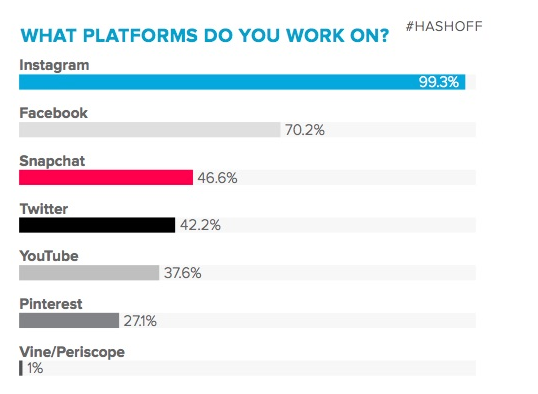
One of the ways influencers have an edge over most brands is that they predominantly create content specifically for that channel. An Instagram influencer will think in grids and snappy captions, rather than trying to stretch a number of assets across countless channels.

Creating assets purely for Instagram, or Instagram-first, will give you a better chance of captivating audiences. Whether it’s the way you shoot an image (particular styles, such as overhead flat lays are incredibly popular among certain Instagram communities), or even introducing GIFs and animations.

@whatshepictures explains the importance of being overt with your product photography on Instagram:

“You only have a split second to stop thumbs scrolling past your image, so make sure your hero grabs their attention in that first split second. If in doubt, place it smack in the middle of your frame. Make sure it stays front and center and doesn’t get lost behind any props. This will leave no doubt in your audience’s mind what your story is all about.”

4. Work with the algorithm

Instagram’s algorithm makes engaging your followers within the first hour of posting crucial to ensuring your post remains highly visible and discoverable. The algorithm prioritizes ‘worthy’ content, and a flurry of engagement (whether that’s likes, comments or dwell time) sends a strong signal to the system that yours is exactly that.

This is why you see influencers choosing their timing carefully, and attentively responding to comments in the minutes after posting. Micro and macro influencers actually have the edge here, because they’re not dealing with millions of followers, and thousands of comments. As such, they’re able to meaningfully engage with a smaller community, and make a stronger connection.

Take the same approach with your business feeds. If someone has taken the time to comment, best practice is to reply when you can, and continue the conversation. It’ll help to both strengthen the feel of community and boost your reach.

5. Don’t wait until you’re Steven Spielberg

Video is the most sought after up-skill within the influencer community, and with 90% of consumers claiming video can help them make buying decisions, it should certainly be on the radar of all small business marketers also.

But don’t feel like you have to be a pro to capitalize on this powerful trend. @mrturner has created videos for ASOS and explains:

“I’m honestly the master of iMovie. Some may shriek in horror knowing that I use something so basic, but it all depends on the content. Focus on creating a seamless narrative. I also always like to cut clips to hit the beat of a song – it makes it flow so much better.”

Audiences don’t expect to see the same level of polished perfection on social as they would elsewhere, and many times simple can just as effective.

By 

Sourced Social Media Today

By Greg McBeth

There’s no more dangerous myth in sales than that of the “lone wolf.” Grounded in 20th-century sales culture and reinforced by individual-oriented compensation structures, the lone wolf is a solitary salesperson who rarely engages with the team and brings down big deals by force of will. In today’s sales environment, however, the solo salesperson often struggles to succeed.

As a March 2018 study by CSO Insights and The Miller Heiman Group shows, just 53 percent of sales professionals reached their goals in 2017, the lowest number in the past five years. Despite all the technologies and data at their fingertips, salespeople aren’t turning prospects into customers effectively. To soup up sales, the report suggests “effectively collecting and sharing best practices across sales and service organizations.”

In other words, the wolves must learn to work as a pack. The Alaskan wolf forms packs ranging in size from six to 30 to bring down big game like moose and caribou. By hunting as a team, wolves and salespeople can tackle larger targets that provide a taste of success for the whole group.

Embrace the pack — teamwork works in sales.

Of course, every team has its star players. Many of them were probably weaned in an “eat what you kill” sales environment, where the best hunters take home fat commission checks and receive plenty of corporate recognition.

The trouble is that sales teams at most organizations follow the Pareto Principle, which states that the majority of outputs (about 80 percent) will come from a relatively small set of inputs (about 20 percent). This applies to sales in two ways: A few sales are often responsible for most of the revenue, and most successful sales come from effectively utilizing a few key strategies. Working together through account-based marketing and sales enables teams to decide on their biggest targets and share strategies for closing them. In contrast, a “lone wolf” approach all but ensures that reps will miss out on learning some of the strategies that drive success.

That’s why collaboration is the name of the game at Node. When we developed an elevator pitch that produced significant returns, competitors scrambled to copy our technique. Had we not shared our 30-second intro across our sales team and continually adapted the pitch via regular feedback from the front lines, we would’ve soon found ourselves at a competitive disadvantage.

Selling is a cat-and-mouse game, especially if you’re in startup territory. Staying nimble and adaptive requires every member of the pack to play their part. To get your salespeople to work as one:

1. Make healthy feedback a part of the process.

When was the last time you held a truly honest, no-holds-barred feedback session for your salespeople? I always ask my colleagues to formally or informally give me feedback so they see sharing criticism as a positive force, not a negative one. It can be uncomfortable, to be sure, but feedback is growth fuel for sales teams.

If you’re not sure where to start, pick a particular function to share feedback around. Rachel Clapp Miller, Force Management’s VP of marketing and digital engagement, uses sales calls as an example. She makes a habit of asking co-workers to evaluate her call performance. In turn, she offers opinions to employees, providing feedback to reinforce what’s working well and to fix what isn’t. She urges workers to talk about their performances objectively and without self-strangling skepticism. Not only does this tactic help her and her teammates improve, but it also turns sharing feedback into a cultural expectation.

2. Encourage knowledge sharing when you’re not around.

Candid cross-pollination of ideas often works best when the boss isn’t around. Sales leaders should set the process in motion but then step back and trust the team to share ideas without them.

My team members often get together at Node’s office for what they call their “war stories” meetings. In my absence, they swap sales tips, vent and coach one another. It’s not a formal event; they meet as needed and without leaders looking over their shoulders.

To get salespeople-only meetings rolling, assign contributor roles until the process becomes natural. Have someone who tends to hold back? Ask him to be the discussion leader. Encourage someone else to take notes, and suggest that a third person share relevant ideas with other teams, such as marketing and HR.

3. Balance individual and team-based compensation.

Dollar signs rule the minds of most salespeople. But if you’re tying your representatives’ paychecks solely to what they do on their own, you’re undermining the team. At the same time, eliminating individual commissions makes it easy for poor performers to coast on the backs of sales experts.

Optimizing the ratio of individual-to-team compensation is tricky, but it’s not impossible. Many models link somewhere between 10 and 25 percent of variable compensation to team performance. If team targets can’t be built into each individual’s plan, offer bonuses for team performance to demonstrate leadership’s commitment to the team’s success. At Node, we offer bonuses, including cash and “prizes,” for salespeople who go above and beyond for the team.

Also consider out-of-the-box models that encourage non-salespeople to support the sales team. At social media marketing startup Tint, leadership sets a monthly revenue benchmark for the entire organization. Any earnings above that threshold are equally distributed to workers, regardless of department. According to a Tint blog post, the system drives developers, marketers and others to actively offer help to sales.

4. Build team-building into promotion criteria.

Still have a few hold-outs on your sales team who won’t get on board with collaboration? Create a promotion policy that requires regular sharing of ideas. Most “A players” are ambitious people who seek higher titles and responsibilities, and they’ll do what’s needed to get there.

At a former employer of mine, everyone had to complete a 50-point rubric before being considered for a promotion, much of which was tied to cross-functional work and team leadership. That might be overkill at a startup, but it doesn’t mean you can’t dictate eight or 10 behaviors for personal progression. Be specific, though. It’s not enough to tell salespeople to be more team-oriented. You might stipulate, for instance, that they consistently lead sales knowledge transfer sessions as part of your criteria.

Sales doesn’t work the same way it did 20, 10, or even five years ago. Buyers have gotten smarter, competitors have gotten more cunning, and market spaces have become more crowded. “Lone wolf” salespeople aren’t bagging sales like they used to. Nowadays, it’s collaborative teams that are taking home the trophies.

Feature Image credit: Rüdiger Katterwe | EyeEm | Getty Images 

By Greg McBeth

Sourced from Entrepreneur Europe


By

In an interview with TechRepublic, Adweek’s Josh Sternberg talked about the blending of editorial and advertising content as a tactic to capture more consumer attention.

TechRepublic’s Dan Patterson spoke wth Adweek’s tech editor Josh Sternberg about the rise of blending editorial and advertising content in the race to capture consumer attention. Watch the video above, or read the transcript of the interview belo

Patterson: Five years ago, the New York Times launched their first native ad. I think it was March or April 2013, and in the media world this was a big deal, because there was a perception, and maybe you can help us understand the perception versus the reality, but there was a perception that native ads could help break down the wall that exists. It exists here at CBS Interactive (TechRepublic’s parent company), and at most media companies, between editorial content and advertising content. So, first, explain to us what native advertising is, where that idea came from, and where are we now?

Sternberg: Sure. So, very simply, and I don’t even know if we still use the term, native advertising, but at five years ago, six years ago, the idea of native advertising was really the atomic unit of a particular platform or media entity, and the ad that can only run on that. So if I buy a Facebook ad, I can’t use that Facebook ad on Twitter, or on the New York Times. We call that native advertising. But that kind of got distorted, so we call content marketing, sponsored content, branded content; it’s all the same thing.

But one of the interesting things about this is not that it was designed to break down the wall between edit and sales. There is a way for publishers … seeing that, back to those CPMs. CPMs were becoming depressed because of advertising technology making it easier to buy cheaper ads. Publishers were like, “Well, what can we do to make more money?” They realized, “Well, we’ve got something as publishers that advertisers want, and it’s not our audience. It’s our storytelling capabilities. It’s our journalism. So, let’s create a premium advertising product that we can go out and charge a lot more money for, and get better margins on it, so that way we can give something to the audience that isn’t a crappy banner ad, but is actually really good journalistic style content for that audience.”

And just for disclosure, I used to do this at the Washington Post, and NBC News, so my career path is kind of ping-ponged between the editorial side and the business side. Now I’m back on the editorial side.

Patterson: Where do companies, then, like NewsCred, Contently; we see branded content, not just on a publisher’s website, but you might see it in an airplane.

Sternberg: Yep.

SEE: Why product placement ads could come to the Amazon Echo very soon (TechRepublic)

Patterson: You might see branded content in a restaurant. What is the relationship between native ads, branded content, and these other distribution outlets?

Sternberg: So I think the distribution outlets, like the NewsCreds, Contentlys, Nativos, and, again, I’m not … There are so many, I’ve kind of lost track. Those distribution companies kind of came up as a way to mollify the naysayers of branded content who would say that branded content can’t scale; meaning, if I write branded content for the New York Times, it can only run on the New York Times, because it’s designed, and created, and produced for the New York Times, which is why it’s a premium product. So a lot of folks said, “Well, you may not like banner ads or display ads, because they don’t really work. You get a 0.01% click through rate. But they scale.” You can see a banner ad, the same banner ad on millions of sites. So these companies rose up, basically, as a way to spread sponsored content, native advertising, branded content, marketing contents, what have you.

By

Sourced from TechRepublic

By Michael Houlihan & Bonnie Harvey

Digital marketing is an investment. It takes time to mature before it can pay you back.

This is a question that has plagued us for years and we have spoken to many “experts,” but they seemed to be speaking in another language. We are not the professional online marketers they usually have as students. We are regular small business owners looking for advice we can understand and apply. We decided to ask Claudia Sheridan, a social marketing practitioner who specializes in small and medium-sized businesses like ours. After our initial meeting with Claudia, she was able to explain the various facets involved in digital marketing and how they work together to produce results — in terms we could understand!

1. The Big Picture

Michael & Bonnie: We’ve spent hundreds of thousands of dollars over the years on social marketers. We found that generally speaking, they understood one or two parts of the puzzle but didn’t have a comprehensive picture and certainly couldn’t deliver all the details necessary to make it happen. Typically, they would create and charge us for a funnel and put a lot of emphasis on landing pages but could not get many people into the funnel. Can you outline for us the various different aspects of social marketing that have to be in place to make it work?

Claudia: Social marketing is a part of a much larger concept, that isn’t really talked about. We think about social media and lead generation but rarely do marketers talk about all of the different aspects involved with Digital marketing, which is what businesses, in my opinion, really need to focus on.  It’s not one aspect of the available websites and tools, but rather how to make the different components work together in an effective and efficient manner that produces the desired results.

When looking to work with a marketer, look for one that understands the digital marketing landscape and can identify how the elements can best work for the goals you’re trying to accomplish.  For example, a company may want to utilize a social media channel, such as Facebook, to generate awareness and build their brand. They may decide to place an ad and make an offer but they rarely consider the stages at which the prospect is within the buying journey.

This reminds me of a stranger on a street corner who offers to sell you a fake watch from the lining of his coat.  It may capture your attention, or you may walk away. There is no friendship here, no relationship, no trust. What there is, however, is doubt. And, who wants to build a business relationship based on doubt? So then, what does this process look like?  And, the answer is that it varies on the strategy that is being used.

2. Metrics vs. Results

Michael & Bonnie: When we’ve dealt with social marketers in the past, they have tried to tell us that the likes, clicks, and shares, somehow resulted in increased business. But we found that it actually increased our overhead to maintain a current and interactive online presence. Further we’ve seen no substantial increase in business as a result of our investments in social marketing. What would you say to a client who has had that unfortunate experience before coming to you?

Claudia: I think that entrepreneurs are always on the lookout for that one thing, that silver bullet, that will generate a large amount of business for them.  In 2011-2012, commenting, liking and sharing would have done the trick, but today, that is no longer the case. Today, to be successful on Facebook, it means that you need to play within Facebook’s rules and adapt accordingly. More importantly, it means that you need to have a clear marketing strategy that can be executed, tested, measured, optimized and is able to adapt to Facebook’s changes. This isn’t a linear strategy, but an iterative one that is constantly evolving.

3. Changing Rules

Michael & Bonnie: It seems like every six months the rules change on social marketing. Just when you get set up, it seems like the rules change and you have to go back and reorganize. How can you anticipate and mitigate these changes?

Claudia:  The rules do change, and although the changes seem to be significant, they’re really not.  If a business has actively been participating in Facebook marketing, executing their strategy and making adjustments along the way, then as we learn of a new Facebook change, it just becomes a slight adjustment in the strategy.  Facebook’s changes, however, can appear colossal to companies who are not actively monitoring their Facebook marketing or do not have a solid strategy in place that they’re following.

It’s kind of like joining the gym every January.  If we had just stuck with the workouts that the fitness trainer laid out for us on day one, and we committed to working out a few times a week and eating right, then going to the gym after the holidays would be just another day.  But if we joined in January, stopped going in February, only to join back up 11 months later, the goal of getting into shape is much more daunting.  We don’t expect to walk into a gym on day one and walk out two hours later with six-pack abs, do we?  Yet with Facebook, we expect immediate return with very little effort and get frustrated when the work-out has changed.

 4. Overload

Michael & Bonnie: Don’t you think people are getting too many emails from social marketers? I know that I now have a setting on my Outlook that can take all those emails and put them on a lower priority profile. How do you get your clients prospects to open the emails in the campaigns you organize for them?

Claudia: If marketing was a pie, then email marketing should make up another piece of that pie. There are some companies who are amazing at email marketing and others who could use a little refinement. To get a prospect to open emails, you need to send them the right message at the right time. The question then becomes, how do you know when that is?  Well, with a good email system, you can segment your audience to deliver messages that best resonate with their needs.  Often with email marketing, businesses will craft a single message and broadcast it to their entire list, without consideration to where each person is within the customer journey.  But, if the email message aligned with the stage the customer was in, then the email is more likely to be opened and valued.


Expense or Investment?

Michael & Bonnie: What advice can you give to our readers so they will have a better understanding of what to expect from social marketing?

Claudia: I think the most important thing to remember is that social media marketing should never be the only method of marketing a company engages in. Work with someone who understands the digital marketing landscape and how the different elements fit together to accomplish the goals you’re trying to accomplish. Digital marketing should be viewed as an investment, not an expense. And as with any investment, it often takes time to mature before it can pay you back. Finally, make sure that there’s a strategy and work that strategy.

Feature Image credit: Westend61 | Getty Images 

By Michael Houlihan & Bonnie Harvey

Sourced from Entrepreneur Europe