If your emails aren’t getting clicks, they might be stuck in spam. Here’s why—and the habits you can build to fix your email deliverability.
Getting your email into someone’s inbox can make all the difference—it can open doors, spark connections, and create opportunities that transform your business. But hitting send on an email doesn’t guarantee it will land in the inbox.
With more than 45 percent of all emails flagged as spam in 2023, internet service providers (ISPs) and email service providers (ESPs) use advanced filters to block unwanted messages. If your emails trigger those spam filters, they may never reach your audience. They might end up buried in spam folders instead.
Could you be triggering those spam filters without even realizing it? Small mistakes—like using an outdated email list or missing proper email authentication—can quietly hurt your email deliverability. Here are some things you may be doing that prevent your emails from reaching the inbox.
1. Your contact list is outdated
An old, outdated email list means you probably get many bounces and aren’t seeing many clicks. ESPs often interpret a high bounce rate as a sign of spam, so the higher it is, the more likely your emails are flagged as junk. To avoid that, keep your bounces under 2 percent by regularly pruning invalid emails.
2. You miss email authentication
Authenticating your emails is like getting a stamp of approval for your messages. Without it, ESPs can’t verify you’re a trustworthy sender, so your campaigns and newsletters may not make it to the inbox. Google and Yahoo now require proper authentication, so set up Sender Policy Framework (SPF), DomainKeys Identified Mail (DKIM), and Domain-based Message Authentication, Reporting, and Conformance (DMARC), especially if you send thousands of emails a week.
3. You get too many spam complaints
If too many people complain about your emails, ESPs won’t deliver them to the inbox anymore. To prevent this, build trust with your audience. Seventy-eight percent of consumers will report an email as spam because they perceive it as spam. Make sure your content is relevant, avoid misleading subject lines, and make it easy for folks to unsubscribe. Your spam complaint rate shouldn’t be higher than 0.3 percent.
4. You use spam-triggering words
Words like “free,” “urgent,” or “win” aren’t harmful by themselves. But using them excessively—especially when combined with other mistakes like poor list hygiene—can raise red flags with ESPs. To land your emails in the inbox, keep your language balanced and avoid sounding too promotional.
5. You send too many emails, too often
Flooding your subscribers’ inboxes can lead to unsubscribes and spam complaints. Both hurt your email deliverability. ESPs also keep an eye on sudden spikes in email volume to block potential spammers. Stay consistent in your sending schedule and prioritize content quality by emailing your list only when you have something valuable to share.
Bonus tip: To land in the inbox, warm up your IP and domain
Sudden increases in email volume can hurt any sender, but they’re especially risky for those new to email marketing. To build trust with ISPs and ESPs, consider ramping up your email volume gradually.
Warming up your IP and domain reduces the chances of triggering spam filters and helps your emails land in the inbox. Another option is to use an email warmup tool, which automates this process. Whether you’re just starting out or have been sending mass emails for years, keeping your IP and domain reputation strong is key to consistent deliverability.
Senior creatives and educators offer their tips on how to boost your career.
How can designers thrive in an increasingly demanding creative landscape? From curiosity to resilience, mastering online collaboration tools to leveraging AI – and even reacquainting yourself with pencils and paper – there are plenty of ways to get upskill, adapt, grow and attract new opportunities.
Whether you’re just starting out or looking to shake things up, we asked senior creatives, educators and industry leaders to weigh in on the skills that are really going to help grow your career.
The Warehouse Project logo by Studio Moross (Image credit: Studio Moross)
“While it’s always important to stay up-to-date on the latest tools, one of the most important traits for any designer – no matter the year or level of experience – is curiosity,” says David Airey, logo designer and author of books including Logo Design Love and Identity Designed. “The design world continually evolves, and while technical skills matter, curiosity helps designers adapt and bring new ideas to client projects. Staying curious makes it easier to learn, experiment, and discover different ways to create meaningful work that truly connects with the audience.”
For Kathryn Samson, senior designer, consultant and lecturer in graphic design at London College of Contemporary Arts, her concern is that although design students and emerging designers are digital natives, there’s been a downturn in experimenting with software. “I have wondered if this is related to being so used to using their phones for everything; there is a lack of curiosity,” she says.
Take some time out to help yourself get unstuck, advises Marina Willer, graphic designer, filmmaker and Pentagram partner. “It’s easy to fall into repetitive patterns as a designer, especially when you’re under pressure. For me, it’s important to find unusual ways of working that are relevant to each project and not just be seduced by what’s trendy,” she says.
“Step away from the screen and engage with new environments – whether that’s looking at mundane things, taking a walk, learning as many skills as possible, photography, drawing or writing. It needs to be what ticks for each one of us, like travelling, visiting a gallery, or spending time in nature – that will help spark fresh ideas. This shift in perspective offers the depth and originality that searching for inspiration online often lacks.”
Chemical Brothers / The Warehouse Project digital poster by Studio Moross (Image credit: Chemical Brothers / The Warehouse Project / Studio Moross)
For Connor Edwards, senior designer at Jack Renwick Studio, it’s especially important now more than ever to stay curious and find inspiration in new interesting places, particularly given the rise of AI and homogenisation in visual culture. “To be able to reject the path of least resistance, to sidestep trends, to break out of the algorithm and create big ideas that are not only unique, but will be infinitely more relevant and ownable,” he says. “Once you have this, it will become clear what method is needed to bring it to life, be it handmade, digital or AI-generated. Then, you just need to become an expert in whatever that skill is.”
02. Know how to leverage AI
Rebrand for non-profit Isodope by &Walsh (Image credit: &Walsh / Isodope)
“Designers need to go beyond basic AI use and understand how to integrate it thoughtfully into their workflow to enhance creativity,” says Jessica Walsh, founder and creative director of studio &Walsh. “The key is striking a balance between leveraging AI’s capabilities and maintaining a human, original perspective. I love seeing when our team uses AI in a smart way but they don’t rely on it for the end results. Creating unique mood boards, research, repetitive task automation are all skills we look for.”
Graham Sturt, creative director and head of creative at Monotype says 2025 will be a pivotal year where adaptability and mastery of emerging tools will define success in graphic design. “First and foremost, proficiency in AI-powered design tools is no longer optional,” he says. “Designers who can seamlessly integrate AI into their workflows to unlock creative possibilities and solve complex design challenges will have a distinct edge. It’s not about replacing creativity but enhancing it – understanding how to collaborate with technology to push boundaries.”
Drew de Soto, founder and creative director of design agency Navig8 and author of the Know Your Onions range of design books, agrees that while the tools available to designers have never been more powerful, knowing when and how to utilise them is key. “Understanding the principles that underpin quality design and having the ability to apply them is vital for our continued relevance,” he says. “Embrace AI but remember: put rubbish in and get rubbish out. Understanding the brief, market and objectives of the content that you’re creating is essential when using these tools. Take time to really study the output from the AI engine and assess its quality closely. Be careful not to fall into the ‘convenience trap’.”
03. Craft with material things
Power of Connection event by David Barnett (Image credit: Without Shape Without Form / David Barnett)
As technology increasingly impacts creativity, designers should look to traditional skills and handcrafted approaches to design to compliment their skillset. “I look for design talent with craft and a deep understanding of the physical world,” says Jessica. “With the digital world becoming oversaturated, there’s a growing hunger for tactile, real-world experiences. Designers who can experiment or who have training with physical mediums, materials, and hands-on processes offer a refreshing counterpoint to the noise on screens.”
Susanna Foppoli, creative director, designer and lecturer in graphic design at Shillington, agrees in the strength of experimentation and exploration by hand. “There is immense value in old-school processes such as sketching ideas by hand, creating physical mood-boards, or storyboarding concepts,” she says. “These tactile and intuitive methods engage the brain in ways that digital tools (and perhaps artificial intelligence?) cannot, fostering a more personal and unique approach to design thinking.”
“I see in many of my students a resistance to using paper and pencil,” says Kathryn, “where you can create a hundred thumbnail possibilities in a matter of minutes, preferring to go straight to the laptop or iPad. The danger in this approach – that I have seen a million times – is a five-minute delve into experimentation that results in a ‘that looks okay, let’s go with that’ answer to the brief, which then prevents any further development, and often a much less creative solution.”
04. Play with motion
Parklife logo by Studio Moross (Image credit: Studio Moross)
“A brand can not just exist in static form in today’s world,” says Jessica. “There are entire brand agencies being formed by motion-first teams and principles. Designers who can combine storytelling with motion will stand out in a crowded landscape.”
Terrance Weinzierl, creative type director at Monotype agrees skills in motion are becoming increasingly important. “Motion quickly comes to mind when I think of future design skills. Animation and short-form video skills are desirable, and I believe the demand for these formats will continue to increase in the years to come. First, be able to imagine how your static works will move and change. If you aren’t an expert and need to collaborate with a motion specialist, being able to direct and share ideas in clear storyboards is key.”
Branding for ad agency QX by &Walsh (Image credit: QX / &Walsh)
For Wale Osunla, designer at Studio Moross, playing with motion doesn’t necessarily mean in literal terms by using motion graphics, it can mean thinking in a more dynamic way. “We have been moving in a direction where motion and design feel more connected than ever. It’s thrilling,” he says.
“However, while animators and illustrators are incorporating design principles within their work, designers seem reluctant or averse to these shifts in perspective – stop that! Just let your thoughts, actions, and work resemble the cartoon characters you’ve seen on TV as a kid (or even now), squashing or exaggerating their sizes, and moving in strange ways. Trying to capture that dynamism without using motion can take your thoughts (and your work) to strange but wonderful places. Push it hard enough and you can make the most static of work feel like it’s brimming with life.”
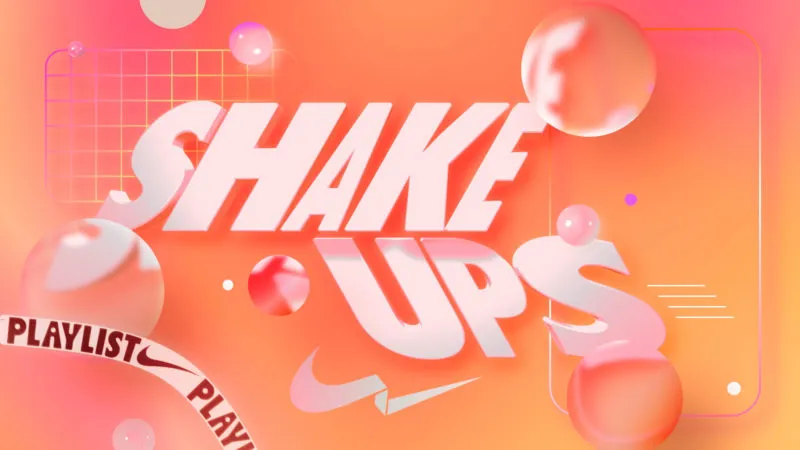
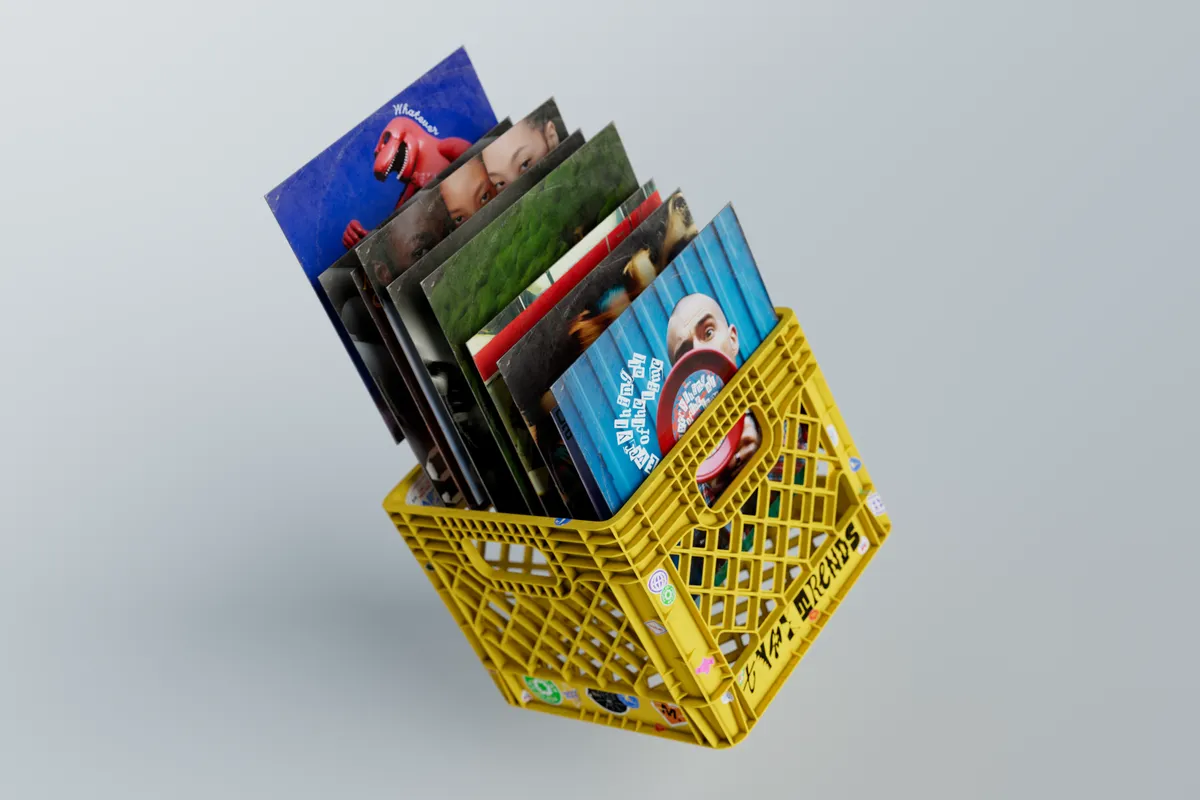
Nike Playlist graphics by Studio Moross (Image credit: Studio Moross / Nike)
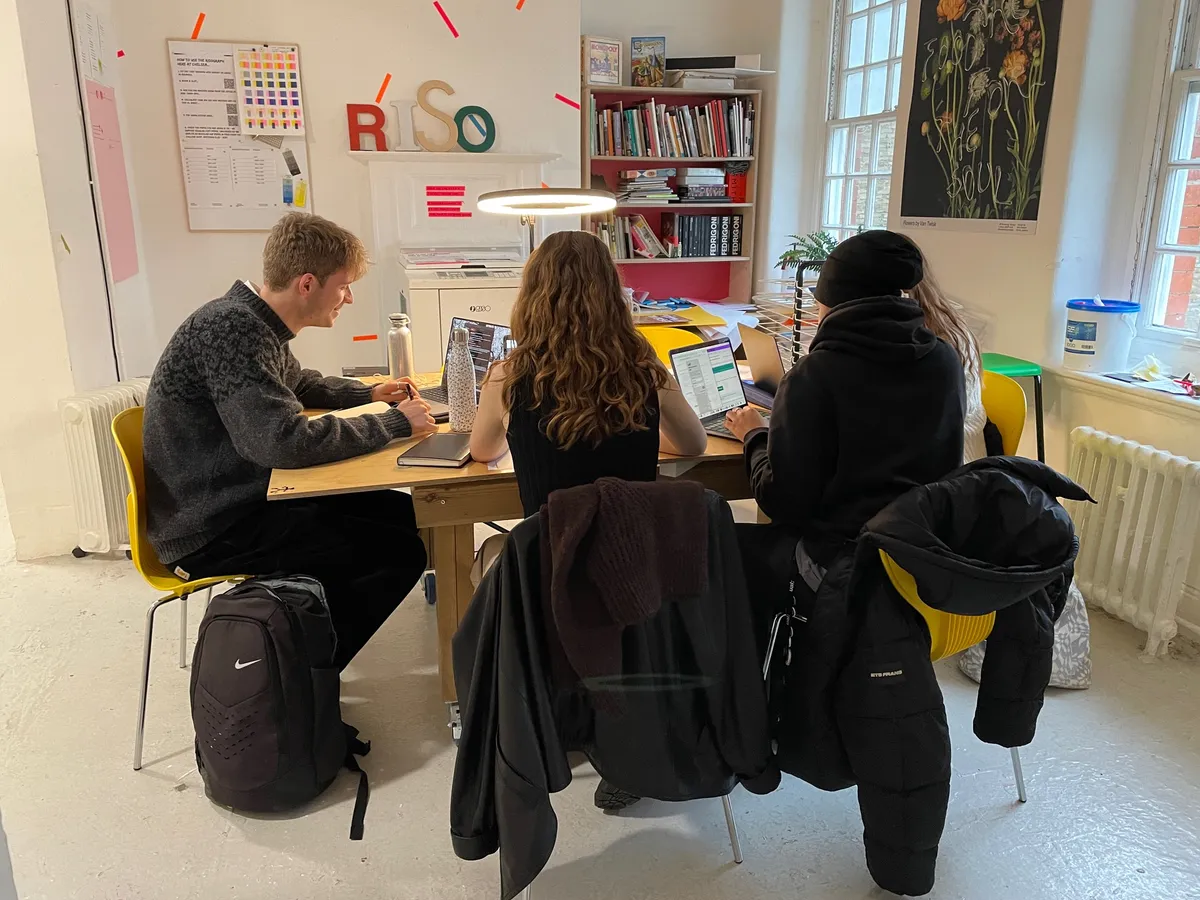
Balancing a core specialism with a range of other skills and embracing the learning experience could help you stand out, says David Barnett, scenographer, designer and course leader for the BA in graphic design communication at Chelsea College of Arts. “Being a generalist in design is such a useful trait and following waves of enthusiasm to learn new things, of course means you are more likely to enjoy the process of continually learning,” he says. “In education we all hope to see these ‘T-shaped’ graduates develop, who have a deep specialism and some broader knowledge so they can be useful and adaptable in professional practice and have some understanding of the languages and processes of other design practices that give them more of an overview and make them better communicators.”
He suggests going down some fun research rabbit holes but remembering to aim for general self development rather than becoming the perfect Swiss Army knife. “So much of design is having a ‘can-do’ attitude and a willingness to try, experiment, fail and learn,” he says. “Having expert and generalist skills helps and encourages you to take a more transdisciplinary approach to graphic design – understanding how to creatively link all your knowledge and various skills … If you have time and aptitude to create a couple of deep specialisms you’ll become a unicorn – who are most sought after.”
06. Embrace co-creation
Knowledge of collaborative design tools is a desired skill (Image credit: David Barnett)
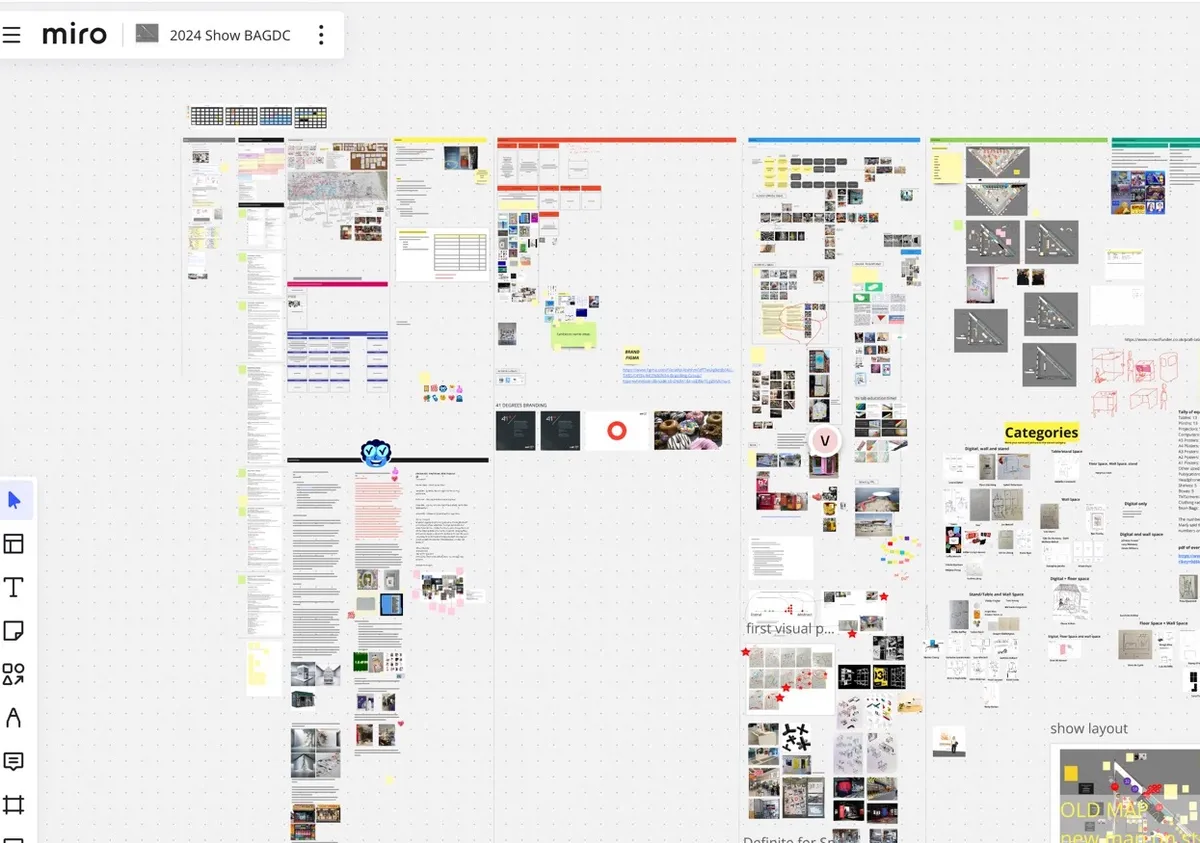
Proficiency in collaborative design tools such as Figma, Miro and Figjam is an increasingly desirable core skill – after Adobe – says David Barnett. With this comes a new wave of co-creation and sharing online in real-time, particularly since the pandemic. “Now, you can brainstorm, build workshops, create design strategies, work with stakeholders, gamify work tasks and herd cats, all while inviting anyone to participate or observe,” he says.
“Designers are natural organisers, so the use of collaborative platforms is becoming an essential tool for speedy working and transparent partnerships that feel engaging and shorten the design cycle,” he adds. He recommends studying the platforms’ various templates, reading Universal Methods of Design: 100 Ways to Research Complex Problems, Develop Innovative Ideas, and Design Effective Solutions by Bella Martin and Bruce Hanington, and checking out free resources about collaborative methods on learning platforms such as Ideo U.
“Developing skills in co-creation and facilitation isn’t just part of being a strategist anymore,” David says, “it’s becoming a core skill to learn and practice for graphic designers, branders, exhibition makers, activists – the list goes on.”
Collaboration in Miro (Image credit: David Barnett)
Part of successful collaboration comes from effective communication, which should prioritise the right combination of speed, accuracy, logic and emotion, says Terrance. “Hybrid work environments and numerous communication tools can make it more erratic. Your co-workers from different generations might have different preferences, and it’s advantageous to have different approaches rehearsed. A Boomer might value a quick voice call, while a Gen Z just needs a text. Being observational, empathetic and organised will keep your messages landing well and delighting your collaborators.”
07. Engage with a range of disciplines
The Monotype Type Trends graphic (Image credit: Monotype / Graham Sturt)
“Nurture a broad interest in the humanities and the arts,” says Lindon Leader, founder of strategic design consultancy Leader Creative (and the creator of the legendary FedEx logo). “Many young design students, especially those fresh from high school, often do not appreciate that seemingly irrelevant fields like philosophy, music, literature and history will serve to hone a personal aesthetic that can handsomely inform their work down the line,” he says. “Absent this aesthetic, and wizardry in Photoshop, Illustrator, UX design, and other tools may make one a skilled technician, but not necessarily an artist. For example, the recollection of strata from geology class and the mental image of storm clouds in a Wagner symphony may together produce a remarkable landscape photograph that otherwise might have been most ordinary.”
After all, humans are multidimensional creatures. Susanna also believes that inspiration can often come from unexpected places, as the old adage goes. “Designers should actively seek inspiration from a broad range of disciplines. By drawing from fields such as architecture, art, fashion, photography, craft, psychology, technology and even science and beyond, designers can bring fresh, unexpected ideas to their work,” she says. “This cross-pollination helps designers approach challenges from unique angles, breaking free from conventional approaches and visual trends.”
08. Master critical thinking
Graphics by Monotype (Image credit: Monotype / Terrance Weinzierl)
As an employer, Lindon says that he looks for people who have cultivated soft skills, such as problem-solving, communication and collaboration, as well as for well-rounded individuals who are perceptive and passionate. “To this end, I recommend aspiring graphic designers [focus on] critical thinking, which is essential to success in ever-competitive workplaces. Today, many graphic designers have both talent and solid command of software. What will distinguish the very best of them is the ability to convey cogent design-thinking fluently and coherently to employers, colleagues, and clients. If, when asked why you are recommending a particular design you reply, ‘I don’t know; I just really like it’, you may not rise very far in the commercial art world.”
Susanna agrees it’s about going beyond the aesthetics and understanding the ‘why’ behind design solutions. “Designers must combine creativity with critical thinking and know how to approach projects strategically, addressing functionality, meaning and purpose. Engaging with the client on a human and personal level, analysing the brief with depth and perspective, challenging assumptions and conventions, and bringing in references from beyond the design world – that’s the core of what it means to be a designer. In 2025, always and ever.”
After all, designers do so much more than simply creating visuals, Connor says, “Understanding brand strategy and being able to convincingly articulate your thinking in a written and verbal way is a crucial skill. Mastering it will help sell-in the braver, more distinctive ideas that we are always calling for,” he says. “All of our ideas start off as a written strategy with a key positioning line that represents the heart of the brand. We then base all our visual decisions on this strategy, and use it as a way to evaluate if what we are creating is relevant.”
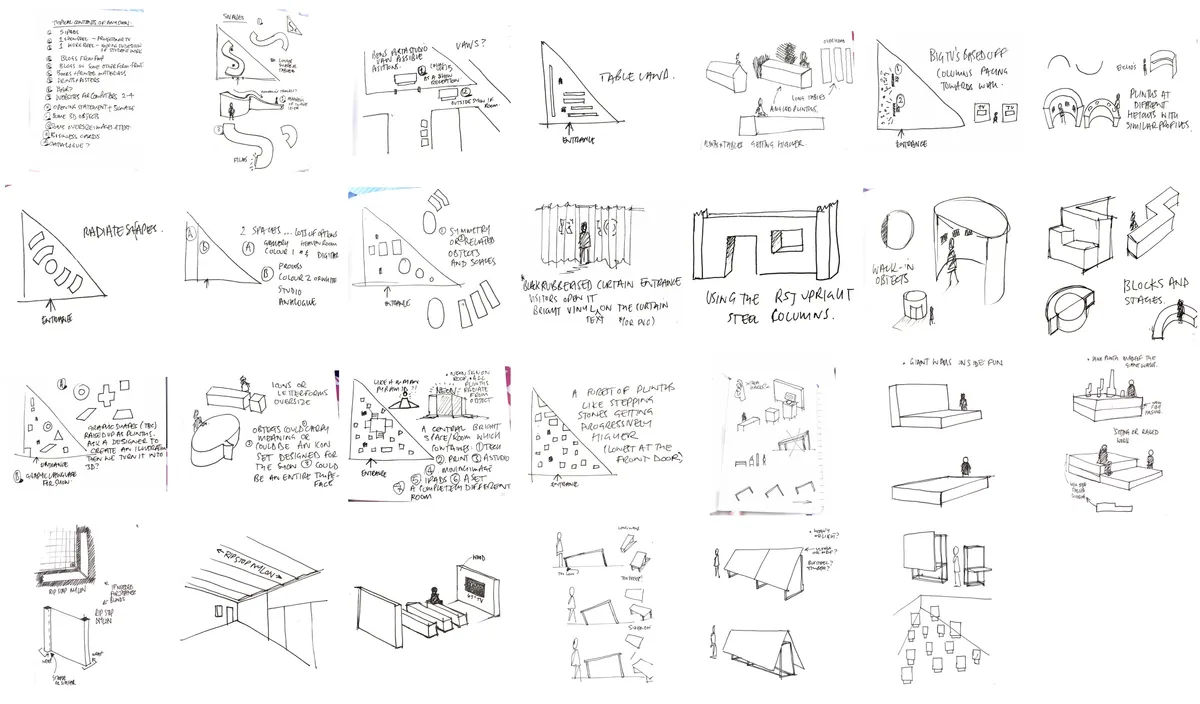
Sketchbook page from David Barnett (Image credit: David Barnett)
Part of critical thinking – and thinking beyond how something looks – involves storytelling through design, which Graham says is currently equally important to embracing tech. “In a saturated digital landscape, the ability to craft compelling, brand-centric narratives that resonate emotionally with audiences is invaluable,” he says. “Designers must think beyond aesthetics, focusing on how every element – typography, colour, motion – contributes to the story a brand wants to tell.”
09. Tap into type
Golden Scent billboard by Susanna Foppoli (Image credit: Susanna Foppoli)
“Typography dominates our designed world. It is all about balancing aesthetics and utility, just like clothing. Yes, you want it to look a certain way, but you need it to work a certain way. Being tuned into the visual quality of type will allow you to choose typefaces that express the emotion and ideas you want your message to carry,” Terrance says. “Knowing the nuts and bolts of typography will allow you to master the performance of type on the page and screen. Form, size, weight, spacing, measure, and leading are just some of the knobs in your control. If the typography is good, you’ll have a solid foundation to build upon in any direction.” (See our what is typography explainer and top typography tutorials to get you started)
Susanna says skills in type is an important part of nurturing the fundamentals of design as a creative: “While designers must keep up with the rapid pace of technological and cultural shifts and embrace the mindset of perpetual learners, foundational skills like typography and core design principles, such as hierarchy and composition, remain timeless and essential for crafting compelling work.”
10. Follow your intuition
Hurry Up We’re Dreaming logo (Image credit: Anna Gerber / Hurry Up We’re Dreaming logo)
“Innovation comes from a deep heart-led wisdom and I would invite designers to listen to that feeling more closely. And trust it,” says Anna Gerber, writer, creative consultant and founder of Hurry Up, We’re Dreaming, an editorial and events platform where tech meets mysticism.
Following intuition can help designers to tune in to the real use cases of a project, leading to ideas that better resonate with clients or users. Letting go of conscious reasoning can lead to surprising and exciting outcomes.
“It’s easy to pick up software skills, learn how to code, and figure out how to make social media friendly designs,” she says. “Work that makes people sit up in their seats, work that gives people goosebumps because it’s like nothing they’ve ever seen or felt before doesn’t come from the head, it comes from the heart.”
11. Be generous with time
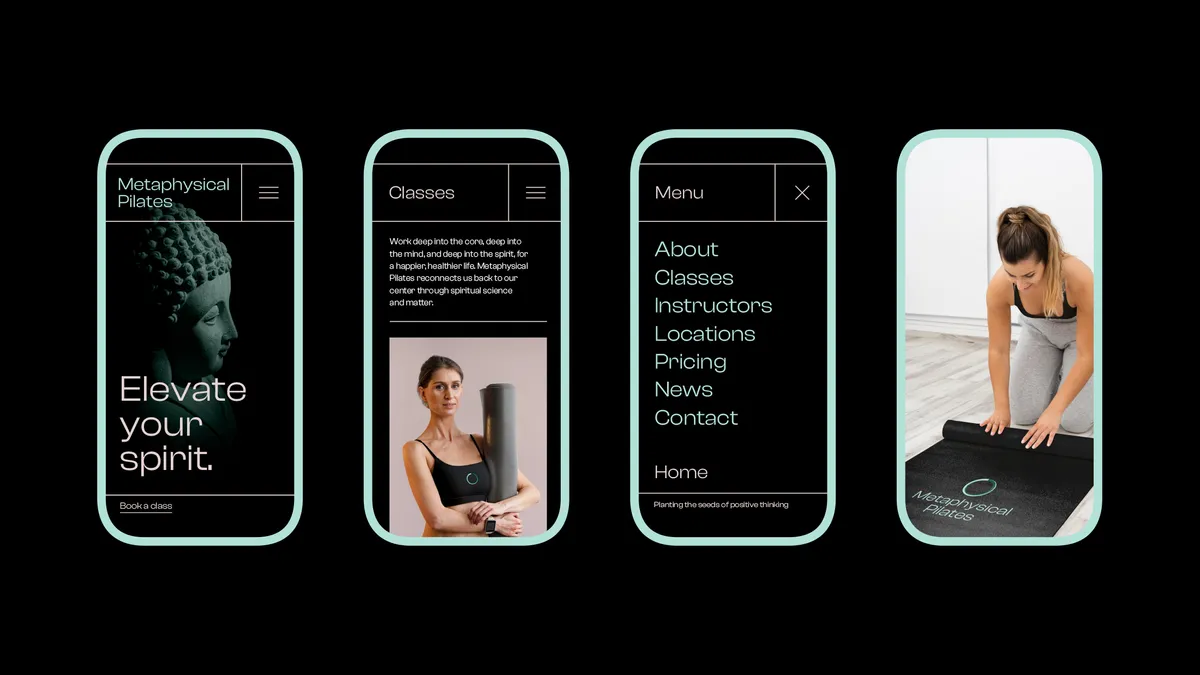
Metaphysical Pilates app by David Airey (Image credit: David Airey)
Anna also recommends a well-planned out design process without deadlines that are too tight or rushed execution, which can mean missing opportunities for exploration and innovation.
“There’s a tendency at the moment to draw clear boundaries around expectations and ways of working, which are important to respect,” she says. “But, there’s also something to be said for allowing ideas to percolate, giving ideas space to breathe and change and working with clients to evolve on work through creative exchange and collaboration. Don’t let your boundaries close you off to new, unexpected creative directions.”
12. Maintain resilience
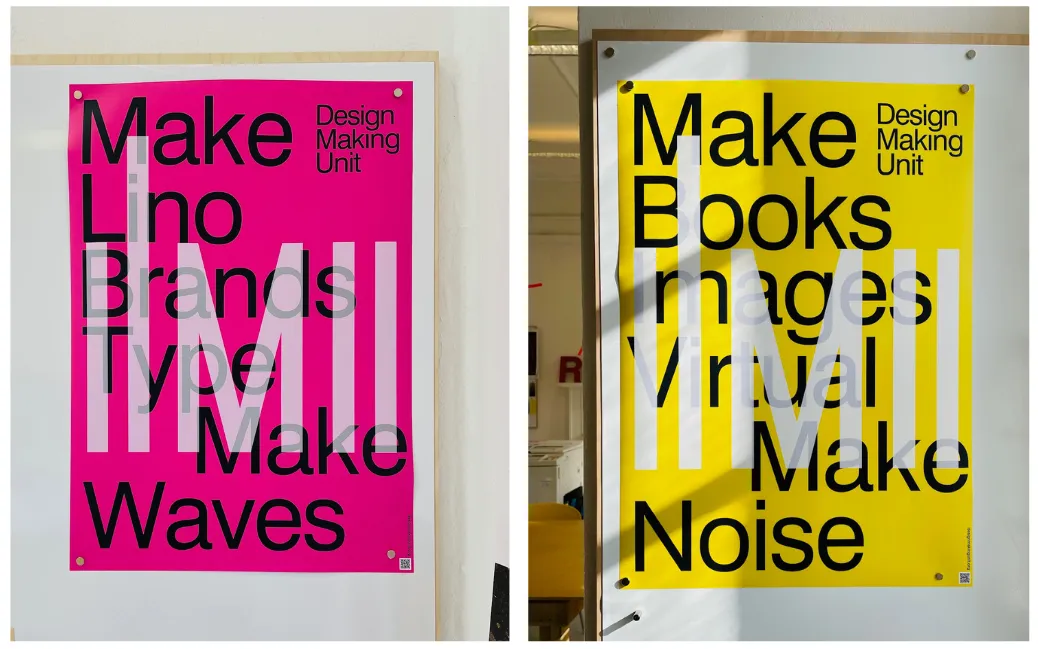
David Barnett posters (Image credit: David Barnett)
Reflecting critically on decisions that may feel like mistakes can lead to empowerment. And accepting defeats along with successes can help make you a better designer, says Marina.
“The design industry is challenging, and setbacks are inevitable – whether it’s losing out on a job or seeing your ideas rejected by clients. The ability to move forward, adapt and keep perspective in tough moments not only makes you stronger, but also helps you grow creatively.”
Antonia Wilson is a freelance writer and editor. Previous roles have included travel reporter for the Guardian, and staff writer for Creative Review magazine, alongside writing for The Observer, National Geographic Traveller, Essentialist and Eco-Age, among others. She has also been a freelance editor for Vogue and Google, and works with a variety of global and emerging brands on sustainability messaging and other copywriting and editing projects — from Ugg and Ferragamo to Microsoft and Tate Galleries.
Less personalization in your email marketing strategy? You heard that right.
The Gist
Optimizing campaign frequency.Adjust email frequency based on engagement. Send fewer emails to less-engaged subscribers while increasing opportunities for highly-engaged ones.
Increasing revenue with automation.Automate key lifecycle moments. High-performing campaigns like cart abandonment and welcome emails drive the majority of email marketing revenue.
Personalization pitfalls. Less can be more. Overpersonalization diminishes brand voice, so dial back on variations to maintain a unified experience.
Succeeding at email marketing requires constant iteration and evolution with an eye on gradual improvements. This iteration happens in an environment of continual change, with some of those changes requiring adaptation and some merely presenting distractions.
Experienced email marketers know that a good email marketing program has an active mailable list size that’s growing and contributes positively to their business’s success metrics, with good open and click rates just being table stakes. A good program also has a spam complaint rate of under 0.1% (which is what Google and Yahoo expect) and an inbox placement rate of 95% or better.
Those characteristics are hallmarks of a good email marketing strategy. But what about the hallmarks of the best ones? Here are four key characteristics.
Since I entered the email marketing industry nearly 20 years ago, email frequencies have steadily increased, and they’ve paused only briefly in the wake of the introduction of Mail Privacy Protection. The relentless drumbeat of a “more email equals more money” strategy has led us to this point, where many brands are seeing declining engagement rates and increasingly frustrated subscribers, which threatens program health.
Because of that, elite programs are reassessing which subscribers receive which campaigns. They’re sending fewer campaigns to their less engaged subscribers and more campaigns to their more engaged subscribers.
This not only improves their deliverability and program health by increasing engagement rates and reducing opt-outs, but it also increases revenue because it gives their more engaged subscribers additional opportunities to engage.
Welcomes, cart abandonment and other automated campaigns are the most productive emails teams can send. Their return on investment far exceeds run-of-the-mill broadcast promotional campaigns.
It’s that outsized productivity that allows roughly 15% of brands to generate the majority of their email marketing revenue from their automated campaigns, which typically represent less than 5% of their overall email volume. Through the steady launch, maintenance and optimization of automations over years, they’ve been able to automatically address key moments and points of friction in their customers’ lifecycles.
If you want to achieve this and you’re unsure if you’re addressing all the moments that matter for your customers, take a look at this checklist of automated campaign ideas.
Reducing Personalization for Stronger Brand Voice
That’s not a typo. I do mean reducing, not increasing. That’s because the best programs have already overdone personalization, and, yes, that is a danger. They’ve realized that in their email marketing strategy, they’d squeezed out brand messaging, diminished their brand voice and undermined their ability to create common brand experiences. So, they’ve started to dial back on personalization a bit.
Last year, the brands that bragged about sending out more than 100,000 variations of email campaigns will most likely be the ones to realize they overdid it to the detriment of their brand and throttle back this year.
Maintaining or Increasing Email Marketing Budget
A bizarre thing is happening. During 2024, many brands deprioritized high-ROI marketing channels and shifted budget to lower-ROI advertising channels, according to Gartner’s 2024 CMO Spend Survey.
“In these tough times, CMOs are prioritizing investments that have demonstrable impact,” said Ewan McIntyre, VP analyst and chief of research for Gartner for Marketers. “However, there’s a mismatch between the channels CMOs are investing in and their perceived impact.”
Given instability among social networks and increasing privacy protections, there have never been more reasons to invest in building larger first-party audiences and gaining more first-party data. The best email marketing strategy recognizes this imperative and continues to invest in strong subscriber relationships and retention programs.
Looked at this collectively, the first two hallmarks focus on delivering more campaigns to your most engaged subscribers and best customers, while minimizing fatigue for less engaged ones. The last two hallmarks, on the other hand, are centered around preserving your brand.
Where is your organization on its journey toward achieving each of these goals?
Core Questions Around Email Marketing Strategy
Editor’s note: Here are two important questions to ask about email marketing strategy.
What are the best ways to increase email marketing revenue without sending more emails?
The key is to target more engaged subscribers with tailored campaigns. Brands should segment their lists to send fewer emails to less engaged subscribers while sending more frequent and relevant emails to their best customers. By doing so, they can improve engagement rates, reduce opt-outs and increase revenue. A strong email marketing strategy focused on segmentation and smart targeting is crucial for maximizing ROI.
How can automation impact email marketing revenue?
Brands that focus on automated campaigns like cart abandonment, welcome emails and re-engagement emails often see higher returns on investment. These types of emails can drive a lot of revenue, even though they may account for less than 5% of total email volume. Implementing an effective email marketing strategy with automated workflows allows brands to address key moments in the customer lifecycle, and it reduces manual effort while increasing revenue generation.
Chad S. White is the author of four editions of Email Marketing Rules and Head of Research for Oracle Digital Experience Agency, a global full-service digital marketing agency inside of Oracle. Connect with Chad S. White:
Don’t underestimate the power of having a physical letter or flier in your hand, says Nicola Davis of Indicia Worldwide. Direct mail is especially effective in the face of digital fatigue – and can even reach gen Z.
A long time ago in a marketing department far, far away (well, Boots head office in Nottingham, actually) I was thrust into a world of direct mail creativity and insights. The very real impact of something as personal (and hopefully beautiful!) as mail landing in your home sparked my lifelong passion for great customer experience and the power of data to drive personalized and relevant campaigns.
So much has changed since then. The arrival of email and later social media, as shiny low-cost alternatives to beautiful direct-mail packs, forever altered the landscape for clients and customers. And today, advanced digital activations and AI impact everything, everywhere, in ways that were, until recently, unimaginable.
However, while these incredible innovations have many obvious positives for brands, the post-Covid world has also seen a resurgence in the desire for human interaction – the real touch and feel of connection. It’s this shift that has led to my prediction for 2025: direct mail pack is back.
Beautifully designed and thought-provoking direct mail can arguably create a much stronger impact than digital campaigns – even more so when it uses an innovative format to grab attention and is properly targeted.
Digital fatigue
Consumers are bombarded by digital advertising on social platforms and directly into their inboxes, which can often feel intrusive or repetitive. It’s hard to build a long-term relationship this way – many savvy shoppers sign up for an e-newsletter to claim a discount and then unsubscribe. People are increasingly concerned, and even cynical, about what happens to their data too.
Direct mail, however, can really stand out in this era of screen fatigue with physical formats that put the brand in the hand in ways that feel intimate, valuable, and trustworthy. It’s far more than just postcode targeting – it’s based on data analytics that drive engagement that is real to me, my location, my needs, and my past relationship with the brand.
We now have much more sophisticated data analytics and customer segmentation than during the heyday of direct mail. Brands can target their send-outs much more effectively to create highly personalized campaigns that resonate with specific demographics or interests, leveraging data to understand what loyalty looks like and to reward people for it. All without relying on the digital tracking that online ads use.
Sure, direct mail is more expensive to produce than sending thousands of emails. But isn’t it worth investing in relevant, engaging materials that have a greater impact on your most loyal customers?
Far more than just a door drop or flier, direct mail can be a powerful strategic tool – an opportunity to increase both volume sales and frequency as well as tempt customers into categories they might not normally buy in.
Omnichannel integration
We know customer journeys are not linear and people cross different channels when they are moving through their path to purchase. So we can target specific moments when sending a direct mail would drive the most engagement and build longer-term loyalty.
Many brands are now adopting an omnichannel approach, using direct mail in tandem with other digital and physical channels. A customer might receive a personalized direct mail piece that encourages them to visit a website, redeem a discount code, or scan a QR code to learn more.
This integration creates a cohesive and seamless experience, moving customers between physical and digital interactions, bridging offline and online channels, and making them more interactive. One Warc study found that 70% of consumers were driven to an online activity by direct mail.
So, while direct mail may never return to the glory days of my youth in Nottingham, I predict the time is right for it to make a comeback as a powerful complement to digital campaigns. For brands wanting to cut through the online noise and build stronger connections in 2025, the pack is back.
Traditional marketing strategies, including TV commercials and newspaper inserts, are less and less effective today, as well as becoming more and more expensive. Before buying, today’s customers look beyond these to find what is being touted by trusted sources on the internet, via social media and recent reviews. Your marketing needs to be there to get everyone’s attention.
Customers for new products want to feel they have the support and positive feedback from recent purchasers and people they know, as well as confirmation of desired features and value. They don’t have time to do all the research they need on traditional channels to root out the many misleading advertisements and questionable deals prevalent in recent decades.
In my consulting with small businesses and entrepreneur mentoring, I always recommend the following new marketing strategies to get the attention of the current generation of consumers, as well as new attention from an emerging global demographic that now has instant access to the Internet through their smartphones and tablets:
Contact influencers and connect to Internet trends. With the wealth of information instantly available globally via the Internet on smartphones and computers, consumers are quick to see what others are doing before they make a buy decision. My experience tells me that most customers check with friends and co-workers before trying something new.
Get recommendations by celebrities and known experts. People are always inclined to do business with people they respect, admire, and wish to emulate. Today the Internet, as well as conventional advertising, is filled with pitches by your favourite TV or movie star, or self-proclaimed expert. We see the pitches so often that we feel a bond with the seller.
Appear on trusted online sources and social media. Everyone has their favourite trusted source, and it changes on a regular basis. Today’s favourites now include TikTok, Instagram, or a long-term association with Facebook and YouTube. Consumers are looking for a community of advocates, as well as trend leaders with bold new interests.
Attract with special deals and fun promotions. Everyone loves big discounts and one-time offers to try something new. They feel the risk is minimal and they get bragging rights for being an early adopter. A higher value is given to deals that are aimed at selected demographics, or associated with a higher cause, such as saving the environment.
Play to human tendency to support high-level causes. Everyone wants to help others in need or support their favourite cause, such as saving the environment. For example, Bombas donates a pair of sox for every pair purchased. This commitment to charity is a form of reciprocity for product satisfaction, and is a powerful marketing strategy.
Recognize that customers follow personal beliefs. The reality is that consumers do not like change, so they look for consistency with past activity, to get minimal risk of having to learn something new. That Is what drives brand loyalty, so your business must bridge new offerings via marketing and pricing to prior ones to minimize consumer fear of change.
I believe that buy decisions are made today more on psychology than product facts and figures. Even if your product or service is highly technology-based, don’t assume that the power of your technology will speak for itself and win customer advocacy. This only works with early adopters and technology aficionados.
Consumers today assign maximum value to their whole experience, as well as the experience of peers and people they trust, before assessing loyalty. I urge you to stay in constant contact with your customers and listen carefully to their feedback to assess whether your new marketing strategy is working. The long-term success of your business and your legacy depends on it.
Martin Zwilling is the founder and CEO of Startup Professionals, a company that provides services to startup founders and small business owners. He…READ MORE
Events marketing shows strong predicted growth, kicking the trend of modest budget increases. Louise Watson of Propeller Group says the key to taking advantage of the bullish sector is to effectively blend campaigns with digital output.
The latest Institute of Practitioners in Advertising (IPA) Bellwether Report for Q4 2024 shows that UK companies are cautiously getting back on track with their marketing budgets. After hitting pause in Q3 due to uncertainty around the Autumn Budget, 21.7% of businesses reported increasing their marketing spend in Q4, compared to 19.9% who cut back. This led to a modest net growth of +1.9%. While this is a step in the right direction, it’s still the second-smallest increase since early 2021. That said, there’s plenty of optimism for 2025/26, and what really stands out is how much companies are leaning into live events.
The events sector saw a strong +12.3% growth in budgets – a clear sign that face-to-face experiences are back in a big way. This shift highlights a smart move for businesses: investing in live events is a powerful way to build brand reputation, drive growth, and make real connections with target audiences.
On and off
That’s not to say online advertising isn’t important – it absolutely is. Digital campaigns continue to be a vital part of marketing strategies. But what we’re seeing is that events and live experiences offer a unique way to complement digital efforts by creating opportunities for genuine, in-person engagement. It’s about finding the right balance and blending channels effectively.
We’ve seen this approach work wonders for our clients. Whether it’s hosting their own branded events, partnering with established industry events, or creating innovative fringe experiences, the key is identifying the right opportunities. Not all events deliver the same value, and we regularly guide clients in choosing the best events and activation strategies that align with their goals.
After years of virtual meetings and digital-only campaigns, it’s clear that in-person events are more valuable than ever. Even in the face of economic and political challenges, brands see the payoff of creating immersive, engaging experiences. Events let companies bring their values to life, showcase innovations, and build strong partnerships in an authentic way.
Strong outlook
Looking ahead, the strong projected growth in event marketing for 2025/26 (+15.5%) shows that businesses are doubling down on this strategy. Events provide a direct, measurable way to engage with audiences and drive meaningful results, especially when combined with smart digital strategies.
For companies ready to stand out and grow, now’s the time to tap into the momentum of the events industry. Live experiences aren’t just a marketing add-on – they’re a core part of a strategy to build brand trust, generate leads, and stay ahead of the competition. Creative, well-executed events help brands connect on a deeper level and set themselves apart in the market.
In short, the IPA Bellwether Report makes it clear: while caution still lingers, the surge in event marketing shows that businesses know how valuable it is. Companies that prioritize live experiences—supported by smart marketing—will be better equipped to engage, inspire, and grow. The future of marketing is all about creating meaningful, memorable moments—and those who embrace this will thrive in an ever-changing market.
Just a week after launching its R1 artificial intelligence model, DeepSeek took the title for most downloaded free app in the United States. Curious about this new AI disruptor, I decided to test it against ChatGPT. I gave both models the same prompt:
“Can you please write an intro to an article comparing ChatGPT and DeepSeek? It should be conversational, punchy, and timely.”
The results were surprising. A regular ChatGPT user, I found myself leaning toward DeepSeek’s introduction. The headline alone felt slightly more compelling.
ChatGPT vs. DeepSeek: The AI Showdown You Didn’t Know You Needed
Versus ChatGPT’s:
ChatGPT vs. DeepSeek: Which AI Model Wins in 2024?
ChatGPT’s version was more straightforward but lost points for incorrectly stating ‘2024’—I ran this mini-test in early February 2025. DeepSeek, on the other hand, leaned into trendy jargon, yet its response felt like a headline I’d actually want to click.
No matter how you phrase the question, the answer is clear: their strengths are comparable and there is no AI winner yet. As CEO of Jotform, I’m always researching the latest AI tools and new ways to automate my busywork. Here are the relative strengths of the two AI models dominating today’s headlines.
Writing: Creativity vs. Precision
As of 2023, employees reported using ChatGPT primarily for writing, copywriting, and content creation—second only to coding. Generating creative, engaging content is one of ChatGPT’s strengths. What’s more, you can even train ChatGPT to write in your voice by sharing excerpts of your writing and guiding the LLM on which facets of your writing to channel. For example, if you want it to generate content reflecting your humour and wit, but not your more formal tone, a simple prompt is all you need. It’s truly impressive.
While DeepSeek isn’t a bad option for writing, I’ve found ChatGPT to have a bit more sophistication and finesse—the kind of writing you’d expect from a reputable lifestyle publication. It makes sense. While OpenAI trains ChatGPT using human feedback, DeepSeek relies solely on computer-driven reinforcement. This approach might give it an edge in technical subjects, but when it comes to areas requiring nuance and subjectivity—where answers aren’t black or white—it is less refined.
That said, if DeepSeek doesn’t always measure up on creative flair, it excels at technical writing. For example, if you need to generate coding documentation, scientific explanations, or data-driven reports, DeepSeek generates precise writing—and fast. Another advantage is that DeepSeek, unsurprisingly, has advanced Chinese-language writing skills, which can be an asset depending on your business needs.
Research: Synthesis vs. Rigor
Large language models can be powerful research tools, helping you identify and synthesize relevant information in an instant. It’s no secret, however, that tools like ChatGPT hallucinate sometimes—in other words, they make things up. Usually, this happens when the information you’re seeking is beyond its training scope. LLMs tend to be people pleasers—they’d rather generate a coherent response than admit they don’t know the answer to something. That’s why the cardinal rule of using LLMs for research is to always verify sources and locate the relevant information within them.
ChatGPT and DeepSeek have unique strengths when it comes to research. Being the more creative, nuanced idea synthesizer, ChatGPT is my choice for research tasks requiring interpretation or subjective reasoning. For example, if you want the LLM to locate a historical fact and explain its significance in a larger context.
To demonstrate, I used the following prompt with ChatGPT:
“Briefly, can you explain how the fall of the Roman Empire influenced modern governance? Please link to sources.”
It provided a comprehensive answer that stuck to the original question. It included direct links to sources after each paragraph. ChatGPT concluded, “In summary, the fall of the Roman Empire prompted a shift from centralized imperial rule to decentralized governance structures, laying foundational elements for contemporary political systems.” DeepSeek, on the other hand, offered an organized answer, broken down into four points. It did not, however, stick to the original question. For example, it provided insight into how Roman law (rather than the downfall) influenced the modern civil law system. Then, it listed a few sources—books like Edward Gibbon’s The History of the Decline and Fall of the Roman Empire. Don’t get me wrong, I love reading paperbacks, but for my daily research relating to work, I tend to stick to digital sources.
DeepSeek, however, might be a smart choice for objective data, structured computations, or technical accuracy. For instance, I asked both models to break down the Pythagorean theorem. Both models offered thorough answers, but DeepSeek included an illustrative visual representation. For users looking for clarity, precision, and supplemental visuals in their research, DeepSeek could offer a distinct advantage.
Idea Generation: Who’s the Better Brainstorming Partner?
When working with an LLM, it’s crucial not to delegate your creativity entirely. AI can be a powerful tool to kickstart ideas, expand your pool of possibilities, and handle the parts of the creative process you might not enjoy—like headline writing or social media captions. However, it’s important to maintain control. AI should free up time for your best thinking, not replace it.
With that in mind, both ChatGPT and DeepSeek have proven valuable for idea generation. Since ChatGPT is often associated with creative tasks, while DeepSeek has a reputation for more technical prowess, I tested both with the following prompt:
“Please generate a list of article ideas about the AI race.”
I wanted to see how each model would interpret the vagueness of the prompt—which “race” it would focus on (competition between models? Between countries?)—as well as how it handled the lack of criteria (e.g., SEO optimization, authoritative tone).
ChatGPT generated its reply a few seconds faster, but DeepSeek’s response was more in-depth—producing 24 ideas compared to ChatGPT’s 20, and organizing them into eight categories (e.g., “Cultural and Philosophical Perspectives” and “Ethical and Societal Implications”) versus ChatGPT’s four. Both models generated thoughtful ideas that reflected today’s narratives surrounding AI across multiple dimensions.
While ChatGPT’s suggestions were sophisticated and aligned with the current media landscape, DeepSeek remains a strong contender. If your work relies more on structured insights than imagination or creativity, DeepSeek could be a valuable addition to your toolkit.
Coding: A New Open-Source Power Player?
Investor and entrepreneur Marc Andreessen called DeepSeek R1 “one of the most amazing and impressive breakthroughs I’ve ever seen — and as open source, a profound gift to the world.”
So, what do developers think?
While it depends on the goal and situation, the consensus seems to be that DeepSeek’s R1 is a great option. Some are saying it’s the best model at the moment. At the very least, it’s the first open-source model to compete with the current juggernaut leaders like OpenAI and Google. For developers looking for transparency, flexibility, and high performance in their coding projects, DeepSeek’s open-source model is an excellent choice.
Models like ChatGPT and DeepSeek are evolving and becoming more sophisticated by the day. Meanwhile, new players like Alibaba Cloud, Zhipu, Moonshot AI, and ByteDance are entering the ring. For the average AI user, navigating this increasingly crowded market might feel overwhelming—but ultimately, more competition means better, more accessible tools. If DeepSeek’s arrival has proven anything, it’s that as AI advances, it also becomes more user-friendly. So experiment, explore, and stay tuned.
Feature Image Credit: GREG BAKER/AFP via Getty Images
Aytekin Tank is the founder of Jotform—a bootstrapped global SaaS company that provides powerful online forms to +25 million of users. He is a… READ MORE
AI-powered ads target you with eerie precision. Is hyper-personalization smart marketing or a branding risk? Here’s what you need to know.
Hyper-personalized ads are changing the game in digital marketing, taking it from generic to genuinely impactful. These advanced campaigns don’t just scratch the surface — they dig deep, using artificial intelligence (AI) and machine learning (ML) to analyse massive amounts of data and behaviour patterns.
The result? Ads that feel less like marketing and more like a conversation tailored just for you. By delivering content that truly resonates, hyper-personalized ads are setting a new standard for how brands connect with their audiences and build meaningful relationships.
Customers Demand Personalized Experiences
Hyper-personalized ads are dominating digital marketing for one simple reason: consumers demand it.
In 2025, people expect brands to deliver personalized experiences, and many leave negative comments when those expectations aren’t met. This isn’t just a trend — it’s a wake-up call for marketers. We need to stay relevant and actually connect with our audiences. And brands are doubling down on hyper-personalization, turning it into the industry’s go-to strategy for engagement that actually works.
Ads that are hyper-personalized thrive on the smart use of consumer data and behaviour patterns. Unlike old-school advertising that banks on broad demographics, hyper-personalization dives deep into the details. It pulls from everything — behavioural data like clicks and browsing habits, purchase history and even real-time factors like location and time of day.
By blending these data points, marketers craft detailed profiles that power razor-sharp, hyper-relevant ads designed to truly connect.
How Hyper-Personalized Ads Shape Consumer Behaviour
Hyper-personalized ads use psychological principles to shape consumer behaviour, with the mere exposure effect leading the charge. This phenomenon suggests that the more often we see something, the more we tend to like it. By presenting tailored content aligned with a consumer’s interests and online habits, these ads build familiarity that naturally boosts positive feelings toward the brand or product, creating a connection that feels effortless.
Confirmation bias plays a major role in the success of hyper-personalized ads. By delivering content that aligns with a consumer’s existing beliefs and preferences, these ads feel more credible and persuasive. This approach makes decision-making easier and boosts satisfaction, as people are naturally drawn to products that reinforce what they already believe.
Personalization isn’t just a tactic — it’s a psychological powerhouse for driving consumer engagement and sales. When ads create experiences that make people feel valued and understood, they build stronger connections between brands and their audiences.
This isn’t just about loyalty; it’s about results. Personalized marketing can boost revenue by up to 15%, proving that making consumers feel seen and appreciated isn’t just good for relationships — it’s great for business.
Not everyone loves personalized ads. While some appreciate the relevance, others feel uneasy or even invaded. There’s a fine line marketers must walk to make sure hyper-personalization delivers value without crossing boundaries.
Ethical AI Drives the Future of Hyper-Personalization
As hyper-personalized ads keep evolving, they raise some big ethical questions — especially around privacy and the risk of manipulating consumers.
The massive data collection behind these ads puts privacy in the spotlight, forcing brands to strike a balance between personalization and respecting people’s rights. To keep consumer trust (and stay on the right side of tough privacy laws), brands need to be crystal clear about how they collect data and make sure they’re getting real, informed consent.
Hyper-personalized ads bring plenty of advantages, like stronger customer engagement, higher conversion rates and a big boost in satisfaction by delivering content that feels tailor-made. Their impact is undeniable. But there’s a catch — pulling it off takes serious investment in tech and resources, which can put smaller businesses at a real disadvantage.
The ethics of hyper-personalized ads go beyond privacy — they dip into the tricky territory of consumer manipulation.
Using AI and data analytics to nudge behaviour can quickly blur the line between being helpful and outright exploitative. It’s a fine balance: delivering relevant content without taking advantage of people’s vulnerabilities. Marketers need to tread carefully because once trust and autonomy are gone, they’re almost impossible to get back. Brand loyalty and market share could be lost.
With Great Power Comes Great Responsibility
Hyper-personalized ads are reshaping the marketing landscape, offering unmatched opportunities to connect with consumers on a deeper level. But with great power comes great responsibility.
Striking the right balance between relevance and respect is critical for building trust and delivering real value. By leveraging AI ethically and transparently, brands can harness the full potential of hyper-personalization while maintaining the trust and loyalty that drive long-term success.
Catherine Brinkman is a dynamic professional with a rich background in corporate training, AI integration and business development across high-tech, finance and manufacturing sectors. A Silicon Valley native, she has over two decades of fundraising experience, 17 years as a corporate trainer with Dale Carnegie Training and 21 years of media training for political candidates.
Spotify announced Thursday the launch of its new “Partner Program” that lets popular podcast hosts monetize their video content.
Spotify’s new program gives qualifying creators on its platform opportunities for extra income beyond just advertising revenue, such as video pay-outs. The program was initially announced back in November and is officially available in the U.S., the U.K., Canada, and Australia starting Thursday.
The program is expected to enhance Spotify’s video podcast library, likely aimed at competing with YouTube, which currently dominates the overall video space. According to Spotify, over 65% of eligible podcast shows have already enrolled in the Partner Program since the company revealed it at its Now Playing event. This includes Smart Money Happy Hour, The Paranormal Podcast, The Makeshift Podcast, Girls Rewatch Podcast, and more.
Spotify has also begun allowing Premium users to watch video podcasts without ads. It also launched a new tool called Podcast Clips, which are short-form videos uploaded by creators to promote their shows and help users discover them more easily. Since the feature’s launch in select markets in November, the company claims that clips are “33% more effective than previews at converting browsers into engaged listeners.”
Irecently wrote about the future of the browser and Surf, a new app from the creators of Flipboard. Both stories explore the changing nature of the web and its impact on the media landscape. I’m not shy about expressing my frustrations with the establishment media and the ever-present gulf between technology and old media companies. I’ve been involved with the internet and online publishing from the very beginning — even before many big media companies embraced it. Those companies have almost always lagged behind in understanding the shifting reality of what media is, how we consume it, and how it’s distributed.
The widespread lack of understanding among the establishment media allowed Google to become a behemoth. And then they essentially handed the keys to the kingdom to Mark Zuckerberg and Co. They are making the same mistake with the new AI platforms. Despite all the brouhaha about fighting Perplexity or OpenAI, it will amount to nothing more than a short-term squeeze play.
Some media companies are simply signing deals, taking the cash while they can. By doing deals with these platforms and giving them access to their content, most publications might feel they will be rewarded with traffic to their websites. Here’s what Nicholas Thompson, CEO of The Atlantic, said on a podcast:
We can go through it in complex way or the simple way. The simple way is we believe it provides revenue, but more importantly provides a potential traffic source. Provides an avenue for a product partnership that could be very beneficial, and that provides a way for us to help shape the future of AI…
…[Another] part is this very interesting search element, where right now in OpenAI they have browse mode and they can link out to Atlantic stories. They have said that they’re going to build a search product. They have not launched the search product, but they have said they would build it. We have allowed them to include The Atlantic in their search product.
Our view is that if this becomes an important way that people navigate the internet, that it will be better for us to be in it than to not be in it, and also to help shape it than not help shape it.
The Atlantic and its brethren have about as much chance of shaping the future as I do of convincing Elon Musk to focus on playing cricket. The challenge for these publications is more existential.
Unlike search engines, AI platforms are built on precision and summaries. They’re unlikely to be a major source of traffic or advertising revenue. What about getting paid for the summaries OpenAI serves in response to prompts? These prompts will vary widely, as will the responses, breaking the traditional mass-media revenue model. As I explained in my “future of browser” article, information itself is being atomized, which will likely upend the web and media as we know them.
Facebook made big promises to media companies, only to pull the rug from under them. OpenAI, Anthropic, and Perplexity are likely to be equally, if not more, ruthless. These platforms won’t need the media for long.
The old media has consistently misunderstood digital transformation, and it’s no surprise that we have a media ecosystem still trapped in old monetization models, where “interruptions” have only grown more aggressive. What began as occasional magazine ads has evolved into a constant barrage across all platforms—from billboard-cluttered webpages to podcast sponsorship breaks and algorithmic social feeds designed for ad delivery.
Social media platforms, built around algorithmic feeds and advertising models, have reduced content discovery to a game of clicks, likes, and engagements. Mass-market media has followed suit, optimizing for sensationalism rather than depth. All of it, from podcasts to news apps, interrupts users constantly with ads, pushing all of us to exhaustion.
In reality, the seeds of media’s destruction are built into its architecture, because outlets must feed advertising systems, not the audience. The media establishment disregards why audiences visit them, and it’s no surprise the system has reached its limits. Too many advertisements, too many interruptions, and too much “content” mean that, as an end customer, you are decoupled from media brands.
Nowhere was this more obvious than during the recent election cycle. The news cycle showed that information consumers were ready to move on from tired old content creation, delivery, and distribution models. Who wants to deal with 500 versions of a 500-word article with a sizzling headline and a sliver of actual news? Try sitting through 10 minutes of CNN or any cable show. Screaming, shouting, and superficiality make it easy to tune out traditional media.
It’s hardly surprising people want 60-second summaries on TikTok and headlines on Twitter. A recent Pew Research study found that “about one-in-five Americans – including a much higher share of adults under 30 (37%) – say they regularly get news from influencers on social media.” While social media is known for hot takes and memes, it’s much more than that, as Pew’s study revealed. “Overwhelming majorities say they get all four types of content asked about in the survey: basic facts (90%), opinions (87%), funny posts (87%), and breaking news (83%),” the survey noted.
OpenAI and Claude are demonstrating that we’re entering a phase where individuals will engage with platforms as a singular individual entity. Even if these platforms adopt advertising, each query will generate a unique response, making it difficult to replicate traditional mass media monetization. This represents the newest variation of the game played by Google and Facebook.
Google and Facebook are already showing that by embedding “Ask AI” and “Summaries” into their products, they are ready to produce one-to-one advertising using “Generative AI.” They won’t need to send people anywhere, much like OpenAI or whoever triumphs as a big winner in the AI sweepstakes.
The internet was originally envisioned as a place for connection, collaboration, and discovery. But over time, it has been distorted by business models that prioritize engagement metrics over meaningful interaction. Discovery has long been the open web’s greatest challenge, with search engines turning it into an SEO game and social platforms creating algorithmic echo chambers. AI platforms are making discovery almost irrelevant.
You stay still, but your AI agent goes out and fetches, distils, and synthesizes the content and renders it in whatever format you want — audio, video, or text. This is the future. None of the media business models will work in the future — neither advertising nor paywalls. Today’s content deals, like the one The Atlantic signed with OpenAI, are akin to the sugar high you get from soda. The sugar high is followed by the inevitable crash.