Apple hints at governments breaking into locked iPhones
Apple releases update for iOS and iPadOS devices with security patch
It claims the update fixes a bug disabling USB Restricted Mode
The bug was being abused in the wild, Apple says
Apple has released a new patch for iOS and iPadOS devices to fix a recently discovered flaw – which normally would be nothing extraordinary, had Apple not described the patched vulnerability quite as dramatically as it did.
In a security advisory, the company said it was releasing iOS 18.3.1 and iPadOS 18.3.1 to address CVE-2025-24200, a flaw plaguing many of its iPhones and iPads which could allow a malicious actor to run a “physical attack” that disables USB Restricted Mode on a locked device.
USB Restricted Mode is a security feature that prevents data transfer through the Lightning (or USB-C) port when the device has been locked for more than one hour. This helps protect against hacking tools that try to bypass passcodes or extract data via USB connections.
Breaking into locked iPhones
Apple said it fixed the issue with improved state management, but added: “Apple is aware of a report that this issue may have been exploited in an extremely sophisticated attack against specific targeted individuals.”
The wording here, although not specific, suggests the vulnerability might have been used by law enforcement and other state-sponsored agencies to unlock iPhones from individuals of high interest.
Apple has a long history of conflict with the US government. While the latter demanded, on a few occasions, that Apple hand over access to iPhones seized from alleged terrorists and other criminals, Apple vehemently declined, arguing that such a move would undermine the privacy of all users and thus ruin the brand itself.
As a result, the US government hired third-party cybersecurity agencies that claimed they had working methods of breaking into locked iPhones. As TechCrunch reported recently, Amnesty International documented a series of attacks by Serbian authorities where they used Cellebrite, an Israeli digital intelligence company known for its phone forensic tools allegedly used to extract data from locked and encrypted smartphones, to unlock the phones of activists and journalists in the country, and then install malware on them.
Researchers find that the more people use AI at their job, the less critical thinking they use.
A new paper from researchers at Microsoft and Carnegie Mellon University finds that as humans increasingly rely on generative AI in their work, they use less critical thinking, which can “result in the deterioration of cognitive faculties that ought to be preserved.”
“[A] key irony of automation is that by mechanising routine tasks and leaving exception-handling to the human user, you deprive the user of the routine opportunities to practice their judgement and strengthen their cognitive musculature, leaving them atrophied and unprepared when the exceptions do arise,” the researchers wrote.
The researchers recruited 319 knowledge workers for the study, who self reported 936 first-hand examples of using generative AI in their job, and asked them to complete a survey about how they use generative AI (including what tools and prompts), how confident they are the generative AI tools’ ability to do the specific work task, how confident they are in evaluating the AI’s output, and how confident they are in their out abilities in completing the same work task without the AI tool. Some tasks cited in the paper include a teacher using the AI image generator DALL-E to create images for a presentation about hand washing at school, a commodities trader using ChatGPT to “generate recommendations for new resources and strategies to explore to hone my trading skills,” and a nurse who “verified a ChatGPT-generated educational pamphlet for newly diagnosed diabetic patients.”
This segment is a paid ad. If you’re interested in advertising, let’s talk.
Data brokers and hackers have access to increasingly automated tools to find and take advantage of your personal data, putting you at risk. DeleteMe is here to help. Use DeleteMe to protect yourself from having your address, phone number, and other sensitive personal information leak on the internet. We’re offering 404 Media readers 20% off all consumer plans.
Overall, these workers self-reported that the more confidence they had in AI doing the task, the more they observed “their perceived enaction of critical thinking.” When users had less confidence in the AI’s output, they used more critical thinking and had more confidence in their ability to evaluate and improve the quality of the AI’s output and mitigate the consequences of AI responses.
“The data shows a shift in cognitive effort as knowledge workers increasingly move from task execution to oversight when using GenAI,” the researchers wrote. “Surprisingly, while AI can improve efficiency, it may also reduce critical engagement, particularly in routine or lower-stakes tasks in which users simply rely on AI, raising concerns about long-term reliance and diminished independent problem-solving.”
The researchers also found that “users with access to GenAI tools produce a less diverse set of outcomes for the same task, compared to those without. This tendency for convergence reflects a lack of personal, contextualised, critical and reflective judgement of AI output and thus can be interpreted as a deterioration of critical thinking.”
The researchers also noted some unsurprising conditions that make workers use more or less critical thinking and pay attention to the quality of the AI outputs. For example, workers who felt crunched for time used less critical thinking, while workers in “high-stakes scenarios and workplaces” who were worried about harm caused by faulty outputs used more critical thinking.
So, does this mean AI is making us dumb, is inherently bad, and should be abolished to save humanity’s collective intelligence from being atrophied? That’s an understandable response to evidence suggesting that AI tools are reducing critical thinking among nurses, teachers, and commodity traders, but the researchers’ perspective is not that simple. As they correctly point out, humanity has a long history of “offloading” cognitive tasks to new technologies as they emerge and that people are always worried these technologies will destroy human intelligence.
“Generative AI tools […] are the latest in a long line of technologies that raise questions about their impact on the quality of human thought, a line that includes writing (objected to by Socrates), printing (objected to by Trithemius), calculators (objected to by teachers of arithmetic), and the Internet,” the researcher wrote. “Such consternation is not unfounded. Used improperly, technologies can and do result in the deterioration of cognitive faculties that ought to be preserved.”
I, for example, am old enough to remember a time when I memorized the phone numbers of many friends and family members. The only number I remember now that all those contacts are saved on my phone is my own. I also remember when I first moved to San Francisco for college I bought a little pocket map and eventually learned to navigate the city and which Muni busses to take where. There are very few places I can get to today without Google Maps.
I don’t feel particularly dumb for outsourcing my brain’s phonebook to a digital contacts list, but the same kind of outsourcing could be dangerous in a critical job where someone is overlying on AI tools, stops using critical thinking, and incorporates bad outputs into their work. As one of the biggest tech companies in the world, and the biggest investor in OpenAI, Microsoft is pot committed to the rapid development of generative AI tools, so unsurprisingly the researchers here have some thoughts about how to develop AI tools without making us all incredibly dumb. To avoid that situation, the researchers suggest developing AI tools with this problem in mind and design them so they motivate users to use critical thinking.
“GenAI tools could incorporate features that facilitate user learning, such as providing explanations of AI reasoning, suggesting areas for user refinement, or offering guided critiques,” the researchers wrote. “The tool could help develop specific critical thinking skills, such as analysing arguments, or cross-referencing facts against authoritative sources. This would align with the motivation enhancing approach of positioning AI as a partner in skill development.”
Emanuel Maiberg is interested in little known communities and processes that shape technology, troublemakers, and petty beefs. Email him at [email protected]More from Emanuel Maiberg
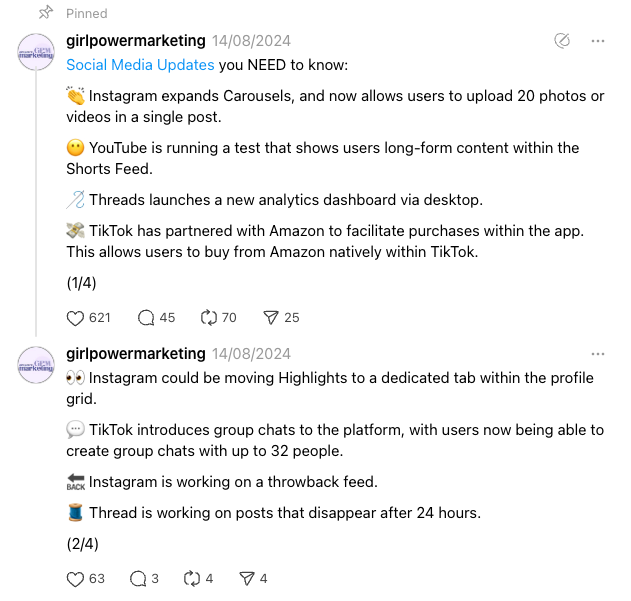
A comprehensive guide to every social media content type, along with several ideas for each to fill your content calendar.
Remember when social media content was limited to Facebook statuses and, er, “pokes?” Even a few years later, cutting-edge content was limited to a blurry photo with an oversaturated filter on Instagram.
It seems bizarre now, given how much you can do with social media today. With the ever-growing list of platforms releasing new features daily, it’s an exciting time to build a following online — but it’s not an easy one.
With the plethora of social media content options available every time you open your favourite app, it can be difficult to know what type of content your audience most wants to see. Short-form video? A carousel? A good old-fashioned selfie?
Well, that all depends on you and your audience. The right mix of content will be the sweet spot between what your audience most wants to see and what is easiest for you to create consistently.
Text-only posts have survived from the early days of social media, and with good reason — they’re still the bread and butter of many a social media marketing strategy.
Not convinced yet? Even Instagram allows for text-based posts (in the form of Instagram Notes and ‘Create-mode’ Instagram Stories), and TikTok introduced its own text-based post style in 2024.
In summary: text posts aren’t going anywhere.
Perhaps the best thing about this social media content type is how easy it is to create — as opposed to, say, video. This is a crucial consideration if you’re looking to get more followers on LinkedIn, X, Threads, and other platforms that allow for text-based posts.
Consistent activity on the platform is far more important than busting your gut to create high-effort videos. If all you have time for is, say, a quick tweet or Threads post, do that, rather than sit on your hands.
Buffer CEO Joel Gascoigne recently summarized this in a (text-based) post across platforms:
Text-based post ideas
1. Chop up long-form content into threads
Written a great blog post or newsletter? Platform character limits don’t mean lengthier posts like this are off the table. In fact, thread functionality on platforms like X, Threads, and Bluesky (if you post with Buffer) really lends itself to summaries of long-form content.
Here’s a thread example from Buffer guest post contributor Gaetano DiNardi, which surprised him by going viral on X — his explainer shows that repurposed social media content can surprise you when you give it life on a new platform.
2. Share industry news
A round-up of all the latest goings-on in your industry can be incredibly helpful for your followers and positions you as a first-in-the-know thought leader.
Speaking of thought leadership: building yourself up as a thought leader on platforms like LinkedIn, X, Threads, and beyond is an excellent way to future-proof your career.
Sharing your unique insights, experiences, and expertise can help establish your credibility and attract others in your area (and prospective clients or hiring managers).
Consider discussing industry trends, offering career advice, or sharing lessons learned from your own journey. These posts can spark meaningful conversations and might even open the door to your next big opportunity.
Buffer’s Director of Growth Marketing, Simon Heaton, regularly shares posts that detail how the Buffer marketing team works, like this one:
4. Ask engaging questions
Engaging your target audience with thought-provoking questions is a clever, lightweight way to boost engagement and gather useful information for your content, work, or life.
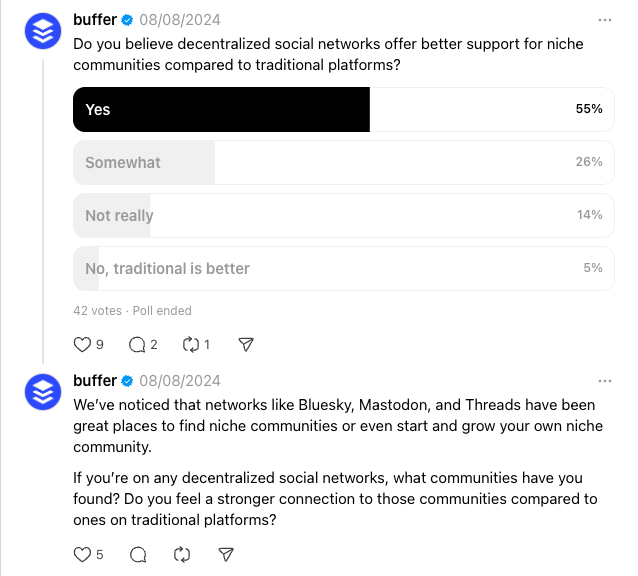
You could share your thoughts on current events and ask others to weigh in. You could also go the more personal route and gather advice from other folks in similar industries or situations. The latter is a particularly great strategy on Threads, where niche communities are often ready to lend a hand.
Here’s a great example from Buffer’s Head of Content and Communications, Hailley Griffis:
These types of posts can also spark social media content ideas. In fact, leveraging YouTube Community Posts to gather new video ideas or feedback is a successful YouTuber staple.
Ali Abdaal uses this tactic often, using responses to spark a whole new video series. Here’s an example:
5. Share behind-the-scenes stories
Audiences love to connect with brands (business or personal) on a deeper level. Sharing a relatable story that will make a viewer think, “Hey, I totally get that,” or, “They’re just like me,” can be an excellent way to strengthen their support of your work.
The more authentic, the better.
6. Create polls to spark discussion
Polls are a staple feature on most social platforms. Almost all of them have some sort of ‘poll’ post type that you can use to gather feedback and prompt discussion.
They’re a great way to generate engagement and even spark ideas for new content you can share.
If your preferred social media platform doesn’t have a poll functionality, you could ask folks to react or comment with a certain emoji to choose a specific option. The easier it is for them to engage, the more likely they are to do so.
Pro tip: Offer your target audience a way to share an answer not in your poll by creating an ‘Other’ option and asking them to comment with more context.
Short-form videos
Short-form video is known by many names across platforms — ’Shorts’ on YouTube, ‘Reels’ on Instagram and Facebook Reels, and ‘TikToks’ on well, TikTok. Videos can also be shared on LinkedIn, Threads, Twitter/X, Mastodon, and more.
Whatever your platform preference, short-form video — usually clips that are 90 seconds or under — is one of the most powerful types of social media content you can invest in.
According to Buffer data, videos are the content format most likely to get engagement across most major social platforms. It makes sense — short-form videos are tailored to mobile devices, where you’ll find most social media users consuming content these days.
So if you have the resources to create short-form videos, they’re well worth investing in.
Short-form video ideas
7. Chop up long-form video content
Waste not, want not. When it comes to creating enough content to maintain a strong social media presence on any platform, repurposing is your best friend. Cutting key moments out of longer YouTube videos is the best example here (resized for that all-important 9:16 ratio, of course), but don’t sleep on other videos, either.
If you’re hosting a webinar or speaking at professional events, be sure to get the recording — even a 30-minute session can yield several different one-minute clips for your social media platform of choice.
Here’s a highlight snippet from a podcast recording I did with Simon, which I chopped up into shorter clips for Instagram and TikTok:
8. Tap into trending audio
Trending audio and music tend to rear their heads on TikTok first, then pop up on Instagram and Facebook Reels — so you’ll be ahead of the curve if you keep an eye on TikTok.
Tiffany Morris, Owner of Luxe Gather, does a great job of keeping on top of these trending sounds and applying them to Instagram Reels to promote her business. (Here’s her clever system for creating these videos).
9. Record ‘stock footage’
My Buffer teammate Mitra Mehvar put me on to this, and it’s genius — she keeps an album of ‘stock footage’ she can use for short-form videos with a simple text overlay.
This could be anything: working at your desk, going about your day, putting the finishing touches on a new product, or even some beautiful scenery you happen to pass by. Here’s a guide to creating social media stock footage of your own.
10. Add text to videos
Wondering how you can convert your clever text posts into content for video-focused social media channels? Put your message in the medium.
This idea is particularly well-paired with idea no. 9 above — rather than saving your text for a caption, you could add some thoughts as text over your stock footage with a simple video editing tool CapCut.
Whether you’re a creator, a business owner, or a marketer, this versatile trend can work. These videos, which give your target audience a fly-on-the-wall view of a day in your life, are actually relatively easy to make.
They simply involve grabbing some clips of a couple of key moments in your day and stringing them together in your editing app of choice. You can choose to add a voiceover contextualizing things, add a trending song, or just use the ambient noise from the clips (hello, #asmr).
The key here is to approach your day from an interesting angle — what about your life might be interesting or relatable? So rather than ‘Spend a day with me,’ opt for ‘Spend a day with me as a business owner in Toronto,’ or ‘Spend day 5 of my 4-day workweek with me,’ as I did below.
Creating the video for your business? Be sure to tie it back to the brand in some way: ‘Spend a day with me as host a founder event’, or ‘Spend a product launch day with me,’ could offer a behind-the-scenes look and humanize the brand for your customers.
12. Crosspost Instagram Reels and TikToks
It’s nearly impossible to predict what social media content will perform best where — so don’t shy away from sharing the videos you create on other platforms.
As creators or social media managers, we often fall into the trap of thinking everyone in our audience has seen everything, but in reality, only a small fraction of our audience will follow us on multiple social media channels.
X, Threads, and LinkedIn all support video. LinkedIn, in particular, is doubling down on short-form video content with an in-feed ‘Videos for You’ segment that has seen video reach on the platform skyrocketing.
That ‘spend a day with me,’ video I shared above? It was one I created with TikTok in mind as part of my 30-day TikTok experiment, and I shared it on LinkedIn on a whim.
On TikTok, the video had a solid 6.8K views. On LinkedIn, it had well over 50K.
If you’re a business, partnering with other video creators and users in your audience on UGC (user-generated content) who align with your brand can help you boost credibility, reward brand ambassadors, and reach audiences beyond your own.
Creators who use your product or services (and talk about it) are like social media gold dust, but don’t underestimate the power of social media content created by regular users, either.
Use Instagram’s Remix or TikTok’s Duet or Stitch features to put your own spin on their social posts — but I’d recommend asking for permission first. If they’re excited about your brand, there’s no doubt they’ll be happy to be featured on your feed.
Photo posts
Classic social media photo posts can still garner a healthy reach on platforms — and aren’t exclusively for Instagram.
X (formerly Twitter) and LinkedIn both support image posts, and even Facebook still sees engagement with visual content.
Photo post ideas
14. Don’t shy away from the selfie
Putting a face to a post — preferably yours — can make or break it. This is something I can personally attest to. Some of my top-performing posts as a creator on LinkedIn have all featured my face.
15. Share a product sneak peek
If you’re preparing to launch a new physical product, a sharing simple sneak peek image — either a blurred-out photo, or only a small piece of the item —is a great way to whet your customer’s appetites and drum up excitement for the launch.
You could even turn the post into some sort of guessing game and giveaway in the comments, and offer the first user to get it right a prize.
16. Create a collage
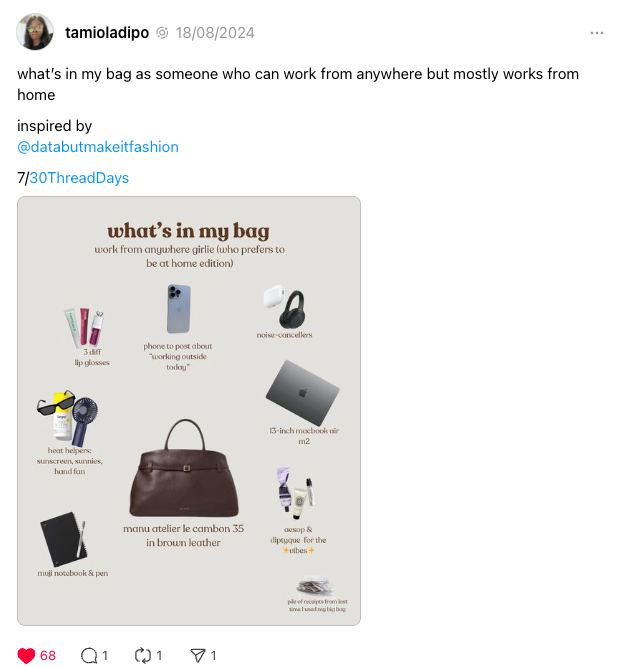
Social media tools like Canva and Instagram’s Layout make editing together a selection of images a breeze. Tell a visual story by juxtaposing several elements in one image, the way Buffer content writer Tami Oladipo did in this clever Threads post.
Photo carousels
Take all of what I mentioned above and multiply that by 10 (or 35 and 20, in the case of TikTok and Instagram, respectively.)
Carousels are a fun way to offer a window into your world or share behind-the-scenes content both as a brand or creator. The best part about photo carousels (if an aesthetic feed is important to you) is that they don’t all need to be picture-perfect.
Edit the first image to stay on brand, and the rest can be a little more raw and authentic. In fact, a level of authenticity is par for the course in this post style (thanks, Gen Z).
17. Try a weekly ‘photo dump’
Out: Perfectly polished feeds on Instagram. In: Messy, authentic, candid snaps. This trend lends itself perfectly to carousel-style posts, where all you need are some recent snaps from your camera roll.
Fitness creator Meggan Grubb shares ‘photo dumps’ like this every week, and her followers can’t get enough of them:
18. Add text to your images
Another option could be to include short sentences on each photo in a carousel for more context.
This carousel style became popular on TikTok, but now Instagram has added the ability to add text into your images natively, too. On other platforms, apps like InShot, Canva, or CapCut will get the job done even better.
The trick is to keep your text simple to make it easy to digest — no more than a line or two per image.
Graphic carousels
Not to be confused with their simpler sibling, photo carousels, graphic carousels are images or PDFs (on LinkedIn) that your audience can swipe or click through like a slide show.
Created in tools like Canva or Visme, they’re usually visually appealing and feature short, snappy, helpful information. They work particularly well on LinkedIn, Instagram, and Threads — and they’re also great for engagement.
We have a guide to creating LinkedIn carousels and a comprehensive list of LinkedIn Carousel ideas here (which can be adapted for Instagram and other platforms). Here’s a few of the latter.
Graphic carousel ideas
19. Give step-by-step instructions and advice
Carousels are a great way to share step-by-step instructions or guides. This can be useful for sharing how-to content, tutorials, or tips. For example, you could create a carousel that walks users through setting up a specific software or tool.
20. Round up new features or industry trends
Carousels offer a way to share bite-size snippets with your users, customers, or followers that they will actually digest. The Instagram @Creator account is a brilliant example of this.
They regularly share new platform updates in a simple carousel format like the example below:
They also use this format to showcase social media trends that creators can tap into, as in this post:
21. Spotlight your customers or followers
With their permission, a feature on your feed will go a long way to show how much you value your biggest supporters.
Here’s a recent example of how Buffer shined the spotlight on one of our users on Instagram:
Long-form videos
Long-form video content remains a powerful tool for engaging audiences across various platforms.
Longer videos allow for in-depth storytelling, detailed explanations, and comprehensive tutorials. Platforms like YouTube, Facebook, and now even TikTok are great for this format.
On platforms that function as social search engines like YouTube and TikTok, these videos also tend to have more longevity than their short-form counterparts. On YouTube especially, a solid YouTube SEO strategy could mean your videos continue to get views for years after posting.
But in the world of short-form video focus, keeping your audience engaged for anything longer than 30 seconds can be tough.
There are plenty of ways to do this (as we unpack in our guide to growing your subscribers on YouTube), but in broad strokes:
make sure your video is high-value and delivers on its promise
use creative stock footage or subtle animations and sound effects
segment longer videos into titled chapters to help your viewers find what they’re looking for.
Long-form video ideas
22. How-tos or tutorials
These types of videos are perfect for demonstrating complex processes or techniques — and building report with your viewers while you do it.
For example, a makeup artist could create a detailed tutorial on achieving a specific look, or a software company could produce a comprehensive guide on using their product.
Here’s a great example from Todoist:
23. Behind-the-scenes content
Give your audience a peek into your world. This could be a day-in-the-life video, a tour of your workspace, or a look at how your products are made.
24. Video podcast
The age of the podcast has evolved to the age of the ‘vodcast’ — that is, a podcast recorded with video as well as audio. This podcast style has become a staple for both podcasters and YouTubers, with many of them even setting up beautiful studios in which to sit down with their guests.
Here are some great examples from marketing podcast Nudge and YouTubers Colin and Samir:
Of course, you absolutely don’t need a high-tech set-up to tap into this format. Even a high-quality video call recording, if you host your podcast virtually, will do the trick.
Bonus: You’ll be spoilt for choice when it comes to video content to use on other platforms.
25. Interviews with experts
Another great way to spotlight leaders in your industry or expert customers is to invite them into your studio (virtual or otherwise) for a chat. There are plenty of benefits to creating social media content in this way:
it provides valuable, expert-led content for your audience
allows you to tap into the audience of your guests (if they have one)
it’s another way to spotlight and build relationships with expert customers or thought leaders.
The best part? As I touched on above, you really don’t need any fancy equipment to make this happen. A video call and a decent set of headphones is a great starting point.
26. Repurpose webinars and events
I’ll say it again: waste not, want not. If you’re hosting events as a brand or business, do hit that record button. Value-led sessions like these are an easy win for long-form video content and, if structured well, require little to no editing.
Here’s a recent example from a webinar the Buffer team hosted with Threads:
Please accept the cookie consent
URLs or link posts
This is an interesting social media content type in that social media posts that contain links often don’t perform as well. While most social media platforms don’t advertise the fact, it’s widely believed that link-only posts are not looked kindly upon by the algorithms.
The idea is that the platforms want the experience to be immersive for users, and don’t necessary want them clicking or tapping off to another destination.
That said, there is a time and place (and platform) for link-only posts.
Link post ideas
27. Stick to Pinterest
There’s no platform quite like Pinterest for sharing links, particularly if you or your brand fit into lifestyle niches.
Pinterest was built for external links. The idea of the platform is to save these external destinations so that users can visit them again later — think recipes, design ideas, workouts, and the like.
If your brand doesn’t quite fit into the most Pinterest-y niches, don’t discount the platform just yet. See our Pinterest how-to guide for a step-by-step explainer and ideas.
28. Use the first comment or last thread to share a link
If you’re sharing a link on platforms like LinkedIn, consider placing it in the first comment or as the last item in a thread.
This approach allows you to share helpful external content without potentially triggering algorithm penalties for link-heavy posts. You can use link-shortening services (like Buffer!) to create cleaner, more visually appealing URLs.
When sharing links, always provide context and explain why the content is valuable to your audience.
29. Try Facebook to drive clicks
According to Buffer data, of all the major platforms that support link-only posts (Facebook, LinkedIn, and X/Twitter), Facebook links tend to get five times more clicks than those posted on LinkedIn and four times more than those posted on X.
30. Leverage a link-in-bio tool
While this is not strictly a social media post idea, it’s worth noting here that it’s poor social media practice to include links in posts on TikTok and Instagram. The links won’t be clickable, and your viewers won’t be able to copy and paste them into a browser.
If you’re looking to direct folks elsewhere on these platforms (or any really) it’s a great idea to add the CTA (call to action) ‘Find the link in my bio’ or ‘Tap the link in bio to read more’. This will send viewers over to your profile where it will be easy for them to click on a link.
Of course, if the site you want to send them to is not front and centre, you’ll need a link-in-bio tool you can easily curate to show the most important information first. Buffer’s Start Page is a great (free!) alternative.
I use it to curate a list of my top home office products, something I get asked for often as a creator. Rather than including links to 15 different items in each post (honestly, who has the time?), I simply direct people to my Start Page link.
Experiment to figure out what social media content works best for your audience
Not all of the social media content ideas on this list will be a roaring success for you, and that’s OK. While a solid social media marketing strategy will help you theorize what might be the best fit, there’s no substitute for throwing the proverbial spaghetti to see what sticks.
And if you do find something that sends your follower count and audience engagement skyrocketing, great! But don’t be tempted to post one single social media content type until the end of time. Your audience will quickly tire of seeing the same social media posts over and over, so it’s worth coming up with several content types to mix and match in your social media calendar.
Your social media marketing should be an iterative, flexible plan that you refine and tweak as your social media accounts grow.
What happens when you add a transactional layer to experiential marketing? Adriano Lombardi of Momentum Worldwide explores some of the best examples of experiential commerce – a new frontier for marketing.
As businesses evolve and consumers’ needs and behaviours shift due to new technologies, certain disciplines have started to merge. A prime example is retail media, a space in which adtech and commerce increasingly unite to boost retailer revenue, paving the way to a post-cookie future.
Leading brands like Coca-Cola are leveraging technologies like augmented reality, AI-driven personalization, and interactive digital displays to create consumer journeys that merge the convenience of e-commerce with the tactile satisfaction of the physical-store experience. This approach not only enhances customer engagement, it also empowers businesses to collect valuable data on consumer behaviour across platforms.
While retail media has reshaped how brands advertise at the point of sale, experiential commerce now presents a complementary transformation.
As the name suggests, the idea comes from experiential marketing, which focuses on bringing consumers closer to brands. Whether for a minute or an hour, the goal is to create meaningful experiences to allow people to truly live the brand and connect with its purpose. On the other hand, commerce has always been about driving transactions.
By combining the two, you get experiential commerce: a dynamic medium that bridges the gap between living the brand and trying or buying its products. The perfect mix of brand experience and consumer action that unlocks new opportunities to build deeper consumer relationships and drive measurable results.
Point of sale
We often talk about frictionless experiences, both digitally and in-store. Enter French postal service La Poste and the bright yellow changing rooms (designed to look like their post boxes) that they installed in post offices. While not intended primarily to drive sales, by seamlessly combining convenience with transaction-driven engagement, this move exemplifies experiential commerce.
La Poste has removed a key friction point in online shopping – saving customers the hassle of trying and returning items at home. This consumer-centric solution transforms postal offices into spaces that enhance the shopping experience, making returns effortless and driving sales by prioritizing convenience and efficiency. A small footprint created a big impact – and presumably helped to drive sales.
An idea from the Philippines, This is an Ikea Store, involved placing showrooms with their furniture in public spaces like coffee shops, gyms, and even on beaches. These activations allowed people to experience their own “Ikea moment” in everyday settings. Price tags with QR codes attached to products enabled on-the-spot online purchases. The campaign effectively brought the in-store experience to familiar places and turned everyday moments into potential points of sale.
What might initially seem like a media or product placement idea from Peru, the ‘Rent Your Sunset’ campaign by Corona is, in fact, a brilliant example of experiential commerce. Businesses, hotels, and Airbnb owners can submit photographs of the sunset views from their windows. If chosen, Corona brands the window with a painted frame and supplies the owner with a number of free beers.
This initiative combines a memorable branded experience – transforming sunset views into vibrant brand hotspots – with a clear transactional layer through sampling opportunities. This exchange captures the essence of experiential commerce: integrating a path to trial or purchase with an immersive, shareable consumer moment.
And for the pet lovers? Designed for those who can’t leave home without their best friends, the Purina Club is a permanent dog-friendly section in soccer stadiums – where pets are normally banned. Bringing dogs to the game unlocks rewards and sampling opportunities – driving engagement and, ultimately, sales. That’s how to turn an experience into a transactional opportunity.
Bridging the gap
These examples each embody the emerging practice of experiential commerce. Each execution combines the tactile satisfaction of a physical store with the convenience of e-commerce. By combining the two, the brands involved successfully bridge the gap between experience and conversion. This not only enhances the user experience but allows companies to learn more about their target audience. Brands can then forge more meaningful relationships with their customers – driving measurable results.
Experiential commerce will change how we shop. Alongside retail media, it looks set to usher in a new era of customer-centric commerce. Get your brand ready.
As we can all imagine, coming up with a brilliant ad that resonates with people is quite challenging. It requires a great deal of creativity and other factors in order to create commercials that linger in our minds, logos that we always recognize, soundtracks that will play in our heads, or billboards that complete their surroundings. These can become masterpieces and even part of popular culture themselves, capable of transforming a small business into a successful beast.
On the other hand, there are the ads that leave us indifferent. We’ve seen them, we acknowledge their existence… and we quickly forget about them. However, there exists another group within the marketing world — ads that have failed miserably. We witness numerous failures in this realm, ranging from unfortunate word choices in slogans, poor graphic design decisions to coincidental ad placements that convey a completely different story than their creators intended.
Today, we have selected a fresh assortment of these gems that have transformed from marketing creations into hilarious memes, injecting a dose of laughter into the regular lives of those who stumble upon them and later share them with a larger audience.
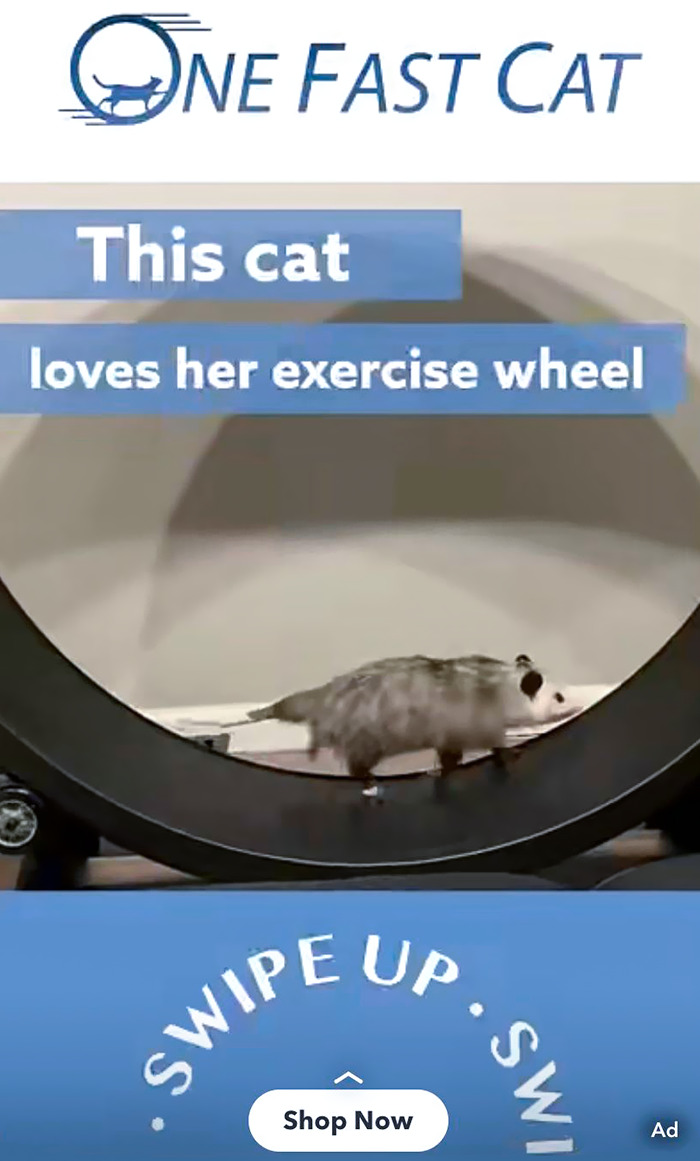
#1 I Got This Ad On A Snapchat. Just Look At This Cat
#2 This Church Has Some Rather Unfortunate Ad Placement For Its Bible Camp
#17 There’s An Optometrist Business Near My House That Has This Giant Poster Outside Advertising Coloured Contacts. It Seems To Have Aged In A “Is That A Demon?” Way
AI Overview is the next evolution of search in response to changing user behaviour
SEO specialists have been talking about a zero-click reality ever since Google debuted the featured snippet in 2014. Now, with the advent of the AI Overview 10 years later, we’re finally seeing it happen.
AI Overviews (AIOs) are what SEOs thought the featured snippet would be: They’re long, in depth, and provide not just an answer, but also context, proactively answering related questions the searcher has yet to even ask. They’re so long that, when expanded, AIOs take up roughly half the screen for both desktop and mobile devices—which means searchers finally don’t have to click through to a website to get the full picture.
The expansion of AIOs, coupled with their in-depth answers and sheer size, means that the harbingers were right, just a little early: Zero-click search results are no longer a prediction, but a stark reality for many brands.
Has Google completely shifted the SEO landscape? In a word, yes. And marketers need to evolve too or see their work become obsolete. So, what’s next?
Measurement must shift
A sharp decline in clicks doesn’t mean marketers need to panic. We just need to adapt. And the easiest part of this puzzle to adjust is measurement.
That’s because—while yes, clicks will decline in 2025—rank and impressions will likely remain steady, or even improve. AIOs do not impact rank; they simply push the rest of the results down the page, making a No. 1 ranking a little less valuable.
And with AIOs, conversions might even increase. Think of it this way: AIOs dampen the need to click through to a website, which means that searchers who actually do click through to a website are more likely to convert. In a way, we should thank AIOs for culling the unqualified traffic for us.
When SEO metrics are analysed together rather than in silos, organic traffic declines in conjunction with steady rank and impressions, as well as with consistent—or even improved—engagement and conversions, shifting the story from “our marketing efforts are failing” to “the decline in traffic is simply a result of the search landscape changes.”
What about AIO citations?
Some publishers are reporting an increase in traffic thanks to the links within AIO citations, but those are the exception to the rule. Instead, the real value of AIO citations lies in the brand visibility and credibility boost brands receive by being mentioned in this prime real estate.
Think of AI Overview citations as “free” brand ads; if Google thinks you’re an expert to be referenced, then searchers will too.
Social search further eats into Google traffic
It’s not just the search landscape that’s changing; user behaviour is also changing. People are turning to platforms like TikTok, YouTube, Reddit, and Instagram for early information-gathering instead of Google. In fact, 67% of social media users engage with social search in their purchase journey.
This means that more and more, when people finally do turn their journey to Google, it’s already with a brand in mind: 44% of all 2024 Google searches came from branded searches.
When you pair the fragmenting of search with a decline in organic traffic driven by AI Overviews, it becomes apparent that successful SEO in 2025 means optimizing for search wherever it’s happening, including social platforms. Marketers need to be thinking about SEO beyond just Google—or risk being left behind.
Has AI killed organic traffic?
No. Of course organic traffic isn’t dead. Just like with the featured snippets, this is simply the next evolution of search in response to changing user behaviour.
People are still searching. They’re still asking questions your brand can answer—they just might be searching on TikTok now instead of Google, or getting an AI-generated answer conglomerated from the best the internet has to offer (at least we hope). Tried-and-true optimization practices are still marketers’ best bet to be found by users wherever they’re seeking information about your brand.
But in terms of the bigger picture: What if AI Overviews do end up killing the click? So what? Clicks don’t keep the lights on—conversions do that. There’s a world where AIOs do us all a favour and help us more clearly see conversion barriers and really home in on a better experience for the people who do end up on your website.
Marketers who quickly shift from lamenting lost organic traffic to providing a better, unique experience for their remaining traffic will come out on top in 2025. There’s clarity in stripping away the fluff—and I, for one, am here for it.
You can connect to and even control another person’s iPhone to provide remote tech support.
Sometimes, a family member or friend will contact me asking for technical help with their iPhone. Often, I can solve the problem or address the question by talking them through the necessary steps. Other times, though, I’m hard-pressed to fix the issue without actually seeing or working with the phone.
A new screen sharing and remote control capability available through FaceTime can surmount that challenge. You can draw on the phone to show the other person where to go and what to do. If that doesn’t work, you’re able to assume full control of the other phone to navigate the screen, launch apps, and access settings just as if it were in your own hands
This also works with an iPad, but with some limitations. You can use an iPad to connect to and fully control an iPhone. You can also use an iPhone to connect to an iPad, but you can’t remotely control it. And you can use an iPad to connect to another iPad, but you can’t draw on the screen or remotely control it.
Anyway, here’s how this works between two iPhones.
How to take control of someone else’s iPhone
What you need: With your iPhone and the other iPhone both running iOS 18, you can start a FaceTime call and then remotely access the other phone.
1. Update the phones
First, make sure both your iPhone and the other person’s iPhone are running iOS 18 or higher. Go Settings, select General, and then tap Software Update. Allow the latest update to download and install.
Screenshot by Lance Whitney/ZDNET
2. Place the FaceTime call
Next, you’ll need to start a FaceTime call. You can call the other person, or they can call you. When the FaceTime call comes through, the recipient should answer it and then tap Join to join the call.
Screenshot by Lance Whitney/ZDNET
3. Share the screen
The person receiving your help then needs to share their screen. You can do this in one of two ways. The other person can tap the Share icon at the top of the screen and then select Share My Screen. Otherwise, you tap the Share icon and then select Ask to Share.
In response, another thumbnail screen opens up on your iPhone, displaying the screen of the other person’s phone. Tap that thumbnail to see their phone in a larger window. From there, you can instruct the person on how and where to access the screen, app, feature, or setting for which they need help.
Screenshot by Lance Whitney/ZDNET
4. Draw on the screen
If you want to help the other person without taking control of their phone, you can tap and draw on the screen to point them in the right direction. Tap an icon, setting, or other item on the screen, and a small circle appears for a second. You might do this to show the other person what they need to select.
Additionally, you can draw or even write on the screen to more clearly show them what to do. After you stop drawing on the screen, the words or lines you drew disappear after a couple of seconds.
Screenshot by Lance Whitney/ZDNET
5. Zoom in and out
By default, FaceTime displays the screen of the other phone in a zoomed-out mode with a border around it. To zoom in on the screen, tap the magnifier icon in the lower left. The only limitation here is that you can’t tap or draw when in zoomed-in mode. Tap the magnifier icon again to zoom back out.
Screenshot by Lance Whitney/ZDNET
6. Ask to control the other phone
If the person has trouble taking the necessary actions to try to fix the problem, you may want to assume control of the phone yourself. For this, tap the icon of a finger selecting a dot in the lower right corner. The other person receives a request for remote control, which they should select Allow. The first time you do this, a notification appears on their screen asking if they know you. To allow the remote control, they should tap Continue.
Screenshot by Lance Whitney/ZDNET
7. Use the other phone
You can now navigate and use the other person’s phone by tapping, swiping, and navigating. You’re able to zoom in on a particular screen by tapping the magnifier icon, but then you lose control of the phone. To zoom out and regain control, tap the magnifier icon again.
Screenshot by Lance Whitney/ZDNET
8. End the screen sharing or FaceTime call
After you’ve hopefully fixed the issue, tap the remote control icon at the bottom to return control of the phone to the other person. To stop the screen sharing, the other person should tap the Share icon at the top of the screen.
If you simply want to end the FaceTime call, tap the thumbnail for your own screen. Tap it again to see the set of controls at the top, and then tap End to end the call.
OpenAI is trying really hard to make ChatGPT Search into a viable product. It’s available for free, to all users, without limits. And now, just like with Google Search, it can be used without logging into an account.
But even with all it AI features, Google Search still focuses on giving you links to pages directly, while ChatGPT Search instead uses online sources to give you an answer, backed up by links. You can click the links in your answer’s sources to open a website (and you really should check ChatGPT’s homework, as it tends to hallucinate quite a bit), but the question remains: is ChatGPT Search worth making your default search engine, and is that even possible?
What is ChatGPT Search?
Credit: Khamosh Pathak
ChatGPT Search is OpenAI’s attempt at integrating something akin to an internet search engine into its AI products. You access it through the same page as regular ChatGPT— clicking the “Search” button before pressing “Enter” will turn your question into a search instead.
OpenAI will then pipe the knowledge from its internet search, gathering the latest information, into its latest AI model. The result is still a verbose, text-heavy answer to your question, but now with links to sources cited throughout. Though, for topics like the weather, you do get visual results. Even compared to Perplexity, ChatGPT’s Search interface is light on media, contextual information, and videos.
Compared to Google Search, you don’t get boxes of sponsored posts or product lists. You also, by default, don’t get a list of links, but you can scroll down to the bottom of your answer and click the Sources button to open a short list up in a sidebar. The interface is simple: it’s still just text, but better formatted, giving you different sections with citations, and highlighting different results.
Should you make ChatGPT Search your default search engine?
A user’s default search engine is a coveted spot, and most browsers only include a couple of popular and safe options like Google Search, DuckDuckGo, Bing, and so on. So far, no browser has made space for ChatGPT Search on that list. There are, however, workarounds. In fact, OpenAI’s official method itself is a workaround. It turns out that browsers like Chrome and Firefox will let you switch the default browser, but only if it comes in form of a vetted extension from their own extensions store.
Before I get to these workarounds, I want to say that this caution does make sense. A search engine is a window to your entire online world. Many users don’t manually type in website URLs to navigate to webpages anymore. They search on Google instead, and click the first link that pops up (a dangerous practice that leads to a lot of phishing scams, but that’s besides the point).
Trust is a huge factor when you’re choosing a search engine, and I’m not sure if ChatGPT clears that bar yet. In our comparison between Google Search and ChatGPT Search, we found the ChatGPT Search interface to be much better than the bloated mess that Google Search has become. ChatGPT Search is good at explaining things to you directly and can be a great way to research a product deeply before buying something new. But for day-to-day use, where you’re searching around to get a link to a web page, ChatGPT Search just doesn’t cut it. For most users, I would recommend you stick with Google, use a couple of tips to remove the AI nuisances if you wish, or consider a privacy-friendly search engine like Kagi.
How to make ChatGPT Search your default search engine, if you must
If you’ve come this far and still want to set ChatGPT Search as your default search engine, you can do so using OpenAI’s official ChatGPT Search Chrome extension. This works in Chrome and other Chromium-based browsers like Microsoft Edge, Vivaldi, Brave, and so on. Note, though, that Microsoft Edge throws up an extra popup when you try to enable it, and Chrome, too, will ask for confirmation before it lets go of the default search engine spot. Still, once installed, anything you type in the URL bar that isn’t a valid web address will instead directly go through ChatGPT Search.
Credit: Khamosh Pathak
Safari and Firefox, unfortunately, don’t support ChatGPT Search as a search engine, and there’s no extension for them, either. Though, there’s still a workaround for Firefox, which I’ll go over in the next section.
How to create a ChatGPT Search shortcut
Even if you’re able to make ChatGPT Search your default search engine, for most people, I think it would be best to create a shortcut for ChatGPT Search instead. It’s called Site Search, and it’s available in all Chromium browsers as well as Firefox (sorry, Safari users).
It’s a really straightforward process in Chromium browsers. Open Settings in Chrome, go to Search Engine from the sidebar, and in the Site Search section, click the Add button.
Here, enter “https://chatgpt.com/?q=%s&hints=search” in the URL section, and use something like “@gpt” as a shortcut. Give it a name, like “ChatGPT Search” and click Save.
Credit: Khamosh Pathak
Now, go to the URL bar, type “@gpt” or whatever you named your shortcut, hit the space bar, and type out what you want to ask ChatGPT Search. When you hit enter, it will open the results in ChatGPT, just like it would if ChatGPT were your default search engine.
In Firefox, setting this kind of shortcut requires accessing the hidden settings page. Type “about:config” in the address bar, and click Accept the Risk and Continue.
In the Search bar, type “browser.urlbar.update2.engineAliasRefresh“, and click the Plus icon next to the search result. Now, make sure that the value is True.
Credit: Khamosh Pathak
Now, go to Firefox settings, and from the sidebar, choose Search. In the Search Shortcuts section, click the Add button.
Add “https://chatgpt.com/?q=%s&hints=search” as the Engine URL, give it a name, and an alias, which is the shortcut. Then, click Add Engine.
Credit: Khamosh Pathak
Now, you’ve added ChatGPT as a site search that you can trigger using a shortcut.
Credit: Khamosh Pathak
The new ChatGPT site search will also now show up now in the Default Search Engine box, so if you really want to, you can make ChatGPT your default search in Firefox, too. Again, though, I wouldn’t recommend you go that far.
Neon colours, also sometimes referred to as fluorescent colours, are the rock stars of the visible spectrum — bold, electric and impossible to ignore.
These extremely bright versions of primary and secondary colours seem to glow, bursting with vibrant energy. Neon hues like neon green, neon pink and neon purple aren’t just colours; they’re experiences, radiating excitement wherever they’re used.
Whether it’s neon cyan in a piece of psychedelic art or neon yellow on a high-visibility jacket, these bright colours command attention. Neon shades bring an electric vibe to everything from fashion to interior design, making them as versatile as they are dazzling.
Neon colours include a wide variety of hues, from neon red and neon magenta to neon blue and lime green. Neon yellow is a staple in safety gear due to its high visibility, while hot pink and neon purple often star in fashion and graphic design.
A typical neon colour palette features bright colours that seem to glow on their own, even without neon lights. Neon cyan and electric blue, for example, pop vividly against dark backgrounds, while neon magenta and bright purple bring a playful edge to designs. These colours are all about energy, whether they’re used as an accent colour or the star of the show.
Paints in neon colours — like highlighter yellow or neon pink — emulate the brightness of neon hues but aren’t produced by neon gas. Instead, they’re created with pigments that reflect more light, making them visible even under natural or artificial light.
Neon Colours in Interior Design
In interior design, neon colours bring a touch of fun and modernity to any space.
A splash of neon yellow or neon green on a feature wall can make a bold statement, especially in rooms with darker colours or minimalist decor. Neon shades also work well as accent colours, adding vibrant energy without overwhelming the space.
Neon lights are another way to incorporate these hues. Neon signs in neon pink or electric blue can turn a room into a retro-chic haven. Interior designers often pair neon hues with dark backgrounds to make the colours stand out even more, creating a dynamic and eye-catching atmosphere.
Neon Colours in Fashion
Neon colours are a fashion phenomenon, making appearances in everything from high-visibility clothing to streetwear. Neon green, lime green and neon yellow are staples in safety gear because their emitted light falls squarely within the visible spectrum, ensuring maximum visibility.
On the other end of the spectrum, neon pink and purple add flair and personality to casual and formal wear alike.
Pairing neon hues with darker colours, like black or navy, creates a striking contrast that’s perfect for making a statement. Neon shades are also popular in athletic wear, bringing a sense of energy and movement.
Psychedelic art-inspired neon colour palettes continue to influence festival and party outfits, where vibrant energy is a must.
Neon Colours in Branding and Marketing
In branding and marketing, neon colours are used to grab attention and convey excitement. A logo in neon cyan or neon magenta pops off the screen, while neon red or neon yellow is perfect for creating a sense of urgency or energy.
Neon colour palettes are often chosen for brands that want to stand out in a crowded market or evoke a modern, edgy vibe.
Neon hues also work well in digital design, where they’re paired with darker colours to maximize impact. Whether it’s a website banner in neon purple or a social media post in hot pink, these bright colours draw the eye and engage viewers.
How Neon Lights Work
Neon lights are iconic for their glow and vibrant hues. These lights work by filling a glass tube with neon gas, which emits light when electrified. Neon gas naturally produces a bright red-orange glow, but other gases and coatings are used to create a range of neon hues like neon blue, neon green and neon yellow.
The emitted light falls within the visible spectrum, creating the glowing effect we associate with neon signs. By shaping the tubes into letters or designs, neon accents become functional art pieces, lighting up everything from storefronts to home decour. Their unique glow has made them a staple in both retro and modern aesthetics.
Neon Lights vs. Fluorescent Lights
While neon lights and fluorescent lights are both bright and colourful, they operate differently. Neon lights rely on neon gas and other noble gases to emit light, while fluorescent lights use a phosphor coating inside the tube to produce their high-intensity glow.
This is why fluorescent colours stand out even in daylight, while neon lights are most effective in low-light or dark settings.
We created this article in conjunction with AI technology, then made sure it was fact-checked and edited by a HowStuffWorks editor.
Now That’s Noble
Neon is the 10th element on the periodic table and the second of the noble gases. Noble gases are vital to certain industries because they do not burn in the presence of a flame or react with surrounding chemicals under normal conditions. This characteristic also means that neon can be a conduit of the high amounts of energy in neon lighting without creating a hazard.
Feature Image Credit: Shutterstock AI Generator / Shutterstock
Do you want to know what really makes a great designer? It’s more than just knowing the latest software, isn’t it?
In today’s fast-paced creative landscape, design skills are constantly evolving. Design is not only about visual appeal. In fact, it goes beyond just making things look pretty. It is about solving problems, creating experiences, and connecting with people. And it is about communicating effectively.
Think about your favourite brands. What makes their designs so appealing? Is it simply the colours they use, or is there something deeper? Maybe it’s the way their website anticipates your needs, or how their app is so intuitive that you barely have to think to use it. That’s the power of great design. The need for designers has increased as businesses have come to realize the importance of good design for success.
But here is the deal: landing a job in the design industry is not a walk in the park. It needs a certain set of capabilities to be a successful designer. It’s a competitive field and therefore you will need to know what skills to learn in order to be successful.
So, what are those must-have skills that will set you apart and make you a sought-after designer? Let’s get right to it!
Core Design Principles: The Bedrock of Great Work
You might be wondering why we are starting with core design principles. Well, understanding design principles like typography, colour theory, layout, balance, and hierarchy isn’t just about following rules. It is more than that. Instead, it’s about understanding how these elements work together to create a visually appealing and effective design. These principles are foundational. They inform every decision a designer makes.
Typography: Understanding how to choose and use fonts effectively is essential. Fonts can set the tone and convey the message of the design.
Colour Theory: Knowing how colours interact and evoke emotions is crucial. Colour can influence how people perceive a design.
Layout and Composition: Arranging elements in a way that is both visually appealing and easy to understand is key. A well-organized layout guides the eye and improves the user experience.
Balance and Hierarchy: Creating a sense of equilibrium and guiding the viewer’s eye to the most important elements is vital. These principles ensure the design is both aesthetically pleasing and functional.
Mastering these core principles provides a solid foundation. It will allow you to create designs that are not only beautiful but also effective in achieving their intended purpose. It’s about understanding the “why” behind the “what.”
Software Proficiency: Mastering the Digital Tools
Okay, let’s be honest. While raw talent and design skills are super important, you’ll also need to know your way around the software that brings your ideas to life. Being proficient in industry-standard tools is a must. What do you need to learn?
Adobe Creative Suite: Programs like Photoshop, Illustrator, and InDesign are the bread and butter of many design projects. Knowing how to use these tools efficiently can greatly enhance your productivity and creativity.
Figma/Sketch: These are popular tools for UI/UX design. They allow you to create interactive prototypes and collaborate with other designers in real-time.
Prototyping Tools: Familiarize yourself with tools like Adobe XD, InVision, or Marvel to create interactive prototypes and test your designs.
The key is not just knowing the software. Instead, it is understanding how to use it to solve design problems effectively. You should always be eager to learn and adapt to new tools. The design software landscape is constantly evolving!
UX/UI Design: Crafting User-Centered Experiences
User experience (UX) and user interface (UI) design are now fundamental aspects of the design process. Why are they so important? Because they focus on creating products that are easy to use, enjoyable, and effective. They put the user first!
Here’s why these design skills are so crucial:
User Research: Understanding user needs, behaviours, and motivations through research methods like surveys, interviews, and usability testing.
Information Architecture: Organizing and structuring content in a way that makes sense to users and helps them find what they need.
Interaction Design: Designing the way users interact with a product, ensuring that it is intuitive and efficient.
Usability Testing: Evaluating the effectiveness of a design by observing users as they interact with it and gathering feedback for improvements.
These are essential if you’re designing websites, apps, or any other digital product. It’s about creating a seamless and satisfying experience for the user.
Communication and Collaboration: Sharing Your Vision
Can you explain your design choices clearly? This is important. Design is rarely a solo endeavour. You will be working with clients, developers, and other designers. Being able to communicate your ideas effectively, listen to feedback, and collaborate with others is essential. These skills are a must.
Verbal Communication: Presenting your ideas clearly and concisely, and articulating the reasoning behind your design decisions.
Written Communication: Creating documentation, writing design briefs, and providing clear instructions to developers.
Active Listening: Paying attention to feedback from clients and team members, and incorporating it into your designs.
Collaboration: Working effectively with others to achieve a common goal, and being open to different perspectives and ideas.
Remember, design is a team sport! Communication design skills bridge the gap between your vision and the final product.
Problem-Solving and Critical Thinking: Tackling Design Challenges
Great designers aren’t just stylists. They are problem-solvers. Designers need to be able to identify design challenges, analyse the situation, and develop creative solutions. They can think critically about the problem at hand.
Analytical Skills: Breaking down complex problems into smaller, more manageable parts, and identifying the key issues.
Creative Thinking: Generating new ideas and approaches, and thinking outside the box to find innovative solutions.
Decision-Making: Evaluating different options and choosing the best course of action based on available information.
Attention to Detail: Ensuring that every aspect of the design is carefully considered and executed to the highest standard.
These skills enable designers to approach each project strategically and thoughtfully.
Adaptability and Learning: Staying Ahead of the Curve
The design landscape is constantly evolving. What’s hot today might be old news tomorrow. Staying ahead of the curve requires a willingness to learn new things, adapt to new technologies, and embrace new design trends. The modern designer must adapt in order to remain on top.
Continuous Learning: Staying up-to-date with the latest design trends, technologies, and best practices through online courses, conferences, and industry publications.
Flexibility: Being able to adapt to changing project requirements, client feedback, and emerging design trends.
Experimentation: Trying new things, pushing boundaries, and being willing to take risks to discover new and innovative design solutions.
Openness to Feedback: Being receptive to criticism and using it as an opportunity to learn and improve.
Staying curious and always seeking new knowledge is how you remain a valuable asset in the design industry.
Visual Communication: Conveying Ideas Visually
Visual communication design skills are the ability to effectively convey ideas and information through visual elements. It’s not enough to just make something look good. It also needs to communicate a message clearly. It is about using the correct visual elements to make the design understandable.
Imagery: Selecting and using appropriate images, illustrations, and icons to enhance the message and engage the viewer.
Typography: Using fonts effectively to convey the tone and message of the design.
Colour: Using colour strategically to evoke emotions, create contrast, and guide the viewer’s eye.
Layout: Arranging elements in a way that is visually appealing and easy to understand, and that effectively communicates the intended message.
Mastering these elements of visual communication can greatly enhance the impact and effectiveness of a design.
Branding: Developing and Maintaining Brand Identity
Branding is another crucial aspect of design. It involves creating and maintaining a consistent brand identity across all touchpoints. A good brand sets the tone for a company. It influences how consumers view the company.
Brand Strategy: Understanding the brand’s values, mission, and target audience, and developing a strategy to communicate these elements effectively.
Visual Identity: Creating a visual language that reflects the brand’s personality and values, including logo design, color palette, typography, and imagery.
Brand Guidelines: Establishing clear guidelines for how the brand should be represented across all channels, ensuring consistency and coherence.
Brand Management: Monitoring and maintaining the brand’s reputation, and ensuring that it remains relevant and engaging over time.
Designers who understand branding principles can create designs that not only look good but also effectively communicate the brand’s message and values.
So, Are You Ready to Level Up Your Design Skills?
So, there you have it! These are the design skills that will help you thrive in today’s design world. By focusing on these key areas, you can elevate your skills, set yourself apart, and create designs that truly make a difference. Now go out there and create something amazing!







#3 The Irony
#4 The Girl In This Advertisement Looks Like A Stroke Victim
#5 It Doesn’t Look Like It Was Repaired
#6 This Bench Advertises That “No Kid Should Ever Have To Sleep On The Streets” And Then Adds Bars So Homeless People Can’t Sleep On The Bench
eanu Reeves And His New Movie “Jim Nhock 3”
#8 Stop Putting Images Of People On The Stairs
#9 This Pillow Is So Good You’d Rather Use Your Hands To Sleep On
#10 This Ad In My Print Copy Of The New Yorker. I Tried To Click It, And Nothing Happened. Total Scam
#11 They Should’ve Tried A Little Bit More With This Ad
#12 This Ad On Facebook For Permanent Makeup
#13 This Advertisement’s Placement
#15 Face That’s Too Handsome So It Doesn’t Need A Mask On
#16 This Unfortunate Placement Of A Handle
#17 There’s An Optometrist Business Near My House That Has This Giant Poster Outside Advertising Coloured Contacts. It Seems To Have Aged In A “Is That A Demon?” Way
#19 I Don’t Even Know What Is This
#20 That Could’ve Been A Nice Ad For Linux Or Something
#21 They Had One Job
#22 This Bus Ad That Will Catch Your Attention
#23 The Placement Of This Baby’s Head
#24 A Very Vague Billboard
By Eglė Bliabaitė
Author, BoredPanda staff
Sourced from boredpanda