I recently asked a group of Inc. 5000 CEOs which marketing channels were performing best this year in terms of sales conversion. I’m not exactly sure what answers I expected, but I would not have been shocked to hear about partnering with TikTok influencers, ploughing budget into demand-generation campaigns, or fine-tuning email newsletters. And some of those tactics certainly came up. But to my surprise, the most common answer was decidedly nondigital: the classic word-of-mouth referral.
Natasha Miller, founder and CEO of Entire Productions, was one of the founders who told me her company has benefited from referrals this year. When we spoke, Miller was in a Lyft, having just returned to San Francisco from a 10-day vacation in Italy. Unlike many businesses, her events-production company is having a stellar 2024. “It’s like we’re in the fast lane,” she says. She credits the performance, in part, to a new COO she hired this spring who encouraged her to focus on referrals.
“I’ve been in business for 24 years, and I have been maybe too proud to ask for a referral in the past because it can feel a bit vulnerable,” Miller says. At one point, she set up a formal (and somewhat impersonal) referral program that offered financial commissions, but it got little traction. When her new COO prevailed on her to try again and start small, she had modest expectations.
Miller took a client with whom she had a great rapport to lunch. “We had just done a large, very expensive event for her,” Miller says. “But I knew it was a one-off, because her job description didn’t have to do with events. She was in internal communications.”
The lunch unfolded without much of a sales pitch. But at one opportune moment, Miller simply said, “If anyone you know needs us, I’d really appreciate a referral.”
“It was such a small, quick, under-my-breath request,” she remembers.
And yet, it paid off. A few weeks after the lunch, the client made introductions to several colleagues, including some from a new division that had ample events budgets. “We now have an RFP for $500,000 to $1 million in new revenue,” says Miller, “and it could lead to millions of dollars more over the next couple of years.” That tiny blip in the conversation may turn out to have a huge impact on her company’s bottom line.
Miller’s story illustrates exactly why it’s smart to treat referral business not as a pleasant surprise but rather as a channel—”a powerful, wildly underleveraged channel,” says Scott K. Edinger, a sales growth strategy consultant and author of the 2023 book The Growth Leader. It’s a channel that you should manage as diligently as any other, he argues.
“I think you’d be hard-pressed to find something with a greater ROI than a referral,” Edinger says. “And yet, the most direction you’ll typically get from the executive team or marketing or even sales leadership is, ‘Yeah, by all means, go get referrals.’ How you do that is left to happenstance or hope.”
To bring structure to referrals, Edinger recommends taking 10 percent of your budget and 10 percent of your sellers’ and sales-enablement team’s time, and redirecting it toward working your existing client list for recommendations. Set up specific meetings where the only objective is to ask for a referral—gently.
And Edinger advises taking a highly targeted approach. You’re not looking for just any new leads. Start with the clients you have today who best represent your Platonic ideal of a customer, from deal size and profitability to ease of account services. Ask yourself this simple but game-changing question: Who are your best customers, and what makes them the best? Then, ask those great customers who in their professional networks might resemble them.
“Referrals are basically how we built our business,” says Owen Loft, founder and CEO of Socium Media, a New York City-based marketing agency that manages digital ad campaigns for brands including the fashion labels Vince and Betsey Johnson. “We’ve almost never had to do digital marketing for ourselves, because we usually have such a steady stream coming in.”
When pursuing leads based on referrals, Loft notes, Socium typically competes with only a few other firms to land an account. Clients tend to consider a wider array of vendors when they use other channels—and that translates to fiercer competition, pricing pressure, and a much longer sales cycle from first contact through closing the deal. “It’s so much easier to close business that comes in from a referral, because it’s already a very warm introduction,” Loft says.
Loft’s business took off during the pandemic, when consumers were snapping up all kinds of products through online shopping. Brand marketing teams were racing to keep pace, driving demand for agencies like Socium. And amid a tight hiring market, folks on the client side job-hopped frequently. When the point person at a client company would leave for a new job, “we’d keep the old relationship and then bring on the new one,” Loft says. “And we just started getting this great network of client referrals that way.”
One major early client was such a revolving door of talent, Loft says, that departing staff introduced Socium to more than 30 new accounts. “They just branched off like a tree,” he says. (Memo to Jerome Powell: Loft cites as a 2024 business headwind the lack of worker mobility, meaning his customers are switching jobs less frequently this year and therefore opening fewer doors for new revenue.)
As you look to build your pipeline for 2025, here’s one more reason that referrals might be a good bet. Because they rely on genuine human relationships, referrals are a way to sidestep the glut of AI-enabled sales messaging that’s clogging every prospect’s email and LinkedIn inbox.
“Instead of trying to send 100 AI-generated emails that get five AI-generated emails back,” says Edinger, “spend some time with a proactive focus on the customers who are most likely to be able to recommend you to somebody else—and treat that as a sales process in and of itself.”
In the spirit of referrals, I have some companies I’d like to recommend to you: 359 of them, to be precise. I’m speaking of the third cohort of Inc. Power Partners. This is our definitive ranking of vendors and suppliers that have demonstrated excellence in serving small and midsize customers. As part of the vetting process, our team of editors, researchers, and reporters gathered information on companies’ products and services, assessed their reputations as captured in online comments and forums, and collected customer testimonials to ensure that sales pitches match the experiences of actual clients.
Among Inc.’s Power Partners are giants like Intuit QuickBooks, Slack, and Oracle NetSuite; muscular challenger brands like Xero, Insperity, and HubSpot; and fascinating upstarts like Carrot Fertility, which shapes IVF employee benefits programs, and Virtru, a top cybersecurity adviser.
In every case, we spoke to founders like you who were ready to attest to a vendor’s genuine commitment to a mutually beneficial business partnership. We’re happy to be the conduit for that positive word of mouth—and if there’s a partner you absolutely love that is not listed here, do me a favour: Please, send that referral my way.
Feature Image Credit: Photography by Nathan Bajar. Socium Media founder and CEO Owen Loft at an Inc. 5000 CEO dinner in New York City in September.
Trust dynamic not the only shift for younger generations
For years, word-of-mouth has played a critical role in the marketing success of small businesses. New data from GoDaddy suggests that recommendations from friends, family and co-workers are being replaced by influencers in terms of importance to younger consumers.
The GoDaddy survey of 1,000 U.S. consumers in September shows that while both Gen Z and Millennial customers are starting to behave differently than traditional shoppers, that doesn’t mean they are trending in the same direction.
Approximately 4 in 10 Gen Z consumers (41%) trust a product or service posted by an influencer over an ad from a business, whereas nearly 5 in 10 Millennials (46%) trust an ad from a business more.
Among both generations, when asked the likelihood of buying an item from a post on social media, posts from friends ranked low on the list.
Gen Z is more likely to buy something an influencer recommends, with friends coming in last.
An influencer’s post (57%)
A post from a business I follow (54%)
An ad in my feed (49%)
A friend’s post (40%)
Millennials are more influenced by the businesses they choose to follow, with influencers and friends holding the least weight.
A post from a business I follow (57%)
An ad in my feed (51%)
A friend’s post (48%)
An influencer’s post (44%)
“Knowing that Gen Z consumers trust social media ads more than recommendations from friends is a game-changer if this is your target audience,” said Alycia Leno, director of marketing at GoDaddy. “Insights into how each generation shops, especially on social media, will empower small businesses to rethink their strategies and using the right tools will maximize their businesses social media marketing.”
Even though Gen Z and Millennial shoppers may differ in who they trust while scrolling through feeds, they still see the value social media and social ads offer.
Most Gen Z (55%) and Millennial (47%) consumers regularly rely on social media to discover new products every, or nearly every time.
More than half of Gen Z (53%) and Millennial (57%) customers are served an ad that results in them taking action at least every week.
Nearly 3 in 10 Gen Z (28%) and Millennial (32%) consumers find social media ads helpful to learn about new products and/or businesses.
These findings show that small business owners need a good grasp of their audience, or they risk wasting time and spending money unnecessarily. By understanding how each generation prefers to shop on social media, entrepreneurs can target customers more directly and see better results faster.
Entrepreneurs can lean on online tools to maximize every social media post and ad. Digital Marketing from GoDaddy leverages the intuitive features of GoDaddy Airo™ and GoDaddy Studio to create custom AI-generated content, schedule social media posts, create digital ads, access helpful analytics and more. These cost-effective tools are readily available to small businesses of any size, with any budget, to help attract new customers and increase sales.
To learn more about GoDaddy and its products, visit www.GoDaddy.com.
About GoDaddy
GoDaddy (NYSE: GDDY) helps millions of entrepreneurs globally start, grow, and scale their businesses. People come to GoDaddy to name their idea, build a professional website, attract customers, sell their products and services, and accept payments online and in-person. GoDaddy’s easy-to-use tools help microbusiness owners manage everything in one place and its expert guides are available to provide assistance 24/7. To learn more about the company, visit www.GoDaddy.com. Source: GoDaddy Inc.
Here’s a rundown of the different models, plus their strengths and weaknesses
Today’s average path to purchase involves 56 touch points across various platforms. This proliferation of channels introduces a new layer of complexity and complicates creative alignment, as disjointed campaigns lead to consumer distrust and frustration.
If marketers can’t identify which combinations of channels are working or, more importantly, which ones aren’t, effectively prioritizing ad spend becomes nearly impossible. With the right attribution model, marketers can centralize metrics to visualize the entire customer journey, prioritize budgets to maximize ad spend, and make data-backed recommendations to leadership. These tools help centralize and normalize data and ensure that it is clean, deduplicated, and ready for deeper analysis.
Choosing the right attribution model can be complicated. Here are the most common types, along with their pros and cons.
Full-path model
This model is the most extensive and technical since it provides the most comprehensive tracking of a customer’s journey, recording every marketing interaction they encounter from the first touch point to the final conversion. It accounts for all marketing efforts, such as display ads, social media interactions, email campaigns, and even post-purchase engagements, making it highly effective for in-depth analysis of what works and what doesn’t.
It provides a detailed, end-to-end view of the customer journey, allowing marketers to accurately attribute revenue to specific marketing efforts. It also helps optimize budget allocation by highlighting the most influential touch points in the customer journey and supports strategic decision-making by revealing how different channels work together to influence conversions.
However, it requires significant resources, including advanced analytics tools and skilled personnel to manage and interpret the data, and can be time-consuming to set up and maintain.
Linear attribution
This model assigns equal value to all touch points in a customer’s journey. For example, if a customer finds you on Facebook, then signs up for your newsletter, and finally clicks an email link before making a purchase, each touch point would receive equal credit for the conversion.
It’s relatively easy to implement and understand, making it a practical option for teams with limited resources or those just beginning to explore multi-touch attribution. Assigning equal credit to all touch points in the customer journey emphasizes the value of every interaction. A downside, though, is that it lacks nuanced insights because it doesn’t account for the varying influence that different interactions may have on the final conversion.
Time decay model
Unlike the linear model, where each interaction gets equal credit, the time decay model assigns varying credit to all marketing touch points in a customer’s journey. It weighs them based on their proximity to the final conversion.
For example, if a customer first encounters your brand through an email but later clicks a button on your website, the email would receive minimal credit, while the website click would receive the most, reflecting its more significant influence on the point of purchase.
Giving more credit to later touch points emphasizes nurturing leads and building relationships over time. This model is more useful for businesses with extended sales processes, where multiple touch points are needed to guide the customer toward a decision.
The cons of this model are that it’s less effective for short sales cycles, as it undervalues critical early touch points. It may also provide limited insights into the effectiveness of upper-funnel activities, which are essential for initial brand awareness and interest.
W-shaped model
The W-shaped model follows a very set pattern: 90% of the credit is evenly split between the first, third, and last marketing touch points. These three stages—visit, lead, and sale—are considered the most critical in the customer journey. The last 10% is divided between the second and fourth touch points, hence the W shape.
Highlighting the visit, lead, and sale stages showcases the most influential moments that drive conversions. This model is well-suited for businesses with multistep sales processes, where specific interactions are crucial for progressing customers through the funnel. It benefits marketers who want to highlight the critical stages in the customer journey without completely disregarding the value of intermediate interactions. While its biggest flaw is that it overlooks touch points outside of these stages, it highlights key interactions in the funnel.
However, by adhering to a set pattern, it can overlook various influences for other touch points that contribute to the overall customer experience. Its rigid structure may only fit some customer journeys, particularly those with nonlinear or more complex paths.
U-shaped model
Like the W-shaped model, a U-shaped model gives 80% of the credit to the first and last interactions—typically the initial visit and the final conversion. The remaining 20% is distributed among the middle touch points, reflecting their supportive role in moving the customer along the path to purchase.
This model is great for businesses that want to focus on the most influential touch points—attracting customers and driving conversions—without entirely ignoring the value of the middle touch points. It simplifies attribution by focusing on the most critical stages, making it easier to understand and implement, and prioritizes initial engagement and final conversion, making it ideal for strategies heavily focused on these areas.
But giving less credit to middle touch points may undervalue the role of nurturing activities between the first and last stages. This model is less effective for businesses with longer or complex sales cycles where middle touch points significantly impact the final conversion.
Custom models
Attribution models can be tailored to a company’s specific needs, incorporating elements from standard models rather than creating something entirely new, which allows for precise control over credit distribution for conversions and across touch points. However, developing and maintaining custom models can be time-consuming and expensive. A more practical approach is to use pre-built attribution models and adjust them as needed.
Turning insights into action
As privacy regulations tighten and third-party cookies slowly fade, understanding customer behaviour at every touch point becomes more critical than ever. But multi-touch attribution is not a one-size-fits-all solution; it’s a dynamic process that requires ongoing analysis and adjustments. Marketers should be prepared to toggle between different models and ask critical questions to ensure their strategies remain effective.
Marketers who regularly adjust their attribution models and ask the right questions will be better equipped to turn insights into actionable strategies. By doing so, they can optimize their campaigns, make data-driven decisions, and ultimately drive meaningful outcomes in an ever-evolving advertising ecosystem.
When used correctly, consider AI technology as a minor contributor to your daily workflow, not a major threat to your current role.
Marketing is all about the creative process of the human mind, but after so many years of coming up with brand campaigns, it’s not surprising that new ideas can sometimes grow stale. That’s where the evolution of AI tools comes in.
Whether companies are using artificial intelligence to gauge a potential customer base or to spark an attention-grabbing subject line in the latest email newsletter, most teams realize the benefits of utilizing AI responsibly to personalize their brand communications and increase their daily productivity with the help of automation. To demonstrate how AI tools have improved the quality of their work life and technological mindset, 14 members from Fast Company Executive Board each offer one specific way marketers can treat AI as a “tool in the shed” to support their creative outlet process, not take it away.
1. DISRUPT CREATIVE BIASES AMONG MARKETING TEAMS.
Marketers should use AI to challenge and disrupt their creative biases. By feeding AI unconventional data and prompting it to generate ideas that contradict their initial instincts, they can break free from traditional thinking patterns. This approach forces teams out of their creative comfort zones, fostering innovation and pushing the boundaries of what’s possible in their marketing strategies. – Chris Dyer, Company Culture and Leadership Keynote Speaker
2. AUTOMATE AND EXPERIMENT WITH A/B TESTING.
Marketers should use AI to optimize and test creative variations in real time. By automating A/B testing and analysing performance data instantly, AI allows marketers to experiment with different creative elements and refine their campaigns on the fly. This dynamic feedback loop enhances creativity by providing insights into what resonates with audiences, leading to effective marketing strategies. – Maria Alonso, Fortune 206
3. EXPLORE A VARIETY OF EMAIL SUBJECT LINES AND CALLS TO ACTION.
For marketers, AI presents an opportunity to ensure efforts do not become stale. Whether it’s for brainstorming purposes, figuring out new ways to approach a particular subject or, in the case of email marketers, exploring a variety of subject lines and calls to action, AI should be looked at as a tool in the shed, but not something that replaces the human touch. – Richard RB Botto, Stage 32
4. IMPLEMENT TRANSLATION AND LOCALIZATION FOR CULTURAL RELEVANCE.
Marketers should use AI for translation and localization. AI-driven translation ensures that content is culturally relevant and resonant with consumers and audiences. It enables marketers to produce personalized content at scale, blending translation with creativity and imagination for innovative and impactful marketing that stands out. – Bryan Murphy, Smartling
5. MANIPULATE IMAGES WITH EASE.
Plenty of people use AI to generate content. I also think there are many amazing ways to use AI when creating your visual content with image manipulation, such as changing backgrounds, removing unwanted elements, or adding imagery. AI is a powerful tool to help level up even the smallest marketing budget. – Alexander Kwapis
6. INTRODUCE ANIMATED EXPLAINER VIDEOS AND TUTORIALS.
We are just scraping the surface of how AI will help us marketers move with more efficiency, creativity, and scale. I’m watching the innovation happening in the video space. I want to see how AI can be leveraged to create animated explainer videos and tutorials and bring white papers and interactive graphics to life with built-in distribution, connectivity, and analytics. – Mack McKelvey, SalientMG
7. ELEVATE THE STORYTELLING QUALITY OF YOUR BRAND.
Leverage AI content generation tools to streamline idea development and visual creation, allowing more time for strategic and creative thinking. NightCafe Creator and Looka are two excellent tools to automate the creative process, so marketers can focus on refining concepts, storytelling, and the strategic aspects of campaigns, enhancing both productivity and the quality of creative output. – Britton Bloch, Navy Federal
8. BRAINSTORM FOR CREATIVE CONTENT.
Imagine having a creative brainstorming partner who never gets tired, never runs out of ideas, and always has their finger on the pulse of what’s trending. That’s the power of AI for marketers. By analysing massive amounts of data, AI can help you spark creativity, identify untapped opportunities, and create content that truly resonates with your audience. – Christine Alemany, Thrv Advisors
9. IDENTIFY TRENDS AND CONSUMER BEHAVIOR PATTERNS.
Marketing involves knowing your customer, sending the right message, and using the right medium—simple in theory, but expensive in practice. AI, through predictive analytics, analyses data to identify trends and behaviours. This allows marketers to craft personalized, relevant campaigns, freeing up creativity for innovative ideas, and ensuring targeted, cost-effective strategies. – Mukesh Kumar, Slalom
10. SEND YOUR AUDIENCE PERSONALIZED AND RELEVANT CONTENT.
One way marketers can leverage AI is by analysing volumes of datasets like audience behaviour and trends, allowing them to create more personalized and relevant content. AI can up time for marketers to focus on the creative aspects, like storytelling and strategy. – Anthony A. Luna, Coastline Equity Property Management
11. LEVERAGE AI AS A CONTRIBUTOR ALONGSIDE YOUR STAFF PRODUCERS.
You can leverage AI for up to 60 to 80% of the creation of your project, and then add individual creativity to it. Think of your people as producers and AI as a contributor, not the other way around. Foster creativity by modelling what quality, creative prompting reads like. If you’re not modelling what quality usage of AI producing is like, who the heck is in your organization? – Jay Steven Levin, WinThinking
12. ENHANCE YOUR TEAM’S PRODUCTIVITY LEVEL.
AI is the most potent way to attain superpowers: creativity, iteration, ideation, content creation, and more. Achieving an order-of-magnitude increase in productivity and gaining the ability to do what was once impossible at near-zero cost is transformative. Those who wholeheartedly embrace AI have an unbeatable advantage. Those who resist it may soon find themselves looking for a new position. – Jared Reimer, University of Washington
13. DESIGN VISUALS FOR MARKETING PRESENTATIONS.
One way AI works with creativity is in visual applications. Visual applications include covers, art, cartoons, or videos that work with presentations or marketing ideas. AI is the new storyboard, only much faster and more accurate. I’ve found it adds to my projects because it can create what you want the clients to visualize. – Baruch Labunski, Rank Secure
14. GUIDE AND DEVELOP YOUR ORIGINAL IDEAS.
Marketers should use AI to help guide and develop their original ideas so they can maximize how they reach their target audience. While AI is certainly capable of providing its own answers and being somewhat creative, I believe that the best ideas—and ultimately how to achieve them—really come from the minds of people. – Misty Larkins, Relevance
As a business owner, you’re probably wondering why inbound marketing works for some online businesses. You’ve heard it’s a game-changer, but you’re not entirely sure what it’s all about or how it can benefit your business.
By creating valuable content and experiences that resonate with your audience, you can build trust and credibility with your customers, and keep them engaged with your brand.
Ever wonder why inbound marketing works so well for brands like HubSpotand Moz? It’s because they put customers first. Inbound marketing focuses on attracting customers by providing value.
No spam.
No annoying ads.
Just helpful content that meets people where they are. And it works like a charm. So, let’s dive in.
What is Inbound Marketing?
Inbound marketing is a customer-centric approach that moves away from interruptive tactics and instead focuses on pulling customers in with compelling content. It works by attracting the right kind of traffic.
It is often described in three phases—attract, engage, and delight. With these three phases working together, you can generate leads, increase sales, keep customers happy, and increase customer retention.
This is a marketing approach that focuses on creating valuable content and experiences that attract and engage with your target audience. It’s all about providing value to your customers, rather than just pushing out sales messages.
By creating content that resonates with your audience, you can attract and convert leads into customers, and ultimately drive revenue for your business.
Here are some effective examples:
Blog Posts: Regularly updated blogs that provide useful information and insights related to your industry.
Social Media Engagement: Sharing content and interacting with followers on platforms like Facebook, Instagram, and LinkedIn.
Search Engine Optimization (SEO): Optimizing your website content to rank higher in search engine results, making it easier for potential customers to find you.
Webinars: Hosting live online seminars to educate your audience on specific topics.
Videos: Creating engaging video content that can be shared on social media and your website.
Infographics: Designing visual representations of data and information to make complex topics easier to understand.
Ebooks and Whitepapers: Offering in-depth guides and reports that provide valuable information in exchange for contact details.
Email Campaigns: Sending targeted emails to nurture leads and keep your audience informed.
Case Studies: Showcasing success stories of how your product or service has helped other customers.
The Benefits of Inbound Marketing
You might ask, “Why bother with inbound marketing when outbound has worked for years?”
Well, here are some reasons why inbound marketing works better:
Enhanced Brand Awareness: When you create content that people love, they start to see you as an authority. This means more eyes on your brand, which is always a good thing.
Increased Customer Trust: People trust brands that provide value without asking for anything in return. By sharing useful content, you build trust with your audience.
Higher Quality Leads: When people find your content on their own, they’re more likely to be genuinely interested in your products or services. This means they’re better leads.
Increased Lead Generation: Inbound marketing helps you attract and convert leads into customers, which can lead to increased revenue and growth for your business.
Improved Customer Engagement: By creating content that resonates with your audience, you can build trust and credibility with your customers, and keep them engaged with your brand.
Enhanced Brand Awareness: Inbound marketing helps you build a strong brand identity and establish your business as a thought leader in your industry.
Cost-Effectiveness: Inbound marketing is a cost-effective way to reach your target audience, compared to traditional marketing methods like print or TV ads.
The benefit of inbound marketing is that it pulls in customers with great content, SEO, and personalized experiences.
Think of it like this: Instead of blasting ads all over the place, inbound marketing focuses on creating value through content creation and SEO optimization.
By doing this, you attract people who are already interested in what you offer. This makes them more likely to become customers. And who doesn’t love customers, right?
How Inbound Marketing Works
So, how does inbound marketing actually work?
Attract: Create content that resonates with your target audience, such as blog posts, videos, or social media posts.
Convert: Use lead generation techniques, such as landing pages and forms, to capture leads and convert them into customers.
Nurture: Use email marketing and other channels to nurture your leads and build trust and credibility with your customers.
Close: Use sales funnel optimization techniques to close deals and drive revenue for your business.
Inbound Marketing vs. Outbound Marketing
So, how does inbound marketing compare to traditional outbound marketing methods? Here are a few key differences:
Focus: Inbound marketing focuses on creating value for your customers, while outbound marketing focuses on pushing out sales messages.
Cost: Inbound marketing is a cost-effective way to reach your target audience, while outbound marketing can be expensive and time-consuming.
Results: Inbound marketing can lead to increased lead generation and revenue, while outbound marketing may not be as effective in driving results.
The Science Behind Inbound Marketing
Alright, so you’re sold on the idea of inbound marketing.
But how do you make it work?
Here’s the lowdown:
1. Content Marketing and Blogging
Content is king, and that’s no joke. By creating valuable, relevant content, you attract people to your site. This could be anything from blog posts to videos. The key is to provide information that your audience finds helpful and interesting.
Use keywords like “content creation” and “blogging for SEO” to boost your visibility.
2. SEO and Keyword Optimization
SEO isn’t just a buzzword. It’s a crucial part of why inbound marketing works. By optimizing your content for search engines, you increase your chances of being found by potential customers.
Remember, it’s not just about stuffing your content with keywords. It’s about using them naturally to enhance your content.
3. Social Media Engagement
Social media is where your audience hangs out, so why not meet them there? Platforms like Facebook, X (formerly Twitter), and LinkedInare great for sharing content and engaging with your audience.
This is your chance to build relationships and establish your brand as a thought leader.
Use keywords like “social media marketing” and “customer engagement” in your posts to attract more followers.
By sending targeted, personalized emails, you can nurture leads and convert them into customers.
Tools like HubSpot and Mailchimp make it easy to create and send emails that resonate with your audience.
Remember to keep your emails short and to the point, and always include a call to action.
Lead Generation Techniques
Now that we’ve covered the basics of inbound marketing, let’s dive into some lead-generation techniques that can help you attract and convert leads into customers.
Landing pages: A landing page is a dedicated page on your website that’s designed to convert visitors into leads. Use a clear and concise headline, a compelling offer, and a simple form to capture leads.
Forms: Use forms to capture leads and convert them into customers. Make sure your forms are easy to fill out and provide a clear Call-To-Action.
Email marketing: Email marketing is a powerful way to nurture leads and build trust and credibility with your customers. Use email marketing to send targeted campaigns and automate your follow-up emails.
Social media: Social media is a great way to attract and engage with your target audience. Use social media to share valuable content, engage with your followers, and drive traffic to your website.
Use scarcity: Use scarcity to create a sense of urgency and encourage leads to take action.
Use social proof: Use social proof to build trust and credibility with your customers.
Challenges and How to Overcome Them
Let’s be real. Inbound marketing isn’t a walk in the park.
There are challenges along the way.
But with the right strategies, you can overcome them and reap the rewards and that’s why inbound marketing works.
Here’s how:
Consistency is Key: To succeed with inbound marketing, you need to be consistent. This means regularly creating and sharing content that your audience loves. Set a schedule and stick to it.
Stay Up-to-Date: The world of inbound marketing is always changing. To stay ahead of the game, you need to keep up with the latest trends and techniques. Follow blogs like the Content Marketing Institute and Moz to stay informed.
Measure Your Success: To know if your inbound marketing efforts are paying off, you need to measure your success. Tools like Google Analytics can help you track your progress and make adjustments as needed.
Be Patient: Inbound marketing is a long-term game. It takes time to see results, so be patient and keep at it.
The Future of Inbound Marketing
Inbound marketing is here to stay, and it’s only going to get more important in the future. Here are a few trends to watch:
Personalization: Inbound marketing is all about personalization, and using data and analytics to create content that resonates with your audience.
Artificial Intelligence: Artificial intelligence is changing the game for inbound marketing, and allowing businesses to automate and optimize their marketing campaigns.
Video Content: Video content is becoming increasingly important for inbound marketing, and can help you attract and engage with your target audience.
Inbound marketing is a powerful way to attract and engage with your target audience and drive revenue for your business. By creating valuable content and experiences that resonate with your audience, you can build trust and credibility with your customers, and keep them engaged with your brand. So, why not give inbound marketing a try?
Frequently Asked Questions (FAQs)
Here are some frequently asked questions about inbound marketing:
Q. What is the difference between inbound and outbound marketing?
Inbound marketing focuses on attracting customers through valuable content and interactions, whereas outbound marketing involves pushing your message to a broad audience, often through ads or direct outreach. Inbound marketing is generally more cost-effective and customer-friendly.
Q. How long does it take to see results from inbound marketing?
Results can vary depending on your industry, target audience, and efforts. However, most businesses start seeing measurable results within 6 to 12 months. It’s a long-term strategy that builds momentum over time.
Q. What are the best tools for inbound marketing?
Some of the top tools for inbound marketing include:
HubSpot: A comprehensive platform that covers CRM, marketing automation, and analytics.
Moz: Great for SEO tools and resources.
Google Analytics: Essential for tracking website performance and user behaviour.
Q. How do I measure the success of my inbound marketing efforts?
Success can be measured through various metrics, such as website traffic, lead generation, conversion rates, and customer engagement. Tools like Google Analytics and CRM software can help track these metrics.
Q. Can inbound marketing work for small businesses?
Absolutely. Inbound marketing is highly scalable and can be adapted to fit the budget and resources of small businesses. By focusing on specific niches and creating targeted content, small businesses can compete effectively with larger brands.
Attract and Engage
Inbound marketing is a powerful way to attract and engage with your target audience and drive revenue for your business, and that why inbound marketing works. By creating valuable content and experiences that resonate with your audience, you can build trust and credibility with your customers and keep them engaged with your brand.
Remember to avoid common inbound marketing mistakes, track your results, and use multiple channels to reach your target audience. With this type of marketing, you can achieve your business goals and drive success.
Whether you’re a small business owner or a marketing professional, there’s no denying the impact of a well-executed inbound strategy.
Inker Street Digital provides online guides for entrepreneurs interested in promoting their businesses. For more information about our services visit or social post on Facebook, Twitter, or Instagram.
Thaddeus Collins is a seasoned digital marketer at Inker Street Digital with over a decade of experience in the ever-evolving world of online marketing. Specializing in strategies that drive growth and engagement, Thaddeus has helped numerous businesses scale their online presence through innovative approaches in SEO, and social media marketing.
Key stat: 69% of consumers worldwide say email is their preferred communication channel with brands, according to a June 2024 survey from Emarsys. Email was followed by SMS/MMS, at 53%.
Beyond the chart:
Brands need to be cautious about sending too many emails, because 25% of consumers worldwide unsubscribe from brand email and texts at least once per week, according to GetApp’s 2024 Advertising Preferences Survey.
US and UK consumers are more likely to opt into brand emails or texts if companies offer free shipping or loyalty points in return, according to data from Wunderkind.
Use this chart: Marketers and retailers can use this chart to strategize communication channel investments and to demonstrate the importance of email and SMS marketing.
Methodology: Data is from the September 2024 Emarsys report titled “Customer Loyalty Index 2024: Global.” 10,041 consumers in Australia, Germany, United Arab Emirates, the UK and the US were surveyed online by Opinion Matters during June 12-17, 2024. Additional research from 2,000 adults ages 18+ was gathered by 3Gem Research and Insights during June 20-24, 2024.
Email generators have become a must-have in today’s fast-paced digital world, especially if you’re a marketer looking to level up your campaigns. They help you streamline communication, safeguard your privacy, and boost productivity.
Imagine you’re juggling multiple email campaigns. You’ve got dozens of messages to send, different audiences to target, and limited time. An AI-powered email generator steps in, instantly crafting the perfect email that grabs attention and fits your brand’s voice.
Or maybe you’re tired of your inbox filling up with spam from every site you’ve signed up for. A disposable email generator can create a temporary address, letting you dodge the spam while keeping your personal email secure.
In this article, we’ll explore how email generators can transform your email marketing strategy and enhance your overall communication efforts.
What are email generators?
Email generators are AI-powered tools that use natural language processing to quickly craft complete email messages in just seconds. They can be used to write subject lines, email content, and even develop email templates. Some types of email generators also create temporary or disposable email addresses.
While an email generator’s purpose depends on the type, its main goal is to simplify or streamline the process of email communication.
Types of email generators
AI Email Generators: Use artificial intelligence to generate entire emails based on the context you provide. They can save you time by suggesting email content, tones, and subject lines.
Disposable Email Generators: These are also known as burner email generators. They generate disposable or temporary email addresses for short-term needs, such as signing up for a service or downloading a file. These tools are great for maintaining privacy or avoiding spam.
Email Name Generators: Generates creative or professional-sounding email handles, making it easier to set up a new account that fits with your brand. They are handy if you want a consistent identity across different platforms.
Exploring AI email generators
AI email generators have rapidly gained traction as powerful tools in modern communication. These tools can help users create well-structured, personalized emails with minimal effort.
Benefits of using AI for email generation
Efficiency: AI email generators create emails quickly, saving you the time of figuring out what to write. Simply input your details, and the AI delivers a custom message right away. They can also have templates available for newsletters and other email messages. This speeds up communication, letting you focus on other tasks.
Personalization: AI tools excel at making emails feel personal. By analysing data, they tailor each message to the recipient, improving engagement. They can adjust the tone, style, and content to fit your audience, helping boost open rates and responses.
Consistency: AI ensures your emails maintain a consistent tone and style, which is key for branding. This uniformity makes your emails look professional and polished across multiple channels.
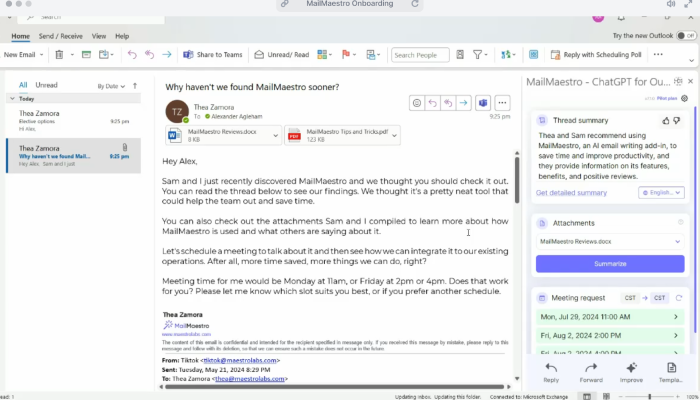
Flowrite is an AI email generator designed to automate daily email communication. It integrates with popular tools like Gmail, Outlook, and Slack, allowing you to generate high-quality content for emails and documents using advanced AI language models.
Key features
AI-generated content for emails, documents, and social media posts
Workflow automation to streamline repetitive tasks
Customizable templates and snippets to maintain consistent communication style
Integrations with Gmail, Outlook, Slack, and other tools
Ability to create custom commands for regular content like meeting agendas and project updates
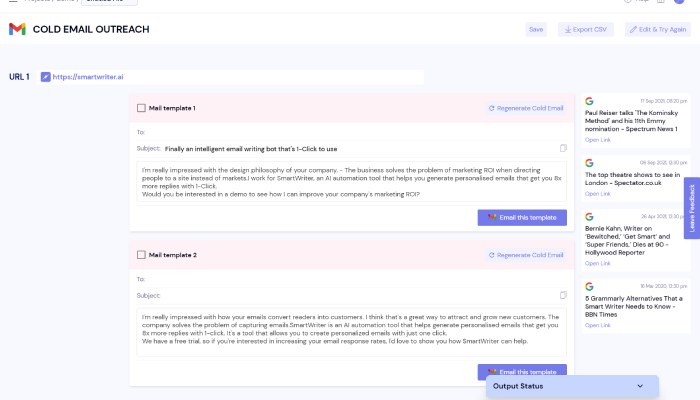
SmartWriter is a great tool if you’re in sales, marketing, or outreach roles. It drastically reduces the time spent on crafting personalized cold emails and LinkedIn messages. Using AI and machine learning, it automates the creation of highly customized messages that resonate with prospects. Additionally, the tool’s automated follow-ups ensure you don’t miss any leads, increasing your chances of conversion.
Key features
AI-powered personalization for cold emails and LinkedIn messages
Automated research from 40+ data sources (e.g., podcasts, blogs, job bios, social media)
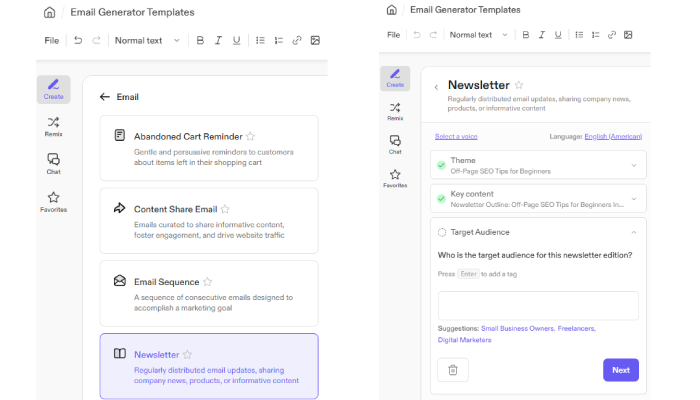
Jasper AI is a powerful AI email writing tool that helps you create personalized emails with customizable voices, ensuring the tone stays consistent with your brand. It supports a wide range of writing tasks, from email marketing to full campaigns. It also includes a feature to generate custom visuals for email enhancement.
Key features
AI-generated content with customizable brand voices
End-to-end campaign generation for emails, landing pages, and ads
Jasper Art for creating custom images to enhance email campaigns
Multilingual support with over 30 languages
Disposable and burner email generators for digital marketers
Disposable and burner email generators provide a smart solution for managing online activities while protecting your primary inbox from unwanted spam, promotions, or even potential phishing attacks.
These email generators create temporary email addresses for short-term use, often for sign-ups, trials, or one-time tasks. After a set period or when the task is done, the email becomes inactive, blocking further communication.
Key benefits for marketers
Here are some of the key benefits that disposable email generators provide:
Protecting privacy
Marketers can use burner emails to protect their personal or work addresses when giving an email is required, but not ideal. A burner email generator helps maintain privacy and blocks unwanted messages after a quick transaction.
Spam control
One of the biggest headaches for any marketer is dealing with a cluttered inbox. With so many sign-ups, free trials, and email subscriptions happening daily, it’s easy for the inbox to get overwhelmed with unwanted messages. Disposable email generators offer an effective way to keep your primary inbox clean and spam-free. With temporary email addresses, you can sign up for necessary services without risking a flood of irrelevant emails later.
Testing campaigns
Marketers are always experimenting with different campaigns to see what works best. Using a burner email generator for these tests prevents their main email lists from becoming cluttered with test emails. They can create temporary emails to test different aspects of a campaign—like layout, tone, or links—without disturbing the real marketing environment.
Analysing engagement
Marketers also use disposable email addresses to test sign-up processes or promotional campaigns without cluttering their main inbox. These temporary emails help monitor interactions like newsletter sign-ups or promotion entries, ensuring systems work smoothly without mixing test data with real user data.
Notable disposable email services
10 Minute Mail
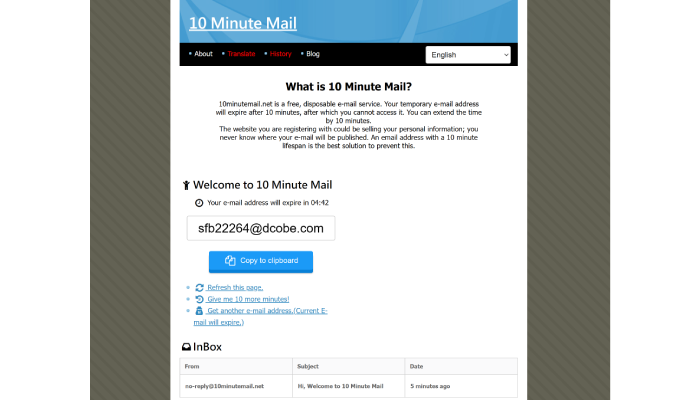
10 Minute Mail is a free, temporary email service designed for users who want to receive messages without creating a permanent inbox. It offers an anonymous, self-deleting email address that expires after 10 minutes, with options to extend its lifespan if needed.
Key features
No account creation required
Temporary, anonymous email addresses
Mailbox expires after 10 minutes (extendable up to 100 minutes)
Simple recovery of recently deleted inboxes
Mobile-optimized interface
No personal details needed
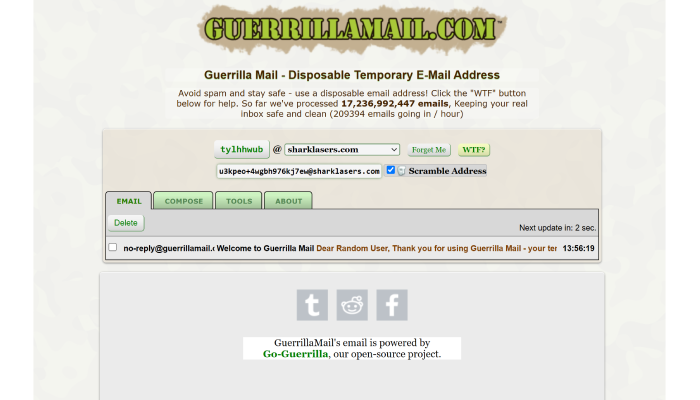
Guerrilla Mail
Guerrilla Mail is a free, anonymous temporary email service that’s been around since 2006, processing over 13 billion emails. It allows users to send and receive emails through a temporary inbox without requiring an account.
Key features
No account creation or personal info needed
Emails automatically deleted after 1 hour
Scramble email addresses for added privacy
API available for tech-savvy users
Option to create or randomly generate email addresses
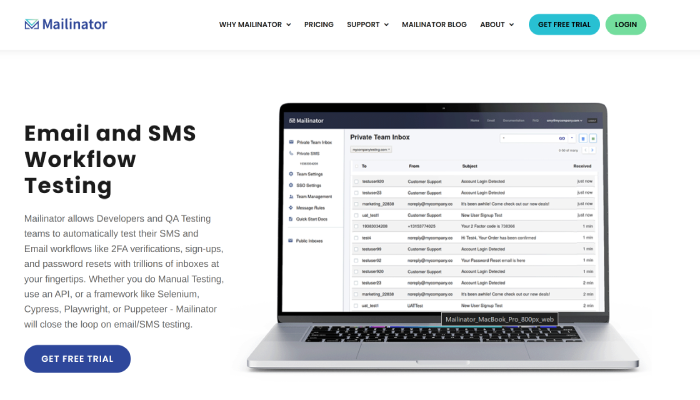
Mailinator
Mailinator is a disposable email service that started in 2003, designed to help users with email and SMS workflow testing. QA teams widely use it to test email and SMS systems before launching to ensure that workflows function correctly.
Key features
No account is required to use the public inboxes
Private domains and inboxes for Pro and Business users
Persistent message storage for pro and business users
Automated email workflow testing for secure validation
SMS testing for 2FA and OTP automation
API integration for inbox management, fetching messages, and automating tasks
Web-based GUI for manual email review and team management
Custom message management rules for forwarding, automating clicks, and load testing
Practical applications in marketing
Email generators are incredibly versatile, especially if you need to manage and optimize multiple campaigns. Here’s how these tools can be put to work in various practical applications:
Lead generation
Creating unique email addresses for each campaign or ad group helps track engagement across multiple campaigns. This makes it easy to see which efforts lead to the most sign-ups, conversions, or interest, helping you organize and follow up with leads more efficiently.
A/B testing
For A/B testing, unique email addresses for different audience segments let you test how various groups respond to different messages, subject lines, or offers. This helps fine-tune campaigns by revealing what works best for your audience.
Feedback and surveys
To gather honest feedback without making users feel exposed, disposable emails are a great option. They protect users’ privacy, making them more likely to participate in surveys or provide genuine feedback without fearing spam or follow-up emails.
Email generators with inbox functionality
Email generators with inbox functionality create temporary email addresses that lets you interact with emails directly within the platform. This is particularly useful if you need a temporary, fully functional inbox for specific tasks, such as managing temporary projects.
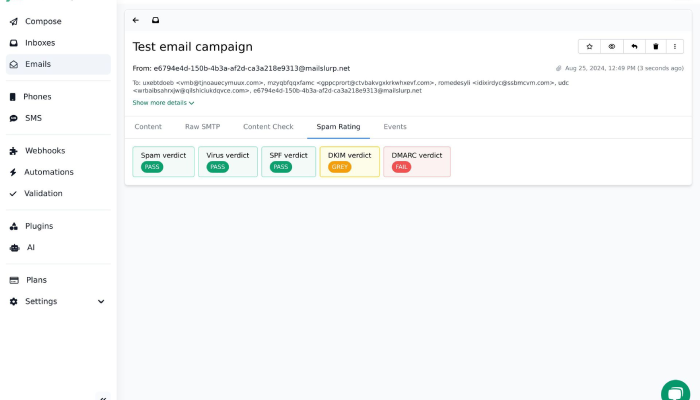
MailSlurp is an email API tool that gives marketers the power to generate temporary email addresses and manage inboxes seamlessly. It’s particularly useful when running A/B tests or handling high-volume email lists without cluttering your primary inbox.
Key features
Create temporary emails for testing campaigns or managing workflows without clogging your main inbox.
Easily manage multiple inboxes with sorting, filtering, and automated responses.
Automate email workflows, like follow-ups or testing, to save time and ensure consistency.
Run A/B tests with real email addresses to track performance and results accurately.
Use custom domains for more professional and segmented email campaigns.
Manage everything via code or an online dashboard, making it simple for any marketer to use.
Keep your primary inbox secure and spam-free by using disposable addresses.
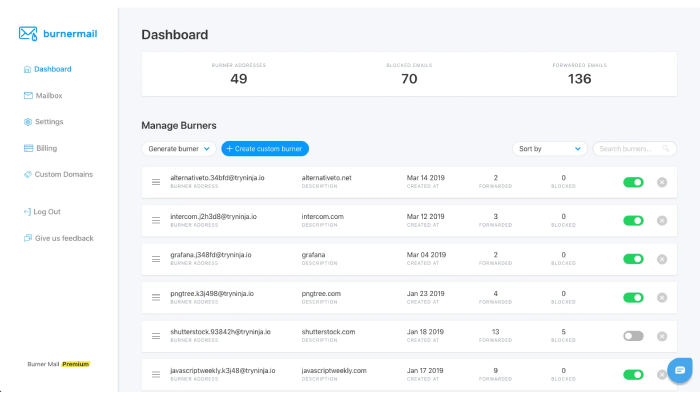
Burner Mail is a dedicated platform designed for users who want to protect their personal email addresses. It keeps your real inbox safe from spam and unwanted messages, while providing robust privacy features for online users.
Key features
Generate burner email addresses instantly
Manage multiple burner email addresses and forward emails to multiple real-world inboxes.
Access emails through an online mailbox if you prefer not to forward them to your personal address
Block unwanted senders by disabling specific burner addresses with just a click.
Reply to emails anonymously
Multi-factor authentication
Email encryption
Chrome and Firefox extensions for on-the-spot email generation
Shared access for families or teams
Comparison of services
Here’s a comparison of the various burner email generator services and their inbox functionalities.
Service
Temporary Inbox
Multiple Inboxes
Automation Features
Security and Privacy
MailSlurp
Yes, temporary emails for testing and workflows
Yes, manage multiple inboxes with sorting, filtering, and automation
Automated responses, follow-ups, and A/B tests
Keeps primary inbox spam-free with disposable addresses
Burner Mail
Yes, instantly generate burner emails for sign-ups
Yes, manage multiple burner emails and forward to real-world inboxes
No automation, but integrates with Chrome and Firefox for quick generation
Multi-factor authentication, encryption, reply anonymously using burner address
10 Minute Mail
Yes, expires after 10 minutes, extendable to 100
No, single-use temporary inbox
No automation
Anonymous and temporary with no personal details needed
Guerrilla Mail
Yes, deleted after 1 hour
No, single-use inbox
No automation
Anonymous with scrambled addresses for added privacy
Mailinator
Yes, public inboxes, private for Pro users
Yes, multiple inboxes with custom rules for Pro users
Tips for managing and utilizing inboxes provided by email generators
An email generator with inbox functionality is convenient, but effective management is key to getting the most out of it. Here are some practical tips:
Monitor inbox lifespans: Many services auto-delete emails after a certain time. Be sure to check your inbox regularly and take action on important emails before they’re lost.
Use separate inboxes for campaigns: If you’re a marketer testing multiple campaigns, create different email addresses for each one. This makes it easier to track performance and manage replies without getting overwhelmed.
Check for reply features: Some inboxes allow you to respond to incoming emails. Use this to your advantage if you need to maintain communication for a short period or if you’re testing customer engagement.
Stay organized: Since these inboxes are often temporary, it’s essential to stay on top of important messages. Download or forward crucial emails to your primary inbox before they expire.
Be aware of public inboxes: Services like Mailinator have public inboxes that anyone can access. If privacy is essential, opt for a more private generator.
Enhancing engagement with email subject line generators
The subject line can make or break your email marketing campaign. It’s often the first thing a recipient sees, and a compelling subject line can significantly increase your email’s open rate. This is where email subject line generators, especially those powered by AI, can step in to help grab attention.
Importance of compelling subject lines for email campaigns
A subject line is essentially the hook that convinces someone to open your email. No matter how valuable or exciting the content inside might be, if the subject line doesn’t catch their eye, your email might end up ignored or, worse, in the trash. A strong subject line:
Grabs attention in a crowded inbox.
Sets expectations for what the reader will find inside the email.
Increases open rates, which is crucial for overall campaign success.
Influences click-through rates by sparking curiosity or presenting an irresistible offer.
In digital marketing, compelling subject lines are crucial because they directly impact engagement metrics, like open and conversion rates. That’s why tools like email subject line generators have become increasingly valuable in the marketing world.
Role of email subject line generators in boosting open rates and engagement
Ai-powered email subject line generators analyse trends, audience behaviour, and even the context of your campaign to suggest subject lines that are designed to perform well. These tools can:
Save time by generating multiple creative options in seconds. This allows you to focus on fine-tuning your overall strategy.
Optimize for engagement by suggesting subject lines based on best practices like personalization, urgency, or curiosity.
A/B test different subject lines to determine which resonates most with your audience.
AI email generators give you subject line suggestions backed by data and trends, boosting the chances your emails get noticed. It also helps overcome writer’s block, providing fresh ideas or unique phrasing you might’ve missed.
Examples of effective subject lines generated by AI Tools
Here are some examples of successful subject lines from an AI email generator and why they work:
“Only 24 Hours Left: Unlock Your Special Offer Now!”
Why it works: It creates urgency and curiosity while directly communicating that the recipient has a limited-time offer. Urgency is a proven tactic to boost open rates.
“You Won’t Believe What’s Inside—Open for a Surprise!”
Why it works: Piques curiosity by teasing something unexpected, which can entice users to open the email to find out more.
“[Name], Your Exclusive Invite Awaits! RSVP Now”
Why it works: Personalization helps establish a connection with the recipient, making the email feel more relevant. Adding exclusivity boosts intrigue and action.
“🔥 Trending Now: 5 Products You Need for Fall”
Why it works: Using an emoji to grab attention, this subject line also emphasizes relevance and timeliness with a seasonal focus. Recipients feel like they’ll gain value by opening the email.
“How to Save 50% This Weekend Only – Here’s Your Code”
Why it works: It’s straightforward and actionable, immediately conveying the value inside the email. Offering a discount with a sense of urgency encourages faster engagement.
Free email generator tools
There are several free AI-powered email generator tools available that simplify the process of creating professional emails. Here’s a look at some popular options:
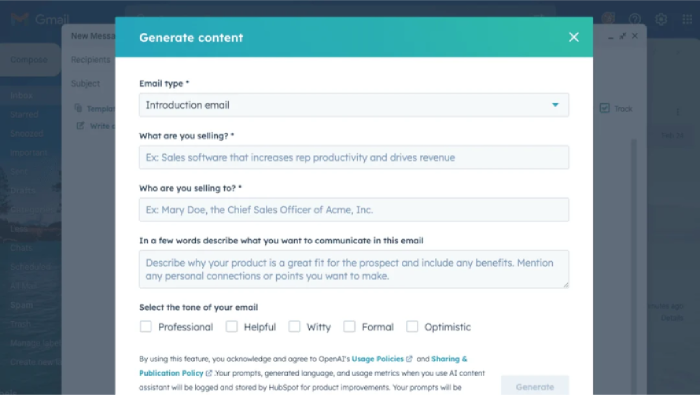
HubSpot AI Email Writer
HubSpot’s tool is designed for businesses, helping users craft tailored, high-quality emails that engage customers. It allows for easy editing and provides SEO-optimized content. However, it requires sign-up, and the focus is on marketing emails, so it might not be ideal for general communication.
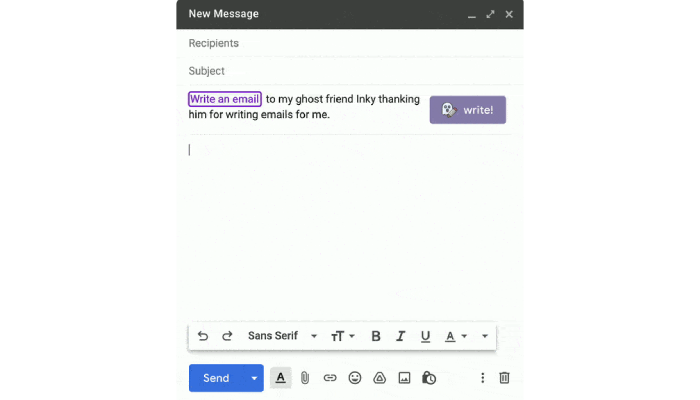
Ghostwrite is perfect for drafting high-conversion emails quickly. It ensures emails are error-free with built-in grammar correction and lets users save templates for future use. Its limitation is that it’s mainly geared toward marketing and sales communication.
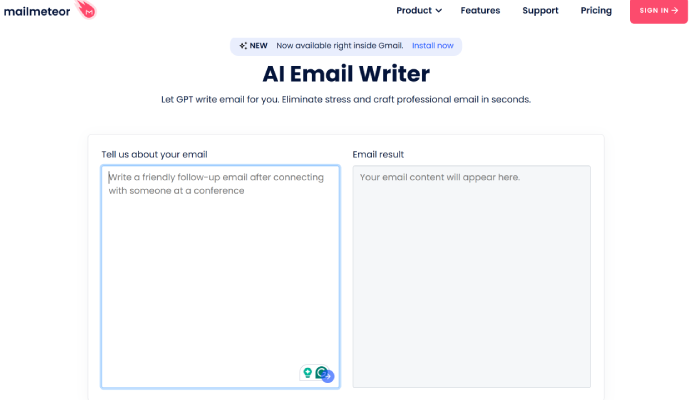
Mailmeteor is simple and user-friendly. Users input a prompt, and the AI generates an email in minutes. While it’s fast and effective for basic needs, it only provides one email variation, requiring further customization from the user.
Best practices for AI writing email generators
If you want to use free AI email generators to improve your email copy, follow these best practices:
Refine prompts for clarity Be specific when providing prompts to AI writing generators to get more relevant, accurate emails. Vague or unclear prompts can result in generic or off-target content.
Edit and personalize generated content While AI writing tools can save time, they may produce generic or repetitive emails. Always review and personalize the content to align with your style, audience, and goals.
Pair with email automation tools Use AI writing generators alongside email automation platforms to streamline campaign management. You can quickly generate email content and automate the distribution process.
Test for tone and engagement AI-written emails may need tweaks to better engage your audience. Test different tones or approaches in the generated emails to see what resonates best with your recipients.
Use for drafts, not final versions AI generators are great for providing rough drafts but rarely perfect the first time. Use the generated content as a starting point, then revise it to match your voice and the message you want to convey.
Integrating email generators with Gmail
You can also integrate email generators–both AI and temporary email generators–with Gmail. They can streamline your email communications and also help keep your inbox uncluttered. Gmail itself offers some clever tricks for managing email aliases.
Generating and managing email addresses within Gmail
Gmail offers a built-in method for generating unique email addresses without needing external tools. These are called email aliases. You can create variations of your primary email address, which allows you to track responses, manage sign-ups, or filter incoming messages.
In Gmail, you can add a “+” symbol and any word after your email address before the “@gmail.com” domain. For example, if your email is [email protected], you can create aliases like [email protected] or [email protected].
Emails sent to these addresses will still arrive in your main inbox, but you can easily filter or label them to stay organized. Once you’ve created an alias, you can use Gmail’s powerful filters to sort or label these emails automatically.
Pulling email from disposable email generators into Gmail
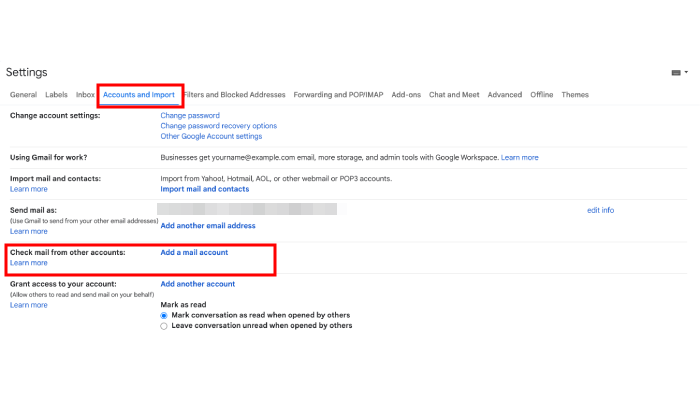
If you want to pull messages from your temporary email addresses, follow these steps:
Go to your Gmail’s settings
Select Accounts and Import
Head on to check mail from other accounts
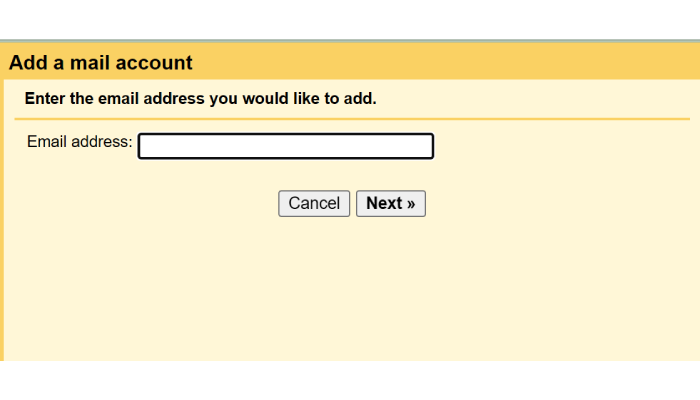
Click “Add a mail account”
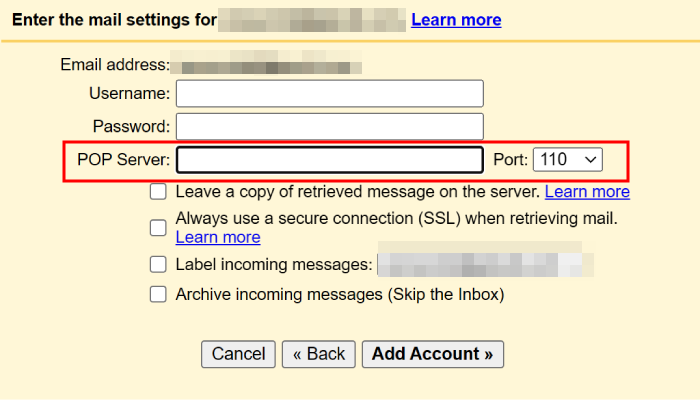
Enter the email address
Enter the POP server. This will depend on the service.
AI email generator integration with Gmail
If you have Google Workspace, Gemini is already integrated into Gmail. Gemini, Google’s AI-powered assistant, allows you to generate high-quality emails directly in Gmail. Gemini can help draft emails, suggest responses, and even optimize the tone and content based on your preferences.
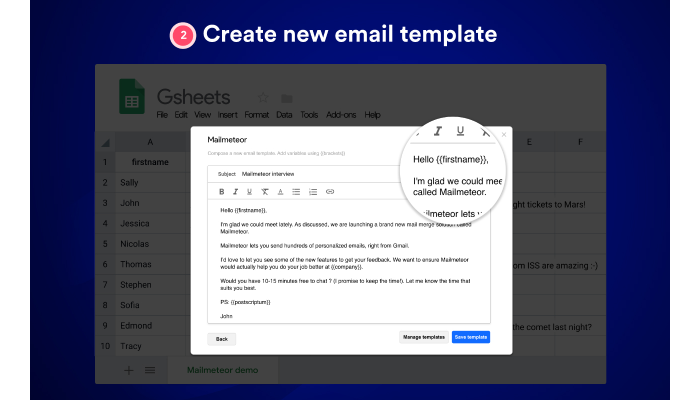
Another useful tool is the Mailmeteor Gmail extension. It allows you to send personalized mass emails directly from Gmail, powered by AI. It’s great for automating outreach while keeping messages personal and professional.
Tips for managing email generator tools with Gmail
Set up automatic forwarding: If you’re using a burner email generator that supports forwarding, ensure that emails are automatically sent to your Gmail inbox. This saves time by allowing you to receive all communications in one place while still keeping your personal email private.
Use filters to stay organized: For emails forwarded from disposable or burner email generators, set up filters in Gmail. You can label these emails as “Temporary” or “Marketing,” for example, so they’re easy to find and separate from personal correspondence.
Create a separate Gmail account for generators: If you frequently use burner email generators for marketing campaigns, lead generation, or testing, consider creating a dedicated Gmail account to manage these emails. This keeps your main inbox free of clutter, while still giving you control over your temporary email addresses.
Advanced applications of email generators
Email generators are now doing more than just helping with basic marketing tasks. AI-powered tools can create emails that change based on how someone interacts with previous messages. For example, if a customer clicks on a certain product, the next email might automatically include similar recommendations or limited-time offers—no extra work is needed from the marketer.
On the other side, disposable email generators are used for more than just testing. They’re also helpful in large campaigns where security matters. Businesses can create temporary email addresses to protect sensitive information or manage multiple sign-ups without cluttering up their main inboxes. These advanced uses let companies improve both their marketing and security strategies at the same time.
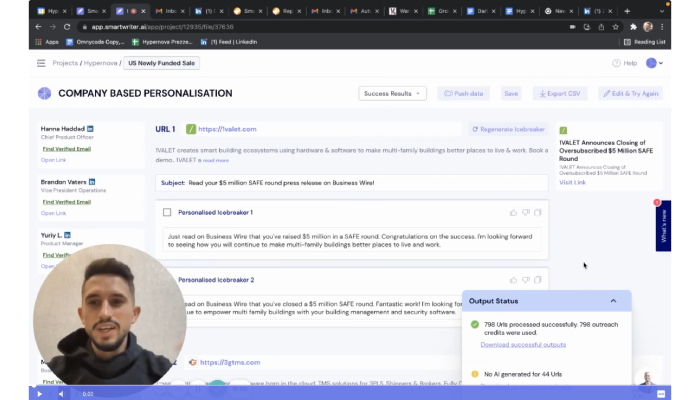
Hypernova Marketing, a US-based cold email lead generation agency, helps clients secure 20-40 B2B meetings each month, targeting tough prospects like CROs and VPs of Sales.
They knew personalized emails were crucial for success, but scaling this process was difficult. Hiring hundreds of virtual assistants wasn’t practical, so they needed a more efficient solution.
After trying different options, they chose Smartwriter. Before using it, their reply rate was 8%. With AI-driven personalization, it jumped to 16%, fully automated. This boost has been consistent across all clients, making Smartwriter essential to their strategy.
Choosing the right email generator tool
With so many email generator tools out there, picking the right one can feel tricky. Whether you’re a business looking to boost marketing or just want to protect your privacy, the key is finding a tool that matches your needs. Here’s a breakdown of what to look for.
What to consider when choosing an email generator
Privacy features
Many use email generators to avoid spam or unwanted emails. Prioritize tools with strong privacy features like encryption, disposable emails, or self-destructing messages. Make sure the tool doesn’t store your data long-term or share it.
Ease of use
The tool should be simple to use. Whether for marketing or temporary emails, you don’t want to spend time figuring out how it works. Look for tools with easy navigation and quick setup.
Integration capabilities
If you’re a business, check if the tool integrates with systems like Gmail, Mailchimp, or HubSpot. This can make managing emails and tracking performance smoother.
Lifespan of email addresses
Some tools create emails that expire quickly, while others offer longer-lasting options. Choose based on whether you need a temporary or permanent solution.
Cost and availability
Many tools are free, but paid versions may offer more features. Consider your needs and whether premium features are worth the cost. Free trials can help you decide.
Wrapping up
Email generators have revolutionized the way we handle communication. From streamlining marketing campaigns to protecting your privacy, these tools offer efficiency, personalization, and security all in one package. Whether you’re a marketer seeking to connect with your audience or someone looking to avoid inbox clutter, there’s an email generator that fits your needs.
Embrace the power of these tools to transform your email game. Let them handle the heavy lifting, while you focus on what truly matters. They’re versatile, effective, and ready to make a difference in how you manage your digital communications.
FAQs
What is the best AI email generator?
The “best” AI email generator depends on your specific needs. For general email writing, Flowrite, Jasper AI, and SmartWriter are popular choices. Flowrite is great for everyday communication, while Jasper AI offers robust campaign generation with personalized content. SmartWriter excels at crafting personalized outreach emails, especially for sales and marketing.
Can a fake email be detected?
Yes, fake or disposable email addresses can often be detected by advanced systems. Many services now use filters to block temporary email providers by checking known domains associated with disposable addresses. However, some fake emails might still slip through if the detection system isn’t updated or sophisticated enough.
Are AI email generators secure?
Most AI email generators are designed with privacy and security in mind, but it’s essential to verify the policies of each platform. Look for tools that provide encryption, data protection measures, and clear privacy policies. Avoid using AI email tools that store your sensitive information for long periods without transparency.
As the holiday season approaches, it’s essential for ecommerce businesses to maximize sales by leveraging key shopping events like Halloween and Black Friday. These events present unique opportunities to engage with customers and drive conversions, but they require tailored strategies to succeed.
Key Takeaways
The holiday season presents unique opportunities for ecommerce businesses to increase sales and build stronger customer relationships through well-planned strategies.
Key tactics to boost engagement and sales include offering creative promotions, personalized experiences, efficient logistics and capitalizing on key shopping events like Halloween and Black Friday.
To make the most of the holiday shopping season, businesses must carefully plan their strategies to capture customer attention. A well-executed approach can lead to increased engagement, higher sales and stronger customer loyalty during this period.
In this article, I’ll share eight proven strategies from my own experience to help boost your ecommerce sales during the holiday season.
Halloween is more than just a day for costumes and candy; it’s a significant opportunity for ecommerce businesses to tap into seasonal spending. To capitalize on the Halloween excitement, brands can offer themed promotions like “Spooky Sales” or “Trick-or-Treat Discounts” to entice shoppers.
Limited-time deals, exclusive Halloween-themed products and personalized email campaigns with spooky graphics can create a sense of urgency, encouraging consumers to make a purchase. Incorporating a festive Halloween atmosphere into product pages and social media content can further enhance engagement, turning casual browsers into buyers.
2. Black Friday: Maximizing sales on the biggest shopping day
Black Friday is the pinnacle of holiday sales, where consumers expect massive discounts and unbeatable deals. Ecommerce businesses must prepare in advance to stand out during this highly competitive period. Offering early-bird specials, doorbuster deals and limited-time flash sales are effective ways to generate excitement and increase customer loyalty.
Optimizing website speed and ensuring a seamless mobile experience is crucial, as many shoppers make purchases on their phones. Additionally, personalized offers based on past purchases can help increase average order values, while well-timed email marketing campaigns and social media ads can draw traffic to your store during this peak shopping season.
3. Maximize your sales by capitalizing on holiday lighting trends
If selling lights is in your niche, the holiday season presents an ideal opportunity to boost your sales as demand for festive lighting skyrockets. With lights being a key part of festive décor, offering a wide variety of options — like string lights, LED bulbs and outdoor lighting — can attract more customers. Highlighting energy-efficient choices and vibrant designs can appeal to both eco-conscious buyers and those looking for standout decorations.
By strategically promoting holiday sales and offering bundle deals or discounts, businesses can capitalize on this peak season, boosting sales and enhancing brand visibility during the most festive time of the year.
4. Enhancing customer satisfaction through efficient delivery strategies
In ecommerce, ensuring efficient delivery strategies is crucial for both customer satisfaction and operational cost management. To stay competitive, businesses must focus on how to optimize their delivery routes by using advanced technology, such as route planning tools and data-driven decision-making. This helps reduce fuel costs, minimize delivery times and enhance the overall customer experience, which is essential for growing an online store’s reputation. By implementing these tactics, ecommerce companies can streamline their logistics and ensure timely deliveries, leading to improved customer loyalty and increased sales.
5. Leveraging free shipping and hassle-free returns
During the holiday season, offering free shipping can significantly increase conversions, as customers often seek out deals that minimize extra costs. Additionally, hassle-free returns give shoppers peace of mind when purchasing gifts, reducing the anxiety around making the wrong purchase. Promoting these options prominently on product pages and checkout can help drive higher cart completion rates, making it easier for shoppers to make buying decisions.
6. Gift guides and personalized recommendations
Gift shopping can be overwhelming, so curating holiday gift guides tailored to different customer segments can simplify the shopping experience. Create categories such as “Gifts for Him,” “Gifts Under $50” or “Tech Enthusiast Picks” to guide customers in finding the right items. Utilizing customer data to provide personalized recommendations can further increase conversions, as consumers are more likely to buy when products are relevant to their needs and preferences.
7. Sustainability and eco-friendly products
With growing awareness around sustainability, offering eco-friendly holiday products or packaging can attract a broader audience, particularly environmentally conscious shoppers. Highlighting features like recyclable packaging, energy-efficient holiday decorations or carbon-neutral shipping options can position your brand as socially responsible and give customers an additional reason to choose your store over competitors.
8. Cross-selling and upselling opportunities
Capitalize on the holiday season by implementing cross-selling and upselling strategies. Suggest complementary products during the checkout process (e.g., “You may also like…” or “Customers who bought this also bought…”) to increase average order value. Offering upgrades on popular items or bundles can entice customers to spend more while enhancing their shopping experience.
The holiday season is a crucial time for ecommerce businesses to boost sales and strengthen customer relationships. Businesses can make the most of these peak sales by implementing creative holiday promotions, offering personalized experiences, ensuring efficient logistics and capitalizing on key shopping events like Halloween and Black Friday. Whether through festive product offerings, streamlined delivery or creating a sense of urgency with limited-time deals, these strategies will help ecommerce stores meet and exceed their holiday sales goals, leading to long-term growth and customer loyalty.
Founder of Create & Grow. Georgi Todorov is a self-taught entrepreneur and content creator with authorship in a broad range of publications. Featured in Entrepreneur, Forbes, BBC, Los Angeles Times, Fortune, VentureBeat, and Fast Company. He founded ‘Create & Grow’ to help people create and grow their online business.
Morning Brew, the decade-old newsletter startup, is rebranding its corporate name to Morning Brew Inc., a reflection of its growth outside of its core daily email newsletter and most popular product, Morning Brew.
Why it matters: The rebrand further distinguishes Morning Brew’s consumer brands from its professional brands, which today drive $25 million in annual revenue for the company, according to an internal note from CEO and co-founder Austin Rief.
“We decided that we had built too much affinity for the Morning Brew name and brand to start fresh. But we did need something that differentiated the company name from our flagship franchise,” Rief wrote.
Zoom out: The rebrand also reflects the company’s push to diversify away from email newsletters as its sole source of income and audience engagement.
Today, Rief says, Morning Brew’s multimedia products are on pace to do “well over” $10 million in top-line revenue for 2025.
That includes revenue from partnerships with social media creators and its daily podcast, which Rief said “delivered multi-million dollar” year-over-year advertising growth in 2024.
Over 60% of Morning Brew’s engagement with its audience happens on platforms other than email, per Rief’s note.
Catch up quick: Morning Brew launched in 2015 as a single email newsletter catered to business-minded Millennials.
Today, it offers newsletters, events and other content across seven professional services, including tech, marketing, retail, and more.
Rief said 2024 was “a major inflection point for B2B capabilities at the company with an increased emphasis on events, data targeting and content services.”
New B2B products and events generated $4.5 million in revenue in 2024, he said.
Subscribers to the outlet’s seven professional newsletters have doubled since 2022, he added. (Axios reported in 2022 that it surpassed 1 million subscribers to its B2B newsletters.)
Business professionals tend to have bigger subscription budgets and are highly engaged.
Context: Morning Brew is owned by German media giant Axel Springer, which also owns Business Insider. Business Insider bought a majority stake in Morning Brew in 2018.
Axel Springer also owns Politico, which serves professionals across policy and politics.
Reality check: Morning Brew’s expansion has been tempered by challenges to the news industry broadly.
The company laid off 14% of its staff in 2022 and cut another 40 people last year. A few top executives departed months later.
What to watch: Rief expects revenue from Morning Brew Inc,’s B2B division to surpass the revenue from the company’s flagship daily newsletter for the first time next year.
The Morning Brew newsletter, which Rief said remains extremely strong and “highly profitable,” has more than 4 million free subscribers.
As a startup founder or marketing leader, you’ve likely heard the mantra “distribution is everything.” But what does that really mean, and how do you put it into practice?
Building a great product is hard, but it’s only half the battle. The real challenge is getting that product in front of the right customers — repeatedly, and at scale.
For most startups, this is where things fall apart. In my experience, many founders either get stuck trying to sell to fewer customers at a higher price or chase thousands of lower-priced customers. As a result, they end up stretching their resources too thin and fail to create sustainable growth.
The solution is to build a scalable distribution engine. But how do you set up a system that consistently delivers results, while still balancing your current channels and marketing strategy?
In a recent Marketing Against the Grainepisode, Kieran and I unpack why startups need to prioritize distribution from day one — and how to design a distribution system that works.
Check Your Numbers: Why a Startup Distribution Strategy is Critical
Let’s get real about the math. Most Series A or B startups are selling to mid-market companies with annual contract values of $5,000-$12,000. To achieve the growth investors expect, you have two options:
Go upmarket and increase your ACV to $250,000+. This is incredibly difficult and, in my experience, most fail.
Acquire thousands of customers at your current price point. This requires a powerful distribution engine.
The reality is, most startups never invest enough time in building that engine — and without it, they’re at a standstill.
The key is to design a distribution system that’s both predictable and high-leverage. Why? Because predictability gives you forecasting power, while leverage allows you to acquire customers efficiently.
Here’s how to approach it.
How to Build a Startup Distribution Engine
Having worked with countless startups (and helped build HubSpot’s own distribution engine from the ground up), Kieran and I have learned a thing or two about mastering distribution. Here are our top four tips.
1. Identify your product-channel fit.
Startups often talk about product-market fit — but just as critical is product-channel fit. In other words: which distribution channels best align with your product, attract customers, and allow for repeatable growth at scale?
At HubSpot, for example, we built our distribution strategy alongside our product development. Since our product was built around inbound marketing, we focused on channels like content marketing and SEO, which attracted our target audience while simultaneously (and conveniently) showcasing the actual value of our own product.
By aligning our distribution strategy with what HubSpot was designed to do — inbound marketing — we ensured that both our product and channels organically grew together in a way that was scalable and repeatable.
2. Balance predictability and creativity.
One of the toughest challenges of building a startup distribution engine is balancing predictability with creativity. You need reliable, predictable channels to fuel steady growth, but you also need to take creative risks to find the high-leverage opportunities that will propel your business forward.
A great example here is Abercrombie & Fitch. Once a brand in decline, they reimagined their distribution strategy by using influencers and social video to reach a new, younger audience.
While they still relied on predictable channels like social media, they added a creative twist by rebranding their image and using influencers to drive authenticity. This balance helped them thrive — outpacing even fast-growing companies like Nvidia for a period.
At HubSpot, we followed a similar path. In the early days, paid advertising drove about 50% of our demand, providing predictability. But as we scaled, we invested more in creative, high-leverage channels like search, flipping the ratio to where search eventually generated 60% of our demand — an absolute game changer for our scaling strategy.
Pro tip: Look at affiliate programs or creator collaborations to add creative twists to predictable channels. These types of partnerships can offer unique distribution angles that set you apart from competitors.
3. Find unique leverage points.
As Kieran points out during the podcast, the most successful distribution strategies find a unique angle within existing channels. Especially when a channel is already crowded, it’s no longer enough to just participate — you have to stand out.
A great example of this is Genius.com, which became the top lyric site by adding user-generated content like annotations to song lyrics. This feature increased each page’s value and helped them rank higher in search engines — not because they had the best product, but because they found a new way to use user interaction to boost visibility and engagement.
Pro tip: Segment your distribution channels into “known” (predictable) and “unknown” (risky, high-impact) categories. This helps you balance stable growth while testing new, high-upside channels.
4. Find asymmetric opportunities.
Distribution success often comes from identifying asymmetric opportunities — channels or strategies that offer disproportionately high returns with relatively low input. These opportunities typically arise from an ability to see what others miss.
As Kieran explains, “To get real leverage in distribution, you need someone who can creatively explore unproven areas while still applying process and rigor.” This means your team can’t just be focused on optimizing what’s already working — they need to be competitive, inventive, and unafraid to experiment.
A powerful example of this was a company I worked with in Brazil, which was targeting heads of logistics in a niche B2B market. Instead of going after traditional channels, we found an asymmetric opportunity by licensing popular business content (like James Clear’s Atomic Habits) and adapting it into Portuguese. This created a unique, localized offering that resonated with their audience in a way no one else was doing.
Don’t Neglect Distribution
Distribution isn’t a side concern for startups — it’s everything. To scale your business, you need a startup distribution engine that’s both predictable and capable of delivering high-leverage growth.
By focusing on the right channels, balancing predictability with creativity, and always looking for asymmetric opportunities, you’ll be in a much stronger position to grow your business.
To learn more about marketing startup distribution engine strategies, check out the full episode of Marketing Against the Grain below: