Before you dish out money to bid for a top-ranked ad position on a search engine, you may want to pause and make sure it’s actually going to pay off.
By MediaStreet Staff Writers
New research out of Binghamton University, State University of New York suggests that instead of just spending to get that top spot, advertisers should be considering other factors as well to ensure they are getting the best results from their sponsored search advertising campaigns.
Sponsored search advertising involves paying search engines, like Google and Bing, to bid for placements on the search results pages for specific keywords and terms. The ads appear in sponsored sections, separate from the organic search results, on those pages.
“The common belief in sponsored search advertising is that you should buy the top ad position to get more clicks, because that will lead to more sales,” said Binghamton University Assistant Professor of Marketing Chang Hee Park. “But the fee for the top position could be larger than the expected sales you’d get off that top position.”
Park, with the help of Binghamton University Professor of Marketing Manoj Agarwal, analysed data collected from a search engine and created a model that can forecast the number of clicks advertisers could expect in sponsored search markets based on four factors:
Rank in the sponsored listings
Website quality
Brand equity
Selling proposition
The model gives advertisers a way to quantify the expected clicks they’d get by adjusting these four factors, while also taking into consideration how their competitors are managing these four factors. This could enable advertisers to find a perfect blend of the four factors to ensure they are getting the most out of what they are paying for their ad positions.
It may also indicate that they should be spending more money to bolster their brand or website rather than amplifying their offers in top ad positions.
“Using this model, you may find that paying less for a lower ad position while investing more in improving your website is more effective than spending all of that money strictly on securing top ad positions,” said Agarwal.
This applies especially if your competitor has a poorer-quality website, but is spending more than you on securing top ad positions.
Their model found that poor-quality advertisers that are ranked higher in ad positions drive consumers back to the search results page, leading consumers to then click on advertisers in lower ad positions to find what they are looking for.
In contrast, they also found that a highly-ranked good-quality advertiser results in significantly less clicks for all the advertisers ranked below them.
“It’s more likely that in the top position, all advertisers being equal, you’ll get more clicks. But depending on these four factors, as well as the quality of your competitors, you may find that you’ll get more clicks in the second or the third position,” said Park.
“Conceptually, this is not a new idea, but now the model can help determine this by accounting for multiple factors at play at the same time.”
Advertisers aren’t the only ones who can benefit from this research.
Park and Agarwal’s model found that simply reordering the listed advertisers could result in significant changes in overall click volume (the total number of clicks across all advertisers) for search engines.
“Because they often charge on a pay-per-click model, search engines can now simulate which ordering of advertisers in a sponsored search market results in the most overall clicks and, therefore, most revenue” said Park. “Search engines may want to consider charging advertisers in a way that gives the search engine more flexibility in determining the order in which the ads in sponsored sections are displayed.”
While the trusty “like” button is still the most popular way to signal approval for Facebook posts, a computer model may help users and businesses navigate the increasingly complicated way people are expressing how they feel on social media.
In a study, researchers developed a social emotion mining computer model that one day could be used to better predict people’s emotional reactions to Facebook posts, said Jason Zhang, a research assistant in Penn State’s College of Information Sciences and Technology. While Facebook once featured only one official emoticon reaction – the like button – the social media site added five more buttons – love, haha, wow, sad and angry – in early 2016.
“We want to understand the user’s reactions behind these clicks on the emoticons by modelling the problem as the ranking problem – given a Facebook post, can an algorithm predict the right ordering among six emoticons in terms of votes?” said Zhang. “But, what we found out was that existing solutions predict the user’s emotions and their rankings poorly in some times.”
Zhang added that merely counting clicks fails to acknowledge that some emoticons are less likely to be clicked than others, which is called the imbalance issue. For example, users tend to click the like button the most because it signals a positive interaction and it is also the default emoticon on Facebook.
“When we post something on Facebook, our friends tend to click the positive reactions, usually love, haha, or, simply, like, but they’ll seldom click angry,” said Zhang. “And this causes the severe imbalance issue.”
For social media managers and advertisers, who spend billions buying Facebook advertisements each year, this imbalance may skew their analysis on how their content is actually performing on Facebook, said Dongwon Lee, associate professor of information sciences and technology. The new model – which they call robust label ranking, or ROAR – could lead to better analytic packages for social media analysts and researchers.
“A lot of the commercial advertisements on Facebook are driven by likes,” said Lee. “Eventually, if we can predict these emoticons more accurately using six emoticons, we can build a better model that can discern more precise distribution of emotions in the social platforms with only one emoticon – like – such as on Facebook before 2016. This is a step in the direction of creating a model that could tell, for instance, that a Facebook posting made in 2015 with a million likes in fact consists only 80 percent likes and 20 percent angry. If such a precise understanding on social emotions is possible, that may impact how you advertise.”
The researchers used an AI technique called “supervised machine learning” to evaluate their newly-developed solution. In this study, the researchers trained the model using four Facebook post data sets including public posts from ordinary users, the New York Times, the Wall Street Journal and the Washington Post, and showed that their solution significantly outperformed existing solutions. All four sets of data were analysed after Facebook introduced the six emoticons in 2016.
The researchers suggest future research may explore the multiple meanings for liking a post.
“Coming up with right taxonomy for the meanings of like is another step in the research,” said Lee. “When you click on the like button, you could really be signalling several emotions – maybe you agree with it, or you’re adding your support, or you just like it.”
And we as marketers know, the more you understand how your market feels, the better you can tailor your advertising to them.
People will always pay more when being led by the heart and not the head.
By MediaStreet Staff Writers
Brides and the bereaved beware: You, like many shoppers, may have a tendency to reject thriftiness when your purchase is a matter of the heart, according to a new study led by the University of Colorado Boulder.
People are reluctant to seek cost-saving options when buying what they consider sacred – such as engagement rings, cremation urns, or even desserts for a birthday party – for or to commemorate loved ones. The paper, published in Judgment and Decision Making, is the first to examine the implications of this phenomenon.
Even when they identify a less expensive alternative to be equally desirable, people choose the more expensive of two items. They also avoid searching for lower prices and negotiating better prices when the goods they’re buying are symbolic of love.
“People’s buying behaviour changes when they’re making purchases out of love because it feels wrong to engage in cost-saving measures,” said Peter McGraw, associate professor of marketing and psychology at CU. “People abandon cost-saving measures when it comes to sentimental buys because they want to avoid having to decide what is the right amount of money to spend on a loving relationship.”
The findings highlight how wedding, funeral and other industries can exploit consumers, said McGraw.
In one part of the study, which involved nearly 245 participants, the researchers asked attendees at a Boulder wedding show about their preference between two engagement rings. The attendees nearly always chose the more expensive ring when deciding between a more expensive ring with a bigger carat and a less expensive ring with a smaller carat.
“It’s important to be aware of this tendency not to seek cost savings because, over a lifetime, consumers make many purchases that are symbolic of love — whether for weddings, funerals, birthdays, and anniversaries,” said McGraw. “The loss of savings can really add up and put people in compromising financial situations.”
So how can we apply this to a marketing situation? If you are selling goods or services for sentimental events, play up the quality, not the price.
Adapting SEO priorities to the customer journey and balancing organic versus paid search shape SEO strategy in 2018, according to new survey.
By MediaStreet Staff Writers
Social media marketing is the leading SEO service priority among businesses in 2018, according to new research from Clutch and Ignite Visibility. Over 90% of businesses that invest in SEO also invest in social media.
The survey of 303 marketing decision-makers reveals that most tend to shape their SEO strategy based on the SEO services they prioritise and the challenges they face.
Top SEO Priorities 2018
Two factors impact the direction of a business’ SEO strategy: The shifting customer journey and whether the business focuses on paid search or organic SEO services.
Organic SEO services include:
On-site optimisation – web design, site infrastructure, blogging
Off-site optimisation – content marketing, social media marketing
Over 40% of businesses that invest in SEO focus on organic services, compared to 19% that focus on paid search.
Businesses that focus on organic SEO are more likely to use in-house staff for general marketing, such as content marketing and social media. Over three-fourths (76%) of businesses that focus on organic services use in-house staff.
On the other hand, businesses that focus on paid search are more likely to hire an SEO company. More than two-thirds (68%) of businesses that focus on paid search hire an SEO company, compared to just 37% that rely on in-house staff.
Top SEO Priorities 2018 (PRNewsfoto/Clutch)
“Paid search complements organic SEO by providing feedback on keyword research, audience targeting, and effective ad copy,” said Eythor Westman, head of paid media at Ignite Visibility.
How businesses adapt to shifts in the customer buying journey is another factor that shapes SEO strategy. The rise of mobile search drives changes to the customer buying journey.
SEO experts agree that customers use their mobile devices to learn about a company through social media and site content before converting to make a purchase.
“Now, somebody Googles a keyword. Then they click on a top ranking term like, ‘SEO company.’ They read our blog and click around social media,” said John Lincoln, CEO of Ignite Visibility. “Then, they convert three weeks later after they feel comfortable with you.”
In response, businesses prioritise SEO services that facilitate the customer journey. Along with social media (20%), businesses rate creating content to earn links (15%), and mobile search optimisation (14%) as their top SEO priorities.
A new survey indicates that 1 in 5 small businesses use social media in place of a website. Many assume a website is cost-prohibitive and may not consider the risks of not having one.
By MediaStreet Staff Writers
More than one-third (36%) of small businesses do not have a website, according to the websites section of the fourth annual Small Business Survey conducted by Clutch, a B2B research firm. One in five small businesses (21%) selectively use social media instead of a website in an effort to engage customers.
The survey indicates that small businesses consider cost a bigger concern than the potential repercussions of not having a website.
Social media platforms such as Facebook and Instagram attract small businesses by cultivating a highly engaged user base. However, relying solely on social media may be a risky strategy for businesses.
“Whenever you put all of your eggs into someone else’s basket, it’s risky,” said Judd Mercer, Creative Director of Elevated Third, a web development firm. “If Facebook changes their algorithm, there’s nothing you can do.”
Facebook recently announced changes that potentially increase the risk of using social media in place of a website. The social media platform plans to prioritise posts from family and friends over posts from brands.
This new policy may make it more difficult for small businesses to reach their audiences through social media. As a result, websites are expected to regain importance among businesses – as long as cost is not considered an obstacle.
Among small businesses that do not currently have a website, more than half (58%) plan to build one in 2018.
Some Small Businesses Say Website Cost is Prohibitive, But Others Cite Costs of $500 or Less
More than a quarter (26%) of small businesses surveyed say cost is a key factor that prevents them from having a website. However, nearly one-third of small businesses with websites (28%) report spending $500 or less.
Small businesses may not be aware that some web development agencies offer packages that defray costs by dividing website construction into multiple phases or sliding rates for small businesses. “You don’t necessarily need to launch with your first-generation website,” said Vanessa Petersen, Executive Director of Strategy at ArtVersion Interactive Agency, a web design and branding agency based in Chicago. “Maybe just start small.”
Mobile-Friendly Websites Becoming Standard Businesses that do have websites are moving en mass to mobile friendly ones, the survey found. Over 90% of respondents said their company websites will be optimised for viewing on mobile devices by the end of this year.
In addition to the 81% of company websites that are already optimised for mobile, an additional 13% that say they plan to optimise for mobile in 2018.
Clutch’s 2018 Small Business Survey included 351 small business owners. The small businesses surveyed have between 1 and 500 employees, with 55% indicating that they have 10 or fewer employees.
To read the full report and source the survey data, click here.
80 percent of the world’s Internet users are active on social media
By MediaStreet Staff Writers
Social media management platform Hootsuite, and We Are Social, the global socially-led creative agency, have released Digital in 2018, a report of social media and digital trends around the world.
Representing 239 countries and territories, the seventh annual report finds the number of Internet users in the world has now surpassed the 4 billion mark, putting more than half the global population online. Of that, social media brings nearly 3.2 billion active users online to connect with each other, consume media, interact with brands, and more.
The 2018 key findings include:
Internet user numbers increased 7 percent in the last 12 months to hit 4.021 billion, or 53 percent of the world’s population
Global social media usage has increased by 13 percent in the last 12 months, reaching 3.196 billion users
Mobile social media usage has increased by 14 percent year over year to 2.958 billion users, with 93 percent of social media users accessing social from mobile
Internet users are projected to spend a combined total of 1 billion years online in 2018, of which 325 million years will be spent on social media
The report also found that global growth of the Internet is propelling ecommerce forward, with 1.77 billion Internet users purchasing consumer goods online in 2017, an increase of 8 percent compared to a year ago. Collectively, consumers spent a total of USD $1.474 trillion on ecommerce platforms in the past 12 months, 16 percent more than in 2016.
Said Simon Kemp, Global Consultant, We Are Social, “With four billion people now online, connectivity is already a way of life for most of us. However, as Internet companies strive to serve the next billion users, we’ll see important changes in digital over the coming months. Audio-visual content will take priority over text – especially in social media and messaging apps – while voice commands and cameras will replace keyboards as our primary means of input. Social relationships and online communities will evolve to accommodate these new ways for people to interact with each other. This will result in rich new experiences for all of us, but businesses need to start preparing for these changes today.”
“The Digital in 2018 report highlights the continuing growth of the Internet and social media to individuals and businesses around the world. This dynamic has forever altered the customer journey as consumers and B2B professionals increasingly conduct research, make buying decisions, seek support, and recommend brands online. To achieve competitive advantage, all executives must dive deep into digital now, meeting their customers where they are to best market, sell, and serve them,” said Penny Wilson, CMO, Hootsuite.
An episode of US show Black-ish saw a character discussing an ad campaign by Procter & Gamble. Is this the future of TV?
Advertiser-funded programming is an important source of money for broadcasters, but could advertiser-funded dialogue be the next step? Last week saw a groundbreaking attempt to blend advertising and editorial in an episode of the hit US sitcom Black-ish, which involved consumer goods firm Procter & Gamble paying for a plotline.
In the episode, broadcast on ABC, characters discussed P&G’s award-winning ad campaign, “The Talk”, which features African American parents talking about racism to their children. The show’s storyline involved character Dre Johnson – the father of the family, who is himself black and an ad executive – developing an advertising campaign that focuses on P&G’s film.
While we are in a new golden age of television, it has been less memorable for advertisers, who have found the digital audiences provided by Google and Facebook more alluring. Global spending on ad slots will grow 1.1% this year to $188.7bn (£136bn), according to media buyer ZenithOptimedia, while digital spending is expected to rise more than 10% to $224.7bn.
This has forced broadcasters to find new ways of bringing in money and set up deals like the Black-ish episode with P&G.
Advertisers are now frequently heavily involved in all aspects of a TV show, from providing funding and doing product-placement deals to having products digitally inserted into scenes using special effects.
Viewers of Channel 4’s hit celebrity winter sports show The Jump, Sheridan Smith’s turn in ITV drama Cilla, Channel 5’s The Yorkshire Vet, or Air Ambulance ER on Sky might be unaware that they made it to the small screen in part because of co-financing from an arm of WPP, the world’s biggest advertising group.
Former Olympic swimmer Rebecca Adlington in The Jump, which was co-financed by advertising giant WPP. Photograph: Ian Derry/Channel 4/PA
Advertisers looking for even more control are becoming involved in creating shows that will appeal to viewers and show off their brand. The deal for Channel 4’s Eat The Week with Iceland, which shows attempts by time-starved families to cook together, included the frozen-food chain having naming rights for the show. “Iceland was fully integrated,” says Liam Mullins, managing partner at media agency the7stars, which struck the deal. “We even chose the freezer.”
Three years ago, UKTV, which owns 10 TV channels including Dave and Gold, revealed that a quarter of its original commissions were part-funded by advertisers. Kate Norum, senior commercial partnerships manager at the company, says the proportion is now much lower, at about five shows per year, but that it remains an important part of the business.
“Nearly every brand is looking to move into content creation but a lot of what they do is sitting unwatched on digital platforms,” she says. “If we can bring top-up funding to the table, then every penny goes into the production of the show. We will only do things that we think are editorially relevant: we wouldn’t want viewers thinking they were being bashed around the head with a commercial partnership.”
One example is a tie-up with Ancestry.co.uk to make The Secrets in My Family, a show that dug into a family’s history each week, fronted by The One Show’s co-host Alex Jones. The genealogy company was consulted on elements including the talent, the title, the contributors and their stories, but ultimate editorial control was held by UKTV.
Advertisers can also pay to have products featured in shows, which must carry a “P” logo to indicate the presence of paid-for placements – something that has been allowed in the UK only since 2011.
The problem with the modest £30m-a-year product-placement business is that sometimes brands don’t realise what they are getting themselves into. For every success like Superdrug’s tie-up with ITV2’s Love Island, which saw bottles of suntan lotion located strategically throughout the set of the runaway hit show, there is the cautionary tale of Big Brother.
In 2012, Henkel, which owns brands including haircare label Schwarzkopf, spent £2m on a Big Brother deal, but the Channel 5 reality show became embroiled in an abuse and racism scandal between housemates. The deal, which included the housemates and presenter Emma Willis dyeing their hair the brand’s distinctive red colour, did not go as intended for Henkel, as more than 1,200 viewers complained to the broadcasting regulator Ofcom.
Sheridan Smith in ITV’s Cilla. Photograph: McPix Ltd/REX
Some advertisers are now looking to Hollywood-style effects to make sure they get the perfect placement.
London-based Mirriad places virtual advertising inventory into finished TV programmes – for example, inserting a billboard advert for insurer Prudential into an episode of the hit US comedy Modern Family.
“It is all about putting in images that were never there,” says Mark Popkiewicz, chief executive of Mirriad. “In today’s world, where audiences are ignoring traditional ads more and more, or blocking them, it is critical for an advertiser to be able to benefit from great content in a natural way.”
However, these innovations – from dialogue to superimposed ads – carry a health warning. Advertisers need to tread carefully as modern audiences have an increasingly low tolerance for commercial exploitation, and blurring the line between advertising and content can run the risk of a viewer backlash.
“It is a careful balance,” says Richard McKerrow, co-founder of Bake Off maker Love Productions. “While obviously we have scrutinised commercial opportunities, you have to be careful to protect the creative integrity and authenticity of a show. It is vital that viewers trust what they are seeing.”
If the example set by the Black-ish episode takes off, it could also be question of whether viewers trust what they are hearing.
Agencies believe brands will have to spend more on paid ads on Facebook in order to get the same number of views — further lining Facebook’s pockets. This is just the “final nail in the existing coffin” of organic reach, said Doug Baker, director of strategic services at digital agency AnalogFolk.
Facebook’s ad rates have risen by 35 percent in the last quarter alone. Agencies have noticed a slow decline in organic reach on Facebook for some time. Digital agency Jellyfish said organic reach on Facebook is already around 2 percent across most European clients. John Hegeman, Facebook’s vp of product management, said in a statement on the news feed update that advertising on the social network will be “unaffected,” but agencies disagree.
Far too many brands pump bland broadcast comms into mass-reach media buys on Facebook and spam millions of news feeds, said Mobbie Nazir, chief strategy officer at agency We Are Social. Now, there will be far more onus on planning Facebook campaigns that go deeper into media planning, campaign execution and optimization, and reporting on various metrics, she added.
“We all need to become better media planners, said Greg Allum, head of social at Jellyfish. There’s a “fundamental shift” in the roles of traditional social media marketers encapsulated in the news feed update, he added. Not only “do you have to understand brand and content,” marketers also require a key understanding of how to plan media campaigns on social.
For many brands, the bigger challenge will emerge from Facebook’s parallel war on low-quality brand content, with the platform’s December announcement that it was deprioritizing “engagement bait.” While agencies accept it will be difficult for most brands to be consistently “meaningful” — particularly when competing with treasured moments with friends and family — there is an opportunity to drive higher creative standards. “Those brands that look to add value to people’s lives and invest in high-quality, original content will have the most sustained success,” Baker said.
The risk could come once brands find loopholes in the algorithm. “I can see brands that tap into authentic conversations with a credible point of view will do well,” said Chris Pearce, the CEO at digital agency TMW Unlimited, “whereas others will be tempted to be increasingly controversial or polarizing in order to stimulate conversation.”
Another risk is if posts are boosted. Ad rankings on Facebook are not affected by the news feed’s overhaul. But as Kevin Chan, the integrated performance director at iProspect, pointed out, if a boosted page post is getting less organic reach due to these changes, then that might impact the auction. Engagement is a “very small” part of ad ranking on the social network, which relies on many other data points to determine what ads people see to ensure relevancy and value, he said.
It seems like Facebook is returning to being a social network rather than a news organization. In the enduring debate on Facebook’s impact on post-truth politics, the social network has continually denied it is a media company. This algorithm change looks like a step to confirm that, returning to the days of wall posts and status updates.
In terms of how this change will be pitched to brands, Edie Greaves, senior strategist at digital agency Possible, believes there will be a continuation of the stance from both Facebook and Snapchat that brands are “partners,” not “advertisers.”
Greaves believes Facebook will begin offering brands new ways to communicate with people, but they will have to up their spend to get into the news feed. Perhaps Facebook will follow in the footsteps of networks like WeChat that heavily restrict the role brands play in the news feed but give more free reign to advertisers within messaging apps, she added.
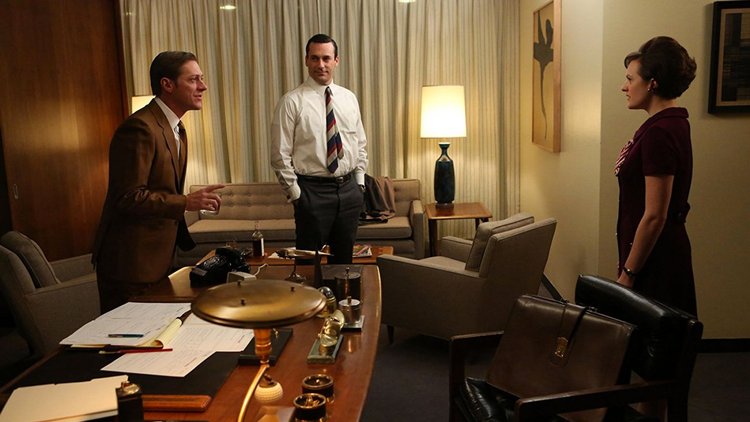
I was chatting with a marketing friend the other day, and he was telling me how much he loves watching Mad Men, not just for the entertainment value, but to see how advertisers used to conduct business and the creative process Don Draper and his team used to go through for each project. Fun side note: a lot of the commercials that aired during the show were commercials from that time. It was a great show, exploring everything from changing gender roles and racial issues in the ’60s to the bold, in-your-face advertising tactics that dominated marketing at the time.
While modern digital marketing has changed drastically from tools created with adtech (check out these 10 adtech trends to keep an eye out for), programmatic, machine learning, native advertising, data-driven granular targeting and the coveted “growth hacking,” some highly effective advertising methods from the old days have remained
Fifty years ago, advertising was a one-way conversation. Without the web to provide information and context, brands were free to create their own reality and to tell customers what to think about their brands. Campaigns were written around a catchy slogan and marketing materials, packaging and media supported the manufactured brand vision.
How consumer perception has changed
Well, hold on to your fedoras Mad Men fans, because that type of branding still works. “Aspirational advertising” is today’s modern version of that in-your-face, one-way conversational advertising. Yes, it may be more subtle, but it still works by gently coaxing you to improve your class by purchasing “better” brands.
Nathan Linder, the co-founder of IDW, a modern advertising agency, explains how some things have changed, and some have remained. “Today’s digital age has disrupted every product category and marketplace. The products and services that were once commonplace, such as travel agents, have now moved to services like Expedia and Travelocity,” he says.
The changes, of course, extend to advertising. Consumers can easily research every claim, consult reviews from people they will never meet and even research the origin of ingredients from the food they consume. Increasingly, consumers are more interested in fine details: Is this product GMO, from a fair trade source, made in America
With every aspect of their product line available for criticism, brands have to work even harder to sell their brand vision — without appearing to do so. Given the way things have changed, it is a little surprising that antiquated methods of brand reinforcement are still effective.
“In the advertising and marketing industry, some age-old tactics that continue to be worth their weight in gold include product placement and retail merchandising,” Linder says. “These tactics continue to be where the rubber meets the road for consumer packaged goods players. While TV, web, social and billboard continue to remain relevant, getting products within the ‘arm’s reach of desire’ is the moment of truth for CPG brands such as Coca-Cola and others, all who follow aspirational marketing.”
What it means for brands
Successful brands are still building successful campaigns around carefully crafted brand vision, and customers are still buying in for as long as the company and the product live up to the message. “Authenticity in marketing and advertising is when a brand lives up to all of its promises: quality, customer service, pricing, and when this happens brands win consumer loyalty,” shares Ryan Williams, founder of Industry Threadworks.
Everything about the brand must be consistent across all channels. From tweets to in-store displays, from customer service employees to employees social accounts, brands must control the message, and act quickly when the public perception is betrayed.
In the heyday of Mad Men, when hydration was more dependent on bourbon than on imported water, and customer loyalty was unshakeable, companies could convince customers of anything. All they needed was trust, and consumers were willing to give it. Advanced technology and the abuse of that trust has made today’s customer’s skeptical. Today’s companies have to work harder to earn that trust and work harder to retain it. The same traditional brand-building tactics are still in play, but have simply aged with the times.
Andrew Medal is the founder of creative digital agency Agent Beta. He has helped organizations as varied as the California Education Department, Proctor & Gamble, Microsoft and Warner Bros. He has proven results for Fortune 500 to venture-backed startups by developing software and driving growth. Medal volunteers inside prison institutions with the Last Mile, where he empowers inmates with front-end web development skills. Join his book club on Instagram, and sign up to receive pre-sale alerts about his next book titled, Welcome to Prison Whitey: The Hilarious Factual Prison Tale of an Entrepreneur from the ‘Burbs.
Silicon Valley’s online tech giants are under pressure, and not just from Russia investigators. This time it is the people who pay the bills: the advertisers who are asking serious questions about whether their products were sold alongside covert Russian propaganda.
Just as airlines pull their ads during coverage of air crashes, advertisers have long had strict rules about the placement of their brands. But the evolution of the automated digital ad business, including that of Facebook, Twitter and Google, has led to some distasteful situations for advertisers, including the placement of hundreds of their banner ads — including those for politicians — atop jihadi videos on YouTube.
That debacle has led advertisers to be especially sensitive to what they call the issue of “brand safety,” the effort to make sure their commercials appear next to quality content.
The sun rises behind the sign at the entrance to Facebook headquarters in Menlo Park before the company’s IPO launch in 2012. Beck Diefenbach / Reuters file
“The controls are not as strong as one would like,” said Bill Koenigsberg, chief executive of Horizon Media, an ad agency that spends around $8 billion a year for clients from Geico to Burger King. “Facebook and Google have hired people to be brand-safety watchdogs. Marketers are asking a lot more questions, the agencies that represent them are trying to hold Facebook and Google a lot more accountable, and if they don’t clean up the garden you will start to see it affect their pocketbooks.”
He said it isn’t just the Russia investigations that are causing concern but the parade of bad news surrounding the online advertising business. “Every day there is another snippet that comes out, and you piece them together and you’re starting to draw conclusions that the water isn’t as clear as we’d hoped.”
Facebook said it will place 1,000 staff members on a team to review ads and soup up its machine-learning abilities to address the problem. But the revelations are dragging the company and other online firms into a huge and potentially costly embarrassment.
No companies have pulled their ads from Facebook yet, at least not publicly, but executives say the sentiment is turning negative. That could have substantial implications for the company’s bottom line, which is almost entirely dependent on ad revenue.
One high-level business strategist, Michael Kassan, chief executive of Medialink, which advises tech companies and large media conglomerates, said that chief marketing officers at big companies fear that their bosses will ask them what is adjacent to their ads.
“People are on much higher alert,” Kassan said. “I have never seen it so pronounced. It’s every one of them.”
Kassan thinks the Russia investigation is still too new for marketers to figure out how it affects them.
“But you can’t argue they’re not involved,” he said. “If your brand is supporting the inclusion of stuff you don’t think is appropriate and you have proximity to it? One is known by the company one keeps.”
Nonetheless, there is still a clear reluctance in the advertising world to publicly criticize Facebook and Google.
“The entire advertising world is very anxious,” said Mike Paul, an independent expert in crisis public relations, who has worked at big ad agencies, “but few will admit publicly that the negative news is affecting Facebook because it is the 800-pound gorilla globally for ad and media buyers.”
Facebook’s Credibility Problem
The nervousness is not just because of the Russia inquiry. Brian Wieser, an analyst with Pivotal Research, recently found that the company claimed to reach an audience of 41 million people in the U.S. ages 18 to 24, though only 31 million of them exist, according to the Census Bureau.
The Video Advertising Bureau, an organization of broadcasters and cable companies, issued a study on Oct. 2, asserting that there are fewer people ages 18-34 living in every state than the number of people in that age range that Facebook claims it can reach in those states. (NBCUniversal, the parent company of NBC News, is a member of the bureau, as are the other major networks.)
Facebook said the problem may have been caused by kids pretending to be older, and said it does not bill advertisers on the basis of those estimates.
Facebook bought a series of newspaper ads, which ran on Wednesday, to explain its commitment to transparency. “We take the trust of the Facebook community seriously,” the ads said. “We will fight any attempt to interfere with elections or civic engagement on Facebook.”
Last month, ProPublica, the investigative news site, revealed that Facebook advertisers were able to use self-serve tools to target “Jew haters.” The company’s chief operating officer, Sheryl Sandberg, acknowledged the failure.
“We never intended or anticipated this functionality being used this way – and that is on us,” she said in a company statement.
A few days later, Mark Zuckerberg, Facebook’s chief executive, admitted that he was wrong to dismiss fake news on the social network as having had any influence on the election. “Calling that crazy was dismissive and I regret it,” he said in a statement.
Facebook and Google: The “Digital Duopoly”
Facebook is the second-biggest player in the digital ad market after Google. Both companies are set to grow their share of the ad pie. Together they are often known as the “digital duopoly,” with the kind of global scale other media companies can only dream of. Facebook has 2 billion monthly users. YouTube, owned by Google, has 1.5 billion.
And the financials are staggering by any measure.
This year, Google (including YouTube) will garner $35 billion in total digital ad dollars in the U.S., up 18.9 percent from last year, according to eMarketer, a measurement firm. That expansion will push Google’s share of the U.S. digital ad market to 42.2 percent.
The firm forecasts Facebook’s total digital revenues in the U.S. will grow 40.4 percent to $17.37 billion, pushing its share of all U.S. digital ad business to 20.9 percent.
Mark Zuckerberg did a Facebook live to discuss Russian election interference and next steps to protect the integrity of the democratic process. Facebook
Advertisers have to take Facebook and Google’s word that they get what they pay for. “We do not have visibility into whether we got what we bought,” said a senior marketing executive with a Fortune 500 company, who added: “I’m really nervous. We’re in business with Facebook and Google, they are the gateway to the audience, but the relationships are strained.”
Meanwhile, Facebook is on track to have yet another killer quarter. Last week a Deutsche Bank analyst, Lloyd Walmsley, told investors: “Facebook is the new IBM (in a good way). …We think Facebook is growing into a similar position in advertising, with best-in-class ad systems, a large growing audience across numerous products and a well-oiled sale machine.”
YouTube’s Credibility Problem
Still, Alphabet’s Google — is facing its own YouTube drama with advertisers around the globe.
One ad executive, who did not want to be identified because of business relationships with the online companies, said that a recent test run of ads on YouTube found they were placed adjacent to content that didn’t meet the firm’s requirements 30 percent of the time. After the Las Vegas shooting last week, for example, false conspiracy theories wound up high on YouTube’s search results, as reported in the Wall Street Journal. YouTube said it would tweak its search results to show more reliable sources of news.
Some of YouTube’s largest advertisers in 2016 dropped their spending by 95 percent or more, according to Pathmatics, a company that tracks online advertising, and measured desktop ad spending.
The company says AT&T notably reduced spending on YouTube by 76 percent over the year before (January through August). Disney spent less than $200,000 from April to August after spending more than $1 million in January, the data showed. Overall, however, Pathmatics said that spending on desktop YouTube was up 31 percent for the period January through August versus the same period last year.
In August, Google said it would refund advertisers for ads placed on dodgy websites with fraudulent traffic counts, according to a Wall Street Journal report.
Proctor & Gamble, the packaged-goods giant, cut more than $100 million in digital spending beginning in March, the company’s chief brand officer, Marc Pritchard, said in a speech in Orlando, Florida, on Thursday.
“There is no question ads should ever be on an ISIS video,” Pritchard said.
A Wake-Up Call For the Industry
Martin Sorrell, chief executive of the WPP Group, an advertising holding company whose agencies spend billions of ad dollars around the globe, said the pressure on Facebook is going to intensify. He said he has urged Facebook for some time to acknowledge that it is not just a platform.
“They are a media company,” he said. “They seem to have acknowledged the need for human review and that you can’t just rule by algorithm alone.”
Randall Rothenberg, president and chief executive of the Interactive Advertising Bureau, which represents Google, Facebook and other big content companies and advertising firms, said there’s an industry-wide effort to fix a host of issues, from fraud to cybersecurity to fake news.
“What has changed over the past three to four months, thanks in no small part to the Mueller investigation and the dribbling of information from various parties, is a broader understanding from multiple constituents that these things are all connected,” he said, referring to Robert Mueller, the special counsel investigating Russian meddling in last year’s election.
“The common understanding is out there,” Rothenberg added, “and now there is a greater will among more parties to come to the table to solve it.”