Tag

Apple

Browsing

By

Remember MSN.com? It’s still around – and Microsoft is trying to bring it back by relaunching its mobile apps with a new moniker.

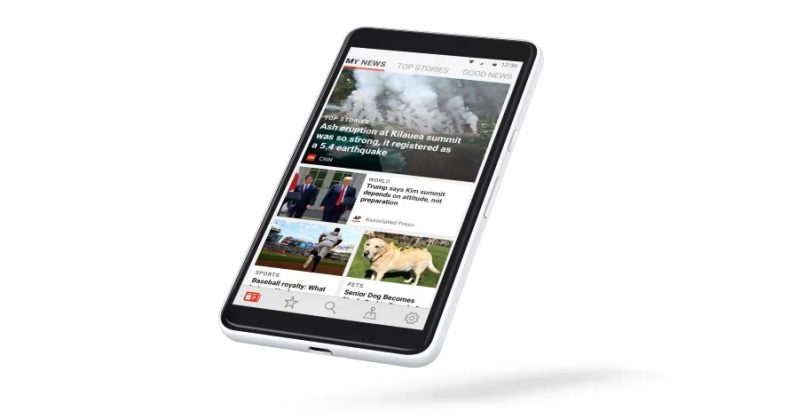
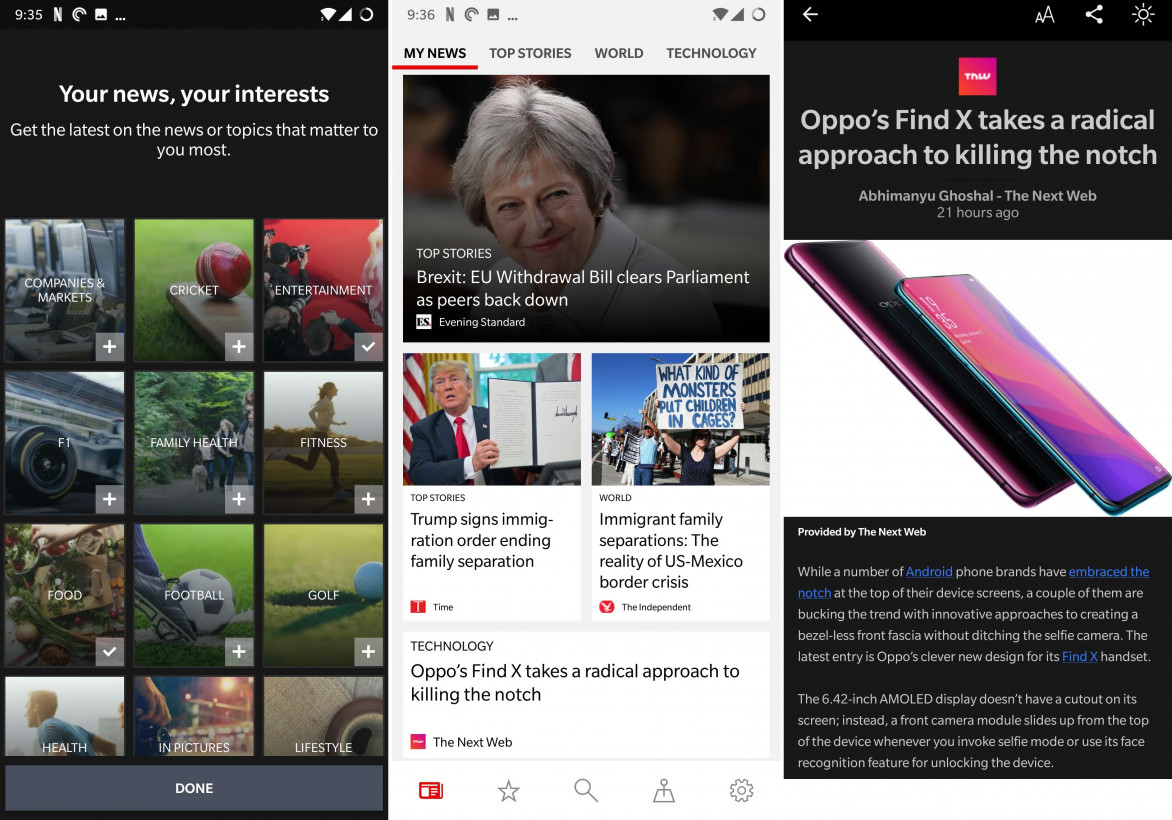
Available for Android and iOS, Microsoft News brings you stories from the company’s MSN News effort, that’s been online for several years – with a modern interface that should be familiar to folks who’ve tried Apple News and Google News.

The service brings curated news from more than 1,000 publishers and 3,000 brands. Microsoft says that its AI scans more than 100,000 pieces of content each day, and has over 800 human editors across the globe to select the top stories that its app will surface on your device.

This effort also “powers news on Microsoft Edge, the News app in Windows 10, Skype, Xbox and Outlook.com.” To that end, signing in with your Microsoft account syncs your news preferences across all the devices you’re logged in on.

I spent a few minutes with the Android app, and found the interface to be simple enough to navigate. You’ll initially be prompted to indicate your interests to aid curation, after which you can browse through stories sorted into the categories you selected.

There’s also a section for local news; testing it in my hometown of Bangalore, India, I was served up stories from various outlets covering my city. However, these articles were displayed in an in-app browser, as opposed to the native view.

You can choose between a light and dark theme, and opt to receive notifications for breaking news stories. One feature I missed from Google News is the ‘Full Coverage’ button, which brings up multiple publications’ perspectives on the same topic or event in a single list.

Microsoft says it supports publishers by offering them channels to earn revenue, but it didn’t exactly how that works. It’s likely through partnerships and a bespoke advertising platform (you can see ads in the app which aren’t present in the articles’ original web view); the company noted that it’s “delivered more than $600 million back to our publishers” in the past four years.

While I prefer Google News’ UI, Microsoft’s offering is a formidable rival that arguably does a better job of surfacing local content. You can try it now by grabbing the free app from Google Play and the App Store.

Feature Image Credit: Microsoft

By

Sourced from TNW

By Jordan Kahn

Apple’s Made-for-iPhone/iPad/iPod (MFi) licensing program is being updated with new branding that manufacturers will have to adopt over the coming months. 9to5Mac has confirmed the updated branding is now available for MFi partners, as first reported by Chargerlab.

The new logos that will be used for products coming out of the MFi program are not a huge change from the previous branding, but they do notably remove icons representing actual devices in exchange for a simplified Apple logo and just the iOS device names in text.

You’ll also notice the order of the devices has changed from “iPod, iPhone, iPad” on the old logo to “iPhone, iPad, and iPod” on the new branding, which we have to assume signifies the iPhone’s growth and importance in the lineup since the original logo was introduced.

You can see the old logos next to the new ones below:

This is the branding that Apple allows manufacturers in the MFi program to put on packaging and alongside marketing of accessories, which is meant to inform consumers that the product is an official, Apple-approved accessory for iOS devices. In addition to getting access to proprietary Apple hardware like the Lightning connector and support from Apple, the company promotes use of the MFi logos above as one of the main benefits for accessory makers considering joining the licensing program:

“Promote your electronic accessory with MFi logos. Made for iPod, Made for iPhone, Made for iPad, and AirPlay logos communicate to customers that an electronic accessory has been designed to connect specifically to iPod, iPhone, or iPad, and has been certified by the developer to meet Apple performance standards.”

Apple has a separate “Made for Apple Watch” program that provides similar branding for accessory makers, which is the reason why Apple Watch is not included in the new logos above.

The new logos were first introduced a few weeks back in early February but will become mandatory for accessory makers to adopt within the next 90 days.

What do you think of the new logos? Are you more likely to buy an Apple accessory if it is MFi certified?


Subscribe to 9to5Mac on YouTube for more Apple news:

By  Jordan Kahn

Sourced from 9To5Mac

By JC Torres

What Microsoft feared nearly a decade ago has come true. The mobile market has become a two-horse race, with just some extras on the sidelines. With only Android and iOS really to choose from, who do you think has more loyal users? Apple is often cited for having fiercely loyal fans but, surprisingly enough, for the first time, Android loyalty has exceeded iOS 91% to 88%, respectively. But before either camp brings out the champagne or the pitchforks, one really has to ask: does it matter at all?

What happened?

To be clear, nothing really happened. The Consumer Intelligence Research Partners’ (CIRP) study shows that customer loyalty to either Android or iOS has been steadily on the rise. Except for a dip in iOS retention in late 2014. Perhaps if not for that temporary decline, iOS would have overtaken Android with that exact same growth rate.

And before Android users celebrate, CIRP co-founder Josh Lowitz has some insights that put that victory in a less impressive light. There are more Android users than iOS ones, that much is a fact. But to keep the iOS line growing stead, that would require an influx of more Android users switching to iOS. In contrast, Android needs less iOS refugees to keep its rate up. In other words, Android may have the higher numbers, but it may also have more people moving to iOS than the other way around.

For businesses

So what is all this Android vs iOS loyalty all about and does it even matter. For the businesses running or banking on Android or iOS, that’s a resounding yes. That means a big yes for Google, Apple, Samsung, and other Android OEMs. Brand loyalty means that people will keep using their products longer. That means, in a sense, locking them a lot longer into your services. That ultimately means making more money, or at least a steady influx of money.

Brand loyalty and customer retention are why companies work so hard to not only keep their current customers happy but to also convince those from the other side to jump ship. That last part is what sometimes causes tension, confusion, and sometimes even lawsuits, when companies fight and sometimes defame each other in order to pull their customers from other their grasp. In the Android versus iOS context, that usually involves things like saying how insecure one platform is or how closed off the other is.

For users

For users, however, brand loyalty is really nothing more than a badge, pretty much like sports team loyalty. Sometimes just as passionate, zealous, or even violent. It gives a sense of belonging or kinship to a group with similar interests and experiences. In practical terms, however, it matters very little.

iOS users are loyal to the iPhone because they don’t exactly have any other hardware to choose from. If someone else starts making iOS phones, especially better than Apple, you’ll see that iPhone loyalty wane instantly. Likewise, not all Android users are loyal to Android because of Android. Often they’re loyal to Pixels, Samsungs, LGs, Xiaomis, and the like. Often they might even be loyal to the brand of Android they only know from their OEM, not realizing how different Android might be from other OEMs.

Of course, there are those that are loyal to iOS or Android for the very platforms themselves. They agree with this or that way of doing things, of presenting things, of designing things. But then comes along a new version of iOS or Android that turns things around or yanks out those favorite features. Then you hear gnashing and weeping and the door slamming on the way out.

And then there are those who couldn’t care less about iOS or Android or Windows or Mac. It just so happens that the app they fell in love with or grew up with is only available in one particular OS. And when some of those become available in other operating systems, then the operating system becomes even less relevant. Then again, they might have become loyal to the app in the same way.

Blind loyalty

So what does brand loyalty bring? In this particular context, nothing relevant to users other than bragging rights. Indirectly, they do bring benefits, since consumer retention helps companies, which, in turn, retains or improves services that benefit users.

But not all those services are ultimately tied to those two platforms anyway. Brand loyalty, in fact, can actually become more harmful in some cases when they force users into a box of their own making. Some may never consider or use this or that app because it’s not made by this or that brand. Some won’t try out other phones because they’re too set in the ways of their old brands. Some would even go as far as admit that this or that OS is better but they’re not going to use it because it’s not iOS or Android.

Wrap-up: Breaking down barriers

We live in a world where the Internet has made the world a smaller place, where development happens at breakneck speeds, where features come and go, almost with no complete assurance they’ll be there in the next version. We live in an age that sticking to a brand just because of that brand no longer makes a lot of sense.

Of course, there will be the argument that so and so brand is synonymous with quality. As can be proven so many times, that is only true for so long. There’s no denying the fact that one brand, one platform, one app, will have better features and aspects than the others. But to equate those features to a brand and equate it for the long-term? Not exactly a sensible outlook.

Brand loyalty and customer retention are important for the companies that make these products, so hooray to the Googles, the Apples, and the Samsungs of the world. Those numbers, however, aren’t always representative of the actual quality of their products. More of then than not, it’s more representative of how good their marketing is.

By JC Torres

Sourced from SLASH GEAR

By

Samsung’s competition with Apple is on premium phone ($400+) market share, and Apple is crushing Samsung in this market.

Other market share metrics don’t really matter all that much because of the simple fact that, according to Counterpoint , Apple dominated the global profit share of mobile phones, holding 65 percent of the global profits with just 9 percent (!!) of the total handset shipments during Q2 2017.  Counterpoint also reports that over the summer of 2016, Apple was selling just over 50 percent of the global premium smartphones, and Samsung was selling just under 25 percent. By December 2016, those numbers had grown to 70 percent and 17 percent, respectively.

Samsung spent an astonishing $10 billion on marketing in 2016, and while it doesn’t report how much of it was spent on marketing its premium phones, it was likely in the billions — and probably more than what Apple has spent globally.

So why is Samsung’s premium phone market share shrinking? Why do consumers with discretionary spending still prefer Apple in such large numbers?

The reason is not the product. Samsung is a product innovation powerhouse, launching state-of-the-art devices that compete head to head with Apple’s mobile products and getting rave reviews. The reason for this wide gap in the premium handset market share lies elsewhere: in sales and marketing innovation — or lack thereof.

Samsung is a South Korean manufacturing company, which relies mostly on channel partners to sell its mobile products. That means that Samsung’s leaders see their partners as bearing the responsibility for the buying and servicing experiences. Samsung has been focusing on providing massive marketing air cover in the form of ads, sponsorships and any other activity that is externalizing all the creativity and innovation in sales and marketing to a third-party. Samsung just loves to outspend its rivals with money they give to marketing agencies — money that isn’t invested in internal capabilities.

But that just doesn’t cut it against a sophisticated direct-to-consumer powerhouse like Apple. Apple has been launching state-of-the-art products too, but it is matched by state-of-the-art direct sales and marketing capabilities. Apple is the world’s most successful retailer (sales per square foot), by far. Apple is also showing off these achievements and prioritizes them: In its 2017 event, Tim Cook opened the keynote and before he presented any of the new products, he called on Angela Ahrendts, SVP Retail, to show off the innovation and amazing new experiences of buying and immersing with Apple.

That was before anyone talked about the iPhone X or any other product. In a way, it showed that Tim Cook thinks that the experience of buying from Apple has more long-term impact on the business than the next version of the iPhone. The scaled personal touch with Apple, the consumer interaction, is so important — and it is the key to its continued wins over Samsung. Samsung leadership simply doesn’t care as much about it as Apple

Case in point: In August, DJ Koh, Samsung’s president of Mobile Communications Business, went onstage during the Unpacked event of the Note8 and talked about the product, only to be followed by Justin Denison, SVP of Product Strategy, to talk more about, well, the product. This pattern is consistent throughout Samsung’s major keynote addresses at CES and MWC. With rare exceptions, and always low in priority, Samsung’s leaders simply don’t show off the experience of buying Samsung or getting service at Samsung.

This culture and strategy difference also is manifested in the innovation happening within the brand’s sales and marketing departments. It starts with customer data. You can’t use the iPhone without having an account with Apple, which means that Apple knows a lot about you. In Samsung’s case, it has yielded the customer data benefit to Google, though the benefits of that decision probably outweigh the detriments.

The operating system excuse doesn’t let Samsung off the hook. Apple is continuously improving its internal sales and marketing capabilities because it has a straightforward management structure. Therefore, it can experiment as rapidly here as it does with its products (and probably faster). Apple is applying AI and other novel concepts in its operations. Apple was the first among the two to experiment with proximity in its sales operations, and its CRM system is state-of-the-art.

Contrary to that, Samsung depends on its sister company, Samsung SDS, for many of its internal sales and marketing capabilities. This structure causes a lot of friction, and innovation lags significantly behind Apple. Excluding its agencies, Samsung is not using AI in its sales and marketing operations and it has only just started experimenting with proximity (full disclosure: I initiated the development and delivery of this capability). Most of it is no thanks to leadership in Korea but to the creative marketing talent here in the U.S. that is willing to take risks and craves to innovate.

In service, Apple’s Genius Bar and call center is the standard to match. Samsung was still using pen and paper earlier this year in most of its customer-facing service operations in its flagship location at 837 Washington Street in NYC.

Samsung can close this gap with Apple if its Korean leadership will change the culture, prioritizing and investing in sales and marketing innovation. It should also consider breaking away from Samsung SDS or merging with it (shareholders are pushing for it), simplifying the management structure over its internal IT systems.

Apple proved that in order to be the leader in this premium category, a brand must be investing and committing to providing the best shopping and service experience possible. If Samsung could match its world-class products with a world-class buying and serving experiences, it has a chance of leveling the playing field with Apple in the premium handset market.

Featured Image Credit: Chris Ryan/Getty Images

By

Sourced from TechCrunch

By

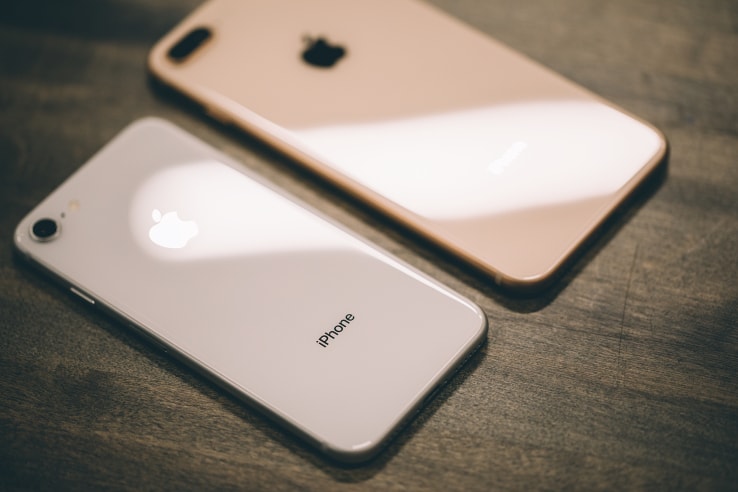
Reports from a few iPhone 8 and iPhone 8 Plus buyers have suggested there could be an issue with the battery inside some of the devices swelling, causing the case of Apple’s new iPhone to split open and expose the smartphone’s internals.

Apple has now confirmed it is looking into it, although a spokeswoman declined to comment further when asked how many devices are affected.

From what we’ve heard the number of reports so far is very few.

Yesterday CNET rounded up the handful of reports that have emerged — saying there are at least six different reports in at least five countries of the iPhone 8 splitting along its seams.

Today Reuters also noted a report in Chinese state media of an iPhone buyer claiming a newly purchased iPhone 8 Plus arrived cracked open on October 5, though apparently without any signs of scorching or an explosion.

Apple rival Samsung had big problems with smartphone batteries in its Galaxy Note 7 smartphone. In that instance some Note 7 batteries caught fire, and the problem was extensive enough that it led Samsung to recall all Note 7 handsets — at great expense.

In the case of the iPhone 8 the issue appears to be limited to batteries bloating/swelling, rather than catching fire — at least as reported so far.

Although the phone only went on sale on September 22 so it’s still early days for the device.

Apple did not release figures for the first weekend sales of the iPhone 8 and 8 Plus, as it has in the past with new iPhones, so it’s also not yet clear how many of these handsets are in the hands of buyers at this point.

Some analysts have suggested consumers may be holding off on upgrading their iPhone to buy the top-of-the-range iPhone X, which Apple also announced at the same time, but with a later release date.

Pre-sales for the iPhone X are due to begin on October 27, with the handset slated to ship on November 3.

By

Sourced from TechCrunch

By

Building a universally loved brand without engaging in price wars against competitors is not easy. But one brand that has achieved this seemingly impossible feat is Apple (NASDAQ:AAPL).

Behind Apple’s phenomenal success lies its strong product portfolio and design standards. But the company’s unparalleled marketing strategy has also played a crucial role in ensuring it stays on top of its game.

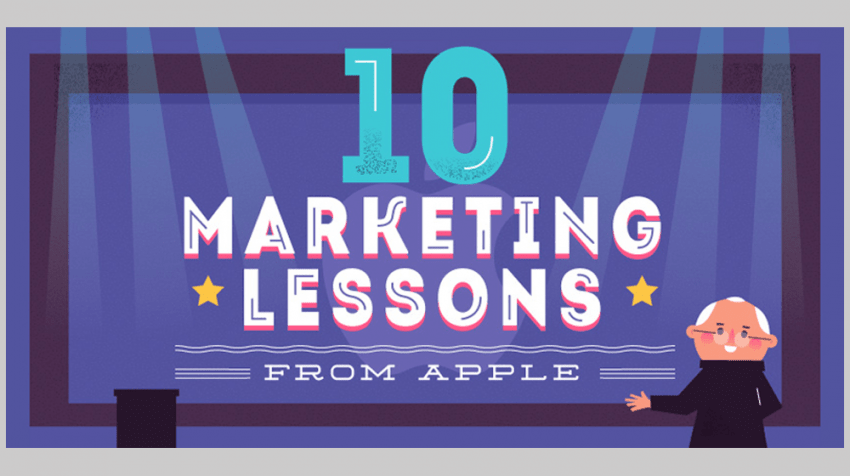
According to an infographic created by web design company, The Website Group, Apple’s winning marketing strategy provides lessons for small businesses.

The company created the infographic based on an article published in Entrepreneur.

Apple Marketing Lessons

Here are the 10 big lessons worth learning from the tech giant:

Keep it Simple

Apple likes to keep things simple and that works really well for consumers who are inundated with information.

Use Product Placement

Apple has a focused approach to promoting its products. The idea is to leverage an influencer to spread the word and get more followers.

Leverage Reviews

Reviews are a powerful tool to win the confidence of new users. Consider sending a free trial or sample in exchange for a testimonial or a review to grab attention.

Focus on Unique Value Proposition Rather Than Price

Over the years, Apple has succeeded in avoiding price wars by focusing on creating a unique value proposition. The company also provides cool features and applications to elevate user experience.

Stand for Something

Customers want to know what your brand represents and the core values that drive your business. Consistency is key and your messaging should reinforce your beliefs.

Create Experiences, Not Just Products

Offering customers unique experiences is a key element of Apple’s marketing strategy. And it has worked because unlike products, it’s not easy to imitate customer experiences.

Speak to the Audience Using Their Language

In keeping with Apple’s approach towards simplicity, the company uses language that consumers can understand easily.

Develop an Aura and Mystery Around What You’re Doing

The buzz around soon-to-be-launched products helps Apple generate interest among customers.

Appeal to Emotions

By striking an emotional chord with customers, Apple has created a positive brand image.

Use Visuals

Visuals are a more powerful medium than words to communicate today. That’s why Apple uses a more visual approach for its marketing campaigns.

To learn more, check out the full infographic below:

10 Apple Marketing Lessons for Small Businesses

Images: The Website Group

By

Sourced from Small Business Trends

Advertisers are picking a fight over Safari’s new “intelligent tracking prevention” feature. But the iPhone maker isn’t backing down.

Apple has unequivocally rejected an ad industry request to “rethink” a privacy-protecting browser feature set to arrive this month in the newest version of its Safari web browser.

Six ad industry groups said Thursday that a Safari 11 feature called intelligent tracking prevention breaks existing browser conventions and “will … sabotage the economic model for the internet.” On Friday, Apple issued its response: Forget it. Online ads are violating our privacy, and Apple isn’t going to disable intelligent tracking prevention.

“Ad tracking technology has become so pervasive that it is possible for ad tracking companies to re-create the majority of a person’s web browsing history. This information is collected without permission and is used for ad re-targeting, which is how ads follow people around the internet,” an Apple representative said. “Apple believes that people have a right to privacy.”

Apple software Senior Vice President Craig Federighi announces Safari's intelligent tracking prevention in June 2017 at an Apple conference.
Craig Federighi, Apple’s senior vice president of software engineering, announces Safari’s intelligent tracking prevention in June. Screenshot by Stephen Shankland/CNET

Advertising is the lifeblood of the internet, fueling the immensely successful businesses of Facebook and Google without our having to pay a penny. Online ad spending will grow 17.4 percent to $223.74 billion this year, according to eMarketer, and advertisers are fighting against technology that makes it harder to track your online behavior so ads can be targeted more precisely.

But ads have become a problem, too. On top of the privacy invasion, ads drain phone batteries, use up our monthly data allotment, slow down websites and even sometimes deliver malware used to attack our computers. No wonder browser makers like Brave, Chrome, Firefox, Opera and Safari are pushing back with limits on ads and ad tracking technology.

The advertising groups that banded together to object to Safari’s new feature didn’t immediately respond to a request for comment.

Cookie complaint

Their complaint stems from Safari’s new handling of cookies, the small text files that websites can store on your computer. Cookies can help you, for example by remembering your email username for faster login or recording what you’ve placed in a shopping cart. And they can help advertisers by logging websites you’ve visited and whether you clicked on their ads. Safari has long blocked third-party cookies, those placed on a website by a party other than the website publisher, but the six major US ad groups objected to how Apple is handling first-party cookies, too.

Specifically, they don’t like that Safari will automatically delete cookies its software determines are used to track you from one site to another, and they don’t like how it’ll automatically delete first-party cookies from websites you haven’t visited for more than 30 days.

“Apple’s unilateral and heavy-handed approach is bad for consumer choice and bad for the ad-supported online content and services consumers love. Blocking cookies in this manner will drive a wedge between brands and their customers, and it will make advertising more generic and less timely and useful. Put simply, machine-driven cookie choices do not represent user choice; they represent browser-manufacturer choice,” the ad groups said.

If you believe the ad industry has a point, you can disable intelligent tracking prevention in Safari’s settings.

Apple responded that it’s complying with cookie-handling standards and blocking loopholes advertisers used to violate privacy.

Intelligent tracking prevention “does not block ads or interfere with legitimate tracking on the sites that people actually click on and visit. Cookies for sites that you interact with function as designed, and ads placed by web publishers, will appear normally,” Apple said.

Safari 11 arrives Sept. 19 for iPhones and and iPads and Sept. 25 for Macs with the new MacOS High Sierra software.

CNET Magazine: Check out a sample of the stories in CNET’s newsstand edition.

By

Sourced from C/NET

By

Apple is reportedly ready to fuel more premium TV content; it intends to spend $1 billion on original material, according to The Wall Street Journal.

While this sounds like a lot, the biggest digital media producer, Netflix, promises a massive $6 billion budget. In addition, it continues to sign major TV talent, such as TV producer Shonda Rhimes.

Apple’s outlay is equal to Amazon’s TV production — also $1 billion.

The erosion of broadcast ratings was due to rising cable networks’ programming and content. Now there is a new rival. Digital media is eating into both broadcast and cable TV.

John Landgraf, chairman of FX Networks, derides the glut of premium TV programing on all platforms — broadcast, cable, and digital platforms — which is now around 425 shows. He says they cannot all be financially supported.

Why is Apple — a massive digital device, computer, phone, and tablet company — looking to join the Netflix-Amazon-Hulu race?

Because it learned a valuable lesson in launching the iTunes/App Store over a decade ago — content drives digital device use. And premium digital video lures all sorts of companies.

For Apple, it will lift Apple TV OTT set-top boxes. At first glance, $1 billion may seem like a lot of money. But according to sources, it will finance 10 TV series, adding to the 425 total.

Apple, of course, has loads of cash. Is it truly interested in this proposition long-term? The ups and plenty of downs in producing long-lasting TV content is legion. Or is Apple thinking about something else?

One thing is certain — Apple will take a decent bite.

By

Sourced from MediaPost

By .

Apple and Google could be the biggest frenemies in tech. While they both compete like there’s no tomorrow, they also partner on some very specific deals. For instance, Google is paying a ton of money to remain the default search engine on iOS.

As CNBC first reported, according to a Bernstein analyst, Google could pay as much as $3 billion a year just to remain the default option in Safari.

Business Insider also obtained that Bernstein report and shared the thinking behind this number. Bernstein analyst Toni Sacconaghi starts from a previous court document from 2014 that stated that Google had to pay $1 billion every year to remain the default search engine on iOS back in 2014.

But mobile traffic as well as iPhone sales have been growing steadily since then. If you look at Apple’s services revenue, and in particular licensing revenue, as well as Google’s traffic acquisition costs, that number could be around $3 billion right now.

It shows that Google is still highly dependent from Apple. The vast majority of Google’s revenue comes from ads on search result pages. And Apple controls roughly 18 percent of the smartphone market.

As most users update to the latest version of iOS in just a few months, it doesn’t take long to change the default setting on hundreds of millions of iPhones. Google has no choice but to spend a ton of money to acquire this traffic

A few years ago, the iPhone shipped with a built-in YouTube app and Google Maps. When Apple realized that Google was becoming a serious competitor with Android, the company removed the YouTube app from iOS and worked on Apple Maps. Apple isn’t afraid of saying no to Google when it comes to iOS features.

Apple could probably not get as much money from Microsoft Bing, Yahoo Search or DuckDuckGo, but Apple doesn’t really need it anyway as it brings more than $45 billion in revenue per quarter now. It’s all about hurting Google’s bottom line.

As John Gruber noted, Apple is in a strong position in this negotiation. While it’s true that DuckDuckGo and Bing have gotten better over the years, it still lags behind when you’re using those search engines in non-English languages.

This incongruous situation is a great example of asynchronous competition. Apple and Google keep innovating and competing as hard as they can on the smartphone front. But they also partner on other aspects and even pay each other. Business schools will turn this situation into a great case study.

By

Sourced from TechCrunch

By 

Taking a look back at another week of news from Cupertino, this week’s Apple Loop includes an exclusive look at the leaked iPhone 8 designs, Apple’s gamble over replacing Touch ID, the importance of the iPhone 7S, how to find the best MacBook deals, the problematic bugs in iOS 10.3.3, changes in iOS 11’s latest beta, App Store blocking ad blockers, and Apple publishes research papers on machine learning.

Apple Loop is here to remind you of a few of the very many discussions that have happened around Apple over the last seven days (and you can read my weekly digest of Android news here on Forbes).

Exclusive Look At The iPhone 8

Thanks to the leaking of CAD files of the new iPhone 8, along with what we already know about the new handset, it’s possible to refine our expectations of Apple’s flagship smartphone for 2018. Forbes’ Gordon Kelly has been working with Nodus to create a new set of rendered images:

…users can expect Apple to release an iPhone 8 which almost completely eliminates the chunky bezels of previous iPhones. An elongated and enlarged 5.8-inch display will feature a cutout at the top for the front facing camera and sensors and it should mean notifications switch to a new ‘Function Area’ in iOS 11.

…In addition to this Apple will indeed replace the horizontally aligned dual rear camera of the iPhone 7 Plus with a vertically aligned shooter on the iPhone 8. This switch is to support Apple’s big drive into Augmented Reality where horizontally aligned cameras are more effective and the phone is expected to be held in a landscape orientation.

More on the new design images here.

Nodus And Gordon Kelly Ewan Spence

Apple’s new iPhone 8 will looks like this

Replacing Touch ID On The Home Button

One intriguing decision that Apple will have to make for the iPhone 8 is biometric recognition. With the physical home button being promoted sideways to a virtual button on the screen, the existing Touch ID sensor is no longer going to work. What options does Tim Cook have, and why are there issues with each of the three major choices?

I’m tempted to put money on Apple sticking with the under-glass fingerprint reader. It’s a natural next step after the moveable home button was replaced with a pressure sensitive ‘area’ on last year’s iPhone 7, it fits with user expectations, and it’s something the opposition does not have. The reports of lower yields on the part also ties in with the late arrival of the iPhone 8. Rather than a trickle of handsets and lots of individuals disappointed that ‘they did not get one’, everyone has to wait, the iPhone 8’s arrival will be another media event and it can go from ‘zero’ to ‘old everywhere’.

More on Apple’s big problem over identification here on Forbes.

Why Does Apple Want You To Buy The iPhone 7S Instead Of The iPhone 8?

What is the role of the iPhone 7S and the iPhone 7S? I’ve been thinking about this, and the answer might lie in the expected success of the ‘new’ iPhone each year. If Apple wants to use more advanced technology and break the mould then its flagship smartphone needs to be more expensive, more exclusive, and harder to obtain. If that’s the case for the iPhone 8, then the iPhone 7S will be needed to retain market share and pick up the slack.

Apple is not a company known for making dramatic changes to its product line. Rather than an iteration of the regular iPhone line, the iPhone 8 should be seen as a brand new category of iPhone. The iPhone 7S and 7S Plus are the conservative ‘next steps’, with the iPhone 8 representing a new way of thinking (an almost ‘Pro’ way of thinking).

That way is not about maximizing volume or delivering an updated package at the same price point for everyone who wants one. The iPhone 8 will be about luxury, about high price, about fashion statements and new technology. Think of the iPhone 8 should be seen as a luxury sports car, rather than a muscle car for the masses.

More thoughts on supply, technology, and pricing here on Forbes.

Apple iPhone 7 (image: Ewan Spence) Ewan Spence

Apple iPhone 7 (image: Ewan Spence)

Finding The Best MacBook Deal From Apple

With the launch of the Touch Bar enabled MacBook Pro machines, Apple has upped the baseline price of the MacBook portfolio. That does not mean there are no bargains to be found, even from Apple. The quiet attraction of the Apple Store’s refurbished section continues to be illustrated, this week by Antonio Villas-Boas, starting with features and savings:

I wanted to upgrade from my old 15-inch 2012 MacBook Pro, but I didn’t necessarily need the latest 2017 model that comes with a hefty $2,400 price tag. From my knowledge of computer parts, I knew the processor in the 2016 model would easily serve my needs for several years, and I was looking to buy the 2016 model instead of the 2017 one for a lower price tag. But Apple doesn’t sell it online or in its physical locations.

I ended up buying a refurbished 15-inch 2016 MacBook Pro with the sixth-generation Intel Core i7 2.6 GHz processor for $1,950. That’s $450 I saved from buying the equivalent $2,400 2017 model with a seventh-generation Core i7 processor.

More thoughts on the reconditioned option at Business Insider.

Disappointing Final iOS Update For The iPhone 5

Apple has released the sixth notable update to iOS 10. Version 10.3.3. updates the security and fixes a number of bugs, but it still has some bugs that are unlikely to be addressed. This is potentially the last public update to iOS 10. These bugs leave those who won’t be able to update to iOS 11 (such as iPhone 5 users) in an awkward spot, as Gordon Kelly discovers:

Bugs are to be expected in all software, every update brings its share of fixes and faults. But iOS 10.3.3 is widely expected to be the final release of iOS 10 before iOS 11 debuts soon alongside a radically redesigned iPhone 8.

…This means that for the millions of iPhone and iPad owners who won’t be eligible for iOS 11, they are likely to be left with these problems for good. Furthermore there are some isolated reports iOS 10.3.3 has introduced new bugs in Game Centre, Apple Music, Mail and app updates.

In short: the final release before any new generation of iOS needs to be as close to perfect as possible because it is always the last update millions of devices will receive.

More on the iOS 10 issues here on Forbes.

iOS 11 Beta Fixes Annoying iPad Pro Omission

Flicking apps up and away from the task switcher has a long tradition in iOS but the latest version of the operating system threatened to remove that feature on the iPad Pro, much to David Phelan’s dismay. He and countless others can rest easy again, Apple has listened to the feedback and the flick is back:

 The new software saw the departure of the way you could quit open apps on the iPad. Where previously you flicked them off screen to get rid of them, a gesture particularly satisfying when the app was misbehaving, you now had to hold your finger on the screen and then press the little X that appeared. If you’re an iPhone user, the flick still did the trick.

Well, the good news, great news if you’re me, is that Apple has fixed it in the latest, second version of the public beta of iOS 11.

More on the changes to the beta here on Forbes.

Apple's iPad Pro 9.7 (photo: Getty Images) Getty Images

Apple’s iPad Pro 9.7 (photo: Getty Images)

No More New Ad Block Apps For Apps

Apple has tightened the rules for ad blockers in the App Store by enforcing its rule that third-party apps cannot interfere with other third-party apps. That means popular ad block apps such as Adblock and Weblock that address in-app advertising will no longer be allowed to update their offerings. Rather than be happy they haven’t been pulled, perhaps its worth worrying that there’s no way for users to control ads outside of the Safari web browser? Chance Miller reports:

With this policy shift apparently now in place, the only type of adblock apps that are now officially allowed on the App Store are ones that use the Safari Content Blocker. This is a more basic implementation of adblocking that only blocks ads in Safari, as opposed to VPN-based clients that block ads across all applications.

More at 9to5Mac.

And Finally…

Apple has opened up an online space to publish papers on its Machine Learning endeavours. The first major work looks at the use of Machine Learning to improve the realism of the synthetic images used to train the code. Curiously, the examples used involve facial recognition… as if Apple is working on a key system that will use this technology:

An alternative to labelling huge amounts of data is to use synthetic images from a simulator. This is cheap as there is no labeling cost, but the synthetic images may not be realistic enough, resulting in poor generalization on real test images. To help close this performance gap, we’ve developed a method for refining synthetic images to make them look more realistic. We show that training models on these refined images leads to significant improvements in accuracy on various machine learning tasks.

More at Apple, and a hat tip to John Gruber).

Apple Loop brings you seven days worth of highlights every weekend here on Forbes. Don’t forget to follow me so you don’t miss any coverage in the future. Last week’s Apple Loop can be read here, or this week’s edition of Loop’s sister column, Android Circuit, is also available on Forbes.

Follow me on Facebook. Find more of my work at ewanspence.co.uk, on Twitter, and Linked In. You should subscribe to my weekly newsletter of ‘Trivial Posts’.

By 

Sourced from Forbes