Tag

Brand

Browsing

By

2019 is set to see ecommerce sales increase by 19.5% globally, offering an opportunity to savvy brands who are up to speed on the latest web design trends and developments to drive significant additional market share.

But what do brands need to bear in mind in 2019 to ensure that they continue to deliver relevant standout online design, and therefore sales?

Mobile First

It’s vital to implement mobile first design in 2019. In 2015 mobile searches overtook those on desktop, making mobile search the highest search form worldwide. In accordance with this, Google has changed which sites they index first — they now prioritise mobile sites over those that aren’t mobile friendly.

However, it’s worth bearing in mind that this push toward mobile first design isn’t just based on ranking factors or SEO, the visual result must enhance the user’s experience on the device that they will most likely be searching from.

This focus on mobile first requires a fundamental shift in the way that websites are designed. It used to be that a site would only be created for a desktop or laptop computer and a mobile-friendly or mobile responsive design might be added as well. Today, it’s critical to design the site for the mobile user first, before creating a version that will also standout for those on desktops.

Micro-animations/movement

Using moving micro-animations along with feedback loops – that deliver movement when hovering over an icon – help make websites more usable and engaging. The details of the micro-interactions: the button clicks and the page transitions can greatly improve a user’s experience on your site, meaning they are far more likely to return. It’s this meaningful motion, connecting an action with a reaction, that satisfies a user’s desire for interactivity. And with touch interfaces, especially on small screens, it has never been more important to deliver motion in micro-animations and feedback loops to make the interaction smooth and guide users on their journey to checkout.

Custom and classic fonts

Expect a move back to custom and classic font design – clean but formal – with bigger and bolder typefaces, and a move away from humanist fonts as brands aim to standout against the proliferation of humanist typefaces.

Colour

Bright colours should be used more liberally in 2019 to deliver greater standout. The last two years has seen an explosion of big, bold colour across the internet with an increasing number of brands choosing to use their core packaging brand colours as backing for their graphics, with clashing tones moving away from the edgy start-ups into the mainstream. Those who have embraced arresting colours include The Premier League, Sky and eBay. Though bear in mind a classic font design and bright colours won’t be suitable for all. The choice of font and colours has to be right for the values of the brand and resonate with the audience they are targeting.

Optimise for search

As is always the case, making sure the design of your website is optimised for search algorithms is vital. Developments in web design will be driven by what Google’s constantly evolving search algorithm looks for. To this end, make sure that the content being communicated is relevant to your target audience and written as naturally as possible. Google looks for honest, human generated content. Of course, this must be quality content to encourage others to have weblinks back to your site to aid your SEO efforts. If users want to share your copy this highlights to Google that you are a valuable resource and the reward for your efforts will be an improved organic search ranking.

Speed

With research revealing over half of consumers leave a website if it takes more than three seconds to load, websites must be designed with speed in mind. Also, the faster your site loads the better it will rank in search results, particularly in Google search. This is not to say that websites should be sparse affairs with limited content and imagery for the purposes of speed. With better broadband it’s much easier to have image and content heavy sites that can load quickly. However if you have an app it’s seriously worth considering hosting it on a Progressive Web App (PWA) for speed purposes. A PWA can be launched from a home screen and can be ready in less than a second, often beating native apps in load times.

All brands need to constantly evolve their web design to continue to standout and deliver an engaging experience to their users that generates sales. By recognising and having these six web design points front of mind, brands will be well placed for a profitable 2019 online.

By

James Pruden is studio director at Xigen

Sourced from The Drum

Sourced from Forbes

Many professionals spend their daily commutes and downtime listening to podcasts of their interests — from entertainment to industry-specific shows.

Capitalizing on this growing trend can be a great way to market your business. However, you don’t want your show to come across as too promotional. Below, eight Forbes Agency Council members explain how to stay on-brand while offering valuable content that keeps your audience craving more.

1. Make It Advice And Knowledge-Driven

The goal is not to say what you do. Just talk about what you know. The more you share your knowledge, the more you’ll get out of it. If you are simply talking about your services and how awesome you are, it will be seen as promotional instead of advice-driven. If you show that you know what you are talking about, it is worth so much more than self-promotion. – Jonathan LabergeReptile

2. Put Your Audience’s Interests First

Consider your target audience and deliver useful information. Make sure topics are relevant and timely. Be willing to give away some of your “secret sauce” in your podcast. Pushing your brand agenda should be a secondary goal. – Suzanne RosnowskiRelevance International

3. Treat It As A Thought Leadership Activity

The purpose of your podcast should be to educate your audience — and that is it. Think of it as a thought leadership activity such as a panel discussion at an industry event, keynote or TED Talk. If youraudience is interested in what you have to say, they will begin following you. – Lisa AlloccaRed Javelin Communications

4. Tell Other People’s Stories

Our agency just launched a podcast dedicated to uncovering the ins and outs of the client and agency relationship dynamic. The key is to home in on the interesting stories of your guests. That’s why people listen. They don’t want to hear about the host, they want to learn more about the person on the other side of the mic. Uncover the gems that haven’t already been reported on. – Ashley WaltersEmpower

5. Use The 80/20 Rule

Never forget your audience. Step back and think about what they want to hear, not what you want to tell them. You can even compare this to social media marketing. If you want to keep your consumers engaged, only 20% of your content should be directly promoting your company, while the other 80% should inform and entertain your audience. – Lisa Arledge PowellMediaSource

6. Tell Parallel Stories That Tie Into Your Brand’s Mission

Build your brand promises into the podcast content. For instance, if your company’s primary cause — outside of selling what you sell — is the environment, tell stories related to conservation, energy efficiency, preserving wild areas, etc. You can reinforce what you’re about and what may make you more appealing to a large part of the audience without promoting your products. – Scott GreggoryMadAveGroup

7. Focus On The Problem You Solve

When targeting professionals, you need to learn how to sell without selling. You need to respect their level of intelligence and understand that they can quickly spot someone selling to them and will immediately tune out. Podcast about what problem you can solve or tell a story about how your product or service helped a customer. Make it relational and the good story will lead them to find you. – Amy JuersEdge Legal Marketing

8. Fulfill A Universal Desire

Humans are motivated by four core desires: First, connect with each other. Second, provide structure. Third, leave a mark. Fourth, a yearn for paradise. Identify the desire your podcast can fulfill for listeners and build a persona that humanizes it for them. Show up consistently and feed your audience with content that offers insight and inspiration. – Katie Schibler ConnKSA Marketing + Partnerships

Sourced from Forbes

By Pooja Singh

In today’s social media era, video content draws more eyeballs than written text, and it’s not surprising why. If made well, a video can tell a long story in a minute, it’s more engaging, more memorable and hence, drives more traffic.

And making videos is not a difficult task, considering the widespread use of smartphones and cameras. The trick, however, is to create one that is as compelling as it is entertaining, especially when it comes to accomplishing marketing goals.

For any business, having a marketing video could be a game-changer, for if it is good there’s a high possibility that the viewers will turn into customers. Founders understand this well, and hence, many pump in a lot of money in creating such videos.

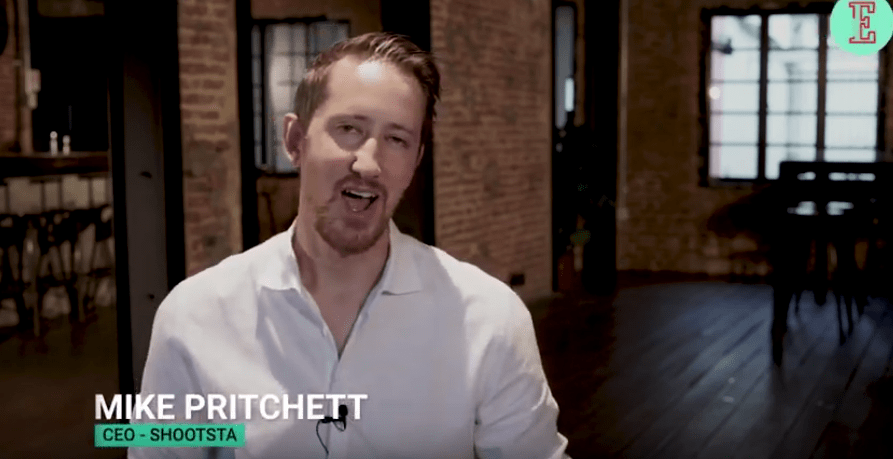
“But you don’t really have to,” says Mike Pritchett, the CEO of Shootsta, a video tech startup that has offices in the US, UK, Singapore and Australia, and boasts of high-profile clients like Qantas, Coles, Downer Group, AstraZeneca and Red Cross Australia .

In this video, Pritchett shares how to create a compelling, entertaining and authentic video without investing too much money.

By Pooja Singh

Features Editor, Entrepreneur APAC

Sourced from Entrepreneur

By

Big brands are wrestling with how to build direct relationships with consumers, and how to do so in spite of data ownership and data privacy challenges. It’s true there’s simply no better way to learn about consumers’ preferences and how to most efficiently serve them than by selling products or services directly.

Collecting first party data about sales is the distinct benefit of selling to consumers without a middleman, and that’s why big businesses see so much promise in the startups dedicated to the model.

So far this year, investors have spent $1.2bn on young, little-known direct-to-consumer businesses, that’s up from $810m in all of 2017, according to CB Insights. These startups are also ripe for acquisition. In recent years, Unilever bought Dollar Shave Club for $1bn, Walmart purchased Bonobos for $310m, and Kellogg bought RXBar for $600m.

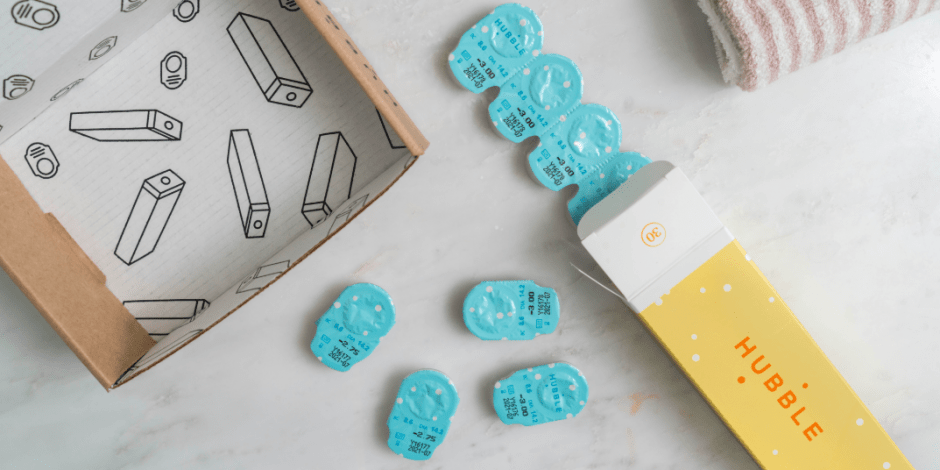
My company, Hubble, sells contact lenses direct to consumers via subscription. Neither I nor my partner have a background in optical, sales or marketing. Rather, we’re numbers folks with backgrounds in finance, consulting, and programming. Within a year, we logged $20m in revenues.

I credit a lot of our success, and the success of other D2Cs, with knowing how to access data and build relationships using this data (plus knowing how to help the customers gain from the data, because otherwise they won’t share it – consumers are whip smart).

For D2C companies, marketing looks more like sales. D2C businesses don’t launch one message at every consumer, but rather vary their approach and their offers to each individual, using data analysis to optimize it, and technology to ramp it up to a mass scale. This individualized direct marketing interaction allows the business to hone its sales pitch to a razor’s edge.

To achieve this, it’s imperative to prioritize the right data – and that’s often not the traditional marketing metrics you might be thinking of. Focus on the data that allows you to sync up consumer behavior and your operations. For example, when it comes to measuring costs, forget the ones that pervade e-commerce, such as cost per click. What really matters is cost per acquisition.

Another important figure is your customer’s lifetime value, because that will tell you how much you can spend acquiring them. You also can’t run your business without understanding how much your customers are ordering, and what profits those orders deliver. That, in turn, means understanding your margins inside and out.

With these metrics available, D2Cs can learn the right message to send, at the right cost, to the right person—information that brands working through retailers can only approximate. This is the holy grail of marketing, and just moving brand spend to digital doesn’t get you there.

All this said, there is a competing reality. While a D2C-style sales strategy have obvious benefits, it can’t take away all the pain. On the manufacturing side, scale effects still hold and manufacturing more product leads to lower cost. And, nothing is more efficient (sorry, Amazon) than driving product in trucks to Big Box stores for sale to the consumer.

D2Cs, in consumer-packaged goods especially, don’t enjoy these advantages.

I like to imagine what business would be like if you could bring the strengths of these two worlds together: large scale manufacturing, big box stores, and digital direct marketing. It would be revolutionary, and even better it would benefit all parties: retailers, brands, and most of all consumers.

So far, however, the conversation has been framed as either/or, as David vs Goliath. The next step is finding the “and.”

The IAB’s Randall Rothenberg spoke to this when the bureau released a direct brands study earlier in the year. To brand marketers, he said: “You must watch [D2C brands]. You must know them. You must partner with them.”

It’s time we learn from each other and create solutions that we can all stand behind.

By

Jesse Horwitz is the co-chief executive and co-founder of Hubble Contacts.

Sourced from The Drum

By

When was the last time you saw a queue outside of what you would call a fairly ‘ordinary’ restaurant? Or an ‘exclusive’ concert? Perhaps a pop-up that gives away gluten-free bread outside of a tube station? Quite recently, I suppose.

People love queues, don’t they? That uncomfortable feeling of standing on your feet for ages while thoroughly investigating someone’s back just to get access to something…special. Well, not really. This is not something people particularly enjoying doing. But the fear of missing out (or ‘FOMO’) is so frantically embedded in our DNA that it is a far greater ‘discomfort’ for us to miss out than to waste some time in a queue.

How does this tie into social media marketing? Social media is nothing more than our world under a microscope. Sometimes marketers are too close to their own profession and don’t quite remember that it is as simple as that. They treat “social media users” as a different group of people altogether. This doesn’t particularly help since they sometimes fail to tap into human psychology 101.

Take your average Facebook ad. How often do you see a call to action that truly lures you in? In 2018, 69.95% of ads have included a CTA – a great jump from 2016’s 51.54% – but what do the rest of the ads (the 30.05%) include? They probably have some nice imagery. However, even if a picture is worth a thousand words, words (or in our world, “copy”) can elevate your ad to drive conversions. How? Enter FOMO.

The power of FOMO

How do you incorporate FOMO in your marketing efforts? Essentially, it’s about coming up with a “FOMO” proposition around your brand/product/service that’s too strong to pass.

There is a reason why ‘limited offers’ work. It’s all about framing what you offer in a timeframe. AdEspresso recently conducted a Facebook ad experiment to test three of the most popular CTAs; “Sign Up”, “Download Now” and “Learn More”. The “Download Now” CTA outperformed the other two by more than 40% in terms of cost per lead. Time-sensitive words like “now” and “today” work successfully because of the urgency they call out. You also want to make sure you call out your customer. You want to make it personal. According to Hubspot, personalised CTAs perform 202% better than basic CTAs. Words like “you”, “your”, “yours” make your copy instantly more approachable. All of a sudden, the ad is about them! They stop and listen.

What are people going to miss if they don’t join/download/buy/sign up to what you offer? This is a question that you can only answer after going deep into your social data and understanding who your audience is and where it lives on social. It could be a case where you discover that your main audience is more outgoing and sociable than the average social group. This comes with the assumption that they probably have a lot of friends they care about (and subsequently, care about their opinions) so you make it about their friends. You run a Facebook ad that is targeting people whose friends have joined YOUR Page and you go in with the hard sell: “Your friend is already part of [enter brand/product/service here]. Isn’t it time for you to join today?” This is one way to take advantage of our hardwired urge to not miss out on anything.

Common-sense marketing tells us we need to exaggerate about whatever we are selling. As a result, we focus too much on the specifications of the end-product and how well our brand compares to others. We make the sale about us. However, if you change the narrative and flip the mirror, a more persuasive argument is helping people see that if they don’t join you they will miss out on an opportunity that hasn’t been presented to them before.

By

Sophie Katsali is lead strategist at Wilderness

Sourced from The Drum

By

The race to be a prospective customer’s top choice is only going to become tougher as the competitive landscape increases. More and more businesses are starting up, there’s tougher competition for top talent and brands constantly have to account for algorithm changes on social media platforms. Current leaders have to be committed in ways unlike their predecessors to achieve success and level the playing field.

So what can you do to achieve brand recognition? 

Connecting with the right people at the right time will determine success or failure. The right people are those who align with your purpose and actively support it. A focus on building community with people and organizations that will participate in your vision should be at the forefront of growth. In spite of a technological revolution, people still make the world go round.

Focus on these five things to further develop your brand and establish your position in the marketplace.

1. Make customer discovery a priority. Learn what works for your competitors and identify contributions to brand loyalty. These key activities, in addition to properly identifying your customers, will aid in growth. A successful brand will have customers promoting and sharing its offerings as a result of their satisfaction.

2. Create a crystal-clear mission. Brands will be called on to relate their mission to their customers in changing times. In the face of controversy, be prepared — like Nike — to substantiate your goals, purpose and brand message and actively invest in the transformation of customers’ day-to-day lives. If companies plan to stay relevant despite the shifting preferences of millennial and Gen Z consumers, they should create an internal guide referencing how and when to address social issues affecting employees and customers, even if it is outside business walls.

3. Leverage social media platforms for growth. Social media is constantly changing — however, incorporating it for brand awareness and business growth will always be crucial. Not only does your brand need an active presence online but a consistent message and pattern so that followers can actively engage with it. It is not enough to post timely messages, especially when preparing to meet or exceed goals for year end. An investment in ads and influencers is necessary to build credibility, especially as decision makers become younger.

4. Link up with other brands in your community. Great brands are not built alone. I personally have found it highly beneficial to network at my local co-working space, as it houses an active community of influencers. Community-focused locations provide your startup the opportunity to build rapport and trust with like-minded brands and those working to transform the way we do business. In addition to hosting a variety of social activities, a co-working space gives you the opportunity as either an established or developing brand to meet fellow entrepreneurs on common ground and network, and collaboratively work with them to alleviate growing pains related to lack of resources.

Regardless of whether you are an established brand or one that’s just starting out, investing in customer identification, social media and unconventional spaces will pay off. It’s no fun to stay the same, so embrace change to grow your brand.

Feature Image Credit: Pexels

By

President at Lucki Fit LLC (Coaching and Consulting Firm), Founder of Glam Tech wearable tech expo, and Amazon Best Selling Author.

Sourced from Forbes

By 

Collaboration between brand and trade marketing teams is critical for long-term success, says contributor Andrew Waber. Here’s how to make this tactical and strategic alignment a reality.

There seems to be a massive shift in the way successful brands allocate dollars and other resources to their online marketing efforts.

For example, in 2017, coworkers and I analyzed some advertising activity from P&G showing that hundreds of millions of dollars of its online ad budget had moved to trusted e-commerce channels rather than on sites and approaches typically used for brand marketing.

According to P&G Chief Brand Officer Marc Pritchard and The Wall Street Journal:

The ad dollars were pulled back from a long list of digital channels but also included reducing spending with “several big digital players” by 20% to 50% last year (2017).

These are significant changes. Driving purchases through online media is increasingly reliant on retailer sites.

This transition in the overall market landscape necessitates a change in how companies fundamentally organize their marketing. Doing well on Amazon and other online retailers today requires brand and trade teams to work closely together in order to drive long-term success.

Misalignments

At a high level, brands simply can’t afford misalignment between the information on the product page and the brand promotion (done on sites such as Facebook) that lead customers to that page.

Ten years of Google conversion optimization proves that words in ads must match words in titles as closely as possible, or the ads may suffer high bounce rates. Consumers will notice the shift in vocabulary and abandon the landing page, driving down conversion rates.

Amazon Marketing Service (AMS) placements need to be associated with popular terms and be relevant to consumers. With consumers increasingly using sites like Amazon for research purposes, on-site promotions impact other sales channels, as well.

Market mix models have shown that AMS spend — which is often allocated to trade teams to handle — drove in-store sales in non-Amazon locations like CVS. If you’re a brand marketer, this means you should consider reallocating dollars from TV ads and treat budgets for promotions like AMS as brand dollars in today’s environment.

We’ve seen some larger companies already utilizing this fluid idea of what constitutes brand and trade dollars in relation to AMS and similar ad products.

There also needs to be alignment between the trade and brand marketing teams when it comes to promotions outside of Amazon’s universe. For example, if you launch an ad campaign on Facebook that drives traffic to an Amazon product detail page but that product happens to be out of stock when the Facebook ad campaign is running, then your product is punished by the A9 search algorithm which takes into account “page views when out of stock” in its ranking criteria.

If you get traffic when you’re out of stock, then your Amazon search rankings could suffer for months. In short, you are spending money on a campaign to drive traffic to an Amazon product detail page, and actively doing your brand harm in the process!

In traditional brand marketing, local in-stock rates typically don’t directly impact the larger strategy. The trade team might have to worry about this when campaigns are run in-store, but the brand side of the house never has to. On Amazon, and increasingly on more retail websites, you really have to care. The two work in concert.

Trade teams are in the business of identifying what sets of products are worth promoting or offering at one store versus another based on customer profile, (on Amazon and other online retailers). These decisions are executed primarily via the product page.

Algorithms are powerful

The algorithm, which bases decision-making on factors like relevancy and product page robustness, holds all the power here and isn’t like a chain store buyer you can “wine and dine” to improve shelf placement. Instead, brands need to address customer segments via the product title, imagery, keywords and so on.

Additionally, the fluid nature of these online retail sites necessitates continual adjustments to meet consumer needs on a near-daily basis, rather than monthly or quarterly. This can be done by direct data connections or measuring each channel with third-party analytics. Trade teams are best served by helping guide the brand marketing teams when and where these changes need to be made.

Speed to market is both hard to execute and increasingly important if you want to outflank competitors in today’s marketplace. Collaboration between brand and trade marketing teams is more critical than ever; they need to make this tactical and strategic alignment a reality in order to maintain success over the long term.

By 

Sourced from Marketing Land

By

P&G has filed to trademark LOL, WTF, NBD and FML

Procter & Gamble’s attempt to connect with a millennial audience by trademarking acronyms such as WTF, LOL and NBD has raised eyebrows, but the practice of laying brand claim to everyday slang is not as unusual as it may seem.

P&G has filed to trademark LOL (laugh out loud), WTF (what the fuck), NBD (no big deal) and FML (fuck my life).

Initially reported in AdAge, the news has drawn the attention of global outlets such as the BBC and Bloomberg, which have questioned if owning such colloquialisms will really end entice a younger customer base.

However, the conglomerate is not the first company to attempt to brand everyday slang.

“Trademarking colloquial language is nothing new – McDonald’s somewhat depressingly trademarked Maccy D’s, for one – and other than it being an interesting headline, I’m not sure there’s not much to see here,” said Rich Leigh, founder of Radioactive PR.

“A quick search of the US Patent and Trademark Office shows that there are multiple other live trademarks for the term ‘WTF’, for instance, across a handful of goods and services categories, including hand tools and fashion.”

Indeed, there have been 246 trademarks filed for LOL or phrases containing LOL, 147 for WTF and its offspring, 71 for NBD and 61 for FML. Many of the files have been labelled as ‘dead’, meaning the application was ‘refused, dismissed, or invalidated by the office’ – all potential outcomes of P&G’s attempt.

Leigh added: “I can understand that the suits at a big corporate entity like P&G even being aware of slang is jarring, like when your mum asks if you’d like to be in a selfie (and then asking somebody else to take the ‘selfie’), but bless them, they’re trying. Whether it helps them hoover up all that sweet, sweet MilleXZial cash remains to be seen, but that’s no doubt their intent.”

David Born, director of entertainment licensing firm Born Licensing, agrees that P&G’s interest in the acronyms is driven by a millennial targeting strategy that a number of brands are actively undertaking.

“This also appears to be the reason why we are seeing emojis almost everywhere we turn, whether on product or in advertising,” he said. “We recently worked with Just Eat who licensed emojis as part of their Real Reviews campaign, and have a number of other advertisers that have shown interest in using emojis as a way to communicate with their target audience.”

Melissa Robertson, chief executive of Now, is cynical that the tactic will work, however: “WTF P&G! They must have a GSOH if they really think they can claim ownership of generic text language IMO. WTF is going on when marketeers become that greedy? Are they going to sue our Whatsapp groups for using their owned language?

“FWIW, I think it’s ridiculous. Don’t make me LOL.”

Feature Image Credit: P&G has filed to trademark LOL, WTF, NBD and FML

By

Sourced from The Drum

By

With news spreading Netflix is adding ads, the streaming service has stepped in to set the record straight – it’s testing skippable video promotions between episodes and movies.

Introduced quietly this week, Reddit users sparked confusion when some claimed they saw a video in between episodes they weren’t able to skip, while others spotted a ‘skip’ button.

With users threatening to quit over the addition of ads, Netflix issued a statement on Friday reading, “we are testing whether surfacing recommendations between episodes helps members discover stories they will enjoy faster.

“It is important to note that a member is able to skip a video preview at anytime if they are not interested.”

A spokesperson for Netflix added the videos were not ads or commercials, but personalised recommendations for other shows and movies on the service. They claimed it conducts hundreds of tests per year, most of which aren’t adopted.

The addition of video previews that play while browsing were added in 2016, with Netflix revealing they cut down the amount of time people spent browsing “significantly”. Since then it has been experimenting with different kinds of video such as this.

Worldwide, Netflix boasts 130 million customers. In April, The Drum reported Netflix was investing “more in marketing of new original titles to create more density of viewing and conversation around each title.”

Feature Image Credit: Netflix has set the record straight on the addition of ‘ads’

By

Sourced from The Drum

By

Amazon Music is pushing its paid streaming music service with a new campaign as a way for listeners to power their preferences by using Alexa.

The service is building on its momentum with the launch of ‘A Voice is All You Need.’ The campaign highlights the powerful vocals of notable songs while demonstrating the simplicity of voice with Alexa, featuring leading artists at launch including Ariana Grande, Kendrick Lamar, SZA, Queen and Kane Brown.

The ad creative, developed with Wieden+Kennedy, celebrates the growth of Amazon Music against rivals like Apple and Spotify, by noting its lead in voice innovation while playing off isolated vocals from notable artists in a journey through the voice experience with Alexa on Amazon Music.

In the first video, Kendrick Lamar and SZA’s All the Stars gets animated in a 30-second spot that starts off with brightly hued lips singing the lyrics. The lips then turn blue as the Lamar’s rap begins, then morphs into the Amazon arrow, which also turns into a mouth and asks Alexa to play the song as it promotes the 30-day free trial for the service.

Another ad rises high above Times Square to push Ariana Grande’s new album, Sweetener. The three-tiered digital ad starts with the ‘A Voice is All You Need’ phrase, then turns rainbow colored with a pic from the album and the text: “Alexa Play New Ariana Grande.”

Launching at a time where the number of Amazon Music hours streamed globally on Alexa-enabled devices has doubled over the past six months compared to the same time last year, ‘A Voice is All You Need’ will begin appearing today in select US cities, and will expand to the UK and Germany throughout the year across media channels including national online video, radio, and out-of-home billboard advertisements in support of upcoming new releases. Select creative from the campaign will also appear on national TV later this year.

By

Sourced from The Drum