Tag

design

Browsing

By Joseph Grenny;

Creativity is learnable providenceIt feels like an inexplicable miracle when it arrives, and we may never be able to isolate all the variables that generate it. But, in my experience, we can reliably create the conditions to invite it.

Twenty years ago, I was involved in a terrifyingly inspiring project, working with some of Kenya’s poorest citizens in one of Nairobi’s most blighted areas. Our goal was to generate self-help strategies that would enable this group to climb a few rungs up the economic ladder. The audacity of this effort hit me in the middle of a flight from Brussels to Nairobi. I had fallen asleep briefly just long enough to become immersed in a nightmare. I dreamed I had somehow become the president of Kenya, and this filled me with overwhelming despair. When an announcement about approaching turbulence jarred me into consciousness I’ve never been happier. But the dream had hammered home the weight of the task I was heading toward. I was to lead a two-day meeting with hundreds of people for whom the stakes could not be higher. We had a clear goal but no concrete plan. I knew the work was worth pursuing, but I had never done what we were trying to do and felt inadequate to the task. I hoped and prayed that worthwhile ideas would come. And they did. The trip was successful in ways that exceeded my competence. This was a welcome surprise, but one I had done my best make happen.

Here are some of the ways I’ve learned to be more predictably creative.

Frame the problem, then step back. 

Like a grain of sand in an oyster, cognitive irritation stimulates creativity. When you give yourself a compelling, complex, unsolved problem — and make sure to clearly, concisely, and vividly articulate it — your brain becomes irritated. For months before my trip to Nairobi, I carried around a pad of paper on which I had handwritten the following statement: “How, with no outside resources, will we create 300 middle-class jobs for the people in our group?” The problem turned in my mind. One way to further amp up the cognitive irritation is by slogging through a first, unsatisfying round of generating solutions. This effort is more about priming the pump than solving the problem. Then, walk away for a bit, and allow the unconscious work — that which draws from a fuller complement of mental resources, experiences, and creative connections — to begin.

Obey your curiosity. 

Steve Jobs claimed that “creativity is just connecting things.” I agree. If you want to be more creative, you need to have more things to connect. The best way to

The problem turned in my mind. One way to further amp up the cognitive irritation is by slogging through a first, unsatisfying round of generating solutions.

build a rich mental database that will help you solve problems later is to honor passing curiosities. If something tickles your brain, spend a moment with it. Follow paths that have no obvious purpose other than to satisfy a whim. It could be an article or a conference session that intrigues you; a book that you inexplicably notice; a person to whom you are introduced. It’s tempting to let these opportunities pass, but you do so at your creative peril. They become the Lego bricks, tinker toys, and pipe cleaners from which your creative masterpieces emerge. My Kenyan experience was the product of scores of conversations, books, lunches, and papers that seemed to have little immediate value. But I invested in them anyway — and it paid off.

Keep a shoebox. 

Next, find a way to collect and organize your experiences. For example, when I read, I fanatically highlight. I then go back and re-read the highlighted passages. And then I cut and paste the best of them into a document so I can easily find them later. This three-step process (highlight, review, organize) increases the likelihood that I retain the information and, eventually, am able to conjure fertile connections between all the tidbits. During that same transcontinental flight, I think somewhere over Egypt, a memory of a book on large group decision-making that I had read five years earlier tickled its way to my consciousness. I had not thought of the book since, but I had highlighted, re-read, and tagged it at the time, so I opened my laptop and reviewed key ideas that would inform the agenda our group used to leap forward in coming days.

Do things that don’t interest you.

Early in my career, Will Marre, the founding president of Stephen Covey’s training company, admonished me to subscribe to a handful of business journals he listed, then added, “And every time you read one, be sure to read at least one article that holds no interest for you.” I’ve been rewarded time and again for doing so. Many things that end of up in my shoebox have come from conference workshops, articles, or online videos that began as a chore and ended with an insight. My work in Kenya, for example, was heavily influenced by a Christian Science Monitor article I had forced myself to read 10 years earlier. Sometimes, we call things “boring” simply because they lie outside the box we are currently in.


Invite uncomfortable conversations.  

Another great creative stimulus is to regularly engage in conversations with people from whom you might normally recoil. Three of the more unexpectedly fruitful conversations of my life were with a racist cabby in London, a drug dealer seatmate on a plane, and an extremist political advocate in Puerto Rico. While I didn’t change teams as a result of these conversations, I gained valuable perspectives from lives I will never live. This discipline helped me find the psychological flexibility I needed in Kenya. At times, a member of our group engaged in the graft so common to their experience. I needed to find a balance between empathy and accountability. Long practice in grappling with others’ realities helped me approach the situation with determination rather than disgust.

Stop and work when it hits.

I can tell when something is coalescing inside of me. At an unexpected time, I will feel a rush of clarity. The final discipline of inviting creativity is to honor these moments by writing. If I interrupt whatever is happening at the time to transcribe and organize my thought flow, I accelerate the development of ideas.

This three-step process (highlight, review, organize) increases the likelihood that I retain the information and, eventually, am able to conjure fertile connections between all the tidbits.

If I ignore those moments — or try to kick them down the road — I find them impossible to re-conjure. I lose emerging clarity and slow the process. A couple of hours from Nairobi, I felt a rush of ideas. I was exhausted and drowsy, but I recognized the first symptom of inspiration for what it was. Before the plane landed, I had a powerful opening speech written as though it had been dictated. I simultaneously envisioned the two-day group process that helped the group coalesce around a detailed and hopeful strategy.

Over the next two years, I helped my 300 co-conspirators form a worker-owned cooperative. From their meager but collective efforts, they assembled enough capital to begin an enterprise that employed many of them. These experiences contributed to the founding of a non-profit that has, to date, helped tens of millions around the world to improve their economic circumstances.

Creativity may always be part mystery. But we can all practice disciplines that invite its beneficent arrival.

By Joseph Grenny;

Sourced from ascend

By Jacob Cass,

Want to know how to get high paying design clients?

This video explains how I went from $300 design projects to 5 figure projects.

I concisely discuss 5 tried and true strategies to get high paying design clients including:

  • Your Portfolio & USP
  • Building Relationships
  • Marketing Strategies
  • Pricing Creativity (Proposals & Closing Deals)
  • Upsells

Inside, I recommended putting this book on your radar: Pricing Creativity by Blair Enns. It’s expensive ($200+) and only available on his website. Alternatively, you could read a short summary or a listen to a podcast to learn more about “value based pricing”.

Let me know if you have any other tips for how to get bigger design clients.

» Subscribe to my YouTube channel.

By Jacob Cass,

Sourced from Just Creative

Sourced from Skuirel

Someone has said, “A picture speaks a thousand words”. This fact was never more true for anyone else, but for graphic designers. Graphic design is a process of communicating with your target customer using tools like typography, photography and illustration.

Common uses of graphic design can be found in corporate designs in the form of logos and branding, editorial design for magazines, newspapers and books, environmental design, communication design, product packaging and signage. It also includes advertising and web designing.

Graphic design has wide reaching applications. It has application in road signs, interoffice memorandums, reference manuals, selling products or ideas, logos, colors, packaging and branding too. Other applications of graphic design include the entertainment industry, vinyl album covers, opening and closing credits in filmmaking, artwork used for designing T-shirts. It is also an important part of information design. This information could be for newspapers, magazines, blogs and television. It could also be for film documentaries, illustrating news stories on the web, data visualization, and information graphics.

Who Is a Graphic Designer

A graphic designer is one who creates and combines symbols, pictures and text to communicate ideas and messages. A typical graphic designer uses all the three tools namely typography, page layout techniques and visual arts techniques to make visual compositions. A graphic designer is an important member of the branding team. In other words, a graphic designer is a professional within the graphics design and graphics arts industry who communications through images both in still and moving communication media.

Click HERE to read the remainder of the article.

Sourced from Skuirel

By

2019 is set to see ecommerce sales increase by 19.5% globally, offering an opportunity to savvy brands who are up to speed on the latest web design trends and developments to drive significant additional market share.

But what do brands need to bear in mind in 2019 to ensure that they continue to deliver relevant standout online design, and therefore sales?

Mobile First

It’s vital to implement mobile first design in 2019. In 2015 mobile searches overtook those on desktop, making mobile search the highest search form worldwide. In accordance with this, Google has changed which sites they index first — they now prioritise mobile sites over those that aren’t mobile friendly.

However, it’s worth bearing in mind that this push toward mobile first design isn’t just based on ranking factors or SEO, the visual result must enhance the user’s experience on the device that they will most likely be searching from.

This focus on mobile first requires a fundamental shift in the way that websites are designed. It used to be that a site would only be created for a desktop or laptop computer and a mobile-friendly or mobile responsive design might be added as well. Today, it’s critical to design the site for the mobile user first, before creating a version that will also standout for those on desktops.

Micro-animations/movement

Using moving micro-animations along with feedback loops – that deliver movement when hovering over an icon – help make websites more usable and engaging. The details of the micro-interactions: the button clicks and the page transitions can greatly improve a user’s experience on your site, meaning they are far more likely to return. It’s this meaningful motion, connecting an action with a reaction, that satisfies a user’s desire for interactivity. And with touch interfaces, especially on small screens, it has never been more important to deliver motion in micro-animations and feedback loops to make the interaction smooth and guide users on their journey to checkout.

Custom and classic fonts

Expect a move back to custom and classic font design – clean but formal – with bigger and bolder typefaces, and a move away from humanist fonts as brands aim to standout against the proliferation of humanist typefaces.

Colour

Bright colours should be used more liberally in 2019 to deliver greater standout. The last two years has seen an explosion of big, bold colour across the internet with an increasing number of brands choosing to use their core packaging brand colours as backing for their graphics, with clashing tones moving away from the edgy start-ups into the mainstream. Those who have embraced arresting colours include The Premier League, Sky and eBay. Though bear in mind a classic font design and bright colours won’t be suitable for all. The choice of font and colours has to be right for the values of the brand and resonate with the audience they are targeting.

Optimise for search

As is always the case, making sure the design of your website is optimised for search algorithms is vital. Developments in web design will be driven by what Google’s constantly evolving search algorithm looks for. To this end, make sure that the content being communicated is relevant to your target audience and written as naturally as possible. Google looks for honest, human generated content. Of course, this must be quality content to encourage others to have weblinks back to your site to aid your SEO efforts. If users want to share your copy this highlights to Google that you are a valuable resource and the reward for your efforts will be an improved organic search ranking.

Speed

With research revealing over half of consumers leave a website if it takes more than three seconds to load, websites must be designed with speed in mind. Also, the faster your site loads the better it will rank in search results, particularly in Google search. This is not to say that websites should be sparse affairs with limited content and imagery for the purposes of speed. With better broadband it’s much easier to have image and content heavy sites that can load quickly. However if you have an app it’s seriously worth considering hosting it on a Progressive Web App (PWA) for speed purposes. A PWA can be launched from a home screen and can be ready in less than a second, often beating native apps in load times.

All brands need to constantly evolve their web design to continue to standout and deliver an engaging experience to their users that generates sales. By recognising and having these six web design points front of mind, brands will be well placed for a profitable 2019 online.

By

James Pruden is studio director at Xigen

Sourced from The Drum

By

Trends come and go. The graphic design world is always evolving. Some design trends fade away for months, others stay for years. Today we’ll spill the beans on which graphic design trends will generate buzz this year.

Whether you will follow the crowd or set up a new trend yourself – the choice is yours. Either way, it is vital to be up-to-date. We have taken the time to browse the web and find out which design trends will take the leading positions in 2018. We will also reveal some of the graphic design trends which should better stay in 2017.

Year 2018 is pretty much all about imagination off limits. The majority of our examples depict a combination between two or more trends, even though we have focused on each one separately. Hope it sounds promising, so let the show begin!

1. The ‘Little Big Idea’

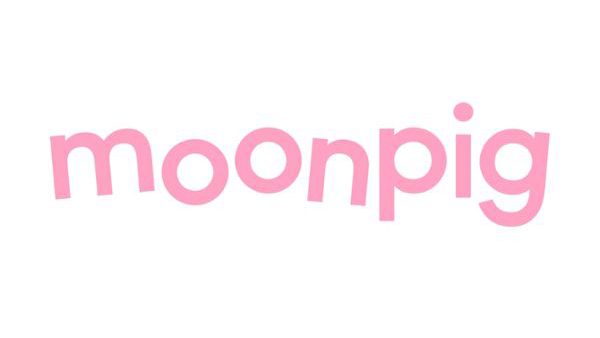
Moonpig’s rebrand was about sweating the small stuff

“The design theme of 2017 was big impact, but paradoxically the best work achieved it by really sweating the small stuff,” says Chris Moody, creative director at Wolff Olins. “The things I have found the most striking are the consommés – those jobs that focus on something singular and use it to create something with clarity, distinctiveness and beauty: the ‘Little Big Idea’.

“2017 was about simple ideas, executed with intelligence and insight to create real, radical impact. W+K’s work on the Dutch women’s football team was a tiny logo tweak that managed to question heritage, patriarchy and even what a logo stands for. The Moonpig rebrand did more with the kerning of an ‘o’ than a thousand animated cartoon characters ever could.

“If 2018 is going to be as chaotic, channel-hopping and crazy as 2017 was, elegant logic will be the only way to cut through.”

2. Braver colours

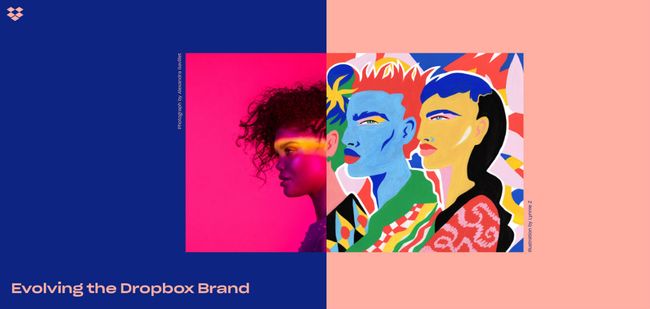
The Dropbox rebrand made strong use vibrant colour

“2017 has been a riot of colour, with graphic designers making big, bold choices,” says Shaun Bowen, creative partner at B&B studio. “Perhaps in an effort to inspire positivity after a difficult year in 2016, we’ve seen an influx of bright colours, often with flat graphics and only one or two colours used at any one time,” he adds.

“More and more brands are also using their core packaging hue as the backing colour in posters and supporting graphics.

Max Ottignon, co-founder at London branding agency Ragged Edge, tells a similar story. “We’ve noticed our clients getting braver,” he says. “Fluoro colours and clashing tones have moved away from edgy startups into the mainstream. eBay’s new identity has colour right at its heart, using it as a way to communicate both its breadth and inclusive personality.”

Mireia Lopez, creative director at DARE, concurs. “We’re seeing the use of vibrant colours in juxtaposition with bold imagery,” she says. “This can be seen as a response to minimalism and material design, from using white spaces and clean layouts to unexpected colour combinations and distinct varied typographical styles – and is across all areas of branding as well as digital.

“The new Dropbox brand direction, for example, is doing this with its creative use of images, and corporate identities such as NatWest are shifting to a fresh and modern feel, using the potential of brighter colours to increase higher conversion rates. In my field, digital, this development is probably due the fact that sites can load faster and screens on phones are bigger, so it’s easier to play with images.”

“Using bright colours helps content stand out from meme-filled social media,” notes Nathan Sandhu, founder and creative director of Jazzbones Creative.

Click HERE to read the remainder of the article

Sourced from

Sourced from ABDUZEEDO

Part of the Daily Design Inspiration series that started it all on Abduzeedo. This is where you’ll find the most interesting things/finds/work curated by one of us to simply inspire your day. Furthermore, it’s an opportunity to feature work from more designers, photographers, and artists in general that we haven’t had the chance to write or feature about in the past.

For this Daily we are selecting in digital art, graphic design, fashion and more. Our goal is to diversify the types of work and in the future we can perhaps categorize them in different sections. For now we are going to stick to the simple format of images and links. I hope you enjoy and share with use via Twitter or our Tumblr.

Until further notice, we’ll display the images and the titles added to them. Because of little issues we had in the past, the images are still linked to their authors, we just won’t mentioned who shared them like we used to.

Daily Design Inspiration

Daily Design Inspiration

Sourced from ABDUZEEDO

By John Brownlee

Paula Scher, Sagi Haviv, Jessica Walsh, and others reveal how they handle their worst clients.

Sometimes, you have to agree to disagree. But what do you do with clients who just fundamentally have terrible taste in design? They’re paying the bills, creating a problem that almost every designer has to face in his or her career at least once: How do you tell your clients that their taste sucks?

We asked five designers at four leading design firms how they deal with the nightmare client who is actively thwarting their ability to do their jobs. Here’s what they had to say.

Stop in the name of the law

“I have said this when a client has asked me to do something visually putrid: ‘I can’t do that, and it will be nearly impossible for me to explain why I can’t do it, and if I show it to you, you may even like it. But pretend that I am a lawyer and you asked me to do something patently illegal that would cause my disbarment and professional shame forever. That is what you are asking me to do.’” — Paula Scher, Pentagram

Photo: Flickr user Brandon Grasley/Illustration: elic via Shutterstock

Shift the focus of the conversation

“‘Your taste sucks.’ Politely translated: ‘It’s not about what one likes or dislikes, it’s about what works.’ Our experience is that the initial feelings and reactions about visual identity designs are meaningless because we are trying to establish something that can endure for many years and have the potential to become iconic. We therefore try to shift the focus and the conversation away from personal taste and subjective preferences (“I like circles; I hate blue”) and toward more strategic considerations: Does the design work? (We also never show a client anything that we can’t live with if selected.)” — Sagi Haviv, Chermayeff & Geismar & Haviv

Educate them

“Ha, I would never tell them their taste sucks! I would simply try to give them my best recommendation, based on explicit connections to the content of a project. [As designers,] our job is to educate clients on why we make the decisions we do, based on precedent, legibility, and/or function. If a client is telling us how to design, they’re probably not a client worth having.” — Jesse Reed, Pentagram

Photo: Stockette/Illustration: Matthew Cole via Shutterstock

Try to reason with them

“Working with clients with bad taste has to be one of the toughest things to do if you are passionate about the work you do.

I try not to get into any arguments because at the end of the day it is their brand not mine.

Try these tactics:

1. Remind them they hired me for a reason and ask to save their money and just do it yourself.

2. Ask them if they want “my professional” opinion that clearly does not match their “non-professional” opinion.

3. Depending on the situation I will try to find examples of how other companies have made a similar mistake they are about to make.

4. Let their actions speak louder than my words by letting them make that mistake and wait for them to hire me to correct it.

5. Simply tell them I disagree and remove myself from the project.” — D’Wayne Edwards, Pensole

Just tell them

“We’re pretty straightforward and real with our clients, if they suggest something that will not work, we just tell them it’s a bad idea.” — Jessica Walsh, Sagmeister and Walsh

By John Brownlee

Sourced from Fast Company

By

The human brain is a formidable machine.

Get yourself doing the same task over-and-over-and-over, and your brain will start shaping itself around that task.

If you’re an interface designer, chances are you’ll build a special eye for type sizes, alignment, color tones. If you’re focused in UX, your brain will likely be stronger in skills like systematic thinking, flow definition, hierarchy, and consistency.

The same applies for spotting errors.

The evolution of thoroughness

As you start your design career, finding mistakes and inconsistencies is a fun little exercise you do every now and then.

It’s exciting.

Each pixel off, you’re able to notice makes you feel more powerful. You feel entitled, sometimes even a little arrogant; after all, you are now able to poke holes in other people’s work. That’s an interesting superpower to have.

A few years in, your brain becomes even better at it — and you finally learn to use that skill for good. To create stronger work. To check yourself before sending out a deliverable to your team. To make sure everything you deliver is flawless, consistent, and thoroughly QA’d.

Fast-forward a decade, and your brain is completely transformed. Finding inconsistencies isn’t a conscious process anymore — it’s second nature.

You see patterns and flaws others don’t see.

You do it invisibly, without noticing or talking about it.

You do it simply because you can’t not do it.

Seeing flaws others don’t see — photo by Bryan Colosky

Embarrassment gets you there faster

Honestly, the only way for you to learn from your mistakes is when someone catches them — either you or someone else. When no one catches an error, it’s like it never existed in the first place. You don’t learn anything from errors that went unnoticed.

Catching an error or inconsistency in your own designs is nerve-wracking. You feel powerless. You rush through to correct it, but the damage is done: you are already starting to question your own abilities as a designer.

Now, having an error caught by someone else is a thousand times worse.

It’s embarrassing; even destructive.

But it’s necessary.

(I’m talking about self-awareness, not someone else trying to actively shame you for a minor design inconsistency. That’s just wrong.)

Embarrassment plays an important role in shaping a bulletproof and inconsistency-free design skillset. The self-consciousness you feel when someone catches your mistakes becomes fuel to doubling your attention next time you are sending work out for other people to review.

The worse you feel, the more effort you’ll put into being more thorough and more attentive to details next time around — to avoid going through that negative feeling again.

The more your pride is hurt, the more your thoroughness builds.

This article was originally published on uxdesign.cc.

By

Sourced from TNW

By Christina Crawley.

Email is as important as ever. While it’s not part of the latest generation of shiny digital marketing tools, it is still very much one of the most effective. Ahead of any social media handle, the email inbox remains the most coveted digital possession, being checked and refreshed at all hours of the day.

From cold business solicitations to newsletter subscriptions, I see many companies and organizations – especially those in the social good sector – that miss conversion opportunities by not following basic email design norms. To ensure that the emails you are sending to your target audience are effective – i.e., they are noticed, opened, read and acted upon – design must take a front seat. No, this isn’t about fancy, shiny templates. It’s about following structural design best practices so that your email grabs people’s attention, even before they’ve opened it.

To improve open rates, click-through rates and, ultimately, increased engagement with your brand, the following items need your attention as you build your email marketing content.

Strong Email Subject Lines

Just as we all sift out the junk and flyers in our paper mailboxes, email subject lines determine in large part whether a message is even worth the time it takes to open. Be compelling, but also be clear. Focus on your value proposition and show your readers what to expect when they open your email – whether that’s a discount toward their next purchase or to learn about your organization’s latest research findings.

Relevant Preview Text

This is probably my biggest pet peeve, mainly because it’s easy to do well but is often overlooked. Preview text is content from within the email that you can see before you have opened it. It appears both on desktop and on mobile and is the next clue (after the subject line) for someone to know whether they should open your email or not. Don’t waste that space with automatic text such as, “This email may include images. To view in your browser, click here.” Jump on the opportunity to take another stab at grabbing their attention and relaying the objective of your ask.

Well-Structured Content

If you’ve gotten as far as getting your email opened, that’s great. It’s now more important than ever to keep your audience’s attention and interest. Avoid long, text-heavy emails that require so much scrolling that people forget what they were hoping to get out of them. As a follow-up from your subject line, clearly state your message, and be as brief as possible. You only have a couple seconds of their time. Long emails with lots and lots of text are not an effective way to communicate your message or inspire your readers to act.

Clear Calls To Action

Once you’ve mastered the art of catching someone’s attention and getting them to take those ten to fifteen seconds to read your email, make that next step as easy and obvious as possible: Use a clear call to action (CTA). Your email should ideally have only one of these. Too many emails try to do it all in one, e.g., wanting someone to register for an event and also read an interesting white paper. Once they’ve clicked out of your email, the chances are very small that they will come back for that second CTA. So focus on one, and make it easy for them to complete with a reasonably sized button. When in doubt, take the Goldilocks approach on the size question: Not too big (you’ll just annoy people), not too small (you don’t want them to miss it), but just right so they see it, understand it and click through.

The above items make up the fundamental pieces of your email. As a next step, A/B testing will help you optimize your approach – from testing the placement of your CTA buttons to the callouts you use to lure your audience in – as will your email analytics. No matter what, make sure you are covering your bases. From there you can then focus on optimizing your content to reach even more people.

By Christina Crawley

Director of marketing at Forum One, leading global marketing and outreach to the world’s most influential nonprofits and foundations.

Sourced from Forbes