Tag

Digital Marketing

Browsing

CEO Fabrizio Freda revealed commitment to them in an earnings call

Estée Lauder is betting big when it comes to influencers: The beauty giant is spending 75% of its digital marketing budget on influencer marketing.

This statistic was revealed by president and CEO Fabrizio Freda in Estée Lauder’s second-quarter earnings call this week, saying that the vast majority of its marketing dollars were going to digital nowadays, with influencer marketing being the primary beneficiary of that investment.

“Over time we have invested much more in advertising, and now I would say that every one of our brands has some investment depending on where they are,” said Freda. “These investments are mainly now in digital. Seventy-five percent of our investment now are in digital social media influencers, and they’re revealing to be highly productive.”

Freda said that these investments in influencer marketing have paid off for Estée Lauder because it’s part of a greater strategic move toward putting marketing dollars into innovations and initiatives that prove effective when it comes to growth. Estée Lauder’s use of influencers are far-reaching, from signing big-name spokesmodels like Kendall Jenner and Karlie Kloss, to working with micro-influencers on YouTube and Instagram.

“They’re highly productive because we are doing a very good job in advertising, quality on asset, in targeting but frankly they’re very productive because we have learned much better how to focus our investment where there is growth,” he added. “When you expose your investment to growth, they have a much better rate of return. And that’s what is happening in this moment and that’s what we manage daily.”

That one of the world’s largest beauty companies—Estée Lauder owns nearly 30 skincare, hair and makeup brands, including Clinique, La Mer and Smashbox—is putting such a sizable investment in influencer marketing is a major sign of the growing acceptance of influencers in the marketing industry. Industry wide, marketers are spending $8.5 billion on influencer marketing, according to Mediakix. According to Statista, Estée Lauder spent over $900 million on influencer marketing in 2017 solely in the U.S.—a number that’s likely risen in the years since, given the company’s apparent commitment to influencers.

Overall, Estée Lauder reported positive results this quarter, with net sales of $14.86 billion, a 9% increase from last year’s net sales, which were $13.68 billion and net earnings rising from $1.11 billion at this time last year to $1.79 billion this year, according to the company.

Sourced from ADWEEK 40

By Adam Bornstein

Q: When it comes to customer acquisition, how important is paid social media compared with other digital channels? — John L., Houston

Social media has created a beautiful opportunity for entrepreneurs: It’s never been easier to get your message in front of hundreds, thousands, or even millions of people. But if you want to reach all those people, it’s going to cost a lot.

It’s a simple case of supply and demand, and social media platforms are limiting the supply. Organic reach — that is, your ability to speak directly to the audience that chooses to follow and interact with your business — has dwindled to almost nothing. On Facebook, for example, organic reach touches less than 5 percent of your audience on average. Facebook simply doesn’t show your posts to most of your followers … unless you pay for the privilege. That’s one of the reasons why advertising inside social media has become increasingly expensive, as brands outbid each other in a competition for users’ attention.

That’s not to say you should stop using digital platforms altogether. Paid social is a hotbed of marketing insight. With just a small amount of cash, you can easily test headlines, imagery, and offers on different audiences. That’s valuable research. However, if your entire acquisition strategy depends on paid media, you could pay your way right out of business.

But there is another way! You just need to diversify. In the digital world, there are many ways to acquire customers: paid social, paid search, email acquisition, organic social, organic search (earning traffic through content), public relations, influencer marketing, and earned media. Start by identifying a few channels where you want to focus most of your efforts. (Ideally, at least some of those channels will not require the spend of ad dollars.) This way, you can test what’s working while building an omnichannel approach that will pay off down the road. 

At my marketing agency, we start with data and consumer insights, then use that to support tactics that allow clients to win at SEO through organic content. (Social media may be the ultimate toy for idle hands, but Google is still a business’s best friend.) Then we tie that to a strategy that makes it easy to acquire email addresses. Then we focus on paid social to amplify direct selling.

For example, we have one CPG client for whom we created 40 original articles, designed to drive traffic to its website. On the surface, this might not seem like a way to grow revenue. But within two years, those 40 articles allowed the brand to rank for more than 12,000 keywords (up from 2,000), landing in the top three Google results for nearly 400 different topics and searches.

This influx of traffic made it easier than ever to directly sell on the article pages and add thousands of email addresses to the company’s database, which they used for email marketing. This was a combination of smart SEO planning (knowing what keywords to target), strategy lead generation (creating pop-ups or other opt-ins to the site visitor), and positioning product offerings on specific article pages (like native ads that sold products related to the topic of a specific article). This way, the traffic was technically “free” — and so were the added emails, which we could now upload to social media platforms and directly sell to consumers with ads based on their known interests.

If you put all your eggs in the paid basket, you underestimate and undercut the long-term growth of your brand. And when you push on all levers at the same time, you make it increasingly hard to know which acquisition channels have the highest ROI. But when you diversify and segment your strategy, the opportunity for growth can feel limitless.

Feature Image Credit: Federico Gastaldi 

By Adam Bornstein

Sourced from Entrepreneur Europe

By Benjamin Herrmann

Customer trust and brand loyalty are inextricably linked, essential to long-term business success, and tougher than ever to gain and retain. With all the breaches, hacks, and misuses of customer data in recent years, customer trust is low. And with the proliferation of digital channels making upstart competitors a mere millisecond-click away, loyalty is precarious, as well.

This reality, along with digital channels becoming the norm in buying from and interacting with both B2C and B2B customers, means that it’s mission critical to reshape the way you’re building customer trust. In the digital landscape, brands need to focus on tapping into the right customer data in a way that is mindful and doesn’t cross boundaries of privacy, while also prioritizing transparency and individualized support tailored to each customer.

Here are three best practices you can use in your marketing strategies to build customer trust and lasting loyalty in the digital age.

1. Respect privacy and avoid “creepiness” when personalizing experiences

“Customers are done with creepy; don’t be creepy,” Alex Atzberger, president of SAP customer experience, said at the 2018 SAPPHIRE NOW conference. “Without consent, don’t personalize.” He couldn’t have been more right.

Personalization plays a major role in thoughtfully engaging customers, but when it isn’t handled with care, brands can lose favor with customers who suspect their privacy isn’t being prioritized. New laws around data governance, such as GDPR and the California Consumer Privacy Act, help give customers an extra layer of security, but the responsibility still lies with brands to create personalized experiences without being creepy or crossing any lines with the consumer.

The challenge is that we have access to more data than ever, especially customer data around specific behaviors and preferences. It’s natural as a brand to want to make use of any and all data you can access to create a better user experience, but respecting customer privacy must be the top priority. Plus, the better results will come from identifying and acting on the right data, rather than trying to make everything you can get your hands on into something actionable.

Mastering personalization is about showing each individual customer that you’re committed to and respect the relationship they have with your brand.

2. Maintain transparency and keep it consistent across your organization

Transparency should span across every aspect of business, but when it comes to building digital trust with your customers, price transparency is always an important practice. It supports a connected customer experience, adding long-term value by giving your customers the ability to explore pricing options before making purchasing decisions. Be upfront about costs throughout the buyer journey (e.g., taxes, service fees), so customers aren’t seeing them only at the end when it’s time to make a purchase. This way your customers can understand exactly what they’ll be buying and for how much before heading into the final transaction.

Giving your customers trial periods with products also plays an important role in transparency. Many consumer products are set up in this way, from cars to clothing to even food – these items are set out in a way that lets customers view them and try them before they buy. Apply the same principle to B2B products, such as software.

When implementing digital purchasing options into your customer journey, always include trial options. Your customers can use this opportunity to properly evaluate whether or not a product meets the challenges or needs they are seeking to address without needing to make a purchase first. They can then make better, more confident purchasing decisions, which also supports long-lasting trust in your brand.

3. Be helpful along the entire customer journey

Support – especially with digital sales that lacks face-to-face interaction with a sales or service representative – should always be ready and available before, during, and after purchases are made. Customer service takes many shapes: sometimes it’s in-person, other times it’s over the phone or via online chat, and sometimes it’s simply in the background, providing support without the customer realizing it’s there.

B2C companies already focus on support as part of the entire customer journey and experience, infusing the same customer support systems they have in person into their digital platforms. This is a model that B2B companies can use for digital sales and e-commerce, as well. In fact, B2B brands should be held to a higher standard in supplying customer support from a digital perspective, as these customers are used to the high-touch services of a vendor’s field sales team.

Even though your customers want quicker, more seamless online options, you shouldn’t let service levels drop because the customer is no longer working with someone directly. Your customers will still expect your guidance and support throughout their digital journey, through the transaction process and beyond. It’s important to show your customers your commitment to their experience along this path, allowing trust to take shape as you do this.

Customer trust is gained – and kept – by aligning goals. Your customer’s goal is to solve a problem, improve a process, transform their business, etc., and your top goal should always be to support customers along their path to achieving their goals. There isn’t a one-size-fits-all solution to building trust, especially in digital interactions, but incorporating these best practices into your overall marketing strategy is a great starting point.

By Benjamin Herrmann

Connect with Benjamin Herrmann at @bherrmann81 and on LinkedIn.

As head of digital commerce for SAP, Benjamin Herrmann is responsible for developing the digital direct sales channel at SAP across products, professional services, and education. Dedicated to helping customers become best-run businesses, Herrmann has established himself as a leader in B2B digital business models. Prior to his current role, Herrmann was senior director of strategy for SAP Portfolio & Pricing, where he ran board-level change programs. He also worked as an enterprise business architect and lead business architect in the Business Transformation Office for PricewaterhouseCoopers, and served as a lecturer on Information Systems at the Frankfurt School of Finance and Management.

Sourced from D!gitalist

Sourced from Chainlink Marketing

A Digital Marketing Agency can help you best to grow your business with all needed digital marketing campaign from inbound marketing (such as Web Design, Search Engine Marketing, Website Optimization, Social Media Marketing, SEO and Hyperlocal Marketing) to outbound marketing (such as Traditional Marketing, Email marketing and Search).

In today’s world, online marketing is the best strategy to reach your targeted audience. Traditional media has the power to reach mass audiences, but digital marketing allows you to practice hyperlocal marketing by micro-targeting the exact customer profile for your particular type of product or service. As it reaches few targeted people than mass media, it targets the accurate customers which can mean a smaller overall expense and less waste in your viral marketing. But before hiring a digital marketing agency to help your business to grow more you must keep a few things in mind such as:

  1. Know your budgets
  2. Define your goal
  3. Think thoroughly about how you want to work
  4. Check the online presence of the digital marketing company you are going to hire
  5. Assess the company’s culture and approach
  6. Ask who will work on your account and what experiences they have
  7. Check the credentials
  8. Understand their work strategy
  9. Establish reporting and communication
  10. Demand transparency in everything

In recent times, Online Marketing or Digital Marketing has become very popular and also useful than other Media marketing policies. Perhaps what matters most is to prepare a strategy to establish the brand on a long runway. Finding the right digital marketing agency is not a very tough task. A perfect full-service digital agency will focus on finding the best solutions to market your business and develop specific strategies to provide the best return on your investment based on the criteria of your business.

Chainlink Digital Marketing Agency:

Chainlink is very helpful for digital work and promoting things with excellence and positive attitude with deep insight advertisement. Their work is highly appreciated by most of their users as the quality of work is very high with unique designs and creative ideas. Now Chainlink is becoming one of the top listed digital marketing agencies New York. It is a matter of the huge amount of money for creating your brand value and putting adds on Newspaper, Hoardings, TV ads and Radio ads. In the era of Internet and Digitalization, Chainlink is here for you to assist you through the Digital Marketing channel to create a brand value and promote to your targeted customers in a very short period of time.

Being the best digital marketing agency New York Chainlink implements the most advanced tools available in the marketplace to track every campaign’s results as they believe in marketing attribution and ROI. They provide the service which fits within their customer’s budget. Let’s have a glance over their Digital Marketing Services and Solutions:

  1. Search Engine Optimization – growing the inbound traffic and of website and lead generation
  2. Content Marketing – developing brand-appropriate content that attracts prospects and customers
  3. Email Marketing – dynamic email marketing at scale with advanced automation
  4. PPC (Pay per click) and display ads-AdWords – accelerate your digital advertising with targeted efforts
  5. Social Media Marketing – managing and advertising on social media
  6. Developing Websites
  7. Event Marketing
  8. Integrated Print marketing with a cohesive Digital strategy
  9. Promotion

Marketing Strategy:

Firstly, Chainlink takes a full business evaluation to allow for proper discovery and to identify their customer’s digital marketing objectives and goals. They collaborate with their customers to develop a strategic and precise digital marketing plan to promote your company and accomplish your customers’ needs. Chainlink relies mostly on Analytics and data to plan, execute, optimize and report for assured progress of your digital marketing campaigns.

Return-Focused Marketing:

Chainlink Relationship Marketing has strong and long-term experience for working with clients across industry verticals, B2C & B2B, and various business sizes. In every campaign, one thing is consistent, which is their unwavering focus on maximizing the ROI (Return on Investment) on your digital marketing efforts and advertising spend. Chainlink identifies the most relevant KPIs (Key Performance Indicators) to conduct a proper benchmarking, monitoring, and optimizations for every digital marketing campaign. Regardless of your budget, objectives Chainlink helps in implementation of digital marketing efforts that provide consistent and interactive touch points across channels to ensure that every dollar and minute spent on digital marketing and advertising is being deployed as efficiently as possible.

Sourced from Chainlink Marketing

By Stephen Forde

Social media has turned out to be a powerhouse for the data on the internet. Social media marketing as a concept is getting popular and trending day-by-day. It enables small businesses to engage their customers, interact with them, and reach a vast network of potential customers in lesser time.

The majority of businesses do social media marketing on an ad-hoc basis. They know they should do something engaging about social media, but they really don’t understand where they exist and what they should do. If you are not attracting the desired customers, sales and leads even by using social media, then there may be the reason behind you’re not using the right social media strategies. So, in this article, we’ve summarized the most effective social media trends, strategies & tactics that will help you grow your small business in 2019.

Boost Your Small Business in 2019:

Before we move ahead, it’s worth pointing out there is no fixed approach that will work for everyone. The key is in finding the right one for your business. The one that is more likely to align with your targeted audience in a limited period of time is social media marketing. Social media marketing is not as complicated as it seems if you know the right strategies and tactics.

If you can master its insider secrets, you are good to go. Using social media to market your small business will not only help you get more money from your existing customers but also help to acquire new ones. However, failures to have an effective social media strategy can be harmful to your small business.

While you may not think of the lack of social media presence is always having a great impact on you today, it will eventually be laid down your business to a distorted path. So, don’t wait until it’s too late, get started today with the latest social media trends & tactics.

Follow Social Media Marketing Tactics we’ve outlined below & set your small business up for sustainable growth.

  • Create Engaging Profiles on Different Platforms:

If you have an account on Facebook, that you are headed in the right direction. But Facebook alone won’t be enough to grow your small business. You need to make a strong social media presence on top-rated platforms, including Instagram, Snapchat, LinkedIn, Twitter, YouTube, etc. Before you rush to create profiles on these channels, it’s important you understand your targeted market analyzes the latest Social Media Trends.

  • Regularly Post Content:

Once you have made an engaging profile of the different social media, your next task is to post quality content on a daily basis. Suppose if someone stumbles upon your page and your recent posts about 2 weeks ago, then they for sure no longer will follow you on that platform. So, you have to do regular social media optimization as it is the best opportunity for you to stand out from the crowd. Each time you update new content, it reminds your follower that where your brand exists and how it can be so helpful for your small business

  • Build Relationship with Social Influencers:

When it comes to social influencers, celebrities & athletes will quickly appear in your mind. But partnering with athletes or celebrities may won’t fit within the marketing budget for your small business. So, you should search for social influencers who are more cost-effective than an athlete or a celebrity like micro influencers. Micro influencers have stronger engagement matrices with their followers and can increase productivity in an enhanced and faster manner.

  • Employ Automation Tools:

We know how you are feeling right now that everything we discussed above is time-consuming. But as an owner of small business, you need to manage multiple tasks throughout the whole day. And at the end of the day, you’re left with no more working hours to plan for the next day. This is where automation tools can help you out. Automation tools will enable you to schedule your posts in advance. You just need to take time once at the start of your week to set the date and time for your posts in the future.

  • Motivate User Generated Content:

This Social Media Marketing trend will help you build a strong presence and optimum brand awareness in a few clicks. Your small business can be exposed to a wider audience. Anybody who follows people who enter the contest will see your brand/products being promoted, even though if those people don’t follow you. So, user-generated content is the best way to get more followers and then turn those followers into potential buyers.

  • Give People a Reason to Follow you:

In order to run a small business, you need to have strong social media visibility and followers. Without these two, nobody is going to follow you. Once you made your strong social following, it will be easier for you to convert your followers into potential customers. Because people are more likely to buy things, that they follow on social media. So, organize a contest, give discounts and promote flash sales.

Conclusion:

To stay at the top of the competitors, you need to make use of social media marketing tactics, no matter your business is small or large. Just having a Facebook account isn’t enough to boost your small business worldwide. It requires a strong web presence on highly usable platforms that people like to use. So, you just need to post fresh content daily on your social media accounts, give consumers the discount, sales offer and maintain relationships with the industry’s leading influencers. Best of all, following the right trends can give your small business a good turnover and excellent ROI.

Feature Image Credit: LoboStudioHamburg / Pixabay

By Stephen Forde

Stephen Forde is the CEO of Media Fortress, a digital marketing & web hosting firm. He helps clients grow their web visibility through all aspects of digital marketing.

Sourced from Irish Tech News

By Melissa Crooks

hen app development companies are looking to increase their level of reach, they must be willing to place themselves in the shoes of their target audience. App development companies that are able to do will always stand apart from the crowd. Digital marketing brings a wide range of benefits to any business and app development companies need to choose the proper strategy.

Top app development companies are always looking to boost their revenues. Digital marketing is one of the most important bridges that needs to be crossed. It is one of the healthiest marketing methods that can be used. It allows the company to reach out to their target audience more directly. A more healthy promotional environment is also created.

The top app development companies have the ability to cater directly to their clients’ demands and digital marketing is a key aspect of that equation. No matter what the client’s preferences or demands may be, digital marketing is an absolute necessity.

How Do The Top App Development Companies Benefit From Digital Marketing?

1. Global Reach

Any business that is looking to expand their reach will need to rely on digital marketing and an app development company is certainly no different. There are numerous constraints when it comes to expanding a company’s reach and digital marketing provides developers with the ability to surpass them. Digital marketing offers the necessary structure and refinement, so that you can find your chosen audience.

Gone are the days when an app developer had to limit the scope of their ambitions. With social media marketing or content marketing, the target audience is just one click away. In a climate where everyone owns a smartphone, digital marketing opens up a whole new world to the app developers who are ready and willing to embrace the possibilities.

The customer is more likely to remain engaged when an app development company takes the time to formulate the proper digital marketing plan. When the target audience is just one tap or click away, a digital marketing plan is one of the best ways for app developers to make sure that they are able to receive it. Geographical boundaries have been eliminated.

2. Increased Levels of Brand Recognition

The top app development companies have built a strong brand for themselves. Digital marketing is a pivotal part of the personal branding process and if app development companies are going to reach their full potential, they need to prove their excellence. The world of app development has never been more cutthroat and a plethora of different app development companies are competing for the same attention.

The survival rate for app developers is being whittled down on a constant basis, due to the heightened level of competition that is taking place. All it takes is the right digital marketing strategy for an app development company to stand apart. If an app development company wishes to make a name for themselves and maintain a certain level of cachet in the eyes of the consumer, they will need to emphasize brand recognition.

Fortunately, digital marketing provides companies with the tools that they need to accomplish this task. Content marketing, a top notch website and social media marketing all play a role in the company’s level of brand recognition. A brand needs to be recognized by the users that they are reaching out to but the brand must also be adaptable. A digital marketing plan shows the consumer what they are potentially missing out on by heading elsewhere.

3. Digital Marketing Is Easy To Track

Marketing efforts are not as easy to track as they once were. The “spray and pray” approach that app development companies were once able to use is no longer as effective. Digital marketing takes on a greater level of importance in this environment, because it is easy to track and monitor. This lets app developers find out more what aspects of their digital marketing campaign are working and lets them make the proper amendments.

Any marketing campaign is only as successful as the information that is provided and a digital marketing campaign is certainly no different. Digital marketing is especially useful because it provides real time insights that can be utilized quickly. There is no mystery when it comes time to figure out how the digital marketing campaign is affecting the company’s ability to reach the chosen goals and objectives.

No digital marketing campaign is going to be perfect. There are going to be areas that need to be worked on. Instead of relying on outdated marketing tactics that do not provide the real time insights that are needed, digital marketing provides actionable information that allows for the necessary modifications. Any marketing plan in the modern era needs to function as a living, breathing organism that can be altered on the fly.

4. Affordability

App development companies have to consider marketing costs when they are budgeting for each fiscal quarter. While there are some more traditional marketing techniques that will provide the desired results, efficiency has to be considered. In other words, what marketing plan is going to provide the largest possible bang for the buck?

When broken down into these terms, it is hard to match the benefits that digital marketing has to offer from a financial standpoint. App developers who are just getting started out and companies that do not have an unlimited budget are always going to be looking for inexpensive ways to maximize their reach. Removing the financial headache allows the development firm to avoid unwanted issues.

Social media marketing offers no shortage of free portals that allow a developer to speak to their audience directly. The costs of content marketing and a well crafted website are also relatively insignificant. No reputable app development company should be allowing outdated marketing plans to burn a hole in their pocket, not when digital marketing offers all of the same benefits at a fraction of the cost.

These benefits are designed to hold the attention of the consumer and keep app development companies from encountering the usual marketing pitfalls. Boosting revenue and strengthening company branding has never been so easy.

Feature Image Credit: Pixabay

By Melissa Crooks

Author Bio:

Melissa Crooks is Content Writer who writes for Hyperlink InfoSystem, a mobile app development company in New York, USA and India that holds the best team of skilled and expert app developers. She also writes for top app development companies. She is a versatile tech writer and loves exploring latest technology trends, entrepreneur and startup column.

Sourced from The Writing Cooperative

By Venugopal HG

From voice searches to videos here is everything that you need to know

With the advancements and changing trends in digital technology, digital marketing is expected to take giant strides in the future. We see E-commerce players like Amazon prioritizing marketplace and the search engine giant, Google testing out new approaches such as shopping tab to enhance customer experience and leverage buying intent and giving importance to customer experience and engagement by rolling out algorithm updates. Voice searches and Vernacular Searches are growing at a rapid pace and the trend will witness an exponential growth by 2020.

According to a survey by ET, Digital advertising is expected to grow at 32per cent CAGR to reach approximately 19,000 Crore by 2020.  The data also suggests that digital media spend which is 15per cent at present, will go up to 24per cent by 2020. With CAGR growth of Video by 38per cent, Display by 36per cent, and Search by 25per cent; all three verticals are found to increase their share in spends by 2020.

So, how to become exceptional in Digital Marketing in 2020?

Integration of Technology with Marketing:

Prepare for an end to end customer experience – It is important for business organizations to merge their marketing insights with technology. The organizations are now realizing the importance of customer experience and its value to the business. The evolution of Artificial Intelligence is going to play a huge role by merging with digital marketers to provide end to end customer experience.

Automation in Marketing – Everybody prefers modified and personalized content; with data now being mainstreamed more than ever before and innumerable insights available from the huge amount of data, marketers will have to look into providing more personalized and customized content. Thus, marketing automation will not only evolve but is expected to undergo an exquisite change due to the meeting of technology and marketing.

Invest in AR/VR – The use of AR and VR has already pressed the marketers to develop strategies to provide consumers with better services via technologies. This will bring further transformation in the process of collection of information by business organizations and customers, as well. Marketers will have to bring in digital innovations to improve the overall online experience of consumers.

Facebook AR ads – Facebook has been heavily investing in AR and expect it to be the wave of the future. Organizations can interact with their target audience and make product offerings on the basis of their purchasing patterns. Facebook has provided a new platform to the advertisers to display their products by rolling out augmented reality feed ads. With AR feed ads, shopping online will become an even more interactive experience and assist the business organizations in better conversions.

Evolve in measuring Store Visits Online- For a business with an online presence, the major challenge is to determine the number of store visits or footfalls achieved through online promotions. Using the digital marketing expertise and offline behaviour, business organizations must invest in a digital tool which provides information accurately.

Separate Budget for Marketplaces:

Amazon Will Emerge as a Big Player in Digital Marketing – Amazon had recorded a triple-digit growth in the quarter by quarter ad revenue, last year. The elevated buying intent of users makes it an immense platform for any Consumer Product client. It is evolving at a rapid pace and showing how committed Amazon is to change the landscape of digital marketing.

Invest in Amazon Automation Tool – Almost two-thirds of Amazon advertisers are either using ad campaign automation tools or expected to use it within the next twelve months, the market is poised to grow significantly in the next couple of years as Amazon ads will increase their market share.

Amazon SEO Optimisation – As per industry insights, Amazon is the first choice of over 56per cent of consumers if they want to shop online, and 51per cent cross check with Amazon if they are buying from any other platform. This search behaviour is slated to increase by 10-15per cent by end of 2020. This reflects upon the importance of using ‘Amazon optimisation’ in any e-commerce SEO strategy and also using Amazon for keyword research directly.

Become a master of Google Shopping:

In Digital Marketing Space, huge changes are expected in Google Shopping and it is advised to stay alert about everything related to Google Shopping. As Amazon is predicted to be the next big thing in the online shopping ads vertical, Google Shopping will make the inroads into the segment. Google has already started rolling shopping tabs through organic searches across the sphere providing more structured shopping options to choose from. Thus, it is important for the digital business organizations to prepare their digital wing to be shopping heavy.

Adapt and lead the major changes:

Voice Search – As the demand of the voice-based AI devices is on the rise, for example, Siri, Alexa, and Google Assistant; a huge rise is expected in the voice-based advertising for marketers. By using these products, people will be able to order products by their name and size. The number of voice searches is on the rise by every passing minute and this will make a huge trend shift by 2020.

Supremacy of Video – With 30hrs/week average time spent on viewing TV or any form of video content, the video viewing quotient is already at an all-time high. This huge trend shift has taken place in the form of videos watched on Mobile and TV. There has been a surge in the content of video channels like Amazon Prime, Netflix, Hotstar, Voot, zee5 being consumed at an all-time high rate. For digital marketers, the advertising usage on mobile or channel based video content will be crucial. With the leverage of the Internet by the service providers, new realms of opportunities are now available for digital marketers.

Native Ads taking over Mobile – Of the Mobile display Ad revenue, the predicted estimate of native ads on Mobile is 63per cent. This clearly indicates that native ads are dominating the display ads scenario. Native ads incorporate interesting and relative content thus, there is a possibility for higher engagement than any other display ads.

Get more personal with the Customer:

Focus on Private and Customized Messaging – In the quest to provide more personalized content to the customers, brands are shifting their focus to private messaging apps and this trend is set to continue in upcoming years also. Private messaging app advertising is an evolution in digital marketing and it will take the digital marketing space with a storm.

Advertising on WhatsApp – The huge reach of WhatsApp is still unexploited and it is the biggest social messaging app at the moment. Recently, the first TVC of WhatsApp was launched; and it is expected to grow as a mass reach marketing channel with a shift of ad budgets on WhatsApp.

A strong Presence on Social Media – One of the studies reveals 63per cent of the marketers think that Social media is going to be big as compared to apps or web. To create brand awareness and brand connectivity among the customers, the stranglehold on Social channels is a must. Social channels are constantly evolving as a lot of new features getting added to Instagram, YouTube etc. Social Media is here to stay and it is going nowhere. So, it is utterly important for digital marketers to mark their presence on social media.

Feature Image Credit:  Shutterstock

By Venugopal HG

VP Training, HiveMinds

Sourced from Entrepreneur India

By

In my over a decade of experience in digital marketing, I’ve seen few services skyrocket into prominence as much as podcasting. This growth is just one reason our agency started offering a podcast development service. In this article, we’ll cover why this platform should be considered by all business owners and some tips for starting your own.

Power Of The Podcast

It seems like everyone has a favourite podcast these days. The popularity and influence of podcasting are expanding exponentially in the U.S. and around the world. Nearly 25% of Americans currently listen to podcasts regularly, and there is no reason to believe that number will not continue to grow well into the future. With such a dramatic rise, it’s no wonder digital marketers and brands are also listening and working to utilize the power of the podcast to better connect businesses to a wider audience than ever before.

These roughly 70 million listeners are drawn in by the promise of interesting and relevant content that’s both easily consumable and entertaining. Perhaps the best aspect of the medium is that it allows people the ability to instantaneously seek out and choose for themselves the specific topics that matter most to them at any given time. This means people who listen to podcasts are not only a captive audience, but they’re an audience that wants to be captivated.

I remember back in the early 2000s when blogs first created significant excitement across all sectors. It was no secret that the top blogs — those that produced the most views and web traffic — delivered the most relevant and accessible content. They gave readers information that they could easily use to purchase the products and services that best fit their needs, wants and budgets. Today, podcasts have risen to the level of blogs for their extraordinary ability to also effectively deliver the quality content that consumers desire. What’s even more astounding is that podcasts can be transcribed and turned into blogs, which adds even more content to boost rankings on search engines.

The nature of the podcast means the host(s) and their guests can deep-dive into any subject area for as long as is necessary. This allows listeners to become fully immersed and versed on the benefits of any given product or service provided by a company or industry. Therefore, the podcast can take the old concept of the “sales pitch” and turn it on its head, where it instead gets transformed into a conversation. A podcast host can explore real-world examples of a product in action, or interview someone who has genuinely had their life changed by your company’s service. The authenticity of such an interaction is, in my opinion, the backbone of quality podcasting content.

Feature Image Credit: Pexels

By

Dennis Kirwan is currently the CEO of Dymic Digital, a Marketing Agency based in Los Angeles, CA. www.Dymic.com

Sourced from Forbes

By Alexis Hall

B2B brands’ marketing departments are constantly evolving. Over the past 10 years, marketing teams have undergone a seismic shift to accommodate changing technology, millennial consumers and employees, and to breakdown silos between marketing and the rest of the business.

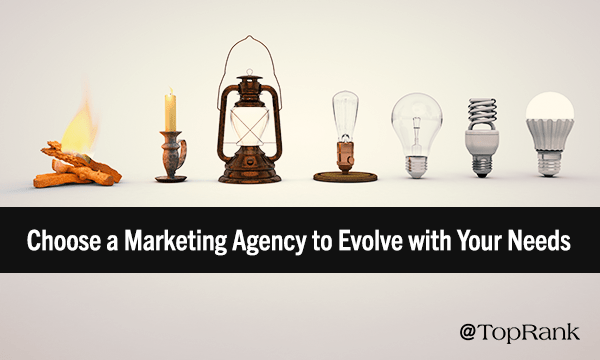
To keep pace with the changing marketplace, many B2B brands are working to find the perfect balance between growing out their in-house digital marketing team and partnering with an external digital marketing agency. Most brands are seeking agency partners to provide a spectrum of services, from tactical support to creative strategy and content innovation. And they need a partner that can adapt and evolve along with their marketing needs and opportunities.

So, the question is: To find that partner that can grow and adapt to your needs, what should you be looking for?

In our humble opinion, the best brand/agency partnerships help brands stay ahead of their competitors with integrated strategies, an eye on the latest and greatest, and the ability to measure and iterate on the success of campaigns. Here are some key characteristics that you should be on the lookout for.

What to Look for in a B2B Marketing Agency Partner

#1 – They have an eye (and hand) on emerging trends.

Interactive content. Influencer marketing. Podcasting. Virtual Reality. As the B2B landscape and B2B buyers evolve, brands and marketers need to adapt their digital and content marketing strategies to not only stand out from their competition and reach their target audience audience, but connect and resonate with buyers. And that means carefully investing in new types of content and strategies.

Of course, dipping your toe into new waters can be scary, and you’ll need to set aside time, resources, and budget for testing new mediums and following trends. And at the end of the day, you need the expertise to get it done. That’s where an experienced agency partner can help you gain traction.

For example, if you’re interested in going bold with interactive content; look for an external agency with experience here to help you:

  • Planning: An experienced marketing agency likely already has a planning checklist developed and has worked through the kinks you haven’t even considered yet; like where to host, how to optimize multi-media files, and how to create a UX experience in an non-static asset.
  • Tools and Equipment: New trends often require new technology. Tap into a marketing agency’s existing tool set and expertise using the tools.
  • Optimization: Another benefit of agency specialization is that they’ve already optimized the process, the promotion mix and experience, so your brand gets the benefit of all that experience; instead of having to start from scratch.
  • Measurement: A great agency partner will be able to help you set up tracking and provide reporting to tell you if and how emerging trends are really working for you.

#2 – They possess undeniable strategic acumen.

External agencies are great at providing support and creative ideas as needed for projects. However, the development of agency talent, expertise and context, provides agencies with strategic expertise to help you develop the marketing approach that informs their tactical support.

Tapping into an outside perspective to deep dive into owned, competitive, or prospect data to develop a comprehensive strategy and recommendation can be a really impactful set up in planning. External agencies can offer brand support in:

  • Owned and competitive audits.
  • Strategic roadmaps.
  • Customer or prospect research and profiles.
  • Overcoming marketing pain points like a lack of qualified leads or a sudden drop in traffic.

#3 – They challenge the status quo.

In-house marketing teams offer the benefit of people that are deeply immersed within the brand and the team. Frequently they sit in the same building, same floor as the rest of the team, making them easily accessible for questions, brainstorming, and strategy development.

This can be a great benefit when it comes to the free flow of information and integration across team. However, familiarity can be stifle innovation. But the good news is that it can empower an outsider to think differently.

By offering a third-party, neutral perspective, an agency can drive tough conversations that push you out of your comfort zone to create next-level strategies, and help:

  • Persuade: Agencies’ specialization and work across many clients can drive knowledge and credibility which may be able to convince a marketing team to take the next step.
  • Bring new ideas: Agency marketers, who live and breathe new marketing, and often focus on creative hires, can supply brands with new tactical or creative approaches which can push the envelope and grab attention within the marketplace.

#4 – They prioritize client relationships.

The relationship an external agency creates with your brand and in-house team is so critical. The best agency/brand relationships are based on trust and genuine alignment of goals.

Strong relationships are a key factor in creating innovative and successful marketing tactics. As you are considering agency partners, look for:

  • Alignment of values, purpose and mission: Agencies and brands that fit and work best together tend to have alignment around key culture items. Teams which exemplify the brand/agency core values are able to connect and enjoy working collaboratively toward the same goals.
  • Engaged Listening: Agency partners need to advise, but they should also be adept listeners. During the prospecting phase, a potentially great agency partner should be able to really listen to your business’ needs and present a solution that syncs with your brands’ objectives.
  • Thoughtfulness: Yes, great agency partners are responsive to your needs and queries. Perhaps more important than a quick response; is thoughtfulness and quality of response. A really great partner will offer you well thought out and creative solutions to challenges and questions, to really drive results.
  • A referral from someone you trust: When it doubt, ask your colleagues and associates for a referral to an agency they love. If they love them, that agency is already more likely to align with your values, be familiar with your brand voice and requirements, and think of you as a highly valuable partner.

#5 – They’re committed to transparency of contracts, tactics, and data.

Along with prioritizing the relationship, the right agency partner will build trust with your brand by offering transparency, which comes to everything from contract deliverables to the results of your core KPIs.

If you are partnering with an agency to help you test emerging trends; it’s especially critical that a great partner share what is and is not working, so your teams can together optimize and iterate.

Whether it’s a change in timeline, a tweak to a tactical mix or an honest assessment of how you’re tracking against benchmarks, a good partner will drive straight forward conversations that help you move forward in the best way.

#6 – They know your niche.

In B2B it can be especially tough to get up to speed on a new vertical or product. Tapping into an agency that has a similar client base to you; speeds the learning curve as much as possible.

Industry trends (like IOT for example) often span verticals; so look for a partner that understands the lingo, but also has an existing network of influencer and contacts.

Better Together: Find a Partner You Can Grow With

The agency place within your marketing department will continue to evolve as your team does. And partnering with right agency can provide you with a partner who will help you innovate tactically and strategically, while providing your in house team with the support they need to reach their goals in 2019 and beyond.

By Alexis Hall

Sourced from TopRank Marketing

By Neil Patel

Digital marketing is going to change drastically in 2019. And sadly, you aren’t going to like a lot of the changes.

And no, I don’t mean change from a competition standpoint. You already know that each year marketing gets more expensive and more competitive. That’s just a given.

Just look at the graph above: that’s Google’s annual revenue. As you can see, during the last recession, Google made more and more money. They didn’t even have a down year.

One of the big reasons we are seeing digital marketing change so much is because of the adoption of new technologies. But also because the web is getting saturated… there are 1,805,260,010 websites on the web.

That means there is 1 website for every 4 people in this world. That’s crazy!

So, let’s dive into it… here’s how digital marketing is going to change this year.

Drastic Change #1: SEO won’t look the same

I’m starting with this one because I know you are going to hate this. SEO is moving to voice search.

In 2018, 2 out of every 5 adults used voice search once per day. But in 2020, 50% of all searches will be done through voice search according to ComScore.

And it won’t just be people speaking into their microphone on their cell phone or laptop, 30% of web browsing won’t even take place on a device with a screen. That means more people will be searching through devices like Google Home or Alexa.

I know you don’t like this because every time I blog about voice search, no one really reads the article. It’s one of those topics that SEOs just wish didn’t exist.

Why?

Well, being on page 1 doesn’t matter when it comes to voice search. Either Google pulls from your website or they don’t.

And secondly, conversions from voice search will be lower because people won’t be going to your website. Google will just be giving them the answer. At least, until we can figure out how to solve this as marketers.

But instead of looking at voice search as a bad thing, just think of it this way, no one cares to read articles about it, which means most SEOs won’t be prepared for it.

This is your chance to get ahead of your competition and gobble up that traffic before the market shifts into using voice.

Here are some articles that will teach you how to maximize your voice search traffic:

Drastic Change #2: Expect algorithm updates to be more complex

According to the Moz algorithm changelog, there were 12 updates in 2018.

Although it sounds like a lot, it isn’t. In 2017 there were 13 updates and in 2016 there were 11. In other words, Google has been averaging 12 updates per year if you combined the confirmed updates with the “unconfirmed” ones.

But let’s look at the older updates…

On July 17, 2015, Google released Panda 4.2. I know you may have hated the Panda update, but it wasn’t too bad. All Google did doing was get rid of spammy sites with low-quality content.

They didn’t want to rank sites that had thousands of 300-word blog posts with duplicate content.

Could you blame them for that?

And what about the change Google made on September 27, 2016, the Penguin 4.0 update?

If you built spammy links, they no longer would just penalize you, in most cases, they would devalue those links instead.

That means if you did something shady like buy a ton of backlinks and get caught, those links would just be de-valued instead of causing your whole site to get banned.

Now if you look at the latest algorithm updates, they are getting more complex and harder to beat. And it’s because technology is evolving so fast.

Google no longer has to just look at metrics like content and backlink count to figure out if a site ranks well. They can look at user metrics, such as:

  • Are users spending more time on your site than the other ranked sites on Google?
  • Are people bouncing off your site and heading back to the Google listing page?
  • Are your brand queries increasing over time? Or do people not see you as a brand?
  • Do people find your site more appealing… in other words, is your click-through-rate higher?

If you want to beat Google, you have to shift your mindset. It’s not about understanding Google, it’s about understanding users.

Google has one goal: to rank sites that users love the most at the top. That causes people to come back, keep using Google, and increase their overall revenue.

If you can put yourself in your users’ shoes, you’ll be better suited to do that.

The first step in doing this is to realize that when someone performs a search for any keyword, they aren’t just “performing a search,” they are looking for a solution to their problem.

By understanding the intent of their search, you’ll be more likely and able to solve their problems. You can use tools like Ubersuggest to help you with it as it will show you long tail phrases (problems people are trying to solve for).

Once you do that, you’ll be able to create the best experience, the best product, or even service that people deserve.

This is how you make your site continually rank well in the long run even as they make their algorithm more complex.

Drastic Change #3: You can’t build a company off of 1 channel

You familiar with Dropbox?

Of course, you are, it’s a multi-billion-dollar company… and you probably have it installed on your computer.

When they first came out, they tried to acquire users through Google AdWords. Can you guess how much it cost them to acquire a customer?

It ranged between $200 and $300.

Do you know how much Dropbox costs?

$60 a year.

The math doesn’t work out. Why would you spend $200 to acquire a user who only pays $60?

Even when someone pays you $60, it’s not all profit. Because of that, Dropbox had to grow using growth hacking.

dropbox flow

Dropbox gives you more free space the more users you invite. That’s a great example of growth hacking. And it’s how they grew into a multi-billion-dollar company.

Nowadays, if you created a similar invite flow within your company, it won’t work that well. You can no longer build a company using one channel like how Dropbox grew.

And do you remember how Facebook grew?

When you signed up, they would tap into your email address book and send out an email to every single one of your contacts inviting them to use Facebook, even if you didn’t want them to.

facebookfriends

That one channel helped Facebook grow into the multi-hundred-billion-dollar company that we know today.

Nowadays, if you get an email saying your friend is inviting you to join a new site or social network, you’ll probably just ignore it.

Again, you no longer can build a big business leveraging only one marketing channel.

So, what does that mean for you?

First of all, popular marketing channels that are profitable get saturated fast and you are going to have a lot of competitors.

Due to that, you have to leverage all channels. From content marketing and paid ads to social media marketing and SEO to email marketing… you have to leverage all channels out there.

It’s your only option to doing well in the long run.

One channel won’t make your business anymore. But if you combine them all, you can still grow your business.

And hey, if something happens to one channel like an algorithm change, at least your business won’t go down too much because you are diversified.

No matter how much you love one form of marketing, never rely on it. Adopt an omnichannel approach.

Drastic Change #4: Blogging won’t work too well

I got into this a little bit at the top… the web is saturated. There are just way too many sites.

Sure, most of those 1.8 billion sites aren’t being updated and a lot are dormant.

Now out of those 1.8 billion sites, roughly 1 billion of them are blogs. That’s roughly 1 blog for every 7 people out there.

When I started my first blog in 2005, there weren’t as many people online creating sites or producing content. There also weren’t as many people using Google.

Nevertheless, Google loved content. Everyone was saying how content is king because if you produce high-quality articles Google would rank them due to one simple fact… they lacked content in their index.

But as time went by, Google no longer had a shortage of content. I would even go as far to say that there is too much content for them to choose from.

For that reason, they can be pickier if they want to rank your website or not. It’s not just about backlinks or optimizing your on-page code, it’s about providing what’s best for the end user.

That means Google is going to rank fresh content that isn’t regurgitated.

If you want to take the route of just writing dozens of articles each way and trying to rank for everything under the sun, you can. It’s still possible, but it will take more time and it will be harder as there is more competition.

More so, the way content marketing is changing in 2019, and we saw a little of this in 2018, is that you need to update your content.

No longer can your strategy be to write a lot of content. You are going to have to plan on updating your content on a regular basis.

For example, I have one person who works for me full time going through my old blog posts to update them. Also, I now only have time to write once piece of content each week. There is no way I can go through my blog and update over a thousand blog posts.

You’re going to have to do the same if you want to maintain your search traffic. If you are established and have an old blog, spend half your time updating your old content. If you are a new blog, you don’t really need to spend more than 5% of your time updating your old content.

Drastic Change #5: You’ll need to focus on new search engines and new content types

We can all agree that text-based content is saturated.

If you don’t agree with me, just scroll back up to Drastic Change #4 😉

We all know it takes forever to rank on Google. If you aren’t willing to give it a year, you shouldn’t spend much time doing traditional SEO.

What if I told you there was another form of SEO in which you can see results very, very fast?

So fast, that within 30 days (or even a few days!) you can rank at the top. And, better yet, those rankings mean you will get traffic.

Just look at my search traffic from this different kind of search engine:

youtube search

Can you guess that what search engine this is?

YouTube!

I generate 198,380 views every month from YouTube search. And those people watch my content for an average of 559,237 minutes a month.

I’m generating over 388 days of watch time each month just from YouTube search. That’s crazy!

YouTube isn’t nearly as competitive as Google. Nor is optimizing for the iTunes store if you have a podcast.

Don’t just focus your efforts on Google.

Focus your efforts on less-saturated forms of content like video and audio while optimizing for less common search engines like YouTube and iTunes.

Plus, these new channels have a very lucrative audience as they are engaged. Did you know that 45% of podcast listeners have a household income of $75,000 or more?

Here are some articles that’ll help you out:

If you don’t have a big marketing budget no worries. These channels aren’t as expensive or competitive yet. You also don’t need a studio to film or record. You can just bust out your iPhone and start recording yourself.

Believe it or not, a lot of people prefer that over studio quality content as it is more authentic.

Drastic Change #6: Budgets will start shifting into conversion rate optimization

At the beginning of this post, I broke down Google’s yearly revenue.

As you can see it has continually increased even during recessionary periods.

Sure, some of it has to do with more people coming online. But also, the cost per click is rising.

Same with Facebook Ads. I literally know hundreds of affiliates who used to make over a million dollars a year in income because Facebook Ads were so affordable.

But in June/July 2017, Facebook crossed a point where they had more advertisers than inventory… at least in the United States.

Over time, that trend continued into other countries, which mean Facebook Ad costs drastically increased.

Just look at the graph below. As you can see, companies spend the majority of their budget on Google AdWords and Facebook Ads.

marketing by spend

Now let’s look at what channel produces the highest ROI. Can you guess what it is?

marketing roi

SEO, right?

Although the chart shows SEO produces the biggest ROI, in reality, it is the second runner up.

What’s hard to see because it is classified as “other” in the chart and it is grouped with other marketing channels, is conversion rate optimization. And that channel produced the biggest ROI by far. It beat SEO by leaps and bounds.

It was just hard to see that because not enough companies spend money on conversion rate optimization. And when they do, it is a very small portion of their budget.

In 2019, start running A/B tests. Whether you use Crazy Egg or any other solution out there, don’t forget to include it in your marketing arsenal.

Drastic Change #7: Marketers will learn what funnels are

You may have heard of marketing funnels or sales funnels, but I bet you aren’t using them.

And no, a funnel isn’t something as simple an email sequence.

Because ads are getting more expensive, you’ll find yourself doing things like running more A/B tests (as I mentioned above), but it will only help so much.

As your competition also starts running A/B tests, you’ll find that ad prices will go up again.

So, what should you do?

You are going to have to upsell and downsell your visitors. I learned this tactic from Ryan Deiss years ago and he was spot on.

The best way to generate revenue isn’t to get more customers, it’s to get more money out of your existing customers.

Sure, your customer base is only going to spend so much. But if you offer upsells and downsells you can see increases in revenue from 10% to 30%. And some cases you’ll even double your revenue.

The key points with upselling and downselling are as follows:

  1. Offer at least 2 or 3 upsells (or downsells).
  2. If people don’t take the offer, considering offering the same offer again with monthly installments.
  3. The best offers are speed and automation. In other words, if you can help people get results faster or in an automated way, they are much more likely to take it. People are lazy and impatient, hence speed and automation always win when it comes to upsells.

At this point you are probably wondering how to do all of this upselling or downselling, right?

You have to build a marketing funnel. The good news is, you don’t have to hire a developer, you can use solutions like Click Funnels and Samcart.

They are easy to use, and you can get started in minutes.

Conclusion

Expect 2019 to be a crazy year. What worked once, won’t work in 2019.

Technology is more sophisticated and with things like machine learning and artificial intelligence knocking at the door, we are going to be on a crazy rollercoaster.

Don’t be afraid, though!

If you take the concepts above and start working on them now, you are going to be in for a much smoother ride with fewer downs and more ups.

By Neil Patel

He is the co-founder of Neil Patel Digital. The Wall Street Journal calls him a top influencer on the web, Forbes says he is one of the top 10 marketers, and Entrepreneur Magazine says he created one of the 100 most brilliant companies. Neil is a New York Times bestselling author and was recognized as a top 100 entrepreneur under the age of 30 by President Obama and a top 100 entrepreneur under the age of 35 by the United Nations.