Snapchat seems to be sliding down the list of prefered ways for influencers to reach their fans. A new report had shown that not one influencer surveyed chose snapchat as their favourite platform.
By MediaStreet Staff Writers
New research released today by Carusele and TapInfluence uncovered some surprising results about how influencers feel about various platforms heading into 2018.
Of the 790 influencers surveyed, none answered Snapchat to the question, “What is your favourite channel to use for branded content?”
Personal blogs were the favourite of 36% of respondents, followed closely by Instagram at 35% and Facebook at 12%. Twitter (9%), Pinterest (6%) and YouTube (1%) also received votes.
Even when asked to name their second favourite choice, Snapchat collected fewer than 1% of the responses, while Facebook ranked first at 26% and Instagram second at 25%.
“Two things are clear from this part of our survey,” said Jim Tobin, president of Carusele. “The first is that blogs aren’t going anywhere, which I think is a good thing for both brands and influencers. And second, Instagram’s moves over the last year or two have really outmanoeuvred Snapchat, which had been a hot platform for creators two years ago.”
Influencers also plan to be in the space for the long haul, with 97% of influencers surveyed planning to continue their work “as long as I’m able.” This despite fewer than half surveyed reporting working full time in the vocation (46%) while 24% work full time elsewhere and 13% part time elsewhere. The balance report being full time parents or caregivers.
“Our earlier research legitimised influencer marketing as a sales driver. This new research supports the fact that it remains a viable career option for content creators,” said Promise Phelon, CEO of TapInfluence.
Carusele won the 2017 Small Agency of the Year Award at the Shorty Awards. It utilises a hand-crafted network of content producers to produce premium influencer campaigns for leading brands and retailers. TapInfluence is an influencer marketplace connecting brands with social media influencers. And if they say that Snapchat is no longer cool, then it probably isn’t.
Getting your social media right is essential for success
It can be difficult to quantify the effect of your social media strategy on your sales. The waters are murky; conversions are more often indirect and the real value of a strong social presence is the more nebulous ‘personality’ of your brand. Regardless of how you define its value, though, a proper social media strategy is well worth investing in. Before you set out on building a loyal troop of followers online, consider these four tips for an effective, consistent strategy.
Identify your target demographic
Where many companies falter is in casting their net far too wide. Being present on all social media is great but unless you have the resources to effectively manage a plethora of accounts, the message risks being diluted. Facebook is the universal social media – it spans demographics like no over and is present in almost every country in the world. But outside of the world’s second most popular website, a more targeted approach can be effective.
Consider more than just the big two – Facebook and Twitter. Promoting a fashion brand? Use Pinterest. Promoting a B2B company? LinkedIn. And these distinctions can be further developed; 85% of Pinterest users are female, for example, so those men’s shirts are probably best marketed elsewhere. Luckily, the demographics of particular social media sites are easily accessible, so identify yours before assuming that more means better.
Find your tone and hone it
Perhaps secondary only to identifying your target demographic and the social media they use, is finding your tone. Different tones suit different products – travel companies, for example, tend to be lighter in tone than financial institutions – but as long as the tone is both strong and consistent, they don’t necessarily have to naturally match. More jovial personalities tend to get higher engagement (and hence more shares), but doing it poorly is a surefire way to come across try-hard.
A great example of a playful social presence is Skittles, whose Facebook page has over 24 million ‘likes’ and whose content is well shared. Their tone is relaxed, comic; not every post has to be hilarious for a jovial presence to work. Paddy Power’s R-rated Twitter feed is followed by 569,000 Twitter users – leaps and bounds ahead of the competition – thanks to a commitment to comedy and a tone so consistent you’d wonder how their social media team have a day off. These kinds of account give a company a human face, a personality to veneer the number crunching and stuffy boardroom meetings at play under the surface.
Use visual platforms
Social media campaigns are often more successful when they employ various mediums rather than the occasional tweet or Facebook post. Snapchat grosses 8 billion daily video views, for example, and the non-intrusive nature of having a company as a contact on the media sharing app renders it more appealing for the user. Again, it is a question of demographic; if your product is designed for the over-50 market, Snapchat would be an essentially useless medium.
Video, more generally, is a fantastic opportunity for full engagement. The most effective marketing videos are 15 seconds long or under; Instagram caps ads at 15 seconds and promotional Facebook videos will autoplay if under that length – a great way of grabbing the idle scroller. It’s not a long time in which to tell a story, but if you manage to create an engaging, concise video ad, you have the best chance of conversions. User-generated content is also an often under-valued source of strong visual content. It is more viable for already established companies, but can be leveraged by all if done well. Coca Cola’s ‘Share a Coke’ campaign – where they invited customers to, you guessed it, post a picture of them sharing a Coke – was one of their better recent marketing strategies.
Build a story
This is where the difficult task of converting your social media presence into sales requires some creativity. Self-promotion is all very well, and directly inviting followers to buy your products will doubtless see some return, but there is more value to be drawn from building a story around your brand. Slow Watches, for example, have developed a philosophy surrounding their products and they use it to underpin their social media marketing; ‘Can a watch change your life?’ is an effectively emotive opening gambit. Doc Martens, similarly, run a well-followed blog covering everything from punk festivals in the Netherlands to bands that have appeared on their ‘Stand For Something Tour’ – which is, in itself, a wonderful marketing move.
Your story should, of course, contain your product in some way. Saddleback Leather describe themselves as a ‘people business cleverly disguised as a leather goods company’ and their social media strategy reflects this. Their Instagram account focuses primarily on adventure, with their bags appearing all over the globe. A story is an effective indirect sales driver, and appeals to more than just a customer’s wallet.
In the crowd of millions of businesses, it’s really necessary to make yours stand out to attract your ideal clients. It is not enough only to swim against the water-you might have to follow suit of Moses. The point is, if you want your business to be taken seriously, you have to do something different that will leave a long lasting impression on the minds of the consumers and to get your business out of the dull gray box; a strong brand identity is necessary that reflects the purpose and characteristics of the business. And like everything else on the planet, the only way to keep your brand relevant is to update it from time to time.
What is a “brand”?
Your company’s brand is what your consumers perceive of your company. The idea or feeling that they associate with your company is the brand of your business. If you ask your clients of what comes to their mind when your business is mentioned and they respond consistently with an emotion or perception, which is your brand. However if the responses are inconsistent or they refer to non-image attributes like price, you brand needs to be developed.
A business can have brand even if it doesn’t have a logo or a creative image. The way your business operates and the actions that it undertakes are what create an emotional influence on the consumers and that is where your brand generates from.
Your company’s brand plays a vital role in the workings of its business, as it-
Helps create an impression
Evokes curiosity about the company and its business
Gives out an essence of quality and professionalism
Why should you update your brand?
Brand image is crucial in communicating properly with your target clients the goodwill of your business and to assure certain levels of expectation. Even if your business has an established brand, it needs to evolve as the business itself changes. Re-branding and refreshing your company’s appearance is crucial to keep it relevant to your old clients as well as to attract new ones. There are many reasons why to do so
To reflect internal changes
Business growth: As a business expands, the brand needs to extend itself to appeal to the increasing mass of consumers that the company is trying to interact with.
Globalization: When a company expands its products and services to the international market, the brand name has to evolve to be represented constantly in all the countries.
The biggest of the international brands like Google, eBay, Apple, Coca-Cola update their brands frequently to cater to their expanding business strategies.
When is it time to update your brand?
Re-branding your company is a decision that should be made after a systematic analysis of the response pattern of your consumers. There are certain signals that your brand needs an update which you need to look out for, like-
If your brand is being associated with negative feelings
If your brand is out of sync with your business identity
If your brand is not making your business stand out
How do you get your brand updated?
A refresh comes in many forms and it is important to have an understanding of your clients’ attitudes to opt for the most suitable re-branding for your business. The options include:
Getting a logo: If your business doesn’t have a logo, consider getting one developed. Or if your company has had the same logo for a long time, consider getting it changed. A case in point is the company Starbucks which has become a very easily recognizable brand with its much simplified logo.
Changing the company’s name: For a business to appeal to the popular mass, the company needs a name that is easily accepted and recognized by its large variety of consumers. For example, the digital giant Google was once known as “Back Rub”.
Releasing a new product that has gained relevance among the consumers.
Changing the way of advertising: It is essential to advertise your company the right way and by right way, what is meant is the way your target audience will find your product or service the most appealing. It is equally important for the advertising strategies to be relevant to both your business identify as well as time.
It is important to understand that the update should not come when you are bored with the look or idea that your company sends out. It should not be based on your impulses but on the response of the people on the other side. If their behavioural trend shows a need for change in strategies to keep up the business or to expand it, then the choice of re-branding should come on the table. Brand update does not necessarily have to be in your face and grand. Sometimes simplifying is the key- just by removing elements that make your company look dated; it is possible to keep up with the changing taste of the consumers.
It’s never too early to start working on your company’s marketing plan for the upcoming year – just ask the accounting department. For B2B and B2C marketers alike, there are many conversations to be had about the impact your budget will have on your marketing capabilities and strategy.
Use this guide to assess your company’s current marketing practices and discover the marketing methods you may want to introduce in next year’s plan. After all, your 2018 budget is likely an untapped resource for your marketing team and might allow for optimization, integration and innovation. Did we overdo it on the buzzwords? In any case, use this guide to get a jump start on your 2018 marketing budget and determine what tactics you should incorporate to make the year a successful one.
Step 1: Analyze and Benchmark Past Marketing Successes
Marketing is a balancing act and when you’re trying to increase qualified leads, it should never be a guessing game. To develop a truly successful marketing plan, you first have to look back at marketing plans from years past.
Use data from Google Analytics, your email marketing service and your marketing automation system to understand what sources are driving the most leads. Once you have tangible numbers, you can identify which sources contribute the highest percentage of total revenue via leads and conversions.
After you’ve collected year-over-year analytics data from each marketing channel and their corresponding sales metrics, you should ask yourself two simple but important questions:
What’s working?
What’s not working?
Unfortunately, each marketing tactic cannot be evaluated in the same way. While print ads offer circulation data, you can’t determine the exact number of readers who flipped through a publication’s pages. On the other hand, display advertising can provide definitive findings as to the size of the audience, the amount of impressions and click data.
Do your best to prioritize marketing tactics based on an unbiased review of their performance each year. When analyzing performance, try to maintain a holistic view of your business. What outside factors are influencing business development besides marketing? The loss of a key employee or the emergence of a new local competitor could be to blame.
Return on marketing investment (ROMI) can be tough to navigate, but with persistent research, you can optimize the channels that are working in your favor and pull back marketing spend on the tactics that aren’t.
Step 2: Determine 2018 Marketing Goals
Once you’ve familiarized yourself with the success of your past and current tactical marketing plans, it’s time to determine your 2018 marketing goals. After all, you can’t take a road trip if you don’t know where you’re headed.
Your marketing goals should be strategic objectives that are quantifiable and specific.
Define your goals on multiple levels; start from the top by determining your short and long-term business objectives. With this information, you can understand the amount of revenue you will need to achieve those goals and therefore the number of new leads you will need to generate. This is where the fun starts. Armed with these numbers and your data from step one, you can begin to break down these goals even further, setting success measurements for each marketing channel and tactic.
For tactical goals, be specific in terms of budget and results. How much are you willing to spend on this tactic? How many clicks or new leads do you expect this tactic to generate? Here’s an example:
Channel: Digital marketing
Platform: Google AdWords
Tactic: PPC campaign
Spend: $3,000/month
Goal: 500 clicks, 30 conversions
It’s important to establish objectives, but there should be some element of flexibility. Many factors that will impact progress toward your goals are constantly in flux, such as the cost associated with certain keywords and ad groups on Google AdWords.
Keep in mind that circumstances may change throughout the year and budgets may have to be adjusted. If your current structure does not allow for budgetary changes, your goals and expectations should be altered accordingly.
Step 3: Consider Marketing Channel Options
There are multiple marketing channels to choose from when creating your 2018 plan, but most marketers will recommend an integrated approach. If your budget is tight, it may be in your best interest to focus investments on one or two channels. Here are a few channels that every modern marketer should consider:
Digital Marketing
Website development: Investing in development can go a long way. Whether you’re starting from scratch to create a new website or you’re improving an existing one, users can always appreciate a site that has top-notch UX and updated features.
Display advertising & pay-per-click (PPC): Advertising via search engines and partner websites is becoming increasingly commonplace as technology advances. Display advertising is an economical online advertising method, offering the opportunity to display graphic banner ads on website categories of your choosing. PPC, while more costly, is extremely customizable; advertisers can specify bids, ad copy, display time of day, location targeting and more.
Email marketing: A standard among most companies in 2017, there are still realms to explore in the world of email marketing. Experiment with email workflows to capture leads and incorporate responsive elements to heighten engagement metrics.
Social media advertising: For marketers who have established a strong social media presence for their company, social media advertising is an excellent tactic to incorporate. LinkedIn is the most beneficial for B2B marketers (especially its new InMail advertising option), while Facebook suits B2C marketers.
Search engine optimization (SEO): Optimizing your website for search engines is becoming increasingly important. How many times do you Google per day?
PR & Social Media
Public relations and social media marketing are standard for most B2B and B2C businesses. To take your editorial calendar to the next level, put down the press release and consider adding a new method to the mix.
Content marketing is a tactic that has grown in popularity in the past few years; this avenue allows companies to produce in-depth industry content that draws in a new, more targeted audience.
Content marketing is especially useful in the B2B space because industry content may not be as readily available to interested consumers. This content not only serves as quality editorial copy on-site, but it also has the potential to be leveraged for lead nurturing and demand generation purposes.
Traditional Marketing Channels
Traditional marketing methods have been a staple in the industry for decades and most are still in use. Direct mail, event marketing, television spots and print advertising are just a few tactics that are still a core focus for many marketers.
But be wary of opting for traditional methods unless you can prove that the tactics will result in strong leads. If not, they may not be worth the significant investment.
Step 4: Prioritize Your Needs
This is the hard part. Marketing on every platform is be the ideal circumstance, but for small to medium sized business (SMBs), this may not be realistic.
To prioritize your marketing needs, start with the most costly endeavors. Choose the tactic that is the most effective at driving leads and go from there.
Once you’ve incorporated the tactics that require the most spend, you can balance the rest of your budget with more cost-effective tactics.
Most B2B and B2C marketers find that working with an agency is helpful in determining the best marketing mix. For most of our clients, the marketing channel priorities that garner the most online success include:
PPC campaigns
Content marketing
SEO
Ultimately, there’s no magic formula. Your marketing budget should be a mix of different methods, based on the resources you’re working with and the audience you’re trying to reach.
This guide should serve as a starting point for your 2018 marketing planning and help you bring increased exposure for your business in the new year.
I think it goes without saying that just about everyone in the digital marketing space is looking to become an influencer in one way or another.
Whether you want to improve your authority amongst potential clients, find yourself speaking at a conference, or even publish your own book, you first need to build your overall authority and influence.
Over a decade ago, I started off on a journey in digital marketing that was based almost completely on building my influence as an SEO and Social Media Marketer, so I wanted to share some of the things that have worked for me over the years.
“Influence will lead marketing efforts by 2020,” according to Ted Coine. “It’s the most effective form of ‘advertising’ there is…”
1. Write About News or Features
Whether it’s on your own blog, a third party site like LinkedIn or Medium, or guest writing on a site like Search Engine Journal, I strongly believe writing is one of the core ways to build your influence.
I also think one of the key angles you should write about is to cover news and review features from various sites, tools, or communities, both in beta and just being released. Not only does it keep your name visible in the most current of topics, it also allows you to provide one of the most valuable aspects of an influencer; the cliff notes we all care about.
Tips to improve your success:
Follow the Developer and Support sections of all the platforms or services related to your business or expertise. I cannot count the number of times we have found developers talking openly about coming features or explaining how existing features work in a way that was unknown to the masses, allowing me the opportunity to write about these before most people even knew they existed. Additionally, this allows you to identify areas of discussion where people are looking for guidance and show you which articles would make you the most helpful and influential.
Work to join any Beta programs available which give you access to features well before anyone else. Even if they are not advertising a program, spend some time connecting with developers and then ask them to be included in any testing. I have been in Beta programs for Google, Digg, Reddit, StumbleUpon, Yahoo Buzz, and many others over the years, which definitely helped with my influence as a Social Media Marketer and an SEO.
Make sure to not only write about a specific news event or feature but also add in a personal expert commentary, summarizing how the news or feature would benefit your readers. This is essential to increasing your influence and authority, as it shows not only that you are following the news and features, but that you have enough overall understanding and expertise to have an opinion and comment about them.
2. Build Connections and Relationships With Real Influencers
At my first conference, I remember watching Matt Cutts being swarmed by eager SEOs just waiting to get a question in. I remember hearing someone comment that he doesn’t drink alcohol at conferences, preferring to only drink Sprite, so instead of getting in line and waiting to ask my one question of probably the most influential person in Search Marketing at the time, I went to the bar and grabbed a Sprite.
I walked over and handed it to him, saying by the looks of this crowd, you seem like you could use a Sprite, nodded and walked away. He smelled it, smiled, and took a drink. From that point on Cutts and I were pretty good friends, leading to me being invited to more than one NDA meet and greet at Google’s headquarters, as well as many private conversations that helped me in my SEO career a ton!
I have many stories like this, but the point is: you are who you surround yourself with.
Take the time to build real friendships with influencers in your space, as it will result in your influence increasing (as well as earning you a few cool friends, which everyone could use more of).
Tips to improve your success:
Identify influencers you would actually want to be friends with. Find some common interests, listen to their interviews, read their comments on posts, and find areas of similar interest or expertise to potentially connect around.
Always do something for your new friend first, before ever asking for anything for yourself.
Try only connecting with one to two people at a time, so you can focus and be genuine with your interactions.
Interact with influencers multiple times, through commenting, replying, or contacting, prior to trying to meet them in person or at an event.
3. Make Yourself Available to be Heard
Being quoted or interviewed for influential and well-known publications can help immensely in improving your influence as a marketer. Not only are you exposed in a very prominent way to new audiences, but you can also reference being published in prominent publications to help improve your perceived influence through your own channels. I have seen many experts reference their publications on LinkedIn, in their biographies, and on their websites.
Signing up for services like HARO, a site where reporters and individuals are connected, can help you identify opportunities where a publication might be looking to connect with experts in your space.
Additionally, you can reach out to reporters and authors who are already covering topics you would like to be included in, to offer yourself as a source for future articles.
As Ann Handley said to me, when I asked her what she thought about growing your influence; “The road to influence is paved in generosity..” So be generous and share your expertise with others. As she said:
“The etymology of influence or “authority” is the Latin “auctoritas,” which also eventually gave us “author.”
That root makes perfect sense, doesn’t it? Because the best authors give generously of their knowledge, with honest empathy for the needs and burdens of their audiences.
“Authoritarian” types might think that authority gives permission to strong-arm or bully. But true authorities know that you can only earn authority from generously helping others.
So the road to influence is paved with generosity. Help others in any way and in any format you can — via blog posts, questions, videos, Facebook Lives, or wherever un-answered questions live!”
Tips to improve your success:
Although HARO offers a free service, try out their paid subscriptions, as they offer features that could increase your chance of being contacted by an author or journalist.
Review sources you would like to get quoted in, identifying which authors tend to include quotes. Make efforts to connect with the authors that you feel are more likely to reach out to you when they need quotes.
4. Quote Influential People
As Oprah Winfrey would say, “surround yourself with only people who are going to lift you higher.”
I did this a little while back on an article I wrote called “The Logic Behind One Thought, One Paragraph”, which quoted a number of experts on the topic. You have probably noticed already, but I did the same thing with this article, reaching out to known experts on influence, like Kristopher Jones who had this to say when asked some of the things that worked for him:
“Launch your own Ask Me Anything (AMA) series. That’s what I did back in January and I’ve been able to engage with tens of thousands of people. Leveraging Facebook Live has allowed me to interact in real-time with followers that I normally don’t get to connect with and in the process I’m able to deliver value, which I believe is the hallmark of influencer marketing.”
When you reach out to experts and influencers around a topic which you are writing about, you not only improve the quality of the article and the information it contains but in your readers’ eyes you also elevate your level of authority and influence.
Even the ability to acquire a quote from an influencer, says something to your influence.
Tips to Improve Your Success:
Once you have received a quote from a selected expert or influencer, connect with them on any social channels you feel make sense. Review their social accounts to see where they are active to help you decide where to connect. This way you can continue to engage with them going forward.
When your article is completed and published, send it to the people you quoted, as they are likely to share it with their followers, improving your influence and visibility as a whole.
5. Share Your Expertise
I would guess that if you are really looking to increase your influence, you have at least a couple of skills you are worthy of being an influencer for, so start showing off your skills whenever possible.
Webinars are great opportunities to share your expertise with a potentially large and eager audience. Whether you create and host your own, partner with someone to have the opportunity to host a webinar with their audience, or purchase the ability to host a webinar, it can be an extremely effective way of increasing your influence.
“Podcasting is a great way to build targeted influence, especially if you create a solid, interview-based show. Asking smart questions of well-known guests positions you as a relevant player in the field.” ~ Jay Baer
Like webinars, people are listening to podcasts in an effort to learn from experts and influencers, so they are primed to view you as both.
Search around for who hosts webinars and podcasts, start interacting with them, and then when the time is right you can broach the topic of being a guest.
Additionally, there are a number of sites like Quora and Inbound, where you have the opportunity to answer user’s questions and showcase your expertise. One side benefit of participating in Q&A sites is the insight you get into what people are looking to learn, which can lead to really effective and timely articles.
Don’t forget online conversations, like the chats that occur on Twitter regularly, which provide great opportunities to not only show off your expertise but also connect with other influencers at the same time.
“Participate in Twitter chats. There are dozens of chats going on at any given time, and the more active chats can be great avenues for showing your knowledge on a topic. I started out participating in Twitter chats, and after a while, as I became better-known, I often was asked to be a guest on a chat. The amplification your tweets get, along with the wider visibility among people who care in a particular topic, is well worth the time spent.” ~ Amy Vernon
Tips to improve your success:
When looking for podcasts to be a guest on, consider the audience, the format used for the show, and how often episodes are published. These can all help you in considering which podcasts to attempt to be a guest on.
When answering questions on Q&A sites, it is acceptable and often times helpful to link back to resources you either created or are aware of. Don’t abuse this, but definitely take advantage of it to increase your influence.
6. Speak at a Conference
Public speaking is likely one of the most effective ways to increase your influence as a marketer, providing you dedicated time in front of other influencers and attendees, as well as providing the opportunity for interviews, media coverage, and other speaker opportunities.
Unfortunately, of all the tactics for increasing your influence, this might be one of the harder ones. That said, once you feel you have a number of the other discussed tactics working for you, then start throwing your name into the hat when conference speaker pitches open up for applicants.
Tips to improve your success:
Review previous conference sessions to determine what topics a specific conference typically provides. This will help you in your pitch to be within a realm of interest while suggesting a slightly current or different angle on the topic.
Identify the conference employees and hosts, so that you can begin engaging with them. Fair or not, a good amount of speaker selection is based on who you know. Impress someone associated with the conference ahead of time and it will improve your chances of being selected as a speaker.
7. Understand the Psychology Behind Influence
One of the best things you can do to really help improve your influence as a marketer is to really understand how influence works.
There are numerous videos you can watch on YouTube, courses you can take, as well as books you can read such as the best-selling book “Influence“, which can all help you understand some of the important aspects to influencing people.
You would be amazed at how even a simple change in vocabulary can have a significant impact on your efforts. For instance, take this example the author of Influence, Robert Cialdini, shared with me:
“When you are asking people for feedback on a proposal or plan, don’t request their ‘opinion’ on the matter. Instead ask for their ‘advice’ concerning it. Why? Because when people are asked for their advice, it puts them in a cooperative state of mind, which makes them more likely to support your idea.”
“One crazy way to build influence is to do something truly remarkable. Like cure some disease. or build the next billion dollar unicorn company, or come up with truly new and innovative ideas (etc.) Too many people claim to be influential experts in their field but are actually somewhat unremarkable. People like Elon Musk or Bill Gates didn’t have to do influencer hacks to build their influence. They’re experts because they’ve accomplished amazing things.”
When my friend Larry Kim shared this with me recently, my first thought was, “Well I am not Elon Musk nor Bill Gates, so what remarkable thing would I do?”
The truth is we are all capable of finding something remarkable to do within our industry and if you want to increase your influence in marketing, then start finding that one thing that will help set you apart.
9. Go Forth & Influence
Call it drive, grit, or whatever you like, if you want to be a marketing influencer then you can do it, so long as you keep driving forward and never stop trying!
I hope that some of the above tips help you on your path and I look forward to hearing your story soon.
Wondering about the current state of the industry? Columnist Jayson DeMers shares highlights and stats from a recent survey of digital marketers.
For entrepreneurs and startup founders looking for new ways to grow their businesses, there’s no shortage of information on the “whats” and “hows” of digital marketing.
For the past decade, I’ve done my best to provide even more information in those categories, helping entrepreneurs with everything from the basics of building an online presence to advanced tactics in categories like SEO.
But it’s also important to zoom out, beyond the strategies and tactics, so we can understand the “whys” behind marketing — as well as where it’s headed and when.
Last year, I attempted to answer these questions with an original survey I called “What Works in Online Marketing,” and I walked away with some interesting revelations about the state of the industry. Now that it’s a year old, I figured it was time to redistribute the survey and find out exactly where we stand today.
You can download the entire report here (registration required), but below, I’d like to highlight some of the most interesting findings from the survey and discuss what they mean for your business.
Survey methods
The survey itself was fairly simple. It comprised a number of questions regarding the use and effectiveness of multiple different online marketing strategies, including content marketing, SEO, social media marketing and link building.
We distributed the survey to 376 people, most of whom are professional marketers or business owners, and collected the results for analysis. There was a fairly equal distribution of participants by age, gender and position.
This year’s most important takeaways
So, what did we learn about the state of online marketing? These were some of the biggest takeaways:
Attitudes haven’t changed dramatically. Compared to last year, attitudes about marketing haven’t changed much one way or another. As you’ll see, marketers still feel good about the strategies they’re using, and they are investing in different tactics (such as SEO, content marketing and social media marketing) in similar patterns. There haven’t been many disruptive events to force people into new paradigms and new strategies, nor have there been any big scares or economic disruptions to curb the power of marketing.
People are ready to spend more on marketing. Nearly 45 percent of marketers are planning to increase their marketing budgets this year, with another 30 percent of responders planning to keep their budgets the same. That means 75 percent of respondents are keeping their budgets the same or increasing them, compared to less than 25 percent who are planning to decrease their budgets. This is a sign of overall economic growth, potentially, but it’s also important to recognize it as a sign that most marketers are finding success.
Marketers are clueless when it comes to ROI. But how are those marketers defining success? Return on investment (ROI), arguably the single most important metric for gauging the profitability of a campaign, remains elusive for many marketers to measure. For each core online marketing strategy, we asked marketers what type of ROI they were seeing—and the top answer for nearly every strategy was “not sure.” The only strong exception to this rule was social media marketing, which 44 percent of marketers saw a positive ROI for. Otherwise, either marketers aren’t measuring their ROI rates consistently, or they don’t know how to do it.
Facebook is king, but Instagram is rising. As you might have predicted, Facebook remains the most popular social media platform, both in terms of the number of marketers using it and in terms of the ROI those marketers are seeing from it. Over 88 percent of respondents are using Facebook, and 53 list it as their top-ROI platform. However, Instagram is also rising in importance, jumping to become the second-most popular social platform for marketers (excepting YouTube). With 95 percent of marketers planning to keep or increase their social media budgets, social media marketing is likely to stay around for a while.
Optimism reigns. Finally, optimism in the online marketing community is high. Overall, marketers are increasing budgets, but they’re also increasing budgets for most specific strategies, including SEO, content marketing, link building, influencer marketing and social media. They’re happy with the results they’re getting, and they’re predicting that the strategies they use are going to stick around for a long time. For example, when asked if they thought SEO would ever become universally impractical, unprofitable or otherwise useless, 32 percent said “maybe, but it’s unlikely,” making it the top response. Only 22 percent gave some kind of “yes” answer, and 17 percent said “no, never.”
Where are we headed?
Between any two points, you can draw a straight line. With the information from this year’s survey in conjunction with information from last year’s survey, we can predict what’s going to unfold over the course of the next year.
Personally, I look forward to seeing more enthusiasm and more investment in online marketing overall. The more people we have working in the industry, the more innovation we’ll collectively drive, and the more information we’ll have to collectively work with.
Carl Frederic Sealey’ If you’re looking to develop a better understanding of digital marketing, then you’ve found the right article.
Carl Frederic Sealey has shared a rundown of how digital marketing operates in 2017. Digital marketing or internet marketing as it’s popularly understood is a tool to continue marketing for our merchandise online. Direct email advertising, search engine optimization and search engine advertising are some of the tools that come under this class. They’re getting increasingly more prevalent in the internet world.
It’s a very popular type of advertising, Media is significant now because we’ve got access to a high number of information and a growing number of folks are using the large data. Other kinds of promotion include text messaging, mobile programs, electronic billboards, digital tv and radio communications. All are strong tools to boost our visibility into the clients. Businesses leverage digital stations like Google search, social networking, email, and also their sites to get in touch with their present and potential clients.
From the site itself to your internet branding assets — electronic advertising, email advertising, online brochures, and even outside — there is a massive spectrum of strategies and resources that fall under the umbrella of electronic marketing. And the most effective digital marketers have a crystal clear image of how each strength or strategy supports their overarching targets. So Just What is Digital Marketing? It’s an umbrella term for all your internet advertising efforts. Businesses leverage digital stations like Google search, social networking, email, and also their sites to get in touch with their present and potential clients. From the site itself to your internet branding assets — electronic advertising, email advertising, online brochures, and even outside — there is a massive spectrum of strategies and resources that fall under the umbrella of electronic marketing. And the most effective digital marketers have a crystal clear image of how each strength or strategy supports their overarching targets.
Here’s a fast rundown of a few of the most frequent resources and tactics: Your Site The procedure for optimizing your site to ‘rank’ high in search engine results pages, thereby increasing the quantity of free visitors your site receives. Content Marketing The production and promotion of articles resources with the intention of producing brand awareness, traffic increase, lead generation, or clients. Inbound Marketing Inbound marketing identifies the ‘full-funnel’ method of attracting, converting, final, and delighting clients using internet content.
Social Media Marketing A way of driving visitors to your site by paying a publisher each time your ad has been clicked. Affiliate Marketing A sort of performance-based advertising in which you get commission for promoting someone else’s goods or services on your own site. Native Promotion Native advertisements refers to ads which are mostly content-led and featured on a stage along with other, content that is articles. According to Carl Frederic Sealey, BuzzFeed sponsored articles are a great example, but lots of individuals also consider social networking advertisements to be ‘native’ — for instance, Facebook and Instagram marketing.
Marketing Automation Marketing automation refers to the applications which exists with the objective of automating marketing activities. Many marketing departments need to automate repetitive activities such as mails, social networking, and other site activities. Email Marketing Businesses use email advertising as a means of communicating with their viewers. Email is often utilized to market content, events and discounts, and to guide people towards the company’ website. Online PR It is similar to conventional PR, but at the internet space. On the surface, both look similar: Both happen mostly on the internet, and both concentrate on producing digital content for individuals to eat. So what is the difference?
Digital outbound approaches aim to place a advertising message right in front of as many individuals as you can in the internet area — no matter whether it is applicable or welcomed. As an instance, the garish banner advertisements you see on very top of several sites attempt to drive a product or advertising onto individuals that aren’t always prepared to get it. On the flip side, entrepreneurs that use digital inbound strategies use online content to pull their target clients onto their sites by giving assets which are useful to them.
Among the easiest yet most powerful inbound advertising assets is a site, which enables your site to capitalize on the conditions that your perfect customers are trying to find. Digital advertising, on the other hand, is an umbrella term to describe online advertising tactics of any sort, no matter whether they are deemed outbound or inbound. Does Digital Advertising Work for All Firms? Digital advertising can work for almost any company in any industry. Whatever your company sells, electronic marketing still entails building out client personas to spot your audience’s needs, and generating valuable online content. However, that is not to mention that all companies should implement an electronic marketing and advertising strategy in precisely the identical manner.
Social media – who doesn’t know about it? In this digital tech savvy world, social media has gained a massive toehold. Various social media platforms are explored in-depth for digital marketing. No doubt, LinkedIn, Facebook, and Twitter are the most receptive social platforms for business; however, various platforms, including Instagram, are preferred for various marketing activities; they are:
Facebook dominates among all social media marketing platforms as a source of social traffic and sales.
Instagram is one of the fastest growing social media platforms. The name Instagram is derived from a combination of “Instant Photo” and “Telegram.” Instagram, an incredible social media platform for sharing pictures, was launched in the Spring Season of 2010. In a less than decade, this platform has grown into a powerful social media force, not to be overlooked.
Since 2012, Instagram is owned by Facebook. This acquisition of Instagram by Facebook shows where the digital marketing trends are heading. Since both social media platforms are owned by the same owner, you can easily connect these two to boost your digital marketing strategies.
In the recent past, Instagram has literally competed extremely well with the dominant top four platforms viz. Facebook, LinkedIn, Twitter, and Pinterest. Instagram has more than 500 million users.
Instagram is a great platform for online marketing since it is more popular on mobile; moreover, mobile is gaining huge traction day by day by both users and search engines.
People are prioritizing visual content over plain, and hence, Instagram is considered as one of the most effective social media marketing platforms for the coming days. As a business owner, you should use Instagram to market your products and services. Apart from product images, you can also share videos. Its ‘LIVE recording and sharing’ feature is getting way popular bit by bit.
Explore Instagram as a social media marketing platform
Social media management starts with the base of your followers and followings. To boost your Instagram marketing, first of all, you need to boost your followers on a constant and stable basis. The more people are aware of your brand, the greater your chances are to potentially reach your target audience.
Let’s run through the tips and tactics how to explore Instagram as a social media marketing platform to make your brand more popular.
1. Hashtags – use unique, crisp, meaningful, and attractive
Hashtags are not only important for Twitter; they also play a prominent role on Instagram, Facebook, Pinterest, LinkedIn, and Google plus.
According to Dominique Jackson, the beauty of hashtags for Instagram is they make your content discoverable and increase your chances of engagement.
It’s a big way of how users can find you through their mobile Instagram searches. As compared to Twitter, here you’re not restricted by character count. You can include a few tags in your posts to get connected. While deciding on hashtag for branding, it is advisable to create brand specific hashtags. Try to keep it as unique and crisp as possible.
Make usage of both sort of hashtags; brand specific hashtags and community specific hashtags. Brand hashtags help you to popularize your brand and community hashtags help you to become more discoverable.
Try multiple variant of hashtags such as brand specific hashtags, general hashtags, and trending hashtags, to get noticed in searches.
Examples of brand specific hashtags are:
#PutACanOnIt—Red Bull
#ShareaCoke—Coca Cola
#SpeakBeautiful – Dove
#TweetFromTheSeat—Charmin
#OreoHorrorStories—Oreo
#WantAnR8—Audi
An ideal general hashtag should be prepared with two words over a single word to make it meaningful e.g. rather than #QL, #AskQL is a better hashtag.
2. Emojis – use the right Emojis to keep your audience engaged
In any sort of online communication, Emojis is the best substitute for the absence of facial expression, tonal inflection, and body language.
Nearly 50 percent of all captions and comments on Instagram now have an emoji or two.
The same source has mentioned that posts with Emojis bring 17% higher interaction rates on Instagram.Based on the fact that 80% of smartphone users regularly use Emojis in their daily communication, their use has been quoted as the highest growing ‘language’ in some of the countries across the globe. Worldwide brands are obviously energized and enthusiastic to cash on this new form of communication.
3. Interaction – consistently interact with your followers
Once you get follower/s, do not shy away to stay engaged. Constantly post impressive content which your followers find relevant to their interest and business. Avoid throwing random posts, i.e. once in a week or ten in a go, as far as possible. At least, twice a day posting is requisite. Once your followers start increasing, you can start posting three to four times a day. Consistency matters most!
According to Anthony Carbone, “If you stick to a niche and show authenticity and passion in your posts, you will find a strong following”
The more people you can dynamically involve and persuade to comment on your content (images/videos), the better for you. Since, it will inculcate the interest for others who want to contribute or comment on your content as well.
A good example on how to stay engaged with your customers is well set by Starbucks. It is considered as one of the top brands on Instagram. Starbucks often appreciates their followers / customers by giving a shout-out with cool images. This is how they had updated their Facebook cover image using Instagram post.
4. Networking – create a positive community
Once you will have an active profile, you will surely start getting followers of your niche. But the main question here is retention! You need to retain them as your dedicated followers.
This is, in fact, the most important, most tricky, and most significant matter for any social media account. You need to build a network of your domain and keep them engaged. Interact with them, share their posts, give opinion / comments on their posts, ask them relevant questions, reply to their questions, and keep having all such sort of communication. In addition, stay away from controversial posts. It can badly impact your brand value. Build a vast network of your industry and create a positive community through your posts and engagement.
Follow your followers and work hard to turn your following into followers.
5. Amount of information – do not bore your audience with information overload
No doubt consistency is inevitable, but if it lacks harmony and relevancy of content, it results in either spamming or information overload. Keep your frequency correct and consistent. Rather than preaching them, engage with them. It’s better to ask sometimes, they should feel being valued. Dig out meaningful interaction from them.
The ideal proportion of posts based on followers suggested by industry experts are:
6. Free tools – make the most use of Instagram marketing tools that are free
Instagram also provides free analytics tools for business profiles; prudently and sensibly make the most use of them to market your products and services.
For example, “insights”, an analytical tool, provides you access to engagement data. If your account is initially signed up as a personal account for your business, do get switched to a business profile. That’s how you can cash advantage of the free tools that businesses use to track the shape of their brand on Instagram. ‘Insights’ assists you understand your audience, provides you data on posts with most impressions, engagements, and shares. Ultimately, you will conclude which posts are effective and which ones are not working well with your audience.
With SocialBakers, you can get a FREE report on the most engaged Instagram posts. If your Instagram followers are below 25,000, you can use Simply Measured to check your highly popularized posts.
Alternatively, there are many other scheduling tools available. With the help of tools like Buffer, Hootsuite, Sprout Social, Autogrammer, and others post your content when your audiences are online and earn more engagement.
7. Promotion – utilize cross posting function
As a business, one normally stays active and present on all possible platforms. Now, practically speaking, not all your Twitter followers are your LinkedIn buddies and not all your Instagram followers know about your presence on Google Plus.
Here, to expand your relevant reach and knock your target audience from all possible angles, you need to do cross promotion of your own posts.
A research conducted by Harvard Business School reported that retailers using cross-media marketing are more profitable than those that use only one channel for promotion.
Invite your followers from other networks to visit your Instagram profile and build your network. Whatever posts get better engagement on Twitter or Facebook, repost them on Instagram too and vice-versa.
8. Content – repurpose content from other related sources
As stated in earlier paragraphs, effective and successful Instagram marketing
needs consistent posts related to your products and services. It is well obvious that every time coming up with creative and engaging posts is not as easy as it seems. That’s where re-purposing content or curating content offers a hand of help.
As per Amanda DiSilvestro, Content repurposing is your hidden online marketing gem.
It’s absolutely fine to use others content which is relevant to your products and services provided you either have tagged or mentioned the original poster. Tagging is the best way, you need to give the credit to the original creator; and that’s how it becomes a completely ethical marketing practice and does not fall under the black clouds of plagiarism.
Tagging provides you with another major benefit of engagement. You may receive like or repost from the person whom you have tagged and your post can easily reach to their audience. You need to ensure that the posts which you wither repurpose or curate are relevant to your followers.
9. Engage with influencers – you need them!!
According to KISSmetrics, 70% of Instagram users have already looked up various brands on the platform and actually want to consume their content
Here comes power of Instagram influencers in the picture. Instagram beats all other massive social networks like Facebook and Twitter when it comes to influencer marketing. This is because the other platforms share information whereas Instagram is about sharing experiences with the help of visual content.
Your content shared, acknowledged, or praised by any influencer can embark a real positive image on your followers.
To reach on peak in no time, we suggest you make a use of tool, Revfluence. The Revfluence platform enables you to create original content with influential content creators that can drive new customers and followers for your brand.
Closing thoughts
If you have online business, why can’t you have a strong social media presence too? Social media marketing via Instagram can assist you achieve your targeted business goals with much of the ease.
Instagram has very dedicated users, who often use it daily. It provides a great social media marketing platform to reach potential customers across the world. Use Instagram extensively and appropriately, and grow bigger!
Sophie helps QL Tech look good on the online platform and helps the company reach out far and wide in the online realm. Being a SEO Professional and a part-time blogger, she is responsible for producing content that is optimized to ensure maximum reach. With over five years of expertise in the field of SEO and digital marketing, Sophie also delves into blogging, online reputation management, and social media marketing.
Millennials are the most educated, open minded and dynamic demographic that exists.
They are independent and have started making their purchasing decisions. For a marketer, they are the most lucrative set of audiences for marketing any product or service.
However, the set of characteristics and traits they possess make them the unique people to market or sell. One can’t use the same marketing strategies to lure them into a brand or acquire, convert and retain them for long. Since they form a huge part of the population, the opportunity is magnanimous.
A marketer can never ignore Millennials and become successful in marketing a brand. Initially, you need to create an excellent brand worth reverence and then implement marketing strategies which millennials respond to.
Let’s see how you can do them right.
Although millennials aren’t as loyal as the older generation is, but they stick to the brand they love.
If they like a brand, they’ll be vocal about it and spread the word. And if they don’t, they’ll be equally expressive about it in any medium they get.
Thus, branding for millennials is a tricky path to tread, but by keeping a few important things in mind, you’ll be able to create a brand they find awesome.
Be authentic to the core
Authenticity breeds trust and trust breeds business. Authenticity matters.
The truthful words said by top LinkedIn influencer and best-selling author, Dave Kerpen.
This stands even truer for millennials who possess an innate ability to sense brands that are fooling around. They look up to brands which are highly authentic in all what they do.
It is very important to create a genuine bond with each of your customers as it helps to evoke a feeling of trust.
Instead of trying to fabricate your brand image, focus on being your self and gain respect for it.
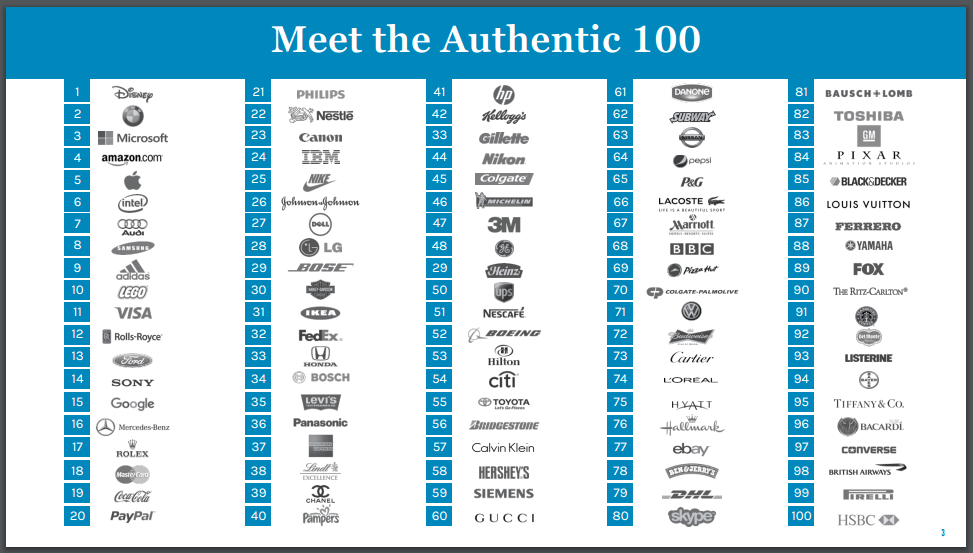
As per a recent research by Cohne & Wolfe, who are known to conduct studies to measure the authenticity of brands, these are the top 100 authentic brands.
If you notice, they truly have worked hard over the years to create an image which people, majorly millennials think as authentic.
Position yourself to please them
Creation of a great brand depends on its positioning in the market. There are several examples of companies failing miserably just because their position wasn’t right.
To reach your target audience and ensure that they are attracted towards your brand, you need to create a desirable position for it.
Millennials are highly diverse, and most of them have unique choices. While building a brand, you must consider their needs and position accordingly. Good positioning also helps in highlighting the characteristics and core attributes of the brand.
Tesla Motors is a great example of positioning a brand to appeal a particular section of people. Electric cars were quite uncool before Tesla came in and took the market by storm. Right from the beginning, Tesla positioned itself as a high-end electric car maker with exemplary aesthetics, all of which the other brands lacked. Rest of all, as they say, is history.
Exude uniqueness
Millennials believe themselves to be unique and they want their brands to resonate their personalities. No matter what products or services your brand offers, the branding needs to be unique in order to appeal the millennials.
Uniqueness depends on perception, but it takes a lot of efforts to stand as a purple cow in a herd full of common brands.
Staying relevant in an age where people have the lowest attention span needs your brand to exude uniqueness and as a marketer, it is your job to make it happen.
Uber has been a fine testimony of unique branding; their service is as simple as it gets. Millennials are always on the move, and Uber has become their go-to app for whenever they are out of the house. Their product as well as the brand they have created widely captures the instinctive nature of millennials.
This TVC by Uber brilliantly empowers every common man to make their dreams come true through Uber and shows a message to #EmpowerAMillion Entrepreneurs by 2018. This is something millennials immediately connect with.
Be admirably interesting
Being interesting as a brand is a different ball game altogether. The Gen-Y simply can’t stand something boring because they live in a world where the most interesting thing gets all the attention and that is all that they crave.
To seek positive attention – which is one of the core aims of marketing – is to become admirably interesting.
A brand seems alive only if it is interesting enough and keeps making efforts to be so.
Google is one of the most interesting brands in the world, and it’s difficult to imagine the internet without it. Although the product seems like the simplest tool for consumers, it takes a lot of efforts to make this simple brand admirably interesting.
Millennials have strong opinions, and they like to stand up for what they believe. When a brand does the same, the instantly start liking it.
The reason is the resonance of personalities, when your brand believes in something and advocates it through various campaigns, people who believe in the same thing will form an inclination towards your brand.
Standing up for your brand’s beliefs is a sign of strength which has become necessary in the current times.
Global brands which are loved by millennials have made it a point to strongly voice for the causes they believe in.
AppleInc. has openly supported the LGBT community by various means, and it won the hearts of many for standing by what it believes in. Although it wasn’t related to the brand or their products the cause affected their consumers, and they showed their unwavering support for it.
This is all you need to build a brand for millennials; these unpredictable personalities can be the biggest source of revenue for your company. Put all your efforts and build a brand which your customers will be proud of.
Top 6 Strategies for Marketing to the Millennials – Acquire, Convert, Retain!
Once you have created a stellar brand, you need to implement marketing strategies specially designed for millennials. They have a blind eye towards cliched campaigns that are uncreative and don’t ring a bell naturally.
Trying to impress millennials through marketing is no easy job, but with the right tactics, you will be able to acquire, convert and retain them in the long haul.
Let’s see some of the most useful ones.
a) Be where the millennials are
Marketers must have a keen eye on all the places where their customers are. This includes venturing into all the exciting platforms millennials share their daily lives on.
If you want to market your brand to millennials and don’t have a presence on social platforms like Instagram and Snapchat Inc., you are doing it all wrong. These platforms provide enough marketing avenues already, and they will keep upgrading their platforms to offer marketers the ultimate value of their efforts.
Thus, they are huge customer acquisition mediums as far as millennials are concerned.
Taco Bell is widely known for their creative and expressive social media campaigns.
Recently, they came up with some unique strategies to reach out to their target audiences, the millennials. This detailed case study shows how they leveraged the power of social media to tap into the lives of Millennials.
Also, their Twitter handle has been very popular lately owing to a superb interactive presence on the platform.
b) Build a relationship
Relationship marketing is an old technique but works like a charm for millennials.
They are always up for a deep bond which needs nurturing, and brands can use the same humane qualities for building a relationship with their customers like they would do for a person.
Although it takes a tonne of efforts to maintain a good relationship, it is well worth in the long haul.
The core aim of relationship marketing is to allow more customer retention and satisfy them with your product or service instead of focusing on sales transactions.
Building a genuine relationship with your customers or users is the best way to retain them for years. Though Coca-Cola just sells flavored sugary water, they know how to build a long-lasting relationship with their customers better than anyone else.
Over the years, they have consistently tried to build a unique rapport with the customers and succeeded in it.
The TVC shows one of the historical brand campaigns ever done. It was majorly targeted towards millennials since they had started losing market share of that age group in Australia.
After the campaign, their sales saw a huge rise, and it proved the prowess of a nicely executed relationship marketing campaign.
c) Content (marketing) is still the king
Many marketers believe that the era of content has passed and they need new techniques to reach customers. This is far from the truth and content or content marketing for that matter is still one of the most effective ways to reach, educate and convert users.
Although mediums of content have evolved over the years it is still as relevant as it was in the initial days, even more.
The rise of social media along with the increased viewership of videos has led to a shift in the way content marketing happens.
Nike is probably the best brand that gets content marketing right for millennials. It owned the top two spots of the most watched videos on YouTube in the year 2014.
They have diversified their content marketing strategies into videos, manuals, fitness tips and much more.
In fact, it began with content marketing right in the 1960s when it came up with a manual titled “A Jogger’s Manual” which is widely termed as the reason for the growing jogger’s culture in the US, ultimately leading to more sales for Nike.
d) Build an awesome product/service
The best marketing one can do for a brand is to create a superior product or service which speaks for itself, majorly through word of mouth.
Although different techniques of marketing are required to ensure a widespread reach for a good product, nothing beats the authentic praise of a customer.
Millennials believe their friends and family more than what any brand’s marketing campaign conveys. Thus, if you want to impress them, better build an awesome product/service and then let them spread the word.
WhatsApp and Truecaller are two outstanding examples of how a good product successfully acquires, converts and retains users without much marketing efforts. Both these brands had barely marketed their apps, but they both turned out to be revolutionary services which we use on a daily basis.
Word of mouth is a huge advantage any brand can have, and it is only possible by creating a product…
e) Provide an amazing customer service
Providing great customer service is a necessity in a time when customers have become knowledgeable and won’t tolerate someone treating them in a frivolous manner.
Your customer service is put into test when a customer faces a bad experience and the way you handle it shows how good you are. Such responses decide how loyal the customers will be in the future. Nailing such situations is one of the core things a brand can do to retain customers.
Amazon is a champion in providing an exceptional customer service.
You will seldom see a customer switching from Amazon because of a delayed or bad experience; they always make sure you have a good time while shopping at their site.
Non-surprisingly, their mission statement reads that they want to “become the most customer-centric company in the world”.
This amazing TVC by Amazon depicts exactly how they are trying to position themselves when it comes to customer service. They are equating themselves with the people of India, who love helping and it strike a chord with many.
f) Offer something in return
Probably every brand these days uses the strategy of providing discounts, cashback or offers to acquire and convert users.
Although this is not a good long-term strategy to retain users, it can work wonders to acquire new users and give them an opportunity to try your product or service.
Millennials are lured by such deals and would probably give your brand a try which can then convert them into regular customers.
Consider all the big e-commerce sites, payment wallets, ride-hailing apps or probably any popular internet service in the recent years, and you will find that this is the major strategy they have leveraged to acquire users because it works.
In fact, there are companies specially built to show the most valuable discounts and offers through many verticals of services.
Conclusion
Branding and marketing are two of the most challenging aspects that every business faces and now you have mastered them both.
When it comes to millennials, creating a successful brand and marketing your products to them in a unique way is essential and non-negotiable.
All the above mentioned popular brands which millennials love have rightly adapted to these branding and marketing strategies over the years to be successful.
However, with ever-evolving consumers, you need to evolve as a brand and advance your marketing strategies consistently to stay relevant.
Now that you know the effective strategies for both, simply create an awesome brand and successfully market them to millennials.
Just like the everyday social media user, a successful brand should have its own story and personality.
Brand storytelling, when done properly, allows marketers to build personality and associate emotion with a brand to create (or, at least, attempt to create) a personal connection with the consumer. The prevalence of social media today has driven an interest in leveraging the convergence of content creation and programmatic advertising to tell the story behind a brand.
As co-founder and president of Track Marketing Group, I’ve helped different brands socialize their story using strong visual narratives and integration of live experiences to build engaged communities. Here are five tips to creating your social brand narrative, and hopefully, inspiring your community.
Use Powerful Imagery
It’s often said that good public speakers take their audience on a journey, hopefully leaving it feeling motivated and inspired. Leveraging the power of photography to take the consumer through a visual journey is one of the most powerful ways to tell your brand story across all social platforms.
Use original images. Storytelling is most effective when it’s personalized. Stock images will never do your brand story justice. Make the investment and create original visuals that tell the exact story in your brand voice.
Use social platform-specific visual tactics. With the number of social platforms consumers are using today, it’s safe to say that one size does NOT fit all. Instagram profile grids, the act of taking one single image and sharing it as a grid of several broken images to create a big picture when viewed on the main user profile, might work well on Instagram but lose their effectiveness on Twitter and Snapchat. Know your community and apply the best visuals that work within the confines of the different social platforms.
Limit The Use of Hashtags
Being on the agency side, clients are always looking to sum up their entire brand ethos using one hashtag. Unicorn hashtags — simple premises that the consumer can immediately understand and connect to the brand — are far and in-between.
Use hashtags as a way to corral and enhance your brand story along with the extended consumer chapters and plot twists. The hashtag should not be your brand story
Empower Your Community
One of the most popular story structures is called the “monomyth,” also known as “the hero’s journey.” In monomyths, heroes are called to leave their home and set out on a journey to an unknown place. After overcoming a trial, they return home with newfound wisdom or a reward that they can share with and ultimately help their community.
Social media and the power of user-generated content allow marketers the unique opportunity to allow the consumer to finish the monomyth. The brand’s journey into the unknown can be open ended and completed by the consumer in his or her own words and visuals.
Tactically, we can do this two ways:
Crowdsourced Content. Leveraging crowdsourced images to show the pillars of the brand story through the consumer’s lens and, in turn, bring the brand story into the real world.
Social Listening. Utilize social tools to identify and listen to your brand advocates and engage with them on a one-on-one basis to amplify the story beyond your reach.
Expand Your Message
The greatest stories are those that are broad and relatable to a wide group of people. The best TV shows in history all transcended their specific subject and captured a moment in time in our culture. “Star Wars” is a box office juggernaut because it tells a story that the consumer easily understands.
The best stories are relatable by the average person. Telling your brand story on social means that you have to be unique yet still attainable by the average social media user. If your entire story is only for the one percent on social, that’s not a story – that’s only a chapter.
Let The Words Tell A Story
Storytelling on social media is ultimately driven by words. Whether we are looking to inspire, motivate or galvanize the consumer and community, the copy that we use either as standalone text or as captions to our visuals will dictate the brand story arc(s).
New Balance, one of our agency clients, recently launched its “Always In Beta” campaign telling their brand story of being in a state of relentless improvement — that there is no finish line to what’s possible and that you can always improve with determination.
New Balance has taken its ‘Always in Beta’ brand story to social by creating original content that visually speaks to its performance heritage, yet with words that are broader than footwear and apparel. This has allowed it to become more than just a footwear brand but to enter its consumer’s personal storyline.
Great brands rely on stories to define their brands. With society driven by social media and an “always on” mentality, today’s brand journey must begin, build and extend onto social. Approach your storytelling with an authentic yet broader lens than your brand-specific filter, and you’ll give your consumer the social authority to make your brand story into their personal folktale.
This article is courtesy of BusinessCollective, featuring thought leadership content by ambitious young entrepreneurs, executives & small business owners.