Want to do more with Instagram? Wondering if there are any tools to make it easier?
In this article, you’ll discover 18 tools that will help you optimize your efforts on Instagram, from creating content to running engaging contests.
Instagram Content Creation Tools
Instagram’s filters and editing tools can help you produce great-looking content but using native tools exclusively often means your content looks just like everyone else’s. These third-party content creation and design tools can help your Instagram stories, reels, and posts stand out.
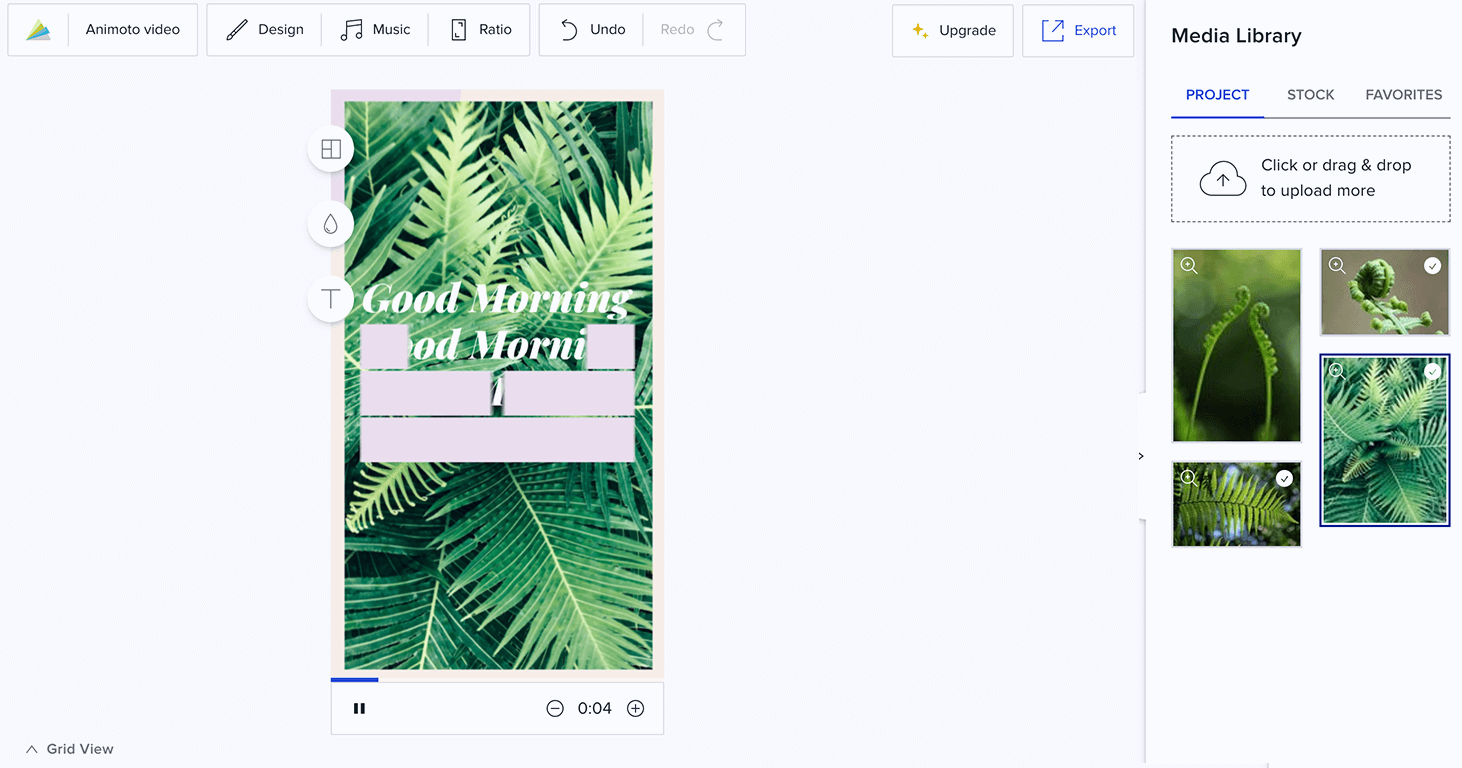
Animoto
Producing eye-catching video content for Instagram can be incredibly time-consuming, even for experienced designers. Animoto’s video storyboards can save you time, whether you want to create feed videos, reels, or stories.
This desktop app has templates for everything from tutorials to testimonials to product promotions so you can efficiently create Instagram content that aligns with your marketing goals. You can even cut production costs with Animoto’s stock images and videos while adding your brand’s unique stamp with animations and overlays.
Are you running out of royalty-free music clips to use with your video content? Animoto has thousands of songs in a long list of genres so you can create the perfect audio environment.
Cost: Free and paid plans
Canva
When you want an app that goes beyond video and can also design Instagram posts and stories, Canva is a good all-in-one pick. This desktop and mobile app has dozens of templates for every type of Instagram content, along with stock images and graphics to incorporate into your designs. You can also create custom layouts from scratch.
Local advertising is an effective way to extend your business’s reach, but it can be tricky if you don’t know where to start.
Engaging your local community is essential if you want to get it off the ground and work toward success. Thanks to my years of marketing experience building and nurturing local relationships, I have a good idea of what does and doesn’t work. Any local marketing effort aims to nurture lasting relationships that will help increase brand awareness and revenue. To do this, you must form genuine connections with people in your community, develop an effective strategy and remain patient.
Here, consider some of my top tips to build your local marketing strategy.
Participate in Community Involvement
Giving back, when and if you can, is highly recommended. You can volunteer to assist at local events, help clean up or do garden work at nearby parks, or sponsor a local school’s charity event. Community involvement allows you to meet amazing people in your neighborhood who may become clients or refer you to others who become clients. Volunteering is a win-win situation. You have the chance to help those in need, all while expanding your network and increasing business visibility.
Work with Other Local Businesses
Another way to effectively market your business is to reach out to other local businesses. It may be surprising to find out how many are willing to partner with you in some way.
For example, another business may have a lot of foot traffic but a limited email list. In this case, you could offer to mention their business in your online newsletter for some type of physical advertising on their premises. You can create the partnership that works best for you.
Offer Local Discounts
Giving out coupon codes and free shipping to your local area will help encourage more people to order from you. Word of mouth is powerful, and this is a great way to leverage this marketing technique. It will also help increase loyalty within the local area.
Use Personalized Messaging
Take time to personalize your branding to your local community. For example, if you sell physical products, give more attention to the local area by designing them with local sports teams’ colors, mascots, and more. Consumers want to feel close to the purchases they make, and there’s no better way to create this feeling than by providing something unique. You can also offer a “special edition” of your product that’s available to your community, creating the mindset there’s even more value behind this product.
When engaging with and marketing to the local community, be sure to keep the tips and information here in mind, which will help ensure you reach people locally and provide them with information, resources, and products they want and need. With the right local advertising strategy, it will be easier to help get your business off the ground or establish a new customer base, both of which are essential to your long-term success.
I have designed, published, and tested thousands of landing pages through my years in marketing. All this time, work, and effort resulted in discovering the main reasons why you should have landing pages for your business’s site. If you aren’t using landing pages, now is a good time to change that. Here’s why:
Increase Conversions
Quality landing pages result in more conversions. Whether it is newsletter subscriptions, sign-ups, downloads, lead generation, or something else, when you use landing pages, you experience higher conversion rates than sites that don’t.
Remember, having a landing page doesn’t guarantee a higher conversion rate. Instead, landing pages provide you with the tools to improve conversion rates as time passes.
Reduced Cost Per Acquisition
Cost per acquisition (CPA) is the total cost of acquiring a new customer. While there’s no universal set number to acquiring a customer, I’ve found that it’s much less when you have landing pages in place.
Landing pages increase conversions and help produce a higher return on investment (ROI). I’ve also found that landing pages also increase your Google pay-per-click (PPC) Quality Scores. This results in a lower cost per click, which reduces the cost per conversion and eventually a lower CPA.
Showcase and Optimize Your Offers
Every offer needs a home and landing pages provide this home. Depending on your marketing strategy, you may have several offers to showcase, including referral programs, promotions, white papers, resource guides, on-demand webinars, and more.
The information you collect and share on the landing page varies based on the type of offer you’re looking to highlight the most. Because of this, you need flexibility for changing form fields, editing layouts, and optimizing the design and copy– a standard, set template doesn’t work. Your offers also need an easy, shareable link that are easily found on your landing page.
Scale Your Marketing
With landing pages, you scale your marketing without scaling your resources, money, or time. In the past, building landing pages took a lot of time and money. However, this isn’t the case today. It’s easy, fast, and affordable to create and publish new offers and pages on your website. This makes it possible to increase your marketing efforts without spending too much time or effort.
Test and Validate New Ideas
You have the option to spend resources, money, and time to build an entire website for something new you offer and then wait and see if anyone likes it. Another smarter option is to use a landing page to validate the audience’s response and collect feedback on an idea to see if spending more money on it is a smart idea.
When it comes to creating a marketing strategy today, implementing landing pages is a must. These offer you a chance to increase conversions, reach more customers, and quickly add new offers to your site.
The world is filled with billions of users on social media across the globe, and that number is growing each day; and we can watch as the issues to increase.
Social media users have resulted in social media platforms becoming among the most popular virtual places.
Traditional marketing methods, such as commercials on TV, are usually only one-way communications, delivering a brand to the consumer. But social media marketing encourages engagement. It facilitates multi-directional communication, which:
Customers can connect with fellow customers via posting posts.
As a brand’s owner and marketer, you can connect with a variety of potential customers in a matter of seconds with the use of pay-per-click.
There’s plenty to benefit from using social media for marketing. However, if your efforts haven’t yielded any results, you may be making some of the typical marketing mistakes that people make. Becoming aware of these marketing mistakes can help make the right choices and avoid the following mistakes.
1. You’re Operating Blindly
One of the most costly mistakes you can make with your advertising on social networks is to shoot blindly and expect to see results. Instead, you must be sure to treat it with the same seriousness that you would for any other campaign in marketing.
Make a strategy — a clearly defined social media marketing strategy. It’s an essential ingredient in an effective social media presence.
An effective social media advertising plan will guarantee that you’re posting content that will help you achieve your business goals. This will stop you from investing your time and energy in a campaign that is bound to fail.
You have scheduled and planned your posts in time. Regularly posting helps you build and maintain your online presence that is organic.
How can you develop an effective strategy?
A simple plan is not enough. You require a master plan that covers:
What are you hoping to benefit from your social networks? New leads? Increased brand recognition? If you aren’t sure what you’re after, it’s impossible to achieve it.
Who do you want to target?
Your action plan. What type of posts will you create? What strategies will you use to promote your content to reach your desired viewers? Do you require more videos?
The team is responsible for the management of your accounts.
The time and the money you’ll invest in social media advertising.
Your most crucial performance indicators.
Find out what you want from social media — and learn how you can achieve it. Then you will be on the right track towards achieving your total capacity on social media.
2. You’re Aiming at the Wrong People
There is a plan in the right place. However, if you’re trying to reach the wrong people or not targeting the right audience, you’ll have an issue of wasting time and funds. There will be a lot of followers with little contribution to your objectives–an audience that isn’t the ideal client.
In general, Facebook is the most popular social network in the world.
But, it doesn’t suggest that you should solely focus your marketing efforts exclusively on Facebook.
Social Media Platforms
First, define your target audience. The target audience is the group of people who are most likely to be interested in your service or product. You can determine who these individuals are based on income, age or education level, location, or even behaviour.
If you’re active across multiple social media platforms, be sure to focus on the popular platforms for your targeted audience.
For example, data shows that Instagram is most popular with those aged between 18 and 29.
Pinterest is the most popular social media platform among women. While Snapchat, as well as Twitter, are popular with those aged between 18 and 29.
LinkedIn might be more suitable for you if you’re working in the B2B sector.
People tend to overlook irrelevant content. Therefore, it is best to be careful not to make assumptions about the audience you intend to reach.
Examine them and modify your content to meet the needs and expectations of your audience. Your content should be valuable to your readers and incentivize them to interact with it.
Your tone must also be appropriate for the social network platform you are using. The type of content that your viewers are looking for varies across platforms.
Facebook users, for example, will expect a casual, fun, playful, and fun tone — it is an excellent place to connect and advertise. However, LinkedIn works best with a moderately formal tone, and Instagram is predominantly focused on aesthetics and is a great place to show your diversity.
Increase the reach of your potential audience with features such as captions and subtitles.
You can watch your videos even in loud spaces, like office spaces or in noisy areas.
Understand dialogues where participants speak rapidly.
Be alert, and help you transmit your message.
Access your content even if you have hearing difficulties.
3. SEO Best Practices are Neglected in Your Social Media Marketing
The biggest mistake companies make is not recognizing the importance of SEO to make their social media campaigns effective.
Similar to how you’re focused on SEO when writing content for your blog, such as landing pages and other web content. It would help if you did the same thing with social media.
Engaging in SEO will aid in ensuring your profile, product, or service is ranked higher in results from searches. This increases the organic search engine traffic that comes to your website and boosts your following.
The number of shares, likes, and comments your posts receive online determines your posts’ social media rankings and reach. So, especially to begin with — you will want to post regularly and share quality and exciting content. To stay competitive, plan to always show up with info, and put out quality content. Also, set your social media up to make it easy for your readers to share your content with friends and contacts by including attractive CTAs.
Use keywords. Find the most compelling phrases and words when researching keywords for your blog posts. Then, use them in the social posts you make.
Visual content is among the most powerful SEO strategies you can employ. Use relevant and high-quality images, video, additional images of products or services, and GIFs. Use all content that loads fast — and make sure your site loads fast.
The decision to include subtitles on videos and captions on images or GIFs is also to your advantage. Google, as well as other engines, can’t view the video. However, the search engines can read the text to index and search for the content, making your content more visible.
Implement SEO strategies, and you’ll notice an increase in impact.
4. Over-the-top brand promotions with no actual content
For most people, social media is an opportunity to connect and discuss opinions, keep informed on the latest happenings, and be motivated.
So, if you’re using it only to increase brand awareness and create auto-generated backlinks to your website, you’re not doing it right.
Why are you looking to create content that sparks people’s curiosity and conversation? First, have your goal very clear in your mind.
Deanna is the Managing Editor at ReadWrite. Previously she worked as the Editor in Chief for Start-up Grind and has over 20+ years of experience in content management and content development.
Learn which marketing strategies for small business to use
You’re ready to market your small business, and you have several strategies available to you. Will you market yourself through Facebook or Twitter, pay for ads on Google Search, invest in great website content, or start to build out your email list?
When you’re developing your marketing strategy and funnel, and utilizing the best CRM software to keep track of your project, it can be helpful to split your approaches into two broad areas:
Organic marketing strategies for small business, which help your website, articles, and other content appear on search engines and arrive in people’s inboxes
Paid promotion, where you pay for ads to be shown next to search engine results, on websites, and in social media feeds
Getting a foundation in small business marketing
Below, we’re going to discuss organic marketing strategies for small business, and how these can become an essential part of your overall marketing strategy. We’ll dig into the three main organic channels, and look at the best resources, software, tools, and platforms for each one.
We’re building on topics we’ve explored in our previous guides, specifically:
What is a marketing funnel and how does it work?, where we pour ourselves into the idea of the marketing funnel, and discuss why it’s such an important approach to attracting and persuading customers
We recommend you scan through the above posts to get a good grounding on the concepts we’ll be exploring in this guide.
Let’s get into it.
The basics of organic marketing
Utilizing Google Search is just one part of organic marketing strategy (Image credit: Unsplash)
Organic marketing is about promoting your business in three main ways:
Website content marketing that you post on your website or other sites that will attract people to your online business
Social media content that you share into various social media networks, so that your followers and fans can see and react to that content
Newsletter and email content that you send to people who have joined your mailing list
Organic marketing is distinct from paid advertising, because you don’t pay for your content to be shown to your audience. You may still need to pay for the original content creation, but once you’ve done that, you’re relying on organic search, social media feeds, and emails to promote your business.
Website content marketing strategies
Website content marketing can come via your own site, social media, and a range of other third-party mediums (Image credit: Unsplash)
You can use website content marketing in several ways:
Create content that you publish on your own website, so that your pages show up in organic search when people are looking for keywords related to your industry, products, and services
Create content that you publish on other websites, with a link back to your website to help boost the likelihood of appearing in search (by creating backlinks)
Create content that you publish on third-party platforms like YouTube, Medium, Reddit, and so on, which drives interest in your business
Create organic social media content (we’ll get into that a little later)
How to create website content marketing
Here’s a breakdown of the steps you can follow to develop excellent website content marketing:
Develop a content strategy: You don’t just want to be creating content at random – it should all be part of a cohesive marketing strategy. That means building a marketing plan, and aligning your content and channels so you’re communicating in the right way, to the right people, at the right time.
Decide on the type of content you want to create: You have plenty of options here, including: blog articles; videos; explainers; landing pages; images and illustrations; podcasts and audio; branding and graphic design; website design; and more.
Define the content and create instructions: Decide on what you want the content to be, how it should look, the approach it should take, and other key factors.
Find someone to create the content: Depending on your skills and abilities, you can create the content yourself, get an employee to do it, or bring in outside freelance help. For example, the author of this article is a freelance writer who specializes in business and technology.
Work together to create the content: Go through a content draft, creation, review, and feedback process, so that you get the content you want.
Decide where you will publish the content: You might choose to publish on your own website, on a related site as guest content, or on a third-party platform.
Publish the content and track results: Use analytics and other tools to see how your content does, so you can tweak, refine, and create high-performing content in future.
Best content marketing software and tools
Project and content tracking: GatherContent, Monday.com, Clickup, Asana
Tracking visitors to your sites, how they got there, and what they did: Google Analytics
Content marketing keywords and tracking: Google Search Console, Google Analytics, HubSpot, SEMRush, and other tools
Best freelance content marketer hiring platforms and companies
The best platforms and companies to find and hire freelance content creators from include Fiverr, Fiverr Pro, Upwork, Toptal, 99Designs, LinkedIn, and individual job websites.
Social media organic content marketing strategies
Social media marketing takes multiple forms, including content creation, forums for discussion, and much more (Image credit: Shuttestock/Bloomicon)
You can use social media marketing through several different methods:
Building an overall social media strategy of what you’re going to post and when
Setting up pages, groups, and accounts that your audience can like and follow
Creating and sharing content on your favourite social media networks like Facebook, Twitter, or LinkedIn
Managing groups and discussions on social media
Engaging with customers, comments, and other interactions with your brand
How to manage your social media organic marketing
You’ll follow some of the same steps with organic social media marketing as you would with regular website content marketing, so we won’t get into too much of that detail here. Instead, it’s helpful to focus on content marketing approaches that are specific to social media. You will want to:
Develop an organic social media content strategy: As per website content marketing, but with a focus on the social networks where your customers are likely to hand out.
Decide on the type of social media content you want to create: As per website content marketing.
Define the social media content and create instructions: As per website content marketing.
Find someone to create the social media content: As per website content marketing, except you’ll want to find someone who specializes in social media content creation, as it’s a very specific skill set.
Find someone to manage your social media: Hire a social media marketing manager/coordinator who can monitor, manage, and communicate through your social media accounts.
Work together to create the social media content: As per website content marketing.
Decide where you will publish the social media content: As per website content marketing, except you will need to match the content with the social media channel: for example, very visual posts for Instagram and Pinterest, professional posts for LinkedIn, short posts for Twitter, and so on.
Publish the social media content and track results: As per website content marketing.
Best social media marketing software and tools
Social media content creation: Adobe Creative Cloud (Illustrator, Photoshop, Premier, etc), MS Office, Google Office Suite, Canva
Tracking visitors to your websites, how they got there, and what they did: Google Analytics
Social media marketing, monitoring, and tracking: Google Analytics, HubSpot, Hootsuite, Buffer, Sprout Social
Email and newsletter organic content marketing strategies
Creating marketing strategies for email and newsletter campaigns means promoting yourself to existing leads (Image credit: Unsplash)
Email and newsletter marketing are slightly different from the other methods we’ve mentioned, as you’ll be marketing to people who have already signed up for your email list. This does mean a slightly different approach, as you’ll be sharing information with leads who already know about your business. The process tends to work as follows:
Encourage people to sign up to receive emails from you, normally by incentivizing them through a lead magnet or similar marketing
Build an email list of interested leads
Create an email marketing campaign that sends out helpful news, guides, and information about your products and services
Setup email automation to send out your emails
Track the effectiveness of your email campaigns
How to create emails and newsletters
You’ll follow some of the same steps with newsletter and email marketing as you would with regular website content marketing. We’ll cover that briefly, but focus more on the aspects that are unique to email and newsletters.
Develop an email and newsletter marketing campaign: You’ll want to put together a step-by-step marketing strategy and campaign for the specific mix of emails you send out, together with a timeline for emailing after a customer has signed up.
Decide on the type of email content you want to create: As per website content marketing.
Define the email content and create instructions: As per website content marketing.
Find someone to create the email content: As per website content marketing, except you’ll want to find someone who specializes in email and newsletter content creation; also consider the other parts of the email campaign, as these emails will “drip” out and build on each other.
Work together to create the email content: As per website content marketing.
Use email software to automate your drip campaign: We’ve listed some helpful software below.
Send out your emails and track results: You will want to measure open rates and how often people click through.
Marketing automation software can be incredibly helpful for managing your organic channels. From scheduling social media posts to sending out emails on the right timeline, here’s a guide to creating an automated marketing flow that works for you.
Organic marketing is incredibly useful for businesses. Used well, it can create powerful connections, share helpful information, and build trust—which are great starting points for selling your products and services.
Paul is a professional writer who creates extensively researched, expert, in-depth guides across business, finance, and technology. He loves the challenge of taking complex subjects and breaking them down so they are easy to understand. He can quote ‘The Princess Bride’ in its entirety and believes the secret to good writing is Earl Grey tea.
(NewsUSA) – It wasn’t that long ago that Infographics were the “It” tool for public relations and marketing – until they weren’t.
To understand why infographics should still be a viable campaign strategy for clients, we need to understand the history behind them.
In 2012, everyone was producing infographics — usually of low-quality design, although as agencies became more versed in how effective these could be as a sales to market a client’s product, more high-design infographics began emerging. In fact, according to one experienced UK-based SEO and content provider says he was creating 200 to 300 infographics per year in 2014.
In 2016, the industry became flooded, and journalists began rejecting pitches that included, to date, these time-tested marketing strategies.
Fast forward four years, and there remains an argument for keeping infographics as a viable marketing tool in your stable of resources that you pitch to clients. Here’s why:
They have a visual appeal. It’s no surprise that visually presented information is more appealing to the eye than a mountain of text, which means that a graphically-told story will usually pique a reader’s interest before any information is processed.
They are easy to comprehend. The brain is wired in such a way that visual are able to be processed much faster than language. In fact, according to studies, people can follow visual instructions more than 323 percent better than written instructions.
They are easily recalled. If you’re trying to make an impression on a would-be customer, know this: according to studies people can recall only about 10 percent of written content three days after reading it versus 65 percent of information presented in visual form.
They are shareable. Infographics can break down potentially complex information into the bite-size pieces that we have become accustomed to in a visually-appealing format that has the ability to be recalled. In this way, people are more likely to share the content of the infographic.
They can help to increase sales. Go back to the bullet point on recall because it’s worth repeating: the human brain is better at retaining visuals more than text. This means that if you have a complex product or service (think an IT company such as Oracle), it would stand to reason that presenting processes and benefits of using a company’s product might be better presented visually in an infographic, rather than a block of text. This in turn, will help you to stand out from your competition.
They aren’t being promoted as heavily today. There’s no better time than today to start using a tool that has, for many been shelved at worst, and been put on the back burner at best. Think of it this way: if your competitors aren’t using this sales tool, why wouldn’t you? As long as you use a format that is visually appealing to tell your client’s story or present a product or service, it remains a great way to not only attract attention, but for potential customers to remember you.
The bottom line is that infographics continue to be a solid tool when used correctly and can potentially add fantastic benefits as part of a wider content marketing strategy.
There is one major question facing companies: Is your 2022 marketing plan focused on the right things? As marketers, we’re always tuned in to our audiences. But the last two years may have shifted our approach to clients and prospects. We now understand their need to connect better than ever before, and we’ve been able to adapt, legitimizing their concerns, acting as guides and solving new problems together.
But this approach and renewed focus is not just limited to marketers, it includes employees. After the past two years, we’re more in touch, more empathetic and more motivated to drive opportunity. And this renewed focus on employee experience (EX) is directly related to customer experience (CX).
CX is becoming, more and more, a critical component of the marketing suite. CX looks at the entirety of the lifecycle of the customer, and because of this, many companies are moving CX under marketing. Leaders across all industries are seeing the revenue correlation between EX and CX – engaged employees lead to better customer experience, and thus, better sales – and companies are working to have all cylinders firing to make that a reality. Employee advocacy programs are the most effective and cost-efficient way to do it.
It is incredibly powerful when you have the breadth of your employees promoting and sharing the good news and work of the organization, and amplifying your market messaging to customers and prospects. Not to mention, it’s 100% free. The best kind of marketing!
How To Execute An Employee Advocacy Program
So, what is employee advocacy? Entrepreneur defines it well: “Employee advocacy occurs when employees actively represent the company’s brand on social media channels, including LinkedIn, Facebook, Twitter, Instagram, YouTube, and even specialty hiring sites like Glassdoor. Grassroots social media efforts are effective because the message comes not from executives or from the human resources department — who obviously have a stake in increasing sales or attracting top talent — but from actual employees.”
The first step to building an internal program is getting executive buy-in. Leadership needs to see the value – and model behaviour as such – for the program to take off and maintain its effectiveness.
You also need to get your employees engaged as well. Share messaging internally to explain the program and the benefits for both the company and the employees. Let your team know you’re giving them the opportunity to build their professional reputation online, while also helping spread the word about the brand by sharing stories on their social networks.
Once executives and employees are on board, it’s time to operationalize. There are many web-based platforms to help manage, distribute and publish content. Using technology to help with the content creation and amplification is a must. The goal is to create content on a daily basis so the company has a variety of content to share, and trying to manage that process without the benefit of a platform can be tedious and overwhelming. Plus, tech provides metrics to track employee engagement.
What type of content is populated in an employee advocacy tool? You can promote earned media, the launch of new websites, executive interviews, articles featuring or written by staff, company blog posts, the list goes on. If it features your company or an employee, it’s content worth sharing. And because the content is coming from the marketing team, you get to control the messaging! If you’re in marketing, you know just how crucial that is.
The Most Important Part Of Employee Advocacy
In reality, the execution of a program doesn’t start with the actual doing. It starts with transparency and socialization. Transparency is the single most important way to build trust and awareness company wide. Boil down your plan to the essence of what it’s doing for your customers, and how/why employees should get excited.
Clearly outline to internal business leaders how marketing and employee advocacy will drive business, and through which focus areas. Discussing with them helps get full alignment, and gives internal stakeholders the opportunity to ask questions.
Employee advocacy programs are the best way to help EX drive a better CX. Getting the word out, from the mouths of employees instead of the public relations team, in an authentic way generates positive brand awareness. Your 2022 marketing plans need to include an employee advocacy program.
Social media management isn’t just about great photos and videos or learning today’s hottest platform; it’s about translating marketing fundamentals and core skills across all platforms, to inform a data-driven approach that fits into a broader marketing strategy.
So what does that look like in practice? We asked resident edX social media expert Livia Halltari for her insights.
What Makes a Good Social Media Manager?
Whatever your age and level of personal experience, transitioning into a social media career will take some learning. Running your own social media account is very different from managing one for an employer or client. A successful social media manager stays on top of trends, platforms, and social media management tools to schedule posts, monitor analytics, and more.
In other words, you must embrace lifelong learning, whether you plan to stay in social media long-term or hope to advance to other marketing roles in the future, and whether your aspirations are full-time or freelance. Working in social media provides great insight into a wide range of marketing roles and makes an ideal launch pad into the industry.
“Social is one of the most generalist marketing roles you can get,” said Halltari. “You really gain exposure into how email does their work, how content marketing does their work, and how PR, design, and copywriters do their work because you’re working with all these different teams so closely. And you gain experience advocating for yourself, reporting, and the analytical part of marketing, as well as the creative, interactive, brand-focused part. It’s the kind of role where you gain a really foundational knowledge of marketing.”
“It’s the kind of role where you gain a really foundational knowledge of marketing.”
Forbes, she added, is calling today’s social media managers “the next generation of CMOs,” and with this holistic background, they are certainly on track to be.
Building A Social Media Skillset on Marketing Foundations
There are many different marketing skills and backgrounds that can usefully inform a social media career, and many of them have their basis in general marketing. Here, we picked just a few of the most important to unpack.
Brand marketing: To build lasting connections with customers, companies must establish a strong brand perception, and few avenues facilitate this as well as social media. Storytelling and visuals are the mechanics by which this perception and relationship are built, so these are key areas to upskill when breaking into the field.
Analytics: The data is out there. You, as a social media manager, must know where to retrieve it and what to do with it. You must be able to draw conclusions from metrics like followers, page views, clicks, likes, shares, comments, and impressions and form a plan of action in response.
Reporting: This skill isn’t just about collecting and sharing data with leadership; it’s about curating data. Halltari says you can set yourself up for success by working with leadership early on to determine goals and the metrics by which you’ll measure success. Only then can you create useful goals, forecasts, and benchmarks.
Communication: Not only are you the public voice of the organization—you also need to effectively work with internal stakeholders to develop and adapt strategies, as well as collaborate across the marketing department and beyond.
Writing: Nothing can take the place of good storytelling and content. Your copywriting should be concise, evocative, and tailored for the appropriate audience or platform. A background in creative writing, English, or literature can be invaluable.
Project management: Organizational and time management skills are key. You need to be able to plan ahead and post content consistently, juggle simultaneous projects, align calendars, and communicate, collaborate, and delegate to members of the marketing team.
Design: While it’s not necessary to be a master of graphic design, it helps to know the basics. Social is ultimately a visual channel, and a heavily saturated one—it takes unique images to stand out against the competition. Especially in smaller companies where social media marketers often wear many hats, an understanding of design practices and tools is a valuable skill to have.
Strategy: How does your social media strategy fit into the bigger picture? Understanding context, target audience, and analytics can help shape social media into a powerful piece of a company’s overall business strategy.
Customer Service: A background in sales or customer service can be valuable, as these roles overlap with some key components of marketing such as conversion, awareness, and customer acquisition. If you’ve worked in retail, then you understand the importance of addressing customer complaints promptly, and social media is no different: You must be prepared to pivot at any time to respond to customers or developing trends.
If you are just breaking into the field, start by learning the fundamentals of digital marketing, especially if you are using social media as a launchpad for greater marketing career aspirations. An entry-level job in social media can be even more powerful than a classroom for honing skills and picking up new ones, so it’s a great way to learn about a variety of marketing roles and decide which one is right for you.
How to Become a Social Media Marketing Manager: 5 Steps
Some useful backgrounds for social media specialists include business, marketing, advertising, public relations, communications, psychology, writing, public speaking, and photo or video skills. But you may be surprised that social media mavens can also come from backgrounds as diverse as political science, fashion design, or retail. In this field, you can start from anywhere, with little to no experience. Here’s how:
1. Close skill gaps
Developing a few key marketing skills will serve you well, and you don’t have to get a college degree to learn them. According to Halltari, hiring managers are more interested in examples of project management, organization, good communication, strong copywriting, adaptability, eagerness to learn, and the ability to work independently as well as with a larger marketing team. A bachelor’s degree is just icing on the cake.
2. Learn Social Media Platforms and Marketing Analytics
Get to know the strengths and weaknesses of major social media channels: Facebook, Instagram, LinkedIn, Twitter, YouTube, and Pinterest. Study how your competitors are using these social networks. Familiarize yourself with tools for scheduling and publishing content, social media listening, analytics, and more. But remember that basic familiarity is just the first step. You must continue to build your skill set.
“Employers don’t want to know if you use those platforms to develop and manage your personal social media accounts,” said Ewelina Lacka, lecturer in digital marketing and analytics at the University of Edinburgh Business School and instructor for the Digital Marketing Fundamentals Professional Certificate program on edX. “They want to know if you understand how to use social media to achieve marketing goals.”
Online courses can help you learn about tools like Google Adwords, WordPress, and Facebook Ads, as well as teaching evergreen skills like graphic design and SEO, which remain relevant even when the platform of the day inevitably changes.
Pro Tip:
“I am a big believer in the fundamentals of marketing. A real grasp of what is a positioning, and the related branding strategy, along with the 4 Ps [product, price, place, and promotion] is vital. An appreciation for what motivates or is important to a given target market is critical. Being able to put yourself in the shoes of the customer is a great skill. Writing and general communication skills are extremely important. Finally, any experience that puts you in front of customers is valuable, so seeing transactions of any kind is important because ultimately everything is marketed… or at least, it should be!”
The best way to master social media management is to do it. An internship is one avenue. Another option is to connect with small businesses or non-profits that need someone to manage their social media presence. Don’t be afraid to do free work while you’re learning, but also be sure to draw a line after which you will stop working for free and start charging clients as a freelancer or start looking for that salaried role.
If you’re pivoting to a new career and can’t currently accept unpaid work, then online certifications are another good option for upskilling. Or, simply create a social media account of your own and start building your online presence! After a few months, you should be able to demonstrate your ability to post consistently and grow your following.
4. Develop a Portfolio
Your portfolio is your key to social media success, whether you are working in-house or on a freelance basis. A portfolio demonstrates your work and its impact. Remember that experience does not have to be professional: Passion projects and side hustles can be a fun way to learn your way around platforms and discover the best strategies for each. Consider building a website to showcase your most successful social media posts.
5. Market Yourself to Potential Clients
Whether your goal is to land a salaried position working in social media or to go into business for yourself as a freelancer, you are a brand, and your ability to market yourself as such will show employers or clients that you can also successfully market their products or services.
Be aware, however, that social media is a highly competitive field. Instead of applying to jobs online, try attending conferences and small business events. Introduce yourself in person. Give people your card. Let them meet your brand face-to-face.
Pro Tip:
“The most important thing is the enthusiasm and willingness to learn and contribute. Let’s face it, someone with all the certifications in the world is going to be a net loss if they have a poor attitude and are not willing to work with others and really see their role as a problem solver. Technical skills are teachable, attitude is another matter,” said Frohwein, instructor for the Marketing Foundations course from DoaneX.
Start Learning Foundational Marketing Skills
Social media is constantly changing. Platforms and trends come and go. Algorithms evolve. Current events spark new conversations. Staying up to date on new channels is important, but it’s even more important to lay a good foundation. There are plenty of reputable resources online to help you upskill in marketing. Explore edX marketing courses to get started.
Do you want to increase online sales, build brand awareness and promote your products? From leading brands that boost TV campaigns with Facebook engagement, to growing businesses that host creative online offers to keep fans excited, any business – big or small – can use Facebook as a marketing tool.
Social media platforms such as Facebook bridge the gap between businesses and consumers, improving communication between them and leaving brands with a better understanding of their audience. Whether you’re a freelance illustrator, successful independent restaurant or a globally- recognized brand, Facebook should be at the top of your marketing strategy.
Facebook groups and pages each have their own strengths. Groups are ideal for intimate communication in communities – to discuss a topic, and to share ideas and opinions – while pages are designed to help businesses, organizations and professionals create an authentic presence online to represent their values. Therefore, creating a Facebook page for your brand or business is the first step towards getting yourself noticed on the social network.
How to promote yourself
(Image credit: shutterstock/SPF)
Suggesting your page to friends, putting up signs in your bricks-and-mortar store, adding a Like button to your website, and including links to your page wherever possible will all contribute to page growth. However, the most noticeable change in Likes will be as a result of the content you post on your page. Let’s look at ways to optimize your Facebook marketing effort by identifying your audience, creating compelling content, and analysing your strategy.
Having a clear understanding of your audience will help you tailor your Facebook posts to suit its interests. Most brands have customer profiles outlined through authorized data collection, but as a growing business or freelancer, taking time to identify your ideal customer will help you to find more of them.
Create a description of your ideal customer. Decide on age, gender, personality, occupation, hobbies, spending habits, likes and dislikes.
Locate your online audience. Which websites interest them? What are they reading? What are they likely to search for online?
Determine their end goals. What is it about your product or service that they like?
Write a more detailed outline of each identifiable customer. Give them each a name and backstory. Write a short day-in-the-life-of paragraph about each one that you can refer to. These are just a few questions to get you started. There are hundreds of customer profiling templates online that can help you build a more comprehensive portrait. Piecing together a clear picture of who you’re ‘talking’ to online will help determine the tone for each post and what customers are likely to respond to.
Create a content strategy
(Image credit: Shutterstock/Lepusinensis)
A Facebook content strategy is a daily outline of page updates scheduled for the week or month ahead which include things you want to promote or share. For example, you know next week you’ll publish a blog post about an offer available on your website’s shop, which will start on Saturday and end on the following Monday.
For your Facebook strategy you could schedule the following: an announcement of the upcoming offer the Thursday before, share a link to the blog post on Saturday, and post a product image on Sunday evening as a reminder to those who haven’t already taken advantage. Map out your Facebook strategy by determining your weekly or monthly goals and devising daily content around it.
Remember to look at your customer profile to find ways of working in content that would interest them. Your goals may be to drive traffic to your online store, to increase your reach and Page Likes, or to build brand awareness. They may be all of these things, so a strategy is central to creating posts that get attention and get results.
According to Posting Best Practices, rich photography and captivating videos, asking questions, and Facebook Offers (a paid-for service) – or offers of your own – receive the best response. If you think about your personal use of Facebook, are these the same things that catch your eye? Arizona-based State Bicycle Co. has been featured on Facebook’s Success Stories page.
Each week it shares a stunning image of a bike with an inspiring quote dropped over the top. This generates a lot of shares and plenty more comments and likes. The company calls it Motivational Monday. Not only is it the perfect day for inspirational posts that banish Monday blues, but the content is also visually striking. Most importantly, it’s shareable, which extends the reach of the page and potentially leads to new fans.
With your page in place and content being published regularly, you can measure your success using Facebook Insights. Facebook’s easy-to-use analytics service helps you evaluate different aspects of your page. Tools such as Engagement, Page Likes, and Post Reach help with tracking your best-performing content by discovering who’s engaging with you, and at what time.
Use these tools to find out what’s working well, write your own best practice, then replicate it. These steps are simple, but it takes an active page to make discoveries that lead to growth.
Case Study: Tatty Devine
(Image credit: Facebook/ Tatty Devine)
Tatty Devine is an independent British jeweller whose studios are located in London and Kent. It specializes in expressive, standout jewellery with hints of retro fashion. The brand used Facebook to bring the products from its British studios to a global audience. Its aim: to turn Facebook Likes into online purchases, shop visits and brand awareness.
A quick scan over the brand’s Facebook page makes it clear that Tatty Devine knows its audience. Its page is kept fresh by varying post types from anything between new collections, sneak peeks and discounted item announcements, all of which are accompanied by gorgeous images and enthusiastic copy. In spring/summer 2013, Tatty Devine launched the successful Wishing Tree campaign. It encouraged fans to leave comments on its Facebook page with their springtime wishes. These comments would be written out and pinned to an in-store wishing tree, photos of which were uploaded soon after.
This simple idea worked to bring a community of fans together by getting them to engage around a theme that wasn’t about a new offer or competition, but which resulted in increased online sales and improved store footfall. Tatty Devine’s sample sales have fans in screeches of sheer excitement. To promote the event, it created a public Facebook event and invited fans to visit its London store.
It soon had more than 400 guests attending. Other posts about the event included an announcement that newsletter subscribers would receive early access to buy ‘Lucky Dip’ boxes online, and an invitation to fans to submit song requests for the Sunday sample sale through comments.
Many happy customers shared images of their Lucky Dips, and those wishing they’d got something else were given the means to swap items with other Tatty Devine shoppers through a one-month-only Swap Shop event. Through both the Wishing Tree and Sample Sale campaigns, Tatty Devine created great excitement around its products using Facebook as the medium between it and its audience. It uses Facebook as the channel for driving online sales through good posting strategies and learning what its audience responds best to.
Six top tips
(Image credit: Shutterstock/Kaspars Grinvalds)
DO:
Create sharable content:
Shareable content is a post that directly benefits your audience. When a fan shares your post, it appears on their timeline and their friends’ news feeds, so creating shareable content is important for page exposure and acquiring new Likes. People respond to a business or brand with a ‘human side’, so don’t be afraid to add your own flair. Combine your (clean) humour with content that helps your fans express their own identity. Now more than ever it’s important to put yourself in their shoes.
Measure and adjust:
Once 30 people have liked your page, you’ll be able to see your Page Insights, which tell you all about how your audience is responding to your content. Page Likes, Post Reach and Engagement tools are just some of the things you can use to track your best-performing posts.
Be available:
People love an authentic presence online, so be conversational and share what you’re genuinely interested in – it’s about quality, not quantity. Respond to both good and bad feedback. Experiment with post types and times. You can schedule posts on Facebook, which is a godsend for businesses with little digital resource.
DON’T:
Forget formality:
Say goodbye to formalities and loosen up already! People on Facebook are there primarily to catch up with friends, so if you want their attention, you have to talk with them as though you’re just another pal to encourage interaction, rather than sounding like a marketer. This is not to say that you shouldn’t be professional, but have a little fun with your status – what have you been up to?
Reference:
Do not take credit for any content that does not belong to you! This is not to say that you can’t share an image you think your audience would love to see on your page, even if you didn’t take it yourself. It simply means that you should, at all times, give credit where credit is due. Adding a link to the original source builds credibility and trust with your audience.
Don’t irritate:
Facebook likes an active page but people are quick to hit the Unlike button. The aim is to be consistent and to post regularly to counter this, but don’t overdo it. Ask yourself, “Would my audience share this?”, “Would they find it interesting?”, “Would they like to see this in their news feed?” – if the answer is yes (honestly), then go ahead.
It doesn’t matter if you’re the new kid on the block or you’re an industry veteran, all small businesses make mistakes from time to time.
Mistakes may be a natural part of the business process. But that doesn’t mean small business owners need to personally commit every error in order to learn each lesson.
There are many ways that entrepreneurs can learn from the mistakes of others to avoid paying the price with their own companies. Here are a handful of common mistakes that many small businesses tend to make, as well as suggestions for ways to avoid them.
1. Attempting to Do Everything
A small business owner is a brave soul. They’ve charted their own course and taken control into their own hands. If you’re a small business owner, you’re well aware of the confidence that this can create.
However, just because you’ve succeeded in one area of business doesn’t mean that skill or talent will translate to other pursuits. In fact, one of the biggest shortcomings of many small business owners is falling prey to the idea that they can do everything.
The truth is, every business owner has countless things that they’re not good at. Often, they’re even severely underqualified. For instance, managing taxes or stepping in as a chef are very bad ideas if you’re not qualified to do so. Even small activities like managing customer service calls or processing payroll can be a bad idea if you’re not trained.
Instead, outsource these activities. Look into technology solutions, such as small business payroll software. If you can swing it, hire employees to address them. The gig economy is another economic way to fill in talent gaps in your workforce without breaking the bank.
2. Failing to Take Finances Seriously
Both overspending and underspending are common issues for small businesses. Often the root of the problem stems from the personality of the business owner.
Those who are bean counters tend to avoid expenses, even when they’re necessary for growth — and at times even survival. On the other end of the spectrum, reckless spenders often ignore the math and rack up expenses blindly while hiding behind things like quality or a better customer experience.
Swinging to either extreme can be detrimental to a business. Instead, take steps to gain a firm understanding of your finances. Use software like Quickbooks or Expensify to keep track of income and expenses. Hire an accountant to help you with your taxes. The more you understand your business’s finances, the more informed your financial decision-making will be.
2. Attempting to Do Everything
A small business owner is a brave soul. They’ve charted their own course and taken control into their own hands. If you’re a small business owner, you’re well aware of the confidence that this can create.
However, just because you’ve succeeded in one area of business doesn’t mean that skill or talent will translate to other pursuits. In fact, one of the biggest shortcomings of many small business owners is falling prey to the idea that they can do everything.
The truth is, every business owner has countless things that they’re not good at. Often, they’re even severely underqualified. For instance, managing taxes or stepping in as a chef are very bad ideas if you’re not qualified to do so. Even small activities like managing customer service calls or processing orders can be a bad idea if you’re not trained.
Instead, outsource these activities. If you can swing it, hire employees to address them. The gig economy is another economic way to fill in talent gaps in your workforce without breaking the bank.
3. Mistreating Your Internal Lifelines
As a small business owner, you’re likely well aware of all of the threats to your business. From financial concerns to supply chain disruptions, customer satisfaction, and more, there are countless areas that can keep you worrying at all times.
This often creates stress and anxiety that small businesses will pass along to others further down the chain of command. For instance, many small businesses work their employees to the bone. They aren’t treated well by management or shown that they’re valued.
Suppliers are another group that often get the short end of the stick. They’re often left waiting for payments until the last minute, even when they deliver shipments on time.
Make sure to treat your internal and auxiliary workforce with respect. Go out of your way to pay them on time and show them that they’re valued. You’ll find that your business will run like a well-oiled machine, and you’ll get greater loyalty and production.
4. Spreading Your Marketing Thin
Marketing used to be a big company’s game. Small businesses had to scrounge around for the local scraps that big-budget corporations left behind.
The advent of online marketing has completely rewritten this narrative. All the way back in 2019, digital ad spending was already poised to overtake traditional spending, with no end to the growth in site.
The only problem is that online marketing, while accessible for small businesses, is overwhelming. Email, social media, website, search engine, content, video, and countless other marketing strategies are available. The worst thing a small business can do is commit marketing dollars to a scattered and mismanaged marketing strategy (or even worse, no strategy at all.)
It doesn’t matter if you’re spending hundreds or millions of dollars. Always create a solid marketing plan that dictates how to spend each penny.
5. Not Managing Risk
Risk is another common issue for small businesses. With less margin for error than larger enterprises, many smaller companies either play it safe and miss opportunities or take uncalculated risks that end in disaster.
It’s important to develop a risk management philosophy for your business. As you do so, make sure you have a balanced approach to risk. For example, don’t put all of your eggs in one basket. Use resources that you can afford to lose if a new business idea goes south.
At the same time, don’t sit tight on what’s working at the moment and let opportunities pass you by. It’s easy to put yourself out of business if you fail to evolve along with your industry these days. Look for things like cutting-edge tech or changing customer expectations and then create strategies that incorporate them.
The best way to do this is to set SMART goals. These are goals that are specific, measurable, achievable, relevant, and time-bound. By setting SMART goals, you can create reasonable objectives to work toward. This will keep you moving forward and taking risks. At the same time, it will avoid the need to threaten the existence of your entire business in the process.
There are many challenges that every small business will face. Some of these will be overcome without an issue. Others may stand out as clear mistakes and important learning opportunities.
However, there are also many mistakes that companies can learn from without first-hand experience. From proper finances to a loyal workforce, happy suppliers, meaningful marketing, and much more, it’s always worth taking the time to do your homework and safeguard your business against common — yet avoidable — mistakes as you go along.









 “It’s the kind of role where you gain a really foundational knowledge of marketing.”
 “I am a big believer in the fundamentals of marketing. A real grasp of what is a positioning, and the related branding strategy, along with the 4 Ps [product, price, place, and promotion] is vital. An appreciation for what motivates or is important to a given target market is critical. Being able to put yourself in the shoes of the customer is a great skill. Writing and general communication skills are extremely important. Finally, any experience that puts you in front of customers is valuable, so seeing transactions of any kind is important because ultimately everything is marketed… or at least, it should be!”
 “The most important thing is the enthusiasm and willingness to learn and contribute. Let’s face it, someone with all the certifications in the world is going to be a net loss if they have a poor attitude and are not willing to work with others and really see their role as a problem solver. Technical skills are teachable, attitude is another matter,” said Frohwein, instructor for the