Tag

Meta

Browsing

By Sarah Perez

Meta announced it’s rolling out its first generative AI features for advertisers, allowing them to use AI to create backgrounds, expand images and generate multiple versions of ad text based on their original copy. The launch of the new tools follows the company’s Meta Connect event last week where the social media giant debuted its Quest 3 mixed-reality headset and a host of other generative AI products, including stickers and editing tools, as well as AI-powered smart glasses.

In the case of AI tools for the ad industry, the new products may not be as wild as the celebrity AIs that let you chat with virtual versions of people like MrBeast or Paris Hilton, but they showcase how Meta believes generative AI can assist the brands and businesses that are responsible for delivering the majority of Meta’s revenue.

The first among the trio of new features allows an advertiser to customize their creative assets by generating multiple different backgrounds to change the look of their product images. This is similar to the technology that Meta used to create the consumer-facing tool Backdrop, which allows users to change the scene or the background of their image by using prompts. However, in the ad toolkit, the backgrounds are generated for the advertiser based on their original product images and will tend to be “simple backgrounds with colours and patterns,” Meta explains. The feature is available to those advertisers using the company’s Advantage+ catalogue to create their sales ads.

Another feature, image expansion, allows advertisers to adjust their assets to fit different aspect ratios required across various products, like Feed or Reels, for example. Also available to Advantage+ creative in Meta’s Mads Manager, the AI feature would allow advertisers to spend less time repurposing their creative assets, including images and video, for different surfaces, Meta claims.

With the text variations feature in Meta Ads Manager, the AI can generate up to six different variations of text based on the advertiser’s original copy. These variations can highlight specific keywords and input phrases the advertiser wants to emphasize, and advertisers can edit the generated output or simply choose the best one or ones that fit their goals. During the campaign, Meta can also display different combinations of text to different people to see which ones drive better responses. However, Meta won’t showcase the performance details for each specific text variation, it says, as the reporting is currently based on a single ad. However, the more options the advertiser selects to run, the more opportunities they’ll have to improve their ad performance, Meta informs them.

Meta says it’s already tested these AI features with a small but diverse set of advertisers earlier this year, and their early results indicate that generative AI will save them five or more hours per week, or a total of one month per year. However, the company admits that there’s still work ahead to better customize the generative AI output to match each advertiser’s style.

In addition, Meta says there are more AI features to come, noting it’s working on new ways to generate ad copy to highlight selling points or generative backgrounds with tailored themes. Plus, as it announced at Meta Connect, businesses will be able to use AI for messaging on WhatsApp and Messenger to chat with customers for e-commerce, engagement and support.

Feature Image Credit: Meta

By Sarah Perez

Sourced from TechCrunch

  • Meta is reducing its engagement with news publishers, focusing less on current affairs on its platforms.
  • The company launched a text-based app, Threads, that prioritizes non-news content.
  • Meta is in conflict with Canada’s government over legislation requiring platforms to pay for publishers’ content.


Tensions are escalating as Meta, the parent company of Facebook, Whatsapp, Threads, and Instagram grows increasingly distant from news publishers, sparking widespread concern.

This move comes amidst a shift in strategy where the technology titan has been giving less attention to politics and current affairs on its platforms, while simultaneously shrugging off governmental calls for increased payments to media outlets.

Meta’s growing reluctance: A strategic move

In a pivotal turn, Meta has distanced itself from the traditional news sector, despite years of appeasing key publishers through the funding of non-profit journalism initiatives and forging partnerships with entities like Rupert Murdoch’s News Corp.

This alteration in stance manifests in Meta’s latest product release – Threads, a text-based application designed to rival Twitter. In less than a week, Threads managed to draw in an astounding 100 million users, thanks to its integration with the globally popular Instagram platform.

Much like Instagram, Threads prioritizes content from creators and friends over hard news or political stories. Adam Mosseri, the head of Instagram, has firmly declared the platform’s intent to avoid promoting news content.

In a controversial move, Meta has decided to exclude news from its feed in Canada, as new legislation demanding platforms pay for content from publishers and broadcasters comes into effect.

This law was formulated to uplift smaller news organizations with limited bargaining power. However, the law has been met with resistance not just from Meta, but also Google, which threatens to impose a news blackout in Canada.

The corporate tussle has elicited backlash from a host of advertisers in Canada, some of which are threatening to withdraw their advertisements. The implications for Meta are significant, given that Canada contributed approximately $3 billion to the company’s $117 billion annual revenues in 2022.

A history of friction

Historically, Meta has made attempts to ally with publishers through various initiatives, such as deals for content to be featured on Facebook’s News Tab product.

However, the senior leadership at Meta has concluded that the company’s interests conflict with those of the news industry. This stems from the notion that the growth of the company’s digital advertising business is perceived as a contributing factor to the global revenue decline experienced by newspaper groups.

Additionally, Meta’s internal research has revealed that users gravitate more towards short-form videos and content from influencers rather than news and political content. Consequently, the tech giant has reduced the presence of political content in users’ feeds since 2021.

Despite its ongoing withdrawal from the news industry, the ramifications of Meta’s actions are far-reaching.

With allegations that the company’s inadequate moderation of its applications fuelled discord surrounding the election of former US president Donald Trump, as well as the 2021 Capitol building riots, the technology behemoth is treading on thin ice.

As a result, industry insiders argue that Meta will eventually suffer from the escalating rift with news publishers. The absence of reliable news sharing could potentially isolate the firm from real-world happenings, leading to the question of whether its strategy will prove sustainable in the long term.

As the tension unfolds between Meta and news publishers, the future of news content on social media platforms remains uncertain.

However, one thing is clear: the technology titan’s standoff with news organizations and governments alike is set to redefine the relationship between social media and the world of journalism.

Jai Hamid is an enthusiastic writer whose current area of interest is the blockchain sector. Whenever she is not reading or writing, you can find her tending to her plants in the garden. She strongly believes that crypto is going to transform the world for the better.

Sourced from Cryptopolitan

The company hopes that making LLaMA 2 open source might give it the edge over rivals like OpenAI.

Meta is going all in on open-source AI. The company is today unveiling LLaMA 2, its first large language model that’s available for anyone to use—for free.

Since OpenAI released its hugely popular AI chatbot ChatGPT last November, tech companies have been racing to release models in hopes of overthrowing its supremacy. Meta has been in the slow lane. In February when competitors Microsoft and Google announced their  AI chatbots, Meta rolled out the first, smaller version of LLaMA, restricted to researchers. But it hopes that releasing LLaMA 2, and making it free for anyone to build commercial products on top of, will help it catch up.

The company is actually releasing a suite of AI models, which include versions of LLaMA 2 in different sizes, as well as a version of the AI model that people can build into a chatbot, similar to ChatGPT. Unlike ChatGPT, which people can access through OpenAI’s website, the model must be downloaded from Meta’s launch partners Microsoft Azure, Amazon Web Services, and Hugging Face.

“This benefits the entire AI community and gives people options to go with closed-source approaches or open-source approaches for whatever suits their particular application,” says Ahmad Al-Dahle, a vice president at Meta who is leading the company’s generative AI work. “This is a really, really big moment for us.”

But many caveats still remain. Meta is not releasing information about the data set that it used to train LLaMA 2 and cannot guarantee that it didn’t include copyrighted works or personal data, according to a company research paper shared exclusively with MIT Technology Review. LLaMA 2 also has the same problems that plague all large language models: a propensity to produce falsehoods and offensive language.

The idea, Al-Dahle says, is that by releasing the model into the wild and letting developers and companies tinker with it, Meta will learn important lessons about how to make its models safer, less biased, and more efficient.

A powerful open-source model like LLaMA 2 poses a considerable threat to OpenAI, says Percy Liang, director of Stanford’s Center for Research on Foundation Models. Liang was part of the team of researchers who developed Alpaca, an open-source competitor to GPT-3, an earlier version of OpenAI’s language model.

“LLaMA 2 isn’t GPT-4,” says Liang. And in its research paper, Meta admits there is still a large gap in performance between LLaMA 2 and GPT-4, which is now OpenAI’s state-of-the-art AI language model. “But for many use cases, you don’t need GPT-4,” he adds.

A more customizable and transparent model, such as LLaMA 2, might help companies create products and services faster than a big, sophisticated proprietary model, he says.

“To have LLaMA 2 become the leading open-source alternative to OpenAI would be a huge win for Meta,” says Steve Weber, a professor at the University of California, Berkeley.

Under the hood

Getting LLaMA 2 ready to launch required a lot of tweaking to make the model safer and less likely to spew toxic falsehoods than its predecessor, Al-Dahle says.

Meta has plenty of past gaffes to learn from. Its language model for science, Galactica, was taken offline after only three days, and its previous LlaMA model, which was meant only for research purposes, was leaked online, sparking criticism from politicians who questioned whether Meta was taking proper account of the risks associated with AI language models, such as disinformation and harassment.

To mitigate the risk of repeating these mistakes, Meta applied a mix of different machine learning techniques aimed at improving helpfulness and safety.

Meta’s approach to training LLaMA 2 had more steps than usual for generative AI models, says Sasha Luccioni, a researcher at AI startup Hugging Face.

The model was trained on 40% more data than its predecessor. Al-Dahle says there were two sources of training data: data that was scraped online, and a data set fine-tuned and tweaked according to feedback from human annotators to behave in a more desirable way. The company says it did not use Meta user data in LLaMA 2, and excluded data from sites it knew had lots of personal information.

Despite that, LLaMA 2 still spews offensive, harmful, and otherwise problematic language, just like rival models. Meta says it did not remove toxic data from the data set, because leaving it in might help LLaMA 2 detect hate speech better, and removing it could risk accidentally filtering out some demographic groups.

Nevertheless, Meta’s commitment to openness is exciting, says Luccioni, because it allows researchers like herself to study AI models’ biases, ethics, and efficiency properly.

The fact that LLaMA 2 is an open-source model will also allow external researchers and developers to probe it for security flaws, which will make it safer than proprietary models, Al-Dahle says.

Liang agrees. “I’m very excited to try things out and I think it will be beneficial for the community,” he says.

Feature Image Credit: STEPHANIE ARNETT/MITTR | GETTY, ENVATO

Sourced from MIT Technology Review

By Clothilde Goujard

Meta’s social media platforms will be barred from behavioural advertising in August.

Social media giants Facebook and Instagram will soon be temporarily banned in Norway from tracking users online to target them with advertising.

The Norwegian Data Protection Authority ordered U.S. technology firm Meta, the parent company of Facebook and Instagram, to stop showing users in Norway personalized ads based on their online activity and estimated locations. The ban kicks in from August, according to an order obtained exclusively by POLITICO and sent to Meta on July 14.

Meta’s advertising practice on Facebook and Instagram currently involves the “processing of very private and sensitive personal data through highly opaque and intrusive monitoring and profiling operations,” wrote Norway’s Datatilsynet agency.

The ban on so-called behavioural advertising will last three months, starting from August 4. Facebook and Instagram will be able to show people customized ads but only based on information given by users in the “about” section of their profiles.

Meta will face daily fines of 1 million Norwegian Krone (€89,500) if it doesn’t comply with the order.

The temporary ban could be lifted if Meta finds a way to legally process personal data and give users the rights to opt out of targeted advertising based on tracking, the order said.

The restriction comes after the Court of Justice of the European Union on July 4 ruled that Meta was unlawfully collecting people’s data to target them with ads without their explicit consent and based on the firm’s “legitimate interest.”

Meta is also currently under scrutiny from its lead privacy regulator, the Irish Data Protection Commission, over its advertising practices. The Dublin-based authority fined the social media company in January a total of €390 million for infringing Europeans’ privacy. It ordered Meta to find a new legal basis for its business model. The tech company has appealed the decision.

The Irish Data Protection Commission plans on making a decision on Meta’s legal basis for its targeted advertising operations “by no later than mid-August,” said the agency’s Deputy Commissioner and Spokesperson Graham Doyle.

The Irish regulator oversees Meta under the General Data Protection Regulation (GDPR) for the whole of Europe because the tech company has its regional headquarters there. Other European countries such as Norway are able to issue national decisions for a time limit of three months in a “case of urgency” under the GDPR.

“The persistent state of non-compliance following the [Irish] decisions demand[s] immediate action to protect the rights and freedoms of European data subjects,” wrote the Norwegian data agency in its order.

The Norwegian regulator is the first European privacy authority to severely restrict Meta’s data-driven business following the EU’s top court ruling. It said it also plans to request an urgent binding decision from the European Data Protection Board (EDPB) — the region’s network of privacy regulators — to decide on final measures.

The Irish Data Protection Commission said it has consulted with other European authorities and sent them a provisional assessment of Meta’s compliance with the GDPR for targeted advertising following the new court ruling. Authorities have until July 21 to make their submissions to the Irish DPC, Doyle said.

In a response, Matt Pollard, spokesperson for Meta, said: “The debate around legal bases has been ongoing for some time and businesses continue to face a lack of regulatory certainty in this area … We continue to constructively engage with the Irish DPC, our lead regulator in the EU, regarding our compliance with its decision. We will review the Norway DPA’s decision, and there is no immediate impact to our services.”

Feature Image Credit: Kenzo Tribouillard/AFP via Getty Images

By Clothilde Goujard

Sourced from Politico

Meta, the company that owns Facebook, has made an important announcement that has created excitement in advertising. With the positive quarterly results for Q1 2023, Meta has uncovered another addition to their money-making projects. AI Sandbox is a completely generative AI-based tool tailored for advertisers and content creators. This tool strengthens how brands interact and engage with their audience on social media platforms.

The announcement created a positive outlook for Meta, as it has posted year-on-year revenue growth for the first time in three quarters. This positive momentum further strengthens the company’s position as a leader in the tech industry and enhances its vision to deliver innovative solutions for advertisers.

The AI Sandbox offers three main features as per the release. The first feature enables brands to generate variations of the same copy with customization capabilities for their advertisements. This feature helps them to tailor their message for a range of demographics while keeping the core idea of the message intact. This level of personalization ensures that brands connect with their target audience more personally, maximizing their impression of them.

The second feature of the AI sandbox is a background generation tool that simplifies the creation of uniquely different campaign materials. Based on text prompt as an inference input, This allows brands to create unique ads with trendy and engaging backdrops that align with the ad’s core idea. This feature enables the simple and enhanced visual addition to their suite of campaign assets and saves time in the whole iteration of the ad material lifecycle.

The third and final feature of the AI sandbox is its image-cropping tool. This tool allows advertisers to create visuals in different aspect ratios, such as social posts, stories, or even short videos like Reels. This simple-sounding automation is a quite needed feature in creator space as a significant amount of time is spent creating these visuals in different dimensions per the requirements. This feature saves the time and efforts of a creator hence, enhancing a creator or an advertiser’s overall experience.

Meta has made this generative AI Sandobx features available to a select group of advertisers. However, new expansions will roll out in July of this year. In a recent post, Meta stated, “In July, we will begin gradually expanding access to more advertisers with plans to add some of these features into our products later this year.” This expansion of access reflects Meta’s commitment to empowering a broader range of advertisers with the capabilities offered by the AI Sandbox.

It is worth noting that Meta’s expansion into AI and advertising innovation does not mean they have a blurry vision of Metaverse development. While Meta works on developing AI tools to enhance advertising capabilities, it remains dedicated to building a metaverse and revolutionizing how people connect and engage with technology.

Conclusively, the announcement of Meta’s AI sandbox for advertisers marks a significant milestone for the company. As Meta expands its services beyond social media, this AI toolset is set to revolutionize the advertising industry. By enhancing the process of content creators with the help of these generative AI features, Meta aims to strengthen engagement, streamline the creative process and provide brands with the resources they need to connect with the target audience quickly and effectively.

By Anant shahi

Anant is a Computer science engineer currently working as a data scientist with experience in Finance and AI products as a service. He is keen to build AI-powered solutions that create better data points and solve daily life problems in an impactful and efficient way.

Sourced from MARKTECHPOST

Don’t forget to join our 21k+ ML SubRedditDiscord Channel, and Email Newsletter, where we share the latest AI research news, cool AI projects, and more. If you have any questions regarding the above article or if we missed anything, feel free to email us at [email protected]

Amid various changes to online data collection, which have restricted how much insight digital platforms can use in ad targeting, Meta has been developing new machine learning-based ad targeting models, which are able to deliver more relevant ads to each user without requiring the same level of personal usage insight.

This is particularly important for Meta, as it’s been hit especially hard by Apple’s iOS 14 update. Following the update, many users have cut Meta off from gathering usage data in its apps.

And while that has hurt Meta’s bottom line, more recently, Meta’s ad business has seen a recovery, while marketers are also reporting much-improved performance through tools like Advantage+, Meta’s automated ad targeting process.

So how is Meta delivering more relevant ads to users with less data to go on?

This week, Meta has provided an overview of its latest systematic update on this front, with a new ad delivery process called ‘Meta Lattice’, which uses multiple data points to better predict likely ad responses through AI and other predictive technology.

Meta Lattice

As explained by Meta:

Meta Lattice is capable of improving the performance of our ads system holistically. We’ve supercharged its performance with a high-capacity architecture that allows our ads system to more broadly and deeply understand new concepts and relationships in data and benefits advertisers through joint optimization of a large number of goals.”

Okay, that’s a bit of a mouthful – but essentially, the Lattice system is able to infer more likely user responses, without requiring as much direct data insight from each person.

The process utilizes knowledge-sharing across Meta’s different surfaces (e.g. News Feed, Stories, Reels) to expand its mapping of potential user interest and activity. Previously, all of these elements were measured in isolation, but Meta’s more advanced predictive models are now able to take in a wider array of data points, in order to better understand likely individual behaviors.

It’s basically an expanded database of all of Meta’s ad response activity, which, when cross-matched with all of the other information it has on each user, enables the Lattice system to better predict likely ad interest through more advanced mapping. That makes better use of all of the data that Meta can access to show people more relevant ads.

“We’ve designed Meta Lattice to drive advertiser performance in the new digital advertising environment where we have access to less granular data. Additionally, Lattice is capable of generalizing learnings across domains and objectives, which is especially crucial when the model has limited data to train on. Fewer models also means we can proactively and efficiently update our models and adapt to the fast-evolving market landscape.”

In addition, the Lattice system is also able to better contextualize longer-term ad exposure, and its relative impact on response.

The engagement between an ad and a person viewing the ad can span from seconds (e.g., click, like) to days (e.g., considering a purchase, adding to a cart, and later making the purchase from a website or an app). Through multi-distribution modeling with temporal awareness, Meta Lattice can capture not only a person’s real-time intent from fresh signals but also long-term interest from slow, sparse, and delayed signals.”

According to Meta, this approach has already improved ad exposure quality by 8%, and it’s getting better every day, leading to better results through its automated targeting tools.

Really, if you haven’t considered Meta’s Advantage+ ads, they’re worth a look, with, again, many performance marketers reporting strong results through the use of Meta’s advancing ad targeting tools.

And, as these AI-based systems evolve using a broader range of inputs, they’re likely to become more significant drivers of response, which could help you target the right audience for your offerings without needing to manually set the parameters of each campaign.

You can read more about Meta’s Lattice ad targeting system here.

Sourced from Social Media Today

Meta is moving on from more crypto projects, even though NFTs / digital collectibles were once pitched as part of its ‘metaverse’ future.

Meta is “winding down” its work with NFTs on Facebook and Instagram, Meta commerce and fintech lead Stephane Kasriel said in a Twitter thread on Monday. The decision means Meta will end its tests of minting and selling NFTs on Instagram as well as the ability to share NFTs on Instagram and Facebook in the coming weeks, Meta spokesperson Joshua Gunter confirmed in an email to The Verge.

“Across the company, we’re looking closely at what we prioritize to increase our focus,” Kasriel said. “We’re winding down digital collectibles (NFTs) for now to focus on other ways to support creators, people, and businesses.” Instead, the company is focusing on “areas where we can make impact at scale,” like messaging and monetization on Reels and on improving Meta Pay.

The NFT integrations seem to be one casualty of CEO Mark Zuckerberg’s drive to make 2023 the “year of efficiency,” along with the Reels Play bonus program. But their end also follows the shutdowns of the Meta-backed cryptocurrency Diem and Meta’s Novi digital wallet last year.

Still, even as Meta exits NFTs, other companies are rushing into a market that collapsed in 2022 and shed billions in value after stratospheric levels of hype in early 2021. Reddit continues to promote its “digital collectible” avatars that are NFTs, Starbucks recently sold out a selection of 2,000 $100 NFTs in its Odyssey customer loyalty program, and Sesame Street just announced an NFT collaboration.

Feature Image Credit: Nick Barclay / The Verge

By Jay Peters

Sourced from The Verge

By Charlie Sorrel

And why the fediverse should be on alert

Meta’s new text-based social network might obliterate the remains of Twitter and also take aim at the fediverse.

The decentralized social media network, code-named P92, could be compatible with ActivityPub, which is what services like Mastodon are built on. Users will be able to log in using their existing Instagram credentials, which means that it will be trivially easy to join in with Mastodon instances around the world. It’s a boss move from Meta, but it could be as dangerous for decentralized social media as it is for Twitter.

“The one feature that Facebook lacks is the ability to give its users autonomy. Social media apps like Mastodon do not have a parent company operating them. It works on independent servers, and the users have the liberty to set their own code of conduct,” marketing expert Ryan Faber told Lifewire via email.

P92 Skirts the Fediverse

Twitter is on its way out. Since the Musk takeover, the trolls and bad actors who always strove to ruin Twitter for the rest of us have finally taken over. Lots of folks have moved to Mastodon, a decentralized collection of many federated servers, any of which you can join. In its simplest form, it’s kind of like email in that you pick your email provider, but you can email anyone else on any other email service.

This is fundamentally different from services like Twitter and Facebook. These are monolithic structures where everything happens inside a walled garden. The advantage of this approach is that you can easily sign up without having to vet and choose a server “instance.” The disadvantage is that anyone with enough money can buy the whole thing, or a single company can mine terrifying amounts of personal information from billions of users worldwide.

At the same time, Meta is under ever-increasing government scrutiny for its practices. By adopting the federated model, it might avoid the regulation it fears. If P92, or whatever it ends up being called, is just another ActivityPub-compatible service, or even just an Instagram-branded Mastodon server, the argument for breaking it up is weakened.

It sounds amazing, like a real win for open, decentralized social media and micro-publishing, comprised of a collection of servers and standards known together as the fediverse. And for Facebook and Instagram users, it removes the biggest barriers to entering that fediverse. Instead of trying to understand the whole federated thing, you just—presumably—join up from Instagram or whatever new app Meta comes up with. But this is also the biggest danger for the existing fediverse.

Meta’s Decentralized Social Media

In the 1990s, Microsoft used a strategy called “embrace, extend, and extinguish” (or “exterminate”). It was how it took over the fledgling browser market, for example. In the case of Meta and the fediverse, it would work like this.

Meta would embrace, say, Mastodon and instantly become the world’s biggest Mastodon server. It may then add features, and it would definitely make sure that anyone using its own instance would be just as heavily surveilled as they are using Meta’s other products.

Then, if all goes to plan, Meta could use this dominance to squeeze out the rest of the fediverse. It would become a de facto standard, and any independent Mastodon servers unable or not willing to implement Meta’s proprietary features would be shut out.

A group of teens using their smartphones in the park.
Maskot / Getty Images

“Facebook is not coming to Fedi because they want to administer a good, responsible instance that regards other well-run instances as peers and equals and has policies that aim to respect the autonomy and values of its users and other instance’s users right?” the Research Fairy, the creator and administrator of the scholar.social Mastodon instance, said on Mastodon.

The Best Defense

But it might not be so easy. While an easy sign-up will probably be enough to get the remaining Twitter users to jump to Mastodon via Facebook, the fediverse has some tricks up its sleeves. First, a Mastodon instance can block any other instance. This can be used to cut off servers that go bad or are full of trolls, but it could also be used to block Meta’s P92 network. And right now, I’d wager that many Mastodon users are anti-Meta (or anti-Facebook), and would prefer a server that blocks it.

Even an extensively-blocked Meta-owned Mastodon instance could be enough to finish off Twitter. And you never know, it might even end up introducing more people to Mastodon and all the other decentralized social media and federated goodies beyond.

Feature Image Credit: Urupong / Getty Images

By Charlie Sorrel

Fact checked by Jerri Ledford

Sourced from Lifewire

By

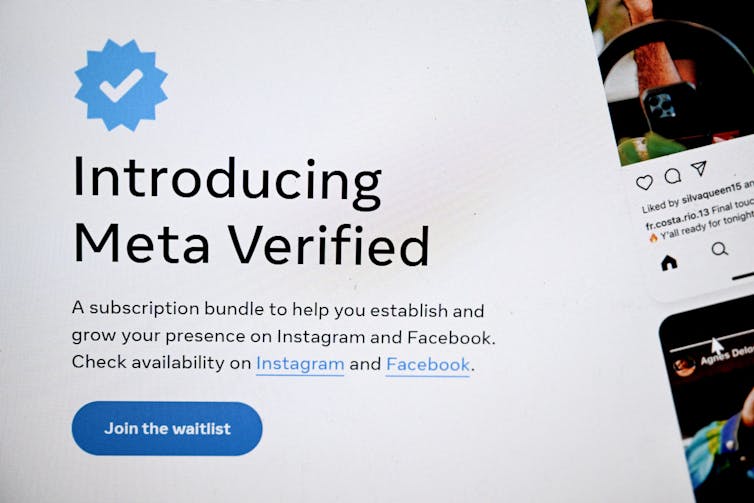
Social media services have generally been free of charge for users, but now, with ad revenues slowing down, social media companies are looking for new revenue streams beyond targeted ads. Now, Twitter is charging for its blue check verification, and Meta and Twitter both charge for identity protection.

Users benefit from “free” services such as social media platforms. According to one study, in the U.S., Facebook users say they would have to be paid in the range of $40 to $50 to leave the social networking service for one month. If you value Facebook highly enough that you’d need to get paid to take a break, why not pay for these new services if you can afford them?

Meta plans to offer paid customer support and account monitoring on Facebook and Instagram to guard against impersonators for US$11.99 a month on the web and $14.99 a month on iOS devices. Twitter’s proposed changes make two-factor authentication via text messaging a premium feature for paid users. Twitter Blue costs $8 a month on Android devices and $11 a month on iOS devices.

As a researcher who studies social media and artificial intelligence, I see three problems with the rollout of these features.

The collective action problem

Information goods, such as those provided by social media platforms, are characterized by the problem of collective action, and information security is no exception. Collective action problems, which economists describe as network externalities, result when the actions of one participant in a market affect other participants’ outcomes.

Some people might pay Facebook for improved security, but overall, collective well-being depends on having a very large group of users investing in better security for all. Picture a medieval city under siege from an invader where each family would be responsible for a stretch of the wall. Collectively, the community is only as strong as the weakest link. Will Twitter and Meta still deliver the promised and paid-for results if not enough users sign up for these services?

a screenshot with large and small text and a white checkmark inside a 12-point star
Meta is beginning to roll out a paid identity protection service for Facebook and Instagram users. William West/AFP via Getty Images

While large platforms such as Facebook and Twitter could benefit from lock in, meaning having users who are dependent on or at least heavily invested in them, it’s not clear how many users will pay for these features. This is an area where the platforms’ profit motive is in conflict with the overall goal of the platform, which is to have a large enough community that people will continue using the platform because all of their social or business connections are there.

Economics of information security

Charging for identity protection raises the question of how much each person values privacy or security online. Markets for privacy have posed a similar conundrum. For digital products in particular, consumers are not fully informed about how their data is collected, for what purposes and with what consequences.

Scammers can find many ways to breach security and exploit vulnerabilities in large platforms such as Facebook. But valuing security or privacy is complicated because social media users do not know exactly how much Meta or Twitter invests in keeping everyone safe. When users of digital platforms do not understand how platforms safeguard their information, the resulting lack of trust could limit the number of people willing to pay for features such as security and identity verification.

Social media users in particular face imperfect or asymmetric information about their data, so they do not know how to correctly value features such as security. In the standard economic logic, markets assign prices based on buyers’ willingness to pay and sellers’ lowest acceptable bids, or reservation prices. However, digital platforms such as Meta benefit from individuals’ data by virtue of their size – they have such a large amount of personal data. There is no market for individual data rights, even though there have been a few policy proposals such as California governor Gavin Newsom’s call for a data dividend.

Some cybersecurity experts have already pointed out the downsides to monetizing security features. In particular, in giving a very rushed timeline, one month from announcement to implementation, to pay for a more secure option, there is a real risk that many users will turn off two-factor authentication altogether. Further, security, user authentication and identity verification are issues that concern everyone, not just content creators or those who can afford to pay.

In the first three months of 2022 alone, nearly one-fifth of teens and adults in the U.S. reported their social media accounts getting hacked. The same survey found that 24% of consumers reported being overwhelmed by devices and subscriptions, indicating significant fatigue and cognitive overload in having to manage their virtual experiences.

It is also the case that social media platforms are not really free. The old adage is if you are not paying, then you are the product. Digital platforms such as Meta and Twitter monetize the enormous tracts of data they have about users through a complex online advertising-driven ecosystem. The system makes use of very granular individual user data and predictive analytics to help companies microtarget online ads and track and compare advertising views with outcomes. There are hidden costs associated with people’s loss of privacy and control over their personal information, including loss of trust and vulnerability to identity theft.

Social media and online harms

The other problem is how these moves to monetize security options increase online harms for vulnerable users without identity protection provisions. Not everyone can afford to pay Meta or Twitter to keep their personal information safe. Social bots have become increasingly more sophisticated. Scams increased by almost 288% from 2021 to 2022, according to one report. Scammers and phishers have found it easy enough to gain access to people’s personal information and impersonate others.

For those who are scammed, the process of account recovery is frustrating and time-consuming. Such moves might hurt the most vulnerable, such as those who need Meta to find access to job information, or the elderly and infirm who use social media to learn about what is happening in their communities. Communities that have invested resources in building a shared online space using platforms such as Twitter and Facebook may be harmed by monetization efforts.

People are tired of having to navigate numerous subscriptions and having security and privacy concerns that persist. At the same time, it’s an open question whether enough users will pay for these services to boost collective security. Ultimately, the service a social media platform offers is the opportunity to connect with others. Will users pay for the ability to maintain social connections the way they pay for content, such as entertainment or news? Social media giants may have a difficult path ahead.

Feature Image Credit: NurPhoto via Getty Images

By 

Sourced from THE CONVERSATION


By Rebecca Deczynski

Privacy restrictions have made it harder for businesses to target customers through paid social media advertising. The Facebook owner suggests its new tools can help.

The age of third-party cookies is over. Artificial intelligence can help–at least, according to Meta.

The Menlo Park, California, company announced earlier this month that it is rolling out new A.I.-powered tools that aim to help businesses reach new and existing customers. Its “custom audience” tool within Meta Advantage, the company’s existing suite of automated marketing products, offers to deliver ads beyond retailers’ selected target audience to help them find new customers. Previously, advertisers could target specific audiences via third-party data (an in-platform option that Meta turned off in 2018 and Apple further restricted outside use of in 2021), opt-in lists, or specific demographics. With this new tool, the platform will serve ads to potential customers–who are selected by an algorithm that determines if they are likely to engage with the ad–outside of those retailer-specified audiences.

Since Apple rolled out new privacy restrictions in its iOS 14.5 update in the summer of 2021, businesses have been unable to use third-party cookies to target new customers through paid social advertising; this has made growth on social platforms a challenge, especially for those that previously relied on cost-effective ad placements. So, businesses are increasingly interested in new ways they can find and convert new customers.

And Meta is trying to help. In August, the Facebook owner rolled out Advantage+ shopping campaign tools to advertisers globally, which it says allow businesses to automatically generate Facebook and Instagram ads. The company shared that, in a study of 15 A/B tests, these automated campaigns led to a 12 percent lower cost per purchase compared with traditional ads. Meta says that its new custom audience tool will enable advertisers to reach an even greater number of potential customers, by serving ads to algorithmically selected customers outside of the advertiser’s selected audience.

It remains to be seen if marketers will embrace Meta’s A.I. and automation tools. IOS 14.5 changed the way businesses are able to target customers on platforms like Facebook, says Lee Joselowitz, growth marketer and co-founder of Los Angeles-based performance marketing company The Quality Edit. Apple’s privacy changes have led businesses to increasingly rely on first-party data, long-form content, and strong creative to reach their target audiences. “A good Facebook marketer has had to develop more technical skills around signals and measurements, in addition to becoming a really strong creative strategist and storyteller,” she says. With Meta’s push for A.I.-driven marketing solutions, there may yet be an easier way forward.

Feature Image Credit: Getty Images

By Rebecca Deczynski

@rebecca_decz

Sourced from Inc.