Tag

Social Media

Browsing

By Hammad Akbar

There are billions of active social media users worldwide, and the number continues to grow by the day. A growth that has led to social media platforms becoming one of the most influential virtual spaces.

Traditional methods of marketing like TV commercials tend to be a one-way communication—brand to the customer. But social media marketing encourages engagement. It creates multi-way communication in that:

  • Businesses can communicate with customers
  • Customers can engage with the brand by offering feedback.
  • Customers can communicate with other customers by sharing posts.

As a brand owner or marketer, you get to reach a multitude of potential buyers in seconds, especially when using paid social media.

There is plenty you can gain from social media marketing. But if your efforts are not bearing any fruits, you could be guilty of some common errors most people make. Being aware of these social media marketing mistakes can help you correct and avoid them.

1. You Are Working Blindly

One of the biggest mistakes you could make in your social media marketing is shooting in the dark and expecting results. Instead, you need to take it with the seriousness you would take any other marketing campaign.

Create a plan—a clear social media marketing strategy. It’s the first ingredient of a successful social media account.

A social media marketing strategy will ensure that:

  • You are posting content that is relevant to your goals. It will prevent you from wasting your efforts and resources on a social media campaign that’s sure to fall flat.
  • You are scheduling and arranging posts early enough. Posting consistently helps you grow and maintain a strong organic online presence.

So, how do you create an effective strategy?

A simple guide is not going to cut it. You need a master plan that addresses:

  • What you want to gain from social media. A new source of leads? Brand awareness? If you don’t know what you want, you can’t get it.
  • Who you are targeting.
  • Your plan of action. What kind of posts will you make? How will you market the posts to reach your intended audience? Do you need to add more video content?
  • The team that will be responsible for maintaining your accounts.
  • The time and funds you will allocate to social media marketing.
  • Your key performance indicators.

Know what you want from social media and how you will get it. And you will be on the path to achieving your full social media potential.

2. You Are Targeting the Wrong People

You could have a super-plan in place. But if you are targeting the wrong audience, then again, you will have a case of wasted efforts and resources. You’ll end up with tons of followers who have little to contribute to your goals⁠—an audience that doesn’t represent your ideal customers.

Overall, Facebook is the most used social network worldwide.
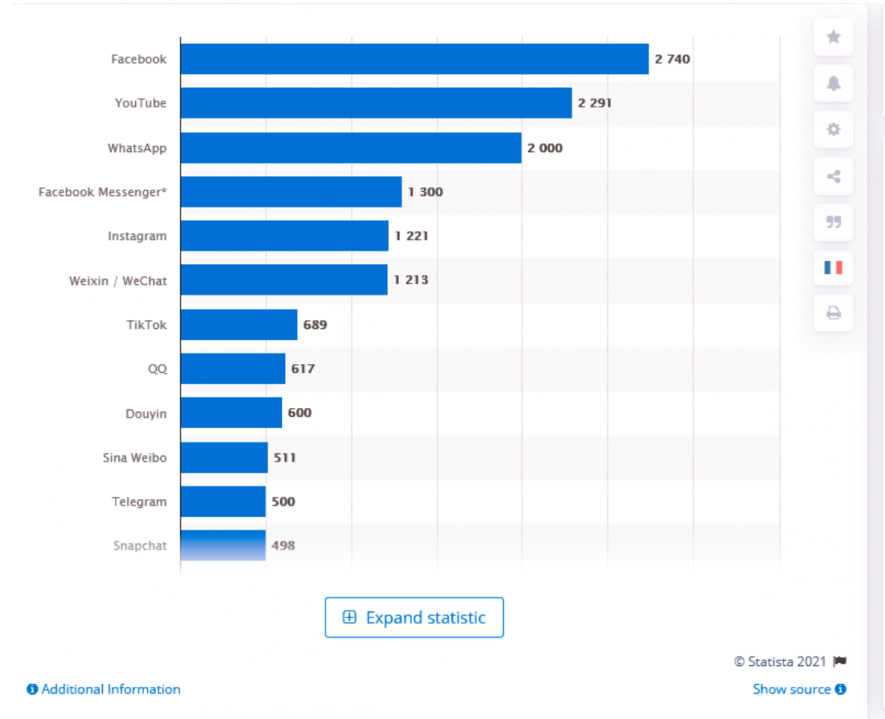
However, this does not mean you should focus your marketing efforts on Facebook.

First, define your target audience. This is the market segment that is most likely to have an interest in your product or service. You can base it on age, income level, education, location, or behaviour.

If you are active on multiple social media channels, pay special attention to the platform popular among your target audience.

For instance, data shows that Instagram is most popular among 18 to 29-year-olds.
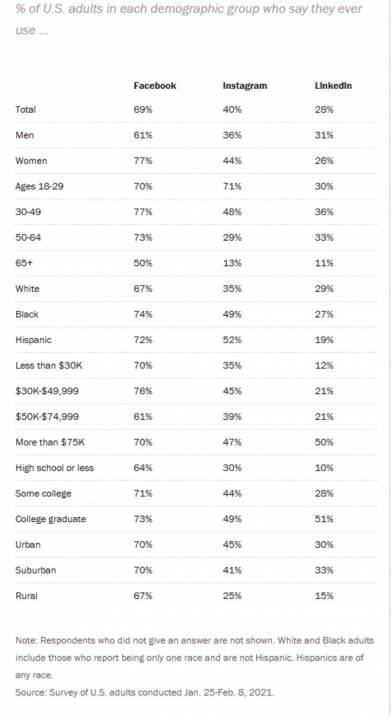
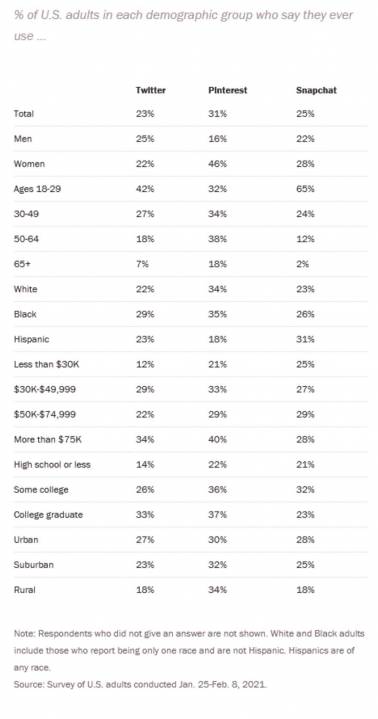
Pinterest is most popular among women, while Snapchat and Twitter are most popular among 18 to 29-year-olds.
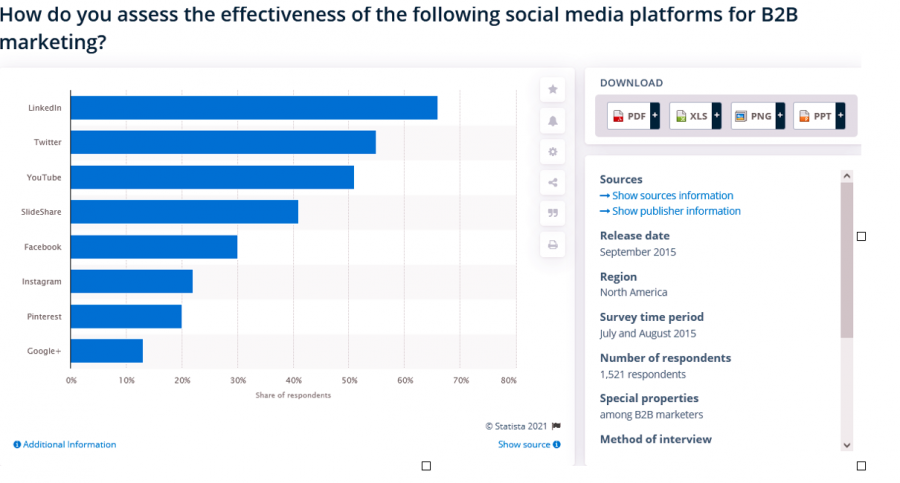
And if you are in the B2B space, LinkedIn might work better for you.
People are quick to ignore irrelevant content. For this reason, try not to make assumptions about your target audience.

Study them, then customize your content to fit their needs and expectations. Your content should bring value to your audience and give them a reason to engage with it.

Your tone should also fit the social media platform you are using. The kind of content your target audience expects differs among platforms.

Facebook users, for instance, expect an informal, playful, and engaging tone. On the other hand, LinkedIn works best with a reasonably formal tone, and Instagram is mostly about aesthetics.

Maximize your reach of the target audience by using features like subtitles and captions. They make it easier for your audience to:

  • Watch your videos in sound-sensitive environments, such as offices or noisy places.
  • Comprehend dialogue where the participants are speaking fast.
  • Stay attentive, helping you pass your message across.
  • Access your content despite having hearing problems.

3. SEO Best Practices Are Not Part of Your Social Media Marketing

A mistake most brands make is ignoring the power of SEO in making their social media campaigns successful.

Just like you’re keen on SEO when creating blog posts, landing pages, and other content for your website, you should do the same with social media.

Practicing SEO can help your profile rank higher in search results. This drives organic traffic to your profile and grows your followers.

The amount of likes, shares, and comments your posts receive affects your social media ranking and reach. So, to start with, you need to post frequently and post high-quality and engaging content. Then make it easy for your followers to share your posts by including compelling CTAs.

Make use of keywords. Find the best performing phrases and words once you do your keyword research for your articles and blog posts. Then, use them in your social media posts.

Visual content is one of the strongest SEO techniques you can use. Use relevant and quality images, videos, and GIFs that load fast.

Taking the step to add subtitles to video and captions to images and GIFs also works in your favor. Google and other search engines cannot watch a video. But the search bots can crawl the text on it and index the video, making your posts more discoverable.

Put SEO tactics into practice, and you’re sure to experience an increase in your reach.

4. Excessive Brand Promotions With No Real Content

For most people, social media is a place to network and communicate, share opinions, get updated about current events, and get inspired.

So if you are using it only to promote your brand and post automatic backlinks to your website, you’re getting it wrong.

You want to create content that arouses the audience’s interest and triggers conversations.

Join conversations on hot topics, but steer away from anything divisive, such as politics. Instead, observe what is happening in your niche and what your audience is already discussing. Then create content that responds to these issues.

Aim at making most of your content valuable and interesting to your audience. And the rest can involve promoting your products or services, but with a lot of engagement and social interaction.

As you post non-promotional content, ensure that the quality is consistent. Unfortunately, most brands make the mistake of assuming any post is better than no post at all. But unlike a personal social media account, a brand’s account is subject to ruthless scrutiny.

One offensive post could make your consumers and potential leads unfollow you. Or, if you are too official, they could see you as boring and begin ignoring your posts.

Stick to posts that reflect your brand and connect with your target audience. Be sociable. And when you do promote your brand, do it subtly.

5. You Are Not Using Hashtags

The famous #hashtag. Almost everyone knows what it is. But few know how to use it properly, when, or even why.

A hashtag begins with the “#” symbol followed by a keyword, with no spaces or punctuations. They provide a way to label your content and associate a post with a particular topic.

Every time a user wants to filter relevant conversations on a particular topic or carry out a hashtag search, they can find your content on the topic. Thus, it helps your target audience find you.

Here are a few pointers for using hashtags:

  • Get specific with your hashtags. Generic hashtags like #sports will not get you the increased impressions or reach you seek. But #sportsshoes is a better choice.
  • Use hashtags to talk about trending topics and get your brand in front of thousands of people.
  • Be careful what you hashtag. So naturally, you want to stay away from sensitive topics that could make people question your brand’s values.
  • Keep your hashtags short and easy to remember.
  • Don’t overuse hashtags.
  • If you plan on starting a new hashtag, ensure that it’s unique and catchy. Something that people will remember when referencing your brand.

Hashtags are a powerful method to gain exposure on social media. They can strengthen your social media presence and help you market your brand more effectively.

6. Your Profile Is Faceless With No Human Interaction

Social media is all about connecting with other people. But a mistake most brands make is relying too much on automation.

Excessive automation could make you lose your human touch.

It’s essential to be present. Participate in the conversation in the comment section. It will improve the value of your social presence and help you build valuable relationships with your audience.

The kind of responses you make also matter. A brand account that is too corporate has no place on social media. When you use stock responses, your audience will know. And they will stop engaging with your posts.

Add a human touch to every post and comment you respond to. For example, when responding to a question from your audience, personally address the individual instead of using pre-crafted marketing and corporate messages. Be authentic, delightful, and inspiring.

You’re going to face some negative responses, that’s for sure, but you need to maintain your cool. Respond to any concerns the person in question may have in a friendly and polite way. This will prevent the conversation from turning negative, which can be damaging to your reputation.

Take every positive and negative comment as a chance to talk directly with a potential customer.

Avoid limiting your social interactions to the marketing department. Instead, involve other departments, such as billing and production. This will ensure prompt and comprehensive responses to your followers’ questions.

When you take the time to respond to comments, and not in a robotic way, it establishes strong connections with your followers, and they’ll like you more.

It’s also best to make personalized and meaningful interactions with the content of other people. This can range from influential professionals in your niche to experts who share the same views as your brand. It will increase the exposure of your content and give you wider access to your target audience.

7. You Neither Track Performance nor Have a Clear Call to Action

You can have entertaining, meaningful, and SEO-friendly content. But if you are not going to tell your audience what to do next, your efforts are going to waste.

Your audience needs the motivation to take the next step to become a customer.

Include a call to action in your posts. It could be an invitation to:

  • Visit your website.
  • Like, share, or comment on the post with their thoughts.
  • Sign up.
  • Shoot you an email.

Once you have CTAs in place, measure the success of your marketing efforts using social media analytics. You can use the metrics provided by the social media platform or use analytics software.

Tracking analytics can give you an extensive view of your social media performance. In addition, they provide actionable insights that you can use to improve your social media marketing tactics and woo the right customers.

Here are some essential analytics to track:

Analytics What it entails
Awareness How big are your current and potential audience? 

What are the demographics?

Engagement How does your audience react to your posts? 

Is there any fluctuation in engagement, and what kind of posts cause the fluctuations?

Conversion How many of your followers heed your call to action. 

Is the traffic that comes from social media to your website likely or not to convert?

Consumer How does your audience feel about your brand?
Influence Who is driving conversations about your brand? 

Do they get others to participate in these specific conversations?

Share of voice What’s the volume of the conversation about your brand, and how does it compare to competitors?

Tracking analytics shows you the impact of your past actions. And you can use these insights to improve your social media marketing strategy continually.

Ready to Step up Your Social Media Marketing?

Have you been making any or all these social media marketing mistakes? Then, it’s time to remedy the situation.

  1. Start by writing down your social media marketing strategy and target audience.
  2. Next, create a social media calendar. Make a plan on how you will create meaningful, SEO-friendly, and share-worthy content that utilizes hashtags and CTAs. You don’t have to worry about your visuals. Instead, use Keevi, a powerful online content editor. Keevi will make your images, videos, and GIFs SEO-friendly, accessible, and high-quality.
  3. Finally, measure the results of your social media marketing efforts, and make improvements where needed.

Take these steps, and you are sure to have your brand presence felt on social networks.

Feature Image Credit: Olenka Serfienko; Pexels

By Hammad Akbar

Hammad Akbar is the Founder & CEO at Keevi, a video content repurposing tool. He has extensive experience in the world of Digital Marketing, SaaS Application development, and building technology companies. In his short career, he managed to bootstrap two technology companies with minimum funds to multimillion-dollar revenues. When he’s not working, he likes to travel to new countries and learn about their local cultures.

Sourced from readwrite

By Shama Hyder

No matter which industry they are in, business leaders need to meet challenges head-on and create methods to make ends meet.

Many businesses were forced to close their doors due to the pandemic. More than 200,000 companies were forced to close in 2020 alone. Many of these businesses were in industries deemed “non-essential” — such as restaurants and bars. Their closures and the resulting economic downturn forced many people to re-evaluate their industry of choice. No one had a playbook for how 2020 would unfold, and the term “unprecedented” became (ironically) commonplace.

Surprisingly, other industries saw an increase in revenue last year. Those who found success during hardship utilized unique business and marketing strategies to make things work. No matter which industry they were in, business leaders needed to meet challenges head-on and create methods to make ends meet.

What can marketers learn from how industries are changing nationwide? Here are some tips that can help.

Use Social Media to Connect

When the world was in lockdown, many companies scrambled to improve their digital footprint. Online interaction swiftly became the only means many had to connect with customers. One study from 2019 reported that despite social media’s accessibility, roughly 38 percent of small businesses still do not use it to connect with their audience. But its importance should not be neglected.

Amanda Gunawan of OWIU Design uses her social-media platforms to express the unique vision and purpose behind her company. With a combined total of roughly 150k followers between her personal and professional Instagram accounts, she is able to brand herself and her company. This social-media presence became imperative in 2020, as networking had to be done online and Instagram accounts or websites often served as company portfolios.

Manage Stress and Avoid Burnout

Leading a company during an economic downturn is undoubtedly stressful. Many companies may be tempted to take the easy route in order to alleviate stress instead of thinking about their long-term strategy. Learning to balance the pressure of highly competitive industries with a need for well-thought-out marketing strategies is a difficult but vital task.

Nancy Almodovar, CEO of Nan & Company Properties, runs the largest local real estate brokerage in Houston. Almodovar credits managing stress as the key to her success. “Stamina has been a challenge. You have to perform at a higher level to win the daily battles. Sleep, diet, exercise, and meditation are essential to prepare, reset, or rest enough to be ready to take on the next challenge without any lack of energy,” she says.

Know When to Pivot Your Strategy

Many interpersonal services were suspended for a significant portion of 2020. Some companies completely pivoted and changed their offerings to make ends meet. For some businesses, this meant emphasizing previously underperforming services and products, or totally shifting business models.

Powerhome Solar, a residential and commercial solar power company, changed the way it advertised its services during the pandemic and saw a 95 percent year-over-year increase in revenue. They understood that most people were spending all of their time at home, and loss of power would be disastrous. Updating the way they marketed their offerings based on the new needs of their customers due to the struggles brought about by the pandemic was crucial.

Before the pandemic, the value proposition around their offerings focused on cost and the environment. The new messaging, developed alongside the Sussman Agency, emphasized how they could help ensure homes would never be left in the dark during power outages. This subtle change in messaging brought them much success and is a great example of the importance of knowing your customers and recognizing that as their needs change, your strategy needs to as well.

Create a Strong Internal Culture and Company Personas 

Creating a strong digital brand won’t happen if you and your employees don’t understand your company’s mission and values. WebEnertia, a digital brand and Web design company, understands how imperative culture and brand are to its success, no matter what is happening economically. With over 20 years of creating compelling design experiences for clients, they know that personas are key to an effective marketing strategy. Once a company understands its own brand, it can share that brand with the world.

Become a Student of Consumer Behaviour

If they were not already doing so, marketers must marry their strategies to consumers’ purchasing and behavioural patterns. The Sussman Agency works with clients to make sure they’re adhering to consumer behaviour and knows they won’t find success without it. In a world that changed rapidly due to the pandemic, it became even more important to understand that your ideas may be brilliant, but if they don’t reflect raw numbers, they aren’t going to take you anywhere.

Feature Image Credit: Getty Images

By Shama Hyder

Sourced from Inc.

Sourced from Native News Online

In 2021, 4.48 billion people will use social media on a daily basis. This means that almost half the world’s population has some form of online presence. So, it is very likely that your brand image will depend on the social media presence that it commands. And in this article, we will look at the best tips for building a brand on social media.

1. Update Your Profile

The first, and most basic step in building a reliable brand online is to fully update your online profile. As a brand, you want to be visible and accessible. So, people should be able to find accurate information about your profile on every social media platform. You should also ensure that every detail that visitors would want to know is filled in and available.

Lastly, remember to remove any controversial content that you might have posted in the past. This can result in a bad reputation in the future, and will be harmful for your growth.

Need to know who a number belongs to, if it is a client or a business opportunity? Check out https://free-lookup.net/canada today.

2. Setting S.M.A.R.T goals

A concrete social media branding strategy, going by the acronym S.M.A.R.T, it stands for:

  • Specific: You need to decide on a specific goal before you put your time and energy into achieving it.
  • Measurable: The goal you set out for your brand should be measurable. Metrics such as follower count or engagement count is key in this case.
  • Achievable: Ensure that the goals you set out for your brand to accomplish are do-able in the near future.
  • Relevant: You should have a clear idea about how the plan will impact and benefit your business.
  • Timely: Always set out a timeframe to achieve a particular goal. This promotes accountability and encourages you to push your limits.

3. Identify Your Target Audience

Every person in the world cannot be your targeted audience. You need to be specific in the type of people that will benefit from the content you post or the services you offer. This will help you identify hot leads, and deliver better service to customers. As a result, you will have better customer satisfaction and retention.

In the long run, having a target audience in mind will help you spend your money effectively and market your brand to the relevant people. Check out the dos and don’ts about getting an audience here.

4. Create Engaging Content

Once you have identified your target audience, and have updated your profile, it is time to create. Branding on social media is best achieved through great content.

People respond better to visual content than text. So, create infographics and images to maximize your reach and impressions on followers. Use attractive colours in your graphics. Remember to use the popular hashtags based on the genre of your content so that people can access it based on their preferences.

If you’re promoting a product or service, have compelling product photos to showcase your brand. This strategy is not only used by the established companies, but also the smaller businesses. Overall, it makes your profile look much more professional and appealing to a customer.

5. Build Relationships Through Social Media Brand Marketing

Keeping an engaged audience is key when you’re building brand awareness through social media. In many cases, having an engaged low follower count, is better than having a high count with no engagement.

Answer questions and reply to comments whenever possible. Mention people using the ‘@’ tag when you’re posting as well. Lastly, share other people’s content, especially when it applies to you. Reply to their mentions of your brand, and ensure that you’re human in your approach.

Don’t try to hard-sell people about your deals and offers on your page. Instead, give them nuggets of information that they can use. This way, you’re building a positive brand image and people will be more likely to use or recommend your services.

Sourced from Native News Online

By Scott Nover

TikTok unveiled new shopping features for brands, positioning it to compete with the largest social media companies on e-commerce.

The Chinese company, owned by ByteDance, has been steadily rolling out shopping features over the last year, partnering with Shopify and Walmart among others. Now, TikTok is giving marketers a suite of shopping tools including shoppable links, livestream shopping, and product galleries in ads. TikTok Shopping first piloted in the US, UK, and Canada in August.

This functionality pits TikTok against Facebook, Instagram, and Pinterest, which dominate US social commerce, effectively the buying and selling of products through social media. According to the research firm Insider Intelligence, Facebook will sell to 56.1 million users in 2021 on its main app and to 32.4 million on Instagram. Pinterest will attract the third-most buyers with 13.9 million expected, the research firm said.

Mike Proulx, vice president and research director at the research firm Forrester, said in an interview that social commerce is becoming “much more of a native user experience within social media apps.” Forrester research shows 38% of US adults buy products monthly on social media.

Claiming 1 billion global users as of this week, TikTok poses a rising threat to Facebook in one of the most important potential growth areas for both companies.

Social commerce has swept China

In the US, social commerce is still nascent compared to China. Chinese consumers will spend about $351 billion on purchases mediated by social media in 2021, Insider Intelligence projects, while Americans will spend about $37 billion. It’s a growing sector: social commerce sales are expected to rise 36% in the US this year.

WeChat, the ubiquitous chat app owned by Tencent, dominates social commerce in China. But ByteDane tripled its sales on Douyin, TikTok’s counterpart in China, to $77 billion in 2020, according to one Chinese media outlet. While livestream shopping in the US focuses on apparel and beauty, Chinese consumers are accustomed to buying everyday goods like groceries and meals off of influencer-led live streams. It’s uncertain that those habits will translate to the US market, but social commerce is widely considered a promising slice of growing e-commerce sales.

TikTok made me buy it

Since it rose to prominence in the US, TikTok has played a small but growing role as a recommendation engine for shoppers. While dwarfed by direct sales from competing platforms, viral posts on the platform have driven huge sales for a few products: CeraVe skin products, a cleaning paste called The Pink Stuff, catnip called Cat Crack and certain pair of now-famous leggings.

One of the company’s new slogans, “TikTok Made Me Buy It,” has become a rallying cry for creators trying out viral products, but until now the company has not equipped businesses with the tools to actually sell direct to consumers. That’s finally changing as US customers become increasingly comfortable shopping on social.

Feature Image Credit: REUTERS/Dado Ruvic/Illustration

By Scott Nover

Sourced from QUARTZ

Sourced from appPicker

Nowadays, businesses are becoming very competitive and as such, the need for internet marketing strategies has become crucial in helping you to increase your online presence. This means that it is vital for every business to make use of the internet and social media platforms to market their products and services.

Here are some effective digital marketing strategies:

1. User data analysis

This is a marketing strategy that basically focuses on data gathering and analysis. Understanding the needs and desires of your customers can be done through this process. Professionals at smartboost.com understand how to serve your customers better by understanding their digital footprints and all things related to design. This will greatly help you to improve the way you market products and services.

2. Social media presence

The best thing about social media platforms is that they make it easier for one brand or company to interact with other brands and companies in an online space where content sharing takes place. This means that you can share your content on various other platforms such as Facebook, YouTube, Twitter among others without necessarily overloading your end users with lots of information. Having a strong social media presence also gives brands more opportunities to interact with their customers.

3. Website design

A website is the main channel that companies use to market their brands and services effectively, which implies that it should be designed in a very special way that will attract more customers. Having a beautiful website design helps bring visitors to your site, who can then be written about your products and services.

4. Social media app development

Social media apps are becoming increasingly popular among people all across the world because they allow for easier sharing of content among different social media platforms. This means you need to focus on developing attractive social media apps to increase traffic to your website. These apps should be easy to use by everyone, irrespective of age or location.

5. Live-streaming

This is one of the best marketing strategies that will allow you to share content with your customers. This can be done in form of videos or images on different social media platforms. By doing so, it keeps your target audience more engaged, and this keeps them coming back to see what’s new about your business. It also allows for customer feedback, which can help improve products and services offered by businesses.

6. Email marketing

Email marketing is a very effective type of digital marketing because it gives you an opportunity to interact directly with your target audience who are into making business deals. You just need to send out emails that advertise the deals that are being offered by your company at different price points compared to other companies that may offer similar products and services.

7. Search engine optimization

SEO is basically a process of ensuring that your website gets ranked high on search engines for keywords related to your products and services to attract more customers who are interested in what you have got to offer. It also involves making sure that the content of your website is original, relevant, and easy-to-read to encourage sharing, which ultimately boosts traffic to your site. SEO becomes more effective when combined with social media marketing.

8. Digital PR

This is not usually done by most businesses, but it is an effective strategy for boosting digital presence.  This kind of PR is better suited for websites that are likely to be referred to by other sites because it helps them boost their traffic too without necessarily compromising your integrity.

9. Mobile marketing

Having an app on different mobile platforms gives you more opportunities to interact with your customers and also get feedback about what they like most about your brands and services, which makes it easier for you to market it in the right way. You can even use Wi-Fi or Bluetooth technology to make sure people can easily find information about your brand, product, or service while they are on the go (on buses, trains, cars, etc.).

10. Video marketing

This is one of the best ways of communicating directly with customers through video sharing on different social media platforms. It also gives you an opportunity to showcase your product or service in a very attractive way, which will help increase traffic to your site and at the same time create awareness about what your company is willing to offer. This can be done through television ads, YouTube videos, podcasting, etc.

Why is online presence important for marketing strategies?

For any business to grow and be profitable, they need to have a strong online presence. This is because more and more people prefer doing their shopping, booking tickets for events, and making other business transactions online. When it comes to marketing strategies, businesses cannot afford to ignore the internet when they want to attract new customers or retain the current ones.

However, not all websites get the same number of visitors who can convert into customers. That means that some sites are likely to perform better than others, depending on how easy it is for potential customers to find information about them and actually go ahead and make a purchase. Prospective clients prefer visiting sites that are easy-to-read, professional-looking, with lots of information about products and services offered by companies.

What are the benefits of having a strong online presence?

With a strong online presence, your business will gain more visibility, especially with the help of social media platforms that are always available for people to search for products and services. This is why you need to use different marketing strategies because they give you the opportunity to be close to potential customers who may become lifelong clients if they see your site as a source of quality products or services.

You can also make good use of social media tools by sharing customer reviews about your brands, upcoming deals, and discounts, etc. which is bound to make them pay another visit to your site. If this continues over time, chances are you will have a steady flow of traffic on your website that is likely to increase as people share news about it with their friends and relatives through different social media platforms, making your online presence grow rapidly.

Marketing strategies are the best tools you can use to promote your brand or services online. This is because they effectively help you attract more customers as well as retain the ones you already have as potential clients.  When you have a good number of visitors, it means that your online presence has been boosted and this is the beginning of the success of your company.

Sourced from appPicker

By Rachael Johnson

Ever wonder what people are saying about your brand? Not only is this information interesting, but it’s also incredibly useful and important in developing your marketing strategy.

But how can you gather social data outside of direct customer interaction? Social media monitoring is the answer, and luckily, there are plenty of free social listening tools out there you can use.

What Is Social Media Monitoring?

Social media monitoring, or social media listening, is the identification and extraction of online conversations that contain mentions of your brand. For example, if someone posts something about your company on Twitter, Facebook, YouTube or another social platform, you can learn a lot about how your brand is perceived through that social media post as well as the comments or replies.

But how can you possibly monitor all of the online conversations out there? If you wanted to comb through all of the online conversations on every social channel available, you would need a team of hundreds of people consistently scrolling through social media accounts, and you still wouldn’t even scratch the surface. Luckily, there’s such a thing as a social media listening tool — or a social media monitoring tool — that does that work for you.

What’s a Social Listening Tool?

If you’re familiar with how search engines work, you already have a basic idea of how a social media monitoring tool works. Search engines send crawlers to scan through the internet and find content that matches search queries. Similarly, a social media monitoring tool spreads out across social channels to identify every brand mention it can. The data is then collected and stored so that a social media marketing team can respond to questions, concerns and feedback as well as conduct social analytics.

Why Is Social Listening Important?

Social media monitoring and social listening are essential for any brand. Customer reviews and data will reveal important information about your target audience, but it leaves out an important part of the story.

Social media listening is important because it:

Improves Customer Service

Often, if a customer is unhappy with a product or service or if they have a question, they may try to reach the brand on social media instead of emailing them or going straight to their website. When this happens, it’s essential that your brand notices and responds. Ignoring this type of outreach — whether accidental or on purpose — is sure to make a potential customer feel neglected. But responding will make them feel heard. In fact, 21%of consumers are more likely to purchase something from a brand that is accessible via social media, according to Sprout Social.

Assesses Brand Awareness

You can’t improve your brand awareness without first gaining an understanding of how it’s already performing. Social listening helps with brand monitoring because it gives your company data on where the most conversations about your brand are taking place, and where there needs to be more awareness. Let’s say consumers are raving about your company all over Instagram, but they’re quiet on Twitter. That may mean that you need to increase your Twitter engagements to reach a larger audience.

Keeps Tabs on Brand Reputation

Not only will social media monitoring help you find out where and how much consumers are talking about your brand, but it will also give you valuable information about the general sentiment towards your company. People turn to online conversation for many reasons — whether they are happy, angry, confused or curious about your company, they may convey their feelings through a social media channel.

Sprout Social found that 59% of consumers reached out to a brand on social media as a result of a great experience, while 40% of consumers will reach out due to a bad experience and 47% will contact a company through a social channel seeking an answer for a question.

So now that we’ve established how useful and important social media monitoring is, let’s talk about how to do it affordably. Luckily, there are a number of free social listening tools on the market that your brand can start using today.

14 Free Social Listening Tools To Try

1. Brandwatch

Brandwatch is a social listening tool that works across multiple channels, plus it is a direct partner of Twitter. This tool’s bread and butter is consumer intelligence and trendspotting. When you use Brandwatch, the tool uses an algorithm to find and analyse brand mentions and discover common trends across social networks.

2. Brand Mentions

Brand Mentions is exactly what its name implies, and more. This free social listening tool searches the internet for your brand name in online conversations. Once the mentions are located, they are collected and organized into categories that coincide with trends. Therefore, the result you get when you use Brand Mentions is a convenient, streamlined report on all of the conversations in which your brand appeared across Twitter, Facebook, YouTube and more.

3. BuzzSumo

BuzzSumo is a content analysis tool with an impressive amount of social listening capabilities. This tool allows you to search the internet for content that includes mentions of your brand. Once the examples are found, BuzzSumo will compile engagement metrics for each social media post — like views, likes, clicks, shares and more. This way, you can find out not only which channels contain the most conversations about your brand, but also where the lengthiest and most interesting conversations are taking place.

4. Followerwonk

Followerwonk is a social listening tool specifically designed for Twitter. It allows your company to search through Twitter bios to find and connect with relevant users, and it also allows you to compare Twitter accounts with one another. You can also analyze your followers, gaining valuable information on their demographics, locations and other valuable customer data. Furthermore, Followerwonk provides insights on possible relationships between your activity on Twitter and the gain or loss of followers.

5. Google Alerts

If you aren’t already using Google alerts, you should be. They couldn’t be easier to set up, and they inform you of when your brand is mentioned in news story titles. If someone posts a blog or article about your company on a social media channel, magazine or other online platform, you’ll get an email notification. This will help you keep tabs on the bigger topics of discussion related to your brand.

6. Hootsuite

Hootsuite is a social media management platform with a subsection for social listening called Hootsuite Insights. This tool provides a convenient platform when you can view and respond to social media posts that mention your brand. Surfing Twitter, Facebook, Youtube, Instagram and every other social media channel for brand mentions would take far too much time and effort. Hootsuite, luckily, compiles all the posts and lets you engage with them in one easy-to-use tool.

7. Lithium

Lithium recently acquired Klout, a social media management tool that allows you to more easily interact with your followers. Through this tool, you can respond to direct outreach from your followers, including direct messages, Tweets, Facebook posts and more. As your brand awareness increases, it becomes more overwhelming to respond to all the outreach you get. Lithium makes this process much easier by providing a simple and convenient platform.

8. Mentionmapp

Mentionmapp is another social monitoring tool that connects to your Twitter account. It shows metrics like who mentions your brand the most, as well as who most often retweets or replies to your tweets. Since the tool is interactive, you can do quite a bit of investigation into these metrics. For example, you can look at each tweet to see how they are related to one another.

9. Socialmention

When you use Socialmention, you type a term into the search bar — likely your brand name or a term very closely related to your company — and the tool scours the internet and fetches all mentions of that term it can find. These might be in the form of social media posts, blogs, news articles, images or video content. It gathers this information and presents it in one convenient platform.

10. SumAll

SumAll functions as the name implies. It gathers information from all of your social media accounts — Twitter, Instagram, Facebook, YouTube and more — and presents it in one easy-to-read summary. Using this tool, you don’t need to check the insights of each social media channel individually. Information about engagements is all right there in front of you.

11. TweetDeck

Tweetdeck is a tool provided by Twitter itself, and it helps you view and assess Twitter engagements in real time. You do this by monitoring live feeds across Twitter, so if someone Tweets something, adds to their story or starts a live video, you’ll know as soon as it happens.

12. TweetPsych

TweetPsych is a social listening tool that helps you find out about your brand’s reputation. If you give this tool your brand’s Twitter handle, it will compile a series of Tweets that unveils the general sentiment toward your brand among Twitter users.

13. TweetReach

TweetReach helps you navigate the wonderful world of hashtags. If someone is to discuss your brand on Twitter, there are a number of terms they might use for the associated hashtag. TweetReach makes it easy to search through Twitter for mentions of various hashtags.

14. Twitonomy

If you want to investigate a specific Twitter user or hashtag, Twitonomy is a useful social listening tool for that. Just type the hashtag or user handle into the tool, and it will find and extract metrics like mentions, followers, retweets, replies and more for that particular search criteria. This is useful for if you need information on one influencer or a trend that’s circulating around social media.

By Rachael Johnson

Rachael is a content writer located in Chicago. When she’s not typing away, you can find her running the pool table at her local dive, crocheting her own clothes or reading under a blanket and working her way through the 20 different types of loose leaf tea she bought in bulk on an impulse.

Sourced from Brafton

By

Ads placed in news media consistently outperform ads on Facebook and YouTube, according to a study conducted by Australia’s ThinkNewsBrands.

The cross-platform analysis found that while ads in both print and digital news publications perform better than ads in the social media channels, print ads specifically had a much greater memory impact on readers.

The study included more than 5,350 participants who experienced ads from seven Australian brands in 11 forms of media.

For six days, 42 custom print runs were sent each morning across Sydney, Melbourne, and Perth.

To cut down on bias dependent on ad-placement, seven versions of each newspaper were also distributed each morning. Two hundred and fifty-two websites were also created, with more than 6,000 unique brand exposures.

To maintain the same creative assets for all platforms, the study provided three different print sizes — full-page, half-page, and quarter-page ads — and 6-second, 15-second and 30-second ads for digital display and video.

Duane Varan, CEO of MediaScience, who oversaw the study, describes it as “a monumental effort” that is intended to assure advertisers that it was a true “apples to apples comparison.”

Results show that newspaper ads, regardless of ad type, outperformed Facebook up to four times.

On mobile and desktop, ads in news outlets delivered 1.7 times the unprompted recall of 6-second YouTube ads and were equal to 15-second YouTube ads.

News outlets also proved most effective for short-term ROI, with 10% stronger sales growth than social media.

“The thing about news is that it’s cognitively engaging,” Varan explains, adding: “When you watch the news, you’re thinking about what’s going on. You go into the ad break with your brain wired and fired up, and so you have better access to your memory pathways as a consequence.”

According to Varan, ad recall in news outlets was consistent across three stages of memory:

1. Attention (seeing and absorbing content) was measured by brand recognition.

2. Message-processing was measured by queue recall.

3. Memory retrieval was measured by unaided/free recall.

“It’s telling the story, again, around this clear superior memory effect for news,” Varan says. “It’s consistent with what we’ve seen across many other studies that we’ve done for news clients.”

Varan believes there is too much “assumption” in the market and that various media ad-effectiveness propositions “need to be weighed.”

“We can’t just make assumptions about what effects we think things deliver. We have to have some data that informs it.”

Out of all the study’s findings, Varan says he was most surprised by the comparison of print ads to Facebook ads.

“Just to see how much stronger newsprint was vis-a-vis a Facebook ad, you’re getting a much greater impact,” he says. “A print ad is even outperforming a video ad. That’s pretty telling.”

Varan thinks advertisers have forgotten how good print ads look.

“We just have not been around the medium enough to remember,” he said. “A print ad is very rich. Compare that to the fleeting experience of seeing an ad and scrolling through it.”

Overall, the study suggests how powerful context actually is.

The success of an ad may depend heavily simply on where an ad is placed, Varan says, noting: “Think about how hard it would be to get a 10% lift. Here we’re talking about much more dramatic effects.”

While the study is based on Australian consumers and media outlets, Varan believes that if the study was replicated overseas it would show similar results.

“The numbers might not be exactly the same, but the trend would be,” he says.

By

Sourced from MediaPost

By Quina Baterna

If you’ve ever come across the term darkposting on social media, here’s what to know about what it means…

Gone are the days that all ads look like ads and influencers don’t have to disclose sponsored content. These days, social media is becoming less intrusive, but more transparent when it comes to advertising with darkposting.

Darkposting is the middle ground between obvious brand posts and influencer lifestyle content. But exactly is darkposting, and how does it work?

What is Darkposting?

Image Gallery (3 Images)

Pioneered by Facebook, darkposts are social media ads that don’t show up on the brand or page’s timeline like a regular boosted or sponsored post.

For most social media platforms like LinkedIn and Twitter, you can choose between boosting your organic content or creating a darkpost.

However, darkposts are enabled by default on platforms like Instagram and Snapchat.

Darkposting is commonly used to A/B test ad performance, such as testing different headlines, markets, and images.

It’s a great way for brands to keep a clean social media appearance on their main pages, while being able to experiment with their audience feed posts. In combination with whitelisting on Facebook, creators can give brands limited use of their handles or pages and post darkposts for them.

While under the name or handle of the creator, darkposts appear on timelines and feeds without affecting a creator’s main channels.

How Does Darkposting Work?

Darkposting creates the illusion that creators create and share the content themselves. However, if you’re thinking that your favorite influencer replied to your message on a darkpost, chances are it’s actually a brand representative talking to you.

Clicking or interacting with darkposts of any kind counts as interacting with a sponsored post. With this, interacting with a darkpost will affect what kind of ads you will be served within a social media ecosystem in the future.

Don’t Get Tricked by Advertising

When it comes to advertising, social media sites are becoming sneakier with how they present their ads.

While most people would agree that darkposts are a lot less annoying than regular ads, it’s always good to mindful of how they impact your social media experience.

That being said, ads aren’t always bad. They’re the trade-off that many social media sites use to provide us their services. Darkposting is just another way for them to blend into our feeds seamlessly.

By Quina Baterna

Sourced from MUO

By

You’re fed up with the trolls, the endless bile, the utter vacuity of social media. But as you tell your friends and family, “I would cancel my account, but I need it for work.” But do you, really?

It’s worth thinking about. Because the mental health benefits of leaving social media for good (not to mention the extra time you’ll save for, you know, actual work) are very attractive indeed.

And it’s not like posting on social media is the best way to find new clients anyway. With so much noise and so many people clamouring for attention out there, it can often be the worst.

Plus, if you quit social media – or at least dial down your usage, you won’t be alone. “I left Instagram around five months ago, I rarely use Twitter, and I never use Facebook,” says content writer and SEO specialist Dana Nicole. “And yet I’m fully booked. Deleting Insta hasn’t negatively impacted things at all. In fact, it’s allowed me to re-focus my energy on other areas of business.”

Fancy following in Dana’s footsteps? Then read on, as we offer ten practical tips to win freelance clients without using social media.

1. Send emails

It’s ironic, really. Freelancers are constantly looking for work, and companies are constantly looking for good freelancers. But the two often fail to meet in the middle! This is why it’s important to send a friendly email saying you’re available, both to people you’ve worked for in the past and those you’d like to work for in the future.

Often, that little nudge is all you need to get work. And even if it doesn’t bear fruit immediately, your email will probably get filed and remain searchable when they do need someone. In contrast, finding a Facebook post you read six months ago is a tall order indeed. (If you don’t believe us, just try it!)

2. Send mailouts

Find your emails are getting ignored? Then maybe consider physical mailouts instead. If they’re well crafted, people are sure to hang on to them, suggests graphic designer James Bristow.

“It’s unlikely an approach will be perfectly timed, so I recommend a creative piece of printed mail,” says James. “Make it good, and it’s got a fighting chance of being kept for when the time is right.”

3. Get featured on magazines and blogs

Another classic approach to winning clients is to go old-school PR and get your work featured in relevant magazines and blogs.

Most decent ones will have clear instructions on how to submit your work. (Ours are here. Follow them carefully.) This in itself won’t automatically mean you get featured because there isn’t space for everyone. But like anything, it’s a numbers game: the more blogs you contact, the greater your chances of coverage.

If you succeed, not only will you boost your profile, but any natural links back to your website will boost its ranking. For this reason, it’s also worth getting to know the editors and journalists of your discipline’s favourite titles. Put yourself forward for comment pieces, offer to write a feature, or just keep them updated with new work.

Referrals are the secret sauce to winning new business for many freelancers. But just because you’ve done great work for someone doesn’t mean they’ll naturally recommend you to others – some need to be gently nudged.

4. Start your own blog

A good alternative to getting featured on an existing blog is to start your own, writing about your field. Once you’ve built up an email subscriber list, keep firing out your posts and make yourself an expert in a specific area. That way, people will know whom to contact when they need someone who knows what they’re talking about.

Even if you don’t have a blog, illustrator and animator Connie Noble believes that “just having a banging website” is a great way to win new clients. “Not to toot my own horn, but being able to exhibit my best work at a quick glance has really worked wonders for me,” she says. “There’s no point having a private website or one with only one project, though: clients want to see it all.”

5. Focus on search

Social media isn’t the only way to drive people to your website: far from it. “Organic search brings in over 90% of our clients and customers,” says designer Mike Hindle. “Thankfully, that means I can now take a week off from the business social media pages every couple of months, without it having an impact on the work we get coming through.”

6. Get referrals

Referrals are the secret sauce to winning new business for many freelancers. But just because you’ve done great work for someone doesn’t mean they’ll naturally recommend you to others – some need to be gently nudged along the way.

Writer Luc Benyon advises you: “Ask everyone you know to hook you up with their friends, colleagues and contacts for an informal coffee chat.” While designer and art director Gil Cocker suggests you: “start reconnecting with people you’ve worked within the past; the power of recommendations are so valuable. Having an immediate level of trust has been invaluable to me when gaining new clients. After all, people buy from other people… especially when the risk is lower.”

7. Visit relevant groups

Here’s another fruitful place to seek out freelance clients, which not everyone thinks of. “Look for groups that relate to the field in which you want to work, on platforms like Slack,” suggests designer Mike Smith. “Being a helpful voice in those groups will get you noticed, and before long, people will seek you out for work.”

Motion designer Julian Brown adds: “I’m a big proponent of ‘volunetworking’. Real-life volunteering with others for a common cause creates strong bonds and connections. And if it can include showcasing your marketable skills, then all the better.”

8. Use LinkedIn

Whether or not you count LinkedIn as social media is a matter of debate. Either way, it’s light years away from the kind of mindless posing you find on Instagram or the desperate search for likes that typifies Twitter. And lots of freelance creatives really do find clients via this service.

“I find Linked In really good for finding work,” says fashion, beauty and lifestyle illustrator Niki Groom. “I recently wrote that I was open to clients outside fashion and beauty, and it led to a great corporate project.”

9. Meet people in person

So far, we’ve talked about online alternatives to social media promotion, but perhaps you’d rather get away from the computer altogether? Well, the good news is that the oldest trick in the networking book is still available to you: going out and meeting people in the real world.

Now that society is unlocking, it’s time to start arranging drinks and meetups again. Get out there and look at people in the eye; it’s unnerving at first, but you’ll soon be back in the swing of it. Give more than you get, genuinely support the creative community, and it’s amazing how much the universe will give you back.

But how do you decide who to meet? “One idea is to grab a large sheet of paper and a Sharpie to map out your network and ideal clients, in a bubble diagram or similar,” says life and business coach Helen Jane Campbell. “Then figure out how to approach each person on the list. A coffee? A postcard? Phonecall, or email? Whatever it is, the important thing is to make your ask, or offer, very clear.”

10. Show don’t tell

The idea that “If you build it, they will come” might sound a bit hackneyed. But cliches become cliches for a reason. So Helen’s final recommendation for our list is this. “DO THE THING you want to be known for. Don’t wait till you get your first client to begin. This could look like volunteering, publishing your own newsletter, holding an exhibition… But whatever it is, show, don’t tell.”

Feature Image Credit: Image licensed via Adobe Stock

By

Sourced from Creative Boom

By Tamal Das

If you manage multiple social media accounts, scheduling content ahead of time will save you a big headache. Here are some of the best tools for this.

If you’re active in multiple social media platforms, you must try post-scheduling calendar tools for publishing your content.

The world of social media is expanding, and hence it becomes difficult for individual users to post on all the platforms regularly at the right time. In order to manage when and what to publish on social media, you need to stay organized. To make the whole process seamless and hassle-free, check out these eight social media calendar tools for scheduling posts.

1. MeetEdgar

Image showing the interface of MeetEdgar
Image Credit: MeetEdgar

This comprehensive social media management tool not only schedules your content; it can also write posts on your behalf. Using artificial intelligence (AI) algorithms, it extracts the content that’s getting maximum engagement and suggests that to you.

You won’t have any trouble using this tool as it is easy to understand and use. It makes your task of managing multiple platforms easy by letting you handle all of them by logging through only one account. You can schedule posts on Pinterest, Instagram, Twitter, Facebook, and LinkedIn via this tool.

This social media calendar tool allows you to schedule posts category-wise. Therefore, you can quickly categorize your post into infographics, blogs, promotional posts, webinars, etc. It also lets you highlight the categories in separate colours so that you can easily track them.

Download: MeetEdgar for Android | iOS (Price starts from $19/month)

2. Buffer

Visualization of the Buffer app interface

You may have heard the name of Buffer, as it is a pioneer of social media management tools. It offers you powerful planning and scheduling features. If you manage more than one social media account, this app will be useful for you.

You can create a separate publishing schedule for each account of yours on different social media platforms. The supported platforms of this tool are Facebook, Instagram, Twitter, LinkedIn, and Pinterest. You can draft your posts here and personalize them according to the style of each social network—all using a single dashboard and without any hassle.

The calendar feature of this Buffer is designed for you to visualize the scheduled posts and optimize them as per your requirements.

Download: Buffer for Android | iOS (Free, in-app purchases available)

3. Iconosquare

An image showing the interface of the Iconosquare app

Despite being a social analytics tool primarily, Iconosquare can also schedule your posts on Instagram, Facebook, and Twitter. Moreover, you can monitor your mentions on Facebook and Instagram to manage your online reputation.

Iconosquare’s social publishing tool comes with versatile functionalities. Thanks to its drag-and-drop feature, you can seamlessly order your content according to your choice. The tool allows you to schedule posts, carousels, and stories for Instagram, along with Facebook statuses, and tweets.

You can also check your Instagram feed preview to know how it looks before posting your content. It is also feasible to schedule your first comment along with the hashtags for better reach and engagement.

You can effortlessly upload images from Dropbox or OneDrive to the media library of Iconosquare. The tool lets you segregate your content for searching the photos. By tagging the used images, it makes sure that you don’t end up posting the same content twice.

Download: Iconosquare for Android | iOS (Price starts from $49/month)

4. Hopper HQ

Visualization of Hopper HQ app website and features
Image Credit: Hopper HQ

If you are looking for an Instagram-friendly post scheduling tool, Hopper HQ is the right choice. If you have more than one Instagram account, you can manage them all through a single Hooper HQ login. However, it also supports Facebook, LinkedIn, and Twitter.

This social media calendar planner comes with a neat interface, so you should not have difficulty navigating through this app. Its bulk uploading feature allows you to upload 50 posts at a time. You can also reschedule your posts on social media.

The tool also includes some exciting image editing features. You can make your images catchy and appealing by adding filters, borders, and text overlays. It also lets you preview your post. So, you know how it will look on the mobile screens of your audience and make changes, if necessary.

Download: Hopper HQ for iOS (Price starts from $19/month)

5. SocialPilot

An image showing the interface of SocialPilot web app

This comprehensive app for social platform scheduling and posting comes with robust features and an easy-to-use layout. It allows you to create visual posts with multiple images and GIFS, add carousel posts, post native videos, and many more. You can also leverage its Canva integration feature to make a new image.

The supported social platforms are Facebook, Twitter, LinkedIn, Instagram, Pinterest, and Google My Business. The tool lets you reschedule your posts on another date or at a different time on the same day for improved engagement. You can also reshare your evergreen content with this app that keeps bringing you more traffic and better user engagement.

Besides utilizing the direct publishing feature on Instagram, you can also link with your blog fees. Thus, your blog will get shared on your social media accounts automatically after getting published. After scheduling posts for an extended period, you can get a bird’s-eye view of how the plan looks.

Download: SocialPilot for Android | iOS (Price starts from $42.50/month)

6. Hootsuite

A visual display of the Hootsuite app for social media
Image Credit: Hootsuite

When it comes to managing your social media efforts on multiple platforms, Hootsuite is one of the most popular tools. Its interactive and media-rich planner offers a complete overview of your social media calendar.

The app displays a small visual preview of upcoming posts with the image caption and post timing. You can edit them right from the Hootsuite platform.

The supported platforms of this tool are Twitter, Facebook, Instagram, LinkedIn, and YouTube. After creating content, its Composer tool lets you preview according to the unique format of each social network. Apart from scheduling, it allows you to identify publishing gaps. Moreover, with its Chrome extension, you can include newly-discovered content to your calendar automatically.

Download: Hootsuite for Android | iOS (Price starts from $49/month)

7. Agorapulse

An image showing Agorapulse app social media post schedules

Besides social publishing tools, Agorapulse comes with a content calendar to make social media account management effortless. It lets you schedule and reschedule your social media posts. You can use post queueing and bulk post uploading features for planning your posts on a monthly or quarterly basis.

Agorapulse supports the following social media platforms: Facebook, Twitter, Instagram, LinkedIn, and YouTube. Additionally, it comes with a social media inbox. It allows you to administer all the interactions of various platforms from a single place. This feature ensures better engagement with the audience.

Download: Agorapulse for Android | iOS (Free, in-app purchases available)

8. Falcon.io

Website visuals from Falcon social media post scheduling app
Image Credit: Falcon.io

If you are tired of juggling between multiple social media accounts, try Falcon. This social media scheduling tool helps you plan and publish all the upcoming social posts from a single calendar.

With this all-in-one app, you can edit, preview, schedule, and publish your social media posts without breaking a sweat.

The app offers support for Facebook, Instagram, Twitter, LinkedIn, WhatsApp, and YouTube. It displays all your scheduled content according to date on different social platforms.

Download: Hub by Falcon.io for Android | iOS (Price Starts from $129/month)

Social Media Calendar Apps Are Essential for Managing Your Accounts

Your social media followers grow depending on the regular activities, like the posts and shares, from your profile. Use any of the above tools to make social media content posting seamless and convenient.

When creating content on social media, you can also improve your workflow by using apps that help you create stunning visuals. You might also want to look at what’s trending, and see how you can capitalize on that—along with analysing your social media performance.

By Tamal Das

Sourced from MUO