Many businesses have to squeeze out expenses to break-even and start making a profit. Unfortunately, some important processes, such as marketing, go underfunded.
However, that doesn’t have to be the case. There are several ingenious low-cost strategies to promote your business while you’re on a tight budget. You just need to start small and you’ll be able to scale up as you go.
Here are seven cost-effective strategies that will attract customers to your business. Your main goal should be to scale up the process so that you get more revenue by applying all these techniques consistently. The cycle will spiral upwards, later on, bringing you more clients each time.
1. Create engaging online content
Time; that’s the only thing you’ll need to start producing excellent content. Running a blog is quite easy nowadays. There are many templates available and you don’t have to worry about hosting. Many blog hosts offer free hosting without premium features. Zero capital for starters, that only requires effort. If you decide to improve things down the line, you can hire remote employees.
You need one or two outstanding writers. Plus, an editor and a graphic designer would also be useful additions. The good news is that most of them work as freelancers, meaning, you get to pay for services only when you need them.
Always make sure the content aligns with your product or service. Research extensively and give customers what you’d consider reading yourself. Some ways to keep content engaging is through:
Sharing useful tips across articles
Adding an FAQ section with detailed answers
Incorporating lists, graphic assets, and multimedia
Listing best practices in your industry
Highlighting key points and crucial ideas
Now, regarding your potential earnings, the following chart shows the average revenue possible for ~60% of the population who is willing to publish 3 pieces of valuable content a week, as you can see the profits are considerable:
There are many agencies and marketplaces that offer professional cold calling services. You brief them on what you are offering, pay a fee, and they’ll do the magic. If you cannot afford such services, you can do this in-house.
All you need is to research the best cold calling practices. Then, prepare scripts to ensure consistency in your message. Stay courteous on the phone, explain things patiently, and you will start seeing your first leads. Just keep in mind that cold-calling is a number’s game.
You can also consider incorporating cold emailing. It works the same way as cold calling only that you do not get instant feedback. Send out emails to prospects, then wait a few days to send follow-ups when there’s no reply. There are many options to automate this process, which will save you a good amount of time.
3. Leverage referrals
One of the oldest ways of promotion is through word of mouth. Encourage your satisfied customers to spread the word. After all, any product is best understood by those that use it.
Referral programs are quite flexible so you can be very creative with them. Giving rewards is the best way to do it. Here are some ways of using rewards in your customer referral programs:
Have giveaways for customers with the most number of referrals.
Give customers and those whom they refer, a percentage discount.
Give some free products/services to customers with a certain number of referrals.
Make a scoring system with hierarchies to make customers gain points and upgrade their status, unlocking additional benefits.
4. Apply for awards
There are many companies that offer online awards to businesses of different niches. Find one related to your industry. Showing that you have awards boosts trust ratings among your potential customers.
Some awards are easier to get, whereas some have very rigorous criteria. Getting those harder awards will definitely grant you trustworthiness, and customers recognize that. This increases your business reputation.
If awarded, the organizations share your business information on their site and social media platforms. That drives more traffic to your business. Thus, bringing prospects your way.
If you are granted an award, here are some things worth doing to take full advantage:
Share the announcement on your website and social media
Prepare a well-written press release
Write a blog post expressing your gratitude for the award by outlining what it means to your business
If the award comes with a badge, place it strategically on your site
5. Strengthen your business through partnerships
When people come together costs are easier to bear. Team up with other local businesses and do joint campaigns. It applies to businesses relevant to your industry.
Don’t go about it blindly though, you need businesses that complement yours. For example a wedding photographer can team up with a wedding planner and a wedding dress designer.
Such partnerships will widen your customer database. Your partners’ customers trust them, so your information shared on their platforms gets easily trusted too.
6. Stay active on social media
Let’s take a look at some amazing stats shared by Oberlo to give you an idea of how massively important social media (SM) is for businesses:
As you can see, social media is probably the biggest marketplace in the world right now, and it is no longer just about replying to messages and posting content. People want to establish meaningful relationships. Therefore, you need to take the time to know your customers, get them to know your business and cultivate a loyal customer base. This requires you to stay constantly active.
Understand your followers and people who interact with your content. Engage with them often and listen to the feedback given. Act on such feedback and show that you care about your customers and value their opinions.
In order to improve engagement consider introducing fun activities. Social media contests are an outstanding example. They keep your customers engaged, they’re fun, and some customers get to take cool prizes back home.
This is an easy low-cost strategy that will help you build your online reputation, which is more important. With time, word will spread, and soon you’ll have your website visits exploding. The conversion rate also skyrockets as long as you take the time to cultivate relationships.
7. Get involved in your local community
While staying active online brings customers from all corners of the globe, your local community is equally important. They probably formed your initial customer base and might be your most loyal customers.
It’s important that you keep them engaged as well. Take part in local fairs and events. It keeps your business fresh in their memory and provides you a platform to introduce fresh developments.
Carry some business cards and posters when you attend local events. Also, don’t simply dish them out. Make meaningful conversations with prospects as you would with online followers. Only this time you are doing it in person, so facial expressions and other non-verbal cues matter.
Conclusion
Most of what is listed above requires exclusively effort or very low investment. Experiment with each strategy and you will soon realize that you don’t need a super large budget to promote your business.
It’s often through simple interactions that you create long-lasting impressions. Add a little creativity into the process and you will never run short of a constant customer flow. By the time you decide to scale up, you will have gained not only some stability but also a great deal of experience.
Guest author: Bryan Osorio is a Blogger, SEO enthusiast, Content Marketer, and Digital Marketer with 3 years of experience within the Tech and Digital Marketing Industry. He likes to read, write and talk about Science, Technology, AI, Video Games, World News, and more. He studied Psychology at the National University of Colombia and enjoys writing about leadership, remote work, team motivation and others.
Nothing beats the thrill of watching live sporting events unfold. Those impossible acts, the surprise results and glorious victories – there is nothing else like it. Sport is emotional, it is engaging and it has the power to unify.
There is a huge global appetite for sport and, after the Covid-19 pandemic forced many spectator sports to shut down for much of 2020, fans became hungrier than ever for the excitement of live events.
While many rescheduled tent-pole sports events are due to take place over 2021, all eyes will be on the Tokyo Summer Olympics, set to launch on 23 July. Although organisers are working tirelessly to ensure the Games go ahead, there is still a real possibility that fans will be unable to attend in person.
For brands, this presents the challenge of connecting with fans without them being physically in the stadium. However, it also creates new opportunities for brands to engage fans at home and enhance their mobile and digital experience.
Without a doubt, it will be a different experience for sports fans, but new viewing patterns and behaviours were already evolving. Live sports broadcasting is being disrupted by digital devices and online platforms, meaning it is no longer a linear TV experience.
This change was already apparent in the viewing figures for the 2016 Summer Games in Rio de Janeiro, where 3.2 billion people watched on a combination of TV and digital devices. Today, according to the research firm GlobalWebIndex’s (GWI) data from Q3 2020, 54% of global sports fans watch coverage or highlights online.
Digital viewing for the Olympics Games has been soaring since Beijing in 2008. According to e-Marketer’s Sports OTT Landscape report from January 2019, it was expected to hit new heights in 2020 with video views predicted to top 3.5bn. TV views were projected at around the 3bn mark.
Fans are also taking their conversations online as highlighted by GWI (Q3 2020) showing that two-thirds of sports fan use social media while watching TV. With duel-screening now almost universal, brands should note that mobile sports consumption is increasing multi-faceted. According to Facebook data, there are 700 million sports fans on Facebook and 400 million fans on Instagram.
The 2016 Summer Games in Rio also demonstrated how the behaviour of sports fans is changing. Facebook saw 1.5bn interactions during the games from 277 million unique users, while Instagram registered 916m interactions from 131 million unique users. The last Football World Cup generated 5.3bn interactions.
More than half of viewers are also chatting with friends via platforms such as WhatsApp sharing key sporting moments, while a third is reading the news, playing games or searching for products related to what they are watching. What does this mean for marketers, particularly sponsors?
Sports sponsorship has long been big business for brands, offering a vast, often international, reach, and a culturally relevant audience. According to the research and data company Kantar, sports sponsorship will account for 10% of all global advertising spend in 2021, hitting nearly $50bn.
Tracking the performance of those campaigns and measuring success has always proved tricky for brands. At the same time, sponsorship properties have often only been available on long-term contracts. It is no surprise then that Kantar research also found that 44% of marketers believe sponsorship is the least understood media channel in terms of return on investment.
However, digital and online platforms, such as Facebook and Instagram, are turning the sponsorship model on its head. The opportunities for bespoke content and agile and trackable campaigns allow brands to target their campaigns more accurately and assess their success more quickly.
Andy Childs of Facebook’s Central Europe Connection Planning unit explains: “Sports sponsorship is in transition, with brands all vying for consumer share of mind and share of wallet. With our platform and analytics, Facebook and Instagram offer brands a unique opportunity to grow – to reach mass audiences, enhance the fan experience, trigger relevant purchases and importantly measure the business impact of sport sponsorship.“
It means not only are brands seeking shorter, more targeted sponsorship opportunities than are the market norm, but there are more ways for non-sponsoring brands to get involved in tent-pole sporting events.
With more opportunities for brands to get involved in the 2021 Summer Games, the need for creative campaigns that cut through the noise will be more critical than ever. To do this, marketers should consider these creative thought starters:
Amplify brand association
A brand should develop a meaningful link with its chosen sports event among its audience, and cut through the clutter by demonstrating its interest and reason for getting involved with the sport. Where fans are aware of the link between sponsor and property, there is a 30% uplift in commercial effects compared to where fans are unaware of the correct linkage.*
It is vital to identify a different emotional space to other sponsors, particularly close competitors, while also targeting a broad audience with content such as snackable video. Use in-stream advertising to build a stronger association.
Enhance the fan experience
To reinforce the connection between the brand and the event, offer fans something exclusive or innovative that enriches and deepens that emotional connection. Where fans are aware of the linkage and further believe that there is benefit to the property and to the fan experience (arising from the sponsorship), there is a 71% uplift in commercial effects.*
Meanwhile, offer fans a 24/7 experience through branded content and increase relevance through contextual and geo-targeting. Sponsors can also seek to augment and gamify sports consumption.
Trigger consumption opportunities
The third way to grow with sports is through sales – generating a commercial return is the most important overall objective for sponsors or non-sponsors alike. The best way is to Integrate a brand’s product or service into the fabric or experience of the event. By focusing on products connected to an event that are a natural fit or can be enjoyed during the event. Campaigns should promote relevant products or services at relevant moments, including athlete participation, home matches or weather triggers. This strategy will help improve understanding of sports event ROI.
The whole sports community from the fans and sportspeople, athletes and teams through to leagues and associations, media and influencers to advertisers and brands have all embraced this brave new world of sports. It is an evolution that has the potential to enrich the experience for everyone.
Even when fans are allowed to return to live sports events, online platforms and brands will continue to enhance and build on that experience. The potential, the reach and the creativity that online platforms can offer are only beginning to be realised.
* Professor Tony Meenaghan, Jamie Macken and Mark Nolan, Core Ireland, 2018
The Special Covid-19 Edition of The CMO Survey found that social media has become critical to marketing during the pandemic. The survey reported that social media spending has increased from 13.3% of marketing budgets in February 2020 to 23.2% in June 2020 — a 74% lift. Meanwhile, spending on traditional advertising is projected to decline, as CMOs estimate a 5.3% reduction in traditional advertising channels in the next 12 months.
Companies are seeing a historic return on their social media investments, according to the survey. The self-reported contribution of social media to overall company performance has risen sharply, up 24% since February 2020. This is an important finding because, despite steadily rising investments social media, the impact of social media has remained relatively flat since 2016.
CMOs anticipate that social media investments will remain high at 23.4% of marketing budgets into 2021. Along with this, CMOs are increasingly investing in online customer experiences: 60.8% of CMOs indicated they have “shifted resources to building customer-facing digital interfaces” and 56.2% planning to “transform their go-to-market business models to focus on digital opportunities.” It is clear that social media will continue to play an important role in driving consumers toward digital offerings.
How can marketing leaders build upon this growing trend and plan their social media marketing strategies for a post-pandemic future that is equally bright? Here are 10 key recommendations:
1. Run formal experiments. The Special Edition of the CMO Survey found a high level of marketing improvisation during the pandemic, with CMOs reporting an average 5.6 out of 7 (where 1 represents “not at all” and 7 represents “a great deal”). Despite this, survey results also document a decrease in formal experimentation on social platforms, with only 31% of marketers reporting that they conducted experiments to understand the impact of their marketing actions during the pandemic, and only 29% of marketers reporting that they invested resources into building research and experimentation capabilities.
These statistics indicate that marketers are implementing new, improvised strategies frequently, but without fully understanding their effects. They need to correct this trend in 2021: Social media platforms provide excellent opportunities to test new brand messaging, advertisements, and offerings — and to receive direct measurable feedback from target consumers. Marketers must use these tools to learn.
2. Play with new channels and features on existing platforms. Social media strategists should always be aware of what’s new on existing platforms. For example, Instagram Reels, which launched this past summer, provides a new channel to deliver the short-form video style that has swept the internet. Facebook’s gift cards or TikTok For Business, which were also released earlier this year, are similar examples. These new tools provide an opportunity to build a unique connection with consumers, who will associate their discovery of these features with the brands that first use them. A strong social media marketing strategy will include a process for identifying new features and channels and quickly creating content for them.
3. Integrate social media strategy into your overall marketing strategy. The August 2019 CMO Survey reported that social media is not well integrated with marketing strategies (scoring 4.2 on 7-point scale where 1 represents “not at all integrated” and 7 represents “very integrated”). Although a slight improvement from past surveys, this number is still too low to produce adequate returns on social media investments — and far too low for an expenditure that comprises nearly a quarter of marketing budgets.
As social media takes center stage in a post-pandemic marketing world, it needs to integrate more seamlessly with the firm’s broader marketing strategy. Because social media is the current bright light, CMOs should ensure their social media strategy directly aligns with overall marketing strategy to maximize the benefits produced by these synergies.
4. Invest in top social media talent. Social media managers are now being asked to manage a costly and highly effective piece of the marketing budget and to take on a role that often requires wearing multiple hats (copywriter, graphic designer, customer service rep, etc.). So marketing leaders need to think carefully about who should fill this key position. While the best social media managers can have a positive impact, an inexperienced or unqualified one could be detrimental to a company’s brand. The national average salary for social media managers is $50,500, according to Glassdoor, which seriously lags the average compensation for the positions they often serve in: copywriters average $58,500, marketing managers average $65,500, and ad managers average $71,000. To get top talent in this area, compensation must meet the increasing value of the role.
5. Ensure agile social media management. 2020 has shown just how quickly the social media landscape can change. Recognizing this, CMOs ranked the “ability to pivot as new priorities emerge” as the top skill they look for in marketing talent. So, when it comes to social media management, CMOs must ensure that talent, processes, and agency partners are prepared to respond to and capitalize on these sudden changes. Organizations willing to re-evaluate their social media strategies in a rapidly changing landscape will minimize risk and maximize the opportunity to connect with consumers. (To that end, a recent Journal of Marketing article highlights how real-time shifts in social media activities generate more virality online.)
6. Harness the power of influencers and creators. The allocation of marketing budgets towards influencers is on the rise, up to 7.5% from 6.5% a year ago and expected to rise to 12.7% in the next three years. As online traffic continues to increase, it will be critical for brands to identify the right influencers to attract target customers and identify growth segments. It will also be important for social media managers to invest in influencer training and relationship building; Influencers are a great way to build trust and authentic relationships with followers, who may end up being paying customers. Scheduling individual and group touch points with influencers to discuss product updates and gain feedback on trends they are observing will go a long way toward fostering a mutually beneficial partnership.
7. Carefully consider the right platform(s) for your brand. CMOs have consistently ranked brand building as their top use for social media, so it is important to consider how the platform you choose impacts consumers’ perception of your brand. In the special edition survey, consumers indicated that a “trusting relationship” is most important to them in a brand (beating out low price, product quality, and even innovation). So always consider how the policies of social media platforms (as they relate to privacy and hate speech, in particular) may undermine consumers’ trust.
8. Reduce friction between social media and e-commerce platforms. To make online shopping easy, social media managers must ensure a smooth process of funneling consumers from social media to their e-commerce site. A bad user experience in this area can lead to lost sales; a good one can boost them. So as new digital tools are developed, social media teams must insist upon frequent collaboration with development teams to ensure a smooth customer journey from mobile-app and social sites to your company’s e-commerce site.
9. Adapt your creative content to the times. It is important for brands to keep creative content relevant to the current Covid-19 reality, whatever that may be. For example, a social media post that portrays a brand at a large, indoor gathering of people could be ignored by consumers who perceive it as outdated — or worse, insensitive. On the other end of the spectrum, many consumers are fatigued from content that centers around the virus. To resonate with followers, social media content must a balance. A good example of this is the Stella Artois Staycation Swap, a contest that matches would-be travelers who had planned trips to each other’s cities that were cancelled due to Covid-19 to swap itineraries on TripAdvisor for an all-expenses-paid staycation instead.
10. Take care to select and onboard the right agency partners. Results from the February 2020 CMO Survey indicate that 24.1% of companies’ social media activities are now performed by outside agencies — an increase from 17.4% in 2014. As agency partners become an increasingly important part of an increasingly important part of the business, selecting, training, and building a strong relationship with these partners is crucial.
As the Covid-19 pandemic pushes consumers to spend more time online, social media becomes an increasingly important part of the connection between brands and their customers — both existing ones and potentially new ones. Now is the time to invest in building an integrated and agile social media management function to adapt to the new landscape.
Christine Moorman is the T. Austin Finch, Sr. Professor of Business Administration, Fuqua School of Business, Duke University. She is founder and director of The CMO Survey and Editor in Chief of the Journal of Marketing.
Torren McCarthy is a Senior Consultant with Deloitte Consulting LLP and a 2020 MBA graduate from Duke University’s Fuqua School of Business.
Although 86% of marketers feel they are adequately trained and skilled, nearly all report that they want a new skill in order to advance their careers. The most frequently reported skills are data analytics, performance marketing, social media, and SEO.
Sidecar surveyed 146 marketing professionals in the retail industry. The majority of respondents were based in the U.S., with the remainder in Canada. All reported that they contribute to ecommerce marketing efforts at their company.
C-Level executives want skills in data analytics, social media, and performance marketing.
SEO directors or vice presidents want data analytics, performance marketing, and leadership skills.
Associated and managers want data analytics, SEO, social media, and performance marketing.
Job titles including associate, manager, director, vice president, chief marketing officer (CMO), and chief executive officer (CEO). The analysis groups these titles into associates and managers, directors and vice presidents, and C-level. Responses were fielded between September and October 2020.
Some responses were not discrete skills marketers want, but rather strategic knowledge and big-picture capabilities they hope to acquire. One CEO cited the ability to create the perfect balance between digital marketing spend and great content. A director asked for strategic thinking on how to lead a brand through the changing environment.
The top five functions that have had the greatest focus in hiring during the past 12 months include social media, content marketing, SEO, email marketing, and graphic design.
This differs from the functions that marketing professionals plan to hire for during the next 12 months. Social media marketing tops the list, followed by email marketing, content marketing, digital strategy, data analytics, and graphic design.
Survey participants were asked what platforms they would like to spend more time on. Some 42% cited Google paid search, while 41% cited Facebook, 40%, Amazon; 40%, Instagram; 37%, Google Shopping; 32%, Pinterest; 20%, TikTok; 15%, Snapchat; 13%, Walmart; and 10% cited Microsoft.
Participants in the survey were asked which tasks they want to devote more time to. Brand building and data analysis were tied for the top response, with about 45% saying they want more time to do each, followed by 43% who cited competitive analysis, while 36% cited customer experience; 34% cited creative; 33% cited multichannel strategy; 32% cited customer shopping trends; 32% cited marketing attribution; 20% cited more time to devote to improving their company’s mobile experience; and 14%, more time to set goals.
C-Level executives cited that they want more time for brand building
Directors and VP levels want more time for brand building
Associate directors and managers want more time for competitive and data analysis.
Marketers at small businesses want more time for data analysis, creative, brand building, multichannel marketing, and customer experience.
When asked to cite the number one goal for the company’s marketing team rather than an individual goal, 38% of marketers cited the acquisition of new customers, while 29% cited driving profitability; 9% cited increasing customer lifetime value; 9% cited retaining existing customers; 6% cited growing brand awareness; 3% cited growing website traffic; 3% cited SEO; 2% cited developing quality content; and 1% cited improving the customer experience.
When asked to cite the top challenges for this year, (multiple choice) 51% of respondents cited limited time, followed by 40% who cited limited budget, while 32% cited competing priorities, 26% cited brand recognition, 24% cited achieving scale, and 23% cited manual processes, among many more such as competition, lack of skills in-house, lack of data-driven decisions, insufficient marketing attribution, and lack of collaboration.
Google and Facebook colluded to undermine competition in advertising, according to documents uncovered by the New York Times. Obtained during an antitrust lawsuit in Texas, the documents lift the lid on ‘Jedi Blue’ – a cloak and dagger sweetheart deal between two tech giants that monopolize online advertising.
So what’s the deal?
Google and Facebook are accused of abusing their market position to strike a backroom deal to further their business interests.
The agreement is said to have seen Facebook win more favorable terms when bidding for advertising in return for its support for Google’s Open Bidding platform for selling adverts over header bidding – where advertising space is auctioned across multiple ad exchanges.
Google has long agitated against this method of buying advertising, maintaining that it slows down web pages and causes batteries to drain faster, as well as elevating the risk for fraud and billing errors.
As a result, Facebook gained more time to bid for adverts and was able to strike direct billing deals with sites hosting the ads. The underhand arrangement is also said to have seen Google furnish its rival with its data to enable Facebook to better target audiences.
In a quid pro quo, Facebook consented to bid on a minimum of 90% of ad auctions when it could identify users, with a pledge to spend at least $500m a year.
Such terms handed Facebook an unfair advantage over Google’s other advertising partners according to the New York Times, which spoke with six of these to help build its case. This meant Facebook was almost guaranteed to win a consistent number of adverts.
Evidence of collusion was first obtained from documents filed as part of an antitrust complaint lodged by the Texas attorney general Ken Paxton, amid suspicion the tech pair were getting too cozy.
This relationship even included a clause that committed both companies to ’cooperate and assist’ in the event of any investigation into their business practices.
Why it matters
Should apparent collusion be corroborated it would further undermine confidence in digital advertising – particularly if a guaranteed win rate is confirmed.
In response to the allegations, Google contends that its agreement has been misrepresented, while Facebook maintains that such deals serve to enhance competition.
Irrespective of the truth of the matter, the lack of transparency shown by both parties will do little to instill confidence in competitors or legislators.
Addressing the claims directly, Google director of economic policy Adam Cohen wrote: “Our agreement with Facebook Audience Network (FAN) simply enables them (and the advertisers they represent) to participate in Open Bidding.
“Of course we want FAN to participate because the whole goal of Open Bidding is to work with a range of ad networks and exchanges to increase demand for publishers’ ad space, which helps those publishers earn more revenue.
“AG Paxton inaccurately claims that we manipulate the Open Bidding auction in FAN’s favor. We absolutely don’t. FAN must make the highest bid to win a given impression. If another eligible network or exchange bids higher, they win the auction.
“FAN’s participation in Open Bidding doesn’t prevent Facebook from participating in header bidding or any other similar system. In fact, FAN participates in several similar auctions on rival platforms.”
Both Google and Facebook have been in the eye of an antitrust storm, with Google fending off multiple lawsuits from the Department of Justice and three dozen states centered on its near-monopoly of search and search advertising, as well non-search advertising.
Joe Taylor has quickly adapted to the changing environment, taking his and his clients’ businesses to new heights.
2020 has been filled with challenges and opportunities alike, with many ambitious entrepreneurs and businesses recognizing the niches begging to be filled with the increasing shift to digital trading and services. Though the demand for connectivity is great, not many of these ideas have the space or foundation to grow and thrive under these conditions.eGrowth Media, a UK based marketing agency, helps many established and developing businesses make the transition to the digital sphere, connecting brands to their audiences and increasing profits through through the effective use of social media tools.
eGrowth Media was founded by award-winning entrepreneurJoe Taylor. At only 21 years old, this driven, young businessman has found much success utilizing his background in social media management, implementing and promoting events. Fresh out of college, Joe’s events business grew to 4 employees within its first year operating and was already making waves in the corporate sector, securing contracts with established UK institutions including PA Hub, the Royal British Legion and BT.
In 2020, Taylor used the changing global economic situation to refocus his goals after the lockdown crippled the events industry. Joe decided to reinvest into himself, receiving mentoring and training from one of the UK’s top advertising specialists, Jordan Platten. Joe incorporated all of his wisdom and experiences into his already developed skillset and launched eGrowth Media with the mission of making a one-stop shop for all things social media, putting the extensive tools and strategies for growth in the hands of small, ambitious businesses.
eGrowth Media operates primarily within the real estate sector, helping property investors and developers to generate more leads online, but they also work with small businesses and entrepreneurs who are looking to increase their online visibility, develop their brands and connect with their niche. eGrowth Media achieves this through the use of specialized Facebook and Instagram advertising strategies, effective email marketing, custom content generation and social media management services. They implement results-based strategies that ensure higher conversion rates and guarantee return on investment. The wide range of services offered by eGrowth Media allow them to operate as a comprehensive resource for businesses of any size to grow further, from established brands looking to expand into new markets, to brick and mortar stores looking to establish their digital footprint.
With eGrowth Media‘s successes after less than 6 months of operation, Joe is set to scale eGrowth to consistent 6 figure returns over the next 12 months. He also has just co-founded a property investment named Eaton Taylor. Taylor is constantly honing his craft as a strategist and entrepreneur. When he is not developing new business ideas and strategies for providing value to his clients, he offers up personal insights and experiences on the podcast that he hosts, “Diary of a Young Entrepreneur” where he highlights issues that young business owners face, and dives into the understanding of entrepreneurship, meeting many talented and motivated people in their field.
Joe’s penchant for online connectivity has solidified him as a results-driven businessman and rising star to watch in the UK business sector.
A strong social media presence is the foundation from which you can build a world-conquering brand.
As per the Digital 2020 July Global Snapshot, nearly half of the world is on social media. Today, to build a personal brand, there’s nothing quite like social media. The potential audience and exposure that the platform can generate would be unimaginable to yesteryear’s advertising and marketing teams.
Through social media, brands can connect and interact with their audience on a sincere and personal level. In turn, this creates customer loyalty, generates leads, and provides the sort of marketing and advertising money cannot buy.
Social media creates its momentum and can take what once was a niche brand and make it a household name. Here are three reasons why social media has become the most formidable and powerful tool any person can leverage when building their personal brand.
Social media adds an air of authenticity to your brand
In a digital landscape where everyone is jostling for attention, it’s becoming increasingly difficult for any brand to stand out. The biggest compliment any audience can give you is to believe in your brand. They will only do this if you’re an authentic and genuine article. “Once you have authenticity on social media, the world is your oyster,” shares wealth coach Rob Coats, founder of Connect and Grow Rich Consulting Agency. Coats made his name on social media through positivity and perseverance. “People tend to follow me on social media because I break it down in simple terms how they can generate wealth, and I make their financial goals tangible,” Rob continues.
He further adds that you should steer clear of bluff or bluster to gain your followers’ trust on social media. “You have to be honest on social media, or you’ll be called out as a fraud,” he explains.
Social media elevates your brand into a way of life
Social media is a place where people who share similar lifestyles connect and broaden their horizons. Lifestyles are a tangible commodity and encompass a broad spectrum. Social media can document a lifestyle like no other medium. Founder of TripleOne Inc, James Awad, who lives the sort of lifestyle that many entrepreneurs endeavour to emulate, uses it as an example of what his social media followers can achieve if, in his words, “They commit themselves to their passion and leave no stone unturned to master it.”
He explains, “With the rise in social media usage, individuals, as well as brands, must figure out what cult they want to build around themselves and then work harder and be more innovative than anyone else.”
Social media gives your brand worldwide exposure
The most dynamic thing about social media is its reach. It is a platform where ambition can truly thrive. In today’s world, you do not need a marketing firm or team of advertisers to make your brand a global one; you need to be social media savvy. Above all, social media is a level playing field. It doesn’t care where you’re from or what you’ve done; it just cares about where you’re at.
“Social media offers everyone a chance to make it big,” shares business coach Julian Kuschner. The millennial mentor knows all about having his back to the wall. He has survived getting kicked out of college and being fired from a series of dead-end jobs and came out the other end as someone who has achieved great success on his own terms. Julian now inspires others on social media to find the inner strength and resolve needed to build a successful business.
He explains, “Social media has given me an opportunity to help people all over the world. More and more people are financially struggling than ever before, but I believe it’s not so much the struggle but how you respond to it. Through social media, I aim to inspire people to stay positive, stay strong, and rebuild one step at a time.”
Have you ever wondered howI influencers are able to afford all of those designer clothes and extravagant trips? Well, tax deductions might have something to do with it.
“I was today years old when I realized YouTubers do clothing hauls on their channels so that they can write off the clothing on their taxes,” she said in the video. “They literally get all this cool [clothing and] make a video of it so it’s considered work and then they get to write it off. THAT’S SO COOL!”
This might sound too good to be true, but Holmes is right. According to tax advisor Handy Tax Guy, all you have to do is prove that your clothes are necessary for “accomplishing your job as an online influencer” in order to write them off as a business deduction.
That’s not the only thing influencers can write off when they’re doing their taxes, either. Travel expenses like transportation and lodging can be considered essential for an influencer, which makes them a tax write-off. Prizes used in giveaways, charitable donations and meals eaten while discussing work can also be written off as business expenses. For bloggers and influencers, the list of write-offs is seemingly endless.
On Holmes’ video, many influencers noted that the amount of things that can be written off during tax season is “insane.”
“And as a travel content creator I get to write off my travel,” travel blogger @whereintheworldisnina said. “And lots of other stuff!”
“Being a small business owner has its perks,” another person added. “I write off my entire house mortgage because my office is in my basement.”
Other people who aren’t as familiar with the business of being an influencer were just plain shocked.
Before you make a YouTube channel just to get “free clothes,” you should consult a tax expert to learn more about how write-offs work. Write-offs lower your taxable income, thereby lowering how much you owe in taxes. At the end of the day, you will still be paying something for those trips and clothes.
Yesterday, I witnessed one of the finest pieces of digital marketing that I’ve seen for some time.
For 24 hours my social feeds on Instagram, Twitter and Facebook were clogged with branded content that’d been shared by my friends, connections and followers.
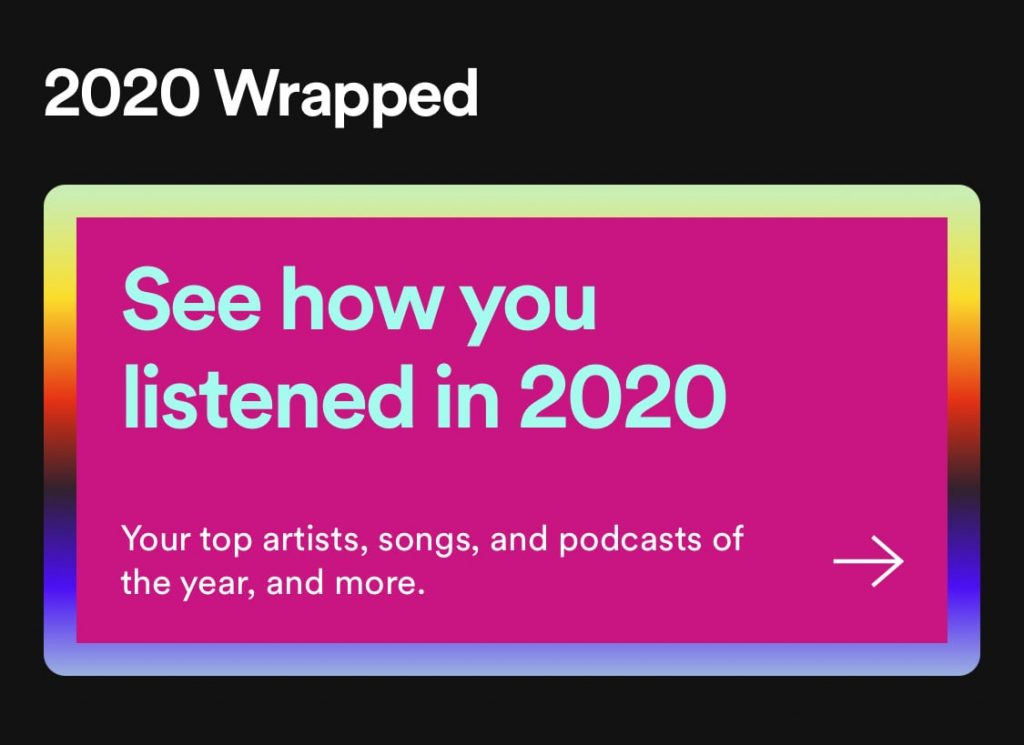
It was an onslaught of user shared content and a tour de force of brand dominance. The campaign in question was called ‘Your 2020 Wrapped’ by Spotify.
The music app’s campaign was simple – show their users what they’d been listening to – and offer them the chance to share this information on social media. Their user’s accepted.
On the same day that Spotify launched this campaign, MyWallSt reported that their share price had risen by 13%.
This graph (from Google) highlights a marked spike on 2nd December, the day Spotify launched ‘Your 2020 Wrapped’.
Contents
Are Social Shares Worth Anything?
I’m faced with a lot of emails – a large percentage of them are about one thing – ‘links’.
I receive requests about guest blogging, updating old content, link exchange proposals, monetary offers – you name it, these people are willing to give it in exchange for a simple URL inserted on our website.
This is an example of a very, very bad outreach email.
Why is it then, in an age when every other marketer and website owner is tilting towards a link-building, Google optimised strategy, that an established brand can increase their share price by 13% in one day with shareable content?
In the remainder of this article, I’ll investigate the value of the social media share, whilst uncovering the 5 steps to the most shareable content on the internet.
And as usual, we’ll have take-aways, videos, supporting images, examples, explainers and tons of shareable content…
Shares and Long Term Results, Is There a Correlation?
The main objective of this article is to provide you with something that you can take-away and action (if you’re mildly entertained – that’s a bonus) because I know social shares can have a big impact on your long-term success.
It might not say it in the textbooks, or the guides, or even list it in the depths of the marketing annuls, but social shares have a noticeable effect on long-term results. Many of the best performing content on Einstein Marketer (in terms of evergreen content scores) are located on pages that boast the highest social share counts.
For example, this is one of our most shared blogs and coincidently, one of our most visited too…
I’m not suggesting that social shares have a direct impact on search ranking, but the evidence shows that more shares = more results.
A study by CognitiveSEO discovered that the top 4 results on search engines have significantly more Facebook activity (with shares being a key part of that).
Shares aren’t just valuable in the short-term. These social signals have an impactful knock-on effect.
Social Shares As Social Proof
Regular readers will understand the delicate balance required to succeed with social proof, and this knowledge is pretty handy when it comes to understanding the importance of social shares (and how to get more of them).
If you weren’t there, here’s what you need to know:
Social proof is the theory that we are impacted by the decisions of the people in front of us
72% of people copied the action of the person in front of them (in our real-world marketing test)
Our Facebook ads performed better when social proof was inserted into the advertising copy (watch the videos if you don’t believe me!)
Social proof doesn’t work well when used in the incorrect places (i.e. in promotions for luxury brands)
Showing your target market that you’re popular by using social proof signals, can help your marketing performance
If you missed it, here’s a video of me handing out leaflets on the streets, to prove the theory of social proof:
Social media shares act as digital recommendations.
Yes, they look amazing on the page and that definitely has an impact on the psychology of your target audience, but more importantly, they allow us to see what the people we trust most recommend.
Who would you trust more:
Your mother
A stranger
This kind of social proof is invaluable for digital businesses – and reveal one reason why it’s so important for content creators and marketers to aim for ‘shareable content’.
The 5 Steps to The Most Shareable Content on the Internet
Before we dive into our 5 steps to the most shareable content on the internet (a grand claim, I know), I need to draw your attention to an article I published a little while ago called, The Psychology of Sharing.
In this article, I analysed a three-part research program conducted by The New York Times known as ‘The Psychology of Sharing’.
The study revealed that the most likely reason people share content is to:
Bring Valuable or Entertaining Content to Others
Define Themselves to Others
Grow and Nurture Relationships
Enjoy Having Others Engage
Spread/Share Good Causes
With that knowledge in the bag, and these 5 points acting as a useful reference point for the rest of this article, it’s time to get into the content marketing tactics that will create irresistibly shareable content.
1. Personalisation
Let’s go back to the very start of this article when I praised Spotify for their excellent ‘Your 2020 Wrapped’ feature.
The one word in this campaign that made all the difference was ‘Your’ – this possessive pronoun (thank me later for the English language lesson) is the reason that they received so many social shares.
If Spotify had created a feature called ‘2020 Wrapped’, and sent their users the best performing artists, songs and genres of the year in total, their results would’ve been very different.
As revealed in The New York Times study, a top reason why people share content is ‘to define themselves to others’ – and let’s face it, there are few better ways to define yourself than by sharing the music you listen to.
Ever seen a t-shirt like this? This is a real-world equivalent of Spotify’s Wrapped campaign.
Personalisation is a key stepping stone towards the holy grail of virally shared content and Spotify hasn’t been the only ones to notice.
A bigger brand has made a bigger splash, with a bigger marketing campaign based on the shareability of their personalised content.
Coca-Cola’s ‘Share a Coke’ campaign is one of the most famous marketing campaigns in recent memory – and I couldn’t write an article about creating shareable content without mentioning its name.
The campaign involved Coca-Cola removing their brand name from labels and replacing them with the 250 most popular names of each country they were released in.
A bit too sugary for my taste, but a purchase is tempting when the product has my name on it.
In the first year of the ‘Share a Coke’ campaign, photos were tagged with the hashtag ‘#shareacoke’ more than 500,000 times, and Coca-Cola gained more than 25 million Facebook followers (Source: Investopedia).
The personalisation of their products gave them the leverage to increase product sales AND the platform to build on their growth – thanks to the shareability of their personalised bottles.
Before 2011, Coca-Cola had seen ups and downs but never surpassed its peak share price in 1998. After their ‘Share a Coke’ campaign, their share price did nothing but rise until 2020.
How to Personalise Your Content For Shares
Creating shareable content via personalisation requires one very important thing: data.
Without information, you simply can’t personalise anything.
For instance, regular readers will know that my name is Josh, and therefore have enough data to personalise a message to me. A message or comment like this will capture more of my attention than one addressed as ‘Dear Sir’.
Data is a touchy subject – but nobody seems to care when it’s used to let us show off, as Spotify’s campaign proved.
Spotify succeeded because they had collected tons of data from their customers. Coca-Cola succeeded because they had enough resources to create a blanket personalisation campaign.
We don’t all have the budgets or data holding of companies like Spotify and Coca-Cola, so here are a few ways that anybody can use personalisation in their marketing campaigns and content to increase shareability:
Know your audience: Start with a customer avatar, create stuff that will help your ideal customer.
CRM Tags: Tag actions and behaviours in your customer relationship management software, and use this to inform future promotions, e.g. tag everyone who buys specific products and tailor their future communications around it.
Pixel/Cookies: Track behaviours and actions on your website and create custom audiences based on this behaviour, e.g. clicks, scrolls, URL visits, conversions. Retarget each segment with personalised content.
Collect More Data: Use sign-up forms to collect as much information as possible – first names, last names, company names, location etc. Use this information in communications.
Analytics: Use Google Tag Manager and Analytics to track what content your audience is most in tune with, and create more of it!
Implement a Live Chat: Create a live chat/messenger option for website visitors and personalise their conversation and future interactions with your website.
2. Let Them Share!
I see too many talented creators and marketers fail to offer their audience the chance to share their work.
It’s as easy as this:
Click on the share buttons below to spread the word:
BTW: The social share buttons (above) are provided by a company called Social Warfare. They act as a WordPress plugin. Install these (or a similar plugin), activate them and add them to your website – it’s not rocket science.
Calling your audience to share shouldn’t be restricted to written content, it should be done in videos and podcasts. too The best times to do this are at the start and end of your content.
These sharing recommendations are known as a ‘call-to-action’.
We can explain why calls-to-action work, thanks to a 1966 book by James J Gibson, called The Senses Considered as Perpetual Systems.
Good luck to anybody who tries to read this – it’s not for the faint-hearted.
Gibson coined a term known as ‘affordances’. This explains why certain objects have properties that direct us to take action.
For example, when we see a button, we instinctively know (and want) to press it, when we see a doorknob, we know to twist it, when we’re faced with a switch, we want to flip it.
Thanks to digital, affordances have stretched much further than simply flicking and turning switches. We know to pinch our fingers to zoom in, double-tap to like (on Instagram) and drag down to reload pages.
It’s up to you to provide your audience with the correct sharing ‘affordances’, so they’ll instinctively want to share your content.
Unfortunately, there isn’t an option to add 3D knobs and switches to your content, but, as you’ve already noticed, there are some powerful ways to use share buttons in your content:
Make it visible: Use floating bars at the side or bottom of your content to keep your share buttons in-view at all times. When the ‘I want to share’ moment hits, the option needs to be there.
Embed share buttons: Don’t ram sharing buttons down your audience’s throat, embed them where appropriate
Ask, be polite: Don’t tell your audience to do stuff, ask them politely. Many of them will understand the importance and impact of a social share and will do so if you ask.
Use incentives: A click-to-tweet is effectively a free piece of content for your audience, offer them the incentive. Alternatively, offer them offers/deals etc within your email content in exchange for shares.
Colours: Green’s and oranges are the most commonly used CTA colours, why not try using them in your social share buttons. It might be worth testing.
Show share numbers: If your content regularly receives high levels of shares, put a share counter beside your share buttons. This technique uses social proof to encourage more shares – just don’t overdo it!
3D Buttons: Design your share buttons so they look like they’ll depress when they’re clicked on. Alternatively, change their design when a mouse hovers over them.
3. Stand Out!
Doing the same thing as everyone else achieves below-average results – especially when you’re relatively new in content.
It pays to stand out – and the currency for your achievements are social shares.
The number one reason that people share content in The New York Times study was ‘to bring valuable or entertaining content to others’. People are inherently social creatures, and they are always looking at ways of helping their social circles (and raising their standing within it).
Standing out requires creativity, skill, ingenuity and having the bravery to go against the grain, or in the words of a Nobel prize winner:
‘The opposite of a great idea is another great idea.’
Niels Bohr
A sports brand like Nike would be well advised to use athletes in their ads as aspirational figures that are aligned with their products. However, one of their most virally shared campaigns was their ‘Find Your Greatness’ ad, where they did the exact opposite:
Or a drink brand like Guinness should – to any rational thinker – hide that their product is slow to pour, but instead they advertise it like a badge of honour.
And it’s one of the foremost reasons that at a time when everyone is publishing as much content as possible, I’ve decided to reduce the number of blogs being published on Einstein Marketer, in order to raise the level of quality that’s associated with our brand.
Great ideas come at both ends of the spectrum. Find which end suits you and create content that warrants the ‘stand out’ motivated share.
And if you need further inspiration, here’s an apology from KFC that received tons of shares for ‘stand out’ reasons:
How to Make Your Content ‘Stand Out’
The Austrian psychologist, Ernest Dichter, released a study in 1966 about word-of-mouth marketing.
He discovered that the most common reason for somebody to recommend a product to a friend was ‘product involvement’. This occurred when an experience with a product was so novel and pleasurable that it simply had to be shared.
You must aim to elicit that same feeling with your content.
A brand that have achieved this with their content is Blendtec, with their infamous YouTube videos, ‘Will it Blend?’:
But, how can you use content to stand out and gain those all-important social shares? Here are a few ways that we’ve used them in the past:
Think of a good idea and do the opposite: Let’s face it, you aren’t the only person online creating content – your good idea has probably been executed before. Why not flip it on its head and try the opposite?
Do something immeasurable: Almost everything online can be tracked, but why not try something that can’t be tracked – have longer conversations with prospects, post less, post more, publish elsewhere, go offline, create branded merchandise.
Create nonsense: I only know one brand of blender, because Blendtec is the only one who created nonsense content with their product. If you have a product, try some nonsense for yourself.
Be honest: Trust is one of the hardest commodities to find online – being honest about yourself, your brand and your journey will stand out from the crowd.
4. Positivity
I’m smiling already.
‘Positivity’ is an especially relevant point for me because I regularly share it. My most recent retweet (at the time of writing) was about the world’s first Covid-19 vaccination:
And I’m not the only one, in Contagious: Why Things Catch On, Jonah Berger and his colleague analysed seven thousand articles to discover what elements contributed to their most emailed articles.
Add this book to your reading list
They discovered that there were two primary factors that led to the sharing of articles:
How positive the article was
How excited it made the reader
Joy is a feeling that we instinctively want to share it with others. Spreading happiness builds and nurtures relationships and gives us enjoyment (both of these are top 5 psychological share factors according to The New York Times study).
News sites like Good News Network are often seen shared on social media.
The message itself doesn’t have to be positive to incite positive sharing feelings. As brands and marketers, it can be difficult to find feel-good topics when we’re creating content about our products or problem-fixes.
Instead, we can use easter eggs (hidden gems in our content) or our medium delivery to spark joy in our audience. Check out this promotional video about train safety:
This video for Dumb Ways to Die has been viewed more than 200 million times on YouTube and even has a mobile app.
Try watching that video and telling me that you don’t want to hit these share buttons…
If your singing voice isn’t quite up to a catchy new jingle, and you’re fresh out of inspirational stories, there are other ways to generate positivity.
Excitement and positivity are similar emotions, you can use either to create the shareable content you’re seeking.
Here are a few ways to make your content more positive and your shares more frequent:
Release dates:If you have a product, content or changes to your business that will impact your customer positively – create content about them and build excitement. Computer game companies earn $$$ in pre-orders from shares of their release date promos.
Product teasers: If you have something that’s in development, a completed prototype or potential change to your services – create a content teaser and post it on social media. Think positively!
Staff stories: We’re social creatures, and people love people. Try using your own funny industry-related stories, or those of your staff.
Video: It’s much easier to share positive emotions about a mundane topic when you’re on video on doing it.
Curate: Use your social channels to curate positive news from other sources. You won’t own the content, but you’ll be the messenger.
Think positively: Don’t force the feeling. Positive vibes radiate off you when you’re in the zone and will flow into your content too. Enjoy the process!
5. Stories
In 1996, a few weeks before the Olympic Games, a young athlete was diagnosed with stage 3 testicular cancer. A year later, after undertaking chemotherapy and having the cancer removed, he was declared cancer-free and started his own foundation.
The man was Lance Armstrong, his foundation, Livestrong. Fast forward 7 years and Armstrong had just picked up a record-breaking 6th consecutive Tour de France.
This seemingly impossible story led to Nike selling more than 80 million yellow wristbands with his foundation’s ‘Livestrong’ branding:
It’s probably best not to mention what happened to Armstrong a few years later.
This yellow bracelet went ‘purchase viral’, and the same thing happens to content and marketing campaigns when they’re attached to the correct story.
In the UK, many people eagerly await John Lewis’s Christmas advert (if you’re not a Brit, John Lewis is a large department store) because they’re always built around touching stories.
When these ads drop, you cannot move on social for shares of their video.
My favourite John Lewis ad wasn’t even created by them. In this ad, Twitter teamed up with a man named John Lewis, who lives in Virginia, US and owns the Twitter handle @JohnLewis. Because of his username, he is regularly inundated with tags, mentions and requests from UK twitter users:
Since @johnlewis tweeted this ad, it has been shared more than 25k times from his account alone.
BTW: If you haven’t seen a John Lewis Christmas advert, check them out on YouTube.
Stories are an amazing way to elicit emotion. They give us the opportunity to share good causes (like the Livestrong band), build relationships and entertain others – 3 big psychological reasons why we share content.
I opened this blog with a story about Spotify to capture your attention, and I’ve weaved in several more to keep you engaged. As a creator, marketer and entrepreneur, you must understand the value of attention.
A great story can pull new audiences from their ferociously busy newsfeeds – giving you the chance to convert that into a share.
Watch me briefly explain the value of attention on stage at EMC 2020.
How to Use Stories In Your Content
Stories are everywhere, it’s just a matter of knowing how to find them. Here are a few ways that anybody can use stories to create irresistibly shareable content:
Brand stories: Your business must’ve started for a reason, and there has to be some background to this. This is your brand story – you simply have to use it. Think of the emotional steps that took you from where you were, to where you are today.
Customer stories:This type of story are great on landing and sales pages because they increase conversion rates. Ask your existing customers to talk about their life (in relation to your product’s problem-solving ability) before and after they found you. Use quotes and videos to build trust in your brand.
Progress updates: Nobody ever started at the top of the tree. If you’re on your way up, show your audience every step along the way. We are all living, breathing stories. Use updates to build a community who are invested in yours.
Vlogs/blogs: Vlogs and blogs are a great way to go into more detail about your journey. You can reveal problems you’ve faced, shortcuts and advice.
The 5 Steps to the Most Shareable Content On the Internet
There we have it – the 5 steps to the most shareable content on the internet.
We’ve been through highs and lows, witnessed some great modern marketing campaigns, and put the theory of shareable content to the test with examples and explanations.
As a quick recap, here are our 5 ways to create shareable content:
Personalisation
Let them share!
Stand out!
Positivity
Stories
If you can tie two or three of these elements together, you’ll create something that is irresistible on social media.
I’ll be back soon with more super-valuable content like this – as always, scroll down to the bottom of this page to subscribe for updates…
…and please share this article to spread the knowledge (and love).
Josh is an award winning content marketer and the Director of Content at Einstein Marketer, previously working as a content manager, freelance copywriter and marketer. He writes, edits, proofs and strategises content for Einstein Marketer’s agency and their clients, sharing the most successful tactics and strategies with his lovely audience. He hates writing in the third person, follow him on the social links (above) so he can get back to writing as himself.
If there’s one niche of the business world that never stops evolving, it’s marketing. Digital marketing is highly dependent on the maturation of online technologies and is continuously pivoting and responding to new developments. Having said that, are you prepared for 2021?
The Digital Marketing Trends Set to Define 2021
Now is the time to begin planning ahead to account for the digital marketing trends of 2021. By staying current, you can develop a digital marketing strategy that takes the latest tips, trends, and frameworks into account.
“A good digital marketing strategy gives your company a cohesive plan that is consistent through your many online and offline channels,” Marcel Digital explains. “After all, you want your branding and message to be the same on your point-of-purchase advertising in your stores as it is on your social media pages and website. A cohesive message saves time and effort by not having employees recreate a marketing message for every channel.”
But our focus is not to discuss how to create a cohesive message. While important, we want to dig into the how. In other words, how do you execute once you’ve zeroed in on your message?
Though classic marketing principles and approaches will always prove effective, sometimes it’s helpful to study the latest trends to get a feel for innovative opportunities that can take marketing to the next level. And in this article, we want to focus on a few of the top trends for 2021. Take a look:
1. Live Video
Live video streaming has exploded over the past three years (and will continue to do so over the next decade). Powered by social media platforms, live streaming is available to the masses and provides an avenue for the continued democratization of content. Just consider the following data points as curated by HubSpot:
Internet users watched approximately 1.1 billion hours of live video in 2019.
By 2027, the live video streaming market is expected to hit $184.3 billion.
By 2020, live streaming is expected to account for 82% of all internet traffic.
Those are significant numbers – too significant to ignore. And there are plenty of reasons why businesses are making the jump to live video, including:
There’s almost no learning curve to record live video. There’s no need for a script, props, or post production. You hit the record button and push out live content. It’s casual, relaxed, and relatable.
There’s no requirement for advanced technology. While you can certainly enhance quality with some tech upgrades, a smartphone is all that’s needed to get started.
Live video feels exclusive and commands longer average view times when compared to pre-recorded videos. (There’s a sense of urgency from the viewer that they might not be able to see the content later.)
Live streaming video is used in a variety of capacities and is highly dependent on your brand, goals, and content strategy. However, it’s ideal for things like Q&As with an audience, customer support, special announcements, interviews with influencers, live events, and backstage events.
If you’re new to live video but want to get started, the best piece of advice is to jump in and do it. Try a couple of videos and see what happens. Were you comfortable? Did you enjoy it? Did the audience engage? What can you learn?
Your first shot at live streaming won’t be perfect, but you can always optimize over time.
2. Programmatic Advertising
Another sweeping trend is the growth of programmatic advertising. If paid traffic is part of your strategy for 2021, you need to gain some understanding and proficiency in this area.
As MarTech Advisor explains, “Programmatic advertising is the process of automating the buying and selling of ad inventory in real-time through an automated bidding system. Programmatic advertising enables brands or agencies to purchase ad impressions on publisher sites or apps within milliseconds through a sophisticated ecosystem.”
Over the past couple of years, programmatic advertising has become the preferred method of running ad campaigns. It offers real-time insights, enhanced targeting capabilities, increased transparency, better budget utilization, and provides a way to combat ad fraud effectively.
Programmatic advertising can be deployed in a variety of channels and formats, including display ads, video ads, social ads, audio ads, native ads, and digital out-of-home (DOOH) ads.
Contrary to how traditional media buying works, programmatic advertising doesn’t usually involve publishers and advertising working together in a one-to-one fashion. The type of programmatic deal – such as real-time bidding, private marketplaces, preferred deals, or programmatic guaranteed – determines how they’re delivered.
3. Voice Search
Would it surprise you to learn that approximately 27 percent of the online global population uses voice search on mobile? Or that more than 1 in 3 US internet users use a voice assistant monthly (up from just 9.5 percent in 2018).
Consider that by the end of 2020, roughly 30 percent of all internet browsing sessions will include voice search. And that more than half of adults use voice search on a semi-regular basis.
The writing is on the wall. Voice search will soon become the preferred method of browsing the internet. It’s faster, hands-free, and ultimately more convenient.
So what does that mean for digital marketing? Well, it changes everything, particularly on the content strategy side of things. People speak differently than they write. Consider, for example, someone searching for a pizza restaurant. Their queries might look like this:
Typed: pizza restaurant Bronx
Spoken: What’s the best pizza restaurant in the Bronx?
Voice search is ushering in a new age of SEO and content creation where long-tail keywords are the focus. Natural, conversational language wins the day. Brands that adapt to this style will see their SEO rankings improve and search traffic scale.
In terms of blogging strategy, brands should focus on developing content that answers questions. People go to Google when they have a question and the search engine knows this. So in an effort to satisfy their users, they’re elevating content that answers very specific questions.
4. Interactive Content
Online users are growing bored with basic blog posts and static content. They want to be stimulated. They also want control over their experiences. And these desires are currently culminating in the rise of interactive content.
Research shows that interactive content gains 2X more engagement than static content. This has led 34 percent of marketers to include interactive content in at least 10 percent of their strategies.
The most popular types of interactive content include quizzes, polls, interactive infographics, AR, VR, and online calculators.
Interactive content is typically just a subsegment of the larger content strategy. But in 2021 and beyond, it’s going to become an even bigger portion. While many brands are currently developing one piece of interactive content for every nine pieces of static content, that number will likely increase to 20 percent.
5. Shifts in Influencer Marketing
In 2016, the influencer marketing industry was worth an estimated $1.7 billion. By the end of this year, it’s projected to be worth somewhere north of $9.7 billion.
People like to hate on influencers, but they’re effective. The earned media value for money spent on influencer marketing was roughly $18 for every dollar spent in 2019. And over the last three years, there’s been a 1500% increase in brands searching for “influencer marketing” on Google. In other words, it’s effective and here to stay. But as we enter into 2021, this industry will undergo significant shifts that will ultimately change the way businesses approach marketing and advertising.
One of the biggest shifts will be the rise in micro influencers. These are influencers who have small yet loyal followings (anything less than 10,000 followers). And what they lack in reach (compared to large influencers), they make up for with high engagement and affordability.
It’s also possible that we’ll see an increase in performance-based influencer marketing. In the past, it’s always been sort of a flat fee deal. Businesses pay per post and the influencer gets the same amount of money no matter what happens on the engagement front. But as the influencer arena gets more competitive, brands will gain more leverage. Soon, we could see payment based on the number of clicks, comments, or even sales.
Ultimately, the changes in this space will be dictated by consumers. Followers make it clear what they do and don’t respond to by the type of engagement they offer. As brands and influencers gather more data and analytics from these types of posts, they’ll iterate and zero in on what works best.
Hit the Refresh Button on Your Digital Marketing
No digital marketing strategy is set in stone. As you approach 2021, take the time to understand the new trends so that you can shift your strategy into a direction that aligns with the trajectory of the larger consumer marketplace. Whether it’s live video, programmatic advertising, voice search, interactive content, or shifts in influencer marketing, there’s ample opportunity for growth and expansion.
Frank is a freelance journalist who has worked in various editorial capacities for over 10 years. He covers trends in technology as they relate to business.