Tag

Social Media

Browsing

By Mike Gingerich

We have always witnessed and admired huge marketing campaigns from global top-most brands like Apple, Pepsi, Adidas and Coca Cola among others. These market leaders invest millions of dollars on viral commercials, and influencer marketing that never goes unnoticed. Unfortunately, not every brand has the financial muscles to compete with the giants. But, no need to worry!

In the last couple of years, social media has leveled the ground for marketers. It is no longer about the company size or the budget. Today, any business can use social networks such as Twitter, Instagram, Facebook and many others to run effective marketing campaigns without spending millions. Additionally, there are several helpful tools such as rank tracking software by serpbook to enhance your digital marketing strategy.

Effective Social Media Marketing (SMM)

In today’s digital world, SMM is undoubtedly one of the most marketing tools for small to large brands in the world. However, some companies have succeeded in social media, while others are still struggling. It all runs down to the strategy.  For effective social media marketing strategy, you need creativity and unique online marketing ideas which involves:

  • Choosing the ideal social media platform(s) for your business – You may target multiple networks with large and active audience.
  • Understanding your audience – Learn their challenges and what solutions they are looking for.
  • Excellent Communication – Deliver your brand message in simple and precise manner.
  • Great content – Generating regular, interesting and readable content for your audience.
  • Evaluating the SMM strategy – A good example is the use of serpbook rank tracker to assess the progress of your strategy.
  • Improving existing campaigns – Use the analytic tools to identify mistakes and new opportunities in the market and make the right adjustments.

For most brands, the main challenge has always been coming up with creative ideas to execute the right strategy. Below are a few top brands with the best social media marketing campaigns.

Top Brands with the Best Social Media Marketing Strategy

  • Reebok – LinkedIn Masters

The brand is known for its quality shoes and sportswear. Reebok SMM strategy focus on multi-platform digital marketing across a range of social networks. On Instagram and Facebook the brand uses colorful fitness and latest Reebok products photos. It also generates informative visual content for the YouTube Channel.

Surprisingly, Reebok stands out for its successful LinkedIn marketing. Their secret is not only regular update posts, it also creates valuable content for its audience as well as shares links to their blog. Reebok understand its audience and uses videos, simple formatting and photos to attract audience and encourage them to read through.

  • Pop-Tart – Twitter Marketing

A legend in production of toaster pastries, the brand’s Twitter account does it all. Pop-Tart maintains a sarcastic voice on Twitter with a target on young and Twitter-biased demographic. The brand mimics popular accounts and are quick to create their version of any viral or trending content. The brand has over 164, 000 followers on Twitter and more brands in the sector have started to copy their style because it pays off.

Pop-Tart SMM success comes from actively interacting with their audience in a funny way. It works because they have identified the right audience and defined a SMM tone that suits them.

  • Peel – Facebook Ads

Peel has become a powerful brand that deals with stylish phone cases. Its strength comes from its massive social support, especially on Facebook. Peel marketers use Facebook ads to showcase the different features of their products. The Facebook strategy has increased its revenue by over 100%. It also runs a visually impressive Instagram feed.  Peel focuses on differentiating themselves from competitor and telling their story through SMM.

In summary, the common thing across the above brand is simple. A successful SMM starts with understanding your audience and choosing a channel that they use most. It is also evident that choosing a style and tone for your marketing strategy is vital and can win you the right followership. Additionally, it helps to try various strategies, measure their effectiveness and focus on one or two that works best for you.

Sourced from Mike Gingerich

By  Megan Mosley    

Social media is short attention span marketing. It fits well with the attention span of today’s people… In fact, if you’re a marketer you probably realize you have just a few seconds to grab someone’s attention.

Though social media feeds can be busy, you still need to participate. Because if you’re not part of the noise, do you even exist?

Many people use a business’s social media profile as a way to gauge how involved you are with customers. A Facebook or Twitter page that has current posts, comments, and reviews can be a deciding factor for some potential leads.

Why is social media important for business?

We all know marketing is the process of communicating value to customers. Social media is a tool or channel for marketing and aids in helping brands build their visibility and social currency.

Social networks aren’t just about you connecting with your customers, but also it allows them to connect with you. In fact, 73.4% of users will follow a brand because of their interest in the product or service.

To further reiterate why social media is so important for your business, let’s take a look at these points…

Builds brand awareness

By having a social site, you have essentially increased your channels to share and syndicate your content. This means you have the opportunity to not only share but to be shared too. Though you may not go ‘viral’, you have made it easier for people to talk about you.

It only takes one customer to share your content or your page to get leads. Because with that share, a whole new group of people has the chance of stumbling upon your name while scrolling through a feed.

But, that’s not it. You become way more accessible too. Even if you have a website and can be searched, your social networks make it that much easier for customers to find you.

Think of it like this, a social site is like an extension of you. For example, if someone searches for your business by name or product, you might pop up in a variety of searches whether it be your website or your Facebook page. Making it easier for people to recognize you and thus building your brand awareness.

Can be cost-effective

Social profiles are free. So you can essentially build an empire with a free profile. And, if you’re like most businesses, you may pay to promote a post or two. Or you may even run an ad. But you don’t have to. This is why social media is important for businesses. It allows you the flexibility to pay as much or as little as you like while allowing you to have all the functions of a business page.

Though ads, even social media ads can be expensive you have the flexibility to choose how much you spend, how long your ad runs, and you can even choose which audience it gets sent out to.

Really the only ‘cost’ you might incur is your time. Luckily, you probably won’t even have to spend too much time on it. According to Hubspot, 84% of marketers found as little as six hours of work on their social sites per week was enough to generate increased traffic.

And, compared to traditional advertising or marketing campaigns, you’re likely to save a bit of money (this can be true even if you hire a social media manager too!).

Does social media increase sales?

Social media and social media advertising rely heavily on word of mouth marketing. Essentially you are sharing your business, content, and expertise, and getting people to talk about you because of your need for social currency.

When someone tags or mentions your business in a comment, you become a trusted recommendation to their friends. Plus, you’re likely to be put in front of quality leads this way. Therefore, increasing your leads and referrals, and potentially increasing your sales all over the globe.

Social media does have the potential to increase your sales, even while being a cost-effective channel!

Easy to engage with customers

Social media is a communication tool. Therefore meaning a specific tool you can use to communicate directly with customers. You can publicly communicate by commenting, or you can even reach out privately.

Most of the time this works in your favor. Because customers are already on these sites, sometimes multiple times a day they are more likely to share their good and bad experience with your business here. Giving you the perfect opportunity to respond accordingly.

If something negative were to be said, you have the ability to get in contact with the customer right away. Plus, you can use this as an opportunity to publicly apologize and move forward. Though this is a public setting, this interaction is personalized and can help strengthen that customer’s trust in you.

Though you may prefer receiving reviews on your review profiles, customers aren’t always on them. Nor do they want to always sign up for a new profile. If you turn on your reviews on your social sites, you are essentially creating a convenient space (where customers already spend a lot of time) to write reviews and to engage with you.

Social sharing buttons make it even easier to share and be shared

You can also engage with customers by sharing their user-generated content. For example, someone may publicly talk about you on their Twitter. You can easily retweet what they said and use that to increase your brand authority and trust.

And if you’re actively sharing and commenting on these types of posts, customers will also want to be more engaged. Meaning they may continue to share your content or their experience with your brand to their followers.

This will increase your chances of being seen by potential leads too. Whether it be a quick search or a friend of your customer simply browsing through their feed. Growth Gurus mentions “63% of consumers who search for businesses online are more likely to use ones with an informative social media presence”.

So if you’re actively engaging on your social site, you have a better chance of being chosen than a competitor who is not on active on social media.

Enhances your SEO rankings

As we have mentioned, social media can help you increase your content’s visibility. This is because you are essentially providing a second residence for your content. And making it incredibly shareable.

Because your content becomes much easier to share, you are increasing your chances of creating quality backlinks. This is because your content is much easier to find.

Be sure you are using your social profiles to your full advantage. Hashtags, optimizing your profiles, and creating catchy headlines/tweets can make your engagement skyrocket and boosts your SEO.

Is a paid, owned, and earned channel

It’s uncommon for marketers to rely on just one media channel. Unlike most options, your social profiles can fall into all channels, paid, owned, and earned media. In many instances, you’ll see a brand hit on all three of these types of media with one single post.

For example, a brand will publish an article on their blog (owned channel). They will promote that article on Facebook (paid channel). Then you will see people sharing that post or article (earned channel).

Social media as a paid channel – social media ads have become really popular. The ads themselves tend to blend in with the content around them and look like the rest of the feed around them (until you see the tiny ‘promoted’ stamped on it). With paid social media ads and boosted content you have a lot of leverage to choose what you want to spend and how long you want it to run.

Social media as an owned channel – You’re right, you don’t own the platform. But you do own your own little slice of real estate on it. Your profile is considered owned media. It’s a free channel that you can use to talk about yourself, share what’s going on with your company. You can really post whatever it is your heart desires, and in return, you can build your word of mouth.

Social media as an earned channel – As we mentioned this is a platform for you to share your content. On the flip side, this is also where you’ll see people talking about you and sharing your content. Because social media channels are so versatile and rely on communication, it’s a great channel for word of mouth to occur. Notice how Business Insider shared an article and within just 8 minutes, they have been retweeted and liked by a handful of people.

Statistics on social media – that proves it matters

By now you realize how vital of a role a social profile will have for your business. But, if you’re still not convinced, here’s a few social media statistics that prove it.

1. When a brand pays attention to its consumers it really pays off.

In fact, statistics presented by Lyfe Marketing suggests, 71% of consumers who have had a positive experience with a brand on social media are likely to recommend the brand to their friends and family.

This means that social media also plays a huge role in your customer service and the likelihood of getting referral leads. Want to know more about how social media and referral marketing work together?

2. If you’re on social media, you’re bound to find a ton of your customers are too.

A study by Hootsuite found…

There are now 3.196 billion people using social media, up 13% from last year.

Maybe you have some customers who aren’t internet savvy, but you have a pretty good chance of finding a good handful are.

3. Instagram can get you in front of a ton of new eyes.

Another Hootsuite study saw that 11 people joined social media every day. For Instagram, in particular, they found the total number of global Instagram users increased by a third over the past year.

More an more users join social media sites every day. Meaning you have a ton of potential opportunities to be seen.

4. Nearly half of all businesses use social media for their digital marketing strategies.

Infusionsoft found when asked which strategies they currently use for digital marketing, 49 percent responded with social media management.

At the rate of which social media continues to grow, it might be worth imagining this number to increase as well.

5. Engaging with customers of social media builds loyalty.

So much in fact, that Social Media Today found that customers spend more money (20-40 percent) on brands who engage directly with them on social media.

Do a little bit of engaging and see how it affects your customers. You’ll like find they are happy you are listening to them. This tiny act can turn a person into a true ambassador!

How to increase social media engagement

Now that you see social media is well worth it. How do you increase your engagement? As you’ll see there are a variety of ways to do it, and most of which are free.

Though you’ll find that a paid route may be beneficial in some scenarios, like advertising a new e-course or even promoting a specific new post or guide.

Here are a few ideas.

Use images in posts

Social may be a channel for communication, but it relies a lot on visuals. Most people will scroll through their newsfeeds and pause briefly to check out something that looks appealing.

So by including an image in your post, you are increasing your chances of providing some interesting visual stimulation. Plus, it can help you provide insight into what you’re talking about. You’ve heard ‘an image is worth 1000 words’, and in this case it is true.

Research has found that images can result in up to an 85% interaction rate on Facebook and increased retweets by 35%.

Some image ideas include:

  • A product sneak peek
  • Infographics
  • Photos of behind the scenes
  • Memes
  • Photos that are unique to you

Ask your followers questions

Most people enjoy the interaction of a quick q&a. Really you can ask for their opinion on anything. Whether it be something that affects them or something that is more internal.

For example, you can get the customer to get to know you by asking their opinion on an in-office tie-breaker. This makes them feel like they’re on the inside and have contributed to your business. “Our team can’t decide on a Holiday Party theme, we need your help! Do you think ‘A western Holiday’ or ‘Winter Wonderland’ would be more fun?” Then of course mention, you will provide photos of the even.

Even though the survey isn’t about your product or your customers, it’s fun and it’s something that people will participate.

Additionally, you can engage with customers on other social sites like Reddit and Quora, and share those posts on your other social profiles.

Here are a few ways to build engagement via questions.

Polls

The example used above would fit into this category nicely. You can create a poll about anything. Whether it be a product question, a fun question, or a serious debate. Polls are great because they are interactive, but they aren’t too much work. You get answers and results quickly, and it takes hardly any effort for a customer to choose.

Twitter polls have been pretty popular, and you may have engaged with one yourself. If you look at a lot of today’s top brands, they use Twitter polls as a fast way to engage with customers whether it be purely for fun or insight.

Survey

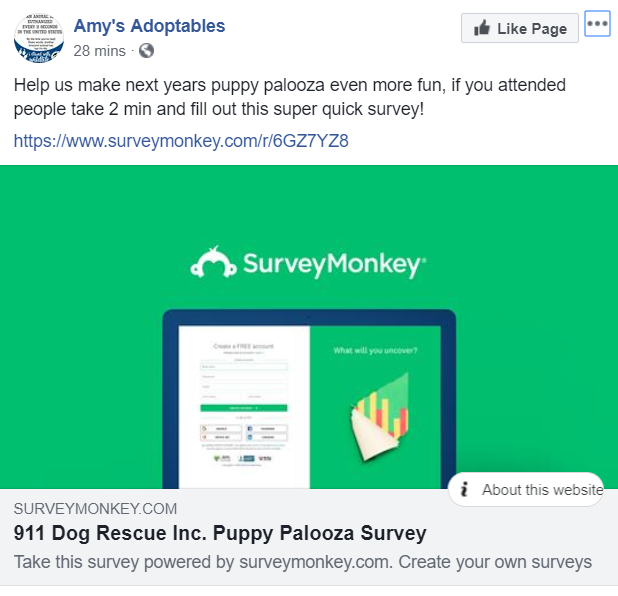
You may have seen your fair share of surveys floating around the web. You’re probably also familiar with the ones that pop up every once in a while on your Facebook feed. You know the ones like, “Answer these questions and we’ll guess how old you are”, sort of thing.

Well, these pop up because usually, your friends will engage with these types of surveys. They will post their answer, and others decide to join in on the fun.

As a brand, you can use this same idea. Even though most of these types of surveys are just for fun, you can use the concept to better engage with your customers. Even if you are trying to ask serious questions to gain real data, you can make it fun or intrigue people to answer by giving them a coupon code for completing the survey.
Make people laugh

Everyone loves a little bit of humor. And when you get people’s emotions going, you can facilitate engagement. This is partly why memes spread like wildfire. This is also the reason why brands like Wendy’s has done well on social media. They have found a way to make their responses and updates sarcastic and funny.

You don’t just have to be sarcastic to be fun or funny though. You can offer something fun or ask for people to participate in something fun.

Many brands have been asking their customers to “caption this”, or respond with an emoji. These are effortless tactics to get people to participate. This can further increase your engagement and loyalty.

Check out your local businesses Facebook or Twitter. You may find that some of them offer freebies for your participation. For example, this Chick-fil-A asked it’s customers to caption their image.

As you can see they added a bonus, a free chicken sandwich, making the ‘task’ even more fun.

Share the facts

Most people try to share things that make them look good, funny, and smart. If you share statistics or pull a statistic from your article and use it as the caption of your post, it’ll probably be shared. Statistics are great fuel for sharing.

By doing this you’re also paving way for your name or brand to be an authority in your niche. The more in the know you seem, the more believable and trustworthy you’ll seem.

All of which are great attributes for sharing. Not only just for sharing either. With an increase in sharing, you’ll likely see a higher engagement rate for your content too.

Start a giveaway

Everyone loves a giveaway. Especially if what you’re offering is something they like. Instagram and Facebook have taken giveaways to a whole new level.

One you may have seen a lot of lately are chains of businesses coming together to offer one mega gift or multiple gifts. For example, you may follow a brand on Instagram. That brand may host a giveaway with a couple of other similar brands. They want you to re-post their image, use a specific hashtag, and follow all the other brands in the giveaway. They may team up to give one lucky winner a mega basket of gifts, or they may each draw a different individual to reward with a prize after that person has completed all their steps.

Or the more simple version of retweeting or reposting a specific image and using the requested hashtag. Sometimes, these simple ones can bring in extra leads by requesting followers to also tag a friend.

Regardless of which route you choose to do your giveaway, you’ll likely see a ton of new engagement. And will likely get a ton of new followers because of it, providing increased exposure for your brand.

Tip: You can gain extra followers by including your profile link in your regular email blasts and promoting it on your blog. If you mention the giveaway on top of that, it might intrigue people to follow and like your page!

Other simple things to try to increase your engagement

We’ve mentioned quite a lot already on how to increase your engagement on social media. But, really the list can go on and on. Here are a few more of our favorites.

  • Post videos or do live video shares – video content is huge. Videos have a way of intriguing customers to stop and watch. As we have mentioned visuals make an excellent medium for sharing and increase interaction.
  • Talk about your niche, not just your brand – no one wants to land on your profile to read a bunch of salesly mumbo-jumbo. Most of the time, people are simply looking for information in your niche, and if they are interested…they will look into your brand further by visiting your website. If you can provide general information, and establish yourself as a thought-leader, you’ll be easier to engage with.
  • Share content other than your own – Again, it’s not always about you. If you share other content, you may find that others are likely to share your content too. You should realize that a partner business may have the answer to a question that you aren’t as well-versed in. This is also a good way to build backlinks.

Be sure to monitor social media engagement

You’ve put in the effort, and now you can sit back and relax. Well, not quite. You need to monitor your engagement too. If you’re not tracking your efforts, you’ll never know if your hard work, time, and money are paying off.

If you truly want to evolve your social media marketing and take advantage of having your face in front of a huge database that you can trim down to your target market, the tracking metrics is a must. As it will allow you the knowledge to tweak as you need, to see what is and isn’t working.

Social media metrics that matter

There a few metrics you should consider when tracking social media engagement. Here are a few of the most predominant things brand’s measure.

Likes – One of the simplest metrics you can see are likes. Practically all social media platforms allow users to ‘like’ or ‘upvote’ a specific post. Youtube, Facebook, Twitter, etc. all have this feature and make immediately evident if what you’re posting works for your followers.

Shares – To bump it up a notch from likes, you can measure how many shares a specific post gets. A share usually means someone likes or trusts your post so much that they are willing to share it with their friends.

Growth rate – It’s important to pay attention to the rate of followers you’re obtaining. If you see a sudden drop of followers or a slower rate than usual, it might mean you need to do a bit of digging and make a few changes. Whether it be a change in the content you share or even when you share it.

Your follower ratio – Sometimes a mixed-matched follow to following rate can deter people from liking you. Even though it’s important to follow other pages and businesses, you need to slow your role if your follow rate far exceeds your number of followers. You may come off as spammy or illegitimate especially if your number of followers is very low, while the number of people you follow is high.

Clicks – You may get good engagement through clicks. This is a measurement of the number of times a link you shared was clicked. If you have a good amount of clicks it can be a sign that the content you share aligns well with your audience.

Social media tools

Your social pages will have built-in analytics and insights. Usually, these metrics include page views, page likes, and reach, along with a few other summaries.

But, if you want to get even more in-depth metrics, there are many social media tools that will allow you to take a deep dive into your social media analytics.

These types of tools allow you to measure your performance to help you learn how to take your marketing strategy to the next level.

Social media analytics tools include

Followerwonk – This one is aimed towards Twitter and offers a free version for you to start analyzing your Twitter profile easily. It provides you with an overview of your followers and their actions. You can also see when your followers are likely to be online, to help you plan the perfect posting schedule for maximum engagement.

Google Analytics – So this one is huge, and it’s a great analysis tool. Many businesses use it to track website traffic, but if you drill into it far enough you can get social metrics too. For example, you can determine how much traffic to your site comes from your social networks.

Klear – Klear offers quite a few free tools (as well as paid versions), all of which focus on helping you find your influencers on your social sites. Klear ignores fake and bot followers so that you can focus on your real metrics. You can even view your follower’s interests to help you plan exactly what to share.

SocialRank – The tool lets you easily identify, organize and manage your Instagram and Twitter followers. It also allows you to filter and sort your followers to further help you take the appropriate action in increasing your engagement.

How to calculate social media click-through rate

Calculating your social media click-through rate is vital in knowing how well your brand’s visibility is online especially when talking about ads. Your impressions are simply the number of page views. To figure out if you’re posts and ads are successful, you need to calculate the click-through rate.

You can do this by taking the volume of clicks and the number of views or impressions your page has and doing a simple math equation.

The ratio from your clicks and views is your click-through rate (CTR)

If you’re unsure of where to find these measurements your social profiles will give you this information (if you’re running ads). You’ll also be able to see this information from the analytic tools listed in the previous section.

Engagement rate formula

Depending on the platform you are using, you’ll have to modify your calculations. Here are formulas to determine Facebook and Twitter engagement rates.

Facebook – To find the engagement rate of a particular post on Facebook you’ll have to do a little math. No worries, it’s quite simple. You are basically taking the number of engaged users and dividing that number by the total reach of the post. Then multiplying that number by 100 to get a percentage.

Twitter – Similar to the formula above, Twitter uses the same idea but slightly different formula. You’ll be using your total likes and comments, dividing that by your number of followers and finally multiplying that by 100.

Summary

As you can see, when done right, social media marketing can be a wonderful thing for your business. It will help you increase your brand authority, brand trustworthiness, and it will even help you engage with customers.

You also see that increasing your customer interactions and engagement with social media isn’t really that difficult to do. But the effort you do put in can have a major pay off.

Just be sure to monitor your efforts, so that you can track what is an isn’t working for you.

By  Megan Mosley    

Sourced from Business 2 Community

By

Are you interested in working with influential social media personalities? Not sure where to start?

In this article, you’ll find three tools to help you manage influencer relationships and campaigns.

#1: Partner With Legitimate Influencers Using HYPR

One of the biggest risk factors in influencer marketing is fraud, where fake influencers buy followers in order to appear influential. That’s also one of the reasons brands don’t see positive results from their influencer marketing campaigns. Once an isolated issue, influencer fraud has become a real concern in recent years.

To empower your influencer marketing efforts in the coming year, you need new metrics and tools to discover real influencers to work with.

HYPR is an advanced influencer search engine that helps you find real social influencers across major platforms: Facebook, Twitter, Instagram, Pinterest, and YouTube. HYPR organizes social media information to match brands with niche influencers within targeted audience demographics.

When you sign up, HYPR lets you explore the platform with a free trial. After that, you’ll need to upgrade to one of the three subscription plans, depending on your business’s needs.

Click HERE to read the remainder of the article

By

Sourced from Social Media Examiner

By Daniel Zhao

The internet has impacted the way most, if not all, industries have evolved. Keeping up with industry trends and available platforms is a job in and of itself. In particular, social media is shaping the way many companies engage with customers and drive sales.

In the education industry, the internet has revolutionized the way people learn and how they interact with their peers. Based on my experience working with social media influencers to engage students, I’d like to share three tips for entrepreneurs in any industry.

Learn how your target audience is using social media.

You can never stay hot for too long in the world of social media. One minute Snapchat is the app of the hour, the next it’s Instagram, and the cycle continues. Social media has secured credibility in recent years as a trusted source of information not only for news but also as a platform for consumers to engage with companies and exchange information.

My company’s target audience is students, and we have found that students today use social media in ways that are foreign to generations that did not grow up in the digital age. For example, “study with me” videos have become a popular internet sensation among youth. My company decided to capitalize on this opportunity by partnering with YouTube influencers to learn how students are using YouTube to study; we then applied that information to our platform to better help our users succeed academically.

Understanding how your target audience is using and benefiting from social media is critical to success. This applies to any business. Many companies are under the impression that all there is to social media is a simple press of a button to post content, but that’s not where the value lies. Building your presence is important, but understanding why you have that presence will help you properly utilize your channels and benefit in multiple ways.

To do so, connect with your target audience and customers. Create surveys, send personal emails or even make phone calls to understand how your customers are using social media and in what ways your business can have a valuable impact. Get a deeper understanding of your audience behavior and which channels you should focus on.

Identify why certain platforms are working.

When sifting through the social media landscape, a key priority is understanding and identifying why certain platforms are working. What about certain channels make your target audience inclined to use them?

When speaking to one of our YouTube partners, we discovered this community of “study together” videos had been booming for the last few years. We found that there were numerous reasons students were turning to YouTube when it came time to study. Whether it was to have a “buddy” or merely to learn from someone other than a tutor, our target customers were engaging with this platform in a way we hadn’t seen before.

Connecting with partners has enabled us to dig deeper into the world of online learning and helped us further develop features for our own platform. I believe every entrepreneur can learn from this example. Finding that outside party to provide valuable insights is a crucial element to success.

If you’re looking to establish a partnership with an influencer, you can be certain they are getting cold emails on a regular basis. To differentiate yourself, provide your potential partner with something that can help advance their career; this is a two-way street. Directly address why you are reaching out to them and how your partnership will be beneficial. Let them know why your goals align and how you can work together to create a successful partnership.

Understand the trends.

Once you have done your homework and established concrete partnerships, it’s vital to understand where the trends are headed. In our case, we saw that not only were students using social media to communicate with one another, but academic institutions were relying heavily on social media to communicate as well.

It’s important to research what others in your industry are doing to reach the same audiences. Various sectors within our industry are using platforms such as YouTube, Facebook and Google Plus to connect with students. Students want to collaborate and have someone available for support. We saw a heavy focus on group communication, which led us to configure a group study function on our own platform.

All entrepreneurs can learn from this example by taking the time to see what trends their audiences are following and why these trends tend to be working. Make time on a weekly basis to read your industry and social media marketing publications to understand how the landscape is growing and shifting. Overall, continue to evaluate your social media strategies through the lens of industry trends and your target audience to help you determine the next course of action.

Feature Image Credit: Pexels

By Daniel Zhao

Daniel Zhao is founder of StudyGate Inc., an online tutoring service.

Sourced from Forbes

Sourced from Inspire to Thrive

Are Social Media Tools Making Us Less Engaged?

A few weeks ago, I saw a tweet with an unusual text in it. It displayed a company that automated tweets for a popular blogger who has been one of my mentors.

I tweeted back to that tweet but never received an answer back. That really got me thinking.

Do we get so busy that we become disengaged with our audience? Are using social media tools making us less engaged and not a good practice?


Do we get so busy that we become disengaged with our audience? Are using social media tools making us less engaged and not a good practice? #socialmediamarketingClick To Tweet

My Buffer Tool Experiment With Social Media Engagement

If you have been a long time read here at Inspire to Thrive you know I’ve always loved the Buffer. That was until I started sharing Facebook posts via the Buffer. Not only did some images come out blurry but I lost engagement on those Facebook posts. My engagement went way down.

I quickly went back to scheduling posts on Facebook itself and the engagement level went back up! Now part of that is because Facebook wants us to spend time on their network. You can’t blame them for that!

Of course I loved the Buffer because it saved me time over the years. But is time everything when it comes to social media marketing?

Testing Agorapulse Social Media Tool

Next, I began testing out Agorapulse. I love this social media tool today! Not only does it give me great analytics to share with clients, but I can schedule tweets and it doesn’t show their name in them like the Buffer displays on Twitter. Agorapulse is also great for scheduling Instagram posts which can result in making less errors and saving you time. (You know typing on your mobile on the go sometimes can be tricky!)

More to come on this social media tool as I’ve been using it for about 2 months now. I’m still learning new ways to use it daily. A special thanks to Mike Allton for suggesting to me to use this social media tool.

Agorapulse is also great for scheduling Instagram posts which can result in making less errors and saving you time. #agorapulse #socialmediamarketingClick To Tweet

Here is Mike’s Response to Me About Agorapulse and Social Media Engagement:

Mike Allton“We’ve done extensive testing of “Reach” because that’s something that’s easily tested, measured and compared. If you post very similar posts, the same way, at the same time of day, day after day… that’s comparable and you can draw conclusions from the data.

Agorpulse tested posting natively to all of the networks vs. using 3rd party tools and not only does the data show that there is no penalty, it’s suggestive that using a tool actually helps – though we think that’s an anomaly.

There really shouldn’t be any difference. A post is a post as far as the networks are concerned.”

Engagement is Something Else Entirely According To Mike!

“We sometimes schedule content for the reach tests that purposely avoids encouraging engagement so as not to skew the results. But crafting a series of posts that are supposed to get the “same” amount of engagement every time, and then schedule some using a tool to see if there’s a difference, seems impossible to reliably manage.

Which means the only conclusions others might reach are purely anecdotal or uncontrolled. “We started posting using Sprout Social and our engagement went down.” Really? What else might have changed? Did you post more or less? What were you talking about? What else was going on? Were you posting the same kinds of posts about the same topics? Did you stop doing something else? – So many clarifying questions which would have to be asked.”

Agorpulse tested posting natively to all of the networks vs. using 3rd party tools – not only does the data show that there is no penalty, it’s suggestive that using a tool actually helps – though we think that’s an anomaly. via @mike_alltonClick To Tweet

My Social Media Tips Talk About Engagement

Recently, I have started sharing some social media tips on Facebook, Twitter, and Instagram. I am a big believer that you need to engage with your audience. Why just throw things up on the wall and leave? I see many social media management companies doing just that. They take blog posts that are canned and post them time after time. That’s it!

Now, I believe it is called SOCIAL media for a reason, to be social! Talk, engage, share, comment, etc. Do something, don’t just be passively throwing stuff up on the wall or feed on the social networks.

Now, I believe it is called SOCIAL media for a reason, to be social! Talk, engage, share, comment, etc. Do something, don’t just be passively throwing stuff up on the wall or feed on the social networks. #socialmediaClick To Tweet

Here Are What Others Are Saying About Using Social Media Tools Today!

Sam Hurley of Optim-Eyez Talks About Social Media Tools Making Us Less Engaged:

Sam hurley

“The top professionals own the best gear. It’s the same with anything — sports, music or business. When it comes to Social Media; you can’t keep up with the trends if you don’t have the support of automation on your side…

It just isn’t practical to sit there all day posting manually!

However, that doesn’t mean 100% automation is a solid strategy.

(Far from it).

Always blend automation with the human touch — it’s a winning combo — and people will otherwise notice any imbalance.

I always say:

“If you’re on Social Media but not engaging, then you’re just media!”

Wisely choose your tools for the most time-heavy tasks, and perfect their application (while consistently researching new vendors).

It doesn’t matter how many you use — as long as it’s all sensibly balanced with your budget, business type, and level of interaction.”

‘Always blend automation with the human touch — it’s a winning combo — and people will otherwise notice any imbalance.’ – via @Sam___Hurley #socialmediamanagementClick To Tweet

Mitch Mitchell of I’m Just Sharing Shares About Social Media Tools:

Mitch M on Twitter“I think too many automation tools is not only a bad idea, but for many reasons. One, if you’re trying to game the social media sites you will get caught eventually. Two, if something bad happens in the world you might have an inappropriate and untimely post that you missed because you didn’t remember where you put it.

I only use two. First, I use Tweeten for Twitter (of course) because I hate using browsers for things like this. Then, I can pre-post articles and such on there and it works great. I also use Buffer, but I only use it for LinkedIn, since you can’t pre-post there. If you have a business page on Facebook you can pre-post there, so there’s no need to use any other automation services. I know some people use it for Instagram, but it’s problematic sometimes.

Finally, if the only thing you’re doing on a social media site is posting stuff and not engaging anyone, you’re missing out on the opportunity to actually meet potential customers. You don’t have to do it a lot, but having people see that you sometimes talk to others humanizes you and people will get comfortable with you.”

‘Finally, if the only thing you’re doing on a social media site is posting stuff and not engaging anyone, you’re missing out on the opportunity to actually meet potential customers.’ via @Mitch_M #socialmediamarketingClick To Tweet

Erik Emmanueli of No Passive Income Talks About Engagement With Social Media Tools:

Erik

“Automating every aspect of your social media marketing can make you look like a spam bot, helping you lose contact with your audience.

On the other side, liking, following, commenting and engaging on every mention of your brand or social media post can be overwhelming and absorbing all of your time.

I think the right strategy should be somewhere in between.

Depending on your goals, try using some automation tools to increase your reach, while keeping authenticity by engaging with your community, every time is necessary.”

‘Automating every aspect of your social media marketing can make you look like a spam bot, helping you lose contact with your audience.’ via @ErikEmanuelli #socialmediamarketingClick To Tweet

Use Social Media Tools to Engage Your Audience, Not Put Them to Sleep!

disengagedI believe finding the right blend as others suggested here on the blog is key to balancing your social media. I always tell clients you have to spend time or money. It’s either one. You must invest your time or money with social media marketing today.

Finally, be sure the social media tools you use today don’t put your audience to sleep. Be sure you have a way to respond to others when questions are asked in a timely manner. I go on each of the networks for at least 5 minutes to start the day. Not only on my own channels but those that I manage.

Then, I check notifications mid day and again before hitting my pillow. This can be done with Agorpulse too and they even have an app for it!smiley

I believe finding the right blend as others suggested here on the blog is key to balancing your social media. I always tell clients you have to spend time or money. #socialmediamarketingClick To Tweet

Over To You!

What do you have to say about the use of social media tools and engagement? Do you use tools only post to social media? I’d love to know more in the comments below!

Lisa loves helping others to thrive online through Content Marketing with Social Media, Blogging and SEO. What good is knowledge if you cannot share it with others? She has 30+ years experience in marketing/advertising with 8 years experience in content marketing, social media, blogging and SEO. Check out her latest eBook “How to Tweet and Thrive on Twitter” now on Amazon.

Sourced from Inspire to Thrive

By

Twitter has announced it will no longer let people create Moments on mobile, admitting the feature “wasn’t used as often” as it anticipated. But, the tool will remain at the heart of Twitter’s pivot from ‘social network’ to a news hub, with users still able to create stories on desktop, perhaps suggesting its future lies in publishers, brands and other commercial organisations adopting it. The Drum caught up with the platform’s head of curation to find out more.

Joanna Geary is Twitter’s director of curation. She joined in 2013 having been a social and community editor at The Guardian and, before that, a reporter at Trinity Mirror. The former journalist has been at the forefront of Twitter’s ‘newsroom’ experiments and today leads a team of 70 curators strengthening the platform’s pulse across multiple languages and markets.

Twitter’s journey to become a destination for ‘What’s Happening?’ started in 2016 when it moved from the ‘social networking’ section of the App Store to ‘news’. Re-inventing itself around the category that first gave it life, Twitter wanted to lean into the news and cultural phenomena breaking within its walls.

“We created Moments as a discovery mechanism,” recalls Geary. “We were getting feedback that some people found Twitter a confusing experience.”

Moments was developed to solve two issues: “How can I find out what’s happening right now on Twitter?’ and ‘Where’s the great content?”

It acts as a tailored digital magazine, with Twitter’s crack squad of curators pulling together the most important events happening on the network in real time. They gather, arrange, contextualise and prioritise tweets to form a coherent narrative from a chaotic maelstrom of data.

The tabs host an odd mix of content. There are the Twitter staples; moments from The Great British Bake Off, stories about Chris Evans’ Radio 2 departure and of course Donald Trump. Away from the front page, though, users can browse through ‘news’, ‘sports’, ‘entertainment’ and ‘fun’. Epitomising Twitter, each rabbit-hole can get weird and niche.

“We were contextualising a myriad of conversations that were gaining traction,” Geary explains. “In doing that, we discovered that Moments was also a storytelling platform. We didn’t know that at the time. It was not the intention.”

Two years after it embarked on its make-or-break newsroom journey, Twitter’s fortunes have turned. Its recent quarterly earnings call showed revenue was up 24% year-over-year to $711m; total ad engagements rose 81%; monthly active users jumped from up 326m to 335m and average daily active users increased 11% – a malady to its growth plateau.

Newsroom inspiration

“Who would have thought it? A pyramid-style narrative is a very easy way for people to consume information like news,” muses Geary.

It was, in fact, the basic tenets of journalism that inspired the evolution that brought Moments, and Twitter itself, to where it is today.

The launch of Moments was a natural step for Twitter. Tweets were already being embedded into news stories by third-party publishers and tweets sent by politicians or celebrities were shaping the news agenda.

By creating a platform to tell stories, Twitter has also inadvertently increased the accessibility of the app. “It was a pivot – we learned discovery and storytelling were linked. How you discover depends on the story,” says Geary.

Her team of curators are not journalists in any traditional sense. The culture pulls the best bits from tech companies and traditional newsrooms.

“I didn’t want to go back into newsroom culture, but I liked the pace of them – just being part of what’s happening,” she says. “We employ some people with journalistic experience but the work that they do is different. It is different, and every single day seems to get more different as the job evolves.”

There is an argument to be made that this style of journalism is coming closer to the curation team. Publishers often use Twitter trends to inform their editorial decisions and Twitter-driven page views and engagement will be studied in understanding the performance of content.

Politics

But there are inherent challenges. On the surface, Moments skews towards entertainment and sport but there is a responsibility to highlight political issues and events too, like the Tory Party Conference this week. There is a need to balance voices and opinions across the political spectrum, sometimes painstakingly.

Twitter can’t be seen to be making political statements, especially on the editorial front. Dorsey’s politics or apolitical chief exec tenure are often a point of contention. Political bias, an inability to effectively scrub out toxic elements or diminish hate speech or fake news, often crop up in criticism too.

He told US Congress in September: “The purpose of Twitter is to serve the public conversation, and we do not make value judgments on personal beliefs.” From a business perspective, there is an attempt not to alienate audiences. There is also a commitment to being the platform where the public engages in “healthy” debate. Work is being done to aid this.

Twitter is often likened to the modern public square; a place of conversation and debate. The same media companies complaining about Twitter’s role as a debate platform are very likely to have deleted their own online comments sections in the last few years, skewering a vital channel to the public.

Amid this diminished responsibility, Twitter filled the void and is only beginning to understand its impact on the wider world.

“Over the last year we’ve realised how important it is for us to take responsibility for the whole public conversation and to be a place where that can happen,” Geary says. “It will massively change how we think about the product and how we measure success on our team.”

The challenge going forward is “informing people in a way that actually generates healthy public conversation”.

She points to the history books: “We’ve had these very interesting challenges whatever the platform has been. It has been an ongoing historical challenge.”

“We are ten-minutes-old into this era, we’re all trying to solve difficult issues and challenges that a new era of opportunity brought upon us. I would rather be part of solving the next ten minutes than I would be ‘saying the next hour is complicated, I will just give up’.”

In its essence, the app and the Moments product remains a work in progress and a big part of testing and learning in the coming years will be around algorithms, machine learning and artificial intelligence.

She says: “There is a lot of thought going into how humans, and their ‘colleagues’ algorithms can work together… we are thinking about where automation and human efforts intersect. Where they do today… and tomorrow.”

With Snapchat, Instagram, Facebook, and even Google championing a ‘Stories’ format – Twitter Moments inadvertently became its ‘Story’ feature itself. An important development upon the news newsfeeds are proving less effective than they once did on many social networks.

For Geary, the future of Twitter and its nervous system is simple: “deliver the right information to the right people in the right format at the right time.”


By

Sourced from The Drum

By

Demonstrating value and ROI from social media marketing campaigns has been challenging since marketers first began using the platform to target prospects and customers. But should ROI even be a major social media justifier? Some say social media marketing success means looking beyond ROI, while others adhere to the age-old advice that says your company’s business objectives prove social media worth. “Social media actually goes beyond ROI,” said Hariraj Rathod, social media analyst at Numbertank. “It helps in achieving good branding effect on audience and also helps to showcase products and services by segmenting and targeting the correct audience. Social media marketing also helps a brand understand how well their products are being consumed or liked by certain demographics.”

Is social media even worth it for your organization? If it is, where should your focus be as a marketer? To answer these questions, we caught up with digital marketing pros who offered a number of social media marketing tips that can help you make the most of your social programs.

Understand Younger Generations and Their Growing Mistrust

Deciding which metrics matter isn’t the lone challenge for marketers using social media. Some say it’s deciding whether to invest energy and resources into it in the first place. After all, marketers face a growing mistrust of social media platforms in light of data breach scandals like Facebook-Cambridge-Analytica and shrinking social media audiences.

Shama Hyder, CEO of Zen Media, a marketing and new media consultancy, noted in a Forbes article last month that Millennials and Gen Z are annoyed with brands taking up space in their social media feeds, and a third of them have deleted their Facebook account.

Know Social Media’s Place in Your Digital Ecosystem

Using social media is a thing of the past, according to Hyder. Companies should shift from a mindset of “using social media, to a mindset of adapting and thriving in an ecosystem where a highly connected, social, empowered consumer is now the norm, and traditional econometrics and data are no longer adequate to measure and track the success of content and campaigns,” Hyder wrote.

ROI is not the be-all and end-all for measuring success, she added. It’s more effective that metrics match the “complexity, ambiguity and dynamism” of a customer’s journey, she said. Integrate social data and metrics with other KPIs from web analytics, CRM, etc. and view social media platforms beyond just a “marketing channel, and leverage it instead as one prong of a larger strategy and source of customer insight.”

Support Engagement and Education, Not ROI

Belinda Alban agrees. Alban, the founder of Your Virtual Assistant Service, said the focus of social media should not be on ROI but on growing your following to increase brand awareness, engaging with your customers to create raving fans and educating your potential customers about the benefits of your product. “The bigger your platforms are the more opportunities you have to do this,” Alban said.

Social media may or may not lead to an increase in sales, but it will give you the opportunity to build relationships with your audience and deliver “amazing” customer service. “On the back of the relationships and trust and confidence your brand has built with social media you should see an increase in the reputation of your brand,” Alban said. “And it is your reputation that can make or break a company.”

Know Thyself, Know Thy Company

As long as your brand matches its social media playbook to its company objectives, you’re on the right track, according to Maria Burpee, a B2B marketing consultant for MB Consulting. “The ROI — and the metrics — comes from the board and company objectives,” Burpee said. Do you want to be the most well known or favorite brand or build a community or movement? Social media, even if it doesn’t lead to sales, is key. Are you looking to generate leads? Social media listening is key. Are you trying to create high loyalty and referrals? Cultivating social media “love” and responsiveness is important. Do you want to have the best customer service and hang your hat on that as a differentiator? Social media can be part of the mix. Social media metrics wouldn’t be found in a high-level executive dashboard, Burpee added, but rather the metrics are important to support a broader KPI dashboard.

Consider Using Unique URLs

One way to capture and track ROI on social media is using unique URLs. “Any time we post content that includes a link, we use a unique URL so we can track where the traffic is coming from and not for social media in general, but each channel specifically,” said Tiffany McEachern, social media specialist for PSCU, which provides solutions for credit unions. “Each social channel has a unique URL so you can see where your clicks are coming from and spend your time and efforts on those social media platforms,” McEachern said. “Even if social media isn’t giving your company a strong ROI, it builds brand awareness and in today’s day and age, companies are expected to be on social media.”

Assign Specific KPIs, A/B Tests

James Bray is a social media marketer who works for the Equal Opportunity Community Initiative (EOCI), a nonprofit that relies on donations received from fundraising activities. Bray said his Board takes spending decisions more seriously than most, whether the costs are incurred by outright paid advertising or through the staff’s efforts to create and manage social media content. “The return on our social media marketing investment is therefore calculated in terms of engagement: profile views, click-throughs to the website, email subscriptions and volunteer recruitment,” Bray said. “These measures are a great deal more important than, for example, simply counting the number of Instagram followers, because they reflect the degree to which someone is interested in partnering with us.”

To ensure the nonprofit receives a return on its social media investments, Bray said the team needs to be clear about its objectives and how much time it can afford to devote to each. It then attaches KPIs to those goals to ensure they are met. “The EOCI’s communications team is constantly A/B testing its social media strategies, using a combination of each platform’s own insights along with Google Analytics to determine what sources constitute the best outreach and result in the most beneficial conversions,” Bray said. “Based on these results, the EOCI Board feels that our social media engagement strategy has a positive effect on our ability to connect with our target audience and reach our objectives.”

Listen on Social, Execute in Customer Service Channels

Clair Jones, chief strategy officer and co-founder of Witty Kitty Digital Marketing, said monitoring how your audience is talking about your brand through social listening is vital. You can use the data to inform your customer service programs. “You can learn so much about how to improve customer service and experience, tap into audiences you didn’t know you had, and hone your branding and messaging,” she said.

Balance Between Organic and Paid Social Efforts Matters

If your organization is going to invest in social, consider the aforementioned tips and also strike a balance between paid and organic social media marketing. “Advocate for smart social that communicates the organization’s mission and engages the audience,” said Maria Mora, content director at Big Sea Design. “And layer a strategic paid social plan over that for a stronger return and more targeted presence on social platforms.”

Feature Image Credit: Shutterstock

By

Sourced from CMS Wire

By Arik Hanson 

For as long as “social media marketing” has been around, Facebook has held the title of most brands’ social media home base.

That is, Facebook is the place where they spend the most time, resources and mone

But, that tide is definitely turning.

First, just look at Instagram’s recent numbers.

  • Instagram just surpassed 1 billion users. The only other platform not named Facebook to do it.
  • 71% of U.S. business now use Instagram
  • Instagram is THE platform for influencers–80% prefer the platform for brand collaborations
  • 59% of 18-29 year-olds use Instagram

Meanwhile, over on Facebook…

  • Facebook saw a 5.6 percent decline in users between 12 and 17 years old.
  • They also saw a 5.8 percent decline in users between 18 and 24 years old. This is the first time Facebook has seen a decrease in users since its inception.
  • Facebook usage dropped–for the first time ever–from 67% to 62% among Americans 12+ years of age.

Obviously, Facebook still has a ton of people using their site and app. It’s not going anywhere anytime soon. But, it is showing chinks in the proverbial armor for the first time. And, at the same time, Insta is gaining traction rapidly.

That’s the story the numbers tell.

But, as we all know, the numbers don’t tell the whole story.

What the numbers DON’T tell us is this:

  • Facebook is an increasingly toxic place for many users. #DeleteFacebook is real. Anecdotally, I’m hearing more and more of it each day. People just don’t want to spend as much time there as they once did, for a variety of reasons.
  • Facebook has taken a beating in the media over the last year. Mostly, for privacy issues. And each time Facebook is mentioned in a negative news story, that’s impacting how people feel about the social network.
  • Facebook has lost it’s “cool” factor. Remember that movie “The Social Network?” The whole reason Zuck got the facebook off the ground was because it had that “it” factor–specifically with young people. It no longer has that. A certain other network does–and it’s starting to show.

So, the numbers aren’t painting a rosy picture.

The anecdotal evidence isn’t much better.

What are marketers and communicators saying?

That Instagram is a more fun and happy place for customers.

That they’re seeing higher engagement rates on Instagram.

That they’re actually driving traffic and selling on Instagram.

Yep, Instagram is slowly, but surely, eating Facebook’s lunch.

And, it is driving toward becoming brands’ number one social media platform.

In fact, for many brands, it already is.

Let’s look at a few:

Adobe

Facebook: 105 engagements per post

Instagram: 10,713 engagements per post

Note: Averages reflect last 10 posts

Maersk Shipping

Facebook: 445 engagement per post

Instagram: 4,866 engagements per post

Note: Averages reflect last 10 posts

Target

Facebook: 707 engagements per post

Instagram: 23,255 engagements per post

Note: Averages reflect last 10 posts

That’s as much as a 300 PERCENT increase in engagements from Instagram to Facebook. And, those brands above are hardly alone. It’s a trend. And it’s hard to ignore.The numbers tell the story.

The anecdotal evidence tells the story.

Marketers are telling the story.

And, results sure as heck tell the story.

Instagram is becoming brands’ social media home base.

By Arik Hanson 

Sourced from Business 2 Community

By Neil Patel

Do you have lots of social media followers? Want to learn how to turn those followers into dollars?

Right now, there are people making a living on social media without selling anything.

We’ve all seen those profiles of seemingly regular people with tons of followers.

It always seems as if they’re traveling or doing something fun. But what exactly do they do to fund this fairytale lifestyle?

They are social influencers.

Experts predict that in the next two years, global influencer marketing will be a $5-10 billion dollar industry.

5 billion

In 2017, 86% of marketers relied on influencer marketing campaigns at some point during the year.

And 39% of marketers say they have increased their influencer marketing budgets for 2018.

All of this is promising news if you’re interested in making a living on social media as an influencer. Even if you don’t have lots of followers right now, this guide will show you what you need to do to make yourself more appealing to marketers and brands.

In the past, I’ve explained how to use micro influencers to increase your product credibility.

But now I wanted to write an informative guide aimed to help influencers make more money.

With influencer marketing making my list of the top marketing trends to look for in 2018, there is plenty of money to be made in this space if you position yourself accordingly.

These are the top 11 ways to make a living on social media without selling any products.

1. Pick a platform

The first thing you need to do is decide which platform you’re going to prioritize the most.

Ultimately, you’ll want to have profiles set up on as many social networks as possible, but one needs to be your bread and butter.

Research shows that nearly all social influencers work on Instagram.

pick a platform

In 2018, more than 82% of social influencers said that Instagram is their number one platform. Just over 12% responded with YouTube, and less than 2% said Facebook.

That’s probably because 76% of influencers say that Instagram has the best tools compared to other social platforms.

Based on these numbers, I highly recommend picking Instagram as your top priority.

You don’t need to reinvent the wheel here. If other influencers are having so much success on Instagram, you should be able to follow in their footsteps.

Your other social profiles should be used to enhance the image of your personal brand and ultimately expand your reach.

But you can use Facebook and Twitter to try to get more followers on Instagram.

2. Join a network for influencers

Another way to make money on social media is by joining networks made for influencers.

These platforms are used to connect brands with people based on their followers and specialties.

Brandwatch is a great place to start.

brandwatch

Let’s say you share lots of content related to yoga and holistic health on your social media profiles.

Your followers are obviously interested in this content as well, which is why they are following you in the first place.

If you join one of these networks, it will be easier for brands to find you if they have a product or service related to your content.

If a brand wants to work with an influencer to sell their newest yoga mat and yoga clothing, it’ll get matched with you through these networks.

You can handle all communication with the brands through these platforms as well.

This can help you stay organized as opposed to using direct messaging through social media. Once you get lots of followers, it’s tough to keep up with all of the messages in your inbox.

I recently wrote about my favorite platforms for effectively managing social influencers.

The post was intended for brands, but it’s helpful for influencers to read through it as well. Go through the list to see which platforms fit your wants and needs the most.

3. Boost your engagement rates

The reason why brands want to work with social influencers is they historically have extremely high engagement rates.

In fact, brands named engagement as the top metric for measuring the success of influencer marketing campaigns.

engagement rates

If you want to make yourself more appealing, you can show brands how high your engagement rates are with your followers.

Start by learning how to write captions that drive engagement.

You want your followers to like, comment, tag, view, and share your content.

Respond to your followers.

I know, this can be tricky, especially for those of you who have tens of thousands of followers. But the key is getting into a habit of making time to respond.

At the very least, like their comment if you can’t respond to it.

Remember, we’re treating this as your job. If you want to make a living on social media, you need to dedicate a certain amount of time each day toward making yourself a more valuable influencer.

If it were easy, everyone would be doing it.

Engaging with your followers will help them feel a personal connection with you. When you recommend a brand to them, they will be more likely to act on your recommendation, making your marketing campaigns more successful.

4. Give away free stuff

Everyone wants to get something free.

To increase engagement with your followers, hosting a giveaway is one of your top options.

Once you start negotiating with brands and deciding what kind of content you should be posting, you can suggest a giveaway.

Ultimately, the decision is theirs. They will be the ones paying you for sponsored content.

But you don’t have to commit to anything you’re uncomfortable with. If you think the content they want you to post doesn’t add value to your followers, you can respectfully turn down the offer.

After all, you don’t want to lose credibility by posting everything and anything someone presents to you.

Otherwise, you could see a drop in engagement from your followers.

Take a look at this post from Instagram personality Jen Selter:

selter

Jen has more than 12 million followers on Instagram.

How do you keep 12 million people entertained? Don’t spam them.

Yes, it’s clear that this post is promoting a brand. But she’s doing it in a way that adds value to her followers by giving them a chance to win something free.

This post has all the elements required to run a profitable giveaway.

If you are still trying to grow your following, giving something away could be the best way to do that, even if you aren’t getting paid by any brands yet.

It may be worth spending $100 out of your own pocket on a gift card, for example, to give away to your followers.

Then you can show brands how good your engagement rates were for that campaign as you move forward with your career as an influencer.

5. Use multiple hashtags

If you’re trying to make money on social media, you can’t be afraid to use hashtags.

But don’t use only one per post.

Research shows that using multiple hashtags leads to higher engagement rates.

hashtag

The magic number here is seven.

Posts with seven hashtags have the highest engagement rates.

But that doesn’t mean you should go overboard. Using more than eight hashtags on one single post can seem spammy.

Use a variety of hashtags.

Some should be broad and intended to reach the highest number of people. For example, #tbt or “throwback Thursday” is a popular hashtag used on social media.

So your post would be exposed to the masses.

However, you don’t want to get lost in the shuffle.

Create some unique and more specific hashtags appropriate for each campaign. If you look at the giveaway example again, you’ll see that Jen used #JenSelterGIVEAWAY in per post to stand out.

6. Partner with a mobile app

All too often I see social influencers partner with the same types of brands. They’re promoting clothing, fitness apparel, accessories, and food.

While there is nothing wrong with this strategy, it may not be sustainable for long-term growth.

Those brands will end up using other influencers in the future once they feel they’ve gotten the most out of you and if your cost per post rate gets too high.

Think outside the box and try to partner with unique brands, such as mobile applications.

Here’s a great example of this strategy used by social influencer Eric Rubens:

erubes

Eric has more than 380k followers on Instagram.

If you look at his bio, he promotes a few different things related to his personal brand image. You can see his YouTube name and link to his website.

But look at what I highlighted. It’s his partnership with Explorest, a new mobile application.

The idea behind this app is very unique.

It shows users exact directions to places where they can take cool photographs.

This idea also fits within Eric’s personal image. If you look through his profile, he takes amazing photographs of places all over the world. So his followers are obviously interested in this type of content.

That’s why he was able to successfully partner with a mobile app such as Explorest.

7. Find your niche

It’s tempting for new influencers to take jobs from any brand that offers them money. But you need to understand how these posts can impact your future.

You don’t want to partner with any brand that goes against your core values and beliefs.

Furthermore, you need to analyze how this content will affect your followers and how you’re perceived by other brands moving forward.

Let’s look at an example to show you what I’m talking about. Here is James Tollefson’s Instagram biography:

james1

James has just over 23k followers, which is a great number for micro influencers.

While his biography doesn’t promote anything specifically, like in the previous example, it tells you more about his life and who he is.

He’s a software engineer, living in San Diego, who is a fitness enthusiast.

Now, just saying you’re a fitness enthusiast and being a fitness enthusiast are two different things. Let’s take a look at his pictures to see if they fit the description:


As you can see, the content definitely fits the biography.

James shares content related to his fitness journey, and he promotes products that fit that niche.

If you join a community that connects brands and influencers, you want to make sure your content fits your speciality.

Don’t say you’re a foodie in your biography and then never share content related to food or work with brands in that industry. It doesn’t make sense, and it won’t make you any money.

8. Know your worth

According to research, 80% of influencers say sponsored content is their primary source of income.

This ranked higher than advertisements and affiliate links. Only 33% of influencers actually sign a contract with sponsors.

You’ve got to make sure you protect yourself and get paid for your work.

Don’t just post content for brands who offer to send you free products. That’s not enough if you’re trying to make a living.

As you can see from the graph below, marketers are planning to increase their marketing budgets for influencers:

influencer budget

Only 5% of marketers say they’re going to decrease their influencer marketing budgets.

The money is out there. It’s just a matter of finding it. Don’t settle.

How much is a post worth? The numbers will vary based on the number of followers you have and your engagement rates.

On average, 66% of businesses pay less than $250 per post.

And 27% pay between $250 and $1,000.

Just 4% pay up to $3,000 per post.

Unless you’re a celebrity, you probably won’t see $3,000 for one post. But with that said, it’s not unreasonable to aim for that $250-1,000 window.

Let’s say in a week you share two sponsored posts from two different brands. One pays you $750, and the other pays $250.

If you can continue getting rates like that steadily throughout the year, you’ll make more than $50k annually.

9. Post high-quality photos

Look back at all the examples I showed you so far. What do all of them have in common?

High-quality content.

If you want to become a social influencer, you need to make sure you’re sharing only quality photos.

Buy a professional camera if you have to. Or at least get yourself a new smartphone that takes better pictures.

Invest in yourself.

As you saw in the example of partnering with a mobile app, taking high-quality photos can lead to big opportunities for you.

Just look at Albert Hongbo Yang’s Instagram profile:

albert

These images are breathtaking.

Albert has over 24k followers who are interested in his photos, which is a huge leveraging point when it comes to working with brands.

Even if you don’t want to sell products on Instagram, if your photos are good enough, you can make money as a photographer.

Post pictures that draw attention and make you seem more legitimate.

Refer to my guide how to take and edit photos without hiring a professional to help you with this.

10. Fully disclose your relationships with brands

Part of being a social influencer means you need to fully disclose your relationships with brands.

First of all, you don’t want to mislead any of your followers or cause them to distrust you. That’s not right.

But more importantly, it’s a requirement by the Federal Trade Commission.

The FTC says that these disclosures must be clear and obvious. It doesn’t want you to use anything ambiguous, like #thanks or #collab, which could be misinterpreted.

You also can’t rely on a disclosure that will only be seen if people “click more” or view the content on a separate landing page.

To show you how to properly disclosure your relationships, look at this post from Anastasia Ashley:

anastasia

Anastasia is promoting La Roche-Posay skincare products.

As you can see, she clearly tagged them in her caption and used the hashtag #sponsored to disclose her relationship with the brand.

There is definitely nothing ambiguous about that. She’s complying with FTC regulations.

11. Promote your services

OK, so you want to make a living on social media without selling any products. But you can still sell your services.

Earlier I explained how you could make a living by taking high-quality photos and then leverage your photography skills to make money.

That’s just one way to do it, but there are plenty of others.

For example, let’s take a look at Rob Atkin’s Instagram profile.

rob

Rob is promoting his personal website in the biography.

Clearly, he’s a personal trainer. But the way he positions his services is much more creative than just saying “personal trainer.”

Instead, he uses creative phrases such as “I help busy people get abs” and “fitness specialist” to promote his services.

As you can see from his posts, his content fits into that niche, which is extremely important, as I mentioned earlier.

So if you want to make money on social media without selling any products, consider using your distribution channels to promote your services instead.

Conclusion

There is tons of money to be made on social media right now.

People are making a living without selling a single product.

Those of you who have a large social following can use your profiles to get paid by brands.

Even if you don’t have lots of followers right now, you can increase your following and engagement metrics to make yourself more appealing to prospective clients.

If you follow the tips and advice I’ve outlined in this guide, you can turn your social media profile into a money-making machine.

By Neil Patel

Neil Patel is a New York Times best selling author. He is the co-founder of Crazy Egg and Hello Bar and he helps companies like Amazon, NBC, GM, HP and Viacom grow their revenue. The Wall Street Journal calls him a top influencer on the web, Forbes says he is one of the top 10 online marketers, and Entrepreneur Magazine says he created one of the 100 most brilliant companies in the world. He was recognized as a top 100 entrepreneur under the age of 30 by President Obama and one of the top 100 entrepreneurs under the age of 35 by the United Nations. Neil has also been awarded Congressional Recognition from the United States House of Representatives. Continue reading

Sourced from QUICKSPROUT

By Pierre DeBois

Marketers may have once doubted the possibility of doing so, but there’s no doubt today that retailer interest in social commerce is rising, and has been rising steadily over the years as social became an important part of the mobile nexus, along with the willingness to make purchases via mobile. For example, Business Insider reported last year that the top 500 retailers earned $3.3 billion from social shopping in 2014, a 26 percent increase over 2013.

The result? Consumer interest in products and services is leading to sales, as customers are becoming more comfortable using their phones for online purchases or to complete purchases in-store. How then should marketers and retailers think about marketing for each social media platform? Here are a few observations that can strengthen your strategy development.

Facebook

The largest social media platform has been refining user options for expressing themselves—from emoticons to live video.  Marketers can best leverage Facebook through video by using Facebook Live to speak with business page followers. Many businesses of all scales, such as The Bassline Group in Chicago, use video to connect with customers regularly.

Here are some ideas for Facebook Live content:

  • Product launches and demonstrations: Comments from followers can provide feedback that can become valuable insights when a new product is being revealed.
  • Customer service sessions: Troubleshooting problems with devices or products can incorporate responses from followers, treating it as as face-to-face with a real person.
  • Q&A sessions: Q & A sessions offer opportunities to build customer rapport and trust. Marketers can invite experts to help answer product or service questions from your customers.

Many of these ideas can be conducted through a video platform. Using Facebook Live from a mobile device requires the Pages Manager App.

Facebook is also a dominant advertising platform among social media platforms.  Ads enhance strategy in conveying messages to customers, and Facebook ads have been effective in reach, especially in mobile.  Marketers should look to use Facebook ads as a means to connect to customers on the go.

Marketers can also look forward to more Facebook refinements, and for good reason. Marketing Land reported that Facebook will reach maximum News Feed ad load during 2017. This means Facebook must experiment with new ways to deliver ads and other marketing features to continue its revenue growth.

Twitter

Twitter has always been a means for connecting to people outside of a customer base. Past social media strategies have suggested that Facebook pages tend to attract customers familiar with your brand, while Twitter profiles tend to attract people who are seeking your products and services, consequently discovering your business.

Twitter has striven to provide features that deepen engagement.   Industry analysts have been critical of recent trends that suggest waning user interest in Twitter.   Brands interested in immersive advertising experiences have demanded more segmentation features.  In response Twitter has introduced ad groups, a campaign feature that customizes according to segment. It has revised its analytics dashboard to improve campaign measurement.

Marketers should also consider Twitter as an opportunity to provide customer service.  According to Twitter,  an Applied Marketing Science study confirmed that customer service on Twitter influences sales. Providing customer service through social channels like Twitter can be a fast way to connect to customers and let them know that their needs are indeed heard.  But marketers must verify that customers are comfortable using Twitter before initiating or expanding customer service resources.

Pinterest

Pinterest has become a search engine, according to Marketing Land. Users pin Pinterest images after discovering products, services, and brands they like the most. This planning reflects the potential of future purchases.

Marketers can strategize on this behavior by creating a preview board in Pinterest—teaser images and ideas that let followers know about what’s to come.  YouTube videos can also be embedded in a pin—at the top of this article is one I made for a presentation as an example.  Cultivating a preview board keeps users engaged and builds a following that eventually leads to sales.

Instagram

Retailers and brands are discovering how inspirational posts on Instagram can raise branding impact. New tools, such as Instagram Analytics, are starting to help marketers manage that impact. These tools are meant to leverage the best aspect of Instagram—presenting unique images and video that show how a product or service is used among consumers, or reflect the quality of a product.

The content can range from lifestyle associations, such as hiking with Timberland boots, or showing how boots are manufactured to exacting standards. Overall, images should augment the imaginative connection customers have with brands.

Supplementing Social Media Strategy With Analytic Tools Is Now A Must

No matter what combination of social media is used, marketers should also examine advanced dashboards options that blend social media data into a central graph.  Options run the gamut from Supermetrics—a service that lets you pull data from an Excel sheet into Google Data Studio and then into a dashboard.  R programming models can also be used to predict trends. These tools can determine which platforms are best in referring traffic to retailers’ websites and apps.

Can you sell products in social media?  Customer response appears to make that answer an emphatic “Yes!”  But it is up to marketers to make sure they listen to how that yes is expressed, and use that knowledge to inform their social strategy.

By Pierre DeBois

Sourced from DMN Data. Strategy. Technology.