Tag

Social Media

Browsing

By Kate Peers

Facebook has been experiencing a lot of bad press. Some even say that users are gravitating away from Facebook and towards other platforms.

The current statistics disagree with this assessment, however. There are still one billion active users on Facebook, which means that Facebook is still a strong place to find potential customers for your business. If you use Facebook ads efficiently, you can precisely target your audience and effectively spend for a strong return.

In this article, we examine how and when to use Facebook ads for your business.

Can I reach people without ads?

Facebook are using an algorithm which makes it more and more difficult to reach people organically through posting direct to your page. On average your posts will reach 1–3% of your audience without any ad spend. So, while can you interact with customers without ads, spending money on ads will help you reach more people, as well as more relevant people.

Should I boost a post?

Facebook is very clever. If you have ever posted anything on a business page, you’ll be familiar with the constant suggestions to “boost” your post. You may see a message that says something along the lines of, “This post is performing well, boost it now for more people to view it.”

While boosting a post can increase your customer reach, the most efficient way to interact with customers is by creating an ad from scratch.

How do I create an ad?

Before you make a start with Facebook ads, think hard about your objective. What would you like to achieve with your ad? Do you want to drive traffic to your blog? Would you like people to purchase an e-book? Are you hoping to get more page likes on Facebook and increase your followers?

All of these objectives can be achieved with Facebook ads, but make sure you have them clear before you begin, otherwise your spend will be directed towards the wrong outcome.

Target your audience

Take time to consider your dream client. Who is he or she? Do you want to target women in New York, aged between 30–45 with a high disposable income? You can do this.

Facebook has different targeting options divided into general demographics, interests, behaviors and connections. The real power of Facebook ads lies in interest and behavioral targeting. As we now know all too well, Facebook has tons of data on everyone’s interests, page likes and groups joined. If you know your audience, then you can reach them by creating an audience on Facebook.

Create a strong visual

A strong visual image is key to grab your customer’s attention. You only have one shot to make a first impression — you want to be sure that your images are clear, bright, and convey your message appropriately.

You should also be mindful about the fact that Facebook has very strict guidelines for ad creation, which tend to change a lot. You can only have text covering 20% of your image for instance, or your ad won’t deliver. Ensure your image meets these guidelines before you spend unnecessary time and money on an ad that doesn’t work.

Test, trial and respond to each ad

Facebook insights allow you to track how well an ad has performed. Price per click, number of times the ad was seen and adding URL tags to your ads mean that with a combination of Google analytics and Facebook insights you can play around with a small budget.

It is important to test to see what your audience responds to and ensure you are spending your money to achieve good results. If you notice that no one’s clicking on an ad, you may want to pause it. But, if you notice that hundreds of people are responding, you may want to add more spend and reach more people.

Once you get it right, the results will be mind blowing.

Final thoughts

There are few ways to reach your audience that are as direct and effective as Facebook advertising. If you’ve been hesitant to try out Facebook ads, now’s the time to give it a go.

Have you tried ProWritingAid’s editing tool yet? It will help you edit faster, strengthen your writing, and get your ideas across.

Try it for free now!


Originally published at prowritingaid.com.

Feature Image Source: Shutterstock

By Kate Peers

Kate Peers is the writer of the Mad About The Boys blog. A social media and marketing manager, she secretly wants to write a book one day. She is the a contributing author of Walking In The Rain and Washing Up Is Good For You, curated books by Department Store For The Mind. Her work can also be found on Metro online.

Sourced from The Writing Cooperative

By Emma James

These days, it seems like an increasing number of people are using social media for one reason or another. Is your business taking the best advantage of social media to promote company products and services? No? Then, it’s time to take the best advantage of social media with the help of social customer relationship management tool.

Use social CRM tools for a better customer engagement, monitor and track the conversations of your customers’ and clients on social media platforms in real-time, respond quickly to customer complaints and queries, identify industry trends through real-time social monitoring, actively analyse the social media data to make well informed business decisions, as well as  enhance your brand image.

Social CRM software is helpful for your business to provide personalized customer service in real-time as well as to improve customer loyalty. Moreover, the social CRM system fosters in developing strong customer relationships by enabling your business to track the right customer conversations in real-time on various social media platforms, as well as analyse what type of content your competitors are sharing on their social networking platforms.

Additionally, social media platforms offer several advantages to businesses of all sizes. Here are the top three business benefits of social CRM:

1. Builds Profitable Customer Relationships

Do you want your business to build a strong brand presence on social media? Do you want to reap maximum profits as well as high return on investments through social channels? Social CRM tool will help you reach all your business goals. It will enable you to reach a higher number of potential customers’ as well as to reap the maximum profits through effective tracking of clients, customers’, as well as your competitors’ social influences. By analysing the customers’ tastes and interest, the marketing team can produce relevant and engaging content, which can surely impress your customers’ and followers. Thus, the producing of highly impressive marketing content can enable your audience to instantly like your content, share it across their friends and family members on various social media channels, as well as the ability to foster healthy and profitable customer relationships.

2. Identify the Right Platforms

Obviously, it takes a lot of time and dedication to produce high-quality, engaging, and original content. However, if the produced content doesn’t reach the right social media channels; then all the hard work you put in generating the relevant content will go vanish. You can avoid this if you can invest your money in the right social CRM solution. It helps in identifying the right social media networking channel as per your business needs and requirements.

An appropriate social CRM tool will tell your company – which social channels are correct for your brand, where you can find the targeted audience, as well as at what time your potential audience groups are active on the social networking channels. All this information will help your business to produce the content on the right social channels and at the right time, which can aid in gaining more momentum on the various social platforms.

3. Boosts Your Business SEO Activities

Earlier, it was difficult for businesses to create the customer-centric content. However, with the help of social CRM software, businesses can easily analyse the digital footprints of customers’ as well as identify the targeted and potential audience groups. Using the solutions of social CRM software, businesses can have a comprehensive understanding of what their targeted audience is searching on social networking channels, their likes, and dislikes, as well as what type of content they are liking and sharing by analysing the type of keywords your customers’ are using to search for content on the various social platforms.

Using this information, businesses can create targeted, shareable, and engaging content that your followers and customers’ would find interesting. While generating the content, you can even add the specified keywords used by your audience so that they can easily find your business content in their relevant searches. If your generated content is truly engaging and valuable, then your customers’ will surely like and share the content across various social media channels, which can ultimately boost your website SEO. Moreover, if your content has a higher number of shares, likes, and comments it will send a positive signal to the Google that your content is highly impressive and original, which can enable your website to be top-ranked on the Google search engine results page.

So, what are you waiting for? Empower your business today with the right social CRM technology to grasp hold of the wonderful business opportunities present in the market today!

By Emma James

Sourced from Digital Doughnut

By Brendan Gahan

Here are three ways to help — not hurt — your brand on social media.

Social media has become increasingly influential as a method to reach consumers, but the ad world hasn’t prioritized it accordingly.

Today, seven out of 10 Americans use social media. Despite the opportunity (and in spite of the lip-service paid to social), more marketers are skimping on their approach. Reposting 30-second TV spots to YouTube and uploading billboard or print ads to Instagram are commonplace, and a detriment to your brand.

Below are a few tips to keep in mind as you craft your digital marketing campaign so that you don’t fall into the same trap.

1. “Social extensions” aren’t the answer.

We all know the truism from advertising: good, fast or cheap — pick two.

More often than not, the expectation for social is to deliver on all three. This cognitive dissonance leaves social caught in marketing purgatory — the known priority that’s never actually prioritized.

Furthermore, our language reflects what we deem important. When agencies and brands discuss “social extensions,” it implies that social is an add-on to a campaign rather than a central component that underpins the whole thing.

The language of “social extensions” recontextualizes the social media marketing workflow as a reflexive, uncreative process. This term is commonly used for presenting social as a budget-friendly way to build out an integrated campaign. The reasoning goes something like: “Why create something new and purpose-built when we haven’t fully tapped the resources already at our disposal?”

This answer is simple: You do it because “new” and “purpose-built” are the only things that win eyeballs these days.

It’s easy to “repurpose” existing marketing materials for social and pretend that your TV spot is actually serving dual purposes when in reality it is serving one master: TV.

2. Think like a consumer.

Behaviorally, social is “opt in.” Consumers are blocking ads, and every piece of content is competing with the entire internet.

Think about it: Porn is a click away. YouTube has 1 billion hours of video watched per day. There’s so much competition that you need to stand out and answer the question, “Why would someone choose to watch this?” If you don’t have the answer, you’re irrelevant and/or burning cash.

When focusing on organic content you need to be a provocateur and generate an emotional response from people to stand out and be noticed.

According to Jonah Berger, author of Contagious, emotions play a critical role in how much earned media content will generate. His study “What Makes Online Content Viral?” showed that, “Content that evokes high-arousal positive (awe) or negative (anger or anxiety) emotions is more viral. Content that evokes low-arousal, or deactivating, emotions (e.g., sadness) is less viral.”

The TL;DR version being — if your content doesn’t make someone laugh, cry, yell or jump out of their seat — odds are it is not going to be shared much. Evoking an emotional response in a physical way was the greatest indicator of how “viral” content was going to be.

Wendy’s, for example, has won new attention for savagely roasting and mocking its Twitter followers — a real and valid audience that has nothing to do with fast food. YouTube stars are more famous among millennials than conventional celebrities. Marketing influence is shifting toward the technological.

3. Make bespoke content.

You must ideate and produce content with social in mind.

In the same way that everyone looks their best in custom suits or dresses, the most memorable brand messages are built from scratch and tailored to the brand and platform specifications — they are distinctly one-of-a-kind.

With social, we’re dealing with a multitude of nuances. There isn’t one print magazine size that can fit everywhere; there is no 30-second spot that works on every platform. There is no one-size-fits-all social ad unit (at least not one that is effective).

Each platform has its own ad specs and dimensions. For example: You can run six-second, 15-second or 30-second videos, and you need to plan for those to work with sound on and (most likely) off. You can create vertical video for stories on Instagram, Snapchat and Facebook, and then you have to have horizontal content for YouTube. The creative options are endless.

The point of all this is that we operate in a noisy media landscape, so brands have to create content uniquely tuned to thrive on the internet to make an impact. This means making something original and memorable enough to harness a worldwide, internet-connected community and tailor that content for specific platforms. This is the path to success in social media.

Let’s see your print ad get enough retweets to do that.

Opinions expressed by Entrepreneur contributors are their own.

Feature Image credit: Hero Images | Getty Images

By Brendan Gahan

Sourced from FLIPBOARD

By

he power of video advertising may be well documented, but as consumer behaviour changes amid familiarity with video browsing on mobile devices, marketers who think the rules of engagement for digital video have already been written – and that there is a one size fits all approach – should think again.

The rise and effectiveness of native video on social media has been well researched to date. Engagement rates, reach, frequency and return on investment studies all show positive associations. But until now, there have been few studies showing the rise and performance of native video formats across the open web, specifically on premium publisher environments, where in-feed native video formats are becoming increasingly common.

We recently sought to fill that void through an analysis of more than 30 million in-feed video views run across our platform from January to April 2018. While we expected to be able to report findings on native video on the open web that were in line with the positive findings in social media, we didn’t expect that our findings would challenge the very notion of ‘what works’ in native video. But that’s precisely what happened.

Conventional wisdom in the video space, based on social data, has indicated that less is more when it comes to native video advertising, with many espousing that anything longer than 6 seconds in native video is simply too long. However, our findings would seem to contradict the perceived wisdom that mobile users have limited attention spans and are only interested in short video content.

According to our findings, smartphone users are more likely to spend time engaging with long-form video ads compared to 6-second ads when executed correctly. In fact, 72% of mobile users who have watched 6 seconds will continue to watch and engage with video up to 22 seconds. When native video reaches 15 to 22 seconds in length across premium publisher environments, mobile and tablet users that have watched this far are significantly more engaged than desktop users.

The evolution of our ‘mobile minds’

Perhaps it shouldn’t be all that surprising that people’s attention spans for native video seem to be growing longer. While the findings in our report represent the first of their kind in native video, there have been several studies undertaken around the attention of mobile phone users when it comes to reading. Over time, conclusions have shifted.

One study in 2010 found that reading on a mobile device was impaired when content was presented on a mobile-size screen versus a larger computer screen. But a similar study, undertaken six years later in 2016, showed different results. This study, conducted by the Nielsen Norman Group, concluded that there were no practical differences in the comprehension scores of participants, whether they were reading on a mobile device or a computer. In fact, the study found comprehension on mobile was about 3% higher than on a computer for content that was just over 400 words in length, and at an easier level to read.

Why the difference in results? It’s very possible that, over the period between 2010 and 2016 — the exact period during which smartphones became ubiquitous — we’ve all become more accustomed to reading on smaller screens. It’s reasonable to assume that the challenges the average person had reading on a small screen back in 2010 no longer apply now that people have adjusted to life on those smaller screens.

In a similar manner, it would appear that user behavior is changing around video consumption on mobile devices as well.

Well-held assumptions that less-is-more for video length and the broader worries about a crisis in user attention spans very well may prove to have been misplaced.

Creating compelling video content

As attention spans for native video lengthen, marketers would do well to reassess their best practices as it relates to creating content for mobile consumption. In particular, native video creators should think carefully about improving video performance during the key drop-off periods on a specific device.

For videos that will be consumed on mobile or tablet, videos should be edited to pack a punch in the first 6 seconds, in order to draw in users. The latest data suggests that the optimal length for native video content on mobile and tablet should be between 15 and 22 seconds. After 22 seconds, user interest does wane. If videos have to be longer, marketers should ensure that there are more-exciting sequences and enticing calls to action around 22 seconds, in order to maintain viewer interest up to 30 seconds.

If nothing else, these recent findings demonstrate that marketers must remain fluid in their understanding of how users engage with content on their devices. Behaviour is shifting, and yesterday’s best practices won’t necessarily apply tomorrow.

By

Dale Lovell is co-founder of Adyoulike

Sourced from THE DRUM

By 

Ok, we all know that social media marketing is, like, totally awesome. It can boost your business’ exposure, traffic, yada, yada, yada. Some even say web marketing can’t survive without it.

But in all of its awesomeness, there is one caveat about social media marketing: It takes time. A lot of it. Especially if you’re doing it right (i.e. actually engaging with your audience and not just posting links to your site). In fact, 63% of marketers spend 6 or more hours a week on social media marketing activities, and nearly 19% spend more than 20 hours a week.

Sorry, I can’t magically take away all of your social media marketing duties. But I do have some tips to speed the process along.

1. Limit It

We all know not to jump off a bridge just because everyone else does. So why do so many businesses basically do exactly that when it comes to social media?

Nobody has time to engage on all of the networks they “should” be on. The only real reason to be on a social network is because your audience is there, and you believe you can engage with them there.

The first step, then, is to figure out where they are. This takes a little detective work, but it will save you time by narrowing down the networks you need to engage on.

Start slow, building a presence on the network that is most popular with your audience first. Once you’ve established your presence, and have streamlined your participation there, then you can move on to the next most popular network for your audience.

If your audience isn’t there, don’t waste resources on it, no matter how popular it may be in general.

2. Automate It

This is a bit of a touchy subject, but the bottom line is you have to automate some of your social media participation – unless social media is your only job.

But just like any technology, social media automation can be abused. You should never, for example, automate responses. Case in point – no one wants an automated tweet that says “Thanks for sharing” every time someone shares one of your tweets.

You should always seek to engage in real-time. This is also another reason why you should take it one social network at a time, so that you can ensure you have the resources to respond in a timely manner when someone engages with your company on social media.

There are typically three types of social media tools you need to improve your efficiency:

  1. Scheduling: Scheduling tools enable you to plan your posts in advance so you don’t have to be on social media every time you want a post to go out. I mostly use Buffer to schedule posts from our blog and curated content. I’ve also put a number of evergreen posts into Social Jukebox because, unlike Buffer, it will put the posts back into a queue to be continually re-published.
  2. Curation: You need easy ways to find valuable information from other experts that you can share. I like using Tweetdeck to monitor the streams of industry influencers. I also use the RSS reader Feedly to keep up with the best digital marketing blogs, and I subscribe to some forum digests and industry newsletters that also provide great articles to share. I recently discovered another tool called Nuzzel which creates a newsletter based on what your friends are engaging with on social media.
  3. Monitoring: You also need to know if someone mentions your business or industry on social media, so that you can engage in those conversations and address any issues. Tweetdeck is good for monitoring Twitter streams, while Mention and SEMRush can help you keep tabs on your mentions across the internet.

3. Analyze It

Again, you’re not doing social media just to do it – you’re doing it to achieve certain goals for business.

You need to decide what those goals are (brand awareness, traffic, sales), then you need to track your social media metrics to see if your efforts are working toward those goals.

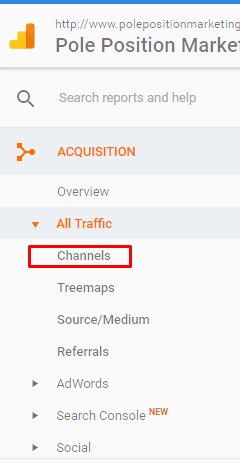
A good place to start is Google Analytics. Traffic isn’t the be-all end-all of metrics, but you do want to ensure that your social media efforts are bringing in traffic, and which platforms are doing that the best.

social media analytics

If a network isn’t bringing in much traffic, you may want to reconsider what you’re posting there, or question if the network is worth your time at all. But keep in mind, traffic is only part of the story. If you’re seeing a lot of engagement (shares, likes, comments, etc.), you’re raising brand awareness, and you may want to keep on keepin’ on.

We like True Social Metrics to track engagement and to see which posts performed the best. Each social network offers its own analytics as well, which can give you some of this information. Additionally. I often use Buffer’s analytics to determine which posts resonated with our audience, and then reschedule them so that they can be discovered by people who may not have seen them the first time around.

The point is, you want to figure out which social media efforts are helping you meet your goals and which aren’t, so you can focus your time on those that bring you ROI.

4. Time It

Social media has a well-earned reputation of being a time suck, so you should also decide, ahead of time, how long you’re going to allocate to it – even set a timer if you’re prone to zoning out. Just make sure that you’re setting aside a sufficient amount of time to get the job done right.

There’s no doubt about it, social media requires a time investment, but when done right, it’s one that can reap big rewards for your company. Using these tips, you’ll be able to better fit social media marketing into your busy schedule – without losing your mind.

By 

Follow Julie Graff on Twitter

Sourced from Social Media Today

By Michael Houlihan & Bonnie Harvey

Digital marketing is an investment. It takes time to mature before it can pay you back.

This is a question that has plagued us for years and we have spoken to many “experts,” but they seemed to be speaking in another language. We are not the professional online marketers they usually have as students. We are regular small business owners looking for advice we can understand and apply. We decided to ask Claudia Sheridan, a social marketing practitioner who specializes in small and medium-sized businesses like ours. After our initial meeting with Claudia, she was able to explain the various facets involved in digital marketing and how they work together to produce results — in terms we could understand!

1. The Big Picture

Michael & Bonnie: We’ve spent hundreds of thousands of dollars over the years on social marketers. We found that generally speaking, they understood one or two parts of the puzzle but didn’t have a comprehensive picture and certainly couldn’t deliver all the details necessary to make it happen. Typically, they would create and charge us for a funnel and put a lot of emphasis on landing pages but could not get many people into the funnel. Can you outline for us the various different aspects of social marketing that have to be in place to make it work?

Claudia: Social marketing is a part of a much larger concept, that isn’t really talked about. We think about social media and lead generation but rarely do marketers talk about all of the different aspects involved with Digital marketing, which is what businesses, in my opinion, really need to focus on.  It’s not one aspect of the available websites and tools, but rather how to make the different components work together in an effective and efficient manner that produces the desired results.

When looking to work with a marketer, look for one that understands the digital marketing landscape and can identify how the elements can best work for the goals you’re trying to accomplish.  For example, a company may want to utilize a social media channel, such as Facebook, to generate awareness and build their brand. They may decide to place an ad and make an offer but they rarely consider the stages at which the prospect is within the buying journey.

This reminds me of a stranger on a street corner who offers to sell you a fake watch from the lining of his coat.  It may capture your attention, or you may walk away. There is no friendship here, no relationship, no trust. What there is, however, is doubt. And, who wants to build a business relationship based on doubt? So then, what does this process look like?  And, the answer is that it varies on the strategy that is being used.

2. Metrics vs. Results

Michael & Bonnie: When we’ve dealt with social marketers in the past, they have tried to tell us that the likes, clicks, and shares, somehow resulted in increased business. But we found that it actually increased our overhead to maintain a current and interactive online presence. Further we’ve seen no substantial increase in business as a result of our investments in social marketing. What would you say to a client who has had that unfortunate experience before coming to you?

Claudia: I think that entrepreneurs are always on the lookout for that one thing, that silver bullet, that will generate a large amount of business for them.  In 2011-2012, commenting, liking and sharing would have done the trick, but today, that is no longer the case. Today, to be successful on Facebook, it means that you need to play within Facebook’s rules and adapt accordingly. More importantly, it means that you need to have a clear marketing strategy that can be executed, tested, measured, optimized and is able to adapt to Facebook’s changes. This isn’t a linear strategy, but an iterative one that is constantly evolving.

3. Changing Rules

Michael & Bonnie: It seems like every six months the rules change on social marketing. Just when you get set up, it seems like the rules change and you have to go back and reorganize. How can you anticipate and mitigate these changes?

Claudia:  The rules do change, and although the changes seem to be significant, they’re really not.  If a business has actively been participating in Facebook marketing, executing their strategy and making adjustments along the way, then as we learn of a new Facebook change, it just becomes a slight adjustment in the strategy.  Facebook’s changes, however, can appear colossal to companies who are not actively monitoring their Facebook marketing or do not have a solid strategy in place that they’re following.

It’s kind of like joining the gym every January.  If we had just stuck with the workouts that the fitness trainer laid out for us on day one, and we committed to working out a few times a week and eating right, then going to the gym after the holidays would be just another day.  But if we joined in January, stopped going in February, only to join back up 11 months later, the goal of getting into shape is much more daunting.  We don’t expect to walk into a gym on day one and walk out two hours later with six-pack abs, do we?  Yet with Facebook, we expect immediate return with very little effort and get frustrated when the work-out has changed.

 4. Overload

Michael & Bonnie: Don’t you think people are getting too many emails from social marketers? I know that I now have a setting on my Outlook that can take all those emails and put them on a lower priority profile. How do you get your clients prospects to open the emails in the campaigns you organize for them?

Claudia: If marketing was a pie, then email marketing should make up another piece of that pie. There are some companies who are amazing at email marketing and others who could use a little refinement. To get a prospect to open emails, you need to send them the right message at the right time. The question then becomes, how do you know when that is?  Well, with a good email system, you can segment your audience to deliver messages that best resonate with their needs.  Often with email marketing, businesses will craft a single message and broadcast it to their entire list, without consideration to where each person is within the customer journey.  But, if the email message aligned with the stage the customer was in, then the email is more likely to be opened and valued.


Expense or Investment?

Michael & Bonnie: What advice can you give to our readers so they will have a better understanding of what to expect from social marketing?

Claudia: I think the most important thing to remember is that social media marketing should never be the only method of marketing a company engages in. Work with someone who understands the digital marketing landscape and how the different elements fit together to accomplish the goals you’re trying to accomplish. Digital marketing should be viewed as an investment, not an expense. And as with any investment, it often takes time to mature before it can pay you back. Finally, make sure that there’s a strategy and work that strategy.

Feature Image credit: Westend61 | Getty Images 

By Michael Houlihan & Bonnie Harvey

Sourced from Entrepreneur Europe


By Lucy Benton

Have you spent thousands of dollars on an online campaign but haven’t seen the results you have expected once the campaign is over? If the campaign was all about letting everybody know how amazing your product is and what excellent features it holds, then the reason for the lack of success is obvious. People probably did not respond well to your ads because they were focused on the brand or product. Modern market asks for a different type of approach when it comes to building up customer awareness for your business.

No matter how powerful and compelling your marketing content is, clients need more to become confident about your brand. There are new e-commerce businesses popping out almost every day so why should anyone trust the word of brand A instead of brand B? To capture the audience and create a bond between you and your client base, there must be some sort of personal relation among the two sides. The customers want to see you caring, not just thinking about how to get them into buying your product.

The best way to communicate with your audience is through social networks, as they offer the most ways to interact. This, however, doesn’t mean flooding everyone’s feed with status updates and promotional content. Your social network activities should be versatile and offer everyone a chance to speak their mind as well as bring your product closer, through creative non-sales related content. It’s less about pushing the sale and more about showing the effort and devotion put into your product.

Simply put, the audience is interested in what you have to say about your business, but what really makes the difference is what everybody else has to say about your brand. There are several ways to promote your business in a manner that doesn’t seem generic and won’t bounce people back but inspire them into wanting to know more about you. Marketing experts at College Paper went to work and created an easy to understand infographics depicting some of the best online marketing strategies. We encourage you to take a look and see how easy it is to bring your business to a whole new level by simply putting an extra effort into your social network marketing activities.

By Lucy Benton

Lucy Benton is a marketing specialist, business consultant and helps people to turn their dreams into the profitable business.  Now she is writing for marketing and business resources. Also Lucy has her own blog Prowritingpartner.com where you can check her last publications. If you’re interested in working with Lucy, you can find her on  Twitter.

Sourced from Irish Tech NewsAlison McGuire

By

Knowing How to Use Social Media For Business is a necessary marketing tool in the industry today.  Thankfully new technology related to online marketing has provided software and tools to help you have success with an online home business in regards to social media marketing.

Affiliate Disclaimer: I get commissions for purchases made through links in this post.

Learning How to Use Social Media For Business, in my opinion, it is learning how to plant your business in the heart of, I mean smack in the middle of, online marketing.

After all, that’s where everybody online is at, right? People associate themselves with like-minded people.  Your job as a marketer is to find like-minded people that are interested in your niche. In other words, finding your target audience.

How to Use Social Media For Business


If your concentration is on wanting more traffic to your business or website, that’s what this article is here to help you with.  Also if you haven’t already your business plan and strategy need to be in place.  I also suggest having a mission statement.

Your (SMMS) Social Media Marketing Strategy should have defined objectives and tools necessary to achieve them. Now, the process and to finding your target audience involves factors that must be addressed.  You need to know;

Who are you marketing to?  What is your TA (target audience) demographic.  

Where. Meaning, which social network are you likely to find your TA.  Also knowing what groups, forums, communities or chat rooms your TA likes to hang out are necessary factors as well.

Because social media networks cater to different audiences, it is understandable that there should be a different promoting strategy for each social network.  Your approach to promoting on LinkedIn would be different than promoting on Snapchat.

What does your TA expect from your product or service?

When is the best time to promote your product or service?

Why meaning you need to show, and inform why your TA should use or purchase your goods.

How will you convince your TA you have the solution to their needs.

How to Use Social Media/social media banners

Marketing online, be it marketing for other companies, a brick and mortar business or working to have success with a home business you need to apply content marketing to your strategy.  This involves writing quality content and strategic placement of keywords within the article, all of which must be relevant to the title and topic of your article.

Do not be overwhelmed by the six-word questions you will ha e to confront in the social media marketing game, in fact, be happy for social media.  Later in the article, I will show you exactly how to tackle those six-word questions.

Before social media, do you remember how marketing used to be? Marketers relied first on outbound marketing strategies.  Then as the Internet was introduced to the masses, consumers became more savvy and smarter online shoppers. Along with the Internet came inbound marketing and marketers put the consumer first in their promotions.

Today, you can attract a huge audience thanks to new technology. Technology that allows one to not only track an individual as an individual consumer. Moreover, you also have the ability to interact with prospects in ways that weren’t possible in the past.

Technology And Marketing

This new era of marketing could not come at a better time because it is a perfect match for social media marketing.  Your target audience is out there; you just need to analyse and diagnose the data you retrieve to find potential customers, and prospects.  And then be able to attract them to your website.

Unfortunately, it’s not a simple task. How to Use Social Media /social media marketing statsMany marketers are on social media sites and get little to no response to their efforts.  

It is not because they haven’t learned the game, more times than not it is because they are the sole proprietor and can only do so much in any space of time.  Or the marketer has no business strategy in place.

Even the successful online marketer and anyone in a successful position will gladly tell you about the failures they faced.  A successful social media marketing strategy takes a lot of planning, testing, and commitment.  Below are eight tools you can start using in your social media marketing campaign.

Available Software

1. Commun. It is an easy way to grow followers. Don’t think that Commun is one of those online services that sell you Twitter, Instagram, YouTube and Facebook followers. Commun. It;  is a Twitter/Facebook communities manager that helps you discover who your targeted followers are.

This tool lets you see who supports your content by sharing, retweeting, and mentioning.  As you engage those fans, your trust on social media will grow.  So interact on all fronts, the strategy will result in success.

2. Onalytica helps you find the influential leaders in your niche.  If the influentials like your page and share your work, you will get tons of engagement on your website.

This software will analyze your content, and show you the top influential bloggers who have similar interests and activities related to your theme. Once you have that information, follow those people on social media and interact. Make comments on their posts, but make sure not to spam.

3. Edocr  How about sharing some of that knowledge you have obtained in the form of an ebook. When you give something meaningful to users, they will reciprocate.  An eBook reflects sound characteristics and will attract social media prospects to your site.  When you create an Edocr is the tool to use.

4. Viralheat  Viralheat analyzes the ranking of your posts and monitors the conversations that include your post or brand on Pinterest, Google+, YouTube, Facebook, Twitter, Instagram, and many other platforms. You can also communicate with the audience.

Improve Your Social Media For Business

5. Feedly When you start using social media, you have to offer something more than promotion. You do need to promote quality content as part of your marketing. However, focus on something else instead of your business from time to time.

Feedly can find top-notch online publications related to your niche. When you discover a useful and informative publication share it on your social media profiles.

6. Post Planner  Facebook updates are important.  You cannot log into page or profile as planned all the time. You can use Post Planner to schedule your posts when they peak.  Post Planner helps you analyze the trends in your niche and plan your content about your target audience needs. You can also set the tool to automatically re-post.

7. Canva , The tool edit images, add text and speech bubbles to visual content, design grids, and add stickers, icons, and frames to your designs. However, you can also use Canva to create a flyer, presentation, photo collage, Facebook cover, Google+ header, infographic, and other forms of visually-intriguing content.

8. Bit.ly Don’t you get frustrated when you want to share a link via Twitter, but it’s too long for those 140 characters? You don’t have to be! Bit.ly is the tool all social media users need: it turns every URL into a much shorter version that still leads to the right destination.

Thanks for stopping by.  I wish you all the best with learning How to Use Social Media for Business. Furthermore, may you have blessings and prosperity. Please, let’s communicate, share a comment or question and I will get back in touch with you. 

By

Hello, my name is Maurice Jackson I live and, started my business in Detroit. My intentions are, to help any and every one with affiliate marketing as a home business, become a successful professional. My first career was working for the city of Detroit as an inspector, where I thought I would retire. But life bring change and surprises. I sustained an injury that led to an earlier retirement than I had planed. With that said I reinvented myself in April of 2014 and, became part of an affiliate program. Within the time of my reinvention leading up to the present, I am generating lots of traffic to my website and it grows everyday.ROI has been minimal but then again I invested nothing to start. I am at the point of letting my site mature, as I keep writing quality content about it. In this business you have to pay your dues. And, I and the rest of our family (become a member and you will see the family side of it) of 109000, including the founders of the program (yes they participate), will see to it that we all will be making a substantial amount of revenue in the near future.

Sourced from Success with a Home Business

By 

  • Klout, a startup that measured how important you are on social media, is shutting down by the end of the month. 
  • It was bought for $200 million in 2014.

It’s the end of an era for social media influencers and wannabe-influencers.

Klout, one of the buzziest tech startups circa 2011, announced on Twitter on Thursday that it was shutting the eponymous service down.

Klout was founded in 2009 by Joe Fernandez, partially as a way to get a job at Twitter, according to Business Insider. But ranking people by importance or influence turned out to be a strong enough idea to raise four rounds of venture funding from top-tier firms totaling $40 million.

Eventually, it was sold in 2014 for $200 million to Lithium Technologies, which is the company that is shutting down the service later this month. Lithium is a private company that makes digital marketing tools.

Klout enabled users to share their Facebook and Twitter data, and parsed that data through a vague algorithm to give users a simple popularity metric between 1 and 100, called the “Klout score.”

Here’s a screenshot of the software, taken on Thursday:

Klout ScreenshotBusiness Insider

Lithium CEO Pete Hess discussed the shutdown in an email to customers on Thursday. “The Klout acquisition provided Lithium with valuable artificial intelligence (AI) and machine learning capabilities but Klout as a standalone service is not aligned with our long-term strategy,” he wrote.

To be fair, Klout scores are probably not aligned with anyone’s long-term strategy, unless that involves becoming a huge Twitter star. Over the years, Klout scores became a punchline for techies and the Twitter-obsessed. “Klout has been one of my go-to punchlines for some time now,” TechCrunch founder Michael Arrington wrote in August 2012.

Klout also arguably inspired one of the most disturbing “Black Mirror” episodes.

Here are some of our favorite Klout stories from over the years:

Here’s the entire farewell announcement:

Hi,

I’m writing to let you know that Lithium has made the decision to sunset the Klout service, effective May 25, 2018.

Lithium is committed to providing you with the technology and services that will enable you to differentiate your customer experience. Our recent launch of Lithium Messaging is evidence of our focus on this mission. The Klout acquisition provided Lithium with valuable artificial intelligence (AI) and machinelearning capabilities but Klout as a standalone service is not aligned with our long-term strategy.

Our goal with these AI and machine learning investments is to improve our customer care capabilities across the board, whether that’s self-service, peer-to-peer, or direct-to-brand. In the near-term, for example, we will be looking to improve agent productivity within SMM and improve the overall user experience in Community through the application of AI, while we are also planning the launch of a new social impact scoring methodology based on Twitter.

Should you have any questions or concerns about this announcement, please feel free to reach out to KloutQuestions@lithium.com. We are honored to be your partner in delivering digital customer care experiences that delight your customers and we look forward to sharing news of ongoing innovations that support you in this journey.

Thank you for your business.

Pete Hess

CEO

By 

Sourced from Business Insider UK

By 

Social media can be a great digital marketing tool for your business when you use it correctly.

​However, there are several ways that social marketing blunders can negatively impact your business.

Most companies have a team dedicated to marketing on social media channels, so if you are a massage therapist who runs your whole social media marketing channels solo, these expert tips can help you find a more efficient way to manage your massage marketing plan online.

Here are some common massage therapy social marketing mistakes you’ll want to avoid—and ways to correct them if you find yourself in a challenging situation.

1. Not Responding to Negative Comments or Reviews

Responding to negative feedback and reviews is very important on social media. Your followers want to know that you are truly engaged in what they are saying and that their opinion matters to you.

The positive result gained by responding to a negative situation on social media is you can rectify an issue and please a dissatisfied customer by providing a good solution to the problem publicly.

For example, if you have a client who comes in for bodywork therapy and is not happy with your services and then gives your Facebook page a one-star review or leaves a not-so-nice comment on your timeline, you can offer them a free massage on their next visit.

Remember, most followers expect a response within one to two hours of their initial contact.

By monitoring all comments and reviews in a timely manner and responding accordingly, you create online loyalty for your business. ​

On the other hand, if you constantly ignore comments and reviews, you will most likely lose those followers and, in turn, lose potential customers.

2. Posting Too Many Times Per Day

You may wonder, “Is over-posting on social media really a problem?” The answer to that question is most definitely.

Ideally, you want to find a balance between being informative and overbearing with your audience.

According to a report from Buffer, a recent study from Social Bakers analyzed three months’ worth of Facebook content from major brands and found that top brands average only one post per day.1

So, how many posts per day is the right amount? With Facebook’s recent algorithm changes you may have noticed your engagement has dropped. One of the things you can do to combat this challenge is to test scheduling your posts at different times of the day (morning, afternoon and evening) and certain days of the week and determine when your audience is the most engaged. ​

With trial and error, you can find what works for you and use that information to plan your posts for the week at the right time of the day, with the right frequency.

This information varies between platforms, so the right number of Facebook posts per day will be different from the number of posts you make to Twitter, Instagram and LinkedIn. ​

Pay attention to your data and change your strategy accordingly when you find that something may not be working for you.

3. Not Understanding How to ​Gain New Clients on Social

Social media is a great gateway to engagement, but we know that it has a different type of sales path than direct one-to-one marketing.

If you have not established a presence on multiple social media channels, it is less likely that someone will want to purchase a retail product or trust in your massage therapy business enough to book an appointment.

Are you running contests, promotions and exclusive offers for your followers? Utilizing social platforms to offer discounts to your audience is something that will keep them coming back.

It is also important to build awareness and loyalty among those who currently follow you.

If you are feeling ambitious, developing a monthly strategy with paid advertisements can help you reach users who may not know about your massage business. This can also provide you with an opportunity to gain leads and email addresses so that you can follow up with those clients and entice them with a new client special discount.

A great way to do this would be to create a post and tell your social audience to “Call to book an appointment and get 20 percent off TODAY ONLY when you say the secret code, MASSAGE.”

This creates urgency with your audience and ultimately entices them to book a session with you.

4. Neglecting to Use Videos on Social

Some say that video marketing on social is everything. If you have not incorporated video into your social media marketing yet, you may be missing out on growth clients for your business.

Did you know that video’s get more shares and interaction on social media than any other posts?

There are many ways you should be using video. You can answer a question or solve a problem by recording yourself, show your business behind the scenes by doing a live video, or promote a new service by demonstrating on a client.

Videos are extremely popular on the Internet. The good news is, the shorter the video the better the engagement you will have.

With the new auto-play options for video, it is easier to draw the viewer’s attention to your post, rather than images, statuses or articles on your feeds will. Using video also provides stronger personal connections to your audience.

There is an emotional/human aspect to video that you simply cannot feel from reading content. Making this connection is an important element in your massage therapy marketing plans.

Video allows you to see someone’s personality, passions and facial expressions. Try sharing clients’ personal testimonies and see how much your engagement increases.

5. You Don’t Have a Social Media Strategy to Execute

If you have been aimlessly using social media and don’t really know what to do , it is time to gather up some data and insights and develop a monthly plan.

What successes are most valuable to your business?

Are you new to social and trying to just get your massage therapy business out in the universe? Then it may be best for you to continue to create content that explains who you are as a business, and your passion for healing through massage therapy.

Once you see your fan base grow , it may be time to invest in paid advertisements to gather leads and hopefully gain more appointments.

First, start mapping out the days of the week you want to post and how many times a week you will post, and put this information on a calendar. At the end of the month you should review the performance of your posts and determine if you want to make any changes to the strategy for the next month.

It is best to have a healthy mix of posts. Try to not oversell products, be readily available for your audience, interact as much as possible, and track any new appointments that are directly from your posts. ​

To increase brand awareness the “old fashioned” way, tell all your clients about your social media channels. Add your social media links or handles to your business cards and brochures so that people can learn more about you and your services, and share your business with others.

The more visibility you have to your clients in between sessions, the more you can expect friends of your followers to check out your page. To take this one step further, tell your loyal clients that they are welcome to leave you a review on Facebook or Yelp.

The higher your rating, the more credibility this creates for your business.  Word of mouth is a great strategy for gaining new clients, even when it is on-line.

The last thing to consider when putting your massage therapy marketing strategy together, most people who are looking for a place to get a therapeutic massage want the business to have at least four out of five stars. Remember, if you see a review that is not good, be sure to respond to it ASAP and turn that negative feedback into a positive recommendation.

Don’t be afraid to get started.  Use the information and links above to get the tools you need to be on your way to social success!

​These tips are brought to you by Massage Magazine Insurance Plus, the leading national insurance provider for massage therapists and bodyworkers—offering much more than just complete liability coverage at competitive rates. We offer practice support and peace of mind to our members, who know their careers and assets are covered should the unfortunate occur.

By 

Sourced from Massage Magazine