By Nilay Patel
Mark Bergen takes us inside the black box
Mark Bergen is the author of a new book about YouTube called Like, Comment, Subscribe: Inside YouTube’s Chaotic Rise to World Domination.
YouTube has always been fascinating to me because it’s such a black box — everyone feels like they know how the platform works, but very few people have a real understanding of the internal politics and tradeoffs that actually drive YouTube’s decisions. Mark’s book is one of the best of its kind I’ve read — not only does he take you inside the company, but he connects the decisions made inside YouTube to the creators who use the platform and the effects it has on them.
Keep in mind that for as little as we might know about YouTube, we might know even less about TikTok, which is driving all sorts of platforms, even YouTube, into competing with it.
This is a fun one. Okay, Mark Bergen, author of Like, Comment, Subscribe. Here we go.
Mark Bergen is a tech reporter at Bloomberg and the author of the new book, Like, Comment, Subscribe: Inside YouTube’s Chaotic Rise to World Domination. Welcome to Decoder.
Thanks for having me, Nilay.
I’m excited to talk to you. We have known each other for a long time. I think this is the first time we have done something here.
My first debut. Long-time listener, first-time caller.
Well, the book is great. I think it’s one of my favorites of its kind in quite some time. There is a lot of reporting in it and a lot of insight into how YouTube operates from a variety of different perspectives. Most importantly, there are a lot of perspectives from the creator community at YouTube that round out how these decisions affect a lot of people, both from the creator perspective and the audience perspective. First of all, congratulations on the book. It’s great.
Yeah, thanks. I really appreciate it. Thanks for reading it.
It’s my job, but I think the listener should read it too, in a non-professional capacity.
I hope you were entertained at least somewhat non-professionally as well.
Very much so.
The book overall is a chronology of YouTube. From its early days as a scrappy startup that could barely afford to run itself, through the acquisition by Google, to some of the huge moments we have experienced recently, including COVID-19 and misinformation, Black Lives Matter, and so on. Because Decoder is a show about decisions and how they are made, let’s talk about some of the decisions at YouTube. In the prologue of the book you write, “Everyone knew YouTube, but few knew how it works, who runs it, what decisions they make and why those decisions matter.” The book was written to remedy that, so it’s a perfect match for our show. I have to ask, why did you choose to write a book about YouTube?
I have been covering Google since 2015. After 2016, YouTube became much more central to Google’s financial success, but at the same time, much more central to its political and business headaches. There was a massive boycott in 2017 of YouTube and a series of scandals. Like you guys, I was covering this bit by bit, firestorm after firestorm. I stepped back and realized this was big; every story felt like it was only scratching the surface. There was this very complicated platform problem. I think what sets it apart among other social media is that they built this creator economy. They have this three-sided platform between the advertisers and its viewers and regulators.
Facebook has that too, but YouTube has these millions of creators, many of whose lives depend on it. That had so many more complications. You mentioned that creators are full of characters, but it had a real impact on people’s lives. The decisions they made had some real drama built in. There was a campus shooting, where a disgruntled creator came to YouTube with a gun in 2018. There was a lot of narrative built into this story.
My hope is that it’s a dark comedy in many ways. The people at YouTube and Google are idealistic about the internet. YouTube was the underdog taking on Hollywood and all the conventions of Hollywood. Then within a few short years, there was this whiplash, where it becomes like Big Tobacco. YouTube is accused of radicalization, traumatizing children, propaganda, all the worst aspects associated with the company. I thought that quick turn was just a fascinating story to unpack and tell.
That’s a huge scope of a book. It’s a huge scope of any story. I feel like every time we cover YouTube, it’s a fight between writing 500 words on what just happened or writing 15,000 words on everything that led up to that moment. You have been covering Google for a long time. How long did it take you to write the book?
I started the book at the very end of 2019, and I started doing some reporting mostly in 2020. I was really excited about going out and doing in-person meetings for the book, but then COVID-19 hit. It has been almost two and a half years of full-time reporting.
One of the things that strikes me about Google in particular — and I’m not sure if it applies to YouTube — is that employees and ex-employees kind of talk. They are out there and they are vocal about all the things that happen in Google in strange ways. Apple employees are famously locked in, it is almost impossible to report on what happens. Some people have done it, but it’s really hard. Where is YouTube on the scale? Were people eager to talk to you? Was it pretty locked down?
As is generally the case for a lot of historical stories, the further you go back in time, the more willing people are to talk. People who were at early YouTube are gone from the company and haven’t been there for a while, so in some sense they feel like they are less responsible for the problems. The book hits on this really interesting tension between the OG YouTube employees and arriving at Google. I think there was a big cultural gap, and a lot of those people were willing to talk because they felt like the platform they built was steered in directions they didn’t feel comfortable with. With more recent employees, there is still apprehension, even if they are critical of the company. I did work with the company; I had maybe a dozen or so on-record interviews with current employees, and the company was willing to talk to a certain extent and get their story out there.
I think it’s coming out like in Hollywood. The people around the multichannel networks and YouTube creators are super chatty and they think they are at the center of the story. The book spends a lot of time with Maker Studios, which I think is a really fascinating story as well. I think people at Maker deserve their own book, mini-series, documentary, what have you. So it totally varies. There are certainly people in the thick of YouTube that have not spoken to me. I think of the most recent CEO of YouTube before Susan Wojcicki, Salar Kamangar, like the founders of Google, has basically dropped off the planet since 2014.
That is actually one thing that I want to kind of get at with YouTube. It is one of the strangest platforms on the modern internet in modern culture. It’s among the oldest now. It feels understandable in some way. There are people that run large businesses entirely based on YouTube. It is a stable relationship in the sense that we can tell kids who want to be creators, “Just start shooting with your phone, start a YouTube channel, and a predictable set of things will happen.”
On the flip side, it is really opaque. It’s hard to know what kinds of decisions YouTube makes and who is making those decisions. It’s more opaque than Twitter or Facebook in that way. After reporting on it for so long, how do you see it?
I think that is a really good analysis. Part of its being opaque is just the scale of it. You mentioned Twitter; YouTube has more monthly users in India than Twitter has globally. It is just so big. I think that Google tends to make every decision at scale and as consistently across the board as possible. It certainly has done so in the past. Philosophically, it really struggles with, “We are going to act on one creator this way and another one this way. We are going to act on one misinformation case this way and then treat another one differently.” It wants to do as much as it can, across the board, at scale.
Structurally, that is one of the reasons why sometimes they move pretty slowly. There is a corporate culture, and it is all about consensus — which I get into in the book. It is unique in some ways, because it is the only social network that hasn’t really had one founder there the entire time. There is no Zuckerberg, Dorsey, or Spiegel. It effectively had three different eras as chief executives that are stewards of this platform that is like its own beast.
A lot of the Wojcicki era, the most recent since 2014, is very consensus-oriented. I think that is partially why the decisions at YouTube move pretty slowly at times. I would describe it as a large tanker. They take very careful turns because every turn they make has big consequences. A way to put it is that they are mature. They have been around for a long time, and the book talks about how they went through the wringer with all these different problems. They came out the other end prepared in some ways; they have levers they can pull now. It’s like, “Oh, we can demonetize. We can remove channels from recommendations. We can handle the controversies that spill over on all these platforms that do creator economy stuff.”
TikTok is going through things that YouTube already went through. So are Spotify, Twitch, Instagram, you name it. That is why I think that the history of YouTube is so interesting. It is the direction that social media is moving in this creator economy, and all these platforms are going to have similar problems.
Do you think the overall story of YouTube right now is a success? Is it a tragedy? Is it a cautionary tale? How would you categorize it?
A tragic comedy. I think it’s hard to say it’s not a success. I was just looking at the numbers; 2019 is when Google started sharing their actual sales figures on ads for the first time. They have only gone back to 2017, so we don’t know what happened before then. Ads are the bulk, like 99 percent, of their business, and they don’t share the rest. It started at 8 billion, and last year it was 29 billion. Just in those five years since 2017, that is a pretty solid success.
Around 2009, Google’s CFO wanted to sell YouTube off. Today, it’s a pivotal part of Google.
There was a Pew research study that came out a couple weeks ago about US teens and their usage of social media. YouTube was the most frequent visit at 95 percent. A whole generation of children just grew up on it. There is reporting in the book that talks about how around 2009, Google’s CFO was like, “This is the worst business on the planet. Maybe we should sell this thing off.” Thirteen years later, it is a pivotal part of Google, and every investor on every earnings call is talking about YouTube as one of the key futures for Alphabet. That has been a success.
As far as its impact on broader society and politics, I think the jury is still out on that. Part of the book says that this has been a really under-scrutinized platform, given its influence, power, and for a variety of other reasons. It’s a call to say, “Hey, we should pay more attention to this thing.”
That seems like the hardest thing to do. I agree with you that we pay a lot of attention to YouTube, but it’s easier to do that with a YouTuber rather than YouTube itself. I see that cycle play out over and over again. Even as you read the book, YouTube is like, “Okay, we are going to solve this one person, and that will create a rule that will solve everybody else.” Logan Paul and PewDiePie are good examples. This is just not a realistic way to go about it. They are focused entirely on one creator who has some sort of issue or is pushing the boundaries — maybe intentionally and aggressively — and they’re like, “If we can just figure out how to define the boundary better, then no one else will ever push it again.”
I think that’s fair. So much of it was really inventing stuff on the fly. If you go back to the PewDiePie scandal in early 2017 — which you guys covered really well — that was before the Harvey Weinstein reporting and before cancel culture was a thing. There were certainly people I talked to for the book who were like, “We moved way too slowly.” In hindsight, they were not aware of the consequences of having their most popular creator doing what he said was satire at the time. Even if you give him the benefit of the doubt and consider it satire, it was still not playing well to everyone. YouTube made no effort to communicate, “Look, this is satire, and these are our rules of the satire around something like the genocide of the Jewish people.”
One YouTube employee put it to me pretty candidly: “Imagine Susan in a room with PewDiePie that year at a Hollywood soiree and being like, ‘Look, this is my biggest star, and yet…’” It is not the same as an HBO executive or a Disney executive. That is just the nature of YouTube as a platform. I think the company is always trying to have its cake and eat it too. They want a big brand cast presentation for advertisers, where they can roll out the star and admirable creators, while ignoring the creators that don’t necessarily reflect the values that it wants to reflect.
That dynamic plays out in something you said earlier, which is that there isn’t a main character of YouTube. There isn’t a Jack Dorsey or a Mark Zuckerberg. That is not how Susan presents herself to the world. Is that by design?
I think so. There is a really interesting discussion here. Before YouTube, initial coverage of Susan was when she was running the AdSense business, Google’s second-biggest hits after search. There was a series of stories that were, “Meet the most important Googler you’ve never heard of.” She wasn’t like Sheryl Sandberg, in the sense of writing her own book or spending time crafting this public persona. It was very much like, “I’m a working mom and a competent executive.”
More recently, she has started doing YouTube interviews and has become much more accessible to YouTubers. Even then, most YouTubers know Robert Kyncl — who is the content boss — more than they know Susan. How many regular viewers know who she is? I think that is an interesting part of the book, and I’m really curious what readers think about this person who has very intentionally been putting herself in the background.
That part of the book really explained one of the weirder disconnects that I have felt covering YouTube for however many years. YouTube executives and the leadership have this view of YouTube that no one else has. They have the data of what people actually do. We have been at conferences where we have seen Susan Wojcicki confidently say that YouTube is a music service. Just straight up, “YouTube is a music service,” and the whole audience is like, “What planet are you on?” She has the data that says people are just watching tons of music videos, so naturally, they should launch a music service and talk about YouTube as a music service. There is this huge disconnect. Is she so hidden that she and the executives are not connecting with the actual users, and are just perceiving them through data?
That may be partially it. My colleague Lucas Shaw coined this one: “the biggest music service that no one talks about.” It is huge. YouTube’s scale probably makes it the biggest podcasting service too, right?
It is. Your other colleague Ashley Carman actually just reported on that.
It is by far the biggest kids’ entertainment platform. It is the biggest place for finding videos about fixing your sink. The list goes on and on. I think its scale just makes it so it always wins those superlatives. One of the fascinating trends in the company is there was this joke that people at YouTube didn’t watch YouTube.
For part of the book, I talked to MatPat, Matthew Patrick, who is a compelling game theorist. He makes phenomenal YouTube videos, and really understands the platform. At one point he was telling the company, “You guys have to watch your platform.” YouTube has all sorts of trends, whether they are positive, transformative trends or the really corrosive ones, and YouTubers spotted them first. Typically, I think that started the change in the past couple years. I can’t expect Susan Wojcicki to watch every single YouTube video, or to even keep her tabs on the larger trends in the platform, but there is a drive for some kind of a business strategy.
Sundar, our Google CEO, talks a lot about YouTube as this education and learning platform, which is true, but there is a big missed opportunity there. YouTube has never really turned that into a product set or a feature by having any sort of direction or intentional strategy. You can’t really say, “They are really trying to make this an educational platform!” They could. There is plenty of very high-quality educational material on YouTube. I think that’s a total one of their many blown opportunities there, but for a variety of reasons they didn’t pursue that path.
Is that YouTube or is that Google? I feel like you have just described a lot of Google. Everyone can see Google’s opportunities, where a little bit of focus, tenacity, and iteration can turn them into huge businesses. Yet Google is like, “What if we launch another YouTube? What if we have eight messaging apps?”
I think the most interesting inflection point going back about a decade — and this was a decision that was pretty key — was Google Plus. In the book, I recalled that I didn’t fully understand how critical that was to Google at one point.
Oh yeah. They thought they were betting the company on it.
They were betting the company, and that included YouTube. It really frustrated people at YouTube. I don’t know how far along it came, but it was enough that it was a real consideration to put YouTube on the video tab of Google Plus. You look back now and you’re like, “What in the world were they thinking?”
That slowed down and had a really negative effect on YouTube, certainly on morale. YouTube has become much more independent in some ways. There are definitely people at Google that have put more pressure on YouTube. Sundar, the CEO, in particular, would have preferred to see them move quicker on brand safety. One person put it to me kind of bluntly that, “Sundar pays attention to YouTube when the noise gets too loud.” That is generally the case.
So we said the book is about decisions. We should talk about some of the big decisions you go through in the book. What do you think are the most important decisions that have been made at YouTube?
I will give you three. One is the launching of the YouTube Partner Program in 2007. Two is when they switched their key metric from views to watch time in early 2012. The third one is up for debate, but I think it was in late 2017 to early 2018, when they raised the threshold for the partner program.
At that point, unless you were blatantly violating copyright laws or hate speech rules, you were good to get monetized on YouTube. It built probably the biggest digital media economy ever. They had to dramatically scale that back and that had all sorts of consequences they are still dealing with today. Those would be my votes for the three.
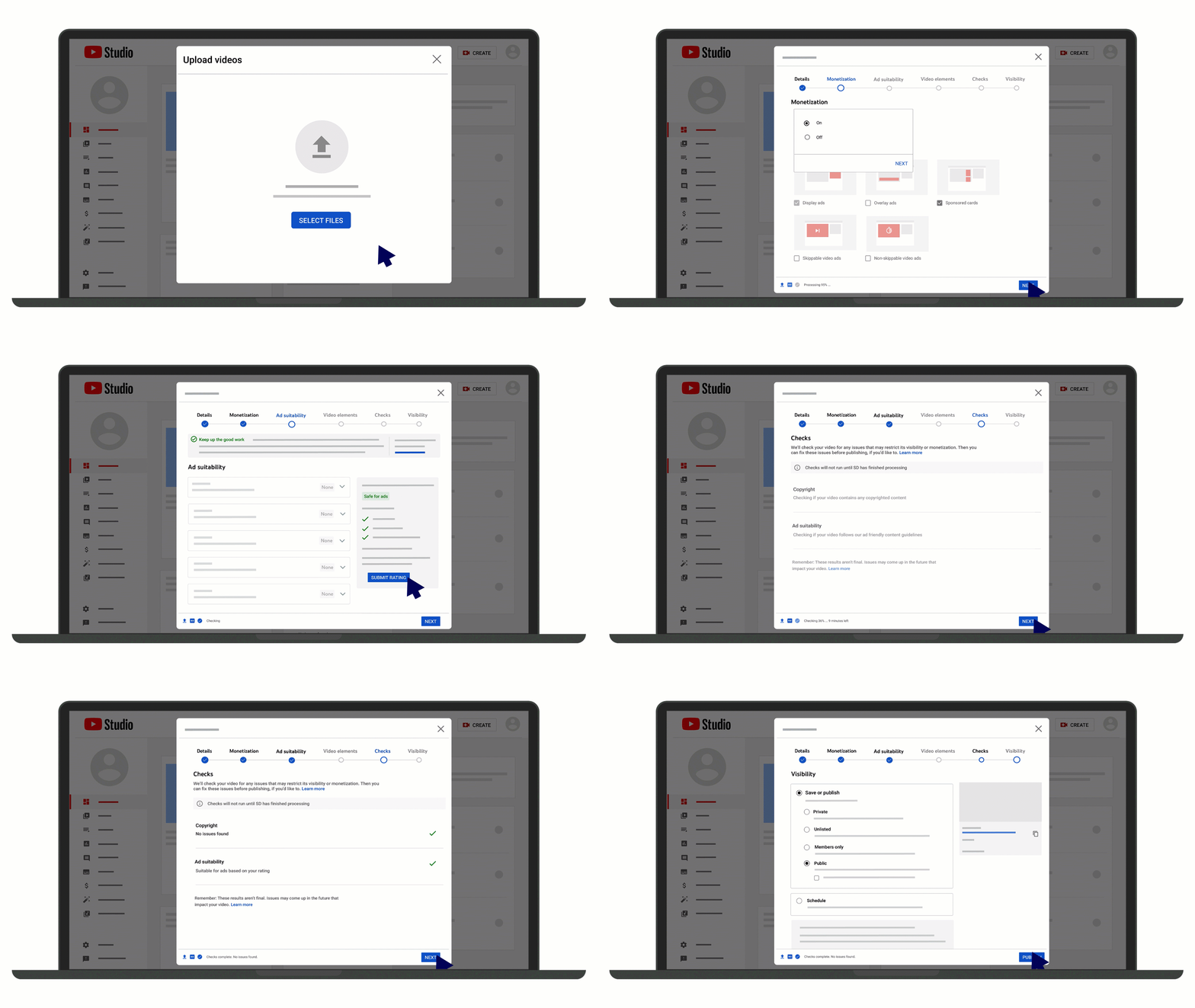
Let’s start with the partner program you’re talking about. The partner program — for people who don’t know — is if you are a YouTuber of a certain scale like Mark is saying, then you can sign up to get your videos monetized. YouTube runs ads on your videos; you get a cut, and YouTube keep a cut. It’s pretty clean in that the ads are pre-rolls and mid-rolls. So before you watch a video, in the middle of a video, an ad runs, YouTube can attribute that to various creators in their videos. Very simple sort of calculation there. It makes a lot of people a lot of money.
We just had Hank Green on the show, and he is very passionate that YouTube’s partner program is the best one, and creator funds like TikTok and even YouTube Shorts are not the way forward. The partner program allows many different kinds of creators to thrive and build their own businesses. No one has copied it. Why do you think other social networks haven’t copied partner programs, and why do you think YouTube has stuck with it?
First off, it was interesting reporting about this in the book. You remember Smosh? It was the biggest YouTube channel for a long time. They were one of the early 30 channels or so that had the first partner program. They initially turned ads off because their fans were so pissed off about seeing them and were calling them sellouts. It’s just so funny that as you fast forward to today, every YouTube video has so many brand deals.
So why hasn’t it been copied? One, Google is an exceptionally good company at digital advertising and is certainly the world’s biggest. Even before YouTube, it had AdSense. It had this mechanism for paying online content, like monetizing web pages. In some ways, the partner program is just sticking that on video, although it is a more complicated system.
YouTube also built content ID around the same time, which your audience probably knows. That was a way that effectively solved their biggest problem at the time, which was, “We’re either being sued by big traditional media, or they don’t want to put their content here.” Here was a way to say, “Oh, traditional media, if you put your content here, or if someone else does, you can still make money off of it.” It was probably the single biggest product that made YouTube a success.
Facebook has arguably the second-biggest ads apparatus and has not been able to figure this system out. It’s not for lack of trying. Google just has the benefit of having an army of sales people and advertisers that are very willing to give money to them. I’d be curious to see if/when Netflix and all these streaming services move into ads. That’s not necessarily a similar model, but that’s digital video advertising, and something that YouTube has had a lock on for years.
Walk me through the decision to turn it on and then the decision to walk it back.
There were long-gone competitors. Revver, if you remember that one. Blip.tv was also a prominent one. iJustine was one of the early YouTubers, and was experimenting with whatever Twitch was called — Justin TV.
Some of this first-wave generation of creators went out, came on the platform, and had no guarantees. There was no way for them to make money, let alone a guarantee for financial success.
Then within a few short years, it was like, “Oh, maybe there’s something here. There is certainly an audience here.” There were companies like Blip.tv paying. Chad Hurley, YouTube’s first CEO co-founder, said early on that they didn’t want to run ads, and that they didn’t want to have commercial incentives to drive people. He just wanted people to upload to YouTube for all the reasons that initially it started. If you want to share or put your creativity out there, then you can. You want your audience’s help without any reward.
They launched it in May of 2007, which was super early, and it didn’t really start scaling out until five years later with a pretty select group of creators; 2011 to 2012 is when they started to really expand. At that point, you have the multi-channel networks (MCN) coming out of nowhere and doing this sort of pyramid-schemey — well, alleged pyramid scheme— build-this model, where they just signed as many creators as possible.
At that time, the only way to get monetized at the time was to be a star, a really big creator, or to be signed with an MCN. YouTubers just signed with MCNs in the tens of thousands, often without reading the contracts. That financial model then imploded for a variety of reasons. Basically, YouTube was like, “Wow, we don’t want these sketchy third parties to be running this. We can do it in-house.”
What I found while reporting was that they had the big ad boycotts early in 2017 that were driven by extremist videos. Household brands were finding, “Oh, we’re on an ISIS video. Look, we’re on a neo-Nazi video.” I really think the key there was the kids crisis. That is where YouTube was like, “Wow, we cannot monetize everyone anymore. We have to make a change.” Up until that point in late of that year, they thought they were getting out of the ads crisis without making any sort of major structural changes. It was the kids issue that really pushed them to make that fairly massive change in the payments.
There are a lot of issues, so which kids issue do you mean? There are at least three I can pick out.
Yeah, totally fair. Elsagate was the popular name. In late 2017, there were multiple things happening. One was this very strange trend of the Spider-Man, Elsa, adults dressing up as superheroes, which became some of the most popular videos on YouTube. Some of it was benign, silly, and and sort of vaudevillian. Some of it was very sexual, disturbing, pranking, and intentionally pushing the limits.
James Bridle is this writer in the UK who wrote a very popular post called “Something is Wrong on the Internet.” It’s a great title and would be a good name for a book. His point was that there was what he called “industrialized nightmare production,” which were these animation studios that would just churn out YouTube content for kids. Some of which was clearly not even designed by humans; it was bots making videos for bots. The virality of his post, combined with the fact that advertisers were freaking out about kids’ material, was the crisis at Thanksgiving 2017. That is when YouTube finally decided to take some pretty significant action.
Just reading that section of the book, one thing that strikes me is that YouTube often presents a very placid face to the world. Every social media company does this to some extent. “We know there are problems, and we are very diligently working on them. You couldn’t possibly understand the trade-offs that we must manage.” Then inside of YouTube, it was, “Here’s a post that just went viral. Here was another adpocalypse where all the advertisers are going away,” and it was just a pure scramble. It’s like they don’t see it. What is the tension there? It seems like they are paying attention to their platform in some way, yet they are often surprised by these things.
Yes. I think they are surprised by the scale. I think that crisis in particular, the ads team was surprised. Sridhar Ramaswamy used to be the SVP for ads, and he has spoken about this publicly before. I watched these videos, and there was a really popular one called “Toys Freaks,” which is this whole complicated story too. I watched it and was like, “What?”
There were a bunch of stories like this around the time. Google was funding this; his division ran ads. I think you can plausibly make the argument about naïveté there, but YouTube is a big space. This channel was the 68th most popular at the time; there are still a lot of channels ahead of that. I think that they just weren’t paying attention to this.
In 2019, the FTC fined them for violating COPPA, the Children’s Online Privacy Protection Act. Before then, YouTube would live in this willful ignorance, where it’s like, “We don’t have kids on our platform. We have YouTube Kids, which is an app, and then everyone else is over 13 or with adult supervision because that is what the law says.” They felt like they had to be hands-off on kids’ stuff for that reason. I think that was another major factor there.
They talk a lot internally about precision and recall with their machine-learning systems. People told me that the reason they sometimes move slowly on these major crises was because any time that YouTube launches something, it has a precision recall meaning. If its machine systems aren’t quite precise enough to identify certain things that they’re trying to filter out, it is going to have all sorts of unintended consequences.
They were always pretty worried about that. Because these were creators and this happened during that crisis, they moved pretty quickly to kill a bunch of channels. There were a lot of creators that, rightly or wrongly, were like, “Oh my God, you just pulled the plug on my channel.” This is without any warning or explanation, really. They get an email that says, “Your channel has been removed,” or, “Your channel is no longer able to run ads.” There are countless stories about that.
YouTube makes a moderation decision that destroys a business. It happens.
I’m not trying to defend them necessarily. I am saying that this is a set of decisions that they self-made by launching the partner platform like this. It was self-governance for a long time, then all of a sudden they were changing the rules very dramatically in a short amount of time.
At The Verge, we have a very complicated relationship with audience data. Theoretically, we are a site about the future, but I think data can only tell you about the past. Is that happening inside of Google? Are they waiting for enough data to show them that a thing is real, while the creators and the audience can just see the thing is happening without having to count it and put it in a spreadsheet?
That’s an interesting way to put it. Maybe.
I actually don’t have an answer for you about the Spider-Man, Elsa trend, because we are talking about kids. There were videos in 2016 from pretty popular creators, pinpointing this trend. This is sort of a silly example, but a few years ago in 2011, they were doing the first funded originals program. They were like, “Okay, this is another big, dramatic decision. A lesser decision, but an important one. We are going to start funding channels and giving them money.” Although, it is also a misconception that it was all upfront. They weren’t just giving them money, they were funding channels by giving them an advance on their ad credits.
They were like, “We are going to look through the list of popular categories to identify the ones we would want to fund.” One of the huge ones was military. “Okay, is there actually a lot of military footage on YouTube?” It turns out the machine system was categorizing Call of Duty as military, so every Call of Duty video was a military title.
I do think some of this is just the clunky world of machine intelligence. That was a decade ago, so I am certain that they have gotten more precise and granular, but there may be a way they missed these things because it is not apparent in the data, or they are just willfully being blind to it.
So YouTube turns on the partner program for almost everybody, a flood of creators show up, then they raise the floor because they’re like, “Hey, a bunch of these creators are actually going to destroy our business. Big advertisers see that their videos are getting some weird stuff. This is not a manageable situation. We need to make sure that people have enough audience or enough subscribers to make it worth it.” So they raise the floor. This is the other big decision. How did they raise the floor? What were the consequences of that?
They said at minimum you have to have a certain number of subscribers and watch hours. Neal Mohan, who you have had on here before, is effectively the number two at YouTube. I can’t remember his exact phrase, but my understanding was that they looked at the number that would be around where people made a living wage. It’s basically, “Here is the amount where people start to become financially dependent on YouTube,” which is really fascinating.
What if YouTube had gone a different direction?
When they switched to watch time, they were like, “Maybe another metric we could have is we could start to prioritize videos where creators make six figures a year.” The book is interesting, in that there are all these alternative histories. “What if YouTube had gone this direction?”
Back to your point, they raised the threshold. There were immediate and tragic consequences. Just to be very clear, I will not draw a line of fault. I don’t think that YouTube was responsible for this at all, but there was a creator who was upset about these series of changes and came to open fire on the campus. People at YouTube were like, “Oh my God, these decisions we make have real life consequences that are visceral.”
The other unintended consequence was this rise in merch. YouTube is now moving in that direction and trying to do what they call “alternative monetization.” I don’t think they would have done that aggressively without this change, because a lot of creators moved that way on their own. It also got them into some legal trouble, certainly with kids’ creators, when kids and creators start to dabble in more commercial products. It is now more regulated, in the same sense that any other part of YouTube is regulated. That has been a bigger consequence.
They have started to bring the number up. I think they said they now have 3 million creators who are in the partner program, and that is working its way up slowly. They have certainly put in a lot more guardrails. Demonetizing channels or videos wasn’t really a thing before. Now there is a system in place to do that, and I think YouTube does it often. Let’s be honest here about transparency — sometimes the creators will know, but the viewers will not. You and I don’t know how often we are watching a video that’s like, “Oh, this video has been demonetized for this reason.” We don’t know that at all.
That is actually one of the longest-running jokes on the show. Every YouTube creator reaches a point in their YouTube career where they make a video about how mad they are at YouTube.
Which was great material for the book, by the way. It’s a fascinating platform, in the sense that its biggest users have spent a considerable amount of air time bitching about the platform.
Is the platform responsive to them? That is something that I keep trying to suss out. Most platforms are not responsive to their creator communities. Kim Kardashian can complain about Instagram turning into TikTok, and Adam Mosseri will make a video where he basically says, “Sorry, I’m not sorry, go eat your vegetables. This is where we are going, but we hear you.” That is basically the response from Facebook. “We are on our path and you can be along for the ride. We will miss you if you’re not.” YouTube seems like it responds a little bit more openly, but still not as much as anybody would want.
I think there were certainly points in the past when it did not. In early 2016, before Trump’s election, there were several female YouTube creators talking about doxxing and harassment. I think it took three more years until YouTube really changed its policies there. Not across the board for sure. There has been well-documented reporting about how they tend to listen to bigger creators more, which makes sense. It’s almost as if YouTube is more willing to be like, “Of course we are going to listen to our bigger creators.”
Hank Green is a perfect example. He’s not huge compared to others subscriber-wise, but Hank Green is trusted by creators. He is ad-safe and a voice of moral authority on the platform. I know he has the ear of the executives there. How influential that ear is though, I don’t know. I think you could certainly argue that they are much more responsive to creators now because of TikTok. New competition forces them to be more attentive and responsive to creators more than anything else.
That plays into recommendations and watch time. If you want to be big on TikTok, you can do the trends, you can play the games, and you can dance, but it is the algorithm that is ultimately going to find you and decide whether you blow you up or not. There is a lot of playing into the algorithm that people just nakedly do in 2022. I think it is a new phenomenon to not hide the game you are playing, to openly and aggressively go for virality on TikTok since the whole platform is the algorithm. That is what is expressed to you as the user, so it’s right out in the open.
YouTube was not that thing. It started out with a curated homepage and human reviewers. You have a lot of material from the people who used to curate the homepage as human reviewers of YouTube. It slowly got more algorithmically curated. The shift they made in the recommendation algorithm to reward watch time — the total minutes watched will now be the biggest signal of the recommendation algorithm — feels like a massive decision that almost no one has really unpacked except for you. Walk us through that one.
I thought it was really interesting. I think readers will too, in part because it is this really fascinating example of unintended consequences. Talking to people who were involved at the time, YouTube measured by views, which felt like the wrong metric. I think they were right in the sense that there is a big problem with clickbait.
The Reply Girls phenomenon is a good early example. I don’t know if anyone in the audience remembers this, but this was in 2011. I think it was when YouTube had passed over more of their feed to algorithmic curation, and these were largely women that had sorted out a way to game the system in a hacking genius way. They were called hackers. I believe there has been reporting that they were doxxed and threatened, which is a whole separate thread about YouTube’s problem in dealing with women.
They figured out the reply videos; they would put up a video that would use the same tags and titles of a really popular video and have a low-cut shirt on. Then it would just get a lot of clicks. YouTube would see this in the data, that people were clicking on it and jumping off. They could see that someone hadn’t watched for a few seconds, or people were doing all sorts of games to get clicks.
There was a really long debate. I think this was around the time when YouTube was starting to plateau in some worrying sense, mobile traffic hadn’t really taken off. They were like, “We are getting five minutes a day from viewers.” One thing that I want to get across to readers is that YouTube had a pivotal moment. They saw their competition as television, and television had four or five hours of time from Americans a day at that time. “TV advertisers are spending so much money on TV, relative to the time and audience fervour and what we have online. We need to convince advertisers to come over.”
The book gets into this if you want to unpack this metric they got stuck on. I think it’s really interesting. They read this Olympian’s book called Will It Make the Boat Go Faster? It became a business bestseller. The idea is that you want to have one thing that will inspire your team and you want to have one central focus. With anything you do in the training regimen, you ask, “Does it make the boat go faster?” Like, “Should we eat this thing for breakfast? Does it make the boat go faster?”
That was the epiphany for the YouTube folks that were planning this. The leadership was like, “We need something that will make our boat go faster. Watch time will be it.” We talked about this a little bit with YouTube, Google. Watch time is very antithetical to Google’s business.
That’s when Yelp came.
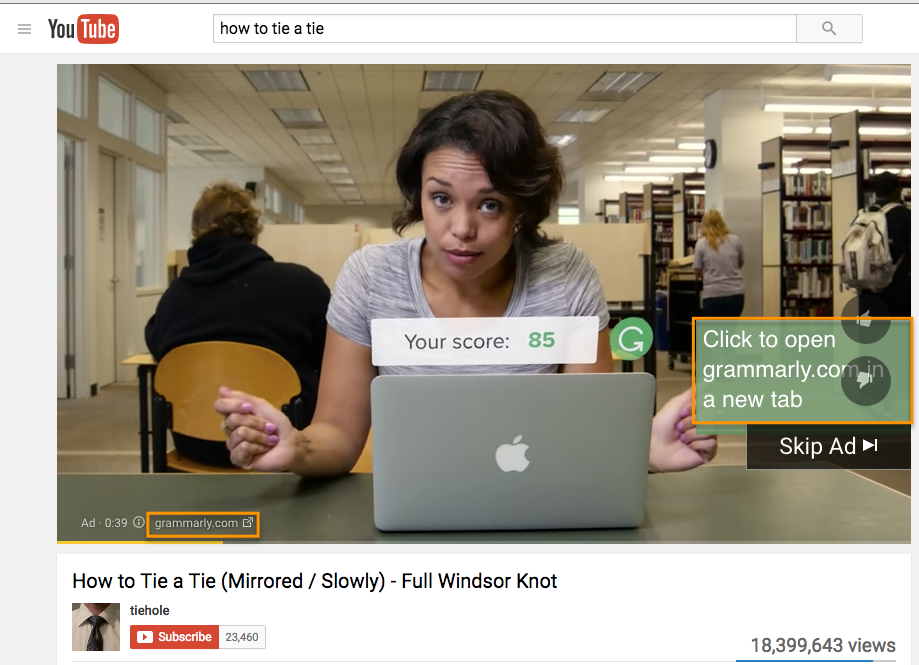
I can hear the Yelp alarm clocks going. Google was like, “We want to get you off somewhere into the web, preferably a place that paid us for advertising.” YouTube was like, “No, we want people to linger around.” The classic example they threw around a lot was the bow tie video. Is it better to have a 30-second clip of, “how to tie a bow tie quickly,” or a 10-minute video, where someone is actually going to watch the entire video to understand how to tie a bow tie? Clearly we want people watching for 10 minutes.
It had an immediate impact. One of the biggest YouTube channels at the time was the eHow videos, a series of how to do everything. This may be debatable, but the quality of those videos wasn’t great. I think watch time did surface higher quality. It also created gaming, beauty vlogging, alt-right podcasts… all these verticals that we now associate with YouTube came because they are low production cost and it is easy to get as many minutes onto the platform as possible.
I spent some time with some early YouTubers who were basically just making TikTok videos. They spent a lot of time making these short videos. MysteryGuitarMan was this big YouTube hit before the watch time era. He would make these minute-long mini films, but the algorithm switches and he is no longer a star in some ways. I don’t think it’s because Joe Penna became less creative as a person or that his videos were less enticing to viewers, I think it’s because of the big change YouTube made behind the scenes.
It’s funny now that they have YouTube Shorts. In many ways they are right back to where they started.
Yes. They said the first YouTube video was a short. It was like, “Guys, the first four years of YouTube was a short.” Yes, one of the many delightful ironies of the company.
Stepping back from YouTube and into Google generally, it strikes me that Google’s effect on monetization is that it becomes harder to get some information, because Google demands padding as a sign of quality. If you search for a recipe, in order to get ranked, they need long stories before the recipes. Google’s monetization engine has demanded some amount of interference between you and the thing that you are trying to get to. If you are looking for how to tie a bow tie, YouTube’s monetization engine has demanded that video be 10 minutes long with a mid-roll ad in it, versus just how to tie a bow tie. When you back out even farther, it’s like, “Oh, all of this is a game.” YouTube makes a game that spits out money, and they are just constantly rewriting the rules of this game. The rules get broken and they have to scramble to write new rules. Do you think YouTube, as an entity, understands that it is doing this? It is fundamentally unpredictable what billions of content creators will do. Are they just kind of squeezing the balloon on what bad things will happen today?
Was it last year that they made that really distasteful tweet making fun of creators for posting 10-minute videos? Do you remember this one? I think they deleted it.
YouTube crisis number 5,007.
Whoever made the decision, I’m sure someone could report that out.
To go back to the watch time transition, I think the important thing to remember back then was that there really wasn’t a creator economy. There were a few partner managers here and there, but YouTube didn’t even think the creators were commercially viable.
Disaster struck for YouTube in the Trump era.
That was part of a structural problem. There really wasn’t an advocate for creators like we think of today, or people touching base with them in a really meaningful way. To add on to that, Hank Green started VidCon. That was a whole community. YouTube was sort of there, but it wasn’t present for a long time in these conversations. Once they started becoming present, all the disaster struck in the Trump era. I think their priority has been trying to put in guardrails since then.
Algorithmically, it’s like, “We want to get people the right things. We want to deliver the best videos to people. We don’t want them to click on clickbait.” Then it was like, “Oh, God, we don’t want all the downstream, unintended consequences of watch time. We don’t want to be accused of spreading hate speech and conspiracy theories.”
A lot of it is trying to control this very uncontrollable thing. One really interesting example in the book is there have been multiple times where LGBTQ creators get demonetized for discussing words like “sex,” “lesbian,” and “gay.” Even more awful were the anti-gay therapy ads that were running on their channels. People inside YouTube were like, “We do not want this. We did not intend to do this. We are trying to fix it as quickly as possible.”
Genuinely, that is why I think the book has these moments of dark comedy. There are people inside YouTube who are like, “No, this is not what we wanted at all,” but it’s complicated to snuff these things out so quickly. That first crisis where LGBTQ creators were being demonetized, YouTube employees were like, “We don’t want this. They work really hard.” They then figured out the problem and launched it. As they were doing that, there was a massive ads boycott about a totally different issue. So the YouTube employees working on this issue were like, “Oh, great. We are working on this little fire, and there is a gigantic firestorm happening behind us.”
That machine learning has come up several times in this conversation. There are no YouTube employees watching every video. There are computers that are scanning videos and trying to match patterns and make complicated decisions at scale. To YouTube’s credit, that has largely worked in the sense that YouTube exists and mostly careens from crisis to crisis with periods of relative quiet in between. No one has figured this out. YouTube is as close to figuring it out as it can.
On the flip side, I often joke that most people understand the copyright system on YouTube better than how their local government works, because they are just constantly exposed to it. You see it, you might not even know the speed limit two streets over from you, but some content creator has complained about content ID. It’s this thing that enables YouTube to exist. It’s a moat for YouTube in a massive way. What is your perception of that understanding of YouTube? At some level, are computers just doing whatever they want and people are going to scramble back in to try to guide the ship back on course?
That’s fair. I think they felt that most acutely during that big Elsagate moment. That was a really powerful example of a trend taking off on the platform and employees watching these videos like, “We don’t want this trend to take off on the platform, and yet.” They have had a much more hands-on approach recently, but back then there was a sentiment of, “Who are we to impose our viewing judgment on viewers?”
Guillaume Chaslot, a former YouTube engineer, has been one of their biggest critics on algorithmic transparency. When he initially brought his findings in 2016, he said, “Hey, the recommendation engine is recommending Alex Jones and all these sort of conspiratorial videos.” A former colleague of his was like, “People are clicking on it. What are we going to do?”
You have heard this argument from other companies too. I do think that YouTube, like Facebook, is aware that they are living in a relative bubble. I think that the Trump election and even the most recent election reinforced this idea that, “Oh wow, there are 70 million people that don’t necessarily think like us. They’re our users. We need to be more thoughtful, careful, and cautious about what decisions we are imposing there.”
After their big controversy, they went out and contracted thousands of moderators. In an ideal world — and they talk about this a lot — 98 percent of inappropriate or violative videos are flagged by machine systems and a human never has to see them again. Part of this is to avoid the Casey Newton stories about the real traumatic toll of content moderations. That is a job we want to shift to robots basically.
Content ID is shifted to robots and I think that works out pretty well. Aside from a few complaints a year, they are very happy with that tradeoff, with YouTubers complaining about copyright or content ID versus the extreme financial success and lack of lawsuits that content ID brings. It is still a Google company, and Google’s DNA is like, “Whenever we can do machine learning at scale, we are going to do it.”
Whenever the robots can do it, for Google. For me, it really comes down to Google being a company with pretty strongly expressed internal values. I think about this with all the social media platform companies. Inside the company, the employees are expected to live by the company’s values, which often include some amount of inclusion, diversity, tolerance. Like every company, they want to celebrate the wide variety of people that use the platform. They want to spotlight gay and lesbian creators, they want to spotlight people of color, they want to spotlight trans people, and then YouTube itself, the product, does not do that thing, in very real, tangible ways. That disconnect is real on every platform, but it seems very pronounced on YouTube.
YouTube’s premise is, “We don’t have the gatekeepers of Hollywood.” Some of the earliest creators that really broke through were people of colour doing really inventive and creative stuff. They said, “Hey, I don’t have a clear path to me in Hollywood or on TV, but I do on YouTube.” YouTube has that power and has profoundly changed the media landscape but they don’t trumpet that a lot, which makes me think that perhaps it’s not quite there in the data.
YouTube burnout has been a problem for a long time. Creators don’t have a long lifespan on this platform for a variety of reasons. I have no idea if this is true, but there are a lot of prominent women that have left YouTube. That is something that YouTube hasn’t really addressed that well.
I think there were times during the Trump era, when they were trying to – and forgive the term — lean in on this a bit, where YouTube was like, “Well, we are the only social network run by a woman. That’s a great opportunity for us.” I talk about the reasons why they were really timid making these steps around the issues of gender equality and racial justice. After George Floyd, they started a fund and made a big push for that like all companies did. These efforts are sort of short-lived because they are responsive to what they see as a news cycle issue, rather than larger OKRs at the company.
I want to end with a little bit of lightning round.
Please.
We live in a moment of increasing antitrust scrutiny of all these companies. Do you think YouTube would be better off if it got split up from Google?
I don’t think it’s going to happen so it’s all theoretical. That is a really interesting question though, because I think I can say yes and no. I would be curious to see what they do with more constraints, fewer resources like bandwidth and servers, and without Google’s advertising system. I’m a little bit willing to buy the argument, but if you want YouTube to do moderation at scale now, you need the resources of a company like Google.
We both know Kara Swisher. Her theory is that they would immediately launch a search engine.
I mean, they have. It’s the second biggest search engine in the world.
Right. That’s what I mean. They would just extend it to text and call it a day. YouTube has other products. They have YouTube TV, which is rapidly becoming one of the biggest cable providers on the internet. You mentioned several times now, YouTube was pointed at TV as the thing they wanted to kill. Now it is a huge provider of television and it’s competing with TikTok. So where is the lane now with YouTube? What are they going after, or are they just trying to eat it all?
They have had a problem with mission drift. The Originals program was a big focus for them. They were like, “Oh, we need to wait. We need to jump in and compete with Netflix and Amazon.” Then that died out. This year, they eventually killed it and are going in on Shorts. I think TikTok is actually posing a more significant threat to them. I do think that Shorts will be a long-term investment.
They talk a lot about commerce, but there is an uncanny valley there about how much you want to push that before it becomes unpleasant to viewers. They have Shorts, TV, and commerce. But they are also pushing podcasting and whatever they are going to do on YouTube Music. They see themselves as an underdog there also.
Last lightning round question. One of the themes in your book is that YouTube is a social network, but Google refuses to see it as one and act like it, which would lead to a variety of different decisions. There is a theory out there that even Zuckerberg has floated. Every generation grabs a social sharing dynamic and that’s it. The winner there is the winner. He bought Instagram because, “Photo sharing is going to capture a new demographic and we have to have it.” Obviously with Gen Z, that is TikTok. All the companies are trying to compete with TikTok. Is TikTok as much of a threat to YouTube as everyone seems to think it is? Is it the new social sharing dynamic that will take over, or is YouTube more durable than that?
If you look at the Tubefilter as a reliable source for most popular YouTube videos of the week, every single week, it is Cocomelon and kids’ shows. It is dominated by shows for toddlers or children, so I think the question is a bit different. Does that generation watch religiously, or are they going to jump to TikTok when they turn 12? Or when they are preteens?
Or something else.
Or something else, for sure. I feel like YouTube is sort of always there in the background. Not to discount the fact that TikTok is a real threat, but I feel like as far as business threats go right now, Apple and ad targeting has had more of a kneecapping effect for YouTube and Facebook than TikTok.
Actually, I don’t think we have talked about this at all. Do you think the Apple ad changes have really affected YouTube on mobile?
I think they have hit YouTube in a meaningful way. The FTC regulating YouTube on kids’ stuff has had a really pretty profound consequence. It made the kids’ environment on YouTube demonstrably better in quality.
I won’t let my kid use real YouTube, only YouTube Kids. There will be stuff that is not on YouTube Kids and she wants to use the regular YouTube app, and I’m like, “You’re not getting closer to that!”
Once she hits eight or nine is when it gets really weird. YouTube hasn’t solved tweens yet.
Mark, you have given us so much time. The book is great. Like I said, it’s my favorite of this genre in recent years. I encourage everyone to go buy it. It’s on sale when this podcast is coming out. Where can people get it?
People can get it anywhere they buy books.
Are you going to do a reading on YouTube?
Only if you’ll have me. I don’t think I would start a channel just to do that unless I’m desperate. That would be a good performance art piece though.
That’s pretty good. All right, Mark. Thank you so much for being on Decoder.
Thanks for having me.
Feature Image Credit: Will Joel / The Verge