Tag

YouTube

Browsing

Check these effective ways for successful YouTube Marketing!

Making a YouTube channel is a child’s play. Nowadays, almost every other person has a YouTube channel. However, using the correct tools and methodology to market the content is not everyone’s cup of tea. Thus, to buy YouTube views and buy YouTube subscribers, you must seriously consider to up your game in the YouTube marketing field.

Read on the five secrets about successful YouTube marketing that every YouTuber should have on their fingertips.

Advertisements

Advertising on YouTube is often ignored and not valued. However, that is one huge mistake you do not want to be making as a YouTuber. Advertising on YouTube can make you reach a greater number of views and gain more subscribers.

There are four types: in-stream, in-search, in-slate, in-display. With the help of these options, you can curate your content and put it on display regarding contextual keywords, demographics, video interests, etc. YouTube advertisements will help you determine where which type of content is fruitful. For instance, if your channel is about cooking, your videos that deal with rice and noodles will work better in the Asian subcontinent than in the Western countries. Thus, this is one way to market and promote your content to the right audience. Do keep in mind, that YouTube advertising works best when integrated with a strategic video. However, that is not necessarily important.

Social Media Promotion

To increase engagement on your YouTube channel and your views, sharing your YouTube content on other social media platforms is the best way to go! Creating a strong social media presence be it Twitter, Instagram or Facebook can go a long way to make your life as a content creator easy. Moreover, YouTube makes it all the easier to share videos on other social media sites. All you need to do is just click on the “share” icon underneath your video and choose your desired platform. You can also add your YouTube channel’s link or recent YouTube video’s link to your profile bio. This way you can attract potential subscribers from other platforms apart from YouTube.

However, when you promote your YouTube content on social media, make sure it is attractive and interesting. Do not just let people scroll past your content by simply announcing your new video. Make sure you promote it, by talking about it. You can even prepare small teasers to release on social media platforms to attract people to your YouTube videos.

Call-to-Action Overlay

Call-to-Action overlay works as a tool that helps you to brand your YouTube videos. The CTA overlay helps you to direct your crowd over what would interest them on your channel. For example, if you run a Fashion & Beauty channel and someone who is watching a makeup tutorial on your channel is a likely audience who would want to watch makeup product reviews instead of fashion trends. With the presence of a CTA button, you can put in a display URL in the video that will lead them to another video of their liking. Call-to-Action is the literal button that can help you tell your audience what to do next.

Therefore, it is important to include the CTA in every video. You can avail of this feature by clicking on the “info and settings” and the Call-To-Action overlay appears. CTAs have become the open secret of every successful YouTube channel. Using a CTA is just as important as asking people to subscribe to your channel by the end or beginning of every video. Hence, missing out on this feature is a big mistake.

Video title, description & thumbnail

The ABC of marketing your video successfully and organically on YouTube is to optimize your video title and description and create an alluring thumbnail. YouTube is a platform that has 50 videos on the same topic, so why should someone decide to watch your video over the others? This deciding factor hugely lies in what you write in your headline, how precisely you describe your video and how attractive is your thumbnail looks. Thus, it is crucial to construct all these based on the intent of the viewers.

The best way to do it is to use Google. Just type in the keywords that describe your video and look at the sponsored ads that appear. These videos are the ones that are the most popular and they are ones whose titles and descriptions will help you build a similar one for your video. Furthermore, for building quality thumbnail applications like Canva are the best pick. Make sure that your thumbnail correctly represents your video content.

Put yourself out there!

The prime way to attract people to your YouTube channel is to put yourself out there. People love watching videos with real faces in them compared to the ones that only use camera rolls and voice overs. Even when your content doesn’t need you specifically to introduce yourself to people, still take the first 10 seconds of your video and introduce yourself in person and ask people to subscribe to your channel. Additionally, you can also collaborate with YouTubers and feature them in your video and increase your views.

You need to build a community of engaged users and regularly put out your content. On top of that using these five brilliant ways of YouTube marketing can give your channel the boost it has been waiting for.

Sourced from INFLUENCIVE

Sourced from FINCYTE

In this article, we will discuss the best YouTube marketing strategies to make your channel go viral. Every YouTuber wants to improve their channel like more views, comments on your YouTube videos.

First thing, YouTube is the second-largest platform in the world. There are millions of channels that have been created on YouTube. It has more than 2 billion active users, and 50+ content creators are present on the YouTube channel.

In case you forget to follow any strategies, you have failed to improve YouTube marketing. In this article, we are going to learn some fantastic tips to help you.

Let us get started!

11 Best YouTube Marketing Hacks To Create Viral YouTube Channel

1. Build Amazing Content

Making content is a common thing for all YouTuber. But what is different between you & your niche. Before creating a video, you should analyse your competitor’s content like what they do, what keywords they used, length of the content and audience support, etc. Now, you have a clear idea about how to make video content.

Also, make sure that your content will be loved and easily grasp the audience. This is the ultimate strategy to improve your content.

YouTube provides several kinds of video content that can help you get more views are-

  • Vlog
  • Interviews
  • Product Review
  • Q & A Videos
  • How to videos etc.

2. Add a Watermark

If you want to get more subscribers for your channel and get the views, you have to use the best method – watermark.

Now, everyone thinks about what a watermark is?

Watermark is just an image that would display in your YouTube videos. So many brands use their logos in the place of the watermark. Whenever it’s displayed on the screen, the non- subscriber audience turns into subscribing to your videos.

Once you can follow the strategies, the next metric should be effective in getting more YouTube comments on YouTube.

3. Optimizing the YouTube Channel

Many YouTube stars thought that just optimizing the videos is enough to get popular. But, the actual answer is no.

You should optimize your entire channel with the help of keywords. Using keywords is the best quality method to improve your ranking and get more and more YouTube views too.

i. Video Title

The title should be creative, informative, and descriptive. The title characters are less than 65 characters and make strong content.

Placing keywords at the beginning of the title helps to increase the visibility and ranking of your videos.

ii. Video Description

This section helps to increase brand awareness among peoples. It should be 5000 characters. Add 2-3 keywords in the section, which helps to improve visibility.

4. Compelling Thumbnail Images

Thumbnail is the heart of the video content. Because most content will be popular based on the thumbnail. YouTube thumbnail is the first impression to get the audience into your videos.

You are creating a thumbnail to use high-quality images. Also, you need to ensure that you use an appealing image to grab the audience’s attention.

There are several rules to making a thumbnail:

  • It should less than 2 MB
  • The images format are .JPG, .PNG, .JPEG
  • Thumbnail ratio – 16:9
  • You can change the background, font, border, graphics, etc.

5. Collaborate with YouTube Influencers

Having a YouTuber and working with them is the most successful way to get more subscribers and become popular. Because those influencers already have tons of followers for their channel.

Once you have decided to work with any influencers, you should choose the perfect influencers who will improve the subscribers count on your videos and then create some amazing collaborations with them.

One or more than video, you both can work. Also, this is a way to impress the audience. After, the audience can easily find your face and get your idea in your video content. In this way, you could connect the audience and also get some fantastic love.

6. Build a Community

Many people think that YouTube is just a video searching and sharing platform. No, it’s completely wrong.

YouTube has a vast community basis like viewers, subscribers, and users, etc. Hence, you want to make more views and likes for your videos; you need to make a community for yourself.

In the community, you can post your engaging content that can be loved by the audience. Make a community for your business, and spread your content.

7. Increase the Watch Time

YouTube is one of the incoming platforms for YouTube influencers. It is the specific method of making which the videos would be present anywhere.

Many viewers come into your video present on the homepage, and most audiences enter your video based on the subscriptions or the suggested videos.

You can get more views when your video is presented on the homepage of YouTube. Increasing the watch time for your videos, you can earn money from YouTube.

Here are some tips to increase watch time on your YouTube channel:

  • You should be using cards throughout your videos
  • Use long-tail YouTube keywords in your content
  • Always focus on audience retention
  • Titles and thumbnails should be appropriately reflected in your content

8. Promote Your videos on Other Social Media

People spend their time on YouTube, and also they are spending most of the social media channels as well.

Sharing your videos are the top most strategies. Whether your subscribers or followers forget to see your video on YouTube, there are chances to see your video clips on other media channels.

Hence, after posting your video on YouTube, you will share the link on social media like Facebook, Instagram, Twitter, etc. Better, you will create an individual account for your videos and include links or clips on the account. With this, you can get more viewers to your channel. Don’t forget to add the CTA options.

9. Create Playlists

You noticed many top brands that perform well on YouTube because they have some playlists in their channels.

Now, your question is, really are playlists performing well?

The honest is that the playlist will ensure that you can get more attention from the audience in the first place, which specifically takes a lot of effort. Categorizing your videos are most convenient whenever your audience searches for the video they can easily find.

This job is a little bit tough because you can first find the same categorized video and make it into the playlist.

10. Use Cards and End Screens

Use cards and end screens are essential tools that you can use for business promotion videos on your YouTube channel.

First, you should verify the YouTube account to have these same features.

The second thing is that you can use the fantastic features on your YouTube videos to ensure that the audience likes it.

Include CTAs options that you can use for the YouTube video and get the best results.

11. Transcribe the Videos

It is all good to make a great video, but sometimes that the audience needs a proper transcription.

The worldwide audience can see your video due to some language constraints. There are closed captions provided by YouTube, or else you can add it as subtitles when making the video.

These strategies will help you get more views because most audiences who don’t speak your language can understand your content.

Sourced from FINCYTE

By Adam Levy

Everybody’s doing more online shopping these days, and that hasn’t gone unnoticed by tech leaders. Facebook (NASDAQ:FB) and Alphabet (NASDAQ:GOOG) (NASDAQ:GOOGL) have expanded their shopping features over the last few months to capitalize on the trend.

After Facebook’s early successes with social commerce, Google sees an opportunity to create similar features in YouTube. The push to get YouTube’s two billion monthly active users to shop directly from the video sharing app could present a significant change to its business, accelerating revenue growth.

Shopping tags on YouTube

Instagram introduced shopping tags way back in 2016. The feature gives creators a way to link to pages where their audience can learn more about products featured in their photos and videos. It’s since become a key piece of the FAANG stock‘s commerce strategy.

YouTube is testing a similar feature, asking some creators to use its software to tag and track products featured in their videos, according to a report from Bloomberg. YouTube can rely on the backbone established by its parent company though Google Shopping in order to funnel shoppers to product pages for checkout. That should enable the company to move quickly in building out a broad set of products creators can tag and monetize, catching up with Facebook.

Facebook has accelerated shopping efforts on Instagram as well as its flagship app. The introduction of Facebook Shops earlier this year opened the door for the company to take greater control over commerce on the platform, taking the user from discovery to purchase without leaving the app.

Likewise, Google started offering merchants free listings on Google Shopping and removed the fees for its “Buy on Google” checkout service. The move was designed to increase listings on the platform. YouTube’s shopping tags will integrate with those listings.

A shift in business

Shopping tags may present a new way for YouTube video creators to monetize their content. They could take a commission or sell their own goods by utilizing the feature. YouTube has historically drawn creators to the platform through the promise of ad revenue sharing.

Other social media platforms don’t offer much in the way of revenue sharing. Facebook is experimenting with the business model in IGTV, its YouTube competitor. TikTok offers a creator fund for top content producers. The ability to sell items on those platforms — a reason Walmart wants a piece of TikTok — offers one of the best paths forward for them to attract talent and monetize content.

But the opportunity appears big enough that YouTube thinks it can be a differentiator in terms of content and monetization. And broad adoption of forthcoming shopping features certainly could have a big impact on the business.

Currently, most YouTube ads are aimed at the top of the sales funnel — they’re all about introducing products and establishing brands. But facilitating the online shopping process all the way to the checkout page can be a lot more valuable for advertisers, who will likely pay more per ad impression if it leads to higher purchase rates, and those purchases are more easily linked to the YouTube ads.

Ultimately, shifting more ads to higher value placements lower in the sales funnel could accelerate revenue growth for YouTube. The service’s sales have grown in the mid-30% range over the last couple years before running into secular headwinds this year.

If it had more e-commerce focused ads, perhaps YouTube’s ad revenue would’ve increased more than the 5.8% it grew last quarter. Facebook’s revenue, for example, increased 10.2% last quarter. Management cited strength in e-commerce as what propped up its ad revenue while most advertisers pulled back on spending across all platforms.

It’s a big opportunity for Google to reinvigorate one of the biggest factors driving its revenue growth over the last few years. And with Facebook and other social media companies also pursuing this opportunity, it has a greater chance of working as people become more accustomed to social commerce.

Feature Image Credit: GETTY IMAGES.

By Adam Levy

Sourced from The Motley Fool

By

Popular creators on YouTube and Instagram can make money promoting music, but if they promote too many duds, their popularity can take a hit.

Back in 2018, it was possible to break a single via an Instagram meme. It happened with Rich the Kid’s “New Freezer:” Omid Noori, co-founder of the digital marketing and management company ATG, stumbled on a meme featuring several kids whipsawing their heads to the track; he then paid a popular hip-hop channel on Instagram to re-post it. The meme morphed into the “New Freezer challenge;” the rapper, his label Interscope, and ATG spread it across the digital universe; and the single eventually earned a double-platinum certification.

But as the music industry became increasingly interested in using memes to raise awareness for songs, naturally their impact diminished. “Memes were a novelty, but then it became, if you have enough money, ‘what’s the song — I’ll find a clip that kind of matches it and run it,’” Noori explains. “Now people don’t discover music as much that way, because it’s such a common thing when songs get dubbed over memes.”

This illustrates one of the central challenges of digital marketing and promotion in music. As soon the music industry recognizes that one technique on one social media platform is particularly effective for bringing attention to a track, record companies try to turn it into a standard marketing strategy, which backfires by making the tactic less potent. Memes and dance challenges initially became popular because they seemed fun and spontaneous; when they are rote and forced, advertisements rather than ways to engage with others online, their energy quickly starts to dissipate.

Several marketers say they’ve noticed significant drops in influencer engagement across multiple social media platforms lately, which they believe is a cost of trying to force-feed songs without regard for listeners’ preferences. “I’ve seen some YouTube influencers’ engagement fall 30 or 40 percent because they’re just saying yes to [every paid opportunity to place a song in their channel],” says Dillon Druz, who manages the rapper Bankrol Hayden and runs marketing campaigns for multiple labels.

“Every day there are hundreds of songs that don’t make sense for TikTok” — the app tends to reward songs that elicit simple, replicable movements — “and people are like, ‘well this other one went viral on there, so let’s put $20,000 behind it,’” Druz continues. “It all comes back to not having a proper influencer marketing strategy and spending money in the wrong places.”

“I see a lot of influencers only posting promos” — paid posts — “and their engagement is lowering,” adds Leilani, who has been on TikTok since it was Musical.ly and has more than seven million followers and half a billion likes on the app. As a result, “I try to keep the promos low.”

Digital marketing is a key component of the modern music industry. In the old days, an artist could reach potential fans in just a few ways: radio, print, television, physical advertising like billboards and flyers, and live shows. Those are still around, but their relevance is declining; now, attention has splintered into a myriad of digital pockets. An artist can perk ears through subcultures on TikTok, gaming channels on YouTube, and filters on Snapchat, not to mention Instagram, Fortnite, Facebook, Triller, Twitter, Dubsmash, directly through Spotify, and elsewhere.

“You can climb in a hole where you keep posting bad content and you can’t really get out of it.”

Popular users emerge on each of these platforms and gain followers, often by providing a unique personal perspective — a special brand of humor or a knack for finding hits early. Artists and labels then pay these influencers to disseminate music to their followers. (The pandemic caused labels to shift even more money to their digital efforts.) On average, marketers say Instagram influencers are more expensive than TikTok influencers, but top TikTok creators can still charge $25,000 or more for a post. Once labels and artists start paying for content, though, this can sometimes weaken the personal connection between an influencer and his or her followers by transforming a quirky individual into a walking billboard.

That’s not to say this approach to marketing doesn’t work — it’s easy to find the success stories, from labels fanning the flames of a challenge that materialized on TikTok to artists coordinating flashy activations on Fortnite. While it’s much harder to find stories about all the songs that don’t connect despite having plenty of marketing money behind them, in truth, the tracks that flop outnumber the ones that connect by a wide margin. Marketers are engaged in a complicated dance, trying to deliver effective ads and promotions while at the same time convincing their audience that they are not being spammed.


Marketers say that dedicated followers are often savvy enough to discern between posts that an influencer makes because they love a song and posts that are just about padding the bottom line. “It’s very obvious when people’s pages just become a paid platform, whereas before it was actually uploading clips in tune with them,” Druz says. “Their followers know it’s not authentic, and that’s why engagement is dropping.”

It’s possible that influencers are less susceptible to plummeting engagement on TikTok because of the sheer volume of posts common on the app — creators will often put up five or six clips a day on TikTok, far more than they would post on Instagram or YouTube. When an influencer is spewing out so many clips, each one has less weight.

“We have to post normally before we take on any more [paid] campaigns.”

Still, Leilani knows that her followers will not respond to some types of paid content. “Something they don’t like is if I do songs with dances that aren’t already popular,” she says. “They would always get the lowest engagement” in terms of views and likes, so she steers clear.

Since influencers post less frequently on Instagram and YouTube, the repercussions for a series of misfires on those platforms can be more serious. “You can climb in a hole where you keep posting bad content and you can’t really get out of it,” Druz says. “People care what goes on their Instagram and YouTube — they are more professional platforms” relative to TikTok, which prizes goofy spontaneity.

ATG’s Noori works with a network of influencers to help labels market songs, and he says that they sometimes decline to do promotions due to fears about alienating their audience. “A lot of influencers at one point in the last two months were like, ‘we can’t do as many [paid] campaigns this week, we need to get our engagement back,’” he notes. “People would say, ‘we have to post normally before we take on any more [paid] campaigns.’”

That’s part of the reason why Druz is changing the way he promotes music. Now “I’m very cautious,” he says. “I’m going to creators and saying, ‘is this a good fit for your channel?’ I have to make sure everyone actually believes in the song.”

Feature Image Credit: Photos in illustration by Adobe Stock/Kurkalukas, Adobe Stock/Endstern

By

Sourced from RollingStone

By Abner Li

YouTube Music has seen a flurry of changes in recent weeks ahead of Play Music shutting down by year’s end. A smaller change sees YouTube Music for Android and iOS revamp its branding.

Original 8/28: YouTube Music has always maintained two logos. There is the homescreen app icon where the white play symbol is at the center of a bright red record/CD, while at other times the main YouTube logo is used followed by the word “Music” in the service’s custom font.

That second brand has long been at the top-left corner of YouTube Music for Android and iOS. Version 3.81 changes it to the first instance on both mobile platforms, though the web client has yet to be updated. That said, the Progress Web App (PWA) has always used the round variant.

Meanwhile, the other place users encounter the dueling logos is on playlist cover art. There is seemingly no logic in whether the circular icon or broader symbol is used in the top-left corner of official playlists. For example, “Your Mix” and “New Release Mix” use the latter, while “Released” takes advantage of the round logo. All three have been recently updated/revamped by Google.

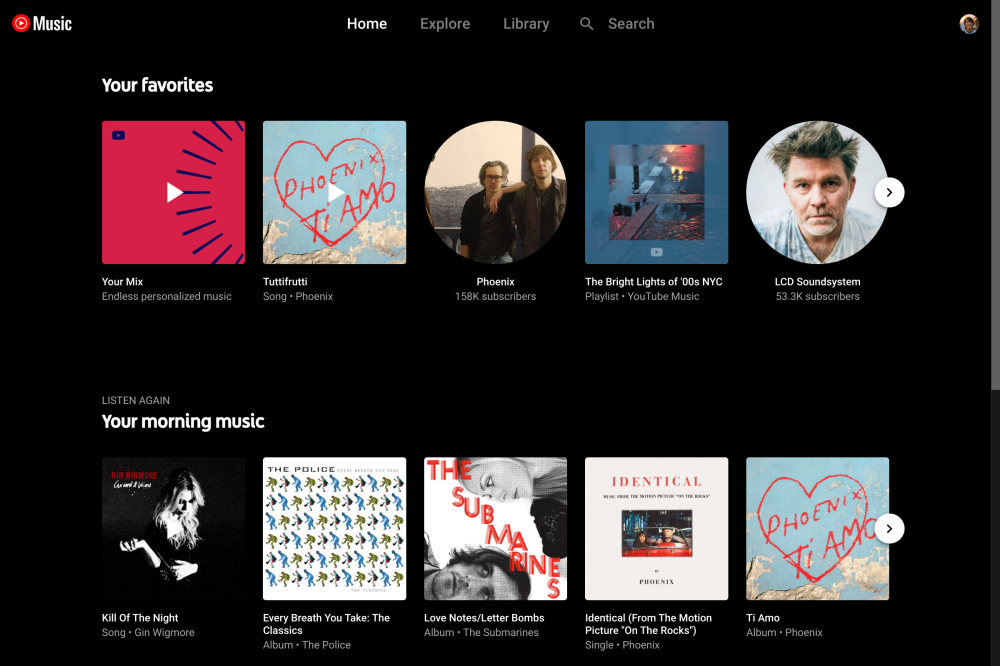
Update 9/2: A week later, music.youtube.com has followed in implementing this change. On the web, the logo is quite small.

More about YouTube Music:

By Abner Li

Sourced from 9TO5 Google

By

YouTube’s non-advertising subscription revenue will boom and emerge as a bigger driver of Google stock valuation, says one analyst.

Bank of America analyst Justin Post says subscription revenue will become a bigger part of the unit of Google-parent Alphabet (GOOGL).

“Based on an increasing, but still small, share of paid TV and music subscribers plus price increases, we estimate YouTube non-advertising subscription revenue can grow at a 28% five-year compound annual rate from $5.2 billion in 2020 to $17.6 billion by 2025,” Post said in a report to clients.

He added that for YouTube, “A key question is profitability.”

Alphabet disclosed more YouTube subscriber metrics when it reported earnings in April. Google reports second-quarter earnings on July 30.

In the March quarter, YouTube’s overall revenue rose 23% to $4.4 billion. Most of that came from advertising.

Google Stock: YouTube TV Fee Increased

Google stock gained 3.1% to close at 1,563.84 on the stock market today.

YouTube had more than 20 million music and premium paid subscribers and 2 million TV paid subscribers at the end of 2019, Google said in April.

“The recent YouTube TV fee increase to $65 per month has raised optimism that Google is looking to drive positive margins,” Post added. He noted that “Spotify (SPOT) had 130 million subscribers, 26% gross margins, and was roughly break-even in the first quarter of 2020.”

Google stock is not in a buy zone. It trades 10% above a cup-with-handle entry point of 1,415.63.

By

Follow Reinhardt Krause on Twitter @reinhardtk_tech for updates on 5G wireless, artificial intelligence, cybersecurity and cloud computing.

Sourced from Investor’s Business Daily

By

Looking for a guide to grow your business with IGTV marketing?

Instagram TV (IGTV) can be used by brands to boost their businesses even during the outbreak of COVID-19.

Corporate sales have plunged in the world but there are still chances for your brand to survive. This is easier by using social networks’ marketing features just like IGTV.

Video-sharing platforms are on the rise and almost all social platforms have the ability to share your videos as posts and stories.

In this post, I’m going to introduce IGTV’s usefulness for brands and the ways you can use it to grow your business.

This is particularly useful for the current financial recession we’re suffering in the wake of the coronavirus.

First, it’s good to look at top social media apps/sites/features related to videos to know how different IGTV is. Here are several important video-sharing features on different social networks:

YouTube: The #1 video-sharing platform

YouTube is certainly the top social platform for sharing videos. With up to a whopping 2 billion monthly users, YouTube can provide the greatest audience reach for your video content.

Almost all queries in Google will have several results from YouTube pages. This has made YouTube a great opportunity for video marketing.

This is why many brands try to share their branded videos on YouTube. Learning and entertaining can also be easily provided using both the site and app of YouTube

YouTube video specs

  • Recommended dimensions: 426 x 240 (240p), 640 x 360 (360p), 854 x 480 (480p), 1280 x 720 (720p), 1920 x 1080 (1080p), 2560 x 1440 (1440p) and 3840 x 2160 (2160p)
  • Video length: up to 15 minutes
  • Aspect ratio: 16:9 (auto adds pillar boxing if 4:3)

It should be noted that you can request for longer video length limitation and wait for YouTube confirmation.

YouTube the number one streaming platform IGTV

TikTok: Fastest-growing video-sharing app

TikTok is a Chinese video-sharing service that has recently hit one of the highest installation rates among social networks.

TikTok has almost 800 million active users and a great majority of them are Gen Z. So it’s the best opportunity for drawing the attention of teenagers.

TikTok video specs

  • File size: up to 287.6MB for iOS users and 72MB for Android users
  • Video length: up to 15 seconds
  • Video dimensions: 1080 x 1920
  • Recommended aspect ratios: 9:16, 1:1, or 16:9

TikTok’s video-sharing feature is now accessible only using smartphones, although its web page will show some popular videos.

TikTok the fastest-growing video-sharing app IGTV

Check out this post if you’re looking for the best TikTok tools.

Facebook: The #1 social media platform

Facebook is undoubtedly the largest social media service with around 2.5 billion users from across the world.

There are different ways of sharing videos on Facebook:

  • Regular videos
  • 360 video
  • In-stream video ads
  • Carousel video ads
  • Cover video

So Facebook has provided marketers with a variety of choices. This is why around two-thirds of US businesses use Facebook’s video advertisements.

Facebook video specs

  • Aspect ratio: 9:16 or 16:9
  • File size: up to 4GB
  • Video length: up to 240 Minutes

Facebook has a whopping 1.6 billion visits each day which makes it unrivaled among all social networks.

Instagram Stories and posts: Best for sharing your moment

Before IGTV, Instagram launched other video-sharing features. Pictures or videos of your moments can easily be shared using regular posts on Instagram.

Instagram regular posts video specs

  • File size: up to 15MB
  • Video length: up to 60 seconds
  • Max video width is 1080 pixels wide

Although this is very short, you can upload several video clips and pictures in a single post.

Instagram Stories and posts best for sharing your moment IGTV

Instagram Stories is also a fantastic feature by which you can share your videos.

Instagram Stories video specs

  • Instagram story dimensions: 1080px by 1920px.
  • Aspect ratio: 9:16
  • Video length: up to 15 seconds
  • File size: up to 4GB

In Stories, you can upload several videos to be displayed as a slide show. Stories will automatically disappear after 24 hours.

quaranti[m]e instgram stories IGTV

Instagram Stories has another type of video feature that is very popular among social users. Live videos are the most authentic means of interacting with users and showing them behind the scenes.

The length of Live videos on Instagram Stories can be up to 1 hour. This feature can be accessed using the Instagram app just by clicking on Your Story.

Why IGTV marketing?

Now that we’ve introduced several famous video sharing features you might ask what differences exist between IGTV and these apps.

Adding new IGTV video

IGTV is actually a separate video sharing application which its main capabilities are accessible using Instagram apps and the web page.

IGTV was first released on the 20th of June 2018 and is now so popular that it is being used in 30 languages.

IGTV video specs

  • Video length (common users): 15 seconds to 10 minutes
  • Video length (larger accounts and verified users): 15 seconds to 60 minutes
  • File size (10-minute videos or less): 650MB
  • File size (60-minute videos): 3.6GB
  • Size of cover photo: 420px by 654px (11.55)
  • File type: .MP4
  • Video size: 9:16
  • Video thumbnail/cover image: .JPG
  • Minimum frame rate: 30 FPS
  • Minimum resolution: 720 pixels

Instagram has also provided some updates on IGTV since its initial release.

For example, from 2019, you can create one-minute previews of your videos to be shown on your profile and your followers’ feed as well.

This will greatly help you to be discovered and encourage your audience to “watch the full video on IGTV”.

Also, one of the best tools Instagram has offered is the “IGTV series feature”. Using this feature you can arrange your content like a collection to be released on a regular basis.

Considering all these features, IGTV marketing is a must in the world of digital and it would be hard to find a good alternative application for it.

IGTV in the world of digital marketing

Tips to use IGTV marketing

Video marketing is now a very competitive means of brand awareness and, therefore, you need to have a plan for it. IGTV marketing is a great option for you to generate more leads and convert them into sales.

Here are several tips which can help you grow your business using IGTV:

1. Define a video style for your brand

A lot of accounts on Instagram are constantly broadcasting content and it might be difficult to get ahead of this competition.

A unique style in content generation can significantly help you make your IGTV videos stand out.

Your tone of voice, background colors, video format, cover photos, and many other things give your IGTV videos a style. If you want to make your audience remember your brand, you need to think of a creative and unique style.

For example, Nivea has made a beautiful theme on its IGTV page just using a minimalistic background and a logo:

2. Republish your live videos using IGTV

Instagram live videos can’t be always so well-organized that your message is conveyed completely and accurately.

Also, not all your audience can watch it online so you need to republish your content to reach maximum views.

IGTV is a good choice for modifying and curating your live videos. Try to record your live videos, edit them, and share them using IGTV to repeat your message.

3. Make announcements by Instagram Stories

You can make an announcement for your IGTV videos by Instagram Stories in order to get maximum exposure.

Actually, many people won’t watch full-time videos because they’re always in a hurry. This is why you need to encourage them somehow.

Try to outline your IGTV videos’ content and share it in Stories to draw the attention of your audience.

You need to create a sense of urgency so that they feel they’ll lose an important thing if they don’t watch your full-time videos.

IGTV tip - make announcements by Instagram Stories

4. Create specific IGTV Series

One of the most important factors in digital marketing is consistency. A regular social presence is a must that will make your audience remember your brand.

This is why many brands use social media schedulers to have an automatic posting procedure. Instagram IGTV videos can also be scheduled using a Series feature.

Fortunately, you can create an IGTV Series in three different ways:

  • Instagram app
  • IGTV app
  • Web page

If you haven’t already created an IGTV Series, you can “Create Your First Series” in all these three ways.

Then, select and add your videos to a specific IGTV Series. Try to define a focused and goal-oriented series to be able to manage them well.

You can also “Post a preview” of your videos to your Instagram feed to promote your IGTV content using 60-second previews.

5. Include influencers in your IGTV plans

Nowadays, one of the most effective techniques for growing businesses on social media is influencer marketing.

Many brands try to promote their social content with the help of influencers. Your IGTV videos can also get maximum views if you collaborate with influencers.

First and foremost, you have to think of finding niche influencers and then choose those who are better content creators. This can bring authenticity and help you appear like a thought leader.

6. Take advantage of user-generated videos

Despite many beneficial aspects of video content, they’re very expensive. You need to set aside a considerable marketing budget along with a lot of time and effort.

One way of reducing expenses is by using your followers’ content. Sharing user-generated content is a good way to have authenticity in content marketing.

You can ask your followers to create videos based on your style and contribute to your page. You can then edit these videos and share them as a separate IGTV Series.

You will get higher rates of engagement and reduce your costs by sharing user-generated videos on IGTV.

7. Cross-promote your IGTV videos on other networks

Apart from promoting IGTV videos using previews and Instagram Stories, you can use cross-promotion with other social services.

First of all, you can “Make Visible on Facebook” to cross-promote your Instagram content, especially IGTV videos on Facebook.

If you want to post your IGTV videos via Facebook you need to go to “Where Your Video Will Appear” and choose IGTV and also your Facebook Page below before clicking on Post.

IGTV tip - cross-promote your IGTV videos on other networks

It’s good to have callouts to your IGTV channel from:

  • Twitter
  • Email newsletters
  • Facebook Page

You can also use “Copy Link” in your IGTV video menu and use the URL anywhere to share the video outside of Instagram.

Last but not least try not to republish YouTube videos on IGTV without editing the format of the videos, because they don’t look quite right!

Final word

I have explained the main aspects of IGTV marketing for your business. Of course, you should try to learn your competitors’ tricks and techniques too. Look out for the types of hashtags, style, video lengths, scheduling, etc. This will help you reach your audience more effectively.

By

Guest author: Tom Siani is an online marketing expert with more than 4 years of experience in the digital industry. He is also collaborating with some well-known brands in order to generate traffic, create sales funnels, and increase online sales. He has written a considerable number of articles about social media marketing, brand marketing, blogging, search visibility, etc.

Sourced from jeffbullas.com

By Karissa Bell.

We finally know how much Google is making from ads on YouTube.

Google took in more than $15 billion from YouTube ads in 2019, the company revealed. That number, nearly 10 percent of Alphabet’s total revenue, doesn’t include other sources of revenue from the video platform, including subscriptions.

Google disclosed the numbers, along with revenue for its growing cloud business, for the first time ahead of Alphabet’s fourth-quarter earnings call.

“I’m really pleased with our continued progress in Search and in building two of our newer growth areas — YouTube, already at $15 billion in annual ad revenue, and Cloud, which is now on a $10 billion revenue run rate,” CEO Sundar Pichai said in a statement.

The new disclosure, which included revenue totals going back to 2017, highlights just how quickly YouTube’s ad business has grown, with ad revenue nearly doubling since 2017 when the video platform took in $8.1 billion. Ad revenue in 2018 was $11.1 billion.

Up until now, Google has declined to break out YouTube’s revenue, which has been a source of much speculation.

Pichai also shed light on how YouTube’s subscription business is doing. The company now has more than 20 million subscribers to YouTube Premium and YouTube Music, and 2 million subscribers to YouTube TV. Overall, YouTube’s non-advertising revenue, which includes subscriptions and commerce, amounts to $3 billion.

The new stats also come as Google is facing increasing scrutiny over its ability to police its video platform for disinformation and other unsavory content. And Google, like Facebook, is facing an antitrust investigation.

By Karissa Bell

Sourced from Mashable India

By Tim Peterson

YouTube has largely reversed the changes to its verification program that were announced Sept. 19. However, the initial announcement to revoke some creators’ verified status served as a reminder that no other platform has yet emerged as a viable viewership- and revenue-generating alternative to Google’s video platform in the minds of creators. But YouTube stars continue to look for low-stakes opportunities to syndicate their YouTube videos to other platforms in hopes that they could become competition for YouTube.

Digital media company Jellysmack has begun working with YouTube creators to edit their YouTube videos for Facebook as well as Snapchat and establish the platforms as relatively passive income streams. Over the past two to three years, the publisher had developed its own tools to optimize the videos that Jellysmack posts to its own Facebook pages, such as Beauty Studio, which generated 269 million views on Facebook in August 2019, according to data from Tubular Labs. In the first quarter of 2019, it created a program to open up these tools to YouTube stars, who may be interested in expanding to Facebook in order to diversify their businesses but struggle to find the time to do so while continuing to manage their YouTube channels; in August Jellysmack began to add Snapchat to the program’s mix. In addition to assisting creators with tailoring their YouTube videos to run on the creator’s own Facebook page, Jellysmack helps them to find an audience on the social network by investing its own money to promote creators’ videos as ads on Facebook.

Jellysmack and the creators share the revenue from the ads that Facebook sells against creators’ videos, according to Jellysmack CEO Michael Philippe; Jellysmack does not currently have the ability to sell ads against its videos on Facebook. Philippe declined to say how specifically the revenue is split between Jellysmack and creators but said that some creators in the program are making “six figures per month on Facebook.” Additionally, the processing of creators’ videos will help Jellysmack’s optimization tools understand different types of content than the types of videos it posts to its own Facebook pages, and Philippe hopes the program will help it to establish relationships with creators who may eventually star in Jellysmack’s original shows.

For YouTube stars and their talent managers, Jellysmack’s program is appealing for obvious reasons. “It’s found money,” said Adam Wescott, partner at talent management firm Select Media Management. “But it’s still a bit unproven. When it comes to Facebook, the CPMs don’t match YouTube.”

While Facebook has cultivated a crop of homegrown creators, the social network has struggled to win over YouTube stars for two main reasons. YouTube-centric creators are unsure whether Facebook can consistently deliver a large, intentional audience a la YouTube, as opposed to passive views from people scrolling through their news feeds. And even if the audience is there on Facebook, the money may not be, at least not enough to justify the effort required to either produce original videos for Facebook or edit their YouTube videos for the social network. Conceivably, creators could cross-post identical versions of their YouTube videos to Facebook, which is nice in theory but unproven in practice. “While it seems easy, there’s not really that payoff when you talk about monetization,” said Christina Jones, vp of talent at talent management firm Digital Brand Architects.

YouTube-centric creators like Lizzy Capri face a dilemma when looking to expand to Facebook. Since 2017, Capri, who is not involved in Jellysmack’s program, has worked to develop and hone a content strategy that has amassed her 3.9 million subscribers on YouTube. She would like to replicate that success on Facebook but recognizes that that would require replicating the time and effort she had to put into her YouTube channel because Facebook is “a whole different beast to learn,” she said. For example, she would have to edit her YouTube videos, which are usually more than 10 minutes long, for Facebook, where three- to five-minute videos perform best, she said. Additionally, she would have to determine how the profile of her audience on Facebook might compare to her YouTube audience and take that into account when tailoring videos for the platform. Because she knows the effort required to establish a successful channel on Facebook, she also knows that she doesn’t have “the bandwidth to do that right now,” she said.

Caylus Cunninghman, a creator who goes by the name “Infinite,” could probably make the time to grow his channel on Facebook, he said. But he doesn’t have to. As one of the creators in Jellysmack’s program, Cunningham has been able to “just leave it in [Jellysmack’s] hands because, at the end of the day, they know how to run a Facebook page, and I don’t really. I know YouTube,” he said.

Cunnigham had tried to get to know Facebook. In early 2018, he began uploading some gaming-related videos to Facebook to try out the platform but only attracted roughly 20,000 followers. That pales in comparison to the more than 12 million subscribers he has on accrued on YouTube since he started taking YouTube seriously in 2016. Then around April of this year, Cunningham began working with Jellysmack to edit his YouTube videos for a new Facebook page that has amassed 2 million followers to date.

Cunningham can customize whatever edits that Jellysmack makes to his videos, including their titles and thumbnail images. But he usually just leaves whatever optimizations are made by Jellysmack’s tools. Typically Jellysmack removes the intro and outro from his YouTube videos and adjusts the aspect ratio of his videos — which are produced horizontally for YouTube — so they can be more easily viewed when people are holding their phone’s vertically, he said.

While Cunningham has established a large following on Facebook, YouTube continues to generate more views and revenue. He estimated that his YouTube videos typically receive two to three times as many views and ad dollars as his Facebook videos. However, considering that Jellysmack is handling the heavy lifting in adapting his YouTube videos for Facebook, whatever views and revenue he can reap from Facebook is pretty much all profit. While Jellysmack has effectively made Facebook a passive income stream for Cunningham, the platform is beginning to take a more active role in his content strategy. “Sometimes when I’m making my YouTube videos, I do think of Facebook now,” said Cunningham.

By Tim Peterson

Sourced from DIGIDAY

By John Boitnott

You need to know your audience, formats, and competition to really get people to visit your site and buy your product.

As the second-largest search engine in the world, YouTube can be an effective way to generate interest in your startup as well as to drive traffic to your website. It doesn’t matter whether your company is B2B or B2C: YouTube Ads provide an engaging way to reach your target customers, and give you an opportunity to work with a channel that consumers trust.

Here’s how I and others got started and made the most out of YouTube ads, as well as how you can use the social media platform overall to help grow your company.

Familiarize yourself with various YouTube targeting options.

To maximize the return on your YouTube ads, you’ll need to know how to target your specific audience. You can understand your audience better as well as how to target potential customers by learning and using these options:

1. Remarketing

Remarketing, often called retargeting, offers a way to go after those non-converting visitors by sending an ad to other places they visit.

I used to work for a startup that used this strategy quite a lot. I and other members of the marketing team noticed that visitors would leave before buying our services. We worked with a company specializing in this form of marketing (top options include Outbrain, Adroll and ReTargeter) to incentivize people to return to our site, even months later–and it worked.

2. In-Market and Affinity Audiences

These are traditional audience targets. These audiences align with Google’s pre-defined segmentation model, based on previous knowledge Google has gathered. Affinity audiences are those that have a strong interest in a specific topic, while in-market audiences are those currently researching a certain product and are ready to buy.

3. Life Events

Google created this target specifically for YouTube. It focuses on reaching a target audience based on upcoming life events like graduation, moving, and marriage.

Get to Know YouTube ad formats.

Making the most out of YouTube ads also means developing a format that catches peoples’ attention. Here are the main types of ads.

TrueView In-Stream ads play before a video. They offer a way for audiences to reach your website. Audiences can choose whether or not to skip them. They’re often effective during remarketing campaigns and can help bring more subscribers to your YouTube channel.

TrueView Video Discovery ads appear on the right-hand side of the video view page, search results pages, and as thumbnails on an individual’s YouTube homepage. This format works well for traditional search campaign ads, as well as for prospecting and remarketing campaigns.

Finally, there are bumper ads. They’re under six seconds long and appear prior to a video. Impressions drive the cost of these ads, which also often work well for remarketing campaigns.

Know the competition and your other marketing efforts.

Before designing and producing your ad on YouTube, make sure you know what your competition is up to. You don’t want to end up looking just like them and blend in too much with the crowd.

Your YouTube ad campaign should align with your other marketing efforts. This promotes brand consistency, which in turn can build brand awareness. To get started on framing your campaign, make sure you first have a Google AdWords account. This is where you will start your YouTube ad campaign.

Create a visually compelling ad around one value-add point.

Keep the video ads simple by focusing on one way you can add value rather than trying to cram all your benefits into one ad. Select the most relevant value-add point to catch the audience’s attention and focus on explaining that benefit in a visually compelling manner.

Develop content and SEO opportunities.

Be sure to include relevant written content like the ad title and description by using keywords. This is where YouTube’s search engine capability can provide a significant advantage. Plug in your own search terms to see what appears, and use those results to help shape keyword usage and content to improve ranking for your video ad.

Don’t forget to include a “call to action” in that description. Be sure to include links to your site so potential customers can find your website, improving conversion rates.

Build out your YouTube channel.

Before visiting your website, those target audience members may want to see what other video content you have available on YouTube. To get the most out of your ads, make sure you have first developed a channel that offers relevant video content.

By engaging with your audience in multiple ways beyond a single YouTube ad, you can deliver more value, enhance your credibility and drive higher returns on your YouTube ad investments. This may also inspire your target audience to visit your site and make purchases.

Review and assess your YouTube ad results.

Continue refining your campaign efforts, leveraging Google AdWords. You can use this analytics tool to assess response rates to your YouTube ad, providing valuable information for your company. While these tips help you master YouTube ads, you’ll still be able to learn as you go, improving along the way.

Feature  Image Credit: Getty Images

By John Boitnott

Sourced from Inc.