By MaryLou Costa
Imagine one night, you’re scrolling through social media on your phone, and the ads start to look remarkably familiar. They’re decked out in your favourite colours, are featuring your favourite music and the wording sounds like phrases you regularly use.
Welcome to the future of advertising, which is already here thanks to AI.
Traditionally advertisers on social media could target people by the demographic segment they were deemed to fit into – for example, if you’re a student in Edinburgh or a 35-year-old woman who likes yoga. Ads would “follow” you around the internet based on what you’d been searching.
But using the ability of AI to draw on vast quantities of data, companies like Cheil UK can create thousands of different ads that are tailored to different personalities and personal situations. The aim is to show countless different ads to millions of people, all unique to them, down to the tone, phrasing, music and colours used.
To do that Cheil UK has been working with start-up Spotlight on an AI platform. To get extra layers of information they ask large language models (LLMs), like ChatGPT, lots of questions about a particular brand to find out what people are saying about it on the internet.
From those answers they might, for example, be able to create an ad that not only suits a 35-year old woman who likes yoga, but also one that has just been on holiday or was about to get married.
“The shift is that we are moving away from what was collected data based on gender and age, and readily available information, to now, going more into a deeper emotional, psychological level,” says Mr Camacho.
“That level is far deeper than it was previously, and that’s when you start to build a picture to understand that individual.”
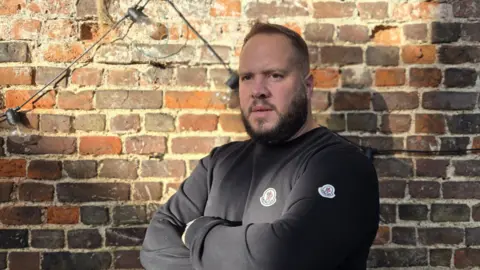 Cheil. AI ads will attempt to discover and use your emotional state says Chris Camacho
An added bonus for advertisers is that they might not even need a bespoke AI system to personalise their output.
Researchers in the US studied the reactions of consumers who were advertised an iPhone, with tailored text written by ChatGPT based on how high that person scored on a list of four different personality attributes.
The study found the personalised text was more persuasive than ads without personalised text – and people didn’t mind that it had been written by AI.
“Right now, AI is really excelling on that targeting piece. Where it’s still in nascent stages, is on that personalisation piece, where a brand is actually creating creative copy that matches some element of your psychological profile,” explains Jacob Teeny, an assistant professor of marketing at Northwestern University’s Kellogg School of Management, who led the AI research.
“It still has some development to go, but all roads point to the fact that this will become the way [digital advertising is done],” he adds.
Personalised AI ads could also provide a solution to the problem of digital advertising ‘wastage’ – the fact that 15% of what brands spend on digital advertising goes unseen or unnoticed, so it generates no value to their business.
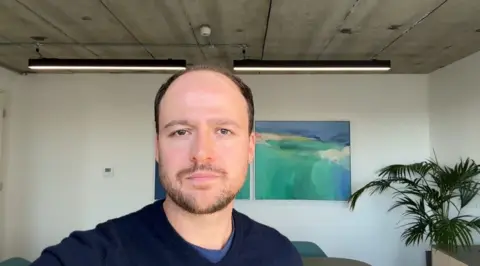 Alex Calder. Alex Calder warns that adverts could turn into “creepy slop”
Not everyone is convinced that personalisation is the right way to go.
“Congratulations – your AI just spent a fortune creating an ad only one person will ever see, and they’ve already forgotten it,” says Brighton-based Alex Calder, chief consultant at AI innovation consultancy Jagged Edge, which is part of digital marketing company Anything is Possible.
“The real opportunity lies in using AI to deepen the relevance of powerful, mass-reach ideas, rather than fragmenting into one-to-one micro-ads that no one remembers. Creepy slop that brags about knowing your intimate details is still slop.”
Ivan Mato at brand consultancy Elmwood agrees. He is also questioning whether people will accept it, whether regulators will allow it, and whether brands should even want to operate this way.
“There’s also the surveillance question. All of it depends on a data economy that many consumers are increasingly uncomfortable with,” says London-based Mr Mato.
“AI opens new creative possibilities, but the real strategic question isn’t whether brands can personalise everything – it’s whether they should, and what they risk losing if they do.”
 Elmwood “Should brands personalise everything?” asks Ivan Mato
AI-personalised ads could also take a dark turn, Mr Camacho at Cheil UK acknowledges.
“There’s going to be the camp that uses AI well and in an ethical manner, and then there’s going to be those that use it to persuade, influence, and guide people down paths,” he says.
“And that’s the bit that I personally find quite scary. When you think about elections and political canvassing, and how the use of AI can influence voting decisions and who is going to be elected next.
But Mr Camacho is committed to staying on the right side of ethics.
“We don’t have to use AI to make ads creepy or to influence individuals to do things that are unethical. We’re trying to stay on the nicer side of it. We’re trying to enhance the connection between brands and individuals, and that’s all we’ve ever tried to do.”
- This article was updated on 18 November 2025 to clarify how Cheil UK and Spotlight create their adverts.
Feature image credit: Getty Images