Author

editor

Browsing

By Jeff Beer

Four lessons that show the enduring value of David Ogilvy’s advertising wisdom. Why the industry should re-embrace the legend’s insights to guide it through an uncertain future.

Strolling around the south of France a few weeks ago—populated with execs from the best, brightest, and richest brands, ad agencies, media companies, and social and tech platforms gathered here for the Cannes Lions Festival of Creativity—you could almost hear the constant chant of “AI, AI, AI, AI . . . .” It was the backbeat to the song of the summer being blasted by everyone up and down the Croissette.

Advertising has long been known for its susceptibility to obsessing over the hot new thing. QR codes! NFTs! Celebrity creative directors! User-generated content! And now: artificial intelligence! If there is a craze in culture and communication, you can bet that a brand and its ad agency are exploring a way to exploit it.

Forty years ago, when legendary ad man David Ogilvy published his seminal book Ogilvy on Advertising, none of those (mostly fleeting) trends existed. Actually, an overwhelming percentage of today’s industry was barely out of kindergarten in 1983. According to a recent survey by Marketing Week, about three quarters of ad people today are under the age of 45. Ogilvy is one of the founders of modern advertising, building his agency Ogilvy & Mather into a global behemoth over the late 20th century. But now, like so much of the industry, it’s been swallowed up by a holding company and exists as a nameplate sub-brand within a somewhat undifferentiated sea of them.

Ogilvy on Advertising wasn’t Ogilvy’s first attempt at trying to lay down the precepts by which he believed his industry should operate. In 1963, at perhaps the height of his powers, Ogilvy published Confessions of An Advertising Man, which was part memoir, part advertising instruction. To some, Ogilvy on Advertising was a titan seeking to reassert his foundational values amid changing times. The Agency Review wrote in 2012 that, “By 1983, the creative revolution had steamrolled across America, making celebrities of George Lois, Mary Wells, Bill Bernbach, and dozens of others. Ogilvy’s long-form copy, iconic imagery, and reasoned presentations were, in many ways, relics of another age. Ogilvy on Advertising was, then, the master’s attempt to reposition his agency in this brave new world.”

Now, in 2023, the advertising industry itself is the one constantly forced to navigate an ever-evolving set of communication tools and how people use them. It is nearing the end of its second decade seeking to reposition the entire $73 billion business in this brave new world where on a good day an AI-centric tech giant can see its market cap rise by at least the value of the entire ad world. Adland is not what it was in 1983, and certainly not 1963, shunted out of the centre of the universe by the tech companies which thoroughly disrupted them. In the 1980s, there were a myriad of movies and TV shows featuring larger-than-life ad creatives. It’s a segment of pop culture that has not been resuscitated by nostalgia.

Looking at the annual juxtaposition of the past year’s best work with the current obsession, though, I can’t help but see glimmers of how some of Ogilvy’s core principles remain in play. These ideas can still serve as guideposts for how to best utilize any given trend or new technology.

These bits of wisdom cannot and should not be forgotten. So I’ve picked out four of my favourite Ogilvy-isms from Ogilvy on Advertising, and found some of the best work from the past year that embodies them. It’s far from a comprehensive list, but together they illustrate that even an industry relentlessly pursuing a path to relevance in an uncertain future can find valuable lessons in the past.


“If you’re trying to persuade people to do something, or buy something, it seems to me you should use their language, the language they use every day, the language in which they think. We try to write in the vernacular.”


When we talk about language, we can also be talking about cultural language. Sure, another one of Ogilvy’s famous lines says that the customer is not a moron, she is your wife. That still holds true. But as media has become more fragmented, brands’ ability to tap into the cultural language of their audience is tougher than ever.

This is why I’ve always been a fan of when brands are able to put a smile on your face in unexpected ways, through an expected behaviour. It’s Geico’s unskippable pre-roll ad in 2015, and Tubi’s Super Bowl interruption this year.

It’s also this Cannes-winning work from Argentina’s most popular food delivery app Pedidos. Created by agency Gut Buenos Aires, it sent unexpected delivery notifications to six million initially-confused customers. Until they found out it wasn’t a mistake, but the brand sending them a live tracker of the World Cup trophy coming home. It spoke the cultural language of a significant moment, using the product itself.

“When people read your copy, they are alone. Pretend you are writing each of them a letter on behalf of your client. One human being to another, second person singular.”

This one made me think of Dove’s 2022 short film Toxic Influence, an extension of its long-running Campaign for Real Beauty. Last year, the brand focused on the shared humanity between moms and daughters, crafting a story told through real individuals. Created by, yes, Ogilvy’s namesake agency, the film deepfakes each mom, offering up just awful health and beauty advice that their daughters would find from beauty influencers. The real moms were understandably freaked out, and it tapped directly into some of the deepest concerns many parents have around the potential hazardous effects of social media on their children.

Earlier his year, the brand continued pulling that thread with a Cannes Lions-winning piece of work called #TurnYourBack, aimed at TikTok’s “Bold Glamour” filter and the unrealistic beauty standards it encourages. Dove continues its work here of adding its brand voice to back up the concerns of parents and social platform users on these issues.

“Make the product the hero. There are no dull products, only dull writers.”

One of the best examples of this from the past year was the surprise Super Bowl winner from The Farmer’s Dog. (Full disclosure: One of the ad’s creators, Teressa Iezzi, is a former Fast Company editor and colleague.)

The healthy dog food brand wanted to get across the idea that better food could mean a longer life for your furry best friend. This could obviously be done in any number of straight-forward, unexciting ways, but instead the brand told the life story of a dog from both the owner and pup’s perspective in a way that had people weeping into their Super Bowl party nachos.

“Advertising people who ignore research are as dangerous as generals who ignore decodes of enemy signals . . . . Big ideas come from the unconscious. This is true in art, in science, and in advertising. But your unconscious has to be well informed, or your idea will be irrelevant. Stuff your conscious mind with information, then unhook your rational thought process.”

Okay, this is clearly a combination of two different quotes, but they tie together in that creative work for creative’s sake is rarely, if ever, going to work as advertising. Whereas a creative idea rooted in a researched insight can be where the magic happens.

Case in point, McDonald’s Cactus Plant Flea Market happy meal for adults that launched last fall. Tariq Hassan, the brand’s chief marketing and customer experience officer, told me that entire project, created with Wieden+Kennedy, came from a customer tweet about how you never know when it’s your—or your child’s—last Happy Meal. That led to more research into how its customers and fans felt about nostalgia, and where the brand fits into their lives.

Armed with lessons from its already massively popular Famous Orders work, with celebrities like Travis Scott and BTS, McDonald’s had seen the power of using its place in culture to sell core menu items. The collaboration with Cactus Plant Flea Market was a blockbuster success, with 50% of the fast-food chain’s supply of collectable toys sold in just four days. CEO Chris Kempczinski said in an October 2022 earnings call that it drove increased sales across the company’s U.S. locations.

That partnership also elevated McDonald’s to the top trending hashtag on TikTok and, more important, led to a weekly record for the chain’s U.S. digital transactions. In addition, it helped McDonald’s continue its momentum, helping the chain achieve nine straight quarters of same-store sales growth, with U.S. comparable sales growing more than 10% for all of 2022.

Mr. Ogilvy would no doubt approve.

Feature Image Credit: Getty Images

By Jeff Beer

Sourced from Fast Company

By Pesala Bandara

A terrifying new ad campaign featuring a deepfaked girl is warning parents against sharing photos and videos of their kids on social media.

The shocking advertising campaign, created by telecommunications company Deutsche Telekom, has gone viral for its dark warning of the potentially devastating consequences of parents posting photos of their children online.

The haunting video — which has amassed over 5.5 million views on social media in the last day — reveals how just how easily a child’s image can be manipulated using artificial intelligence (AI).

The ad delves into the story of nine-year-old Ella. Like many parents today, Ella’s mother and father regularly post videos and photos of their young daughter on social media.

However, Ella’s parents have never considered how their daughter’s future could be destroyed by “sharenting” — the common practice of parents sharing photos or videos of their children online.

‘The Beginning of a Horrible Future’

In the ad, a deepfake version of an adult Ella is created with the help of AI — using just a single photo of the nine-year-old girl that her parents shared online.

The “older” deepfaked Ella can move and talk like a real person. And she confronts her horrified parents on the big screen as they watch a movie at the cinema.

The deepfaked version of their daughter reveals the terrifying repercussions that followed after her parents posted her photos and videos on social media.

The ad chillingly explains how children whose images are posted online could fall victim to identity abuse, deepfaked scams, and child pornography among other crimes.

The Average Five-Year-Old Has 1,5000 Photos Online

Adweek reports that some studies have estimated that by 2030, nearly two-thirds of identity fraud cases affecting a young generation will have resulted from “sharenting.”

Research also shows that an average five-year-old child has already had about 1,500 pictures uploaded online without their consent by their parents.

Last week, PetaPixel reported on how Meta CEO Mark Zuckerberg caused a stir across social media when he posted a family portrait on Instagram that obscured the faces of his two older children with emojis. Meanwhile, his infant’s face was not covered in the photograph.

It revealed Zuckerberg’s awareness that his elder children’s faces are developed enough to become recognizable by strangers online and by facial recognition software.

By Pesala Bandara

Sourced from PetaPixel

By

  • Hannah Gardner is an e-commerce entrepreneur who made over $945,000 in her first year on Etsy.
  • She says the easiest Etsy niches are print-on-demand products and small-parcel accessories.
  • Her biggest advice is to set proper expectations for the niche that you’re entering.

When I graduated college in 2018, I never had a regular job. I knew I wanted to be an entrepreneur. Back then, the biggest thing was media buying, like doing Facebook ads, Instagram ads, and Google ads for people. So I started teaching myself by learning from YouTube videos.

When you’re broke, you say yes to everybody. I tried to build a media-buying agency specifically for doctors. I went to every Chamber of Commerce meeting from Miami to West Palm. When it was my time to pitch my services, I was just horrible at it. I did that for two months and ended up getting zero clients in the medical field.

As time went on, I found myself undercharging for my services while overdelivering to my clients, which eventually led to burnout.

One of my clients back then had an Etsy shop, and she was selling products both on an Etsy shop and a Shopify Store. While managing her ads, I discovered that working with Etsy was so much easier than media buying. That’s how I got into the Etsy world.

I wasn’t the standard DIY or handmade crafts Etsy shop owner

I didn’t make crafts or other handmade products — I was the give-me-something-to-sell-and-I-will-sell-it type of Etsy shop owner. I found a production partner online by just a regular Google Search and also hired a designer. I tested out a few partners before settling on one.

Together, we focused on the fast fashion accessory niche. Our manufacturer was in Brazil and we became very close. If we had new designs, we could have the inventory ready within two weeks.

2020 was just this magical year when the business started really pumping. In December 2019, our total revenue got up to $30,000. One of our highest months was actually August 2020 — we did almost $200,000 in total revenue with Etsy and Shopify combined. It was crazy.

I handled every aspect of the business on my own. It wasn’t until I reached my second $200,000 month that I finally decided to hire my first employee.

Print-on-demand is the easiest for new beginners

Print-on-demand service is the easiest niche for new Etsy sellers, then small parcel accessories because the barrier of entry is so low.

In the Etsy world, sellers are more reserved with their funds. So the print-on-demand realm is very appealing to people because you don’t pay for the product until it sells. It mitigates the risk and you can scale very, very fast.

The second best for scaling, I would say, is the small parcel accessory world. Small parcels are items that can be shipped via USPS First Class Mail, which entails 4-7 day shipping. This option is the cheapest for items weighing less than one pound.

Essential tips to start your first-ever Print-on-demand Etsy store 

1. Define your brand 

If you’re starting for the first time, you want to define your brand to make it recognizable. It’s like when you walk into Hollister versus American Eagle, they’re similar, but still different. You want to maintain that level of consistency to be able to build a brand.

What people are kind of doing now, unfortunately, is they’re just coming in and launching random products — nothing’s in sync. We don’t want to do that.

Instead, we want to create a brand identity that can easily translate into Shopify later on. Take into account factors like color schemes, brand identity, and other elements that contribute to a cohesive brand image.

2. Integrate your Etsy shop with tools 

The next thing is integrating tools with your shops, such as Printify, Mydesigns, or Printful, the middleman that connects you to those print providers. For example, when you get an order from your Etsy shop, Printfuls will print it and fulfill it for you. I really like MyDesigns specifically because they can bulk upload a bunch of listings at once.

We also use tools like Canva for design. When it comes to making your designs, you should do research on the market to see what’s selling. We usually type in keywords in the search bar and try to find other listings that have “best seller” badges.

If, for instance, there are 4,000 monthly searches for “Baby Bows,” which is a considerable search volume, it’s important to include “Baby Bows” in your title and create a competitive listing in comparison to the top performers for that keyword.

We then look at those designs and try to figure out how we can improve upon them, or how we can add value to our listings. These people are at the top of these micro niches, but we’re careful not to blatantly copy them.

3. Do a competitor analysis

Etsy launched its own competitor analysis tools, too. One tip is to look at the key attributes of why those listings are the top for that keyword.

You need to analyse the trends they are following, the fonts they are using, whether they say something fun in their listings, the options they offer, their price point, whether they are running daily sales, the number of photos they feature, and the appearance of their mockups.

The common mistakes Print-on-Demand sellers should avoid

One of the biggest mistakes POD people can make is rushing through the launching process, especially if they’re new to design. They might think, “Let me just launch.” But their products are lacking in quality.

Also, a lot of POD sellers fail to establish a functional business model. A lot of people who come to Etsy don’t want to invest a lot of money — they’re just not the biggest risk-takers. When it comes time to scale, they’re so unprepared and they haven’t set up their business model.

A useful approach in this regard is to write out every if-then scenario. After answering a ton of customer service questions with buyers, you should have a lot of data about your customers and be able to list the top 50 most commonly asked questions.

For example, you should know about your fulfilment process, the quality control process for print-on-demand, the design process, research for print-on-demand, the research, and development process, as well as how you determine your priorities and what to design for.

Remember: this is a marathon, not a sprint

The biggest advice I would give to someone who wants to start an Etsy business is to set proper expectations for the niche that you’re entering.

The Etsy online game is all about long-term business building. It’s not a “Get Rich Quick” or “How I can get to 1000 listings in 30 days” kind of story.

The focus is on building scalable systems so your business is constantly growing. The simplest example is with your listings, your launch strategy should be repeatable and consistent from week to week.

By

Sourced from INSIDER

By Nate Nead

Search engine optimization (SEO) relies heavily on link building to boost a website’s ranking. While both Bing and Google employ link building as an effective SEO tool, their algorithms differ in the intensity with which they consider links when deciding page rankings.

Because of this, honing your link building strategies according to the specific search engines is essential for successful SEO efforts that yield long-term visibility online.

This primer will provide an introduction to the role of links for Bing and Google as well as explore specific strategies for building effective backlinks in each. From understanding link-based ranking factors to pinpointing the best practices for both engines, this article will provide you with essential information used by SEO professionals to propel pages up the SERPs.

Understanding Bing’s Link Building Factors

Source

Domain authority and relevance

When building strong links for Bing search, one key factor to consider is domain authority and relevance. Domain authority tells Bing how legitimate a link is – if the pages that link back to your site have higher quality content than yours, or are located in more relevant domains within the same field of expertise, those sites will send you stronger signals.

Relevance falls in line with this concept and is important because if your outbound links lead visitors away from topics pertaining to your niche it won’t be considered a “quality” link.

Additionally, having outgoing links leading to bad pages could create a penalty that lowers your rankings. To help build the perfect SEO strategy using domain authority and relevance, Bing Webmaster tools are useful in gathering important insights related to link building.

Quantity and quality of backlinks

Quantity and quality of backlinks are both integral components to successful link building strategies on Bing. The quantity of links shows how valuable the pages linked to are and indicates that many other websites recommend it.

Quality matter most to the search engine but must still be varied in order for a page or website’s SEO value to reach its full potential. This means linking out from unrelated industries, sources with strong domain authority, and using multiple anchor texts – all of which broaden the visibility of a website through showcasing its unique value.

Importance of anchor text

Anchor text is one of the most important link building factors for Bing’s search algorithm. Using relevant keywords in anchor texts helps to show the subject and context of the content that the user can expect when visiting a website from a link.

Bing places additional value in specific phrase matches, so exact matches to relevant target terms should be used wherever possible to optimize rankings on this platform. Compelling descriptions, but more general than an exact match, also help tell cues about what would be found when clicking through from a link.

Strategies for Building Links on Bing

Creating high-quality, relevant content

Source

Creating high-quality, relevant content is an essential link building strategy for Bing. Relevant and authoritative content not only builds trust and authority with visitors but likewise helps Bing’s algorithm recognize and credit your site accordingly. High-quality content ensures it ranks well on SERPs which encourages users to click through to the page more often.

Factors like bounce rates, time spent on pages, ROI etc play a vital role in determining higher search engine rankings, therefore, increasing traffic as a result of engaging copy is key when building links on Bing. Content should also be updated regularly and include keywords which as well add another layer of link value for SEO purposes.

Conducting outreach and guest posting

Conducting outreach and guest posting can be an effective strategy for building links on Bing. Reaching out to relevant, authoritative websites in your industry to secure backlinks to your content is key.

Having related topics and website material that follows the editorial guidelines of high-quality websites can increase chances of being featured as a guest contributor.

High-value features come with appropriate anchor texts in consistent link usage patterns, favourable placement within articles for increased prominence, and strategic internal linking—all important qualities thoughtfully considered by Bing’s linking algorithms.

Engaging in social media promotion

Engaging in social media promotion is an effective strategy for building links on Bing. Social signals such as likes, shares, retweets and mentions play an important role in boosting the visibility of content while helping to generate backlinks.

In order to make social media offer real value, it is essential to post quality material that adds relevance and engages audiences. The more people are interested in a website or brand’s content, the higher chance they have of sharing these resources which generates valuable backlinks.

Given that social media plays a part within Bing’s algorithm, including this as link-building strategy should be an integral factor in any SEO campaign.

Leveraging local directories and business listings

Leveraging local directories and business listings is an effective link building approach for Bing. When done strategically, claiming and optimizing profiles on music services and directory websites can be a powerful tool for improving search engine visibility, especially among geographically-specific audiences.

The key to getting the most out of this type of link building is determining which sites are favoured by the specific search algorithm rankings that you are looking to influence.

Get your brand listed with the top pertinent types relevant to your industry — not just Google My Business. Additionally, find smaller, niche-specific directories to better target potential customers.

Utilizing Bing Webmaster Tools for insights and optimization

Utilizing Bing Webmaster Tools for link building is an effective strategy to maximize the return on boosting SEO. The tools provide insights into both internal and external link structures, anchor text data, page authority, broken links and much more.

It reveals URLs of websites that are not indexing properly in terms of Google or third-party programs used for backlink auditing tools. Additionally, marketers may employ some tracking codes within the tool for optimization insight.

Most notably Webmaster Analytics shows how successful identification activities actually are. Proper implementation and data interpretation may result in winning the domain’s arrival into top SERP impact.

Understanding Google’s Link Building Factors

Source

Domain authority and PageRank

Google’s link building factor of domain authority assesses overall online trust in a given website, signifying relevance and quality. PageRank is Google’s proprietary measure of a websites’ importance; it uses the backlink structure between diverse sites to assign an approximate metric for each page. Linking to or from websites with higher PageRanks show increased SEO benefits due to being seen as valuable and authoritative by search engine algorithms.

Natural and diverse backlink profiles

When aiming to rank highly in Google, it is important to focus on building a natural and diverse backlink profiles. Search engines value websites that have overwhelmingly organic rather than artificial links pointing to their site’s pages.

Additionally, link profiles should be fragmented so that not all of the links are using the same anchor text or come from identical sources. Link diversity also applies when looking across main link types such as industry-specific directories as well as domain origins like (.gov, .org). Domain trustworthiness is another important factor for both Bing and Google search.

Importance of anchor text diversity

Anchor text diversity is an important factor that Google considers when evaluating links. This factor assigns a portion of a website’s relevance to the keywords used in linking sites or texts.

It’s best practice to use more than one keyword for anchor text in order to far more accurately depict what content it points toward and express its overall relevance better.

Too much repetition of anchor text can make search engine algorithms see links as less natural and manipulated, which can damage rankings if they observe the same phrases being emphasized over and over again.

By leveraging diversity within anchor texts to maximize rankings, websites can receive better link evaluation from both Bing and Google search engines.

Relevance and authority of linking domains

Google place a high importance on link relevance and authority, which means that links should primarily come from applicable sources within an industry or network.

They evaluate the quality of domains through similarities in top-level categories and topical area weighting. Google also have sophisticated algorithms for evaluating the trust and authority of each domain by closely looking at the data signals behind linking domains to ensure their trustworthiness. Google bonds whether these linking websites represent a quality source worth trusting with its algorithm rewards.

Strategies for Building Links on Google

Source

Developing comprehensive and engaging content

Search engine optimization (SEO) is built on the foundation of producing content that will naturally develop high-quality link signals for Google. Developing comprehensive and engaging content allows more potential opportunities for organic backlinks to a website or blog. Comprehensive, quality pieces provide deeper information and insights compared to other forms of superficial content.

A good goal when creating this sort of content is to include features such as audio, video, infographics or reviews in order to disproportionately influence link building so that you set yourself ahead of the competition. Such features add to the perceived quality of the content and appeal to more readers, as well as other webmasters who may link to such uniquely engaging pages.

Earning backlinks through outreach and relationship building

Earning backlinks, however, has remained much the same. Outreach and relationship building continues to be crucial component in acquiring quality links from reputable sources. Leveraging direct relationships by emphasizing mutual benefits is key when asking for a link.

Additionally, participating in trade shows, events and conferences can start conversations that might then increase one’s chances of getting recognized by an industry leader who is almost always on the lookout for partners capable of boosting audience engagement with fresh topics or materials they value.

Guest blogging on reputable websites

Guest blogging is a great way to build links on Google. These posts involve writing and publishing articles on relevant, high-authority websites related to your field or industry. These linkbacks increase chances of putting your target pages in improved rankings with this powerful off-page SEO activity. It also builds brand awareness and reaches leveraging established platforms.

When looking for the perfect website to submit your piece make sure it’s an authoritative one with positive engagement, natural visibility, reputable status built around similar topics and original content boasting engaged followers. Guest blogging for building high-quality links is a powerful strategy to do better in search engine rankings with organic, honest link-building activity.

Participating in industry-specific forums and communities

Industry-specific forums and communities are a great way to build links on Google, allowing for greater reach with like-minded peers in your industry. Creating genuine relationships by preferably being active contributors can lead to other members reaching out with potential opportunities for guest blogging or extended coverage.

Partaking in site interviews or sharing advice is another choice avenue to gain visibility as well. Whatever the forum resolution, always be sure that any contribution is informative whilst avoiding aggressive marketing tactics – such as link farming – which could incur penalties from Google.

Conclusion

Link building is an essential part of any comprehensive SEO strategy and entails adhering to multiple factors influenced by the individual values of both Bing and Google.

Developing a comprehensive approach that includes relevant content development (including guest blogging), outreach, social media promotion, leveraging local directories, relationship building, and investing in anchor text diversity when linking back, as well as taking advantage of the available webmaster tools serves many long-term benefits.

Regular monitoring and adjustments via thorough link analyses are needed to optimize link performance across both search engines.

By Nate Nead

Nate Nead is the CEO & Managing Member of Nead, LLC, a consulting company that provides strategic advisory services across multiple disciplines including finance, marketing and software development. For over a decade Nate had provided strategic guidance on M&A, capital procurement, technology and marketing solutions for some of the most well-known online brands. He and his team advise Fortune 500 and SMB clients alike. The team is based in Seattle, Washington; El Paso, Texas and West Palm Beach, Florida.

Sourced from readwrite


With the rapid growth and evolution of e-commerce platforms, businesses are always on the lookout for innovative tools to enhance customer interactions and drive sales. One such powerful tool that has emerged is WhatsApp.

Originally designed as a messaging platform, its vast potential for business use cannot be overlooked. With marketing tools such as WhatsApp Web Sender, automated messages, and more, businesses can now utilize WhatsApp for e-commerce to connect with their customers, promote products, and drive sales.

This article will explore the advantages of using WhatsApp for e-commerce and how it can revolutionize the way you interact with your customers.

Introduction to WhatsApp in E-commerce

The digital realm has evolved, and with it, so have the platforms that consumers use to communicate and make purchases. While platforms like Instagram and Facebook have their place in e-commerce, WhatsApp offers a more personal and direct line of communication between businesses and their customers.

Advantages of Using WhatsApp for E-commerce

  • Direct and Personalized Communication

Unlike traditional e-commerce platforms where communication might feel one-sided, WhatsApp allows businesses to engage in direct and personalized conversations with their customers. This not only builds trust but also fosters a deeper relationship with the customer. They can ask questions, get immediate responses, and feel more connected to the brand.

For instance, a business can decide to use third-party tools like WhatsApp Chrome extension to send automated messages and product updates straight to their customers. Businesses can also embed links in those messages which leads customers directly to product pages, allowing them to make purchases with just a few clicks.

  • Efficient Customer Service

Queries, complaints, and feedback can be handled in real time on WhatsApp. By integrating a WhatsApp chat option on your e-commerce platform, you give your customers an efficient way to reach out, which can significantly improve customer satisfaction rates.

  • Integration with CRM Systems

WhatsApp can be integrated into various Customer Relationship Management (CRM) systems. This means that customer interactions on WhatsApp can be tracked, recorded, and analyzed to provide better services and offers tailored to individual customer preferences.

  • Marketing and Promotions

One of the significant advantages of using WhatsApp for e-commerce is the ability to send out marketing campaigns and promotions directly to customers. With features like broadcast lists and group chats, businesses can share the latest product releases, offers, and discounts, ensuring that their message reaches the targeted audience efficiently.

  • Efficient Order Processing and Updates

Once a customer places an order, they can be updated on the processing status, shipment details, and delivery time through WhatsApp messages. This not only ensures transparency but also reduces the anxiety of waiting for an order to arrive.

  • Secure Transactions

With end-to-end encryption, WhatsApp ensures that all conversations and transactions remain private and secure. This level of security can boost customer confidence, knowing that their data and transaction details are in safe hands.

  • Building a Loyal Customer Base

Regular and personal interactions on WhatsApp can foster loyalty among customers. By providing excellent after-sales service, addressing concerns promptly, and offering tailored promotions, businesses can ensure a loyal and returning customer base.

  • Feedback and Reviews

Receiving feedback is crucial for any business. Through WhatsApp, businesses can easily solicit reviews and feedback post-purchase, helping them understand what works and where improvements are needed.

Conclusion

WhatsApp, with its vast user base and intuitive features, is poised to become a game-changer in the world of e-commerce. Whether it’s through direct communications or seamless integrations, businesses now have a powerful tool to boost sales and enhance customer interactions. In this fast-paced digital era, it’s essential to leverage all available resources, and WhatsApp, with its myriad of benefits, is one resource that e-commerce platforms can’t afford to ignore.

Connecting your favourite large language model (LLM) to the internet gives it superpowers. Before, ChatGPT was stuck in 2021, now it can access the world wide web’s abundance of knowledge. But what to do with this newfound ability? Only your imagination can stop you.

First thing’s first, configure your settings. Log into your ChatGPT Plus, head to settings and enable web browsing. Select the GPT-4 web browsing template and you will see ChatGPT cite its sources with small numbers and links. Now you’re good to go, ready to see what’s possible.

Describing himself as a technology and AI educator, Paul Couvert of Paul.ai is personally building tools “better and faster using AI and no-code” and teaching others to do the same. Alongside building his company, he’s publishing free ChatGPT power courses, to help you go from beginner to expert, and guides to using no code and AI in your work. Paul has amassed 130,000 Twitter followers and his weekly newsletter has 5,000 subscribers, with each edition containing tips to master AI and no-code to level up your business.

I asked Couvert to share how entrepreneurs can maximize the internet-enabled version of ChatGPT and he gave his top six.

Ways to use the internet-enabled version of ChatGPT

1. Summarize news

Watching news programs or scrolling news sites is a waste of everyone’s day, especially when you have a business to run. Utilize ChatGPT to do the heavy lifting for you, as it summarizes any news story in a few seconds.

Ask it what you want to know in a concise summary. For example, suggested Couvert, “What were the main points from [the last United Nations climate change report released in 2023]? Summarize with a short paragraph and a list.” Replace the square brackets with the event of your choosing and gather the facts without spending the time.

2. Detect a trend

If you can stay abreast of trends, you can create the products and services that are about to be in high demand. While everyone else is waiting until it’s reported, by which time the moment has passed, with one simple prompt you can see the future and use it to your advantage. Don’t waste this power.

“Connected to the internet, ChatGPT can become your best business partner,” explained Couvert. Ask it to, “Provide a short analysis of the latest [e-commerce] trends and consumer behaviour patterns in [the first quarter of 2023].” Edit the prompt to apply to your industry and keep it nearby. You might find out something you didn’t know.

3. Apply academic research

You’re unlikely to trawl through lengthy academic papers during your normal business day, but their findings could make a difference to your work. Rather than wait for the insights to be reported, collaborate with ChatGPT to get the main points. It might spark new ideas for products and press.

Couvert suggested this prompt to understand the research ahead of the curve. “Summarize the key findings of the latest research [published in ‘Nature’ last week] on the topic of [exoplanet destruction]. Give an answer in markdown.” What comes out should tell you everything you need to know to plan accordingly.

4. Improve your keystone habits

Habits are being studied all the time. Researchers are testing new ways of doing things, and with internet-enabled ChatGPT you can learn what they are to become fitter, healthier and more productive.

Whether that’s being more productive working from home, optimizing your breakfast for sustained energy, or structuring your week around a sport, get the latest insights with one simple prompt. Couvert recommends you use, “From recent online studies, what are the [top 5 tips] to [work better from home?] Make a summary table.” Insert your area of improvement and implement the changes as applicable.

5. Predict the future

If investing is your thing, use internet-enabled ChatGPT as your research partner, to find things out and make predictions on the future. Are humans or robots more likely to beat the market? Nobody knows. But it makes sense to consider all the information before placing your bets.

Do this with ChatGPT’s internet version using this prompt, according to Couvert. “Based on the latest financial results of [the 50 biggest tech companies], how might their shares perform in the coming weeks?” See what it says, take it with a pinch of salt and proceed with your investments as cautiously as normal.

6. Understand a complex event

Sometimes you don’t need all the details, just the crux of the story. You require just enough to join in a conversation, not to write a report. One simple prompt, applied to any event in the news, might be enough to build a rapport with someone who really cares.

Couvert suggests this prompt for finding the story without wasting time trawling. “Tell me the current [price of gasoline in France] and explain to a 12 year old why [this price isn’t going down now while the price of oil is going down.]” Explaining something to a 12-year-old is key. You want simplicity and memorability, not unnecessary nuance.

Use the internet-enabled version of ChatGPT to google things faster and get results with more relevance. Summarize the news, detect a trend, and apply insights from academic research. Improve your habits, get stock market predictions and understand a complex event. See how much more you can learn and understand and appear to have superpowers to everyone in your presence.

Feature Image Credit: Paul Couvert

By Jodie Cook

Follow me on Twitter or LinkedIn. Check out my website or some of my other work here.

Founder of Coachvox.ai – we make AI coaches. Forbes 30 under 30 class of 2017. Post-exit entrepreneur and author of Ten Year Career. Competitive powerlifter and digital nomad.

Sourced from Forbes

By Samantha Dilday

Who wins in a showdown between user-generated and brand-generated content? Below we dig into the benefits of both (and where influencer-generated content fits in).

Brands today need a high volume of high-quality content to reach social consumers.

But how much of that content should be user-generated vs brand-generated?

Good question! Increasing your social search presence and word-of-mouth means ramping up content production. Bonus points if those posts come from creators.

Chances are you’re producing content in-house side-by-side with sourcing UGC. Both are valuable types of content for brands but scaling either is easier said than done.

Below we dig into the debate of user-generated content vs. brand-generated content. We’ll also look at how influencer-generated content can be a scalable middle-ground.

Defining the Differences Between User-Generated Content vs. Branded Content

Although many marketers use these terms interchangeably, they are not the same.

Let’s quickly recap a couple of definitions and examples so we’re on the same page.

What is User-Generated Content?

User-generated content (UGC) is content published by customers promoting a product (or brand) that they love. These posts are unprompted and organic.

UGC has become a sort of catch-all phrase among marketers. The rise of UGC creators has made the definition of UGC even more confusing.

That said, “true” user-generated content is organic and created with no direct input from the brand being promoted. No compensation from the brand, either.

This is the key difference between user-generated content and both brand-generated and influencer-generated content. UGC can refer to everything from photos and videos to written content related to a product. This includes:

  • Product reviews and recommendations
  • Tutorials showcasing how products work and fit into daily routines 
  • Stories where consumer share their personal experiences with a product

Short-form video formats like TikTok and Reels are the sources of most UGC today. Below is an example from a TikToker that went viral with a glowing review of a colour-changing lip balm she found at a dollar store.
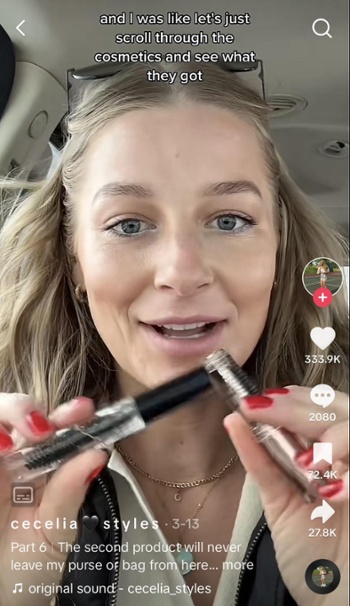
user-generated content example

Source: @cecelia_styles

Authentic and off-the-cuff, this post is a prime example of how unprompted content can be compelling. The video’s 330k “Likes” and 72k saves speak for themselves. Genuine excitement and enthusiasm are like lightning in a bottle from a marketing perspective.

The beauty of UGC is that it’s totally organic and produced by real customers — not marketers.

This also highlights the biggest challenge of leveraging and collecting UGC. The fact that user-generated content comes from customers organically means it’s unpredictable. This rings true in terms of its quality and the messaging conveyed by the customers.

However, this is exactly what makes a glowing user-generated post so valuable (and why consumers seek them out when researching brands).

What is Brand-Generated Content?

Brand-generated content is promotional content made by marketing teams (in-house or by agencies).  Messaging and creatives are approved and coordinated by the brand.

In short, brand-generated content represents content that your marketing team puts out. These are posts that you control over when it comes to messaging, format and publishing frequency.

Brand-generated content represents a place to establish your brand’s voice, values and aesthetic. Most branded posts are created to raise awareness and keep customers in the loop.

Common examples of brand-generated posts include:

  • Announcements such as upcoming events, product launches and availability
  • Promotions, including time-sensitive offers and deals
  • Culture-centric content like behind-the-scenes videos showing off employee life

Below is a textbook example of a brand-generated post that builds hype for a new product.
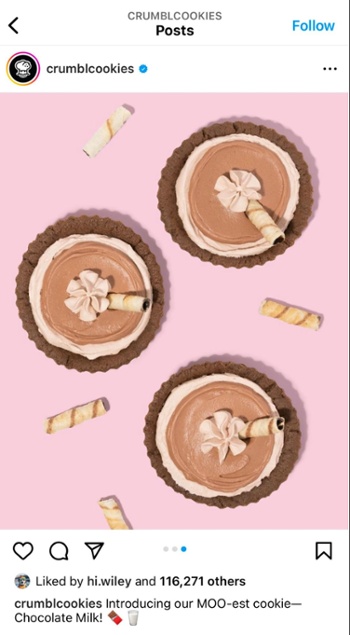
crumbl cookies brand-generated content

Source: @crumblcookies

Given that social media (and social search, in particular) is so massive for product discovery, brands are rightfully doubling-down on social content creation and distribution in-house.

Beyond scaling in-house, brands are also collecting user-generated content and sourcing posts from influencers. Doing so is key to keeping up with the TikTok and Instagram algorithms, not to mention the demand of social consumers looking for their next purchases.

The Effectiveness of User-Generated vs. Brand-Generated Content

User-Generated Content Brand-Generated Content
  • More trustworthy and engaging than brand-generated content
  • Always authentic because it’s produced by real people (but quality varies)
  • Can be sourced on an ongoing basis (but requires permission to be repurposed and republished)
  • Offers brand control and conveys the exact message you want to say
  • Authenticity varies depending on the brand’s voice and creatives
  • Can be produced consistently (depending on your bandwidth) and is owned by your brand (no rights management required)

Important: it’s not a matter of either-or when it comes to both types of content for brands.

You’d be hard-pressed to find a brand that exclusively posts UGC. On the flip side, every successful consumer brand on social media features customers and creators in their content strategies. In short, brands need a combo of both.

Debating the effectiveness of user-generated content vs. brand-generated content also requires context. Both types of content for brands have distinct benefits which we break down below.

UGC is More Trustworthy Than Brand-Generated Content

When was the last time you bought something without reading a customer review first?

Chances are you probably can’t remember. Hey, neither can we!

The same goes for your target audience, though. Shoppers today rarely rely on brand messages alone when it comes to researching products.

On the flip side, consumers crave real feedback from real people. Makes sense. This is why it’s no surprise that UGC significantly lifts conversions when customers interact with it.

From customer photos and videos to reviews and beyond, user-generated content can supplement each and every phase of your marketing funnel. This explains why repurposing creator content is such a priority for brands today.

User-Generated Content is Always Authentic

Relatable, unfiltered content helps potential buyers imagine a product in their own hands.

Fact: 88% of consumers trust recommendations from people they know above any marketing channel This explains why micro-influencers are so effective when it comes to establishing trust.

Authentic creators with smaller followings feel more like friends or family versus a celebrity. This phenomenon also explains why brands are turning to UGC creators to make promotional content that feels organic.

User-Generated Content Can Be Sourced Long-Term

When there’s a high volume of happy customers posting about your brand, more people will follow suit. Done right, this creates a snowball effect that yields UGC long-term.

Brands with an established branded hashtag can do this organically. The more satisfied customers that tag your brand, the bigger your library of UGC becomes. Below is an example of Billabong’s #KnowTheFeeling tag which has earned over 29k pieces of UGC.
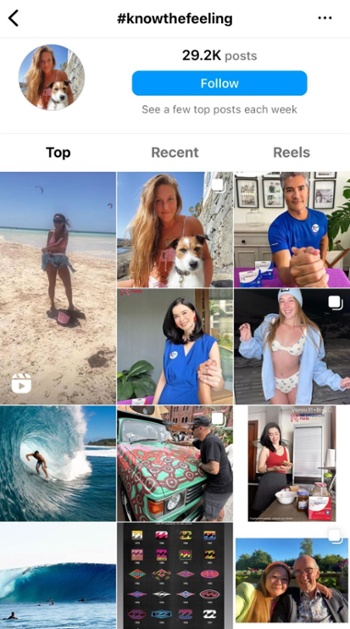
user-generated content example

On that note, creating thousands of pieces of content in-house isn’t realistic (or even possible). Achieving such a high volume of content means leaning on creators and customers to spread the word.

Brand-Generated Content is Yours (With No Strings Attached)

This is a big one.

The benefits of user-generated content over brand-generated content when it comes to authenticity and trust are clear. That said, the housekeeping required with both sourcing and promoting UGC often flies under the radar.

Specifically, user-generated content can be a time-sink when it comes to rights management. This includes reaching out to creators to get explicit permission to republish posts.

With branded content, all of the above is a non-issue because you own your posts full-stop.

Brand-Generated Content Lets Brands Say Exactly What They Want to Say

The unfiltered nature of user-generated content is what makes it so powerful. Creators’ off-the-cuff delivery and unique style really resonate with consumers.

That said, organic UGC usually isn’t necessarily ad-worthy (or even marketing-ready).

Not every satisfied customer is going to align with your brand. Heck, some customers might get details about your products wrong. They might show off your product but never mention your brand by name or explain where followers can find it in-store or online.

But hey, you can’t blame them! Customers aren’t employees.

Branded content created in-house puts you in total control to highlight key benefits and emphasize the specific details of the products that you need.

Brand-Generated Content Can Be Produced Consistently

The inconsistency of UGC isn’t solely limited to quality.

Brand-generated content can be anticipated when it comes to scheduling and publishing frequency. Likewise, your in-house content can align perfectly with launches and promotions.

On the other hand, user-generated content is more sporadic and random.

Organic posts don’t always align with what you’re currently promoting. For example, you can’t source organic user-generated content for a product launch until after the product is released.

Although the value of UGC can’t be denied, it isn’t always consistent in terms of quantity or quality. With branded content, you know exactly what you’re going to get.

In-house content is also reliable and consistent when it comes to meeting your brand’s standards. For example, this post from Vital Proteins is aesthetically pleasing, professionally produced and conveys the brand’s vibe.
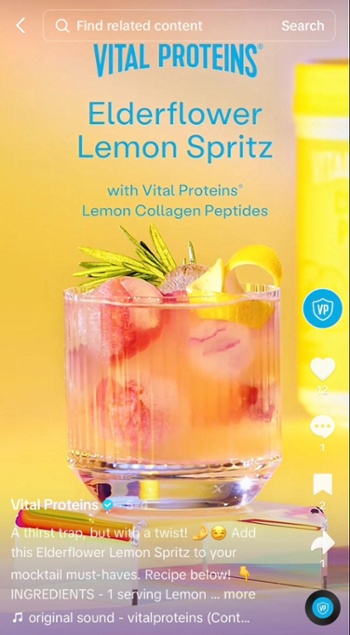
brand-generated content example

Source: @vitalproteins

These types of posts are necessary for both establishing your brand and keeping followers in the loop about your products.

How Influencer-Generated Content Gives Brands the Best of Both Worlds

When it comes to user-generated vs brand-generated content, there’s a sort of tug-of-war between authenticity and control.

But consider how brands can find a balance between both via influencer-generated content.

Influencer-generated content refers to posts produced by content creators with creative input from brands (in exchange for compensation).

Done right, posts from influencers feel like organic UGC. This is especially true for brands that partner with micro-influencers that publish relatable, authentic content.

Food for thought: 71% of consumers prefer to discover products through consumer content versus branded ad channels. Although influencer-generated content is brand-directed, it’s not brand-generated. Influencer posts retain their authenticity as a result.

That’s why savvy brands are prioritizing influencer collaborations to create content that looks organic but still aligns with their specific marketing goals.

In short, influencer content bridges the gap between UGC and in-house content. Brands can get their desired messages across while benefiting from creators’ authenticity and personality.
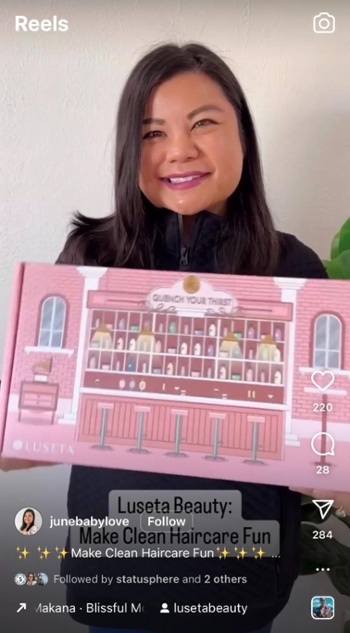
influencer-generated content example

Source: @junebabylove

Let’s wrap things up by breaking down the benefits of influencer content (specifically content from smaller creators versus celebrities).

Influencer-Generated Content Balances Authenticity and Control

Consider that consumers rank influencers as one of their most-trusted marketing channels.

Shoppers trust opinions and seek out the content of authentic creators they can relate to. Unlike organic user-generated content, influencer content offers brands a say in what’s published.

While UGC ticks the boxes of authenticity, most organic UGC isn’t exactly ad-ready. Most brand-generated content is marketing-ready but lacks reliability or personality.

Influencer-generated content is a happy medium between the two as brands provide direction but empower influencers to take the reins when it comes to creativity and delivery.

Brands running creator campaigns in-house are tasked with sharing influencer briefs that balance creative freedom and brand messaging. This process requires keen attention to detail and is exhausting if you plan on running long-term, always-on influencer campaigns.

With Statusphere’s platform, brands can actually streamline and optimize the briefing process without sharing directions themselves.  Our creators are vetted and matched with products based on 250+ first-party data points based on brief brand input.

This means that creators are only matched with products they actively want to promote. Stronger matches mean that creators have a stronger pulse on what to say, what to post and which types of content will resonate most with their audiences.

Influencer Content is Scalable (with the Right Platform)

Relying solely on organic UGC is a challenge when there are so many question marks regarding both volume and quality. Meanwhile, scaling content in-house can only take brands so far when competitors are earning hundreds or thousands of posts per month from creators.

That’s yet again where influencer marketing campaigns can pick up the slack.

Working with a high volume of micro-influencers long-term offers an actionable way for brands to scale content production without sacrificing quality. Making this happen means using an influencer platform like Statusphere that generates a guaranteed number of posts for brands.

Influencer-Generated Content Boosts Paid Social Performance

The value of influencer-generated content extends far beyond your social feed.

For example, consider how brands are transforming their top-performing influencer posts through whitelisting (AKA “allowlisting”) on TikTok and Instagram.

Check out the Spark Ad on TikTok from Isle of Paradise below. This ad campaign earned 45+ million views in total, not to mention a 68% boost in weekly paid revenue (versus the previous nine weeks of their campaign).
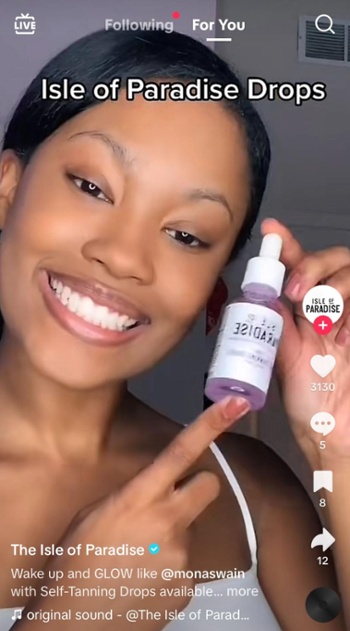
spark ad example

Source: TikTok

Note: having content rights built into your influencer platform means you can use your creator content in ads without any manual outreach or back-and-forth.

How to Earn  Influencer-Generated Content at Scale

Shoppers crave honest recommendations from people they trust. Simple as.

That’s why creator content is a goldmine for marketers.

Sourcing organic user-generated content and creating thoughtful brand-generated content are both important for brands today.

Meanwhile, ongoing influencer-generated content keeps your brand visible in social search and likewise means more potential for marketing-ready content you can promote elsewhere.

If you need a scalable way to earn authentic branded content, Statusphere’s platform can help.

Our micro-influencer software matches brands with vetted influencers from our creator community. Unlike other platforms, we can guarantee a specific volume of content for brands.

Statusphere eliminates the most time-consuming pieces of running an influencer campaign in-house thanks to our advanced matchmaking and fulfillment technology. We’ve already generated 75,000+ pieces of content on behalf of 400+ consumer brands.

Want to see how our platform works? Get in touch with one of our experts to learn how we can optimize your brand’s marketing efforts with guaranteed content at scale.

By Samantha Dilday

Sourced from STATUSPHERE

By Sonu Yadav

Discover the key tactics and best practices for leveraging social media, content marketing and paid media in your PR endeavours to catapult your small business to new levels of success.

Social media, content marketing and paid media are powerful tools that can drive the success of public relations (PR) efforts. With a plethora of creative options available, such as compelling content on social channels and targeted advertising campaigns, small businesses can now reach more people than ever before with tailored messaging that resonates with their audience.

Social media platforms enable companies to effectively target key audiences, such as investors or partners, while engaging content attracts new consumers who might be interested in the company’s products or services.

Additionally, investing in well-placed advertising showcases a brand’s overall credibility, essential for successful relationships within any industry. Ultimately, implementing this cohesive approach results in increased brand awareness and fosters sustainable growth over time by nurturing strong online and offline connections through continuous engagement efforts across multiple platforms.

By implementing a cohesive PR strategy that integrates these platforms, small business owners can enhance their visibility, build trust with customers and foster sustainable growth through continuous engagement efforts. Let’s explore how to do it the best way.

Leverage different channels for PR success

To effectively leverage different channels for PR success, small businesses should implement a balanced strategy combining organic and paid media. Focus on sharing engaging, value-driven content to build genuine connections with your target audience across multiple platforms like Facebook, LinkedIn or Instagram. Collaborate with influencers and encourage user-generated content showcasing your products or services in authentic settings.

However, don’t rely solely on organic reach; invest strategically in paid advertising campaigns such as sponsored posts or targeted ads to amplify the visibility of key messages among broader audiences based on their interests or online behaviour patterns. Additionally, you can now also harness the power of AI-powered solutions to enhance your PR efforts.

Social media

A strong social media presence is essential to achieve PR success. Engaging with your target audience on platforms like Facebook, Twitter, Instagram or LinkedIn enhances brand visibility and fosters lasting relationships with customers and potential clients. To begin crafting an effective strategy, consider establishing clear objectives based on your business goals, for instance, generating leads or driving website traffic.

Spend time studying successful accounts within your industry and competitors’ activities. Note the type of content that resonates most among users and adopt similar tactics when you create posts tailored specifically for each platform’s preferences.

Be mindful of how frequently you share updates — consistency matters as much as quality. Keep track of key performance indicators such as engagement rate or number of new followers acquired over a certain period.

Content marketing

Utilize diverse content marketing strategies to attract and engage your target audience.

For example, repurpose a single piece of well-researched content into various formats, such as podcasts or webinars, to reach more potential customers across different platforms while providing valuable information. Convert data-driven research into visually appealing infographics to enable the audience to quickly grasp key insights. Offer customized white papers tailored to specific buyer profiles to demonstrate an in-depth knowledge of industry pain points and increase credibility among prospects.

Maintain an active presence on reputable forums to foster trust between businesses and thought leaders. Contribute authentic expertise to build credibility for driving continued growth and brand recognition nationwide without relying excessively on traditional advertising efforts alone.

Don’t forget to leverage AI-powered content creation tools to enhance your PR efforts. These tools employ advanced natural language processing and machine learning algorithms to generate high-quality content.

Paid media

Expand your reach with various paid media channels to maximize the effectiveness of your PR campaigns. Consider integrating several options into your advertising strategy to reach more potential customers. Invest in search engine ads, like Google Ads, to ensure higher visibility among users researching products and services similar to yours.

Video platforms like YouTube can also be powerful marketing tools if employed strategically, as many consumers discover new brands via engaging video content. Don’t overlook traditional print advertisements either, as they can have a long-lasting impact on local markets or niche industries where newspapers and magazines remain relevant sources of information.

Explore different paid media outlets suited to your target demographic’s preferences to ensure seamless communication between businesses seeking exposure and individuals eager to learn about them. Finding an appropriate balance is key when leveraging various channels for PR success while staying mindful that consumer trust in earned or owned media typically outweighs reliance on purely sponsored adverts alone.

Creating a cohesive PR strategy

When crafting a cohesive PR strategy, small businesses must consider the integration of social media, content marketing and paid media campaigns. A vital aspect is monitoring key performance indicators to ensure their efforts deliver tangible results. To achieve this seamlessly, you should utilize tools that help analyse audience engagement across each platform alongside click-through and conversion rates.

You should regularly review these metrics to adjust strategies for optimal impact on business growth objectives. Furthermore, you should encourage collaboration and clear communication within your team by assigning distinct roles and responsibilities concerning digital marketing initiatives, ultimately leading to success in public relations endeavours with an integrated approach combining all facets of modern promotion techniques.

Agility is the key to success in marketing and PR. Different channels should be leveraged for maximum efficiency, as each would lead to different results depending on audience reachability and the cost involved. It’s important to understand how paid marketing (using ads), owned media (own content) and earned media (influencers/media) work together for a successful PR campaign and get the desired result within a limited time frame.

By Sonu Yadav

Sonu Yadav is a certified digital marketing manager with SEO Vendor. He has over eight years of experience in the field of digital marketing and has helped numerous businesses grow online. He is passionate about helping businesses succeed and enjoys seeing the results of his work.

Sourced from Entrepreneur

B

RIP Photography, 1839-2023.

After a solid run of nearly two whole centuries and countless brushes with death at the hands of new technologies over the years, photography has finally succumbed to injuries suffered with the emergence of AI-driven apps like Midjourney, and has been officially laid to rest.

No services will be held.

All major camera manufacturers have responded to the news by shuttering their operations, effective immediately, in the anticipation that cameras will simply not be needed anymore.

In its effort to hasten the demise of photography, AI has begun rounding up photographers and forcing the forfeiture of all camera equipment.

Ok, I’ve had my bit of fun. All jokes aside, though, I’m writing this opinion piece specifically because for the last six months or so, I can’t seem to get away from the incessant deluge of either panicked or gleeful declarations (depending on who is doing the declaring) that AI image generators have already all but rendered the need for photography obsolete.

Well, allow me to go on record with my own pronouncement: hogwash. AI image generation is not a threat to photography. Not today, not tomorrow, not in the next decade. I’ll even go so far as to say that AI image generation will never pose any kind of real threat to photography. Ever. I’ll even stake my reputation on it.

“But Colin,” you might say, “look at how far the technology has already come in just this short amount of time. Surely, you understand that this is just the beginning and that AI will very quickly be able to perfectly render any kind of image and be indistinguishable from an actual photograph. What then? Why would we need actual photography anymore?”

My answer to that depends on the context, as well as the timeframe we’re talking about, but my thoughts go generally like this:

As of now, AI image generators simply are not capable of fully duplicating the aesthetics of actual photography. And no, it’s not even close. AI-generated images are illustrations, and they look like illustrations, even the ones sourced from actual photos. And yes, I’ve seen all the dreamy dramatic landscapes and cityscapes and the headshots of people who don’t exist. It really doesn’t take much to see that the images are not photos. The scenes are always a little too perfect. There’s always a glaring detail in the portrait that gives it away as an AI illustration. Seriously, I have not seen a single AI image that was not obvious. And I’ve seen enough.


Welcome to your AI dream world.

But what about a little further out, when AI is capable of rendering images indistinguishable from actual photos? If anyone can just enter a prompt on their computer and within seconds have the photo they’re looking for, why would they hire a photographer? After all, photographers are expensive, people can be difficult to work with, and there is always the chance that a photographer won’t get it right.

Ok, let’s imagine a future where AI can make any kind of art, including convincingly realistic photographs. Presuming that, in this imagined future where computer algorithms are capable of fulfilling all of our artistic needs, the idea that people will have no interest in actual photography completely ignores one of the most fundamental purposes art, and by extension, photography, serves in our lives. Photography is a means to record and relate the human experience in an authentic way and through authentic human expression. AI cannot do that and will never be capable of doing that. Because AI will never be human. And before you say that AI is just doing what the person inputting the prompt tells it to do, and that human expression is still driving AI creativity, consider that once the prompt has been entered, what comes out is entirely outside of the control of the person who entered the prompt.

Human expression is as much about the process of creation as it is the creation itself. Artists spend their entire lives developing and refining artistic processes to bring their vision to life, and the art that comes out of those processes cannot be divorced from them. Process is part of the language of art, and as such, is intrinsic to the value of art, and is why art speaks to us in the ways it does. To the extent that you remove human control from the process of art-making, you remove the actual humanity from the art itself. And AI art, by its very nature and purpose, removes most of the human control part of the process.

More than that, though, people just plain enjoy making photographs. Much like the invention of photography didn’t replace painting (even though there were plenty of people claiming it would), AI cannot and will not replace photography because it is not the same thing. AI art is closer to illustration than anything else, and so, it can be used in conjunction with photography, but it can’t replace it. Here’s a short list of other forms of art AI will not be replacing anytime soon: painting, drawing, sculpture, graphic design. Why? Because people actually enjoy doing those things and sharing their creations, and other people enjoy experiencing them. Of course, AI art creation is here to stay and has already become a part of many people’s artistic toolboxes, but in no way whatsoever will AI be replacing the other tools. And this includes photography.

As for context, one of the bigger and more consistent claims that I’ve heard is that AI is going to make any kind of commercial artists obsolete, including commercial, product and advertising photographers. I will concede one thing here. I do think AI will be used to replace the lowest level of commercial photography and that some lower-end companies will try to completely replace their advertising images with AI art. But, in the U.S. where I work at least, those jobs are already the worst in the industry and have been since basically the beginning. Nobody wants them, and these days, that kind of work tends to farmed out to interns, amateurs, and other unskilled people, if it’s even done here.

But, to the idea that AI is going to be used to get rid of even relatively high-end commercial photography? Not a chance. I talk with art directors, creative directors, producers, and art buyers on a regular basis, and none of them are talking about replacing photographers with so-called “prompt engineers.” Nobody is even entertaining the idea, because, as I said already, they enjoy the process of making art and know its value. And yes, a lot of artistic expression goes into the advertising we all so desperately try to ignore. After all, where do you think all the art majors end up? Working on big ad campaigns, including the photoshoots is fun. Yes, it is also work for those of us who make our living doing them, but we chose that work because we love it. And we’re not about to give that up to AI.

So no, AI is not going to replace photographers. Ever. Not advertising photographers, not landscape photographers, not portrait photographers or event photographers, and certainly not photojournalists and documentary photographers. More than that, though, AI has no chance of replacing the enjoyment that people get from simply making art with photography or capturing memories and preserving life’s special moments. Those are things that belong to the camera and the camera alone. And if you need any more convincing, go ask the R&D folks at any of the major camera manufacturers. I guarantee they’re not at all worried about their jobs.

B

Colin Houck is a commercial photographer based in Minneapolis, Minnesota. His work is focused primarily around still life food and beverage photography. He employs crisp lighting, vivid colors and contrasty, sharp detail to create striking imagery that jumps off the page/ screen, and hopefully makes the viewer hungry and thirsty.

Sourced from Fstoppers

By Charlotte Phillipp

While there are some things they can still do, influencers are the latest group affected by the strikes

Hollywood is in a rather historic period of time — since Ronald Reagan was the head of the actors’ union, the Writer’s Guild of America and the Screen Actor’s Guild are both on strike at the same time. Massive film premieres have been cancelled, and release dates have been postponed as a result of the strikes. However, actors and writers aren’t the only groups being impacted.

In recent years, influencers have become a massive part of film and television companies’ marketing strategy. Influencers from all different backgrounds lined the pink carpet of the Barbie premiere, and it’s commonplace for influencers to promote the upcoming season of a show like The Summer I Turned Pretty on their TikTok pages.

“The devotion to this part of marketing is probably the biggest change during the COVID era,” Marc Weinstock, the president of worldwide marketing and distribution at Paramount Pictures, told Insider. “I think it was exacerbated by the fact that a lot of people were watching TikTok videos because they were stuck at home. So why wouldn’t you have creators have fun with your campaign and get the word out that way?”

But many of these creators fall under contracts that have been impacted by the SAG strike. The union has said that influencers who “[perform] covered work or services for a struck company during the strike will not be admitted into membership in SAG-AFTRA.”

According to the union, there are a few different forms of influencing that are prohibited during the strike, such as accepting new work to promote a theatrical film, TV show, or content from a streaming service or participating in conventions like Comic-Con “on behalf of, or to promote, companies [actors] are striking against.”

There are a few exceptions, however — the union advised that influencer should fulfill any already-existing contracts, and brand partnerships are 100% allowed.

iCarly showrunner and SAG-AFTRA and WGA member Francesca Ramsey took to TikTok, where she also has a substantial following for her influencing work, spoke frankly to social media stars with hopes to move into the traditional entertainment industry.

“If you are a content creator or influencer with any aspirations to become an actor or a writer in the future, now is not the time to take a job because the rest of us are on strike,” Ramsey said. “Taking an acting job or a writing job right now is considered scabbing and it will hurt your career in the future.”

Another influencer, Darcy Michael, told the New York Times that a network offered him $25,000 for a sponsorship deal — particularly high for someone with his number of followers — just days before the actors’ union went on strike. According to the Darcy and Jer comedian, he declined the offer after realizing the price may have been driven up because of the strike.

“I told my team, I was like, ‘In no uncertain terms until the strike is over. We’re not crossing picket lines,'” Michael said to the Times. “I also just feel like this strike in particular is monumental for all industries. I think we’re leading the pack in making sure that workers are protected, especially from A.I. intervention. If it means that we’re going to pinch our pennies for a few months, we’re going to pinch our pennies.”

The full details of what influencers are permitted to do amidst the strikes can be found on SAG’s website.

Feature Image Credit: VALERIE MACON/AFP via Getty Images

By Charlotte Phillipp

Sourced from The Messenger Entertainment