Author

editor

Browsing

By William J. Francis

From small to large projects, a workflow template can help you identify everything needed to complete a project. This guide covers the six steps for creating a successful project management workflow.

When you’re working on a project, being organized and approaching the task methodically ensures consistent, timely results, and the best way to do that is through workflow management. The following step-by-step guide walks you through the process of creating a project management workflow template that you can implement for all your future projects.

What is workflow management in project management?

Workflow management refers to the identification, organization and coordination of the set of tasks that result in a specific outcome. When done correctly, workflow management will ensure you get to the desired outcome as quickly and efficiently as possible. If you are new to the topic of workflow management, comparing and contrasting it to project management is a good place to start.

What is workflow vs. project management?

Project management is the science of all the things it takes to complete a project or task. By providing transparency to all aspects of the project, formalized project management seeks to answer what is going to be delivered, by whom and when.

Workflow management is the next layer of detail below project management. While project management is broad, workflow management is more narrowly focused. Workflows are the specific, sequenced steps required to complete a task or project. In short, while project management is charged with answering what, who and when, a workflow is primarily focused on the how.

Why is project management workflow important?

It is entirely possible to deliver a project without workflow management. That said, it’s not recommended.

While you can make a reasonable argument that as you deliver the project the workflows will emerge, failure to manage your workflows will result in missed dependencies, which manifest as delays and work stoppages. This lack of efficiency will make it difficult to answer when a project will be complete, one of the desired outcomes of good project management.

The goal of workflow management is to create efficient, repeatable ways to get work done. The repeatable aspect is especially important if you manage similar types of projects. For example if you are part of a team that primarily delivers software, you’ll find that once you have a good workflow defined, your ability to predict the other aspects of project management such as resources and timelines will greatly improve.

At the end of the day, the best project managers utilize project management and workflow management to successfully deliver a project.

How do you build a project management workflow?

There are a number of good project management software tools on the market to help you create your project management workflow. Products like Jira, Smartsheet and monday work management all have a number of templated workflows you can use out of the box or customize.

You don’t necessarily need any tools other than a pen and some paper to design your project management workflows. Here are the steps we recommend.

1. Tasks

The first action for designing a project management workflow is thinking through all the steps required to complete your project. It’s important to think categorically versus discreetly. For example, a typical software workflow might consist of:

  • Interviewing stakeholders
  • Creating wireframes
  • Building the software
  • Testing
  • Deploying

These are repeatable steps you could apply to multiple projects. As you are documenting your task list, try your best to sequence the items chronologically, as this will be handy later.

2. Resources

After you’ve detailed the tasks required to complete your project, it’s time to consider what sorts of resources you’ll need to get it done. These usually fall into the categories of tools and people. If you are delivering software, you’ll need developers and visual designers. Make sure you not only list out all the resources required but highlight gaps, or areas where you are missing the people and/or tools needed to be successful.

3. Deliverables

Just to make sure you haven’t left any critical steps out of your workflow, it’s a good idea to jot down exactly what the output from your project will be. For example, if you are designing a new report for the accounting team, your deliverables might be the new reporting software itself, documentation on how to use that report and a training class to teach the accounting team how the new software works.

Going through this thought process might cause you to reevaluate the tasks and resources you’ve identified previously. Maybe there should be a documentation task between the build and test steps. Or maybe you need a change manager as a resource on your team to successfully deliver the training.

4. Roles and assignments

With your list of tasks and required resources determined, decide who will contribute to which tasks to complete your project. Remember, the goal is to design a reusable workflow, not a specific project plan. Therefore, think roles like user experience designer instead of names like Tracy from creative.

5. Diagram your workflow

It can be especially effective to visualize a project management workflow. There are a number of ways you can visualize the workflow from a flow chart to Gantt chart. The table below is an example of an easy way to diagram a project management workflow. Across the x-axis, we have laid out all of our tasks, chronologically. On the y-axis, we’ve detailed the required resources at each step. In our example, those resources are people, but they could consist of people, tools or both.

1. Interviews 2. Wireframes 3. Development 4. Test 5. Deploy
CX researchers
Visual designer and information architect
Engineering manager, developers and tech architect
Manual tester and automation engineer
DevSecOps engineer

With this visual representation, it becomes more clear both the sequence of the tasks, and any dependencies between them.

6. Iterate

Last but not least, don’t let perfection get in the way of good enough. It’s unlikely you’ll get everything right with your project management workflow the first go round. Don’t let that stop you from putting it into practice. If you constantly inspect and adapt along the way, in no time your project management workflow will be humming.

By William J. Francis

Sourced from TechRepublic


By Timothy Carter

There are possibly hundreds of digital marketing strategies for businesses to use, and most of them have significant potential to be profitable. Search engine optimization (SEO), pay-per-click (PPC) advertising, social media marketing, email marketing, and other forms of online engagement are you able to boost the visibility of your brand, help you reach new people, and ultimately win more sales.

That said, entrepreneurs and marketers delving into the world of digital marketing often find that seeing these results isn’t as straightforward or easy as they first imagined. One of the biggest problems they face is competition – but why is competition such a massive roadblock in your digital marketing strategy, and what can you do about it?

The Competition Problem

Let’s start with an explanation of the competition problem in digital marketing. In business, competition is a well-known and well-studied threat; if a competing business offers a similar product for a lower price and does a better job of reaching your target audience, they could easily wick away much of your customer base.

But for our purposes, we’re going to be focusing exclusively on how competition interferes with your digital marketing strategy. Ultimately, there are three main issues:

  •       Higher costs. Dealing with competitors usually means higher costs, both in terms of time and money. If you’re competitively bidding on advertising, and many of your competitors are aggressively bidding on the same keywords as you, the cost of an ad for those keywords is going to increase. If you’re trying to outrank a competitor on a major search engine, and they already have a decade of experience at the top, it’s going to take an enormous amount of time and resources to challenge them. Existing competition can also threaten the return on investment (ROI) you see from your existing marketing strategies, since your impact may be reduced by the visibility of competing offers.
  •       Lower visibility. Competition also lowers your visibility in at least some contexts. If you end a competitor have ads side by side, users may only take the time to fully read one of them, or they may feel overwhelmed or bombarded by advertisements, choosing to skip over them altogether.
  •       User confusion. If a user sees a video demonstration of your product in action, then immediately sees a video demonstration of a competitor’s similar product in action, they may walk away feeling confused. They may remember one or neither brand or mistakenly associate one brand name with the other product. This isn’t good for either one of you.

Obviously, you can’t push a magic button and instantly remove your competitors from the market. Instead, you’ll need to find creative strategies to deal with the competition problem in the digital marketing space.

These are some of our best recommendations.

Get to Know Your Competitors

The first step to take is always to get to know your competitors better. The better you understand your competition, the better you’ll be able to handle them.

Understanding their strengths and weaknesses will give you a clear path to optimizing your offers and your presentation. Noting their most powerful marketing strategies can help you decide whether you want to avoid those specific areas or lean into them and double down.

Take note that competitive research isn’t a one-time ordeal; many entrepreneurs rate the competitive research section of their business plan, then never return to it, but this is a mistake. Your competitors are always growing and evolving, just like you are, so you need to keep researching and updating your understanding accordingly.

Differentiate Yourself

Possibly the best way to deal with competition in digital marketing is to differentiate yourself. Making yourself extremely different or pursuing different strategies will immediately distinguish you from your closest counterparts. In some cases, this allows you to find inexpensive alternative paths to reaching customers.

In others, it’s more about making sure there is no confusion for your target audience. In any case, differentiating yourself could help you seize control.

Think like an entrepreneur and get creative here. There are many different ways you can differentiate yourself, though these are some of the most common:

  •       Geographic location. For starters, you could target a different geographic location than your competitors. If one of your competitors has a national presence, you could focus exclusively on one metropolitan area.
  •       Target demographics. You can also target different demographics. If you already have a firm target audience and your marketing campaigns have always been built around them, this may be a difficult transition to make. But sometimes, targeting a different age group or a different socioeconomic class is all it takes to immediately distinguish yourself.
  •       Buyer intent. Your marketing strategy probably includes specific targeting tactics for different stages of buyer intent. You can competitively differentiate yourself by focusing more heavily on one of these stages.
  •       Brand, image, and voice. Another option is to revitalize your brand, changing your image and your voice to stand apart from your competition more strongly. For example, if all your competitors seem to have a stuffy, overly professional voice, you could offer something more casual and laid back. This is especially powerful if you also update your demographic targeting in the process.
  •       Quality and support. Consider setting yourself apart from the competition by offering better product and service quality, better support, or both. Make these distinctions the centrepieces of your digital marketing strategy moving forward – as long as you can back up your claims.

Outspend Where Appropriate

Thanks to automation and other scalable, high-tech tools, digital marketing is relatively cheap. A small business or an individual can get started with a basic digital marketing strategy for just a few hundred dollars. But if you want to compete on a national scale with some of your biggest competitors, you’re going to have to spend far more.

Many entrepreneurs and marketers are too intimidated to attempt such a bold gambit, but there are cases when outspending your competition is the wisest strategy. If a competitor spent $50,000 to reach rank one for a specific keyword, there’s probably a good reason they did – and spending $60,000 to outrank them could be the best use of your resources.

Use the Competition to Your Advantage

It’s natural to think of your competitors as enemies or threats, but they could also present new opportunities to you. Consider tapping into the power of your competition, rather than simply avoiding or dominating them.

For example:

  •       Content collaborations. partner up with one of your competitors and collaborate on a piece of shared content. It could help you both improve your visibility.
  •       Partnerships. Form a partnership with one of your competitors to expand your reach and provide mutual benefits.
  •       Branded keyword optimization. It’s possible to optimize for your competitors’ branded keywords, or even pay for ads that display when users search for your competitors’ branded keywords. This is a bit of a dirty strategy, but it could be a valuable trump card if you’re having trouble beating your competition in other ways.

Focus on Retention

You can get more value out of your current digital marketing strategies by focusing on retention. Remember, customer retention is less expensive and more effective than customer acquisition. If you’re already spending a hefty sum on your digital marketing strategies, you should maximize the value of each new customer you attract to your brand.

Offering more support, customer loyalty incentives and stronger client relationships are great places to start. Also, consider setting up a referral program, so you can naturally attract more loyal customers to your brand.

There are many ways that you can adequately address the competition problem in your digital marketing work. Some are naturally going to be more favourable for your brand than others. It’s up to you to study your competition carefully, set the right budget, and analyse your effectiveness to choose the best path forward.

Feature Image Credit: Pixabay; Pexels

By Timothy Carter

Sourced from readwrite


By Candid Wüest

It only takes one successful attack to spell disaster for a company. Learn how to protect your company with this email security best practice guide.

The number of emails sent each day is expected to top 330 billion this year.

Cybercriminals know this, with phishing and other email-targeting tactics the top attack vectors ― because they work so well. And as we discussed in the first article of this two-part series, “For MSPs, Next-Gen Email Security Is a Must,” advances in automation have made it easy to run these attacks at scale, with no organization too small to target anymore.

It only takes one successful attack to spell disaster. What can you do to protect your company? Although proper email security is never a walk in the park, we have prepared a checklist of email security best practices for small and midsize businesses (SMBs), divided into three categories: organizational culture, security posture management, and technology stack.

Organizational Culture

A security-first organizational culture bolsters email safety by prioritizing the following:

  1. Clear policies: Get IT and business leaders to co-formulate clear security policies, including email-specific ones.
  2. Continuous reinforcement: Make email security practices part of employee onboarding, ongoing training, and performance reviews.
  3. Peer buy-in: Buy-in for the company’s security strategy from non-security peers is crucial for good security outcomes for SMBs.
  4. Learning from incidents: Leverage email security incidents to address vulnerabilities and finetune policies.

Security Posture Management

Here are four best practices for email security posture management that SMBs can adopt:

  1. Timely incident response: A companywide incident response plan (that includes notifications, responsibilities, response and mitigation workflows, reporting, etc.) must be regularly tested and updated.
  2. Data loss prevention (DLP) program: A DLP program incurs costs, but the ROI is clear when a company can achieve near-zero RPO/RTO outcomes in response to ransomware or other data theft exploits.
  3. Systematic management of email passwords: UK survey: 82% of security breaches over the previous year started with weak email passwords. IT should enforce strong, unique passwords that are updated regularly.
  4. Clear reporting: Be able to demonstrate diligent tracking of email security metrics and effectively address incidents and vulnerabilities.

Staying on Top of Technology

Cyber threats are constantly evolving, increasing the pressure on businesses to optimize and modernize their protection. Ensure that your current email security stack is best of breed and up to date:

  1. Proactive refreshing of email security stack: SMBs with a process in place to proactively refresh their security technology stack achieve superior security outcomes.
  2. SaaS: A SaaS email security solution ensures continuous improvement while eliminating infrastructure overhead.
  3. Two-factor authentication (2FA): An additional authentication step considerably hardens email security. There are plenty of freeware and commercial 2FA solutions out there.
  4. Multiple, overlapping layers of defence: Sophisticated exploits require a multilayer defence based on email security gateways; anti-phishing or anti-malware tools; and threat intelligence solutions.

Using an MSP

MSPs have the resources and experience to deploy a well-integrated, end-to-end solution that protects their customers’ email flows. The benefits of using an MSP include:

  • 24/7/365 threat detection and response
  • Scalability
  • Easy integration with existing email infrastructure
  • Flexibility and configurability

It’s a win-win solution: The MSP works against the weaponization of email while the SMB can focus its resources on core business activities.

Acronis and Email Security

Whether a business manages email security itself or turns to an MSP, having an integrated data protection and cybersecurity solution that secures an organization’s online assets — including email — is critical. Learn how Acronis can help with its cyber protection solutions, featuring ML-based anti-malware, antivirus, and anti-ransomware protection, fail-proof patching, continuous backups, safe and rapid recovery, global threat monitoring, smart alerts, and more.

Feature Image Credit: ar130405 via Adobe Stock

By Candid Wüest

Candid Wüest is the VP of Cyber Protection Research at Acronis, where he researches new threat trends and comprehensive protection methods. Previously, he worked for more than 16 years as the tech lead for Symantec’s global security response team. Wüest is a frequent speaker at security-related conferences, including RSAC and AREA41, and is an adviser for the Swiss federal government on cyber-risks. He holds a master’s in computer science from ETH Zurich and various certifications and patents.

Sourced from DARK Reading

Integrating a password manager into your life can be done without slowing down your routine.

Many people still have weak security practices, especially when it comes to passwords. They’re reusing them, relying on easily cracked ones, or aren’t aware that recommended guidelines have changed. And the reasons they have for not using a password manager aren’t crazy or stupid—their feelings are entirely understandable. But they’re still wrong.

Passwords are similar to the locks on the front door of a house. And when you live in a city (the internet is definitely that crowded), everyone throws on at least one lock. But choose the doorknob’s lock, and it takes but a minute for an experienced burglar to get past it. You want a deadbolt at a minimum, and in higher traffic or rougher neighbourhoods, you might have a thicker door (or even an iron gate before your door), sturdier hinges, and longer screws for your deadbolt strike plate, too.

And yet, you don’t have to rely solely on keys to deal with your door locks. These days you can tailor your safety setup to make life easier and still more secure—e.g., using PIN pads, Bluetooth readers, and other methods to gain entry.

Password managers are the same. You can choose one that works for you, whatever your needs or concerns—you don’t need to rearrange your life for it. Don’t believe me? Watch as I dismantle the top six reasons people don’t use a password manager lickety-split.

Note: When you purchase something after clicking links in our articles, we may earn a small commission. Read our affiliate link policy for more details.

Feature Image Credit: Schluesseldienst / Pixabay

Alaina Yee is PCWorld’s resident bargain hunter—when she’s not covering PC building, computer components, mini-PCs, and more, she’s scouring for the best tech deals. Previously her work has appeared in PC Gamer, IGN, Maximum PC, and Official Xbox Magazine. You can find her on Twitter at @morphingball.

Sourced from PCWorld

Users of Insteon hubs, which went dark two months ago, say their smart homes are back online

Last April, Smartlabs switched off its cloud servers, leaving users of its Insteon smart home system without app or voice control of their connected switches, plugs, thermostats, and other devices paired to its smart home hub. It happened overnight with no warning, and now, the same thing has happened in reverse: someone suddenly turned the switch back on.

As first reported by Stacey on IoT, numerous Insteon users across the country say that their hubs are up and working again today, with the Insteon app now functioning and voice control through services such as Amazon Alexa also working. Because Insteon devices used a proprietary wireless radio protocol, many Insteon users’ homes were able to continue running in some fashion. It was only remote access and app and voice control that relied on a cloud connection that was gone. However, the app has been removed from app stores, so users who deleted it have no easy way to get it back.

Considering Smartlabs publicly stated that the company was experiencing “financial difficulties” and that as no buyer had been found a financial services firm had been appointed to sell its assets — the big question is: who flipped the switch back on?

When it comes to cloud-connected services, caution should be exercised when you don’t know who is pulling the strings. As Redditor Western_Tomatillo981 pointed out in a comment on the initial Reddit post about the revival: “are you sure we should celebrate some unknown entity re-enabling access to our secure home networks now that the company we had a privacy agreement with is now bankrupt and defunct?”

Hopefully this is a sign that Insteon has been rescued and its users are not being left in the dark. But until we know more, they should proceed with caution. And whoever is behind this needs to make their intentions known right away. We’ve reached out to Smartlabs and will update this post with any new information.

Feature Image Credit: Insteon

Sourced from The Verge

By Dion Dassanayake & Steven Smith

It is one of many scams attempting to take advantage of the cost of living crisis

Users of popular email services such as Gmail, Outlook and Hotmail have been urged to be on alert as another scam does the rounds. It is one of many that fraudsters are using to try to take advantage of people during the cost of living crisis.

The latest is a fake message that informs victims that they are owed money by HMRC. The email will claim that it’s due to an overpayment during the last financial year.

As with many such scams, recipients are then asked to click on a link to claim the refund. This link should not be clicked, reports the Express.

If it is, it will take the user to a fraudulent website that will look to steal personal and financial information. Action Fraud – the UK’s national fraud and cyber reporting centre – said it had received hundreds of reports of the scam.

In a recent post on Twitter, Action Fraud said: “Criminals target the public with fake HMRC tax refund emails. We’ve received 442 reports in two weeks about fake emails purporting to be from HMRC. The emails state the recipient is owed a tax refund (rebate), and the links provided in the emails lead to genuine-looking phishing websites that are designed to steal personal and financial information. HMRC will never send notifications of a tax rebate to ask you to disclose personal or payment information by email.”

If you receive the scam message, you can report it by forward it to [email protected]. Scammers have gone to a lot of effort to make this fake email look convincing as it features similar branding to official Government messages.

But there are ways you can easily spot a scam email a mile off. This includes looking out for typos – as official correspondences from big name organisations shouldn’t have these mistakes – as well as double-checking the email address of a sender.

An official email from an organisation in question should be sent from an email account attached to an official domain name. If the sender’s email is from a domain name that is similar to an official one, but not quite right, or is even from a Hotmail or Google account then this should set alarm bells ringing.

For those that check these things but still aren’t certain you can simply get in touch with the organisation in question to double-check if the correspondence you have received is genuine. While this will take you a bit more time it will save you a lot more in the time and stress that would be caused if you did end up falling victim to such a scam.

This latest fake email has been highlighted after Action Fraud also recently revealed another message the public has to be aware of. Scammers have been spreading a fake email allegedly from energy regulator Ofgem, with the message claiming to offer a Government-backed rebate to help with your energy bills.

Action Fraud received over 700 reports of this scam in the space of just four days.

Speaking to Express.co.uk about this threat recently, Detective Chief Inspector Craig Mullish, from the City of London Police, said: “There has been a sudden flurry of reports relating to fake emails purporting to be from Ofgem. These attempt to hook the public in by claiming that the recipient is eligible to apply for an energy bill rebate.

“The link will then take you through to a genuine-looking website that intends to steal your personal and financial information. As with many scams, we advise the public to follow the Take Five to Stop Fraud campaign to keep themselves safe from fraud.”

DCI Mullish also revealed a few steps people should take whenever they receive an unsolicited email which will help them spotting a scam…

Feature Image Credit: Getty Images

By Dion Dassanayake & Steven Smith

Sourced from Hull Live

By  

The Metaverse is a platform that sounds like a sci-fi concept, but shockingly, it’s as real as the internet. However, this technology is new. Before it becomes the new normal, there are plenty of improvements, trends, and modifications it will go through. With time as everything is changing, the way we entertain ourselves, shop, watch movies, or hang out with friends is also changing. Technologies such as Metaverse help us in getting rid of the long-distance and be with people in real-time, even if in a virtual world. In a way, Metaverse is not only about comfort or entertainment, but it is also a decent technology that can bring two people living far from each other together.

Now, Metaverse is supported by plenty of technologies with different roles. In this blog, we are discussing the top 5 key technologies that are the driving force behind the functioning of Metaverse.

Currently, five technologies power the Metaverse

Artificial intelligence (AI)

AI is one of the most important technologies in the Metaverse. There are many roles that this technology has to play to maintain the efficiency of the Metaverse technology. AI is used to monitor servers for improved cybersecurity continuously, and the technology is also used for smarter responses. AI in Metaverse is monitoring servers to make it a safe space against bullying or harassment of any kind. Some examples are –

  • Massive scalability
  • Decentralization
  • Infrastructure support
  • Interactive UI
  • Improved accessibility
  • Cybersecurity
  • Smarter translations
  • Smart contracts
  • Realistic avatars
  • Unscripted NPC storylines

Augmented reality (AR) and Virtual Reality (VR)

AR and VR are technologies that empower the major features of Metaverse. It is all about creating a virtual interactive experience, users can onboard its servers with the help of VR glasses. These VR glasses can be paired with any smart device including a smartphone, tablet, or computer.

Users can explore Metaverse to shop from businesses that have already onboarded the space, hang out with friends, explore stories, play games, and more. AR, on the other hand, can create a fusion between virtual objects and real environments with the help of a device camera and users can access the AR features of Metaverse on their screens. For gaming, learning, entertainment, etc, AR/VR technology features can create endless possibilities.

Internet of Things (IoT)

Metaverse is a technology that uses wireless on a large scale. Thus, smarter IoT sensors play a crucial role in enabling the technology. IoT sensors are used to pair up devices like VR headsets, haptic gloves, speakers, voice recognition, etc. Now, there are other possibilities as well. Take gaming for example – it supports gaming and allows players to use devices like Oculus headsets. IoT is also capable of enabling realistic responses to interactions done in the Metaverse. With haptic gloves, every time users interact with a virtual object, IoT sensors transform these interactions into data and with haptic gloves, users will be able to feel these virtual objects. IoT and AI play major roles in enabling such possibilities of Metaverse and IoT.

Blockchain

Metaverse supports the usage of NFTs, Smart Contracts, and Cryptos. Additionally, it is supposed to handle a massive amount of data, concerns such as security, scalability, speed, and transparency are natural. Blockchain, however, is the solution technology that helps Metaverse in protecting and decentralizing the data. Blockchain can be used to store in-game assets, smart contracts, virtual real estate, NFTs, etc. Other features like control over data shared, transparency over data modifications, etc are possible only with Blockchain. Blockchain can also help Metaverse developers in tracing sources of any event that either makes servers vulnerable or unsafe for its users. To investigate any events, blockchain traceability is undoubtedly the best weapon Metaverse has.

Edge computing

Faster data transmission is the requirement of Metaverse that its tech infrastructure will have to fulfil. Edge computing is the technology that takes care of the faster data transmission requirement in modern businesses all over the world. Distributed Computing, a newer version of edge computing enables users to enjoy edge computing features without having to set up an entire hardware infrastructure. For common users, distributed computing is going to play a big role in delivering features to them.

Key Takeaways

Well, these were the crucial technologies that are majorly contributing to making Metaverse a reality. With the endless possibilities that Metaverse has, plenty of businesses can foresee the demand for technology in the future. Thus, brands are also enthusiastic about purchasing virtual real estate on Metaverse servers to establish virtual showrooms. There are plenty of Virtual Reality and Augmented Reality app development experts interested in this technology, thus, it will not be shocking if the technology influences the way we use our smartphones today.

In the end, hopefully, you found this blog useful. We keep publishing such informative blogs regularly, so do not forget to open and explore the website for some more amazing reads.

Feature Image Credit: Metaverse city and cyberpunk concept, 3d render

Sourced from Data Science Central

By  

Sourced from

By Lindsey Caplan and Josh Levine

It’s widely reported that 70% of all change initiatives fail. Lindsey Caplan and Josh Levine offer a framework for making change stick.

“Our employee survey results just came back, and it says they aren’t feeling valued. We need to do…something.” Our client seemed to be at a loss. She was grasping for an answer. “We have a 2-day slot in June—can you help us pull an event together where we can do something fun with recognition?”

We’ve been getting a lot of questions about employee retention lately. After addressing modern employment basics like work flexibility and refreshed perks, many leaders are asking how they can improve their culture to increase loyalty.

Culture change is a huge undertaking. Even the best strategy or culture platform can get waylaid on the way from plan to execution. Whether increasing trust among colleagues or helping front-line staff improve the customer experience, changing behaviours is a big task for leaders and employees. On top of that, it’s widely reported that 70% of all change initiatives like these fail.

To improve the odds of launching and implementing a successful culture change program—one with results that last more than a single quarter, answer these three questions first.

What do we want to be different?

It’s a common mistake for executives to begin the quest for change with the solution instead of the effect. When leaders jump too quickly to an answer—’better benefits!’ or ‘leadership off-site!’—they risk tiring staff and management with quick fixes that will likely fail.

Implementing a program without knowing why is like hitting the accelerator ignorant of the destination—you’ll be moving, but probably in the wrong direction. What every culture change program needs first is clarity of intent.

The leader of any initiative must first determine an outcome. The answer to “what do we want to be different?” should be concise, concrete, and supported by the behaviours that drive that change.

One recent example is from a B2B Fortune 500 financial services company whose CSAT scores had waned 15% over the past few years. Instead of starting with company-wide proclamations (the solution), they should clarify their intent first (the outcome). For them, an outcome statement might be, “To improve our customer satisfaction score by 10% in the next year, we need employees to understand our CX goals and their role in achieving them.”

Here are a few questions to get you started if you want to redefine success:

  • What would this change mean for the business?
  • What data can we cite to support this change effort? What will we be able to measure afterward to demonstrate the impact?
  • What do we need from the people we’re trying to affect? Why is that important?
  • How will we know we’ve succeeded? Will we be able to tell a before and after story?

What’s in it for employees?

Managers can issue mandates hoping to muscle employees into change, but lasting shifts in behaviour only stick when people understand how it will benefit them personally. This strong desire to help oneself is why every culture change program must answer the question employees will inevitably ask: What’s in it for me? (What we call WIIFM, for short.)

At a recent launch of new values at the DC Public Library, the organization’s executive director stood in front of a room of 80 leaders, describing the importance of the change. By enacting the values, he argued, the organization will improve how the staff works together and, in turn, be able to serve their community better. That is true, but only when the VP of HR stood to explain that she would be integrating these values into every staff member’s HR goals did these managers sit up a little straighter.

A higher aspiration like serving the customer is critical to light the spark of change, but to see it burn brightly beyond a few months, every employee must understand why it matters to them.

To uncover why employees should care about your change program, start by answering these questions:

  • What is being asked of employees, and how will this impact them?
  • How will the program change positively impact the employee’s day-to-day life?
  • How does this change connect to feedback employees have shared or business needs expressed?
  • What are examples of how a similar change has positively affected another team or respected organization?

What could get in the way of the change we want?

After a concrete outcome is defined and employees know “WIIFM,” let’s talk about what could go wrong. Challenges constantly thwart even the best-prepared teams on the best-planned route. One way to overcome these roadblocks is to recognize and remove obstacles before they are a problem. After all, we can commit to eating healthier, but it’s a lot harder if there are Oreos in the pantry.

Good intentions are a start but not the solution. Some forces keep us stuck in the status quo even with the best intentions. Stanford professors and organizational psychologists Jeffrey Pfeffer and Bob Sutton coined the “Knowing-Doing Gap” to describe a maxim of change—knowing better doesn’t equal doing better. The good news is that the prepared leader can close this gap.

After some cajoling on our part, that client we mentioned above–the one who’s employees didn’t feel valued–realized a rah-rah “re-invigorate our employees” event in June might spur positive feelings for a few days, but the energy would dissipate. Old habits would inevitably re-emerge as stressed managers demanded individuals hit their quarterly numbers. Additionally, we found that those same managers lacked the mechanisms to formally reward their team more than the once-a-year promotion and review cycle. Lasting change meant removing these behavioural roadblocks.

Managers’ formal expectations now include providing rewards and recognition, and they are going to be measured on their team’s employee survey scores (a clear WIIFM). Furthermore, our client worked with her team to provide all leaders with the tools and skills they needed to start recognizing their employees more frequently, including training on the importance of positive feedback and recognition. We worked with our client to weave specific behavioural tweaks into the day-to-day rhythm vs the ra-ra of a one-and-done event.

What challenges can you find and remove? Start here:

  • What existing systems or processes are at cross purposes with the desired change?
  • Who are my ‘blockers’—people who won’t be on my side unless included in the process?
  • What have we tried before, and why did that fail? And why did it succeed?
  • What skills, knowledge, or motivation may be lacking?
  • What might inhibit or contradict this change in our current policies or practices?

Pain is a powerful impetus for change, particularly when caused by organizational issues like high turnover or poor survey results. We understand why these moments feel like crises and why we rush to take immediate action. Don’t. At least not before answering these three questions: What do we want to be different? What’s in it for employees? What could get in the way of the change we want? You’ll drastically improve your odds of creating lasting change by defining a concrete goal, fuelling employee motivation, and gaining a clear view of the challenges that lie ahead.

Feature Image Credit: Richard Drury/Getty Images

By Lindsey Caplan and Josh Levine

Lindsey Caplan is a screenwriter turned organizational psychologist who helps HR and business leaders script their change efforts for the effect they want. Her forthcoming book, The Gathering Effect, is based on her research and consulting practice.

Josh Levine is a passionate advocate of all things company culture. He is the author of Great Mondays, one of BookAuthority’s best culture books of all time.

Sourced from FastCompany

By

Need some inspiration before you attach your resume to a job application? Here are ten sites with fantastic resume samples

There’s no recruitment document as important as your resume. It’s what recruiters see as soon as they open your job application, and it’s the best way to convince a company that you should be on their payroll.

It’s crucial to get your resume right, so it’s no wonder that people spend hours poring over the paperwork to make sure it’s got the right information and top-notch presentation.

If you’d like some expert guidance, we’ve rounded up ten of the best resume sample sites that have templates and advice to cover every scenario – all you’ve got to do is keep reading, and you’ll be able to create the perfect CV.

We’ve got loads more recruitment advice available, too: head here for our pick of the best resume-building tools, and here are our ten favorite recommendation letter samples.

ResumeGenius Resume Samples

(Image credit: ResumeGenius)

It’s no surprise that a site called ResumeGenius does a great job of supplying resume samples (opens in new tab) and templates. If you want to sift through all the page’s material then you can take your pick from hundreds of different resume samples, but it’s easier to browse by the site’s numerous categories: you can view professional, modern, creative or basic templates or pick from more than twenty different industries.

Beyond the hundreds of resume templates, ResumeGenius has a resume-building module and articles with advice on how to write your own resume. It’s a great resource.

Indeed Resume Samples

(Image credit: Indeed)

2. Indeed

Indeed (opens in new tab) is one of the web’s biggest job sites, and it has an admirably straightforward approach to resume samples (opens in new tab). You’ll find loads of articles here about writing resumes so you can see exactly what information you should include on the document.

Indeed’s resume sample database includes hundreds of job categories and dozens of industries – so you’ll be able to find what you need, no matter the job in question. Resume pages also list the common skills and certifications that each job requires.

Zety Resume Samples

(Image credit: Zety)

3. Zety

Zety has more than five hundred resume samples (opens in new tab) that cover almost every conceivable job and industry. Zety’s resume database is easy to navigate, and if you click on a job title, you don’t just get a resume template you can use – you’ll also get a guide that shows you how to customize the document. Zety’s guides also have guidelines on the right and incorrect information to include on a resume, with detailed examples.

And, beyond this, Zety also offers one of the most comprehensive resume-building tools you’ll find anywhere on the internet – perfect if you want a stress-free resume experience.

Resume.io Resume Samples

(Image credit: Resume.io)

4. Resume.io

This dedicated resume site has more than 350 resume samples (opens in new tab) in dozens of different industries, and its handy search option makes it extremely easy to find the CV template that you need.

Each profession has its own dedicated page that explains the job, how to best write and format a customized resume, and a list of the skills you need for the position. And, if you want to use the resume template, you’ve just got to supply some basic information so the site can tailor the document’s content for you.

LiveCareer Resume Samples

(Image credit: LiveCareer)

5. LiveCareer

The 400 resume samples on LiveCareer (opens in new tab) are not easily accessible as plain text or a Microsoft Word document, but don’t fret. If you want to access the samples on this site, you can fill in your personal details, work and education history, and skills, and LiveCareer will use your chosen template to create a customized resume so you don’t have to do as much of the hard work.

Elsewhere, LiveCareer has guides for writing your own resume and more articles that offer advice on individual aspects of the document, so jobseekers can easily access pertinent information.

JobHero Resume Samples

(Image credit: JobHero)

6. JobHero

This site lives up to its name by offering more than 5,000 resume examples (opens in new tab). That’s a mighty figure, and the samples can be navigated by popularity, industry, job title and level of seniority – so users can quickly find the documents they need.

Open a template and you’ll be able to create your resume with industry-specific skills and your own information, and the site also answers frequently asked questions about resumes and CVs.

MyPerfectResume Resume Samples

(Image credit: MyPerfectResume)

7. MyPerfectResume

This straightforward resume site serves up hundreds of templates (opens in new tab) in dozens of different categories, so you’ll be able to find a suitable document when you want to apply to virtually any kind of job.

The site also has a superb step-by-step guide on writing a resume from scratch, which is perfect for crafting your own document. It also offers a resume-building tool that can build a document once you’ve provided some basic information about your career, education and skillset.

The Balance Careers Resume Samples

(Image credit: The Balance Careers)

8. The Balance Careers

The Balance is one of the more considered job sites on the web, so it’s no wonder that it does a great job of combining resume samples with sensible, detailed advice for writing your own resume (opens in new tab).

You won’t just find loads of resume samples here – the site has dozens of articles with tips and guidance on how to write your own. And if you do want to delve into the resume samples, you won’t have to register for the site. The Balance also caters for more unusual situations, like people who want to change careers, resumes for volunteering roles and resumes for stay-at-home parents.

EnhancV Resume Samples

(Image credit: EnhancV)

There are more than 500 free resume samples (opens in new tab) on this dedicated job-seeking site, and a search box makes it easy to find the right documents from the hundreds of different job titles and dozens of industries that EnhancV covers.

The site also offers a resume builder, which takes the pain out of putting your document together, and it has tips for writing a resume, advice on writing cover letters, and even career counseling resources.

Resume Worded Resume Samples

(Image credit: Resume Worded)

Resumes are all about the words, and this linguistic site has more than 250 resume samples (opens in new tab) that have been optimized to seamlessly navigate recruitment software. The documents here are written by recruiters, too, so you can be sure that they tick the right boxes.

Resume Worded covers jobs in a dozen big industries, and it has guides to individual jobs too – so you can be confident that you’re including the right information in your next resume. When you’re ready to use one of the templates on Resume Worded, you can see which HR professional approved the document, and then download the file in either PDF or Google Doc formats.

11. NovoResume 

This online resume-building site has helped people land jobs at Google, Apple, Airbnb and the BBC, so it’s clearly got some pedigree – and that level of quality is obvious as soon as you head to the site’s database of resume examples.

The site’s templates (opens in new tab) are available in sixteen distinctive styles, from basic and straightforward documents to more adventurous and eye-catching designs. The resumes on offer cover a huge range of positions, with documents suitable for entry-level applications and executive job seekers, and you’ll also find templates suitable for different industries.

All of NovoResume’s templates are free to access and personalize, and the site has an impressive editing suite that can help you create and tweak your ideal resume. If you’re happy to pay the $20 monthly fee you’ll get access to the site’s Premium tier, and this allows you to create more resumes, use custom layouts and deploy more customization tools. That’s an ideal upgrade if you’re serious about building a rock-solid resume.

12. KickResume

KickResume is another resume-building site with a strong selection of free resumes for anyone to use.

Open the site’s resume example page (opens in new tab) and you’ll be able to access hundreds of different documents that cover every conceivable industry and level of seniority. And, impressively, many of the documents are real-world resumes that have secured people jobs at big companies, from Amazon to Dell.

Ultimately, KickResume serves up more than 1,500 resume examples, so you can be sure that the templates on offer here will work for you.

You can use KickResume’s document-creation tool to build your own document, and the CVs on this site are also available as plain text if you’d like to copy them into a word processor and design from scratch. Beyond this, KickResume offers resume-writing guides for a host of different industries, and if you upgrade to KickResume’s paid tiers you can create more documents, use different templates and use AI-powered checking tools.

Feature Image Credit: Glenn Carstens-Peters / Unsplash

By

Mike has worked as a technology journalist for more than a decade and has written for most of the UK’s big technology titles alongside numerous global outlets. He loves PCs, laptops and any new hardware, and covers everything from the latest business trends to high-end gaming gear.

Sourced from techradar.pro

By

Fiver’s new launch, Togetherr, leverages AI to build optimized “dream teams” of creative talent for brands on individual projects.

For brands and agencies, putting together a dream team of talent has never been easier—at least, that’s the idea behind Togetherr.

Popular freelancer platform Fiverr teamed up with Tel Aviv-based advertising veteran Amir Guy to launch Togetherr. The platform’s algorithm, called the Creative Genome, builds virtual teams of highly skilled, independent talent and connects them with brands and agencies on an individual project basis.

Togetherr’s creators have compared its interface to fantasy football. “Togetherr allows brands to build creative teams that are tailored specifically to their needs… They are getting access to world class talent for any project they can imagine,” Guy told The Drum. “Togetherr gives brands what they need, faster, and with exceptional quality.”

The platform also provides freedom and flexibility to creatives by allowing them to choose the types of projects they want to partake in.

In addition to 30 micro-independent agencies, Togetherr’s growing portfolio counts over 1,100 vetted, award-winning creatives and ad industry leaders, who have worked on campaigns for Nike, Coca Cola, Apple and Netflix. The site launches today at Cannes.

Guy has spent over 25 years at creative agencies. Starting out at Young & Rubicam, he eventually climbed the ranks to take the helm of agency Grey, Israel, where he led regional accounts for P&G,Volkswagen and other brands.

It was here, Guy said, where the idea for Togetherr was born. After pitching the idea to Fiverr’s founders, they were happy to make it a reality.

How Togetherr works

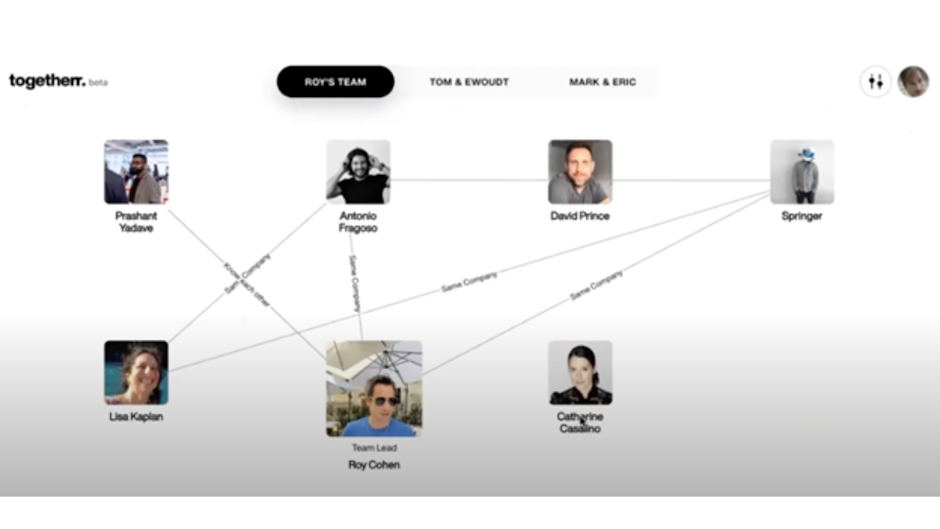
When a client uses Togetherr, they’re immediately asked what they need, be it brand strategy and identity, creative concepting or something else. After making that choice, they can specify the channels they’re interested in, such as video, social or experiential.

Finally, the client inputs their industry, budget and brands that inspire them. That data helps Togetherr’s Creative Genome to quickly match the client to three teams of creatives best suited for their project.

Each team at least one creative lead and freelancers who have worked together previously, which ensures compatibility and punctuality among members.

Guy has big dreams himself for this dream team model. Togetherr could also replace the advertising industry’s agency-of-record (AOR) model, which has gone stale over the past 25 years, he says.

“[AOR’s] hefty retainers, bloated head-count and overheads, combined with complex processes, is not meeting today’s client needs,” he saidsays. “Clients need a lot more for less, and faster. Trying to meet these needs without changing our industry’s complex system resulted in broken spirits and a lack of excitement.”

Although the site is officially live, Fiverr plans to continue to build out Togetherr’s platform and improve its AI, as well as add new talent that specializes in different areas, such as media buying and production.

“It’s also important to us to have talent from all over the world We want every team to be as diverse as possible.”

Feature Image Credit: Amir Guy, General Manager, Togetherr / Fiverr + Togetherr

By

Sourced from The Drum