
Author

editor

Browsing

By NisonCo

In the age of digital marketing, it seems influencers, email marketing, SEO, and social media reign supreme. Are there any classic marketing tactics that have withstood the test of time? The answer is yes — there are quite a few “old school” marketing moves that still pack a punch. Let’s look at six tried and true marketing tactics you should still consider using in the modern era.

1. Networking and Relationship-Building

Networking online or in-person is just as important in the modern-day as it was in the past. Strong networking skills are essential for any marketing professional or business owner. Successful networking generates referrals and leads, encourages steady client retention, and helps to build a positive reputation among peers and patrons, alike.

Attending conferences in your area is a great way for you to meet other people in your industry and build connections with local businesses and clients that are geographically nearby. Attending national networking events or conferences can also help you expand your network across the country and meet prospective clients and professionals that are doing similar work and perhaps can partner with your business or brand to form a mutually beneficial relationship.

2. Actual Facetime with Your Audience

No, we’re not talking about FaceTime with screens. Investing in facetime with your audience or customers is still a necessary part of doing business and can be greatly beneficial to your relationship with clients, collaborators, and partners. You will develop stronger circular regional relationships by curating interaction opportunities as well, which in turn helps to build more resilient local economies.

When you have face-to-face time with clients or business partners you’re able to pick up on things that are often missed in emails or audio calls such as facial expressions, body language, and other social queues that can get left out in written text or audio-only interactions. This can help build trust and deepen relationships which can yield fruitful business opportunities.

3. Offering Freebies and/or Discounts

People like free stuff. It’s as simple as that. This is a marketing tactic that won’t be retired any time soon because it has proven time and again to be effective. Freebies and discounts allow your target audience to interact with your brand or business and engage more actively with your services and content or sample your products.

It also offers an excellent opportunity for free advertising. When hosting a contest or free giveaway you can get entrants to repost the contest on their social media accounts, follow your brand’s account, and tag other people to spread the news — extending your reach and engaging your target audience in a fun way. Everyone wins.


The USPS created a guide titled

The USPS created a guide titled “Still Relevant: A Look at How Millennials Respond to Direct Mail” (PDF) to help companies understand why millennials respond to mail and how to create an appealing mail piece.

4. Direct Mail Lives!

If you think paper mail is dead, then you would be wrong. It turns out everyone really does love mail. Direct mail is still a great way to reach out with the right purpose in mind, even for younger generations.  There are several benefits to using direct mail. Direct mail campaigns give a high return on investment (ROI)—even higher than paid ad campaigns.

It is possible to reach your target audience with the right information at the right time. Direct mail campaigns can work solo or in conjunction with a digital marketing campaign such as by integrating online sales or QR codes, and it is very easy to track their progress.

5. Radio Advertising

Audio is making a significant comeback, so don’t sleep on this medium! Listen to what the founder and CEO of NisonCo Evan Nison had to say about the benefits of radio advertising in Forbes:

The resurgence of radio-based advertising has become increasingly apparent. Podcasts and web-based streaming audio ads can reach national and global platforms. Radio ads can be used to target very specific local regions and varied audience segments.

For those with a brick-and-mortar business location especially, radio advertising is the fun, affordable option of choice for hyper localized advertising. For those looking to level up their findability in the technological age, look into optimizing your local SEO performance.

6. Testimonials and Reviews

People are generally more attuned to the tactics used to get them to buy things or engage with a brand. Testimonials provide both credibility and accountability for brands and businesses because customers are naturally more likely to trust feedback from other consumers. Creating space for testimonials and reviews allows for clients to leave positive feedback or bring attention to issues that can then be addressed to help better the brand or business. In addition to these benefits, bringing them into the modern era by dedicating time to respond on social media sites and to poor reviews will aid in your local SEO strategy so your site will rank better on search engine results pages.

Conclusion Caveat: It’s a Modern World

It is imperative to examine the past for the lessons it has to offer our present, with the caveat that the world we live in exists today in the here-and-now. Each marketing strategy — old and new — has strengths and weaknesses when placed in different applications and contexts. If your brand is uncertain what blend of old-school and digital marketing strategies to employ, reach out to our team of PR, SEO, and Content Writing specialists today to begin crafting a comprehensive plan.

This article was submitted by an external contributor and may not represent the views and opinions of Benzinga.

If you are not using this trading strategy, you are leaving money on the table…

If you are blindly looking up and trading stocks the way 99% of traders are, you are missing on HUGE potential returns. Even new traders who started following this options trading strategy instantly began seeing returns they wouldn’t have had otherwise. With even two trades per month with this strategy, you will start seeing the difference in your trading account. Don’t waste any more time “guessing” and “getting lucky”. Click Here to See if you Qualify for Benzinga Options!

By NisonCo

Sourced from Benzinga

By Allison McDaniel

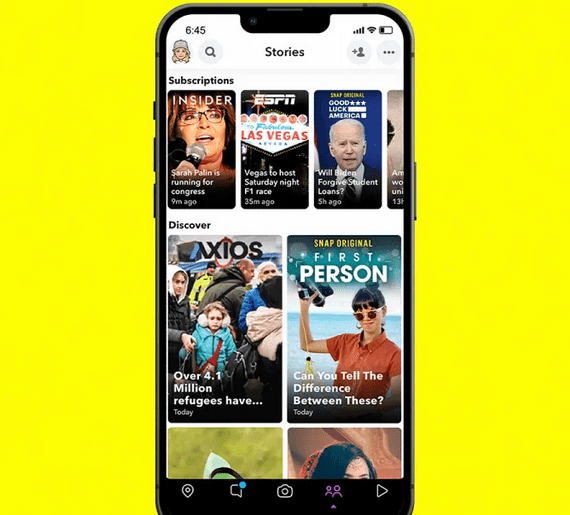
Reported by Axios, Snapchat is releasing a new feature that lets news publishers upload their content in real time. Beginning today, more than 40 news publishers globally will use this new feature called Dynamic Stories to publish to Snapchat using RSS feeds.

Some of the US publishers include CNN, ESPN, Axios, The Wall Street Journal, TMZ, and others. International publishers include The Independent, The Mirror, Marie Claire, GQ India, and more.

The new feature is an automated process of converting stories from the web to Snapchat. Most web publishing systems already have RSS feeds, so content easily goes to Snapchat in a vertical format. The Axios article also states that Dynamic Stories won’t include videos for now but may in the future.

Once a story is published to Snapchat, it’ll be added to users’ Discover platform which updates in real time. Users can also find Dynamic Stories in their subscription feeds. Snapchat will highlight the articles in the “Happening Now” section.

The social media giant is also selling vertical video ads to post within Dynamic Stories and plans to share some of the revenue with publishers.

Sources from Snap’s partners, who have been in testing for months, say so far the partnership hasn’t driven significant income, but it offers publishers an opportunity to reach the ever-distracted Gen Z audience.

This isn’t the first time Snap has brought breaking news onto its platform. In 2018, Snapchat launched the NowThis news channel, featured in Snapchat Discover. Other major publishers have since created their own news channels.

Only verified publishers will be part of this platform. More news partners will join Dynamic Stories in the coming months.

By Allison McDaniel

Allison is a News Writer at 9to5Mac covering Apple news and rumours.      You can email her directly at [email protected] or catch her on Twitter at @aamcdani

Sourced from 9to5 Mac

By Lucy Tobin

When Sedge Beswick started at ASOS in 2012, the social team consisted of one person — her. By the time she left four years later, she headed up a team of 32, having launched ASOS’s first influencer programme.

That launched the careers of influencers including Freddie Harrel and Leonie Hanne – but Beswick then left to start her own influencer marketing agency, SEEN Connects, which has now grown to a £20 million-a-year turnover business working with thousands of influencers and celebrities including Lewis Capaldi, Tom Daley, Roberto Carlos, Myleene Klass, Jack Whitehall and Kurupt FM. Here, she reveals that working in the ‘new’ tech industries can still involve battling age-old discrimination.

“I founded SEEN Connects thanks to an 18-minute meeting with an investor over a coffee. I am an enthusiastic person – all jazz hands and fast-talking – and in those pivotal minutes, I’d made the case for an influencer marketing agency that focused on creativity and ROI [return on investment].

“At the time, I wasn’t even sure if I would stay on after setting up the business. I felt like defining the business’s USP would be my sweet spot. But then we signed Nike and Instagram in our first week, followed quickly by Very.co.uk. I was immediately hooked and realised I was right, there was a gap in the market for SEEN Connects and my vision of influencer marketing.

“We work with big brands to come up with creative ideas, recommend influencers and celebrities and then use our data team to work on the client’s ideal ROI – it could be a huge bank of content for their internal streams, it could be increasing the average basket value, or conversion to sales on a website, or app downloads. The business took off fast, but it wasn’t all smooth-running. Fairly early on, I flew out to Bangkok to meet a travel client, the Thai base of an entertainment travel company.

“The client and I had been emailing back and forth for a while and though I thought the messages were quite lad-y, but I wasn’t fazed, I’m happy with not being ‘corporate’ too. But when I arrived in Bangkok for the job – along with three influencers who had two million followers between them – it became clear the client hadn’t clocked that ‘Sedge’ was a female name. Let’s just say we didn’t receive a warm welcome.

“I got to reception, was greeted by the business owner, who just said, ‘Where is Sedge? I said, ‘I AM Sedge.’ And he just responded, ‘What? I don’t do business with women. I need to speak to a man.’ I was so taken aback I didn’t even know what to say.

“The influencers were more outraged than me and were desperate to talk about it on their socials. But I didn’t want them expressing their negativity with the brand before we’d even started – I had to say it was ‘just cultural differences, please don’t tweet!’

“But I wasn’t sure what to do with this client, as I didn’t have any men with me on the trip. In the end, I said my CFO is a man, he’s based in London. So this client would phone London to speak to the CFO, who would call me, and tell me what we had to get done. It was bonkers – and the client wouldn’t speak to me directly for the entire trip. His reaction was extreme and offensive.

“We managed to complete the project, and once we got home, he said he wouldn’t pay for the work either. The whole cursed trip to Thailand was the worst moment in my career.

“It did, though, teach me a lesson on due diligence that’s helped ensure my team has never been put in a vulnerable position like this. As an employer, it’s something I’d never want to put my team through. I now make sure we do video calls rather than purely emails before working with and meeting a client, I make sure our legals are in check, and for smaller, more emerging businesses, ask for upfront payment.

“I’ve been comparatively lucky that I’ve only experienced the bluntest edge of sexism once. When we launched SEEN Connects in the US, I found no discrimination but plenty of cultural differences: in New York I have to do far more lunches and dinners, brands demand more TLC from agencies, whereas in the UK people just want things done quickly.

“A lot of people in [the Bangkok] situation would have been shocked to their core – but my nature is to be pretty pragmatic. I just think – it’s happened, move on, don’t put yourself in that situation again. Being bold is paying off – by the end of 2022, and at the pace we are growing, we should be close to 100 people at SEEN Connects. You can’t succeed in business if you’re always anticipating the worst-case scenario. I haven’t been back to Bangkok – but I blame that on the pandemic, not on my last Thai experience.”

By Lucy Tobin

Sourced from Evening Standard

By

As part of The Drum’s Digital Advertising Deep Dive, we catch up with HP’s senior director of global digital media activation Freddie Liversidge (a judge of The Drum Awards for Digital Advertising 2022) who opens up about the challenges of standing up an in-house media practice, catalyzing innovation when the honeymoon phase fizzles, the death of third-party cookies and much more.

Can you tell us about your background and your role at HP?

I started my career in agencies around programmatic media. I thought it was cool. But then, I started to see the in-housing trend pick up in digital advertising. And I went to Deloitte, and then I actually went back to an agency, which is kind of ironic.

I was at this agency [and the man who’s now my boss] called me up and said, ‘Hey, should we in-house?’ And being a bit of a cocky guy, I said, ‘Yeah, only if you employ me to do it.’ And so he did. I came in and built that up in-house practice, basically. Now I look after the in-house media team globally. We’ve got 120 people in-house at HP running media — all over the world, from China to the US to Europe to basically any country you can think of. We’re in 70 countries.

What has building out that in-house agency looked like? What challenges did you face along the way?

We built it based on six different criteria. We put a strategy together to say, ‘Look, we want to basically want to control our own data. We want transparency in the media we’re buying. We want to have the ability to — this sounds really ironic now — be closely connected with our team members in the office together. [The point is] everyone was the same. It wasn’t this client-agency relationship any longer. It was peer-to-peer. We also wanted agility. We wanted speed. We didn’t want to have to call an agency — we wanted to be able to turn on a dime in hours instead of days or weeks. That was the impetus for doing it. We piloted it in North America and then rolled it out across the globe over the last three years.

I probably could talk to you for an hour about the challenges. [First of all,] cost-savings — the business also was looking at me saying, ‘Hey, can you save us money on what we paid for the agency?’ And in hindsight, that was a really easy thing to say. Just take off some of the margins that an agency would take on top, and voila, you’ve got some pretty good savings. Now, three years down the line, they say, ‘Hey, how many more savings can you bring?’ It’s hard to continue to drive those savings. So that’s been a challenge — how do you keep your finance team happy with continuing to find internal savings?

[Another challenge is] attrition — how do you keep people entertained… and keep them growing inside an in-house team? That’s been a challenge, especially with the Great Resignation that [happened] in the last six months or so. Another is innovation. And I hate that word… but [I mean], how do you stay relevant and exciting to the marketing organization that you’re supporting as an in-house agency? It was really easy for the first two years because we were the new kids on the block. But how do you continue to be cool and exciting? Once this honeymoon is over, what’s it really like?

Broadly, what is HP’s approach to digital advertising? What are the priorities?

We have two [major focuses right now]. [With] the pandemic… suddenly, people needed computers and printers at home, because they were working from home. We saw some really good growth and revenue. But we are now moving into a world where the PC and the printer are not as relevant — so we need to push demand generation again. That’s one half.

But we also have a brand problem. Most people know who HP is but a lot of people put us in a bucket of ‘printer company’ or ‘PC company’, but can’t really tell you those more detailed pieces around our different products. So balancing those two [priorities] is is the challenge.

So [we’re focused on,] ‘How do we start to shift our digital strategy?’ It went very audience-focused with the cookie — we were big believers in hyper-targeted, one-to-one conversations and really getting to the right individual. So how do we do that now in both demand generation and brand as the cookie disappears? How do we go back to contextual? [Or should we return to] 1990s and 2000s audience approaches where there will be some waste?

That’s why we’re leaning into more full-screen connected television and moving into video and contextually-relevant content. We’re really trying to push those elements across digital strategy. Attention is also going to come back to the forefront as… other measurement-based approaches start to fall apart. An average consumer sees 2,000 ads a month; how do I make sure that my ad breaks through? That’s where the attention economy comes in. If I know that TV has a higher attention rate, how do I start to make sure I’m running content that grabs that attention? [Plus, when you look at,] ‘How do we optimize media in real time?’, attention becomes even more key.

Like most advertisers, I imagine HP is grappling with the death of the cookie, evolving privacy policies and pressure from big tech to evolve? How has it been navigating these changes?

We definitely have [been impacted by Apple’s privacy changes]. [For] example… if I look at our percentage of browser buying across our digital strategy right now, it has moved way more Chrome than it has been before, which is a fundamental issue for HP. As the cookie erodes, [Apple Safari’s] Intelligent Tracking Prevention has come out and iOS 14.5 has come out, we’ve not got the strategy sorted out for Apple devices quite yet. So we’ve seen all our buying basically move more onto the Google stack and Android devices. From a digital perspective, we are very much focused on, ‘How do we start to talk to users when they’re on an Apple device, [using a] content-based approach? How do we use other tools in the market like contextual and first-party data where available?

And what does HP’s privacy stance look like?

HP can be very conservative and very much values the consumer’s privacy. In some ways, I feel like I fight the privacy office because we are so conservative with our approach — which I think is a good thing because we are very much mindful of the customer and how we speak to them.

We’re trying to keep up with every regulation but also bring our own opinion in where we think [advertising is] creepy. So for example, a lot of third-party data providers that we used to work with, we’ve shut down. We don’t work with them any longer because we don’t necessarily agree with the way they collect information or we don’t believe that they’re accurate. We’ve done quite a lot of work to try and follow the essence of the laws and regulations versus just the letter of the law.

It is a real delicate balance [between data privacy and targeted advertising]. Let’s be honest: we all went with the audience approach because it worked. We saw a lift — we saw it working for our customers. So it’s a hard thing to want to walk away from in one sense. But we know it’s uncomfortable for customers. I don’t think we ever, as an industry, really got it right. We end up in that creepy spot of chasing [a consumer] around the web with a pair of shoes that they already bought. We’ve very seldom got to the line of being helpful. If we’d [gotten to that ideal of] ‘right time, right place,’ and every single advertising placement was helpful to the consumer and giving them more relevant information, I don’t think we’d be in this spot. We need to still try to be helpful and relevant without that creepiness. We’re starting to listen to people now.

Do you have any predictions for how the digital advertising industry will shape up in the coming years in light of the various privacy changes underway? Do universal ID solutions have any teeth? What about contextual targeting? Or will first-party data win out?

Contextual has been around — it’s just going through a reinvention. We all just forgot about it as we got so excited with audiences. The content we place advertising on is just as important as the audience that we’re talking to. And as a programmatic guy, I definitely didn’t think that way for a long time — it was all about, ‘If the audience is right and the content is safe, then that was okay.’ But I do think the content is key. Contextual is going to see a massive resurgence. Even in our buying today, the amount of deals that we’re doing now with publishers that disappeared for a few years is increasing.

With regards to first party data, from both an HP and an industry point of view, our job in marketing and advertising is not just to talk to our own consumer base. First-party data is brilliant for a portion of your buy — but it can’t be your whole buy. I hear a lot of people putting huge bets on first-party data, and I agree we should leverage it to its full extent, but it’s never going to solve everything. At HP, we have a ton of information on our customers from our computers and printers. But we’ve got to talk to new customers. We’ve got to get acquisition.

With regards to universal ideas, I have spent the last couple of years talking to [providers]. I’ve probably met 20 or 30 different ID providers. And there’s a new one every couple of weeks that pops up. Even if you look at [The Trade Desk’s] UID, which is the frontrunner, [the EU’s] General Data Protection Regulation said it’s not compliant. So it’s already not looking great for Europe.

[Beyond the regulatory concerns,] I just can’t see a world where we log in on every single website. And that’s what a lot of these deterministic ID solutions are going to need. It will work on certain pieces of content. For example, for news outlets, we could possibly do it — you might be logging into The Drum or The New York Times. [It might suit] a connected television or streaming model, where you’re likely to log in. But if I’m looking up a cocktail recipe, I’m not gonna log into that website. That makes UID — and any methodology that uses emails as a deterministic way to match individuals — struggle. Also, people were scared of cookies; I don’t know if sharing email addresses around the internet is going to make people feel much more comfortable as a solution.

If we [consider] probabilistic-based IDs, we’ll have… in my opinion, a new way of fingerprinting — just with a more positive spin to it. Again, you’re capturing information like IP address or other identifiers. People are starting to describe this data as personally identifiable information. That’s going to be a continuous battle of what’s available and what’s not available.

Where do you see HP’s media buying practice going from here?

For the in-house agency at HP, the short-term vision is getting back to the fundamentals. We just went through a three-year massive growth period and hired 100 individuals. Now it’s about making sure our media buying is as excellent as we can make it right. We are cleaning up any vendors that we’re not particularly happy with [and getting] viewability rates high. That’s what the next year is really focused on.

In the longer term, it’s shifting with the industry and making sure that we are pushing the envelope of new formats and new content. I’m really interested to see where the metaverse [goes] and all those new ad formats that are going to start to show up. I’m going to make sure that we’re pushing into those new areas. Also, [we may focus] on in-housing the more strategic elements, the comms planning and how we do more of those areas of buying.

Now that you brought up the ‘m’ word, I have to ask: How is HP thinking about the metaverse? Are you already dabbling in any of these spaces?

We are not dabbling yet. There are a few proposals floating around that I think are very interesting. I’ll be brutally honest: most of what I’ve seen so far feels like in-game advertising. I think it’s valuable, don’t get me wrong — especially for HP’s OMEN suite [of gaming-focused products], in-game advertising makes a lot of sense.

I’m interested to see how much [the space] grows and what it becomes before we dabble too aggressively into the metaverse. We definitely want to be there once it’s ready. [I admire some] stuff that people are doing — I loved what Heineken did with making a metaverse beer [but saying,] ‘beer tastes better in reality.’ If we can have some fun with it, that’s what I’d love for HP to do.

Feature Image Credit: HP’s media lead says the company is focused on demand generation and building up the brand’s image / Freddie Liversidge

By

Sourced from The Drum

It’s something many negotiators agonize over.

Sometimes they don’t even think they have one.

It’s your BATNA, or your “best alternative to a negotiated agreement.” In other words, it’s what you’re left with if a given negotiation doesn’t work out, your default state.

Your BATNA is critical, as it determines your leverage in life’s most important negotiations, such as a job offer or the sale or purchase of a house, and in everyday dealings in business. If you feel pretty good about your BATNA, you’re more likely to “stick to your guns” and not negotiate as hard. If you’re not thrilled about your default situation, you may be much more willing to concede certain terms in the negotiation, to make it work.

Despite the importance of the BATNA, people often are at a loss as to how to define it, improve it, flaunt it, or perhaps hide it. Many people enter negotiations under the self-limiting belief that they don’t have a BATNA. Others enter negotiation with a false sense of security. And even when negotiators have a well-formed BATNA, they’re often unsure how best to leverage it.

Following the do’s and don’ts below will position you to understand, sharpen, and leverage your BATNA to reach the best outcome in any negotiation.

Don’t panic if you think you don’t have a BATNA

If you only get one job offer or one bid on your house, you might not think you have a BATNA. In reality, you always have a BATNA, and must make the distinction between having a BATNA and not liking your BATNA. For example, you may not wish to remain at your current job (your BATNA), but if a job offer you’ve received doesn’t include what you see as fair compensation, it may be best to keep looking for new opportunities, especially if it’s early in your search.

Do be proactive about your BATNA

Think of your BATNA like a plant; it needs to be nurtured. If you’re seeking a job, make sure you’re networking and going to recruiting events, so you’ll be able to weigh a job offer in the context of other potential opportunities. If you’re looking for a supplier, talk to as many as possible that fit your broad criteria. DON’T be passive when it comes to developing your BATNA.

Don’t lie when asked about your BATNA in a negotiation

It’s very likely the other party will ask about your BATNA. If they do, don’t claim to have offers you don’t actually have. That’s unethical, and will likely ruin your credibility with the other party and, possibly, others. Instead, follow the advice below.

Do signal that you have a BATNA, without showing your whole hand

The other party will probably ask you about your BATNA! Rather than revealing exact details, such as the compensation another employer has offered, say something like: “I have other options I’m intrigued by. But I prefer to talk about what it would take to work things out with you.” That keeps the focus on the current discussion and prospective relationship.

Don’t start a bidding war

If you’re fortunate enough to have multiple offers, don’t play them off one another—although a negotiation where price is the main term, such as a home sale, may be an exception. One manager I know had his top-choice employment offer rescinded when the company discovered he was engaging them and another firm in a bidding war. As tempting as that kind of behavior may be, it’s short-sighted and can result in a worst-case outcome. Don’t go there.

Do share your top choice and target terms

Telling your top-choice company—or supplier, or other counterparty—they’re your Number One can promote goodwill and expedite the negotiation. If you tell them they’re your top choice, and they agree to your terms, accept the offer on the spot. If they don’t agree, tell them you need more time to “think it through,” and then do that, while weighing your BATNA, including other in-hand or likely offers.

Don’t forget to be gracious

Appreciation matters. If a party makes you an offer, thank them genuinely for it. If you have more than one offer, remind yourself how fortunate you are to be in that position, and consider releasing some of them so you don’t waste people’s time. This also could open up space for other candidates.

I hope these do’s and don’ts come in handy for your next negotiation, whatever it may be. I hope you get what you want. And if you can’t, then I hope your best alternative is truly the best one it can be.

By Leigh Thompson

Sourced from QUARTZ at WORK

Sourced from the Association of Advertisers in Ireland

PLACES ARE FILLING FAST!

We have had a great response so far for our next #Toolkit webinar: What makes for effective audio with Ciarán Cunningham.

Date: 31st of May
Time: 10am
Location: Online
Registration: Here. 

Ciarán Cunningham was appointed as CEO of Radiocentre Ireland in January this year. Radiocentre Ireland is a new organisation, funded by RTE and the Independent Broadcasters of Ireland with a remit to promote audio as a marketing medium. Ciarán will take us through research that contains insights on what makes effective audio from a creative and media planning perspective.

Ciarán became the CEO of Radiocentre Ireland in January this year after spending 25 years in the media agency sector working in Dentsu, Carat, dentsu X and Initiative Media. Ciarán has worked with many clients including Unilever, Diageo, Vodafone, ESB, Heineken and Bank of Ireland. Ciarán started his career in RTE back in 1989 so it is great that he is back again working on the media owner side.

Register Now

Sourced from the Association of Advertisers in Ireland

Customer success has come a long way to become a value driver for growth within an organization. That momentum has accelerated in the last five years, and now even large enterprises are adopting the function to increase their growth rate. All customer success professionals should be celebrating the function going mainstream and the opportunity to play such a central role in corporate strategy.

But if we look ahead to future needs and challenges, it’s clear we need to consider an overhaul. Customer success has become vulnerable. It is in danger of stagnating and not continuing to move ahead. It’s important to be alert to pitfalls, even in growth. We have recently seen how Peloton was caught off-guard, not prepared for a world without pandemic-related demand. It’s important to applaud what we have achieved, but we should also pay attention to warning signs.

Here are five key areas to consider to overhaul customer success in your own company.

1. ALIGNMENT OF CS OPERATIONS

Last year was significant in terms of customer success operations getting mainstream approval. CEOs are recognizing the need to allocate budget so that CS leaders can staff their operations. At the same time, there’s a clamor for a unified revenue operations function cutting across marketing, sales, and customer success operations. Ideally, it should have a dotted relationship with the sales ops leader, but this will take time. Down the road, such a relationship may be a possibility, but for that, the revenue function needs to mature. Today, CS leaders have to institute a productive working relationship with both CS ops and sales ops.

CS ops and sales ops must reconcile through the CRM. CS clearly benefits from its own system of record, as does sales ops, but both need to help further establish the CRM as a more precise executive dashboard. Since the CRM is treated as the ultimate source of truth by the CEO and CFO, the two operations groups should ensure a clean dataset which is a bane of every organization. CRM hygiene and clean-up tops the list of priorities for many companies. For many, this is an unending and underachieved task.

In addition, there are important factors from both operational teams that should be reflected in the CRM to reveal a broader, more accurate truth. That said, the focus of the two groups is different. For sales, the central objective is opportunities, while for CS, it’s the customer. The end-to-end customer journey needs to be conveyed in the CRM. CS operation should continue to focus on CSM enablement (tools, process, templates) and CS reporting (productivity metrics, board KPIs, customer book of business). Additionally, they should work with sales in enabling sales-CS handoff, tooling integration, and growth metrics.

2. EXPANDING TEAM STRUCTURE WITH SPECIALIZATION

It’s time for the CS leaders to think of specialization versus generalizations, which means instead of hiring CSMs, think of hiring onboarding specialists, renewal specialists, adoption coaches, etc. In his book Blitzscaling, Reid Hoffman talked about how as a company evolves, it needs to hire specialists to bring process focus and maturity. The SaaS industry is facing a massive activation problem. Onboarding done well is a major step toward activation and then retention. Similarly, renewal specialists bring assurance to the process and know-how to structure the deal conversation with customers.

3. TRAINING AND ADOPTION FOR CHANGING HABITS

CS needs to take training more seriously. Of course, in most companies, there’s a big push for self-serve training and lots of evidence for the value of video tutorials and knowledgebases, but we need more than just information—we need to change our habits. CS needs to embrace specialist trainers who not only encourage building habits around the product but also provide best practices. Expecting CSMs to bring in a daily cadence around this is a massive expectation.

4. EXTENDING VALUE MANAGEMENT AND ADVOCACY

Value management needs to be at the core of CS going forward. That starts with onboarding, where expectations around the outcome value are understood and documented. It continues into showing value at the activity and milestone level, having a conversation on the value on QBRs, and finally delivering a value-based renewal. Customers who see value become advocates. Advocacy has been a stepchild in the customer success world, and at times there is confusion around who owns it—marketing or CS. Remember, a fully functional customer will churn if the customer is not excited about the company or the product. Having advisory board meetings, city tours, annual conferences, and product roadmap roadshows needs to be part of the strategy for every CS team.

5. RETHINKING CUSTOMER ENGAGEMENT

Customer engagement usually has been built around the customer journey, which is a good practice that has been established over the last five years. It needs to evolve with content-based programs and leverage real-time channels. It’s important to think about having a content writer on CS staff who brings some rigor to the process. CS teams often shy away from real-time engagements, thinking of them as a time sink or voicing fear that the channel will be abused by customers.

It’s not enough to have proactive check-ins; there must be meaningful interactions. This will happen when enough content is produced for every scenario, use case, and inspiration.

Feature Image Credit: vegefox.com / Adobe Stock

By Shreesha Ramdas

Shreesha Ramdas is a co-founder of Strikedeck (Medallia) & LeadFormix (Callidus/SAP) and an active investor/board member in startups.

Sourced from Fast Company

Sourced from IT Brief NewZealand

Cheetah Digital has unveiled five key trends shaping the state of relationship marketing in the year ahead with the release of its recent digital consumer trends index.

The report details consumer preferences, including:

  • What they expect from the brands they buy from
  • The channels and formats they prefer to communicate
  • The type of data they’re willing to share
  • The terms under which they’re willing to share it

Key takeaways at a glance

  • Protection of privacy is on the rise

As privacy regulations sweep the globe and data breaches continue to dominate news cycles, consumers are more privacy-conscious than ever online. There have been huge rises in those turning to incognito browsing (50% increase), a PC cleaner (48% increase), password generator (40% increase), ad blocking tech (37% increase), paid for premium software (31% increase), and a password manager 31% increase).

  • Use data but with permission

While most consumers will trade personal data for personalised content, they prefer brands only use data that they’ve explicitly shared directly to the brand (zero-party data). Other tactics are considered “creepy.” Among those considered creepiest are ads based on location data (67%), retargeting ads derived from tracking cookies (62%), and ads related to something they discussed near a smart device (61%).

  • Brand loyalty comes with conditions

57% of consumers say they are prepared to pay more to buy from a preferred brand, with loyalty metrics spiking across the board. Among the growing reasons they stay loyal are when brands understand customers as individuals (110% increase), treat their data with respect (71% increase), align with their personal values (58% increase) and offer admirable loyalty programs (55% increase).

  • Contests, sweepstakes and exclusive access is in demand

Consumers’ expectations of the loyalty programs are maturing, with a desire for contests and sweepstakes increasing 73%, exclusive access and content rising 58%, and personalised product recommendations increasing 56%.

  • Email reigns

When it comes to driving sales, email remains one of the most effective channels, beating banner ads, social media ads, organic posts, and SMS by up to 108%. Half of consumers report purchasing a product directly as a result of an email they received in the last 12 months.

A critical time to recalibrate

This data comes at a critical time, as the effects of the pandemic continue to reverberate throughout the marketing landscape. While some consumer behaviours and attitudes remained the same, many others changed — and quickly. Shifts that once took years to emerge are taking place in a matter of weeks, pushing brands to arm themselves with the latest data to keep up and respond appropriately.

“The path to customer acquisition has evolved from a relatively straightforward train track to a bowl of spaghetti, with multiple channels and formats to navigate,” says Cheetah Digital, VP of content, Tim Glomb. “Brands can no longer get away with lumping customers into segments, but rather must treat them as individuals. This requires developing authentic relationships, offering real value exchange, and interpreting the right customer signals at the right time in the right channel. That’s a lot to absorb.”

Brands need “to assess their ability to create and execute campaigns that meet and exceed consumers’ growing demand for more personalisation, more privacy and a deeper relationship with the brands they know and trust,” Glomb says. “How brands respond will impact their bottom line in both the short and long term.”

Sourced from IT Brief NewZealand

By Jerry Balworth

How can we increase productivity with your home office?

Whether you are working from home, or at the office, we can often find ourselves losing focus. Working 9-5 with only one break can feel overwhelming or monotonous. At times like these, we can feel ourselves slowing down. If you are working from home, you may feel that your lack of focus increases. Everyday distractions and having the pleasantries of your home at your fingertips can make focusing difficult.

home office

To increase productivity, we have to first look at our environment. Here are some easy ways to increase productivity at your home office.

Distractions

It goes without saying that a home office will have a considerable increase in distractions. Anything from family life, to your hobbies, can make you lose focus. Having a personal computer close by may result in idle browsing, or extended time looking at social media, decreasing productivity. Family life can also get in the way, usually with the little ones.

One of the easiest courses of action for this is to create a home office, separate from your personal computer or any distractions. This can help separate you from potential distractions and allow you to focus on your work.

Office layout and design

Picture your work office, what is it like? Most offices are kept clean and open, creating an environment that helps motivate employees. It’s no surprise that your surroundings can have a serious effect on your mood. Therefore, it’s so important to keep your office space clean and open. Don’t leave clutter around, and make sure it isn’t too cramped. Having a window and plants help with motivation as well.

You should also consider the furniture you have. Think about how it’s designed, is it ergonomic? You will be sat down most of the day, so having a comfortable chair and mouse is a must. You should also consider details like lighting. Lights can strain eyes or be off putting and distracting. In winter times, you will be using them a lot more, so make sure to find something which fits your office space perfectly.

Breaks

It might seem counterproductive but increasing short breaks may help with productivity and motivation in your home office. Our minds can only work so much until they start to drift. If you feel yourself drifting and losing focus, it might be time to take a short break. Go outside for a quick walk, or briefly check social media, do something to take your mind off things.

Whatever it may be, giving yourself 5 minutes every hour or so can really help lower stress. Taking a break allows the mind to rest and gather its thoughts, letting you tackle your work with renewed energy.

Health and mental wellbeing

If you are a social person, then working from home might not be for you. That being said, some offices may require you to work some days from home. On these days, it may feel difficult to get work done, especially if you are used to the social environment of an office. At times like these, it is important to keep communication up. Keep communicating with your team via Microsoft Teams or whatever communication software you may use. Keeping a dialogue going can help streamline work and make sure you don’t lose motivation from a lack of contact.

Conclusion

Working remotely can be challenging to those who aren’t used to it or enjoy working in an office. It can cause a lack of motivation and negatively affect productivity. By following these tips, you can hopefully see a boost in productivity when working from your home office.

By Jerry Balworth

Sourced from Talk Business

By

The attrition rates for app users are staggering – but do they have to be? Steve Peretz, group director (health experience and product strategy) at Appnovation, shares four strategies for engagement and retention.

Abandoned shopping carts, neglected Netflix series, snap decisions on Tinder. There’s plenty of evidence that audiences in the digital age have low attention spans and rely heavily on first impressions.

It’s no different with apps. The average app loses 77% of daily users within three days of installation. Within 30 days, it’s 90%. Three months in, 95%.

Often this rapid disengagement results from something simple, such as an error in the app’s design or a frustrating experience. But this negative first impression invariably has adverse commercial consequences for the brand or company behind the app.

Dubbed the ‘halo effect,’ app users can base their entire perception of a business on this initial interaction. They express their dissatisfaction by taking their purchasing power elsewhere.

Fortunately, the halo effect can also work in reverse. Get that first impression right, and customers will stay for longer. Follow up with great customer experience, and they’re likely to spend more, stay loyal and increase frequency of impulse purchasing.

Here are four first impression strategies to help brands achieve a match and ensure initial interactions result in successful engagement:

1. First contact: convey benefits simply and succinctly

Users judge apps by their descriptions. App descriptions and reviews are a fundamental reason people consider a download, so keep it focused. Use relevant keywords. Explain the app’s value proposition concisely. App users don’t want to scroll endlessly to understand the point of a product, so craft a message that cuts through.

Challenger bank Monzo’s app couldn’t be clearer about what it does: ‘Banking made easy.’ Likewise, Deliveroo entices app users by saying: ‘Food: we get it. We all have our favourites. With Deliveroo, get your favourite local restaurants and takeaways delivered straight to your door.’

If the initial messaging easily answers questions around why someone should engage with a digital solution, the brand has hit the bullseye.

2. Debut experience: try before you buy

Sharing a flavour of the app’s experience makes sense before customers commit to the download. If possible, offer the app for free – at least upfront (tiers can come later). Share content that gives a sense of the experience without requiring consumers to hand over personal data. Avoid blitzing people with ads, which will build frustration, not engagement.

Wellbeing app Headspace tells potential customers it will help them ‘Get happy. Stress less. Sleep soundly.’ It then supports app users from the first point of engagement with free educational resources on managing stress, improving sleep and learning to meditate. Users get ample opportunity to build trust in the brand before confidently purchasing the app.

Consider offering a preview video, which increases app conversions by over 20%. A well-crafted video delivers a compelling first impression, building immediate engagement and showing how the app works. For example, podcast and audiobook service Audible differentiates itself with a preview that doubles up as a mini-tutorial and a short promo.

3. Onboarding: use gradual disclosure

After downloading an app, users want to use it immediately. They get frustrated if they can’t engage with an experience quickly. Avoid complex registration processes and complicated tutorials.

Instead, brands need to use gradual disclosure techniques to educate and inform customers about the app in bite-sized chunks. The goal is to tell the audience what they need to know when they need to know it, not overload them.

This can take the form of streamlined content previews, ‘accordion’ elements, mega-menus, sliders or animated hints. Start with the basics and then disclose the more complicated aspects of the solution once the customer needs them.

Shopify is especially adept at gradual disclosure, incorporating the method right from the sign-up page via a non-intrusive pop-up window that explains the domain. Registration processes should be user-friendly and well-tested.

4. Retention: prompt action with instant reward

So far, all the brand has done is get its customer to the starting line. But the main battle begins once the customer is onboard. Work to sustain their early enthusiasm by rewarding their effort immediately and providing instant gratification.

New users should realize that brand interactions will directly lead to personalized rewards. Caffe Nero’s app immediately offers users the opportunity to accumulate stamps for a free coffee, which draws them into an app experience that positions them against competitors through positive reviews on Apple’s App Store.

Elsewhere, health group The Mighty invites new members into the community by extending an invitation to make an introduction. Right away, they feel like a part of the group, having found an online home.

Beware of deterring new users with a barrage of push notifications. It’s a tricky balance, particularly for digital health solutions that require regular inputs (for example, to monitor chronic conditions). If in doubt, err on the conservative side, and restrict communication to relevant, purposeful messages.

Some user attrition is bound to occur, no matter how well-designed the solution. But a strong first impression undoubtedly contributes to committed customer engagement. First impression strategies can help build impactful, purposeful apps with longevity.

By

Sourced from The Drum