Author

editor

Browsing

By Matt Milano

A new survey casts doubt on the potential success of the metaverse.

The metaverse may be all the rage for companies large and small, but those companies may be severely overestimating its appeal among teens.

The metaverse refers to the convergence of virtual reality (VR) and augmented reality (AR), along with immersive, online 3D worlds. In many ways, it’s the next evolution of current VR tech. Meta (formerly Facebook), Microsoft, Epic, and many others are investing billions to stake their claim on the burgeoning market. Unfortunately for the companies involved, a survey by Piper Sandler of 7,100 United States teens shows they aren’t that excited about the metaverse.

According to the survey, only 26% of US teens own a VR device, a critical component for interacting with the metaverse. Of those, only 5% use their VR device daily, while 17% use it weekly.

Even more telling is the fact that 48% of teens are unsure of their interest in the metaverse, or are completely uninterested. Only 9% of teens are interested in it and plan to purchase equipment, while 18% are moderately interested and may purchase equipment. The remaining 25% are interested in the metaverse, but have no plans to follow through with purchases.

Meta recently made headlines when it announced it would charge content creators a 47.5% commission on the content they create for the metaverse. Meta may be setting itself up for half of not much at all, given the apparent lack of interest from the demographic that is going to make or break its success.

By Matt Milano

Sourced from ANDROID AUTHORITY

By J. Clara Chan

An IAB report finds that digital audio — defined as podcasts and streaming for music and radio — had the largest year-over-year growth rate compared to streaming video and social media advertising.

Podcasts and streaming for music and radio has seen the largest growth in ad revenue, hitting a total of $4.9 billion in revenue during 2021, according to a report from the Interactive Advertising Bureau released Tuesday.

With a nearly 58 percent year-over-year growth in ad revenue — up from 13 percent the previous year — the digital audio category outpaced streaming video, social media, search and display advertising growth during 2021, the report found.

The majority of growth in the digital audio category came from mobile devices, which brought in $4.1 billion in ad revenue and accounted for 85 percent of the category’s total revenue. Revenue on desktop devices for digital audio paled in comparison at $739 million, the report said.

But in terms of total dollars, search continued to drive the most revenue for the year at $78.3 billion, followed by display advertising at $56.7 billion. Digital video was the third-largest ad revenue driver, bringing in nearly $40 billion in 2021, representing a 51 percent year-over-year growth.

The report also found that social media advertising was able to recover from some of the decline seen in 2020 at the start of the pandemic to bring in a total of $57.7 billion last year. But companies like Facebook parent Meta and Snap are continuing to contend with revenue declines caused by Apple’s iOS privacy changes, which went into effect last year and allow users to opt out of tracking, the impact of which may not be fully seen until later this year.

Lazy loaded image
Source: IAB / PwC Internet Ad Revenue Report, FY 2021 IAB / PwC

Sourced from The Hollywood Reporter

By Griffin LaFleur

An effective relationship marketing strategy can be a key component in acquiring new customers and retaining existing ones.

Whether a startup or full-fledged enterprise, every company should evaluate the overall cost of customer acquisition.

Getting a new customer is one of the most expensive and difficult activities of any organization and often marketers and business leaders are left asking, “How can we retain customers?” and “How can we find the right customers that will stay with us?” The answer is to use a relationship marketing strategy.

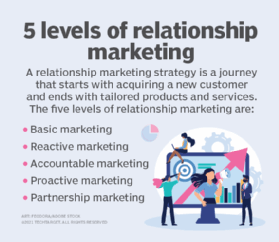
There are many levels of relationship marketing: basic, reactive, accountable, proactive and partnership marketing. All achieve the same goal of deeper, more meaningful connections with prospects and customers. This long-term strategy for customer engagement and loyalty can take away the pressure of customer acquisition and one-time sales.

A relationship marketing strategy aims to turn every new customer into a returning customer, and it has pros and cons as a strategy for businesses. To evaluate relationship marketing requires an understanding of how it works and the five levels that represent different relationship stages.

What is relationship marketing and how does it work?

Transactional marketing tries to earn the next sale through advertisements and solicitations. Companies invest extensive resources and money to get customers’ attention, make a sales pitch, and then facilitate a sale. Therefore, they use different strategies for transactional sales versus growing relationships. Many marketing departments split resources to focus on one or the other.

Relationship marketing is a tactic to form long-term relationships with prospects and customers. Relationship marketing focuses on overall experience with the brand rather than sales alone. A brand experience helps attract new customers and retain them for a long time, earning repeat sales.

Businesses must foster customer loyalty and provide products that those customers deem exemplary. In turn, customers stay with the company longer and make unsolicited referrals. Companies that invest in relationship marketing have the potential to achieve a much greater ROI than with transactional marketing.

With relationship marketing, the goals can vary, including increased revenue, reducing customer turnover, higher customer lifetime value or average order size, and lowered costs.

Pros and cons of relationship marketing

Any business strategy has benefits and challenges. Relationship marketing yields high-value free referrals but also takes time to pay off, for example.

Relationship marketing focuses on overall experience with the brand rather than sales alone.

Pro: Returning customers purchase more than first-time customers. Relationship marketing increases the likelihood of retaining customers. These customers turn into repeat buyers, from cross-selling or upselling. Customer lifetime value (CLV) refers to what a customer spends over time with a brand. The more they buy, the higher their CLV.

Pro: Free word-of-mouth marketing. Customers who have a positive experience with a brand because of the relationship or the value the product provides are likely to tell others. These customers create a positive, viral, one-on-one marketing experience.

A good experience isn’t enough to generate this type of marketing. Consumers are more likely to spread the word and leave positive reviews when an experience goes beyond their expectations.

Pro: Personal connections. Whether a business sells directly to customers or sells a service to businesses, they always reach a person who makes the purchase decisions. Personal connections with the buyers create meaningful individual interactions. Customers want the following:

  • to be heard;
  • to have problems and challenges addressed; and
  • to receive regular communication, follow-through and support.

These personal connections build strong relationships and result in more, or continued, business.

Con: It takes time. A business needs to take the time to build customer relationships. Spend more time with each customer, for example. Or give customers room to make a purchase decision. Many sales do not happen on the first engagement point. It takes many interactions to establish the trust and relationship needed to garner results.

Con: Negative feedback. Word of mouth, if negative, can ruin a relationship marketing campaign. Consumers often expect immediate gratification. One negative experience shared with others has the power to derail a campaign. Consumers share experiences fast. If they don’t get what they want, in the timeframe they expect, they will tell others about their bad experience. Balance strong relationships with the ability to capture buyers at the right time.

Con: New customers are no longer a priority. A strong relationship marketing strategy aims for customer retention and growth. But a business cannot succeed without new customers. Don’t neglect opportunities to foster new relationships. No matter how much an organization prioritizes retention, some customers leave, and growth calls for repeat and new purchases.

The five levels of relationship marketing

Levels of relationship marketing

There are five levels of relationship marketing. Each level represents a different stage in the relationship marketing journey.

  1. Basic marketing. The first step in relationship marketing is to acquire a customer by guiding them through a sale, also referred to as a direct sale.
  2. Reactive marketing. The second step is encouraging the customer to provide feedback after that purchase.
  3. Accountable marketing. At this stage, the company contacts the customer to ensure that the product or service meets their needs. This is also a great opportunity to solicit feedback for future improvement.
  4. Proactive marketing. The fourth level of relationship marketing focuses on collaboration with the customer to develop improvised services and products. Regular feedback helps inform future relationships as well.
  5. Partnership marketing. The last level of relationship marketing is when a business tailors products and services to the customer to foster a long-lasting relationship.

By Griffin LaFleur

Sourced from TechTarget

By

Reach more people with these ten simple steps

Marketing your business should be one of your highest priorities, but technology has forced us to adapt the way we connect with people. It’s easy to overlook email newsletters in favour of social media, but the humble mailing list still has a very worthy place in today’s marketing strategies. Use it right, and it can even work in conjunction with your social media strategy.

Unlike social media on search engine results, there’s no need to compete with an ever-changing algorithm to ensure that your results appear first. With email marketing, you are in complete control of how much – or how little – you communicate, making it one of the most predictable tools you advertise your business.

Follow these ten steps and watch your subscriber list grow.

1. Social media

Above, we hinted at how emailing lists and social media can work hand in hand. That’s because, while mailing lists are often preferred for their dependability, it’s easy to reach not-before-reached audiences on social media, thus directing them to your newsletter.

There are of course other strategies that you can consider when using social media, such as custom hashtags and viral trends, but we’ll save those for another day. Once you have reached potential customers, give them a place to sign up to your newsletter. This can be a call to action in a post or a simple link in your bio.

2. Videos

Creating videos no longer requires expensive, high-end equipment. In fact, a short clip shot on a smartphone and shared online can be a bigger hit.

People love videos for their engaging and interactive nature. They appeal to our inner social needs, and are a great way for instant gratification (look at TikTok, for instance).

Chances are, you’re already using videos to market your company, or are at least considering using them. Add value to your videos with the option to stay in touch through a mailing list.

3. Referral programs

Starting a business can be difficult, but one of the first steps is getting out there. In the early stages, we typically rely on friends and family to spread the word, then turn to our employees’ networks. Why not consider using other parts of your network to branch out?

Entice subscribers to share with their friends and families with referral programs that reward new signups with discount codes and loyalty schemes.

4. Incentive

Off the back of the above, all potential customers should have a reason to subscribe. Most consumers want to de-clutter their inboxes, but adding value to your emails could persuade them to continue with your mailing list.

Offer customers things that they would otherwise not be able to get: insider knowledge, tips and tricks, and discount codes throughout the year. Remember, everybody loves a birthday treat.

5. Giveaways

Running a promotion on an e-commerce site is a surefire way to increase sales, but it’s an opportunity to do so much more, including shamelessly plugging your email subscription. People will willingly hand over their email addresses for product giveaways – where there is a chance to get something for free – allowing you to sign them up for your newsletter.

Returns on investments in email strategies are said to be high, and if you’re willing to give away a high-value product for free, results could be bountiful.

6. Focus on targeted lists

Using an email service provider allows you to store email addresses and generate email content, but a lot of the work will be done by you which can be both time-consuming and costly. Upgrading to a more comprehensive email marketing service brings the benefit of automation, allowing you to create a library of newsletter templates that are sent out automatically to the right people at the right time.

Subscribers like control, so giving them the option of which mailing lists they wish to be a part of can help you to deliver only the most relevant content. Integrating your mailing list with your e-commerce website can help you to identify incomplete sales, offering specific discounts rather than a company-wide promotion.

7. Gated content

We’ve discussed offering incentives to entice more consumers to sign up to your mailing list, but in more extreme cases it’s possible to restrict access to your content. So-called ‘gated content’ requires a specific key to gain access; this key can be an account with your website, or more applicable to this story, being a subscriber to your email marketing.

Remember that this is a trade – or transaction – so offering high-value content is a must in order to deliver only our promise.

8. Give users more control

Linking your email service provider to analytics software can help highlight not only the sources of new subscriptions, but unsubscriptions too. Analytics are hugely beneficial to any business, but they don’t offer a full picture. Consider why people are choosing to stop receiving marketing communications from you – it could be that they are no longer interested, but it could be that the content isn’t relevant, that they are receiving too many emails, or even that they aren’t getting enough information. Avoid unnecessary unsubscriptions by giving your customers a say.

It may seem counterintuitive, but giving people the opportunity to select exactly what they want to receive is a great idea. You may be surprised at how many boxes people will tick given the option.

9. Increase prominence

A good mailing list will have many entry points across various platforms, from your website to social media and existing emails to non-web marketing. However you’re advertising your marketing strategy, it should be prominent enough to attract attention – often more so than even the products or services customers are looking for.

10. Make it easy

Making your mailing list a prominent feature on your channels is only half of the story though. In business, we cater to the fact that ‘people are lazy’, whether that’s true or false. What this means is that it should be easy to join with minimal effort – each additional click presents another barrier that may deter potential subscribers.

Feature Image Credit: Shutterstock

By

Sourced from techradar.pro

By Jerry Balworth

Social media is a great tool to help business owners expand their online presence, publish informative and authoritative content, and, most importantly, engage with their customers. Having a strong social media strategy can grow your business exponentially.

Using an organic approach to help grow your social media accounts results in authentic engagement and true consumer loyalty.

But first, to grow your social media accounts, you need to master your social media strategy.

Whether you’ve recently started your own business or work in-house, here are 5 top tips to organically grow your social media accounts.

Consistent & Captivating Content

Creating content is one of the most important aspects of growing your social media account. Users tend to gravitate towards consistency. This includes consistency in the type of content shared and the frequency with which it is posted.

You will find that social media users are more likely to engage with a post if they know the type of message or branding experience they are signing up for.

Your content has got to be consistent; it has to be exciting! Whilst consistency is key; you should remember the old age saying quality over quantity.

Planning, identifying and researching one’s target audience and keeping an eye on the competitors are just a few ways to create meaningful content.

Engage & Acknowledge Your Followers

Would you keep talking to someone who never returned your messages? Probably not. The same works for customers.

Users will not want to communicate with you or follow your brand on social media if they receive no benefit. That’s why it’s crucial to interact with your followers on social media.

If you want to create a social media presence, you must turn your accounts into a community. That isn’t to say if someone comments on one of your posts, you must respond, but at the very least, you should like it.

You may also use posts to ask and answer questions and acknowledge and share user-generated content to show your appreciation to your followers and customers. Engaging with your followers will help you develop authentic relationships and boost your social media presence.

Establish Your Niche

I’m sure you’ve heard the phrase “jack of all trades, master of none” before. This is true not only in business but also in content marketing.

Defining your niche is preferable so that even your customers know your values, which helps you stand out.

Monitor Your Competitors

Other successful competitors’ social media accounts can be great blueprints for beginners. Keep an eye on accounts that have a similar audience target as you. Have a look at what is working for them? What type of posts generates the most engagement for them?

When looking to increase growth organically, there are many challenges to getting your business off the ground. However, studying what has worked and, most importantly, why it works can help you understand the best ways to grow your account.

Choosing The Right Social Media Platform

It is very tempting to be active on all social media platforms, but do all platforms benefit your business?

Knowing which social media platform works best for your business is essential. For example, Instagram/Facebook may be a good platform if you own a clothing business or sell jewellery products. Still, if you are offering a service, it may be best to use Linkedin due to its professional audience.

Another tip is to focus on the platform that delivers the best results. Although this is not something you would necessarily know when you first start using social media, you may need to give it a few months to monitor results. But once you’ve identified the platform for you, you can determine what needs to be done to organically push your social media account.

Ultimately have fun with it; social media should be used to spread positive messages and show your brand’s personality. Using these five tips, you lay the groundwork in terms of strategy, but if you find something that works, stick with it. Don’t be afraid to get involved in the conversation.

By Jerry Balworth

Sourced from Talk Business


By Steve Allen

Do you love blogging, but struggle to see it as a business? Whether you already have a blog or not, it is vital to understand the blogging business model so you can see the bigger picture.

Each part of the blogging process is an important piece of the puzzle, but unless you know the whole system, you will inevitably get lost.

What are the Benefits of Starting a Blogging Business?

It’s all very well to understand the concept of blogging, but what’s more important is WHY it’s a good business model to get into.

Here are several benefits of starting a blogging business.

It’s perfect if you’re an introvert

Have you wondered “should I start a blog?” Blogging is a great business for introverts because you can start your own business without being in the spotlight.

Some introverts dread the idea of creating energetic YouTube videos or speaking to prospects through sales calls.

With a blogging business, you can completely avoid these types of extroverted activities that many other business models require.

If you have an interest or skill in a certain area, you can transfer your knowledge in the form of written articles to build a connection with your audience.

No more cold calls, sales pitches, or answering to a demanding boss all day.

Your main role is to find out what your readers need help with and then write content on the subject. It’s as simple as that.

And if you need help brainstorming topics, check out our list of what to blog about.

You are helping people solve problems

When your readers find your blog posts, you are indirectly helping them solve problems or things they want to get better at.

Any interaction you have with your audience can be done on your terms, whether it be through email, social media, or even in person. The choice is yours.

When you grow your audience with your blog and help many people, you become an authority on the subject you’re interested in, but you can be as involved or removed as much as you want.

It’s also a great felling to receive feedback from your readers who have gotten a lot of value from your writing.

You can also really define a level of expertise within your niche by analyzing your top-performing content and doubling down on what already works.

You can work from anywhere there’s an internet connection

All you need to start, grow, and maintain a blogging business is a PC or laptop and an internet connection.

It’s also a great business to start alongside your job.

You can work on your blog in the evenings and build up the income until it’s making enough money to leave employment and become a full-time blogger.

Then, once you make enough income with your blogging business, you don’t have to be tied to a desk all day. You can work from a coffee shop, a library, or beach if you really want.

It’s highly scalable

Almost every part of the blogging process can be outsourced at scale.

This means that when your blogging business makes enough money, you can reinvest some of the revenue to freelancers and virtual assistants to write articles or manage the entire business.

When you’re in the position of scaling a blogging business, you focus less on completing all the tasks in the business and take charge of moving the business in the right direction.

You’re able to take a step back and establish how you can grow the blogging business faster.

It’s future-proof

There will always be problems in the world. And as long as there are people with problems, there will be a market in solving them.

And this is what a blogging business does. It solves problems within a niche market.

It’s also safe to say that the internet is here to stay and information is only getting more valuable.

As long as that stays true, blogging isn’t going anywhere.

The Blogging Business Model: Starting at the End and Working Backwards

For clarity, here is each part of the blogging business model:

  • Niche
  • Avatar
  • Traffic
  • Content
  • Monetization
  • Exit

Let me explain each of these in reverse order, because it’s important to start with the end in mind. You’ll see why in a second.

Exit

Every business should have an exit strategy, including blogs.

It’s likely your interests will change 10, 20, and 30 years from now. Or you might want to retire at some point and allow someone else to take the business to the next level.

Luckily, blogs are one of the easier businesses to sell because there are so many brokers and website marketplaces.

Blogs and websites sell anywhere between 35-45 an income multiple of the monthly profit.

So, if your blog one day makes a regular monthly profit of $7,000, you’ll have an asset worth between $245,000 and $315,000.

What a lot of entrepreneurs do in this industry is build multiple blogs and scale content production with a team of writers when they’ve got a good system in place.

It’s a good idea to have an exit strategy in mind and set yourself an income goal so you have something to aim for.

Monetization

Blogging is only profitable when you monetize your traffic.

As a blog owner, you’ll need to define which monetization strategy suits you best.

Most bloggers earn their living through advertising (these are the best ad networks for bloggers), affiliate programs, and subscription services, but your options are endless.

In the beginning, your blog will be small and won’t get much traffic. The more content you add and the more relevant and valuable your content is, the quicker it will grow.

That’s why it’s not so important to add monetization in the very beginning. Sure, you can add some links to affiliate products, but focusing on content will benefit you in the long run.

If you want to build passive income, put in the effort with your content, then you can look at more monetization opportunities.

Here are a few ways to monetize a blog:

  • Affiliate Marketing: Probably the most common and easiest way to monetize your site. All you need to do is sign up for an affiliate program such as Amazon and then add affiliate links to your content. Check out our Amazon Affiliate Program review if you’re interested in this route.
  • Display Ads: Another simple way to add blog income. New bloggers can use Google Ads or Ezoic’s new service called Basic Ads. And those who generate 50,000 visits per month can use a service like Mediavine.
  • Products or services: Some bloggers like the idea of creating their own physical product and using their blog traffic to market their products. This is a more advanced monetization strategy, but with potentially higher returns.
  • Digital products or courses: If your blog teaches something, you can package up that knowledge and sell it in the form of a digital product, like an eBook or course.
  • Memberships: An excellent opportunity for recurring revenue is to turn your blog into a membership site or develop a subscription model for gated content.

Throughout your blogging business, you’ll want to keep revisiting ways to increase income.

Just one of these options could be enough to reach your income goals, but it’s important to consider all your options before starting a new blog.

Content

Content is at the heart of a blogging business model. Without content, your blog won’t offer value or generate traffic.

Good content also helps you build authority and become a trusted voice in your niche.

The best way to find success with your content marketing efforts is to develop a content strategy that complements your monetization model.

For example, if you focus on affiliate marketing in the beginning, then it’s wise to add some product reviews and supporting articles to help those reviews rank higher.

If, however, you want to monetize with display ads, then content that teaches something could be better, because it keeps visitors on the page longer.

You also want to develop your content strategy around topics people are searching for in Google.

Try finding content clusters that fall under a broader topic where you can write between 20-40 articles on the subject.

This will build authority in the niche and topical relevancy, both of which can drastically increase SEO traffic.

Traffic

Blog traffic is another essential key to a successful blogging business. Like content, without traffic, your blog won’t generate any revenue.

Luckily, because a blog relies on content, the most obvious traffic source will come from Google and Search Engine Optimization.

If you’re writing the articles yourself, which is recommended in the beginning, you may as well invest some time in using keywords people are already searching for in Google.

You can accomplish this through keyword research.

Adding your chosen keyword in the title, URL slug, h2 tag, and in the intro and conclusion is sufficient enough in the beginning.

Update and Optimize

You can always go back into your top-performing articles in the future for further optimizations, like:

  • Adding images with keywords in the alt text
  • Expanding on the content to build more context
  • Building topical relevance by adding supporting content for your top-performing posts
  • Internal linking your articles to strengthen topical relevancy

If you are for some reason or another against Google traffic, then why not try other organic methods?

Options that might work for you include YouTube, Pinterest, Twitter, and Facebook.

Of course, to get enough traffic from these platforms, you’ll need to be active on them every day so that your audience grows and naturally clicks through to your blog.

Avatar

A huge mistake people make when writing content for their blog is speaking to all people instead of a specific person within the niche.

They write to cater to everyone, instead of speaking directly to their audience.

The problem with this approach is that the reader doesn’t feel like the content was written specifically for them. It goes over their head and they don’t feel connected to the content.

A better approach is to define a specific person with specific goals and values and write your content directly for this person.

This is your customer avatar, or blog avatar, to be precise, and it is vital if you want to develop a better relationship with your audience.

When you speak to the core desires, values, and needs of your ideal reader, you build more trust, keep people reading longer, and generate more commissions.

So, how do you define your blog avatar?

Here are some key guidelines to follow:

  • What is the primary goal of your niche market? This could be achieving optimal health and everyday vitality in the food and lifestyle niche.
  • What are the core values of your ideal reader? For the above niche, core values could be health, longevity, aging well, focus, and productivity.
  • What books do they read? Using the values above, books of interest could be The Bulletproof Diet by Dave Asprey and Why We Get Sick by Benjamin Bikman.
  • Which blogs do they frequently read? These could be Tim Ferris, The Bulletproof Blog, or Mark’s Daily Apple.

Finally, you’ll want to make your avatar more real by giving them a name and defining some demographics.

To keep things simple, define things like their name, age, gender, home city/country, job, salary, and marital status.

This will help you feel more connected to your overall audience when writing articles for your blog.

To take it one step further, you could print off a stock portrait photo of what you think they might look like.

Niche

That leads us to the very first step when starting a blog: to find your blog niche.

Think of this as a customer segment trying to solve a problem or finding a product to help them improve their lives in some way.

Many people struggle to make decisions by themselves, so they turn to Google for answers.

Doing a quick search for “how to stop a rabbit from chewing” provides you with several blog posts that help rabbit owners protect items around the house.

A blog in the pet rabbit niche has endless opportunities for content to write about, problems to solve, and products to promote.

So, choose a niche based on a topic that doesn’t limit your potential and provides you with a lot of opportunities for increasing revenue.

Niche areas to focus on include:

  • Hobbies
  • Personal finance
  • Relationships
  • Lifestyle
  • Food
  • Pets
  • Technology
  • Travel
  • Fitness

Just make sure you don’t start creating content within a niche that’s too saturated, like losing weight or making money online.

Yes, it is still entirely possible to succeed in these competitive niches, but drill down into sub-topics that have a lot of long tail keywords.

For example, instead of targeting “how to lose weight”, you might have more success with “how to lose belly fat while on the Keto diet”.

Or instead of “how to make money online”, you could see more potential with “17 ways to make money on Fiverr”.

Choose your main niche from the ideas above, find some products on Amazon between $50-$150, drill down into a less competitive sub-niche, and start small.

You always have the choice to expand when your blog becomes an authority site.

The Blogging Process: Focus on Less, Achieve More

The process of blogging is quite different than the blogging business model.

The model encapsulates the blogging business as a whole. It’s the big picture or vision you have for your blog, your “why”, and it helps you establish overall goals.

And the blogging process outlines important tasks that need to be carried out to achieve your blogging goals.

  • Model = What is the blog about? How does it help people? What are the primary business goals?
  • Process = What steps are involved to maintain growth? How will you achieve your primary goals?

The Blogging Process 101

Here is a quick summary of the process of growing a blog to continuously hit your blogging goals:

  • Publish: This is the most important part of the blogging process. Without content, your blog has no value. If you create the content yourself, the process is simple; write every single day. If you outsource content, you’ll need a system to hire a team; more on that in the next section.
  • Measure: It’s essential to track your blog’s performance. Otherwise, you won’t know where to make improvements or how effective your process is. You can track engagement metrics with Google Analytics and measure things like pageviews and content performance.
  • Optimization: Use the data you collect to refine the process. Find the topics that are performing the best and focus on creating more of the same to support what works. Each part of the system can be optimized, but so can the system as a whole.

The most important skill to learn with a blogging business is content creation and the ability to sit down every day and crank out articles.

If you have a budget to hire your own writers, that’s great. However, for your first blog, you want to understand what makes a good blog post.

That’s why it’s a good idea to write the first 50-100 articles so you know how the system works. Once you know how each part of the process works, you’ll find it so much easier to manage a team of writers.

Once you’ve reached your blogging goals and plan your exit, you can use the sale of the blog to fund other blogging projects or an entirely different business model if you choose.

Hire a Team of Writers

Once you’ve written a good chunk of articles for your blog and understand what it takes to write quality content, you will want to start outsourcing some or all of your content.

Getting to this stage in the blogging business is where you can really scale up growth. You go from working in the business to owning the business.

This is where you’ll gain more freedom and start focusing your attention on ways you can double down on your blog strengths and areas of improvement.

You’ll get to put more time into your marketing efforts and making sure your writers are creating consistently high-quality content.

All you need to do is sign up for an online writing site or job board, find some writers, and provide them with some details and requirements of the content you want.

These are known as content briefs and clarify your niche market, avatar, and articles you want with their targeted keywords.

Let’s take a look at a few options when searching for writers.

3 Places to find good writers

  • iWriter: A great platform to buy articles as and when you need them. iWriter is best for finding cheaper content quickly and less about building a team as everything is managed within your account.
  • Upwork: A more advanced platform to find professional writers, build a team, and keep everything managed on the Upwork site and built-in messaging system.
  • ProBlogger: One of the oldest and most widely used jobs board to find high quality freelance writers that you hire and manage directly in your business.

Our top recommendation for this process is Upwork.

Check Out Upwork

Blogging Business Tools

Now that you have a better understanding of the blogging business model, let’s that take a look at some tools to make the whole process a lot smoother.

WordPress plugins

WordPress plugins have endless potential for enhancing the functionality of your blog and overall features of your website.

But they can also make blogging tasks easier and a more enjoyable process.

Plugins like LinkWhisper will save you a bunch of time creating internal links between your articles and help you rank for more keywords.

Look Into LinkWhisper

You could use a plugin like Editorial Calendar to help you schedule content and stay consistent with publishing articles.

Plugins can be useful, but don’t let them take up too much of your focus and distract you from the real markers of your blog’s growth.

Productivity and staying organized
As you can tell from this guide, there are a ton of parts that make up a successful blogging business.

That’s why it’s vital to keep things organized so you can keep on top of content production, marketing practices, and managing your team of writers.

To ramp up productivity and keep your sanity, tools like Trello, Asana, and even a spreadsheet can be a lifesaver.

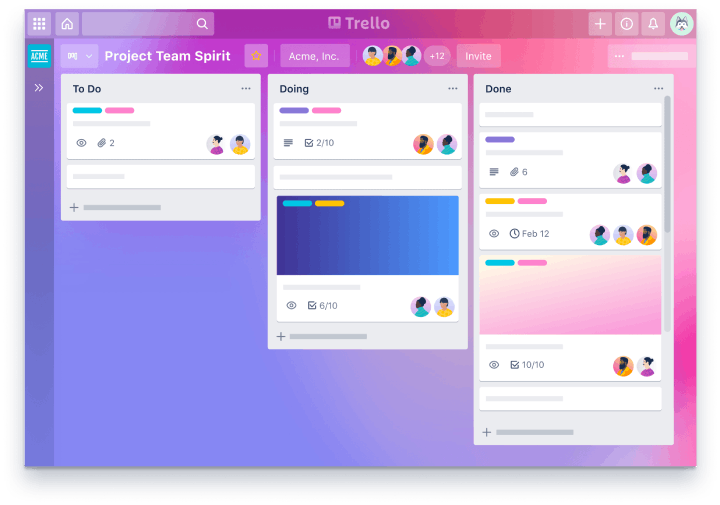
For example, Trello uses a kanban style workflow where you add cards to a list within a board.

Cards can be used to store details about the articles you’re planning to write, which are stored in lists that manage the stages of completion.

These are managed within a board, which can organize different parts of the business model. For example, you can manage articles with a content production board and manage business goals with a blog performance board.

Text editors

If you’re spending a lot of time writing articles, you’ll want to find a text editor that you enjoy using.

Some people like to write directly into the WordPress editor, but this can sometimes feel a bit clunky or, in worst case scenarios, potentially make you lose your work if your website goes down mid-editing.

Editors like Google Docs will autosave your work and markdown editors like Obsidian won’t carry over weird formatting when pasting into WordPress.

Choosing the best text editor for blogging will depend on your own preferences and it may take testing a few to find which one works for you.

Copywriting software

The launch of AI writing tools and copywriting software have blown up in recent months and years and they are only getting better as they age.

As copywriting is an essential skill for creating high-converting content, tools that can help guide you in this process can be a worthy business investment.

ClosersCopy is a copywriting tool that helps you structure content in a way that motivates the reader to take action, whether that be joining your email list, staying on your site for longer, or making a purchase.

Other popular tools like Jasper.ai are getting better at writing entire articles and even books.

With the help of a human touch and strategic planning, these tools can help speed up your content creation process or, at the very least, banish writers block.

Blog content calendar

Compiling a spreadsheet of content ideas is one thing, but keeping up with content production is an entirely different ball game.

To stay consistent, consider creating a blog content calendar.

This can maximize your productivity by assigning specific articles to be published by a certain date, setting deadlines, or setting goals for how many article you want to publish each month.

To manage this process, you can use something as simple as a spreadsheet or Google calendar, or as advanced as a content calendar tool like CoSchedule.

CoSchedule lets you create a content calendar and keep everything organized in one place. They also have a free WordPress plugin to save you from having to login to multiple locations.

Conclusion

The blogging business model helps you treat your blog as a business, maintain goals, and earn more revenue.

A lot of blogging gurus overlook the big picture when they talk about blogging and make you think that there’s a quick and easy path to passive income.

But shifting your mindset and taking your blog seriously can actually help you stick to achieving your goals and reaching success faster.

By Steve Allen

Steve Allen is a niche site builder, writer, and all-around WordPress wizard. He enjoys personal development, entrepreneurship, double espressos, and making things work better than they did before.


Sourced from Niche Pursuits

By 

Given the notably low typical landing page conversion rate, the need to drive more traffic to your site is critical, and there are proven and inexpensive ways of doing it.

According to the email marketing platform Campaign Monitor, the average landing page conversion rate across all industries — the number of people who will sign up, purchase or convert on your offer — is a measly 2.35%. So, the hard fact is that you must drive more and more traffic to boost sales, and qualified traffic costs a pretty penny.

With ad costs rising and SEO becoming increasingly competitive, it’s best to tap into the lowest hanging fruit first: existing  with existing traffic.

Here are five  tips to do just that, and in the process increase your landing page conversion rate to 10% or more — five times as many conversions, and without buying more ads.

1. Speak to an audience of one

The best landing pages are highly specific and hone in on a single sector of an audience or market. They speak directly to their true desires and wants.

With broad landing pages, by contrast, you’re speaking to everyone, and “everyone” isn’t a good target market, unless you’re selling water. It’s far better to cater to multiple audience types and market segments by create unique landing pages for each.

For example, let’s say you sell small  insurance. Small businesses are quite a broad market, and could be within any type of niche, from a local bakery to a hair salon to an online  agency. Trying to create a single landing page that speaks directly to the pain points of all of these businesses is impossible. The resulting copywriting becomes too generic and broad, and the reader doesn’t connect with the message.

So, develop unique landing pages for each segment and craft copy aimed at its specific needs.

2. Control cadence and flow

Each line of copy on a website has two goals: sustain attention and drive a desired action (such as buying, filling in contact information or downloading a guide). Cadence and flow are powerful tools to help achieve those goals.

When writing information on your landing page, you want to include a mix of sentence lengths and structures, and vary the depth at which you expand on ideas. A good example is the “hero” section of a landing page (the main headline and image above the fold), which should be catchy and contain a compelling value proposition. It’s short, sweet and to the point. (“Get groceries delivered in 10 minutes or your money back.”)

As you move further down the landing page, you can start to expand to include more detail, including explaining how your service works in terms anyone can understand. Walk them through the process of your business so they are clear on what to expect when they do convert and sign up with you. The goal here is to blend compelling language while addressing as many potential customer questions as possible.

3. Include immediate social proof

Social proof is critical on a landing page, but that doesn’t mean being limited to just generic quotes from customers. There are countless ways to include valuable and subtle social proof signals that fuel conversions, and they are necessary in order to build trust and confidence.

Consider adding social proof directly in the hero section of your landing page, so it’s one of the first things that users see when they land on your site. Here are a few additional thoughts:

• Is your landing page a software company? If so, and under your call-to-action (CTA) button, share how many companies signed up this week to use your software. This creates instant FOMO.

• Include logos of companies and brands that use your product or service.

• Include third-party reviews/stars from sites like G2, Capterra,  and .

• State how many customers you’ve served and helped this year, or over the company’s lifetime.

4. Minimize CTA risk

A CTA (“sign up now”) moment is intimidating because it implies extra work to be done for the customer, rather than immediate value. It has associated risks, not least the possibility of signing up but not enjoying the service. There’s also a money risk if you are trying to get direct sales from a landing page. These contribute to hesitation, which reduces conversion rates and closed sales: People start to second-guess whether they really need, want or could benefit from what you offer — and in an age of distraction and short consideration spans, a few seconds of hesitation often results in a missed opportunity.

To address these problems, surround your CTA button with positive reinforcement statements like:

• “No credit card required.”

• “Free trial for XX days.”

• “30-day money-back guarantee.”

• “Free forever until you upgrade.”

All of these reassure users that they’ll be covered even if things don’t work out as they had hoped.

5. Get specific with copywriting

The biggest mistake I see on landing pages is the overutilization of broad statements rather than specific results backed by customer data. For example, which statement are you more likely to believe?

A) “Get a better night’s sleep, guaranteed!”

B) “9 out of 10 customers improved their sleep quality by 65% in 7 days.”

Specific data is far more interesting and impactful than broad promises. So, wherever you can, change blanket statements into data-driven ones that sell your product or service for you. To efficiently gather such customer specifics, speak to them — survey them in exchange for free products and utilize the feedback to improve the perceived value on your landing page.

By 

Sourced from Entrepreneur

BY HILLEL FULD

You don’t have to only start marketing once your product is ready.

One of the most common mistakes I hear from entrepreneurs regularly is “I don’t even have a product yet, how can I possibly start to do marketing?”

My answer? If you only start doing marketing once your product is ready, you’ll have missed the train. Now is when you need to start building an audience, establishing the brand, and testing product-market fit. Don’t wait until your product is ready.

All said, here are five things you can do to begin your marketing even before your product is ready.

Find out if people even need your product.

While your product might not be ready for launch, now is a good time to measure how much demand there even is for your product, Whether it’s through surveys or interviews with potential customers, it’s probably a good idea to figure out if anyone even wants a product before you start building it.

Start building your social media accounts.

Now is the time to set up the infrastructure for your social media activity. Your company Twitter isn’t going to set itself up and once your product is ready, you should already have an audience waiting. If you only start setting up your social media post launch, you have missed a golden opportunity to build an initial community around your product.

Even if you don’t plan on tweeting or posting, you can still use social media to listen to what people are saying about the market, about your competitors, and if you’re lucky, about what people want to see in a product like yours.

Begin to produce industry content.

Now, I understand why this might sound scary to you since the last thing you want to do is give away what you’re building and give your competitors a head start. That doesn’t mean you can’t start producing content about the industry without even talking about your product.

If, for example, you’re building an artificial intelligence product, why not start writing articles on your company blog about trends in artificial intelligence, new developments in the world of artificial intelligence, and other content about your industry without even mentioning the name of your product?

Initiate some interviews with leaders in your space.

Interviewing people in your industry might be the perfect type of content to generate early on, well before your product is ready for market.

When you interview people in your industry, you achieve three very important things: You establish a relationship with the leader who you are interviewing, you gain targeted traffic when that person shares the interview with their audience, and you elevate your own brand by associating yourself with that industry leader.

Establish relevant relationships with journalists.

When launch day arrives, you’re going to want to pitch the press, right? How do you plan on doing that without knowing who you’re pitching and how they like to be pitched?

Now, well before launch, is the time to do that research and set up the foundation for a successful launch.

In addition to the research, you can also start engaging with that journalist on social media so when you are ready to pitch them, they already know you and are more inclined to cover the launch There are many things you can do to prepare for your launch and none of them have to compromise the ability to remain under the radar.

Having said that, if it applies, you might want to ask yourself why you want to stay under the radar. Is it because you want to be first to market? Well then you might be ignoring the fact that being first is meaningless and perhaps even detrimental.

Google wasn’t first, Apple wasn’t first, Facebook wasn’t first. They just did it better. In order to do it better, you might want to start sharing your idea with some close contacts to get their feedback. That is much more useful than remaining under the radar.

Feature Image Credit: Getty Images

BY HILLEL FULD

TECH MARKETER AND STARTUP ADVISER@HILZFULD

Sourced from Inc.

By  


RealityScan is a product of Epic Games developed in collaboration with Quixel. It’s designed to make the process of 3D scanning simple and accessible to everyone, no matter if you’re a professional or an amateur. And all you need is a smartphone.

“As more creators and hobbyists embrace 3D photogrammetry, we want to make our technology even more accessible,” Epic Games writes. This way, “anyone can bring ultra-detailed, digital models of real-world objects into their virtual projects.”

First you need to scan your object with RealityScan and the app will guide you through the process. Once you’re done scanning, RealityScan creates a realistic model, and Epic games says it’s done “almost instantly.” Magic! From there, you can automatically upload your 3D model to Sketchfab to share or sell it.

RealityScan has for now been released in beta. It’s available for the first 10,000 people who apply for an early hands-on as a part of the limited test through TestFlight. At the moment of writing this, all 10,000 places have been full. Later this spring, Epic Games will open up RealityScan Early Access. It will only be available for iOS, but the company promises that the Android version is coming later this year.


By  

Sourced from DIY Photography