Author

editor

Browsing

Sourced from The Network Journal

You probably hear the word “branding” thrown around a lot. Branding has become a common topic of discussion in entrepreneurship – and for a good reason. Branding isn’t just a memorable logo. It’s vital to your online presence and the success of your business.

What exactly is a brand?

Put simply, a brand is a promise of a specific experience that you create through the sum of different elements, including your logo and tagline, messaging, promise, a specific personality, and visual elements.

Building a brand helps you cultivate trust in your target market, build a community, and showcase yourself as an authority in your field.

Here are additional reasons why you should build your brand as an entrepreneur:

Instant recognition. As an entrepreneur, much of your business growth depends on your getting out there and marketing. With the number of entrepreneurs on the rise, it can be hard to distinguish yourself. Wouldn’t it feel nice for people to know your company without your ever having to introduce it?

A logo is one of the key components of your brand. As the “face” of your business, it’s what people will instantly recognize. A professional logo design should be simple enough to be memorable but powerful enough to give your business the desired impression.

Increased client attraction. Do you find yourself chasing clients? Perhaps they vanish into thin air after your initial meeting. Don’t let this happen to you.

A strong brand is like a magnet for your business. When you focus on building your brand as an entrepreneur, you become exposed to a larger audience. People can find you online and interact with you easily, attracting more business than you know what to do with.

More than regular clients, your brand attracts higher-quality ones. Successful people want to do business with other successful people.

Enhanced credibility. Many smart entrepreneurs struggle to get their big break simply because they have no idea how to position and present their know-how, skills and experience. They lack credibility among those outside their traditional circle of influence.

Credibility is extremely important for entrepreneurs. The more credibility your business has, the more likely people will buy your products or services. A brand is a strategic representation of everything you embody. It expands your circle of influence and boosts your credibility.

Ability to charge more. With increased credibility, you’ll be in a better position to charge more for your product or service.

As an established brand, you may have a limited amount of time in a day to do all the work your business demands. As demand for your skills, expertise, and time increases, you can start to charge more for your time.

Charging more allows you to decide how much you want to work, meaning more freedom.

A better network. You may have heard it said, ‘who you know is crucial if you want to make it in business.’ This couldn’t be further from the truth.

As you grow your brand, you will develop an ever-growing network of heavy hitters in your industry. This network can come in handy when it comes to growing your business. It’s a beautiful cycle.

Whether you want to release a new product in the market or try another route in your business, having a network of people at your disposal can prove to be very valuable.

Inspires employees. Your employees need something to work towards – something more than work and salary. When your employees understand your business’ mission, they’re more likely to feel that they’re part of something bigger and more likely to work to attain the goals you set.

Building a strong brand is like turning the company logo into a flag your employees can rally around.

What are the best branding practices?

Become familiar with the best strategies to avoid common pitfalls when you begin to build your brand.  A single misstep can hurt your reputation and set your brand back.

Here’s how to avoid that:

  1. Harness your personality. Your personality is the most unique thing about you, setting you apart from your competitors.
  2. Believe in yourself as a brand. You become a brand the moment you start your own business.
  3. Know and embrace your strengths and weaknesses. If you want your brand to come off as authentic, you have to own your strengths and weaknesses.
  4. Build a website for your brand. Unlike social media profiles, your website is something you own. Use this personal platform to share blog posts, digital products, webinars, and any other content you deem appropriate for your audience.
  5. Provide value at every chance. The people who follow your brand are interested in learning what you already know. For this reason, try to share content that provides value for the reader.
  6. Foster relationships with other popular brands. Interacting with other well-known brands in your industry is another way to build your brand. Your competition is not always the enemy. You can find success when you partner with your competition on specific marketing campaigns.
  7. Keep reinventing yourself. If you commit mistakes while building your brand, reinventing yourself will help to present a new persona to your online audience.

Branding is not something that occurs overnight, and it’s definitely not something that you should leave to chance. If you really want to stand out from the crowd, concentrate on building your brand.

To build a successful brand, start by understanding the branding best practices. Brands do not exist in a vacuum. Build relationships with movers and shakers in your niche to stay ahead of your competitors.
Sourced from The Network Journal

By Katy Finneran

The world is more digital now than ever before and that’s sure to last in 2022.

Ninety percent of Americans say the internet has been essential to them during the pandemic. Indeed, basic everyday tasks such as buying groceries, connecting with family, and conducting business have been upended to rely on digital media. The pandemic ignited and expedited digital adoption, the aftermath of which will continue to percolate across all industries for years to come — and marketing is no exception.

The biggest brand victories and failures won’t be won or lost on traditional commercials. They’ll happen on TikTok, Instagram, eSports, and smart speakers. The recommendations consumers trust most won’t come from celebrities on infomercials. They’ll be from nano-influencer on Stories, Reels, and Shorts.

The savviest brands, employers, and users will navigate 2022 using a ‘digital first’ mentality with a focus on monitoring and activating these key trends:

Augmented Reality and Virtual Reality  

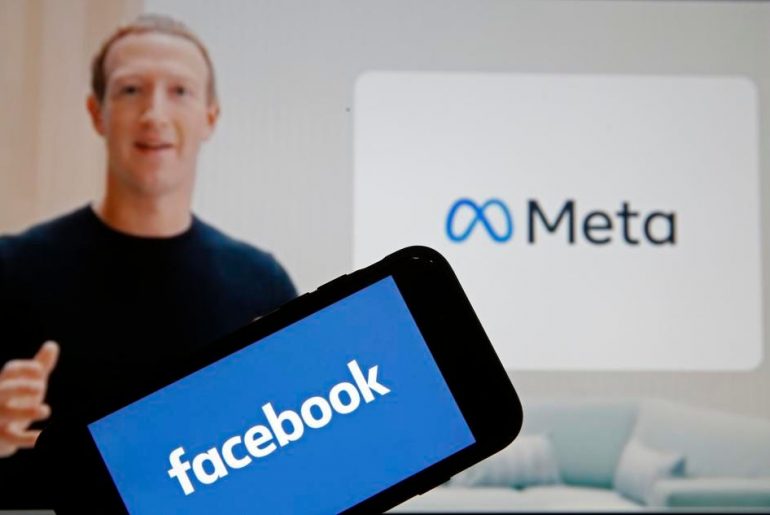
Virtual and augmented reality were growing trends before the pandemic but quarantine, remote work, and the lasting purgatory between pre-and-post pandemic life accelerated adoption. Need further convincing? The parent company of the world’s largest social network, Facebook, recently changed its name to Meta. That’s short for the metaverse, a virtual world where people socialize, work, and play.  Just this week, Meta launched Horizon Worlds, a free app for socializing in virtual reality, available to users ages 18 and up in the U.S. and Canada.

The metaverse isn’t a new concept, nor is it distinct to Facebook. Back in March, Microsoft announced Mesh, a new mixed-reality platform that allows people in different places to collaborate and share holographic experiences across devices.

Virtual and augmented reality trends extend beyond Big Tech. Consumer brands such as Sephora and Warby Parker adopted augmented reality years ago to make online shopping more experiential and efficient. But Facebook’s big bet on the metaverse gives it new weight and momentum. So, will 2022 be the year B2B marketers crack the meta nut?

Voice Search

Smart speakers saw record growth in 2020, with over 150 million units sold globally. Voice search is poised to continue to grow in the coming years. Why? The biggest reasons are intuitive: it’s easy and hands-free. 71 percent of consumers favour voice-searching to type-searching. Voice shopping is projected to reach $40 billion in 2022 and by 2024, there are projected to be 8.4 billion voice devices across the globe.

There are admittedly technological limitations with voice search, which relies on Natural Language Processing but even so, Google’s speech recognition has a 95% accuracy rate for English searches. Google Voice Search also offers massive global scale, supporting more than 100 languages.

Consumer brands, such as Domino’s, have been active in this space for some time. Back in 2016, Domino’s launched its skill on Amazon Echo, which enables users to order delivery via Echo.

The next phase of winning in voice search will transcend beyond basic speaker skills and into all digital content. In 2022, companies and brands who optimize their websites and content for voice search will drive more traffic to their site and increase their SEO ranking.

eSports

By the end of 2021, the global eSports audience is projected to reach 474 million users, with revenues of nearly $1.1 billion. eSports are on the rise but still in their nascent stage, which means a massive opportunity for those who get it right.

Verizon is well-known for being cutting edge in their digital marketing – and eSports is no exception. In 2020, Verizon became an official partner of League of Legends regional league and earlier this year, Verizon and video game developer Riot Games expanded this partnership with Verizon becoming a partner across League of Legend’s three annual global events.

With evolving pandemic-related regulations on in-person sporting events and large venues, 2022 could be the year eSports adoption and sponsorships go mainstream.

Digital Payment

The more time users spend on digital, the more money they spend on digital. Person-to-person payments had promising growth pre-pandemic and COVID-19 ignited and expedited this trajectory.

In 2020, PayPal volume payment growth was up a record 31% and that’s not slowing any time soon. PayPal projects a similar increase, of about 30%, in 2021. And it’s not just PayPal, payments and social media continue to converge through the rise of other platforms such as Venmo and Zelle. In Q3 2021, Zelle processed $127 billion on 466 million transactions.

Major corporations, small businesses, and everyday users are relying more on digital payments for everything from buying a car to reimbursing a friend for lunch.

Micro-Videos

The rise of TikTok during the pandemic was widely reported. In Q1 2020, TIkTok received 315 million downloads – that’s more quarterly downloads than any app in history but whether TikTok maintains dominance on the micro-video market remains to be seen. After all, Instagram usurped Snapchat in Stories – so will the platform eclipse TikTok in Reels? Time will tell but early metrics are promising. 87% of Gen-Z TikTok users agree that Reels is very similar to TikTok. Reels also receive 22% more engagement than regular video content.

Instagram Reels isn’t the only micro-video format poised for growth in 2022. Take YouTube Shorts, a short-form video experience launched by Google in 2020, for example. The biggest case for YouTube Shorts is their institutional userbase: every month, 2 billion viewers visit YouTube.

Brands who capitalize on this micro-video trend – and seemingly algorithmically favored format — will win in 2022.

Nano-Influencer Marketing

By the end of 2021, influencer marketing is projected to reach $13.8 billion but not all influencers influence equally. Studies show that nano-influencers, those with fewer than 5,000 followers drive the highest engagement rate, followed next by micro-influencers, users with 5,000-20,000 followers. In fact, users with over 1 million followers drive the lowest engagement rate. That’s why 77% of marketers would rather work with micro-influencers than celebrities.

Another perk of nano and micro-influencers is their smaller following typically makes them more affordable. Micro-influencers can activate more targeted, niche audiences and are often considered more authentic and trustworthy by their followers.

To-date, influencer marketing has been most effective for brands targeting Gen-Z but as Gen-Z ages and Millennials, Gen-X, and Boomers all spend more time online, there could be a white space for brands to sway more demographics via influencer marketing.

Privacy Regulation

So, what won’t grow in 2022? Third-party cookies usage.

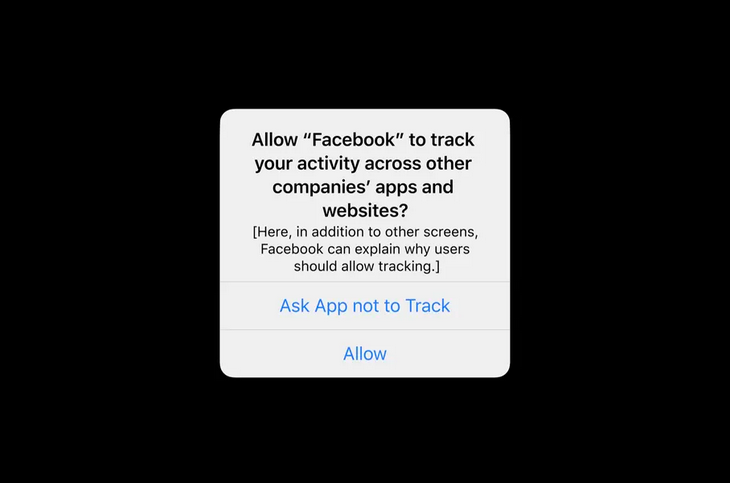
This year, Google announced Chrome will phase out support for third-party cookies by 2023. Apple launched a pop-up on iPhones that asks users for permission to be tracked by apps and Facebook announced its engineers are working on a workaround to serve relevant ads to users without leveraging personal data.

As Big Tech rolls out these new privacy restrictions, more platforms and regulation are expected to follow suit and the implications could pose serious limitations for advertisers.

**

As platforms, formats, regulations, and the pandemic continue to evolve, adaptability will remain the greatest asset for brands, employers, and users looking to build an effective and resilient digital strategy in 2022.

Feature Image Credit: Getty Images

By Katy Finneran

Follow me on Twitter or LinkedIn.

I am a digital and social media strategist with experience at a number of industry-leading brands, including Fox News, Bloomberg and Goldman Sachs. I am an expert at running both paid and organic social media campaigns and have advised some of the most preeminent media personalities and business executives on social media. Now, I run a digital media consultancy and am a speaker and writer on the evolving digital landscape. My articles have published on Fox News, Fox Business, Bloomberg.com, Bloomberg Businessweek and Thought Catalog. I’ve also been a guest on Bloomberg Radio. When I’m not analyzing what’s about to break the internet, I enjoy chasing around my two kids.

Sourced from Forbes

A report reminds us that companies can still see what we do in their apps

A report from the Financial Times acts as a reminder of what Apple’s App Tracking Transparency settings do and do not do to protect your privacy (via Ars Technica). While asking apps to not track you does keep them from collecting and selling data tied to your personal advertising identity, it doesn’t keep developers from collecting any information about you at all.

The feature, introduced in iOS 14.5, is meant to prevent app-makers from tracking what you do and selling that information to advertisers. Companies like Facebook cried foul when it was introduced, saying that it would hurt their ability to show targeted, personalized ads, and therefore hurt businesses that relied on those ads.

According to the Financial Times, though, developers have taken Apple’s rules to mean that they’re allowed to target ads at cohorts, or groups that people are put into without needing to have unique IDs assigned. The report says that developers like Snap, Inc. have continued collecting some data, including from those who have asked them not to track them, with the justification that anything that could be tied to an individual user would be anonymized and grouped.

It’s a similar concept to FLoC, Google’s plan for a post-third-party cookie internet, where individuals are assigned labels describing what kind of things they might buy instead of being tracked individually. Ads can still be targeted, without advertisers having to keep track of everything everyone does.

Some developers have admitted, though, that they also try to make predictions about what users do after seeing ads based on info they receive from ad companies. The Financial Times also says that some personalized data, like IP address, location, and screen size, still makes its way to advertisers, to help ensure that ads fit properly and show up in the right language.

According to the report, Facebook and many other companies are planning on selling ads using aggregated or anonymized data. While Facebook partially blamed Apple’s policies for it missing its earnings goals last quarter, it’s estimated that the ads affected by the rules only made up 5 percent of its annual ad revenue. In other words, Apple’s ad tracking permissions were never going to destroy Facebook’s ad business.

None of this is to say that there are no privacy benefits to hitting the “Ask app not to track” button — a previous Financial Times investigation found that Snap, Inc, Facebook, Twitter, and YouTube lost $10 billion combined after the feature was implemented, so there was obviously a market for ads driven by that data. But it’s good to remember that even Apple, a company that prides itself on “standing up” for its users, can’t stop companies from collecting your data with a single switch.

Sourced from THE VERGE

By Cristian Saracco

Purpose is the raison d’être of a company, the permanent basis of its strategy. Every company has a purpose, explicit or not; however, few – although this is changing – have a conscience. To be clear, the Mafia has a purpose, but consciousness is just another story.

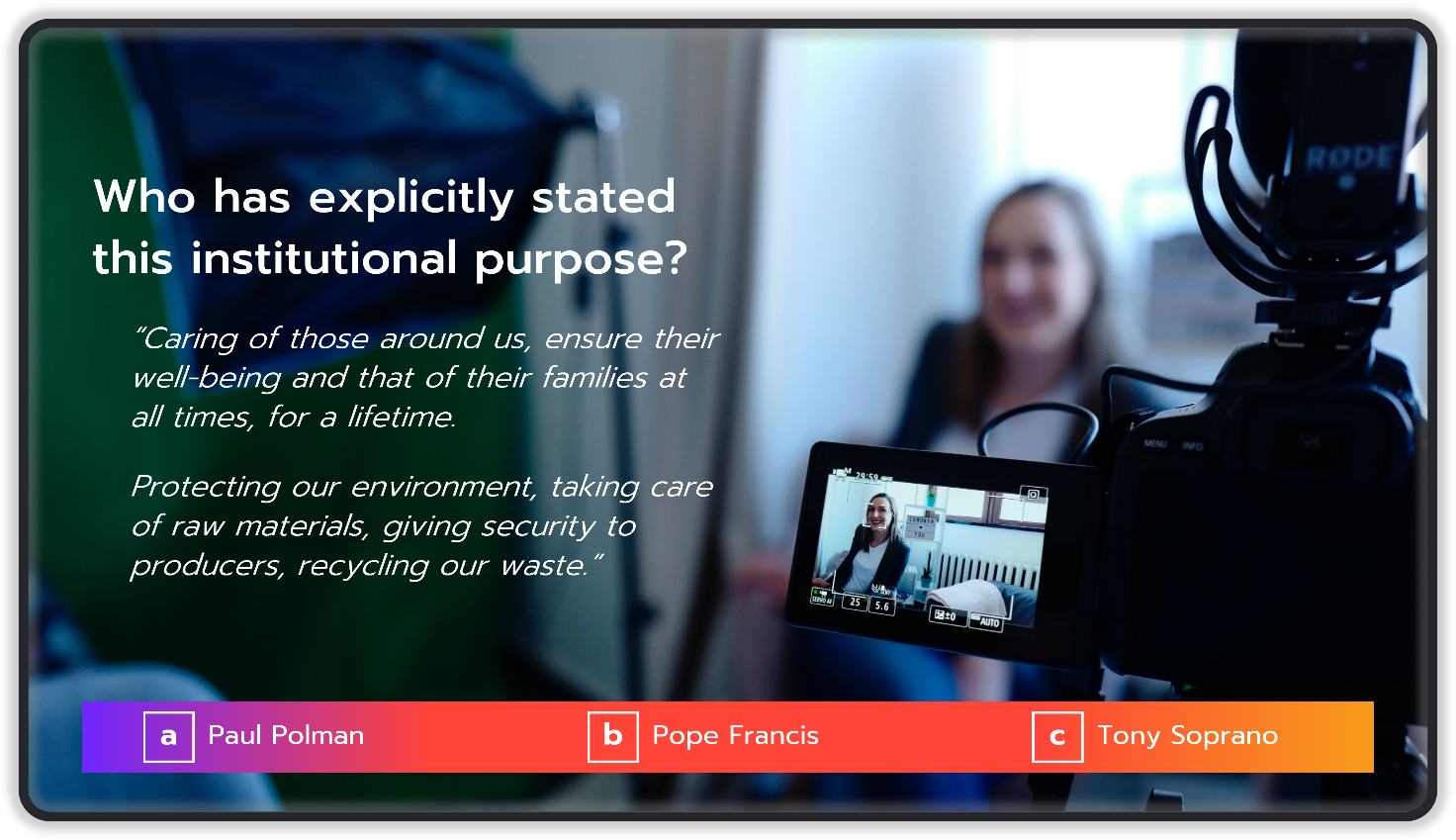
Let’s start with this Litmus test: “Who said this statement?”

To start off relaxed, I’d like to invite you to play and take part in this riddle with three possible answers, although only one of them is the right one.

The question is: Who has explicitly told this institutional purpose?

The purpose under scrutiny is:

“Caring for those around us, always ensuring their well-being and that of their families, for a lifetime.

Protecting our environment, taking care of raw materials, giving security to producers, recycling our waste.”

The potential answers are:

  1. Paulus “Paul” Gerardus Josephus Maria Polman, Former CEO of Unilever;
  2. Pope Francis, 266th Pope of the Catholic Church;
  3. Anthony “Tony” John Soprano Sr., Capo di tutti Capi – From The Sopranos crime drama TV series.
  4. Credit: CoWomen

Before giving the right answer, we must admit that all three could have said that quote, one talking about the Unilever raison d’être, Pope Francis in his second encyclical, Laudato si’, and we are left with Tony Soprano whom you probably know, I guess.

And the correct choice is the number “3”. Words more or words least, this was the way Tony Soprano described to his psychologist the business he was in and leading.

By this, what I mean is that everyone has a purpose, even the Mafia, yet few have a conscience and even fewer are specific in the way they define it.

Consciousness needs sincerity rather than authenticity

For a company, being true to itself means being concerned, admitting vulnerability, and making bold choices. For example, stopping collaborating with other firms that do not meet a company’s standards of conduct; assuming responsibility for mistakes that affect society; abandoning businesses that are no longer legitimate. In other words, being consistent between what the company thinks, does, and says.

Behaving truthfully and being unapologetically driven by values are two of the essential characteristics that today’s society is demanding from each institution.

The key difference between being authentic and sincere is that a business can be authentic and behave without a sense of morality or ethics, while it is impossible to think of a sincere company behaving in that way.

On the one hand, we all have examples of rude, unresponsive, and abusive companies that are authentic but are seldom true to themselves and conscious of others. On the other hand, sincerity is about recognizing that the company lives in a world that goes beyond its own borders. It is about deeply considering its impact on the planet, being self-conscious, purposeful, and going beyond the numbers to confirm and express its true nature. Being sincere means knowing that there is a pathway to live and work by its values, down to every detail. In this way, a company can become a genuine and inspiring brand.

Michael O’Leary, Ryan Air (Credit: Criptomonedas) & Yvon Chouinard, Patagonia (Credit:  DUNA) | Authenticity and sincerity… Capisci?

Another important issue to consider is that authenticity is an innate behavior and sincerity is an acquired one.

Babies are authentic, kids learn to behave sincerely. The same can happen with companies.

Business authenticity is a broader definition that considers the entire spectrum of being true to itself, while sincerity is more focused, brings wisdom, care, and a greater perspective than its own.

People believe in honest brands

It is good business to be true to what the company is, allowing the public to recognize how it behaves with a conscience. Although, in addition, society demands a positive social and environmental impact from the company, this does not mean that profit motives (which are necessary) are hidden as a falsely sincere attitude.

It is valid to recognize the need to “make money” whilst being sympathetic to the audience in the way a company communicates. That’s sincerity!

Brands trying to navigate this new world of conscience and sincerity should act differently, deeply believing in the way they think, in the values they defend, doing the right thing, and being honest about their motivations.

“Behaving truthfully and being unapologetically driven by values are two of the essential characteristics that today’s society is demanding from each institution.”

If being honest and conscious brings on a deeper layer of seriousness and respect, being conscious of others helps take it to the next level, one that is increasingly demanded by all stakeholders including citizens.

Is your company radically honest? ” I asked him.
Of course, it is! We’ve always been honest,” he lied to me.

Conscientious purpose is an inherent part of business

From the beginning of time, purpose is born with any enterprise expressing its raison d’être – even Adam, Eve, Lilith, and the apple.

Thus, the purpose must be company-connected, and its fit is achieved because the strategic aims are born from and aligned with such business.

The challenge for the leadership team is to first understand the real and deepest meaning of purpose, translating it into an actionable mission and vision. It is a matter of alignment, coherence, and consistency.

These are the basis of a company’s better performance, not only in terms of achieving better economic and financial results but also in generating a positive impact.

A conscientious purpose must be integrated into all aspects of how companies do business.

As life, purpose is understood backwards; but it must be lived forwards. This means that, if purpose changes, the company must change – essentially, because it must be reimagined, redesigned, and restarted to live a new aspirational future. This is a key point that is often misunderstood.

Making a conscientious purpose explicit is a good first step

To be practical, a good first step is to make the purpose explicit and, if it is already there, to ensure that it really is the reason for the company’s existence and not a good narrative invented by the marketing or communication areas.

“Holy Graf Zeppelin, Batman!” Unfortunately, we tend to produce such conceptual monstrosities far too often. Deal with it! If the purpose of the business is only to make money, that’s what it is! As mentioned before, it can change but it will imply that a new business was born.

To reinforce, deepen, and, above all, be driven by a purpose, in addition to making it explicit, companies must continuously translate it into precise business objectives associated with it and, in turn, the latter must be translated into visible actions and behaviours. This ensures executive responsiveness to the company’s key audiences and becomes the trigger for exceptional transformation and growth.

The obvious steps (sorry, but I must insist on this) to make purpose a meaningful day-to-day experience are:

  • Think, act, and say – in that order;
  • Measure the impact of how the company acts on purpose;
  • Make the leadership team accountable;
  • Ensure that all stakeholders understand and share that company’s reason for existence;
  • Build the company’s symbols, rituals, and stories around it.

Brand and purpose, brands with a conscience

Branding aims at building a realistic meaning of the company in its interaction with people, independently but including the role they play as citizens.

In addition, when the purpose includes the impact on society and the environment, the brand as a business platform helps prove the consciousness of the company, not to mention internal issues of governance and responsible investments.

When stakeholders understand, live, and share what the company stands for and why that matters, the results come on their own, without out of the ordinary efforts. That’s why I said, at the very beginning of this article, that companies that act in line with their purpose create value, generate superior results, and could even have a positive impact.

If the company can’t deliver on purpose, its brand promise is basically empty nonsense.

Three questions arise:

  • Where are your company and your brand on this journey towards brands with a conscience?
  • Is the company’s purpose explicit and does it need to be transformed?
  • Is the company ready for a transformation that will lead to growth into both results and impact?

Feature Cover Image: cottonbro

By Cristian Saracco

Sourced from Brandingmag

By Alain Sylvain

Since at least the 1920s, brands have steered our cultural zeitgeist. They’ve done this by seeding ideas into the minds of consumers until, ultimately, they become conventional wisdom. Think about it—a brand established mass agreement on what Santa Claus actually looked like (at least, in Western popular culture). A brand also convinced us that breakfast was the most important meal of the day. Another one told us that “diamonds are forever,” cementing the idea of the modern engagement ring.

Brands dictated what was culturally important and helped establish our social rituals.

And then, the internet came along and empowered consumers. They could search for their own world view, and didn’t need brands in the same way. Instead of dictating culture, brands started playing defense against it, pandering to its fleeting trends and scrambling for relevance in an increasingly mercurial world. We see this shift in at least three ways, through brands’:

Change in tone

  • Wendy’s, for example, has fully aligned its social media personality with the trending meme economy.

Aesthetics

Self-identity

  • Impossible Foods specializes in creating meat substitutes, but according to its founders it thinks like a tech company that is evolving into a food platform.
  • Victoria’s Secret stubbornly championed a narrow, aspirational vision of femininity for decades, but has since backpedaled as the body positivity trend becomes more mainstream.

Why the shift in approach?

We live in a disposable cultureP

There’s a constant influx of “new” now, and it all comes and goes at breakneck speed. Brands that once told us what was relevant are now struggling to keep up with what relevance even is. With more options than ever before, the power dynamic has shifted, and it’s resulted in a cacophony of brand voices desperately calling out to consumers who do not care to hear them through the noise.

From social media trends to fast fashion to viral news, there’s always something newer, better, and more exciting that steals our attention. And the covid-19 pandemic has further amplified this, with global online consumption doubling in just one year. Digital culture, including digital commerce, is warping our sense of how fast things need to happen. And it’s changing a lot about human societies. Namely, we’ve become accustomed to constant novelty.

With all of us stuck in a never-ending cycle of producing, consuming, and reacting to content, our brains are overworked and overwhelmed. It’s becoming harder for people to focus, and as a result, harder for brands to be relevant. In one survey, 78% of consumers reported that they feel brands never emotionally connect with them. Companies are flailing in a disposable culture because it’s virtually impossible to find strong anchor points in the chaos.

Enough with the nostalgia marketing

In attempts to keep pace with disposable culture, brands are tapping into one of humanity’s most reliable emotional levers—nostalgia—to humanize brands and to create a visage of “everlasting” by intimately bridging the gap between consumers’ experience of the past and present. We see Pepsi tapping modern pop stars for a retro, Grease-inspired commercial. We see Apple turning to nostalgia in its product design by bringing back the colored iMacs of the 1990s. We see Burger King rebranding with a logo that resembles the one used from 1969 to 1994. It’s everywhere, from the Super Bowl to the socials.

These tactics are meant to inspire comfort and warmth. But consumers are becoming wise to the ways in which brands seek to emotionally manipulate us. Our memories, in particular, feel like something that brands should not touch. Once a blissful brand dance, nostalgia now seems overused and inauthentic.

If nostalgia can no longer be relied upon as a consistent tool for navigating disposable culture, then what can be?

As our choice of which brands and products to consume becomes ever wider and our collective interest fleets ever faster, how do brands create lasting significance?

Instead of defaulting to nostalgia, brands can emotionally connect with consumers in ways that avoid exploitation and even add value:

If you own a business or play a role in building or managing a brand, consider these questions to get you started:

  1. What cause can your brand embody that reflects its authentic self and its aspirations for the future?
  2. How can your brand add an element of mystery in order to captivate your audience’s imaginations?
  3. How might your brand use a worldly perspective to challenge everyday assumptions?
  4. When, where, and how can your brand surprise people when they least expect it?

Brands may never again be the cultural leaders they once were. But brands that adapt by connecting with consumers through something more than a tiring air of nostalgia have a good chance of staying afloat (and maybe even standing out) in our disposable culture.

Feature Image Credit: Reuters

By Alain Sylvain

Sourced from QUARTZ

By

The slate computer was once pegged as the ultimate laptop killer, but something changed

As lockdown started in 2020, there was a huge demand for tablets, as Covid-19 and lockdown forced people around the world to work, learn and entertain themselves at home. This actually bucked a declining trend in sales that started in 2016. But why is this? And what does it mean for digital marketing?

The marvellous, lovely, coveted tablet. The advent of the tablet even changed the usual meaning of the word ‘tablet’, from a medicinal aid (or even Scottish confectionery) to an electronic device we’d never dreamt of before they burst onto the market back in 2010.

The tablet truly laid much of the foundation for changing the way we embrace digital. However, now mobiles are larger and easier to use, I would argue the tablet is becoming less and less relevant. Sales are decreasing again after a ‘lockdown bounce’ and the form factor will start sliding into oblivion in 2022, to be fondly remembered for helping us change how we use digital devices, like the iPod did.

The initial success of Apple’s iPad encouraged other companies such as Samsung and Huawei to develop and release rival tablets. However, according to Statista, after sales peaked in 2014, the global demand for tablets then began to decrease. In 2022, worldwide tablet sales are forecast to reach 158 million units, a significant decrease from the 230 million units in 2014.

IDC data confirms this. The analyst house said in November 2021 that after five quarters of growth, driven by schools and governments blowing their budgets to provide devices for remote learning and consumers aggressively purchasing devices for learning during 2020, global tablet shipments recorded a 9.4% year-over-year decline, falling to 42.3 million units.

Tablet sales grew during lockdown year due to many reasons (their versatility, PC component shortages and a comparatively low price), but are again declining.

Evolution

So, what’s happening to a device so many of us thought we couldn’t do without? One reason is that many devices are evolving all of the time and it’s inevitable that these changes will enable them to move into territory previously occupied by other devices.

Laptops are getting even more powerful and with better graphics. But what is also happening is they’re getting smaller, thinner and lighter. And the edges around the screens are also disappearing, resulting in bigger screens. The result is something like a tablet, but potentially more powerful.

And whilst laptops are getting smaller, smartphones are getting increasingly good at performing tablet tasks, such as streaming. Smartphones screens are getting larger, whilst the devices themselves are also getting thinner and lighter.

In 2022, Statista forecasts that just 220 million phones with a screen size between 5” and 5.5” will be sold – that figure sat at 305 million in 2019. For phones with screens between 6” and 7” the 2022 forecast is for 660 million sales, against only 465 million in 2019.

The quality of mobile screens is also getting much better, with much improved resolution. In fact, this evolution has enabled the digital world to gift the English language yet another new word, the ‘phablet’.

As well as the above changes, the smartphone is always on or about you, it’s not so easy with a tablet (though some users might need bigger pockets!) and, according to the Interaction Design Foundation, they are now the preferred platform for users aged between 18 and 34, possibly because they are more likely to be ‘out and about’.

Gaming is huge, of course, and really needs a PC or console to be immersive. However, gaming on the move is more accessible for many on a smartphone; although tablets are still better, smartphones are, as previously said, much more accessible and easier to carry.

Digital marketing

Across a sample of our clients, we’ve seen a decline in the use of tablets to access websites of up to 31% from November 2020 to November 2021. This will give digital marketers much to think about. The user experience is different between tablets and smartphones, it’s not simply a matter of scaling down a site for a phone; with a smaller screen some functionality will need to be different, with less space on a screen.

There will be implications for campaign targeting when buying media. Who is using smartphones compared with laptops and tablets, for example? In which demographics is the decline of tablet usage taking place that needs addressing quickly? And what will be the implications for CRO assumptions made in the past? These will need to be looked at again due to changing user habits as they move from tablet to mobile.

And ‘more smartphone, less tablet’ increases the headache for marketers using Facebook. Updates to Apple iOS 14 change how marketers can receive tracking data from tools such as Facebook pixel. In an effort to move towards the App Tracking Transparency framework, Apple’s new policy blocks some data collection for brands and puts the emphasis on users to opt in to tracking on their device. Whilst responsible data collection and privacy is admirable, it does cause a ‘blocker’ for digital marketers that have relied on that data to optimise and target their ads and create personalised experiences. Overall, the move towards more mobile and less tablet means marketing to target audiences becomes more restrictive. However, there are some ways around this.

Old tablets never die…

Tablets won’t disappear altogether. They still have many applications that will be useful to marketers and many others; tablets are great for keeping toddlers happy, for example.

They are also great for professionals working in the field, where shop workers can show customers alternative designs and how items will look in certain situations more easily than with a smartphone. They are better for long sessions staring at a screen than concentrating on a smartphone’s relatively smaller screen. And for collaborative experiences, such as choosing new décor or a new car, tablets more likely to be used in the home.

Above all, it’s a trend that marketers must be aware of. If they are, they can take the opportunity now to help customers take advantage of slick smartphone advertising, websites and applications. No-one wants to aim their goods and services where fewer and fewer are looking.

Feature Image credit: Shutterstock.com / Lordn

By

Craig is the CEO of Ultimedia and has been driving digital innovation for enterprise organisations with digital strategy since 1997. He has been instrumental in the growth of many digital businesses, including multiple digital agencies, publishers such as Guardian Media Group and Trinity Mirror, plus high profile organisations in the sport, finance, retail and ecommerce sectors.

Sourced from techradar.pro

By

The best strategy to grow your business: Online store + Social networks.

The world has changed and continues to adapt to a new normal . In the midst of a growing process of economic recovery, we have a much more digital landscape than before. This achievement is something that companies – micro, small and medium – should undoubtedly take advantage of to better adapt to the present and prepare for the future.

At GoDaddy we want to better understand small business owners and their challenges so that we can serve them in the best way possible. This year we conducted the Entrepreneurship Survey 2021 and uncovered some fascinating data that reveals the exceptional ability of entrepreneurs to get ahead by taking a digital approach.

Even in adversity, many of the small business owners and entrepreneurs we surveyed in Mexico found a perfect opportunity to adapt their business strategy, reach new markets, and even create new businesses. Here are some of the top findings from the Entrepreneurship Survey 2021.

A new opportunity in the midst of adversity

Tough times often bring opportunities for those who can identify and adapt to the changing environment, and these small businesses show it. In Mexico, 45% of the companies surveyed were created in the last two years, indicating that they were established just before or during the global pandemic.

Likewise, small business owners have indicated that digital platforms are the best option to be close to their customers, noting that it is an opportunity they should take advantage of to market their products or services in the future. 84% of the participants declared having observed an increase in the activity in the social networks of their competitors, and 4 out of 10 have discovered more websites and / or online stores belonging to this sector.

The best strategy to grow your business: Online store + Social networks

Many small entrepreneurs were looking for opportunities to diversify their sales channels when the COVID-19 pandemic began. The survey revealed that 63% of them started selling online in response to the new environment, helping 50% offset losses in physical sales. In fact, 57% of the total respondents bet on a mixed strategy that includes both physical stores and online sales.

Currently, there are many online sales channels available, and our survey reveals that entrepreneurs are considering several of them based on what they value best for their business. For example, 73% of respondents plan to implement a website with an e-commerce within six months, and 6 out of 10 respondents consider that advertising on social networks is the best strategy to increase sales by Internet. Additionally, 69% of respondents have implemented a combined digital marketing strategy that includes social media, email, and website, among others.

This highlights the importance of using a separate e-commerce solution, such as a website with its own online store to support social channels. In this way, small business owners are in control of what happens on the Internet and can personalize the experience of their customers, which increases the connection between them and the brand. This is confirmed by the results of the survey that maintain that social networks (65%) and the creation of an online store (63%) are important tools for the strategic growth of a company.

Self-sufficient entrepreneurs

One particularly interesting aspect that the GoDaddy survey measured was how entrepreneurs initially digitized. 76% of small business owners declared having created websites for their businesses on their own and without the help of a professional, of which 59% did it themselves and 17% with the support of a family member or friend. This statistic certainly speaks to the advances in accessibility and ease of platforms, and the importance of allowing even the inexperienced to create, edit and manage their own websites.

Accessibility encourages entrepreneurs to create their own websites, which could influence those who have not yet been digitized to take that leap. Today, there are “all-in-one” tools that allow entrepreneurs to join a clear trend of digitization, without the need to be experts in programming or design. Thanks to this, today a small company can compete and stand out in the market.

The road ahead

The use of digital channels for business growth has become a necessity for present and future business strategy. Given this, respondents affirm that they want to know better or learn to incorporate social networks (67%) and a website (48%) into their businesses.

However, although we are in an increasingly digital world, many SMEs are still not convinced that incorporating this approach can be beneficial. Of the total of those surveyed who operate exclusively under a physical store model, 48% do so because they prefer face-to-face contact with their customers, 37% say they do not know how to implement e-commerce tools, 23% believe that it is expensive sell online and 12% say they don’t have time to do this digital transformation.

With advances in easy-to-use technology, these claims could now be considered myths or misconceptions that have endured over the years. A while ago, you might need strong technical knowledge; However, with the right tools it can be simple, fast and intuitive to create a website, social media presence and online store, including options designed for every need and budget. The online presence helps to break down physical and time barriers, and has become a key aspect that facilitates the establishment and growth of a business.

After analysing the results of our Entrepreneurship Survey 2021 , we are left with the firm conviction that Mexican entrepreneurs will continue to look for new ways to get ahead in the coming months. The start of a new year brings with it a renewed sense of optimism with companies that are already demonstrating their ability to innovate in the face of this new normal. We hope these results inspire small business owners nationwide to identify potential new and better strategies to help them grow throughout their entrepreneurial journey.

Feature Image Credit: Depositphotos.com

By

Sourced from Entrepreneur Europe

By Olivia Morley

Tech, co-location and in-housing are top of mind

Today’s marketers expect more from their media agencies and care less about buying clout, according to a new report by global digital agency Kepler, produced in partnership with research company Vanson Bourne.

The Media Investment Evolved report includes data sourced from 150 senior marketers at companies with at least $5 billion in annual revenue across the U.S., U.K. and Asia-Pacific region.

Tech matters more than buying clout

Compared to five years ago, today’s marketers are more concerned with managing and optimizing tech platform relationships with strategic investment planning.

Media buying and trading has also become less of a concern for marketers over time, with 42% indicating they struggled with this five years ago versus only 14% today. Marketers are less focused on traditional buying and more concerned with strategic moves, such as building relationships with platforms and bulking up in-house operations.

With 85% of senior marketers indicating that future media investment performance will be determined by data optimization more than by negotiating media buying at scale, commonly referred to as “buying clout,” agencies may find themselves at a disadvantage with marketers if they can’t utilize the right tech in the right way.

“Even very traditional marketers are becoming much more focused on driving and measuring tangible marketing outcomes,” said Rick Greenberg, Kepler’s global CEO. Today’s advertisers are increasingly aware that a small portion of the population is driving their business, resulting in the need for precision, he continued. “It’s much more about precision than it is just about mass buying clout.”

Marketers are also concerned about building relationships with tech platforms. While this has been a persistent worry over the last five years, it is becoming more so, with 55% saying it was a top concern today compared to 51% five years ago.

A large majority of respondents said they use their media agencies to collect and optimize data, underscoring the relevance of data literacy in today’s market.

In-housing and co-location are the norm

A majority of marketers expressed concern with their media partners, noting that talent and operating models are not evolving fast enough to deliver the support their organizations require. Due to this, in-housing is even more present on marketer’s minds, with 39% indicating they are struggling to develop their own internal media technology now compared to 33% five years ago.

Further, 53% of senior marketers indicating they use agencies to embed their talent within their own organization. Co-location is also a much larger concern for marketers than it was in the past, with 40% indicating they are struggling with embedding agency talent, compared to 21% five years ago, though it is not clear if the pandemic had any effect on marketers’ response to this question.

“We are also seeing many advertisers bring their partners’ staff into their office so they can sit side-by-side and work more closely together and basically achieve in-housing,” Greenberg said. Over half the clients Kepler has won in the last year are utilizing the agency to support their in-house operation.

Many other agencies (41% of respondents) are acting as consultants for brands as they build out in-housing and internal technology.

“There still is need for an expert intermediary or an expert partner to help [clients] navigate [in-housing] and use those tools,” Greenberg said. “I don’t think we should be interpreting the data to say that the age of partners is over. What we’re seeing is a real shift in the sentiment around what that partner should look like and what that partner should be doing.”

In-housing is becoming the standard, and a staggering 83% of brands said they are either currently or planning to expand their in-house media investment technology. That percentage climbed to 92% for brands, with sales higher than $10 billion annually, signalling that big companies will be the first to build out in-house media operations if they haven’t already.

But marketers expressed concerns with their agencies’ ability to work with in-house teams, with almost half indicating that their media agency partners could improve on sharing learnings and consulting with in-house teams. And 78% said that in the future they’d be looking for a talent and trading model that will morph around in-house operations.

“Agencies need to become much more flexible in their engagement models to accommodate or to meet those clients where they are, to not force clients to just adopt the traditional client-vendor arm’s length relationship,” Greenberg said. This extends to providing services that go beyond media buying, including organizational design, training, platform consultation and co-location services.

The changing landscape is pushing media agencies to become much more strategic and consultative, Greenberg added. Tactical execution is now just one piece of the puzzle.

By Olivia Morley

Olivia is Adweek’s senior reporter specializing in media agencies.

Sourced from ADWEEK


By

Many people think they know what OOH advertising is, but some perceptions are still very much stuck in the past.

As marketing has increasingly moved in a digital direction over the past two decades, a lot of myths and misconceptions have prevailed about “traditional” media channels. This is especially true for out-of-home (OOH) advertising. Many people think they know what OOH advertising is, but some perceptions are still very much stuck in the past.

The truth is, OOH has changed a lot over the past few years.  So here are nine reasons you should consider allocating more budget to OOH advertising in the coming year. Hopefully, you’ll come away with an entirely new appreciation of outdoor advertising, including its ability to amplify your other traditional and digital marketing efforts in a big way.

1. OOH goes way beyond brand marketing

In the past, OOH advertising was primarily used for brand marketing campaigns — think Times Square or Sunset Boulevard, where the billboards dwarf everything around them with the splashiest possible brand advertising. However, the original focus of OOH was to drive an immediate, direct response that viewers could perform even before returning home, and it still has the power to do that. In addition, OOH can also drive offline-to-online responses, because prospects can immediately take action on their phones. A study from Nielsen found that OOH is the most effective offline medium in driving online activity – delivering four times more online activity per dollar spent than TV, radio and print. This factor gives OOH huge potential to be included in any marketing mix, not just brand advertising.

2. OOH is much more than just billboards

While billboards play a substantial role in OOH, the medium is much bigger than this particular ad format. Outdoor advertising includes a range of ad formats from murals to transport wraps, branded food packaging and street furniture such as park benches. OOH can use practically any real-world surface available, and companies employing the full range of opportunities can increase their chances of reaching an audience at multiple touchpoints during a day.

3. OOH is affordable

OOH advertising has the reputation of being expensive, but it actually offers the lowest cost per thousand impressions (CPM) of all traditional media. With an average CPM of around $5, it’s a steal compared to other options available. The belief that OOH is expensive stems from the cost of billboards in places like Times Square, but it’s the location, not the medium, that determines the price. And it’s possible to uncover high-value placements even in popular locations like Times Square if you have the right data and technology at your fingertips. For advertisers looking to drive real results in a specific geographical area, there are multiple ways to do so on any budget.

4. OOH is accessible for everyone

In the past, buyers had to have close, 1-to-1 relationships with OOH media owners to get the advertising real estate they wanted at a reasonable price. Now, with OOH buying platforms, tools that offer real-time inventory availability, historical pricing data and historical performance data, buyers can access the information they need to determine which placements will give them the best return on their ad spend. The best platforms also offer pre-negotiated, low rates, so buyers can forego the hassle of haggling with media owners.

5. Local expertise is not necessary

Before OOH data tools existed, media buyers needed local expertise to uncover OOH ad placements. However, now that advertisers can search, target and measure 98% of available inventory with OOH buying platforms, the need for local expertise is obsolete. Additionally, with the data and insights built into these new tools, any media buyer has the information at their fingertips to plan and buy effective OOH placements that deliver a stellar performance.

6. OOH is easy to execute

In the past, executing OOH advertising was a long, laborious process that included sourcing, RFP-ing, haggling over price, creative development, approval, production, proofing and eventual installation. Today, some OOH buying platforms have shortened this process, even for static OOH. And since the rise of programmatic digital OOH, brands can buy and launch campaigns in 48 hours. Buyers and managers can modify, pause and resume their ads in real-time. The OOH tools available allow advertisers to perform ad buying and execution faster than ever before.

7. OOH is data-driven

One of the most powerful aspects of the newly tech-savvy OOH world is that advertisers can target audiences precisely. Ad buyers use data to pinpoint the exact OOH units most likely to reach their target audiences, and can even layer in first-party data to build accurate lookalike audiences.

Third-party, anonymized foot traffic and mobility data help advertisers understand consumer movement patterns at a granular level and identify areas with the highest densities of specific customer segments. This means companies can buy OOH ad units in areas where they will have the best possible chance of being seen.

8. OOH is measurable

Every advertiser wants to know what return they’re getting on their ad spend. With the right tools, today’s ad buyers can track, isolate and compare performance for both digital and static OOH media. They can accurately assess offline-to-online conversions, measure ROI and optimize their campaigns in real time to produce excellent results.

9. There’s lots of inventory

Many people mistakenly believe that OOH advertising operates within a highly consolidated marketplace. This couldn’t be further from the truth. OOH buying platforms make it possible to reach the many independent media owners in every market, opening doors to one-stop negotiations for strategically located placements.

OOH advertising has changed tremendously over the last few years. With the latest technology, OOH offers advertisers excellent opportunities to plan, buy and execute ad campaigns that deliver results across every objective and campaign KPI. Don’t make the mistake of thinking OOH is outdated. Take a step into the future to see how this advertising option can impact your company’s bottom line.

By

Sourced from Entrepreneur Europe

By Rachel del Valle

This year, heritage brands looked to their pasts to create visual identities for the multi-platform era

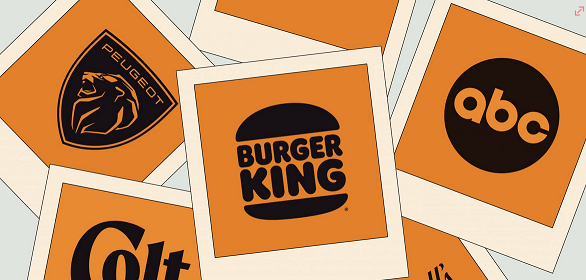
In a year packed with change, a certain shade of nostalgia has taken hold of branding design. A number of legacy brands, from Burger King to Campbell’s Soup to Colt 45, ABC, Zagat, and Peugeot, drew on their archives to create new looks. The unfussy lettering, crisp lines, and pared-down color palettes of these rebrands look like stylish cartoon versions of the original logos. They have the visual efficiency, if not exactly the style, of Hanna-Barbera’s golden age.

“There is something that changed this year that made this aesthetic and this approach not just acceptable, but really successful in the marketplace,” says Armin Vit, co-founder of UnderConsideration. Vit says Jones Knowles Ritchie’s Burger King rebrand, which made headlines in January, made consumers want to engage with the brand in a way that they hadn’t felt the need to before. While Vit agrees there have been more archive-referencing rebrands since then, he says it’s hard to know how many of them were already in progress before Burger King’s fresh-but-familiar look became a hit. It should be noted that despite media coverage to the contrary, JKR’s executive creative director, Lisa Smith, doesn’t characterize the rebrand as an homage to the restaurant’s glory days. While the new logo is a take on the longstanding previous Burger King sign, other elements—from the Kraft paper packaging to the elegant favicon—are entirely original.

A product shot of Burger King meals in minimal, colorful packaging against a red background.
02
Burger King rebrand by Jones Knowles Ritchie.

This trend is one part practical, one part cultural. Midcentury graphic design, which straddled the print and emerging digital worlds of its time, had technical restrictions that resulted in simpler, more abstract work. Accents like drop shadows and gradients had to be done by hand. There were far fewer typefaces to choose from. So by default, most logos created between the mid 1950s and 1970s were what we now call flat design: two-dimensional, characterized by blocks of color and a general lack of filigree. While the textured visual identities of the 1990s and 2000s—think the glint on Windows 2000—don’t translate well to small-scale digital screens, the unadorned designs of the midcentury era lend themselves well to today’s multi-platform landscape.

Modern brands live in lots of places. Social media accounts, digital ads, and apps add a new dimension to the world of storefronts, websites, and print. That increased exposure, along with the forum for superficial nitpicking that the internet provides, has made consumers—and brands themselves—care more about branding than ever before. Vit pinpoints mainstream interest in corporate identity back to 2010. That year, the Gap unveiled a new logo: a black Helvetica wordmark, layered over a gradient blue box on the upper-right-hand corner. Since 1986, the retailer’s logo had been a narrow, white wordmark in a navy blue square. It was a big, unpopular change. The backlash, which played out via customer comments on Twitter and Facebook, garnered media attention. The sites that covered the debacle read like a who’s who of digital media circa 2010: Slate and Refinery29 blogged about it. Gap chairman Bob Fisher posted a response on Huffington Post. A week later, the company reverted to its former logo. While brands have long known that consumers are wont to grow attached to visual identities, Gap’s snafu showed that in the digital age, every change is subject to mass approval.

03
Colt 45’s rebrand.

While in recent decades legacy brands attempted to use design as a way to communicate their immediate relevance, the tide seems to be shifting toward visuals that convey a more timeless presence. Put another way, established brands have always had the advantage of age, but it’s only recently that they’ve started to embrace it. But is the recent spate of nostalgic rebrands simply a trend, or is it indicative of a larger shift in corporate identity among older brands? After all, zhushing up a logo from the last century is a power move that’s not available to venture-funded competition.

Most brands launching today believe that establishing an emotional connection is essential to their success. Older brands can do this simply by reminding consumers how long they’ve been around. A page from ABC’s recent internal “brand evolution” guide reads: “We have something every brand dreams of: an iconic logo. Since being crafted by the legendary designer Paul Rand in 1962, our logo has experienced many different treatments and variations as tastes and trends change—from glossy and shiny to sleek and sophisticated. Now, almost 60 years later, we’re taking this opportunity to return to our roots—redrawing, simplifying and strengthening ABC.”

Logo featuring ABC on a blurred black and white background
04
ABC’s rebrand.

Creating a connection with the past, if not your past, is also particularly appealing for up-and-coming brands that need to rationalize their existence in a market that feels like it’s expanding at an exponential rate. So says independent designer Elizabeth Goodspeed. More and more, “the brand is the story.” Being able to tie that story to something larger than a set of products or services imparts significance into otherwise redundant offerings. Goodspeed says her work has always been “nostalgia influenced,” but she’s found that inclination has been especially in demand as of late. “There were a couple years where everyone was like, ‘This is too retro,” and now, she says, “I’m getting told, ‘It’s not retro enough.’” Goodspeed says that a vintage-inspired brand identity lends credibility, especially to new companies. “It feels counter-DTC, which often gets associated with low quality. So being able to say, ‘No, no, it’s craftsmanship, it’s heritage,’ gives it that sort of oomph.”

The prospect of what’s to come is seldom as comforting as the memory of what’s past. In future-oriented design, a sense of familiarity is replaced by possibility. But these days, branding that evokes the past seems like a surer route to a positive emotional connection than gesturing toward an amorphous future. In 2022, we can look forward to more looking backward

Feature Image Credit: Illustration by Beatrice Sala

By Rachel del Valle

Sourced from AGA Eye on Design