Author

editor

Browsing

By Aya Masango 

LinkedIn has launched Service Marketplace, a platform to help freelancers find and get paid for projects. Here’s what it offers and how it competes.

Freelancers can now find work projects on LinkedIn. The popular professional social network is opening up opportunities for professionals to find work on its platform, going beyond merely giving them the tools to advertise their skills and experience.

LinkedIn will do this through Service Marketplace, a new feature to compete with the likes of Fiverr and Upwork, but does Marketplace stand a chance against these platforms? Let’s find out.

LinkedIn Launches a Service Marketplace for Professionals

LinkedIn has added a new feature, Service Marketplace, to help professionals get paid on its platform, and compete with popular freelance sites like Fiverr and Upwork.

LinkedIn’s Service Marketplace is a freelance platform that allows users to advertise their services for short-term or freelance jobs. Users can set up a freelance profile that can help recruiters find and contact them for projects. It will make payment via a digital wallet offered by Microsoft.

LinkedIn is now rolling out its Service Marketplace feature to everyone, more than 800 million LinkedIn users, nearly eight months after rolling it out to two million users in a testing stage.

This is a big move for LinkedIn, which is known for helping to find permanent, full-time, and all sorts of jobs for professionals.

What Services Does LinkedIn’s Service Marketplace Offer?

A person who is at work illustration

The Service Marketplace is starting off with 250 job categories and will be doubling that to more than 500.

LinkedIn Marketplace is still in its development stage, so LinkedIn has released limited details around the offering. What we do know, however, is that Marketplace will focus on freelance work like consulting, writing, marketing, and graphic design.

As the workforce shifts to more flexible, short-term, and freelance roles, Marketplace could help employers and recruiters find the right kind of talent to fill these roles, and could help jobseekers to secure the right opportunities to suit their needs.

The new platform will be similar to Fiverr and Upwork, which host freelance work and take a cut of each job paid for.

Can LinkedIn’s Service Marketplace Compete With Fiverr and Upwork?

Fiverr marketplace logo

LinkedIn’s upcoming launch of Marketplace places it in direct competition with Fiverr and Upwork, both of which are popular freelance platforms.

The marketplace is likely to have features similar to Fiverr and Upwork, but with a unique spin: Businesses can search for freelancers, compare rates, and share job posts. After a job is complete, businesses can leave reviews about the freelancer who completed the job.

But it seems unlikely that Marketplace can, at least as it stands, compete with Fiverr and Upwork because it is missing a few key functionalities. For instance, Marketplace currently does not allow for the negotiation of fees or the sending of invoices.

Also, the job-seeking process is one-sided—employers can seek out freelancers for jobs, but freelancers cannot look for jobs on the platform.

This is frustrating because it means that freelancers have to wait for opportunities to come knocking at their door, or optimize their profiles and hope for the best, which could make it difficult to set personal targets.

Can LinkedIn’s Service Marketplace Compete With Fiverr and Upwork?

Whether you’re an established freelancer or just getting started, LinkedIn Marketplace offers new opportunities for you to connect with potential clients.

This makes sense if you’re already a LinkedIn user, and might be worth a try, but don’t go deleting your Fiverr and Upwork accounts just yet. And don’t get excited either, LinkedIn still has to polish up its Service Marketplace platform before it can become a formidable player in the freelance market.

By Aya Masango

Aya is a freelance writer with a passion for brands, marketing and life in general. When she isn’t typing away, she’s keeping up with the latest news, pondering on the essence of life, and thinking about new business opportunities. Most productive when working in bed.

Sourced from MUO


By

If you’ve become hyper-aware of being tracked online and having your data collected without your explicit consent, you’ve arrived at the right place. We describe how to stop yourself from being tracked, or how to limit it anyway.

Who is collecting your data and why?

First, understand that “data collection” is a vague concept. Data can include personally identifiable information, such as your email address and social security number. It can also be your internet activity, including the pages you visit and even metadata like when you visit those pages. Your email conversations, online purchases, medical information, and even financial details like credit card numbers are all considered data, too.

As for who collects this data and why, there are a couple different culprits.

Hackers can use techniques like phishing to scam you and steal your data. But there’s also internet service providers, which, in the US, are allowed to monitor your internet activity and use it as a revenue stream. They collect anonymous browsing logs from users and sell that “data” to marketers, which use it to develop hyper-targeted online ads.

Your internet activity can also be tracked by cookies – small bits of text that are downloaded and stored by your web browser. These are used by most websites and services to log a user’s online habits, which, again, is data that is then used to tailor ads. It’s also used to improve your internet experience as a whole. Even mobile apps and browser extensions can track your activity.

Your data is the new gold, and they want it.

How to see who’s tracking you and stop it

Extensions and plugins

There are several browser extensions available that claim to help you see who is tracking your web-surfacing habits, but many of them invasively track themselves. The following ones are recommended as safe to use, in that they either help protect you or let you know who is tracking you – while not tracking themselves, or, if they do, it’s minimally so.

HTTPS EverywhereVisiting a HTTP website that doesn’t support encryption by default? This plugin forces it to use encryption, which helps protect your online purchases, payment details, and general web surfing from malicious actors who are eavesdropping for theft purposes.

Privacy Badger: This extension, from the Electronic Frontier Foundation (EFF), works on Opera, Firefox, and Chrome. It monitors third parties and ad networks that try to track you through cookies and digital fingerprinting and can even auto-block them.

Disconnect: Disconnect, an extension available for Chrome, Firefox, Safari, and Opera, is designed to visually show you which websites are tracking your activity in real time. Invisible trackers that monitor you can also be easily blocked with Disconnect.

NoScript Security Suite: Supported by Edward Snowden, this browser plugin for Firefox and other Mozilla-based browsers can disable active content including JavaScript, which may be used to track your online activity. You can also specify which domains to trust and whitelist.

Blur: Blur, available for Firefox and Chrome, can be used as a password manager and generator, ad blocker, and for encryption. We also like it use of “masked cards” in the premium version. These throwaway virtual cards are used at online vendors in place of your credit card data.

What else can you do?

Remember, it’s very hard to escape data collection and surveillance. If you use Facebook, Instagram, Snapchat, or Twitter, be aware most of these online services track you and only recently began adopting end-to-end encryption. Every big tech company – Microsoft, Google, Facebook, and Apple – has even been caught using contractors in the past to listen to user conversations recorded by their apps and assistants.

Browsers

There’s no way to get around it: Browsers are at the heart of data collection. Ad networks track you across sites, while internet provider log the pages you visit, and hackers try to use insecure Wi-Fi connections and unencrypted websites to successfully gain access to you and harvest data. To protect yourself from all this, use a secure web browser, such as Tor, on your desktop and mobile device.

Tor browserTor is like a regular browser, but it lets you anonymously browse the web. However, while you can use Tor for anything, streaming video can be slow, and some plugins (like Flash) are disabled. You can also use the mobile version of Tor, Tor for Android on Google Play Store. There’s the Orbot for Android and Onion Browser for iOS app, too. They’re both trusted by leading security researchers.

Search engines

Google, Yahoo!, and Bing all collect your data to provide “personalised” experiences. To prevent that, consider using an alternative search engine that does not record your search history and blocks advertising trackers. Examples include DuckDuckGo, Qwant, and Startpage.

Virtual private networks

A virtual private network is perhaps the best way to create a secure tunnel and mask your online presence. Data packets are encrypted before they are sent to a server, hiding your IP addresses and your location. Because of that alone, VPN usage is banned in some countries. If it’s legal in your country, like in the US or UK, you have a multitude of ones to choose from.

Premium VPNs are often more trustworthy, as free services may track and sell your data, negating the point of using a VPN for privacy. Our favourites include NordVPN, Private Internet Access, ExpressVPN, and TorGuard.

Encrypted apps

Lastly, use encrypted apps to keep your online conversations private between you and the person you intended to view your communications.

Signal: Signal is considered the most secure messaging app when it’s correctly used. Available for iOS and Android and desktop, it’s end-to-end encrypted and doesn’t collect metadata. It’s also open-source, for anyone to inspect the code.

By

Sourced from Pocket-lint

Do you hear that? The grave silence on your newsletter subscription form?

Do you feel it? The undying urge by your visitors for closing popups on your website as soon as they appear.

Well, you are not alone in this. It’s a problem that most marketers deal with – turning visitors into raving email fans and customers.

We all know that email is here to stay. Whether you are an affiliate marketer, a blogger, or own an eCommerce website, an email list is among the most valuable business assets you will ever need.

One study shows that for every $1 you spend in email marketing, you can expect a return on investment of roughly $42. That’s an impressive return on investment, right?

So in this article, I will show you how to boost your conversion rate by converting leaving visitors on your website into customers.

Let’s jump right into it.

#1. Use heatmaps to know your audience better

Email marketing is dynamic. What used to be effective five years ago will hardly work today. Readers are getting significantly smarter nowadays. Just placing a subscription form in the sidebar a couple of years ago with a “subscribe to our newsletter” call to action would boost your email list.

What about today? Crickets!

This is why you need to know your readers very well. Specifically, how they interact with your site.

When it comes to monitoring your web visitors’ behaviour, heatmap tools come in as useful tools. You get to know what area of your site your readers are spending more time at. What’s making them bounce back to SERPs. Where they click and what content or sections on your site are overlooked.

Patterns

Say, for example, you have a newsletter signup form placed right at the sidebar in each of your blog posts. And then the form seems to be getting little or no attention from your readers. That indicates, your readers do not have any interest in signing up for your newsletter.

Your lead magnet is just a dead element.

In that case, you need to work on your form. Either by eliminating it or optimizing its copy to attract more leads or even maybe running an A/B test.

Heatmaps also help you understand the best places on your site to put your lead magnet. For example, you can use the scroll tracking heatmaps to know where readers reach while reading your content. If most of your readers hardly scroll beyond 50% of your page, and you have placed your “bribe” to the very bottom, your lead magnet will hardly convert.

That being said, it would be wiser if you move your lead magnet to the area on your site where your readers are. You have a high chance of making a conversion there.

Heatmaps also help spot the distracting elements on your lead magnet. This way, you can identify what’s distracting your readers from converting.

For example, take a look at this image.

Dolce-Gabbana

This is an advert. But what do you see at your first glance? Scarlett Johansson and her spectacular red lips, right? You don’t even notice what product is being advertised.

Now, just take a look at the eye-tracking heatmap that was generated from this advertisement.

Dolce-Gabbana-2

Most people moved their mouse over to the face of the model. Which shows that the image was just a distraction to readers. It prevented them from seeing what was being advertised and instead their attention was drawn to the image.

Now replicate the same scenario with your lead magnet. Whatever your image is can act as a distraction to your readers. It doesn’t have to be an image that is distracting your visitors. It could be the colour of your call-to-action buttons, the fields on your form, or the general styling of your subscription form.

This way, you are able to know your readers’ behaviour on the subscription form and what’s preventing them from signing up for your newsletter.

When you have that data in mind, you’ll know the best place on your website to put your lead magnet and solve what’s preventing your visitors from converting.

#2. Integrate exit intent popups

I love exit-intent popups for one reason: they don’t distract readers and they only appear when a visitor is about to leave a website.

At this time, when you throw in your popup you have nothing to lose. After all, your readers were leaving.

However, just creating an exit-intent popup won’t guarantee thousands of signups. Don’t forget; your readers are always looking for a reason to close any element that comes their way. Nobody cares about your free updates, your free ebook, or the free online course anymore. Just put yourself in the same shoes. Would you really sign up for a newsletter just to get free updates? Probably not.

In the same case, you need to give your visitors a perfect reason not to leave your site before taking any action. And this is where you need to get very smart with your pop-ups. How? By using content upgrade popups.

A content upgrade is a piece of bonus content that supplements what a reader is already interested in. Usually, the bonus is ultra-specific and more relevant to what the reader wants.

For example, I searched for a guide on “keyword research” where I landed on Backlinko’s blog. When I was about to leave the site, I came across this popup.

The-Definitive-Guide

Brian knows that most probably when I read his “keyword research” guide, I would also love reading his “SEO guide.” Genius.

Instead of creating a generic lead magnet to show on all your pages, content upgrades can help boost your conversions.

This is what you need to do:

Find the pages that are receiving a ton of traffic. Then create your content upgrade. It can be a pdf copy, a spreadsheet, a template, or even a cheat sheet. Just make sure it’s related to what your visitors are reading. Then offer the bonus to your readers using the exit-intent popup.

That way, you have a strong chance of getting more conversions.

#3. The “free tool” hack

We are living in the age of Do It Yourself (DIY) type of marketing. Tools have affected that. For example, back in 2000, you couldn’t create a website without hiring a web designer. What about today?

Platforms like WordPress, Wix, Squarespace, and Weebly have made it possible to create a stunning website without knowing how to code.

Tools help most online entrepreneurs improve the performance of their online business and automate everything. Which also reduces costs associated with hiring professionals.

In the same case, you can skyrocket your conversions by offering a relevant tool to your readers.

A good example, when you visit CoSchedule and you are about to leave, they will hit you with this popup.

Upgrade-Your-Headline

If you struggle writing powerful headlines, you cannot resist signing up to use their Headline Analyzer tool.

#4. Use quizzes to boost your conversions

Sometimes you don’t always need to shout “signup” on your popups or subscription forms for visitors to subscribe to your newsletter.

As I said earlier, readers are getting smarter nowadays. They have experienced such types of popups that promise them “a free online course” only, later on, to be bombarded with a blast of promotional emails.

However, you can capture their attention before they leave and convince them to convert. And guess what, quizzes are one magical way to convert leaving visitors.

Quizzes help your audience interact with your site, convince them to make a purchase, and even help collect more data about your target audience.

That’s because, when you ask your visitors questions, they expect something in return. That is, how they have performed after taking the quiz. In fact, according to BuzzSumo, on average, a quiz gets shared 1900 times on social media.

Marketers like Neil Patel know exactly how to use quizzes to boost their conversions. When you visit his site, and you are about to leave, this quiz will immediately pop up.

Want-More-SEO-Traffic

To get your results after taking the quiz, you will need to sign up using your email and any identifiable information. And using this clever trick, he won’t have directly asked for your email. That way, you become his potential lead.

#5. Use push notifications to subscribe lazy visitors

Sometimes, it feels as if it’s a lot of work to sign up for a newsletter. You know it – filling in your email and moving to your email inbox to confirm your subscription. In places where there’s a slow internet connection doing all those things, especially on mobile devices can be hectic.

That’s where web push notifications become effective tools. With the click of a button, your visitors are subscribed.

Push notifications are an effective way to communicate with your audience. When used appropriately, push notifications have a much higher engagement rate than mass emailing.

However, the bad news is that push notifications can be annoying to your audience. If you overdo it and send irrelevant messages to your subscribers, they are more likely to block your notifications.

Just remember, when users enable notifications from your site, they trust that you will send them something valuable.

The question is how do you boost conversions using web push notifications?

The first step to the effective use of push notifications is telling your readers what to expect when they accept to be receiving push notifications from you. I love how Copyhackers do it.

Copyhackers

Instead of showing you a generic message telling you to subscribe to their web push notification, they have customized it in a way that doesn’t sound robotic to visitors. Furthermore, they tell you what to expect from them.

What’s next is personalizing your push notifications. The marketing success of push notifications is personalization. The goal is to entice your audience to click on your messages. So, take time to segment your subscriber list. Don’t just send the same message to all of your subscribers. Write a custom notification to every segment.

This way segmentation will help minimize sending your subscribers messages that they don’t need. Use emojis, geotargeting, and the customer’s lingo to add a personal touch to your notifications.

Wrapping up

Upping your conversion rates can be a hectic task. You need traffic. And not just any traffic but valuable traffic to your website. Then after getting the traffic you need to create a perfect customer journey map to get more conversions.

I hope this article has taught you how you can convert leaving visitors on your website to email subscribers. Did you love this masterpiece? Don’t forget to share it with your friends, team, or your community.

By James Njoya

Guest author: James Njoya is a freelance writer for hire who writes flawlessly on topics related to WordPress, CRO, and Digital Marketing. When he’s not writing in his blog he’s busy learning how to speak English with a Cockney accent.

Sourced from Jeffbullas.com

By Sophie Webster

Instagram creators can now use Pearpop, a marketplace for social collaborations, after expanding on the social media site. Pearpop was previously only available to TikTok users.

Instagram Teams Up with Pearpop

The platform, which launched in 2020, allows creators and brands to buy collaborations with celebrities and larger creators. Pearpop will also become available on Twitter this November and on Twitch in December, according to PRWeb.

Last month, the marketplace did a soft launch on Instagram. Pearpop stated that in less than a month, more than 10,000 Instagram creators had joined the marketplace.

The company said that users had requested the feature to be available on Instagram. More than 90% of the creators are already active on Instagram.

The early users of the marketplace on Instagram include Jake Paul, Swae Lee, Paris Hilton, Post Malone, Tom Felton, and Noah Schnapp.

Cole Mason, Pearpop CEO, and co-founder said that the initial concept of the platform came out of an obvious gap within the space because no marketplace existed for creators to monetize through collaborations that are beneficial to both parties.

Mason told TechCrunch in an interview that he built Pearpop as the social capital marketplace that helps creators earn, promote and expand their services across all social media platforms.

Mason added that the company’s vision is to move the industry away from platform-driven awareness marketing and push more for people-driven ones.

The idea brought in athletes, musicians, actors, and entertainers, including The Weeknd, Amy Schumer, Diddy, The Chainsmokers, Gary Vaynerchuk, Josh Richards, Griffin Johnson, Marshmello, Mark Cuban, Moe Shalizi, and Snoop Dogg.

Instagram has been working on helping its creators. In October, the social media platform launched a tool to help creators get monetized.

Instagram also allowed creators to monetize their content through IGTV.

Pearpop Funding

In April, Pearpop announced that it has a funding of $16 million for expansion. The funding was divided between a $6 million seed funding round co-led by Slow Ventures and Sound Ventures, owned by Ashton Kutcher and Guy Oseary.

An additional investment of $10 was led by Alexis Ohanian’s Seven Seven Six. Bessemer also participated, according to KPVI.

Since the platform’s last funding announcement, the company has added other investors, including Lil Nas X, Noah Schnapp, Swae Lee, Dre London, Gabrielle Union, King Bach, YG, Jake Paul, Paris Hilton, and James Corden.

Pearpop has been compared to Cameo since it was launched. Cameo is a popular app that allows users to pay celebrities to create videos with shout-outs and dedications.

Mason said that Pearpop and Cameo couldn’t be compared. Cameo offers personalized video messages that are used for gifting, and this is not what Pearpop does.

Mason said that Pearpop is a social media tool that can help both brands and creators reach their goals.

The CEO also stated that Pearpop would continue to expand to other platforms and focus on refining its current features, like “Challenges,” which allows artists to offer rewards to their creators when they reach a certain number of followers while promoting their work. He also said that the real goal for Pearpop is to see everyone as a social media creator.

Pearpop is not only for those with thousands of followers, but it is also for those who are starting their journey and are looking for a way to monetize it.

Feature Image Credit: (Photo : Unsplash/ Christian Wiediger) Instagram app

By Sophie Webster

Sourced from TECH TIMES


By Colby Cavanaugh

There’s never been a better time to be a B2B marketer — that seems to be the prevailing sentiment these days. The pandemic has accelerated innovation and digital adoption, creating opportunities for marketers to seize the moment, convert leads and accounts more quickly to revenue, and demonstrate marketing’s return on investment. But the data show a much different side of the story.

The reality is that marketers are burned out, stretched to the breaking point, and currently mulling over the right time to submit their resignations. Just how bad is it? According to Sitecore, nearly 80% of marketers described 2020 as “the most challenging time in the history of their careers.” What’s more, the Rosie Report found 70% of marketers working across freelance, B2B brand and agency disciplines plan to leave their jobs this year.

While much of this stress is environmental, the old ways of working are contributing to these issues. To be a marketer today is to be on a never-ending rollercoaster. New platforms and new approaches put marketers in a constant state of flux, and they rarely have a fundamental understanding of what is expected of them and how their work aligns with business goals.

In a recent study conducted by Heinz Marketing on “The Future of Marketing Work,” nearly 60% of B2B marketers are not entirely confident that their marketing strategy, technology and team structure effectively support their marketing goals. And a further breakdown of that data finds that number jump to 87% for ABM teams and 74% for revenue marketing teams.

B2B marketers are suffering under the internal issues that have plagued marketing departments for years without being addressed: siloed organization structures, tangled tech stacks, and dated strategies that do not account for the way customers buy today.

However, organizations can take steps to lessen the burden on marketers and create more positive experiences for them. So how does it get fixed? By redefining marketing’s dated org structures, broken processes and tech stack messes to align with the essential tenets of effective, buyer-centric, omnichannel B2B marketing.

Only through re-evaluating their teams through a clear, mature, omnichannel lens — optimizing organizational structures, integrated technology and connected strategies — can organizations reclaim a meaningful focus while motivating their employees.

Step 1: Rethinking the Marketing Org Structure

One of the most foundational steps B2B marketers can make is to take a hard look at their existing organizational structures. Many marketing departments remain in antiquated org charts where individuals are siloed in individual channels. Meanwhile, we now live in a robust omnichannel world where teams must work together and share best practices to appeal to their most valued customers wherever they are consuming information.

Gone are the days where you knew the five or so places you were most likely to reach and capture the attention of buyers. The advent of social media, apps, programmatic advertising, and the pandemic-forced break from event-based marketing means customers are reachable in more places, but it is harder to connect.

In addition, the world changes so quickly that static structures can never adapt quickly enough to achieve the first-mover advantage of reaching customers through new channels or opportunities.

The world is embracing agility — it is high time marketers did as well. But they will not be successful unless they exist within a new structure that enables better sharing of information and flexibility of individual roles, which in turn enables marketers to create cross-channel buying experiences for their buyers.

Step 2: Connecting Your Martech Stack

As reaching customers has grown more complex, companies that fail to equip their marketers with innovative tools to identify, target and monetize customers will fall quickly behind the competition. While poor structure often causes the many organizational silos that impede success, this is exacerbated when marketers don’t have a tech stack that securely maintains valuable customer data to provide a single-pane-of-glass view.

Technology that connects your data across channels and systems ensures you’re measuring the right metrics of success across the entire department. It will free up your employees from manual data collection and tedious analysis processes that are rife with errors.

By having that data immediately accessible and tied to targeting and outreach tools, marketers can identify and message in-market buyers before the competition. The right tech stack — which connects data, channels and campaigns — makes it easier for marketing teams to collaboratively reach the organization’s buyers during every step of the customer journey.

Step 3: Adopting a Buyer-Centric, Omnichannel Strategy

Connecting channels, breaking down silos within organizations, and meeting the buyers where they are on their journey allows for a more precise, agile, buyer-driven approach. Here are the five tenets of a redefined marketing strategy to benefit and empower your employees:

  1. Target: Identify and target the right buyers, accounts and buying committees with precision, using intent data and data intelligence to inform your cross-channel campaigns, including display advertising, content syndication, event marketing, digital events and social media marketing programs.
  2. Activate: Configure and activate cross-channel demand campaigns to scale your demand marketing programs and orchestrate personalized buyer and account experiences. Activation must happen across multiple channels to serve your customers better.
  3. Connect: Connect your martech stack through programmatic integrations to amplify your reach, boost pipeline generation, and increase conversion opportunities in real-time with unparalleled access to thousands of ready buyers.
  4. Measure: Gain real-time visibility across your demand channels to understand and optimize program performance, refine account-based tactics, monitor budget, track ROI, and defend your marketing spend. Use every interaction with your customer as an opportunity to learn and optimize.
  5. Govern: Ensure your data is protected, compliant, and ready for actioning across your marketing programs with an air-tight governance wrapper. Remember, unless your data is accurate and compliant, it is extremely difficult to execute marketing campaigns.

Putting It All Together

Marketers must evolve to survive and thrive in the current environment. We marketers have an opportunity to reinvent ourselves and by doing so, serve the needs of our buyers.

This precision demand marketing approach enables marketers to retain high-performing, sustainable teams, empower richer connections with evolved B2B buyers, and accelerate lead-to-revenue conversions.

But marketers cannot change if their dated strategies, tech stacks and organizational structures remain the same. It requires a rewriting of the rules of engagement with the new B2B buyers, their partners, and most importantly, their talent.

In this new era, marketers must master these core functions to build and retain high-performing, sustainable teams, empower richer connections with evolved B2B buyers, and accelerate lead-to-revenue conversions for meeting their businesses’ demanding goals.

The old ways of doing things will not return just because the pandemic is over. B2B marketers are overwhelmingly requesting a new way of doing things. They just need a map. Being thoughtful about your approach, where you are in the journey, and putting your customer at the centre of everything you do can be the very thing to set B2B marketers free. Free to align their work to reachable and meaningful goals and minimize or eliminate the stress that has many B2B marketers looking for other opportunities.

Feature Image Credit: Guilherme Stecanella on Unsplash

By Colby Cavanaugh

Colby Cavanaugh is the Vice President of Product Marketing at Integrate where he is responsible for leading the strategy and execution for go-to-market product launches, messaging and positioning, pricing and packaging, sales enablement, and competitive analysis. Prior to leading product marketing at Integrate, Cavanaugh was the VP of Business Development & Alliances at Integrate, where he led the creation of the Demand Acceleration Platform Ecosystem, consisting of hundreds of partnerships with marketing technology companies, data partners, services companies, and agencies.

Sourced from CMS Wire


By Amine Rahal

Gone are the days when you could publish keyword-loaded blog articles and rank seemingly overnight. These days, any successful SEO strategy has to go the extra mile by building authentic inbound links from distinguished sources. It’s not always enough to publish valuable content; you also want reputable domains to cite it.

There are two ways you can generate inbound links to your content: through paid link building (considered “black hat SEO” and worthy of penalization) or through earned media exposure. As the founder of two digital marketing agencies with decades of experience in SEO, I’ll always recommend the latter to my clients.

The problem is that some website owners think that earning their links isn’t worth the effort when they can simply pay for them. Not only is paying for links a bad idea in its own right, but earning them is also easier than you might think. In this article, I’ll explain how and I’ll comment on why I think earned media is the cornerstone of any successful SEO strategy.

Earned Media 101

Earned media is the opposite of paid media (and technically, it’s also the opposite of owned media, but that’s beyond the scope of this article). Below, I’ve laid out their respective differences.

• Paid media refers to content that you pay an outlet to publish on your behalf.

• Owned media refers to content that you publish on your own platforms.

• Earned media refers to content that other platforms publish for you freely (e.g., news coverage or by-lined articles).

Although the early SEO days saw many small domains rise to the top via paid media strategies, that’s a major no-no these days. Today, paid backlinking is often considered a manipulative marketing tactic because it usually tries to pass itself off as an unpaid citation. In reality, paid-for backlinks are no more than paid advertisements.

As I’ve written about before, buying links through a private link-building network is considered a black hat SEO technique that can land you costly Google PageRank penalties. To avoid having your ranking position penalized, it’s always a better idea to score backlinks by creating genuinely interesting and useful content without paying for it.

How To Earn Media Backlinks For Your Website

While this is by no means an exhaustive list, these are a few core strategies that I employ when garnering earned backlinks for my clients.

1. Provide Expert Commentary To Journalists

This one’s the easiest of the three for earning media citations because it generally requires the least amount of effort and time. This method involves using online reporter-source networks such as HARO (“Help a Reporter Out”) or Qwoted to provide expert commentary for news articles.

These platforms are home to hundreds of journalists who need outside sources to provide well-thought-out comments or testimony for their stories. That’s where you come in. Find the journalists who specialize in your website’s niche, and provide them with a paragraph or two that assists with whatever article they’re currently working on.

For example, if your website specializes in finance — like many of my own clients’ do — then you’re going to want to filter for journalists in this niche. Do your research and provide thoughtful and insightful commentary and, if you do this well, they may reward you with a citation in their article.

Make sure you respectfully request that they include a link to your web property if they decide to use your quote.

2. Issue Press Releases For Events, Surveys And Launches

If you want to make the news, you have to produce something newsworthy. For some, this could be an innovative product launch or partnership with an established brand. If your website has done something (or intends to do something) that could generate buzz, write a press release and submit it to a PR software platform such as:

• PR Newswire.

• Cision.

• Meltwater.

• eReleases.

For a fee, these services will publish your press release or announcement to newswire services. If your release announces something interesting or newsworthy, a journalist who’s interested in covering your story might pick it up.

Major upcoming events (e.g., a charity fundraiser) or provocative survey data (e.g., “20% Of Americans Have Nothing Saved For Retirement, Surveys Show”) make for excellent press release material. An easy hack I use for generating interesting press releases is to conduct a nationwide survey using an online survey tool and then publish the resulting data in the form of a press release.

3. Be A (Tactful) Social Media Superstar

Nobody appreciates when someone relentlessly self-promotes on social media. However, when you do it tastefully and respectfully, advertising your content on social media can earn you some interesting media coverage.

The key is to find dedicated forums, groups and community networks dedicated to your website’s niche. Then, join these groups and provide helpful advice, support or information for the other community members. Without obnoxiously self-promoting, assert yourself as an authoritative source of support and knowledge within your niche.

For example, some of my clients are involved in the alternative investing space, so I frequently share some of our original content if I genuinely think it could assist the community. I find branded infographics and videos to be especially useful because they lend themselves well to viral peer-to-peer sharing on social media.

The Importance Of Earned Media For SEO

Earned media is helpful for transferring “link equity” from high authority websites to your own website. In fact, this is the only legitimate way to do so because paying for links can jeopardize your ranking if Google catches on and levies a penalty against you.

In short, you may have trouble ranking if reputable websites don’t refer back to your content. But you can’t generate those all-important backlinks (at least not legitimately) without implementing an earned media strategy and staying away from paid-for black hat techniques. By working the three pillars of my earned media strategy into your SEO campaign, you too can earn these crucial backlinks and improve the odds of ranking above your competition.

Feature Image Credit: getty

By Amine Rahal

Amine is a tech entrepreneur and writer. He is currently the CMO at Regal Assets and CEO at IronMonk Solutions. Read Amine Rahal’s full executive profile here.

Sourced from Forbes

By Carlie Porterfield

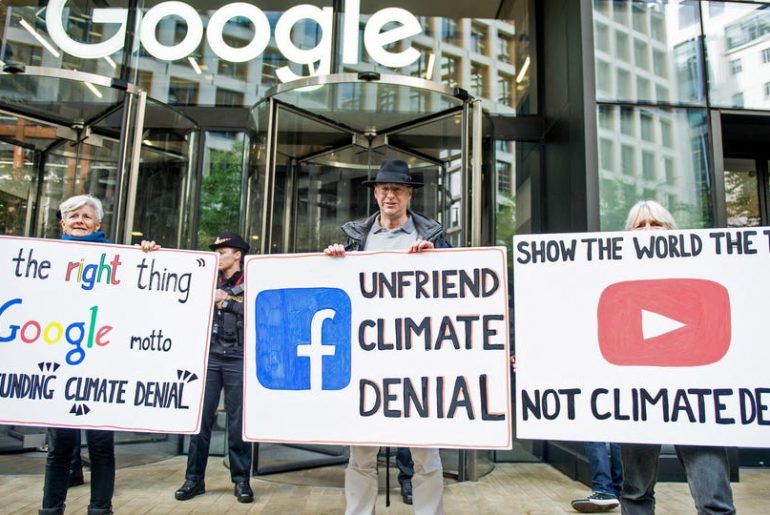
Topline Just ten publishers are responsible for nearly 70% of user interactions with content that denies climate change on Facebook, according to a study released Tuesday by the Centre for Countering Digital Hate, which found that far-right news outlet Breitbart is the leading source of misinformation on the platform.

The ten outlets, branded as the “Toxic Ten” by the CCDH, have a combined 186 million followers on social media, not accounting for overlap, and have brought in a collective $5.3 million in Google advertising revenue in the past six months alone, according to the study.

Breitbart led the way, the study found, with the alt-right website once headed by President Donald Trump’s former strategist Steve Bannon capturing about 17% of all platform engagement with climate change misinformation analysed by the CCDH.

Close behind was The Western Journal, a Phoenix-based conservative news and politics website  responsible for nearly 16% of engagement.

In September last year, Facebook launched a new Climate Science Information Center and pledged in February to attach labels to posts about climate change and to expand fact-checking in a move to combat misinformation, but 92% of the climate change misinformation reviewed by the CCDH was not labelled by Facebook and 99% had no additional context or fact-checking attached.

The CCDH used Newship, a social media analytics tool, to identify 7,000 Facebook posts featuring climate change denial and to calculate engagement rates between October 2020 and October 2021.

Tangent

Following Breitbart and the Western Journal, the rest of the top ten outlets publishing climate change denial content according to the study are Newsmax, Townhall Media, the Media Research Centre, the Washington Times, the Federalist Papers, the Daily Wire, Russia Today and the Patriot Post.

Contra

The CCDH used a “flawed methodology” that overstates the scale of climate change misinformation on the platform and is “designed to mislead people,” Facebook said in a statement to Forbes. The narrow sample examined by the CCDH only made up roughly 0.3% of the over 200 million interactions of Pages and public group English-language content, the platform said. Facebook said it actively reduces distribution of content fact-checkers rate as false or misleading and also rejects ads that have been debunked, according to the statement.

Key Background

Facebook has repeatedly come under fire over the amount of misinformation distributed and shared on the platform. Amid the coronavirus pandemic, content spreading misleading claims about the origins of the virus and the safety and efficacy of vaccines has become particularly problematic. In July, President Joe Biden said Facebook and other social media platforms where coronavirus vaccine misinformation spreads are “killing people.” Last week, a whistle-blower released thousands of documents to media companies that allege Facebook and CEO Mark Zuckerberg let celebrities and politicians break the platform rules and makes exceptions for right-wing news sites, specifically Breitbart, when they post misinformation. The CCDH is a British non-profit that campaigns for big tech companies to tackle misinformation and hate speech on their platforms. In the study, CCDH called on Google and Facebook to stop accepting advertising dollars from the outlets and for Facebook to follow through on its pledge to label climate change denial posts.

Feature Image Credit: Getty Images

By Carlie Porterfield

I am a Texas native covering breaking news out of New York City. Previously, I was an editorial assistant at the Forbes London bureau.

Sourced from Forbes

By Rolf Illenberger

Mark Zuckerburg’s metaverse is one of avatars and virtual experiences—with an interface that looks eerily like if “The Sims” met Google Glass. And he just bet the future of his trillion-dollar company on it.

We’ve seen the eye candy, including the Billie Eilish / Beat Saber commercial that’s inescapable to American TV viewers these days. The rhythm-based VR video game looks cool. Not totally practical, but eye-catching.

What we haven’t seen—more damning to Meta’s brand than its new logo—is a pathway to sustainability and success. How do you generate consumer interest in the metaverse experience? How do you recreate the market share and market dominance that Facebook had during its period of rapid growth? How do you fend off threats, either through acquisition or innovation, like the social media giant did with Instagram and Snapchat? How do you sell the Metaverse to advertisers, fundamental in Facebook’s profitability? And are they even interested in the first place?

When Facebook declared its IPO in 2012, it answered the concern of critics who wanted to understand how the company would eventually make money. It accomplished this by tinkering with the algorithm, parting ways with a linear timeline for nearly a billion users in favour of EdgeRank, which gave big-pocketed advertisers a means to place themselves on the News Feeds of millions with favourable CPM rates. When the company acquired Instagram in 2013, users knew it would ultimately mean the end of that brand’s linear timeline in favour of the same ad-friendly mechanism.

But users are the biggest challenge for Meta’s foray into metaverse dominance. There simply aren’t enough of them to entice advertisers at the moment. Oculus has only sold 1.87 million units of its Quest 2 headset to date and rough data has nearly 17 million VR headsets sold across all brands to date. By comparison, Apple sold 60 million AirPods in 2019 alone and approximately 100 million all-time.

Apple’s mixed reality headset is rumoured to launch at some point in 2022, which will certainly play with the brand’s avid following of phone, wristwatch, earphone and laptop consumers.

In what could be considered a fitness metaverse, or community for those beyond coining buzzwords, Peloton has sold 2.33 million units to date at a price point 4-6 times the Quest 2.

Other aspects of a metaverse are already fairly well established, like online gaming, cryptocurrencies, NFTs, gaming and virtual events—all of which have been further amplified due to the COVID-19 pandemic.

If Facebook/Meta was going to build something on-par with its near-monopoly of the social media space a decade ago, it might not have the cash or infrastructure this late in the game. ByteDance, the parent company of TikTok, has already announced their intention to go toe-to-toe with Facebook from a hardware standpoint by acquiring Pico Interactive. And a recent major advertising campaign suggests that, with China’s financial backing, Facebook might be facing its greatest competitive threat to date.

The brands and advertisers that drive Facebook’s bottom line currently are also aware that they’ll want to own and control more of the metaverse experience, which they weren’t able to do with social media. When Facebook, Twitter and Instagram first appeared, most corporate entities delegated the management of these new platforms to inexperienced employees as Zuckerberg amassed his power. Now, digital heads, agencies and the C-suite will be more aggressive in wanting to build and sustain a metaverse strategy that they can own and isn’t subject to algorithms they might not control. They probably prefer a more disjointed metaverse at the end of the day.

That’s all without mentioning that there is already intense user backlash over Facebook/Meta’s desire to tie every Oculus device to a Facebook account—part of the financial model to profitability, opening up users to targeted advertising. The business-targeted Oculus Quest 2 device will set you back $500 more but won’t force you to part with your data.

While Zuckerberg’s vision to unite the metaverse under a single umbrella will fail, the future of the metaverse won’t. Like 3D printing a decade ago, which futurists the early adopters and most successful use cases will fall in the B2B space. 3D printing has changed our access to PPE (Personal Protective Equipment), car parts, medical and dental devices, hearing aids and even 3D-printed homes are starting to turn up as an affordable housing solution.

The metaverse will do the same—B2B adaptation leading the way as B2C consumers dip their toes in the water on whether or not the technology is for them.

For instance, auto manufacturers need new ways to display cars to interested buyers. It’s becoming more and more common for customers to buy houses based on VR technology. HR departments need ways to recruit the best talent, especially as remote work becomes more commonplace. My company, VRdirect, has offered B2B clients the opportunity to do this with relative ease, using software that allows anyone to become a creative.

Even in a disjointed metaverse, benefits like the environmental impact of reduced business travel become obvious, especially when it comes to our personal carbon footprint. There’s also the added benefit of work-life balance gained by not having to go on that business trip or not having to commute to that big meeting.

But we’re still a social species at heart. One of the things Zuckerberg got right with social media was our desire to weave an in-person experience with our desire to talk about it online. The thought that humans will have the same thirst about a strictly digital metaverse experience remains to be seen.

Feature Image Credit: Remy Gieling via Unsplash

By Rolf Illenberger

Rolf Illenberger is the founder, CEO and managing director of VRdirect, a platform that allows anyone to create and publish VR experiences, with an emphasis on enterprise users.

Sourced from Worth

By

Collaborating with these influencers doesn’t have to be a chilling experience.

Some brands are still “afraid” of venturing into influencer marketing despite being an industry that is in full growth. In fact, it is estimated that social commerce can reach a global value of 604 billion dollars by 2027, with an annual growth rate of 31.4 percent over the next seven years, according to data cited from Internet Retailing.

Collaborating with these influencers doesn’t have to be a chilling experience. It’s about creating key and valuable relationships with them; understand that they are not employees but strategic partners, with whom brands can effectively manage their relationships.

Before starting a collaboration with influencers, consider these seven terrifying mistakes to avoid if you want your campaign to have an impact:

1. Have a ghost target

Image: Depositphotos.com

The first step in creating a winning strategy is setting your goals and objectives. Without goals, there is no way to measure success and return on investment (ROI).

In the same way, you have to know what the brand’s target is and what its budget is. If you do not have a set goal at the start, the campaign will be created without direction, will be subject to course changes midway, and will be doomed.

2. View the audience as a zombie

Image: Depositphotos.com

If you believe that audiences are behaving like zombies, that is, that they are all looking for the same thing, your campaign will fail horribly. Before thinking about a collaboration with influencers, you need to make sure that your audience matches your buyer persona. For example, it wouldn’t do any good to ask a swimming influencer to share soccer tips. Although most swimmers play another sport, your audience won’t take it very seriously if you give advice on soccer socks.

However, choosing people who represent your brand values and avoiding misleading metrics can be challenging.

3. Believe that influencers are Frankenstein’s monster

Image: Depositphotos.com

Obviously, influencers promote brands for monetary or other compensation, but they also choose to collaborate for other reasons. This applies particularly to micro-influencers: the suggestion is to treat them as customers and not as a monster over which you think you have control.

After all, if they don’t like the products or services the brand offers or the treatment they receive, they probably wouldn’t join the campaign in the first place (unless they are offered a huge monetary compensation that makes them rethink their decision ). The public knows when their favorite people in the networks endorse something that they really like. The goal of collaborating with influencers is to nurture and leverage that trust.

Followers trust influencers and it’s not easy to create a community of people who like and trust you as a brand. What is easy is losing their trust, so they will only promote companies they trust and like to work with.

4. Treat your motivation like the invisible man

Image: Depositphotos.com

Don’t ignore what motivates them. You have to see what moves them. A great long-term relationship between the brand and the influencers it works with can only be achieved if both parties are happy. It can be achieved if the brand asks the influencers directly what their expectations of this collaboration are and if there is something they specifically want from whoever contacted them.

For example, some micro-influencers prefer exposure over monetary compensation. Those influencers can be made happier if the brand shares some of their posts in which they talk about their products or services instead of paying them.

Other influencers who are interested in what the company offers might want product or service discounts, while some might prefer samples that they can offer to their followers. To find out, you have to ask them at the beginning.

5. Scare away your creativity

Image: Depositphotos.com

Creative freedom is of the utmost importance to successfully collaborate with influencers. Who knows the audience best? The brand or the influencer? Without a doubt, the influencer.

They know better the tastes, preferences and opinions of their followers. This means that the influencer knows what type of content will engage their audience in an authentic and organic way. Their motto is to publish content that not only attracts followers, but also hooks them.

6. Forgetting to do a good “spell” for the campaigns

Image: Depositphotos.com

To see what works and what doesn’t, you need to track the content of each campaign. Members of the company that hired the campaign can do this daily or weekly, but the important thing is to have a monitoring system and record the results of how each post has worked.

7. Drive them away with a scare compensation

Image: Depositphotos.com

When managing the team of influencers, it is very important to motivate each of them. Like any company that wants to obtain the greatest benefit for the investment it has made, motivating influencers, especially micro-influencers, is crucial in this process.

If the deal is with smaller micro-influencers, you can exclude the monetary reward if you have some other lucrative and creative way to compensate them. This is important because if they are rewarded exclusively with money, they could lose their intrinsic motivation and see this collaboration as just another job.

Brands can also offer promo codes and giveaways that influencers can give to their followers and create a win-win situation for both them and the brand.

Feature Image Credit: Depositphotos.com

By

Sourced from Entrepreneur Europe

By Michael Kan

The pilot ad program will help support continued free access to the video-conferencing service, Zoom says.

To keep its service free, Zoom will experiment with displaying ads after video calls.

On Monday, the company announced that it’s rolling out a “pilot advertising program” for non-paying Basic users in certain countries. For now, it seems the ads will only appear for Zoom calls viewed on a web browser.

“For this initial program, ads will be rolled out only on the browser page users see once they end their meeting,” the company says. “Only free Basic users in certain countries will see these ads if they join meetings that are hosted by other free Basic users.”

How the ads will appear. How the ads will appear.

Zoom says the ads will “enable us to support investment and continue providing free Basic users with access to our robust platform.” Its growth exploded last year during the pandemic, and the video-conferencing service continues to be in demand to this day.

“​​With this in mind, today we are excited to roll out a pilot advertising program that we expect will enable us to support investment and continue providing free Basic users with access to our robust platform,” the company says.

However, Zoom stresses it won’t be using data from user video calls for ad-targeting purposes. “As noted in our Privacy Statement, we will not use meeting, webinar, or messaging content (specifically, audio, video, files, and messages) for any marketing, promotions, or third-party advertising purposes,” the company says.

Instead, the ads will rely on browser-based cookies to serve up relevant marketing to users. The banner ads on Zoom’s website will also feature a link, enabling users to access the cookie management tool.

Zoom didn’t provide a list of countries where the ads will appear. But the program is poised to pave the way for a larger expansion in the future. We’ve reached out to Zoom for more information, and we’ll update the story if we hear back.

By Michael Kan

Sourced from PC Mag