Sometimes, it can feel like online marketing is like throwing money into a bottomless pit. Social media ads, while useful, can get expensive and your budget may not support much experimentation. Creating an SEO friendly blog is a free solution to new customers.
Online marketing can get expensive, especially if you are a small business with not a lot of room in your budget. For many business owners that are just starting out, it is not realistic to spend hundreds of dollars every week on new ads that may or may not convert. Savvy business owners can save money by starting a blog on their website to gain traffic organically.
Your website is already a big advertisement for your product, and you just need potential customers to get there to sell it. Creating a SEO-friendly blog on your website is a way to get more customers to come flocking to you without spending a dime.
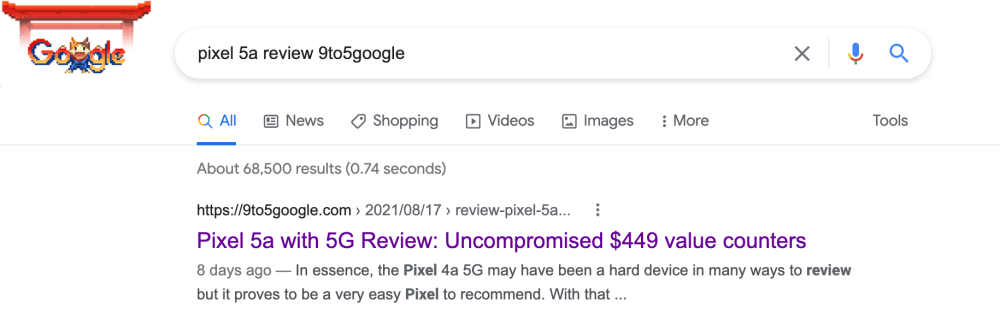
One business that does this very well is Grammarly. Grammarly is a company that sells software that helps improve your grammar and readability of documents. If you Google different common grammatical questions, Grammarly is typically among the first results.
The post should answer the question you searched, and then subtly advertise your product within the answer to the question. One example is if you search for “is year old hyphenated”, one of the first results is this article: https://www.grammarly.com/blog/year-old-hyphen/. The article answers the question in great detail, but it also weaves in many ads for their product seamlessly. Readers will be satisfied with the content of the article as it answers their question, and they will also be informed of the product that Grammarly is selling.
Blog posts should cover topics that you think your customers would be interested in, and they should have valuable content as this will be your potential customer’s first impression of your company. If your business sells coffee, you would not create blog posts about how to effectively mow your lawn, but you might create a post detailing how to properly clean your coffee machine.
The hardest part about starting a blog is just that; starting. Once you start publishing your blog posts on your website, they will stay there as long as you keep them there, consistently bringing you traffic.
Creating a blog is not going to miraculously give you a huge increase in sales, nor is it a replacement to more traditional marketing methods, but it is a great addition to your marketing strategy and the benefits will slowly increase over time. The best thing you can do to increase your exposure to more potential customers without breaking the bank is to start a blog, and to start it NOW. The longer you wait, the longer it’ll take for results to happen.
Feature Image Credit: Image par Photo Mix de Pixabay
Writing a blog article that satisfies both human readers and search engines will get you to the top of SERPs. After reading this article, you will know how to write an SEO-friendly blog article. In other words, you will learn how to optimize your blog article for SEO (Search Engine Optimization).
No need for a long introduction; let’s dive in.
1. Keyword and Post Title
You don’t just start writing an article without targeting or having any specific keyword in mind. A keyword is the search query a user will type in Google Search box to find your article. So, your blog post title and its content must match the user’s search query.
My keyword for this article you are reading is “SEO-Friendly Blog Article.” Any search engine user that types those words in the search box will indeed find me. The post title doesn’t need to be too long or too short. If it is too long, parts of it will not show in search results. And if it is too short, it might make the user not want to click through to your page.
The title of your blog post needs to have the appropriate width, and it must include your keyword. Take the title of this article your are reading for example.
Google has a fixed width limit of 600 pixels for page titles. If your title tag is wider than the set limit, Google will cut parts of it, and I know you don’t want that. So, you can take advantage of Moz Title Tag Preview Tool whenever you want to craft an article. As you can see on the image above, all you need to do is write a title in the box and click the Check button.
Now that you know how to optimize your title tag and its keyword for SEO, it is time you give details of what you know. It all begins with a brief and straightforward introduction. You need to provide quick info about your keyword. Tell the readers what they should expect to gain or learn after reading the full article. If it is not something they are looking for, they can quickly bounce away after reading the introduction.
But they won’t because you have insights about the information they are searching for in your post.
Your introduction is the first paragraph of your content. Your keyword must appear in the introduction. Scroll to the top of this page and double-check my introduction. It contains my keyword as well as what the reader should expect to learn along the way.
While writing the body of your article, here are some crucial factors you need to put into consideration:
Images ALT tag.
Text readability.
Text length.
Internal links.
Outbound links.
3. Image ALT tag optimization
Alt text (alternative text) briefly describes an image to search engine crawlers for proper image indexing. Without an Alt text, search engine bots do not understand what images in your post are all about. Therefore can not correctly index and rank them in image search results.
Someone suggests that you write your alt tags as if you are describing them to a blind person. Search engine bots are blind; therefore, they can’t read or see what or who is on the image. So, you have to help them with a brief description. That’s where alt text comes in handy.
At least let one of your image alt tags include your focus keyword. Yes, just one of them to avoid spammy attempts at keyword stuffing.
The one benefit of optimizing your image for SEO through alt text is traffic from image search result pages. You would notice that whenever you conduct an image search on Google, there is a Visit link button under every image you click on.
Google is telling the user to click on the Visit button for more information about the image. When the user does, you have a visitor from an image search. So, both image and web search can bring traffic to your blog. With that in mind, don’t underestimate the power of alt tags.
4. Text readability
Text readability is another essential SEO factor you need to consider if you want to write an SEO-Friendly blog article. A readable text has to do with the length of your sentences, the use of difficult words in your writing.
In order words, you should limit the use of difficult words and shorten your sentences. By breaking down long sentences, your text will be much easier to read. Writing too many long sentences makes your text difficult for readers to absorb.
Below is an example of both complex and easy to read text:
You should also try to avoid using difficult words where possible. In case you have to use them, try to explain them to readers who might not understand their meanings. That way, you are writing to a broad audience. Above all, your text should be easily understood by 13- to 15-year-old students.
In addition to avoid using complicated words, you also need to:
Moreover, you can also use this free online tool to check your text readability score.
5. Text length
Writing a high-quality lengthy post is no easy task. But your article will have a higher chance of ranking high in Search engine result pages if it contains more than a thousand words. However, to write a high-quality lengthy post, you need to have a lot of information at your disposal.
In other words, the information at your disposal will determine the length of your text. Most importantly, you should keep the readability aspects in mind when you are writing a lengthy post.
It would be best if you always aim to write blog posts of around 700-800 words. The minimum word count of a blog post is 300, while the maximum is 2500. Your content needs to be unique. Don’t do copy and paste, if you want to become a successful blogger, be original in your writing.
The longer your article, the more often your keyword will naturally pop up here and there throughout your text. Your focus keyword should not appear more than 3-4 times, depending on the length of your text. In a well optimized SEO-Friendly blog article of 700 words, the focus keyword should appear at least 3 times.
To get blog post ideas, this article could come in handy.
6. Internal and External links
Linking from one page to another within your own blog is called internal linking. Linking from your blog to another page outside your blog is called external linking. Throughout this article, I have linked to articles outside my blog. Why? Because I find them to be helpful and can add value to my audience when combined with what I’m saying here.
In the same vein, anyone who finds my article informative will link to me from his content. So, both Internal and External linking are crucial to your SEO.
Are you a WordPress user? If yes, then you would want to check if you have these four essential plugins for WordPress SEO installed on your blog.
Conclusion
In conclusion, the main point of this article is to give you insight into what an SEO-Friendly blog article is all about. I believe you know how to craft one already, so share the knowledge?
A guide to the skills needed, where to earn certificates and starting pay
Looking for a new job is always a challenge. But digital marketing jobs are on the rise and may be worth considering if you’re looking to switch careers in midlife. Here are seven possibilities:
Social Media Manager
If you know a lot about social media platforms and have spent a good deal of time using them, the job of a social media manager could be for you. It requires building a strategy for social media promotions and engaging users to follow social media accounts.
The average annual salary of a beginner marketing manager is about $40,000
The jobs site Glassdoor says the average annual base pay for a social media manager is about $52,400.
To become a social media manager, you must understand social media algorithms and how to leverage them.
To become a marketing manager, you’ll need the following skills:
The ability to work in what are known as pay-per-click (PPC) platforms; PPC is an online advertising model where an advertiser pays a publisher every time someone clicks on its ad
Basic skills in HTML (the basic language of web browsers)
The ability to manage email marketing
Knowledge of Search Engine Optimization (SEO) is a plus and so are skills in Content Management Systems (CMS), the software applications to create, edit, collaborate and publish digital content.
The average annual salary of a beginner marketing manager is about $40,000, according to ReliableSoft. When you gain experience, you may be able to earn $70,000 or more.
There are plenty of online marketing programs for beginners at places like LinkedIn Learning, Google Digital Garage and the American Marketing Association.
Content Marketing Specialist
There are several skills and backgrounds you’ll need before applying for a position as a content marketing strategist:
A certificate in content marketing
Basic research and writing skills
Knowledge of online marketing tools and SEO copywriting
Expect to earn about $35,000 per year as a content marketing specialist newbie, according to the ReliableSoft digital marketing agency.
Here, too, you can earn a certificate to learn the ABCs. The online education programs Coursera and Udemy offer courses to do it.
Digital PR Specialist
If you enjoy speaking with people, resolving minor or major challenges and communicating at a professional level, you might look for a job as a digital public relations specialist.
The job is challenging, but you may perform it well if you are good at the following:
Communication with enterprises on a global level
Conversations and meetings with partners
Managing meetings online for employees
The average salary for beginners in the digital PR field typically ranges from $36,000 to $45,000, according to Glassdoor. Obtaining a digital PR certificate may help you get hired.
Affiliate Marketing Manager
As an affiliate marketing manager, your job will be to promote a company’s affiliate program, which pays bloggers and other people to advertise its products and services as a way of generating sales.
Here, useful skills include:
Knowledge of digital marketing and e-commerce marketing
Strong communication skills
Writing skills
Affiliate marketing managers starting out can earn up to $46,000 per year, according to ReliableSoft. To learn how to do the job, you might enrol in a certificate program through a site like Udemy or Performance Marketing.
Graphics Designer
A graphics designer manages advertising design, infographics, illustrations and web design. Essential skills include:
A degree in graphic design, fine arts or marketing
Writing and editing abilities
Experience using design tools
In addition, knowledge of CMS, HTML and CSS (Cascading Style Sheets — how HTML elements get displayed) is a plus.
Starting salary is often about $38,000.
SEO Specialist
Working as an SEO specialist, your job is to improve the ranking of a website during an online search. Key skills for this job:
Copywriting
Analytics
CMS and HTML knowledge
Digital marketing
Technical SEO skills
While this job requires more technical knowledge than some of the others here, the remuneration can be great. As a beginner, you can expect to earn $51,000.
Rachel Burnham is chief operating officer at the VeePN VPN company. In her free time, she writes articles aimed at helping people with career growth and self-realization. Her articles can be found at Addicted2Success, Blog.Icons8, ELearningIndustry, GoodFirms, Yoh and MailRelay.
You’ve come across them everywhere: Landing pages that take you to a website but aren’t the homepage.
It’s a great strategy that helps get visitors directly to the information they want to see from a marketing source – social media, advertising, etc. – and is generally designed for a specific goal.
If using landing pages isn’t already part of your website strategy, it’s time to consider them. Here, we’ll look at seven reasons you need to be using landing pages to help drive the right kind of conversions on your website.
Get unlimited downloads of 2 million+ design resources, themes, templates, photos, graphics and more. Envato Elements starts at $16 per month, and is the best creative subscription we’ve ever seen.
1. Drive Conversions by Sending Visitors to the Right Place
Landing pages provide a level of specificity that helps people find what they are looking for. A good landing page has one specific thing for visitors to do – fill out a form, buy an item, watch a video, etc.
The key element of this landing page is it helps visitors get to the right place. Almost half of all materials link to a website homepage.
These pages are often shorter than many of the other pages on your website with a main image and text block, actionable elements, and supporting evidence. The page fits in the “shell” of your website, often with the same head and footer as other pages so that it looks consistent for users.
For the best chance at driving conversions, create super-specific messaging here that directly relates to the call to action. Don’t make users look too hard for information.
If the ad or social media post that leads users to the landing page highlights the purple widget your company sells, the landing page should be all about the purple widget, not a collection of everything you do. (That’s what the homepage is for.)
The key element of this landing page is it helps visitors get to the right place. Almost half of all materials link to a website homepage. (Think of how much digging you might have to do to find the exact thing that made you click a link.)
2. Collect Actionable Information
In addition to conversions, a landing page can help you collect usable and actionable data about website visitors. (Just make sure you have an analytics tracking tool assigned to the page.)
This data includes:
Demographic information
Referral sources
Interest in offers
Conversion rates (interest)
Conversion information
You can use all of this information to help generate better future campaigns and make business decisions.
3. Design Pages for Action
Landing pages are designed for action, making them an ideal location for forms of quick sales.
The other key benefit is that if you have some data about your best audience segments or customers, you can design hyper-targeted campaigns that speak to these people specifically. This can greatly increase the overall number of conversions, as the “right people” visit the landing page.
Design the page with imagery, language, and an offer that speaks exactly to that target audience.
If you have multiple and varying audiences for the same product or service, create multiple landing pages with imagery and language or an offer that speaks to each one.
For example, if you own a gym, you may show images of women working out on one landing page and men on another. The ending offer to sign up may be the same.
4. They Feel Personalized
Because of the nature of digital targeting, a well-done landing page can feel personalized in a way that other pages of your website may not. You want users to feel like the page was made just for them.
Once you get users to the page, maintain the personalized feeling through design elements:
Consider different button colours or a colour palette that appeals to the audience
Keep forms short and ask for as little information as possible
Use a voice that speaks to this audience (even if it is a little different than other pages)
Add a video or photos that connect directly with the user segment
Not convinced? HubSpot found that personalized calls to action convert 202% better than a basic CTA.
5. Focused Messaging
Focused messaging on a landing page often breaks down into a simple formula with four elements. This can be vitally important for websites or brands that offer similar products or services for different types of people or varying products and services.
These pages typically contain:
A value proposition (with an image/video and text)
A direct call to action (it’s often repeated on the page)
Benefits to support the value proposition
Social proof such as testimonials, reviews, or a “ticker” that shows sales, subscriptions, etc.
6. Understand What Visitors Want
Landing pages can be an invaluable source of business intelligence.
Collect new leads
Track recurring conversions and visitors
Identify a more focused audience segment
Better understand user behaviours and actions
Create a more focused and targeted user persona of key converters
7. Provide a Place for Marketing Offers to “Live”
These pages, quite simply, are collection tools to help you connect with key audiences in just the right way.
Landing pages are a way to help keep marketing efforts organized. Use them as a place for marketing offers to live.
As you build a collection of pages, you can use them over time with different campaigns to drive traffic for the business. (You can revise that holiday page each year and use the same landing page to drive traffic over time.)
These pages, quite simply, are collection tools to help you connect with key audiences in just the right way. Since the pages aren’t part of the main navigation, they are direct paths from other marketing activities to connect with your user base.
Conclusion
Landing pages work because they help website visitors find exactly what they came for.
If your homepage is the gateway to information or the products and services you sell, a landing page is a direct path to a specific thing or action. With attention spans getting shorter every day, landing pages are a way to capture people before they get bored.
There’s no specific number of landing pages a website needs to be successful. Just remember to keep each page focused and aligned to the content that gets users to it. This correlation will help generate more leads and get the right people interested in your website.
Chris Lu, cofounder and chief technology officer of Copy.ai, told us these tools give copywriters a “first draft” to work with.
“Marketing Brew is the home of provocative ideas, fresh thinking, provocative insights, and interesting perspectives on what they think about marketing, media and advertising. This publication gives you a way to digest their news, quick takes and new offerings in the field.”
This description of our newsletter was written by artificial intelligence. Pretty close, right?
Given only our name and a brief description—“a newsletter about marketing, media and advertising”—a tool called Copy.ai was able to spit out that paragraph.
The tool is part of a wave of smart content-churning machines that use the power of artificial intelligence to steal writing jobs make life easier for whomever’s crunching copy.
HAL meets Stan Freberg
Copy.ai and other AI-enabled copywriting companies like Jarvis and Copysmith are built upon OpenAI’s GPT-3.
According to the smart folks over at Emerging Tech Brew, GPT-3 is kind of a big deal. Trained on roughly a trillion words to predict—but not understand—text, it’s widely considered to be among the most advanced language models in existence.
“Large language models are powerful machine learning algorithms with one key job description: identifying large-scale patterns in text. The models use those patterns to ‘parrot’ human-like language. And they quietly underpin services like Google Search—used by billions of people worldwide—and predictive text software, such as Grammarly,” writes Emerging Tech Brew’s Hayden Field.
Of course, if you’re a marketer, who cares? You just need content. And lots of it. That’s where these tools come in handy. They can help write everything from Instagram captions to product descriptions to blog posts.
“We want to humanize AI. We want to help you start from something, and not a blank slate,” Copysmith CEO Shegun Otulana told Marketing Brew.
There’s an assumption that machines could take jobs away from writers, but Otulana doesn’t see it quite that way. “There’s an aspect of writing that isn’t easily replaced. A computer can’t tap into the human interactions you express in a story, the emotional aspects of a story you tease out. A computer can’t live the life of a human.”
But if you’re a writer who specializes in, say, product descriptions for e-commerce sites—or other types of copy that aren’t exactly trying to forge a human connection—these tools might pose more of a threat, he said.
For copywriters who need to bang out posts on multiple platforms like Instagram, Facebook, and LinkedIn, there’s a volume benefit to these tools, since the AI provides various options for each post. Sure, you might not actually need dozens of call-to-action phrases, but any professional could whittle those down to five good ones and tweak them if needed.
“We try to give you the first draft,” Chris Lu, cofounder and chief technology officer of Copy.ai, told us. “Content creation is a treadmill. You’ve got to make a lot of it, it has to be relevant, and it has to be on brand.”
Andrew Race, a strategist at the digital agency Juice, called Copy.ai a time saver. “In five minutes, I’ve got 25 different variations [of a headline]. Before, I would have had to write every single headline or idea out myself,” he said. He estimates it cuts his actual copywriting time in half.
So far Copy.ai, which debuted in October 2020, has 4,100 paying subscribers made up mostly of marketers.
Ryan’s artificial copy
We asked Copy.ai to make a couple of Facebook headlines and posts for a made-up brand called Ryan’s Lemonade, giving only the keywords “lemonade, sweet, tart, fresh.”
Here are three versions it came up with:
It’s So Good You’ll Want Seconds: With a history of providing quality fruit drinks, Ryan’s continues on with their new line of lemonades. From sweet and tart to a hint of fresh, Ryan’s is bound to quench any thirst.
Cool, Refreshing: Pure and natural lemonade sweetened only with real sugar, not high fructose corn syrup.
Nothing is as refreshing as Ryan’s: Have you ever felt like you were in paradise? Everyday life is a bit harder than we wish it to be. Lemon Ryan’s is the perfect amount of all things good, made by real people in the sun-drenched hills of California. $5 for a gallon? No… lets make that two!
As you can see, it isn’t perfect. But it’s pretty good, and each took less than 10 seconds. Copy.ai assumes a lot—we’re not sure where “$5” or “California” came from. “These are natural language models. All it’s trying to do is write text. It’s just trying to predict the next word,” Lu told us.
If only a few keywords are plugged in, the content produced by these tools can have a generic feel to it. Lu said he doesn’t expect plagiarism to be an issue, but did say the company is planning on adding a plagiarism detector. “The AI helps with how to say, not what to say,” he added.
Copywriter –> AI editor
Similar to Copy.ai, Jarvis also lists templates for platforms like Facebook and LinkedIn, but its bread and butter is longer-form content, like a blog post.
According to Dave Rogenmoser, founder of Jarvis, it has nearly 30,000 paying subscribers. At least 60–70% of its clients, which include Airbnb, Zillow, and CVS, are using it for projects “around 500 words,” Rogenmoser told Marketing Brew.
By inputting a few key words, Jarvis can spit out entire paragraphs, turning your average copywriter into an editor, who can guide the machine in a specific direction. If it veers off and becomes illegible, a user has to delete what isn’t working and try again. It doesn’t eliminate work entirely, as someone still has to pick and choose what works.
This post by Danny Veiga, a digital marketer in San Antonio, was written by Jarvis. Veiga told Marketing Brew Jarvis did about 80% of the work. The other 20% was mostly fact checking.
Veiga uses Jarvis for his email marketing, social posts, and homepage copy.
“Jarvis thrives when you need to write a lot of words, but they don’t need to be the most important words you’ve ever written,” said Rogenmoser. In other words, AI probably won’t win a Pulitzer anytime soon, but if you’re cranking out copy, it’ll give you a template for a flood of usable jumping points.
“It takes the mental load off. Writers are safe,” said Rogenmoser. For now.
CRM platforms have been around since the 90s, and have evolved over the last decade to include artificial intelligence, machine learning and improved functionality. That said, just what is a CRM platform, what is its primary purpose, and how is it used to increase sales and turn leads into customers? In this article we will answer those questions and tell you why the martech stack should include a full-featured, unified CRM platform.
What Are CRMs Used For?
Customer Relationship Management (CRM) platforms are most often used by sales, marketing professionals, and customer service staff to manage and refine a brand’s relationships and interactions with prospective leads and current customers. CRMs are able to manage the relationships that a brand has with its customers through the entire customer lifetime. While many brands are using Customer Data Platforms (CDP) to unify customer data across all channels, CRMs are still in use by the majority of enterprise businesses. A recent report from Stellaxius revealed that 91% of businesses with over 11 employees use a CRM.
As brands grow and become more sophisticated, their use of a CRM grows with them to take on more duties, said Tony Kavanagh, CMO at Insightly. “CRM has an increasingly broader remit which goes beyond sales to include marketing, service & support, field service, ecommerce and analytics,” he said. “Customer experience by definition relates to every interaction a customer has with your company from unknown website visitor to full happy customer for life. CRM should be looked upon as the technical backbone to help manage this entire journey,” he said.
Older CRMs had the problem of siloed customer data, which resulted in a highly fragmented view of customers, which negatively affects a brand’s ability to consistently engage customers in a timely manner. “The way to address this is to consider moving to a unified CRM platform so that all customers’ data sits in one secure place, and on which all the required CRM applications of sales, marketing and customer service & support. This will ensure that all customer-facing teams are looking at the exact same set of the most recent customer data, resulting in higher rates of responsiveness from both sales and customer service reps and higher customer satisfaction and retention rates,” suggested Kavanagh.
CRMs are also used to provide customer service professionals with instant access to each and every interaction that a customer has had with a brand, including chat history, purchase history, and customer service tickets. Access to this information allows customer service personnel to provide well informed, immediate responses that leave customers feeling satisfied.
The 3 Types of CRMs
There are three different types of CRMs: operational, analytical, and collaborative. Although all CRMs share some core functionality, the primary roles of each are different:
Operational CRMs: These streamline and automate sales, marketing, and service processes, and are used to generate leads and convert them into contacts, while at the same time capturing all details. They also help to provide service throughout the entire customer lifecycle.
Analytical CRMs: These are used for the analysis of customer data which has been collected from various touchpoints in the customer journey. They enable brands to make more informed decisions, enable marketers to evaluate the effectiveness of their campaigns, sales professionals to increase sales, and customer service agents to improve the quality and efficiency of support.
Collaborative CRMs: These enable a brand to share its customer information between departments (sales, HR, marketing, IT, customer service, and others). They also enable all of a brand’s departments to share the same goal, which is to improve customer service, increase customer loyalty, and acquire new customers.
Sridhar Jayaraman, VP of Engineering at Qentelli, views a CRM as a “one stop platform” that is used to capture all of the conversation with or about a brand’s customers, including those that occur during and after the sales cycle. “Every professional involved in these conversations — including Lead Generation Specialists, Inside Sales and Field Sales reps, Sales Engineers, Account Managers, Customer Support reps — all capture the information in the CRM, so it becomes the single source of truth!” said Jayaraman.
CRM Core Functionality
Although the three types of CRMs have different uses, there are three functions that are common to all CRM platforms: contact management, interaction tracking, and lead management. Contact management is used to store customers’ contact information in a searchable database, including names, phone numbers, addresses, email addresses, and social media accounts. Interaction tracking is used to input notes and track customer interaction history, which is used to document conversations with specific customers. Lead management allows businesses to manage the process of converting prospects into leads (potential customers) by identifying, scoring, and moving them through the sales funnel.
Additional functionality that many CRMs provide may include:
Email marketing integration and templates
AI-based decisioning
Workflow automation
3rd party integration support
Reporting/dashboard and analytics
Sales forecasting
Live chat
Conversational AI chatbot
Call centre integration
Document management
Sales pipeline management
Mobile CRM functionality
Quote and proposal management
REST API support
Social media management
Additionally, some CRMs have the ability to send automated emails to customers, for example, after a specified number of days since the customer’s last purchase from a brand. This allows a business to remain in contact with a customer through personalized emails which deliver relevant content, coupons, offers, incentives, and seasonal promotions.
Customizable email templates can be triggered to be sent based on events, including purchases (“thank you for your order”), product inquiries (“you asked about this product”), shopping cart abandonment (“we noticed you left several items in your cart”), and customer service calls (“we hope we were able to solve your problem”) among others.
Other CRMs use AI and process automation to identify customer sentiment through analytics, and rapidly respond to customer service inquiries and social media posts.In fact there are some CRM platforms that are able to intercept problems and complaints on social media that could potentially threaten a brand’s reputation by using social listening. Businesses are able to respond instantly to customer complaints before they can cause damage to the businesses’ reputation.
Many brands use a CRM as a way to gain a deeper understanding of the effectiveness of specific marketing campaigns. “Marketing professionals use the CRM platform to create and track campaigns, gain insights into which campaigns are working and channel energies to drive many such campaigns. This will generate quality MQLs that can be sent to the Sales teams,” said Jayaraman. The CRM is also useful for contract management and forecasting. “As the sales process involves efforts from multiple resources, while identifying the probability of a particular opportunity, a CRM platform can offer visibility to the sales leadership with a monthly or quarterly review of best- and worst-case scenarios.”
Non-Traditional Uses of a CRM Platform
While a CRM is valuable for its traditional functionality, there are many non-traditional uses for a CRM. The cross-department transparency that a CRM provides ensures that every salesperson can see the interactions that each customer has had with the brand. This means that customers will not be overwhelmed with multiple sales calls, and department leads can easily see the effectiveness of their sales and marketing department. The CRM also makes it easier to determine which marketing channels are most effective.
Other uses include historical market and sales analysis, which enables brands to be able to anticipate the needs and spending habits of their customers, increase the efficiency of marketing campaigns, and identify and capitalize on trends.
Many brands use a CRM to keep their customers up to date as they go through the stages of the sales funnel, much like Amazon.com does. Once the customer places an order, they will receive an email letting them know that the order has been received. Once the order has been packaged and shipped, the customer receives another email that tells them their order is on the way, and typically includes a tracking number. When the order is delivered, the customer receives an email letting them know that their order has arrived. Finally, a follow-up email is sent asking the customer if they would be willing to write a review or provide feedback about their order. Also included in the follow-up email are offers for related products or services that the customer may be interested in, based on their personal shopping history with the brand. This is a great way to keep the customer engaged, emotionally satisfied, and loyal to the brand.
Final Thoughts
The Customer Relationship Management platform is an extremely useful tool for marketers, sales professionals, and customer service representatives. CRMs enable brands to manage and build stronger relationships with prospective leads and customers, enhance customer service, increase transparency between departments, and eliminate departmental data silos.
Google’s latest Search improvement is a “new system of generating titles for web pages” that better describes what a result is about.
One of the primary ways people determine which search results might be relevant to their query is by reviewing the titles of listed web pages. That’s why Google Search works hard to provide the best titles for documents in our results…
Google wants the main part of a search result — in between the domain/URL and summary — to be “more readable and accessible.” Introduced last week, the company says testing has shown that this new system is “preferred by searchers.”
The previous approach saw page titles possibly change based on the search query entered by users. This new system produces “titles that work better for documents overall.” As such, different page names will “generally” no longer occur.
Another aspect of this updated page title system sees Google place emphasis on text that “humans can visually see when they arrive at a web page.” Other page text and “text within links that point at pages” might also be factored.
We consider the main visual title or headline shown on a page, content that site owners often place within <H1> tags, within other header tags, or which is made large and prominent through the use of style treatments.
When Search encounters an “extremely long title,” Google will just use the “most relevant portion” and truncate the “more useful parts.” The company might also show site names alongside page titles when helpful.
However, our main advice on that page to site owners remains the same. Focus on creating great HTML title tags. Of all the ways we generate titles, content from HTML title tags is still by far the most likely used, more than 80% of the time.
Triggered emails can help to build long-lasting relationships with prospects and customers alike. According to GetResponse, these emails show a 38.03% open rate and a 6.76% click-through rate.
One of the biggest advantages of triggered emails is their longevity. It is quite possible that visitors who receive these emails engage with them some months later. According to statistics, around 18 to 23% of engagement is noticed after 24 hours of deployment.
So, how will you make your triggered email campaigns more impactful for readers?
Here is a detailed article to help.
#1. Segment your audience according to the customer journey
The spray-and-pray technique of email marketing is no longer effective. Instead, marketing professionals must take a customer-centric approach and try to send triggered emails that are relevant for the readers.
According to a 2017 report by Mailchimp, segmented campaigns exhibit better performance when compared to non-segmented ones.
They show:
31% higher open rates
64% higher unique open rates
37% lower unsubscribes
While segmenting, you can start with basic customer journey parameters like:
New subscribers
New customers
Active subscribers or customers
Inactive subscribers or customers
Re-engaged subscribers or customers
If you want to go for complex segmentation criteria, you can consider demographics, geographical location, purchase history, products browsed for, and resources downloaded.
#2. Send relevant emails based on user behaviour
Your triggered emails must be aligned with the trigger event. In other words, if a customer has placed an order, he or she will expect a confirmation email with all the necessary order details. No wonder, these emails have a 60% open rate.
Let me share an example with you.
A few days back, I searched for plus-size products on an eCommerce store. They sent me a triggered email promoting their “Plus Size Store”.
#3. Use data to create a personalized experience
The key to sending impactful triggered emails is data. If you collect more data about the customer’s interests, purchase preferences, and behaviours, you will be able to target them better. After all, 71% of customers believe that personalized experiences will affect their decision to interact with emails.
Having enough data will help you set engaging triggers that are more appealing for your customers. For example, if you are in the banking and finance sector, you can send out triggered emails whenever an EMI payment is due or there has been an update to the credit report.
Executing triggered emails at different stages of the buyer’s journey
First Stage: Brand New Subscribers
Visitors who have filled out your sign-up form in the expectation of getting a freebie or discount can be categorized as new subscribers.
Optimove suggests that 80% of prospects complete the first purchase on the day they register. 7% of them do so within the first week of registration. You must aim to crack the purchase within the first seven days.
Welcome emails help to build a strong relationship with the new subscriber. Through these emails, you can let your subscribers know about your offerings and encourage them to make their first purchase from you.
Take a look at this welcome email by Moo in which they have offered a discount coupon code and featured their unique selling points (USPs).
Leads who make their first purchase on your website will be considered new customers.
According to research, only 15% of first-time online customers will become repeat buyers. Repeat buyers contribute to one-third of online shopping revenue and spend three times more than one-time shoppers.
Use triggered emails to nurture these customers and make them purchase yet again. You can even incentivize them with an exciting offer.
eCommerce email marketers can trigger a post-purchase feedback email to increase subscriber engagement.
Similarly, SaaS business owners can ask customers for their input about how they liked the services.
See how HubSpot has sent out a short, yet engaging feedback email to interact with their customers.
When a customer downloads several resources from your website and makes repeat purchases, you can categorize them as active customers. They are likely to be brand evangelists who will help you acquire new customers.
You can make loyal customers feel special by sending out VIP offers and bonuses. In addition, you can also invite them for exclusive interviews and then include their responses on your website testimonials or blog posts.
The BuzzSumo team, in partnership with Mantis Research, sent a survey invitation email to their loyal audience asking them to participate in it and invite their friends and family too.
Fourth Stage: Dormant Subscribers and Inactive Customers
Subscribers who have not engaged with your emails in the last few months are considered to be dormant. Lost customers, on the other hand, are the ones who have not purchased from you in quite some time.
As obvious as it may seem, the longer the inactive time, the tougher it becomes to revive them.
You can reactivate such users with the help of re-engagement emails. Remind them that you are grateful for their association with your brand. You can also share all the USPs that make you stand out from the competitors.
Take a look at this re-engagement email by Noom that works like a charm to bring back inactive customers.
Hitting the marketing triad of delivering the right content to the right person at the right time has become a breeze by setting up triggered email workflows. They not only help to engage prospective and existing customers but also assist customer retention.
If you have not started investing in triggered email workflows just yet, now is the right time.
Tools like Salesforce and Marketo can prove to be extremely useful for this.
Kevin George is Head of Marketing at Email Uplers, one of the fastest growing custom email design and coding companies, and specializes in crafting professional email templates, PSD to HTML email conversion and free responsive HTML email templates in addition to providing email automation, campaign management, and data integration & migration services. He loves gadgets, bikes, jazz and eats and breathes email marketing. He enjoys sharing his insights and thoughts on email marketing best practices on his blog.
Here’s a breakdown of how both platforms compare and what makes each one stand out in the influencer marketing space.
If you’re responsible for keeping your brand focused on the right social platforms and leveraging the right influencer partnerships, you’ve probably spent some time wondering whether you should focus on TikTok or Instagram.
TikTok and Instagram both offer distinct attractions for their users. While both are visual, TikTok is more audio and music-driven and has a more creative and spontaneous feel to much of its content. Instagram, on the other hand, is a more established platform with a more polished aesthetic. Because of its longevity, a sophisticated advertising and influencer network has developed on its ecosystem, which can make it easier to venture into known-commodity partnerships with influencers.
Where are your time and resources best spent, and what differentiates the two? The right answer often differs for each brand and that the difference depends on their audience and goals.
What’s your target audience demographic?
The platform you prefer may vary depending on which types of users you’re seeking to connect with. TikTok’s overall audience skews younger, with half of all Gen Z American adults accessing the platform, as compared to only 22 percent of millennials and 14 percent of the 50-64 cohort.
Instagram has a wider user base among all demographics, with 48 percent of 30-49 year olds on the platform and a third of the 50-64 age range. Its growth has stabilized and it’s not experiencing the same rapid user base expansion as TikTok.
How are you hoping to get seen?
Instagram has an advantage on influencer choice, because the network is more established and there are more influencers working there. Because Instagram has been an influencer option for a while, influencers may have a formula in place and be more certain about tried-and-true ways to gain attention from their specific audiences.
Sponsored content and advertising make frequent and expected appearances in Instagram users’ news feeds, while on TikTok, only 5.7% of content creators post about brands, products, or services on a daily basis. That number grows to just 17.3% on a weekly basis, with 60.8% of content creators reporting that they have never shared sponsored content on the app, as per our most recent research where we polled 1,743 influencers from more than 20 countries. This is, by far, one of TikTok’s greatest advantages and presents a great opportunity for marketers looking to capture people’s attention in a less saturated space.
Which metrics are you using to gauge success?
TikTok’s structure and users’ top content interests (#comedy and #dance) mean marketing efforts need to be more subtle, humorous and creative to attract interest. It’s not the platform for a hard sell nor for brands who want to have tight and rigid control of influencer content.
However, it is the ideal place to level up on organic engagement and to create relationships that may boost loyalty and migrate followers over to your other social platforms. In fact, 87.1 percent of TikTok influencers and content creators say their engagement rate is higher than on other platforms.
TikTok’s potential reach also far outstrips any other social platform because its algorithm doesn’t limit views, so if you’re planning campaigns that grow reach and awareness, TikTok might be the best place for your influencer marketing efforts.
If your focus is on a quicker sales cycle or moving your target audience from the middle to the bottom of the sales funnel, you may be better off with a consistent storytelling strategy on Instagram Stories where you link directly to your landing page or ecommerce site.
How well-versed are you in influencer marketing?
Do you already have an established influencer program, or are you just getting started? Your own knowledge level may influence the direction you lean with your platform choice.
If you’re accustomed to working with influencers and have a good grasp on your goals and metrics, you may feel ready to venture directly on to TikTok. You’ll know where you need to go and what you need to do, and you can guide the partnership based on your previous experience, especially if you use an influencer database to source the right people for your niche.
If you’re new to the influencer marketing world, you may want to leverage the knowledge of Instagram influencer partners.
Instagram influencers we surveyed said they typically spend at least three hours daily using the platform, which means they likely have their audiences’ likes, dislikes, and propensities down to a science. If you can source the right influencers for your campaigns, you can rely on them to serve as co-strategists as you plan your new influencer marketing campaigns.
In our recent study on TikTok influencer marketing, marketers surveyed said that analytics and tracking is one of their biggest TikTok challenge areas. If you’re confident in your influencer marketing knowledge, and you’re willing to experiment a little, you can easily and creatively overcome these challenges and get attention in a less saturated market.
Is there a clear winner for brands building an influencer marketing strategy?
In the battle for brand positioning, there’s no clear winner between these two powerhouse platforms. Instead, you can find the right place to showcase your business when you think strategically and evaluate which media sources your ideal buyer consumes.
Not many things in business come down to feeling alone, but you can evaluate which brand feels like a natural fit based on the criteria we mentioned, then continue to adjust while monitoring performance data.
You may find that one platform is clearly right for your brand or you may see opportunities to connect with your target audience across both. As each platform refines its offerings, algorithm, and business-focused features, you can continue to experiment accordingly with your strategy.
And, if you find you’re ready to dive into something new, TikTok can provide a welcome platform for experimentation. By getting your brand in the space, you can see where content is resonating for your audiences, define your goals, then align with the right creators and make a splash.
Digital marketing has become a necessity for any business attempting to survive in this day and age. It’s been said that the most important thing is not the amount of money you spend on digital marketing but the way you spend it. What does this mean? Well, certain categories within digital marketing will give you more benefits than others, depending on your company’s size and goals.
Digital Marketing is constantly changing, but there are some foundational categories of digital marketing you need to have a strong grasp of to thrive in the digital ecosystem. To learn more about the top digital marketing disciplines and the software tools for digital marketing. we asked the experts and here’s what they shared.
Top Categories for Digital Marketing
If there is a universal truth in digital marketing, every marketing executive has their own ideas of how marketing should be done and even how many marketing categories there are. Working in such a rapidly evolving industry means that new marketing categories can crop up all the time.
Even in the past ten years, there has been a huge jump in how digital marketing is understood. However, like Kate Adams, SVP of Marketing at Boston, MA-based Validity, said, “while marketing categories aid in creating brand awareness, recognition and trust, what a lot of marketers don’t realize is that the success of their digital campaigns is highly contingent on the health of their data.”
To understand more about each category, let’s take a closer look at some of the most popular digital marketing categories.
SEO
For some marketers, SEO is the pillar of their campaigns. This is because SEO is applicable to the other digital marketing categories. For instance, you’d have to use relevant SEO keywords in your drip campaigns and content marketing to make them effective and engaging, which is why SEO and research are fundamental for digital marketing.
SEO Tools
“When it comes to doing SEO, our go-to tools would be SEMrush and Ahrefs. We find using SEMrush helpful as it allows us to quantify our website’s estimated reach and also determine our site’s domain and/or resource authority,” shares Maya Levi, Marketing Manager at Tel Aviv, Israel-based ReturnGO.
SEM
Search engine marketing (SEM) refers to the practice of leveraging paid advertising that appears on the search engine results pages (or SERPs). In search engine marketing, companies place bids on keywords that Google visitors might use when looking for certain products or services, which gives the company the opportunity for their ads to appear alongside results for those search queries.
SEM Tools
According to Christopher Moore Chief Marketing Officer at Mooresville, NC.-based Quiet Light, “The best tool for pay-per-click advertising is Google Ads Editor as it allows you to create and edit different ad campaigns across different Google accounts making it far easier to manage your various campaigns and edit ads as the campaign goes along to make them more SEO friendly.”
Content Marketing
Content can take many forms, from blog posts to voice instructions delivered through IoT devices. Since it can takes many forms, it is often seen as the lifeblood of marketing campaigns. Due to its flexibility, content marketing has a central and all-encompassing role in every marketing strategy and can be tailored to fit customer needs before, during and after the buying process.
Content Marketing Tools
There are many content tools out there to help improve your content marketing. They can help build, grammar, content suggestions and SEO best practices. Examples include Grammarly, Ink and Jarvis.ai. Most of these are artificial intelligence-based apps that helps marketers overcome writer’s block and create content more consistently across niches, and ensure SEO is baked-in to the process.
Email Marketing
Getting into inboxes and engaging recipients through email marketing has become more challenging than ever before, with inbox volume nearly doubling year-over-year. Email marketing tools can help simplify email marketing campaigns and provide crucial insights to help increase engagement and improve execution.
Email Marketing Tools
A good piece of advice is that you should always start with an ESP (email service provider) that fits your budget and your brand. “Flodesk is a great option for paid with no tiered plans, but if you want to start with free, MailerLite is another popular one with a generous amount of free subscribers before you need to upgrade your plan,” shares Abby Sherman, Director of Strategy at Minneapolis, MN.-based Snap Agency.
Data Analytics
Without data, marketing is nothing but guesswork. On the other hand, the inappropriate use of data can definitely cripple even the best-laid plans. “Marketing and sales teams waste up to 50% of their time dealing with data quality issues,” confesses Adams. “From duplicate records to outdated contact information. If companies aren’t reaching the right audience, their marketing efforts (and money) are going to waste,” she continued.
Data Analytics Tools
“To gather data and insights, we supplement our usage of SEMrush with Google Analytics (GA),” said Levi. “Google Analytics is easy to set up, and it allows us to stay on top of our social networking profiles and website’s performances. Through the data that we get from GA, we can resolve marketing roadblocks that we encounter along the way strategically,” she shared.
All in all, to make it easier for you to meet the demands of digital marketing, it’s best if you choose and invest in the right software that will make the research, execution, and optimization of these efforts much easier for you. Some of these helpful apps include CRM tools, automation software, and collaboration tools that, with the help of personalization and a human touch, will help you create relevant and effective marketing campaigns.