Saas (Software as a Service) is the mainstream software that allows data to be accessed from any device equipped with an internet connection. There is no requirement for users to install, maintain or buy any hardware. When it comes to Saas marketing to other businesses, there are different Saas marketing strategies & tactics developed for Saas companies. Saas marketing owes its success to its solid strategic foundations. To grow your saas business on this platform a proper marketing strategy for your Saas solution is a requisite. Saas marketers have developed some best Saas marketing strategies to grow their business. Hence Saas is a delivery model in which software is licensed on a subscription payment basis.
What is Saas marketing?
Saas Marketing refers to the sale of subscription-based products and information services on cloud. It focuses on implementing marketing strategies, techniques and tactics for Saas solution to facilitate connection with the target audience and acquiring leads to reach new customers. Saas is unique in being imperceptible to touch i.e., there is no tangible product that exchanges hands. This is where Saas marketing plays a crucial role as it aids in marketing of the product and convincing consumers to take action which result in higher conversion rates. In simple words, Saas marketing is the process of promoting and selling your Saas product to customers over the internet.
How is Saas marketing different?
- Saas marketing is unique in a number of ways from traditional marketing. The first feature that fuels the saas marketing engine is the “free trial”. This includes free trials, freemium models, etc. This free trial strategy attracts more customers and in the long run and more members stick till the end of the trial.
- The content is the boss i.e., the best saas companies have built amazing blogs, articles, podcasts. This quality content enables companies to perfectly promote their brand.
- With best saas marketing strategies, there is a vast customers base. Hence you build a large network of customers who stay with you.
- There are marketing strategies for your saas solution. When a customer wants a solution, give it now. Saas has fast sales cycles which makes it different from traditional marketing.
- Saas works in close integration with the developers, support teams and marketers. This helps in providing fast assistance to the customers. Saas gives the customers the value for the service provided.
Customer journey maps works as a tool to improve saas customers experience and define data to track and attribute. A proper saas marketing strategy should aim at providing a personalized customer journey for each user to offer saas solutions. Each saas business is different and hence there will be a different set of customer journeys. There are 3 saas must have customer journeys:
- Lead qualification
- Managing webinar attendees
- Preventing churn
There are 3 stages in SaaS buyer’s journey which are:
- Awareness:
GOALS:
Brand Awareness
Increase Traffic
Attract Quality Visitors
STRATEGIES:
Blogging
SEO
Social Engagement
- Consideration:
GOALS:
Sign Ups
Visitors To marketing-qualified lead
STRATEGIES:
Free Trials
Demos
Product Webinars
- Decision:
GOALS:
Negative Churn
Expansion Revenue
STRATEGIES:
Phone Calls & Emails
Screen Sharing
Pricing Optimization
21 Strategies for Saas Marketing
If you offer software as a service to other businesses, there are several targeted marketing strategies which will help you differentiate services from your competitors and stand out in the industry. Here are the best Saas marketing strategies that will help you market and grow your Saas service.
1. Define your value proposition
A value product is the value a company promises to deliver to customers/market segments for a product or service. It’s an easy to understand reason why a buyer should invest in the company’s services rather than their competitors.
- An ideal value proposition should be strong and persuasive to help turn a prospect into a paying customer.
- It is directly communicated with the customers either by the company’s website or other advertising marketing tools.
- An ideal value proposition should stand out and can have various elements in its structure. It can be a headline, phrase, tagline, subtext, visuals, etc.
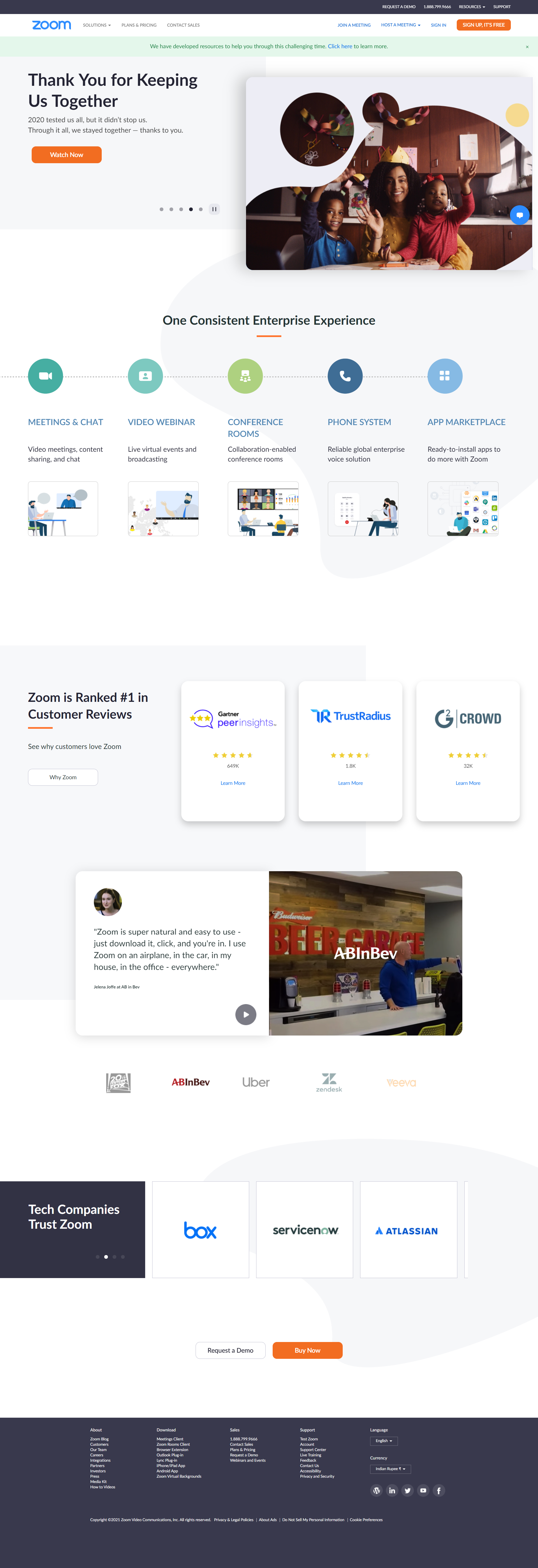
There are different businesses who have successfully created an ideal value proposition which gave the customers a clear idea about the services they would get from them. One such example of a clear value proposition is seen in Zoom video and web conferencing service Zoom’s site. As you visit their site you’re quoted by their VP i.e., #1 video conferencing & web conferencing services. They also provide five points why people should choose Zoom. Zoom offers three primary value propositions: accessibility, performance, and brand/status.
2. Provide solutions to your customer problems
Pain points are problems that perspective customers of your business experience. These problems are specific, diverse and varied. There has to be a marketing strategy for your saas solution. These solutions can be provided on the landing page of your website for easy access and saving time of your customers. It has to be effective so that you can convince them that your service will help solve it. A proper marketing strategy would be to identify the customer pain points and conduct qualitative research with your customers and your sales & support teams. For example:
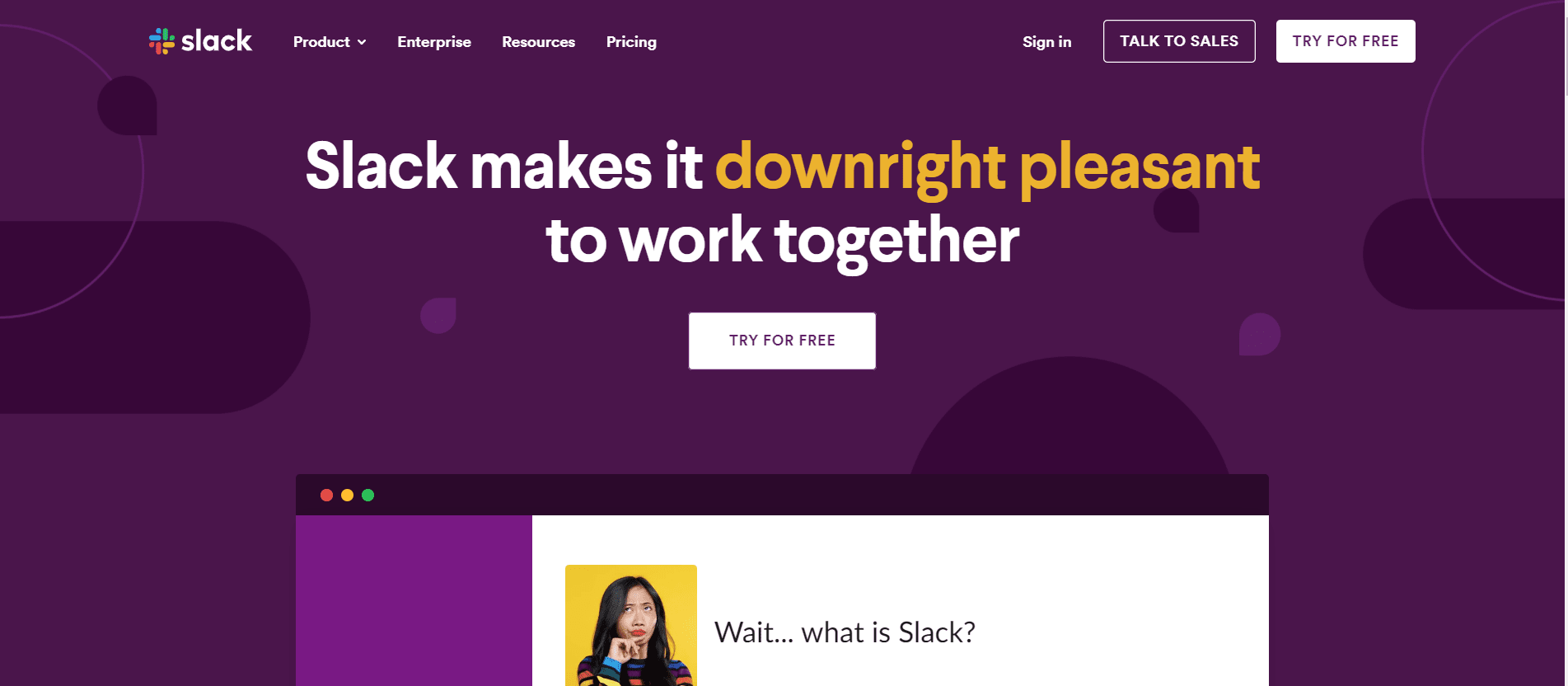
- Slack: It is a messaging app to help communication within teams and aids in finding solutions to customer problems.
3. Content marketing
A new alternative to traditional marketing is content marketing. It is a strategic marketing approach based on creating and distributing valuable and consistent content to attract the concerned audience and gradually derive profitable customer action. It is used by many leading organizations like P&G, Microsoft etc. This type of marketing ensures increased sales, cost savings and customers who have more loyalty. For this, the content has to be relevant which in turn retains the customers and increases overall engagement. There are several businesses who are setting marketing examples by creating relevant content that caters to their users. An example of content marketing is:
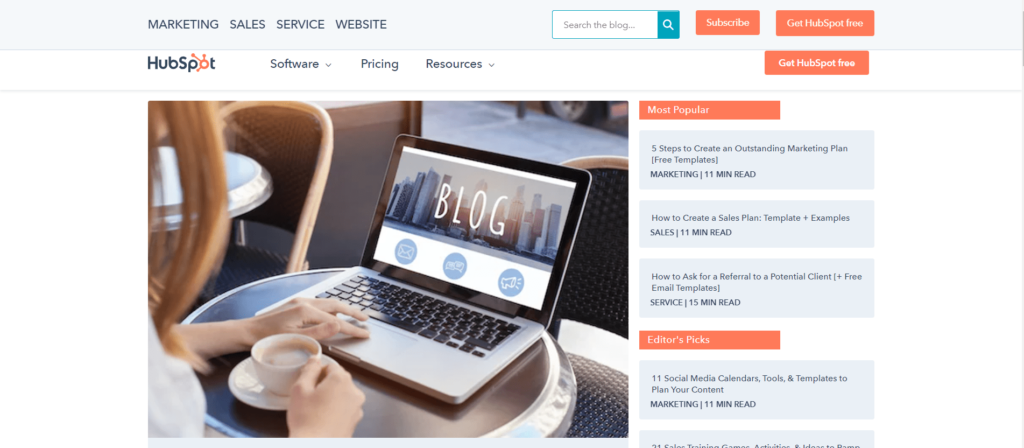
- Hubspot: It is a marketing, sales and service software that attracts an audience for companies by helping them create compelling content, providing them a platform to create blogs, email sequences and host landing pages.
4. SEO
The process of increasing the visibility of the website/web page in search engine through non paid (organic) search engine results is Search Engine Optimization (SEO). It is about knowing what people are looking for online, the solutions they want and the type of content they wish to engage with. Search engines gather billions of pieces of content and evaluate all the possible factors that are most likely to answer the visitors query. This process is known as “crawling and indexing” and then finally ranking them in the order that matches most to the query.
Also read: Beginners Guide to Keyword Research for SAAS (With Examples & Bonus Tips)
SEO is one of the online marketing outputs that pays dividends over time. Organic search results reach to more searchers and receive more clicks than paid advertisements. An SEO Optimized Homepage requires 3 elements:
- Headings
- Call to Action
- Content
A few strong homepage SEO optimization examples are:
- Sprout social: Follows all the 3 elements which makes its exceptional.
- HubSpot: Precise description of product and good use of H1 and H2 tags.
5. Email Marketing
A digital marketing strategy where emails are sent to prospects is email marketing. With effective marketing emails, the prospects convert to customers and then to buyers and loyal customers. It is an emerging marketing strategy. Email is #1 communication channel since most of the users check their emails on a daily basis. No one has the lead to manage or delete your account as in other social media platforms. Email marketing has an excellent ROI and there are more people who buy products marketed through emails.
There are various types of email marketing:
- Welcome emails
- Email newsletters
- Dedicated emails
- Re engagement emails
Remember you are a guest in their list so be polite and deliver valued content. Once you have mastered the basics then move on to segmentation and analytics. Few best email marketing campaign examples:
- Stripo: It provides subscription confirmation email with a simple and clear CTA button. Stripo sends an email to its customers only upon a respective action.
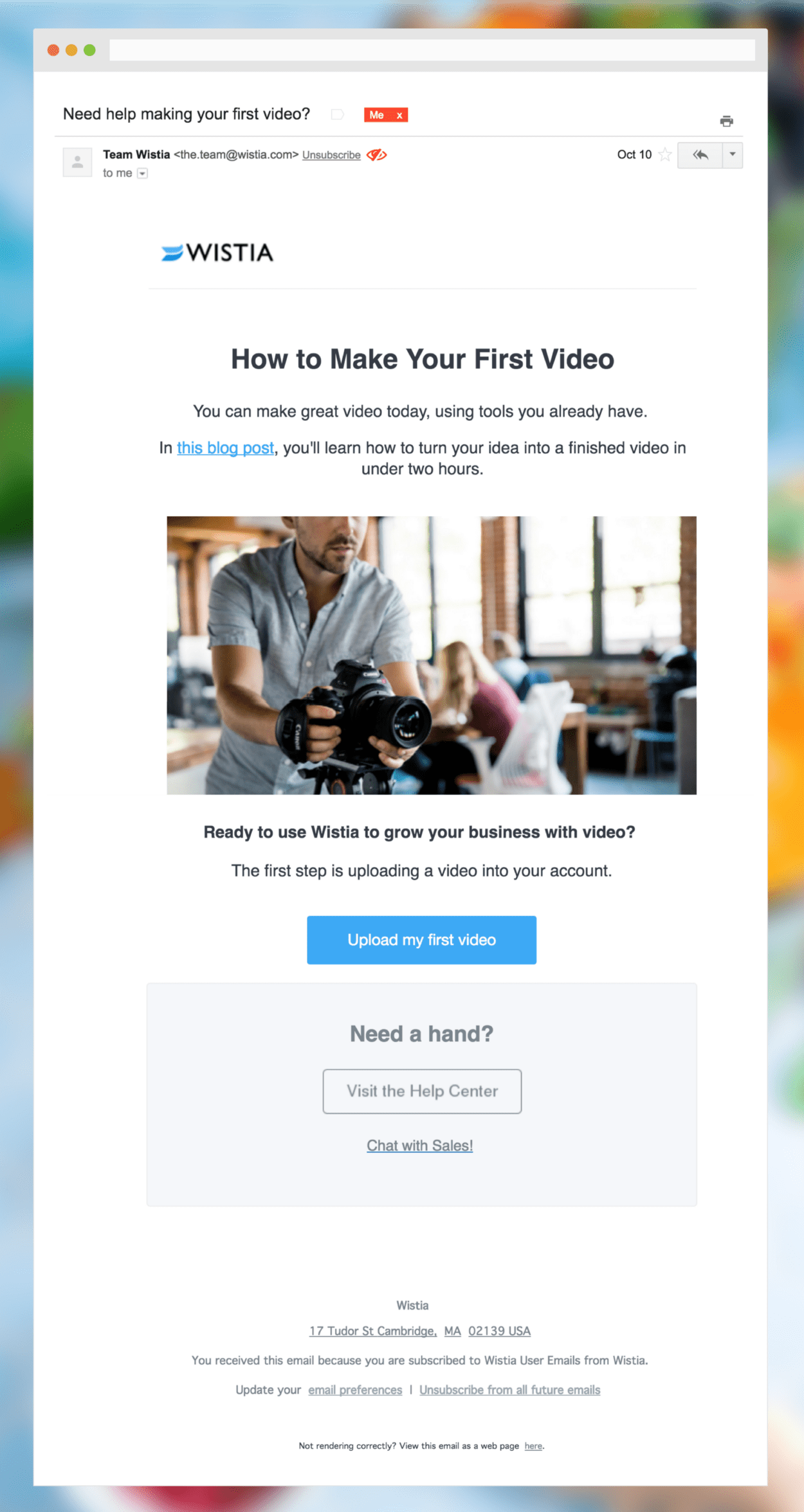
- Wistia: A video hosting software for business Wistia ensures engaging its users with informative and warm emails. It is creative at the same time informative for the newcomers who wish to join their software.
6. Free trials
One of the best saas marketing ideas is the “free trial” marketing strategy. The conversion rate to paid depends upon the demo/product that is given. People trust your product / company more if given a free trial. The free trial option gives an opportunity to customers to compare products with others and get adequate information about new products or technology which normally they won’t if it is paid.
Few free trial landing page examples to give you an idea to boost your business:
- Dropbox: Sign up process is simple, gradually asks information from the visitors, easy to read bullets and excellent visual representation.
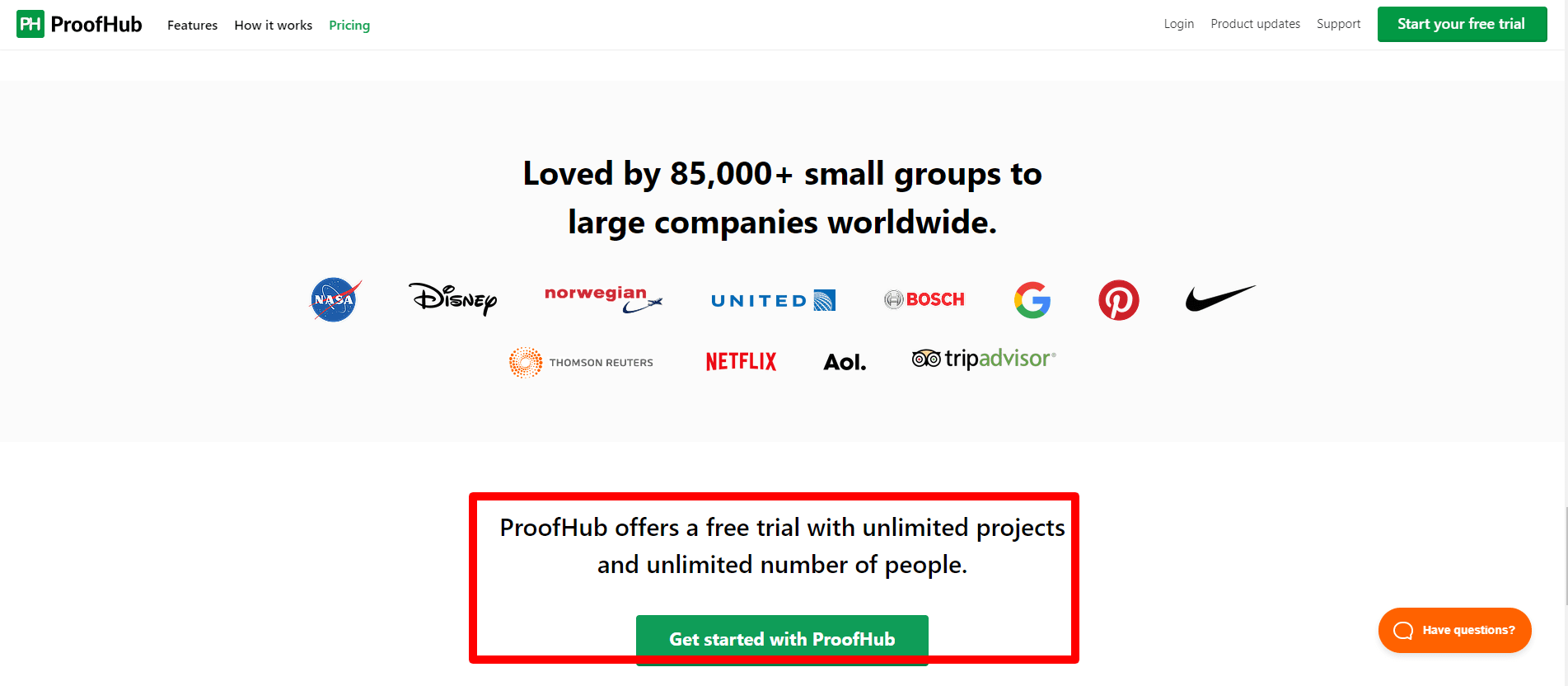
- ProofHub: It is a project management software which provides its customers with a 14 day free trial period before the paid version with an easy sign up process.
7. Co-Marketing
It is a marketing practice where brands and companies that compliment each other and have similar ideologies and audiences, work as a unit often with a strong marketing campaign. It is a beneficial Saas marketing strategy leading to more audiences and reach, engaging new markets, sharing resources, analysing and evaluating each other’s report. There are few considerations while approaching Co-Marketing which are:
- Decide on business Goals
- Search out potential partners
- Contact brands you want to work with
- Strategize your promotional campaign
- Analyse and report results
An example of Co-marketing is :
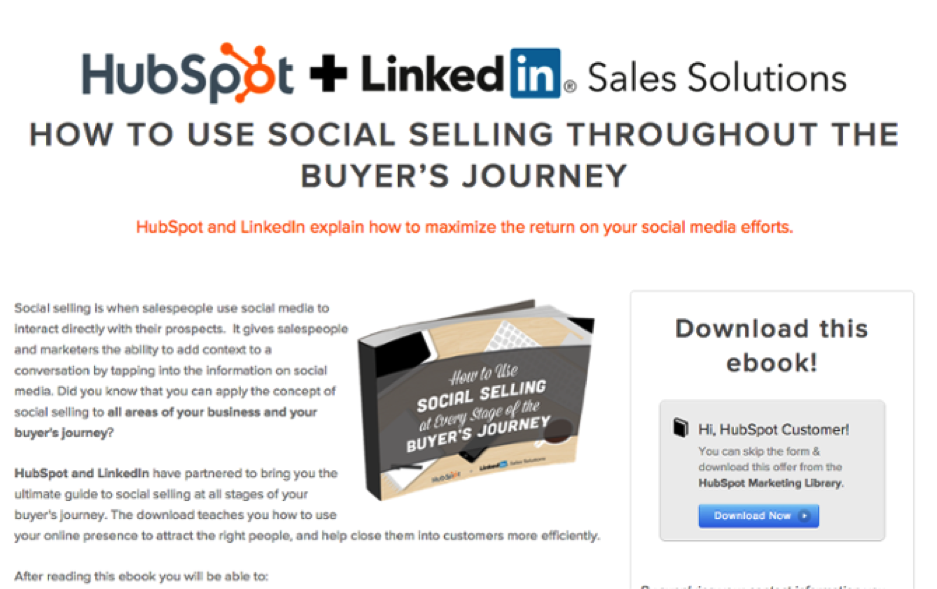
HubSpot frequently partners with other companies in co-marketing campaigns, such as this example of HubSpot and LinkedIn:
8. Influencer Marketing
It is a type of social media marketing wherein influencers are used for promotions and brand endorsements. These influencers have loyal fan bases and hence any recommendations from them serve as social proof to your brand’s potential prospects. Some leading social media platforms like Instagram, Snapchat, YouTube, TikTok have grown their own set of influencers over time.
Few steps to approach this strategy are:
- Do your proper research as to what type of influencers you wish to work with, what about the expected ROI from your campaign, payment contracts and other details.
- Set a budget and management strategy. Create a budget after you have set a rate card; decide the time of execution of planning.
- Decide on goals and messages to raise brand awareness and sales.
- Review and refine your strategy
Few examples of influencer marketing:
- Shopify: One of the best examples of ecommerce retail shopping output is shopify. It includes tips sections for other start-ups to learn about other businesses who have benefited and established themselves. Its unique selling proposition appeals to everyone.
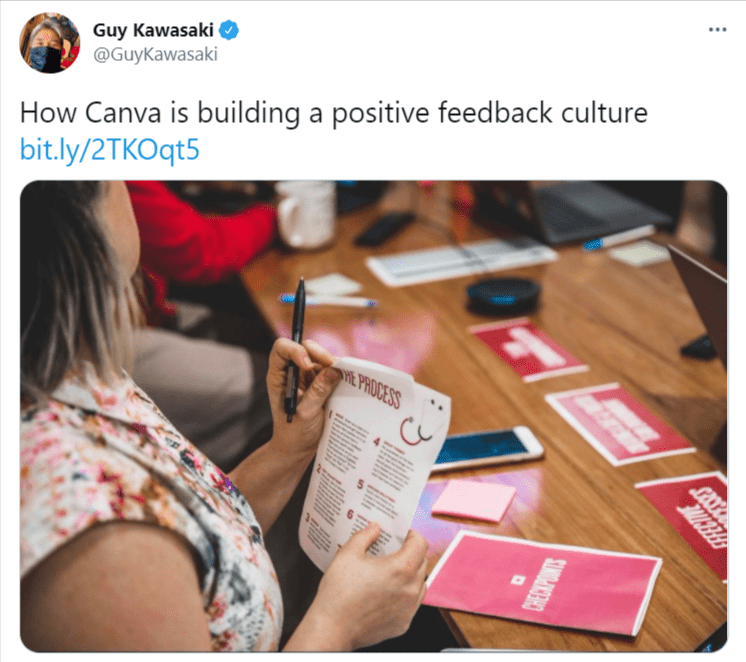
- Canva: Canva is a graphic design software company that partnered with Kawasaki, a marketing Guru and an Apple employee to promote Canva’s freemium tool. Both Canva and Kawasaki benefited from this by standing out in the competitive marketing segment.
9. Product Reviews
A right Product Review is very important for consumers as they rely on product reviews to give them an in-depth insight into the products services, quality and usefulness. A balanced product review is a review where you highlight the pros & cons of a given product or service without any biased action. The following steps are to be adopted while writing a proper product review:
- To build trust between the consumers and reviewer, use the product or service yourself. Your first-hand experience matters more.
- To establish yourself as a skilful just reviewer publish your reviews on an appropriate venue such as blogs and online review sites.
- Identify the users pain points and assure them proper solutions and guarantee the promise to the consumer regarding a particular product.
- The main body of your review should elaborately explain the product.
- Present a final verdict stating both pros and cons.
Examples of product review are:
- Capterra is a free online reviewing software where people can find best business software’s with user reviews.
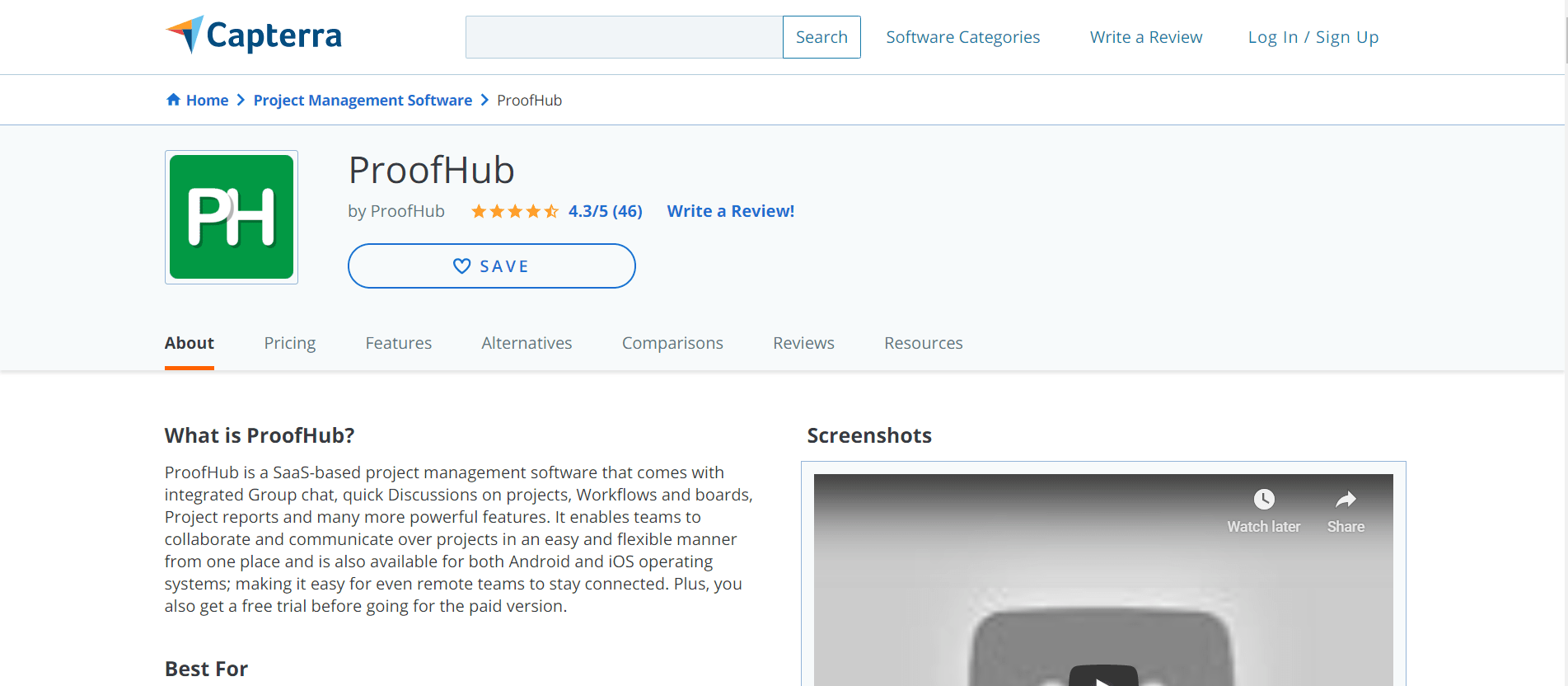
- ProofHub, a project management software has more than 40 reviews on Capterra with an overall 4.3 rating.
10. Social media marketing
Using social media platforms to grow more audience and increase reach of the brand is Social media marketing. The major social media platforms are Facebook, Instagram, LinkedIn, snapchat. There are five core pillars of social media marketing:
- Strategy: Research thoroughly about the social media platform you want to use, what type of content you want, your goals and then finally develop a social media strategy and marketing plan.
- Planning & Publishing: It is basically being consistent in posting quality content to the users each time. Use inbuilt tools and other tools to manage your reach on social media.
- Listening and engagement: Monitor social media conversations about your brand. Use social media listening and engagement tools that engage all your social media mentions, tags and messages.
- Analytics: Analyse your brand performance.
- Advertisements
Few Examples of social media marketing are:
- Asana: Asana is a work management software that uses Twitter, Linkedin as well as Instagram to grow its business. It uses these social media platforms to generate leads, share case studies and templates as well as show behind the scene activities that occur at its HQ’s.
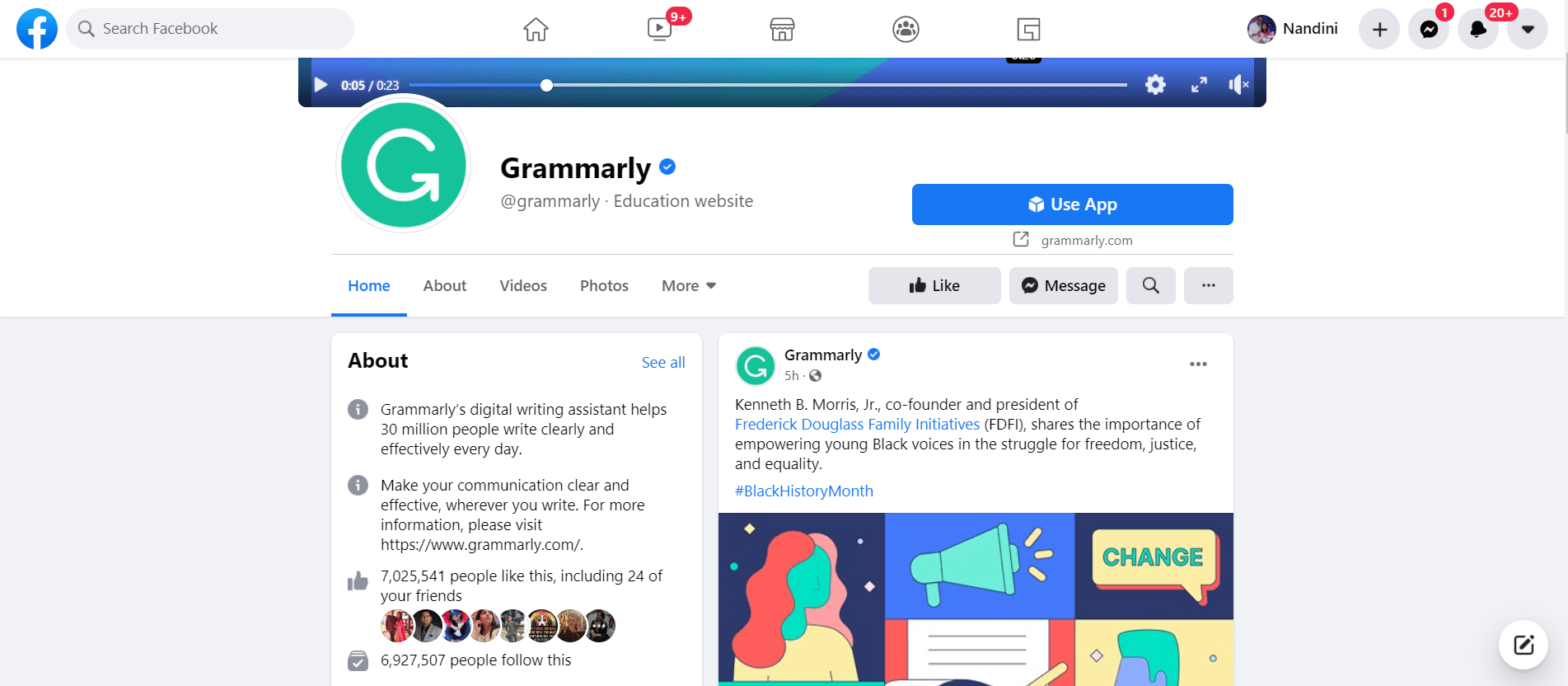
- Grammarly: It is an English language application used worldwide. It has a huge following of 7 million on Facebook. They post short entertainment and informative clips on Facebook to encourage engagement. They also actively post on Twitter and Instagram good content thereby building a big community.
11. Referral Marketing
Referral marketing is a powerful marketing strategy used in Saas solutions without using traditional advertising in which your existing customers directly refer their network to your business. Word of mouth marketing, where one person recommends a service to another person is also considered as a type of Referral Marketing. The marketing techniques to increase your referrals are:
- Build strong customer relationships: As customers refer to other people, it becomes essential to have good customer service and satisfy them with your service. For example, you can send personalized emails that highlight a customer’s individual interest, or send them a well timed promotion. Personalization results in a more engaged customer base that is likely to refer you.
- Ask for referrals: Though referrals occur naturally, it can be difficult for a customer to think about your service once they leave. That’s why you should not hesitate to ask for referrals. For example, after purchase of your service, you can ask for referral by giving them additional incentive on that.
- Joint venture referrals: Cross promoting with complimentary businesses to reach each other’s customer base is also one of the marketing strategies to increase referrals. For example, discounts or other incentives can be given to the customers from the referring company, in exchange for a percent of sales from the referred business.
12. Pay per Click Marketing
Pay per click marketing or PPC is an internet advertising tactic also used in Saas marketing where you pay the search engine or the publisher for advertising you to generate clicks for your website instead of earning those clicks organically. The common pay per click advertising strategies are as follows:
- Bidding on a branded keyword: As the name suggests, it involves the website to bid on a branded keyword to rank at the top in search results.
- Remarketing Campaigns: Remarketing Campaigns tag the visitors on their site when they search the internet after they leave the initial tagging site.
Examples of pay per click marketing are:
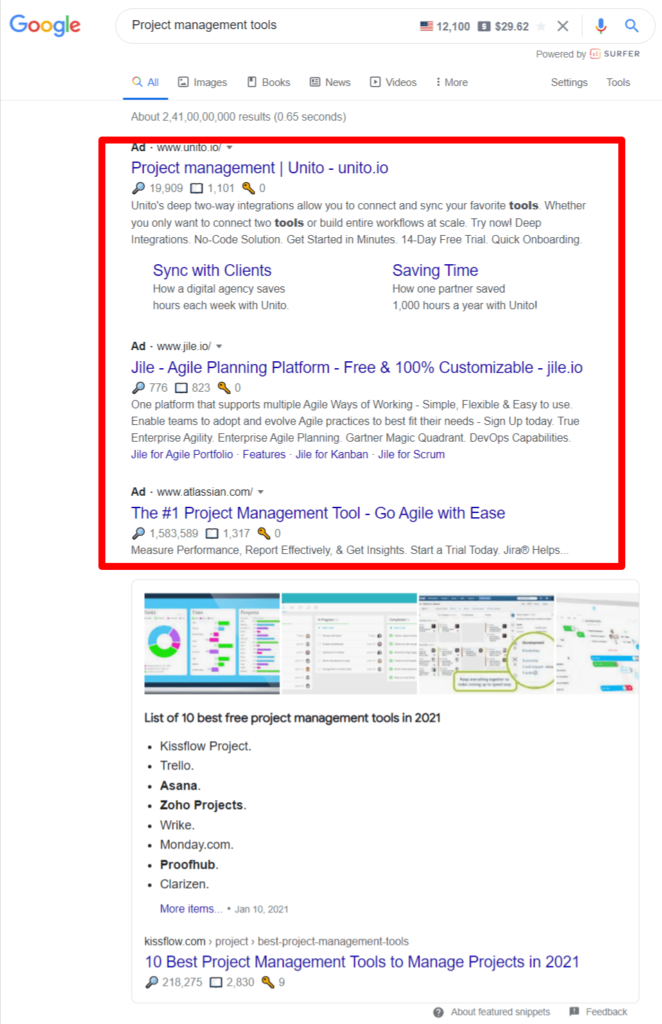
- PPC on search engine: If you search “Project management tools” on Google, ads appear at the start of search. In this case “unito”, “Jile”, & “Atlassian” uses PPC to attract customers by ranking above the organic searches. That’s the work of PPC marketing.
- PPC on social media: Social media sites such as Facebook, Instagram, Youtube, etc. also offer PPC marketing. Canva, a graphic designing platform uses Facebook ads to reach out to new audiences for increasing its customer base.
13. Make Saas sign-ups Easy
The first experience any Saas provides its customer is sign up flows. It involves collecting a certain amount of data from your customers to set them in your user base. The way you design it can have a major impact on how users perceive your product. You can optimise Saas sign up flow by:
- Asking for all the necessary data forthrightly. This enables the user to complete the signup process without much difficulty. Further, it makes the process of identification as well as data analysis much easier.
- Make your field dimension big.
- Use a single column for design instead of double column design.
- Make your call to action button clear and big.
Examples of some good sign-ups are:
- ProofHub
- Netflix:
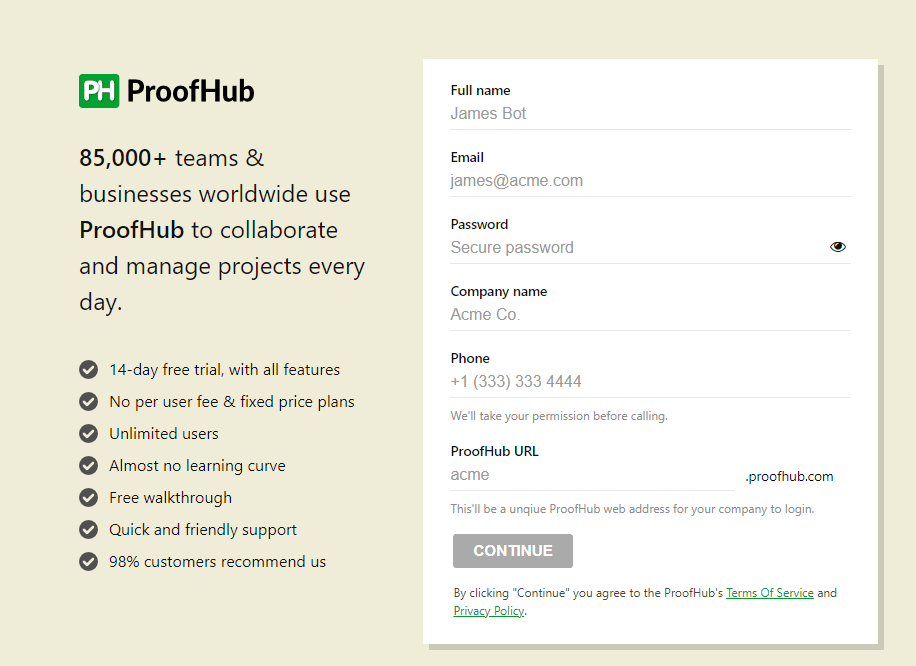

Both have clear, well defined and easy sign up flows to ease the custom experience.
14. Refine your call to action
Call to action also known as CTA is a link or a button on a website, usually a landing page (link meaning). It is designed to prompt an immediate response from customers like downloading a service or buying a product. The tactics for refining and creating high performing CTA are:
- Use active words: use strong active words usually in the form of commands. Most of the Saas companies use verbs such as “read”, “learn”, “start”,etc.
- Make it stand out: The easiest way to make your CTA stand out is by making use of color as a tool. Bold and bright colour button with a clear CTA can easily grab the attention of the customer and result in action. Another way to make it stand out is positioning it in such a way where the user can easily spot it.
- Make it easy on all devices: Optimising CTA according to the device customers use is very crucial as small screens make it harder to click. Therefore, it is essential to make the CTA button short and of suitable size.
- Create urgency: A popular Saas marketing tactic to boost CTR is to create scarcity and urgency. “Only few left”, “Sale ends tonight”, “Hurry”, etc are some of the phrases used to create urgency.
- Urge to belong: The urge to belong and FOMO (fear of missing out) are strong action triggers and are one of the best ways to get better performance with CTAs. A lot of websites use this technique by showing the number of people who have joined their email list or have used their product in crafting their call to action.
Examples of great call to action are:
- In our case, the CTA stands out with the help of strategic placement, use of clear active words and bold colours.
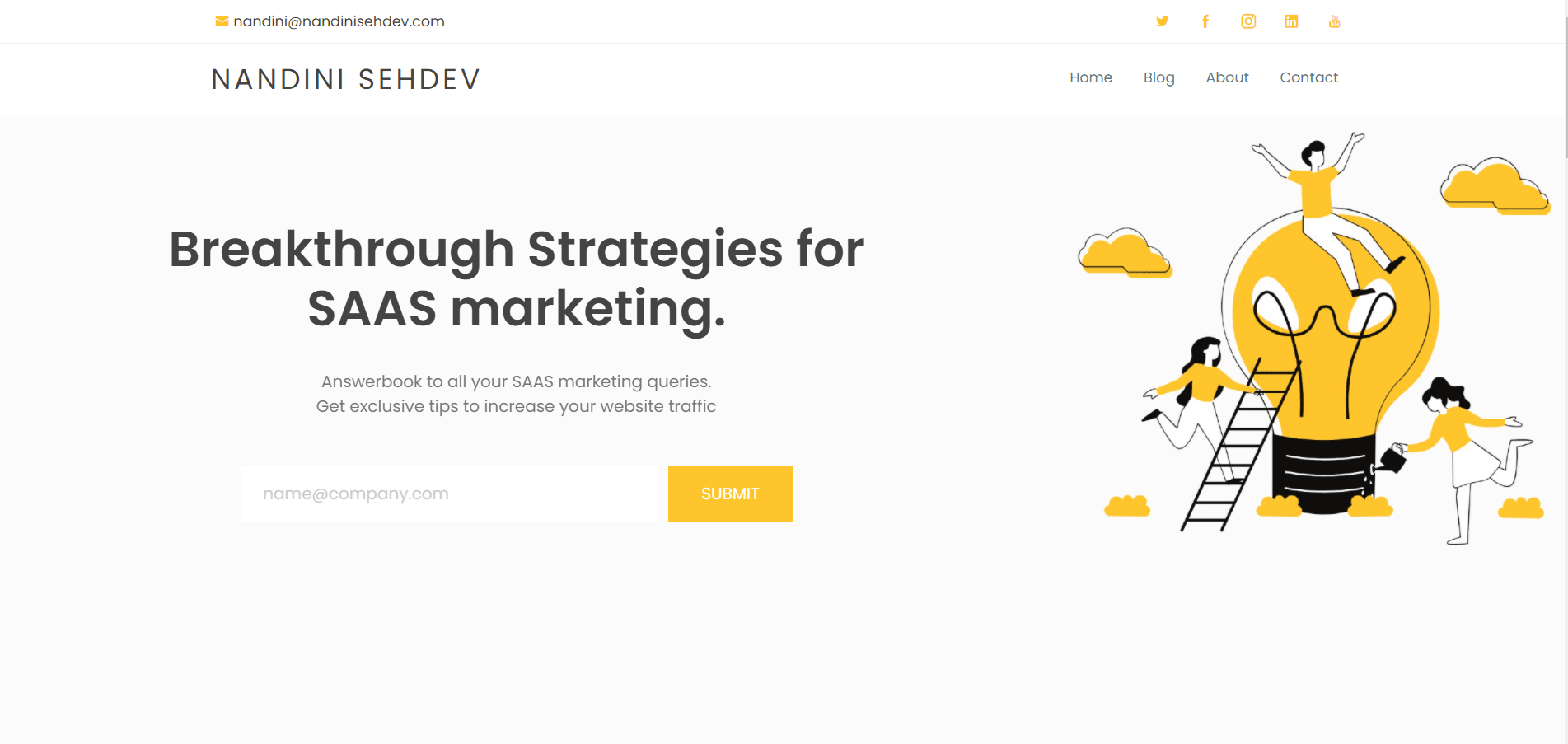
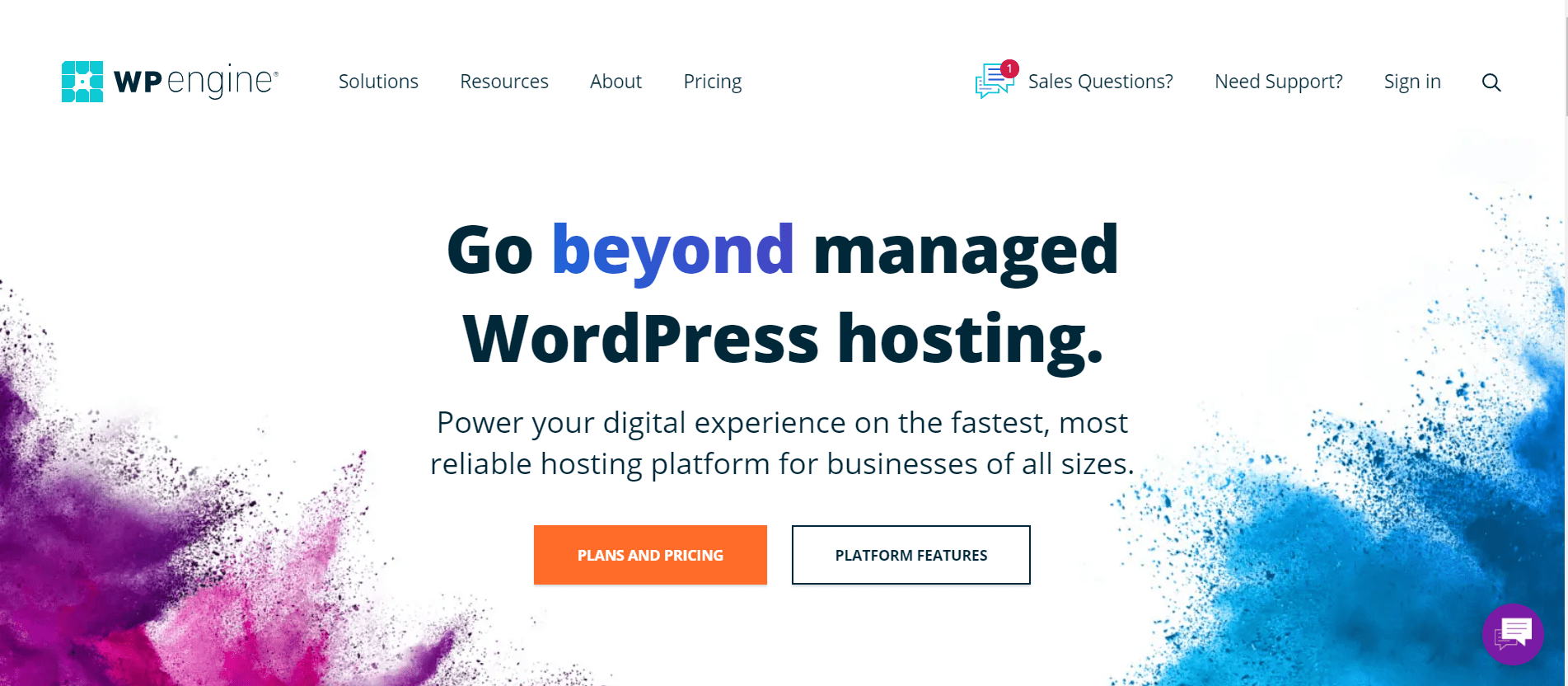
- WordPress Engine: This website uses strong action verbs like “power”, “fast” and “beyond” to catch user attention.
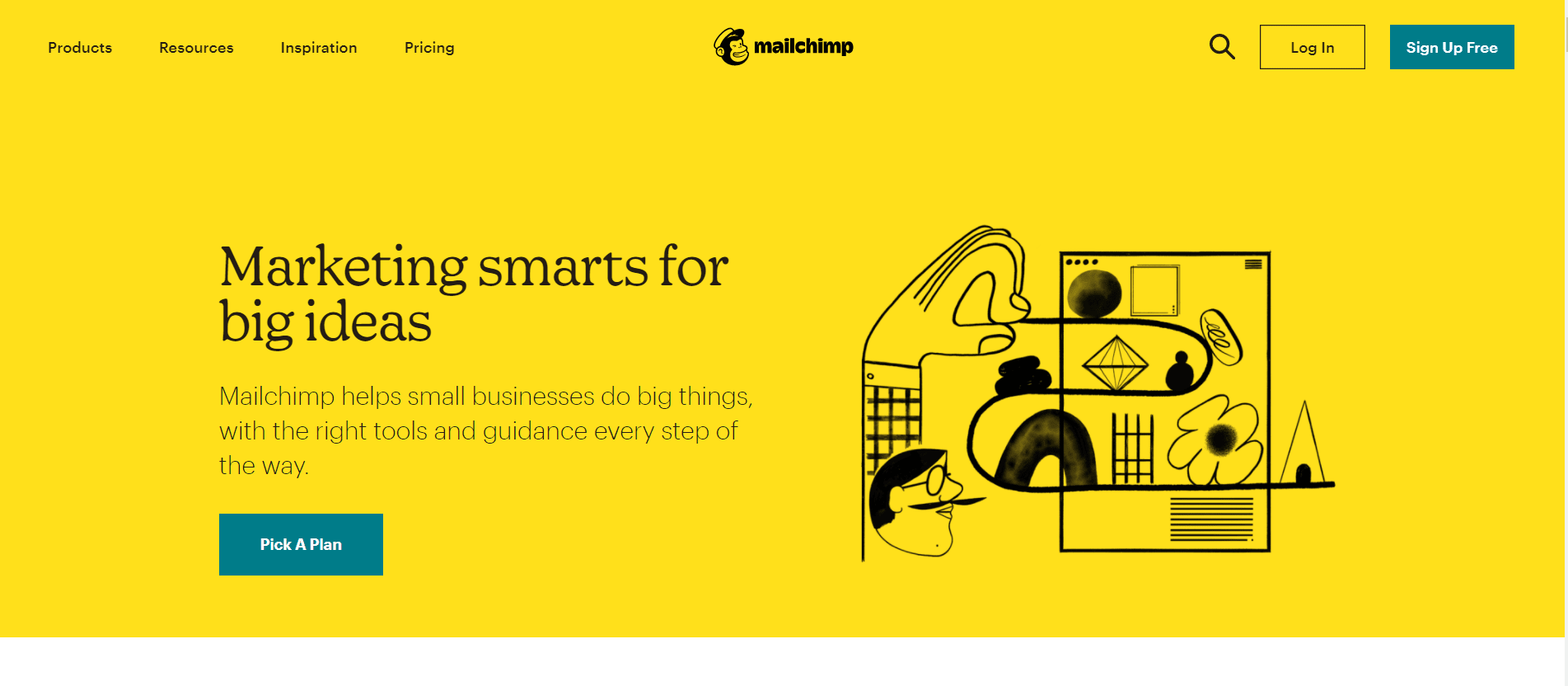
- MailChimp, an email marketing company, shows the number of customers using their services. This would help convert the first time visitors too.
15. Retargeting
Retargeting is a Saas marketing tactic to re-engage someone who has already visited your site. Essentially it converts window shoppers to potential buyers. Through retargeting, you tag your product to the visitor after he leaves your site, across different platforms like social media and Google. This encourages them to visit your website again and buy your product. Retargeting can help you gain new customers as well as increase brand awareness. Here are few retargeting strategies that can help you do that:
- Targeting customers based on the pages they visited on your site.
- Customise and target your messages based on your visitors’ needs. Don’t show the exact same message to all your customers.
- Focus on the searched keywords which relate to your business and retarget your product to those shoppers who search them.
- Know the customer’s product interest and intent.
Some retargeting examples are:
- After searching for a pair of shoes from Nike’s website, I encountered a series of remarketing ads as I browsed other sites. It had personalized suggestions based on my previous activity on its website.
- Similarly, Spotify, Amazon, Airbnb also provide hyper focused targeting, messaging and content to their potential customers who have visited their site.
16. Build a great lead magnet
Lead magnet is an incentive that you can give to your potential customers in exchange for their information in the form of email address or other contact information. Some ways of generating highly effective lead magnets are given below:
- Provide free trials: It is one such tactic which the customers cannot resist. Such lead magnets are often used by Saas businesses as a way of getting their user to try before they buy.
- Coupons/ Discounts: People who shop online are immediately attracted to such offers. Such offers can draw the attention of potential customers towards your business.
- Samples: They not only help customers know more about your product but also demonstrate immediate gratification to your audience.
- Training videos: Just like providing samples, offering training videos for free can also be a great way to start a relationship with your audience.
- Guide: Similar to an ebook, a guide is a lengthier lead magnet used to educate your user. This gives a reason to your audience to invest in your product.
Examples of lead magnets provided by Saas tool:
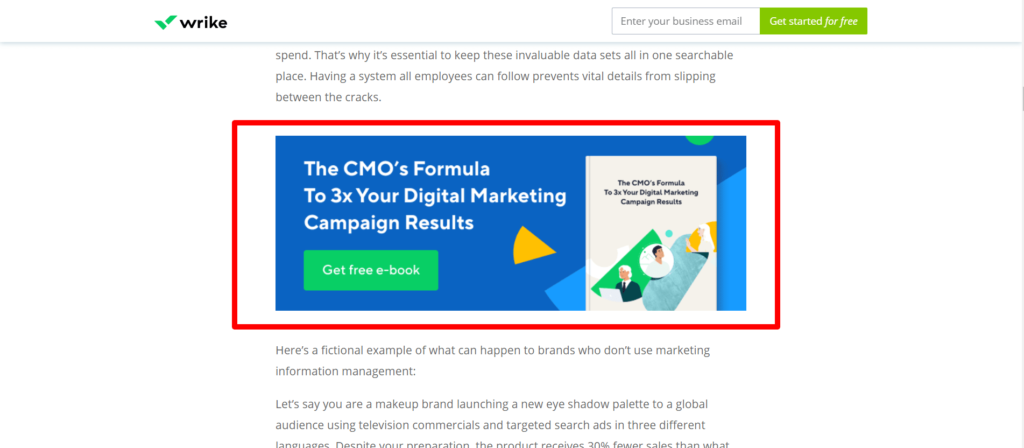
Wrike is a project management guide which uses ebooks and guides in its blogs as a lead magnet to attract more customers.
17. Streamline communication with your customers and leads
In order to encourage Saas customer retention, it’s important to have efficient communication and to provide the best experience to your customers. Establishing regular communication with your leads reinforces your brand and boosts your sale in the long run. You can enhance your customer relationship by:
- Having a prompt email response.
- Consider a live chat option where users can interact with the company.
- Add the “Request to call” option through which the customer can schedule a phone call.
- Use social media to post special offers, product information and general announcements.
- Add feedback form from where you can get insight about your service and ideas to improve.
Here are the examples of customer services provided by various businesses:
- Chargify, a billing software has automated part of their operations to help their customers. They also provide them with a step by step guide on the phone for providing real solutions.
- Slack, a messaging and communication app besides providing responses on email and phone, the company also offers an efficient ticketing system with fast service time.
18. Figure out a crystal clear pricing structure
A clear pricing structure is very crucial for the success of Saas businesses. Pricing plays an integral role in helping you monetize your customers and keep your business in good health. There are various pricing models which can help you in that are:
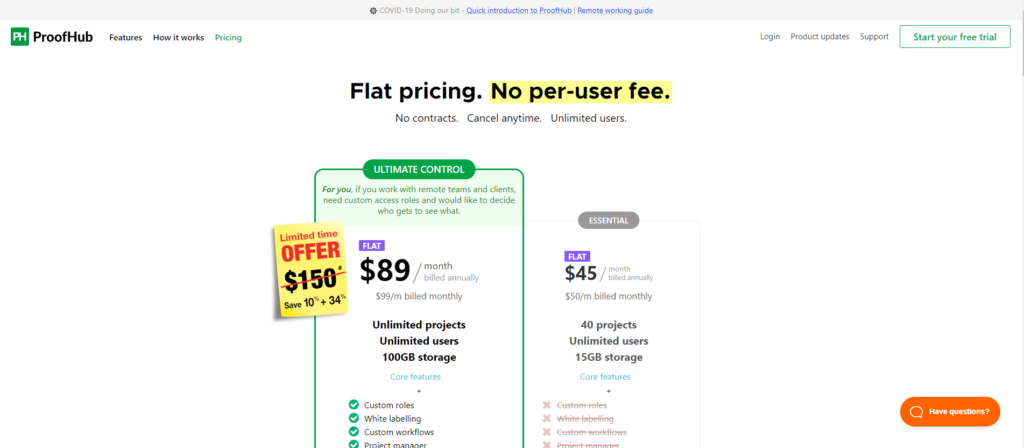
- Flat rate pricing: It is the most basic pricing model for any Saas company. In it the product is offered at one particular price with a particular set of features. For example, Basecamp as well as ProofHub, both project management tools, use flat rate pricing.
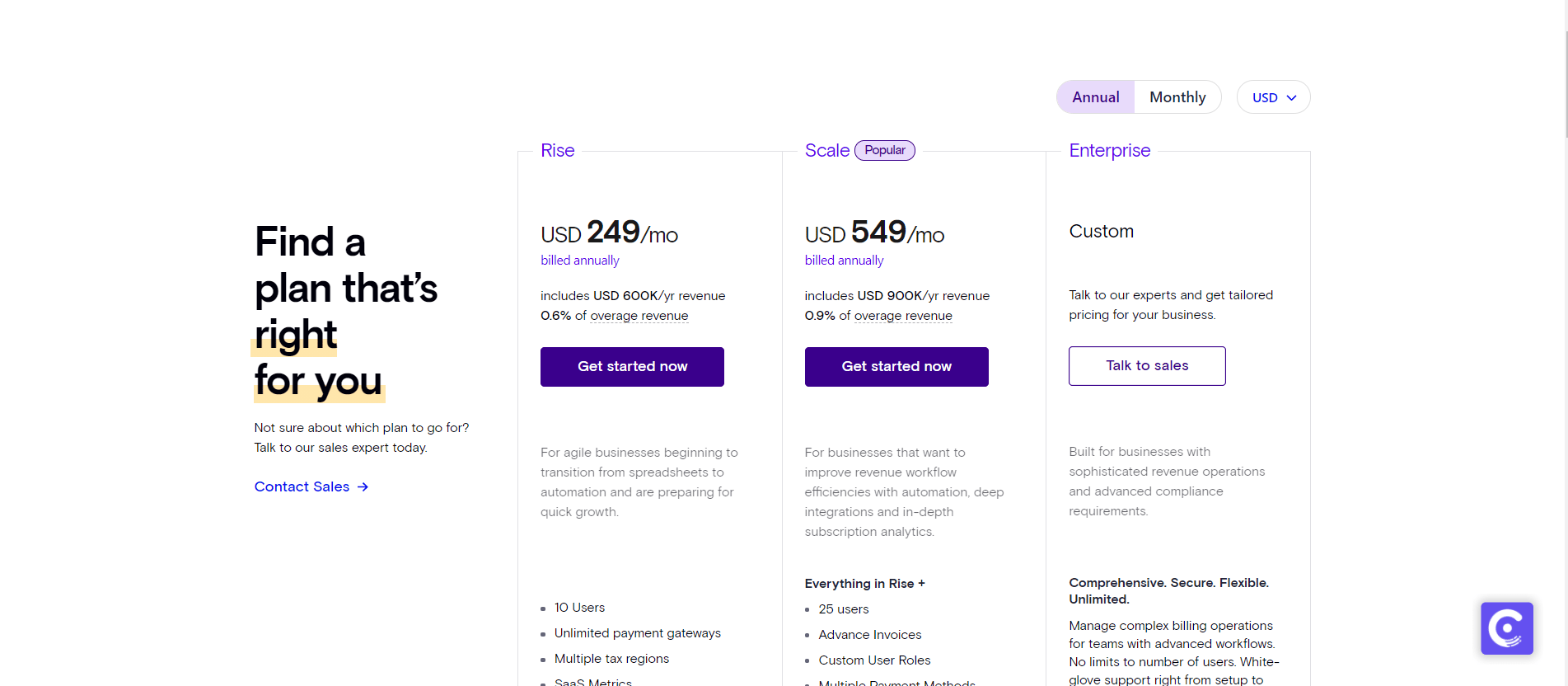
- Usage based pricing: Also known as the “Pay you go” model, in this customers are charged based on their usage of the product, i.e., the more they use, the more they pay. For example, Chargebee, which is a subscription billing software, charges the customers by using this technique.
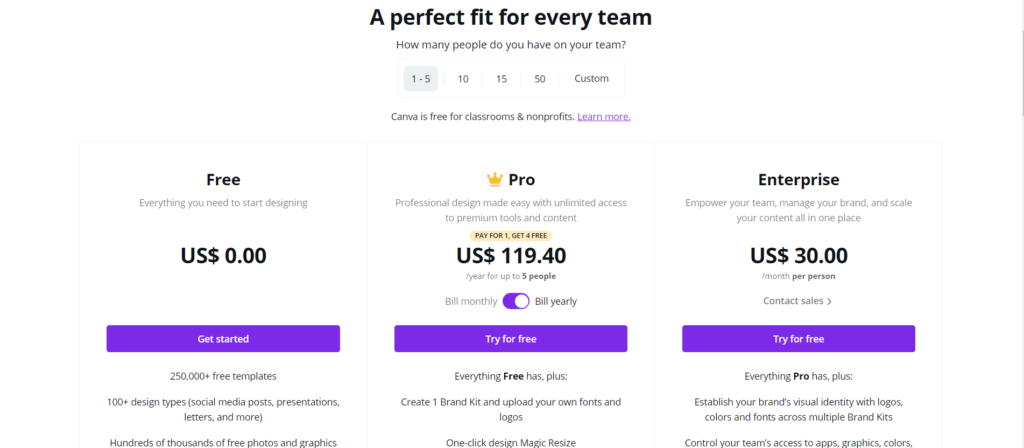
- Per user based pricing: As the name suggests, this model allows businesses to charge a fixed rate per month for each user on the account. For example, Canva charges its customers on a per user basis.
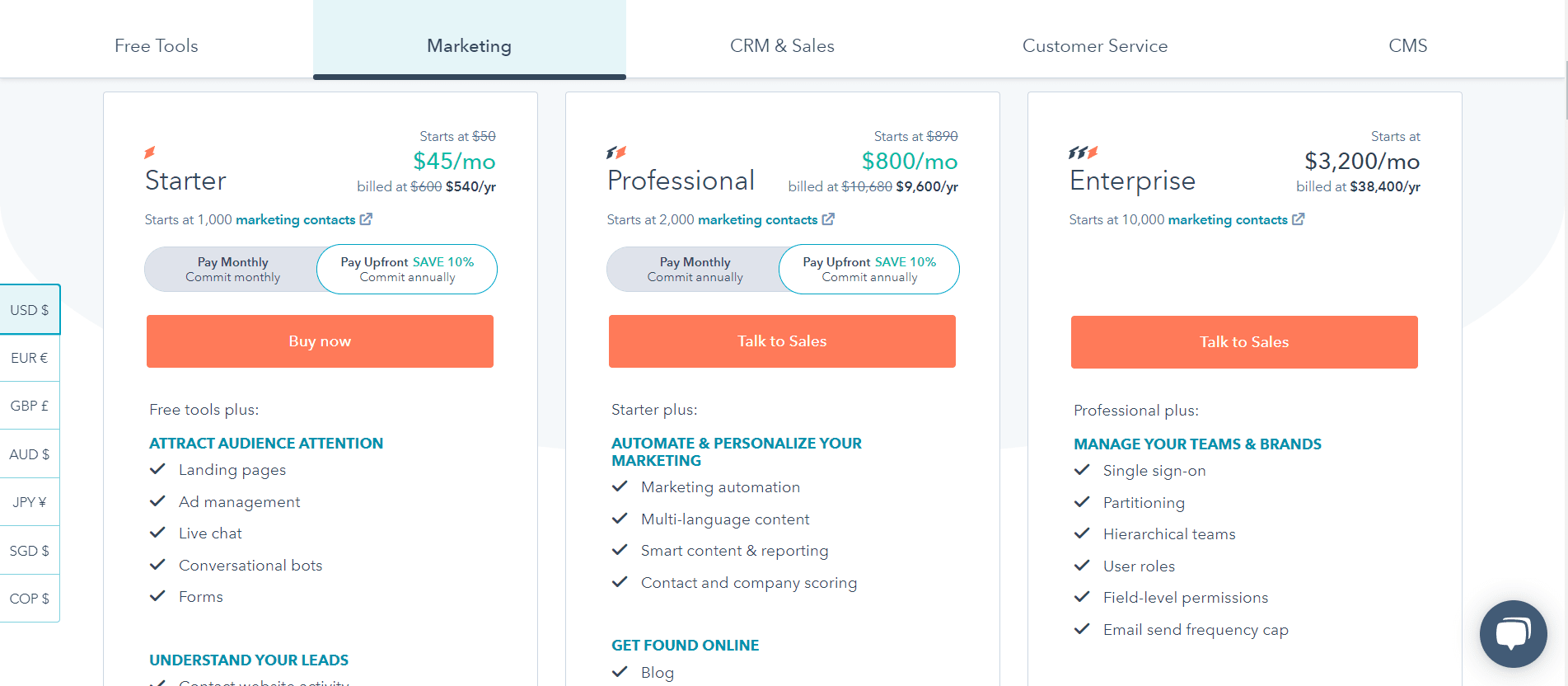
- Tiered pricing: This pricing model is the best suited for most Saas businesses. It offers two or more packages for a specific price. Example of tiered pricing model is Hubspot which has different pricing plans for different buyer persona.
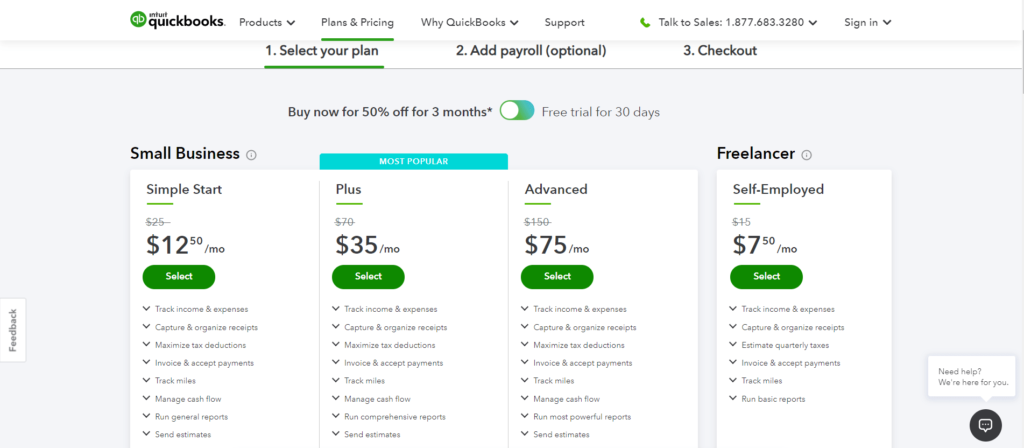
- Per feature pricing: In this model the price of the product is based on the features and functionality. This means, the more features, the more price customers have to pay for the product. Such type of pricing is used in Quickbooks.
19. Deliver amazing service and support
An amazing product without reliable and proper customer service and support ultimately loses the attention of the customer. That is why investing in customer service is beneficial for long term business success. A great customer service means providing the most useful and reliable information to the users, responding immediately to their concerns, valuing their time and giving them a pleasant experience each time they report .
Few ways to deliver best customer service are as follows:
- Know your product: Have an extensive knowledge about your products and services. It is the most essential customer service skill.
- Be polite: “The right attitude changes the negative customer experiences into positive customer services.” Therefore be soft spoken in person and use warm humor and emojis on phone chats.
- Solving problems: This is why a customer service and support team is hired. Seek ways to solve the problems of your customers. Go beyond expectations and figure out the way to help your customers.
- Quick responses: Value your customers time. Understand their problem thoroughly and try to fix it in a short span. Don’t take too much time unnecessarily.
- Personalize your service: Know about your customers birthdates, hobbies and interests. Personalise gifts and vouchers for them on their special occasions. Make them feel special and valued.
An example of great customer services is:
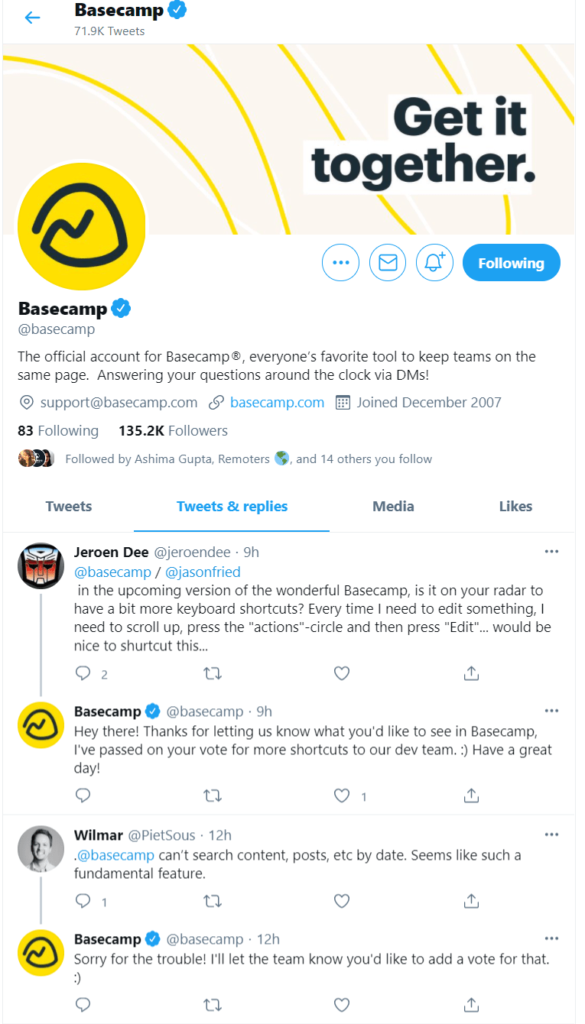
- Basecamp: It is a project management and team communication software which uses twitter as one of the main platforms for providing customer services. It gives instant replies to its customers through tweets regarding any query posted by the user. This encourages more customer interaction which will ultimately boost business of the company.
20. Keep a close eye on your competitors
In the modern world where there is no dearth of content, services and facilities it is a must to keep a close eye on the competitors to stay on track. Competitor intelligence (link meaning) is the prime factor that every business needs to stay updated with. Market trends keep on changing therefore an analysis of the market is important for consistent growth. There are five main reasons to keep a check on your competitors:
- Choosing the platform that suits best for your niche: Today there are so many platforms with so much social noise. One cannot be active for 24 hours. Therefore knowing what platforms are working better for your competitors can help you access and know which platforms will work best for your niche.
- Selecting the campaign that best resonates with your niche: There are so many viral campaigns that stir the attention of the people. According to your niche target the audiences with the similar but better version of those campaigns. See the engagement and then decide what works best for you.
- Take inspiration from your competitors strategies: Take notes of your competitors content. Stalk their social feed and see what kind of contents they mostly post, their posting patterns and their most successful content. Take inspiration from those and create your own reconstructed ideas.
- Detect your competitors strengths and weaknesses: See what works best for them and use that in your own projects. Their weaknesses can be a chance for you to do better on what they are not doing. Compare the differences and then make a strategy that incorporates your strengths .
- Learn how your competitors handle the feedback: The feedback can be of various types from reviews to general discussions to customer care interactions with users. Check how they interact with their users and what’s working for them and where they lag in attracting customers.
Do your proper R&D (Research and Development) in the market sector. Use proper keywords for better SEO. A proper R&D helps in coming up with new and better ideas. Do this at least once or twice in a year. Innovative content update is the key for racing ahead then your competitors. Further learn and implement the basics of digital marketing for aggressive growth.
Go and check on your competitor and see what is working out for them!
21. Measure and track your goals
Being at the top is the objective of any new venture. A good metric and well aligned goals should be followed by any company, business or even for personal growth. You need to choose good metrics and have a goal oriented team working towards achieving the desired goals. There are 2 types of metrics:
- Leading indicators: These are indicative of activities required to achieve the desired goal.
- Lagging indicators: These are output metrics indicating the actual results.
There should be a strategic balance between using both the indicators. The most successful entrepreneurs have used and tested what metrics work for them the most and then use those that help them achieve their goals.
Goals are the specific targets that you want to achieve. Each metric needs goals. Number of approaches can be used to align your goals with your key metrics. Two of these approaches are:
- OKRs: Objectives and key results are used for achieving fast and accelerated growth. Helps in identifying objectives. Developed by Intel and familiarised by Google.
- Useful For: Helps in defining key level objectives and key metrics.
Example:
- Focus on what key metrics are important for your business growth. It can be a month on month revenue growth, etc.
- Good metrics indicate progress which means they can be improved. It can be reducing churn by 8% or increasing activation rate.
Saas marketing can be a little tricky if one doesn’t know the tips and tricks to boost his/her business. Therefore, all the above strategies provide tried and tested suggestions which can help any Saas business soar to new heights. Make sure to track your performance after using these and customise them according to your audience for better results.