FOMO, or fear of missing out, is probably one of the most common psychological phenomena around. If you’ve ever spent a couple of hours on Instagram seeing what your friends were up to, and wished you were there, you’ve gotten a big dose of FOMO.
Everyone has experienced this universal fear of missing out, though young people tend to experience it more strongly than other age groups due to their high exposure to social media. Eventbrite estimates that 69% of millennials have experienced FOMO, and 33% have purposely tried to make others feel FOMO.
This feeling of missing out on something goes back to the beginning of time when the earliest people had to fend for scarce resources to survive. And FOMO is likely not going anywhere.
Your business should look at the ways it can use this envy and jealously that your customers are feeling to drive traffic to your website and ultimately boost sales. Chances are, when customers feel they are missing out on something, they spend more!
You can use FOMO Marketing when you’re hosting events — by limiting the number of people that can attend and by live-streaming prize giveaways. You can also use it in your social media plan and when building your website if you let your content expire, experiment with influencers, or even show products’ stock levels to create a sense of urgency.
Engaging in brand storytelling isn’t just an important modern marketing strategy, it’s vital, writes Uber Eats’ Ryan Reynolds. As audiences evolve and expand across global landscapes, the benefits of capturing their attention through stories and emotion shouldn’t be underestimated.
Stories that work to provoke emotions are a universal language that can be used across platforms, hitting consumers from all walks of life, ages and backgrounds. With audiences inundated with media through every possible platform, using storytelling as a way to stand out is the best way to cut through the noise and target the heart of your demographic.
The core of social media remains as a way to engage in social connection. People don’t log into their Instagram or Facebook accounts to see billboard-like advertising. They use these apps as a way to remain in-touch and social in a digital era. In order to engage large audiences in such a social way, brands need to create stories, adapting to this social style of marketing.
An engaging and emotional connection is often what draws in and captivates an audience. People are inherently more interested in reading or following a story, as opposed to simply reading statistics and facts. This is the case particularly in today’s age, where consumers are actively avoiding advertising as much as they can. When was the last time banner advertising caught your attention?
We’re in an age where programs such as Adblock are constantly in use to hide or minimise the number of traditional advertising audiences are exposed to. Audiences may be more self-aware when it comes to ignoring traditional advertising, but they’re as engaged as ever with social media, making emotive storytelling the ideal platform to target the modern consumer. Transactional advertising is quickly becoming a thing of the past, and to survive, brands need to adapt.
If you think back on your own experience with advertising, you’ll agree that campaigns using stories or case studies stick out clearer in your mind. An example of memorable advertising is Toms and its use of a unique company story which entices people to join a cause. The story of Toms could ultimately see it chosen over a competitor, because of this emotive and engaging content that inspires change – showing consumers the benefits of their purchases and urging them to become involved.
If you’re unaware of the story behind this revolutionary footwear brand, Toms introduced a groundbreaking ‘one for one’ concept model – with every purchase of Toms shoes, the company donates a pair to a child in need around the world. This model and level of engagement gives its consumers the power of purchasing with purpose. This feeds into the social element, with Toms’ customers having a simple purchase of shoes reminding them that they’re a part of something much bigger. Toms marketing goes further than just selling shoes – its selling a movement, and people love to be involved.
Brand storytelling is a way to build a genuine and loyal connection with consumers. In my current role as global social and content marketing lead for Uber Eats, I’ve seen that marketing nowadays goes beyond the classic kind, where a company used to share a story about a product with the hopes to engage interest by simply presenting something to buy. Instead, it has now shifted to sharing stories of the people behind the product.
An example of this strategy is a campaign Uber Eats did where we shared stories about the restaurants on our platform, or the drivers who delivered the food. The focus of this campaign was to share emotive stories that don’t get the limelight that they deserve. Once consumers hear of these stories and case studies, they begin to understand the impact that has been made by supporting a brand, giving them a sense of importance by being involved, while understanding the larger picture of their involvement at the same time.
In this day and age, people are constantly bombarded with content. If you want to cut through the noise, it is becoming increasingly important for brands to forget the obvious elements and go deeper. During my time in Australia, I saw a great example of a big brand creating an accessible and engaging story, which was Nike.
The little initiatives it implements on the ground gives consumers a chance to be a part of Nike’s story – this is particularly evident in its Nike Run Club. Using ambassadors in every major – and even smaller – cities around the country creates a club mentality, allowing its audience to forget about the big corporate America Nike. The Nike they know and love becomes something much smaller, and something that they are involved with at a ground level. This kind of proactive and targeted brand storytelling emphasises a personal connection between consumer and brand. In this example, we see that the more invested these runners feel in Nike, the more inherently loyal they become.
It has been proven that messages delivered as stories are 22 times more memorable than any other type of marketing. Having a message that will stay on your consumer’s mind is naturally going to improve the efficiency of communication channels to your audience. One major way brands fail when implementing a storytelling strategy is not keeping it authentic. Audiences are smart enough to see through content created purely for content’s sake – so keeping authenticity in everything you do as the number one rule when creating a close relationship with your consumers.
By Ryan Reynolds
Ryan Reynolds is global social and content marketing lead for Uber Eats
Hard as it may be to believe, it’s that time of year again – and no, I’m not talking about making Christmas lists, planning how best to avoid the in-laws over the festive season, and having mild panic attacks about how you’re going to afford all the presents and festivities that the coming months have in store. No, it’s the end of another year, which means it’s time to speculate about content trends for the coming 12 months.
Here are four trends that I think will have a significant impact on SEO content in 2020:
It’s not about length – it’s what you do with it that counts
As digital marketers, we sometimes get a little obsessed with hard and fast rules. It’s inevitable. We work in an industry based on understanding and algorithms, on following best practices, using fool-proof formulae, getting the inputs just right to achieve a precise result. A lot of the time, I think that’s what makes what we do rewarding. But I think one of the mistakes we make is to look for a right answer when there isn’t one.
The question of how long a piece of content should be is divisive because there really is no right answer. Actually, it’s worse than that. There are a lot of right answers. People have short attention spans, so writing concise, 500-word blogs is the way to go, right? But if you look at the top result for just about any search, you’ll find the word count rarely dips below a thousand. So longer must be better, then. Well, you can’t argue with the fact that most readers only get about halfway through a piece of content, and that many don’t even scroll to begin with. The reality is that there’s no ideal length for content, because length in itself doesn’t mean anything. What does matter is how well you’re answering the question, or addressing the needs of your reader.
In my experience, it’s safer to lean towards the longer side. There’s nothing more frustrating than seeing a great-sounding blog title, and opening the link to find 200 words of half-baked, keyword-stuffed content that doesn’t really say anything at all. It’s equally painful, though, when you start reading a long-form article and realise the writer is trying to draw out a 300 word idea into 3,000. Ultimately, longer content is good, but there are certainly diminishing returns.
Voice search will make you question everything
‘Always read your writing aloud.’ That might be the single best piece of advice I’ve ever heard as a writer. And, since voice search is expected to account for as much as half of all online search traffic by 2020, it takes on a new meaning: if you aren’t reading your own writing out loud, Google’s going to do it for you, and you’d better make sure the results are good enough to drive interaction or conversion.
The key thing to realise here is that voice search is fundamentally different from text search. The average text search phrase, for example, is around one to three words, while the average voice search phrase hovers more around three to six words. Voice searches are also far more likely to be phrased as questions. People talk to their voice assistants like they’re talking to a real person, so it follows that content should respond in kind if it hopes to meet the needs of the searcher.
For content to soak up the lion’s share of voice searches, it needs to be written more conversationally than you might be used to, and it needs to hone in on answering the questions that the user is asking. Content that answers questions head-on, shows a clear understanding of search intent and sheds as much of the unnecessary detail as possible is bound to perform better for voice search traffic, so expect this trend to become increasingly prevalent in the coming months and years.
Zero is greater than one
Another consequence of voice assistants becoming the go-to search channel is the importance of Position Zero: whenever a user inputs a voice search query, their assistant will read out the position zero result before delivering the rest. So, even if you’re dominating the search results for the entire first page, a competitor with the zero spot is going to soak up 100% of the voice search traffic and leave your hard-fought position one content starved for clicks.
Gartner estimates that around a third of searches will be done without a screen at all in 2020, which means that anything beyond the position zero result might as well not exist for voice search purposes. Expect blogging content and other written forms to include an increasing amount of structured data, rich data snippets, and content specifically designed to rank above position 1. This will be particularly important for content with a local element (since a large part of voice search queries centre around local search) and bottom-of-the-funnel searches.
This time, it’s personal
There’s no doubt that personalised marketing messaging works. We live in the age of the individual consumer: people are accustomed to their social media feeds, email inboxes and mobile experiences being tailored to their preferences and interests. So, it follows that expectations are the same for any content they engage with while searching or browsing.
For advertising the remedy is rather simple: serve ads that are targeted at specific factors and show an awareness of the individual customer’s context, preferences and their position in the sales funnel. But for ‘raw’ SEO content – that is, blogs, website copy, landing pages, etc. – it’s a little less straightforward. Depending on how deep down the rabbit hole you want to go, you could include forms, quizzes and surveys to understand exactly who you’re talking to before serving them tailored content, or you could go the simpler route and profile your user base into different personas who are likely to respond to different messaging.
Expect increasingly tailored, topic-focused content to come to the fore even more so than it already has in recent years. Again, customers are increasingly engaging with content that makes real conversation with them and demonstrates an understanding of their context, preferences and what they’re looking for. The more granular you can get when it comes to understanding those factors, the better you’ll resonate with your readers.
Would you believe I’ve written thousands of articles over the past decade? Each time I write a new article, I have to find a way to make the subject fresh again. I want to ensure that my readers find what I write useful and informative, so I use the following strategies to build credibility with my content. Feel free to use these tips for your own content and see if you attract more blog visitors!
1. Find statistics to back your content
I wanted to find a statistic about using statistics in your content marketing, but couldn’t find one! Until proven otherwise, your content is conjecture. It’s your opinion. That’s why adding statistics and research to your blog articles can help you validate your point of view.
Let’s say I’m writing an article arguing that content marketing can be more effective than any other type of marketing or advertising. That’s just my opinion at this point, but my reader wants proof:
Instantly, I’ve got backup for my argument that content marketing rocks.
Always link to the original source of the statistic. If you found it on a roundup of other statistics, click to the original data. I try to keep the stats I use within a year old so they’re not too crusty to be useful.
2. Source experts to share their perspective
Another way to make your blog content more credible is to ask industry experts to weigh in on a topic. There are actually two benefits to this approach: you get their wisdom and then you most likely get their support in sharing your article once it’s published, so your content reaches more people.
I like to have a few questions that I send to select people. If I’m writing an article about content marketing, I might ask:
Why is content marketing more effective than, say, digital advertising?
What types of content have you seen phenomenal results with?
How can businesses drive leads from a blog article?
I’ll send a friendly email to people I already know or who I’m connected with through social media and ask them to answer the questions. I’ll give a deadline so they feel a sense of urgency. The result is a nice, long post with different points of view on my topic.
3. Read what’s out there before you write
Even if you know your subject matter inside and out, you should still know what else has been written on this subject before you dive in. I simply Google my topic and read the top results. I’ll usually get ideas for my content and may wander further down the rabbit hole, searching for more specifics I want to include in my article.
Your goal here isn’t to rehash what’s already been written. It’s to find gaps in the existing content on this topic and find a way to write from a different perspective or present a new angle to the story. You can only do that if you know what’s been published.
4. Bold the good stuff
If you’re like 43% of people, you skim blog posts. (There’s your statistic!) People don’t always have time to sit down and read a 3,000-word post—a trend I’m not a fan of. Say it succinctly. They’ll scroll down the page and try to glean what’s most important in the post.
Rather than fight the nature of human beings, make it easier for them. Bold sentences that contain key facts so they can find them easily.
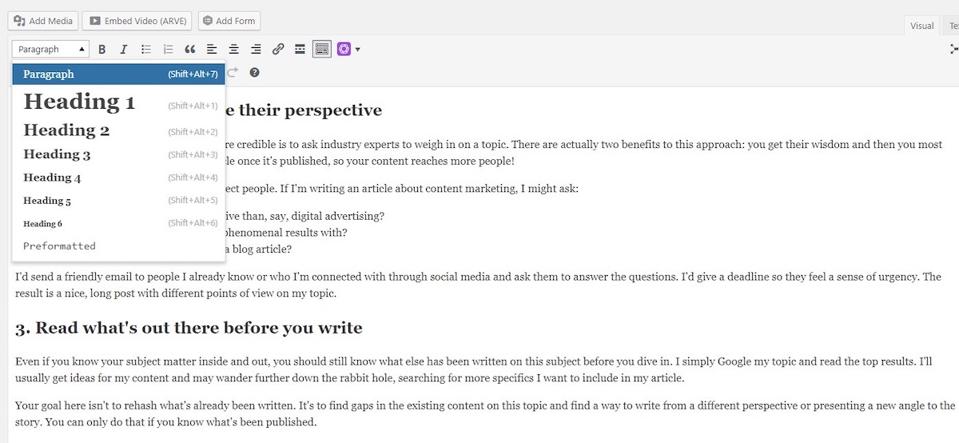
Beyond that, you should be using headers (typically H2 in the dropdown bar in WordPress) to divide the content into sections to make reading easy.
Use the dropdown menu in WordPress to make your subheads into H2 tags.
Susan Guillory
5. Use images to illustrate a point
If your article is technical or explains a process, take screenshots to show your readers exactly how to do something. I did just that in the last section to show you where to find the H2 option.
If you’ve got a ton of research in your posts, consider creating custom charts, graphs, or infographics to make the data more digestible.
If your content doesn’t lend itself to screenshots or charts, use stock photos to make your posts visually interesting.
6. Talk to your audience directly
There’s a careful balance to strike between not talking over your readers’ heads while also not treating them like children. You first have to start by knowing who your audience is. If it’s rocket scientists, you better be as smart as a rocket scientist so you can speak intelligently to that audience. If it’s a mixed bag, write to about a seventh-grade audience.
Where did that number come from? There’s something called the Flesch-Kincaid readability score, which analyzes your content to determine what grade level could understand it and how readable it is. If you’re not sure your content is hitting the mark with your audience, use this readability test to see how it fares.
7. Back up your content with examples
If you’re talking about something you think your audience should do, include examples that prove your point. It could be from your experience working with clients or case studies you find online.
For my article on content marketing, I could talk about the work I’ve done for a mobile marketing company, helping them effectively establish themselves as a leader in their space. That might compel readers to want to work with me.
I hope these tips help you enhance your content and build credibility with your blog. Remember: it’s brands that put effort into the content they create that attract more blog visitors and customers.
I am president of Egg Marketing & Communications, a marketing firm specializing in content writing for small businesses and tech companies. I’m also the author of three business books: DIY Press Releases: Your Guide to Becoming Your Own PR Consultant, 101 Entrepreneur Tips and Internet Marketing Strategies for Entrepreneurs. I frequently blog about small business and marketing on sites including The Marketing Eggspert Blog, AllBusiness, CorpNet, Small Business Trends,Chamber of Commerce, ScheduleBase, and Tweak Your Biz. Connect with me on Twitter, LinkedIn, and Google+. I frequently blog about small business and marketing on sites including The Marketing Eggspert Blog, AllBusiness, and Cision. Connect with me on Twitter or LinkedIn.
A senior Instagram executive says there is little evidence that sponsored posts don’t perform as well as regular posts and transparency on partnership content is key to building trust.
Instagram fashion and beauty partnerships manager Kristie Dash has said influencers should not be afraid to label as ‘sponsored’ as more attention comes on the disclosures made by users when partnering with brands.
“Nobody wants their feeds to feel like one big ad and so, I get why there is a hesitancy [about being transparent with posts]. At the end of the day, if you’re not being transparent with your followers, you’ll lose trust over time,” Ms Dash said.
Instagram is launching its biggest marketing campaign in Australia this week.Credit:Bloomberg
Ms Dash, who is based in New York and manages the Instagram team working with beauty brands and influencers, was in Australia last week for social media workshops with local small businesses.
She said the platform had clear tools and guidelines to guide creators on what information to give their followers about sponsored deals.
“It is our job to educate the industry on how to use those tools,” she said.
Ms Dash acknowledged that influencers may have concerns about appearing authentic when creating sponsored content. She argued that if an influencer felt concerns about being authentic and was reluctant to be clear in partnership posts, they should rethink their agreements with brands.
“That kind of speaks more to the brands that creators are choosing to partner with. And if there’s that kind of concern… if it’s a brand that doesn’t feel authentic to you, then maybe it’s not the best decision to partner with [them],” she said.
“We have no data to prove that sponsored posts don’t perform as well as regular posts and we really, really encourage creators to be transparent about labelling when content is sponsored or a partnership.”
Ms Dash said local brands were creating compelling content on the platform, with companies like Frank Body and Go-To skin care creating strong voices and “visual signatures”.
“They have very specific or easy to identify voices that when you’re going through your feed, you can kind of quickly tell it’s a post from that brand.”
Emma is the small business reporter for The Age and Sydney Morning Herald based in Melbourne. Follow MySmallBusiness on Twitter, Facebook and LinkedIn.
With smart devices and AI beginning to dominate the workforce, the characteristics of an ideal job candidate have changed. Companies no longer need team members who can just solve a problem; they need leaders who can figure out the next problem that needs solving.
Leaders are inspirational, equipped with an astute ear, and ready to break the mold at any moment and take risks. Topping the necessary skillset of leaders in the digital age is something technology has yet to master.
It comes down to one word: humility.
With humility comes admitting mistakes, taking the road less travelled, and putting yourself in the passenger seat from time to time while coaching others as they take the lead.
For those reasons, it’s a tough trait to master. It means focusing less on yourself despite being raised to do the opposite.
5 ways humility will give you an edge
To learn ways one can practice to humility as a leader, I spoke with Aaron Meyers, the president and COO of Hammer & Nails Grooming Shop for Guys, the premier grooming destination for men.
Meyers makes the effort to practice humility to build his business and grow into a respected leader in the industry. Here are his top five ways of mastering the art of humility.
1. Self-Reflect.
Set aside time at work to reflect on the past few weeks. Reflect only on what you had control over, and take note of your worries, strengths and weaknesses in those situations. If you journal, Meyers shared, make your reflection productive — don’t use it as an outlet to complain, but rather a creative space where ideas, plans, and best practices live, then refer back to them often to benefit both yourself and your team.
2. Team first attitude.
Humility boils down to focusing less on the ‘me’ and more on the ‘we.’ Meyers shared that his leadership style follows the narrative of a quote he read by Paul Bryant: “If anything goes bad, I did it. If anything goes semi-good, we did it. If anything goes really good, then you did it. That’s all it takes to get people to win for you.” For a team to become a well-oiled machine, spend time tending to others’ needs, spread the wealth, solicit opinions, be open to criticism and mentor team members to take the lead. “Being on the front line is all about building others up,” says Meyers.
3. Exercise vulnerability.
“Leaders can ask for help, too. Just like your team relies on you, you need to rely on them,” shared Meyers. We all have different strengths, and it doesn’t make anyone less than to admit they don’t know everything. This is why leaders should be open to new experiences, take risks, lean on their team and put trust in others to get the job done. Plain and simple, you can’t do it all.
4. Listen to learn.
Giving someone your undivided attention is challenging. When you’re not speaking, your mind automatically starts formulating your response. We’re walking into most conversations with an agenda because we’re programmed to think ahead. “Try approaching your next meeting like it’s improv — you have to listen to what the other person is saying and move the story forward from there,” Meyers explained, adding, “Reverting back to your idea is moving the narrative backward. This trick will help you listen to learn, giving you a growth mindset instead of a fixed mindset.”
5. Make mistakes a positive.
Meyers shared with me that the Hammer & Nails concept was first introduced on Shark Tank, and was promptly rejected. It was a setback, but by no means the end of the road. “Others got involved, we were transparent about our concept’s shortcomings, and we sampled ideas until we found one that worked,” shared Meyers. Mistakes are part of the journey as a leader and entrepreneur, whether you’re just starting out or are well-established. He adds, “Don’t be afraid to make them and admit to them, but be sure you are always taking something valuable away with you.” As a result, Hammer & Nails now spans 11 locations with an additional eight in development.
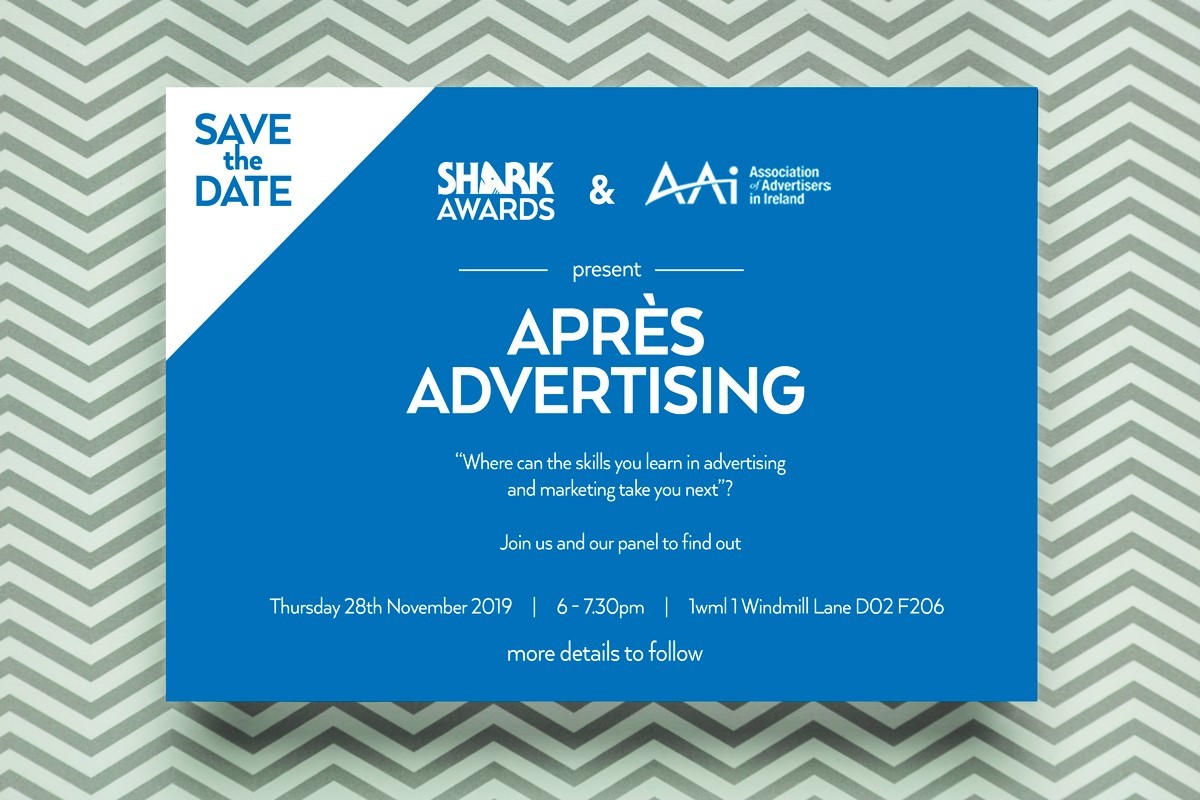
The Association of Advertisers in Ireland together with Shark Awards, we’re delighted to present this special event focusing on how advertising and marketing specialists can make the most of their skills in a changing world.
Admission is FREE, and we’ll have more details to share soon, but be sure to save the date!
Typography is an essential part of web design. In fact, it’s just as important as colors and images for shaping up the aesthetics of a website. Microsoft and MIT University have even conducted a study which confirmed that good typography is so powerful that it can affect the viewer’s mood. So why not use this to your advantage?
Making optimal typography choices is a crucial part of the design process. But with so many fonts to choose from, how can you ever make up your mind? To help you decide more easily, we’ve made a list of 10 Google font combinations for inspiration. You’ll discover which fonts go well together like peanut butter and jelly, and which combos can ensure a positive user experience for your website visitors.
Before we start, let’s see what the design process typically looks like and how typography fits into it…
Where to Start
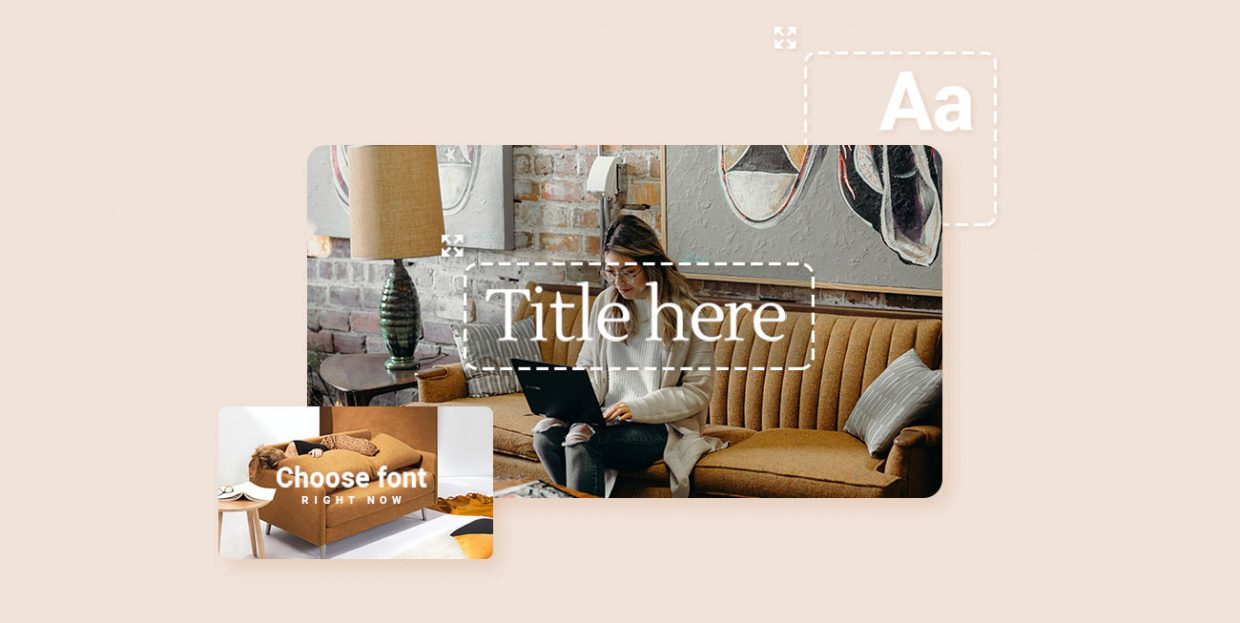
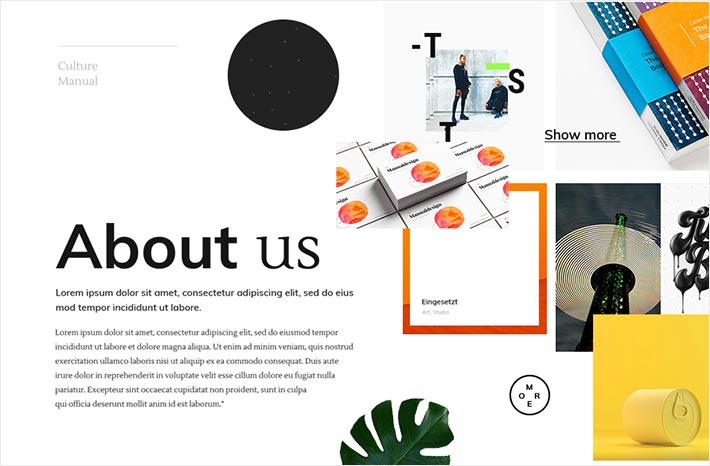
Most designers use a variety of online resources as a starting point. They scour sites like dribble, pinterest, behance, and others for inspiration, until they get the general idea of the style they want to create in and the vibe they want to infuse their work with. And for the most part, it’s images that inspire the choice of fonts.
Take a look at the image displayed below. How would you describe it? You could say that it’s modern and vigorous, right? So, the typography that accompanies the image should have the same feel.
What matters most is to ensure consistency. You want every piece of content to fit perfectly within the finished design. Every font should be visually in tune with the images as well as with the purpose of the website.
For example, Oswald looks great when combined with fonts like Roboto, Open Sans, and Merriweather, to name a few. If the letters are in all caps, these fonts can give off a very urban vibe that fits well with pizza places or restaurant businesses. But if you’re making a website for a law firm, you might want to search for another typeface, a more straightforward one that might work better with the law-related content.
Typography SOS
If you’re stuck for inspiration typography-wise, there are several places you could turn to for help. Websites like Fontpair and Canva Font Combinations are great resources that offer interesting font pairings. You might also want to check out the Typography Resources website, which is brimming with typography-related content. You can use it for inspiration, but you also have the option to purchase fonts, or even download some for free. And as far as top-quality free fonts go, the Google Fonts database is the definitive go-to resource.
If you’re not a designer or web expert but have decide to build your website on your own, you might want to consider getting a premium WordPress themes. That way you’d save yourself a lot of trouble, as you’d get a fully equipped, ready-to-go website with impeccable font combinations already laid out for you.
The Art of Combining Fonts
Regardless of the nature of a project, in most cases designers will opt for more than one font (or at least go with variations of a single typeface). Now, each font is different. Some look serious, or powerful, others are elegant, playful, etc. The goal is to find the ones that best suit the overall design of a project and also complement each other perfectly. In most cases, the best option is to go with two fonts per project, as more can easily become overkill.
For starters, it’s important to determine which font is going to be the main one. From there, you can work on deciding on the font you’re going to combine it with. For instance, if the main font is curvy and distinctive, the best choice is to pair it with something simpler. That way you won’t distract anyone from looking at the text you wanted to highlight, but the complementary font will still be prominent enough to be read.
Make several combinations and see what they look like next to images and buttons. You’ll be able to decide more easily which combo works best within the context of your design.
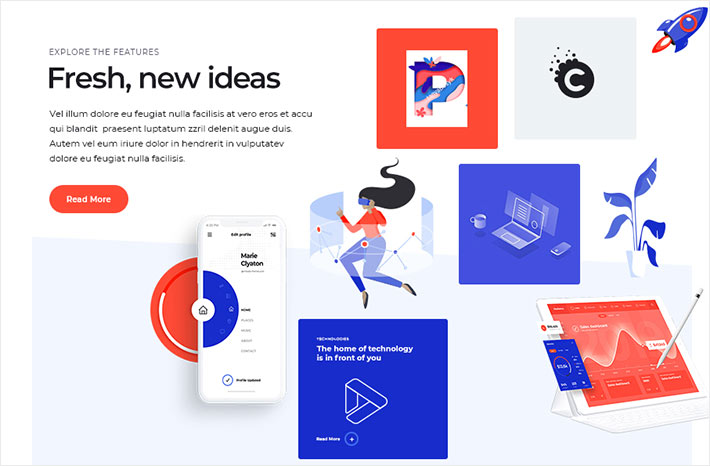
When it comes to software and tech websites, we’d recommend using Montserrat. It looks very contemporary, and it’s also super readable. At the same, it enables you to deliver your message in a crisp and urban manner. This geometric font works the best with Open Sans, Crimson Text, Source Sans Pro, or Roboto fonts. You can also use it on its own, in case you’d like to tone things down and apply one font only on the entire website. Just take a look at the image below to see it in use. Doesn’t it look super sleek?
Montserat in use
2. Fonts for Elegant Websites
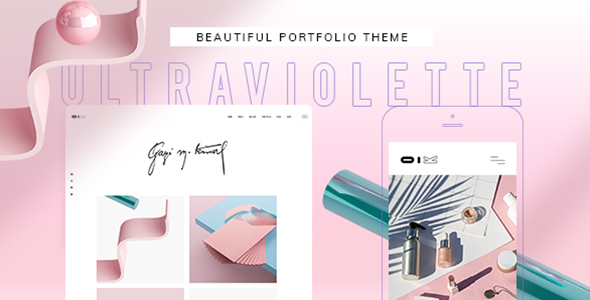
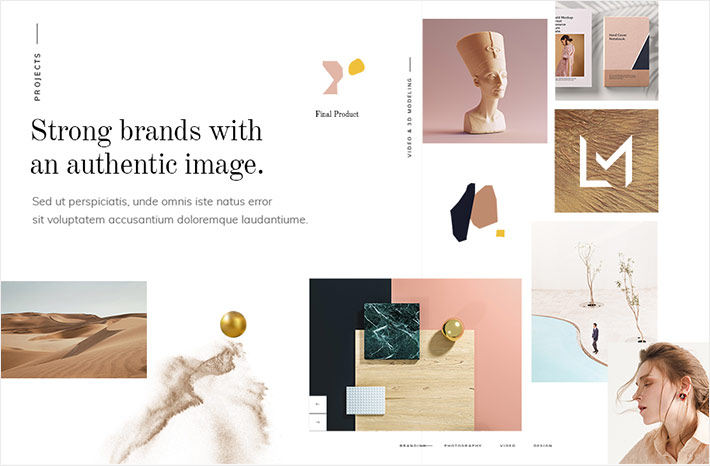
When you’re going for an overall elegant look, your best choice are sans serif fonts. They lack the stroke at the end of each letter, which makes this sort of typeface look refined, simple, and sophisticated. Whichever sans serif fonts you choose to combine, you simply can’t go wrong, regardless of the type of website you’re making. Notice how in the example below the pastel colors and the soft-looking images fit like a puzzle piece with the style of the typeface. Old Standard TT and Muli together create a perfect harmony and covey a distinct artistic style that’s sure to leave a lasting impression on anyone who visits your website. Another great combo for that elegant look are Muli and the Ovo font.
An example of the Old Standard TT and Muli text pairing
3. Fonts for Bakery Websites
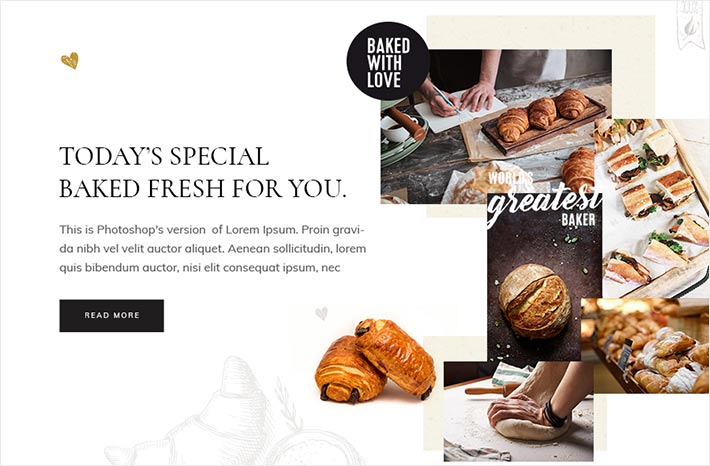
When you’re building a website for your bakery, you want to make it look as craving-inducing and delicious as possible. The pictures you decide to use play a big part in crafting the mouthwatering style you’re going for. But so does the typography. Take a look at how Cormorant contributes to creating an overall modern, but at the same time traditional vibe in the example below. Just by glancing at the image and its content we feel as though this bakery has been a local favorite for ages. As you can see, Cormorant looks great when you combine it with Muli, but you can’t go wrong with combining it with Proza Libre either.
An example of the Cormorant and Muli text pairing
4. Fonts for Business Websites
Montserrat is a universal font that goes well with almost any kind of website. The vibe it gives off pretty much depends on the imagery you decide to pair it with. When you’re building a website for your business, regardless of the niche, you almost certainly can’t go wrong with Montserrat. It feels techy and sort of futuristic, which is just what every modern business needs. When you combine it with the Open Sans font, which is probably one of the most popular sans-serif fonts, you can easily set a businesslike yet at the same time warm tone for your website. On the other hand, you could also choose Open Sans as your main font and combine it with something like Playfair Display or Poppins to get that modern “serious but approachable” look so many businesses strive for.
An example of the Montserrat and Open Sans pairing
5. Fonts for Sports Websites
When it comes to sports-related projects, designers usually opt for a typeface that looks powerful, yet simple. The goal is to generate excitement by using appropriate fonts with attitude. You don’t want to go too crazy though, as the text needs to be easy to read. The ideal choice would be the Teko font. You could go with the semi-bold version and slightly manipulate the letter-spacing, which doesn’t have to be too large to achieve the maximum effect. The font alone is quite heavy, with letters in square proportions that look quite simple and easy on the eye. You can complement it with Ubuntu, which is quite hip and works great with sports-themed projects.
An example of the Teko and Ubuntu pairing
6. Fonts for Education Websites
Montserrat for the win! All jokes aside, this typeface is just so versatile and it looks amazing regardless of the type of graphic or the media content it accompanies. If you want to build a website for a kindergarten, a high school, or any other educational institution, Montserrat is certainly your safest bet. Pair it with Crimson Text, as in the example below, and you got yourself a killer combo. Of all fonts, we feel Montserrat works best precisely with Crimson Text. This old-style typeface fits the modern look of Montserrat like a glove, and together these two significantly contribute to making web pages more appealing to all scholars.
An example of the Montserrat and Crimson text pairing
7. Fonts for Urban Websites
Would you like to give your website an urban typographic personality? If so, then Oswald is your best choice. This widely used sans-serif typeface makes letters look striking and bold, which is why you’ll most likely see it headlines. It blends beautifully with other fonts as well, such as Roboto, Arial, Merriweather, Oxygen, Quicksand, and in particular with Open Sans. If you decide to go with Open Sans in your subheadings or your copy, there’s no way you can go wrong. That’s a match that is sure to make every page look distinct and contemporary.
An example of the Oswald and Open Sans text pairing
8. Fonts for Pastry and Cake Shops
If you’re good with food and want the world to know it, a professional-looking website is a must. Aside from using alluring images, your typography needs to be good enough to eat as well. A good choice of font is Poiret One which, as geometric as it is, also appears delicate and enticing at the same time. That makes it very fitting for cake shops and patisseries in particular. Pair it with Open Sans, and you’ll get a delicious combo that’s impossible to resist.
An example of the Poiret One and Open Sans text pairing
9. Fonts for Portfolio Websites
An online portfolio is a great way of reaching crowds on a global scale and for showcasing what you’re capable of. To land yourself as many clients as possible, every element of your website needs to be well thought out, including typography. Fonts should exude the same as the remaining content of your website. You don’t even need to go too crazy typeface-wise to achieve the maximum impact. For instance, using a combination of bold and regular versions of a single sans serif font will surely do the job and capture the attention of your visitors. Muli, a sans-serif typeface, is a great choice for both headlines and body copy. But if you want some diversity in your design, you could easily pair it with the Lustria serif typeface.
An example of the Muli and Lustria text pairing
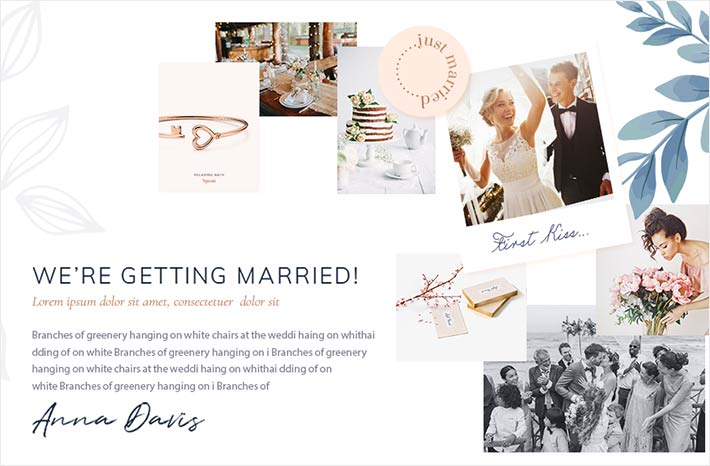
10. Fonts for Wedding Websites
Muli is a highly versatile font that suits a myriad of websites. If you pair it with Cormorant, you’ll get a match made in typography heaven for all wedding websites. The light version of Muli in all caps looks super elegant, while Cormorant in italics gives the entire website an overall romantic vibe. Feel free to play around with your font colors, just make sure everything’s in tune with the wedding aesthetic you’re trying to achieve.
An example of the Muli and Cormorant text pairing
Conclusion
Typography shouldn’t be treated as an afterthought. Nailing it requires a lot of time and effort since your work doesn’t just end with choosing the appropriate typeface combination. You also have to decide on the perfect font size and weight, as well as the spacing, kerning, and much more. All of these elements combined greatly impact your design and the way your work is perceived.
If the vast collection of Google fonts is not enough, you can always look for some custom fonts. In most cases, you’ll have to pay a few bucks to use them. But there are several websites where you can find them for free, like fontsquirrel and dafont, for example.
A major development in bill payments is sure to excite. But does it continue a dangerous trend?
When Amazon originally introduced Alexa back in 2014, I was highly skeptical. I can still remember watching that first commercial, where a family purchases an Amazon Echo and then use the device for everything, from answering their most (and least) important questions, to creating shopping lists, to helping the children with their homework.
“With everything Echo can do, it’s really become part of the family,” the little girl says at the end of the commercial.
“Spooky,” I thought. “No way this is going to catch on.”
Of course, I was wrong. Fast forward to today: Amazon said at the beginning of the year that it had already sold over 100 million Alexa devices. Which means if you don’t personally own one, you probably know someone who does.
And now, Amazon made an announcement that signals the next step in Alexa’s evolution:
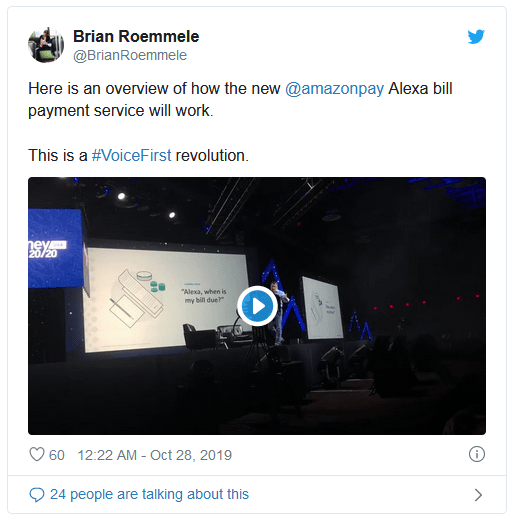
You can soon use Amazon Alexa to pay bills with your voice.
Amazon Pay Vice President Patrick Gauthier revealed the new feature in his keynote at yesterday’s Money 20/20 conference. The new bill pay feature will begin by authorizing users to pay utility bills with their voice, and the company expects the feature to roll out to 95% of zip codes in the U.S. by the end of the year.
Gauthier further explained all the advantages Amazon expects users to love. Initial examples were simply, such as asking Alexa when a bill is due, or setting Alexa to provide a reminder that they need to pay a bill.
But what came next was more interesting.
“The customer may also ask information,” Gauthier explained. “How does this compare to last month? How does this compare to last year?”
“The next stage of that would be proactively notifying the consumer when something is out of control,” Gauthier continues. “As in, ‘Your water bill doubled this month. You may have a leak.’ Anticipating the need of the customer and enabling them to act upon it in the moment is a very powerful way of servicing those customers.”
Of course, Gauthier, went on, part of that enabling is giving customers the ability to pay the bill right away–using Alexa if they like.
While Amazon Alexa payments will only work with utility providers for now, there’s no reason it’ll stop there. In fact, Amazon recently announced that Amazon Pay users in India can already use Alexa to pay for utility, internet, mobile and satellite or cable TV bills.
I know this is a powerful development that plenty of Alexa enthusiasts are going to get excited about. And I love the potential insights it could all provide…
But there’s also a pretty large elephant in this room, and we’ve got to address it.
How secure is it?
As technology continues to make information more accessible, and make routine tasks like bill paying easier and more insightful, it also poses major security risks.
“Like every other newer technology, voice payments are highly susceptible to fraud,” says FinTech analyst and researcher Diwakar Mandal. Mandal cites a “series of critical Bluetooth flaws” in 2017 “that exposed security loopholes in millions of AI-based, voice assistants including Google home and Amazon Echo.”
In addition to more common hacks via malware, Mandal highlights the fact that “voice-controlled smart hubs are prone to accidental triggering leading to unauthorized access to the payment capabilities.”
According to Mandal, Amazon currently addresses this problem by requiring customers to provide a four-digit PIN code in order to authorize payment. And no doubt Amazon (and competitors) will continue exploring tech-enhanced fixes that make it more difficult to gain access to your finances.
But as with any type of payment platform, security measures are only as good as the way users implement them. And that fact points to what turns out to be the biggest problem of all:
As technology makes things easier, it also tends to make us lazier. So, as more and more users seek experiences that are seamless and convenient, the less likely we’ll be to take the needed steps to keep things secure.
Maybe Alexa can teach us to do that, too. After all, it’s basically part of the family.
Before you post, ask yourself three essential questions.
Social media isn’t just a way to pass idle time (or to find inspiration for your next decorating project). It’s a valuable tool to tell your business’ story and build your brand. As Reena Goodwin, founder and director of Facteur PR, explains, social media gives business owners a direct line to current and potential customers. “By creating and sharing high-quality content and stories, social media opens a door to share a brand’s story on a deeper and more direct level,” Goodwin says. “When a brand shares its story on social media, that story helps build trust. And because a brand’s reputation is ultimately built on trust, it’s an important medium for any brand to harness.”
Alexander Spatari / Getty Images
What’s more, social media can be a free and useful resource for your business. “Its affordability is attractive to business owners,” says Goodwin. “The cost to launch a Facebook, Pinterest, or Instagram account is free, and your reach is dependent on the amount of resources you pour into it. Furthermore, the rich audience data is so helpful for businesses. By analyzing your followers’ behaviors, demographics, and interests, coupled with utilizing the various built-in survey tools, you can start to use the data to drill down audience personas, which can be very helpful when it comes to targeting your ideal client or customer as well as serving the ones you currently have.”
Here’s how to harness the power of social media to tell your story as well as build your brand.
Have a plan.
Goodwin advises against posting without a plan in place. A social media plan “makes sure that we are supporting the vision of our brand and helps manage expectations and resources,” says Goodwin. “It also ensures that we maximize our time strategizing upfront so we can devote our energies to executing our plan thereafter. A lot of social media management is spent reacting; with a plan in place in advance, we can be sure to allocate time and energy to the things that will ultimately help build our brand,” such as developing incentive opportunities and filming videos.
Before they post to social media, Natalie Denyse, owner of In Good Company PR, tells clients to ask themselves: “Why does this post matter to my audience? Does this photo show more than just a pretty scene? And, how is this post, both photo and caption, serving my community?” she says. “Feeling confident in those few areas will help crystalize the intention behind your voice.”
For example, when Reidenbach found out through social media that a bride staying at a Kimpton Hotel property for her honeymoon had been stood up at her wedding, “the hotel quickly switched her room around to be more of a ‘we’re really sorry,’ party with chocolate, wine, and comfort food. It made her smile and she [told us] it made such an awful situation that much better and said she had an amazing solo honeymoon with us. That’s something that felt right to the hotel team and they acted in the moment, making for an incredible save-the-day story.”
Share high-quality content.
“Thanks to the instantaneous nature of social media, it’s widely believed that we must be posting content constantly,” says Goodwin. But that’s not strictly true. “By sacrificing the quality of content for the sake of speed, you could also be sacrificing the first impression your brand has on a potential customer,” she warns. High-quality content tells a better brand story, even if it means you post less often. “High-quality content is associated with a high-quality product or service,” Goodwin points out, “so it’s important to invest in content creation like professional photoshoots. I love batch-creating content to save time and money. You can hire a photographer on a quarterly basis to take updated photos for social media, or invest in a nice camera and snap your own.”
Show up on Stories.
Did you know that engagement on Instagram Stories is higher than on its newsfeed? It is—and that’s one reason why it’s essential to post regularly on Stories. “Stories is ideal for building your brand because in contrast to content on the newsfeed, it’s a space for less polished and more down-to-earth storytelling,” Goodwin explains. In fact, Denyse recommends to her clients that build their brands by showing the imperfect reality of being in business. “Real and raw video footage of brands actually building their business will continue to trump perfectly styled photos,” she says. “Don’t be afraid to get candid and show authentic moments of your creative process.