Author

editor

Browsing

By Josh Constine

Instagram is home to plenty of scantily clad models and edgy memes that may start to get fewer views starting today. Now Instagram says, “We have begun reducing the spread of posts that are inappropriate but do not go against Instagram’s Community Guidelines.” That means if a post is sexually suggestive, but doesn’t depict a sex act or nudity, it could still get demoted. Similarly, if a meme doesn’t constitute hate speech or harassment, but is considered in bad taste, lewd, violent or hurtful, it could get fewer views.

Specifically, Instagram says, “this type of content may not appear for the broader community in Explore or hashtag pages,” which could severely hurt the ability of creators to gain new followers. The news came amidst a flood of “Integrity” announcements from Facebook to safeguard its family of apps revealed today at a press event at the company’s Menlo Park headquarters.

“We’ve started to use machine learning to determine if the actual media posted is eligible to be recommended to our community,” Instagram’s product lead for Discovery, Will Ruben, said. Instagram is now training its content moderators to label borderline content when they’re hunting down policy violations, and Instagram then uses those labels to train an algorithm to identify.

These posts won’t be fully removed from the feed, and Instagram tells me for now the new policy won’t impact Instagram’s feed or Stories bar. But Facebook CEO Mark Zuckerberg’s November manifesto described the need to broadly reduce the reach of this “borderline content,” which on Facebook would mean being shown lower in News Feed. That policy could easily be expanded to Instagram in the future. That would likely reduce the ability of creators to reach their existing fans, which can impact their ability to monetize through sponsored posts or direct traffic to ways they make money like Patreon.

Facebook’s Henry Silverman explained that, “As content gets closer and closer to the line of our Community Standards at which point we’d remove it, it actually gets more and more engagement. It’s not something unique to Facebook but inherent in human nature.” The borderline content policy aims to counteract this incentive to toe the policy line. Just because something is allowed on one of our apps doesn’t mean it should show up at the top of News Feed or that it should be recommended or that it should be able to be advertised,” said Facebook’s head of News Feed Integrity, Tessa Lyons.

This all makes sense when it comes to clickbait, false news and harassment, which no one wants on Facebook or Instagram. But when it comes to sexualized but not explicit content that has long been uninhibited and in fact popular on Instagram, or memes or jokes that might offend some people despite not being abusive, this is a significant step up of censorship by Facebook and Instagram.

Creators currently have no guidelines about what constitutes borderline content — there’s nothing in Instagram’s rules or terms of service that even mention non-recommendable content or what qualifies. The only information Instagram has provided was what it shared at today’s event. The company specified that violent, graphic/shocking, sexually suggestive, misinformation and spam content can be deemed “non-recommendable” and therefore won’t appear on Explore or hashtag pages.

[Update: After we published, Instagram posted to its Help Center a brief note about its borderline content policy, but with no visual examples, mentions of impacted categories other than sexually suggestive content, or indications of what qualifies content as “inappropriate.” So officially, it’s still leaving users in the dark.]

Instagram denied an account from a creator claiming that the app reduced their feed and Stories reach after one of their posts that actually violates the content policy taken down.

One female creator with around a half-million followers likened receiving a two-week demotion that massively reduced their content’s reach to Instagram defecating on them. “It just makes it like, ‘Hey, how about we just show your photo to like 3 of your followers? Is that good for you? . . . I know this sounds kind of tin-foil hatty but . . . when you get a post taken down or a story, you can set a timer on your phone for two weeks to the godd*mn f*cking minute and when that timer goes off you’ll see an immediate change in your engagement. They put you back on the Explore page and you start getting followers.”

As you can see, creators are pretty passionate about Instagram demoting their reach. Instagram’s Will Ruben said regarding the feed/Stories reach reduction: No, that’s not happening. We distinguish between feed and surfaces where you’ve taken the choice to follow somebody, and Explore and hashtag pages where Instagram is recommending content to people.”

The questions now are whether borderline content demotions are ever extended to Instagram’s feed and Stories, and how content is classified as recommendable, non-recommendable or violating. With artificial intelligence involved, this could turn into another situation where Facebook is seen as shirking its responsibilities in favor of algorithmic efficiency — but this time in removing or demoting too much content rather than too little.

Given the lack of clear policies to point to, the subjective nature of deciding what’s offensive but not abusive, Instagram’s 1 billion user scale and its nine years of allowing this content, there are sure to be complaints and debates about fair and consistent enforcement.

By Josh Constine

Sourced from TechCrunch


By Stack Commerce

Just like a small child, artificial intelligence has to learn about the world through observation. This process is called machine learning, and it’s set to define technology for the next decade. The Complete Machine Learning A to Z Bundle provides a great introduction to the topic, with nine courses and over 30 hours of hands-on developer training. You can get the bundle now for only $35 at the PopSci Shop.

Machine learning powers everything from facial recognition to self-driving cars and Netflix recommendations. It’s an exciting field to work in, and many companies are looking for new talent.

Whether you want to go pro or simply keep up with the latest tech, this bundle is the place to start. Through concise video lessons, you discover how machine learning works and how to build your own intelligent apps — including smart chatbots and voice assistants.

The training covers a variety of tools, including Google DialogFlow, Amazon Lex and Spark. You also learn about neural networks and data analysis. These skills are valuable for any aspiring developer, and they are valued in many other industries.

The training is worth $891 all together, but you can grab it now for $35.

Like this deal? Check out Vault, the best way to secure your online data for just $9.99/mo.

By Stack Commerce

Sourced from Popular Science

By

Mediacorp has partnered with over-the-top platform Iflix to host its content on both iflixVIP, the platform’s traditional video-on-demand tier and iflixFree, the platform’s ad-supported tier.

The Singapore broadcaster hopes this partnership with the Malaysia-based OTT platform will allow it to expand its footprint in countries such as Indonesia, Myanmar and the Philippines, Cambodia and Vietnam.

All Iflix subscribers in Asia will be able to access Mediacorp library of made-in-Singapore dramas, variety shows and movies. These consist of memorable classics and recent blockbusters like The Unbeatables III, The Little Nyonya and C.L.I.F., as well as English dramas like Code of Law and Phua Chu Kang.

Mediacorp will also simulcast the second season of its English long-form drama Kin, so that Iflix viewers can watch at the same time as Singapore viewers. Season one of Kin is also available for users to binge-watch at one go.

“Our deepening relationship with a progressive partner like Mediacorp, Singapore’s largest content creator and transmedia platform, is a massive boost to iflix’s Advertising Video On Demand business,” said Craig Galvin, the global head of content at Iflix.

“This is just the first step and a significant milestone that empowers Iflix to continue to deliver the most relevant and compelling content to users in our territories for free, and we look forward to building on this partnership.”

Mediacorp recently showcased its latest offerings to advertisers and agencies In its first ‘Upfront’ style event, promising better value for money, measurement, and access to talent.

By

Sourced from The Drum

By Zac Bowden

Microsoft’s new Edge browser is here in preview, and it’s already garnered a lot of interest. But will it really be able to beat Chrome?

Microsoft released the first public preview builds of its new Chromium-powered version of Edge. And it was positively received. Microsoft Edge hasn’t really received this kind of positive press coverage before, ever, with people online calling it faster than Chrome, and incredibly stable for “pre-release” software. The Chromium engine brings with it more than just better web performance; it includes the stability and security of a platform that’s been in the works with the open-source community for more than a decade.

When the new Edge browser leaked a couple of weeks ago, a few people tried it out, but otherwise, no one outside of the Microsoft sphere really cared. I even wrote a piece suggesting that this version of Edge might finally compete with Chrome. Today, now that Microsoft has shipped preview builds publicly, a lot more people are interested, and these initial previews are nothing to scoff at. I’ve seen plenty of tweets online from people saying that they’ve switched from Chrome or even outright uninstalled it to use the pre-release version of Edge as their primary browser.

Of course, it’s still early days, so it’s not a definitive “win” for Edge just yet. Chrome is the dominant browser, and it likely will be for years. However, the new Edge is already proving itself to be a real contender, because it really is just like Chrome, but if Microsoft had made it instead of Google. Brand loyalty exists, but I don’t think brand loyalty is what got Chrome popular. I think it got popular because people were told it’s the best, and not because they prefer Google over Microsoft.

Chrome bundled with Windows 10

For a lot of people, the fewer programs they must download every time they set up a PC for the first time, the better. If Windows 10 came with Chrome preinstalled, the world would cry out in cheer. Well, that’s precisely what’s happening now that Edge is built on Chromium. Microsoft is essentially bundling a Chrome browser with Windows 10, except without all the Google stuff. Of course, if you’re tied into the Google ecosystem, it makes sense to continue using Chrome, but if not, there’s little reason not to use Edge instead.

And it’s not like the new Edge is just “Chrome in disguise,” either, because Microsoft is making some real changes to the browser to differentiate the user experience. Web performance and browser stability should be the same across Edge and Chrome, but Microsoft is working to differentiate Edge with surface-level features and unique selling points. Microsoft has already named several Chromium-related things that it’s thrown out for Edge, because it either doesn’t need them or plans to rebuild them with a Microsoft twist.

The other advantage is that since Microsoft owns Windows 10, arguably the most popular desktop platform around, Microsoft can tie the new Edge into the OS in many more ways. That could be done in big ways, like bundling it as the default browser, and in smaller ways that users might not necessarily even realize, like having the browser only communicate with Microsoft services and not Google.

Your thoughts on the new Edge vs. Chrome

Can Microsoft’s new Edge browser beat Chrome?

I am genuinely curious what people think about the outlook of the modern “browser wars.” Can Microsoft really take back the crown from Google? I think it can, at least when it comes to desktop browser market share. This won’t happen overnight, of course, but if this positive press continues, word will spread that Edge is at least worth a try. And that could be the foot in the door that Microsoft really needs.

But what do you think? Vote in our poll, check out the results, and then drop us a comment with specifics.

By Zac Bowden

Sourced from androidcentral


By Kalo Yankulov

In the first chapter of our “Complete Guide to SaaS Marketing”, we discussed how to validate a SaaS idea as a marketer and why marketing is so vital in the validation stage of every startup.

I shared my 7-step validation framework with you – a framework that could help even the most desperate of wantrepreneurs.

If you’ve applied this framework, you should’ve validated your idea and even have some pre-orders in your bank account.

You’re probably not rich enough to run off to the Bahamas, yet, but you have enough fuel to push yourself to the next milestone of your startup journey: building and launching the real product.

But before that, there’s one more step: the pre-launch.

In this article I’m going to show you:

  1. How to create a Go To Marketing Roadmap.
  2. How to build a successful pre-launch landing page.
  3. How to start a conversation with your pre-launch audience.
  4. How to get traffic to your pre-launch landing page.
  5. And how to grow your pre-launch email list.

On top of that, I asked 8 startups that have built a pre-launch subscriber base to share their best pre-launch marketing tip with us.

I’ve accompanied each pre-launch marketing tactic in this guide with a real-life mini-case study.

But it doesn’t all end there.

I’ve also packed this guide with a few goodies for you. Download them all below:

Unlock The Pre-launch Pack

Pre-launch landing page template – Photoshop and HTML files included. Kickstart your pre-launch marketing with a conversion rate optimized landing page.

Go To Marketing Roadmap – Google spreadsheet swap file. Prepare and execute a solid pre-launch plan with this roadmap.

List of all ProductHunt upcoming products with 500+ subscribers – Examine the best performing upcoming products and learn from them.

+ All other marketing resources from Encharge

So let’s get rocking!

Why Pre-launching and Pre-launch Marketing

Today I was catching up with an old friend of mine.

He’s a developer.

I was talking about my pre-launch marketing efforts at Encharge when he interrupted me:

“Isn’t it a bit too early to market? I mean, you don’t have a product, yet.”

I don’t blame him.

He’s a developer.

I blame the hundreds of startup teams that slave away for months developing a product before they push the Go button on their marketing.

The highest achievers spent more time crafting what they did and said before making a request. They set about their mission as skilled gardeners who know that even the finest seeds will not take root in stony soil or bear fullest fruit in poorly prepared ground.
– Cialdini, Robert B.. Pre-Suasion

You might’ve seen this video of the co-founder of Dropbox showing a “fake” prototype of Dropbox.

This video skyrocketed Dropbox’s beta list from 5,000 subscribers to 75,000 literary overnight.

Or you might have heard about the Robinhood story.

SaaS Marketing: The Complete Guide. 
Chapter 2: Pre-launch Marketing for SaaS

A plain pre-launch landing page with a concise value proposition helped the 2 founders get over 1 million pre-launch subscribers.

Now:

I don’t care if you want to be a big unicorn success like Robinhood or a tiny bootstrapped operation.

Your SaaS must be pretreated and readied for growth.

You must have a pre-launch marketing plan. And you must engineer that plan the moment you decide to pursue your SaaS idea.

Before we get into some actionable tactics:

Why the hell you need to bother with pre-launch marketing? Why not slouch around for a few months until your tech co-founder or developers build the product?

5 Reasons to Do Pre-launch Marketing for Your SaaS

1. You will have an audience to launch to.

Say no more, Sherlock.

This one is obvious, but a lot of startups still get it wrong.

They’re way too confident. They believe because it was hard and took a lot of time, it must be important.

The truth is simple – if you don’t have an audience, you can’t sell shit.

“If a tree falls in a forest and no one is around to hear it, does it make a sound?”

If you have the best software in the world, but no people to try it, do you have a product?

For Simvoly (one of the SaaS companies that I’ve consulted) it took 3+ years to get to a few hundred in MRR.

When they were doing that much in monthly recurring revenue they had a product that was up to par with behemoths like Wix (yes, a solid product!) Yet, they struggled with customer acquisition. Now, a few years after the first line of code, they’re doing pretty well for a bootstrapped SaaS.

Question is:

Do you have that much time on your hands?

I guess not.

Which leads us to the next reason to pre-launch…

2. You will enter your market faster.

You can’t allow lazy marketing to slow you.

It’s our job as marketers to help the market find our product sooner than later.

Pre-launch marketing can be the difference between $0 and $10,000 MRR in your first 2 weeks.

Sathish from LimeVPN – another great SaaS marketer and founder that I’ve worked with – did a great job with his pre-launch marketing strategy. They had a bunch of customers lined up long before they launched the actual product:

SaaS Marketing: The Complete Guide. 
Chapter 2: Pre-launch Marketing for SaaS
Pre-launch marketing works!

3. You will build relationships with your (future) customers.

Let’s face a universal truth:

Except for Al Pacino’s speech in The Devil’s Advocate – conversations are more interesting than monologues.

Pre-launching gives you the time to be human and start a conversation.

Ask questions, answer questions, talk to people.

Do the opposite of screaming “Buy my STUFF!!1”

Opening a dialogue with your potential clients is an example of what I call “the shot across the bow,” and it’s a great way to start your prelaunch campaign.
– Walker, Jeff. Launch (p. 24). Simon & Schuster UK. Kindle Edition.

4. Your customers will become more receptive of your product message.

The best persuaders become the best through pre-suasion—the process of arranging for recipients to be receptive to a message before they encounter it.
– Cialdini, Robert B.. Pre-Suasion (p. 3). Random House. Kindle Edition.

After the pre-order campaign for Encharge, I did a little exercise. I opened our Autopilot and sifted through the activity log of all people that have made an order.

I noticed a simple pattern:

All the pre-order buyers have opened at least 3 of my emails.

SaaS Marketing: The Complete Guide. 
Chapter 2: Pre-launch Marketing for SaaS
If a person opens my email broadcasts 3 or more times there’s a high chance he will become a customer.

By providing value in your email sequences, you’re building anticipation and increasing the receptiveness of your audience.

It’s simple: the healthier your email list metrics are, the better your SaaS launch will be.

5. You will get feedback on a larger scale

While you exposed your MVP to a handful of people (from a couple dozens to a few hundred), the pre-launch idea is to go all out and create buzz for your product on a much larger scale.

The goal of your pre-launch should be to reach thousands of people.

This is an excellent opportunity to confirm your hypothesis from the MVP and collect some quantitative product feedback.

SaaS Marketing: The Complete Guide. 
Chapter 2: Pre-launch Marketing for SaaS
MVP vs Pre-launch marketing

The Go To Marketing Roadmap

Below is the Go To Marketing Roadmap (GTMR) we use to launch SaaS products.

SaaS Marketing: The Complete Guide. 
Chapter 2: Pre-launch Marketing for SaaS
The Go To Marketing Roadmap which includes the Pre-launch marketing stage

The GTMR could be used for launching brand new SaaS products but also for launching new features and releases.

The purpose of the GTMR is to:

  • Provide an actionable plan that shows how your product and marketing are likely to evolve.
  • Align your product people and marketing people.
  • Help with prioritizing your marketing activities and provides a general continuity of purpose.

At Intercom teams now hold themselves to a new rule: If we’re launching a product and want to spend more than a week on it, the product manager and product marketing manager must align on the story we want to tell come launch.”
– Matt Hodges, Senior Director of Marketing at Intercom

Unlock The Pre-launch Pack

Pre-launch landing page template – Photoshop and HTML files included. Kickstart your pre-launch marketing with a conversion rate optimized landing page.

Go To Marketing Roadmap – Google spreadsheet swap file. Prepare and execute a solid pre-launch plan with this roadmap.

List of all ProductHunt upcoming products with 500+ subscribers – Examine the best performing upcoming products and learn from them.

+ All other marketing resources from Encharge

This is the exact Go To Marketing Roadmap we’re currently following at Encharge:

SaaS Marketing: The Complete Guide. 
Chapter 2: Pre-launch Marketing for SaaS
The Go To Marketing Roadmap of Encharge

Stage

I’ve divided the roadmap into 3 main stages:

  • Validation – the stage in which you validate your product or feature. We already covered what you should as a marketer in that stage.
  • Pre-launch – the stage in which you’re building your new product or feature. Later in this article, we’ll explore different tactics for pre-launch marketing.
  • Launch – The most exciting and scary stage of your product or feature’s life. The day you’ve been building up to. The moment you click Launch.
  • Post-launch – not included in my template but it’s a good idea to add a post-launch stage. That stage is dedicated to evaluation and following-up with the leads that didn’t convert in your Launch stage.

Release

These are your product releases – as in the releases you’ve set for the development in Jira or wherever.

It’s entirely up to you decide on the number of releases and their names.

At Encharge we’ve broken down our pre-launch into 4 releases:

  • Alpha – this is for internal use. We’re already using the barebones of Encharge to send one-off broadcasts
  • Beta – a release for close friends and people that will not get angry by a buggy product.
  • Gamma – this is the first time we’re going expose our pre-order customers to the product. Fingers crossed and prayers to the gods of startup.
  • Gamma – a larger release. We’re going to send an email to a small segment of our email list
  • Public release – the big bang. We’re going to launch Encharge.

Marketing efforts

Output Goals

This is a quantifiable goal that you’re in control of. What are you going to produce as a marketer in each stage? While it’s difficult to be in control of the outcome, outputs give you the opportunity to be disciplined and achieve your goals.

  • Validation – for Encharge we set to have 50 customer development conversations. Design a landing page. Plus write regular broadcasts to warm up our email list audience for the pre-order.
  • Pre-launch – for our pre-launch (the stage that we’re currently at) I’ve set myself some stretch targets for the marketing deliverables. I’m tracking these on a weekly or monthly basis:
SaaS Marketing: The Complete Guide. 
Chapter 2: Pre-launch Marketing for SaaS
My marketing tasks in Todoist

Here you can also include your pre-launch landing page

  • Launch – for the Launch stage we aim to launch using the Product Launch Formula (more on this in our next article). Create 1-2 product launch webinars and provide some extra service packages to sell with the software.

Outcome Goals

These are your marketing goals. What do you actually aim to achieve at each stage?

  • Validation – for Encharge we aimed to have 50 conversations with potential customers, collect 1,000 emails and have 100 credit cards (i.e., trials).
  • Pre-launch – now, for the Pre-launch our target is to collect 3,000 emails and grow to a stable 150 daily visits.
  • Launch – for the Launch we aim to get 300 people to trial Encharge – 10% conversion rate on our email list. Convert 30 of those to paying customers. Add $1,000 in initial MRR and also make another $6,000 in collateral revenue from personalized service packages.

Outcome Achieved

The last column in this table is what you’ve actually achieved. A.k.a delusion check.

Do not mourn if there’s a big discrepancy between your goals and your results. As you become a seasoned launch expert, your results will match and outperform the goals you set.

Your Landing Page

Ok, let’s clear something out of the way.

I don’t care how good of a marketer you’re and what smart marketing tactics you have in your bag, you must have a pre-launch landing page with a clear call to action.

Even if you don’t have a full-fledged idea, create a landing page.

It becomes real when you create a landing page.

That’s when you can start getting feedback.

You can put a big, bad mission statement. But what I really want you to do is collect email addresses.

This is important because as you grow your email list, they (your subscribers) can help you launch and do other things.And frankly, if you can’t collect email addresses and people don’t resonate with your idea it’s a time to change either your messaging or maybe your idea doesn’t have legs.

Sujan Patel

The purpose of your pre-launch landing page is to:

  • Build an audience or pre-sell your product
  • Test your product messaging with a broader audience
  • Start a conversation with potential customers

Should I collect emails or try to pre-sell my product on my pre-launch landing page?

It depends.

It depends on how far are you with your product development, on whether you have any screens to show, and whether you’ve validated your idea or not.

Ideally, by the time you launch your SaaS, you’d have both a raving email list and people that have passed the walled test.

Yet, you should only have a single call-to-action (CTA) on your landing page. Do not try to collect emails and make pre-orders at the same time. That’s a terrible idea.

Whichever goal you set for your landing page, it’s important to have it written in your Go To Marketing Roadmap.

Next thing – putting the landing page together.

Before you get muddled into what software to use for your brand new landing page, let me show you a different approach.

Copy First, Design later

Every letter matters.
– “Getting Real” by 37 Signals

As a designer, I could tell you that letters matter more than pixels.

How you communicate the story and the Why behind your product is going to have a way bigger impact on your pre-launch success than the look of your page.

Think of how Amazon does launches. You might’ve heard about their “internal PR release method.”

Instead of building the product first, product managers at Amazon start by writing an internal press release announcing the finished product.

You can treat your landing page as an internal PR release and apply the same practices Amazon’s PMs use.

Start from the epicenter of the page and write outwards.

Focus on the essence of the page and ignore the peripheries: logo, navigation bar, footer, and so on.

This is the Pre-launch landing page copy I wrote for Encharge before I designed the page.

I use visual elements to separate sections and outline buttons/CTAs, but my goal is to keep my writing distraction-free as possible and focus on the messaging, not the style.

SaaS Marketing: The Complete Guide. 
Chapter 2: Pre-launch Marketing for SaaS
I always start writing the copy of a landing page first

Designing and Building the Landing Page

I don’t want you to spend weeks designing and coding your landing page, so I’m going to do you a favor here.

I had a bold idea to share the design and code of the Encharge landing page for free. It will save you some time and headaches. That’s how nice I am!

Feel free to use it for your SaaS product or any other commercial projects.

Leave your email below, and you’re going to get our landing page design – Photoshop and HTML files included + the rest of the bonuses.

Unlock The Pre-launch Pack

Pre-launch landing page template – Photoshop and HTML files included. Kickstart your pre-launch marketing with a conversion rate optimized landing page.

Go To Marketing Roadmap – Google spreadsheet swap file. Prepare and execute a solid pre-launch plan with this roadmap.

List of all ProductHunt upcoming products with 500+ subscribers – Examine the best performing upcoming products and learn from them.

+ All other marketing resources from Encharge

SaaS Marketing: The Complete Guide. 
Chapter 2: Pre-launch Marketing for SaaS
Encharge landing page

Between 14 November 2018 and 17 January 2019 (around 60 days)

  • 1,698 people visited this landing page.
  • 42 people made 50 orders on this landing page.

That’s 2.94% conversion rate on a visitor to buyer. I’d say it’s a satisfactory result for a non-existing product.

Note: We’re currently not accepting pre-orders. If you land on the recent homepage of Encharge, you’re going to see an email collection form instead.

Let’s break down and analyze the elements of this landing page and why it works.

Headline and Sub-headline

SaaS Marketing: The Complete Guide. 
Chapter 2: Pre-launch Marketing for SaaS

A clear and concise headline and sub-headline that describe what’s the product (“marketing automation software”) and “what is in it for me” (“make your marketing apps speak to each other).

The target customer can easily understand what the product is all about.

Personalization and Identification

The landing page speaks to a single customer persona – SaaS companies.

Narrowing the message by using contextual keywords like “marketing” and “SaaS”, the target buyers can identify and relate with this offer.

Clear CTA

SaaS Marketing: The Complete Guide. 
Chapter 2: Pre-launch Marketing for SaaS

Clear call-to-action immediately visible above the fold.

No “blocking” words such as “Signup” used in CTA.

Product Visualization

Customers can see what they’re going to get.

The deliverable is illustrated with a solid product image that depicts the most exciting part of the product – our visual workflow builder.

Video Sales Letter

SaaS Marketing: The Complete Guide. 
Chapter 2: Pre-launch Marketing for SaaS
Hello there, it’s your boy Kalo!

A brief (2-3 minutes) video that summarizes the landing page messaging.

These are the stats from our Wistia video.

SaaS Marketing: The Complete Guide. 
Chapter 2: Pre-launch Marketing for SaaS
  • 28% of the landing page visitors watched the video
  • On average people watch 43% of the video
  • Most surprising for me was that 21.8% of the viewers click on the call to action at the end of the video.

Yes, with Wistia you can have CTAs in your videos.

My tip is:

If you’re going to have a CTA in your video, make sure to apply the same best-practices you use for the rest of your page CTAs.

SaaS Marketing: The Complete Guide. 
Chapter 2: Pre-launch Marketing for SaaS
CTA at the end of the video

Personal Letter from the Founder

SaaS Marketing: The Complete Guide. 
Chapter 2: Pre-launch Marketing for SaaS
Personal elements on the landing page

A sincere personal letter from the founder (me) that speaks to the customer.

The message depicts the customer current’s situation and problems:

SaaS Marketing: The Complete Guide. 
Chapter 2: Pre-launch Marketing for SaaS

It demonstrates my understanding of the problem and entices trust in the reader:

SaaS Marketing: The Complete Guide. 
Chapter 2: Pre-launch Marketing for SaaS

It describes a better future for the customer:

SaaS Marketing: The Complete Guide. 
Chapter 2: Pre-launch Marketing for SaaS

Lastly, we made it look like a real human message by having my snapshot at the end. It’s almost as I’m chatting with the reader through the landing page:

SaaS Marketing: The Complete Guide. 
Chapter 2: Pre-launch Marketing for SaaS

Value-oriented Headlines

SaaS Marketing: The Complete Guide. 
Chapter 2: Pre-launch Marketing for SaaS

Here, we could’ve done better by quantifying the value (i.e., highlighting numbers.)

Skimable Sections

Sections are separated visually with clear headlines, section backgrounds, and other visual clues such as icons and screens.

List of Benefits

Instead of using bullet points, our Use Cases section explains our software. We focused on the benefits, rather than features.

SaaS Marketing: The Complete Guide. 
Chapter 2: Pre-launch Marketing for SaaS
Use cases with benefits

Live Chat

Let’s not forget this. People are going to ask you questions about your upcoming product. Be accessible – include your email, a live chat button, and any other contact information.

Start a Conversation With Your Pre-launch Audience

Opening a dialogue with your potential clients is an example of what I call “the shot across the bow,” and it’s a great way to start your prelaunch campaign.

– Walker, Jeff. Launch (p. 24). Simon & Schuster UK. Kindle Edition.

There is just one last thing you need to do before you start marketing your pre-launch landing page.

And this is to set-up a basic Welcome/Introductory email automation.

The goal of this workflow is to start a conversation with your potential audience.

It’s also an opportunity to learn more about your subscribers.

For Encharge, I used our own tool to set up this automation.

SaaS Marketing: The Complete Guide. 
Chapter 2: Pre-launch Marketing for SaaS
A simple workflow in Encharge

Like what you’re seeing above? Subscribe for early access to Encharge.

This is the conversation-started email I send to all pre-launch subscribers immediately after they leave their email on our pre-launch page:

SaaS Marketing: The Complete Guide. 
Chapter 2: Pre-launch Marketing for SaaS
The email editor in Encharge

The email starts with the reason why they’re getting this email in their inbox:

Hey { person.firstName | default: “there” },

You’re receiving this email because you’ve subscribed to early access of Encharge or downloaded one of our free marketing resources.

Then I go on to introduce myself:

My name is Kalo – I’m growth marketer and co-founder of Encharge.

You can read more about our story and why we’re creating Encharge by clicking here.

Then I proceed with the most important bit of the email. The conversation-starter, where I ask them a couple of questions.

Enough about me.

I’d love to learn more about you.

Click reply to this email and let me know:

1. What are you currently working on?
2. What’s the biggest challenge in your business?

And I finish by setting-up the expectations for the following broadcasts.

P.s. I’m going to send you 1 or 2 weekly updates with content about SaaS marketing, marketing automation, and marketing news.

Watch the full video on setting up welcome sequences and starting a conversation with your audience.

8 Pre-launch Marketing Strategies for SaaS Companies

Let’s put our growth hacking hats on and get jiggy with it!

You have your landing page up and running.

Your conversation-started sequence is in place.

Now it’s the funny part – driving traffic to your page and growing your list (or pre-orders if that’s your goal).

I did some hard work and got 8 startups to share their best pre-launch marketing strategies with us.

All these guys have managed to collect hundreds (and in some cases thousands) of pre-launch subscribers, so they must be doing something right.

Start Publishing Relevant Content On Medium Before You Launch

Brad Redding, Elevar

Results: 10,000 reads in the first 6 months

We started writing on Medium a mix of “how to” guides that were specific to pain points and learnings I had and thought leadership articles.

SaaS Marketing: The Complete Guide. 
Chapter 2: Pre-launch Marketing for SaaS
Elevar’s Medium blog

Now, we’re targeting Shopify eCommerce business owners but when we started eCommerce managers were our primary target.

For the topics, we did a little bit of keyword research on competition of target queries. Otherwise, I tended to write about what I was actively doing and learning about at the time.

For keyword research, I used KeywordKeg and Ahrefs

We also amplified our articles through Facebook ads:

I created audiences on Facebook that matched interests (e.g., Shopify, Google Analytics and eCommerce) and posted/boosted articles from our Facebook page to these audiences.

We tried collecting emails, but it was dismal to succeed with this on Medium.

It was nice to have a built-in audience looking for analytics content to help get started, but the lack of retargeting, pixeling and prompting for emails was the big turning point for us to switch to a native blog.

Later we changed over to WordPress on our main site and canonicalized the Medium pages.

It also turned out to be very good for organic search as well.

Before and after the transition to our primary domain (note organic channel only):

SaaS Marketing: The Complete Guide. 
Chapter 2: Pre-launch Marketing for SaaS

Do a Webinar (Or Two)

Aazar Ali Shad, Ecomply.io

Results: 5 pre-launch customers for $560 in MRR

My pre-launch marketing strategy was pretty simple since cold emailing or calling was not working for me.

Ecomply.io is a GDPR software, and I wanted to earn a reputation in the market as a specialist even though I was not a lawyer.

I wanted quick traction, but I didn’t have customers – Ecomply was still in Beta.

I put together 3 webinars on different topics. I promoted the webinars on relevant Facebook groups and invited people to join.

SaaS Marketing: The Complete Guide. 
Chapter 2: Pre-launch Marketing for SaaS
Webinars work for pre-launching

As a result, people started trusting me.

SaaS Marketing: The Complete Guide. 
Chapter 2: Pre-launch Marketing for SaaS

In total, it was 40 hours of work, including promotion and organization.

I got 5 sure customers who paid me €100/month each.

If you ever want to pre-launch your app, either do a webinar or create a user base through blogging.

Don’t Forget the Basics: Sort Your On-page Optimization and Track Conversions

Waleeg C, Bodo
Results: 2,300 subscribers in 12 months

To get to over 2,300 subscribers in a year, I had to focus on the low hanging fruits.

SEO

Probably the most obvious advice, yet, often ignored or the hardest to see any result from in the short term.

You should cover the basics:

  • A good page structure and keywords optimization.
  • Register your website on the Google Webmasters Tool (now Google Console) and observe for keyword opportunities.

Google search is my number one traffic source, and I am far from ranking first on my keywords. Patience is key.

Track Conversions

About 25% of all Bodo visitors sign up to receive product launch announcements.

The option to sign up for the email list has been there since the very first version of the site.

I later improved that conversion rate to 50% by tweaking the design and copy of the page and focusing on user’s pains rather than features.

To increase your conversion rates, you must have a design that inspires trust – forget the quick, unpolished landing pages.

Conversion optimization is just like SEO, it might only increase your sign-ups by a few people a day; but over a long period, this could translate to hundreds if not thousands of new subscribers.

Kalo’s note:

If you’re looking for a lead generation/form builder with advanced conversion tracking look no further than ThriveLeads.

In my personal experience trying more than 5 different pop-up/form builder tools, I’ve found that ThriveLeads has the most robust conversion rate reports:

SaaS Marketing: The Complete Guide. 
Chapter 2: Pre-launch Marketing for SaaS

Turn Your Subscribers Into Ambassadors

I always try to please my users above and beyond.

I involve them when building new features, and make sure to understand their pain points.

I, also, don’t shy away from big discounts for the most engaged users. I found out that they would usually recruit more people around them.

Attend Events or Host One

Duane Wilson, Founder Academy

Results: 596 subscribers

Don’t waste time/$$ on ads, or commenting to the void on social media, trying to find an initial customer or build a community from scratch.

Try attending an event, or hosting one, and find those initial customers in real life.

Start by browsing Facebook events near you, searching Eventbrite.com and meetup.com, and check out the calendar at your local co-working space(s).

SaaS Marketing: The Complete Guide. 
Chapter 2: Pre-launch Marketing for SaaS
Use Facebook to find relevant meet-ups and events

Look for groups where you can find some people who have the same problems, then share your solution and see what resonates, and what doesn’t.

Can’t find a group? No worries, make an event on Eventbrite or Meetup about your thing, and meet a few people one afternoon at a cafe to talk about it.

Build up your mailing list and start your community from here.

Digital is awesome! It would be ideal for most of us to make an ad, which gets customers signed up online, and they start paying us… but your job (especially in the beginning) is to talk to people and understand them… know their needs and wants and to build a product you (and they) will love.

Once you know who your people are, then you can target some ads for more people like them and use online to drive sales and engagement for you.

Doing this might get you both a customer and help you start a community too.

Keyword Optimize Your Landing Page Title

Jonny Platt, A B Rankings

Results: 538 subscribers

Signing up to the Product Hunt Ship feature had a significant impact – once I enabled promotion and people could discover the page, I found many subscribers naturally through Product Hunt.

However, I think the biggest impact came from carefully choosing my upcoming page’s title to match the keywords prospective users would search.

In my case, this was:

SEO Split Testing Tool: Optimize your Organic CTR with A/B Rankings

Product Hunt is a highly trusted site, so without really needing to do any further promotion, my upcoming page would rank in Google for some queries related to the product.

Keyword optimizing my title helped me reach far more people before the launch than I would have through PH’s listings alone.

Run a Giveaway

Drew Bartek, Groove Vest

Results: 2,800 subscribers

At first, it was just me having ten to fifteen-minute conversations with people. We made it a little bit more efficient by having a survey on our website where I could send people to. We did that to get 700 people. After that, we just wanted to automate it because our end goal was to get 10,000 subscribers.

That’s when Drew turned up to UpViral to run a viral giveaway.

SaaS Marketing: The Complete Guide. 
Chapter 2: Pre-launch Marketing for SaaS
GrooveVest’s UpViral campaign

Groove are using a custom-designed landing page and share page:

SaaS Marketing: The Complete Guide. 
Chapter 2: Pre-launch Marketing for SaaS

They promoted their giveaway across their website in areas such as the header, slider, across product features.

They also used catchy videos to share the giveaway on Instagram.

This campaign resulted in over 2,800 email subscribers and 1,856 social interactions.

Although, not a software product, the same giveaway tactic could be applied to your SaaS to gain some early traction and build a pre-launch audience.

Read the whole case study on UpViral.

Write a Huge eBook

Kalo Yankulov, Encharge

Results: 683 subscribers

This is yours truly.

I’m a seasoned pre-launch marketer.

I did it once with HeadReach and more recently with Encharge.

My marketing superpower is long-form content (as you might have noticed from this post).

My strategy with pre-launching is:

  1. Write a long (5,000-15,000 words) eBook that is relevant to my target audience.
  2. Promote the hell out of it.

“From an Idea to Exit” helped us collect over 600 emails of marketers and entrepreneurs. We did that by distributing and syndicating content to other social networks – Facebook, Reddit, and IndieHackers. You can read the whole case study here.

SaaS Marketing: The Complete Guide. 
Chapter 2: Pre-launch Marketing for SaaS
A lead magnet

Launch on Product Hunt Ship/Upcoming

Andrew Egenes, Layr

Results: 2,105 subscribers

We decided to promote our Upcoming listing in a more integrated manner versus using the widget provided by Ship which is more invasive and feels like live chat.

SaaS Marketing: The Complete Guide. 
Chapter 2: Pre-launch Marketing for SaaS
Layr’s website

I attribute a lot of our subscriber growth to people who landed on our website through some other means and were enticed by the idea of getting a behind the scenes look into something new we were building.

We used our marketing automation software to send targeted emails announcing the same opportunity to gain a behind the scenes look into something new we were building to 3 different segments:

Current Customers

Because this is our most loyal segment, we also asked them to amplify our Ship campaign by re-sharing our social media posts announcing the effort.

Prospective Customers

We used the Ship campaign as a way to re-engage with our prospects.

  • Because they aren’t customers, perhaps there was something about our current product they didn’t like?
  • What better way than to try and win them over than by offering a behind the scenes look into the new product we’re building?

Prospective Investors

Like most startups, we have a segment of investors who have asked to be kept up-to-date with our progress.

Again, we used the Ship campaign as an “excuse” to engage with them.

Further, investors often have unusually high follower counts on PH so as they followed our Upcoming listing; their networks were organically exposed as well.

An engaging first communication with new subscribers that set expectations is vital. You want your subscribers to amplify our Upcoming listing across their network so getting them excited about what you’re building is key.

We made sure that our first message isn’t just a short “Thanks for subscribing, we’ll keep you updated.” Instead, we provide concise bulleted examples of what we’re building along with tentative dates of when we’ll be engaging with the Ship subscribers. In a way, we almost want subscribers to look forward to receiving their next Ship update from us.

Bonus Case Study: How Crowded Got 1,407 Subscribers for a Side-Project

Robert Van Hoesel, Consently

Results: 1,407 subscribers

Several channels are driving pre-launch signups for Consently right now:

1. Product Hunt Upcoming

We signed up for Product Hunt Ship, through which we can list Consently on their upcoming page.

It’s great because it has a viral component built-in. If someone subscribes, followers on the platform will be informed.

We capitalized on this effect by using Ship’s sign up form option as an email capture on our website.

SaaS Marketing: The Complete Guide. 
Chapter 2: Pre-launch Marketing for SaaS
Consently’s website

When someone learns about Consently through another channel and signs up via the website, they are signing up through Product Hunt.

The cool thing is, if someone is a PH user, it will also show up on their Product Hunt profile/feed. This works really well!

2. A Viral Effect in the Product

While we are still building Consently (it’s a side-project at our startup Crowded) we do already help people with our product.

There are no interfaces yet, so we help people set up Consently manually.

When people subscribe, they get an invite for our private beta. People then can get our consent pop-up on their website.

Our product is used on other websites, and this is a marketing channel for us:

In the popup itself, we show a little link saying “We’re powered by Consently.” This referral link amounts for 15% of our visitors now.

SaaS Marketing: The Complete Guide. 
Chapter 2: Pre-launch Marketing for SaaS
Consently’s viral widget

The conversion rate of people that end up subscribing to Consently is 4.4%. We’re pretty excited by this specific metric once we start rolling out Consently and have our pop-up on more website

3. SEO Optimized Blog

One of the biggest names in our industry is Cookiebot.

Inherent to having a huge customer base, there’s also a group of people looking to move away from Cookiebot.

To rank high in search for people searching for “Cookiebot Alternative”, we wrote a post “Cookiebot alternative for tracking consent tool.”

SaaS Marketing: The Complete Guide. 
Chapter 2: Pre-launch Marketing for SaaS
“Cookiebot alternative” has 590 monthly views

We didn’t actively push signups in this post using pop-ups and lead capture; we just link to our main website from the post.

The conversion rate from this post is an astounding 27%. The post got 700 page views from Google. Of those, around 200 went to our website, and 50+ people signed up.

4. Friendly Features in Newsletters

Now and then a bunch of new visitors come to our website because we got picked up in a newsletter.

For example, Kai Brach featured us in “DenseDiscovery”. That feature brought 750 visitors and 90 signups!

We’re keeping an eye on our analytics to see who is writing about us.

SaaS Pre-launch Marketing Resources

Articles

Videos

Tools

Conclusion

Hope you enjoyed reading this and already have some tactical tips for your pre-launch marketing campaign!

In the next chapter of the Complete Guide to SaaS Marketing we’re going to discuss launching a SaaS product, so make sure to follow.

Don’t forget to grab the pre-launch goodies below:

Unlock The Pre-launch Pack

Pre-launch landing page template – Photoshop and HTML files included. Kickstart your pre-launch marketing with a conversion rate optimized landing page.

Go To Marketing Roadmap – Google spreadsheet swap file. Prepare and execute a solid pre-launch plan with this roadmap.

List of all ProductHunt upcoming products with 500+ subscribers – Examine the best performing upcoming products and learn from them.

Sourced from excharge

By Kalo Yankulov

Co-founder and marketer at Encharge. Former co-founder of HeadReach, a SaaS that I bootstrapped and scaled to 7000+ users. Now, I’m working on my next big thing — Encharge, marketing automation platform for SaaS companies.

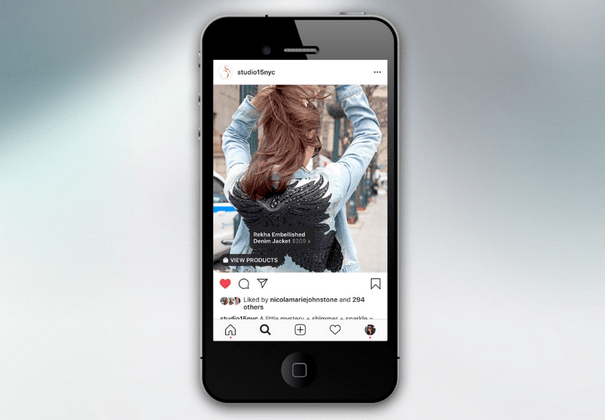
Mobile is the fastest-growing sector of retail, with many younger shoppers turning to Instagram for style cues and product recommendations. To capitalize on this burgeoning market, Salesfloor has launched SocialShop, a feature that allows customers to purchase product through sales associates’ Instagram feeds.

Once the SocialShop feature is enabled, a unique page is generated for each associate that displays all their shoppable Instagram posts in one place. By linking to this page in their Instagram bio, sales associates can share product posts directly with customers on their feed and then receive credit for the sale if the consumer clicks through to SocialShop. Store associates can either connect their personal Instagram account or their company-mandated professional account as introduced at Salesfloor partner Neiman Marcus.

“SocialShop is the solution we’ve been looking for to empower our associates to create shoppable Instagram posts,” said Elizabeth Gleason, director of online experience and service at Neiman Marcus. “We’re proud to partner with Salesfloor in helping to innovate the social selling space for our brand ambassadors and excited to have already seen strong results since launching the new feature.”

SocialShop joins a suite of clienteling tools in the Salesfloor platform. Alongside this new feature are tools that enable shoppers to communicate with associates in real time while browsing the website, schedule in-store appointments, receive personalized look books and reserve products.

As consumers increasingly look for curated, customized experiences, retailers are similarly seeking out opportunities to build relationships with them. Through informed and dynamic sales service, stores are able to differentiate their shopping experience from their competitors. By continuing this customer dialog on the app post-visit, associates can keep that mobile sales channel open and foster brand loyalty.

“Thirty percent of online shoppers say they are likely to make a purchase from a social media network like Facebook, Pinterest, Instagram, Twitter and Snapchat,” said Oscar Sachs, CEO and co-founder of Salesfloor. “This represents a huge opportunity to leverage associates’ connections and convert social media networks into a sales platform. This is an exciting new feature that was inspired from our partnership with our clients.”

Feature Image Credit: Karly Domb Sadof/Shutterstock

By Madeleine Streets

Sourced from FN Footwear News

By

With native transactions happening on Facebook, Instagram, Pinterest, and other platforms, how can e-commerce sites step up and avoid the threat from social commerce?

Salesforce study suggests limited social media impact on ecommerce

E-commerce sites are under threat from the rising tide of social commerce transactions. Seamless purchases from Pinterest’s 60 million buyable pins and Instagram’s frictionless sales directly from within the app make it more difficult for e-commerce sites to compete effectively.

Over 550 million people use Facebook’s Marketplace, enabling seamless transactions on the platform — and e-commerce is starting to struggle against the rising tide.

Menlo Park, CA-based online video editing company Magisto, surveyed over 750 decision makers in the US throughout May 2018. It wanted to highlight the difficulties e-commerce sites are facing with the rising trend of social commerce transactions.

Although three out of four (75 percent) of respondents manage at least one third-party e-commerce profile, they are being used in a passive way. Instead of cultivating good customer relationships, these passive transactions are satisfying customer demand only.

Already sales through social media is rising. Only 26 percent of respondents say they use third-party e-commerce platforms to market their business, compared to 71 percent who use social media.

Almost three out of four (72 percent) of marketers say they would be more likely to use third-party e-commerce sites if they offered more tools to actively market or promote their business, or if they could natively create, upload, and edit content on the platform.

It discovered that the gap between social and e-commerce sales will narrow dramatically in 2018. Almost half of marketers surveyed said that they would use social media for all of their business and marketing transactions if social media platforms offered direct sales.

Almost half (48 percent) of marketers say that if social media platforms offered direct sales, they would be more likely to use social media for all of their business and marketing transactions.

A similar amount (49 percent) said that they would be more likely to use an e-commerce site if they offered video creation as a marketing tool.

Businesses want to become a one-stop-shop, combining social media with e-commerce sales. The challenge is that targeting audiences is hard on third-party e-commerce sites.

The challenge for e-commerce sites is to become frictionless, and take the customer through a simple journey to sales, maintaining, and growing the relationship with the customer, putting them at the heart of the relationship.

Social media used to be disconnected from direct sales, but that has changed really quickly. E-commerce sites need to up their game in order to keep up — or be left behind in the social commerce race

By

Sourced from ZDNet

Sourced from Yahoo Finance

Alphabet’s GOOGL division Google is firing on all cylinders to expand presence in the world of electronic gadgets, backed by innovative skills and advanced technologies.

Per reports, Google has confirmed that it will launch latest Pixel smartphones by mid-2019. The company is geared up to roll out new devices at the Google I/O 2019, all set to start from May 7, which in turn will aid in popularizing the device.

The latest move is in line with Google’s persistent focus on expansion of its portfolio of smartphones that comprises Pixel, Pixel XL, Pixel 2, Pixel 2 XL, Pixel 3 and Pixel 3 XL. The latest to join the queue is Pixel 3a and Pixel 3a XL.

Though much detail about these devices is not available, it is rumored that Pixel 3a and 3a XL will have respective codenames of Sargo and Bonito. Pixel 3a and 3a XL are said to come with a display of 5.6 and 6inch in size, respectively, and have a resolution of 1080p each. These devices will reportedly be powered by Snapdragon 670 processors and sport 12MP rear cameras.

The release of new devices will enhance the company’s product offerings and broaden portfolio. Further, these new phones will help Google to rapidly penetrate into the growing smartphone market.

Smartphone Market Holds Promise

In this data-driven world, smartphones are playing a significant role in day-to-day life by enabling users to get necessary and urgent work done via phones.

Growing penetration of internet usage globally is another factor that is bolstering the demand for smartphones on a constant basis.

Per a report from IDC, worldwide smartphone shipment in full-year 2018 was recorded at 1.4 billion. Although the figure declined 4.1% from a year ago, the market holds growth potential, thanks to its growing proliferation worldwide.

Courtesy of the updated version of Pixel phone, Google is well poised to cater to the ever-increasing demand for smartphones, especially in the emerging markets.

Rising Competition

Given its growing smartphone portfolio, Google has strengthened its competitive position against major players like Apple AAPL, Samsung and Xiaomi.

Samsung is currently leading the roster with its affordable range of smartphones having almost all advanced features. Its smartphone portfolio comprises premium range of phones that provide enhanced user experience.

Apple continues to ride on the popularity of iPhone and its brand loyalty. The company enjoys a loyal customer base for iPhone, thanks to its robust features and global availability.

However, the search giant entered the space much later compared with peers like Apple and Samsung.

Nevertheless, the company’s innovative skills, robust voice assistant and widely preferred Android operating system worldwide will continue to aid the advancement of Pixel phones.

Moreover, these factors will help it in gaining competitive advantage over Microsoft’s MSFT Windows phone, which has been losing market share for quite sometime now due to Android’s open ecosystem feature.

We believe all these endeavors are likely to bolster the company’s presence in the rapidly growing smartphone market.

Alphabet Inc. Price and Consensus

Alphabet Inc. Price and Consensus | Alphabet Inc. Quote

Zacks Rank & Stock to Consider

Currently, Alphabet carries a Zacks Rank #3 (Hold). A better-ranked stock in the broader technology sector is Ctrip.com International, Ltd. CTRP, carrying a Zacks Rank #2 (Buy). You can see the complete list of today’s Zacks #1 Rank (Strong Buy) stocks here.

Sourced from Yahoo Finance


By 

Products that are too complicated, information that’s too technical, budgets that are too small… as a B2B tech marketer it’s easy to find a reason why video won’t work for your brand. However, far too many of those reasons are based on myths and received wisdom about online video – or about tech marketing. A lot of this is outdated. Much of it was never true in the first place.

The reality is that it’s not just possible to make video work for B2B tech – it’s essential. The most important members of your buying committee are watching online video – because everyone is watching online video. If they aren’t engaging with your video content then they are most likely engaging with a competitor’s, and that means you’re losing crucial share of voice at crucial stages in the buyer journey.

Our new guide, The Tech Marketer’s Guide to B2B Video, explores how video is already changing B2B tech marketing. It reveals the brands that are earning attention and influence through their video content, and the customer-first approach that can help any IT business develop compelling video for each stage of the funnel.

As a B2B tech marketer, you have an audience that needs to be inspired by what your solutions can do for their business. They need to sense your understanding of the frustrations they face. And they need confidence in the experience of working with your business, and accessing support and information when they need it. Video is the perfect format to help you achieve each of these objectives.

Download your free copy of The Tech Marketer’s Guide to B2B Video and start discovering where video can add value for your marketing strategy. It’s written by tech marketers for tech marketers – and it covers everything you need to know to start planning and executing video more effectively this year:

  • Why myths that B2B tech is too complicated and video too expensive are wrong
  • How an audience-first approach can free you to create concise, compelling content at every stage of your buyer journey
  • The tech brands gaining greatest value from deploying video so far
  • How to humanise your brand, entertain your audience, integrate sales and demonstrate service and values in action
  • The buying and distribution strategies that can maximise ROI for tech video content.

The Tech Marketer’s Guide to B2B Video is your starting point for video that makes a difference without breaking your budget. Download your free copy and start creating video that works for you.

By 

Sourced from LinkedIn

By

Building a social media following is difficult – it requires patience, consistency and a commitment to learning what your audience wants and needs from your brand on social platforms.

But all of that can be undone in an instant if you share the wrong things. Send out a misguided update and you can quickly turn people off, reversing your work to establish a connection. Yet, it still happens, brands still tweet out updates that are tone-deaf, or they simply fail to adhere to basic social media best practices.

Want to know the mistakes that could be ruining your social media marketing strategy?

The team from Inklyo share their social media fails to avoid in this infographic.​

Infographic lists a range of social media missteps brands need to avoid

A version of this post was first published on the Red Website Design blog.

By