Before your next media plan, brief or campaign, sit with this question: Does this feel like something people will actually want?
If the honest answer is no—if it feels like an interruption—you’re throwing good money after bad. There’s a reason an entire ecosystem exists to avoid ads. Even the platforms you’re sending your money to know this. It’s why YouTube put a skip button on your ad.
I’ve spent 20-plus years running an experiential marketing agency that has helped brands show up in the real world in ways people actually embrace. And the single biggest shift I’ve seen is that interruptive advertising has stopped working the way it used to.
The data backs it up. Kantar’s Media Reactions 2025 research found that campaigns are seven times more impactful when the audience is receptive. It also found that in-person sponsored events rank as the second most preferred ad environment among consumers.
Here’s what you need to hear: The same people skipping your pre-roll ad may stop for a sample, line up for a pop-up and talk about your brand at dinner—unprompted—if you show up in a way that doesn’t feel like you’re targeting them.
The resistance isn’t to brands. It’s to the feeling of being sold to. Here’s what actually works instead.
Product Sampling: Give Before You Ask
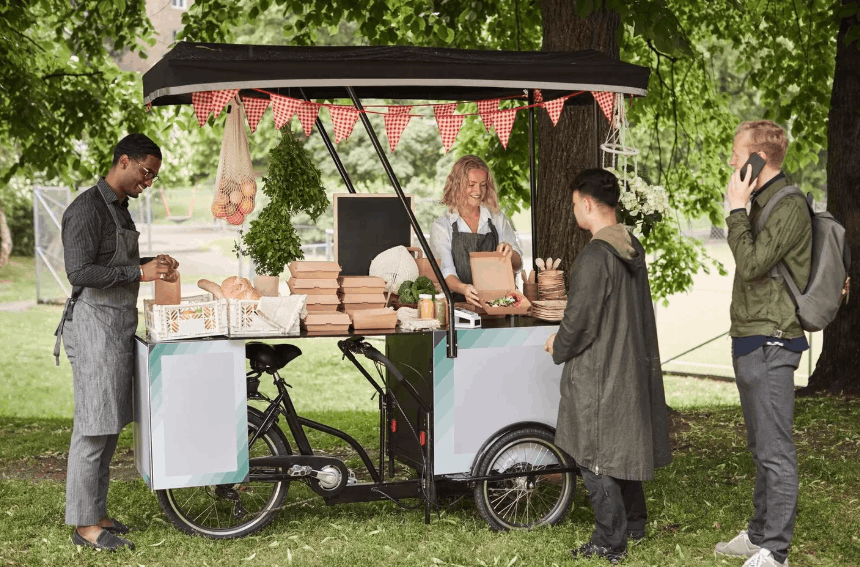
In my experience, no format earns more genuine goodwill per dollar than putting your actual product into someone’s hands. The message is honest in a way most paid media isn’t: Try it. Decide for yourself.
Your customer can’t smell, taste or feel your product through a pre-roll ad. For household, beauty and fragrance brands, nothing converts faster than letting someone experience it on the spot.
My team deploys sampling bikes, branded carts and street teams to put clients’ products into people’s hands—in the neighbourhoods, at the events and within the moments where their audiences already are.
For many consumer packaged goods brands, sampling shouldn’t be a support mechanic. It should be the lead.
Pop-Up Activations: Turn Curiosity Into Presence
A well-conceived pop-up takes your brand—a name, a logo, a product—and makes it a three-dimensional experience. People step inside. They touch things. They tell people about it. That conversion arc is almost impossible to replicate in your digital channels. When you build something people can experience in the real world, you’re letting it speak for itself.
Consider hosting “social in real life” pop-ups to close the gap between your brand and your social media audience. They’re real-world moments engineered to earn attention rather than buy it. Done right, they don’t look like marketing at all. They look like something happening.
Your creators and influencers can be part of these pop-ups—not as the strategy, but as the amplifier. When a creator captures a genuine reaction, a line forming or a “wait, this is actually good,” it lands differently and spreads real-world proof.
Live Event Partnerships: Show Up Where Excitement Lives
The best festival activations don’t feel like marketing—they feel like your brand is part of the culture. When your brand embeds itself inside a moment people already love, it stops being an advertiser and starts being part of the experience. That’s a position your media buy can’t replicate.
At a festival, you can tap into crowds of 15,000-plus people a day who are already primed for discovery. Just make sure you design something that feels native to the festival’s energy, not bolted onto it. A well-executed activation inspires user-generated content, earned media and cultural credibility that compounds long after the event ends.
Community Events: Be Useful Before Being Visible
A 5K. A school fundraiser. A local arts program. These work not because your logo is large enough, but because your brand is seen helping make something happen that people actually care about.
When people feel like they’re part of something—even briefly—they start identifying with it. That sense of belonging doesn’t just create customers. It creates advocates.
Wild Posting: Make The Street Do The Work
When someone walks past your poster on the way to their coffee shop, it feels more grassroots than a billboard—and completely different from anything online. Wild posting informs without interruption. There’s no algorithm deciding whether your audience sees it; there’s no skip button and no scrolling. People encounter it as part of the city itself—as way to keep up with releases, happenings and culture. It doesn’t feel like advertising. It feels like discovery.
Kantar’s Media Reactions 2025 backs this up—real-world ad environments rank well for consumer receptivity.
Guerrilla Marketing And Stunts: Make People Stop
The best advertising surprises and delights, earning far more than attention. Think a sidewalk installation that stops someone mid-commute, a statue takeover that earns a double-take and a photo, or a building projection that turns architecture into a canvas. These aren’t interruptions—they’re moments that actually make people’s day, ones they embrace and share.
My team has planned and executed guerrilla marketing campaigns across every major U.S. city for all types of brands, from CPG to B2B. Done right, it’s the most powerful tactic on this list.
Delivery Vehicles: Make Your Brand Feel In Demand
Wrap your trucks and vans, and drive them through cities. It makes it look like your brand is delivering products to stores, dispatching employees for service calls or doing installations in homes. When we track brand vehicle impressions, they rack up 20,000-plus impressions per day in big cities like New York, Chicago and Los Angeles—and none of it registers as advertising. It registers in people’s minds as a brand in demand.
The brands people know and love didn’t interrupt their way to relevance. They earned it. Before your next brief, ask the only question that matters: Is this a welcome addition to people’s lives? If the answer’s no, start over.
Feature image credit: Getty
By Adam Salacuse
Adam Salacuse is Founder and CEO of experiential marketing agency ALT TERRAIN. Read Adam Salacuse’s full executive profile here.
Find Adam Salacuse on LinkedIn. Visit Adam’s website.