Tag

ads

Browsing

By 

AI speeds up advertising, but without strategy it risks making brands forgettable

That matters because most ads are not competing in a vacuum. They are fighting for attention in crowded feeds, against endless lookalike content, in front of audiences who have become highly skilled at filtering out anything that feels generic.

When brands use AI without a clear point of view, they do not just risk making weaker creative. They risk making work that disappears on contact.

The problem is not AI, it’s the way many businesses are using it.

Patterns & performance

Most generative AI tools are built on patterns. They are good at producing what is probable, what is familiar and what already resembles successful marketing. That can help with speed, but it also creates sameness.

Similar phrasing, similar structure, similar claims, similar tone. After a while, entire categories begin to sound like they were written by the same person for the same audience, regardless of who is actually selling the product.

For brands trying to grow, that is a serious commercial issue.

When advertising starts to blend in, performance usually follows. Ads that feel vague or formulaic tend to attract less curiosity, fewer clicks and weaker engagement. Businesses then spend more trying to force results from creative that never had enough edge in the first place.

The waste is not always obvious at first, which is partly why the problem is spreading. A campaign can still be technically competent while quietly underperforming where it counts.

Over time, that gap compounds. Budgets get allocated based on surface-level performance rather than true effectiveness, and teams double down on what feels safe instead of what actually works.

The result is more output, more spend, and very little movement in terms of brand recognition or recall.

For SMEs, the stakes are even higher.

Solving the wrong problems

Big brands can sometimes get away with forgettable advertising because they already have reach, recognition and budget on their side. Smaller businesses do not. They depend far more heavily on clarity, distinctiveness and trust.

Their marketing has to do more with less, which means the brand itself needs to be sharper, not flatter. If AI strips out the character, specificity or conviction that made a business memorable in the first place, it starts eroding one of the few real advantages that smaller brands have.

That is the irony in all this. Many businesses are using AI to save time and strengthen output, only to end up producing ads that weaken the very thing they are trying to build.

Solving the wrong problem

The issue usually starts long before anything goes live. Too many marketers are asking AI to solve the wrong problem. They are using it to generate finished ads before they have properly defined what the brand wants to say, who it needs to resonate with, or why anyone should care. When the strategic thinking is thin, AI does not improve it. It simply accelerates it.

That is why so much AI-assisted advertising feels hollow. It fills space nicely, but it rarely lands with force. It often says the sort of thing a brand should say, in the sort of tone a marketer expects, without ever arriving at something sharp enough to be remembered.

There is also a growing risk around brand dilution. When multiple teams, agencies or founders rely on similar prompts and tools, the outputs begin to converge. Without strong internal direction, even well-intentioned campaigns can start to blur together, weakening long-term brand equity in ways that are difficult to reverse.

Taking a clearer position

The brands getting this right are taking a more disciplined approach. They are not handing the whole process over to a tool and hoping for the best. They are using AI to support execution while keeping the core thinking firmly human. That means using it to test routes, speed up production and explore variations, but not to define the message.

They are also investing more time upfront. Clear positioning, sharper audience insight and stronger creative direction are doing the heavy lifting, with AI acting as an amplifier rather than a substitute. That shift alone is often the difference between content that performs and content that fades.

Good advertising has always depended on knowing what makes a business distinct and then expressing it clearly. That has not changed. If anything, it matters more now. In a market flooded with passable content, originality has become more valuable, not less.

AI can help marketers move faster, but speed only matters if you are moving in the right direction.

We’ve listed the best email marketing platforms.

This article was produced as part of TechRadar Pro Perspectives, our channel to feature the best and brightest minds in the technology industry today.

The views expressed here are those of the author and are not necessarily those of TechRadarPro or Future plc. If you are interested in contributing find out more here: https://www.techradar.com/pro/perspectives-how-to-submit

Feature image credit: Getty Images

By 

SEO & Digital PR search specialist at Cupid PR.

Sourced from techradar.pro

By Allison Steffens Herrera

Since OpenAI announced it would start testing ads in ChatGPT, and the guidelines for it, they did not discuss in depth how it is gonna work for businesses interested in advertising with them.

What we know is that users’ data remains private and that the advertisements will not come as a suggestion, as managed by Google, but rather as a solution to the inquiry being discussed in the chat thread. This way, ChatGPT explores another way of advertising: a natural, organic conclusion for the conversation flow.

And while we already discussed how it is gonna work and its implications for the audience, now it is time to take another approach: advertisers. Because, on the other side of the coin, are the people who will pay and benefit from it: the moneymakers.

The who, the how, the afterwards

OpenAI has not released an official statement on who can advertise with them. Whatsoever, the company talked with ADWEEK, explaining how for the trial, they have asked selected advertisers to commit to at least $200,000.

TNW City Coworking space – Where your best work happens

A workspace designed for growth, collaboration, and endless networking opportunities in the heart of tech.

Some of the first known companies are Adobe, Target, or Albertson, as well as the group WPP media, and others.

As for the testing process, some answers are absolute: the trial was invite only. Whatsoever, overtime and with the expansion of the advertising model in ChatGPT, it will be open for companies to subscribe through the OpenAI ‘Advertise with ChatGPT ‘ website, as long as they comply with the guidelines and pay the threshold.

But whether this strategy will be successful, we need to see beyond the surface. The group Adthena has released the first study of the trial.

First of all, how does it even work? Well, the platform is not self-serving and does not have a login interface.

Advertisers are managed manually: companies introduce specific words that have to be prompted by the user for the business to be advertised. In other words, a flower shop may type “flowers”, “anniversary gift”, “surprise for my girlfriend”, to be recommended within the conversation.

And the initial feedback companies received to improve their strategies does not tell much: core metrics limited to campaign name, impressions and clicks.

This logic encourages story telling more than click bait, while creating an equal opportunity and challenge for companies: Now there is a direct bid on the playground.

Small companies and startups can capture possible customers by finding a way to outshine their competitors, especially since many users use ChatGPT to compare.

Will this be another Google Ads?

The introduction of ads in ChatGPT led to the inevitable question if it will slowly transform into another Google Ads, or similar search engines. And to answer this question we can go through memory lane and compare it with the launch of Google Adwords.

Google Adwords built its strategy by monetizing explicit intent: keyword-auction where the advertisers bid over the typed demands. It implemented the PPC (pay-per-click) model which is still prevailing, and provided complete control and visibility to the advertisers, giving them the possibility to build the campaigns and bids manually, and constantly monitor performance to improve their indicators.

This is completely the opposite to what OpenAI is doing nowadays compared to Google Ads.

The most significant shift is the flip in the model of how intent is now captured and capitalized. Google keeps the keyword-expressed demand original model, where users declare intent by search queries, and advertisements are offered to audiences targeted on interest and habits, demographics, and browsing behaviour.

ChatGPT captures intent differently. Instead of monetizing keywords, it interprets context. Intent unfolds through constraints, preferences and goals, rather than just a search query.

This makes conversational ads structurally different from search ads. The shift now is not technical: it is structural. The AI acts as a curator and gatekeeper of commercial relevance, moving from user-driven comparison of ranked results to AI mediated recommendation.

Implications for companies

Another shift implemented by OpenAI is the cost structure, since they will adopt a premium $60 CPM (cost-per-mille), which means that the advertiser will pay $60 per every 1000 times their ad is shown.

This adds pressure to the companies, since an inadequate management of the chosen keywords will be translated directly to their expenses, without the expected results.

If this model is maintained by OpenAI, advertisers will be forced to not only understand the context, but the whole conversational ecosystem where the advertisement would be relevant.

In the same way, ChatGPT’s performance measurements drastically differ from the detailed analytics and automatic campaign optimization that Google offers. The limited feedback that OpenAI offers to their advertisers also plays an important role in how companies have to think about their campaigns.

Now they are competing for algorithmic selection.

This new framework alongside limited targeting control, suggests that advertisers must learn how the AI’s curation logic works. Success will depend less on bid strategy and more on understanding conversational intent.

To design effective AI Ads campaigns, brands will need to anticipate how users articulate needs across dialogue (prompt behaviour), and not rely on direct input or requests.

Advertisement has always been about solving problems and positioning solutions. Now companies must go further and understand how their audience thinks, and frame specific problems inside a conversation with ChatGPT.

Platform and model limitations

OpenAI introduced a game changer model for the advertisement industry by launching contextual-based ads. However, alongside the benefits come the disadvantages, and the platform and current model introduce important questions for brands to be aware of.

If the algorithm determines which advertisement is more relevant and only suggests one curated suggestion, it could represent the beginning of AI-controlled demand allocation and reduce advertiser competition visibility, unless the user specifically asks for it.

If ChatGPT continues with its current curated model without an interface where advertisers can manage their inputs, the model could create power concentration in the AI platform.

Because the platform takes all the decisions and advertisers cannot directly manipulate visibility. In the same way, if advertisers are unable to  analyse the performance measurements, it could create a black box monetization problem, where brands are paying but do not have straight data that enables campaign optimization.

From auction to algorithm

ChatGPT ads mark a new era for advertisement. The real test is how brands adapt to this new format while navigating platform limitations, and preserving the trust that characterizes ChatGPT interactions.

The beta is still trial and changes are likely. For now, the system favours large corporations with the experience and resources to optimize their campaigns without access to detailed OpenAI performance data.

As for the industry, it is safe to conclude that the limitations and specifications that conversational AI requires will lead to new ways of advertising. Advertisers must focus on creating a message that adds value to the conversation, respecting users’ needs and their relationship with the platform.

Prioritizing credibility, and aligning brand presence and product differentiation while addressing the specific problems users are exploring in their chats, will be the key to success when advertising with ChatGPT.

By Allison Steffens Herrera 

Sourced from TNW

By Jada Jones,

No ad budget? Try this tool – all you need is a URL to get started.


ZDNET’s key takeaways

  • Pomelli is an experiment from Google Labs and Google DeepMind.
  • It can create AI-generated ad campaigns for your business.
  • It’s only available in English in select countries.

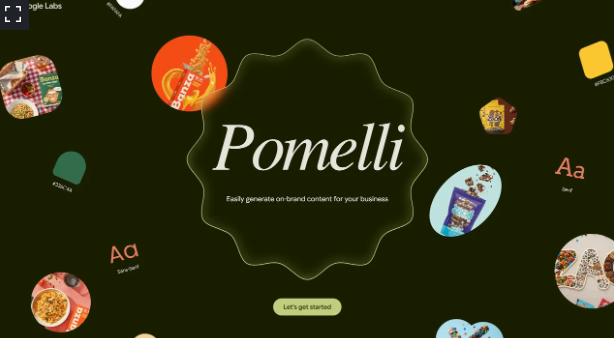
Finding the budget, time, and resources to properly advertise as a small-to-medium-sized business (SMB) can be a daunting task. Pomelli, an AI experiment from Google Labs in collaboration with Google DeepMind, provides AI marketing tools to assist small businesses in creating social media campaigns.

Pomelli uses AI to create campaigns that are unique to your business; all you need to do is upload your business website to begin. Google says Pomelli uses your business URL to create a “Business DNA” that analyses your website images to identify brand identity. The Business DNA profile includes tone of voice, colour palettes, fonts, and pictures. Pomelli can also generate logos, taglines, and brand values.

After you’ve created a Business DNA, Pomelli generates ad campaign ideas. In a blog post, Google says this feature eliminates the laborious process of brainstorming unique ad campaigns. If users have their own campaign ideas, they can enter them into Pomelli as a prompt.

Finally, Pomelli will generate marketing assets for social media, websites, and advertisements. These assets can be edited, allowing users to change images, headers, fonts, colour palettes, descriptions, and create a call to action.

Pomelli is available as a public beta experiment in the US, Australia, Canada, and New Zealand in English only.

Similar products to try

Pomelli joins several recent releases from major tech companies that aim to use AI for advertising, including an AI agent from Amazon that makes ads start to finish. Adobe’s AI Foundry, released earlier this month, aims to manage copyright concerns by letting companies fine-tune Adobe image and video generation models with their own IP for a more personalized output.

Feature Image Credit: Screenshot by Jada Jones/ZDNET

By Jada Jones,

Sourced from ZD Net

By

Do you wish your Facebook ads had a higher conversion rate? Looking for proven copywriting techniques that works?

In this article, you’ll discover how to write Facebook ads that move people to action—whether you want to generate leads, secure sales, or get prospects to take other key steps.

Technically, you could squeeze an entire blog post into the primary text section of your Facebook ad. Although Ads Manager gives you a ton of space to work with, it’s often better to keep your ad copy as concise as possible.

For most ad types, Meta recommends keeping primary text copy to 125 characters. The platform recommends keeping both the headline and the description to fewer than 30 characters.

Keep in mind that longer Facebook advertising copy gets buried behind a See More link. In fact, Facebook truncates primary text copy after about 115 characters. When you build campaigns in Ads Manager, use the ad preview to see how the copy will display for each placement. If it appears truncated, consider reworking it to display in full.

For example, the @repurpose Facebook ad below uses concise copy. Because it’s short and sweet, the primary text displays in full. To get the message across, the sustainable tableware brand uses other opportunities—including the headline and the video—to share features and CTAs.

Start With an Irresistible Hook

Between paid campaigns, suggested posts, and content from connected profiles and pages, Facebook feeds are packed with competing sources of information. Since the average Facebook user’s attention span lasts for 2.5 seconds or less, capturing interest right away is critical for conversions.

With a compelling hook, you can instantly draw in Facebook users, get them to read your message, and encourage them to act. Without a hook, your ad copy doesn’t give prospects a reason to keep reading, which can cause them to scroll past before getting to the sales pitch.

So how can you write irresistible hooks for your Facebook ads? Here are some ideas to test in your ad copy:

Click HERE to read the remainder of the article

By

Sourced from Social Media Examiner

By

If you thought there’s no corner on Instagram without ads, you’re wrong, my good friend. Meta can always make room for more, and that’s exactly what it’s about to do.

As the company is struggling with a major financial loss, it needs a way to generate more revenue. So, Instagram is about to get even more ads, and they’re going to be everywhere.

There are already ads on your Feed, in Reels, in Stories… So is there even a place where there can be more of them? Meta found the way, so they will now be on in your Explore feed, and a feed of posts you see when you click on someone’s profile. Brands can already post ads to the Explore feed, and the profile feed ads are still in the testing phase. “As a part of this test, we will experiment with a monetization opportunity that will allow eligible creators to earn extra income from ads displayed in their profile feeds, beginning with select U.S. creators,” Meta writes.

But wait, there’s more. Instagram now also has AI-powered multi-advertiser ads. In other words, Instagram’s algorithm will pay attention when you engage with an ad. And then, it will deliver ads underneath that it thinks may interest you.

In the announcement, Meta writes that new ad placements and formats are there “to help businesses tell their story and reach new customers.” So kind of them, right? As a mere Instagram user and creator, I feel like both my work and the work of the people I follow are drowning in ads and branded content. I think it’s only a matter of time before we find an alternative for showcasing and selling our artwork.

[via Engadget]

By

Dunja Djudjic is a writer and photographer from Novi Sad, Serbia. You can see her work on Flickr, Behance and her Facebook page.

Sourced from www.diyphotography.net

Sourced from News18

One of the many reasons why some smartphone users prefer iOS over Android is the clutter-free experience that Apple offers. Android users have often complained about being bombarded with unwarranted ads while using the phone. These ads at times pop on the lock screen of the device even it’s not being used – most common in Android-based skin from manufacturers like Samsung, Xiaomi, Realme, Oppo, and the likes. While some smartphone manufacturers promote ads from their end, this problem is prevalent even in brands like Samsung where the company does not send out ads from their end. If you are an Android user and have faced similar issues with your device, this could probably be caused by the downloaded apps on your phone.

How to remove ads from the lock screen?

Uninstall app sending out lock screen ads- If you have recently started using lock screens on your phones, chances are that the unwarranted ads are being sent by an app on your device. You can easily check the recently downloaded apps on your device and uninstall them to remove the problem.

– Open the Google Play Store on your smartphone

– Tap on ‘Menu’ and then on ‘My apps & Games’

– Tap on ‘Installed’

– Sort the list on basis of the last used app

– Among the most recently used apps, select the app that has been sending unwarranted ads on your device, and uninstall it.

Additionally, you can the following things in mind to get rid of unwarranted ads

– Always download apps from reputable sources based on the ratings and reviews.

– Make sure that you never give administrator’s right to any app especially.

– Update your device regularly with Android security patches. Keeping tracking for new updates

– Do not download apps that you don’t trust or are published by unknown publishers

As per the Google Play policy, apps listed on Google Play Store must not send any fraudulent ads to the device. Further, ads can only be sent when that particular application is being used. Ads appearing on the apps are considered part of the app and hence they have to adhere to the Google play Policy.

In case you spot any app with inappropriate ads violating the policies, you can report it to the Google Play store

– Go to the Google Play Store on your device

– Go to the Install page of the app

– Tap on ‘More Option’ (three vertical dots) on the top right corner of the screen

– Tap on Flash as inappropriate to report any fraudulent ads sent out by the app

Sourced from News18

Sourced from yahoo! finance.

FANSDOOR is the leader of social media optimize services, it using AI analysis technology dedicated to social media advertising, to jack up the online popularity of enterprises and rapidly increases reach and views.

SEATTLE, WA / ACCESSWIRE / Since the outbreak of COVID-19, many brick-and-mortar store have been severely hit and gradually shifted their business to e-commerce. This is a huge moment for the world, whether it is a personal brand, a company, a group enterprise, or a non-profit organization, it is not easy to get attention on the Internet. FANSDOOR is a professional social media strategy consultant team, which optimizes online KPI for customers, its Facebook page has 1.3 million fans, which is worthy of your trust!

Open the Fans Door

According to data from Statista, as of the second quarter of 2020, Facebook has more than 2.7 billion monthly active users, they use the world’s largest app frequently. In the first half of 2020, FANSDOOR created 150 million fans, 1.2 billion video views, and 2.5 billion reach for Facebook users in the world through advertising services.

Let Your Fans More and More

Exclusive innovative “FansLock Ads Tracking Technology” increases the effectiveness of advertising services and increases the popularity of your social accounts!
Fake likes and Bot webtraffic flood the market, Fake data makes social networking site operators make wrong operating decisions. FANSDOOR brings real traffic, fans and followers to enterprises page and channel. The Innovative AI Technology lock the reach source in various social media advertising services, search and connect more users to create an endless stream of fans, views and Subscribers! These data will enable the company to gain attention, promote the communication and Interaction between the business and customers.

Fans all over the World

FANSDOOR business scope in Asia is all over China, Taiwan, Hong Kong, Singapore, the Philippines, India and other regions. They undertake many top public relations firm cases, create amazing KPIs for customers, and also serve private customers, tailoring various social media popular data. In recent years, they have also expanded their business in Europe and the Americas, with footprints all over the world.

Assembling multi-national technical and marketing teams, FANSDOOR specializes in helping customers solve the problem of insufficient visibility. Using accurate advertising services and professional public relations experience, it can not only create the number of Facebook fans, but also create Instagram, YouTube, Twitter and other social media’s social data sources.

About FANSDOOR

FANSDOOR has assembled multinational technology and marketing teams to help customers solve the problem of insufficient visibility. Using accurate advertising services and professional public relations experience, it can not only create Facebook fans, but also create Instagram, YouTube, Twitter and other social media’s social data sources. Follow FANSDOOR immediately!

Facebook: https://facebook.com/fansdoor
Youtube: https://www.youtube.com/channel/UCMhmWTJWkhRUqJiesc49zUw
Instagram: https://instagram.com/fansdoor
Twitter: https://twitter.com/fansdoor

Contacts:

Company Name: FANSDOOR
Email: [email protected]
Website: https://www.fansdoor.com

SOURCE: Fansdoor South America

Sourced from yahoo! finance

By Jason Aten.

Two changes to how Google displays search results will likely have a real impact on your business.

Most of us think of Google as the place to go and get answers to just about everything. In fact, 90 percent of all search queries use Google, accounting for almost half of all internet traffic. If you’re an entrepreneur or marketer, you know that Google’s primary business is selling targeted advertising along with every one of those searches. In fact, Google is the largest advertising platform in the world.

The intersection of those two realities just got a little clearer, while the distinction became less so with a few recent changes made by Google. Here’s what changed recently, as well as what it means to your business.

Ads Versus Organic Results

Google Ads are extremely effective, because advertisers are able to target ads to the keywords people search for. People depend on Google to give them the highest-quality results for their questions, which is why appearing at the top of a search results page is so valuable to marketers and content creators.

For a long time, it was obvious that there was a difference between results that appear organically–ranked highly on the basis of their relevance and quality–and those that appeared prominently because they are paid ads. Over time, however, Google has made the distinction less clear.

The latest example blurs the line almost completely by adding a “fav” icon to the organic results, and including the link above the result, both of which make them look far closer to the ads above.

While it isn’t clear what result this is likely to have for individual businesses, the motivation seems clear: Increase click-through on ads. Since the majority of visitors click on the top three or four search results, making the paid and organic results look as similar to each other as possible is going to lead to more clicks on the paid results since they appear at the top.

That matters if your business depends on appearing at the top of search results, and might mean that it’s time to evaluate whether your content and search engine marketing strategy still make sense after these changes.

Snippets and Search Results

Another change, which could easily have an even larger impact on marketers, is that Google now says that when a site captures a snippet for a given search query, that site won’t also appear in the normal search results. The snippet is one of the most valuable positions in a search result page (SERP), and is the most prominent result. For example, in the SERP below, the snippet includes the list from the article about the best iPhone apps.

In the past, that article would also have appeared in the search results below. Now, the snippet is considered a position in the results. Google’s Search Liaison Twitter account explained the change:

That seems logical, but it also has a real impact on websites that currently have the snippet for a given search term, and will now have less presence in the SERP. As with the first change, this can have a real effect on the amount of traffic your website gets if your primary strategy has been organic search.

Sometimes it might be easy to forget that ultimately, while Google’s mission might be to “organize the world’s information and make it universally accessible and useful,” it’s a business.

Businesses exist to make money, and Google is very good at making money. As it gets even better at it, it isn’t always clear where the line is between making information useful and using information to make money. That’s a good reminder for businesses that have made organic search a major part of their marketing plan. If that’s you, it might be time to consider how these changes will affect your strategy. Because, make no mistake, they absolutely do.

Feature Image Credit: Getty Images

By Jason Aten

Sourced from Inc.

By Sarah Perez

Despite ongoing speculation and investor pressure, Netflix is still declining to adopt an advertising-based business model as a means to boost its revenue, Netflix CEO Reed Hastings confirmed on Tuesday. The company on its Q4 earnings call again shot down the idea of an ad-supported option, with Hastings explaining there’s no “easy money” in an online advertising business that has to compete with the likes of Google, Amazon and Facebook.

Explained the exec, “Google and Facebook and Amazon are tremendously powerful at online advertising because they’re integrating so much data from so many sources. There’s a business cost to that, but that makes the advertising more targeted and effective. So I think those three are going to get most of the online advertising business,” Hastings said.

To grow a $5 billion to $10 billion advertising business, you’d need to “rip that away” from the existing providers, he continued. And stealing online advertising business from Amazon, Google and Facebook is “quite challenging,” Hastings added, saying “there’s not easy money there.”

“We’ve got a much simpler business model, which is just focused on streaming and customer pleasure,” he said.

The CEO also noted that Netflix’s strategic decision to not enter the ad business has its upsides, in terms of the controversies that surround companies that collect personal data on their users. To compete, Netflix would have to track more data on its subscribers, including things like their location — that’s not something it’s interested in doing, he said, calling it “exploiting users.”

“We don’t collect anything. We’re really focused on just making our members happy,” Hastings stated.

That’s not exactly true, of course. Netflix does track viewership data in order to make determinations about which of its original programs should be renewed and which should be canceled. It also looks at overall viewing trends to make decisions about which new programs to greenlight or develop. And it tracks users’ own interactions with its service in order to personalize the Netflix home screen to show users more of what they like.

The company also this quarter introduced a new viewership metric — “chose to watch,” which counts the number of people who deliberately watched a show or movie for at least two minutes. That’s far longer than Facebook or Google’s YouTube, but isn’t a great way to tell how many people are watching a show to completion, as on TV.

However, none of this viewership tracking is on the scale of big tech’s data collection practices, which is what Hastings meant by his comment.

“We think with our model that we’ll actually get to larger revenue, larger profits, larger market cap because we don’t have the exposure to something that we’re strategically disadvantaged at — which is online advertising against those big three,” he said.

This isn’t the first time Netflix’s CEO has had to repeat the company’s stance on being an ad-free business. In Q2 2019, Netflix reminded investors in its shareholder letter that its lack of advertising is part of its overall brand proposition.

“When you read speculation that we are moving into selling advertising be confident that this is false,” the letter said.

Analysts have estimated Netflix could make over a billion more per year by introducing an ad-supported tier to its service.

To some extent, the increased push for Netflix to adopt ads has to do with the changes to the overall streaming landscape.

Netflix today is facing new competition from two major streaming services, Disney+ and Apple+ — both of which have subsidized their launch with free promotions in order to gain viewership. In the next few months, Netflix will have to take on several others, including mobile streaming service Quibi, WarnerMedia’s HBO Max and NBCU’s Peacock. The latter features a multi-tiered business model, including a free service for pay-TV subscribers, an ad-free premium tier and one that’s ad-supported.

The service was introduced to investors last week, where it was well-received.

Other TV streaming services also rely on ads for portions of their revenue, including Hulu and CBS All Access. Meanwhile, a number of ad-supported services are also emerging, like Roku’s The Roku Channel, Amazon’s IMDb TV, TUBI, Viacom’s Pluto TV and others.

Netflix’s decision to keep itself ad-free is likely welcome news for its subscriber base, however, who see the lack of ads as being a key selling point.

Feature Image Credit: Ernesto S. Ruscio/Getty Images / Getty Images

By Sarah Perez

Sourced from TechCrunch


By Jeff Beer

A new study from Deloitte agency Heat found that representation in ads correlated with an increase in both stock price and public perception.

It should go without saying that working to ensure advertising is inclusive, diverse, and representative is just the right thing for brands to do.

While there have been improvements over the past decade, though, too often inclusion is treated as a box to tick.

Woman? Check.

POC? Check.

Still, the work fails to illustrate these people as three-dimensional human beings.

Now, a new study from Deloitte-owned agency Heat has found that brands that have figured out how to do just that are seeing a boost to both public perception and their stock price. “We embarked on this to try to prove that diversity in advertising is actually good for business,” says Heat’s head of strategy Maggie Gross, adding that the goal was to connect the desire among many companies to create more diverse advertising with the pressure of business results.

The “Heat Test” study looked at ads for 50 brands from the Top 200 media spenders, across eight industries. Ultimately this encompassed more than 17,000 data points. The agency then consulted with Duke University anthropology professor Dr. William O’Barr and UT Austin advertising professor Dr. Kevin Thomas on what diversity in advertising should look like. They identified key metrics, such as showcasing diversity in primary roles (speaking roles versus background), illustrating diverse characters in positions of power (buying a burger versus selling the burger), and contrasting stereotypical roles (woman cooking versus woman pursuing a career).

They found that 94% of the brands in the study had at least one occurrence of women in a primary role, 57% of which were in positions of power, but even half of those roles still featured a stereotypical element like empathetic mom, devoted wife, or boy-focused girl. Also, 92% of the brands studied had at least one occurrence of a person of color in a primary role, but only 15% of those were culturally diverse.

Where things really fell off was in representation of both the LGBTQ+ community and in depicting individuals with a disability. Less than 1% of ads represented a character who would identify as LGBTQ+. Despite one in four American adults living with some type of disability, again, less than 1% of the ads featured a character with one.

The research also found that 90% of ads didn’t include people of lower socioeconomic backgrounds.

Some of these findings mirror those in a University of Southern California study earlier this month on diversity and representation in films, which found that among the top 100 highest-grossing films of 2018, less than 2% of onscreen characters had a disability, and LGBTQ characters made up only 1.3% of speaking roles.

Heat’s researchers looked at the stock growth of each brand over the past seven quarters, as well as Brand Index scores to get a sense of how the corresponding ads impacted public perception as well as the bottom line. Turns out, brands that scored highest in the study averaged a 44% stock increase over the past two years and were 83% more likely to see a boost in their Brand Index scores than lower scoring brands.

Gross says they’re not calling out specific brands, but the message to brand marketers and ad agency creatives here is to reflect on what they could do differently, from adjusting the way that creative teams are briefed to how they write scripts and put together casting recommendations so that they can track and measure the process.

“It’s less about checking a box and making sure, frankly, you have a woman or a person of color in your ad,” says Gross. “It’s about recognizing that diverse people are complex, relatable human beings. It’s no longer a question of if you should do this but if you can afford not to.”

Feature Image Credit: [Photo: Oleksandr Pidvalnyi/Pexels]

By Jeff Beer

Jeff Beer is a staff editor at Fast Company, covering advertising, marketing, and brand creativity. He lives in Toronto. More

Sourced from Fast Company