Tag

Digital Marketing

Browsing
By Monique Claiborne.

By focusing on a new digital strategy, TUMI broke the mold and tapped into a new source of growth.

It may not be widely recognized yet, but digital technology is probably one of the best things to happen to luxury brands in a long time, says a Boston Consulting Group study titled Digital or Die: The Choice for Luxury Brands. Luxury brands that fail to evolve their digital front risk getting left behind as digital is the inevitable, inescapable business shift of the future.

One luxury brand that has successfully used digital marketing to cement its place as a leading international business, accessory and travel lifestyle brand is TUMI. What I’ve noticed about TUMI is it has responded quickly to the fast and forceful digital takeover — unlike many dying brands — and that payoff has translated to its e-commerce business, which is in the high double digits in 2017 compared to 2016.

I had a chance to catch up with Victor Sanz, TUMI’s creative director, to understand more about the company’s digital maturity. Below are three key takeaways every company can learn from TUMI’s transformation.

1. Create a fresh customer service strategy.

Through a number of different channels, TUMI has placed a priority on its online presence to better serve its customers. In my experience, the real importance of digital to companies is not the emergence of new technology, but the important shift in customer behavior. By expanding its digital marketing reach into more upper funnel initiatives, TUMI now focuses on improving user experience on the website, both mobile and desktop.

Investing in a digital strategy focused on customers not only better equips you to efficiently respond to the changing customer, but also improves customer satisfaction and brand recognition. TUMI has shown this by improving its online merchandising strategy to create more personalized experiences for customers and further revamping its CRM to better understand customers.

2. Nurture a customer community.

Growing companies use social tools and online platforms to enable new customers to develop quickly and efficiently. TUMI has made a tremendous effort to target a younger demographic, with efforts largely geared toward engaging customers with its Women’s Assortment. The luxury brand has created more personal communications to target new and repeat customers, with a bigger focus on new customer acquisition.

Like TUMI, you can reduce the promotional component of your business and produce more segmented and targeted messages when communicating with customers. TUMI has created connections between the people within the organization and the people who buy its products. In today’s age, companies that build authentic relationships between their business and their customers can successfully generate new and sustainable customers.

3. Never stop developing.

Companies must now respond to rising customer expectations and acclimatize to the breakneck speed of technology. To meet future challenges, you must constantly develop the capability to quickly identify, evaluate and invest in the right trends at the right time.

Committed to testing and improving marketing tactics not only through products but also the user experience on its online platform, TUMI is exceeding customer expectations. TUMI will continue to focus on its ‘bread and butter’ — women and women’s products — but also dive deeper into analytics and segmentation of TUMI.com.Taking an entrepreneurial approach and establishing new agile initiatives allows you to quickly bring a new idea to the market and then iteratively improve through customer feedback.

No longer can you open new stores in high-end markets and expect consumers to automatically appear. Consumers now want omnichannel interactions and seek brand interaction. It’s no surprise luxury brands are up against tough growth challenges. If you take one thing away from TUMI’s digital transformation, it should be that the digital disruption has left many businesses spinning but revealed fantastic opportunities for higher levels of customer engagement for those that seek it. Valuing and investing in digital technologies will allow you to extend and individualize your business services beyond the physical store.

Feature Image Credit: Courtesy TUMI

By Monique Claiborne

Finance and business travel writer

Sourced from Inc.

By 

Well, it’s 2018, so now’s the time to get your marketing plan in place, if you haven’t done so already.

To help, we think you’ll need to be aware of these marketing buzzwords in 2018.

Don’t worry, they’re not the useless jargon style buzzwords so many people loathe. These are useful marketing terms that will need to be part of your vocabulary this year.

Here are your digital marketing buzzwords for 2018:

Algorithm – Everyone wants to talk about Google’s algorithm updates or the Facebook algorithm making it hard for businesses to get their marketing messages in front of their target audience, but what does it really mean?

Well, you can think of an algorithm as a formula. It’s a set of rules Google or Facebook uses to determine what content shows up where. So, Google uses its algorithm to determine which businesses and websites show up for certain searches, while Facebook uses its algorithm to determine which posts are most important and relevant to its users.

SEO – SEO stands for search engine optimization and it’s the way that we optimize for Google’s algorithm.

SEO involves optimizing your business’s website for searches by adding keywords, meta-tags and other information that search engines need to know in order to rank your business in the right searches for the right consumers. Don’t forget there’s more than one kind of SEO.

Marketing Automation – Marketing automation is exactly what it sounds like – it’s software which enables you to automate certain marketing tasks.

Even if this makes it sound hands off for you, you still need a human touch to set up your automation and make sure everything continues to run smoothly.

AI – AI stands for artificial intelligence, and it’s taking over the marketing world. You can think of AI as any time a machine mimics human intelligence.

Those algorithms we mentioned earlier are one example of how AI impacts your marketing strategies – the algorithms replace humans by quickly figuring out which businesses or websites should show up in your search results, News Feed, etc. AI is also used in advertising to determine which consumers see your business’s ads in search results or their Facebook newsfeeds.

AI is already an important part of digital marketing, but we expect it to become even bigger in 2018 and beyond.

Customer Journey – Your consumer’s path to purchase is longer than you think and involves multiple touchpoints across different channels and devices.

People don’t purchase products or services after the first click – it’s much more complicated than that. The customer journey is one of the most important things to understand when creating a digital marketing strategy.

Omnichannel – Along the same lines, omnichannel marketing means creating a seamless online presence (and marketing plan) that reaches customers wherever they’re searching or browsing.

Because the consumer’s path to purchase is longer and more complicated than it used to be, omnichannel marketing is more important than ever.

Attribution – Attribution is a fancy way to say figuring out which marketing channels are driving ROI (ROI was one of our buzzwords for 2017).

By

Follow Isabella Andersen on Twitter

Sourced from Social Media Today

The advertising industry seems to have the power to shape society’s view of gay people. And it is going hard on proving it. 

By MediaStreet Staff Writers

The past 15 years have seen a dramatic increase in the presence of gays in advertising. Every ad seems to be getting good with the gays.

The media has transformed the stigmatised stereotype of gays into a new, socially desirable image of stylish consumers with high-end taste.

This marketing strategy affects the way gays understand themselves and influences the meaning of gayness for society in general, explains Wan-Hsiu Sunny Tsai, assistant professor of advertising at the University of Miami School of Communication, in a study published by the Journal of Advertising.

“The findings illuminate the influential role of advertising in informing and shaping personal identities and highlights the often ignored socio-political dimension of advertising, Tsai says. “In other words, when marketers argue that no matter who they target, ‘it’s just business,’ their marketing messages actually have broader, cultural impacts on the minority community.”

According to the study, five specific strategies emerged within these minority consumers to interpret the messages catered to them:

  • Gay men accepted the perception of “higher disposable income of gay male households” and transformed material consumption into a definition of self-worth. “I was on many consumer panels because I fit the profile of gay men who have disposable income and travel a lot,” one participant said.
  • Participation in the mass market was equated to membership in mainstream society. “We got money. We contribute to the corporation. We contributed to big business. We got families. We are part of the mainstream now,” a participant said.
  • Targeted advertising was identified as an essential step in achieving social political inclusion. “Consumer rights and citizenship, civil rights are intricately connected. And when we express our identity as a consumer, that reinforces and strengthens our identity as a citizen,” a participant said.
  • Perpetuating problematic depictions of gays as effeminate men or lesbians as “sexualized femme” was tolerated in the interests of social inclusion. “I was ambivalent when watching this commercial. It’s playing up the stereotype. But for me, if you can see gay people on TV, it’s positive,” one participant said.
  • Participants were willing to give up something of their subcultural identity for the sake of total acceptance in society. “When we are truly accepted in the society, we will just blend in… even that might mean sacrificing our uniqueness,” a participant said.

The next logical question is, how do you target your particular message to the gay community, if you want to attract their business? We await the next study…

So, which citizens trust their media the most? And the least?

By MediaStreet Staff Writers

Let’s start with the USA. The 2018 Edelman Trust Barometer reveals that trust in the U.S. has suffered the largest-ever-recorded drop in the survey’s history among the general population. Trust among the general population fell nine points to 43, placing it in the lower quarter of the 28-country Trust Index. It is now the lowest of the 28 countries surveyed, below Russia and South Africa.

The collapse of trust in the U.S. is driven by a staggering lack of faith in government, which fell 14 points to 33 percent among the general population, and 30 points to 33 percent among the informed public. The remaining institutions of business, media and NGOs also experienced declines of 10 to 20 points. These decreases have all but eliminated last year’s 21-point trust gap between the general population and informed public in the U.S.

“The United States is enduring an unprecedented crisis of trust,” said Richard Edelman, president and CEO of Edelman. “This is the first time that a massive drop in trust has not been linked to a pressing economic issue or catastrophe like the Fukushima nuclear disaster. In fact, it’s the ultimate irony that it’s happening at a time of prosperity, with the stock market and employment rates in the U.S. at record highs. The root cause of this fall is the lack of objective facts and rational discourse.”

Conversely, China finds itself atop the Trust Index for both the general population (74) and the informed public (83). Institutions within China saw significant increases in trust led by government, which jumped eight points to 84 percent among the general population, and three points to 89 percent within the informed public. Joining China at the top of the Trust Index are India, Indonesia, UAE and Singapore.

For the first time media is the least trusted institution globally. In 22 of the 28 countries surveyed it is now distrusted. The demise of confidence in the Fourth Estate is driven primarily by a significant drop in trust in platforms, notably search engines and social media. Sixty-three percent of respondents say they do not know how to tell good journalism from rumour or falsehoods or if a piece of news was produced by a respected media organisation. The lack of faith in media has also led to an inability to identify the truth (59 percent), trust government leaders (56 percent) and trust business (42 percent).

This year saw a revival of faith in experts and decline in peers. Technical (63 percent) and academic (61 percent) experts distanced themselves as the most credible spokesperson from “a person like yourself,” which dropped six points to an all-time low of 54 percent.

“In a world where facts are under siege, credentialed sources are proving more important than ever,” said Stephen Kehoe, Global chair, Reputation. “There are credibility problems for both platforms and sources. People’s trust in them is collapsing, leaving a vacuum and an opportunity for bona fide experts to fill.”

Business is now expected to be an agent of change. The employer is the new safe house in global governance, with 72 percent of respondents saying that they trust their own company. And 64 percent believe a company can take actions that both increase profits and improve economic and social conditions in the community where it operates.

This past year saw CEO credibility rise sharply by seven points to 44 percent after a number of high-profile business leaders voiced their positions on the issues of the day. Nearly two-thirds of respondents say they want CEOs to take the lead on policy change instead of waiting for government, which now ranks significantly below business in trust in 20 markets. This show of faith comes with new expectations; building trust (69 percent) is now the No. 1 job for CEOs, surpassing producing high-quality products and services (68 percent).

“Silence is a tax on the truth,” said Edelman. “Trust is only going to be regained when the truth moves back to centre stage. Institutions must answer the public’s call for providing factually accurate, timely information and joining the public debate. Media cannot do it alone because of political and financial constraints. Every institution must contribute to the education of the populace.”

Other key findings from the 2018 Edelman Trust Barometer include:

  • Technology (75 percent) remains the most trusted industry sector followed by Education (70 percent), professional services (68 percent) and transportation (67 percent). Financial services (54 percent) was once again the least trusted sector along with consumer packaged goods (60 percent) and automotive (62 percent).
  • Companies headquartered in Canada (68 percent), Switzerland (66 percent), Sweden (65 percent) and Australia (63 percent) are most trusted. The least trusted country brands are Mexico (32 percent), India (32 percent), Brazil (34 percent) and China (36 percent). Trust in brand U.S. (50 percent) dropped five points, the biggest decline of the countries surveyed.
  • Nearly seven in 10 respondents worry about fake news and false information being used as a weapon.
  • Exactly half of those surveyed indicate that they interact with mainstream media less than once a week, while 25 percent said they read no media at all because it is too upsetting. And the majority of respondents believe that news organizations are overly focused on attracting large audiences (66 percent), breaking news (65 percent) and politics (59 percent).

It’s a brave new world, and we as marketers must realise that placing any marketing cash with distrusted media outlets could mean a very big waste of our advertising spending power.

Snapchat seems to be sliding down the list of prefered ways for influencers to reach their fans. A new report had shown that not one influencer surveyed chose snapchat as their favourite platform.

By MediaStreet Staff Writers

New research released today by Carusele and TapInfluence uncovered some surprising results about how influencers feel about various platforms heading into 2018.

Of the 790 influencers surveyed, none answered Snapchat to the question, “What is your favourite channel to use for branded content?”

Personal blogs were the favourite of 36% of respondents, followed closely by Instagram at 35% and Facebook at 12%. Twitter (9%), Pinterest (6%) and YouTube (1%) also received votes.

Even when asked to name their second favourite choice, Snapchat collected fewer than 1% of the responses, while Facebook ranked first at 26% and Instagram second at 25%.

“Two things are clear from this part of our survey,” said Jim Tobin, president of Carusele. “The first is that blogs aren’t going anywhere, which I think is a good thing for both brands and influencers. And second, Instagram’s moves over the last year or two have really outmanoeuvred Snapchat, which had been a hot platform for creators two years ago.”

Influencers also plan to be in the space for the long haul, with 97% of influencers surveyed planning to continue their work “as long as I’m able.” This despite fewer than half surveyed reporting working full time in the vocation (46%) while 24% work full time elsewhere and 13% part time elsewhere. The balance report being full time parents or caregivers.

“Our earlier research legitimised influencer marketing as a sales driver. This new research supports the fact that it remains a viable career option for content creators,” said Promise Phelon, CEO of TapInfluence.

Carusele won the 2017 Small Agency of the Year Award at the Shorty Awards. It utilises a hand-crafted network of content producers to produce premium influencer campaigns for leading brands and retailers.  TapInfluence is an influencer marketplace connecting brands with social media influencers. And if they say that Snapchat is no longer cool, then it probably isn’t.


By Charlie Sammonds.

Getting your social media right is essential for success

It can be difficult to quantify the effect of your social media strategy on your sales. The waters are murky; conversions are more often indirect and the real value of a strong social presence is the more nebulous ‘personality’ of your brand. Regardless of how you define its value, though, a proper social media strategy is well worth investing in. Before you set out on building a loyal troop of followers online, consider these four tips for an effective, consistent strategy.

Identify your target demographic

Where many companies falter is in casting their net far too wide. Being present on all social media is great but unless you have the resources to effectively manage a plethora of accounts, the message risks being diluted. Facebook is the universal social media – it spans demographics like no over and is present in almost every country in the world. But outside of the world’s second most popular website, a more targeted approach can be effective.

Consider more than just the big two – Facebook and Twitter. Promoting a fashion brand? Use Pinterest. Promoting a B2B company? LinkedIn. And these distinctions can be further developed; 85% of Pinterest users are female, for example, so those men’s shirts are probably best marketed elsewhere. Luckily, the demographics of particular social media sites are easily accessible, so identify yours before assuming that more means better.

Find your tone and hone it

Perhaps secondary only to identifying your target demographic and the social media they use, is finding your tone. Different tones suit different products – travel companies, for example, tend to be lighter in tone than financial institutions – but as long as the tone is both strong and consistent, they don’t necessarily have to naturally match. More jovial personalities tend to get higher engagement (and hence more shares), but doing it poorly is a surefire way to come across try-hard.

A great example of a playful social presence is Skittles, whose Facebook page has over 24 million ‘likes’ and whose content is well shared. Their tone is relaxed, comic; not every post has to be hilarious for a jovial presence to work. Paddy Power’s R-rated Twitter feed is followed by 569,000 Twitter users – leaps and bounds ahead of the competition – thanks to a commitment to comedy and a tone so consistent you’d wonder how their social media team have a day off. These kinds of account give a company a human face, a personality to veneer the number crunching and stuffy boardroom meetings at play under the surface.

Use visual platforms

Social media campaigns are often more successful when they employ various mediums rather than the occasional tweet or Facebook post. Snapchat grosses 8 billion daily video views, for example, and the non-intrusive nature of having a company as a contact on the media sharing app renders it more appealing for the user. Again, it is a question of demographic; if your product is designed for the over-50 market, Snapchat would be an essentially useless medium.

Video, more generally, is a fantastic opportunity for full engagement. The most effective marketing videos are 15 seconds long or under; Instagram caps ads at 15 seconds and promotional Facebook videos will autoplay if under that length – a great way of grabbing the idle scroller. It’s not a long time in which to tell a story, but if you manage to create an engaging, concise video ad, you have the best chance of conversions. User-generated content is also an often under-valued source of strong visual content. It is more viable for already established companies, but can be leveraged by all if done well. Coca Cola’s ‘Share a Coke’ campaign – where they invited customers to, you guessed it, post a picture of them sharing a Coke – was one of their better recent marketing strategies.

Build a story

This is where the difficult task of converting your social media presence into sales requires some creativity. Self-promotion is all very well, and directly inviting followers to buy your products will doubtless see some return, but there is more value to be drawn from building a story around your brand. Slow Watches, for example, have developed a philosophy surrounding their products and they use it to underpin their social media marketing; ‘Can a watch change your life?’ is an effectively emotive opening gambit. Doc Martens, similarly, run a well-followed blog covering everything from punk festivals in the Netherlands to bands that have appeared on their ‘Stand For Something Tour’ – which is, in itself, a wonderful marketing move.

Your story should, of course, contain your product in some way. Saddleback Leather describe themselves as a ‘people business cleverly disguised as a leather goods company’ and their social media strategy reflects this. Their Instagram account focuses primarily on adventure, with their bags appearing all over the globe. A story is an effective indirect sales driver, and appeals to more than just a customer’s wallet.

By Charlie Sammonds

Sourced from innovation enterprise

By 

In the crowd of millions of businesses, it’s really necessary to make yours stand out to attract your ideal clients. It is not enough only to swim against the water-you might have to follow suit of Moses. The point is, if you want your business to be taken seriously, you have to do something different that will leave a long lasting impression on the minds of the consumers and to get your business out of the dull gray box; a strong brand identity is necessary that reflects the purpose and characteristics of the business. And like everything else on the planet, the only way to keep your brand relevant is to update it from time to time.

What is a “brand”?

Your company’s brand is what your consumers perceive of your company. The idea or feeling that they associate with your company is the brand of your business. If you ask your clients of what comes to their mind when your business is mentioned and they respond consistently with an emotion or perception, which is your brand. However if the responses are inconsistent or they refer to non-image attributes like price, you brand needs to be developed.

A business can have brand even if it doesn’t have a logo or a creative image. The way your business operates and the actions that it undertakes are what create an emotional influence on the consumers and that is where your brand generates from.
Your company’s brand plays a vital role in the workings of its business, as it-

  • Helps create an impression
  • Evokes curiosity about the company and its business
  • Gives out an essence of quality and professionalism

Why should you update your brand?

Brand image is crucial in communicating properly with your target clients the goodwill of your business and to assure certain levels of expectation. Even if your business has an established brand, it needs to evolve as the business itself changes. Re-branding and refreshing your company’s appearance is crucial to keep it relevant to your old clients as well as to attract new ones. There are many reasons why to do so

  • To reflect internal changes
  • Business growth: As a business expands, the brand needs to extend itself to appeal to the increasing mass of consumers that the company is trying to interact with.
  • Globalization: When a company expands its products and services to the international market, the brand name has to evolve to be represented constantly in all the countries.

The biggest of the international brands like Google, eBay, Apple, Coca-Cola update their brands frequently to cater to their expanding business strategies.

When is it time to update your brand?

Re-branding your company is a decision that should be made after a systematic analysis of the response pattern of your consumers. There are certain signals that your brand needs an update which you need to look out for, like-

  • If your brand is being associated with negative feelings
  • If your brand is out of sync with your business identity
  • If your brand is not making your business stand out

How do you get your brand updated?

A refresh comes in many forms and it is important to have an understanding of your clients’ attitudes to opt for the most suitable re-branding for your business. The options include:

  • Getting a logo: If your business doesn’t have a logo, consider getting one developed. Or if your company has had the same logo for a long time, consider getting it changed. A case in point is the company Starbucks which has become a very easily recognizable brand with its much simplified logo.
  • Changing the company’s name: For a business to appeal to the popular mass, the company needs a name that is easily accepted and recognized by its large variety of consumers. For example, the digital giant Google was once known as “Back Rub”.
  • Releasing a new product that has gained relevance among the consumers.
  • Changing the way of advertising: It is essential to advertise your company the right way and by right way, what is meant is the way your target audience will find your product or service the most appealing. It is equally important for the advertising strategies to be relevant to both your business identify as well as time.

It is important to understand that the update should not come when you are bored with the look or idea that your company sends out. It should not be based on your impulses but on the response of the people on the other side. If their behavioural trend shows a need for change in strategies to keep up the business or to expand it, then the choice of re-branding should come on the table. Brand update does not necessarily have to be in your face and grand. Sometimes simplifying is the key- just by removing elements that make your company look dated; it is possible to keep up with the changing taste of the consumers.

By 

Chirag Thumar works as an SEO analyst at Nexsoftsys. He has been working in the area of Search Engine Optimisation for over 6 years.

View all articles by

Sourced from iamwire

Where to Focus Your Annual Marketing Spend

It’s never too early to start working on your company’s marketing plan for the upcoming year – just ask the accounting department. For B2B and B2C marketers alike, there are many conversations to be had about the impact your budget will have on your marketing capabilities and strategy.

Use this guide to assess your company’s current marketing practices and discover the marketing methods you may want to introduce in next year’s plan. After all, your 2018 budget is likely an untapped resource for your marketing team and might allow for optimization, integration and innovation. Did we overdo it on the buzzwords? In any case, use this guide to get a jump start on your 2018 marketing budget and determine what tactics you should incorporate to make the year a successful one.

Step 1: Analyze and Benchmark Past Marketing Successes

Marketing is a balancing act and when you’re trying to increase qualified leads, it should never be a guessing game. To develop a truly successful marketing plan, you first have to look back at marketing plans from years past.

Use data from Google Analytics, your email marketing service and your marketing automation system to understand what sources are driving the most leads. Once you have tangible numbers, you can identify which sources contribute the highest percentage of total revenue via leads and conversions.

After you’ve collected year-over-year analytics data from each marketing channel and their corresponding sales metrics, you should ask yourself two simple but important questions:

  • What’s working?
  • What’s not working?

Unfortunately, each marketing tactic cannot be evaluated in the same way. While print ads offer circulation data, you can’t determine the exact number of readers who flipped through a publication’s pages. On the other hand, display advertising can provide definitive findings as to the size of the audience, the amount of impressions and click data.

Do your best to prioritize marketing tactics based on an unbiased review of their performance each year. When analyzing performance, try to maintain a holistic view of your business. What outside factors are influencing business development besides marketing? The loss of a key employee or the emergence of a new local competitor could be to blame.

Return on marketing investment (ROMI) can be tough to navigate, but with persistent research, you can optimize the channels that are working in your favor and pull back marketing spend on the tactics that aren’t.

Step 2: Determine 2018 Marketing Goals

Once you’ve familiarized yourself with the success of your past and current tactical marketing plans, it’s time to determine your 2018 marketing goals. After all, you can’t take a road trip if you don’t know where you’re headed.

Your marketing goals should be strategic objectives that are quantifiable and specific.

Define your goals on multiple levels; start from the top by determining your short and long-term business objectives. With this information, you can understand the amount of revenue you will need to achieve those goals and therefore the number of new leads you will need to generate. This is where the fun starts. Armed with these numbers and your data from step one, you can begin to break down these goals even further, setting success measurements for each marketing channel and tactic.

For tactical goals, be specific in terms of budget and results. How much are you willing to spend on this tactic? How many clicks or new leads do you expect this tactic to generate? Here’s an example:

  • Channel: Digital marketing
  • Platform: Google AdWords
  • Tactic: PPC campaign
  • Spend: $3,000/month
  • Goal: 500 clicks, 30 conversions

It’s important to establish objectives, but there should be some element of flexibility. Many factors that will impact progress toward your goals are constantly in flux, such as the cost associated with certain keywords  and ad groups on Google AdWords.

Keep in mind that circumstances may change throughout the year and budgets may have to be adjusted. If your current structure does not allow for budgetary changes, your goals and expectations should be altered accordingly.

Step 3: Consider Marketing Channel Options

There are multiple marketing channels to choose from when creating your 2018 plan, but most marketers will recommend an integrated approach. If your budget is tight, it may be in your best interest to focus investments on one or two channels. Here are a few channels that every modern marketer should consider:

  • Digital Marketing
    • Website development: Investing in development can go a long way. Whether you’re starting from scratch to create a new website or you’re improving an existing one, users can always appreciate a site that has top-notch UX and updated features.
    • Display advertising & pay-per-click (PPC): Advertising via search engines and partner websites is becoming increasingly commonplace as technology advances. Display advertising is an economical online advertising method, offering the opportunity to display graphic banner ads on website categories of your choosing. PPC, while more costly, is extremely customizable; advertisers can specify bids, ad copy, display time of day, location targeting and more.
    • Email marketing: A standard among most companies in 2017, there are still realms to explore in the world of email marketing. Experiment with email workflows to capture leads and incorporate responsive elements to heighten engagement metrics.
    • Social media advertising: For marketers who have established a strong social media presence for their company, social media advertising is an excellent tactic to incorporate. LinkedIn is the most beneficial for B2B marketers (especially its new InMail advertising option), while Facebook suits B2C marketers.
    • Search engine optimization (SEO): Optimizing your website for search engines is becoming increasingly important. How many times do you Google per day?
  • PR & Social Media

Public relations and social media marketing are standard for most B2B and B2C businesses. To take your editorial calendar to the next level, put down the press release and consider adding a new method to the mix.

Content marketing is a tactic that has grown in popularity in the past few years; this avenue allows companies to produce in-depth industry content that draws in a new, more targeted audience.

Content marketing is especially useful in the B2B space because industry content may not be as readily available to interested consumers. This content not only serves as quality editorial copy on-site, but it also has the potential to be leveraged for lead nurturing and demand generation purposes.

  • Traditional Marketing Channels

Traditional marketing methods have been a staple in the industry for decades and most are still in use. Direct mail, event marketing, television spots and print advertising are just a few tactics that are still a core focus for many marketers.

But be wary of opting for traditional methods unless you can prove that the tactics will result in strong leads. If not, they may not be worth the significant investment.

Step 4: Prioritize Your Needs

This is the hard part. Marketing on every platform is be the ideal circumstance, but for small to medium sized business (SMBs), this may not be realistic.

To prioritize your marketing needs, start with the most costly endeavors. Choose the tactic that is the most effective at driving leads and go from there.

Once you’ve incorporated the tactics that require the most spend, you can balance the rest of your budget with more cost-effective tactics.

Most B2B and B2C marketers find that working with an agency is helpful in determining the best marketing mix. For most of our clients, the marketing channel priorities that garner the most online success include:

  • PPC campaigns
  • Content marketing
  • SEO

Ultimately, there’s no magic formula. Your marketing budget should be a mix of different methods, based on the resources you’re working with and the audience you’re trying to reach.

This guide should serve as a starting point for your 2018 marketing planning and help you bring increased exposure for your business in the new year.

Sourced from Marketing Insider Group

By Brent Csutoras

I think it goes without saying that just about everyone in the digital marketing space is looking to become an influencer in one way or another.

Whether you want to improve your authority amongst potential clients, find yourself speaking at a conference, or even publish your own book, you first need to build your overall authority and influence.

Over a decade ago, I started off on a journey in digital marketing that was based almost completely on building my influence as an SEO and Social Media Marketer, so I wanted to share some of the things that have worked for me over the years.

“Influence will lead marketing efforts by 2020,” according to Ted Coine. “It’s the most effective form of ‘advertising’ there is…”

1. Write About News or Features

Whether it’s on your own blog, a third party site like LinkedIn or Medium, or guest writing on a site like Search Engine Journal, I strongly believe writing is one of the core ways to build your influence.

I also think one of the key angles you should write about is to cover news and review features from various sites, tools, or communities, both in beta and just being released. Not only does it keep your name visible in the most current of topics, it also allows you to provide one of the most valuable aspects of an influencer; the cliff notes we all care about.

Tips to improve your success:

  • Follow the Developer and Support sections of all the platforms or services related to your business or expertise. I cannot count the number of times we have found developers talking openly about coming features or explaining how existing features work in a way that was unknown to the masses, allowing me the opportunity to write about these before most people even knew they existed. Additionally, this allows you to identify areas of discussion where people are looking for guidance and show you which articles would make you the most helpful and influential.
  • Work to join any Beta programs available which give you access to features well before anyone else. Even if they are not advertising a program, spend some time connecting with developers and then ask them to be included in any testing. I have been in Beta programs for Google, Digg, Reddit, StumbleUpon, Yahoo Buzz, and many others over the years, which definitely helped with my influence as a Social Media Marketer and an SEO.
  • Make sure to not only write about a specific news event or feature but also add in a personal expert commentary, summarizing how the news or feature would benefit your readers. This is essential to increasing your influence and authority, as it shows not only that you are following the news and features, but that you have enough overall understanding and expertise to have an opinion and comment about them.

2. Build Connections and Relationships With Real Influencers

At my first conference, I remember watching Matt Cutts being swarmed by eager SEOs just waiting to get a question in. I remember hearing someone comment that he doesn’t drink alcohol at conferences, preferring to only drink Sprite, so instead of getting in line and waiting to ask my one question of probably the most influential person in Search Marketing at the time, I went to the bar and grabbed a Sprite.

I walked over and handed it to him, saying by the looks of this crowd, you seem like you could use a Sprite, nodded and walked away. He smelled it, smiled, and took a drink. From that point on Cutts and I were pretty good friends, leading to me being invited to more than one NDA meet and greet at Google’s headquarters, as well as many private conversations that helped me in my SEO career a ton!

I have many stories like this, but the point is: you are who you surround yourself with.

Take the time to build real friendships with influencers in your space, as it will result in your influence increasing (as well as earning you a few cool friends, which everyone could use more of).

Tips to improve your success:

  • Identify influencers you would actually want to be friends with. Find some common interests, listen to their interviews, read their comments on posts, and find areas of similar interest or expertise to potentially connect around.
  • Always do something for your new friend first, before ever asking for anything for yourself.
  • Try only connecting with one to two people at a time, so you can focus and be genuine with your interactions.
  • Interact with influencers multiple times, through commenting, replying, or contacting, prior to trying to meet them in person or at an event.

3. Make Yourself Available to be Heard

Being quoted or interviewed for influential and well-known publications can help immensely in improving your influence as a marketer. Not only are you exposed in a very prominent way to new audiences, but you can also reference being published in prominent publications to help improve your perceived influence through your own channels. I have seen many experts reference their publications on LinkedIn, in their biographies, and on their websites.

Signing up for services like HARO, a site where reporters and individuals are connected, can help you identify opportunities where a publication might be looking to connect with experts in your space.

Additionally, you can reach out to reporters and authors who are already covering topics you would like to be included in, to offer yourself as a source for future articles.

As Ann Handley said to me, when I asked her what she thought about growing your influence; “The road to influence is paved in generosity..” So be generous and share your expertise with others. As she said:

“The etymology of influence or “authority” is the Latin “auctoritas,” which also eventually gave us “author.”

That root makes perfect sense, doesn’t it? Because the best authors give generously of their knowledge, with honest empathy for the needs and burdens of their audiences.

“Authoritarian” types might think that authority gives permission to strong-arm or bully. But true authorities know that you can only earn authority from generously helping others.

So the road to influence is paved with generosity. Help others in any way and in any format you can — via blog posts, questions, videos, Facebook Lives, or wherever un-answered questions live!”

Tips to improve your success:

  • Although HARO offers a free service, try out their paid subscriptions, as they offer features that could increase your chance of being contacted by an author or journalist.
  • Review sources you would like to get quoted in, identifying which authors tend to include quotes. Make efforts to connect with the authors that you feel are more likely to reach out to you when they need quotes.

4. Quote Influential People

As Oprah Winfrey would say, “surround yourself with only people who are going to lift you higher.”

I did this a little while back on an article I wrote called “The Logic Behind One Thought, One Paragraph”, which quoted a number of experts on the topic. You have probably noticed already, but I did the same thing with this article, reaching out to known experts on influence, like Kristopher Jones who had this to say when asked some of the things that worked for him:

“Launch your own Ask Me Anything (AMA) series. That’s what I did back in January and I’ve been able to engage with tens of thousands of people. Leveraging Facebook Live has allowed me to interact in real-time with followers that I normally don’t get to connect with and in the process I’m able to deliver value, which I believe is the hallmark of influencer marketing.”

When you reach out to experts and influencers around a topic which you are writing about, you not only improve the quality of the article and the information it contains but in your readers’ eyes you also elevate your level of authority and influence.

Even the ability to acquire a quote from an influencer, says something to your influence.

Tips to Improve Your Success:

  • Once you have received a quote from a selected expert or influencer, connect with them on any social channels you feel make sense. Review their social accounts to see where they are active to help you decide where to connect. This way you can continue to engage with them going forward.
  • When your article is completed and published, send it to the people you quoted, as they are likely to share it with their followers, improving your influence and visibility as a whole.

5. Share Your Expertise

I would guess that if you are really looking to increase your influence, you have at least a couple of skills you are worthy of being an influencer for, so start showing off your skills whenever possible.

Webinars are great opportunities to share your expertise with a potentially large and eager audience. Whether you create and host your own, partner with someone to have the opportunity to host a webinar with their audience, or purchase the ability to host a webinar, it can be an extremely effective way of increasing your influence.

“Podcasting is a great way to build targeted influence, especially if you create a solid, interview-based show. Asking smart questions of well-known guests positions you as a relevant player in the field.” ~ Jay Baer

Like webinars, people are listening to podcasts in an effort to learn from experts and influencers, so they are primed to view you as both.

Search around for who hosts webinars and podcasts, start interacting with them, and then when the time is right you can broach the topic of being a guest.

Additionally, there are a number of sites like Quora and Inbound, where you have the opportunity to answer user’s questions and showcase your expertise. One side benefit of participating in Q&A sites is the insight you get into what people are looking to learn, which can lead to really effective and timely articles.

Don’t forget online conversations, like the chats that occur on Twitter regularly, which provide great opportunities to not only show off your expertise but also connect with other influencers at the same time.

“Participate in Twitter chats. There are dozens of chats going on at any given time, and the more active chats can be great avenues for showing your knowledge on a topic. I started out participating in Twitter chats, and after a while, as I became better-known, I often was asked to be a guest on a chat. The amplification your tweets get, along with the wider visibility among people who care in a particular topic, is well worth the time spent.” ~ Amy Vernon

Tips to improve your success:

  • When looking for podcasts to be a guest on, consider the audience, the format used for the show, and how often episodes are published. These can all help you in considering which podcasts to attempt to be a guest on.
  • When answering questions on Q&A sites, it is acceptable and often times helpful to link back to resources you either created or are aware of. Don’t abuse this, but definitely take advantage of it to increase your influence.
6. Speak at a Conference

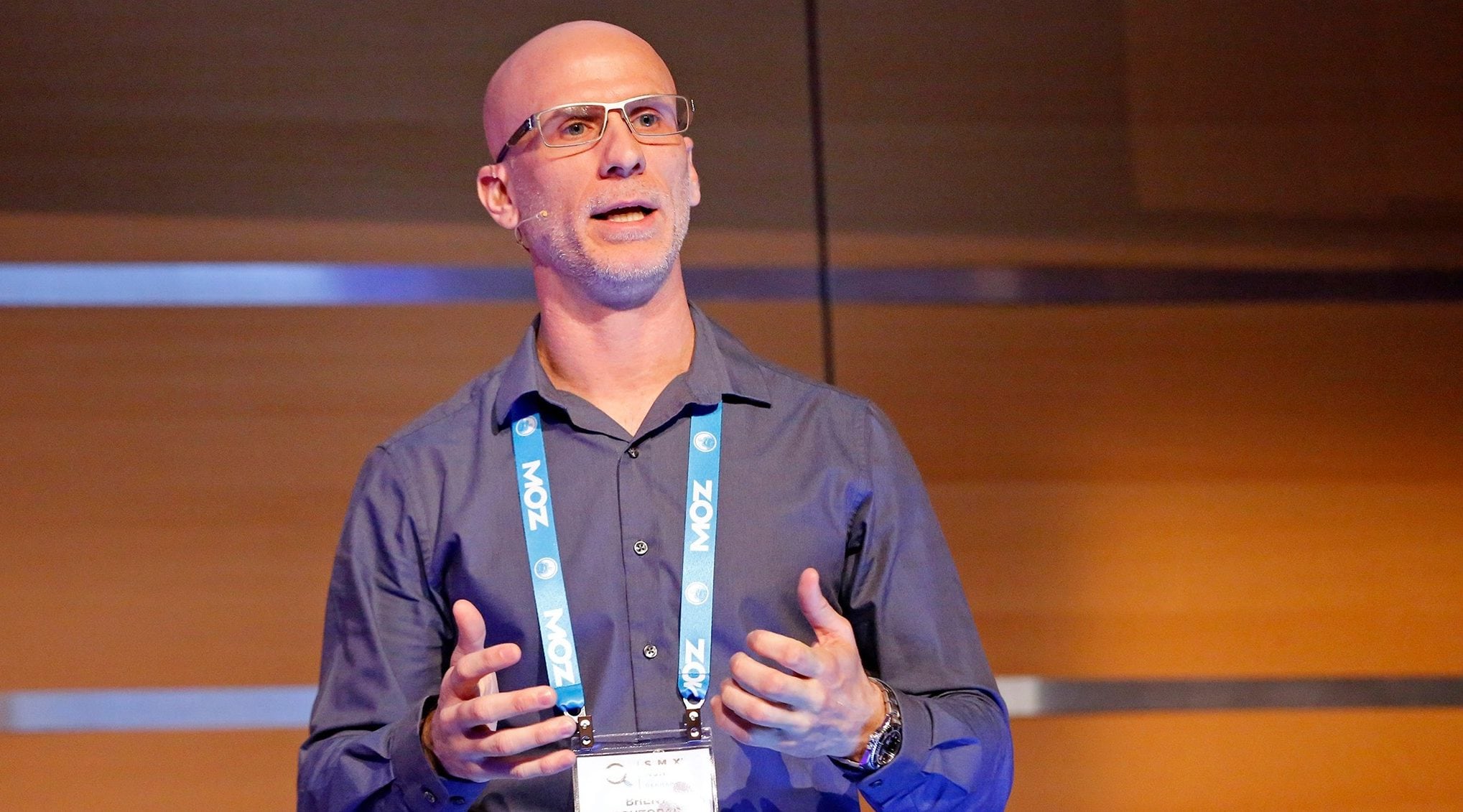
Public speaking is likely one of the most effective ways to increase your influence as a marketer, providing you dedicated time in front of other influencers and attendees, as well as providing the opportunity for interviews, media coverage, and other speaker opportunities.

Unfortunately, of all the tactics for increasing your influence, this might be one of the harder ones. That said, once you feel you have a number of the other discussed tactics working for you, then start throwing your name into the hat when conference speaker pitches open up for applicants.

Tips to improve your success:

  • Review previous conference sessions to determine what topics a specific conference typically provides. This will help you in your pitch to be within a realm of interest while suggesting a slightly current or different angle on the topic.
  • Identify the conference employees and hosts, so that you can begin engaging with them. Fair or not, a good amount of speaker selection is based on who you know. Impress someone associated with the conference ahead of time and it will improve your chances of being selected as a speaker.

7. Understand the Psychology Behind Influence

One of the best things you can do to really help improve your influence as a marketer is to really understand how influence works.

There are numerous videos you can watch on YouTube, courses you can take, as well as books you can read such as the best-selling book “Influence“, which can all help you understand some of the important aspects to influencing people.

You would be amazed at how even a simple change in vocabulary can have a significant impact on your efforts. For instance, take this example the author of Influence, Robert Cialdini, shared with me:

“When you are asking people for feedback on a proposal or plan, don’t request their ‘opinion’ on the matter. Instead ask for their ‘advice’ concerning it. Why? Because when people are asked for their advice, it puts them in a cooperative state of mind, which makes them more likely to support your idea.”

Tips to improve success:

Watch the following YouTube videos:

Or check out this edX course from The Wharton School of the University of Pennsylvania titled “Selling Ideas: How to Influence Others, and Get Your Message to Catch On.”

8. Be Truly Remarkable

“One crazy way to build influence is to do something truly remarkable. Like cure some disease. or build the next billion dollar unicorn company, or come up with truly new and innovative ideas (etc.) Too many people claim to be influential experts in their field but are actually somewhat unremarkable. People like Elon Musk or Bill Gates didn’t have to do influencer hacks to build their influence. They’re experts because they’ve accomplished amazing things.”

When my friend Larry Kim shared this with me recently, my first thought was, “Well I am not Elon Musk nor Bill Gates, so what remarkable thing would I do?”

The truth is we are all capable of finding something remarkable to do within our industry and if you want to increase your influence in marketing, then start finding that one thing that will help set you apart.

9. Go Forth & Influence

Call it drive, grit, or whatever you like, if you want to be a marketing influencer then you can do it, so long as you keep driving forward and never stop trying!

I hope that some of the above tips help you on your path and I look forward to hearing your story soon.


By Brent Csutoras

Sourced from Search Engine Journal

By 

Wondering about the current state of the industry? Columnist Jayson DeMers shares highlights and stats from a recent survey of digital marketers.

For entrepreneurs and startup founders looking for new ways to grow their businesses, there’s no shortage of information on the “whats” and “hows” of digital marketing.

For the past decade, I’ve done my best to provide even more information in those categories, helping entrepreneurs with everything from the basics of building an online presence to advanced tactics in categories like SEO.

But it’s also important to zoom out, beyond the strategies and tactics, so we can understand the “whys” behind marketing — as well as where it’s headed and when.

Last year, I attempted to answer these questions with an original survey I called “What Works in Online Marketing,” and I walked away with some interesting revelations about the state of the industry. Now that it’s a year old, I figured it was time to redistribute the survey and find out exactly where we stand today.

You can download the entire report here (registration required), but below, I’d like to highlight some of the most interesting findings from the survey and discuss what they mean for your business.

Survey methods

The survey itself was fairly simple. It comprised a number of questions regarding the use and effectiveness of multiple different online marketing strategies, including content marketing, SEO, social media marketing and link building.

We distributed the survey to 376 people, most of whom are professional marketers or business owners, and collected the results for analysis. There was a fairly equal distribution of participants by age, gender and position.

This year’s most important takeaways

So, what did we learn about the state of online marketing? These were some of the biggest takeaways:

  1. Attitudes haven’t changed dramatically. Compared to last year, attitudes about marketing haven’t changed much one way or another. As you’ll see, marketers still feel good about the strategies they’re using, and they are investing in different tactics (such as SEO, content marketing and social media marketing) in similar patterns. There haven’t been many disruptive events to force people into new paradigms and new strategies, nor have there been any big scares or economic disruptions to curb the power of marketing.
  2. People are ready to spend more on marketing. Nearly 45 percent of marketers are planning to increase their marketing budgets this year, with another 30 percent of responders planning to keep their budgets the same. That means 75 percent of respondents are keeping their budgets the same or increasing them, compared to less than 25 percent who are planning to decrease their budgets. This is a sign of overall economic growth, potentially, but it’s also important to recognize it as a sign that most marketers are finding success.
  3. Marketers are clueless when it comes to ROI. But how are those marketers defining success? Return on investment (ROI), arguably the single most important metric for gauging the profitability of a campaign, remains elusive for many marketers to measure. For each core online marketing strategy, we asked marketers what type of ROI they were seeing—and the top answer for nearly every strategy was “not sure.” The only strong exception to this rule was social media marketing, which 44 percent of marketers saw a positive ROI for. Otherwise, either marketers aren’t measuring their ROI rates consistently, or they don’t know how to do it.
  4. Facebook is king, but Instagram is rising. As you might have predicted, Facebook remains the most popular social media platform, both in terms of the number of marketers using it and in terms of the ROI those marketers are seeing from it. Over 88 percent of respondents are using Facebook, and 53 list it as their top-ROI platform. However, Instagram is also rising in importance, jumping to become the second-most popular social platform for marketers (excepting YouTube). With 95 percent of marketers planning to keep or increase their social media budgets, social media marketing is likely to stay around for a while.
  5.  Optimism reigns. Finally, optimism in the online marketing community is high. Overall, marketers are increasing budgets, but they’re also increasing budgets for most specific strategies, including SEO, content marketing, link building, influencer marketing and social media. They’re happy with the results they’re getting, and they’re predicting that the strategies they use are going to stick around for a long time. For example, when asked if they thought SEO would ever become universally impractical, unprofitable or otherwise useless, 32 percent said “maybe, but it’s unlikely,” making it the top response. Only 22 percent gave some kind of “yes” answer, and 17 percent said “no, never.”

Where are we headed?

Between any two points, you can draw a straight line. With the information from this year’s survey in conjunction with information from last year’s survey, we can predict what’s going to unfold over the course of the next year.

Personally, I look forward to seeing more enthusiasm and more investment in online marketing overall. The more people we have working in the industry, the more innovation we’ll collectively drive, and the more information we’ll have to collectively work with.

By 

Sourced from Marketing Land